• Skip to main content
  • Skip to primary sidebar
  • Home
  • News
  • Featured
  • More News ⌄
    • SatNews
    • SatMagazine
    • MilSatMagazine
  • Events ⌄
    • MilSat Symposium
    • SmallSat Symposium
    • Satellite Innovation
  • Contacts
  • SUBSCRIPTION

SmallSat News

You are here: Home / Archives for 2021

Archives for 2021

Fourth Kleos Space Smallsat Cluster Contracts Signed

October 20, 2021 by editorial

Kleos Space S.A (ASX:KSS, Frankfurt:KS1) has signed new contracts with satellite builder Innovative Solutions in Space B.V. (ISISPACE) and global launch services provider Spaceflight Inc. to build and manage the launch of the company’s fourth satellite cluster of four satellites — the Observer Mission (KSF3) scheduled for orbit in mid-2022.
Kleos’ fourth satellite cluster complements the 37-degree orbit of the ‘Scouting Mission’ and SSO of the ‘Vigilance Mission’ and ‘Patrol Mission’ satellites, with up to a further 119 million km2 data collection capacity per day (Vigilance and Patrol Missions each have similar data collect capacity).
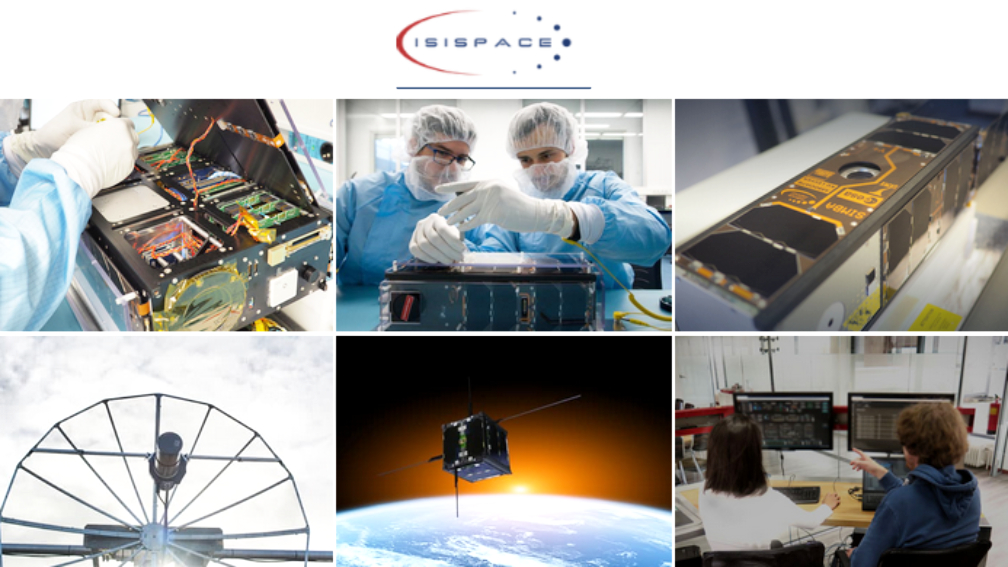
Netherlands-based ISISPACE will provide Kleos with a turnkey solution for the four Observer Mission satellites, including design, development, production, testing, launch integration services, and support for checkout and commissioning”. ISISPACE has more than 15 years’ smallsat experience, successfully built Kleos’ ‘Vigilance Mission’ (KSF1) and is currently building the ‘Patrol Mission’ (KSF2) satellites.

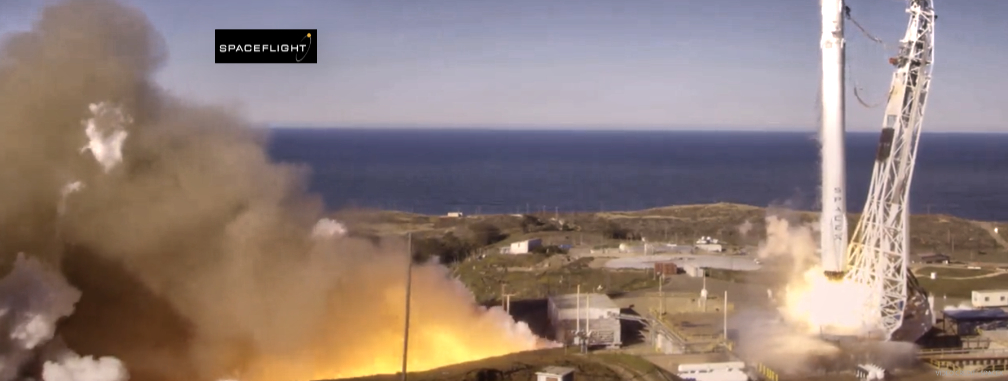
Spaceflight provided the integration, mission management, and launch services for the successful launch of the Vigilance Mission satellites on its SXRS-5 mission in June of 2021 and has already been engaged by Kleos for the upcoming Patrol Mission launch.
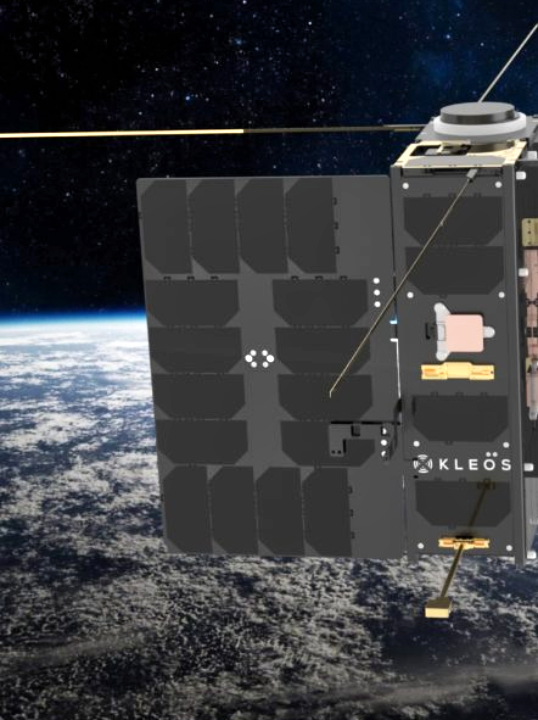
Kleos successfully launched its Scouting Mission and Vigilance Mission satellites in November of 2020 and June of 2021 respectively. The company’s Patrol Mission satellites are progressing through the build process and on track for an expected January 2022 launch onboard a SpaceX Falcon 9. Identical to the upcoming Patrol Mission satellites (KSF2), the Observer Mission will provide increased capacity and more frequent revisit times.

Each new cluster increases Kleos’ sensing and intelligence gathering capacity, generating potential for higher-value data products and tiered subscription licenses. Kleos’ satellites detect and geolocate radio frequency transmissions to improve the Intelligence, Surveillance, and Reconnaissance (ISR) capabilities of governments and commercial entities. The firm’s independent geolocation data enhances the detection of illegal activity, including piracy, drug and people smuggling, border security challenges and illegal fishing, and is available to qualified subscribers as-a-service. Final mission costs incurred are anticipated to be comparable with publicly available satellite build and space rideshare costs and within the envelope of the cost of a launch advised within the prospectus.

Kleos Space CEO, Andy Bowyer, said, “We are rapidly building our constellation, using funds from our recent capital raise to commit to our fourth satellite cluster build and launch. Each new launch enables us to improve satellite data collection and increase revisits over key areas of interest for our customers. The Observer Mission increases the revenue opportunity from existing subscribers and caters to the needs of our growing global pipeline. Spaceflight and ISISPACE have proven to be effective partners for both our Vigilance Mission and upcoming Patrol Mission launch. We are leveraging their experience to accelerate the build and launch of our Observer Mission.”
Jeroen Rotteveel, CEO of ISISPACE, said, “We are proud to be expanding our strategic partnership with Kleos to build and support the launch of their fourth satellite cluster. Our extensive nanosatellite experience spans design, manufacturing and operation complementing Kleos’ in-house engineering Kleos Space S.A.- 26, rue des Gaulois - L-1618 Luxembourg - ARBN 625 668 733 / RCS B215591 2 expertise. We look forward to continuing to work with Kleos to increase satellite capability, leveraging learnings from earlier launches.”

Marcy Mabry, Spaceflight’s Mission Manager added, “We are delighted to be working with Kleos again to launch its small satellite payload into a 500-600km Sun Synchronous orbit. Our portfolio of frequent launch options provides unmatched flexibility and reliability, ensuring Kleos’ growing constellation gets to orbit when and where they want. Kleos’ satellite technology addresses a real-world need, providing precision geolocation data to improve situational awareness and disrupt illegal activity.”

Filed Under: News

A New, Compact, Hyperspectral Instrument From AMOS Is Destined For Smallsats

October 20, 2021 by editorial

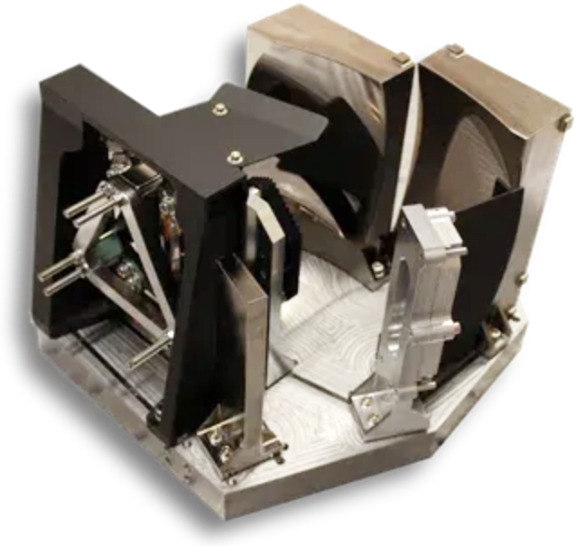
AMOS s.a., a Belgian company specializing in the design and manufacture of advanced optical instruments, and the European Space Agency (ESA) have signed a contract to build and qualify a first flight model of an advanced compact hyperspectral imager designed by AMOS and called ELOIS.

AMOS’ ELOIS hyperspectral imager.

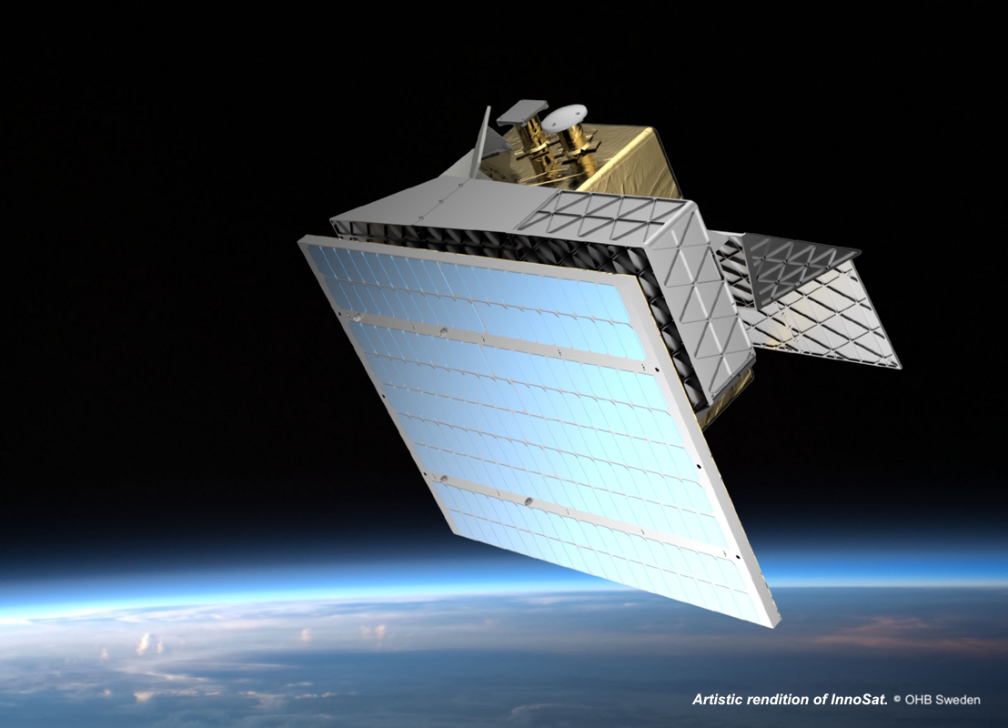
Thanks to the financial support of the Belgian Science Policy Office (BELSPO), this co-funded project will deliver the payload to be integrated on an InnoSat platform by OHB Sweden AB for a launch in 2024.

Both companies have been selected for an In Orbit Demonstration mission as part of the EU Horizon 2020 IOD/IOV Initiative. This program provides to the European industry opportunities to demonstrate and validate, in space, their most promising technologies and products. Such missions are essential for fostering innovation and expanding space capabilities and shows the European Commission’s commitment to maximize European competitiveness, independence and service sustainability in the space sector.

AMOS, leveraging its extensive experience in optical design and free form optics manufacturing, has developed a compact and lightweight, hyperspectral instrument that is dedicated to smallsats and offers a unique combination of large swath (70 km), broad spectral range (VIS-NIR-SWIR), high spectral and spatial resolutions and excellent radiometry. This high performance is achieved thanks to the integration of several technological innovations such as the company’s multi-blazed free form grating.

AMOS’ unique expertise developed in the ELOIS program has also been rewarded through the firm’s selection as member of the Core Team, led by OHB System AG (Germany), in charge of the development of the future CHIME instrument (Sentinel 10). This flagship hyperspectral mission is part of the EU Copernicus Expansion programme.

Philippe GILSON, AMOS’ CEO, said, “AMOS has a long track record in delivering advanced space hardware to large system integrators, from complex mirrors to complete opto-mechanical sub-systems. Our ELOIS is the best of both worlds: large-scale institutional mission capabilities blended in a smallsat payload suitable for the kind of remote sensing constellations considered by New Space startups as well as emerging space-faring nations. With this first IOD, we are paving the way towards our future range of high-end Earth Observation cameras that will be AMOS’ contribution to better seeing, understanding and reacting to the multiple changes affecting our planet.”

Filed Under: News

Rocket Lab’s Upcoming Launch Of BlackSky Constellation Smallsats To Also Attempt 1st Stage Electron Rocket Ocean Recovery

October 20, 2021 by editorial

Rocket Lab USA, Inc. will attempt a controlled, ocean splashdown and recovery of the first stage of an Electron rocket during the company’s next launch in November.

The mission will be Rocket Lab’s third ocean recovery of an Electron stage; however, it will be the first time a helicopter will be stationed in the recovery zone around 200 nautical miles offshore to track and visually observe a descending stage in preparation for future aerial capture attempts. The helicopter will not attempt a mid-air capture for this mission but will test communications and tracking to refine the concept of operations (CONOPS) for future Electron aerial capture.

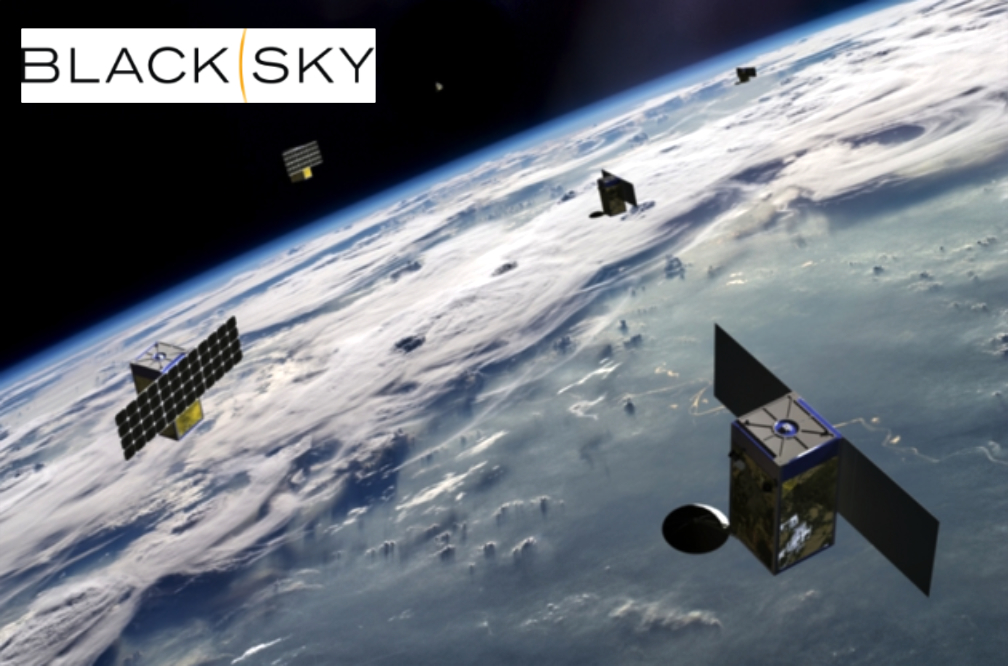
The ‘Love At First Insight’ mission is scheduled to lift-off from Launch Complex 1 in New Zealand during a 14-day launch window that opens on November 11, 2021, UTC. The mission’s primary objective is to deploy two Earth Observation (EO) satellites for global monitoring company BlackSky, with the secondary objective to splash down and recover Electron’s first stage to further validate Rocket Lab’s recovery operations and hardware.

Rocket Lab will be tracking the stage’s descent from space and as it approaches 19,000 ft (5.7 km) from the ocean surface, a helicopter will be dispatched to conduct reconnaissance of the returning booster. The ‘Love At First Insight’ mission will also include new recovery hardware developments to Electron including an advanced parachute to be deployed from the first stage at a higher-altitude, allowing for a slower drift back to Earth to test communications and tracking for future aerial recovery.

Electron also features improvements to the first stage heat shield which protects the rocket’s nine Rutherford engines while they endure up to 2200 °C heat and incredible pressure on the descent back to Earth. A team of Rocket Lab engineers and technicians will again be stationed at sea with their purpose-built Ocean Recovery and Capture Apparatus (ORCA) to retrieve the stage from the ocean and return it to Rocket Lab’s production complex in New Zealand for analysis and inspection.

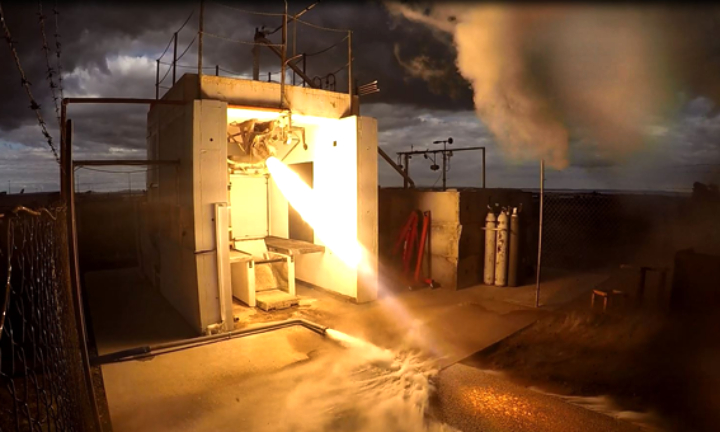
The rocket engine, named Rutherford after the famous New Zealand scientist Ernest Rutherford, is a Lox/Kerosene regenerative cooled pump fed engine that is intended to be the future workhorse for Rocket Lab orbital launcher program. Rutherford test firing photo is courtesy of the company.

“As one of only two companies to recover an orbital-class booster from space, we’ve proven it’s possible to make Electron the world’s first orbital-class reusable small launch vehicle,” said Peter Beck, Rocket Lab founder and CEO. “We’ve perfected Electron’s controlled descent, demonstrated flawless parachute deployment, and successfully plucked stages from the ocean. Now we’re gearing up for the next stage – preparing to use a helicopter to catch a rocket as it descends to Earth from space. It’s ambitious, but with each recovery mission we’ve iterated and refined the hardware and processes to make the impossible ordinary. I’m excited to take what we learn from this launch and put it into practice with aerial capture missions in future.”

The ‘Love At First Insight’ mission follows two previous ocean splashdown recovery missions; the ‘Return to Sender’ mission in November 2020, and the ‘Running Out of Toes’ mission in May 2021. A live stream of the launch and real-time updates of recovery operations for ‘Love At First Insight’ will be available on Rocket Lab’s social media channels and website.

Approximately two and a half minutes after lift-off, the nine Rutherford engines on Electron’s first stage will shut down and Electron’s first and second stages will separate. Electron’s second stage will continue with the customer’s payload to space, where the Kick Stage will separate and deploy the satellites. Following stage separation, Electron’s first stage will begin its descent. A cold-gas reaction control system will position the stage on an ideal angle to re-enter the atmosphere.

While descending, Electron’s first stage is expected to experience intense heat and pressure while traveling up to eight times the speed of sound before significantly decelerating to enable a drogue parachute to be deployed. At approximately seven and a half minutes into the mission, Electron’s drogue parachute will be deployed at around 43,000 ft (13 km) altitude. This drogue parachute both increases the booster’s drag and stabilizes its descent as it approaches the ocean.

Earlier and higher than on previous flights, the large main parachute will be deployed less than a minute after the drogue, at an altitude of 19,000 ft (5.7 km) to further slow the stage and enable a controlled splashdown. A key objective of this mission is to increase the drift-time of Electron’s first stage to test communications and tracking for future aerial recovery efforts.

Upon receiving the all-clear from the recovery team stationed at sea, a nearby helicopter will be deployed to sight the returning stage and observe its descent to record data that will help refine Electron aerial capture CONOPS. Once in the ocean, Rocket Lab engineers will attempt to retrieve the stage onboard their vessel with their purpose-built Ocean Recovery and Capture Apparatus (ORCA), a specialised cradle and winch system manufactured to Electron specifications and dimensions, before transporting the stage back to Rocket Lab’s production complex for analysis and inspection.

The ‘Love At First Insight’ mission is the latest in a multi-launch agreement signed earlier this year for BlackSky between Rocket Lab and Spaceflight Inc., which is providing integration and mission management services for BlackSky. This mission will deploy the eighth and ninth satellites of BlackSky’s planned constellation as part of that rapid-launch agreement, with another four Gen-2 smallsats across the two additional Electron dedicated missions to follow.

Filed Under: Featured, News

The First Commercial Order For Creotech’s HyperSat Smallsat Platform Is Received

October 20, 2021 by editorial

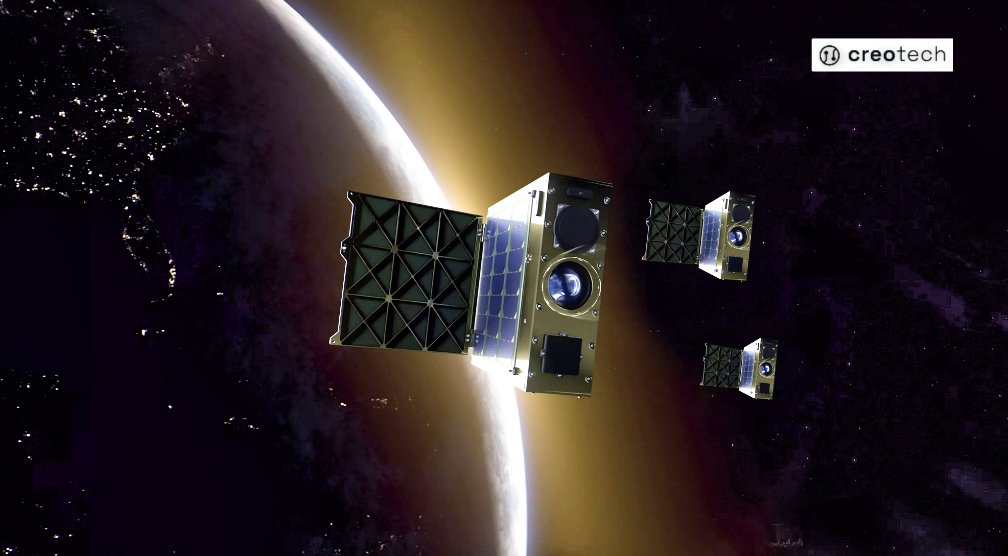
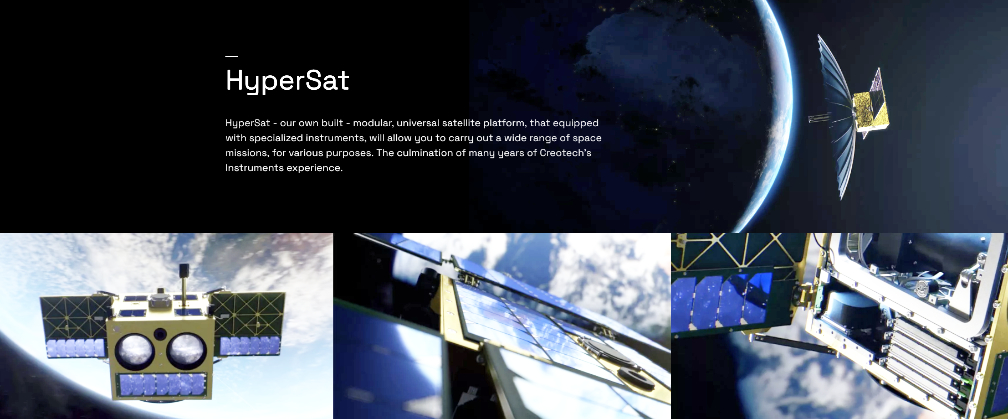
Creotech Instruments S.A., in cooperation with the Military University of Technology in Poland, recently initiated the process of building a constellation of three satellites.

The cooperation takes place as part of the PIAST project, which is an element of the plan to create a national system for the Polish Armed Forces EO needs. This will be the first commercial implementation of the HyperSat satellite platform that was developed by the Company.

PIAST (Polish ImAging SaTellites) is a project conducted as part of the Szafir program, the main task of which is an even better use of the potential for cooperation between scientific institutions and private entrepreneurs in the field of developing modern and innovative solutions key to the safety and defence of the state. Financed from resources of the National Centre for Research and Development (NCBR) the project is realized by a consortium of companies and research institutions (Creotech Instruments S.A., the PAN Centre for Space Research, Scanway Sp. z o.o., the Łukasiewicz Research Network – Institute of Aviation, PCO S.A. (a company owned by the Polish Armaments Group)) under the leadership of the Military University of Technology.

Thanks to this synergy, they will be able to construct a complete satellite system of imagery intelligence that consists of satellites, a ground segment for control and obtaining data and a data processing segment. During the realization of the project, a group of technologies that will allow the building of considerably larger satellite constellations will be developed. At the same time, the creation of critical components in Poland will allow for complete control over the imagery acquisition process.

As part of the PIAST project, the company will build and deliver three satellite platforms, fully based on the firm’s original HyperSat standard. The task at hand will also consist in integrating the function of the satellites with optical telescopes and a propulsion system developed specifically for use in this undertaking.

This will be the first commercial implementation of the firm’s platform and directly from the start as a constellation. The end recipient of this project will be the Ministry of National Defence of the Republic of Poland.

Completion of the project will take roughly 48 months. The satellites – each weighing around 10 kg – will be placed in space in the year 2024 and will be the first Polish satellites, with the end recipient being the Polish military.

Creotech Instruments is the largest Polish company manufacturing and delivering space technology and specialized electronics and devices, for use in, among other areas, quantum computers, quantum cryptography, or quantum physics or high energy laboratories to the world market. Devices created by the Company have been part of 26 space sector projects, including 10 space missions – 4 of which have been realized for the European Space Agency (ESA). One of the most important Creotech projects now in development is the HyperSat satellite platform, which positions the Company among only around a dozen of companies in the world capable of offering smallsats and entire constellations of smallsats adapted to the client’s needs. In April of this year the company successfully launched its initial public offering, which raised PLN 11,285,000. The funds have been dedicated to continuing development of the EagleEye EOsatellite and raising the technological development of the HyperSat smallsat platform to the highest, technology readiness level. The company plans to create its own offer of modular satellite platforms as well as purchase a third electronics assembly line, which will allow the firm to scale up this activity. Creotech Instruments S.A. is planning to debut on the New Connect market of the Warsaw Stock Exchange, which is to occur on the verge of the 3rd and 4th quarter of this year.

Filed Under: News

Fly Your Satellite! ESA’s Call for CubeSat Proposals Now Open To Uni Students

October 18, 2021 by editorial

University students can now get ready to fly their satellite by applying to the European Space Agency now.

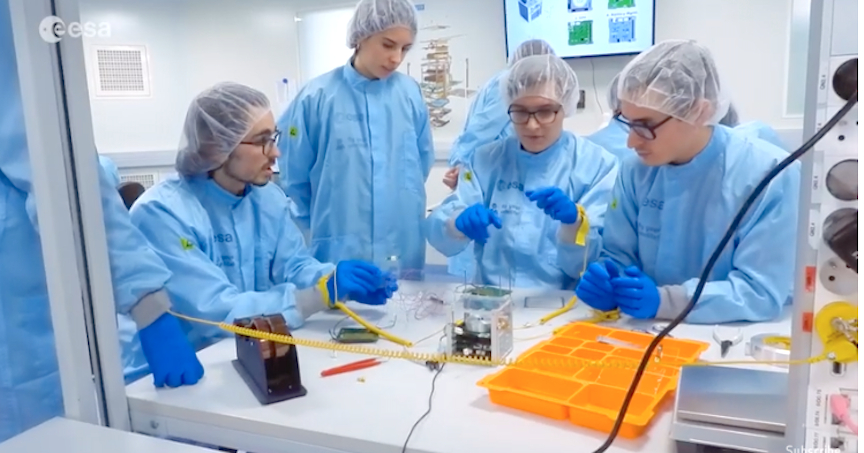
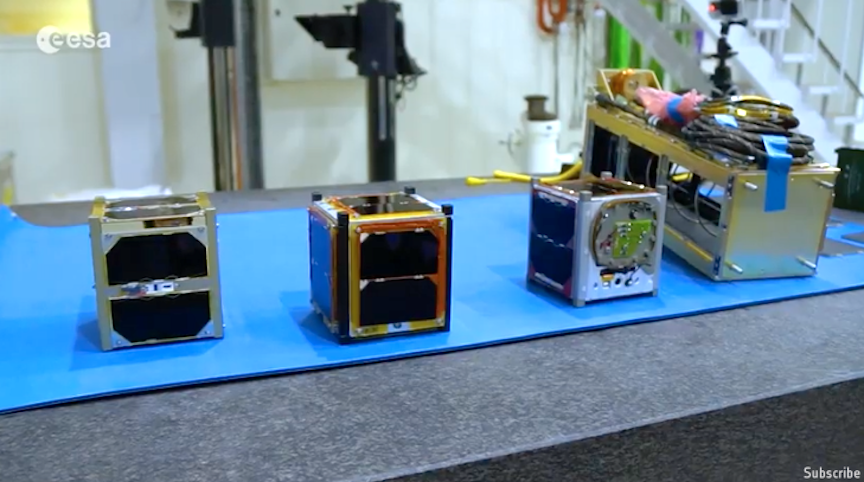
The European Space Agency (ESA) is encouraging CubeSat student teams, who are working on one, two or three-unit CubeSats with educational scope, to apply for the fourth edition of the Fly Your Satellite! program.

This opportunity is open to University teams, composed of bachelor, master and PhD students from eligible states, who are close to integrating their satellite*.

Selected teams will have the unique opportunity of turning their spacecraft system into an operating CubeSat launched to space by receiving direct professional support from ESA, dedicated training sessions, and access to dedicated state-of-the-art facilities.

The ESA encourages students to join the list of other Fly Your Satellite! teams who have had the chance to learn from their participation in this unique hands-on spacecraft program and apply working methods from professional space programs to your own space project.

*Note: New opportunities are expected to open in spring 2022 for CubeSat student teams who would like to benefit from the support in the consolidation of their design, or to get access to the CubeSat Support Facility.

Proposal Submission Deadline: February 6, 2022, 23:59 CET

A shortlist of teams will be invited to the Selection Workshop expected to take place in March 2022, at ESA-ESTEC in Noordwijk, the Netherlands.

Filed Under: Featured, News

Telesat Selects Ciena for LEO Terrestrial Network Technology

October 18, 2021 by editorial

Telesat is deploying Routing and Switching platforms from Ciena (NYSE: CIEN) for their Telesat Lightspeed terrestrial backhaul network.

Ciena’s routing and switching technology will ensure that Telesat has a modern, cost-effective network that takes advantage of emerging technologies that include network functions virtualization (NFV) and edge computing to efficiently support existing and future customer requirements.

The Telesat Lightspeed network will initially be comprised of 298 advanced LEO satellites that seamlessly integrate with terrestrial networks. LEO satellites operate 25 to 30 times closer to the Earth’s surface than traditional satellites and can process data with ultra-low latency—typically on par with fiber-optic speeds, even to the world’s most rural and remote locations.

Ciena is supplying hardware and software that will provide high-speed, high-capacity connections to governments, telcos, mobile operators, and other enterprise customers for the delivery of 5G, cloud computing, video, and other bandwidth-intensive broadband services.

Telesat will use Ciena’s 3926 and 5170 platforms to provide agile, assured Managed Extensibility Framework (MEF)-compliant services at the company’s points of presence (PoPs), as well as terrestrial connectivity to as many as 50 Earth-based landing stations. The Ciena platforms have advanced quality of service (QoS) mechanisms, including hierarchical ingress metering, that will provide Telesat with fine-grained control of network traffic.

Ciena’s Manage, Control and Plan (MCP) domain controller will provide highly effective software control and automation to drive business agility. Additionally, Telesat is using Ciena Services for terrestrial network design, implementation, and testing.

“As the leading provider of aggregated, global Tier 1 carrier connectivity, Ciena’s field-proven routing and switching technology will ensure flexible, reliable connectivity between our Earth station antennas and Points of Presence throughout the world. The seamless integration of on-ground data networks with our advanced Telesat Lightspeed satellites will ensure unmatched speed and performance for our global enterprise and government customers,” said Aneesh Dalvi, Director, Landing Stations and User Terminals, Telesat
“Telesat’s enterprise customers—MNOs, ISPs, aviation, and maritime companies—are seeking high-throughput, super-low-latency connectivity to support delay-sensitive applications like cloud-based services. Telesat Lightspeed, powered by Ciena networking technology on the ground, makes reliable satellite broadband at fiber-like speeds possible,” said Bruce Hembree, Vice President and General Manager, Americas, Ciena

Filed Under: News

Draft RFP From Space Development Agency Is Seeking Industry Feedback On T1DES

October 18, 2021 by editorial

The Space Development Agency (SDA) is seeking input on their Tranche 1 Demonstration and Experimentation System (T1DES) DRAFT RFP.

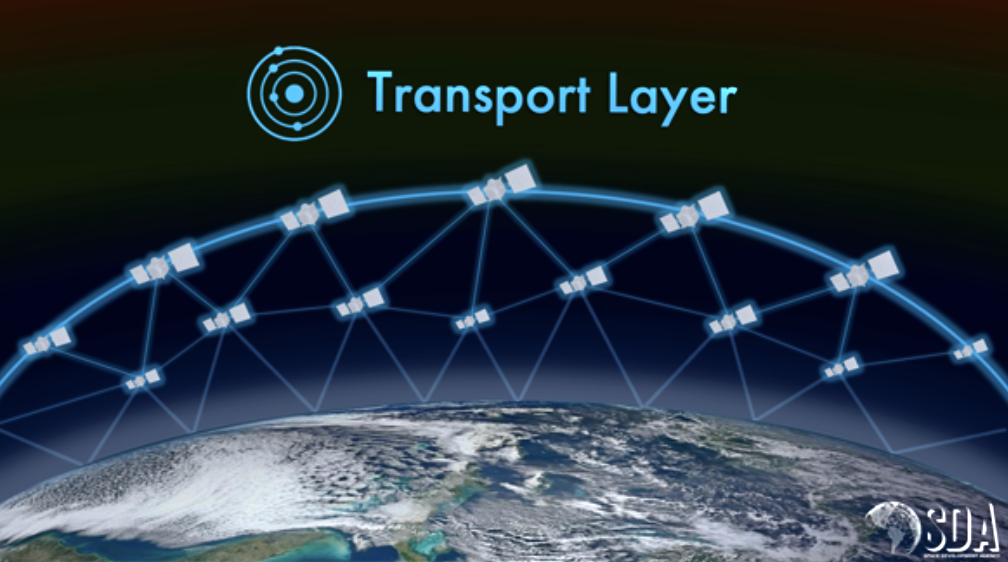
T1DES will augment the Tranche 1 Transport Layer (T1TL) constellation with demonstration and experimental capability. T1DES will leverage the low latency data transfer and Beyond Line Of Sight (BLOS) Command and Control (C&C) infrastructure established by the T1TL program to field and connect additional space vehicles with different mission payload configurations.

T1DES space vehicles (SVs) will be interoperable with T1TL SVs, to include compatible optical communications terminals (OCTs), networking and data routing, and ground system operations. T1DES SVs will host payloads either developed or sourced as part of this solicitation or provided by an external mission partner via the Partner Payload Program (P3). The SVs will be launched into a separate orbital plane via launch services procured by the T1DES Contractor and connected to the T1TL constellation.

The Draft T1DES Request for Proposal (RFP) may be found at this direct SAM.gov link.

To receive Attachment 1 (Statement of Work and Technical Requirements Document) and the Draft T1DES Bidder’s Library, please send an email to osd.pentagon.ousd-r-e.mbx.hq085022r0001@mail.mil with the subject line “SDA Draft T1DES RFP Attachment Request.” Please include your organization’s CAGE code and location in your request.

Requests received from organizations that do not possess a facility clearance of at least Secret will be evaluated on a case-by-case basis. SDA will endeavor to respond to all requests in the order that they are received and within one business day of receipt. All feedback should be provided via email to osd.pentagon.ousd-r-e.mbx.hq085022r0001@mail.mil no later than November 08, 2021, at 12:00pm, EST, with the subject line “SDA Draft T1DES RFP Feedback.”

Filed Under: News

Arianespace’s Successful Soyuz Launch Ensures OneWeb’s Constellation Is Halfway To The Firm’s Constellation Deployment Goal

October 14, 2021 by editorial

Arianespace’s tenth launch of 2021 with the seventh Soyuz rocket launched this year will place the OneWeb satellite passengers into LEO — the launcher will be carrying a total payload of approximately 5,797 kg. The launch was performed at Vostochny, in Russia.

Flight ST36, the sixth commercial mission from Vostochny in Russia, placed 36 OneWeb satellites into orbit. That brings the total fleet number to 358 satellites in a near-polar orbit at an altitude of 450 kilometers. After separation, the satellites raised themselves to their operational orbit.

“Congratulations to all the teams who made this eleventh launch dedicated to OneWeb’s satellites a success,” said Stéphane Israël, CEO of Arianespace. “ST36 marks a new milestone in our common history. Precisely one hour and eighteen minutes after liftoff, during the first separation sequence, we officially crossed the halfway mark for OneWeb’s constellation deployment. By the end of 2022, we will proudly operate eight more Soyuz launches in order to complete full the deployment of the constellation.”

OneWeb’s mission is to deliver internet everywhere to everyone through the creation of a global connectivity platform via a next generation satellite constellation in LEO. OneWeb’s constellation of 648 satellites will deliver high-speed, low-latency enterprise grade connectivity services to a wide range of customer sectors including enterprise, government, maritime and aviation customers. Central to its purpose, OneWeb seeks to bring connectivity to every unconnected area where fiber cannot reach and, in so doing, bridge the digital divide.

The satellite prime contractor is OneWeb Satellites, a joint venture of OneWeb and Airbus Defence and Space. The satellites were produced in Florida, USA, in the company’s satellite manufacturing facilities that can build as many as two satellites per day on a series production line that is dedicated to spacecraft assembly, integration and testing.

This launch was operated by Arianespace and the firm’s Euro-Russian affiliate, Starsem, under contract with Glavkosmos, a subsidiary of Roscosmos, the Russian space agency. Arianespace is responsible for the overall mission and flight-worthiness, with the support of Starsem for launch campaign activities including management of their own launch facilities at the Baikonur Cosmodrome.

RKTs-Progress (the Samara Space Center) is responsible for the design, development, manufacture and integration of the Soyuz launch vehicle as well as for the 3-stage Soyuz flight. NPO Lavotchkin is responsible for the launch preparation operations and flight of the Fregat orbital vehicle.

Once deployed, the OneWeb constellation will enable user terminals that are capable of offering 3G, LTE, 5G and Wi-Fi coverage, providing high-speed access globally & by air, sea and land.

As OneWeb’s constellation will ultimately consist of 648 satellites — this launch hits the mark of more than half of the constellation being on-orbit. The 324th satellite, deployed during the first separation, marked this milestone.

Filed Under: Featured, News

AAC Clyde Space’s Sirius Avionics Contracted By OHB Sweden Prime For Inclusion In ESA’s Arctic Weather Satellite

October 14, 2021 by editorial

AAC Clyde Space has been contracted by OHB Sweden to deliver their Sirius command and data handling unit worth approximately 545 kEUR (approx. 5.6 MSEK) to ESA’s Arctic Weather Satellite.

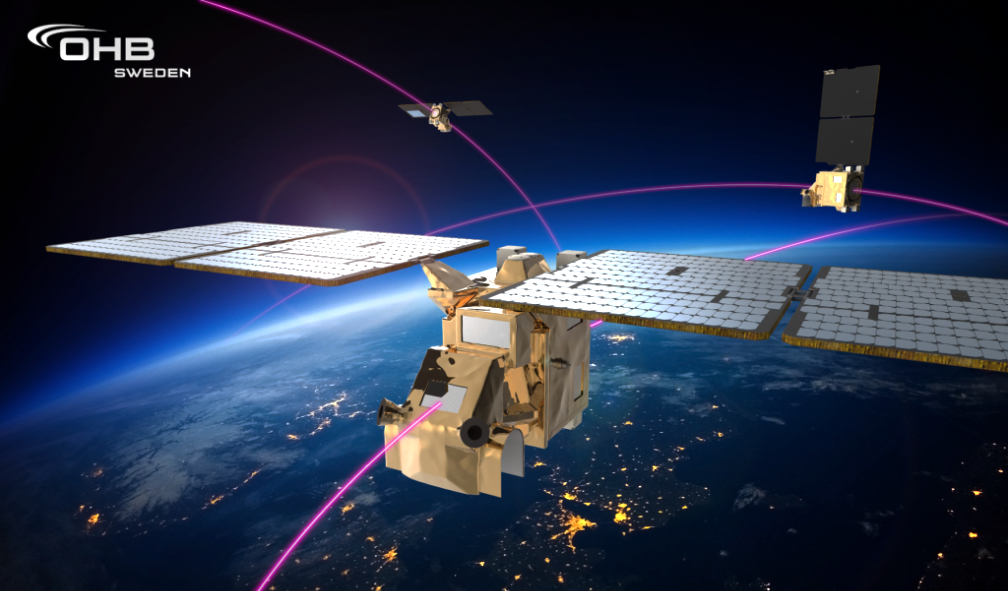
Artistic rendition of ESA’s Arctic Weather Satellite.

OHB Sweden is the mission prime contractor for the Arctic Weather Satellite, providing the satellite platform and system integration. AAC Clyde Space received an order earlier in September to deliver a Starbuck power system with a value of 797 kEUR (approx. 8.2 MSEK), hence the total order value of core avionics to the project amounts to 1.3 MEUR (approx. 14 MSEK).

Omnisys Instruments, acquired by AAC Clyde Space in April of 2021, was contracted in March to supply weather sensors to the Arctic Weather Satellite, with a value of 12.2 MEUR (approx. 124 MSEK). The Group has now received orders with a total value of 13.5 MEUR (approx. 138 MSEK) from the satellite project.

The order for the Sirius command and data handling unit was preceded by a comprehensive review and consolidation of the original requirements. AAC Clyde Space is to deliver an engineering model in Q2, 2022, and a flight model in Q1, 2023.

ESA’s Arctic Weather Satellite is an initial prototype mission that aims to demonstrate the usefulness of radiometric measurements to improve weather forecasts in the Arctic region. The final solution would involve a full constellation of satellites to provide more frequent measurement, something that cannot be achieved by the larger geostationary satellites already in use to depict the areas.

“Arctic Weather Satellite has become a flagship project for the AAC Group, and we are proud to have such a central role in it. Additionally, the satellite project clearly illustrates how improved weather data can help us to better understand our environment for the benefit of both people and businesses,” said AAC Clyde Space CEO, Luis Gomes.

Filed Under: News

The Norwegian Government Has Approved The Building Of A New Spaceport

October 13, 2021 by editorial

Since the early 1960s, research rockets have been sent into the Earth’s atmosphere from Andøya, Norway. Now, the Norwegian Government has given the green light to take steps to start new space adventure in the country.

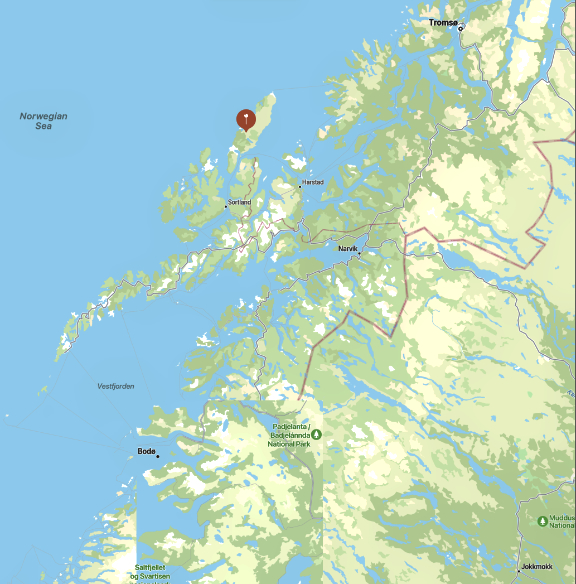
A new spaceport will be built 30 miles south of the existing rocket launch site on Andøya where rockets can lift smallsats into orbit around the Earth. Andøya Space has extensive experience with launching rockets to research atmospheric phenomena and is now taking this additional step into space.

To be able to lift a satellite into orbit around the earth, larger rockets, higher speeds and more space are required than is necessary for a small research rocket. That is why a separate spaceport on Nordmela, Andøya, is being built. The first launch is planned for the second half of 2022. Andøya has both the experience and the geography needed to establish a spaceport.

First, this is where the Norwegian space adventure began. In August 1962, the Ferdinand 1 rocket was launched from Andøya, just five years after the world’s first Sputnik satellite was launched. Since then, more than 1,200 rockets have been launched from Andøya to make atmospheric measurements on behalf of organizations such as NASA. There is already a strong competence environment when it comes to rocket launches, information gathering and security around these activities on Andøya.

Andøya, Norway, spaceport site.

Secondly, Andøya has a number of geographical advantages: Andøya is ideally located in the far north of Vesterålen, with large sea areas and relatively little nearby air traffic. This means far safer rocket launches, with larger margins if something should happen to go wrong during launch. Both polar and sun-synchronous orbit can be reached from Andøya.

Traditionally, it has been extremely expensive and time-consuming to build satellites; however, in step with technological development, it has been possible to reduce satellite size and price. Smaller satellites mean lighter rockets and lower costs for launching them into orbit, plus the demand for launch sites is increasing.

When satellites become less expensive to build, more people will make them. There is a queue of satellites waiting for a free space on the large rockets that are being launched.

Traditionally, the owners of these smallsats are unable to select where in space their satellite will end up, or when they will be lifted into orbit. They have to hitchhike with larger satellites and then follow them. Therefore, a market has emerged for launching smallsats into space with relatively small launch vehicles. Then the satellite owners can decide for themselves when and where the satellites will go into orbit.

Norway is one of the great powers in shipping and, early on, used satellite communication to keep in touch with the merchant navy. Today, it is almost inconceivable not to have access to position data from satellite navigation satellites, and modern weather forecasts are almost impossible to create without weather satellites.

The revolution with smallsats means that there are new types of satellites that help all on a more personal level. Networks are expanding and broadband in a cabin via satellite can now be offered without such having to cost an arm and a leg. Experiments are being made to make satellites function as virtual base towers for mobile phones, and solutions are being developed to allow transport companies to keep track of trucks and containers in real time via satellite.

A space port on Andøya will provide jobs in the region, be a boost for the entire Norwegian space sector as well as meet the needs and capabilities of Europe. Locally on Andøya, the establishment will be of great importance, and be a contribution to restructuring and renewal.

Filed Under: News

  • « Go to Previous Page
  • Page 1
  • Interim pages omitted …
  • Page 10
  • Page 11
  • Page 12
  • Page 13
  • Page 14
  • Interim pages omitted …
  • Page 65
  • Go to Next Page »

Primary Sidebar

WEEKLY NEWSLETTER

Archives

  • April 2026
  • March 2026
  • February 2026
  • January 2026
  • December 2025
  • November 2025
  • October 2025
  • September 2025
  • August 2025
  • July 2025
  • June 2025
  • May 2025
  • April 2025
  • March 2025
  • February 2025
  • January 2025
  • December 2024
  • November 2024
  • October 2024
  • September 2024
  • August 2024
  • July 2024
  • June 2024
  • May 2024
  • April 2024
  • March 2024
  • February 2024
  • January 2024
  • December 2023
  • November 2023
  • October 2023
  • September 2023
  • August 2023
  • July 2023
  • June 2023
  • May 2023
  • April 2023
  • March 2023
  • February 2023
  • January 2023
  • December 2022
  • November 2022
  • October 2022
  • September 2022
  • August 2022
  • July 2022
  • June 2022
  • May 2022
  • April 2022
  • March 2022
  • February 2022
  • January 2022
  • December 2021
  • November 2021
  • October 2021
  • September 2021
  • August 2021
  • July 2021
  • June 2021
  • May 2021
  • April 2021
  • March 2021
  • February 2021
  • January 2021
  • December 2020
  • November 2020
  • October 2020
  • September 2020
  • August 2020
  • July 2020
  • June 2020
  • May 2020
  • April 2020
  • March 2020
  • February 2020
  • January 2020
  • December 2019
  • November 2019
  • October 2019

© 2019–2026 SatNews

Insert/edit link

Enter the destination URL

Or link to existing content

    No search term specified. Showing recent items. Search or use up and down arrow keys to select an item.
      x
      Sign Up Now!

      Enjoy a free weekly newsletter with recent headlines from the global SmallSat industry.

      Invalid email address
      We promise not to spam you. You can unsubscribe at any time.
      Thanks for subscribing! You will now receive weekly SmallSat News updates.
      We love our advertisers.
      And you will too!

      Please disable Ad Blocker to continue... We promise to keep it unobtrusive.
      We promise not to spam you. You can unsubscribe at any time.
      Invalid email address
      Thanks for subscribing!