• Skip to main content
  • Skip to primary sidebar
  • Home
  • News
  • Featured
  • More News ⌄
    • SatNews
    • SatMagazine
    • MilSatMagazine
  • Events ⌄
    • MilSat Symposium
    • SmallSat Symposium
    • Satellite Innovation
  • Contacts
  • SUBSCRIPTION

SmallSat News

You are here: Home / Archives for 2021

Archives for 2021

Multi-Million$$ Deal Signed Between Mynaric + SpaceLink

August 16, 2021 by editorial

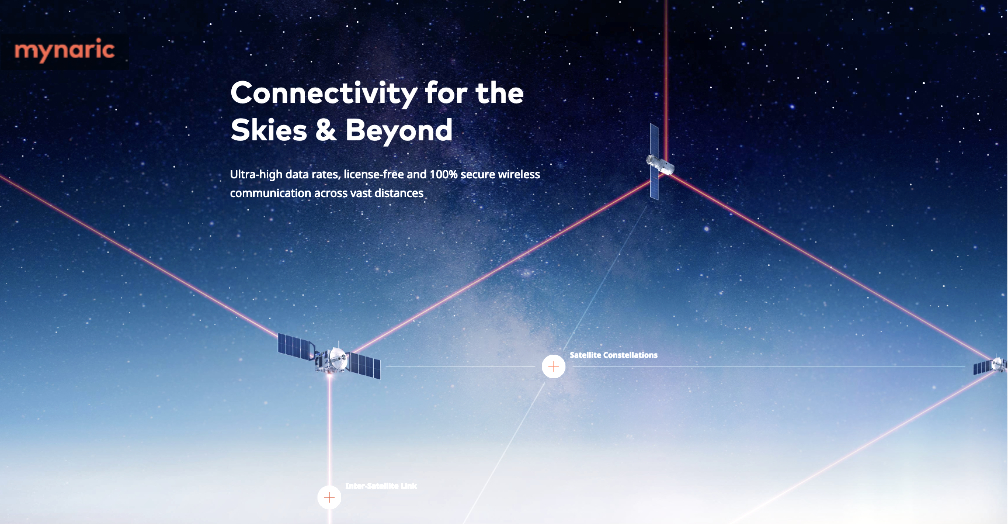
Mynaric and SpaceLink have signed a definitive agreement on the sale of optical inter-satellite link (OISL) terminals for satellites in MEO with a total order volume of up to $28 million, depending on exercised options and SpaceLink’s satellite prime selection.

Mynaric expects to ship SpaceLink’s first units during the first quarter of 2023. The deal includes mutually agreed upon milestone payments leading up to initial delivery.

The agreement follows the framework previously announced that also includes potential follow-up orders and further collaboration between the two companies. In addition to this announcement, Mynaric is expected to provide SpaceLink LEO optical communication terminals (OCT) for SpaceLink customers. These terminals would interface with the SpaceLink MEO data relay service. Both agreements significantly strengthen the relationship between the two aerospace organizations to mutual benefit.

“The final details of this agreement are just the beginning of a strategic partnership designed to bring fast, highly secure and continuous communications between spacecraft and the ground. Our industrialized approach to production will allow us to meet the expanded needs as SpaceLink’s constellation grows,” said Tina Ghataore, president, Mynaric USA and Chief Commercial Officer, Mynaric.

SpaceLink is building an information superhighway for the space economy that will help advance humanity to a new age of space commerce, exploration, environmental awareness, and security. The Always in Sight™ data relay system provides global coverage to empower space system operators to maximize use of their assets. SpaceLink Corporation is headquartered in the Washington DC area and has offices in Silicon Valley, California and is a wholly owned subsidiary of Electro Optic Systems Holdings Limited, a public company traded on the Australian stock exchange.

Mynaric (M0Y, ISIN: DE000A0JCY11) produces the optical fiber for the skies and, as a pioneer of laser communication, enables extremely fast and secure wireless data transmission between aircraft, drones and satellites. Globally, the need for fast and ubiquitous network connectivity is advancing inexorably. Data networks such as the internet are now largely based on infrastructure on the ground which cannot be expanded arbitrarily for legal, economic or logistical reasons. The future, therefore, calls for an expansion of the existing network infrastructure into air and space. Mynaric provides laser communication products to establish the necessary data highways for telecommunication constellations in air and space.


Filed Under: Featured, News

Slingshot Aerospace Produces The World’s First Collision Avoidance Collaboration & Comms Space Platform

August 16, 2021 by editorial

Slingshot Aerospace, Inc. has launched Slingshot Beacon which, according to the company, is the industry’s first collision avoidance collaboration and communications platform for space — Slingshot Beacon will be piloted by OneWeb, Spire Global Inc., Orbit Fab and others. 

The players participating in this pilot program account for 53% of satellite constellations in LEO. Slingshot Beacon will be used as a centralized communication and coordination platform to resolve on-orbit conjunctions, notify others about planned maneuvers, and more.

Slingshot Beacon connects operators across different organizations on a single platform, which has never been done before now. It provides customers with existing positional data and packages it in a digestible way with all the necessary information to resolve a conjunction. The tool will improve transparency, safety, and sustainability in space for all owner-operators, helping to ensure high risk conjunctions are appropriately mitigated.

As an industry, there are 115,000 satellites planned to enter space by 2030, which means more potential collision avoidance decisions will need to be made. Slingshot Beacon is designed to be an end-to-end communications and collaboration platform to help mitigate those potential risks, and facilitate safer satellite operations as the domain becomes more congested.

Presenting critical data in a more digestible way will enable owner-operators to make better decisions faster, giving governments and the public more confidence in safe space operations as the number of objects in space grows.

Slingshot Beacon was inspired by the guard channel, a special radio frequency that is monitored 24/7 for mayday alerts or other calls for help. The technology is orbit agnostic, and can help organizations monitor their assets, like space vehicles and satellites, in and through all orbits, LEO to the moon.

Slingshot Beacon is a modern, interactive web portal and mobile application that will allow commercial agencies to interact, company to company.

Slingshot Aerospace has already started beta testing Slingshot Beacon’s communication functionalities with the named users. The plan is to introduce a robust set of features on a rolling basis starting
in Q3 2021.

In addition, Slingshot Beacon enables users to protect their assets in space by providing an actively curated directory of operator contact information; reports on environmental anomalies; community alerts for planned maneuvers; and conjunction data messages (CDMs) and ephemeris sharing (or, accurate object position sharing).

The tool pulls in public data as well as customer’s private data, providing users with a secure and robust plug-and-play catalog of validated data. It will bring in automated risk monitoring and an objective, unbiased, curated ensemble of space data and robust analytics, providing unmatched space domain awareness.

To deliver data and relevant analytics on customer demand, Slingshot Aerospace has partnered with Numerica Corporation whose is able  to deliver precision tracking data and analytics, based on the company’s state-of-the-art, global telescope network and data processing suite, relied upon for LEO-to-GEO daytime and nighttime space surveillance operations.

Slingshot Aerospace acquired Stellatus Solutions LLC, a company that was building a platform that would help operators manage and protect their satellites by streamlining communication and traffic coordination between operators. Through the transaction, Slingshot Aerospace acquired research and intellectual property, which accelerated the launch of Slingshot Beacon. The company also hired Stellatus Solutions LLC co-founders Holly Highfill and Kishen Raghunath, who will serve as Slingshot Aerospace’s Director, Customer Engagement and Strategy, and Director, Finance and Strategy, respectively.

Stellatus was born out of the Department of Defense’s (DoD) Hacking for Defense Program, where Audrey Schaffer, Former Director, Space Strategy and Plans, Office of the Secretary of Defense, challenged a team to figure out how to create a communications channel for operators to increase space situational awareness with a specific emphasis on alerting the community of security concerns in space. After the program ended, the team continued the project and formed Stellatus, which was then acquired by Slingshot Aerospace.

“OneWeb is committed to responsible operational practices and new tools like Slingshot Beacon can help enhance space safety by creating additional avenues for communication,” said John Guiney, Vice President, Fleet Management Systems, OneWeb. “We look forward to working together to continue advancing ways we can all collaborate and work together to keep space safe.”

“Slingshot Beacon enables collaboration among all space operations stakeholders providing even more information to users, when and how they want it, powering everything from near real-time situational awareness to on-demand cross-company secure communication and file sharing,” said Melanie Stricklan, Co-founder and CEO, Slingshot Aerospace. “Slingshot Aerospace is re-imagining the future of space safety and sustainability with high-value, global collaboration. We’re extremely grateful to our customers and the space community for their continued belief in our team and products.”

“As a member of the space community, Spire recognizes the role we have in contributing to a safe space environment while protecting our assets and ensuring mission success for our customers and partners,” said Keith Johnson, VP & GM for Government Solutions, Spire Global Inc.. “By providing space data to and participating in Slingshot Beacon, we will continue our commitment to a safe space environment and be part of an innovative technology – the first of its kind – that will allow us to communicate with other companies and agencies to increase collaboration and global space awareness.”

Orbit Fab, the Gas Stations in Space™ company, is creating a bustling, in-space economy through on-orbit refueling. “We are designing the future of sustainability and mission flexibility for spacecraft, making docking and transferring fuel so reliable it gets boring,” said James Bultitude, Chief Engineer, Orbit Fab. “Public awareness is vital to ensuring that the difference between a safe, consensual rendezvous and a collision event is known and understood. Slingshot Beacon will streamline this communication, essential for successful maneuvers in the growing satellite servicing segment.”

  • Internal and external collaboration
  • File sharing, voice conference bridge
  • Live and historic data processing
  • Powerful workflows with automation tools for risk screening
  • Notifications and alerts (maneuvers, conjunctions and other alerts)
  • Third party plugin/ integration marketplace support for operations management tools
  • Upload/download customer ephemeris/telemetry data capture
  • Easy onboarding
  • End-to-end security
  • Built-in compliance
  • Leverages Amazon Web Services (AWS) cloud services

In less than 4 years, Slingshot Aerospace has already seen rapid growth by earning millions of dollars in revenue from early customer contracts, and the firm is leveraging government dollars to build its IP. 

Filed Under: Featured, News

MoU Signed Between T4i + Spacety Luxembourg For Electric Propulsion + Mission Flight Opportunities

August 14, 2021 by editorial

T4i and Spacety Luxembourg have signed a Memorandum of Understanding (MoU) to set the framework for several intended collaborations regarding Electric Propulsion and flight opportunities.

T4i (Technology for Propulsion and Innovation) is an Italian rocket company that specializes in in-space and access-to-space propulsion systems, tailored for smallsats, offering an array of technologies that match the mission’s requirements of satellite operators.

T4i conducted an extensive research on several propulsion systems and different propellants. Among them, T4i scientific research along the iodine propellant as ground-breaking source of energy in space, opens certain interesting outcomes in response to the new constellation market demand.

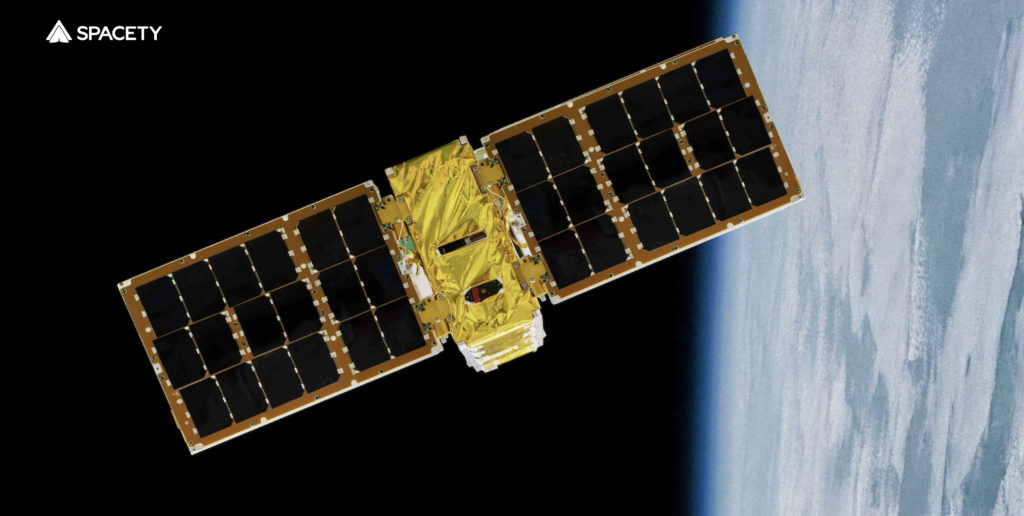
Spacety Luxembourg is a commercial space company involved in the design, manufacturing, launching, operation of satellites, and providing space flight services to its clients worldwide to flight test or demonstrate their technologies or science in space. Spacety has built and launched its first SAR satellite, the world’s first miniaturized C-band SAR satellite with a phased-array antenna, and plans to build, deploy, and operate a mega SAR constellation with 300+ satellites to provide near real time SAR data services to the world.

There are common fields of interests between the two companies. T4i is developing plasma thrusters in different sizes to accommodate the entire spectrum of smallsats, while Spacety Luxembourg is both offering flight opportunities for T4i IOD missions and looking for innovative, robust, and reliable iodine-based electric propulsion systems for their SAR constellation. In addition, this agreement formalizes the mutual interest in collaborating for future space missions and the possibility for T4i to capture the growing demand arising in the Chinese constellations market through this partnership with Spacety.

“Propulsion is an important subsystem of satellites for constellation. As more constellations are deployed for EO and telecommunications, the market for electric thrusters will expand rapidly. However, an electric thruster is a complicated system and it needs to be tested and verified in space before being used for any operational satellite mission. T4i has developed advanced propulsion technologies for small and micro satellites. Spacety has frequent flight opportunities and extensive experience of technology IOD/IOV missions. The collaboration of the two companies will produce innovative space products, which will be needed by many satellites, including Spacety’s,” said James Zheng, CEO of Spacety Luxembourg.

“We are honored to have the opportunity to cooperate with such a trustful partner as Spacety and eager to expand T4i’s market reach,” said Daniele Pavarin, T4i co-founder and CEO.

Filed Under: News

Satellogic + GeoTerraImage Partner To Develop Geospatial Solutions For Africa

August 13, 2021 by editorial

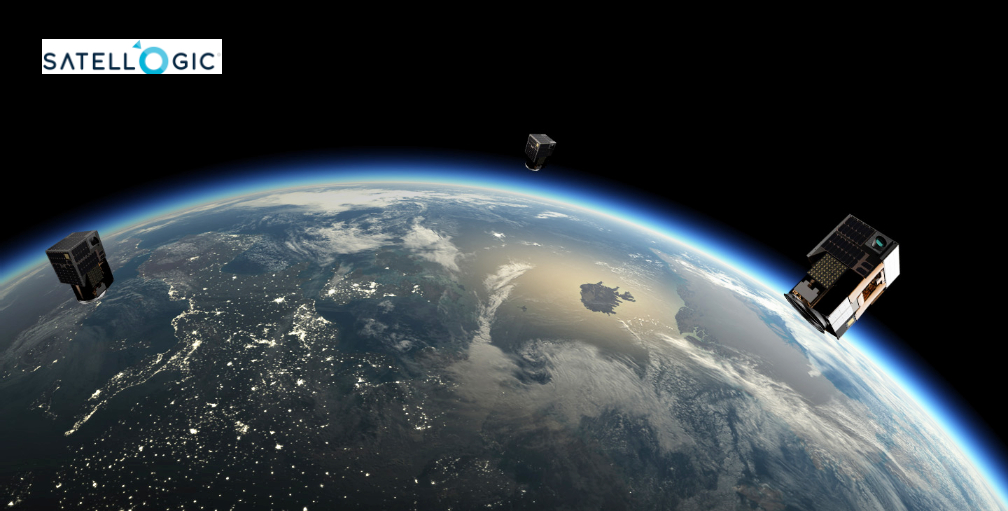
Satellogic has engaged in a new partnership with GeoTerraImage, a geospatial solutions provider in southern Africa. GeoTerraImage will leverage Satellogic’s high-resolution multi-spectral satellite data and low-latency hyperspectral data for large-scale agriculture management to help the continent develop new food systems and food-security solutions.

GeoTerraImage is a trusted solutions provider for customers across Africa and across the globe. By leveraging Satellogic’s high-resolution, high-frequency geospatial data and combining it with their proprietary software and algorithms, GeoTerraImage will bring differentiated and value-added products and services to their end customers. Imagery from Satellogic’s growing constellation will fuel new agricultural analysis and dashboards to be used by organizations across the continent and beyond. In addition to Satellogic’s multi-spectral data, GeoTerraImage will leverage Satellogic’s unique, low-latency hyperspectral imagery offering for large-scale agriculture applications across the globe.

GeoTerraImage is also a key player in the telecoms vertical. The opportunity to use Satellogic’s multi-spectral imaging to identify different types of architecture and building structures at high resolution enhances the quality of network planning data products, especially where propagation of high frequency bands is extremely sensitive to interferences from different architectural materials and vegetation.

Satellogic’s patented camera design uses adaptive optics to collect 10 to 20 times more data from a single satellite than any other small Earth Observation (EO) satellite. Satellogic satellites can capture images continuously when they are on top of land and are capable of collecting more than 300,000 sq. km of data per day and, according to the company, that’s significantly more than any competitor. The company continues to manufacture their own satellites and launch with SpaceX and other launch partners.

According to the 2020 Edition of African Space Industry Annual Report, demand for space data is increasing at an exponential rate in Africa. The industry, which is growing at a CAGR of 7.3%, is expected to reach $10B USD by 2024. More than $717M USD was spent on satellite projects in 2019. From 2010 to 2020 the African EO and geospatial sector grew by 96% or about 10% annually.

“This is an incredibly exciting time for the African space industry. Satellogic is thrilled for the opportunity to contribute to the continued growth and development of the region’s geospatial capabilities,” said Thomas VanMatre, Vice President of Global Business Development, Satellogic. “By providing high-resolution, high-frequency imagery at an affordable price point, Satellogic will help GeoTerraImage solve some of the most challenging resource-allocation and food-security challenges of our time.”

“Together, as a result of this partnership, GeoTerraImage and Satellogic are bringing an unmatched capability to market,” said Pieter Sevenhuysen, Director at GeoTerraImage. “Using Satellogic’s low-latency hyperspectral imagery, GeoTerra’s comprehensive agriculture offering will provide unmatched value in the agriculture vertical.”

“For telecoms, Satellogic’s high frequency update is an advantage both in terms of the likelihood of acquiring cloud free, usable imagery when it is needed, as well as ensuring up-to-date relevance of image content,” said Mark Thompson, Director at GeoTerraImage.

Filed Under: News

An Equity Placement Of Million$$$ For OneWeb From Hanwha

August 13, 2021 by editorial

Hanwha, the South Korean Fortune 500 global technology and manufacturing company, has announced a $300 million equity investment by Hanwha Systems (“Hanwha”) in OneWeb — Hanwha brings further defence capabilities and the latest antenna technologies to OneWeb, alongside relationships to new government customers and an expanded geographical reach. 

This investment brings OneWeb’s total equity investment since November 2020 to $2.7 billion with no debt issuance. 

OneWeb’s first-generation fleet of 648 satellites that will deliver global coverage in 2022 is fully funded. To date, the company has launched 254 satellites into orbit, with another launch planned this August from Baikonur, Kazakhstan.

OneWeb’s network will be ready to offer connectivity services from the 50th parallel and above by the end of 2021 to fully fixed energy rigs operating onshore and offshore in the 50N and above region. Longer term, the development will potentially unlock new, untapped commercial fishing and merchant shipping operations in the Asia-Pacific region as well as enabling improved environmental monitoring. 

Sunil Bharti Mittal, Founder & Chairman, Bharti Enterprises, said, “We welcome Hanwha to OneWeb. These are exciting and fast-paced times in the space sector. With Hanwha alongside, we will be able to access the highest quality of technological thinking and development. They are a powerful partner in our global mission to connect the world.”

Youn Chul KIM, President, CEO & Director, Hanwha Systems, said, “We are pleased to join hands with OneWeb, which has strength in the LEO communication area, the core of space business. To OneWeb‘s vision of connecting all the people across the globe, Hanwha Systems satellite and antenna technology will bring more advantages.”

Kwasi Kwarteng, UK Business Secretary, said, “Today’s $300 million investment in OneWeb by Hanwha is the latest in a series of votes of confidence in the company from the market. It’s clear that leading global investors see a promising future for this ground-breaking company and a robust commercial case for investment. The Government’s equity stake in OneWeb not only allows the UK to capitalize on our first-mover advantage to deploy LEO technology but will put our country at the forefront of the smallsat market, which is set to rapidly expand over the years ahead.”

Neil Masterson, CEO, OneWeb, said, “Hanwha brings advanced defence and antenna technology development to the OneWeb line-up. We are all delighted that they have chosen to join us on this journey of innovation, shaping a global service to connect the most remote locations and to provide a critical digital pathway from space to our interconnected world.”

On completion, OneWeb will appoint a Board Director to represent Hanwha’s share in the Company.

Filed Under: News

Exo-Space To Fly Vision-1 Image Processor On Orbital Transports Mission

August 13, 2021 by editorial

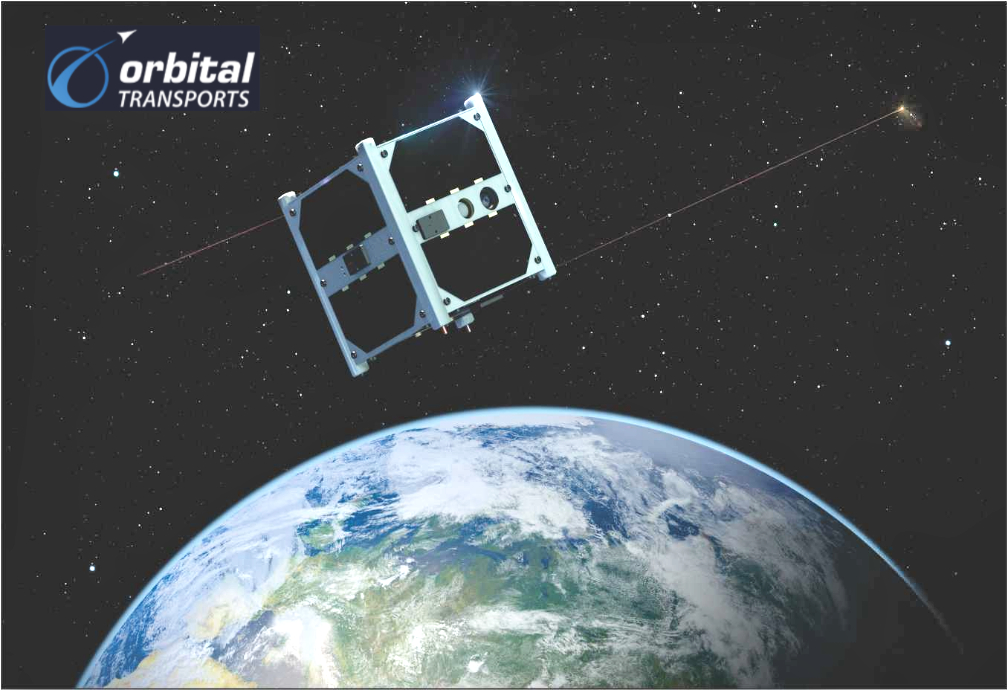
Exo-Space has announced an agreement with Orbital Transports to demonstrate their Vision-1 image analysis data processing unit on a Get Spaceborne™ rideshare mission in LEO. 

The Vision-1 image processor executes novel, machine vision algorithms to detect and classify objects and structures within the field of view of on-board imaging systems.

Rather than sending large sets of raw data down to ground stations, the Vision-1 processes images directly from an onboard camera and sends down only the relevant information, reducing downlink costs and improving response times to observable events. 

The Vision-1 is a compact Data Processing Unit for artificial intelligence applications on-orbit. Its small size (0.5U) makes it compatible with most cubesat platforms.

Orbital Transports conducts the mission planning and systems engineering, handles legal and regulatory compliances, performs payload testing and integration, provides launch vehicle integration, and supervises mission operations so customers can focus on their primary mission objectives and results.

“By flying with Orbital Transports, Exo-Space will obtain valuable flight experience and accelerate the development of our products,” said Jeremy Allam, CEO of Exo-Space. “It’s a great opportunity to demonstrate our machine vision hardware in LEO and acquire flight heritage in the space environment.” 

 “We’re excited to be flying the Vision-1 image processor for Exo-Space,” stated David Hurst, CEO of Orbital Transports. “Our Get Spaceborne™ rideshare missions offer an easy on-ramp to space for payloads ranging from technology demonstration and qualification to full constellation-scale deployments. If you want to put a payload in space or even deploy sensors or instruments in a constellation, there is no longer any reason to build your own satellites. You save money, time, and resources with our turn-key hosted payload services.” 

Filed Under: Featured, News

New Vietnamese NanoDragon Satellite Heading To Japan For Launch By JAXA

August 13, 2021 by editorial

A new, locally-made, smallsat developed by the Vietnam National Space Centre (VNSC) has been completed and sent to Japan for launch into orbit.

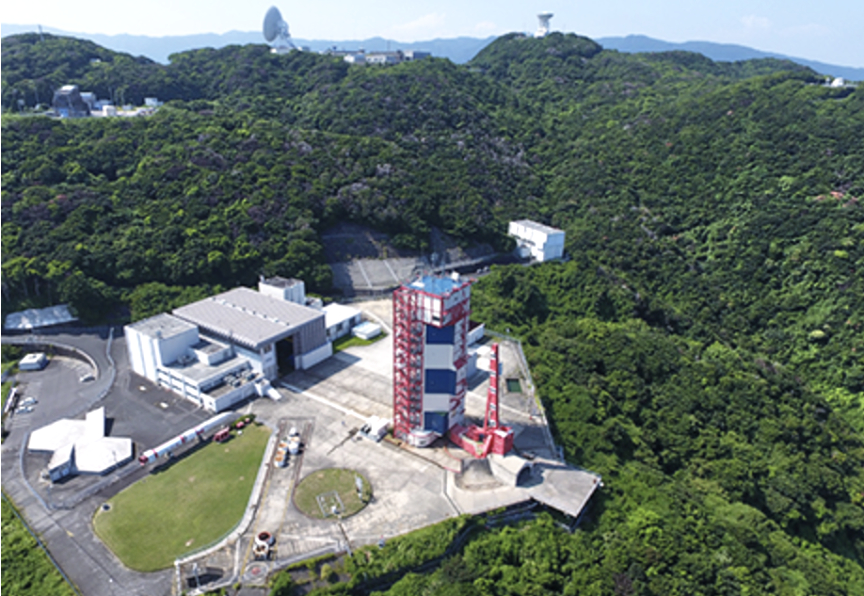
On August 11, the VNSC announced that their NanoDragon satellite was transported from Noi Bai Airport in Hanoi to Narita Airport in Tokyo that day, before being transferred to the Uchinoura Space Centre launch site in Kagoshima Prefecture and handed over to the Japan Aerospace Exploration Agency (JAXA) for launch preparations.

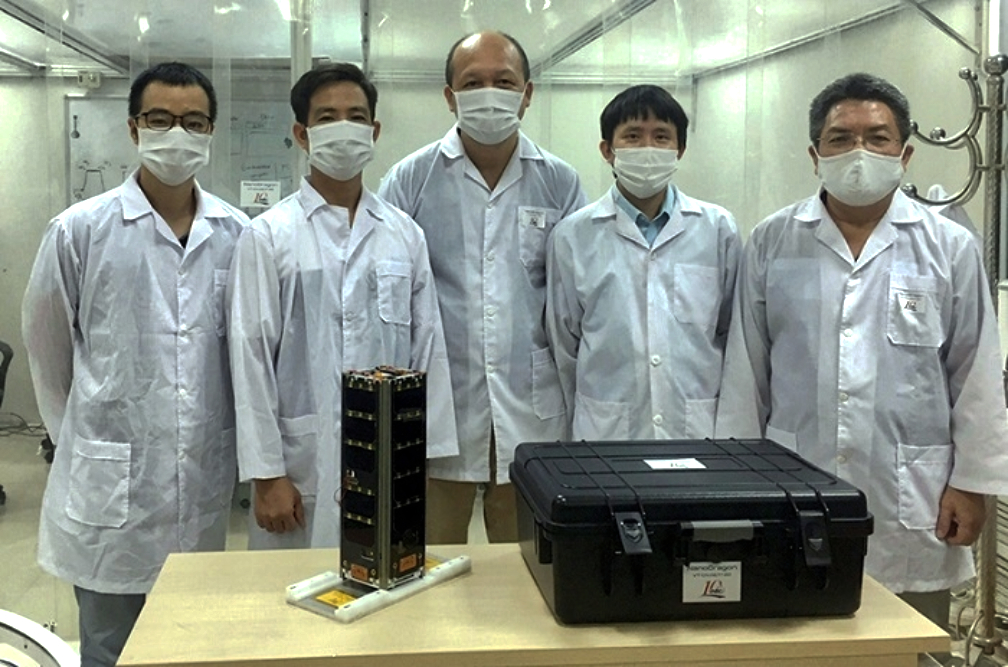
Scientists at the Vietnam National Space Center with their NanoDragon smallsat before shipping it to Japan for launch.

The 3U cubesat NanoDragon weighs approximately 4 kg and is comprised of multiple 10×10×34 cm (3U) modules. The entire process of researching, designing, integrating and testing the satellite’s functions was carried out in Vietnam.

The smallsat was developed by the VNSC (under the Vietnam Academy of Science and Technology) as the result of the nano-class satellite development, launch and trial operation project, under the National Science and Technology Programme on space technology, from 2016 to 2020.

NanoDragon is tasked with using smallsat beam technology to receive automatic identification signals of ships for the purpose of tracking and monitoring vehicles at sea. In addition, the satellite has also been designed to verify the quality of the satellite posture and control system and a newly-developed, advanced, on-board computer designed specifically for small satellites. NanoDragon will be working from SSO at 560 km above the Earth’s surface.

In parallel with the satellite development, a ground station to operate the satellite after launch has been developed and installed at the VNSC at Hoa Lac Hi-Tech Park in Hanoi.

Prior to NanoDragon, the first made-in-Vietnam satellite, PicoDragon (weighing 1 kg), was successfully launched with signals received in 2013. MicroDragon (50 kg), developed by a group of 36 young VNSC researchers under Japanese experts’ supervision, was also sent into orbit on January 18, 2019 and has successfully sent pictures from space to its ground station in Japan.

Aerial photo of the Uchinoura Space Center in Japan.

Filed Under: News

Spaceit’s Pre-Seed Funding Garners 1 Million Euros For Satellite Ops + Space Cybersecurity Solutions

August 11, 2021 by editorial

Estonian space start-up Spaceit, which offers an end-to-end infrastructure for satellite operations and space cybersecurity solutions, has secured €1 million in pre-seed funding to expand their activities. The round was led by Icebreaker.vc from Finland and included UG Investments from Estonia.

Spaceit has developed a cloud-based mission control platform with pre-integrated access to a worldwide network of ground stations and provides satellite operations simulators to strengthen the rapidly growing space sector against cyberattacks.

As for the business’ expansion, the space industry has shown a fast increase in recent years, with an all time high 1,300 satellites launched already in 2021 (as a comparison, in 2020 the total of launches was about 1,100). The operation of any satellite requires secure communication with terrestrial operators, with reliable software as a precondition. Many existing solutions are costly or not scalable. They often do not offer extensive radio communications, do not support satellite constellations, or show deficits in cyber security – Spaceit is aiming to remedy this situation.

“Our goal is to reduce satellite missions budgets over 80% by offering mission control as-a-service, combined with wide and secure communication with satellites. We are delighted to have the new investors with a good know-how on space, technology and infrastructure onboard who will support us developing our solution further,” said Silver Lodi, CEO of Spaceit.

Riku Seppälä, General Partner and Co-Founder of Icebreaker.vc, added, “The Spaceit team has a deep understanding of the requirements of modern space operations. They have developed a strong technology that provides an essential service at a fraction of the cost of alternatives as well as providing better radio coverage. We’re thrilled to be onboard to support the team in creating a winning software and space technology company.”

“Space technology is no longer a domain of superpowers, and Spaceit is a good example of how this rapidly developing field offers good opportunities for Estonian companies. With a clear focus and a dedicated team, Spaceit has great potential and UG Investments is happy to support the company’s product development,” said Valdur Laid, Management Board Member of UG Investments.

“The focus of the Estonian space policy is primarily on cyber security, AI and innovation. Spaceit is a vivid example of how an Estonian company can contribute to the development of the rapidly growing space sector in these focus areas,” said Paul Liias, Head of the Space Division of the Ministry of Economic Affairs and Communications of Estonia.

Spaceit was founded in 2015 by Silver Lodi, Lauri Kimmel and Mihkel Jalakas, all long time friends since high school. Lodi’s experience includes corporate banking and sales. Kimmel was a team member of the ESTCube-1, the first Estonian satellite that was launched in 2013. He and Jalakas have been engaged in software development since the early 2000s. Spaceit is an alumnus of ESA Business Incubation Centre in Estonia and Starburst Accelerator. Icebreaker.vc is an early-stage VC focused on idea and pre-seed stage teams in Finland, Sweden and Estonia. Icebreaker invests €150-800K in teams with deep domain expertise and ambition to build globally competitive tech companies. UG Investments is a holding company that invests mainly into sustainable and export-oriented companies in the energy, industrial, infrastructure and utility sectors.

On the Spaceit team photo (from the left): Lauri Kimmel, Silver Lodi, Mihkel Jalakas, Ivalo Pajumets https://drive.google.com/file/d/1ZQnoT9tlf3tZSCdRmj3ly_1WEhBx8LCr/view?usp=sharing,
photo by Kalle Veesaar (kalleveesaar.com)

Filed Under: News

The Lockheed Martin LINUSS™ Smallsats Are Ready For Launch

August 10, 2021 by editorial

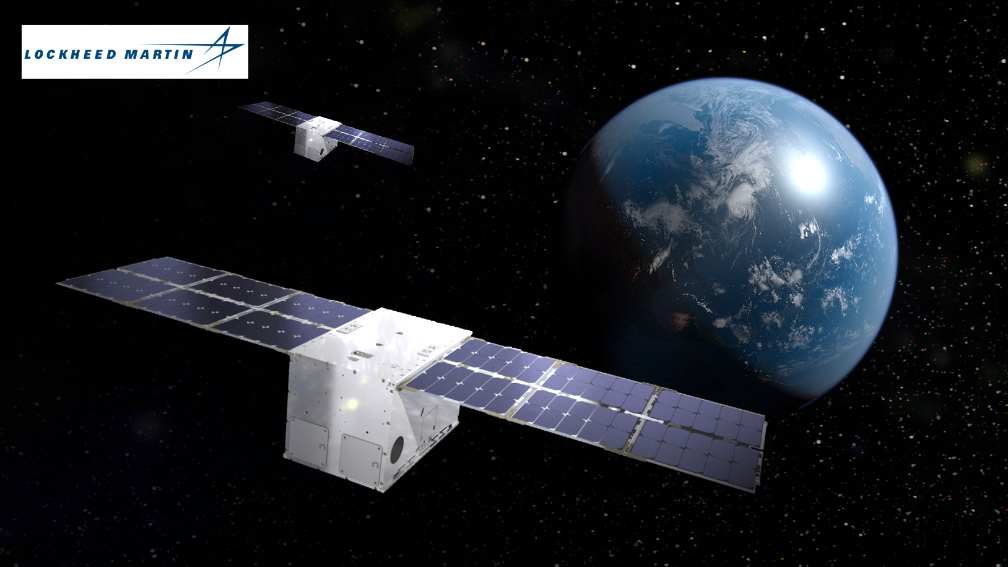
Lockheed Martin’s (NYSE: LMT) In-space Upgrade Satellite System (LINUSS) completed environmental testing and is ready for launch later this year, demonstrating how small cubesats can regularly upgrade satellite constellations to add timely new capabilities and extend spacecraft design lives.

LINUSS is a pair of LM 50™ 12U cubesats — each about the size of a four-slice toaster — designed to demonstrate how smallsats can serve an essential role in sustaining critical space architectures in any orbit. Developed using internal funding, LINUSS will be two of the most capable cubesats in Geosynchronous Earth Orbit (GEO).
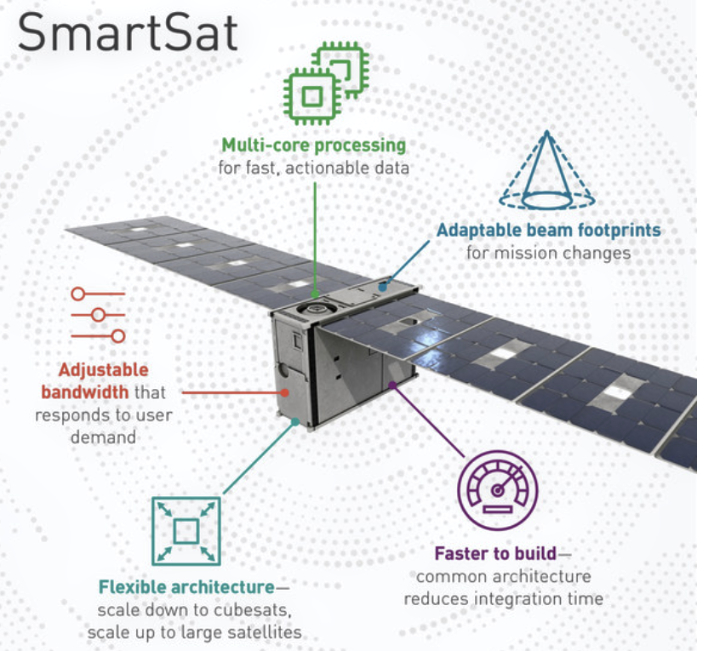
LINUSS’ mission is to validate essential maneuvering capabilities for Lockheed Martin’s future space upgrade and servicing missions, as well as to showcase miniaturized Space Domain Awareness capabilities. LINUSS also will demonstrate new, mature, onboard high-performance processing by Innoflight; low-toxicity propulsion by VACCO; and inertial measurement units, machine vision, 3-D printed components and SmartSat™ (transformational on-orbit software upgrade architecture) technologies by Lockheed Martin.

Part of Lockheed Martin’s LM 50 family of smallsats, both LINUSS spacecraft — measuring roughly 8x8x12 inches — are the collaborative integration of the company’s mission electro-optical payload deck with a next-generation 12U bus from Tyvak Nano-Satellite Systems, a Terran Orbital Company.

In addition to LINUSS, some other recent Lockheed Martin smallsat projects include: DARPA’s Mandrake, integration for DARPA’s Blackjack constellation, Pony Express, LunIR and La Jument. In Europe, the company also is involved in developing a 6U smallsat with GomSpace and Orbital Microsystems, as well as supporting the U.K.’s ambitions to launch smallsats through the UK Spaceflight program.

“Space is a dynamic domain and our customers are demanding the ability to rapidly upgrade spacecraft on orbit – to provide greater capabilities and more mission flexibility,” said Chris Crawford, vice president of advanced program development for Lockheed Martin Military Space. “LINUSS will be the first step flight-qualifying this technology. The ultimate near-term goal is supporting upgradeable LM 2100™ satellite bus platforms, starting with GPS IIIF Space Vehicle 13.”

“Given we are well known for our systems integration work on large satellite systems, some people are surprised to learn Lockheed Martin has launched over 150 small satellites since 1997,” said Dr. David J. Barnhart, LINUSS Program Director. “LINUSS has higher bus density, payload accommodation, and on-orbit processing than any other cubesat, enabling revolutionary mission capabilities in the future. Early customer community feedback has called LINUSS ‘the most capable cubesat pair off the planet.’”

Filed Under: News

Dawn Aerospace To Empower The Indonesian Space Agency’s Tsunami Warning Satellite Constellation

August 10, 2021 by editorial

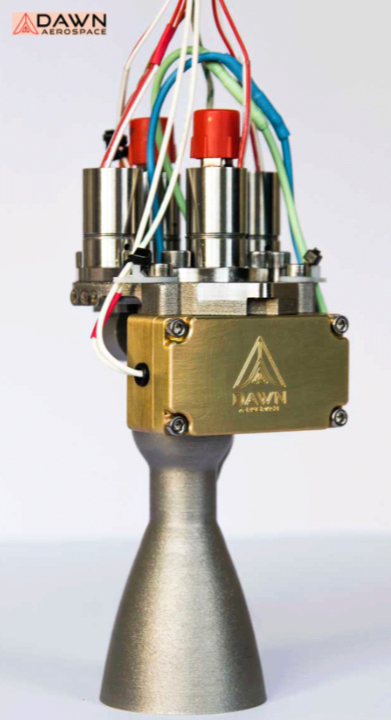
The National Institute of Aeronautics and Space of Indonesia (LAPAN) has selected Dawn Aerospace‘s green propulsion for a new satellite constellation used for the early detection of Tsunamis.

Indonesia, located along the Pacific Ocean’s Circum-Pacific belt, or “Ring of Fire,” is geographically prone to tsunamis; several tectonic plates meet and frequently cause volcanic and seismic activity. As a result, around 90 percent of the world’s earthquakes occur in the area.

With Indonesia’s history of earthquakes and tsunamis, a new Tsunami Warning System (TWS) is expected to save countless lives and result in economic benefits for the nation.

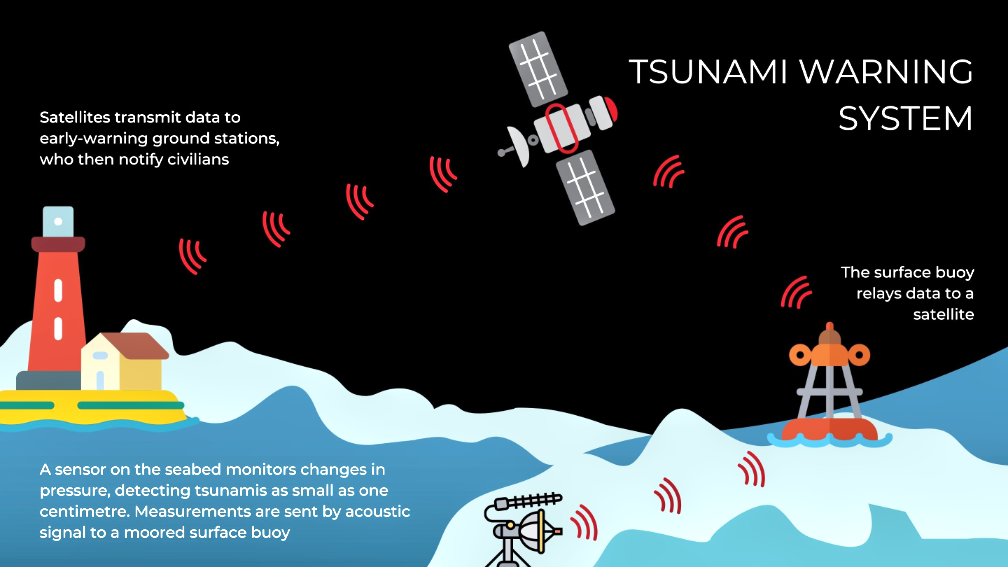
A TWS uses buoys and satellites to measure wave heights after an earthquake. It can provide warnings of up to several hours, depending on the quake’s location.

After receiving a signal of unusual activity from sea bed sensors, the buoys then transmit data to satellites, sending warnings to ground stations and tsunami warning centers. The public is then informed to evacuate via sirens or text messages. The planned constellation is for nine satellites in an equatorial orbit, providing constant coverage for the nation.

“Our industry often talks about going to space to improve life on Earth,” said Jeroen Wink, Dawn Co-founder. “We are incredibly proud to be part of a project designed to save lives.”

Dawn has recently announced contracts with customers ALE Co., Ltd. Japan and UARX Space. The companies will use Dawn’s new, smallsat propulsion architecture.

Filed Under: News

  • « Go to Previous Page
  • Page 1
  • Interim pages omitted …
  • Page 22
  • Page 23
  • Page 24
  • Page 25
  • Page 26
  • Interim pages omitted …
  • Page 65
  • Go to Next Page »

Primary Sidebar

WEEKLY NEWSLETTER

Archives

  • November 2026
  • October 2026
  • September 2026
  • August 2026
  • July 2026
  • June 2026
  • May 2026
  • April 2026
  • March 2026
  • February 2026
  • January 2026
  • December 2025
  • November 2025
  • October 2025
  • September 2025
  • August 2025
  • July 2025
  • June 2025
  • May 2025
  • April 2025
  • March 2025
  • February 2025
  • January 2025
  • December 2024
  • November 2024
  • October 2024
  • September 2024
  • August 2024
  • July 2024
  • June 2024
  • May 2024
  • April 2024
  • March 2024
  • February 2024
  • January 2024
  • December 2023
  • November 2023
  • October 2023
  • September 2023
  • August 2023
  • July 2023
  • June 2023
  • May 2023
  • April 2023
  • March 2023
  • February 2023
  • January 2023
  • December 2022
  • November 2022
  • October 2022
  • September 2022
  • August 2022
  • July 2022
  • June 2022
  • May 2022
  • April 2022
  • March 2022
  • February 2022
  • January 2022
  • December 2021
  • November 2021
  • October 2021
  • September 2021
  • August 2021
  • July 2021
  • June 2021
  • May 2021
  • April 2021
  • March 2021
  • February 2021
  • January 2021
  • December 2020
  • November 2020
  • October 2020
  • September 2020
  • August 2020
  • July 2020
  • June 2020
  • May 2020
  • April 2020
  • March 2020
  • February 2020
  • January 2020
  • December 2019
  • November 2019
  • October 2019

© 2019–2026 SatNews

Insert/edit link

Enter the destination URL

Or link to existing content

    No search term specified. Showing recent items. Search or use up and down arrow keys to select an item.
      x
      Sign Up Now!

      Enjoy a free weekly newsletter with recent headlines from the global SmallSat industry.

      Invalid email address
      We promise not to spam you. You can unsubscribe at any time.
      Thanks for subscribing! You will now receive weekly SmallSat News updates.
      We love our advertisers.
      And you will too!

      Please disable Ad Blocker to continue... We promise to keep it unobtrusive.
      We promise not to spam you. You can unsubscribe at any time.
      Invalid email address
      Thanks for subscribing!