• Skip to main content
  • Skip to primary sidebar
  • Home
  • News
  • Featured
  • More News ⌄
    • SatNews
    • SatMagazine
    • MilSatMagazine
  • Events ⌄
    • MilSat Symposium
    • SmallSat Symposium
    • Satellite Innovation
  • Contacts
  • SUBSCRIPTION

SmallSat News

You are here: Home / 2022 / Archives for January 2022

Archives for January 2022

Virgin Orbit’s Latest Mission Successfully Reaches Above The Clouds With Seven Satellites

January 17, 2022 by editorial

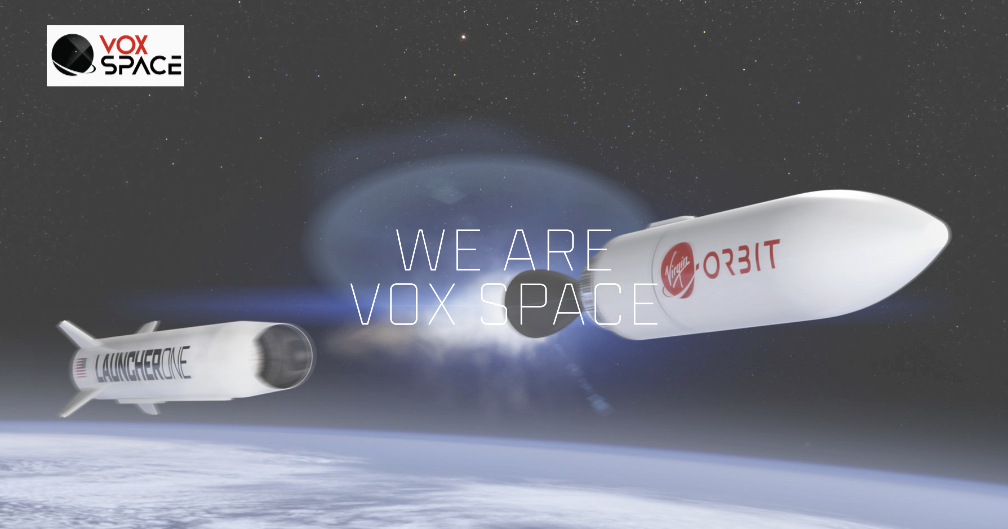
Virgin Orbit (Nasdaq: VORB) successfully deployed into orbit all seven customer satellites onboard the company’s LauncherOne rocket during the Above the Clouds mission.

Virgin Orbit’s LauncherOne rocket separates from the 747 carrier aircraft, Cosmic Girl, and the Above The Clouds Mission is underway.

Virgin Orbit’s 747 carrier aircraft Cosmic Girl took off from Mojave Air and Space Port on February 13th at approximately 1:39 PM PST/09:39 PM UTC and flew to a launch site over the Pacific Ocean, about 50 miles south of the Channel Islands. After a smooth release from the aircraft, the LauncherOne rocket ignited and propelled itself toward space, deploying its payload into a precise target orbit approximately 500 km. above the Earth’s surface at 45 degrees inclination. This is the first time that anyone has reached this orbit from the West Coast.

The launch was the company’s third successful flight, occurring less than one year from its first mission. Virgin Orbit has now successfully delivered commercial, government, international, and national security satellites to space, including new Above the Clouds customer Spire Global, Inc. (NYSE: SPIR), and first ever repeat customers: the U.S. Department of Defense Space Test Program and Polish company SatRevolution. This launch was awarded to Virgin Orbit through its subsidiary VOX Space by the DoD’s Defense Innovation Unit (DIU) as part of the DoD Space Test Program’s (STP) Rapid Agile Launch (RALI) Initiative.
The satellites launched on the company’s latest mission include experiments in space-based communications, space debris detection, and in-space navigation and propulsion, as well as satellites that will serve the global agricultural sector. The launch brings the total satellites launched by Virgin Orbit to 26 in number.

Due to the unique air-launch system Virgin Orbit has developed, the Above the Clouds mission was launched in an orbit never before directly accessible from the West Coast of the Americas. Rather than launching from a fixed pad on the ground, Virgin Orbit conducts its launches from under the wing of a modified 747 aircraft. By flying the aircraft further out over the ocean, the company was able to launch on a trajectory no ground-launch rocket could have achieved. That direct injection into the target orbit saved the satellites onboard this mission months of time and kilograms of fuel they might have otherwise spent correcting their orbit from what a landlocked launch site could provide them.

“Our customers are starting to hear back from their satellites that are checking in from orbit — and for us, that’s what success looks like. It’s a thrill for our team that this mission included our first repeat customers as well as our first ‘last minute ticket’ customers and reached an orbit that no one had ever reached from the West Coast before, all of which confirms the team’s ability to provide top tier launch service anywhere, anytime,” said Virgin Orbit CEO, Dan Hart. “On top of that, we flew through weather and a cloud layer that would have grounded any other launch I’ve worked on in my career, something only made possible by air-launch and our incredible team. We can say with confidence that in this new era of regular, frequent, successful missions, we can help our customers and partners use space technology to advance human knowledge and open space for good."
"This accomplishment today really shows the future of space launch capabilities, something that is of paramount importance to national security,” said VOX Space President, Mark Baird, a retired U.S. Air Force Brigadier General. “We have the ability to launch anywhere, anytime and unwarned, which allows us to customize the launches to serve a government’s mission and goals, allowing us to be better mission partners in their space operations.”
“What an unforgettable experience to watch the Virgin Orbit team complete another perfect mission to space. I could not be prouder of the work they are doing. I am beaming alongside them,” said Virgin Orbit founder, Sir Richard Branson. “We supported experimental, important work for our three happy customers today. I congratulate them and our wonderful team.”

Above the Clouds is named after the fifth track on Gang Starr’s 1998 album Moment of Truth, featuring Inspectah Deck of Wu-Tang Clan. The record was released by Virgin Records in collaboration with Noo Trybe Records and is widely regarded as one of the greatest hip hop albums of all time.

Filed Under: News

The SmallSat Symposium Silicon Valley 2022 Event Has More Exhibitors Than Ever Before Experienced

January 17, 2022 by editorial

One of the more excellent announcements any company can broadcast is when they have surpassed a previous record or set a new milestone or completed a project with better than expected results.

Such has now occurred for the annual SmallSat Symposium — event organizers have revealed that this major, industry proceeding will be hosting more exhibitors than have been experienced at any previous event.

According to SatNews Publisher, CEO, Silvano Payne, “We have seen an increase in sponsorship and exhibition presence of more than 35 percent over our February 2020 event.“

Plan your visit to the SmallSat Symposium as quickly as you can — the event is in session from February 8th through February 10th at Silicon Valley’s Computer History Museum in Mountain View, California.

Leading organizations in the SmallSat Industry will be exhibiting at, and sponsoring, this first, major, SmallSat event in two years. The energy and enthusiasm for this industry trade event reflects a feeling that all are now able to finally ‘come home.’

The SmallSat industry is booming and major actors are coming out of the lockdown shadows to showcase their capabilities… unlike ever before witnessed.

The dates to remember are: February 8th through 10th at the Computer History Museum in Mountain View, California… the 7th Annual SmallSat Symposium… “Defining What’s Next for the SmallSat Industry.”

Register today at this direct link…

Filed Under: News

Loft Orbital Signs Airbus To Build 15 Arrow Satellite Platforms

January 14, 2022 by editorial

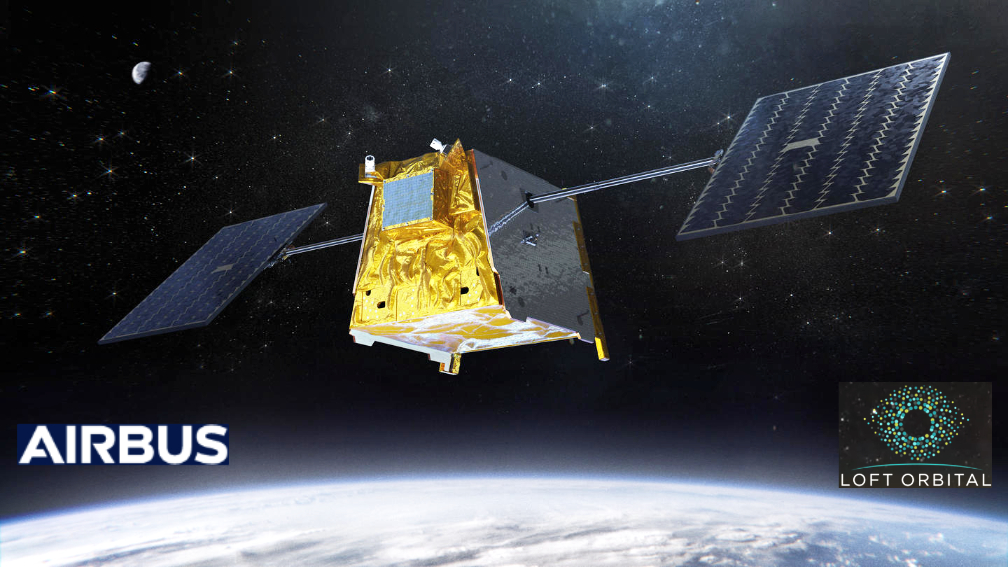
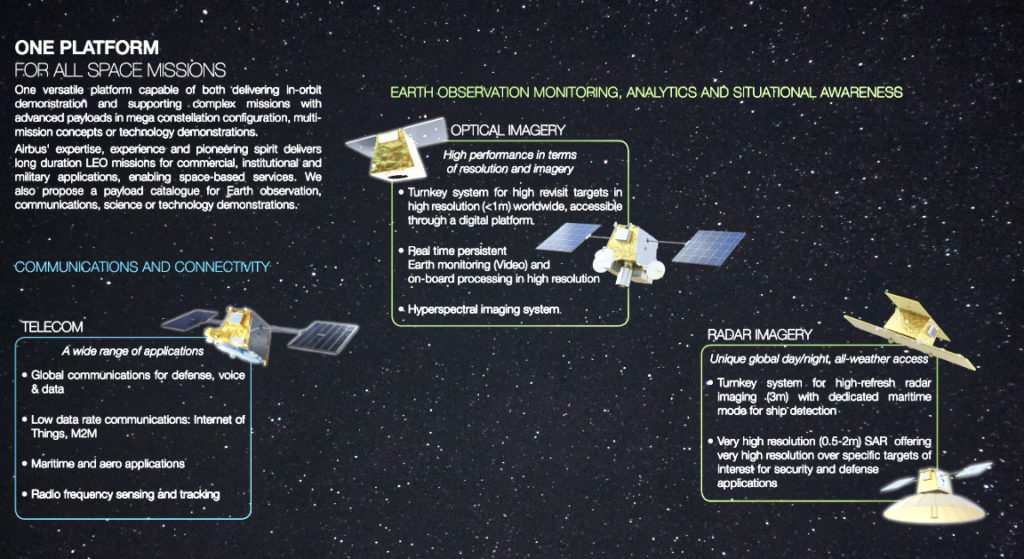
Airbus has been contracted to supply space start-up Loft Orbital with more than 15 satellite platforms derived from the Airbus Arrow platform, the foundational satellite platform of the OneWeb constellation.

There are 394 Airbus Arrow platforms on-orbit for the OneWeb constellation and a further 254 are being produced to complete the 648 spacecraft required by OneWeb. With this acquisition, Loft Orbital confirms its intention to make the Airbus Arrow platform a true workhorse enabling its service business model.

Loft Orbital offers a true end-to-end service enabling customers to rapidly deploy and operate their payloads on reliable high-performance satellites at an unprecedented simplicity and affordability. Loft Orbital has also contracted Airbus to modify the Arrow platform to make it suitable for a wider range of longer lifetime missions and applications.

Loft Orbital has offices both in the USA and France, being based in the heart of Silicon Valley in San Francisco, and in the European space capital Toulouse, and intends to continue rapidly growing its French presence following this contract relationship with Airbus.

Airbus previously benefited from public support to develop the Arrow platform and OneWeb pilot line in Toulouse.

The improvements to the Arrow platform, including all the engineering, qualification, test, and production of the first few spacecraft will be performed by Airbus in Toulouse. The production at scale of the remaining Arrow-derived platforms will be performed by Airbus OneWeb Satellites (AOS).

Bruno Le Maire, French minister for the Economy, Finances and the Recovery, said, “This groundbreaking contract between start up Loft Orbital and global space leader Airbus is a very good news. It demonstrates the uptake of New Space companies in France and the synergy across the space ecosystem for developing industry wide innovation. It also testifies the speed at which the French space ecosystem is growing, with start-ups, SMEs, and large groups working together to provide world-class solutions, and fully validates the ongoing government strategy and initiatives to develop a vibrant and growing next space innovation ecosystem. I am very pleased that the project presented by Loft with the support of Airbus relies on French suppliers, more than 60% of the value being created in France.”
Jean-Marc Nasr, Head of Airbus Space Systems, said, “This sale of our small LEO platform Arrow to Loft Orbital is a ringing endorsement of our strategy to develop mass manufacturing for the next space era. Our reliable platform is already proving its worth in orbit for OneWeb who have more than 60% of their fleet in orbit. We look forward to working with Loft Orbital to provide them with the best space technology possible – combining industrially-proven know-how with disruptive innovations – to serve their customers.”
Pierre-Damien Vaujour, CEO of Loft Orbital, said. “We are beyond excited about this procurement agreement with Airbus that is an industry first. Leveraging Airbus engineering experience and Airbus OneWeb Satellites production capabilities is enabling us to truly bring Loft's vision to life. While we are using this initial procurement to deliver to our customers who have ordered services based on a few tens of satellites, we see this as an opportunity to offer much larger constellation services to governments and companies worldwide. In addition, the level of support we have received in France, and the quality of the engineering talent, is simply unmatched and we are looking forward to growing the company here in Toulouse.”

Filed Under: News

Success For NearSpace Launch’s Smallsat Orbit Acquisition Via Virgin Orbit’s Mission

January 14, 2022 by editorial

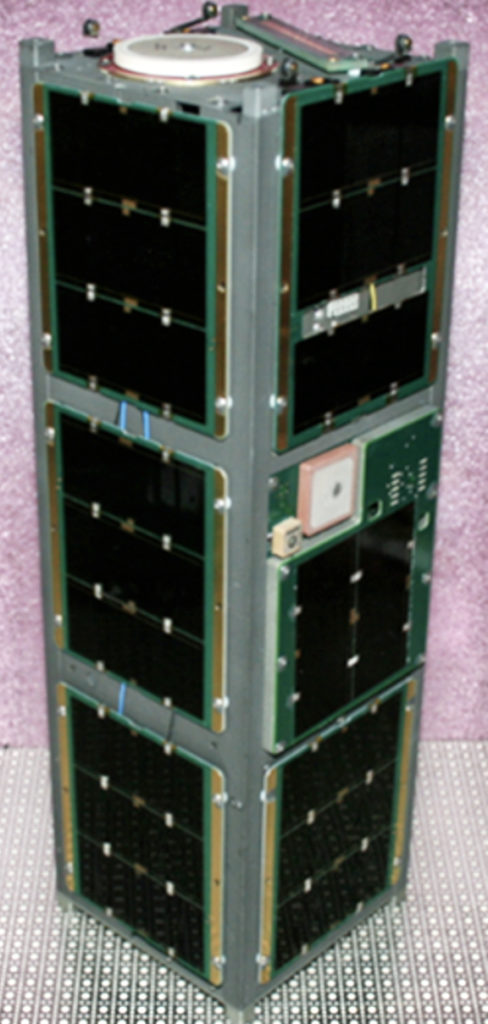
NearSpace Launch Inc. (NSL) is celebrating their 3U smallsat launch by Virgin Orbit’s third operational mission, along with six other customers, on January 13, 2022.

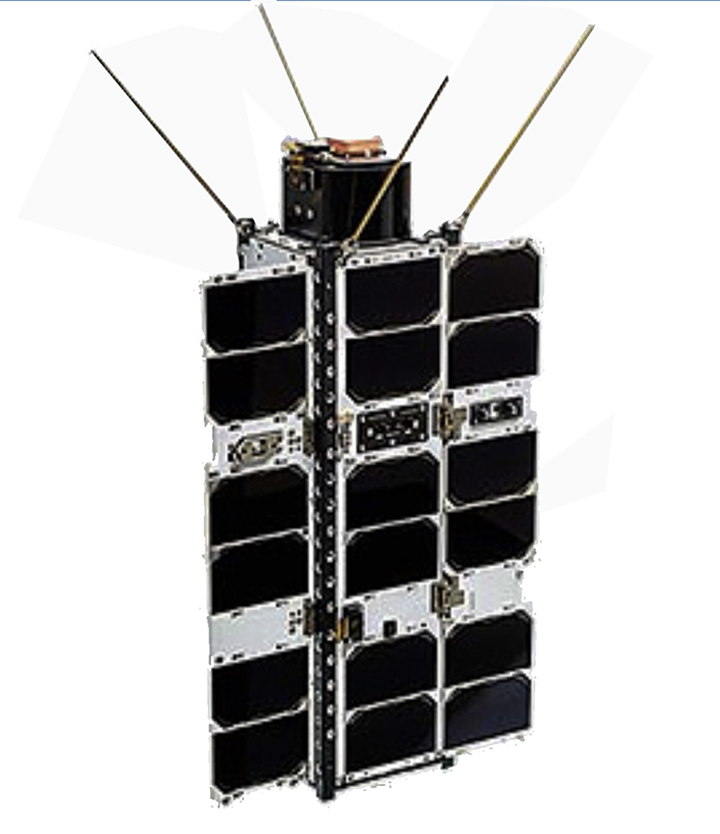
Photo of the GEARRS-3 cubesat, courtesy of the company.

GEARRS is the third cubesat to launch in partnership with AFRL (Air Force Research Laboratory) and SSC-STP (U.S. Space Systems Command—Space Test Program (STP)-3) to test experimental Satellite-to-Satellite (Sat2Sat)communication systems and tracking.

GEARRS cubesats are pioneering new EyeStar technology for space research. NSL’s EyeStar radios allow for 24/7 connectivity via Sat2Sat connection. GEARRS-3 has completed the commissioning phase and has now moved into full operational status.

Co-founder of NSL and Chief Engineer, Jeff Dailey, said, “It is always good to see first packets received one minute after transmitter scheduled to turn on. Preliminary data shows mission success, as both the Black Box Patch and Eyestar links connected and sending data.”

Filed Under: News

The Fifth Ocean Monitoring Smallsat For Unseenlabs Is Successfully Launched

January 14, 2022 by editorial

An Unseenlab‘s smallsat launch, their fifth ocean monitoring spacecraft, occurred on January 13th and is part of Unseenlabs’ plan to have 20 to 25 satellites in orbit by 2025.

After launching with Arianespace in August of 2021, Unseenlabs this time entrusted the launch of BRO-5 to SpaceX, diversifying the company’s means of access to space through its collaboration with a new international, launch services player.

Unseenlabs’ service, focused on radio frequency geolocation of ships at sea, has been active since the first satellite launch – BRO-1 – in August of 2019. Since then, each new launch has increased the service’s capabilities, notably by increasing its responsiveness and the amount of data produced.

The launch of the 5th pillar in the Unseenlabs constellation, a 10 kilogram satellite moving at 7 kilometers per second around the Earth, will once again improve the smallsat’s revisit time, which is already one of the best on the market for intercepting radio frequency signals from space.

The company plans to continue to increase its workforce, which is already around 30 employees, to support this hypergrowth phase and the launches planned for this year.

"The deployment of BRO-5 enables us to strengthen our international activities, and to reaffirm the place of our constellation as the most developed in the field of RF interception from space. By pursuing innovation and increasing the quality of our service, it is part of the French space strategy of the France 2030 plan, mentioned by Bruno Le Maire, Minister of Economy, Finance and Recovery, in Vernon on December 6," said Clément Galic, CEO and co-founder of Unseenlabs. 
"After a successful year in 2021 for Unseenlabs, both in terms of new collaborations and the launch of a fourth satellite - BRO-4 - on August 16 with Arianespace, we intend to continue this trend in 2022. We are proud to carry out the first launch of the year, which comes in a promising context for the development of our business," added Jonathan Galic, Chief Technology Officer and co-founder of Unseenlabs. 

A BRO-5 launch trailer is available for viewing at this direct link…

Filed Under: News

Virgin Orbit’s Latest Mission Successfully Reaches Above The Clouds With Seven Satellites

January 14, 2022 by editorial

Virgin Orbit (Nasdaq: VORB) successfully deployed into orbit all seven customer satellites onboard the company’s LauncherOne rocket during the Above the Clouds mission.

Virgin Orbit ‘s LauncherOne rocket separates from the 747 carrier aircraft, Cosmic Girl, and the Above The Clouds Mission is underway.

Virgin Orbit’s 747 carrier aircraft Cosmic Girl took off from Mojave Air and Space Port on February 13th at approximately 1:39 PM PST/09:39 PM UTC and flew to a launch site over the Pacific Ocean, about 50 miles south of the Channel Islands. After a smooth release from the aircraft, the LauncherOne rocket ignited and propelled itself toward space, deploying its payload into a precise target orbit approximately 500 km. above the Earth’s surface at 45 degrees inclination. This is the first time that anyone has reached this orbit from the West Coast.

The launch was the company’s third successful flight, occurring less than one year from its first mission. Virgin Orbit has now successfully delivered commercial, government, international, and national security satellites to space, including new Above the Clouds customer Spire Global, Inc. (NYSE: SPIR), and first ever repeat customers: the U.S. Department of Defense Space Test Program and Polish company SatRevolution. This launch was awarded to Virgin Orbit through its subsidiary VOX Space by the DoD’s Defense Innovation Unit (DIU) as part of the DoD Space Test Program’s (STP) Rapid Agile Launch (RALI) Initiative.

The satellites launched on the company’s latest mission include experiments in space-based communications, space debris detection, and in-space navigation and propulsion, as well as satellites that will serve the global agricultural sector. The launch brings the total satellites launched by Virgin Orbit to 26 in number.

Due to the unique air-launch system Virgin Orbit has developed, the Above the Clouds mission was launched in an orbit never before directly accessible from the West Coast of the Americas. Rather than launching from a fixed pad on the ground, Virgin Orbit conducts its launches from under the wing of a modified 747 aircraft. By flying the aircraft further out over the ocean, the company was able to launch on a trajectory no ground-launch rocket could have achieved. That direct injection into the target orbit saved the satellites onboard this mission months of time and kilograms of fuel they might have otherwise spent correcting their orbit from what a landlocked launch site could provide them.

“Our customers are starting to hear back from their satellites that are checking in from orbit — and for us, that’s what success looks like. It’s a thrill for our team that this mission included our first repeat customers as well as our first ‘last minute ticket’ customers and reached an orbit that no one had ever reached from the West Coast before, all of which confirms the team’s ability to provide top tier launch service anywhere, anytime,” said Virgin Orbit CEO,  Dan Hart. “On top of that, we flew through weather and a cloud layer that would have grounded any other launch I’ve worked on in my career, something only made possible by air-launch and our incredible team. We can say with confidence that in this new era of regular, frequent, successful missions, we can help our customers and partners use space technology to advance human knowledge and open space for good."
"This accomplishment today really shows the future of space launch capabilities, something that is of paramount importance to national security,” said VOX Space President, Mark Baird, a retired U.S. Air Force Brigadier General. “We have the ability to launch anywhere, anytime and unwarned, which allows us to customize the launches to serve a government’s mission and goals, allowing us to be better mission partners in their space operations.”
“What an unforgettable experience to watch the Virgin Orbit team complete another perfect mission to space. I could not be prouder of the work they are doing. I am beaming alongside them,” said Virgin Orbit founder, Sir Richard Branson. “We supported experimental, important work for our three happy customers today. I congratulate them and our wonderful team.”

Above the Clouds is named after the fifth track on Gang Starr’s 1998 album Moment of Truth, featuring Inspectah Deck of Wu-Tang Clan. The record was released by Virgin Records in collaboration with Noo Trybe Records and is widely regarded as one of the greatest hip hop albums of all time.
Filed Under: News

The SmallSat Symposium Silicon Valley 2022 Event Has More Exhibitors Than Ever Before Experienced

January 14, 2022 by editorial

One of the more excellent announcements any company can broadcast is when they have surpassed a previous record or set a new milestone or completed a project with better than expected results.

Such has now occurred for the annual SmallSat Symposium — event organizers have revealed that this major, industry proceeding will be hosting more exhibitors than have been experienced at any previous event.

According to SatNews Publisher, CEO, Silvano Payne, “We have seen an increase in sponsorship and exhibition presence of more than 35 percent over our February 2020 event.“

Plan your visit to the SmallSat Symposium as quickly as you can — the event is in session from February 8th through February 10th at Silicon Valley’s Computer History Museum in Mountain View, California.

Leading organizations in the SmallSat Industry will be exhibiting at, and sponsoring, this first, major, SmallSat event in two years. The energy and enthusiasm for this industry trade event reflects a feeling that all are now able to finally ‘come home.’

The SmallSat industry is booming and major actors are coming out of the lockdown shadows to showcase their capabilities… unlike ever before witnessed.

The dates to remember are: February 8th through 10th at the Computer History Museum in Mountain View, California… the 7th Annual SmallSat Symposium… “Defining What’s Next for the SmallSat Industry.”

Register today at this direct link…

Filed Under: News

Kleos Space’s Patrol Mission Smallsat Launch Remanifested For April 2022

January 14, 2022 by editorial

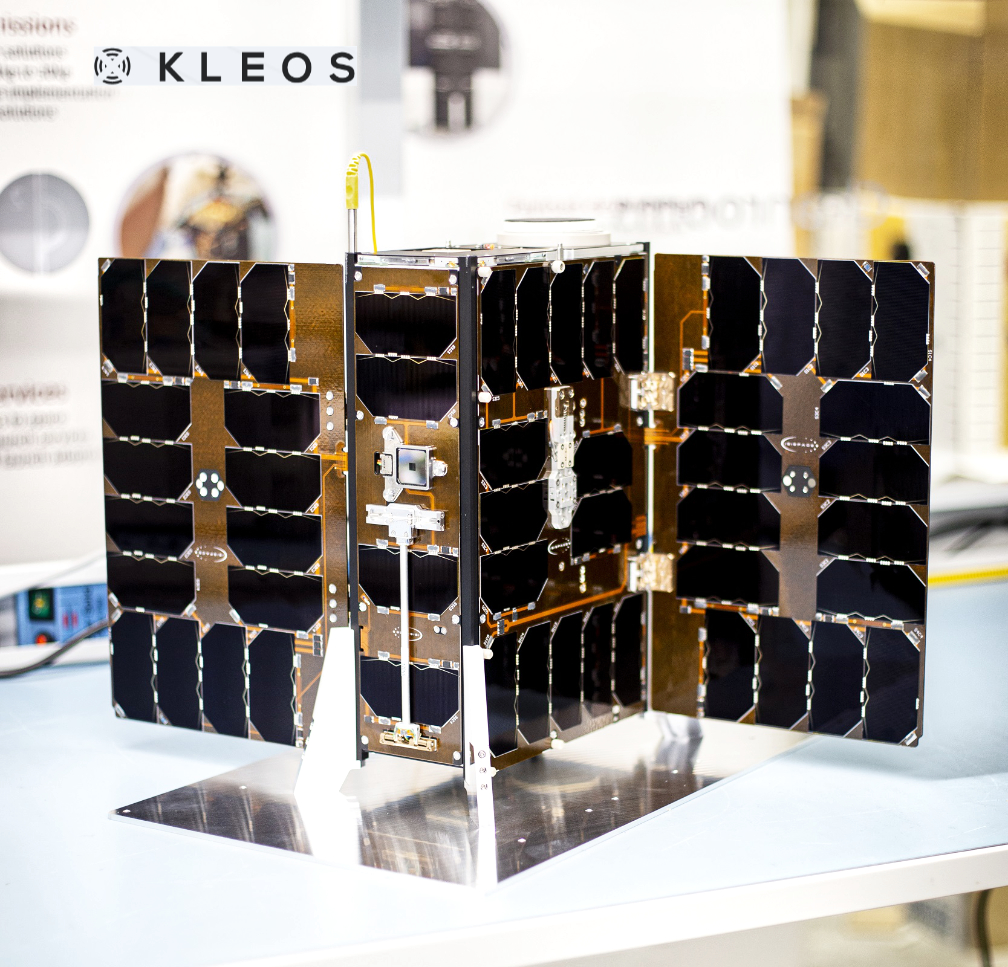
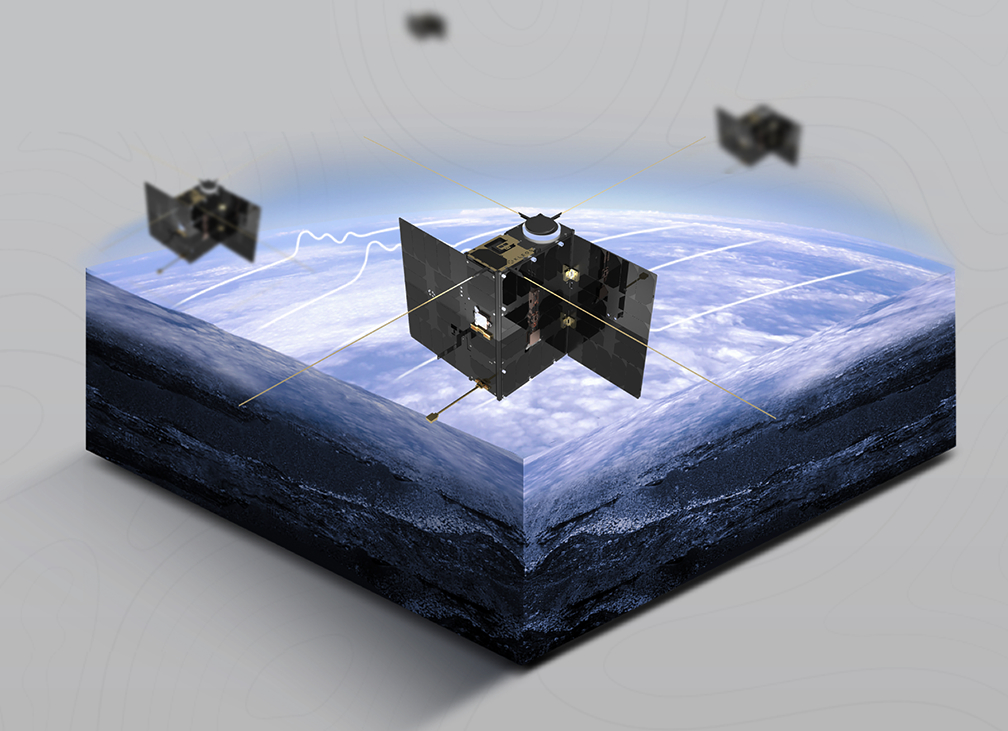
Kleos Space’s Patrol Mission smallsat.

Kleos Space S.A (ASX: KSS, Frankfurt: KS1) (DaaS) company has announced that the company’s Kleos Patrol Mission (KSF2) satellites, planned to launch in January of 2022, have been remanifested to launch on the SpaceX Transporter-4 mission that is scheduled for April of 2022.

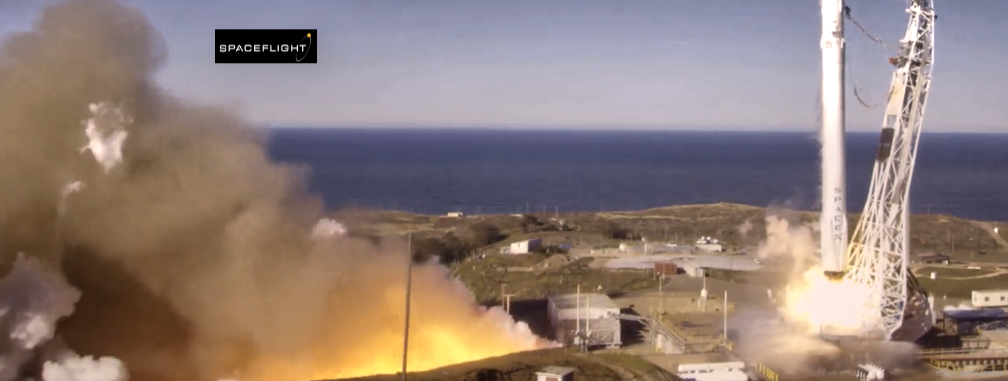
Kleos is partnering with launch services provider Spaceflight Inc. to deploy its Patrol Mission (KSF2) satellites to a sun synchronous orbit (SSO). Originally scheduled for the SpaceX Transporter-3 mission in January 2022, Kleos’ Patrol Mission launch was postponed when the Spaceflight orbital transfer vehicle tasked with launching and deploying Kleos’ satellites experienced technical issues. Spaceflight quickly identified an alternative launch option.

Kleos’ fourth satellite cluster, the Observer Mission (KSF3), is unaffected by the Patrol Mission delay and remains on track to launch in mid-2022.

“Delays are a common occurrence in the industry, and we are committed to navigating them quickly to ensure our customers’ satellites still get to orbit in a timely manner,” said Tony Frego, VP of mission management at Spaceflight Inc. “Through our portfolio of launch vehicles, we were able to secure capacity for Kleos on a new launch that will occur in only a few months. We are committed to minimising the impact of any delays and ensuring our customers’ missions are a success.”
Kleos CEO Andy Bowyer commented, “As our four Patrol Mission satellites were undamaged, we have been able to mitigate the delay by quickly rescheduling the launch for April 2022. Launching into a sun synchronous orbit, our Patrol Mission satellites will significantly increase our data collection capability and complement the eight satellites we already have in orbit. The launch delay does not impact the revenue generating life of the mission.”

Filed Under: News

DEWA-SAT 1 Gains Orbit Via The SpaceX Falcon 9 Rideshare Mission Launch

January 14, 2022 by editorial

Dubai Electricity and Water Authority (DEWA) has launched the DEWA-SAT 1 smallsat in collaboration with NanoAvionics, becoming the world’s first utility to use smallsats to improve the maintenance and planning of electricity and water networks — this achievement underlines DEWA’s leadership in developing and using the latest world-class technologies.

DEWA-SAT 1 was launched on a SpaceX Falcon 9 rocket from Cape Canaveral Space Launch Complex (SLC-40) in Florida, USA. HE Saeed Mohammed Al Tayer, MD and CEO of DEWA, attended the launch along with officials from DEWA and NanoAvionics.

DEWA Sat-1.

Al Tayer said that the smallsats was designed and developed at DEWA’s R&D Centre in the Mohammed bin Rashid Al Maktoum Solar Park. He noted that DEWA will launch another U6 smallsat later this year to promote its flexibility and agility in monitoring, managing, and maintaining its electricity and water networks. This ensures providing electricity and water services according to the highest standards of availability, reliability, and efficiency. It also reduces costs, improves its asset utilization, enables knowledge and experience transfer, as well as trains Emiratis at DEWA.

Al Tayer said that DEWA-SAT 1 uses LoRa IoT communication technology, which is a new wireless protocol designed for long-range communications that consumes less energy, to expand the coverage of the existing terrestrial communication network. Using satellite communications, IoT, and AI will improve the efficiency and effectiveness of DEWA’s operations and support digitizing energy networks, water distribution and transmission networks. It also enables the integration of IoT data using DEWA’s private cloud.

Al Tayer said, “I extend my thanks and gratitude to His Highness Sheikh Mohammed bin Rashid Al Maktoum, Vice President and Prime Minister of the UAE and Ruler of Dubai, for his unlimited support to DEWA and its innovative initiatives and projects including its Space-D program, which His Highness launched in January of 2021. The program supports the National Space Strategy 2030 that aims to realize the UAE’s vision in space sciences, technologies, applications and services."
He added, "DEWA, in collaboration with NanoAvionics, has launched the first U3 nanosatellite as part of the Space-D program that aims to improve the operations, maintenance and planning of its networks with the support of nanosatellite technology, Internet of Things (IoT), and remote sensing technologies. The program also aims to train Emirati professionals to use space technologies to enhance its electricity and water networks and take advantage of Fourth Industrial Revolution technologies such as IoT, Artificial Intelligence (AI), and blockchain to exchange information with the help of satellite communications and earth observation technologies."
Waleed Bin Salman, Executive Vice President of Business Development and Excellence at DEWA, said that DEWA’s Space-D program includes a ground station at the solar park as well as IoT and AI technologies to support ground communication transmission stations in electricity and water networks. By deploying this infrastructure, DEWA seeks to increase the efficiency and effectiveness of its planning and operations, and enhance preventive maintenance at its production, transmission, distribution divisions as well as its smart grids, and electric vehicle charging stations. Multi-spectrum, high-resolution thermal imaging devices such as those used onboard spacecraft, specifically designed for use in electricity and water networks, will be deployed to detect thermal fingerprints in high voltage transmission lines, substations, buildings and solar power stations.

Filed Under: News

USC’s Satellite Dodona With Lockheed Martin La Jument Payloads Travels To Orbit

January 14, 2022 by editorial

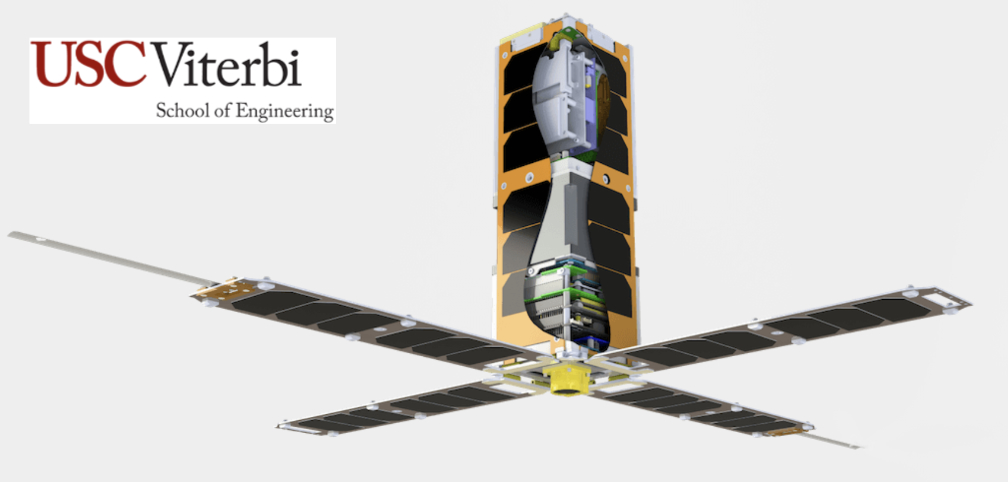
Artistic rendition of USC SERC’s Satellite Dodona

The University of Southern California (USC)‘s Satellite Dodona, with its novel Lockheed Martin La Jument payloads, is part of SpaceX’s Smallsat Rideshare Program and was transported to orbit via SpaceX’s Transporter 3 mission.

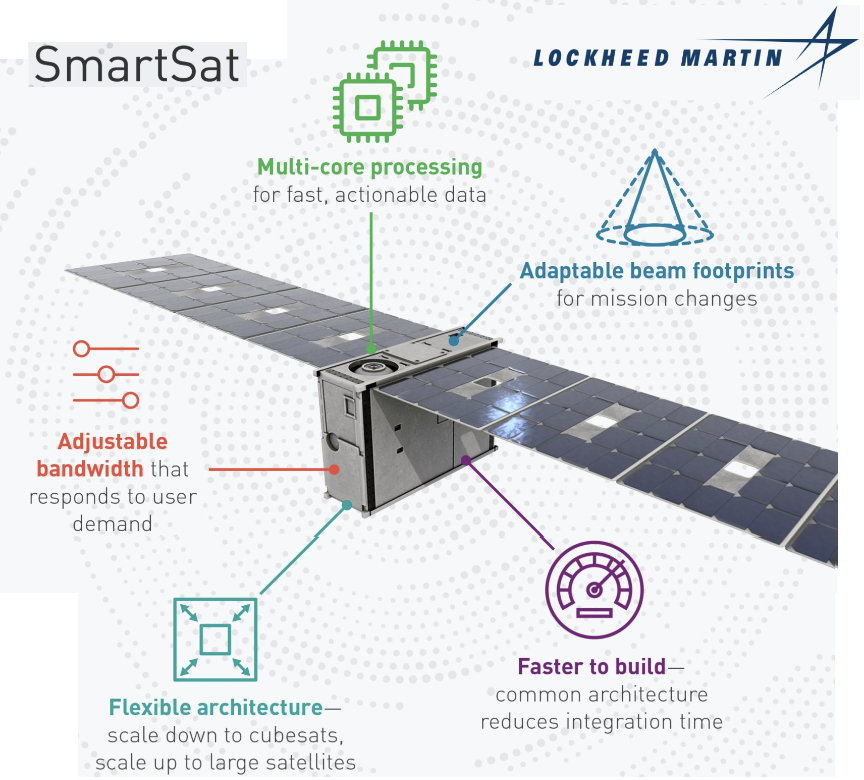
Partner Lockheed Martin supported USC students (graduate and undergraduate) and faculty to take an internally built cubesat (measuring 30 cms. by 10 by 10, called Dodona) the size of bread box and test Lockheed Martin’s newest payload technologies in orbit, including new software that allows for rapid mission changes while in orbit. This SmartSat™ technology is part of Lockheed Martin’s larger La Jument program and Dodona is the first is a series of demonstration flights.
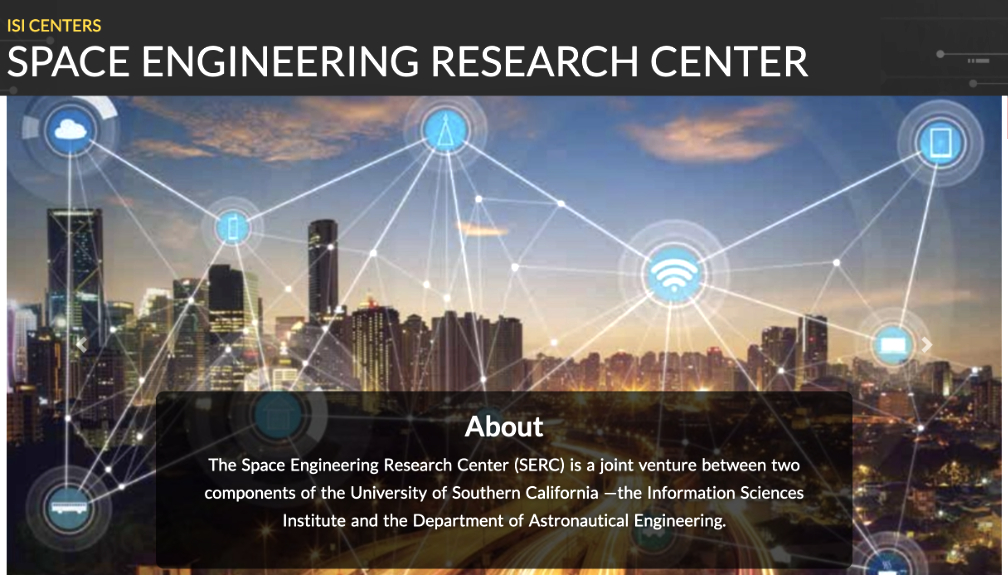
Dodona is a project out of USC’s Space Engineering Research Center, directed by Professor David Barnhart, which is a joint research center from USC Viterbi School of Engineering Department of Astronautical Engineering and the Information Sciences Institute.

The La Jument payload suite includes low SWAP (size, weight and power) optical and infrared cameras that employ algorithms to enhance imagery on-orbit, plus Lockheed Martin’s Compass advanced mission planning app. The Compass team developed a new Target Selection Visualization tool that makes it much easier to identify a targeted region to photograph. Using a map overlay, users can pick a point on the map within the satellite’s coverage area and the tool translates that into messages relayed back to the USC team commanding the satellite.

In addition to Lockheed Martin’s new technology suite, the SERC team is testing a new “B dot” controller — a new guidance control algorithm that interacts with the Earth’s magnetic field to stabilize the satellite in orbit.

SERC launched its first satellite, Careus — developed in partnership between USC and Northrop Grumman — in 2010, and its second satellite, Aeneas, in 2012. The process of developing and launching a satellite requires vigorous design work and testing, including “shake and bake” testing, which literally checks how the satellite fares when shook and heated to simulate launch. Satellites also must adhere to global regulations, including making sure the team can bring the satellite down within an agreed upon period of time and ensuring the satellite’s orbit will not interfere with other satellites.

Part of SERC’s mission is creating hands-on opportunities for students and faculty to build and test advanced space technology, in addition to integrating, launching and operating small satellites. Dodona takes advantage of the space focused curriculum through analysis tools and techniques that are taught at USC through the Astronautical Engineering Department.

For Dodona, the team also needed to receive FCC approval for operating its small radio, an off-the-shelf radio made for cubesats so the satellite can both receive commands sent up from the ground station (located on USC’s University Park campus) and downlink data on the health and status of the satellite while in orbit. Lockheed Martin will operate a similar ground station at their Valley Forge facility in Pennsylvania.

In the following two weeks, the USC-Lockheed Martin team will assess mission success criteria, including the satellite’s launch into and stability on-orbit and its ability to transmit data about what’s happening on the spacecraft. The mission is focused on Lockheed Martin’s optical payload and will be the first satellite from USC that is able to take photos of the Earth from space.

SERC’s next small satellite project is Magneto, a fully student-built class project it hopes to launch in late 2022, and has a new rendezvous technology planned to fly inside the International Space Station in early 2023.

Tom Smith, the vice president for Lockheed Martin’s Centers of Excellence that include Optical Payloads, said, “The La Jument integrated payload was designed by Lockheed Martin and then integrated and tested with Dodona by USC students at the Space Engineering Research Center (SERC). The La Jument 3U payload on Dodona will be the first satellite to fully use Lockheed Martin’s SmartSat™ software-defined satellite architecture on its payload. It’s a game changer for space because we can easily update satellites after launch and use advanced AI algorithms in orbit instead of just on the ground.”
Sonia Phares, vice president for engineering and technology at Lockheed Martin Space, added, “The La Jument/Dodona launch is the first of three rapid prototyping missions Lockheed Martin will deliver in 2022. Our dual LINUSS spacecraft will be in GEO orbit by Mid-May and our dual Pony Express 2 spacecraft will be launch to low earth orbit in October. “

The SpaceX Smallsat Rideshare program offers a viable and affordable option to launch up to 200 kg. into an SSO LEO

Filed Under: News

  • « Go to Previous Page
  • Page 1
  • Page 2
  • Page 3
  • Page 4
  • Page 5
  • Page 6
  • Page 7
  • Go to Next Page »

Primary Sidebar

WEEKLY NEWSLETTER

Archives

  • May 2026
  • April 2026
  • March 2026
  • February 2026
  • January 2026
  • December 2025
  • November 2025
  • October 2025
  • September 2025
  • August 2025
  • July 2025
  • June 2025
  • May 2025
  • April 2025
  • March 2025
  • February 2025
  • January 2025
  • December 2024
  • November 2024
  • October 2024
  • September 2024
  • August 2024
  • July 2024
  • June 2024
  • May 2024
  • April 2024
  • March 2024
  • February 2024
  • January 2024
  • December 2023
  • November 2023
  • October 2023
  • September 2023
  • August 2023
  • July 2023
  • June 2023
  • May 2023
  • April 2023
  • March 2023
  • February 2023
  • January 2023
  • December 2022
  • November 2022
  • October 2022
  • September 2022
  • August 2022
  • July 2022
  • June 2022
  • May 2022
  • April 2022
  • March 2022
  • February 2022
  • January 2022
  • December 2021
  • November 2021
  • October 2021
  • September 2021
  • August 2021
  • July 2021
  • June 2021
  • May 2021
  • April 2021
  • March 2021
  • February 2021
  • January 2021
  • December 2020
  • November 2020
  • October 2020
  • September 2020
  • August 2020
  • July 2020
  • June 2020
  • May 2020
  • April 2020
  • March 2020
  • February 2020
  • January 2020
  • December 2019
  • November 2019
  • October 2019

© 2019–2026 SatNews

Insert/edit link

Enter the destination URL

Or link to existing content

    No search term specified. Showing recent items. Search or use up and down arrow keys to select an item.
      x
      Sign Up Now!

      Enjoy a free weekly newsletter with recent headlines from the global SmallSat industry.

      Invalid email address
      We promise not to spam you. You can unsubscribe at any time.
      Thanks for subscribing! You will now receive weekly SmallSat News updates.
      We love our advertisers.
      And you will too!

      Please disable Ad Blocker to continue... We promise to keep it unobtrusive.
      We promise not to spam you. You can unsubscribe at any time.
      Invalid email address
      Thanks for subscribing!