• Skip to main content
  • Skip to primary sidebar
  • Home
  • News
  • Featured
  • More News ⌄
    • SatNews
    • SatMagazine
    • MilSatMagazine
  • Events ⌄
    • MilSat Symposium
    • SmallSat Symposium
    • Satellite Innovation
  • Contacts
  • SUBSCRIPTION

SmallSat News

You are here: Home / Archives for 2023

Archives for 2023

The 1st orbital mission for Impulse Space is revealed

January 12, 2023 by editorial

Impulse Space, Inc., has announced the company’s first orbital mission — LEO Express-1. Using Mira, the company’s first Orbital Service Vehicle (OSV), this mission will perform in-space services, including last-mile orbital payload delivery, payload hosting, very low altitude maneuvers and controlled atmospheric re-entry.

Impulse has procured a launch slot for this mission on a SpaceX Falcon 9 rocket as part of the Transporter-9 mission and is committed to meeting the current launch timeline of Q4 2023. Impulse will be among the first companies to demonstrate rapid, in-space transportation services through high-thrust chemical propulsion.

While the primary payload of LEO Express-1 is currently undisclosed, there is additional payload space available for secondary customers to join this mission. More details on Impulse’s vehicles and services will be announced at a later date. For more information on Impulse Space, additional missions and payload availability, visit the company’s infosite.

“Our team is thrilled to announce LEO Express-1 as our first mission and the implications it brings to affordable space access,” said Impulse Space Founder and CEO, Tom Mueller. “Currently, smallsat operators with custom orbit requirements need to pay a premium or compromise their spacecraft designs to include additional on-board propulsion capability. Impulse’s LEO Express missions will provide the industry with a reliable, rapid and consistent service for precisely delivering payloads to custom orbits in lLw Earth Orbit.”

Founded in 2021, Impulse Space is a Space 2.0 pioneer providing agile, economical space logistics services. With a near-term focus on Low Earth Orbit (LEO), services include in-space transportation to custom orbits, in-space payload hosting and precision re-entry trajectory injection. Long-term, Impulse will offer delivery services for all classes of payloads to distant destinations such as Geostationary Earth Orbit (GEO), the Moon, and Mars.
Filed Under: News

Million$$ in growth equity financing attained by Capella Space

January 11, 2023 by editorial

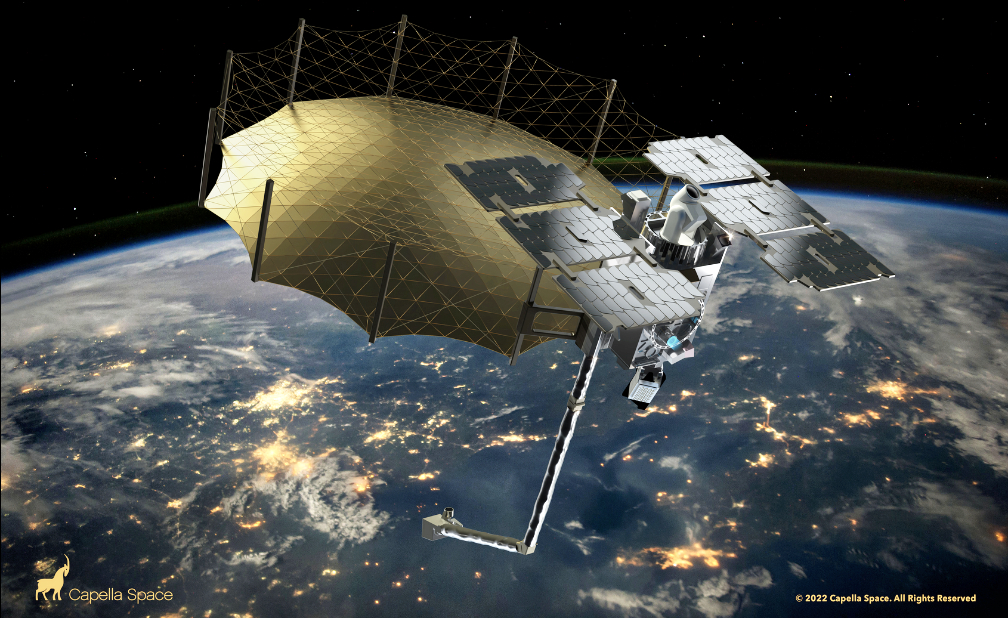
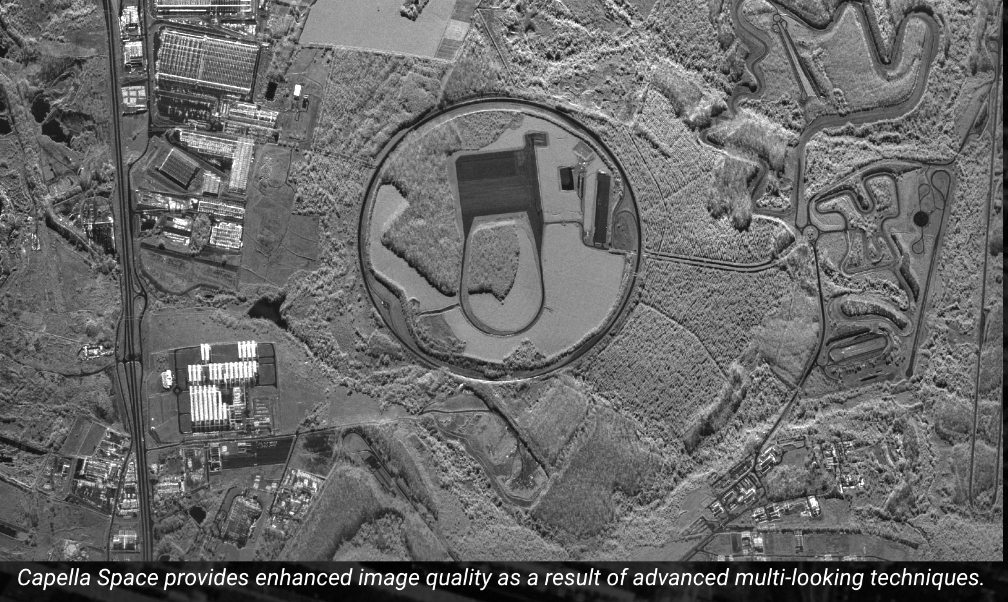
Capella Space has closed $60 million in growth equity financing from the U.S. Innovative Technology Fund (“USIT”) — Capella will leverage this growth capital to expand its imaging capacity and develop new data products as customer demand grows for its frequent, timely and high-quality SAR imagery and analytics capabilities.

Based in the U.S., Capella is revolutionizing the way that critical industries across the public and private sectors collect and analyze Earth Observation (EO) data to make informed and accurate decisions. Its synthetic aperture radar (SAR) satellites can penetrate all types of weather conditions – clouds, fog, smoke, rain – to capture clear imagery day and night, delivering accurate and timely data about what is happening anywhere on Earth at any given moment. Coming off the heels of the company’s $97 million Series C financing in April, this follow-on round reflects the rapidly increasing demand for Capella’s end-to-end radar-powered, high-quality SAR imagery and analytics services.

Access to reliable, 24-7, high-quality Earth observation data has never been more critical as the world today faces intense geopolitical, environmental and humanitarian challenges. This funding will enable Capella to build and launch its next-generation Acadia satellites, which the company manufactures entirely in the U.S. at its facilities in California and Colorado.

This new technology offers an enhanced design to deliver higher resolution and quality, increased imaging capacity and faster delivery capabilities for customers, many of which rely on Capella’s data to inform mission-critical decisions. The company will also expand its automated, intelligent advanced analytics offerings within the Capella Console, the company’s on-demand tasking platform, to continue delivering the highest quality, highest resolution SAR imagery with the fastest order-to-delivery time.

This year has proven to be one of the company’s strongest to date. Capella announced it has tripled revenue since 2021, with a twofold increase in imagery collected, and grown its headcount by more than 50% in 2022. Capella Space expects to grow even more in 2023 as the company doubles down on sales and marketing efforts and explores new business lines.

Capella also announced three new members of its executive team. Chad Cohen joins Capella Space as the new Chief Financial Officer (CFO) and Chief Operating Officer (COO) to guide future expansion and growth for Capella as well as oversee Capella’s operations across the company. Cohen brings 25 years of experience, most recently as CFO of Adaptive Biotechnologies (NASDAQ: ADPT) where he led the company through its 2019 IPO, and prior to that he spent nearly 10 years at Zillow (NASDAQ: Z and ZG) where he also oversaw the company through its 2011 IPO.

Capella also appointed Glen Elliott as the company’s first-ever Chief Human Resources Officer (CHRO). Elliott joins Capella after nearly nine years of consulting with some of the biggest names in tech, including Adobe, Tesla, 23andMe and more. Prior to consulting, Elliott held various management and leadership positions at companies such as Google and HP.

Paul Stephen joins Capella as the new Chief Information and Security Officer (CISO) to lead the IT, network operations and security operations functions of Capella Space. Stephen brings nearly two decades of IT experience, having managed entire technology stacks at companies such as, Impinj (NASDAQ: PI) and most recently, Avalara.

“Technological competitiveness is vital to our country’s future,” said Thomas Tull, Chairman of USIT. “Capella’s cutting-edge SAR technology allows us to have accurate, real-time information about what is happening on our planet, enabling decision-makers to more quickly make critical decisions about pressing geopolitical challenges. This work that they are doing is essential to the world’s future and I’m proud that we are able to support Capella and their mission to democratize and innovate space data.”

“Our customers are solving some of the world’s toughest problems, from geopolitical conflicts to humanitarian crises, climate change, supply chain logistics, and more. They need high-quality, high-resolution Earth observation data to inform them of potentially life-saving decisions, and Capella Space is stepping up to ensure they have accurate, timely information,” said Payam Banazadeh, CEO and founder of Capella Space. “As we enter this next phase of growth, I’m excited to announce this follow-on round of funding from USIT, who understands our value to the world and will help us take Capella’s work to the next level. Expanding our leadership team with Chad, Paul and Glen underscores our growth, and they will all play key roles in helping us accomplish these goals.”

“Demand for reliable Earth observation data is at an all-time high, and Capella Space has proven it is leading the market with the highest-resolution, highest-quality SAR imagery commercially available. The company is at an important inflection point in its growth, and this capital will set Capella Space up well to expand into new markets,” said Cohen, CEO and COO for the firm. “I look forward to working with Payam and the rest of the Capella Space team to advance the company’s goal of democratizing access to timely and accurate Earth observation data.”

For more information on Capella Space and how you can leverage SAR for your organization, visit https://www.capellaspace.com/data/sar-imagery-products/.

Filed Under: News

Spaceflight signs agreement with Maritime Launch for future Sherpa OTV missions

January 11, 2023 by editorial

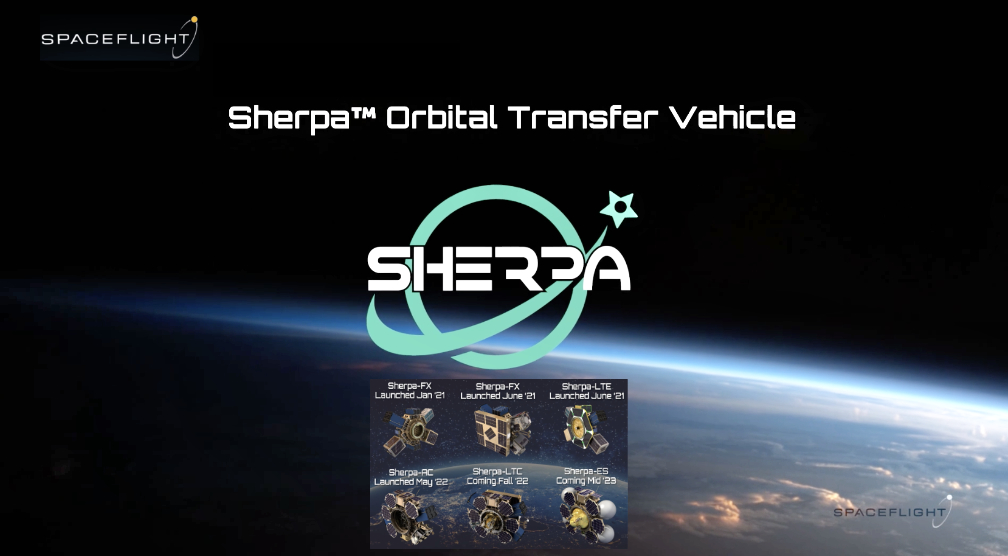
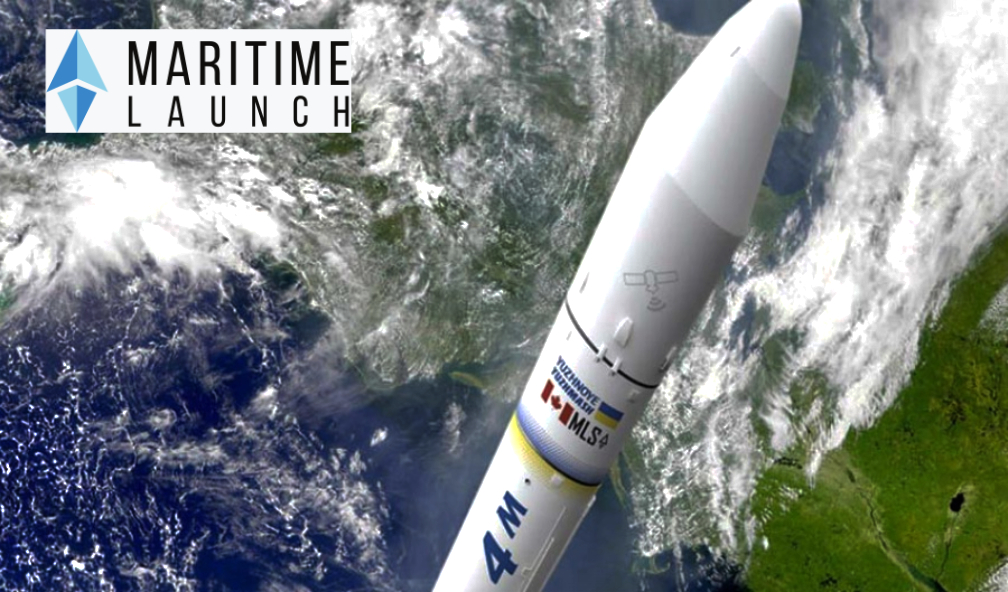
Spaceflight Inc. has signed an agreement with Maritime Launch Services Inc. (NEO: MAXQ, OTCQB: MAXQF) to launch as many as five Sherpa(™) Orbital Transfer Vehicles (OTVs) — these launches will be from Spaceport Nova Scotia aboard the Cyclone-4M rocket starting in 2025.

Spaceflight has successfully delivered more than 550 spacecraft across 55 launches, including both rideshare and dedicated launches, on a wide variety of launch vehicles. This includes launching five Sherpa OTVs which carried more than 50 payloads to space.

Maritime Launch is developing North America’s first commercial spaceport, Spaceport Nova Scotia, near Canso, Nova Scotia. The company will launch the Cyclone-4M, a medium class launch vehicle with a payload capability of five tons to low Earth orbit. Satellite companies can rely on the vehicle components’ flight heritage, demonstrated by several operators globally, boasting approximately 878 successful launches.

Launch of the Sherpa OTVs for rideshare customers on Cyclone-4M will accommodate CubeSats, smallsats as well as large form-factor customer vehicles. In 2022, Spaceflight successfully launched both its experimental OTVs – Sherpa-AC for hosted payloads, and Sherpa-LTC, which features chemical propulsion. The company is also underway preparing for the launch of the next variation in its Sherpa OTV program – Sherpa-ES, a higher energy variant with a bipropellant, high delta-V OTV that enables smallsat delivery anywhere in cislunar space.

“We’re eager to expand our portfolio of launch vehicle partners to carry our Sherpa OTVs to space. Maritime Launch represents an exciting new option as the first vehicle partner to launch from a commercial spaceport in North America,” said Curt Blake, CEO and president of Spaceflight Inc. “Not only does the Cyclone-4M deliver a wide variety of desirable inclinations for our customers, but the pricing is very attractive. The agreements to transport our Sherpa OTVs are foundational in our continuing efforts to expand our OTV capabilities from last-mile delivery to in-orbit servicing.”

“We are thrilled to have Spaceflight aboard our Cyclone-4M launches starting in 2025,” said Stephen Matier, president and CEO of Maritime Launch. “Spaceflight is a global leader with unmatched experience in mission management and payload integration. Our partnership will increase our launch offerings and provide our clients with innovative, last-mile delivery of their payload to orbit.”

Filed Under: News

Blue Canyon Technologies provides critical tech for Transporter-6 mission smallsats

January 11, 2023 by editorial

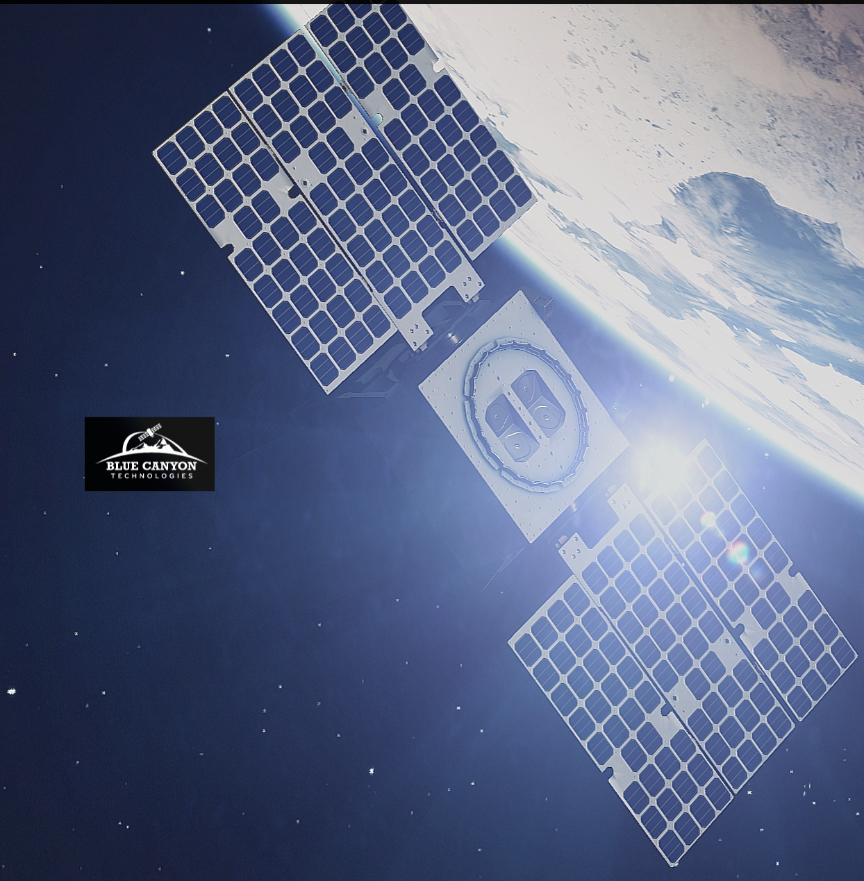
Blue Canyon Technologies (BCT), a subsidiary of Raytheon Technologies, contributed to the SpaceX Transporter-6 launch by providing critical hardware components for several of the payload’s smallsats.

The payloads had various missions, including tech demos, EO, comms and signal intelligence. All of the work on these components was conducted by the company in Boulder, Colorado.

The BCS products aboard the launch included five, high performance, FleXcore attitude control systems and six flight sets of reaction wheels. FleXcore is equipped with a powerful processing core and, coupled with BCT’s reaction wheel assemblies, provides dependable performance that safeguard mission success.

The company’s reaction wheels are built to provide spacecraft with the precise combo of torque and momentum storage that is required to navigate a successful mission. They are equipped with brushless DC motors that have higher efficiency and performance, as well as highter torque to weight ratio.

“At Blue Canyon, enabling our customers to achieve optimal results for diverse space and aerospace missions is a top priority. By offering a comprehensive suite of spacecraft services and technology products, BCT can meet various mission objectives with our flight prove and flexible designs,” said Jeff Schrader, President of blue Can Technologies.

Filed Under: Featured, News

IEC Telecom’s suite deal as official Starlink reseller

January 10, 2023 by editorial

International satellite service operator IEC Telecom has kickstarted 2023  by introducing a suite of services and solutions powered by Starlink. The new service portfolio has been designed to address specific communication requirements of a range of satcom users, from home office workers to international enterprises and maritime businesses. 

This announcement follows the signing of the reseller agreement between Starlink and IEC Telecom, which took place in December 2022. 

Travel with Starlink. Users can take the same high-speed low latency service they have at home to any location Starlink offers service with the Portability add-on.For those looking to live on the road, Starlink for RVs allows users to pause and un-pause service based on their individual travel needs.
Erwan Emilian, CEO of IEC Telecom Group

“Covid-19 and the political turbulence of 2022 shed light on the importance of having uninterrupted connectivity, not only as means of business continuity but also in relation to safety and in-time response to unforeseen circumstances,” explains Erwan Emilian, CEO of IEC Telecom Group. “Our new service portfolio, powered by Starlink, will offer a comprehensive solution for remote operations on land and at sea.”

Easy-to-deploy new land solutions by Starlink are designed to offer maximum flexibility for mobile units and fixed deployments. Through OneGate by IEC Telecom, HQ remains in control of its remote units, enabled by an advanced network management toolkit. Customized solutions have been developed for humanitarian missions, energy/mining/utility enterprises, transportation companies and more.

The new maritime solutions offer the same advantages plus a range of IEC Telecom services specific to offshore use. Compact and easy to set up, the Starlink kits, are suitable for all vessel types, including yachting, commercial shipping, ferries, and cruise ships. 

This development happens comes at a time when LEO-powered systems are gaining momentum and the global satellite communications service market is predicted to reach $40 billion by 2030 at an annual growth rate of 7%. Low-Earth Orbit (LEO) satellite technology will take centre stage in this process, accounting for 40% of this market. 

Filed Under: News

UPDATE 1: Anomaly results in an unsuccessful launch for Virgin Orbit National Systems 1st rideshare mission from the UK

January 10, 2023 by editorial

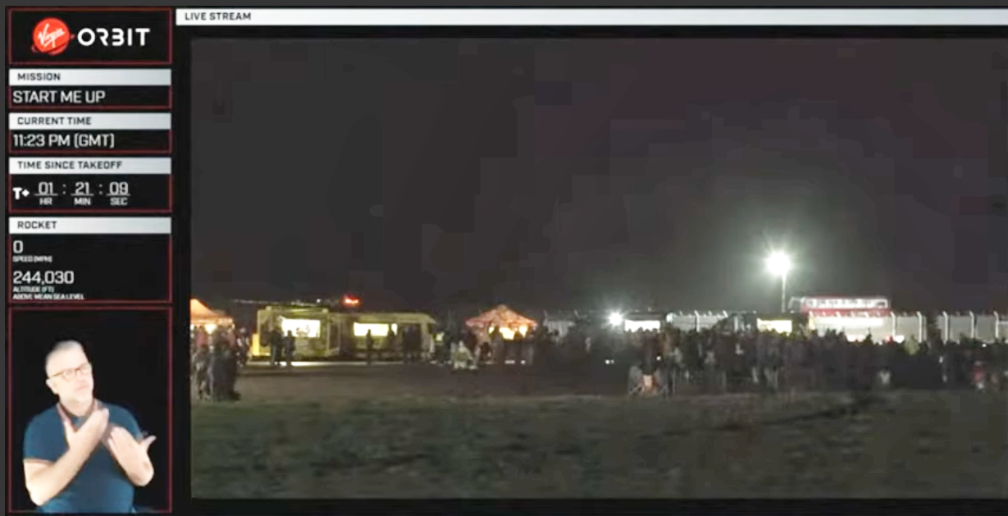
Certainly not a ‘moment to remember‘ debut for Virgin Orbit and Virgin Orbit National Systems, as the company’s initial, rideshare launch from the United Kingdom has been unsuccessful.

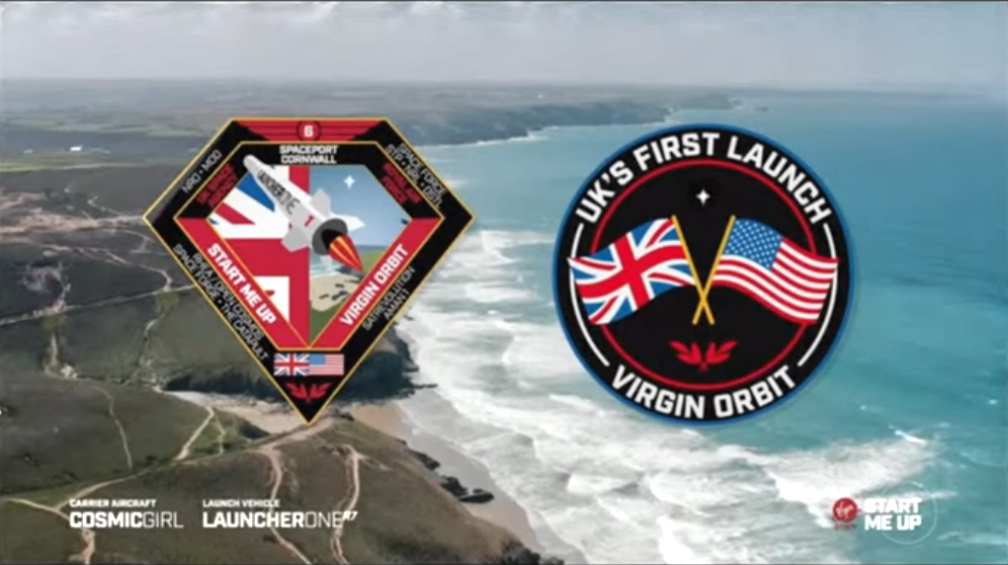
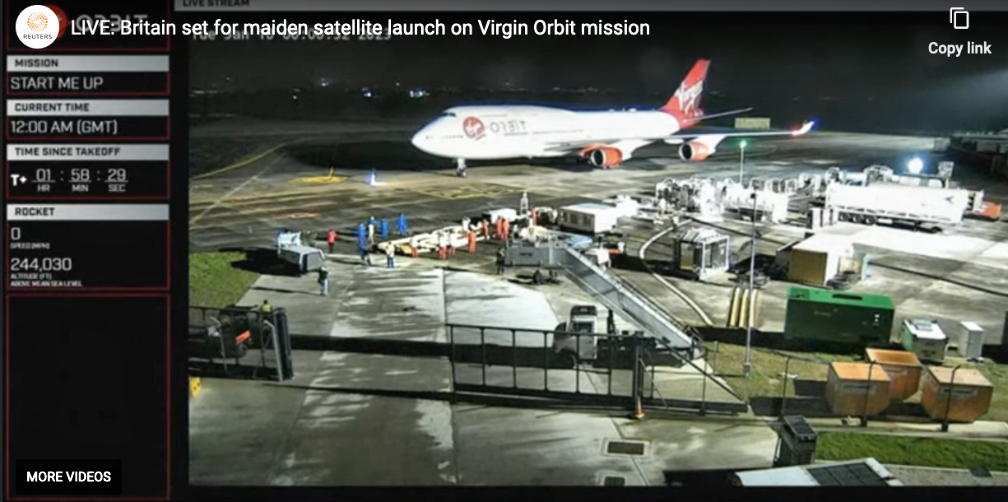
With Cosmic Girl taking off from Spaceport Cornwall, 25 minutes after the 10:01 p.m. lift off of the LauncherOne rocket carried beneath the customized 747 aircraft, an anomaly occurred and the mission had to be aborted, sending the rocket and the payload of nine satellites into the Earth’s atmosphere where they were destroyed.

The disappointment was quite evident for the thousands of spectators viewing the launch, all hoping for a victory for the UK as a nation vying for premiere launch status among the world’s space faring nations.

The Cosmic Girl 747 landed safely back at Spaceport Cornwall.

The comments from Virgin Orbit National Systems / Virgin Orbit close to a half-hour after claiming on-orbit victory was that an anomaly had actually occurred, one that had prevented the ascension to orbit of the rocket and satellites and the launch had failed to come to fruition.

Original news posting…

Partners for the United Kingdom’s first orbital launch announced that the initial window for the historic Start Me Up mission will officially open on Monday, January 9th at 22:16, UTC, with additional back-up dates continuing into mid- and late January — Start Me Up is a collaborative effort between the United Kingdom Space Agency (UKSA), Cornwall Council, the Royal Air Force (RAF St Mawgan), and Virgin Orbit (Nasdaq: VORB).

The Start Me Up mission will carry satellites from seven customers to space, including commercial and government payloads from several nations as well as a collaborative US-UK mission.

The LauncherOne system that will conduct the mission is now mated to its carrier aircraft, a Boeing 747 dubbed Cosmic Girl, at Spaceport Cornwall. Virgin Orbit’s LauncherOne system successfully completed an end-to-end launch rehearsal, taking the integrated system through to the loading of propellants and proceeding through terminal count, resulting in the verification of the health of the system and readiness of the team.

Given the number of “firsts” being executed for this launch – the first orbital launch from UK soil or from anywhere in western Europe — Virgin Orbit and its partners will maintain a conservative posture with regard to system health, weather and all other elements of scheduling.

Spaceport Cornwall received the United Kingdom’s first spaceport license from the UK Civil Aviation Authority (CAA) in November of 2022. In late December of 2022, Virgin Orbit was issued first-of-their-kind launch and range control licenses, which ensured all regulatory, safety, and environmental requirements have been met. This week, the CAA announced that all of the satellites flying on this mission have received their licenses as well.

An aerial view of Spaceport Cornwall.

The forthcoming mission from Cornwall will contain many firsts: the first orbital launch from the United Kingdom, the first international launch for Virgin Orbit and the first commercial launch from western Europe.

Start Me Up will be the fifth consecutive Virgin Orbit launch to carry payloads for private companies and government agencies. All of the prior 33 satellites were carried by LauncherOne to their precise desired orbit, while demonstrating the ability to fly through and above inclement weather, integrate rapid-call up payloads, and reach a broader range of orbits than would be possible from a traditional ground-launch system.

The launch was acquired by the National Reconnaissance Office (NRO) from Virgin Orbit National Systems, a Virgin Orbit U.S. subsidiary serving classified customers, as the first task order on NRO’s Streamlined Launch Indefinite Delivery, Indefinite Quantity Contract, or “SLIC.”

The missions of the satellites span a wide range of activities aimed at improving life on Earth, including reducing the environmental impact of production; preventing illegal trafficking, smuggling, and terrorism; and a host of national security functions. The full Start Me Up manifest…

IOD-3 AMBER (aka IOD-3)
Developed by Satellite Applications Catapult (“SA Catapult”) and Horizon Technologies and built by AAC Clyde Space, all based in the U.K. IOD-3 Amber is expected to be the first of more than 20 Amber satellites to provide space-based Maritime Domain Awareness (MDA) data to users.

Prometheus-2
Two cubesats owned by the U.K. Ministry of Defense’s (MOD) Defense Science & Technology Laboratory Dstl. These satellites, co-funded with Airbus Defence and Space who are designing them jointly with In-Space Missions, will support MOD science and technology (S&T) activities both on-orbit and on the ground through the development of ground systems focused at Dstl’s site near Portsmouth.

CIRCE (Coordinated Ionospheric Reconstruction CubeSat Experiment)
CIRCE is part of a joint mission between the U.K.’s Defense Science and Technology Laboratory and the U.S. Naval Research Laboratory (NRL).

DOVER
Developed by RHEA Group in the UK, it is the company’s first satellite in its 30-year history. The satellite is being co-funded through the European Space Agency’s (ESA) Navigation Program (NAVISP) and built by Open Cosmos of the United Kingdom. DOVER is a smallsat that was created as a pathfinder for resilient global navigation satellite systems.

ForgeStar-0
Developed by Space Forge of Wales, the satellite is a fully returnable and reusable platform to enable in-space manufacturing. This launch will be the first for the company’s ForgeStar platform and will test future returns from space technology.

AMAN
Oman’s first orbital mission, it is a single EO satellite meant to demonstrate the future feasibility of a larger constellation and was developed after a memorandum of understanding among the Sultanate of Oman, Polish Small Satellite manufacturer and operator SatRev, Poland-originated AI data analytics specialists

TUATARA, and Omani-based merging technology innovator ETCO.
The agreement includes additional planned small satellites, including this, the first in Oman’s history.

STORK-6
Stork-6 is the next installment of Polish Small Satellite manufacturer and operator SatRev’s STORK constellation. Virgin Orbit previously launched two spacecraft in this constellation on a previous launch and looks forward to continuing to launch SatRev’s STORK spacecraft in the future.

Virgin Orbit’s LauncherOne rockets are designed and manufactured in Long Beach, California, and are air-launched from the wing of a converted Boeing 747-400 aircraft named Cosmic Girl. Virgin Orbit’s unique air-launch platform can take off from any runway long enough to handle a Boeing 747. Not reliant on traditional spaceports that support vertical launches, this capability creates a new level of mobility for satellite launch, thereby enabling sovereign launch capability in new markets.

Ian Annett, Deputy CEO at the UK Space Agency, said, “We are entering a new era for space in the UK with the first ever satellite launch from UK soil and from Europe. This is a significant landmark for the nation, the UK Space Agency and for all those who have worked so hard over many years to make our ambitions to create a commercial space launch capability a reality. The development of new orbital launch capabilities is already generating growth, catalysing investment and creating jobs in Cornwall and other communities across the United Kingdom. This will lead to new careers, improved productivity and inspire the next generation of space professionals, and this is just the beginning. I look forward to seeing more launches from other UK spaceports over the next year, putting us firmly on the map as Europe’s leading destination for commercial small satellite launch.”

Dan Hart, Virgin Orbit CEO, said, “After ensuring that every technical aspect is sound and every regulation and code has been satisfied, it is gratifying to see this historic endeavor on the verge of coming to fruition. This launch represents the opening of a new era in the British space industry and new partnerships across industry, government, and allies. Space is already responsible for tens of thousands of jobs across the UK, the global industry is growing quickly, and so is the potential. And this launch is demonstrating that with the Virgin Orbit LauncherOne system an airport can become a spaceport that sends humankind’s innovations on their journey.”

Melissa Thorpe, Head of Spaceport Cornwall, said, “This is a phenomenal moment with incredible international collaboration. Virgin Orbit, the UK Space Agency and all of our partners are breaking new ground to transform access to space across the world from right here in Cornwall. My team at Spaceport Cornwall have worked so hard to get this far and we wish everyone the best of luck as the launch window opens, we are ready.”

Tim Johnson, Director for Space Regulation at the UK Civil Aviation Authority, said, “Effective licensing forms an integral part of UK space activity, and with public safety at the heart of our decision making, we’ve worked with Virgin Orbit and Spaceport Cornwall to assess their applications and issue licences within our expected timeframe, putting the UK framework on a competitive footing with international space regulators. With all licences in place, Virgin Orbit and Spaceport Cornwall are now in a position to deliver a historic first orbital launch from UK shores. We’re proud to be playing our part in facilitating the UK’s space ambitions and enable this country to become a leading launch nation.”

Filed Under: News

AAC Clyde Space’s AIS communications satellite Kelpie-1 launches

January 9, 2023 by editorial

Kelpie satellite

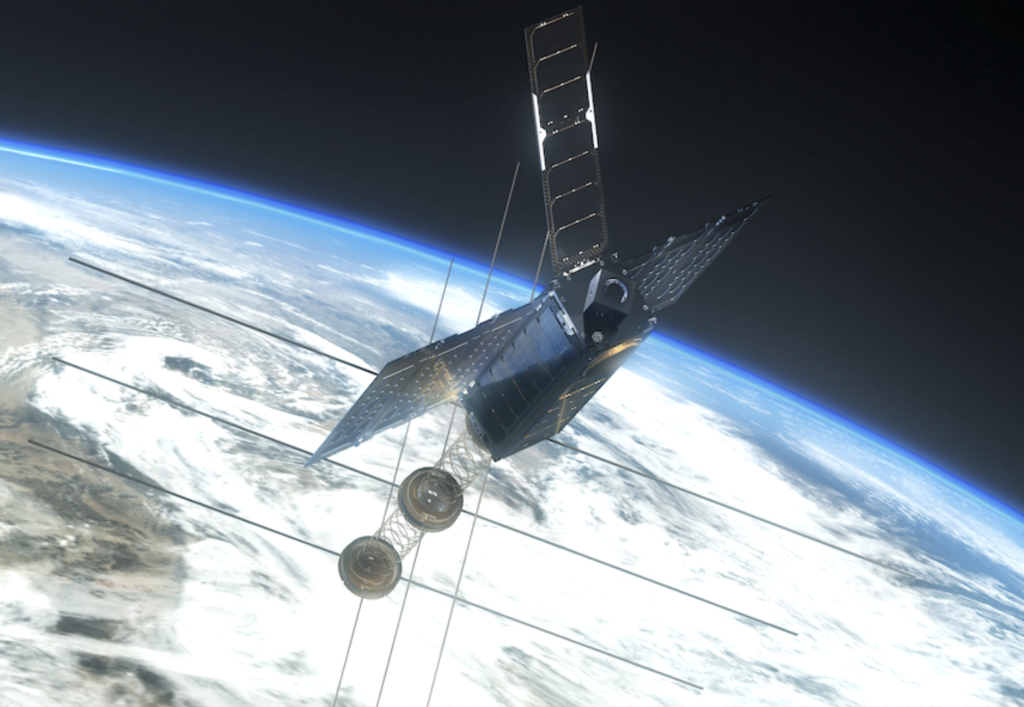
Kelpie-1, a 3U AAC Clyde Space EPIC nanosatellite, was successfully launched on the SpaceX Transporter-6 mission on January 3, 2023. Kelpie-1 will deliver AIS data to the U.S. company ORBCOMM Inc., a global provider of Internet of Things (IoT) solutions, under an exclusive Space Data as a Service (SDaaS) deal. It is planned to be followed by the launch of a second Kelpie satellite in the first half of 2023. 

The project will leverage a SDaaS model in which AAC Clyde Space owns and operates the satellites, which will deliver Automatic Identification System (AIS) data exclusively to ORBCOMM and its government and commercial customers, enabling ship tracking and other maritime navigational and safety efforts. This joint mission with ORBCOMM represents a major milestone for AAC Clyde Space in solidifying its strategic move to a SDaaS model. The project will start generating revenue to AAC Clyde Space once the satellite is deployed.

The satellite lifted off on the Falcon 9 rocket on January 3, 2023, at 9:56 local time (14:56 UTC) from the Space Launch Complex 40 at Cape Canaveral Space Force Station, Florida. The satellite is housed inside the D-Orbit orbital transfer vehicle, In Orbit Now (ION), which successfully deployed after lift-off into a 525-kilometer Sun Synchronous Orbit. Using the ION, AAC Clyde Space will enhance the lifetime of its spacecraft, enabling the company to maximize revenue generation potential while minimizing the number of spacecrafts needed.  The Kelpie-1 satellite will remain in the dispenser for approximately 60 days during the orbit transfer process and will be deployed once reaching the final 640-kilometer orbit. 

The state-of-the-art AIS-enabled satellite, Kelpie-1, was designed for advanced communications and hosts cutting-edge, low-noise core avionics for reliable, high-performance space data handling, a versatile Software Defined Radio (SDR)-based receiver, as well as the company’s first payload development, which incorporates three dedicated AIS receivers. The CubeSat weighs just 4 kg and features a unique antenna concept to maximise detections of all AIS message types.

“We are delighted to confirm the successful launch of Kelpie-1, which was designed for AIS communications and utilizes built-in, precision-engineered avionics with decades of heritage from our widely used CubeSat subsystems. It is one of the most innovative satellites AAC Clyde Space has ever built. We look forward to delivering the space data set to enrich ORBCOMM’s global AIS data services,”says AAC Clyde Space CEO Luis Gomes. 

“The launch of the Kelpie-1 satellite brings us one step closer to providing our global customers enhanced AIS detections as well as the highest expected vessel detection rates in the industry over the long term,” says Greg Flessate, ORBCOMM’s SVP of Government and AIS. 

In addition to the two Kelpie satellites in this project, AAC Clyde Space owns and operates a constellation of four satellites dedicated to SDaaS through its U.S. subsidiary AAC SpaceQuest, planned to be expanded with a further two satellites in the fourth quarter of 2023. Moreover, AAC Clyde Space has won a contract to deliver hyperspectral data from an additional three satellites, bringing the total number of satellites owned by the group for SDaaS purposes to eleven.

The two Kelpie satellites will join a satellite constellation dedicated to delivering AIS data used in maritime operations to support many applications, including domain awareness, search and rescue, environmental monitoring and maritime intelligence. ORBCOMM processes over 30 million AIS messages from more than 200,000 vessels per day for government and commercial customers to deliver a complete situational picture of global vessel activity.

Filed Under: News

Europe’s 1st solar sail mission successfully launched

January 9, 2023 by editorial

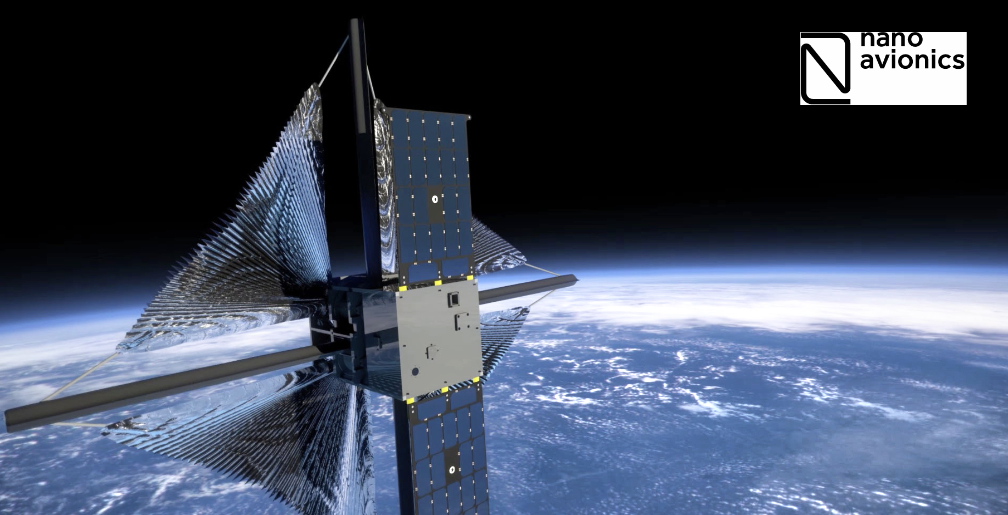
Kongsberg NanoAvionics (NanoAvionics) has announced the successful launch of Europe‘s first solar sail mission aboard SpaceX Transporter-6 — the 6U smallsat, nicknamed ‘Alpha,’ was manufactured for France’s Gama and is one of four satellites that was guided into LEO.

This is the first time for NanoAvionics that one of its smallsat buses has carried a solar sail payload into space. A second solar sail mission, using a 12U smallsat bus by the company, will be NASA’s composite solar sail system (ACS3).

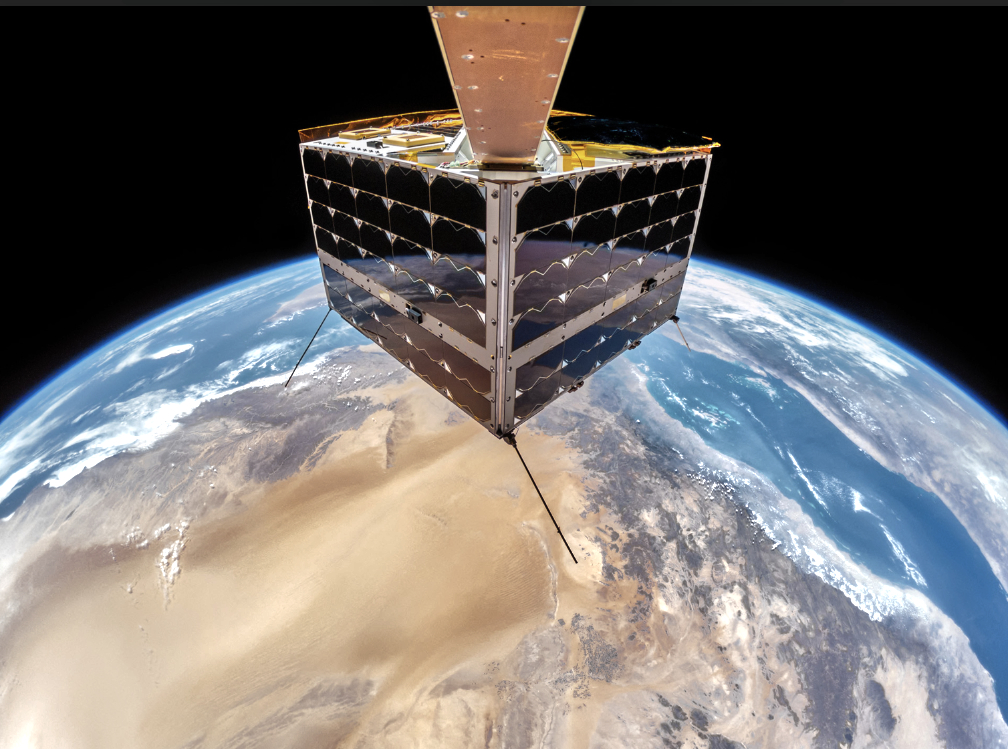
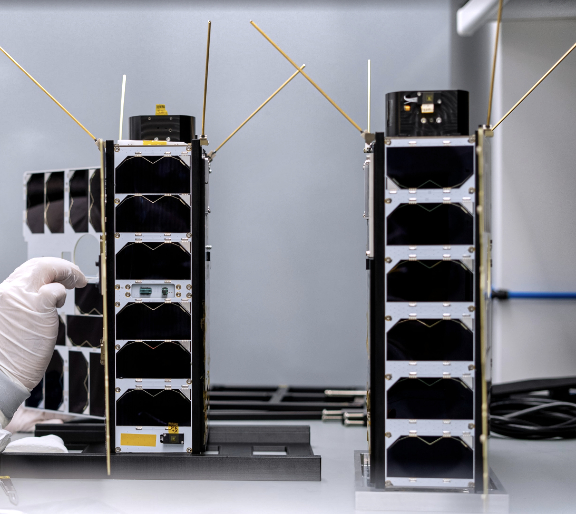
Also on board were two other 6U smallsat (‘Birkeland‘ and ‘Huygens‘) built by NanoAvionics for a consortium of Norwegian and Dutch research centers. The MilSpace2 mission is the first known, two-satellite system to detect, classify and accurately geolocate radio frequency (RF) signals. The two satellites will fly in formation at a close proximity of 20 kilometers.

The fourth satellite carries an Earth Observation (EO) payload for an undisclosed customer.

Confirming successful communications with all four satellites, NanoAvionics’s mission control center continues executing the early operations phase (LEOP) to configure and validate the satellites for their primary mission objectives.

Vytenis J. Buzas, co-founder and CEO of NanoAvionics, said, “Solar sails are one of the future propulsion methods for small satellites exploring deep space. Being the first European company to integrate solar sails into satellite buses and test them while in orbit puts us in a unique position within the space industry.

“With this first successful launch in 2023, NanoAvionics is off to a great start. We plan to deliver and launch more than 20 satellites to customers this year, up from 15 in 2022. This plan includes our first 100+ kg satellite based on our MP42 microsatellite bus,” Buzas said. “And for the third consecutive year, we nearly doubled both our revenue and our team size.”

NanoAvionics MP42 smallsat bus

Mission details for all Transporter-6 satellites built by NanoAvionics…

A 6U nanosatellite dubbed “Alpha” for French space startup Gama to demonstrate their commercial solar sail with a diameter of 73.3 square meters (789 square feet) – roughly the size of a racquetball court. Gama’s range of solar sails are aimed at commercial companies and research organizations alike, looking for a cost-effective and less complex setup and propulsion system to explore deep space through small satellites. Using smallsats propelled through space by solar sails would allow them to travel greater distances without storing large amount of fuel.

Two 6U satellites named “Birkeland” and “Huygens”. Flying in close formation, the two satellites are part of the “Strategic Mutual Assistance in Research and Technology” (SMART) Military Use of Space (MilSpace) Science & Technology cooperation is a bilateral agreement between the MoD of the Kingdom of The Netherlands and the MoD of the Kingdom of Norway. The project team, acting on behalf of the MoDs, consists of FFI from Norway and NLR and TNO from The Netherlands. It is the first known two-satellite system to detect, classify, and accurately geolocate Radio Frequency signals, including navigation radars used on ships, by combining the measurement angle of arrival (AoA) and time difference of arrival (TDOA). Simultaneous detection of pulsed radio signals by both satellites flying in tandem enables accurate geolocation during all weather conditions.

The “Strategic Mutual Assistance in Research and Technology” (SMART) Military Use of Space (MilSpace) Science & Technology cooperation is a bilateral agreement between the MoD of the Kingdom of The Netherlands and the MoD of the Kingdom of Norway. The project team, acting on behalf of the MoDs, consists of the Norwegian Defence Research Establishment (FFI), the Royal Netherlands Aerospace Centre (NLR) and the Netherlands Organisation for Applied Scientific Research (TNO). See also this link…

The fourth satellite carries an Earth observation payload for an undisclosed customer.

Filed Under: News

Virgin Orbit reports all systems are ‘green’ for the first historic UK launch

January 8, 2023 by editorial

Partners for the United Kingdom’s first orbital launch announced that the initial window for the historic Start Me Up mission will officially open on Monday, January 9th at 22:16, UTC, with additional back-up dates continuing into mid- and late January — Start Me Up is a collaborative effort between the United Kingdom Space Agency (UKSA), Cornwall Council, the Royal Air Force (RAF St Mawgan), and Virgin Orbit (Nasdaq: VORB).

The Start Me Up mission will carry satellites from seven customers to space, including commercial and government payloads from several nations as well as a collaborative US-UK mission.

The LauncherOne system that will conduct the mission is now mated to its carrier aircraft, a Boeing 747 dubbed Cosmic Girl, at Spaceport Cornwall. Virgin Orbit’s LauncherOne system successfully completed an end-to-end launch rehearsal, taking the integrated system through to the loading of propellants and proceeding through terminal count, resulting in the verification of the health of the system and readiness of the team.

Given the number of “firsts” being executed for this launch – the first orbital launch from UK soil or from anywhere in western Europe — Virgin Orbit and its partners will maintain a conservative posture with regard to system health, weather and all other elements of scheduling.

Spaceport Cornwall received the United Kingdom’s first spaceport license from the UK Civil Aviation Authority (CAA) in November of 2022. In late December of 2022, Virgin Orbit was issued first-of-their-kind launch and range control licenses, which ensured all regulatory, safety, and environmental requirements have been met. This week, the CAA announced that all of the satellites flying on this mission have received their licenses as well.

An aerial view of Spaceport Cornwall.

The forthcoming mission from Cornwall will contain many firsts: the first orbital launch from the United Kingdom, the first international launch for Virgin Orbit and the first commercial launch from western Europe.

Start Me Up will be the fifth consecutive Virgin Orbit launch to carry payloads for private companies and government agencies. All of the prior 33 satellites were carried by LauncherOne to their precise desired orbit, while demonstrating the ability to fly through and above inclement weather, integrate rapid-call up payloads, and reach a broader range of orbits than would be possible from a traditional ground-launch system.

The launch was acquired by the National Reconnaissance Office (NRO) from Virgin Orbit National Systems, a Virgin Orbit U.S. subsidiary serving classified customers, as the first task order on NRO’s Streamlined Launch Indefinite Delivery, Indefinite Quantity Contract, or “SLIC.”

The missions of the satellites span a wide range of activities aimed at improving life on Earth, including reducing the environmental impact of production; preventing illegal trafficking, smuggling, and terrorism; and a host of national security functions. The full Start Me Up manifest…

IOD-3 AMBER (aka IOD-3)
Developed by Satellite Applications Catapult (“SA Catapult”) and Horizon Technologies and built by AAC Clyde Space, all based in the U.K. IOD-3 Amber is expected to be the first of more than 20 Amber satellites to provide space-based Maritime Domain Awareness (MDA) data to users.

Prometheus-2
Two cubesats owned by the U.K. Ministry of Defense’s (MOD) Defense Science & Technology Laboratory Dstl. These satellites, co-funded with Airbus Defence and Space who are designing them jointly with In-Space Missions, will support MOD science and technology (S&T) activities both on-orbit and on the ground through the development of ground systems focused at Dstl’s site near Portsmouth.

CIRCE (Coordinated Ionospheric Reconstruction CubeSat Experiment)
CIRCE is part of a joint mission between the U.K.’s Defense Science and Technology Laboratory and the U.S. Naval Research Laboratory (NRL).

DOVER
Developed by RHEA Group in the UK, it is the company’s first satellite in its 30-year history. The satellite is being co-funded through the European Space Agency’s (ESA) Navigation Program (NAVISP) and built by Open Cosmos of the United Kingdom. DOVER is a smallsat that was created as a pathfinder for resilient global navigation satellite systems.

ForgeStar-0
Developed by Space Forge of Wales, the satellite is a fully returnable and reusable platform to enable in-space manufacturing. This launch will be the first for the company’s ForgeStar platform and will test future returns from space technology.

AMAN
Oman’s first orbital mission, it is a single EO satellite meant to demonstrate the future feasibility of a larger constellation and was developed after a memorandum of understanding among the Sultanate of Oman, Polish Small Satellite manufacturer and operator SatRev, Poland-originated AI data analytics specialists

TUATARA, and Omani-based merging technology innovator ETCO.
The agreement includes additional planned small satellites, including this, the first in Oman’s history.

STORK-6
Stork-6 is the next installment of Polish Small Satellite manufacturer and operator SatRev’s STORK constellation. Virgin Orbit previously launched two spacecraft in this constellation on a previous launch and looks forward to continuing to launch SatRev’s STORK spacecraft in the future.

Virgin Orbit’s LauncherOne rockets are designed and manufactured in Long Beach, California, and are air-launched from the wing of a converted Boeing 747-400 aircraft named Cosmic Girl. Virgin Orbit’s unique air-launch platform can take off from any runway long enough to handle a Boeing 747. Not reliant on traditional spaceports that support vertical launches, this capability creates a new level of mobility for satellite launch, thereby enabling sovereign launch capability in new markets.

Ian Annett, Deputy CEO at the UK Space Agency, said, “We are entering a new era for space in the UK with the first ever satellite launch from UK soil and from Europe. This is a significant landmark for the nation, the UK Space Agency and for all those who have worked so hard over many years to make our ambitions to create a commercial space launch capability a reality. The development of new orbital launch capabilities is already generating growth, catalysing investment and creating jobs in Cornwall and other communities across the United Kingdom. This will lead to new careers, improved productivity and inspire the next generation of space professionals, and this is just the beginning. I look forward to seeing more launches from other UK spaceports over the next year, putting us firmly on the map as Europe’s leading destination for commercial small satellite launch.”

Dan Hart, Virgin Orbit CEO, said, “After ensuring that every technical aspect is sound and every regulation and code has been satisfied, it is gratifying to see this historic endeavor on the verge of coming to fruition. This launch represents the opening of a new era in the British space industry and new partnerships across industry, government, and allies. Space is already responsible for tens of thousands of jobs across the UK, the global industry is growing quickly, and so is the potential. And this launch is demonstrating that with the Virgin Orbit LauncherOne system an airport can become a spaceport that sends humankind’s innovations on their journey.”

Melissa Thorpe, Head of Spaceport Cornwall, said, “This is a phenomenal moment with incredible international collaboration. Virgin Orbit, the UK Space Agency and all of our partners are breaking new ground to transform access to space across the world from right here in Cornwall. My team at Spaceport Cornwall have worked so hard to get this far and we wish everyone the best of luck as the launch window opens, we are ready.”

Tim Johnson, Director for Space Regulation at the UK Civil Aviation Authority, said, “Effective licensing forms an integral part of UK space activity, and with public safety at the heart of our decision making, we’ve worked with Virgin Orbit and Spaceport Cornwall to assess their applications and issue licences within our expected timeframe, putting the UK framework on a competitive footing with international space regulators. With all licences in place, Virgin Orbit and Spaceport Cornwall are now in a position to deliver a historic first orbital launch from UK shores. We’re proud to be playing our part in facilitating the UK’s space ambitions and enable this country to become a leading launch nation.”

Filed Under: Featured, News

KSAT goes deep to support NOAA’s Deep Space Solar Observatory

January 6, 2023 by editorial

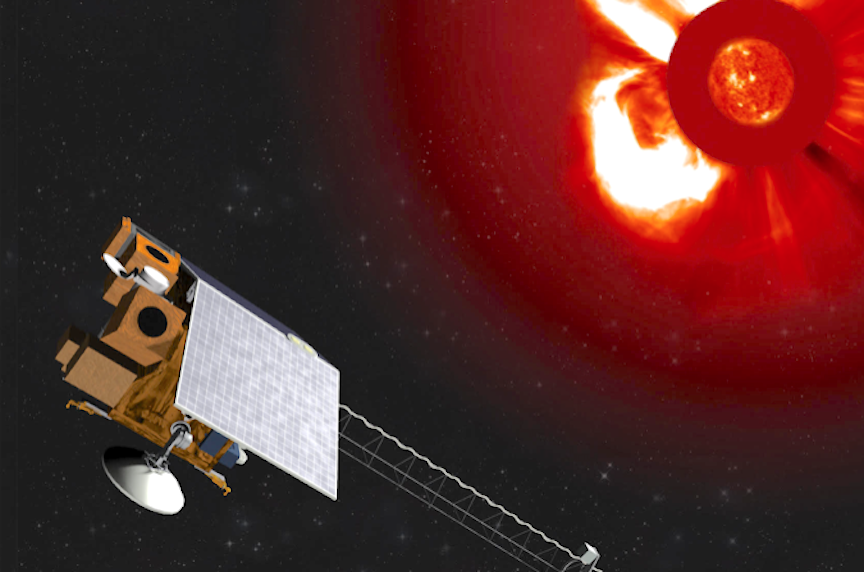
Image credit: Ball/NASA-SOHO

KBR has selected KSAT to provide all Outside the Continental United States (OCONUS) SWFO Antenna Network (SAN) services. The KBR and KSAT team are developing a blended network including U.S. government ground station sites with KSAT-owned capabilities delivered as a service. 

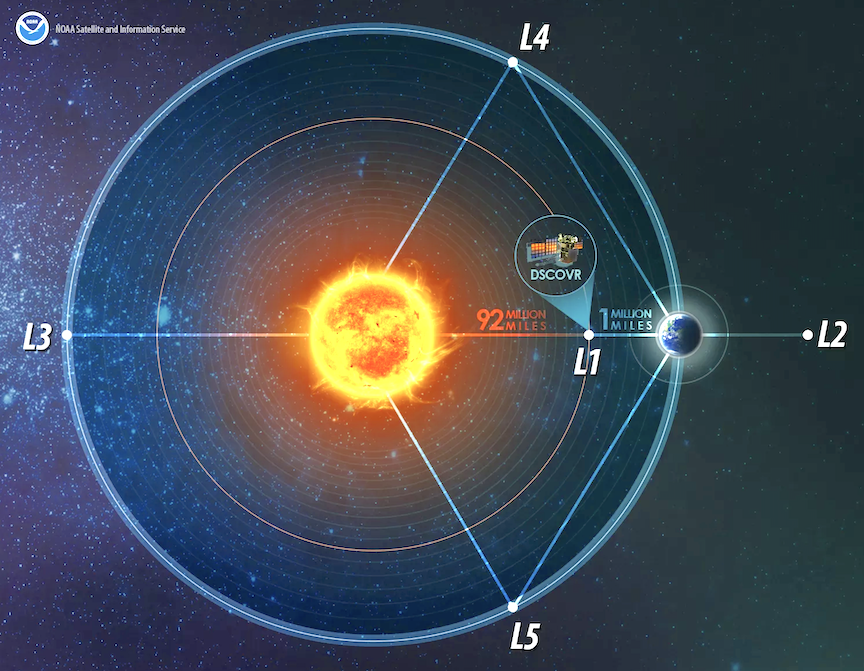
Increased solar activity in recent weeks has provided opportunities for many in the Northern Hemisphere to view the aurora borealis at latitudes where it typically is not visible. Although a wonderful experience for many, not all solar activity may be as benign. Recognizing the potential threat solar storms can pose to radio communications and electronic equipment, the U.S. National Oceanic and Atmospheric Administration (NOAA) has implemented a program of space missions to monitor and provide early warning of potentially disruptive solar events. The next such mission, Space Weather Follow On (SWFO), is planned to launch mid-2020s to Earth-Sun Lagrange Point—1 (L1). From L1, the observatory will monitor solar activity.

Aurora Borealis at Svalbard. Although a wonderful experience for many, not all solar activity may be as benign. Recognizing the potential threat solar storms can pose to radio communications and electronic equipment, the U.S. National Oceanic and Atmospheric Administration (NOAA) has implemented a program of space missions to monitor and provide early warning of potentially disruptive solar events. Copyright: Ruben Wu

SWFO requires a ground architecture unique for weather missions with always-on communications for resilient near-real-time delivery of mission data to NOAA scientists. U.S. government prime contractor KBR will deploy the SWFO Antenna Network to serve this purpose. As prime contractor and integrator, KBR selected Kongsberg Satellite Service KSAT, a leading ground station service provider, to implement a communication solution for the Europe-Africa and Asia-Pacific regions. The KBR and KSAT team are developing a blended network including U.S. government ground station sites with KSAT-owned capabilities delivered as a service.

KSAT has a long history of delivering robust space-ground communications for NOAA, global space agencies and commercial operators. The SWFO Antenna Network blended design of government- owned and KSAT-delivered commercial service solutions provides high value and technical capability. NOAA and SWFO will benefit from a lower-cost commercial solution, while maintaining high confidence in operational performance delivered through a contractually binding service level agreement.

Lagrange Points of the Earth-Sun system (not drawn to scale). Credit: NOAA

“KSAT provides all Outside the Continental United States (OCONUS) SWFO Antenna Network (SAN) services, including X-band telemetry in support of the space weather mission to ensure effective navigation and safety of SWFO-L1. KBR determined commercial services for OCONUS requirements provide greater flexibility at lower cost to the program,” said Monica DeShong, KBR SWFO SAN Program Manager.

The KSAT global ground station network is built to serve a range of mission needs. These full-motion tracking antennas deliver more than one million unique satellite communication contacts per year. Unique aspects of the SWFO mission, including its L1 orbit and long-duration contacts, require new interface developments and will lead to KSAT delivering more critical capabilities for deep space and lunar missions through their purpose-built lunar ground network.

“KSAT has a long history of excellence in providing high-value mission solutions for critical space programs,” said Amund Nylund, KSAT Chief Operation Officer. “SWFO requires a next-generation ground architecture with its always-on, low latency communications needs and L1 orbit. This is an exciting opportunity for us to realize capability beyond-geostationary orbit (GEO) with a purpose-built network. We are working collaboratively with KBR to provide efficient and reliable delivery of SWFO mission data.”

KSAT is a full-service ground communications provider with growing capabilities to serve a broad set of mission requirements. For missions operating in LEO through cis-Lunar space and beyond, KSAT provides communication solutions during every stage of a mission, from launch and early operations, through transit, lunar or Lagrange orbital insertion, lunar landing, and operations to Earth return and re-entry.

Filed Under: News

  • « Go to Previous Page
  • Page 1
  • Interim pages omitted …
  • Page 55
  • Page 56
  • Page 57
  • Page 58
  • Page 59
  • Page 60
  • Go to Next Page »

Primary Sidebar

WEEKLY NEWSLETTER

Archives

  • June 2026
  • May 2026
  • April 2026
  • March 2026
  • February 2026
  • January 2026
  • December 2025
  • November 2025
  • October 2025
  • September 2025
  • August 2025
  • July 2025
  • June 2025
  • May 2025
  • April 2025
  • March 2025
  • February 2025
  • January 2025
  • December 2024
  • November 2024
  • October 2024
  • September 2024
  • August 2024
  • July 2024
  • June 2024
  • May 2024
  • April 2024
  • March 2024
  • February 2024
  • January 2024
  • December 2023
  • November 2023
  • October 2023
  • September 2023
  • August 2023
  • July 2023
  • June 2023
  • May 2023
  • April 2023
  • March 2023
  • February 2023
  • January 2023
  • December 2022
  • November 2022
  • October 2022
  • September 2022
  • August 2022
  • July 2022
  • June 2022
  • May 2022
  • April 2022
  • March 2022
  • February 2022
  • January 2022
  • December 2021
  • November 2021
  • October 2021
  • September 2021
  • August 2021
  • July 2021
  • June 2021
  • May 2021
  • April 2021
  • March 2021
  • February 2021
  • January 2021
  • December 2020
  • November 2020
  • October 2020
  • September 2020
  • August 2020
  • July 2020
  • June 2020
  • May 2020
  • April 2020
  • March 2020
  • February 2020
  • January 2020
  • December 2019
  • November 2019
  • October 2019

© 2019–2026 SatNews

Insert/edit link

Enter the destination URL

Or link to existing content

    No search term specified. Showing recent items. Search or use up and down arrow keys to select an item.
      x
      Sign Up Now!

      Enjoy a free weekly newsletter with recent headlines from the global SmallSat industry.

      Invalid email address
      We promise not to spam you. You can unsubscribe at any time.
      Thanks for subscribing! You will now receive weekly SmallSat News updates.
      We love our advertisers.
      And you will too!

      Please disable Ad Blocker to continue... We promise to keep it unobtrusive.
      We promise not to spam you. You can unsubscribe at any time.
      Invalid email address
      Thanks for subscribing!