• Skip to main content
  • Skip to primary sidebar
  • Home
  • News
  • Featured
  • More News ⌄
    • SatNews
    • SatMagazine
    • MilSatMagazine
  • Events ⌄
    • MilSat Symposium
    • SmallSat Symposium
    • Satellite Innovation
  • Contacts
  • SUBSCRIPTION

SmallSat News

You are here: Home / Archives for 2024

Archives for 2024

1st images from the Arctic Weather Satellite are received

September 12, 2024 by editorial

The European Space Agency’s Arctic Weather Satellite late last month delivered the first images captured by its scientific weather payload supplied by AAC Clyde Space — these first images revealed atmospheric temperature and humidity, aiming to improve short-term weather forecasts in the Arctic and around the world. 

Launched on August 16th, the Arctic Weather Satellite is commissioned by OHB Sweden. The satellite’s payload, a cross-track scanning microwave radiometer manufactured by AAC Omnisys, was turned on for the first time in space during a week dedicated to functional testing.

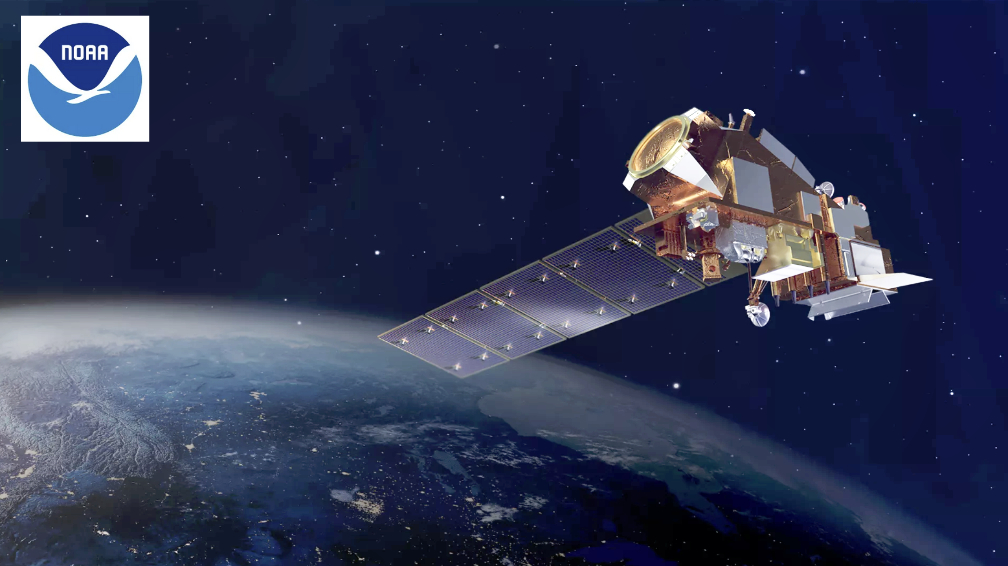
Artistic rendition of the Arctic Weather Satellite on-orbit, courtesy of OHB Sweden.

ESA’s Arctic Weather Satellite mission, for which OHB is mission prime, is designed to show how a potential polar-orbiting constellation of satellites could provide data for very short-term weather forecasts and nowcasts in the Arctic, and around the world. With its cross-track scanning microwave radiometer, the Arctic Weather Satellite mission is to provide measurements of atmospheric humidity and temperature.

The mission is a prototype mission that is intended to be followed by a full constellation of satellites to provide more frequent measurement, something that cannot be achieved by larger GEO satellites currently in use.

Filed Under: News

PlanetiQ awarded million$ NOAA Contract

September 11, 2024 by editorial

PlanetiQ received a Delivery Order (DO-4) contract valued at more than $6.5 million to supply NOAA with their proprietary radio occultation (RO) data for a period of one year starting on September 18, 2024.

Under the Radio Occultation Data Buy II (RODB-2) Indefinite Delivery/Indefinite Quantity (IDIQ) contract, PlanetiQ will provide 2,200 GNSS-RO profiles per day to support NOAA’s Commercial Weather Data Program. NOAA, the U.S.Air Force, U.S. Navy and other weather prediction centers around the world will use PlanetiQ’s data to ingest into their numerical weather prediction models to improve their weather forecasts.

On August 16, 2024, PlanetiQ successfully launched the 5th generation of its GNOMES satellites (GNOMES-5), which began producing the world’s highest quality radio occultation data within 24 hours of launch from Vandenberg AFB. GNOMES-5 is equipped with the world’s best weather sensor, a PlanetiQ-proprietary technology sensor called Pyxis.

Pyxis enables PlanetiQ to supply the highest quality GNSS-RO data for enhanced weather forecasting and atmospheric research to both government and commercial customers, including airlines, insurance, energy, agriculture and financial services. In addition to having the same world class Pyxis sensor as on GNOMES-4, GNOMES-5 carries the world’s most accurate high gain, GNSS dual linear polarization antenna for radio occultation and related applications, which profiles heavy precipitation and snowfall, and measures surface reflections to determine ocean surface winds, soil moisture, sea ice, rivers and lakes, flooding, and freeze-thaw transitions.

Pyxis receives signals from all four world-wide GNSS constellations (GPS, GLONASS, Galileo, and Beidou), and is powerful enough to provide more than double the amount of data available from the next-best GNSS-RO sensors currently on orbit.

“In addition to our deep understanding of RO technology, PlanetiQ provides highly valuable data to the government, military and commercial sectors to benefit people and businesses around the world, including our armed forces,” said PlanetiQ CEO Ira Scharf. “PlanetiQ has built the only system capable of profiling the thermodynamic state of the atmosphere with very high vertical resolution, precision and accuracy routinely down to the surface under any and all weather conditions, over any type of surface, across the globe.”

About PlanetIQ
The mission of PlanetiQ is to bring innovation to the global atmospheric observing system at low cost, via high performance GNSS and related observations to fill the urgent need for highly accurate data to improve weather and climate forecasts to save lives and provide a more environmentally secure future for our planet. Founded in 2015 and privately owned, PlanetiQ is building, launching, and operating a commercial constellation of the highest quality GNSS-RO weather satellites, with an eventual full constellation of 20 Low Earth Orbit (LEO) satellites.

Filed Under: News

Sunstorm CubeSat developed by Kuva Space + Isaware completes mission

September 10, 2024 by editorial

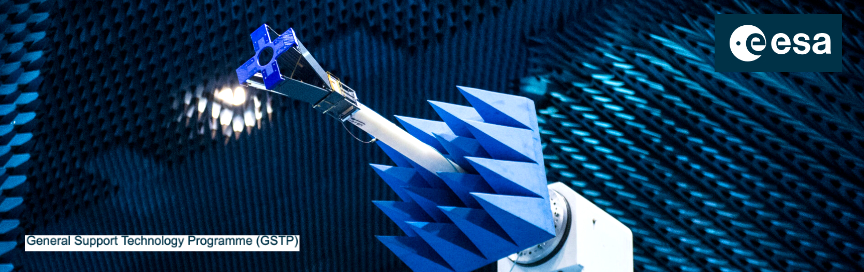
Kuva Space has announced the successful completion of the Sunstorm CubeSat’s mission — after three years of operation, the Sunstorm satellite re-entered Earth’s atmosphere on September 4, 2024, at 10:30 EEST, marking the end of its mission that started under the European Space Agency’s (ESA) General Support Technology Programme (GSTP).

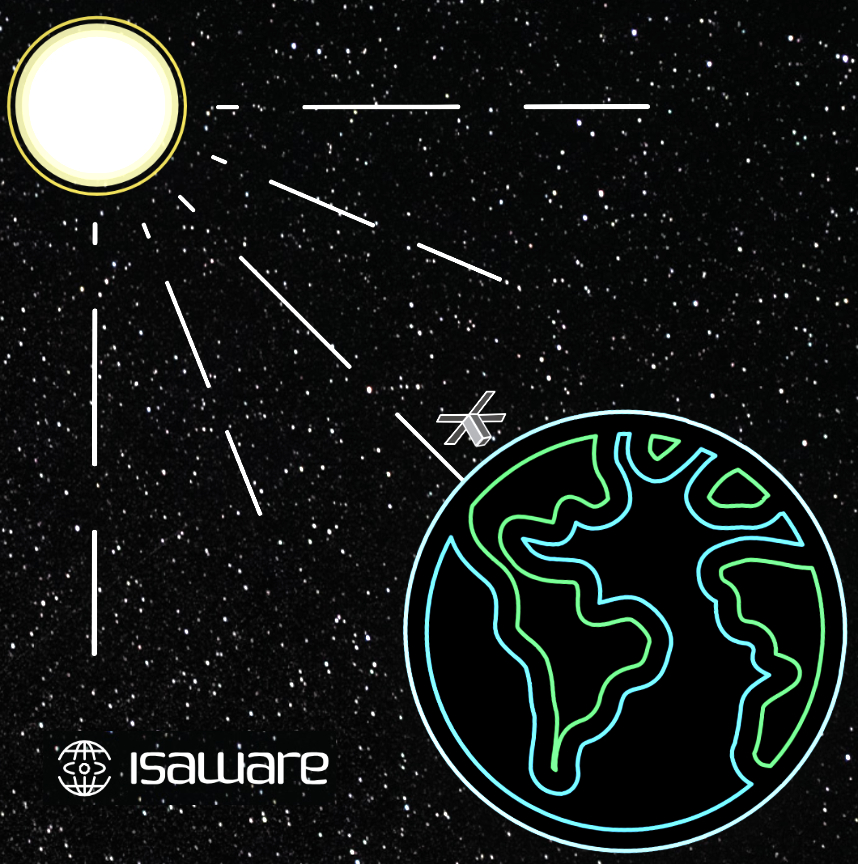
Launched in 2021, the Sunstorm satellite was a joint project of Kuva Space and Isaware, designed to monitor solar X-ray flares with its cutting-edge X-ray Flux Monitor (XFM-CS). The mission’s primary goal was to collect high-resolution data to advance our understanding of solar eruptions and space weather phenomena.

Kuva Space was the satellite platform provider, integrator, and operator in this ESA mission, while Isaware led the development and manufacturing of the X-Ray Flux Monitor for CubeSat (XFM-CS) instrument for the mission and performed the processing of acquired X-ray data for further use in science and services.

Observing solar X-rays is crucial for predicting space weather, but this can only be done from space. As our reliance on networks, electronic systems, and satellites grows, Sunstorm has improved our ability to predict space weather phenomena with unparalleled precision, making it the first of its kind with potential for commercial use.

Throughout its operation, Sunstorm exceeded expectations, delivering the most extensive and highest quality set of X-ray spectral data on solar flares available to date.

The mission was initially planned for two years but was extended by Kuva Space and Isaware due to the satellite’s continued excellent performance. This extension allowed for additional data collection, further enriching the already significant dataset. Sunstorm has provided unprecedented insights into solar activity, which will continue to benefit the scientific community for years to come.

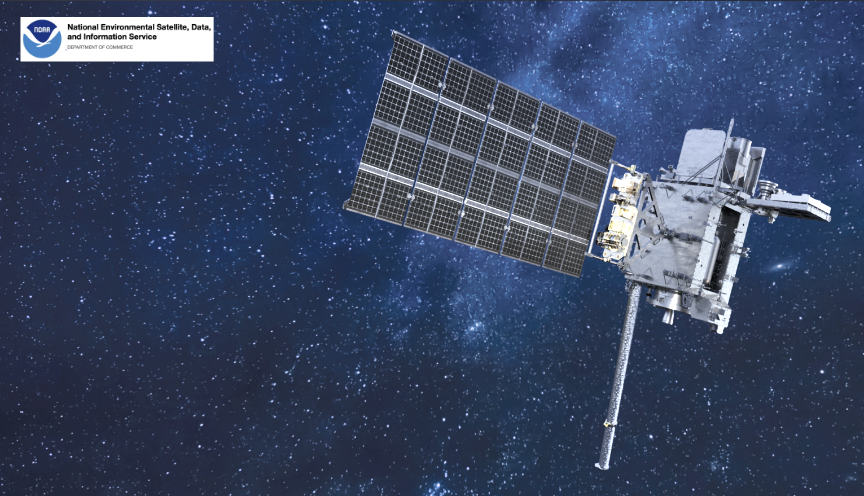
In addition to its primary mission, the success of XFM-CS on Sunstorm has paved the way for future missions. A version of the XFM is currently being developed under ESA’s Space Safety Programme for the National Oceanic and Atmospheric Administration’s (NOAA) Space Weather NEXT program. This mission, scheduled for launch in 2029, will place the XFM instrument aboard an unnamed solar observatory at the Lagrange Point 1 (L1) of the Sun-Earth system. This instrument will be based on the technology successfully proven with XFM-CS but includes two detectors of different sensitivities, which will further improve its performance, particularly during extremely low or high levels of solar activity.

For Kuva Space, the mission set the precedent in how CubeSats are transitioning from high-risk proof-of-concept missions to fully operational high-availability monitoring campaigns with usable scientific data. The mission reaffirms the company’s capability in launching and operating CubeSats that deliver scientific-grade data.

Kuva Space successfully launched its Hyperfield-1 satellite in August 2024, marking the initial stage of Kuva Space’s large hyperspectral constellation, which aims to provide daily observation by 2027 and gapless subdaily global monitoring with 100 satellites by 2030. Its second hyperspectral satellite, Hyperfield-1B, will be deployed in Q1 2025 as part of the ESA InCubed program.

“We are extremely proud of the Sunstorm mission’s success,” said Janne Kuhno, co-founder and principal space engineer at Kuva Space. “The data collected by Sunstorm over the past three years has been invaluable for space weather research and scientific studies of solar eruptions. This mission has set a new benchmark for solar X-ray observations.”

“Sunstorm’s performance and the quality of the data collected have been outstanding,” said Juhani Huovelin, Principal Investigator of the XFM-CS. “This mission has not only achieved its objectives but has also laid the groundwork for future advancements in space weather monitoring. We look forward to seeing the continued impact of the Sunstorm mission in the years to come.”

Filed Under: News

Spire Global awarded million$ NOAA contract for satellite weather data

September 9, 2024 by editorial

Spire Global, Inc. (NYSE: SPIR) hs been awarded a $3,832,500 contract from NOAA to provide radio occultation (RO) data for a one-year period from September 18, 2024 to September 18, 2025. 

The Company’s near-real-time RO data consists of vertical profiles of atmospheric measurements, including pressure, humidity and temperature, that can reach all points of the globe. The data will be used for NOAA’s operational weather forecasts, space weather models and climate research, among other applications.

The award is part of an Indefinite Delivery Indefinite Quantity (IDIQ) contract with a $59 million ceiling for NOAA’s Commercial Weather Data Program’s Radio Occultation Data Buy II

“From the ultimate vantage point of space, our satellites are able to provide unique data sets to improve weather prediction, contribute to climate research, and ultimately, protect lives and prevent the loss of property,” said Mike Eilts, general manager of Weather & Climate at Spire Global. “Our continued work with NOAA speaks to the power of government partnership with the commercial satellite industry to improve weather forecasting.” 

About Spire Global, Inc.  
Spire (NYSE: SPIR) is a global provider of space-based data, analytics and space services, offering unique datasets and powerful insights about Earth so that organizations can make decisions with confidence in a rapidly changing world. Spire builds, owns, and operates a fully deployed satellite constellation that observes the Earth in real time using radio frequency technology. The data acquired by Spire’s satellites provides global weather intelligence, ship and plane movements, and spoofing and jamming detection to better predict how their patterns impact economies, global security, business operations and the environment. Spire also offers Space as a Service solutions that empower customers to leverage its established infrastructure to put their business in space. Spire has nine offices across the U.S., Canada, UK, Luxembourg, Germany and Singapore.

Additional Spire Global posts at SatNews…

Filed Under: News

Telesat selects Calian for element management system for Lightspeed Network

September 9, 2024 by editorial

Telesat (NASDAQ and TSX: TSAT) has selected Calian Group Ltd. (TSX:CGY) to design, develop, deliver and deploy the Element Management System (EMS) within the Telesat Lightspeed LEO satellite network, as well as provide lifecycle maintenance and support for the system.

The EMS will be instrumental in connecting and maintaining operations for various components within the Telesat Lightspeed network, identifying and addressing issues to ensure optimal performance. With the EMS, Telesat will be able to manage the configuration and capabilities of Telesat Lightspeed Landing Stations, User Terminals, and the satellite onboard processors as needed. In addition, Telesat will leverage the EMS to collect and share Telesat Lightspeed system data with the company’s Operations Support Systems and Network Operations Centers to gain full visibility into the state of the entire constellation.

The Telesat Lightspeed constellation is a network of advanced LEO satellites and integrated terrestrial infrastructure that will offer high-speed, low-latency broadband connectivity to remote locations across Canada and worldwide. The Telesat Lightspeed network will support multi-Gbps data rates for government, aeronautical, maritime and enterprise customers, including industries such as oil and gas that operate in locations without access to fiber. Telesat Lightspeed will also help to bridge the digital divide, by expanding the reach of telecom networks in unserved and underserved areas.

Calian’s EMS technology will play a crucial role in the network operations for Telesat Lightspeed, the largest space program in Canada’s history. In addition to helping to bridge the digital divide, the Telesat Lightspeed network is creating and sustaining thousands of high-quality Canadian jobs and puts Canada at the forefront of the burgeoning New Space Economy. 

“We are excited to support the Telesat Lightspeed LEO network with essential software and services for this cutting-edge satellite constellation,” said Valérie Travain-Milone, President, Advanced Technologies, Calian. “By enabling high-speed connectivity in remote and underserved areas, Telesat Lightspeed will empower industries and communities across Canada and beyond. We’re proud to contribute to this transformative project, ensuring reliable, affordable internet access on land, at sea and in the air.”

“The EMS is a critical component of the orchestration of system segments in this advanced, enterprise-class network,” said Aneesh Dalvi, Vice President for Telesat Lightspeed Systems Development. “We conducted a thorough search to find an innovative partner that could meet our requirements and Calian demonstrated the technological knowledge and expertise to deliver this capability; selecting them is a significant milestone as we push toward the launch of the Telesat Lightspeed network.”

About Telesat
Backed by a legacy of engineering excellence, reliability and industry-leading customer service, Telesat (NASDAQ and TSX: TSAT) is one of the largest and most innovative global satellite operators. Telesat works collaboratively with its customers to deliver critical connectivity solutions that tackle the world’s most complex communications challenges, providing powerful advantages that improve their operations and drive profitable growth. Continuously innovating to meet the connectivity demands of the future, Telesat Lightspeed, the company’s state-of-the-art Low Earth Orbit (LEO) satellite network, has been optimized to meet the rigorous requirements of telecom, government, maritime and aeronautical customers. Telesat Lightspeed will redefine global satellite connectivity with ubiquitous, affordable, high-capacity links with feiber-like speeds.

About Calian
We keep the world moving forward. Calian® helps people communicate, innovate, learn and lead safe and healthy lives. Every day, our employees live our values of customer commitment, integrity, innovation, respect and teamwork to engineer reliable solutions that solve complex challenges. That’s Confidence. Engineered. A stable and growing 40-year company, we are headquartered in Ottawa with offices and projects spanning North American, European and international markets.

Filed Under: News

Infostellar providing GSaaS support for Panasonic’s CURTIS Satellite using partner ground stations

September 5, 2024 by editorial

Infostellar Inc., a Ground Segment as a Service (GSaaS) provider, is going to support Panasonic Group’s CURTIS satellite by providing multiple ground stations through the company’s StellarStation platform. 

Infostellar provided a ground station in Gifu, Japan, owned by Kawasaki Heavy Industries (KHI); a ground station in Azerbaijan owned by Azercosmos; and ground stations in South Africa and Bahrain owned by another partner ground station facility, for the CURTIS satellite mission. Using StellarStation the ground station setup for these four different ground stations was completed in just a few months, enabling CURTIS a rapid technology demonstration.

CURTIS was launched from the International Space Station (ISS) in April of 2024, and this technical demo satellite consists mainly of the following three mission payloads:

(1)Demonstrate the operation of the satellite itself, designed as an easy-to-assemble satellite

(2)Conduct technical demonstrations of Panasonic Group products in space. Panasonic will demonstrate components using components and modules that are already in use on the ground, and verify the possibility of converting them for space usage.

(3)Demonstrate circuit formation technology using a thermal management unit composed of technology that downsizes the basic bus section of the satellite and expands the volume of the mission section, as well as graphite material technology with excellent heat dissipation properties. This is done by using high-density circuit design and mounting technologies developed in mobile terminals and product groups that require compactness and light weight.

It is common for such technology demonstrations to use a single ground station. This is because setting up a ground station is a complex and time-consuming task, and it is not efficient to use multiple ground stations operated by different owners for a technology demonstration. However, StellarStation provides a network of third-party ground stations around the world and enables the setup of multiple ground stations in a short period of time. In addition, the use of multiple ground stations increases opportunities for communication with satellites in the S-band, which is common for satellite operations, and allows for large observational data to be downloaded over multiple separate contacts, leading to a quick and effective implementation of the technical demonstration.

In addition to providing ground stations through StellarStation, Infostellar also supported Panasonic in their ITU international frequency coordination and the acquisition of radio licenses for the satellite and overseas ground stations. The Kinki Bureau of the Ministry of Internal Affairs and Communications (MIC) issued the radio station license on July 22, 2024, and Infostellar was able to provide comprehensive support as a GSaaS (Ground Segment as a Service) provider.

Infostellar will continue to support CURTIS operations by providing a network of ground stations through StellarStation.

Naomi Kurahara, CEO of Infostellar, said, “Infostellar is very pleased to support Panasonic Group’s satellite “CURTIS” by providing multiple ground stations through StellarStation and supporting the acquisition of radio station licenses. Our mission is “We connect Earth and Space to empower the future.” And we aim to be the most effective enabler of space business by providing the best access to satellite, as our vision. We hope to contribute to the success of satellite operators’ missions by providing a comprehensive range of services related to the ground segment. Through the access of technical data obtained from the Panasonic Group’s demonstration, we hope that this will lead to the future development of the space industry.

About Infostellar
Infostellar is a satellite ‘Ground Segment as a Service’ (GSaaS) provider. Infostellar provides flexible and scalable ground station services enabled by our cloud platform, StellarStation, which virtualizes ground station networks. Infostellar also provides support for the ground segment operations necessary for satellite operations, such as radio license acquisition and frequency coordination operations. By lowering the barriers to entry in the ground segment, Infostellar empowers new space businesses to build better missions and improve the quality of their service. Founded in 2016, Infostellar is headquartered in Tokyo, Japan and has offices in the UK and the U.S.

About StellarStation
StellarStation is Infostellar’s unique cloud-based platform that provides Satellite Operators with easy access to an expansive and ever-growing network of ground stations around the world. Whether your satellite mission is a global, space-based communications network of high performing satellites; a constellation of Earth Observation satellites or a single, cubesat-based experiment, StellarStation provides services that scale to meet a variety of service needs. Access your satellite data from anywhere in the world. Your data appears where you need it, when you need it and in the most cost-effective manner. Communicate with your orbiting satellites for command and control frequently and efficiently.

Filed Under: News

WISeKey Subsidiary WISeSAT.Space Announces Strategic Alliance with Global Radio Systems

September 4, 2024 by editorial

WISeKey International Holding Ltd. (SIX: WIHN, NASDAQ: WKEY), a global leader in cybersecurity, digital identity and IoT, has announced that, via the firm’s subsidiary WISeSAT.Space, the company has entered into a strategic alliance with Global Radio Systems for the development of innovative solutions and integration of advanced technologies to enhance cyber-secure radio communications connectivity in critical environments, such as emergencies, security and defense.

Headquartered in Spain, and with operations in more than 15 countries, Global Radio Systems offers secured, professional radio communication services, including local and international talk/connection, remote support, emergency alerts, location and real time status, etc. to a wide range of clients.

The collaboration between Global Radio Systems and WISeSAT will focus on creating innovative solutions that combine the advanced technologies of WISeKey and Global Radio Systems. This synergy will allow the offering of cutting-edge services and products that improve safety and efficiency in key sectors. The benefits of this alliance will extend to essential services, including the armed forces, police forces, firefighters, and other organizations that operate in extreme conditions and require reliable and secure communications.

The agreement provides for the use of the WISeSAT low-orbit satellite constellation to ensure robust and continuous connectivity, even in the most challenging environments. These technologies will allow greater flexibility and reach in emergency, security and defense operations, providing essential support for real-time decision making.

“This alliance represents a significant step in our commitment to leading innovation in secure radio communications,” said Pedro Roldán, CEO of Global Radio Systems. “By joining our strengths with WISeSAT, we are prepared to offer unique solutions that meet the most demanding needs of our clients in critical sectors.”

Carlos Moreno, VP Corporate Alliances & Partnerships of WISeSAT.Space, said, “We are excited to work alongside Global Radio Systems to develop technologies that not only revolutionize the market, but also provide critical service to those who depend on secure communications in their daily operations.”

About WISeSAT.Space
WISeSat AG is pioneering a transformative approach to IoT connectivity and climate change monitoring through its innovative satellite constellation. By providing cost-effective, secure, and global IoT connectivity, WISeSat is enabling a wide range of applications that support environmental monitoring, disaster management, and sustainable practices. The integration of satellite data with advanced climate models holds great promise for enhancing our understanding of climate change and developing effective strategies to combat its impacts. As the world continues to grapple with the challenges of climate change, initiatives like WISeSat’s IoT satellite constellation are essential for creating a more resilient and sustainable future.

About WISeKey
WISeKey International Holding Ltd (“WISeKey”, SIX: WIHN; Nasdaq: WKEY) is a global leader in cybersecurity, digital identity, and IoT solutions platform. It operates as a Swiss-based holding company through several operational subsidiaries, each dedicated to specific aspects of its technology portfolio. The subsidiaries include (i) SEALSQ Corp (Nasdaq: LAES), which focuses on semiconductors, PKI, and post-quantum technology products, (ii) WISeKey SA which specializes in RoT and PKI solutions for secure authentication and identification in IoT, Blockchain, and AI, (iii) WISeSat AG which focuses on space technology for secure satellite communication, specifically for IoT applications, (iv) WISe.ART Corp which focuses on trusted blockchain NFTs and operates the WISe.ART marketplace for secure NFT transactions, and (v) SEALCOIN AG which focuses on decentralized physical internet with DePIN technology and house the development of the SEALCOIN platform.

Filed Under: News

Forrester’s Digest: Eutelsat, SoftBank collaboration

September 3, 2024 by editorial

The build–up to IBC has influenced Eutelsat [and SES] to announce new business — the satellite provider has signed an partnership agreement with Japan’s SoftBank Corp.

Eutelsat’s deal with SoftBank will offer low latency, secure connectivity for businesses and government agencies throughout Japan, and sees Eutelsat enter the Japanese market for the first time.

The agreement will tap into Eutelsat’s OneWeb fleet of LEO satellites. The multi–year partnership will enable SoftBank to deliver a robust bandwidth – and communication speed – guaranteed service to customers including corporations and government entities, notably providing momentum for SoftBank’s satellite communication services. It will directly interconnect with SoftBank’s closed network service, SmartVPN, for additional security communications. The scope will initially target the Japanese market, with potential to expand to Japanese customers in other territories.

The agreement follows the granting to SoftBank by Japan’s Ministry of Internal Affairs and Communications of a blanket licence for specific radio stations, including VSAT Earth stations and mobile Earth stations, while the same ministry granted Eutelsat OneWeb a gateway station license.

Cyril Dujardin, Co-President of Eutelsat’s Connectivity Business Unit, said, “Our partnership with SoftBank is a significant milestone in our mission to deliver innovative connectivity solutions globally. We are delighted to rely on SoftBank as our partner to enter the Japanese market, and we look forward to cementing and expanding our collaboration in the years to come.”

Masakatsu Kawahara, SoftBank Corp. Vice President, Head of Communication Service Division, said, ”We are excited to partner with Eutelsat. By using the OneWeb low Earth orbit constellation it becomes possible to use high-quality, highly secure satellite communications services in places such as maritime and mountainous areas where connectivity is difficult to provide with terrestrial mobile networks. This will enable us to promote digital transformation in various industries and for local governments, heralding a new era in secure, ubiquitous connectivity services.”

Filed Under: News

Rocket Lab sets launch date for 2nd dedicated Kinéis mission to deploy IoT constellation

September 3, 2024 by editorial

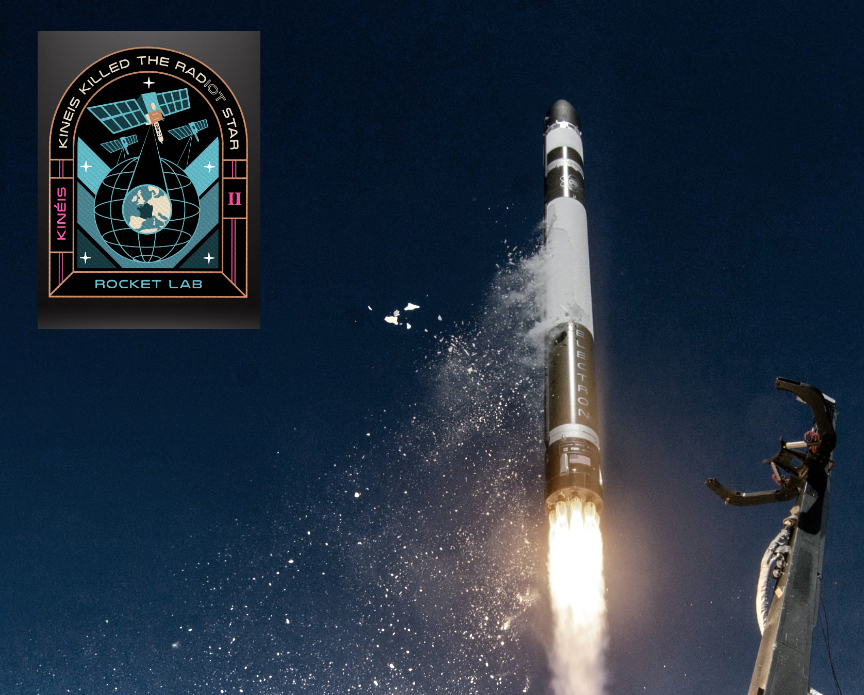
Rocket Lab USA, Inc. (Nasdaq: RKLB) has set the launch window for the company’s 53rd Electron Launch — this mission will be the second of five dedicated launches for the French company, Kinéis.

The ‘Kinéis Killed the RadIOT Star’ mission is scheduled to launch from Rocket Lab Launch Complex 1 in Mahia, New Zealand, during a 14 day launch window that opens on September 17, 2024, NZST.

This mission will launch just three months after the  ‘No Time Toulouse’ mission, Kinéis’ first launch with Rocket Lab. ‘Kinéis Killed the RadIOT Star’ will be the second of five dedicated Electron launches for Kinéis, a company backed by private and public investors including the French government’s space agency CNES (Centre National d’Études Spatiales) and CLS (Collecte Localisation Satellites) an international space-based solutions provider, to improve global Internet of Things (IoT) connectivity.

Kinéis’ constellation will connect any object anywhere in the world and guarantee the transmission of targeted and useful data to users, in near-real time, with low energy consumption with more powerful 30 kg class smallsats that integrate IoT technology. The constellation also includes a second mission: a ship-tracking Automatic Identification System (AIS). Once deployed, these technologies will allow Kinéis to expand across multiple industries and scale from 20,000 devices connected to millions. The second constellation launch will add an additional five new satellites to its planned 25 in number and will enhance Kinéis’ ability to connect the planet and address essential challenges for humanity, its activities, and its environment.

The ‘Kinéis Killed the RadIOT Star’ launch has been tailored specifically to meet Kinéis’ mission requirements, giving them greater control over launch schedule, orbit, and deployment parameters than would be possible on a larger rideshare mission. Tailored mission parameters for this launch include:

  • Instantaneous launch window
  • After the first Curie engine burn to circularize the Kick Stage’s orbit, Curie will ignite again for an eight second burn to set a specific argument of perigee, enabling Kinéis to deploy five satellites to a precise location for each one of the five launches,
  • All five satellites will be deployed in a precise sequence in singles and as pairs to build out the constellation exactly as Kinéis needs it,
  • Finally, Curie will conduct a perigee lowering burn to reduce the Kick Stage’s orbital lifetime to keep space sustainable.

“We’re excited to welcome the Kinéis team on board Electron again as we help them build out their constellation,” said Rocket Lab founder and CEO, Sir Peter Beck. “Dedicated launch is key for the kind of precise orbital deployment requirements many constellation operators need, so we’re proud to make that possible once again.”

“The Kinéis teams are ready to build on the success of the first launch. They have capitalized on this first and delicate technical experience of putting our first five satellites into position and are delivering a real technical performance in managing the five new satellites simultaneously, in addition to the five already in the air,” said Alexandre Tisserant, Chairman of Kinéis. “Rocket Lab’s Electron launcher made a major contribution to this success, thanks to the precision with which it injected our nanosatellites into their positions. The IoT revolution is underway. Thanks to our space-based connectivity, we’ll be able to connect any object anywhere in the world in near real time. Go Kinéis!”

About Rocket Lab
Founded in 2006, Rocket Lab is an end-to-end space company with an established track record of mission success. We deliver reliable launch services, satellite manufacture, spacecraft components, and on-orbit management solutions that make it faster, easier, and more affordable to access space. Headquartered in Long Beach, California, Rocket Lab designs and manufactures the Electron small orbital launch vehicle, a family of flight-proven spacecraft, and the Company is developing the large Neutron launch vehicle for constellation deployment. Since its first orbital launch in January 2018, Rocket Lab’s Electron launch vehicle has become the second most frequently launched U.S. rocket annually and has delivered 190 satellites to orbit for private and public sector organizations, enabling operations in national security, scientific research, space debris mitigation, Earth observation, climate monitoring, and communications. Rocket Lab’s Photon spacecraft platform has been selected to support NASA missions to the Moon and Mars, as well as the first private commercial mission to Venus. Rocket Lab has three launch pads at two launch sites, including two launch pads at a private orbital launch site located in New Zealand and a third launch pad in Virginia.

About Kinéis
Created in 2018, Kinéis is a satellite operator and global connectivity provider. It inherited 40 years of expertise in the Argos system, founded by CNES (French space agency) and historically operated by CLS (Collecte Localisation Satellites). Its mission is to develop reliable technology that provides easy access to useful satellite data. To make life easier for professionals and individuals and encourage them to use its products and services, Kinéis locates and connects objects wherever they are on the planet, in near real time. This way, the company deploys all its technological innovation capabilities to bring together New Space and IoT. In 2020, Kinéis raised 100 million euros from French private and public investors. In 2021, Kinéis generated a turnover of 8.4 million euros (+20% compared to 2020). Kinéis has been awarded the French Tech Next40 promotion 2021, 2022 and French Tech 120 promotion 2023.

Filed Under: Featured, News

Ovzon receives additional order from U.S. DoD for Ovzon T7 from the U.S. Department of Defense

September 3, 2024 by editorial

Ovzon has received a second order from the United States Department of Defense for the company’s most recent, mobile, satellite terminal, the Ovzon T7. The order value amounts to $0.4 million.

Artistic rendition of the Ovzon 3 on-orbit, courtesy of Ovzon.

In February of this year, the United States Department of Defense (U.S. DoD) became the first customer to place an order for Ovzon T7, the industry’s smallest, lightest, and fastest mobile satellite terminal. The Ovzon T7 is the first mobile satellite terminal optimized for the new Ovzon 3 satellite and its unique On-Board-Processor, fully leveraging its advanced resiliency features tailored for critical missions in contested environments. The Ovzon 3 satellite entered commercial service on July 5, 2024.

“We are delighted to see this additional order for Ovzon T7 from such an important and valued customer. We consider this a significant vote of confidence that the powerful combination of the Ovzon T7 terminal and the Ovzon 3 satellite is exceeding expectations for performance, mobility and resiliency,” said Ovzon’s CEO, Per Norén.

Filed Under: News

  • « Go to Previous Page
  • Page 1
  • Interim pages omitted …
  • Page 9
  • Page 10
  • Page 11
  • Page 12
  • Page 13
  • Interim pages omitted …
  • Page 42
  • Go to Next Page »

Primary Sidebar

WEEKLY NEWSLETTER

Archives

  • August 2026
  • July 2026
  • June 2026
  • May 2026
  • April 2026
  • March 2026
  • February 2026
  • January 2026
  • December 2025
  • November 2025
  • October 2025
  • September 2025
  • August 2025
  • July 2025
  • June 2025
  • May 2025
  • April 2025
  • March 2025
  • February 2025
  • January 2025
  • December 2024
  • November 2024
  • October 2024
  • September 2024
  • August 2024
  • July 2024
  • June 2024
  • May 2024
  • April 2024
  • March 2024
  • February 2024
  • January 2024
  • December 2023
  • November 2023
  • October 2023
  • September 2023
  • August 2023
  • July 2023
  • June 2023
  • May 2023
  • April 2023
  • March 2023
  • February 2023
  • January 2023
  • December 2022
  • November 2022
  • October 2022
  • September 2022
  • August 2022
  • July 2022
  • June 2022
  • May 2022
  • April 2022
  • March 2022
  • February 2022
  • January 2022
  • December 2021
  • November 2021
  • October 2021
  • September 2021
  • August 2021
  • July 2021
  • June 2021
  • May 2021
  • April 2021
  • March 2021
  • February 2021
  • January 2021
  • December 2020
  • November 2020
  • October 2020
  • September 2020
  • August 2020
  • July 2020
  • June 2020
  • May 2020
  • April 2020
  • March 2020
  • February 2020
  • January 2020
  • December 2019
  • November 2019
  • October 2019

© 2019–2026 SatNews

Insert/edit link

Enter the destination URL

Or link to existing content

    No search term specified. Showing recent items. Search or use up and down arrow keys to select an item.
      x
      Sign Up Now!

      Enjoy a free weekly newsletter with recent headlines from the global SmallSat industry.

      Invalid email address
      We promise not to spam you. You can unsubscribe at any time.
      Thanks for subscribing! You will now receive weekly SmallSat News updates.
      We love our advertisers.
      And you will too!

      Please disable Ad Blocker to continue... We promise to keep it unobtrusive.
      We promise not to spam you. You can unsubscribe at any time.
      Invalid email address
      Thanks for subscribing!