• Skip to main content
  • Skip to primary sidebar
  • Home
  • News
  • Featured
  • More News ⌄
    • SatNews
    • SatMagazine
    • MilSatMagazine
  • Events ⌄
    • MilSat Symposium
    • SmallSat Symposium
    • Satellite Innovation
  • Contacts
  • SUBSCRIPTION

SmallSat News

You are here: Home / Archives for 2024

Archives for 2024

Agile Space Industries to provide propulsion capability for True Anomaly’s space operations

May 6, 2024 by editorial

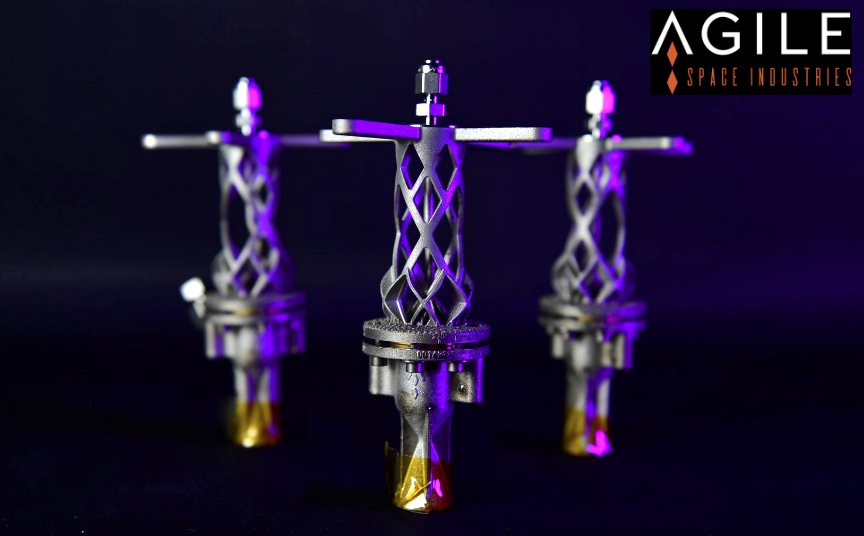
Photo of Agile Space Industries’ M4 thruster, courtesy of the company.

Agile Space Industries will be providing advanced propulsion technology for a variant of True Anomaly’s Jackal autonomous orbital vehicle (AOV).

Photo of the True Anomaly Jackal vehicle with an Agile Space propulsion system. Photo is courtesy of Agile Space Industries.

Space security and sustainability missions require True Anomaly’s Jackal AOV to maneuver in any orbit. Propulsive efficiency is key to enabling mission flexibility so operators can “maneuver without regret,” knowing they will have ample propellant reserves for future maneuvers. In addition to efficiency, high thrust is imperative to minimize response time and maximize unpredictability to potential adversaries.

True Anomaly’s new, highly propulsive Jackal configuration will add to the company’s platform options to suit specific mission types. Agile is currently manufacturing the main engines, attitude control thrusters, propellant tanks, and other propulsion components that will be integrated into True Anomaly’s production line on an accelerated schedule to enable the company’s multi-orbit, high-acceleration, and high delta-V Jackal requirements.

True Anomaly was recently selected for a contract by Space Systems Command, a U.S. Space Force field command, for the VICTUS HAZE Tactically Responsive Space (TacRS) mission, which has a goal of demonstrating and proving how commercial capabilities can be used for future TacRS operations all while further enabling dynamic space operations.

In addition to the propulsion components, Agile will provide propellant logistics services, including procurement, handling, and spacecraft fuel-loading for the Jackal AOV that True Anomaly will launch as part of the VICTUS HAZE demonstration in 2025.

“Propulsion is at the heart of Jackal’s unique capabilities,” said True Anomaly CEO and Co-Founder, Even Rogers. “Agile’s hardware gives Jackal propulsive capability that has simply not been seen before in a spacecraft of this size. By combining efficiency and high thrust, we will empower operators with the agility needed to succeed in the demanding space environment.”

“Both Agile and True Anomaly are investing in the mission—it’s a true collaboration,” said Agile CEO, Chris Pearson. “The hardware being brought to market will benefit the wider space economy and is enabled by Agile’s strategic investments in advanced additive manufacturing and vertically integrated propulsion test capabilities.”

About Agile Space Industries
Agile Space Industries provides in-space propulsion solutions to enable our customers to reach their destinations faster and more efficiently to take advantage of the new space economy. Our industry leading propulsion design, metal 3D printing, and vacuum hot-fire testing capabilities are under one roof allowing us to provide a competitive edge for our government and industry customers.

About True Anomaly
True Anomaly builds innovative technology at the intersection of spacecraft, software, and AI to deliver solutions for space security, sustainability, and accessibility. The company empowers the U.S. government, its allies, and partners as well as the commercial space industry to lead safe, resilient operations on orbit to secure life on Earth..


Filed Under: Featured, News

Descartes Labs Government accelerates mission-ready solutions with EarthDaily constellation EO data

May 5, 2024 by editorial

Descartes Labs and its subsidiary, Descartes Labs Government, has selected EarthDaily Analytics as a supplier for their EO data to power their geospatial analytics and AI solutions. 

EarthDaily’s Constellation will unlock a continuous stream of scientific-quality and analytics-ready data providing an unprecedented industry advancement for Descartes Labs’ customers.

The anticipated EarthDaily Constellation is set to launch later in 2024. Their “string of pearls” configuration will enable coverage of nearly 100% of the world’s land masses and maritime regions every six hours, providing the widest commercially available spectral range specifically tailored to inform and guide a diverse set of the most mission-critical, real-world applications. The EarthDaily Constellation will fundamentally change customers’ ability to identify change and adapt quickly in an increasingly complex world.

Retina integrates Open Source Intelligence (OSINT) and Geospatial Intelligence (GEOINT) for rapid intelligence extraction, enabling government agencies to see the world in real-time clarity through a single, streamlined interface. WayFinder, a new mission management tool, aids Search and Rescue (SAR) operations by shortening the time between emergency beacon detection and responders hitting the ground, reducing emergency response times by 25-50%. Iris, an InSAR-based deformation monitoring solution, visually focused on AOIs, with an easy to use, no code interface. Iris continuously monitors critical infrastructure for signs of deformation and provides fast alerting for improved response to these anomalies. Together, Retina, WayFinder and Iris arm the Public Sector with actionable insights for mission-ready decisions to meet mission-critical objectives.

Descartes Labs and EarthDaily’s integration of data and analysis will yield an unparalleled scope and quality of actionable insights for the private and public sectors alike. The addition of EarthDaily data will provide a valuable enhancement to data agnostic, deep tech intelligence of Retina, WayFinder and Iris, Descartes Labs Government’s trifecta of solutions being released at GEOINT Symposium 2024. 

“Access to EarthDaily data will improve mission response times, enabling swift reactions to real-world events. Integrating this data into our product solutions will be pivotal in powering our current tip and cueing event alerting system,” said Nicole Toigo, President of Descartes Labs Government.

Don Osborne, CEO of EarthDaily Analytics, said, “Uniting EarthDaily data with the AI driven analytics that are foundational to Descartes Labs and Descartes Labs Government, delivers a complete end-to-end solution across industries, enterprises and governments, globally.”

About Descartes Labs Government (DLG)
Descartes Labs Government is a wholly owned subsidiary of Descartes Labs. Our solutions are grounded in an ever-expanding portfolio of cloud-native, dual-use, AI-driven products and capabilities that are commercially available and mission-stress-tested by a variety of government organizations. Our expert team comes from a broad range of physical and applied science backgrounds at top institutions, and our strength lies in blending physical and statistical modeling techniques.  

Filed Under: News

HyImpulse launches their 1st commercially viable launch vehicle

May 5, 2024 by editorial

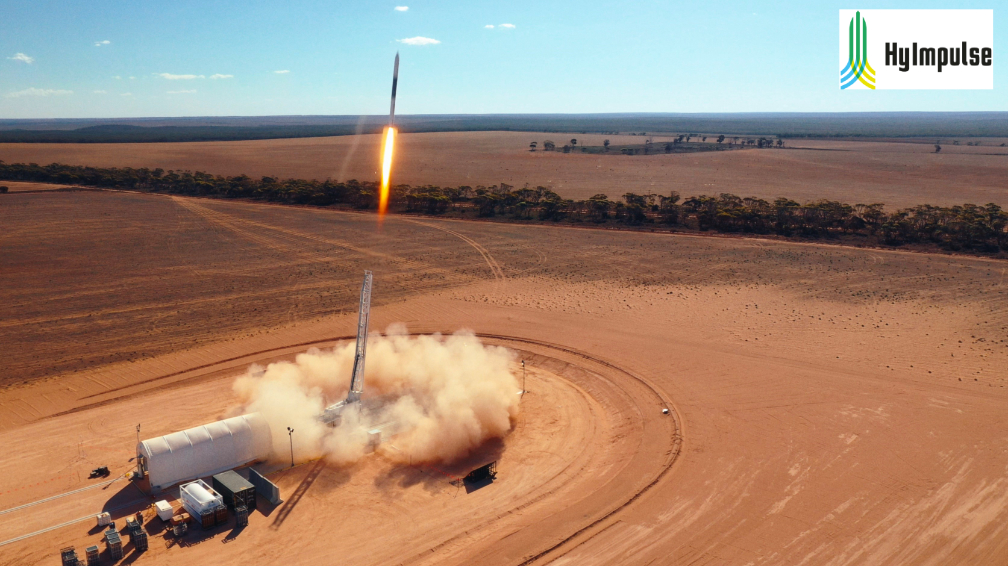
Photo of the SR75 test launch is courtesy of HyImpulse.

HyImpulse, a German manufacturer and system provider of commercial launch vehicles for satellite transport, successfully test-launched their 12 meter long and 2.5 ton single-stage rocket “SR75” that can transport smallsats weighing up to 250 kg to an altitude of around 250 km.

The hybrid rocket propulsion system of the launch vehicle operated as planned. After the successful lift-off, the SR75 will be retrieved for further examination and analysis of the data.

HyImpulse introduces a groundbreaking propulsion concept with its rockets, using solid paraffin (commonly known as candle wax) and liquid oxygen as fuel. Paraffin, being both cost-effective and inherently safe as a fuel, serves as an alternative to conventional liquid or solid fuels and does not have the risk to explode. This innovative design significantly simplifies the construction of launch vehicles, cutting costs by a remarkable 40 percent compared to traditional propulsion systems. As a result, satellite transportation expenses are reduced by an impressive 50 percent, demonstrating HyImpulse’s commitment to affordable access to space.

The SL1 multi-stage orbital launch vehicle, scheduled for its inaugural lift-off by the end of 2025, stands at a height of 32 meters and weighs 50 tons. Depending on the weight of the payload, it can ascend to an altitude exceeding 500 km, i.e., reaching low Earth orbits. Designed for cost-effective transportation of smallsats into space, it can carry payloads of up to 600 kilograms to LEO.

Dr. Mario Kobald, co-founder and co-CEO of HyImpulse, said, “ Setting up a commercial launch vehicle equipped with entirely new propulsion technology up for launch and lift-off with such an efficient team and a relatively small budget is quite a feat. We’re signaling Germany’s prowess as a spacefaring nation and expanding Europe’s access to space. Already, we’re planning the launch of a larger, multi-stage transport launch vehicle capable of deploying satellites weighing up to 600 kilograms into low Earth orbits by the end of next year.”

Dr. Christian Schmierer, co-founder and co-CEO of HyImpulse, said, “With this successful launch, which also provides us with valuable data for further development, we have validated our technical concept and demonstrated our market readiness. Our utilization concept is designed for the cost-effective transport of small satellites into space. This enables the implementation of privately funded environmental and climate projects, research projects, as well as navigation, telecommunications, and more. The demand for commercial launch vehicles for the transportation of satellites in Europe is substantial. Accordingly, with a volume well exceeding 100 million Euro, our order book is already substantial and continues to grow monthly.”

Filed Under: News

Exolaunch deploys NASA’s ACS3 Satellite

May 3, 2024 by editorial

  • HOME
  • Magazines
  • Events
  • Perspectives
  • Industry Calendar
    • IN PERSON
    • VIRTUAL
  • Subscribe

This marks the first-ever satellite Exolaunch has deployed for NASA,
which launched via Rocket Lab’s Electron vehicle on April 23, 2024.

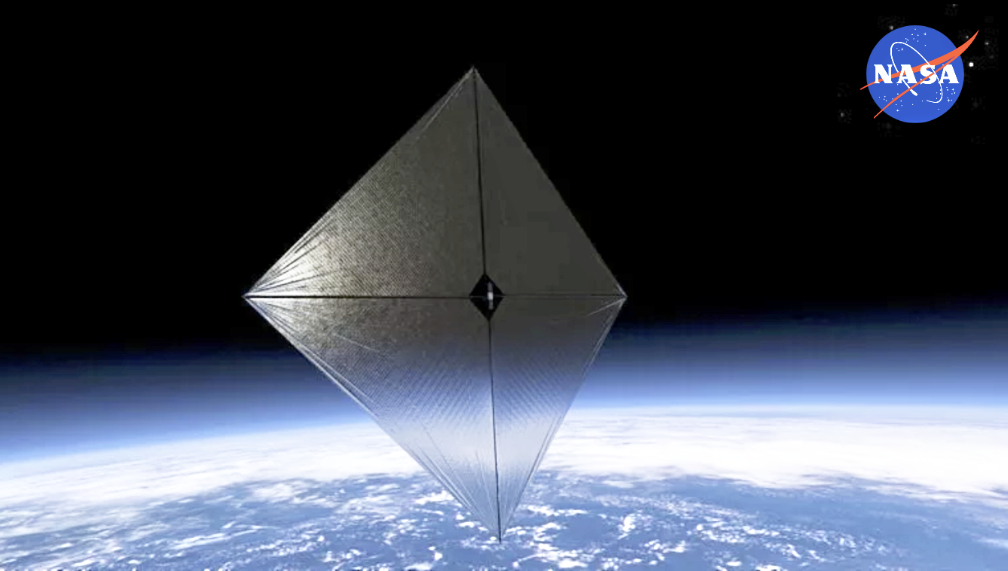
Artistic rendition of NASA’s ACS3 solar sail spacecraft on-orbit. Image is courtesy of NASA.

Exolaunch provided the deployment services for NASA’s Advanced Composite Solar Sail System (ACS3) satellite aboard Rocket Lab’s “Beginning of the Swarm” mission.

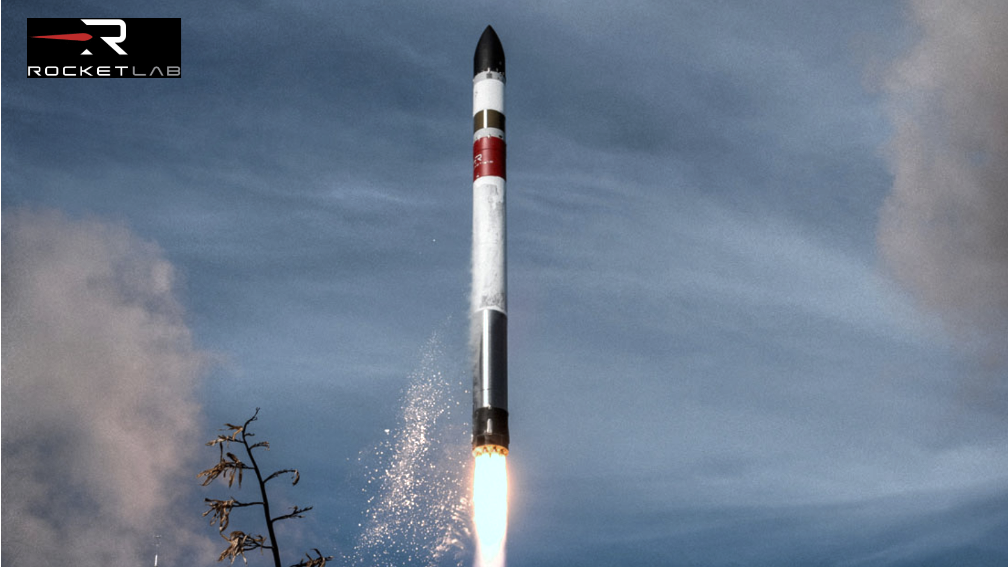
Launch photo is courtesy of Rocket Lab.

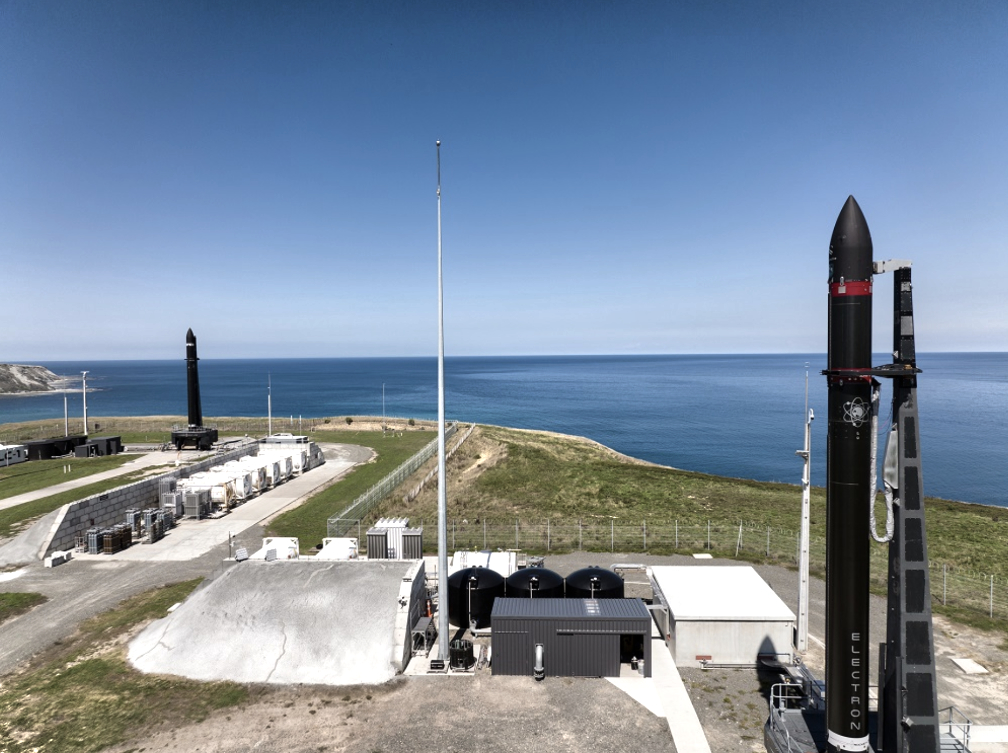
The liftoff occurred on April 23rd. at 1000 NZT / 2200 UTC from Rocket Lab Launch Complex 1 in Mahia, New Zealand. As the first satellite the company has deployed for NASA, this landmark launch is Exolaunch’s 28th mission.

Rocket Lab’s Launch Complex 1, Mahia, New Zealand.

ACS3, which features a 12U nanosatellite (smallsat) bus built by Kongsberg NanoAvionics, is testing new structures for solar sail systems, which harness sunlight for propulsion. The satellite was successfully deployed into orbit using Exolaunch’s flight-proven EXOpod deployer.

With NASA’s ACS3 now in orbit, the mission’s primary objective is to test the deployment of lightweight booms designed to unfurl a solar sail measuring about 30 feet per side. ACS3 marks the first use of composite booms, as well as sail packing and deployment systems, for a solar sail in space. Additionally, exploring solar sailing as a viable alternative to chemical and electric propulsion systems is crucial to enabling future low-cost, efficient deep space missions.

This innovative technology holds great promise for a variety of applications, including space weather monitoring satellites, asteroid reconnaissance missions, and solar observation missions, contributing to significant advancements in space exploration and science.

“Exolaunch is honored to have been a part of NASA’s ACS3 mission,” said Jake Cornish, U.S. launch director at Exolaunch. “Congratulations to NASA and Kongsberg NanoAvionics on reaching this crucial milestone, and thank you, Rocket Lab, for a smooth ride to orbit. We are excited to see the potential applications of ACS3 unfold, and are proud to support and enable NASA’s innovative endeavors in space exploration using small satellites.”

Filed Under: News

SDA awards an eight satellites build for the FOO Fighter program

May 1, 2024 by editorial

Artistic rendition is courtesy of Millennium Space Systems.

The Space Development Agency (SDA) has issued an award using Other Transaction Authority (OTA) with a total potential value of approximately $414 million to build eight satellites, for launch in first quarter fiscal year 2027, to accelerate fire-control capability for global detection, warning, and precision tracking of advanced missile threats, including hypersonic missile systems.

This firm fixed-price agreement was awarded to Millennium Space Systems, Inc. to deliver eight satellites as part of the Proliferated Warfighter Space Architecture‘s (PWSA) Fire-control On Orbit-support-to-the-war Fighter (FOO Fighter) program. FOO Fighter, or F2, will demonstrate advanced missile defense capability by incorporating fire control-quality sensors into a prototype constellation.

“The FOO Fighter program will provide an operational demonstration of fire control efforts separate from, but complementary to, our missile warning/missile tracking and missile defense efforts already underway in the tranches,” said Derek Tournear, SDA director. “We look forward to working with Millennium, a new teammate in the expanding marketplace of performers innovating to deliver the PWSA for the warfighter.”

Filed Under: News

Spire Global secures multi-million$ deal with financial firm for weather forecasts

April 30, 2024 by editorial

Spire Global, Inc. (NYSE: SPIR) has entered into a multi-million-dollar deal with a financial firm to provide the firm’s High-Resolution Weather Forecast model, which offers a six-day outlook powered by proprietary data collected from space, and develop an AI-powered model for long-range forecasting.

Through this deal, Spire will build off of its recent collaboration with NVIDIA to leverage Earth-2, NVIDIA’s platform for weather and climate change modeling, to train and run AI weather models. These models are projected to increase the accuracy of weather forecasts and produce long-range probabilistic forecasts at unprecedented speeds.

Spire’s multipurpose constellation of satellites, using radio occultation technology, captures precise vertical profiles of temperature, pressure, and humidity across the globe, including under-observed areas and remote regions. By using these proprietary datasets to initialize an AI forecasting model, the Company aims to usher in a new era of accuracy, speed and reliability in weather forecasting.

Spire’s suite of Weather and Climate solutions, including its recently launched High–Resolution Weather Forecasts, DeepVision™, global weather forecasts, proprietary data sources like ocean winds and soil moisture, and additional atmospheric weather datasets, serves customers across various industries including energy, logistics, utilities, agriculture and more.


“Having spent my career in the field of weather, I’m amazed at the rapid pace by which we’re seeing AI transform weather forecasting, especially when paired with proprietary data that can only be collected from space,” said Michael Eilts, general manager of Weather & Climate at Spire. “As climate change causes more volatile and extreme weather patterns, our models are equipping financial firms with the crucial insights needed to anticipate weather’s influence on price dynamics and market trends.”

Filed Under: News

Umbra Advances to Phase II of the DARPA DRIFT program

April 30, 2024 by editorial

Umbra has been selected by the Defense Advanced Research Projects Agency (DARPA) to progress to Phase II of the Distributed Radar Image Formation Technology (DRIFT) program.

This significant milestone underscores Umbra’s pivotal role in advancing cutting-edge capabilities for DARPA’s mission to create breakthrough technologies for national security. The DRIFT program leverages data from multiple Umbra Synthetic Aperture Radar (SAR) satellites flown in formation, paving the way for the development of groundbreaking processing algorithms.

These U.S. capability advancements in formation flying and joint collection techniques are a testament to Umbra’s expertise in remote sensing space systems and its commitment to pushing the boundaries of innovation. Phase II entails a comprehensive multi-month collection campaign, during which Umbra’s SAR satellites will generate bistatic and multistatic datasets for further analysis by DARPA and its partner contractors in the DRIFT program. At the culmination of Phase II, Umbra will conduct an on-orbit demonstration showcasing the multistatic capabilities it has developed.

In March, Umbra released bistatic imagery from its tandem satellites. With eight satellites currently in orbit, Umbra plans to deploy the remaining satellites in its licensed 32 satellite constellation in strategically designed pairs. With the ability to capture images at day/night, all-weather capable, Umbra’s SAR satellites are indispensable for monitoring change. Umbra’s satellites deliver the highest quality SAR data at unprecedented volumes and area density, enabling the U.S. Government, its allies, and commercial partners with actionable, all-weather insights.

Jason Mallare, Vice President of Global Solutions at Umbra, said, “We’re grateful to contribute to DARPA’s vision, leveraging top-tier U.S. capabilities for asymmetric advantage. Umbra’s differentiated technology and relentless focus on tech evolution drive us forward. We’re excited about the future this technology and similar capabilities hold for Umbra and the nation.”

About Umbra
Umbra is a vertically integrated space technology company that offers intelligence data as a service to commercial and government customers. Our cutting-edge products help customers solve complex business, environmental, and security challenges. Umbra is founded, funded, built and operated in the USA with headquarters in Santa Barbara, California, and has a presence in Austin, Texas, and Washington, D.C.

Filed Under: News

Ariane 6 to fly the OOV-Cube

April 25, 2024 by editorial

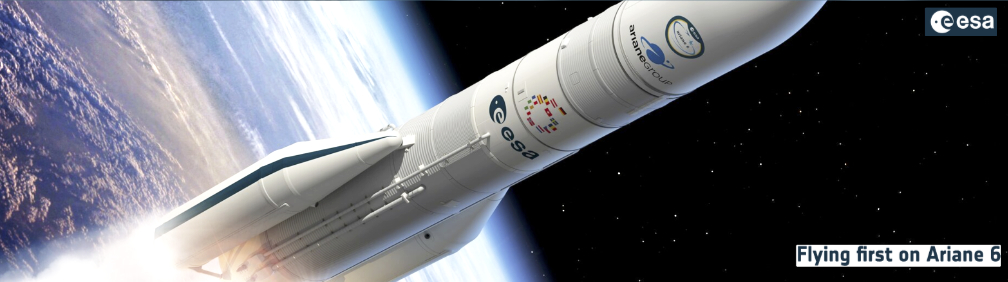
Europe’s newest rocket soon launches, taking with it many space missions each with a unique objective, destination and team at home, cheering them on. Whether launching new satellites to look back and study Earth, peer out to deep space or test important new technologies in orbit, the European Space Agency’s Ariane 6’s first flight will showcase the versatility and flexibility of this impressive, heavy-lift launcher.

OOV-Cube
OOV-Cube

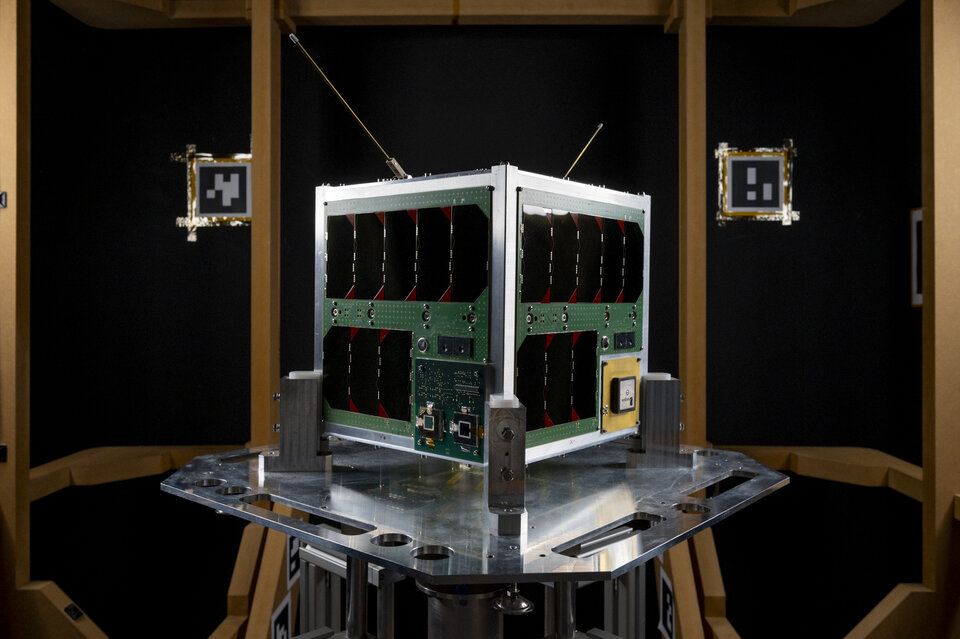
OOV-Cube (On Orbit Verification Cube) is a 25-by-25 cm nanosatellite that brings together unusual bedfellows: technology testing for wildlife tracking, the Internet of Things and more. Developed by the Technical University of Berlin and Berlin-based company RapidCubes, it will be launched into a low, circular orbit, just 580 km above Earth’s surface.

The mission is a single satellite, but it has several goals, experiments and demonstrations on board that could pave the way for new applications in the field of smallsat constellations.

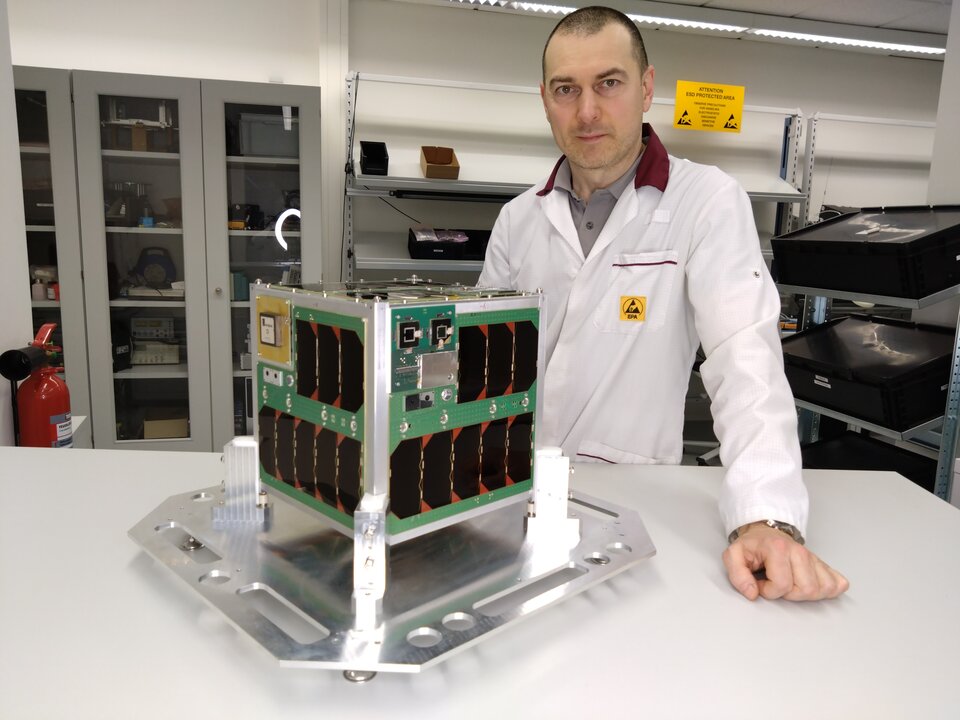
Walter Frese with OOV-Cube

“This mission has the potential to help with issues that are very important to people on Earth,” said Walter Frese, CEO of RapidCubes. “OOV-Cube will provide the scientific basis for reliable, energy-efficient communications on wildlife protection that are independent of infrastructure on the ground. In terms of conservation, it will also contribute to the technical research into how to prevent space debris. OOV-Cube will be the sixth satellite in a series I have been working on, and the most demanding so far in terms of its payloads. The moment the first data come down successfully brings up a lot of positive emotions. And for this mission, there’s the added pride that we are doing something important for the environment.”

By performing the first experimental demonstration of a ‘mioty’ high-performance Internet of Things communication protocol, OOV-Cube will test a technology that can be linked to miniaturized transmitters carried by animals, connecting them to scientists in real time. This would be particularly useful in remote areas without terrestrial infrastructure.

“Integrating our cloud detection network onto the machine learning hardware of OOV-Cube is a completely new experience,” said Alexander Balke, project manager of AITHER at TU Berlin. “I would have never dreamed that our work would now be launched into space in front of the whole world.“

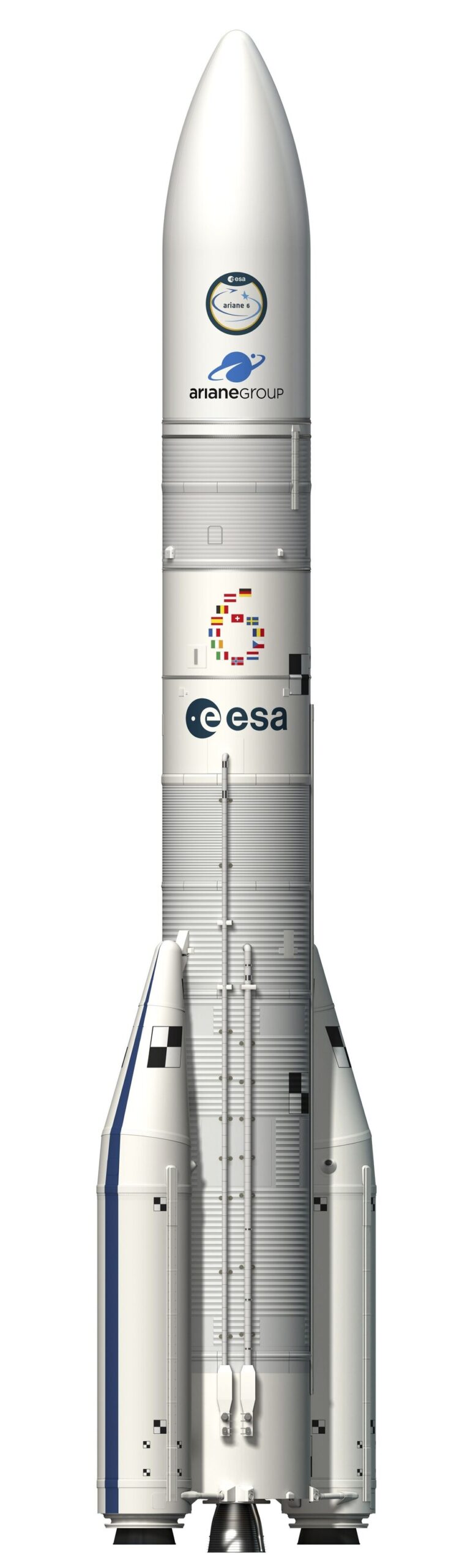
Ariane 6 flight model 1 artist view

The mission will also test image processing in orbit using Artificial Intelligence (AI) – an important and time-saving ability that would mean data on wildlife monitoring can be processed by the satellite in orbit, rather than later on the ground.

The satellite will also test and verify new cost-effective and efficient perovskite solar cells, verify a wide-angle camera with autofocus – a necessary prerequisite for docking maneuvers necessary for future service missions to refuel, repair or re-orbit satellites. Also important for future on-orbit service missions, OOV-Cube will verify an ‘L-band’ radio system for communications between satellites in low-Earth and geostationary orbits. 

Ariane 6 is planned to launch in June-July 2024. It follows the hugely successful Ariane 5, Europe’s principal rocket for more than a quarter century, flying 117 times between 1996 and 2023 from Europe’s Spaceport in French Guiana.

Ariane 6 has been designed for all possible futures. At its core is maximum versatility. It can put any satellite or payload into any orbital path. This is made possible with the new restartable Vinci engine that will power up the Ariane 6 upper stage again and again, stopping and starting to insert missions into any orbit they need to be. It will save enough fuel for a final burn to deorbit and reenter safely back through Earth’s atmosphere, or reorbit into a nearby ‘graveyard orbit’.

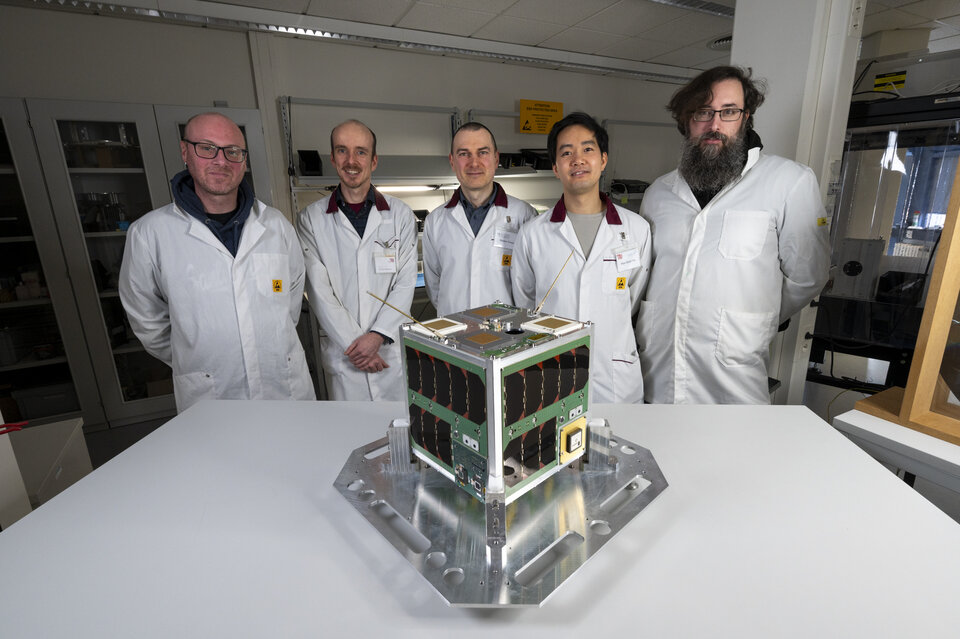
“We’re genuinely excited about this upcoming opportunity to fly on Europe’s new rocket, Ariane 6,” said Enrico Stoll, Chair of Space Technology at the Technical University of Berlin. “TU Berlin has a proven track record with 28 developed and operated satellites over the last decades, and the OOV-Cube mission holds special significance for us. It represents one of the first instances where we’ll be operating an experiment on a satellite developed by one of our spin-offs, RapidCubes, which adds a really interesting dimension to our experience in the field.”

OOV-Cube team
OOV-Cube team

Filed Under: Featured, News

Satellogic signs Letter of Intent with O.N.E. Amazon

April 22, 2024 by editorial

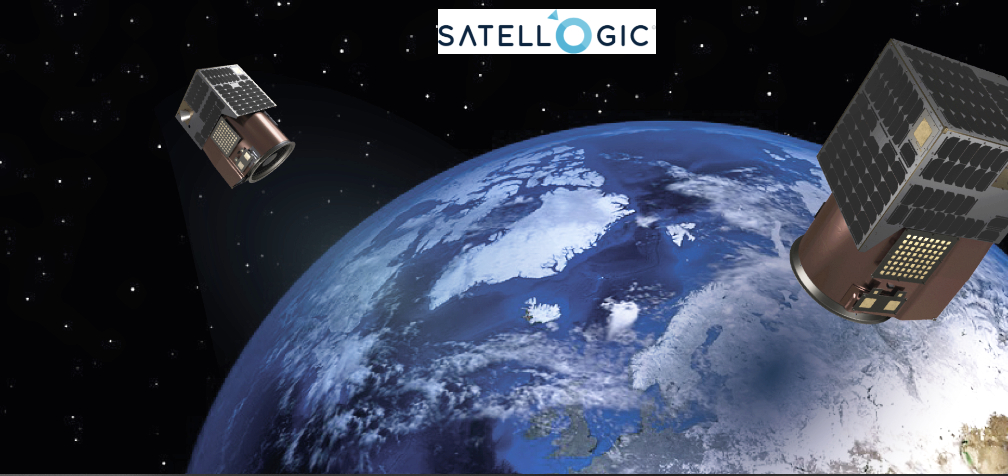
Satellogic (NASDAQ: SATL) has signed a Letter of Intent (LoI) with O.N.E. Amazon to bring innovation to conservation — this announcement coincides with Earth Day, amplifying the importance of advancing geospatial sciences for planetary health and preservation.

Satellogic will look to support O.N.E. Amazon’s creation of the Internet of Forests (“IoF”), a large-scale sensor network that, along with machine intelligence infrastructure, will be used to monitor key variables within the Amazon rainforest.

“Satellogic’s mission is to monitor the planet to help solve the Earth’s most pressing issues. We understand the importance of initiatives like the O.N.E. Amazon project, and we are happy to support the IoF,” said Matt Tirman, President, Satellogic. “Our global, sub-meter resolution satellite constellation allows us to revisit any point on Earth daily and can obtain imagery quickly, allowing maximum responsiveness to any environmental change event.”

“Tokenization of the Amazon rainforest requires a granular assessment of environmental and social conditions within a given area of land. We believe Satellogic’s state-of-the-art earth-mapping technology will play a key role in the success of IoF,” said Rodrigo Veloso, CEO, O.N.E. Amazon. “The Internet of Forests is intended to ensure reliable measurements of key environmental and social metrics; serve as world – class data collection and storage infrastructure for scientific analysis of forest environments; and enable local communities to better understand how their behavior and the behavior of institutions impact the natural environment within the rainforest.”

Filed Under: News

SpaceX to launch Starlink satellite Group 6-53 on Monday

April 21, 2024 by editorial

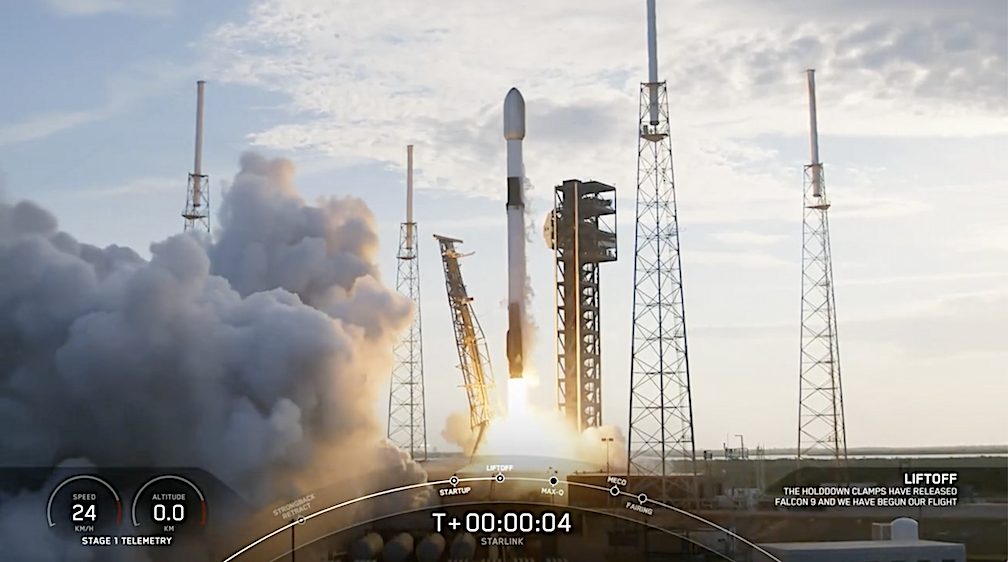
From Thursday, April 18 launch. Photo by Satnews captured from SpaceX video stream

SpaceX’s Falcon 9 is set to launch a batch of Starlink satellites into LEO from Space Launch Complex 40, Cape Canaveral, for the Starlink mega-constellation, on Monday, April 22 from 3:40 – 7:40 PDT.

The $52 million launch is part of SpaceX’s project for space-based Internet communication system.

Weather forecast calls for a temperature of 69°F, broken clouds, 75% cloud cover and a wind speed of 24mph.

Space Launch Complex 40 has witnessed the launch of 236 rockets, including 236 orbital launch attempts, while Cape Canaveral, FL, USA, has been the site for 947 rocket launches.

Filed Under: News

  • « Go to Previous Page
  • Page 1
  • Interim pages omitted …
  • Page 25
  • Page 26
  • Page 27
  • Page 28
  • Page 29
  • Interim pages omitted …
  • Page 42
  • Go to Next Page »

Primary Sidebar

WEEKLY NEWSLETTER

Archives

  • August 2026
  • July 2026
  • June 2026
  • May 2026
  • April 2026
  • March 2026
  • February 2026
  • January 2026
  • December 2025
  • November 2025
  • October 2025
  • September 2025
  • August 2025
  • July 2025
  • June 2025
  • May 2025
  • April 2025
  • March 2025
  • February 2025
  • January 2025
  • December 2024
  • November 2024
  • October 2024
  • September 2024
  • August 2024
  • July 2024
  • June 2024
  • May 2024
  • April 2024
  • March 2024
  • February 2024
  • January 2024
  • December 2023
  • November 2023
  • October 2023
  • September 2023
  • August 2023
  • July 2023
  • June 2023
  • May 2023
  • April 2023
  • March 2023
  • February 2023
  • January 2023
  • December 2022
  • November 2022
  • October 2022
  • September 2022
  • August 2022
  • July 2022
  • June 2022
  • May 2022
  • April 2022
  • March 2022
  • February 2022
  • January 2022
  • December 2021
  • November 2021
  • October 2021
  • September 2021
  • August 2021
  • July 2021
  • June 2021
  • May 2021
  • April 2021
  • March 2021
  • February 2021
  • January 2021
  • December 2020
  • November 2020
  • October 2020
  • September 2020
  • August 2020
  • July 2020
  • June 2020
  • May 2020
  • April 2020
  • March 2020
  • February 2020
  • January 2020
  • December 2019
  • November 2019
  • October 2019

© 2019–2026 SatNews

Insert/edit link

Enter the destination URL

Or link to existing content

    No search term specified. Showing recent items. Search or use up and down arrow keys to select an item.
      x
      Sign Up Now!

      Enjoy a free weekly newsletter with recent headlines from the global SmallSat industry.

      Invalid email address
      We promise not to spam you. You can unsubscribe at any time.
      Thanks for subscribing! You will now receive weekly SmallSat News updates.
      We love our advertisers.
      And you will too!

      Please disable Ad Blocker to continue... We promise to keep it unobtrusive.
      We promise not to spam you. You can unsubscribe at any time.
      Invalid email address
      Thanks for subscribing!