• Skip to main content
  • Skip to primary sidebar
  • Home
  • News
  • Featured
  • More News ⌄
    • SatNews
    • SatMagazine
    • MilSatMagazine
  • Events ⌄
    • MilSat Symposium
    • SmallSat Symposium
    • Satellite Innovation
  • Contacts
  • SUBSCRIPTION

SmallSat News

You are here: Home / Archives for 2024

Archives for 2024

Astroscale to lead consortium to secure UK Space Agency contract for ADR Refueling Mission

March 5, 2024 by editorial

Astroscale Ltd. has successfully bid for the UK Space Agency’s Active Debris Removal (ADR) Refuelling feasibility study.

This £2 million UKSA study program marks a significant milestone in the mission to transform the satellite industry and make space operations more sustainable. The study is focused on the refueling of the UK’s first Active Debris Removal (ADR) mission, for which Astroscale UK is also under contract to develop its COSMIC servicer spacecraft, in addition to a second commercial client to be determined, not only addressing the technological barriers in this ambitious mission, but also continuing to grow the in-orbit economy.

For its COSMIC ADR mission, Astroscale UK is teaming up with more than 10 UK-based partner companies, contributing to further job creation and economic growth across the country, supporting the UK government’s commitment to leveling up. As a global entity dedicated to IOS across all orbital paths, the inclusion of refueling capabilities provides Astroscale with the opportunity to showcase its comprehensive range of services and expertise.

For this new project Astroscale UK has assembled an industry-leading team to carry out the study and, in turn, will execute the refueling mission by strategically harnessing the UK supply chain’s existing relationships from Astroscale’s program, ELSA-M, and from the COSMIC program to maximize benefits for UK industrial entities engaged in ADR. Key collaborators include:

  • Thales Alenia Space UK: Renowned for their global expertise in space propulsion, Thales Alenia Space UK will spearhead the design of the servicer refuelling subsystem.
  • Airbus Defence & Space UK: A globally recognised leader in managing complex space missions, Airbus is assessing advanced in-space robotic technology based on their significant capability in Stevenage to develop the refueling servicer’s arm.
  • Orbit Fab UK: A world leader in setting the standard for in-space refuelling missions, Orbit Fab will undertake the necessary modifications to their Grappling and Resupply Active Solution for Propellants (GRASP) to meet the mission’s requirements.
  • GMV UK: Bringing their expertise in ground segment operations to the table, GMV will delve into multi-mission flight dynamics to enhance the mission’ operations.

Astroscale is focused on ensuring the long-term sustainability of all Earth orbits, and through the success of this feasibility study and also the COSMIC mission, the company aims to demonstrate how the satellite industry can be transformed from single-use missions to multi-use modular, upgradable platforms — thereby extending mission lifespans, protecting critical national infrastructure, and opening up new possibilities for the entire In-Orbit Servicing Market (IOSM).

“This feasibility study win from the UK Space Agency marks a significant step towards a greener and more sustainable future beyond our planet,” said Nick Shave, Managing Director Astroscale UK and Chair of the UKspace IOSM Committee. “Together with our expert consortium, we aim to pioneer in-orbit refuelling and demonstrate the potential and value in extending space mission lifespans. Astroscale UK is committed to solving critical space challenges and making space safer for generations to come. The addition of this refuelling demonstration project will contribute to growth and strategic leadership in the emerging In-Orbit Servicing Market. We look forward to continuing to work closely with the UK Space Agency in partnership to realise our collective ambition to create a sustainable space environment.”

“Until recently, satellites have been designed as one-shot items: non-refuellable with mission lifespans coming to an end when the satellite can no longer maneuver effectively,” said Ray Fielding, Head of Space Sustainability at the UK Space Agency. “By investing in innovations such as Astroscale’s adapted COSMIC spacecraft, the UK Space Agency is developing new capabilities for performing in-orbit tasks, such as refuelling, and increasing the sustainability of space operations.”

“On-orbit refueling is one of the most challenging tasks to achieve in space but will bring immense benefits for more sustainable space operations,” said Patrick Wood, SVP Space Systems UK, Airbus Defence and Space. “We will focus our expertise in advanced space robotics and spacecraft propulsion systems on this study and continue to further support and widen the overall space ecosystem in the UK.”
Filed Under: News

BAE Systems’ MethaneSAT launched

March 5, 2024 by editorial

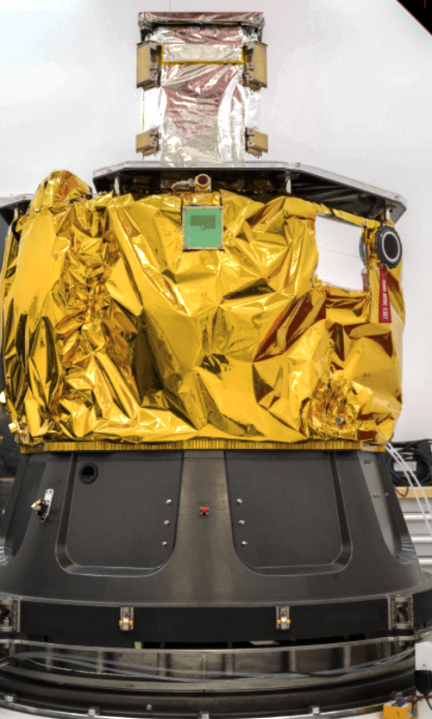
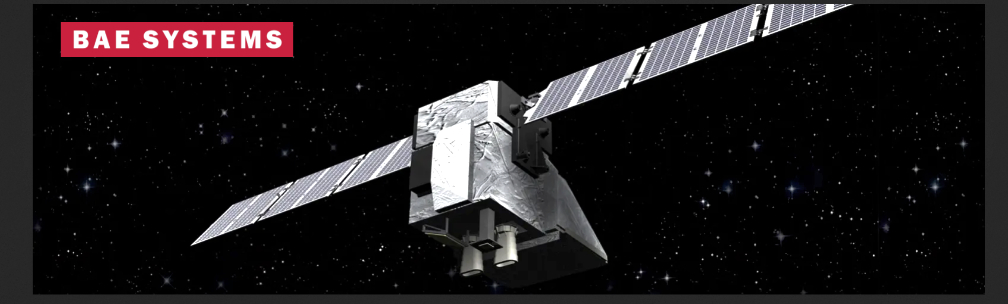
BAE Systems has successfully launched their MethaneSAT satellite from Vandenberg Space Force Base in California via a SpaceX Falcon 9 launch vehicle. The satellite will provide the public with reliable scientific data about the sources and scale of methane emissions globally, with the ultimate goal of driving reductions in the near future.

MethaneSAT’s primary instrument includes a BAE Systems-built spectrometer that will identify and quantify methane emissions by measuring the narrow part of the infrared spectrum where the gas absorbs light reflected off the Earth. The satellite will monitor emissions from the oil and gas sector, which accounts for about 40% of all human-caused methane emissions, and it will be able to revisit the same sites daily in most instances.

MethaneSAT will also fill a gap in existing remote methane monitoring capabilities, offering high-precision emissions mapping over a broad 200 x 200 km field of view. This satellite will further complement existing methane-monitoring satellites that focus on either larger scales or detecting point sources. 

BAE Systems worked alongside scientists from EDF and MethaneSAT, LLC, to design and build the primary instrument. The company also led spacecraft integration, environmental testing, and will provide commissioning services. Once commissioning is complete, EDF will launch a cloud-based platform in partnership with Google to distribute MethaneSAT data publicly and free of charge, ensuring the data will be easily accessible for all.

“MethaneSAT will make a critical difference in helping us better understand and remedy global greenhouse gas emissions,” said Dr. Alberto Conti, vice president and general manager of Civil Space for BAE Systems Space & Mission Systems. “MethaneSAT will advance our ability to identify and track emissions from their source, empowering stakeholders and the public with actionable data to enable reductions. We are thankful to our customers at the Environmental Defense Fund for developing this crucial mission, and we look forward to seeing all the change it will bring.”

“MethaneSAT is a unique instrument with demanding specifications,” said Peter Vedder, senior director for mission systems at MethaneSAT. “It’s designed to see methane emissions that other satellites can’t, with unprecedented precision. BAE Systems helped us push the envelope to deliver a powerful new tool for protecting the climate.”

Filed Under: News

Silicon Sensing celebrates their 25th Anniversary + growing space sector business

March 5, 2024 by editorial

Silicon Sensing Systems Ltd. will celebrate the success of the firm’s tactical-grade, DMU41 inertial measurement unit (IMU) which, over the last 12 months, has been selected for multiple deployments on platforms in LEO.

The DMU41 redefines the capabilities of MEMS technology, delivering tactical-grade, high-performance inertial sensing in a small and cost-effective unit. Just over 50mm3 and weighing less than 180 grams, this robust product operates in temperatures from -40°C to +85°C, offering new levels of reliability and adaptability in the harshest environments.

Silicon Sensing is also celebrating its 25th anniversary this year, with a sales growth of more than 65% in just five years. Interest in the company’s rugged, compact, solid-state technology has expanded significantly as demand has grown for precise, reliable motion sensing for ever-shrinking platforms – including satellites. A number of products, from tiny navigation and pointing gyros to full 6 axis inertial measurement units (IMU’s), are already in use across a range of space programs. All are based around the company’s patented, vibrating ring micro electro-mechanical systems (MEMS) sensors, which are manufactured in the company’s foundry in Japan.

David Sommerville, General Manager, Silicon Sensing Systems, said, “Typically, our DMU41 is used to enable accurate, sustained satellite positioning in LEO for earth observation, high resolution imaging and geospatial data collection – which continues throughout the 3-to-4-year operational life cycle of the satellite. Our latest products on the market are delivering tactical grade performance levels, exceeding the envelope typically expected of MEMS technology. And we expect our next generation of products will reflect our new mission statement by truly redefining MEMS inertial. For the first time, Silicon Sensing will offer navigation-level inertial sensing performance in a compact, robust and cost effective MEMS package.”

Silicon Sensing Systems Ltd. is a gyroscope and inertial systems engineering development company, jointly owned by Collins Aerospace and Sumitomo Precision Products. The company was formed in 1999 and is, today, a market leader in silicon, micro electro-mechanical systems (MEMS)-based navigation and stabilization technology. Many millions of MEMS gyroscopes and accelerometers have been supplied to thousands of customers since the company’s formation 25 years ago.

Filed Under: Featured, News

Avanti secures authorization for HYLAS 4 Senegal gateway + strategic agreement with Telesat

March 5, 2024 by editorial

Avanti Communications has been granted the authorization required for the company’s HYLAS 4 satellite gateway station in Diamniadio, Senegal.

The Infrastructure Operator Authorization, which was granted on February 29, 2024, by the Minister of Communications, Telecommunications and Digital, Mr. Moussa Bocar Thiam, means the gateway’s state-of-the-art infrastructure will now become operational. Avanti will now move on to the final phase of testing before launching the firm’s services are launched.

The launch will provide Senegal with complete, high-speed, national satellite coverage, representing a significant step forward in the country’s telecommunications landscape and supporting the government’s ‘Senegal Digital 2025’ strategy.

Avanti’s satellite coverage will provide reliable, high-speed voice and data to Senegal’s rural communities, schools, hospitals, businesses and government departments, as well as playing a crucial role in improving national security.

Once operational, the gateway is set to be a driving force in Senegal’s digital economy with the potential to generate local employment opportunities. To make this vision a reality, Avanti has committed to investing in Senegal’s growing tech centre and has already started recruiting a team on-the-ground in Diamniadio.

In addition to Senegal, the new gateway will extend the coverage of Avanti’s HYLAS 4 satellite to the surrounding West African countries of Guinea, Sierra Leone, Guinea Bissau, Gambia, Liberia and Ivory Coast, making Senegal a key digital hub for the region. Avanti’s carrier customers will also be able to extend their reach to rural areas and other semi-urban locations where terrestrial networks are currently limited or unreliable.

Kyle Whitehill, CEO at Avanti, said,“This project has been a labor of love for everyone at Avanti and we now look forward to completing our final tests and launching our services. The tech industry in Senegal is accelerating and we look forward to being right at the forefront of its exciting growth trajectory. I want to extend a special thank you to Honourable Mr. Moussa Bocar Thiam, Minister of Communications, Telecommunications and Digital, and his technical teams, whose collaboration and commitment to the development of telecommunications have undeniably played a role in the success of this gateway project. Additionally, I’d like to thank the Director-General of The Regulatory Authority for Telecommunications and Posts and his team for their ongoing support which has played a critical role in securing our license.”

Honorable Mr. Moussa Bocar Thiam, Minister of Communications, Telecommunications and Digital, said, “Our approval of this new gateway reinforces the development of telecommunications in Senegal. The satellite coverage Avanti will provide is set to enhance the lives of millions of people across the country. Critically, the complete national coverage will increase access to high-speed satellite internet in our schools, hospitals and communities – touching the lives of all those who need it.”

Avanti Communications signs strategic agreement with Telesat

Avanti Communications has also signed an MoU Telesat (NASDAQ and TSX: TSAT),to test and develop LEO services as part of its global strategy to deliver bespoke, multi-orbit solutions to customers at scale.

Avanti plans to incorporate Telesat’s Lightspeed™ services into its network to provide affordable, high quality broadband connectivity worldwide. Telesat’s global network is composed of 198 state-of-the-art LEO satellites that are seamlessly integrated with on-ground networks.
Avanti is investing heavily in strategic partnerships and its managed services to meet customers’ requirements in an evolving industry where demand for capacity is growing. Avanti’s first low-latency LEO constellation agreement will support the execution of Avanti’s new strategy, which is built on a “customer pull” vs. “technology push” model.

The collaboration will be optimized to serve the critical connectivity requirements of Avanti’s enterprise and government customers once the Telesat Lightspeed constellation is operational in 2027.

Additionally, under the terms of the agreement, Telesat will explore combining Avanti’s landing stations, Points of Presences (PoPs), terrestrial connectivity, site hosting and management services as part of its global terrestrial infrastructure that seamlessly integrates with the Telesat Lightspeed satellite network.

Toby Robinson, Chief of Strategy and Business Development at Avanti, said, “Avanti has already transformed into a customer-led business and will now embark on the next phase of its journey to meet customers’ requirements with multi-orbit solutions tailored to individual needs. The Telesat Lightspeed service will specifically target our enterprise and government customers, enabling us to deliver on our commitment to cater to the most complex requirements while maintaining the high performance, reliability and quality of service our customers expect.”

Glenn Katz, Chief Commercial officer at Telesat, said, “We are delighted to work with partners like Avanti, who recognize the unique value and innovation that Telesat Lightspeed provides for resilient, global connectivity. Integration of Avanti’s EMEA terrestrial infrastructure into the Telesat Lightspeed network provides promising synergies and optimizations for both organizations.”

Filed Under: News

Rocket Lab reveals their spacecraft bus lineup

March 3, 2024 by editorial

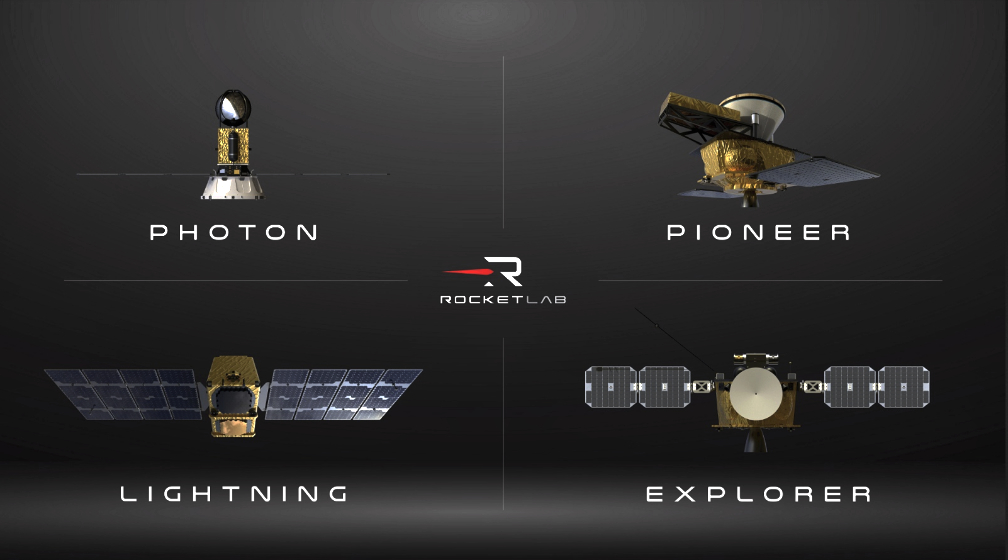
Rocket Lab USA, Inc. (Nasdaq: RKLB) has introduced the company’s family of spacecraft buses, consolidating the custom designs Rocket Lab has developed for multiple customers and missions — the family of spacecraft is the result of more than four years of Rocket Lab’s space systems development capabilities.

The spacecraft share many common components and subsystems, designed and manufactured in-house by Rocket Lab, including carbon composite structures, star trackers, reaction wheels, solar arrays, radios, separation systems, avionics, flight and ground software.

Rocket Lab’s family of spacecraft includes:

Photon: The original Rocket Lab spacecraft, Photon is the Company’s integrated launch-plus-spacecraft solution. Photon is a modified Electron Kick Stage with power, propulsion, and communications to deliver a capable LEO platform that serves civil, defense and commercial customers across a range of missions. With a mass of 200-300 kg, Photon is launched on Electron for responsive space and other challenging missions like cryogenic fuel demonstration, taking advantage of precision orbit insertion, launch on demand, and the lowest launch environments in industry.

Lightning: Rocket Lab’s newest spacecraft bus is designed for a 12+ year orbital lifespan in LEO, delivers high power and high radiation tolerance, incorporating redundancy in critical subsystems. This ~3 kW bus is ideal for high operational duty cycle telecommunications and remote sensing applications. Lightning can be launched on Neutron and other medium and heavy launch vehicles. Lightning is based on the same design as the custom spacecraft Rocket Lab developed for MDA and Globalstar and is the basis for the Company’s bus for the Space Development Agency.

Artistic rendition of Rocket Lab’s Neutron.

Pioneer: A highly configurable medium delta-V platform designed to support payloads up to 120 kg and unique mission profiles, including re-entry missions for Varda Space Industries, and dynamic space operations. Depending on the mission profile, Pioneer can be launched on Electron, Neutron or other launch vehicles.

Explorer: A high delta-V spacecraft with large propellant tanks, deep space capable avionics, and ranging transponders. Explorer enables small spacecraft missions to planetary destinations like Mars and Venus, the Moon, highly eccentric Earth orbits, GEO, Earth-moon Lagrange points, Earth-sun Lagrange points, and near Earth objects (NEOs). Depending on the mission profile, Explorer can be launched on Electron, Neutron or other launch vehicles. Explorer gained flight heritage during the CAPSTONE mission to the Moon for NASA and forms the basis of the twin spacecraft Rocket Lab is developing for the ESCAPADE mission to Mars for NASA and the University of California, Berkeley.

Each member of Rocket Lab’s spacecraft family is currently in production in a range of quantities for different customers, with more than 40 satellites currently in backlog. To support the rapid production of our family of spacecraft, Rocket Lab has established an advanced spacecraft development and manufacturing complex at the Company’s Long Beach headquarters. The facility includes more than 10,000 sq. ft. of cleanroom and 40,000 sq. ft. of additional production and test facilities designed to support constellation class manufacturing and satellite assembly, integration and test for commercial, civil and national security customers.

“We’ve had the privilege of developing, launching, and operating spacecraft for a broad range of customers and they’ve all told us the same thing: They need reliable and highly capable spacecraft built quickly and affordably. Photon was the start, but the Rocket Lab spacecraft family has grown,” said Rocket Lab founder and CEO Peter Beck. “We’ve developed a configurable spacecraft line that delivers high performance at scale, supported by an experienced team, technical maturity, a vertically-integrated supply chain, and advanced manufacturing, test and operations facilities. We’ve designed these spacecraft through close collaboration with our customers to support real missions at constellation scale. The hard development work is done, and now these spacecraft are available as off-the-shelf products, or they can be further customized to meet specific mission requirements.”

“Through vertical integration, we’re able to deliver spacecraft quickly, affordably and reliably using flight-proven components”, said Rocket Lab Vice President Space Systems, Brad Clevenger. “We’ve struck the right balance between commonality to deliver cost-effective, rapid production and ensuring our spacecraft are configurable to suit unique and specific mission profiles.”

Filed Under: News

EnduroSat appoints a new Head of Space Services

March 3, 2024 by editorial

Simon van den Dries

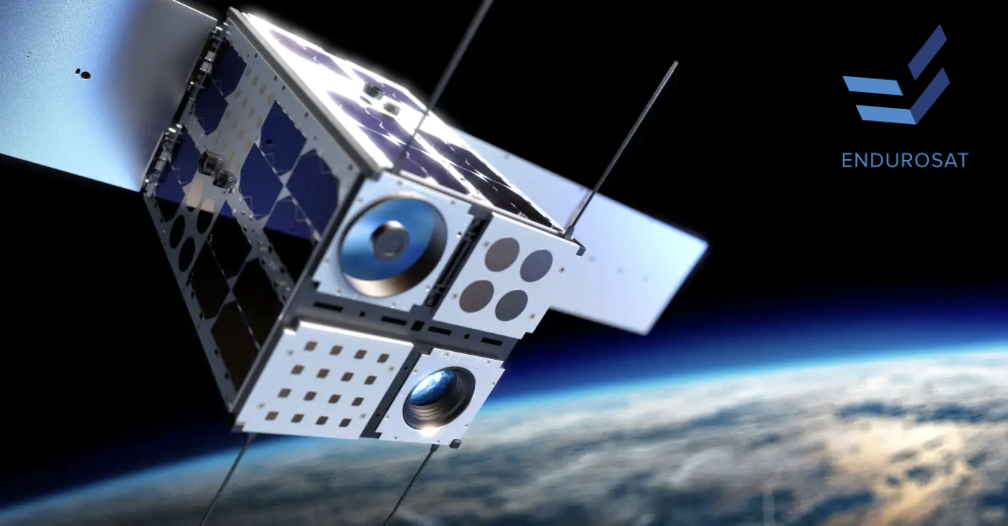
EnduroSat has appointed Simon van den Dries as the Head of its Space Services sales team as of March 1, 2024. Simon brings more than 24 years of experience in the space industry, having worked with Spire as VP of Business Development Space Services, as well as SES, GE, and Honeywell. 

EnduroSat kicked its Space Services into high gear last year, raising capital to scale, securing Vyoma as a new customer in situational awareness missions and signing missions for space exploration and remote sensing.

Raycho Raychev, CEO and Founder of EnduroSat, said, “EnduroSat has been working hard to make space more accessible. We strive to empower companies and research organisations to obtain high-quality space data. By streamlining the development of satellites, their operations in orbit, and by providing fixed and clear pricing, our team is enabling more missions to reach space.”

“EnduroSat is a highly driven company with a strong vision to streamline commercial access to space for the global market. The company has made the traditionally complex and protracted process of sending a satellite in space into a straightforward and rapid experience for international customers,” said Simon van den Dries. “I’m excited to join the team and usher EnduroSat’s in-space capabilities into the next era of Space Services.”  

A proud member of the International Astronautical Federation (IAF) and Endeavor Network, EnduroSat is one of the fastest-growing space companies in Europe and attributes its successful growth to its team of 180+ leading engineers, technologists, and scientists from 10 countries. The company is proud to support teams who are trying to push the status-quo in space and who bring tangible value back to Earth.

Filed Under: News

AAC Space Africa wins 1st satellite order

February 29, 2024 by editorial

AAC Clyde Space‘s subsidiary AAC Space Africa has won its first satellite order.

AAC Space Africa will assemble, integrate and test two satellites. The order, valued at 4.1 million South African Rands (approx. SEK 2.3 M), is scheduled for delivery in June of 2024. 

“We are delighted that AAC Space Africa has received its first satellite order, a critical milestone in the growth of our company in Africa.  We look forward to seeing these satellites in space delivering their mission,” said AAC Clyde Space CEO Luis Gomes.

Filed Under: Featured, News

Synspective + Dynamic Map Platform selected for Enterprise Innovation Promotion Program

February 29, 2024 by editorial

Synspective Inc. (Synspective) and Dynamic Map Platform Co., Ltd. (Dynamic Map Platform) have been selected by the Japanese Ministry of Land, Infrastructure, Transport and Tourism for the Small and Medium Enterprise Innovation Promotion Program.

With the Dynamic Map Platform, Synspective submitted a proposal entitled  “Improving road management efficiency by increasing the accuracy of location information using SAR data based on HD maps.” The committee selected our proposal under the “Development of technologies that contribute to the advancement of road management monitoring and observation using next-generation technologies” category, awarding the company a grant of up to 350 million yen for the eligible project.

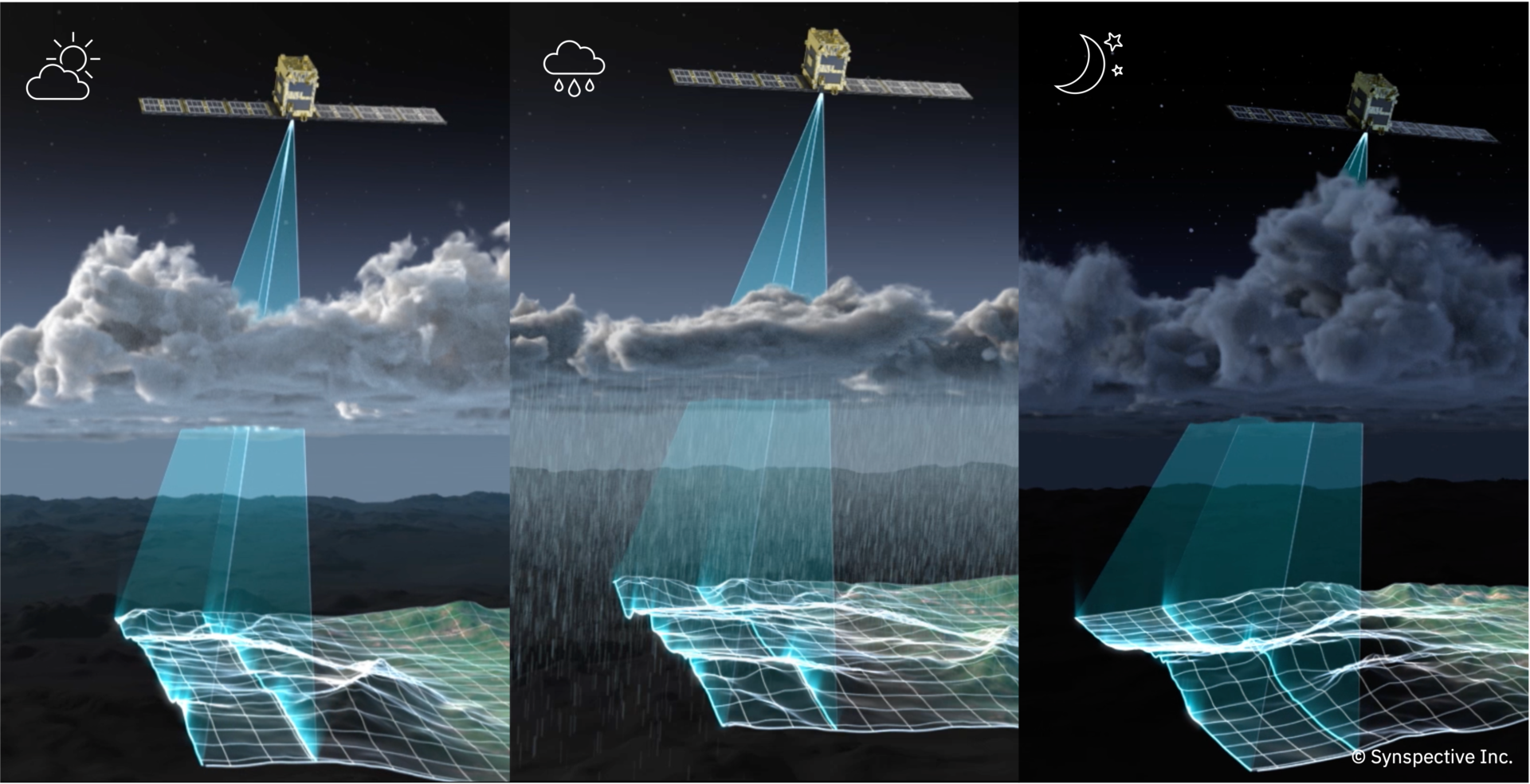
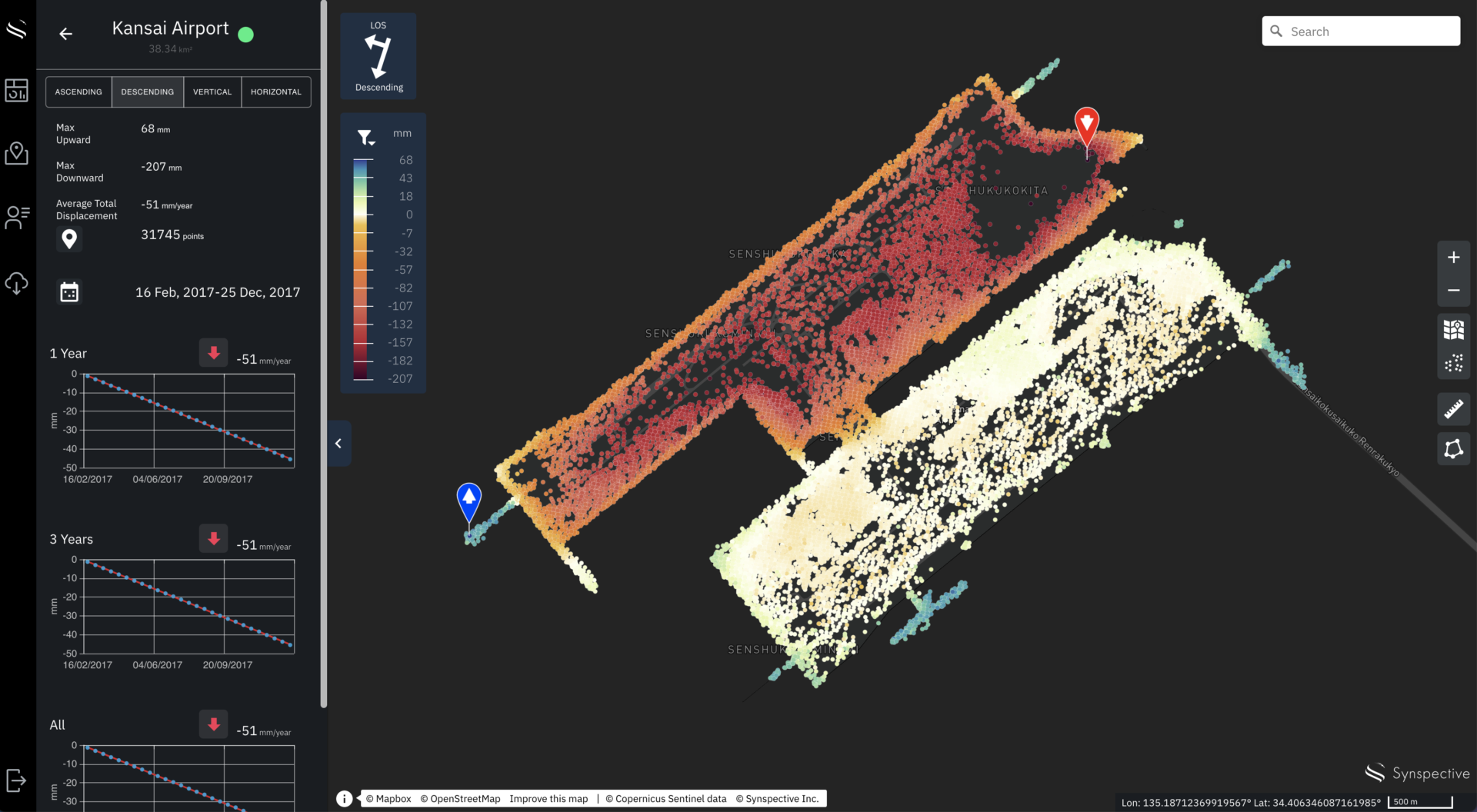
This project leverages SAR satellite technologies and Synspective’s Land Displacement Monitoring (LDM) solution and aims to integrate these technologies with HD maps for autonomous driving, which provide high-precision 3D positioning data. The focus will be on studying how this data can be applied to enhance road infrastructure management.

During development, Synspective will use HD maps to achieve high positional accuracy of SAR data and develop data sets that will support road infrastructure monitoring and maintenance. A data linkage system and viewer will be created that are designed for road maintenance and management. This setup will facilitate the visualization of disaster conditions and enable data sharing through API integration with other systems to advance road infrastructure management.

© Mapbox © OpenStreetMap Improve this map | © Copernicus Sentinel data [2014-2023] | © Synspective Inc.

Filed Under: News

Alba Orbital receives pocket-sized satellites launch contract

February 29, 2024 by editorial

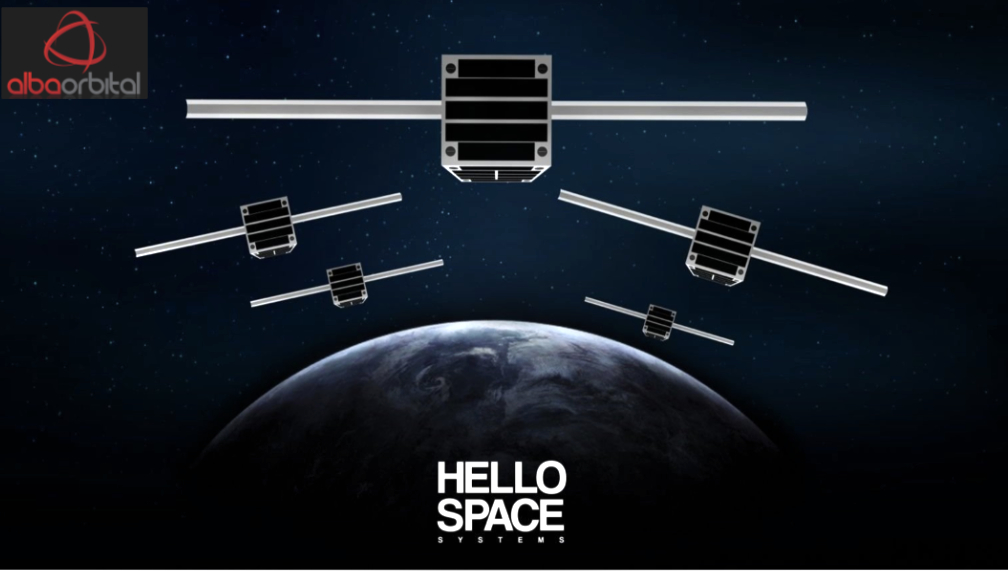
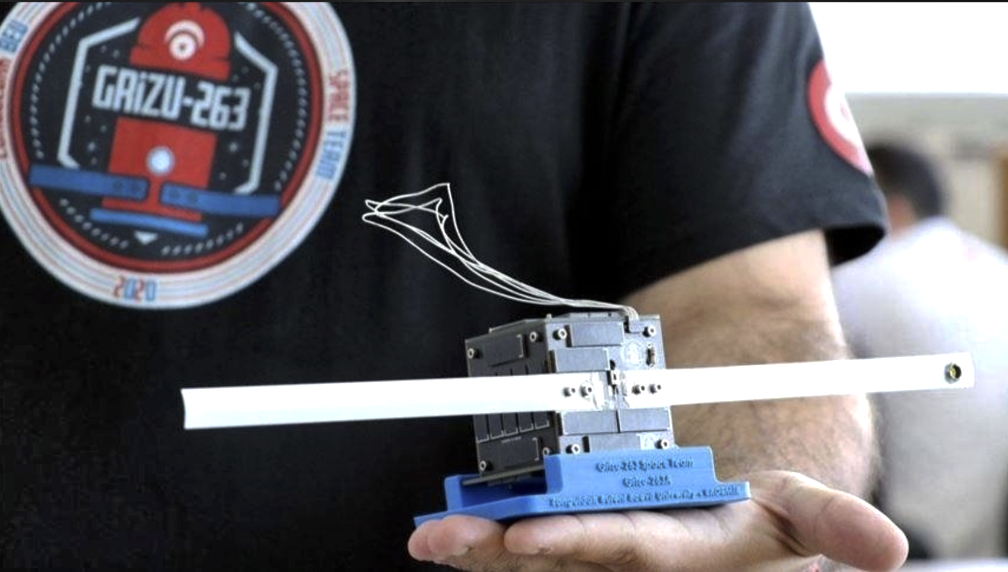
Alba Orbital has closed a large, multi-launch contract with Hello Space to launch four ‘rubik’s-cube-sized’ satellites via SpaceX — these PocketQubes, will be used to enhance global connectivity through IoT, following the success of Hello Space’s previous demo satellite mission with Alba Orbital named ‘Istanbul‘ in 2023. 

Under this new contract, Alba Orbital will deploy four ‘3p’ PocketQubes, each measuring 5 x 5 x 15 cm, and weighing 250 grams each, into space using SpaceX’s Falcon 9 rocket in NET Q4 2024 and Q1 2025 on behalf of Hello Space. These satellites will orbit the Earth in SSO, contributing to Hello Space’s efforts to expand their commercial IoT network. 

Despite their small size, these smallsats offer a cost-effective and adaptable platform for various space-based applications. At 25 K euros per launch, these tiny satellites can be flown to space for less than the price of a new car. 

By working with Alba Orbital, Hello Space is leveraging the advantages of PocketQubes to enhance their satellite technology at a reasonable cost. These satellites will help bridge connectivity gaps and improve data transmission worldwide, enabling applications such as environmental monitoring, asset tracking, and communication network improvement through the Internet of Things.

Tom Walkinshaw, CEO of Alba Orbital, said, “We are thrilled to work alongside Hello Space again and to continue to help them achieve their orbital ambitions. PocketQubes offer unparalleled advantages in terms of cost-effectiveness, versatility, and scalability, making them an ideal platform for driving innovation in satellite technology.”

Muzaffer Duysal, CEO of Hello Space Systems, said, “From the initial consultation to the flawless execution during the Istanbul mission campaign, Alba Orbital showcased exceptional technical competence and efficiency. We are delighted to have chosen Alba Orbital as our launch service provider once again, and we look forward to embarking on these new and exciting missions together,” said Muzaffer Duysal, CEO of Hello Space Systems. 

Scotland’s Minster for Exports,Lord Offord, said, “This is more encouraging news for Scotland’s thriving space industry. Alba Orbital are leading the way in the production of miniature satellites and this agreement will see their technology being used in many more missions. It once again shows the demand around the globe that exists for the amazing products we make here in Scotland.”

Alba Orbital is the leading provider of PocketQube satellite launch services, having delivered 41 satellites to orbit to date with launch partners such as SpaceX and Rocket Lab. With a focus on accessibility and reliability, Alba Orbital empowers organisations worldwide to realize their space exploration goals.

Filed Under: News

UNSEENLABS fundraises million$$

February 28, 2024 by editorial

Unseenlabs has closed a fundraising round of €85 million.

This new funding round brings together leading investors: Supernova Invest, ISALT via its Strategic Transition Fund, and UNEXO. All of Unseenlabs’ historical partners, including 360 Capital, OMNES, Bpifrance, Breizh Up managed by UI Investissement, and S2G Ventures, also reaffirm their support for this new phase.

The strategic allocation of funds will focus on:

  • Significant expansion of observation capabilities, with the launch of multiple satellites
  • Strengthening Unseenlabs’ international presence, particularly in the American and Asian markets, crucial for the maritime sector
  • Consolidation of activity within private sector segments such as oil and gas, insurance, shipowners, economic intelligence, or offshore energy
  • Innovation and deployment of new products and solutions, thereby reinforcing Unseenlabs’ position as a leader in RF maritime surveillance solutions

Next month, Unseenlabs will launch two new satellites, BRO-12 and BRO-13, aboard SpaceX Falcon 9 as part of the Transporter-10 mission from Vandenberg Space Force Base (USA).

“Unseenlabs has accumulated a total funding of €120 million since its inception. This reflects our steady progress and the continued confidence of our investors. The year 2023 marked a turning point for Unseenlabs, consolidating the relevance of our business model and the attractiveness of our offering in the market. This funding will allow us to accelerate our growth, particularly by developing new solutions and strengthening our presence in the private sector. We are excited to continue this journey with our historical partners while welcoming new ones,” said Chief Executive Officer, Clément Galic.

“Unseenlabs stands out for its innovative approach and its ability to redefine the standards of space observation of radio frequencies. We are convinced of its potential to stay a major global player. The decisive factors of our investment lie in their disruptive technology and the value-addition of their data, crucial for both state maritime missions and private sector markets,” said Etienne Moreau, partner at Supernova Invest.

Filed Under: News

  • « Go to Previous Page
  • Page 1
  • Interim pages omitted …
  • Page 33
  • Page 34
  • Page 35
  • Page 36
  • Page 37
  • Interim pages omitted …
  • Page 42
  • Go to Next Page »

Primary Sidebar

WEEKLY NEWSLETTER

Archives

  • August 2026
  • July 2026
  • June 2026
  • May 2026
  • April 2026
  • March 2026
  • February 2026
  • January 2026
  • December 2025
  • November 2025
  • October 2025
  • September 2025
  • August 2025
  • July 2025
  • June 2025
  • May 2025
  • April 2025
  • March 2025
  • February 2025
  • January 2025
  • December 2024
  • November 2024
  • October 2024
  • September 2024
  • August 2024
  • July 2024
  • June 2024
  • May 2024
  • April 2024
  • March 2024
  • February 2024
  • January 2024
  • December 2023
  • November 2023
  • October 2023
  • September 2023
  • August 2023
  • July 2023
  • June 2023
  • May 2023
  • April 2023
  • March 2023
  • February 2023
  • January 2023
  • December 2022
  • November 2022
  • October 2022
  • September 2022
  • August 2022
  • July 2022
  • June 2022
  • May 2022
  • April 2022
  • March 2022
  • February 2022
  • January 2022
  • December 2021
  • November 2021
  • October 2021
  • September 2021
  • August 2021
  • July 2021
  • June 2021
  • May 2021
  • April 2021
  • March 2021
  • February 2021
  • January 2021
  • December 2020
  • November 2020
  • October 2020
  • September 2020
  • August 2020
  • July 2020
  • June 2020
  • May 2020
  • April 2020
  • March 2020
  • February 2020
  • January 2020
  • December 2019
  • November 2019
  • October 2019

© 2019–2026 SatNews

Insert/edit link

Enter the destination URL

Or link to existing content

    No search term specified. Showing recent items. Search or use up and down arrow keys to select an item.
      x
      Sign Up Now!

      Enjoy a free weekly newsletter with recent headlines from the global SmallSat industry.

      Invalid email address
      We promise not to spam you. You can unsubscribe at any time.
      Thanks for subscribing! You will now receive weekly SmallSat News updates.
      We love our advertisers.
      And you will too!

      Please disable Ad Blocker to continue... We promise to keep it unobtrusive.
      We promise not to spam you. You can unsubscribe at any time.
      Invalid email address
      Thanks for subscribing!