
• Skip to main content
  • Skip to primary sidebar
  • Home
  • News
  • Featured
  • More News ⌄
    • SatNews
    • SatMagazine
    • MilSatMagazine
  • Events ⌄
    • MilSat Symposium
    • SmallSat Symposium
    • Satellite Innovation
  • Contacts
  • SUBSCRIPTION

SmallSat News

You are here: Home / 2025 / Archives for November 2025

Archives for November 2025

Silicon Sensing test program proves IMU performance in space conditions

November 5, 2025 by editorial

The research with Institute of Science, Tokyo, reveals DMU41 is well suited to LEO missions
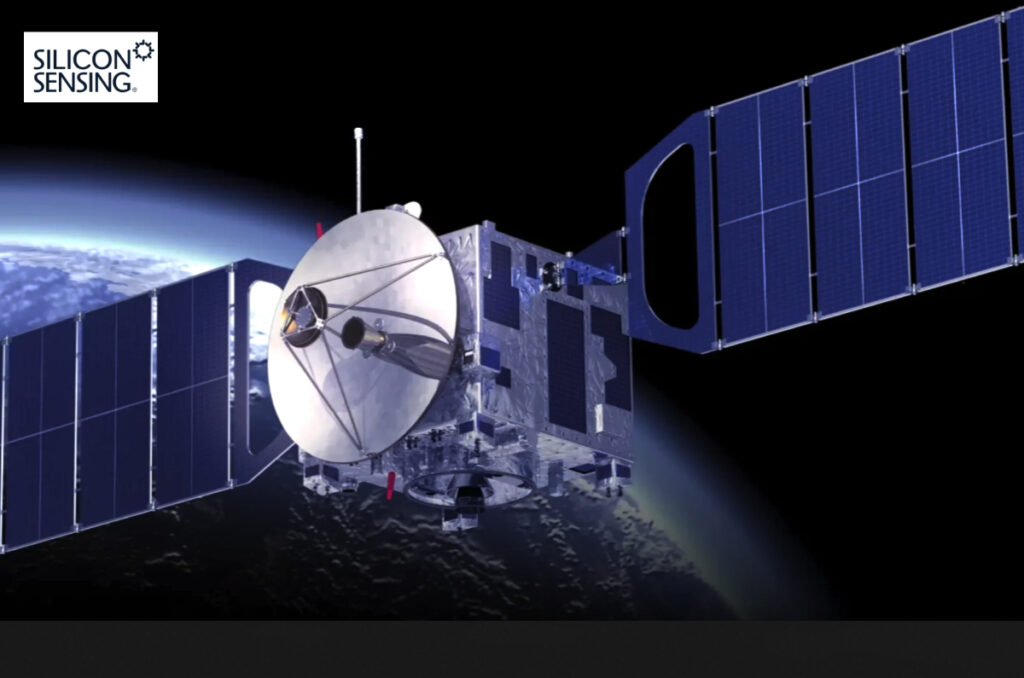
After announcing a research partnership in April of 2024, Silicon Sensing and the Institute of Science, Tokyo, have now completed a test program evaluating the performance and durability of the DMU41 tactical-grade inertial measurement unit (IMU) in radiation environments similar to those found in space.

The results show that the DMU41 continues to perform well even when exposed to cumulative radiation doses as high as 10 kRad, which exceeds the usual radiation levels encountered during small satellite missions in Low Earth Orbit (LEO).

Testing of a large sample of DMU41 IMUs took place at the Institute of Science Tokyo’s Wakasa Wan Energy Research Centre in Fukui City. The program evaluated Single Event Effect (SEE) and Total Ionizing Dose (TID) on DMU41 units. SEE verified resilience to ionizing particles, while TID assessed long-term reliability under radiation.

All testing used dose and exposure levels at or above key industry standard thresholds—much harsher than normal operational conditions at LEO.

The DMU41 is a robust, 9 degrees of freedom, high performance IMU. It operates in temperatures ranging from -40oC to +85oC, delivering outstanding low noise performance, bias instability and angle random walk.
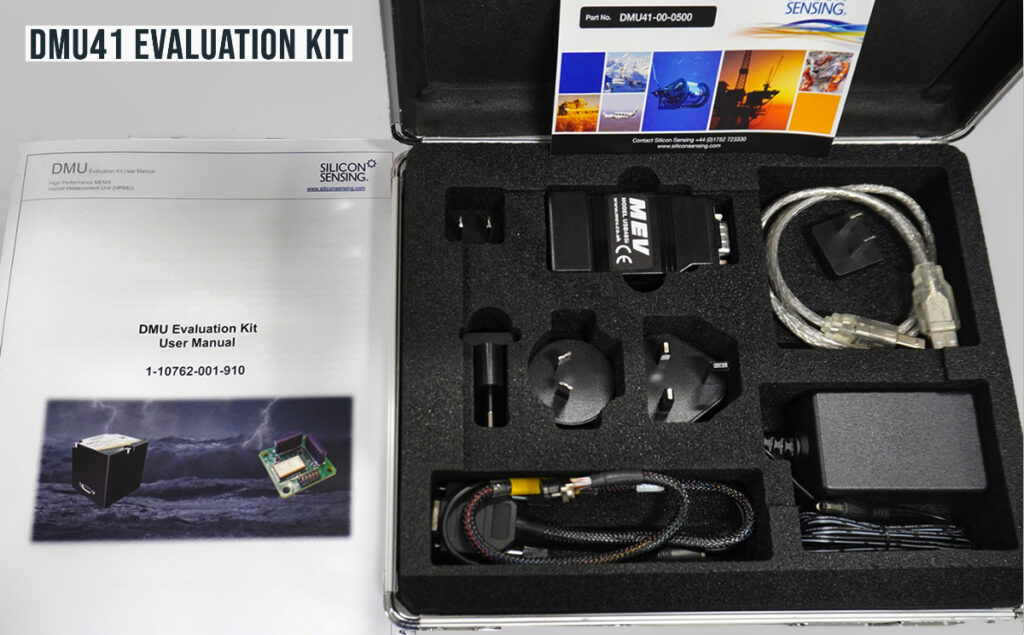
Evaluation Kit info via this direct link…

Offering performance comparable to typical fiber-optic gyro IMUs, it comes in a far more compact package—measuring just 50.5×50.5x51mm, weighing under 180g and consuming less than 1.8W. The DMU41 is designed to streamline system integration and help satellite developers shorten their certification process.

David Somerville, General Manager, Silicon Sensing, said, “This is an important partnership for us, and these are strong results for our IMU. In this fast-evolving sector performance, size, endurance, power consumption – and cost – are all crucial and these results validate the choice of DMU41 by a growing number of satellite manufacturers. We are confident our technology will significantly improve LEO operations.”

Link to the Silicon Sensing and Science Tokyo case study…

Filed Under: Featured, News

Sentinel-1D climbs to orbit via an Ariane 6

November 5, 2025 by editorial

Ariane 6 launch with the Sentinel-1D satellite aboard from Europe’s Spaceport

The Sentinel-1 mission, which provides radar vision for the Copernicus Earth observation program, has added the on-orbit arrival in SSO of the final first generation series of satellites, the Sentinel-1D, launching from Europe’s Spaceport in French Guiana on Tuesday, November 4th.

Thirty-four minutes post launch, the satellite gained its assigned orbit, with signal acquisition confirming the satellite is on-orbit and is actively communicating with the ground systems.

The Sentinel-1 mission delivers high-resolution synthetic aperture radar (SAR) images of Earth’s surface whenever needed, in all weathers, day-and-night. This service is used by disaster response teams, environmental agencies, maritime authorities, climate scientists, and the wider Earth Observation (EO) user community worldwide, who depend on frequent updates of critical data.

Sentinel-1D will join its twin, Sentinel-1C and will replace Sentinel-1A when fully commissioned. When fully commissioned. these satellites will work in tandem, orbiting on opposite sides of the globe, 180° apart, to optimize global coverage and data delivery. Both satellites carry a C-band SAR instrument on board, together with an Automatic Identification System (AIS) instrument to improve the detection and tracking of ships in maritime zones. Both the 1C and the 1D are Galileo compatible as well as with other GNSS and are ready to support

When Sentinel-1D is fully operational, it will enhance AIS observations, including more data on vessel identity, location and direction of travel, and precise tracking. Sentinel-1D and Sentinel-1C are both compatible with the Galileo navigation system, as well as other Global Navigation Satellite Systems.

Additionally, both satellites will be ready to support the European Space Agency’s Earth Explorer Harmony mission, which will be comprised of two satellites to provide new data on various Earth processes, ranging from shifts in the shape of the land surface caused by earthquakes as well as volcanic activity and glacier movement insights. They will orbit Earth in convoy with a Copernicus Sentinel-1 satellite to yield new information to answer important questions on Earth system processes.

Artistic rendition of the Harmony satellites is courtesy of OHB

Filed Under: News

MDA Space makes a $10 million investment in Maritime Launch

November 4, 2025 by editorial

Expected to bolster Canada’s sovereign space capabilities and create a competitive option for the global launch services market.

MDA Space Ltd. (TSX: MDA) has announced a $10 million equity investment into Maritime Launch Services Inc. This investment marks a key milestone in advancing Canada’s sovereign launch capability, strengthening the country’s domestic space value chain, with complete capability from ground to orbit.

The equity investment will accelerate Spaceport Nova Scotia’s readiness for orbital launch operations, providing reliable domestic launch capability for commercial, civil, government, and defence clients in Canada. MDA Space expects to become an operational partner at Spaceport Nova Scotia, supporting the development and future operations of the spaceport.

Maritime Launch is a Canadian-owned commercial space company that is developing Spaceport Nova Scotia, Canada’s first commercial orbital launch complex. Located near Canso, Nova Scotia, on the Atlantic coast, Spaceport Nova Scotia is designed to provide responsive, cost-effective, and sustainable access to space for launch vehicle developers and satellite delivery services to low-Earth orbit over a wide range of inclinations from a single site.

MDA Space’s investment and partnership come at a pivotal moment for Maritime Launch and for Canada’s space future,” said Stephen Matier, President and CEO of Maritime Launch Services. “By combining MDA Space’s world-class technical heritage with our operational focus at Spaceport Nova Scotia, we are creating the conditions our launch vehicle clients need: reliability, responsiveness, and integration across the full mission campaign. Together, we are building a complete sovereign launch solution that strengthens Canadian innovation, drives economic growth, and enhances security in space.”

Maritime Launch has been methodically advancing the development of Spaceport Nova Scotia, focused on doing it right, with safety, community, and operational excellence, to address the needs of the domestic and global space ecosystem,” said Mike Greenley, CEO of MDA Space. “In a rapidly changing space industry, establishing sovereign launch capacity in Canada that will respond to the global demand for alternate launch capabilities on Canada’s Atlantic coast is important. This is an example of strategically located critical infrastructure that is needed. MDA Space is pleased to partner with Maritime Launch on this exciting new chapter for the Canadian space industry.”

Filed Under: News

Soon 100 PocketQube satellites will be on-orbit for the PocketQube Community

November 2, 2025 by editorial

Four PocketQubes will be deployed by PocketQube broker, Alba Orbital, in collaboration with SEOPS as part of the Transporter-15 rideshare mission with SpaceX.

The PocketQube standard was first developed in 2009 at Morehead State University (MSU) and Kentucky Space to help universities and researchers across the globe perform space science and exploration at a fraction of the traditional cost. Each PocketQube measures just 5 cm³ per unit (or “1P”), making them among the smallest operational satellites ever developed.

In spite of their size, the capabilities of PocketQubes are immense—their compact form factor allows for launches starting from as little as €25k through Alba Orbital’s dedicated launch services. This affordability has opened space access to high schools, universities, startups, and research institutions worldwide.

Since the first PocketQube launch in 2013, mission types have ranged from Earth Observation (EO) and Internet of Things (IoT) experiments to communications and technology demos. The result is an ecosystem of smallsat innovation, proving that impactful space missions can be achieved in the smallest of sizes.

The growing popularity of the PocketQube standard has led to rapid innovation. Alba Orbital’s own 3P Unicorn-2 satellite is the world’s smallest commercial Earth observation platform, capable of capturing high-resolution imagery that rivals much larger satellites.

From commercial applications to student-led success, the RomSpace and HYPE missions highlight how PocketQubes have allowed young engineers and researchers to design, build, and launch real satellites.

RomSpace, a team of high school students aged 15 to 18 from the International Computer High School of Bucharest, successfully launched Romania’s first functioning satellite, ROM-2 (1P), followed closely by ROM-3 (1.5P).

The HYPE mission, from students at the AGH University of Krakow, was a 1P n-orbit demo featuring an onboard OLED display that shows uploaded images and messages, which are then photographed in space by a selfie-stick camera.

Satellites on the upcoming, historic, 100th PocketQube Launch

  • HUNITY (NMHH-1) – Hungary Built by students and lecturers at the Budapest University of Technology and Economics, HUNITY tests a new PocketQube platform while supporting student experiments and hands-on learning, advancing Hungary’s educational satellite programs.
  • SARI-1 & SARI-2 – Saudi Arabia Developed through the Saudi Space Agency’s Sari competition, these student-built PocketQubes carry imaging, IoT, and telemetry payloads, giving participants practical experience in satellite engineering and operations.
  • ANISCSAT – Azerbaijan Created by a university team in Azerbaijan, ANISCSAT hosts sensor experiments and a custom telemetry framework, providing students with real-world spacecraft design and mission experience while supporting the country’s growing space research efforts.
  • PartnershipsIdeia Space, a Brazilian education startup, coordinated the Saudi and Azerbaijani missions, offering international collaboration, guidance, and mission support for student teams.

With the 100th PocketQube set to reach orbit, we’re fulfilling the revolution to democratize access to space,” said Tom Walkinshaw, CEO of Alba Orbital.

About Alba Orbital
Alba Orbital (UK, USA, Germany) is the world’s leading PocketQube company, having delivered 53 pico-satellites on orbit to date. Alba is a vertically integrated NewSpace company “democratizing access to space,” providing turnkey solutions from advanced pico-satellite platforms, low-cost launch opportunities, and ground station services. Alba has worked with over 30 customers across the globe.

Filed Under: News

  • « Go to Previous Page
  • Page 1
  • Page 2
  • Page 3
  • Page 4

Primary Sidebar

WEEKLY NEWSLETTER

Archives

  • March 2026
  • February 2026
  • January 2026
  • December 2025
  • November 2025
  • October 2025
  • September 2025
  • August 2025
  • July 2025
  • June 2025
  • May 2025
  • April 2025
  • March 2025
  • February 2025
  • January 2025
  • December 2024
  • November 2024
  • October 2024
  • September 2024
  • August 2024
  • July 2024
  • June 2024
  • May 2024
  • April 2024
  • March 2024
  • February 2024
  • January 2024
  • December 2023
  • November 2023
  • October 2023
  • September 2023
  • August 2023
  • July 2023
  • June 2023
  • May 2023
  • April 2023
  • March 2023
  • February 2023
  • January 2023
  • December 2022
  • November 2022
  • October 2022
  • September 2022
  • August 2022
  • July 2022
  • June 2022
  • May 2022
  • April 2022
  • March 2022
  • February 2022
  • January 2022
  • December 2021
  • November 2021
  • October 2021
  • September 2021
  • August 2021
  • July 2021
  • June 2021
  • May 2021
  • April 2021
  • March 2021
  • February 2021
  • January 2021
  • December 2020
  • November 2020
  • October 2020
  • September 2020
  • August 2020
  • July 2020
  • June 2020
  • May 2020
  • April 2020
  • March 2020
  • February 2020
  • January 2020
  • December 2019
  • November 2019
  • October 2019

© 2019–2026 SatNews

Insert/edit link

Enter the destination URL

Or link to existing content

    No search term specified. Showing recent items. Search or use up and down arrow keys to select an item.
      x
      Sign Up Now!

      Enjoy a free weekly newsletter with recent headlines from the global SmallSat industry.

      Invalid email address
      We promise not to spam you. You can unsubscribe at any time.
      Thanks for subscribing! You will now receive weekly SmallSat News updates.
      We love our advertisers.
      And you will too!

      Please disable Ad Blocker to continue... We promise to keep it unobtrusive.
      We promise not to spam you. You can unsubscribe at any time.
      Invalid email address
      Thanks for subscribing!