• Skip to main content
  • Skip to primary sidebar
  • Home
  • News
  • Featured
  • More News ⌄
    • SatNews
    • SatMagazine
    • MilSatMagazine
  • Events ⌄
    • MilSat Symposium
    • SmallSat Symposium
    • Satellite Innovation
  • Contacts
  • SUBSCRIPTION

SmallSat News

You are here: Home / 2026 / Archives for January 2026

Archives for January 2026

Midnight and Spacecoin Partner to Secure Global Communications via Decentralized Satellite Network

January 29, 2026 by editorial

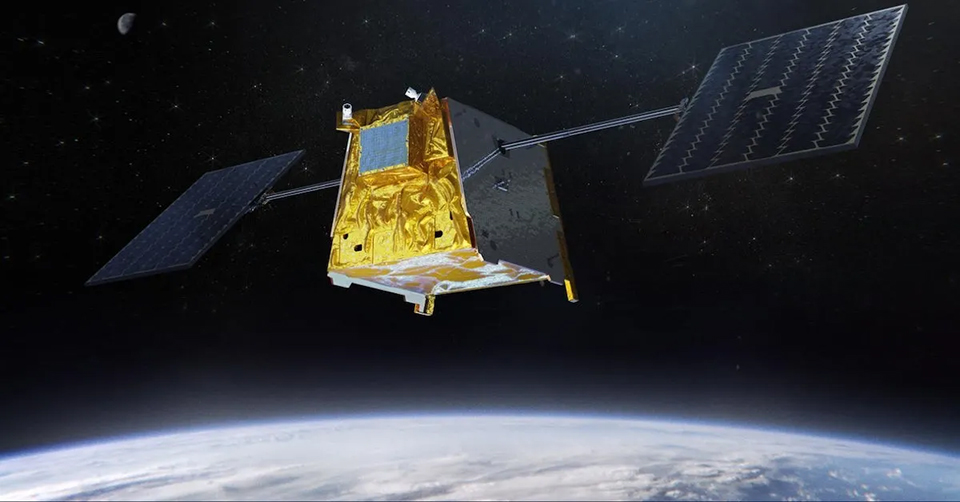
Targeting the growing gap between encrypted application layers and vulnerable terrestrial infrastructure, Spacecoin and the Midnight Foundation announced a partnership on January 29, 2026, to develop a private peer-to-peer (P2P) messaging platform.

Screenshot

The collaboration aims to bypass traditional internet gateways prone to censorship, surveillance, and nationwide blackouts by leveraging a decentralized network of low-Earth orbit (LEO) small satellites.

Infrastructure Resilience Against Global Censorship

The initiative responds to increasing instances of internet shutdowns used to mask political crackdowns, such as those recently documented in Uganda and Iran. By utilizing Spacecoin’s satellite constellation, the platform seeks to provide permissionless connectivity that remains operational even when terrestrial networks are compromised or intentionally severed.

Unlike centralized messaging services that may expose metadata—revealing identity, location, and communication frequency—the proposed platform integrates Midnight’s zero-knowledge proof (ZKP) technology. This allows users to verify their authorization to communicate without disclosing sensitive personal data.

“Privacy is not a feature or a privilege—it is a fundamental human right,” stated Fahmi Syed, President of the Midnight Foundation. “To protect this right, we need to think beyond the application layer. If the underlying infrastructure itself is exploitable, true privacy does not exist”.

Technical Stack: Satellites, Blockchain, and ZK-Proofs

The partnership explores a multi-layered privacy stack designed to eliminate central points of failure:

  • Connectivity Layer: Spacecoin’s LEO small satellites provide a direct-to-device link that reduces reliance on local ISPs.
  • Coordination Layer: A blockchain protocol manages the satellite network via smart contracts, ensuring no single entity can shut down the service.
  • Privacy Layer: Midnight’s cryptographic proofs enable selective disclosure, protecting transaction and communication metadata.

Beyond Messaging: Privacy as Infrastructure

While the initial focus is on secure messaging, the partners envision the infrastructure supporting broader privacy-critical applications. This includes confidential healthcare consultations in remote regions, secure coordination for journalists, and private financial transactions over satellite networks.

“The real opportunity here is privacy as infrastructure, not as a feature,” said Tae Oh, Founder of Spacecoin. “The same stack that protects a message protects a financial transaction or a medical consultation“.


Filed Under: News

York Space Systems Raises $629M in Upsized IPO to Scale Defense Production

January 29, 2026 by editorial

On January 29, 2026, York Space Systems (NYSE: YSS) made its trading debut on the New York Stock Exchange, successfully raising $629 million in an upsized initial public offering.

Dirk Wallinger, York founder & CEO, ringing the Opening Bell

Pricing at $34 per share—the top of its target range—the Denver-based satellite manufacturer achieved a market capitalization of approximately $4.75 billion, signaling robust investor appetite for pure-play defense space firms capable of mass-manufacturing.

Dominance in the Proliferated Warfighter Space Architecture

The IPO marks a major transition for York, moving from a venture-backed disruptor to a Tier 1 defense prime. As of late 2025, York is the primary provider for the Space Development Agency’s (SDA) Proliferated Warfighter Space Architecture (PWSA), with 33 spacecraft currently operational in orbit across six distinct contracts.

York’s mission success was highlighted in September 2025, when it became the first prime contractor to launch and deploy 21 satellites for the SDA’s Tranche 1 Transport Layer mission within hours of launch.

Rationale: “Space as Procurement” vs. Science

The company’s value proposition centers on “proliferation at scale,” advocating for a shift from “space as a science project” to a standardized procurement model. By utilizing its standardized S-CLASS and M-CLASS satellite buses, York claims to manufacture spacecraft at approximately half the cost of traditional defense competitors.

“Historically, people kind of view us solely as a spacecraft manufacturer, but we’re really a complete, holistic solution,” stated Dirk Wallinger, CEO and Founder, speaking from the NYSE floor. “That kind of turnkey solution is really what national defense needs“.

Strategic Targets: The Golden Dome and M&A

Proceeds from the IPO are earmarked for immediate expansion of manufacturing inventory and research and development. York is also positioning itself as a critical player for the proposed “Golden Dome” missile defense project, a national security initiative aimed at creating a multi-layered, space-based interceptor and tracking network.

Furthermore, the company has confirmed it is conducting due diligence for a potential $120 million acquisition of a key supplier to further vertically integrate its supply chain. Following the IPO, AE Industrial Partners remains the majority shareholder, retaining over 50% of the voting power.

Filed Under: News

SSTL and Oxford Space Systems Achieve Successful In-Orbit Deployment of CarbSAR Antenna

January 29, 2026 by editorial

On January 29, 2026, Surrey Satellite Technology Limited (SSTL) and Oxford Space Systems (OSS) confirmed the successful in-orbit deployment of the Wrapped Rib Antenna aboard the CarbSAR In-Orbit Demonstration mission.

This milestone marks the first flight heritage for the OSS large deployable reflector, validating a multi-year development program funded through UK space industrialization initiatives.

Validating a High-Performance SAR Architecture

The CarbSAR mission was launched on January 11, 2026, via a SpaceX Falcon 9. Following initial commissioning, the antenna underwent a critical two-stage deployment sequence to reach its operational focal point. The success of this deployment demonstrates the maturity of the OSS deployable architecture, which is engineered to provide high-performance X-band Synthetic Aperture Radar (SAR) from a stowage-efficient small satellite platform.

“The successful deployment is a major technical milestone,” stated Pete Ashworth, CTO of Oxford Space Systems. “It validates our engineering approach and demonstrates our ability to industrialize advanced deployable antenna technologies in the UK“.

Two-Stage Deployment Mechanics

The Wrapped Rib Antenna is designed to overcome the “stowage-to-performance” gap inherent in small satellite SAR missions. The deployment process consists of two distinct phases:

  • Primary Reflector: The deployment of the metal mesh surface, which provides the large aperture necessary for high-resolution imaging.
  • Secondary Mast: The extension of the secondary reflector mast to the precise focal point of the primary reflector.

This dual-deployment design allows the antenna to remain extremely compact during launch, fitting within the restricted volume of small satellite fairings while expanding to a size that rivals much larger traditional spacecraft once in orbit.

Strengthening the UK Space Industrial Base

The achievement reinforces the UK’s position as a leader in sovereign space technology. The antenna was entirely designed and manufactured at the Oxford Space Systems facilities in Oxfordshire, utilizing custom composite and metal mesh production lines.

“We’re proud to have partnered with Oxford Space Systems to flight-qualify this innovative technology,” said Andrew Cawthorne, Managing Director at SSTL. “This mission is a clear demonstration of the performance that can be achieved from compact satellite platforms”.

Path to Constellation Production

With flight heritage secured, Oxford Space Systems is poised to scale production of the Wrapped Rib Antenna for future commercial and government constellations. The performance data gathered from the CarbSAR mission will underpin the company’s ability to reliably produce batches of antennas for global satellite operators seeking advanced Earth observation capabilities.

Filed Under: News

Astroscale France and Exotrail Join Forces to Build Deorbiting Capability for LEO

January 29, 2026 by editorial

On January 28, 2026, Astroscale France and Exotrail announced a strategic partnership to develop and demonstrate controlled deorbiting capabilities for satellites in Low Earth Orbit (LEO).

The collaboration aims to address increasing orbital congestion by providing a repeatable, sovereign European solution for satellite end-of-life management and debris mitigation.

Building on the CNES France 2030 Study

The partnership follows a successful study phase led by Exotrail under a France 2030 contract with the French space agency, CNES. During this phase, the two companies evaluated a deorbiting mission for a constellation satellite, laying the groundwork for the current operational roadmap. The initiative is closely aligned with European space priorities regarding technological sovereignty and the “circular space economy”.

“By combining Exotrail’s mission leadership on vehicles and maneuvers with Astroscale’s proven capture and close-proximity operations expertise, we are helping to position France and Europe at the forefront of in-orbit servicing,” stated Philippe Blatt, Managing Director of Astroscale France.

Integration of spacevan™ and RPO Technology

The technical core of the partnership relies on merging Exotrail’s mobility platforms with Astroscale’s specialized servicing hardware:

  • Exotrail spacevan™: A high-mobility orbital transfer vehicle (OTV) capable of significant altitude and inclination changes. The spacevan™ LEO offers a delta-V of 500 m/s and is designed to act as a mission integrator and “last mile” delivery vector.
  • Astroscale RPO & Capture: Drawing on flight heritage from missions like ADRAS-J and ELSA-d, Astroscale France provides the critical Rendezvous and Proximity Operations (RPO) algorithms and docking mechanisms required to safely secure a target.

Rationale: Resilience of European Space Architecture

The move to operationalize deorbiting services reflects a shift in how satellite operators and governments view the life cycle of space assets. As LEO becomes more congested with mega-constellations, the ability to actively remove non-functional hardware is transitioning from a research interest to a regulatory and operational necessity.

“Controlled deorbiting and on-orbit rendezvous capabilities are now recognized as critical technological building blocks, for both civilian applications and the future of defense endeavors,” added Jean-Luc Maria, CEO of Exotrail. “We add more capabilities to strengthen the resilience of European space architectures”.

Timeline to 2030 Demonstration

The partners intend to execute their first joint demonstration mission before 2030, which will target the removal of a commercial satellite currently in orbit. Beyond this initial proof-of-concept, the collaboration includes a long-term shared roadmap to establish permanent European rendezvous and docking infrastructure, supporting future in-orbit assembly, refueling, and maintenance missions.

Filed Under: Featured, News

GAO Report Warns of Technological and Schedule Risks in SDA Missile Tracking Program

January 28, 2026 by editorial

On January 28, 2026, the Government Accountability Office (GAO) released a critical report titled “Missile Warning Satellites: Space Development Agency Should Be More Realistic and Transparent About Risks to Capability Delivery” (GAO-26-107085).

The congressional watchdog warned that the Space Development Agency (SDA) is overestimating the technology readiness of critical elements within its Tracking Layer constellation, potentially jeopardizing its ability to field hypersonic missile defense capabilities on schedule.

Acting Director Dr. Gurpartap “GP” Sandhoo remains the official head of the Space Development Agency (SDA) as of January 28, 2026, and he is navigating a period of significant institutional pressure. This newly released Government Accountability Office (GAO) report (GAO-26-107085) has flagged critical risks in the agency’s flagship missile-tracking program, placing the SDA’s rapid acquisition model—and by extension, its current leadership—under intense federal oversight.

Technological Maturity and Contractor Delays

According to the GAO, the SDA’s current strategy of rapid, biennial “tranches” has led to unplanned work as contractors struggle to modify commercial spacecraft for specialized military missions. While the agency has reported achieving early milestones for the Proliferated Warfighter Space Architecture (PWSA), the GAO asserts these reports fail to reflect underlying schedule risks.

Perhaps most significantly, the report highlights that the SDA and its partners have yet to fully demonstrate the generation of timely, three-dimensional tracks on the ground—a baseline requirement for countering hypersonic glide vehicles.

Budgetary Scale and Contractual Scope

The Tracking Layer is a massive procurement effort aimed at deploying hundreds of satellites in Low Earth Orbit (LEO). As of January 2026:

  • Total Investment: The PWSA is projected to cost nearly $35 billion through fiscal year 2029.
  • Active Contracts: Over $4.7 billion has been awarded for the first 101 satellites.
  • Key Primes: Major contractors including Lockheed Martin, Northrop Grumman, and L3Harris are currently developing satellites for Tranches 1 and 2 of the Tracking Layer.

Criticism of the Requirements Process

The GAO report also flagged a lack of transparency between the SDA and the combatant commands that will ultimately use the data. Combatant commanders reported having “insufficient insight” into how the SDA defines requirements or whether the planned capabilities will meet operational needs for missile warning and tracking (MW/MT).

Under the leadership of Dr. Gurpartap “GP” Sandhoo, who assumed the role in September 2025, the agency has maintained its “constructive disruptor” status, awarding contracts every two years regardless of previous satellite performance. The GAO recommends moving toward an “architecture-level schedule” to better understand how delays in individual tranches impact the overall delivery of global missile defense.

Path Forward and Air Force Oversight

The GAO has recommended that the Secretary of the Air Force ensure the SDA follows a more collaborative process with warfighter participants to define and prioritize requirements. Additionally, the report urges the Department of Defense to create a reliable life-cycle cost estimate, noting that limited cost data was collected for Tranches 1 and 2.

The Tracking Layer is intended to provide global “stereo” coverage for missile defense, replacing legacy systems like SBIRS with a more resilient, proliferated mesh network by the end of the decade.

Filed Under: News

Silicon Sensing Expands into South Korea with Exclusive Bizmile Distribution Agreement

January 28, 2026 by editorial

On January 28, 2026, Silicon Sensing Systems Ltd announced the appointment of Bizmile Co. Ltd as its exclusive distributor in South Korea, marking the company’s first official entry into the Asia-Pacific (APAC) market.

The agreement expands Silicon Sensing’s global footprint to 15 countries and increases its total distributor network to 21 partners.

Strategic APAC Expansion

Based in Plymouth, UK, Silicon Sensing is a joint venture between Collins Aerospace and Sumitomo Precision Products. The partnership with Bizmile is designed to capitalize on the rapid growth of South Korea’s aerospace and defense sectors, where there is a rising requirement for high-precision inertial solutions.

Bizmile already maintains a robust presence within the Korean defense market, representing several international component manufacturers. Under the new contract, the firm will provide local manufacturing, integration, and marketing services for Silicon Sensing’s product line.

The Silicon Sensing family of inertial products includes gyros, IMU’s, accelerometers and combi-sensors.  

“As global demand for inertial solutions continues to grow, we’re strengthening our distributor network to ensure customers worldwide have easy, reliable access to our products,” stated David Somerville, General Manager of Silicon Sensing Systems Ltd.

High-Precision MEMS Technology

Silicon Sensing specializes in Micro Electro-Mechanical Systems (MEMS) technology, specifically for navigation and stabilization applications. The company has supplied millions of units globally since its inception in 1999.

  • Key Product Focus: MEMS gyroscopes and accelerometers designed for high-precision motion sensing.
  • Form Factor: Solutions are engineered in compact, robust packages suitable for integration into complex aerospace platforms.
  • Market Applications: Targeted toward leading programs in South Korea requiring stabilized navigation in challenging environments.

Growth Outlook for South Korean Defense

The appointment comes as South Korea continues to invest heavily in indigenous aerospace programs and defense modernization. By establishing a local representative in the region, Silicon Sensing aims to streamline the procurement process for Korean businesses and government entities seeking ITAR-free or high-reliability inertial components.

“South Korea’s aerospace and defense sectors are growing rapidly and we see a strong demand for our inertial products in these markets,” added Somerville.

Filed Under: Featured, News

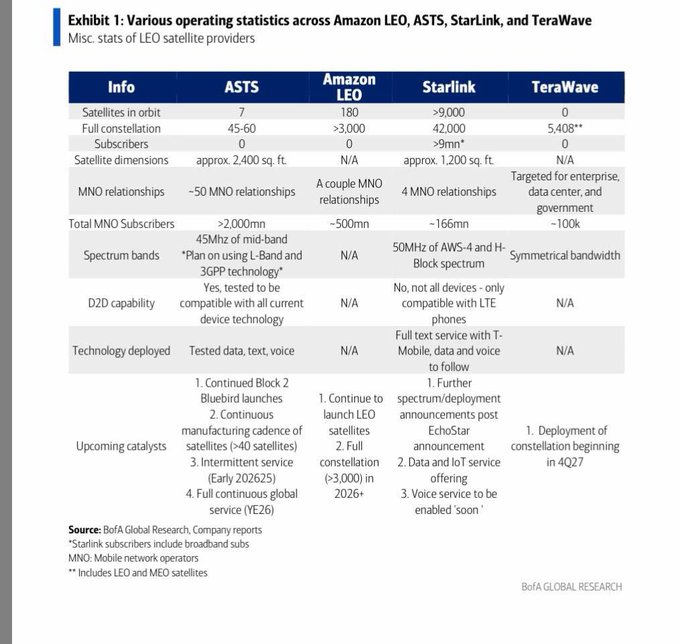
Starlink vs AST SpaceMobile: Will the winner take it all?

January 25, 2026 by editorial

Chris Forrester — CE Noticias Financieras (CENF), a well-regarded university-backed financial publication which focuses on Latino and Iberian financial news, suggests in a Jan 19 feature story that “Elon Musk has lost the space mobile race before it has even begun.”  The report says bluntly: “The fiercest space race isn’t about returning to the moon.

It’s about allowing you to make a TikTok or watch Netflix on your phone anywhere on the planet, from the salt flats of Atacama to the dunes of Khongor in the Gobi Desert. To make this happen, two radically different design philosophies are at war, and several companies are building the infrastructure needed to ensure that every phone on the planet is permanently connected to the Internet.”

CENF compares and contrasts the two very active players, saying correctly that on the one hand there’s Elon Musk’s SpaceX and its Starlink system, and the other being AST SpaceMobile (AST), and the other wannabee Chinese players along with Amazon’s LEO and a handful of much smaller would-be operators.

But since the story was published we’ve had Jeff Bezos and his Blue Origin rocket company announce their TeraWave mega-constellation. Some observers are wondering why Bezos/Blue Origin is backing TeraWave, and sister business Amazon is backing its Amazon Leo broadband system, which would also impact the Starlink vs AST argument.

The focus on AST is justified. While Starlink has its direct relationship with consumers (currently more than 9 million, and probably well on its way to 10 million by February). But AST wants to supply its dozens of telco partners with barely 100 satellites in orbit (Elon currently has more than 9000 in orbit and wants 34,400). AST is not looking for its own relationship with consumers, depending on revenue shares with the likes of AT&T, Verizon, Vodafone, Rakuten and its many other telco friends around the world.

The eventual prize is cellular freedom and connectivity for users, or to repeat the old Martini advert: “Anytime, any place, anywhere” on the planet.

Four investment banks (Bank of America, Goldman Sachs, JPMorgan Chase, and Morgan Stanley according to the Financial Times) are drooling with the prospects of mounting an IPO this year for SpaceX, but AST is already publicly quoted and bankers are deep in their fiscal examinations and due diligence on what AST might deliver as the next year or two unfolds.

Deutsche Bank, for example, on January 20 suggests it’s important that AST launch at least 4 out of its planned 5 launches by the end of March to demonstrate launch acceleration. There’s an unconfirmed launch pending with Blue Origin’s New Glenn, probably in February. They are already 6 satellites late (from December 2025), says the bank’s report or equal to two launches, so it’s almost a certainty this initial target has been missed.

“To be clear, we don’t think it matters if the timeline slips a little (eg 1 of the 5 launches scheduled by end of 1Q slips into 2Q and/or one of the 2026 planned launches spills into early 2027). The point is that AST needs to show that it can accelerate the launch cadence and deliver a 24-hour continuous service to its MNO partners in late 2026/1H27,” stated Deutsche Bank. The bank also expects new “premium service tiers” to emerge from AST’s partners and for meaningful revenues to begin flowing next year.

“We believe that AST has the MNO partnerships in place to be successful and scale its D2D business, while also adding incremental revenue in government and potentially enterprise over time,” says the bank, which has resulted in the bank upping its price target for AST from $81 to $137 per share and reiterating a “BUY” rating.

Deutsche Bank is forecasting 3 New Glenn launches and 5 Falcon 9 launches with each carrying multiple satellites.

Other bankers are also not shy in jumping into the AST prediction business. Capital market business Clear Street, for example, has also tipped AST at $137 (from $87) and repeated a “BUY” rating and its optimism helped by the US government’s award of Golden Dome contracts to AST, saying: “We remain bullish on the direct-to-cellular market, as rising competition from SpaceX/Starlink (private) is likely to push mobile network operators to rely more heavily on AST partnerships to defend subscriber bases.”

However, CE Noticias Financieras is persuaded that fewer satellites are better for humanity than more. It quotes Jonathan McDowell, an astrophysicist and acknowledged expert at the Harvard-Smithsonian Center for Astrophysics, who says: “Personally, I prefer a smaller number of larger satellites. One reason is the risk of space collisions. If you have 10 times more satellites, you have 100 times more near misses. So, just from that point of view, consolidating into a smaller number of satellites seems more sensible.”

But that view, however, sensible, has already been lost with SpaceX’s “brute force” and proliferation of satellites. Amazon’s Project Leo plans to launch more than 3,200 satellites.  Chinese companies are planning two separate mega-constellations, Guowang and G60 Starlink, with a total of nearly 26,000 satellites, and talking of 200,000+ satellites. “We are only at the beginning of this, ” warns McDowell. “And that becomes very worrying because now it’s not just one company, it’s a lot of companies.”

Which makes any sensible forecast near-impossible. China might completely upset the apple cart, while smaller players such as Canada’s Lightspeed might also play a disruptive role, as could the likes of Lynk Global, Apple/Globalstar or Abu Dhabi’s Space42/Viasat combination. However, the laser-linked TeraWave might eliminate Rivada Space Network from the potential mix.

Filed Under: News

Russian “Starlink” Launch Pushed to 2026 Amid Production Shortfalls

January 24, 2026 by editorial

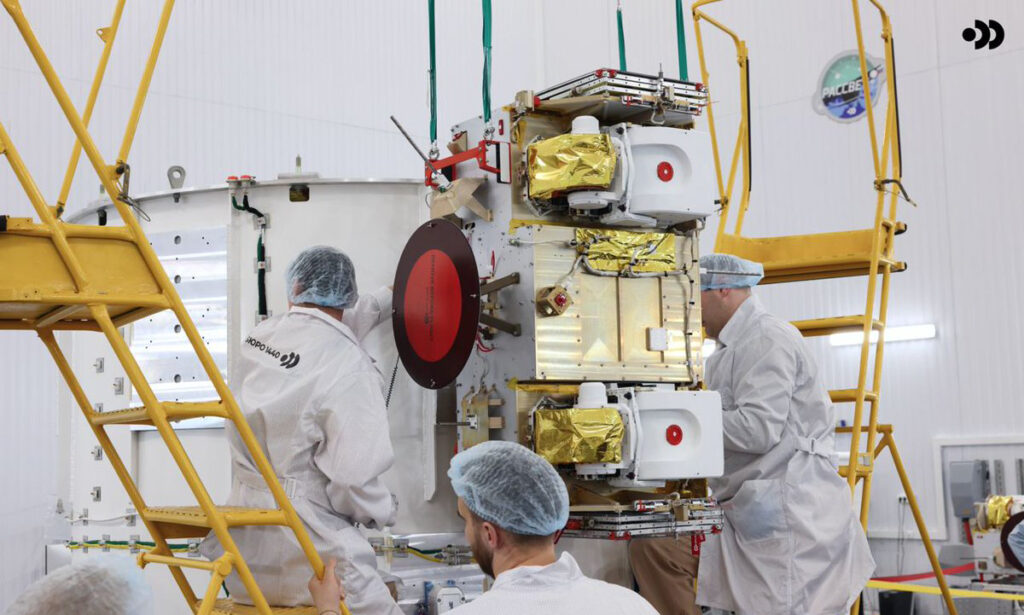
In a report released on Friday, January 23, 2026, the Russian aerospace company Bureau 1440 announced the postponement of its initial deployment of 16 high-speed internet satellites. Originally scheduled for late 2025, the launch of the first batch for the “Rassvet” (Dawn) Low Earth Orbit (LEO) constellation has been rescheduled for 2026.

The delay is attributed to production failures and incomplete assembly of the required spacecraft, contradicting previous government statements regarding the readiness of the fleet.

Assembly Obstacles for the Rassvet Constellation

The Rassvet project aims to provide a domestic alternative to SpaceX’s Starlink, targeting global broadband coverage. While Roscosmos Chief Dmitry Bakanov stated in September 2025 that deployment of the first 300 satellites would begin by the end of that year, industry sources now indicate that the production line has failed to meet the necessary volume. Despite the delay, Deputy Minister of Digital Development Dmitry Ugnivenko had claimed as recently as December 2025 that all 16 initial satellites were complete. Bureau 1440 currently has only six experimental satellites in orbit, launched during the Rassvet-1 and Rassvet-2 missions to test laser inter-satellite links and 5G signal compatibility.

Funding and Strategic Infrastructure Goals

The project is a central pillar of Russia’s national “Data Economy” program, with the federal budget allocating 102.8 billion rubles ($1.36 billion) toward its implementation. Bureau 1440 is expected to contribute an additional 329 billion rubles ($4.36 billion) in private investment through 2030. Each satellite is designed to operate in LEO to provide high-speed, low-latency connectivity. The broader strategic goal remains the deployment of a 900-satellite constellation by 2035, with commercial operations involving the first 250 units projected to start in 2027.

Regional Competition and Revised Launch Targets

As Bureau 1440 navigates manufacturing hurdles, regional competition is accelerating. The Ukrainian technology firm STETMAN has entered the implementation phase for its UASAT LEO project. Unlike the delayed Rassvet batch, the first Ukrainian satellite has already secured a launch slot for October 2026, with plans to build a 245-satellite communications network. Bureau 1440’s revised roadmap now targets 156 launches in 2026, followed by 292 in 2027, though reaching these milestones will require a significant stabilization of the company’s satellite assembly process.

Filed Under: News

France Commissions Loft Orbital to Develop First Sovereign SAR Satellite

January 21, 2026 by editorial

In a decisive move to bolster national strategic autonomy, France has selected Loft Orbital to develop the nation’s first “sovereign” Synthetic Aperture Radar (SAR) satellite. The contract, announced on Wednesday, January 21, 2026, marks a significant shift in European defense procurement, prioritizing a sovereign-commercial hybrid model to ensure independent orbital reconnaissance capabilities.

Strategic Shift Toward National Orbital Autonomy

The partnership reflects a broader European trend of reducing reliance on foreign space infrastructure for sensitive military applications. By tapping Loft Orbital, a commercial leader in modular satellite buses and software-defined mission management, the French Ministry of Armed Forces aims to accelerate the deployment of high-resolution radar imaging that remains under direct national control. This “sovereign-commercial nexus” allows the state to leverage rapid commercial innovation cycles while maintaining strict governance over data security and tasking priority.

Technical Framework of the Sovereign SAR Mission

The spacecraft will be built upon Loft Orbital’s standard Longbow bus, which is specifically designed for rapid payload integration and on-orbit software updates. Unlike traditional optical sensors, the SAR payload will enable the French military to conduct persistent, all-weather, day-and-night surveillance of strategic interest zones. The system is expected to utilize advanced X-band or L-band radar technology to penetrate cloud cover and provide high-fidelity imagery of surface assets. A critical component of the mission is the integration of Loft’s Virtual Mission Operations Center (VMOC), which will allow French defense operators to manage the satellite as a dedicated sovereign asset within a shared-resource framework.

Bolstering ISR and National Security Programs

The development of a dedicated SAR satellite is a cornerstone of France’s updated space defense strategy, which falls under the broader category of National Security Programs. Historically, European defense entities have often relied on a mix of domestic optical satellites and bilateral sharing agreements for radar data. This new project establishes a baseline for an independent ISR (Intelligence, Surveillance, and Reconnaissance) architecture that can operate without external constraints. This move is essential for maintaining the French military’s ability to monitor global hotspots and verify treaty compliance through independent space-based verification.

Sovereign Data Governance and Military Procurement

A primary driver for this contract is the requirement for absolute data sovereignty. Under the agreement, Loft Orbital will provide the technical platform, but the encrypted data downlink and tasking commands will be managed exclusively by French military personnel. This ensures that sensitive reconnaissance data does not transit through third-party commercial or foreign governmental servers, addressing a long-standing concern regarding the security of commercial satellite imagery in defense contexts. The procurement model utilized for this mission highlights a transition toward “as-a-service” models in military space, where the government pays for mission success and data delivery rather than owning the entire manufacturing supply chain.

Timeline and Future Expansion of the SAR Constellation

Initial hardware integration is slated to begin later this year, with a projected launch date in late 2027. This sovereign SAR satellite is envisioned as the pathfinder for a potential future constellation, intended to provide the French military with high-revisit rates over tactical areas of interest. The success of this pilot program will likely influence future defense budgets and procurement strategies across the European Union, as other member states look to replicate France’s model of integrating commercial agility with statist strategic requirements.

Filed Under: News

Eutelsat prepares for its next expansion

January 19, 2026 by editorial

Chris Forrester — The news that Eutelsat has ordered 340 new OneWeb satellites, additional to its existing contract for 100 extra craft, secures the company’s future and can only benefit revenues once the fleet is in operation.

The 340 will guarantee Eutelsat’s existing services although at a cost of around $2.56 billion (€2.2bn) plus the cost of launches. Some of those launches are already booked. Eutelsat ordered about ten launches (“multiple launches”) from MaiaSpace to deploy a portion of the 440 new OneWeb satellites. Launches are scheduled from late 2027 to 2029. MaiaSpace thus secures 50 percent of the planned launches over the period.

MaiaSpace was founded in 2022 as a wholly owned subsidiary of ArianeGroup. The company is developing a two-stage, partially reusable launch vehicle called Maia, designed to deliver up to 4,000 kilograms to low Earth orbit when flown in its expendable configuration with the optional ‘kick’ stage.

The first 100, needed to ensure continuity of service, were ordered in December 2024 but observers say that the satellite operator needed to put its own finances in order before it could order the additional 340.

Eutelsat restructured its core finances by raising €1.5 billion in December 29025, including an extra chunk of capital placed into the operator by the French government which as a result now controls 29.65% of Eutelsat.

The new order will be fulfilled by Airbus Defence & Space at its Toulouse, France, facility, and the first batches should be ready for launch towards the end of this year. These early launches will replace OneWeb satellites launched in 2019 and 2020 and now reaching the end of their planned lives.

In its January 12 statement Eutelsat said the new fleet would integrate technology upgrades including advanced digital channelisers, enabling enhanced on-board processing capabilities as well as greater efficiency and flexibility and suggesting that the new craft could carry ‘hosted payloads’ for the French military.

Indeed, Eutelsat is reportedly talking to other European defense ministries and pitching similar options for dedicated payloads.

But there’s certainly going to be a slight disappointment for French pride in that the order has gone to Maia Space. Despite Maia being an Ariane subsidiary, some would have preferred Arianespace itself to be a carrier. There’s also the underlying fear that other rocket providers will be called upon to fill the gap given that Ariane itself is fully booked for 2026 and much of 2027 on other non-Eutelsat contracts.

Consequently, Eutelsat CEO Jean-François Fallacher might have to select SpaceX – which can carry 45 OneWebs – will be called into play. However, it is worth remembering that Eutelsat still has a contract in place with Jeff Bezos for a flight on Blue Origin’s New Glenn rocket. The contract was signed with much fanfare at the 2017 Washington Satellite Show by Rodolphe Belmer, then CEO at Eutelsat, and with Bezos.  It could well be that a New Glenn launch during 2027 could carry OneWeb satellites.

The new OneWeb contract is just the first stage of Eutelsat’s growth plan. The next step, now being made with the SpaceRISE consortium of which it is a key part, is the important European IRIS2 multi-orbit highly-secure satellite scheme. IRIS2, backed by the European Commission and European Space Agency but also with plenty of private cash from the likes of SES, Eutelsat and Hispasat, calls for 272 satellites in LEO (at 1200 kms) and 18 in MEO (at 8000kms). They would operate with laser connectivity.

The IRIS2 contract was signed with the SpaceRISE consortium which has to design, deliver and operate the Infrastructure of Resilience, Interconnectivity and Security by Satellite (IRIS²) for a concession period of 12 years.

Eutelsat has to pay for its place in the consortium, and is said to be in talks with financing sources including the French BPIFrance and EK Export Finance agencies.

SpaceRISE issued its Requests for Proposals (RFP) on December 28 2025 to Europe’s satellite builders and launch suppliers, and there’s a requirement that some 30% of the satellite contract value must go to small and medium-sized industry businesses.

These combined elements will keep Eutelsat busy for a year or two, but its OneWeb revenue growth should help fund expansion. Eutelsat says it expects its LEO revenues to grow by around 50% – and possibly more – as 2026-2027 unfolds. Eutelsat is targeting total revenue of between €1.5 billion and €1.7 billion by the end of 2028-2029. Much of that will come from OneWeb.

With the first OneWeb launches now likely to take place before calendar year-end 2026, Eutelsat’s revenue stream should grow commensurately.

Filed Under: Featured, News

  • Go to page 1
  • Go to page 2
  • Go to page 3
  • Go to Next Page »

Primary Sidebar

WEEKLY NEWSLETTER

Archives

  • February 2026
  • January 2026
  • December 2025
  • November 2025
  • October 2025
  • September 2025
  • August 2025
  • July 2025
  • June 2025
  • May 2025
  • April 2025
  • March 2025
  • February 2025
  • January 2025
  • December 2024
  • November 2024
  • October 2024
  • September 2024
  • August 2024
  • July 2024
  • June 2024
  • May 2024
  • April 2024
  • March 2024
  • February 2024
  • January 2024
  • December 2023
  • November 2023
  • October 2023
  • September 2023
  • August 2023
  • July 2023
  • June 2023
  • May 2023
  • April 2023
  • March 2023
  • February 2023
  • January 2023
  • December 2022
  • November 2022
  • October 2022
  • September 2022
  • August 2022
  • July 2022
  • June 2022
  • May 2022
  • April 2022
  • March 2022
  • February 2022
  • January 2022
  • December 2021
  • November 2021
  • October 2021
  • September 2021
  • August 2021
  • July 2021
  • June 2021
  • May 2021
  • April 2021
  • March 2021
  • February 2021
  • January 2021
  • December 2020
  • November 2020
  • October 2020
  • September 2020
  • August 2020
  • July 2020
  • June 2020
  • May 2020
  • April 2020
  • March 2020
  • February 2020
  • January 2020
  • December 2019
  • November 2019
  • October 2019

© 2019–2026 SatNews

Insert/edit link

Enter the destination URL

Or link to existing content

    No search term specified. Showing recent items. Search or use up and down arrow keys to select an item.
      x
      Sign Up Now!

      Enjoy a free weekly newsletter with recent headlines from the global SmallSat industry.

      Invalid email address
      We promise not to spam you. You can unsubscribe at any time.
      Thanks for subscribing! You will now receive weekly SmallSat News updates.
      We love our advertisers.
      And you will too!

      Please disable Ad Blocker to continue... We promise to keep it unobtrusive.
      We promise not to spam you. You can unsubscribe at any time.
      Invalid email address
      Thanks for subscribing! Please check your email for further instructions.