
• Skip to main content
  • Skip to primary sidebar
  • Home
  • News
  • Featured
  • More News ⌄
    • SatNews
    • SatMagazine
    • MilSatMagazine
  • Events ⌄
    • MilSat Symposium
    • SmallSat Symposium
    • Satellite Innovation
  • Contacts
  • SUBSCRIPTION

SmallSat News

You are here: Home / Archives for editorial

editorial

UK’s SatVu secures multi-million ESA contract to power climate and security intelligence

July 8, 2025 by editorial

SatVu, has been awarded a contract worth up to €3 million by the European Space Agency (ESA) to supply advanced thermal data to the Copernicus Contributing Mission (CCM) program.

Spanning a three-year period, the agreement marks the first Category 1 CCM contract for a UK company and was officially announced at the Living Planet Symposium in Vienna. It cements SatVu’s role in supporting a broad portfolio of Copernicus thematic services with continuous, high-resolution thermal intelligence—including urban heat monitoring, infrastructure resilience, water resource management, emissions analysis, security applications, and rapid response to climate-related disasters.

Artistic rendition of the company’s HotSat-1 on-orbit

SatVu’s imagery and analytics will strengthen critical areas of European monitoring and decision-making. From an urban heat perspective, by mapping heat risk and cooling loads at street level, SatVu’s data informs energy efficiency programs and adaptation plans—helping cities better prepare for rising temperatures and extreme heat events.

In water and land resource planning, SatVu’s high-resolution thermal insights allow authorities to assess thermal dynamics in rivers, lakes, and coastal zones. These measurements serve as indicators of pollution, outflows from industrial activity, and surface temperature shifts—supporting both environmental protection and regulatory compliance.

SatVu’s thermal capability also enhances Europe’s security and intelligence operations. By detecting unusual heat signatures and monitoring critical infrastructure in low-light or the full cover of darkness, it provides an added activity layer of situational awareness for sensitive or remote locations.

Finally, the data supports faster, more targeted responses to climate-related disasters. From detecting wildfires and industrial incidents to supporting flood monitoring and emergency planning, SatVu enables early warning systems and rapid deployment when time is critical.

SatVu’s satellites capture thermal infrared imagery at up to 3.5 meters ground sample distance (GSD), delivering high-resolution, day-and-night monitoring of Earth’s surface across a spectrum of civil and defence use cases. This level of thermal detail is essential for bridging spatial and temporal gaps left by existing Earth observation systems – especially in security-sensitive, high-risk, or low-visibility environments.

With SatVu’s calibrated thermal insights delivered in near real-time, Copernicus users gain immediate, actionable intelligence without the burden of processing complex data streams.

As the first UK company selected under the new Category 1 Contributing Missions, SatVu reaffirms the UK’s ability to deliver strategic capability to Europe’s climate, security, and resilience ambitions.

Anthony Baker, CEO and Founder, SatVu, said, “From climate risk to national security, the decisions being made today demand data that is both credible and continuous. Being the first UK company awarded a Category 1 contract under Copernicus is not just a milestone for SatVu – it’s a signal that regional thermal capability has a vital role to play in Europe’s climate and security infrastructure. Thermal data is no longer optional, it’s essential for understanding what activity is happening on the ground, in near-real time.”

Simonetta Cheli, ESA’s Director of Earth Observation (EO) Programs, said, “The aim of integrating emerging European New Space companies into Copernicus is to ensure the programme remains at the forefront of Earth observation in a fast-evolving sector. I warmly welcome the newest members to the Copernicus Contributing Missions program.”

Harshbir Sangha, Director of Missions and Capabilities at the UK Space Agency, said, “This contract for SatVu demonstrates the UK’s world-leading industrial capabilities and innovative expertise in thermal imaging technologies. Following the UK’s re-entry into the Copernicus programme, this €3 million agreement showcases how British innovation can deliver critical Earth Observation capabilities that address both environmental challenges and security needs. SatVu’s achievement represents exactly the kind of high-value industrial growth we aim to foster, positioning our expanding UK space sector at the forefront of solving global challenges.”
Filed Under: News

Sateliot advances its constellation with 5 new satellites to be manufactured by Alén Space

July 6, 2025 by editorial

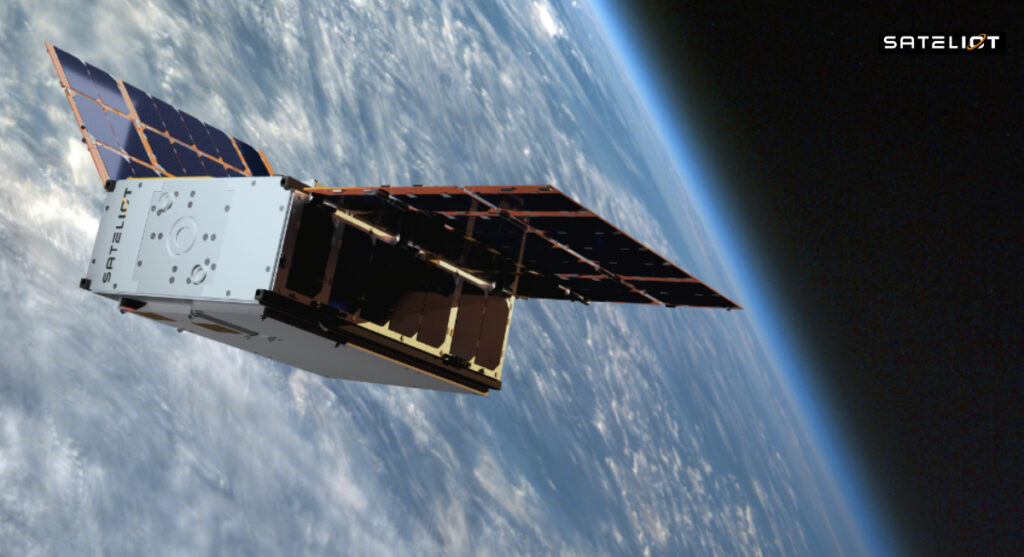
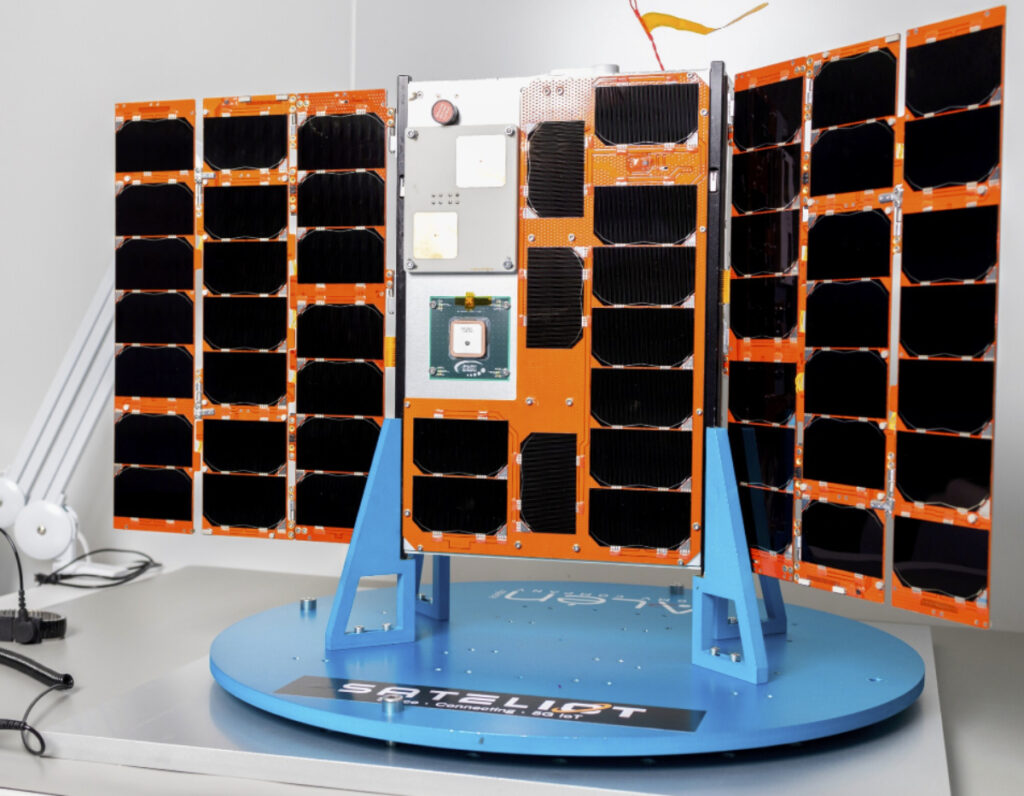
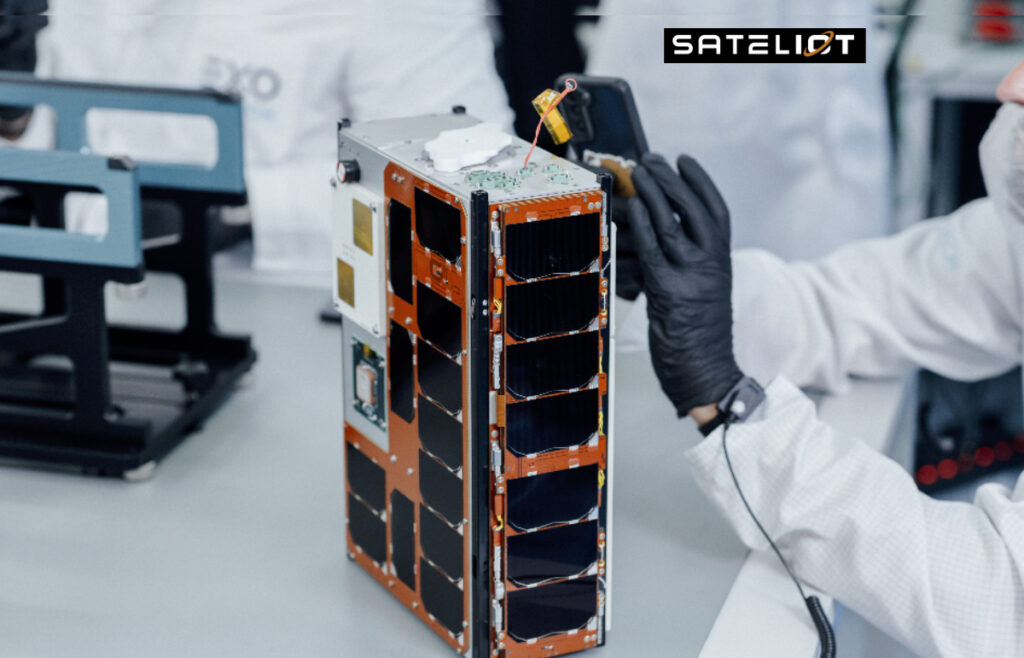
Sateliot has taken another step forward in the deployment of its satellite constellation by entrusting the manufacture of its next five satellites to the Spanish firm Alén Space. These satellites, which will become part of its LEO network, are scheduled for launch in 2026 and reinforce Sateliot’s position as a dual-use —civilian and defense— 5G satellite connectivity operator, in line with Europe’s strategic push for space autonomy.

With this move, Sateliot continues to implement its roadmap to deploy a constellation of over 100 satellites, fully developed in Barcelona and validated by 3GPP—the international telecommunications standards body—with the goal of delivering secure and interoperable global coverage.

The new satellites, which will be manufactured at Alén Space’s facilities in Nigrán (Spain), include significant enhancements compared to the models already in orbit, enabling improved performance and greater payload capacity. This architecture is capable of supporting advanced communication services in both civilian contexts and critical security operations, territorial protection, or emergency response scenarios. As such, it positions Sateliot as a key player in the European space ecosystem.

The collaboration with Alén Space is not new, as both companies previously worked closely on the manufacture of the first four commercial satellites in the constellation, which were successfully launched in August 2024 aboard a SpaceX rocket.

Sateliot already holds contracted commitments worth approximately €270 million with over 400 clients across 50 countries. On this foundation, the company projects revenue of €1 billion by 2030, consolidating its position as a pioneering European operator of global 5G satellite connectivity.

Screenshot

This project demonstrates that we are capable of building critical infrastructure from scratch in Spain,” said Jaume Sanpera, CEO of Sateliot. “We have developed open and interoperable, made-in-Spain technology that not only meets global connectivity needs, but also contributes to European technological sovereignty.”

Guillermo Lamelas, CEO of Alén Space, said, “We are proud to collaborate with Sateliot on such an innovative and pioneering project, which will redefine the future of communications from Spain. This agreement acknowledges the quality of the work carried out on the first four satellites and strengthens our position as the most reliable small satellite manufacturer.”

Filed Under: News

NGA’s new Luno A + Luno B delivery orders

July 6, 2025 by editorial

The National Geospatial-Intelligence Agency‘s latest delivery order awards for the agency’s Luno A and Luno B contracts, as part of NGA’s focus on unlocking the capacity and innovation of the commercial geospatial industry. 

The selected vendors are:

  • Luno A:
    • BlackSky Geospatial Solutions, Inc. was awarded the Facility and Object Monitoring 2 delivery order for $24.4 million, to provide products, data and/or services to detect objects (e.g., aircraft, ships, ground equipment and railcars) as well as object change at specific areas of interest.
  • Luno B:
    • NV5 Geospatial, Inc. was awarded the Almanac delivery order for $4.5 million, to provide information on human geography conditions worldwide, including human geography baseline data.
    • Ursa Space Systems, Inc. was awarded the TrueSight delivery order for $21 million, to provide detection, identification, analysis and alerts describing change and/or movement of objects using commercial sources and automated models for domain awareness.

The Luno A and Luno B indefinite delivery, indefinite quantity (IDIQ) contracts, with a combined $490 million ceiling, are used to acquire unclassified commercial analytic service capabilities for mission users across the GEOINT community. The IDIQs are structured with an agile acquisition strategy to quickly respond to customer needs. Each contract applies GEOINT artificial intelligence to provide decision advantage to warfighters, policy makers and mission partners. As part of these five-year IDIQs, previously selected vendors compete on a full and open basis for delivery orders.

To date, NGA has awarded six delivery orders under the Luno IDIQs. Delivery orders previously awarded under Luno A are:

  • Facility and Object Monitoring, awarded to Maxar Intelligence, Inc. for $3.5 million
  • Feature ID, awarded to Electromagnetic Systems, Inc. for $3.6 million
  • Global Awareness Tracker, awarded to Ursa Space Systems, Inc. for $13.8 million 

We see the mission impact of commercial GEOINT every day,” said Devin Brande, director of NGA Commercial Operations. “The Luno contracts are a key part of NGA’s strategy to leverage this vital source for our mission partners, providing key insights and actionable, shareable intelligence.” 

Filed Under: News

Forrester’s Digest: AST SpaceMobile’s FM1 launch date slips

July 6, 2025 by editorial

July 1st saw AST SpaceMobile write to the Federal Communications Commission (FCC) asking for permission to ship the satellite from its Texas HQ to the Indian launch site and for the FCC to grant an “experimental authority to launch and test” the satellite.

AST is planning for a space-based cellular broadband network, and the FM1 satellite was originally planned to launch in July.

Coincidentally, AST has received permission for the launch of a second Bluebird craft with SpaceX. Pre-launch checks, including Radio Frequency transmissions, will start on July 31st. The test covers its UHF, S-band and Q and V-band signals.

It is possible – but not confirmed – that launch would take place within about one month of those tests being completed. There are also suggestions – again, not confirmed – that this second satellite could launch ahead of the Indian flight.

AST is working with Vodafone, Rakuten, AT&T and Verizon as its major terrestrial partners, but it needs at least 25 satellites on-orbit before a partial service can begin. It already has five of its Mk 1 smaller satellites in orbit.

AST is asking for permission to fly the FM1 satellite out by July 11th in order for a safe shipment and launch in August.

Failure to do so will place our ability to launch in August at significant risk,” stated the AST letter to the FCC—the delays might extend beyond August. The FCC, in its response to AST, said, “Due to substantial changes in the technical parameters of your S-band request, we will need to coordinate new spot frequencies with NTIA (National Telecommunications & Information Administration). This will restart the coordination timeline with NTIA.”

A recent report on June 25th from investment analysts at Bank of America Securities placed gave AST a ‘Neutral’ rating and a share price target of $55. The bank says it expects an initial service to begin by “early 2026.” The overall target is for 248 satellites to be launched.

AST has also joined the European Standards organization (ETSI) which is the officially recognized body for establishing information and communication technology standards across Europe.

Filed Under: News

Oxford Space Systems deploys S-band Helical antenna for Astro Digital

July 6, 2025 by editorial

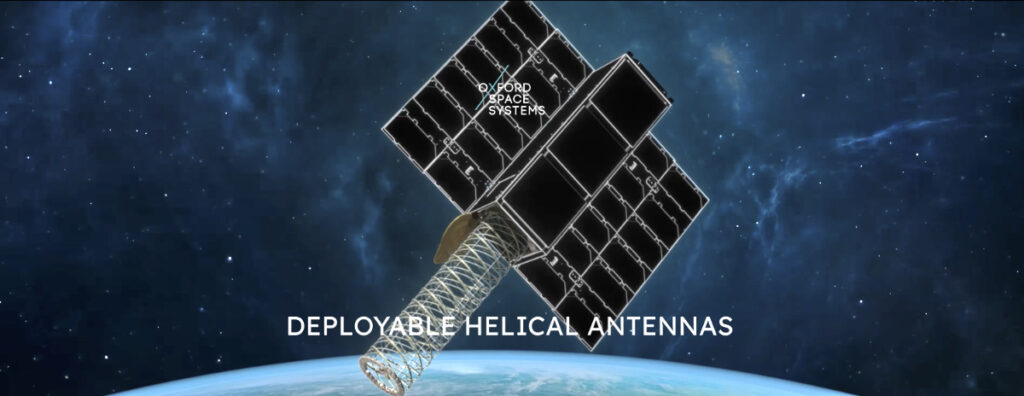
Oxford Space Systems has announced the successful on-orbit deployment of an S-band isoflux helical antenna for Astro Digital—this isoflux pattern enables wide and consistent coverage on the ground, enhancing satellite communication capabilities. This deployment builds on a strong collaboration between Oxford Space Systems and Astro Digital, supporting multiple satellites with advanced antenna solutions.

The S-band antenna was designed and manufactured by Oxford Space Systems to meet Astro Digital’s mission requirements. Its compact stowage and robust deployment mechanism ensure efficient use of spacecraft volume and mass, while delivering high-performance S-band communications for data transmission and ground coverage.

Following deployment, the antenna underwent a transmit test, which confirmed its operational performance on-orbit.

Sean Sutcliffe, CEO of Oxford Space Systems, said, “The successful deployment and performance verification at high power of our S-band isoflux helical antenna for Astro Digital is a clear demonstration of our engineering expertise and commitment to mission success. We are proud to continue supporting Astro Digital with agile and reliable deployable antenna solutions.”

Chris Biddy, CEO of Astro Digital, said, “We value our partnership with Oxford Space Systems and are pleased with the successful deployment of this S-band antenna. Their innovative approach to deployable antennas continues to support our mission needs and enables us to deliver reliable communications for our customers.”

Filed Under: News

Novaspace’s Report indicates defense spending fuels $182.6 billion (€155bn) miniaturization of technologies + EO satellite boom

July 3, 2025 by editorial

The 18th edition of Novaspace’s Earth Observation Satellite Systems report finds 5,770 EO satellites set to launch by 2034, fuelling a $182.6 billion (€155bn) market surge, as national defence priorities shape space strategy

“A new generation of defense suppliers is emerging as countries look to promote the development of national EO ecosystems, with momentum expected to increase in the coming years,” said Federico Banfi, project manager at Novaspace. “This shift in priorities is accelerating procurement cycles and offering the market more agile, cost-effective, and modular systems supported by advanced software and AI.”

Going forward, defence satellites are poised to lead new deployments. This trend is increasingly visible with recent projected budget cuts in commercial Earth observation data procurement reinforcing this strategic shift. U.S. agencies are increasingly prioritizing data from internal, defence-operated assets over commercial sources, driving the move toward sovereign, secure space capabilities.

This growth is enabled by the miniaturization of technologies supporting the deployment of smallsat constellations in various types of orbits, carrying an increasing range of sensors that could be hosted on-board. 2025 marks the start of the Very Low Earth Orbit (VLEO) and VVHR era, set to disrupt competition going forward. The Chinese Chutian constellation deployed its first prototype in 2024 and is preparing for larger deployment this year. In the U.S., commercial players have also started deployment, signaling a new generation of high-resolution, low-latency capabilities.

Performance, longevity, and cost efficiency now outweigh mass as key priorities. Heavier smallsat associated enhanced capabilities meet growing defence and mission demands, while launch costs remain manageable. Sub-50 kg satellites, once 82 per cent of commercial launches, are expected to drop below 50 percent, highlighting this market is shifting toward more complex and diversified missions.

Filed Under: Featured, News

Rocket Lab completes CDR for SDA’s T2TL-Beta constellation

July 3, 2025 by editorial

Rocket Lab National Security LLC, a wholly-owned subsidiary of Rocket Lab USA (Nasdaq: RKLB), successfully completed the firm’s Critical Design Review (CDR) for the Space Development Agency’s (SDA) Tranche 2 Transport Layer-Beta (T2TL-Beta) program.

The milestone follows Rocket Lab’s successful Preliminary Design Review (PDR) in late 2024, confirms that spacecraft design, manufacturing approach, and systems architecture meet all mission requirements and enables the program to move into full-scale production.

As a prime contractor, Rocket Lab will deliver a constellation of 18 spacecraft for the T2TL-Beta program, part of the Proliferated Warfighter Space Architecture, a resilient, low-latency communications network in LEO that support real-time connectivity for U.S. and allied forces worldwide.

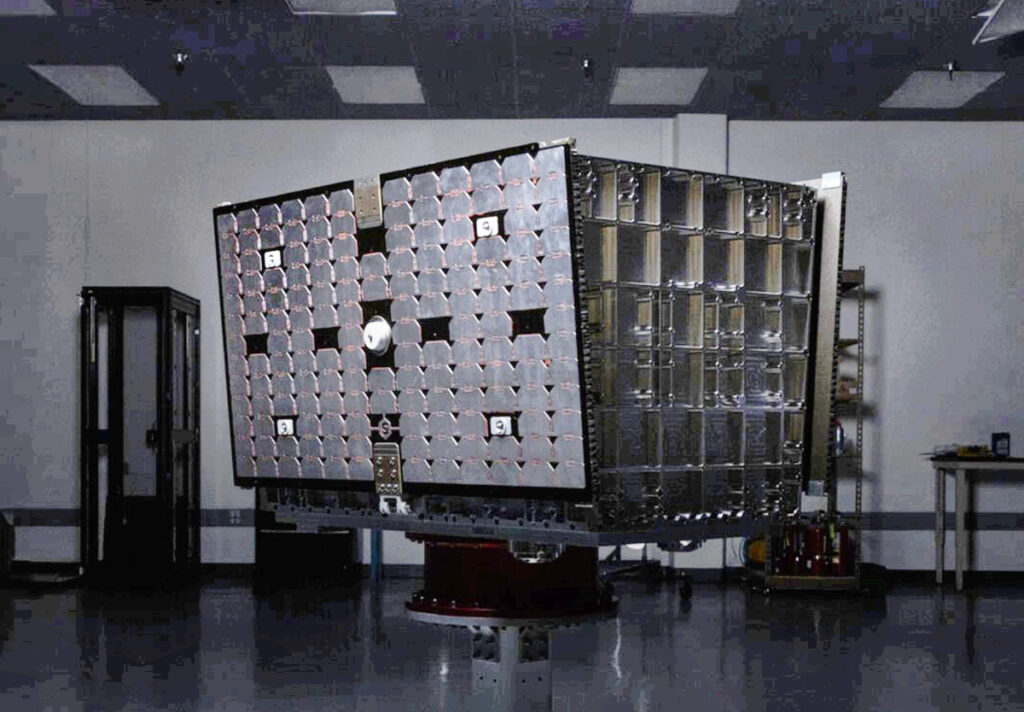
Rocket Lab’s spacecraft for the T2TL-Beta program is based on its high-performance Lightning platform, tailored for the power and data-handling demands of national security LEO constellations. As a vertically integrated provider, Rocket Lab designs and manufactures its spacecraft buses and key subsystems in-house, including solar panels, composite structures, star trackers, reaction wheels, radios, avionics, flight and ground software, launch dispensers, and more allowing the Company to maintain tight control over quality, cost, and schedule.

The Proliferated Warfighter Space Architecture is reshaping how the U.S. secures space for the joint force, and Rocket Lab is proud to be a contributor,” said Brad Clevenger, President of Rocket Lab National Security. “With proven platforms and in-house production across key systems, we’re building the backbone of resilient on-orbit capability for the warfighter. Our successful completion of CDR further demonstrates our ability to deliver trusted technology at the speed and scale needed to support national security space.”

Filed Under: Featured, News

GomSpace expands production capacity through strategic agreement with NECAS to support growing satellite demand

July 2, 2025 by editorial

GomSpace has entered into a strategic supply agreement with Danish electronics manufacturer NECAS to strengthen its production scalability for products and subsystems, and to reduce lead times amid increasing global demand for satellites and satellite subsystems.

The agreement supports GomSpace’s commercial growth strategy and recent contract wins, including the 19.5 million euros agreement announced last week for the delivery of 18 satellites to a European technology company.

While GomSpace will continue manufacturing at its own facility, NECAS will serve as a dedicated partner for volume production of selected products and subsystems. The agreement is effective immediately, and the first orders have already been placed.

For clarity, GomSpace emphasizes that this agreement applies exclusively to products and subsystems. All satellite assembly, integration, and testing will continue to be performed in-house at GomSpace’s advanced satellite assembly facilities at its headquarters in Aalborg, Denmark. These facilities, among the largest in Northern Europe, are designed to support high-throughput production, with the capacity to build and integrate up to one satellite per day.

The global satellite market is scaling rapidly, and demand is not only growing—it’s evolving,” said Carsten Drachmann, CEO of GomSpace. “Customers today expect faster time-to-orbit, and as our order book grows across all business units, the ability to deliver reliably at scale becomes a key competitive advantage. To meet these expectations, we are expanding production through a trusted partner. NECAS brings experience in high-quality electronics and has previously delivered for us. By outsourcing the production of standardized components, we can increase throughput while focusing our internal resources on more complex systems. This setup is instrumental in fulfilling major contracts such as the recently announced 19.5 MEUR order for 18 satellites—our largest to date.”

Peter Ladefoged, CEO of NECAS, said, “GomSpace’s products are now mature enough to support scalable production. We are proud to serve as a long-term partner, helping ensure timely delivery and quality at scale. This agreement is a significant step in expanding Denmark’s role in the global space supply chain.”

Filed Under: News

Xona Space Systems has launched their Pulsar-0 PNT satellite

July 1, 2025 by editorial

Xona Space Systems has launched Pulsar-0, the first production-class satellite in the company’s LEO constellation that will bring accuracy and affordable resiliency to industries across defense, construction, agriculture, mining, critical infrastructure, logistics, and automotive environs. The company believes introducing this technology will unlock an entirely new category of innovation by providing a new way to localize hardware in this physical world.

Photo of the Pulsar-0 satellite, courtesy of the company

Critical infrastructure, civil aviation, and financial systems rely on positioning, navigation, and timing (PNT) services from aging government satellites to function. But they are vulnerable and easy to manipulate. The need for resiliency in this infrastructure is urgent, and Pulsar will be a key part in closing this gap. We’ve heard from leaders across private and public sectors alike that there is no time to waste.

Pulsar-0 entered orbit aboard the SpaceX Transporter-14 mission and will begin broadcasting signals to Earth after the smallsat completes spacecraft commissioning. The primary mission is to validate Xona’s technology and unlock live sky testing with the firm’s early customers, charting the path for more frequent launches as the constellation gows and starts commercial operations.

Building hardware is difficult. Building hardware for space is even harder. Along the way, difficult decisions had to be made to preserve momentum in the face of supply chain volatility. One of those decisions was to proceed with launching Pulsar-0 without a propulsion system onboard, a tradeoff that reduces the mission capability and lifetime from our initial plans but has enabled the company to remain on track for launch and to initiate testing quickly. In a world where resilient PNT is needed now more than ever, launching sooner means real-world implementation can start sooner.

Over the coming months, Pulsar-0 will demonstrate:

  • Precise location: Making progress towards delivering on our partnership with Trimble, Pulsar-0 will broadcast real-time precision location with accuracy greater than 10cm. By broadcasting GNSS corrections from low Earth orbit, Pulsar can provide improved positioning before our full constellation is operational while users benefit from stronger signals that reach more places.
  • Range authentication: Legacy GPS signals are open and unencrypted, opening the door for malicious actors to generate counterfeit signals that are perceived as real. Pulsar will show a new way to verify the authenticity of our signal in action, providing protection against spoofing attacks.
  • Jamming resistance: Today, contested environments are frequently jammed, blocking legacy GPS signals which disrupts civilian life and military operations. With a received signal strength 100 times stronger than that of legacy GPS, Pulsar will outperform in denied domains where jammers and other interference might be present.
  • Signal penetration: Environments occluded from open sky have long been a challenge for legacy GPS to reach. We expect to show Pulsar excelling in these environments, bringing reliable connection to traditionally denied spaces inside reinforced buildings, urban canyons, and more.

Pulsar-0 is a milestone for Xona Space Systems and the company will now be focusing on building the capacity to launch more satellites faster and to grow the constellation to achieve persistent and redundant coverage everywhere on Earth.

Filed Under: Featured, News

Maxar awarded contract by NGA to deliver AI-powered object detection services

July 1, 2025 by editorial

Maxar Intelligence has been awarded Delivery Order 01 under the Luno A program by the National Geospatial-Intelligence Agency (NGA).

This award is focused on delivering commercial analytic services, specifically, automated AI/ML-generated object detections over many specified locations at once. Maxar is primarily identifying various classes of aircraft, ships, ground vehicles and railcars, helping NGA determine object counts at specified locations, classification of objects, identify trends and anomalies, and perform spatial and temporal geospatial intelligence analysis. The mission represents a strong example of operationalizing commercial technologies for persistent site monitoring at global scale.

Maxar has partnered on this award with satellite Earth Observation data provider Satellogic, Inc. (NASDAQ: SATL), integrating the capacity and revisit of both constellations to deliver a combination of persistent monitoring and high-resolution imaging for the most demanding multi-sensor applications; Enabled Intelligence to aid with model validation and verification; and Striveworks for the AIOps platform.

Delivery Order 01 requires excellent performance against extremely tight delivery timelines, including the ability to collect multiple images across constellations within specified windows and delivering model outputs within hours of image acquisition. Automation is the key to success for all phases that include collection, computer vision model inference, and delivery of timely results.

This award reflects the power of combining commercial innovation to support national security mission needs,” said Susanne Hake, SVP and General Manager of Maxar’s U.S. Government business. “By working together with other industry leaders, we’re enabling a powerful combination of diverse sensor data and advanced analytics to help make smarter, faster decisions.”

Filed Under: Featured, News

  • « Go to Previous Page
  • Page 1
  • Interim pages omitted …
  • Page 24
  • Page 25
  • Page 26
  • Page 27
  • Page 28
  • Interim pages omitted …
  • Page 338
  • Go to Next Page »

Primary Sidebar

WEEKLY NEWSLETTER

Archives

  • June 2026
  • May 2026
  • April 2026
  • March 2026
  • February 2026
  • January 2026
  • December 2025
  • November 2025
  • October 2025
  • September 2025
  • August 2025
  • July 2025
  • June 2025
  • May 2025
  • April 2025
  • March 2025
  • February 2025
  • January 2025
  • December 2024
  • November 2024
  • October 2024
  • September 2024
  • August 2024
  • July 2024
  • June 2024
  • May 2024
  • April 2024
  • March 2024
  • February 2024
  • January 2024
  • December 2023
  • November 2023
  • October 2023
  • September 2023
  • August 2023
  • July 2023
  • June 2023
  • May 2023
  • April 2023
  • March 2023
  • February 2023
  • January 2023
  • December 2022
  • November 2022
  • October 2022
  • September 2022
  • August 2022
  • July 2022
  • June 2022
  • May 2022
  • April 2022
  • March 2022
  • February 2022
  • January 2022
  • December 2021
  • November 2021
  • October 2021
  • September 2021
  • August 2021
  • July 2021
  • June 2021
  • May 2021
  • April 2021
  • March 2021
  • February 2021
  • January 2021
  • December 2020
  • November 2020
  • October 2020
  • September 2020
  • August 2020
  • July 2020
  • June 2020
  • May 2020
  • April 2020
  • March 2020
  • February 2020
  • January 2020
  • December 2019
  • November 2019
  • October 2019

© 2019–2026 SatNews

Insert/edit link

Enter the destination URL

Or link to existing content

    No search term specified. Showing recent items. Search or use up and down arrow keys to select an item.
      x
      Sign Up Now!

      Enjoy a free weekly newsletter with recent headlines from the global SmallSat industry.

      Invalid email address
      We promise not to spam you. You can unsubscribe at any time.
      Thanks for subscribing! You will now receive weekly SmallSat News updates.
      We love our advertisers.
      And you will too!

      Please disable Ad Blocker to continue... We promise to keep it unobtrusive.
      We promise not to spam you. You can unsubscribe at any time.
      Invalid email address
      Thanks for subscribing!