• Skip to main content
  • Skip to primary sidebar
  • Home
  • News
  • Featured
  • More News ⌄
    • SatNews
    • SatMagazine
    • MilSatMagazine
  • Events ⌄
    • MilSat Symposium
    • SmallSat Symposium
    • Satellite Innovation
  • Contacts
  • SUBSCRIPTION

SmallSat News

You are here: Home / Archives for editorial

editorial

EnduroSat secures €43 million to accelerate the Endurance Gen3 satellite production

May 29, 2025 by editorial

EnduroSat has closed €43 million investment round led by Founders Fund—this significant funding round also included participation from CEECAT Capital, Morphosis Capital and other returning investors, highlighting the strong confidence in EnduroSat’s vision and capabilities.
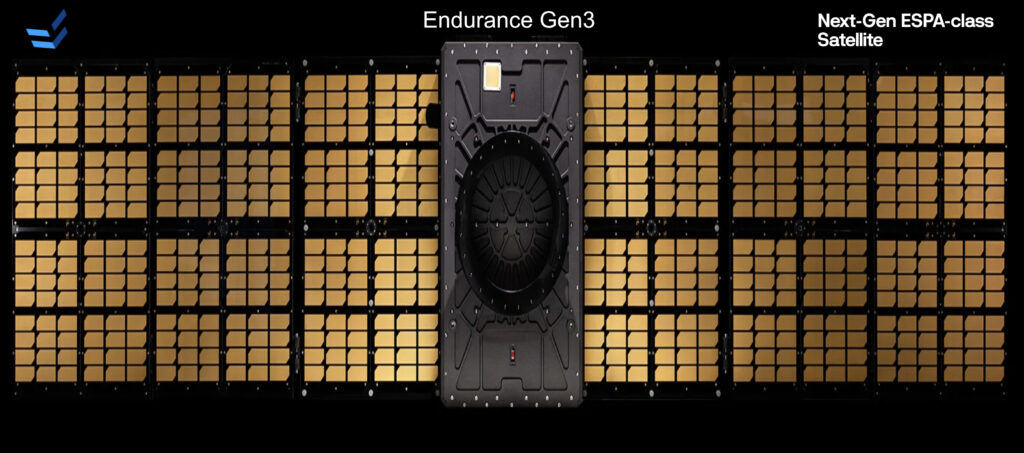
The new Endurance Gen3 satellite class is the result of over a decade of on-orbit experience and invaluable customer feedback. These satellites boast modular, high-performance avionics with up to 3.5kW of peak power and a 2GBPS data rate, making them highly configurable for a variety of advanced applications. Designed for constellations and responsive space applications, the Gen3 satellites feature a cableless bus design developed entirely in-house, allowing for assembly and functional testing in just a few hours—significantly faster than typical satellite builds today. The Gen3 ESPA-class satellites will complement EnduroSat’s flight-proven lineup of smallsat buses and components.

The substantial investment will be directed towards scaling the production of EnduroSat’s new Endurance ESPA-class satellites, which range between 200 to 500 kg. These software-defined satellites are equipped with advanced avionics and feature a fully modular design, making them ideal for operators seeking rapid deployment of hyperspectral imaging, synthetic aperture radar (SAR), broadband, navigation, and other sophisticated payloads. Additionally, the funding will support the expansion of EnduroSat’s fixed-cost constellations-as-a-service model across its existing European and U.S. locations.

On top of the cutting-edge technology, EnduroSat introduces Space Service which covers the full mission cycle, enabling organizations to concentrate on their core, value-generating activities. This approach eliminates complexity and risk while streamlining costs and timelines for every mission phase, from constellation design to payload integration, launch, and operations.

The latest funding will also facilitate the construction of a new 17,500 m² facility in Sofia, Bulgaria, which will become one of the largest space R&D centers in Europe. This state-of-the-art facility will include satellite avionics labs, two assembly lines, significantly expanded clean rooms, and a suite of space qualification equipment, including an anechoic chamber. By the end of 2025, EnduroSat aims to produce up to 60 satellites per month at this new location. Furthermore, the company is enhancing its U.S. operations by building a dedicated cleanroom to better support customers in the commercial and defense sectors worldwide.
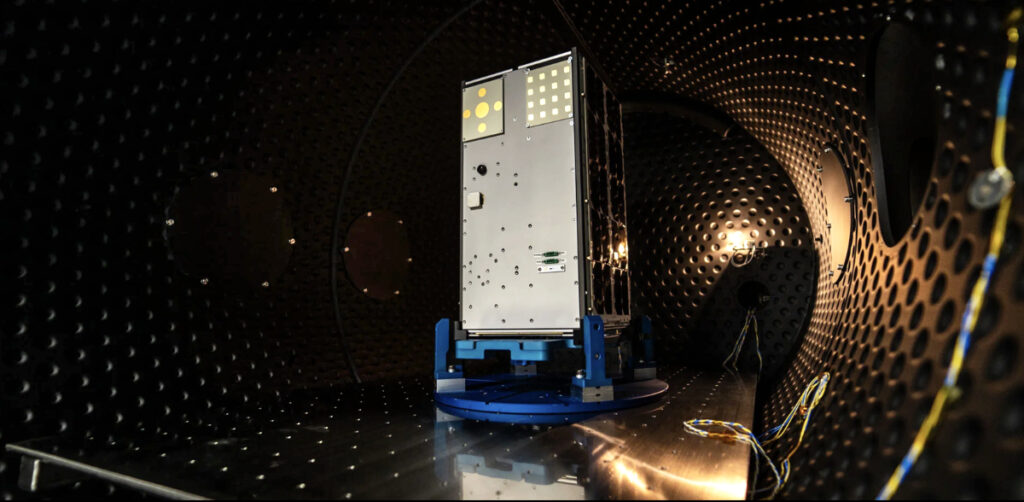
EnduroSat space qualified equipment

With the €43 million investment, EnduroSat is poised to redefine what’s possible in the space industry. From expanding its production capabilities in Sofia to scaling its operations in the United States, EnduroSat is set to provide top-tier satellite solutions to a broader range of commercial and defense customers globally.

Our mission is to make space universally accessible, because this fundamentally improves life on earth. We’re taking the complexity out of space missions by building and operating the space infrastructure our customers need, so they can focus on the next wave of innovation in space applications. I’m excited to work alongside and learn from the team at Founders Fund, which brings decades of expertise in scaling companies and redefining industries. By increasing our production and introducing our new generation of satellites, we’ll unlock access to satellite constellations for even more customers—with reliability and price transparency,” said Raycho Raychev, Founder and CEO of EnduroSat

As the number of satellites in space demanded by a broader set of players grows exponentially, our industry needs to re-think how these satellites are built. Raycho and his team at EnduroSat have taken the massive leap to go from utilizing traditional aerospace supply chains, to consumer electronics and automotive supply chains to build their products. This makes EnduroSat’s cost efficiency and performance above all in the market, and they have a proven flight heritage, with 3,000+ modules in orbit today. Their Gen3 satellites get them into a size class that will allow for almost any space opportunity to be relevant for them,” said Delian Asparouhov, Partner at Founders Fund and Co-Founder and President of Varda Space Industries

Filed Under: News

Speedcast SIGMA™ releases upgraded architecture and software enhancements

May 28, 2025 by editorial

Speedcast has revealed the latest-generation of the company’s SIGMA™ intelligent edge network management solution.
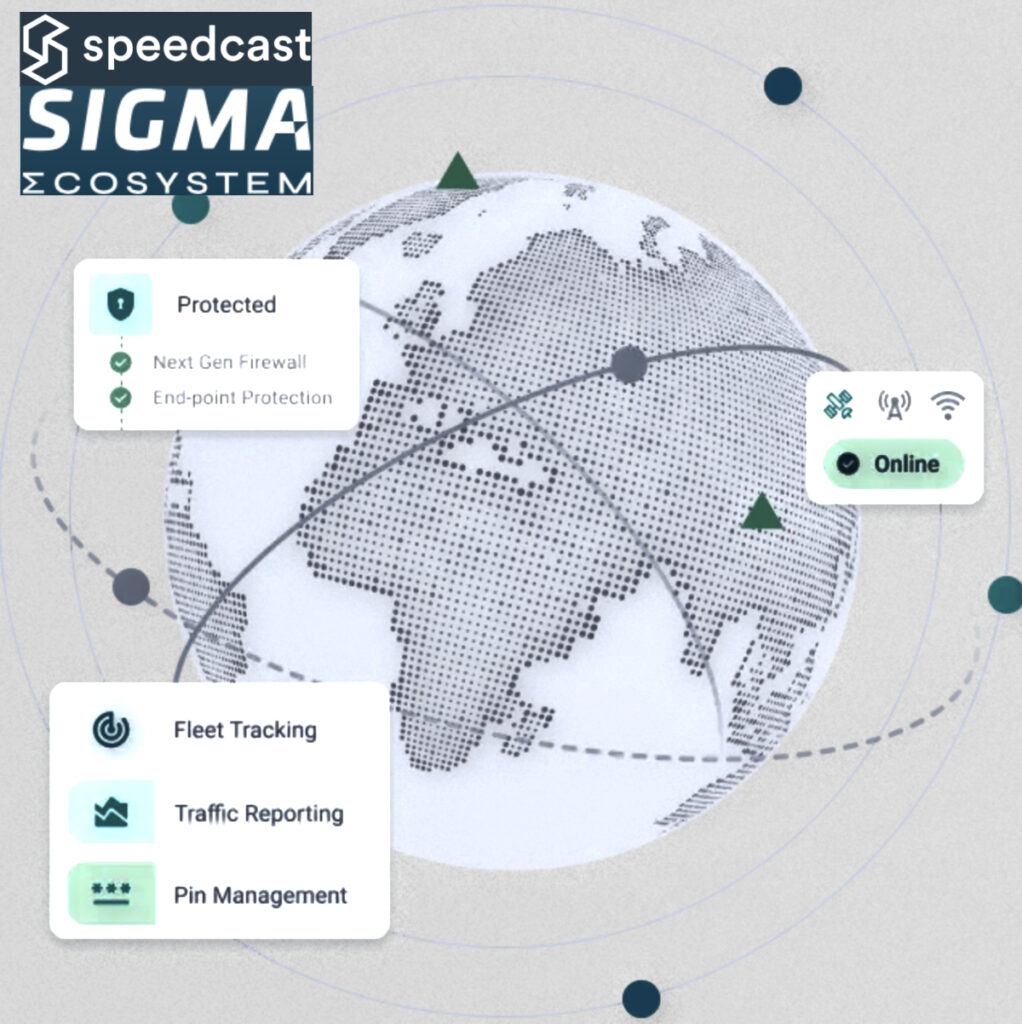
The recent enhancements include a new architecture, evolving the SIGMA platform to address the modern-day challenges of visibility, control, compliance, and security required to manage distributed edge environments. The new base operating system and cloud-native orchestration platform are tailored for virtualized deployments and updates and policy-driven configuration throughout the entire lifecycle, aimed at addressing a critical need to automate at scale and enable streamlined, seamless rollouts to tens of thousands of edge devices.

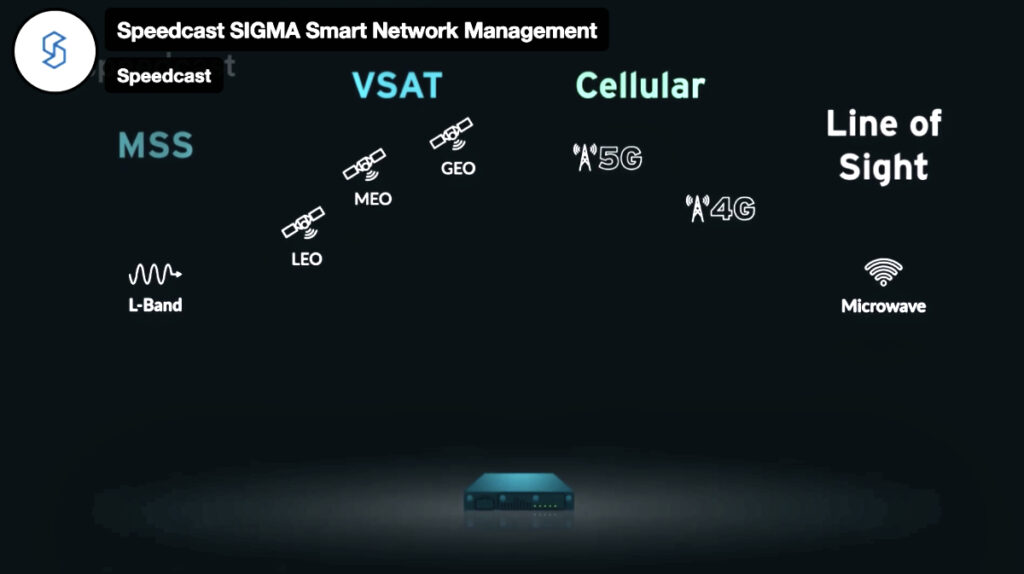
As the leading, global, tier-one reseller of Starlink, along with being a Eutelsat OneWeb distribution partner, Speedcast sees growing demand to integrate LEO service offerings with its SIGMA platform, providing a fully managed and future-proof solution for remote connectivity. SIGMA supports a wide array of services, including Starlink, OneWeb, and other emerging constellations, alongside traditional connectivity options, and operationalizes multi-vendor enterprise SD-WAN and a range of other industry applications through highly flexible and automated edge deployment and marketplace.

The latest SIGMA release enhances remote site visibility and control with smaller routing functions, expands hardware diversity while reducing costs, and drives greater automation for deployment and updates, which is essential for managing the growth of edge devices. SIGMA brings together secure network connectivity, advanced firewall protection and strong hardware-based security, such as measured boot to ensure systems start safely, Zero Trust role-based access controls to ensure only authorized users can make changes, data encryption, and even disabling unused physical ports on devices, helping to prevent tampering or unauthorized access.

The enhanced SIGMA platform also offers a key building block to addressing the International Association of Classification Societies’ (IACS) latest Unified Requirements intended to ensure that new ships are constructed with cybersecurity considerations from the outset. The new IACS E26 and E27 requirements focus on the entirety of the vessel and the computer based systems onboard in terms of how those systems should be protected. SIGMA’s SASE cloud-native technology provides added network security and ensures the new design, configuration, deployment and lifecycle of applications meets these more challenging new standards for fleet owners and operators.

Earlier this year, Speedcast announced a patent grant by the U.S. Patent and Trademark Office for technologies that the company has developed to overlay on the SIGMA platform. Speedcast’s intellectual property software will enable the company to deliver an intelligent network solution through a combination of proprietary algorithms, machine learning and automated analysis that dramatically improves the connectivity experience for customers.

Speedcast will debut the enhanced, next-generation SIGMA platform at upcoming industry trade show events.

Filed Under: News

Space Forge launches EU Expansion with new Portugal office

May 28, 2025 by editorial

Space Forge has opened of a new office in Portugal, on the island of Santa Maria in the Azores, thereby establishing a satellite return location in mainland Europe and marking the start of the company’s wider European expansion.

This expansion follows the company’s record-breaking £22.6 million ($30 million) Series A round—the largest Series A secured by a UK space tech company—backed by the NATO Innovation Fund, World Fund, NSSIF and the British Business Bank. This also signals Space Forge’s ambitions to scale up European operations in alignment with its vision for a clean industrial revolution powered by in-space manufacturing.

The new location supports the development of a scalable return infrastructure across the continent and will be central to the company’s ambitions to make space a viable platform for industrial-scale manufacturing of advanced materials. Its location in the Azores—whose geographic positioning makes them an ideal return location for LEO missions—creates new opportunities for high-frequency satellite return operations and regional partnerships.

Space Forge will work in partnership with the Azores’ regional government to bring its Portuguese facilities online, the first step in broader plans that include R&D into future platform architectures and the development of one (or multiple) European manufacturing sites for next-generation semiconductors using seed crystals forged in space.

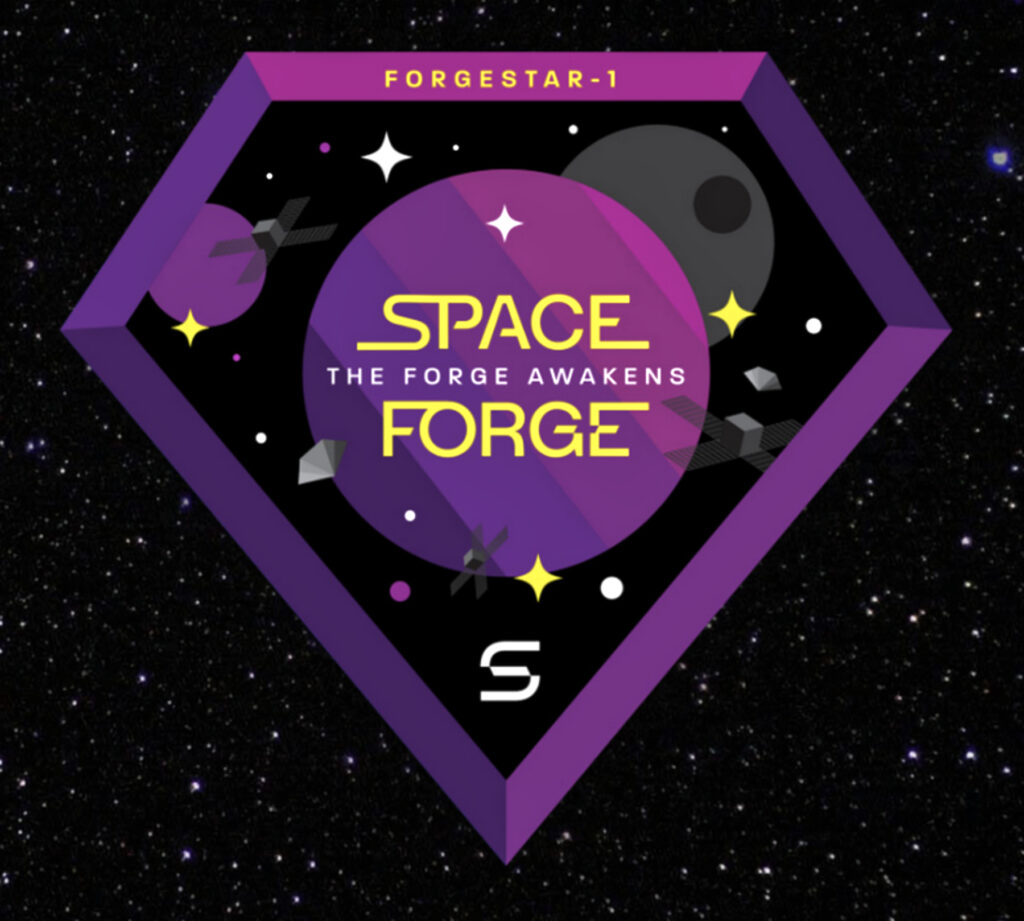
This move builds on Space Forge’s growing global momentum, with the ForgeStar®-1 integration already complete in the U.S. and the next-gen ForgeStar®-2 in active development. The company’s first on-orbit demonstration mission—The Forge Awakens—is slated for launch during 2025.

Filed Under: News

Simon Møkster Shipping boosts fleet efficiency with pooled Starlink bandwidth from Marlink

May 27, 2025 by editorial

Marlink is supporting Simon Møkster Shipping with flexible allocation of Starlink LEO bandwidth across its fleet.

The pooled bandwidth model enables Simon Møkster to deploy LEO internet bandwidth where it is most needed, supporting simplified connectivity for business applications and crew welfare services.

Simon Møkster Shipping completed a fleet-wide upgrade of its hybrid network solution to Sealink NextGen in May of 2024, accelerating the company’s digitization program.

Adopting the pooled model for LEO internet services provides benefits including:

  • Pooling of bandwidth between vessels in the same fleet enables capacity to be allocated to assets depending on deployment
  • Baseline flexibility to use best effort LEO internet for crew welfare services and guaranteed bandwidth VSAT for business applications

Simon Møkster Shipping is a leading provider of modern, high-specification support vessels to the offshore energy sector, operating 15 vessels designed for operations in harsh weather conditions. From its head office in Stavanger, Norway, it mainly operates in the North and the Barents Seas with approximately 500 employees in onshore and offshore roles.

The company was among the first operators to deploy a Marlink hybrid network solution and has progressively upgraded its fleet to ensure high quality and reliability, treating its vessels as floating offices. Reflecting the increased cyber risk that can occur with the use of LEO internet solutions, the Sealink NextGen solution comes with EDR and UTM cyber solutions as default standards.

Filed Under: News

INNOSPACE reschedules 1st commercial launch of HANBIT-Nano to 2nd half of 2025

May 26, 2025 by editorial

INNOSPACE (KS:462350) has rescheduled the first commercial launch of its small satellite launch vehicle, HANBIT-Nano, from July to the second half of 2025—the schedule adjustment follows the identification of technical inspection issues related to the vehicle’s first-stage electric pump and hybrid propulsion system during preparations for the stage qualification test.

While these issues were not evident during earlier performance tests, they were identified during a propellant supply system test conducted prior to the stage qualification test. Additional time is now required to address the identified risks and complete more detected inspections to ensure a stable launch.

The stage qualification test, a key milestone for verifying the launch vehicle’s safety and mission capability, is a mandatory step for securing launch approval. Testing is scheduled to begin next month, with approval review to commence upon its completion.

The revised launch schedule will be finalized promptly upon the completion of technical inspections and the stage qualification test.

Previously, INNOSPACE rescheduled the HANBIT-Nano launch from March to July 2025 due to delays in the delivery of electric pump components and the construction of the Goheung Integrated Test Facility.

Note: The stage qualification test is the last stage of ground testing before launch. It simulates real launch conditions with the vehicle fixed vertically to a test stand, verifying the full performance of propulsion systems, propellant tanks, supply lines, valves, control electronics, and all operational systems.

Filed Under: News

Anywaves reports the successful deployment of a commercial reflectarray in orbit

May 20, 2025 by editorial

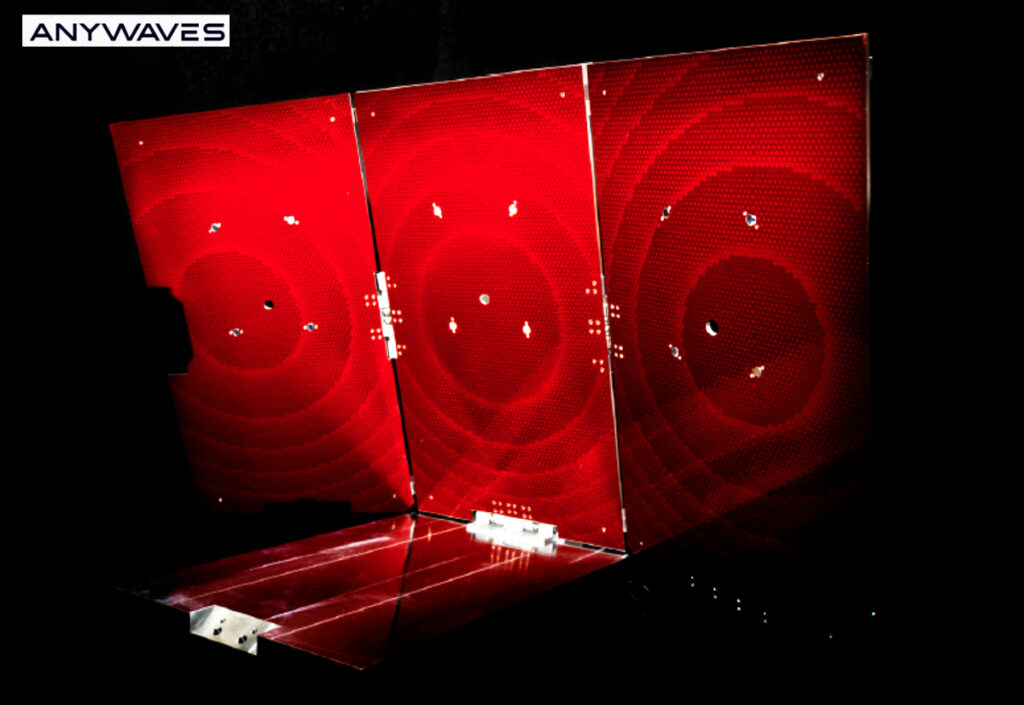
Anywaves has marked a significant milestone by becoming the first commercial equipment provider to deploy a Reflectarray in orbit—this achievement follows the company’ earlier selection by CNES to demonstrate the technological feasibility of this type of antenna that is tailored for nanosatellites.

The Reflectarray antenna, featuring a deployable configuration and compact form factor, delivers exceptional gain and enhanced reliability through a simple, robust passive deployment mechanism. First used by NASA on the ISARA, MarCO-A, and MarCO-B missions, this type of antenna is now being deployed in orbit by Anywaves.

This technical breakthrough enables the use of very high-gain antennas while meeting the size constraints of nanosatellite platforms. The use of foldable flat panels allows for easy storage and transport on small spacecraft.

Paving the way for new high-data-rate communication capabilities, the Reflectarray, designed in the Ka-band but adaptable across various frequency bands (from X- to Ku-, including Q-/V-), is ideally suited for deployment in satellite constellations. It targets commercial LEO missions and exploration missions, representing a major competitive advantage.

With higher antenna gain, satellite operators and integrators can now opt for a more efficient system, either significantly reducing onboard power requirements or substantially increasing data rates. Designed for rapid serial production, the development of this new antenna follows a roadmap aligned with evolving market demands.

The successful deployment in orbit of this Reflectarray is the result of a collaborative effort between several space players, including COMAT and Nimésis.

Filed Under: News

Spain supporting ESA satellite removal mission CAT

May 20, 2025 by editorial

Earlier this month, ESA and the Spanish Space Agency (Agencia Espacial Española or AEE) confirmed their intent to collaborate on the proposed CApTure Payload Bay (CAT) on-orbit demo—this mission will test a standardized docking interface that will simplify satellite removal operations.

Space debris mitigation guidelines outline that a satellite should be able to maneuver itself out of valuable orbits, either to reenter the atmosphere and burn up, or else to park itself in a so-called graveyard orbit. Yet even the most reliable of satellites may fail on-orbit and become uncontrollable, becoming a collision risk to other satellites.

Active debris removal techniques, where a second satellite captures and removes an incapacitated satellite or other debris, are complex. Approaching and docking to another satellite is always a risk, as any collision can lead to more damage and debris generation. It becomes even more complicated if the spacecraft is unprepared, meaning not designed to rendezvous and be ‘towed’. A rendezvous in space requires compatible interfaces A rendezvous in space requires compatible interfaces Using standardized interfaces

ESA has started to prepare its satellites with standard interfaces for capture and removal to simplify active debris removal missions. As anyone who has experienced the hassle of different charging cables before they were standardized to USB-C knows: for efficient interoperability of hardware, you need matching interfaces.

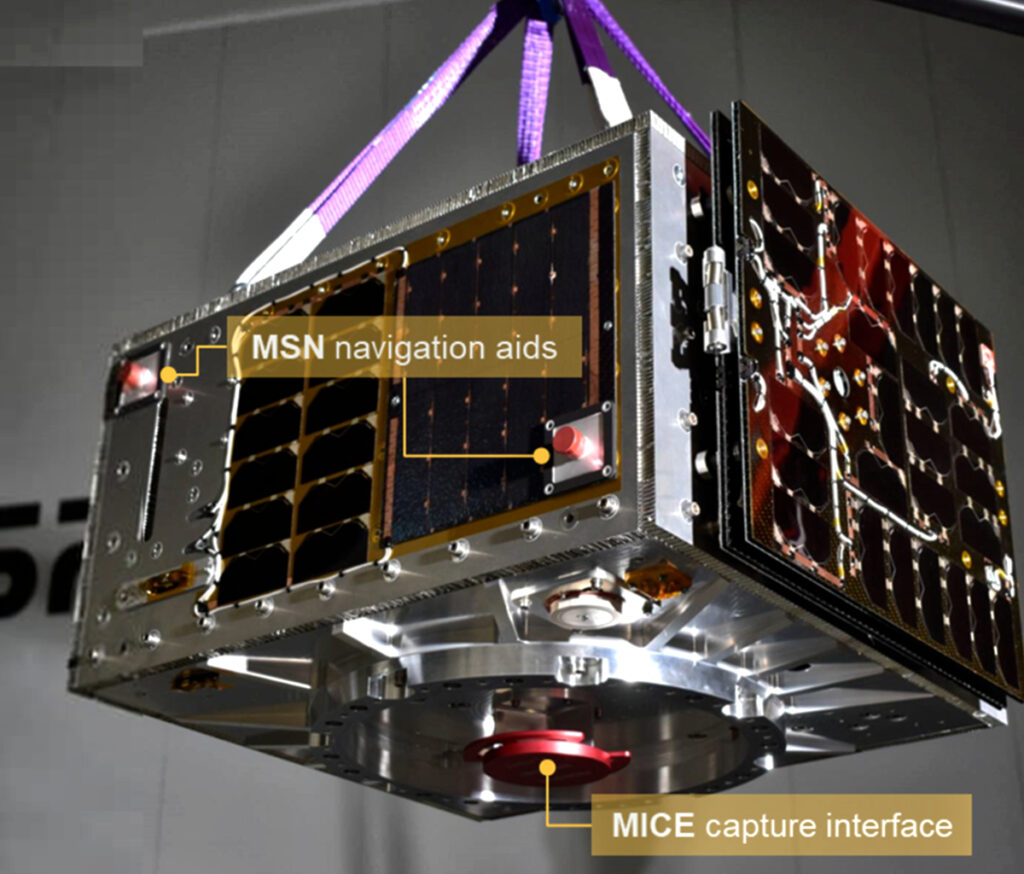
In September of 2024, Spanish company AVS successfully launched their LUR-1 mission that, among other new technologies, carries the joint technology demonstration with ESA of the Mechanical Interface for Capture at End-of-life (MICE) as well as other navigation aids that will help precise distance and orientation determination needed during the close-proximity navigation.

Artistic rendition of the LUR-1 satellite on-orbit, courtesy of AVS.

The MICE interface is a point of attachment put onto the satellite so CAT can easily grab it, similar to how cars have tow hooks. Six navigation aids have also been installed on LUR-1 to support the rendezvous and capture process by helping determine the distance, orientation and any tumbling of the spacecraft.

Mechanical Interface for Capture at End-of-life (MICE), image courtesy of AVS

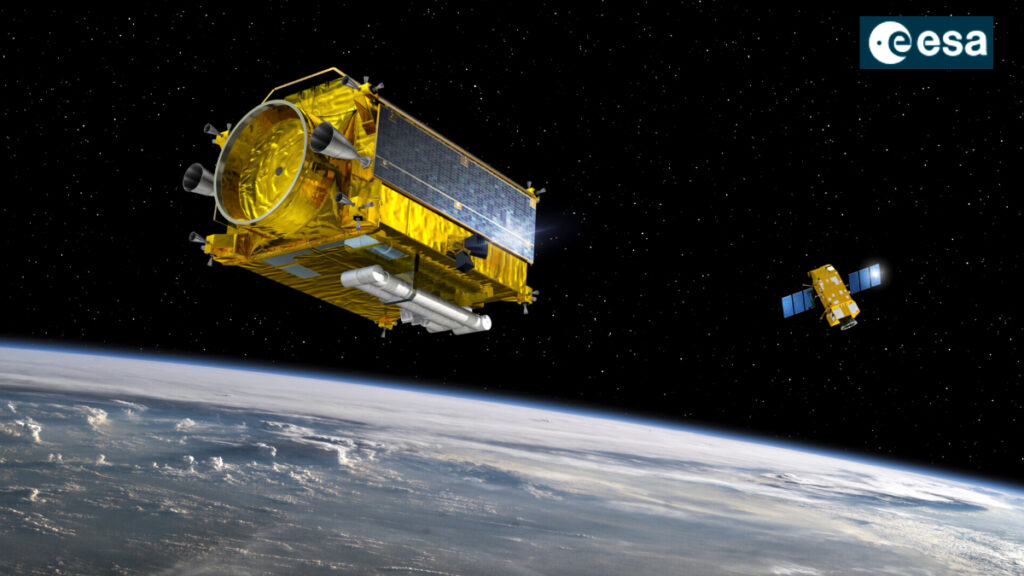
MICE and the navigation aids are also being installed on four of the future Copernicus Expansion missions to facilitate their removal from orbit in case of a failure that would prevent any of them from leaving orbit under their own steam. With MICE in space, ESA must send a CAT robotic assembly.

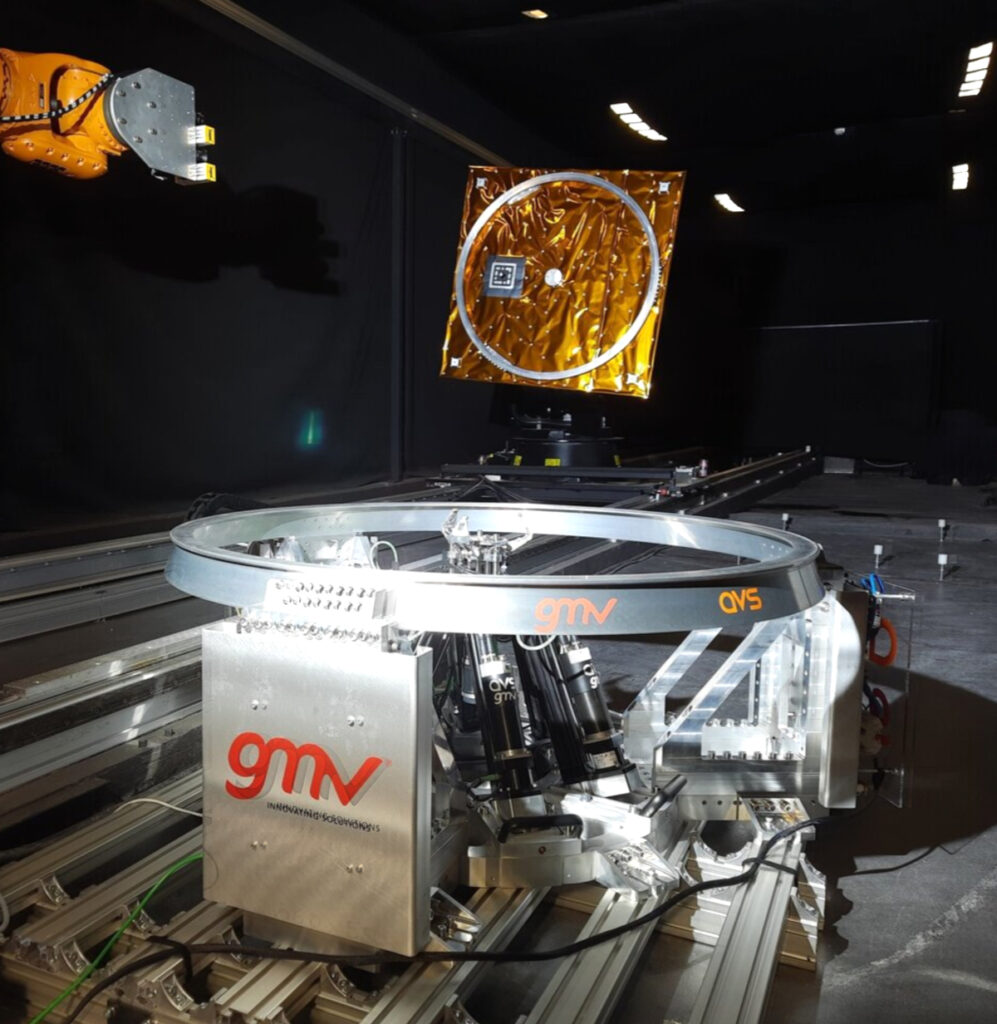
The next step is to demonstrate the removal operations on-orbit by sending the CAT side of the standardized interfaces into space, as well. The CAT payload is currently being developed under the leadership of GMV in Spain. It is compatible with ESA’s design for the removal interface and combines innovative robotics with relative navigation equipment for tight close-proximity operations.

CAT Robotic Assembly, image courtesy of GMV

CAT will then undergo end-to-end validation during the ESA CAT in-orbit mission. The demonstration will make active removal a reliable and more affordable option for future ESA satellites, in case of failures in a congested orbit.

The mission is proposed for implementation within the Space Safety Programme Proposal in view of the ESA Council meeting at Ministerial level in November of 2025.

ESA and the Spanish Space Agency (AEE) affirmed their intent on May 16, 2025, to collaborate by considering the Spanish LUR-1 satellite as a candidate target for the ESA CAT mission. As LUR-1 already has MICE onboard, ESA’s CAT mission can aim to safely remove the LUR-1 satellite from its low-Earth orbit in a timely manner after it reaches its end-of-mission.

Spain and ESA coming together to collaborate on the CAT on-orbit demonstration would form a key stepping stone to make the ESA Zero Debris goal possible and constitute significant progress in enhancing safety and sustainability in space.

Filed Under: Featured, News

Synspective + SATIM launch Object Detection and Classification (ODC) solution

May 19, 2025 by editorial

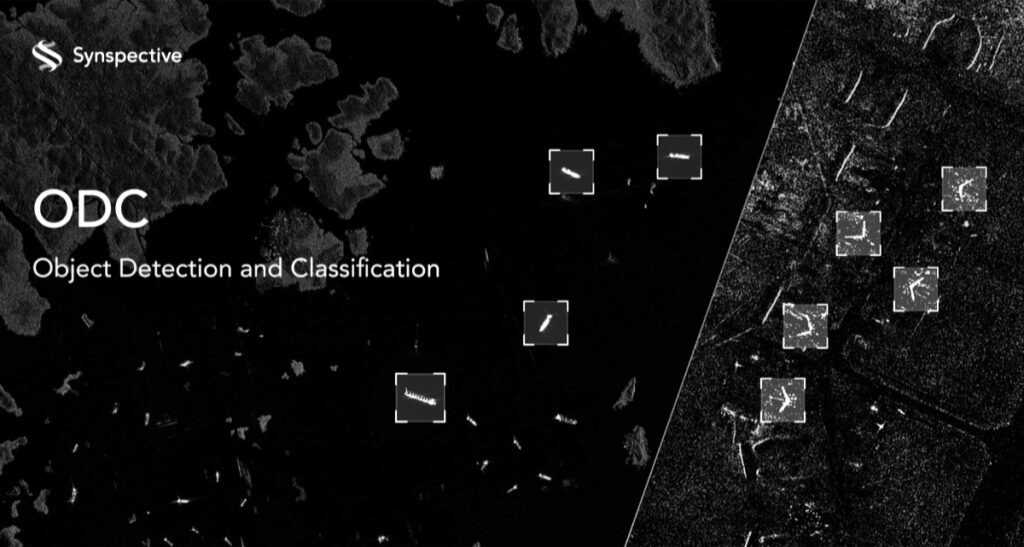
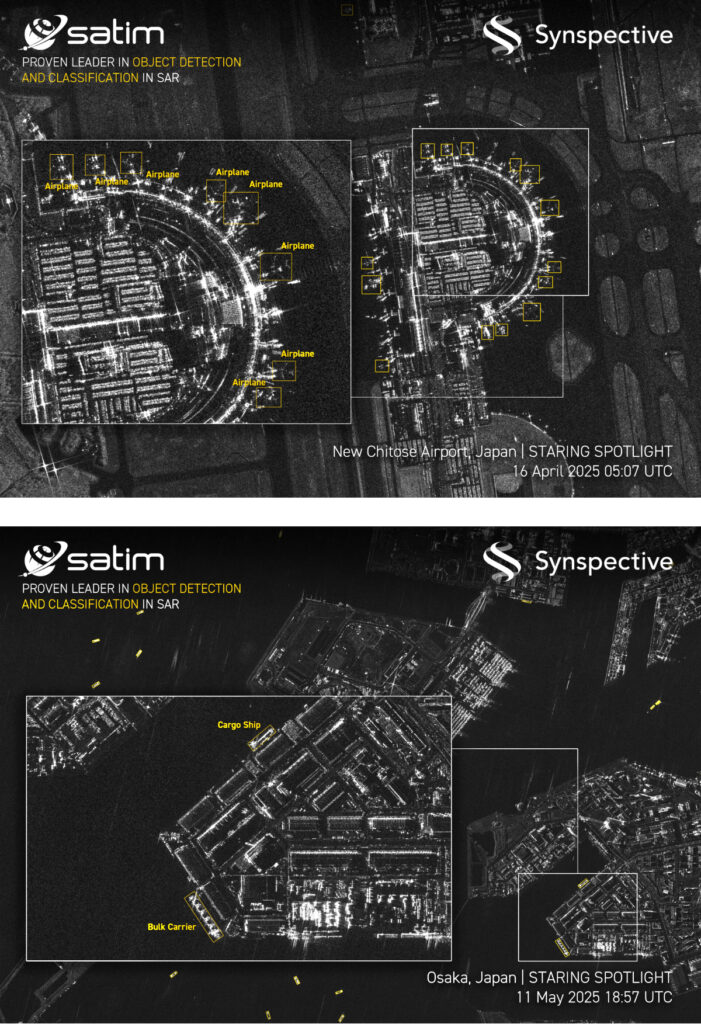
Synspective Inc. has launched the firm’s Object Detection and Classification (ODC) solution that is designed to enhance the accuracy and reliability of monitoring vessels and aircraft—this solution overcomes the limitations faced by traditional monitoring systems, offering scalable and cost-effective wide-area security.

Monitoring maritime and land domains faces significant challenges due to the vast areas and dynamic nature. Optical satellites have difficulty with cloud cover and darkness, while ground-based systems and patrols face limitations in coverage and high operational costs. Recognizing these hurdles, Synspective’s ODC solution delivers a persistent surveillance capability, ensuring security and operational efficiency around the clock, regardless of weather conditions or time of day.

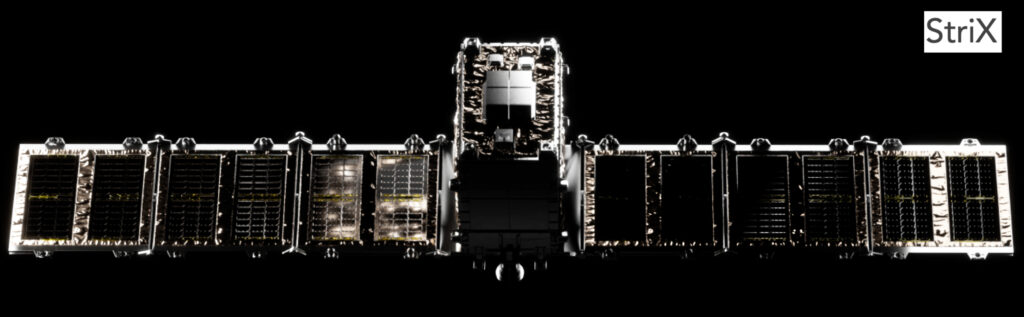
Synspective’s ODC leverages advanced SAR data and analytics to provide timely and precise insights into the presence, location, and type of vessels and aircraft. This is supported by our plan to deploy a constellation of more than 30 StriX SAR satellites by 2030, which will significantly enhance monitoring frequency and coverage capabilities.

The company’s collaboration with SATIM, a leader in AI-based Automatic Target Recognition (ATR) on SAR imagery, integrates proven algorithms into Synspective’s analytical platform, ensuring reliable detection and classification of target objects. This platform is designed for flexibility and future advancements, with plans to extend detection capabilities to a broader range of objects.

Key Features and Benefits

  • Reliable All-Weather, Day/Night Monitoring: SAR technology provides uninterrupted surveillance through clouds, fog, and smoke, operating effectively 24/7.
  • High-Frequency Monitoring: Our expanding satellite constellation aims for frequent revisits and timely updates, enhancing situational awareness.
  • Wide-Area Surveillance: Efficiently monitors large maritime zones, coastlines, airports, and remote regions, ensuring comprehensive coverage.
  • Accurate Object Detection (Vessels & Aircraft): Precisely identifies the locations of target objects using SATIM’s OREC technology.
  • Intelligent Object Classification: Applies advanced AI/ML analytics to categorize detected objects, facilitating rapid identification and informed decision-making.

Motoyuki Arai, CEO and Founder of Synspective, said, “We are excited to launch the Object Detection and Classification solution, which significantly advances our SAR-based analytics for defense intelligence. Our collaboration with SATIM strengthens our solution lineup, reinforcing a core pillar of our company’s growth strategy. By continuously innovating and expanding our solutions, we are working towards achieving our mission to realize a resilient future.”

Jacek Strzelczyk, CEO and Co-Founder of SATIM, said, ”Our technology is mission-agnostic, resolution-independent, and field-proven. Whether it’s low-resolution wide-area scans or high-resolution tactical imagery, we transform SAR data into intelligence that matters. This partnership with Synspective not only validates our technology—it also aligns with our long-term vision to support large-scale, multi-orbit surveillance operations across diverse geographical regions.”

Filed Under: News

Eutelsat OneWeb + Kymeta debut multi-orbit SATCOM offering to strengthen global governments’ defense infrastructures

May 19, 2025 by editorial

Eutelsat OneWeb and Kymeta have announced the general availability of the new Kymeta™ Goshawk u8 flat-panel terminal on the Eutelsat OneWeb LEO network, a new multi-orbit terminal for government and military customers.

The terminal meets key defense needs by enabling the benefits of both GEO and LEO networks on one terminal, providing resilient, flexible multi-orbit connectivity across all operational domains. As nations boost defense spending and invest in sovereign SATCOM, the Goshawk u8 is purpose-built to deliver.

With robust and trusted communications being a top security priority, the Goshawk u8 delivers seamless connectivity from both LEO and GEO satellite networks in a single user terminal. The terminal’s rugged, low-profile design and reliable, high-bandwidth performance make it ideally suited for the evolving demands of allied nations’ defense and security sectors.

The Kymeta Goshawk u8 provides a ‘plug-and-play’ terminal, designed for use across a range of platforms, including land vehicles, maritime vessels, and fixed installations. Combining LEO, GEO, and cellular connectivity it allows for improved responsiveness to enable maneuver warfare tactics, such as rapid, focused, and unexpected actions that can shatter an enemy’s cohesion.

The Goshawk u8 delivers a critical solution with its flexible, open network architecture designed to support defense operations on the move.

In today’s contested battlespace, the ability to move, adapt, and fight without losing connectivity is non-negotiable,” said Rick Bergman, President and CEO of Kymeta. “The Goshawk u8 gives defense forces the freedom to operate across orbits with resilience and certainty, even under pressure. Kymeta remains connected with governments, special forces, and military operators to assist with providing solutions to critical defense requirements. Together with Eutelsat OneWeb, we are equipping all warfighters with the communications infrastructure they need to dominate the mission environment.”

Filed Under: News

SES Space & Defense to provide hybrid space-based architecture to U.S. Department of Defense

May 19, 2025 by editorial

SES Space & Defense joins the Defense Innovation Unit’s (DIU) Hybrid Space Architecture Network initiative.

SES’s Hybrid Space Architecture II project will showcase an automatically orchestrated secure integrated multi-orbit network that interconnects commercial and government networks to deliver assured and affordable, low-latency, multi-path communications across a scalable and resilient multi-domain network.

SES Space & Defense will deliver an engineered multi-orbit network leveraging Secure Integrated Multi-Orbit Networking (SIMON™). This will enable always-on connectivity as an affordable, resilient alternative to traditional Primary, Alternate, Contingency, and Emergency (PACE) and auto-PACE operations currently used by warfighters across the Department of Defense (DoD) worldwide.

By blending LEO, MEO, and GEO capabilities in a purposeful manner, SIMON™ ensures that the warfighters’ data can affordably traverse multiple orbital regimes simultaneously, adapting and adjusting in real time to changing mission requirements.

With SIMON™, warfighters will have the ability to ‘set and forget’ their user terminals and affordably realize assured connectivity across multiple orbits,” said David Fields, President and CEO of SES Space & Defense. “This transformational approach solves a decades-long dichotomy of affordability versus resilience, providing SATCOM agility, flexibility, and reliability for the forward deployed personnel.”

Filed Under: Featured, News

  • « Go to Previous Page
  • Page 1
  • Interim pages omitted …
  • Page 30
  • Page 31
  • Page 32
  • Page 33
  • Page 34
  • Interim pages omitted …
  • Page 338
  • Go to Next Page »

Primary Sidebar

WEEKLY NEWSLETTER

Archives

  • June 2026
  • May 2026
  • April 2026
  • March 2026
  • February 2026
  • January 2026
  • December 2025
  • November 2025
  • October 2025
  • September 2025
  • August 2025
  • July 2025
  • June 2025
  • May 2025
  • April 2025
  • March 2025
  • February 2025
  • January 2025
  • December 2024
  • November 2024
  • October 2024
  • September 2024
  • August 2024
  • July 2024
  • June 2024
  • May 2024
  • April 2024
  • March 2024
  • February 2024
  • January 2024
  • December 2023
  • November 2023
  • October 2023
  • September 2023
  • August 2023
  • July 2023
  • June 2023
  • May 2023
  • April 2023
  • March 2023
  • February 2023
  • January 2023
  • December 2022
  • November 2022
  • October 2022
  • September 2022
  • August 2022
  • July 2022
  • June 2022
  • May 2022
  • April 2022
  • March 2022
  • February 2022
  • January 2022
  • December 2021
  • November 2021
  • October 2021
  • September 2021
  • August 2021
  • July 2021
  • June 2021
  • May 2021
  • April 2021
  • March 2021
  • February 2021
  • January 2021
  • December 2020
  • November 2020
  • October 2020
  • September 2020
  • August 2020
  • July 2020
  • June 2020
  • May 2020
  • April 2020
  • March 2020
  • February 2020
  • January 2020
  • December 2019
  • November 2019
  • October 2019

© 2019–2026 SatNews

Insert/edit link

Enter the destination URL

Or link to existing content

    No search term specified. Showing recent items. Search or use up and down arrow keys to select an item.
      x
      Sign Up Now!

      Enjoy a free weekly newsletter with recent headlines from the global SmallSat industry.

      Invalid email address
      We promise not to spam you. You can unsubscribe at any time.
      Thanks for subscribing! You will now receive weekly SmallSat News updates.
      We love our advertisers.
      And you will too!

      Please disable Ad Blocker to continue... We promise to keep it unobtrusive.
      We promise not to spam you. You can unsubscribe at any time.
      Invalid email address
      Thanks for subscribing!