• Skip to main content
  • Skip to primary sidebar
  • Home
  • News
  • Featured
  • More News ⌄
    • SatNews
    • SatMagazine
    • MilSatMagazine
  • Events ⌄
    • MilSat Symposium
    • SmallSat Symposium
    • Satellite Innovation
  • Contacts
  • SUBSCRIPTION

SmallSat News

You are here: Home / Archives for editorial

editorial

Viasat advances multi-orbit services roadmap— signs agreement with Telesat for LEO K-Band services

April 8, 2025 by editorial

Viasat Inc. (NASDAQ: VSAT) has signed an agreement with Telesat (Nasdaq and TSX: TSAT) to integrate Telesat Lightspeed LEO Ka-band capacity into the company’s multi-orbit network to deliver a new standard of connectivity across its mobility and defense business portfolio.
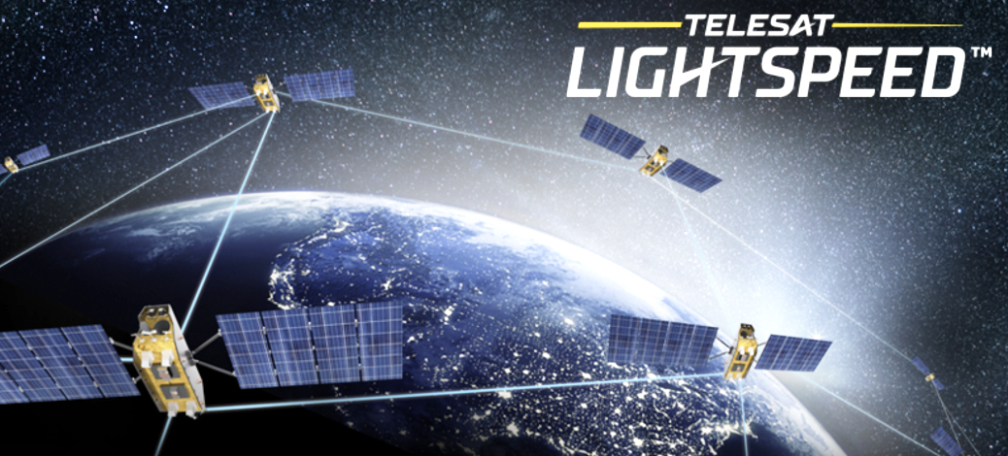
The LEO capacity from Telesat Lightspeed will be seamlessly integrated with Viasat’s ultra-high throughput satellites to offer customers fast, highly reliable, robust and cost-effective connectivity services. Those services will be backed by the industry’s most comprehensive Service Level Agreements (SLAs), promoting reliable broadband connections even in the highest demand geographic locations including hub airports, seaports, and other high traffic routes and locations.

The agreement is another step forward for Viasat’s multi-orbit network roadmap, which already serves government, maritime and energy services businesses, and is being expanded to incorporate all the company’s growth markets, including commercial aviation’s leading in-flight integrated connectivity and entertainment solutions. Telesat Lightspeed is designed to be a highly advanced, flexible and resilient LEO constellation that is expected to enhance Viasat’s ability to deliver its customers a superior, multi-orbit, differentiated broadband connectivity solution.

A very broad range of mobility customers in every vertical market, whether global or regional, are interested in multi-orbit solutions that are cost effective, offer assurances of high performance, and are resilient to intentional or unintentional service disruptions. By leveraging our own satellite fleet and its unique advantages, existing national operator partnerships, plus coverage and capacity from leading third-party satellites and constellations, our services are designed to provide customers with the essential capacity density, market access, speed, bandwidth and responsiveness they need. Importantly, we have continued to innovate advanced multi-orbit resource management techniques to reduce costs and expand geographic coverage to better serve the unique needs of each mobility and defense customer,” said Mark Dankberg, Chairman and CEO, Viasat. “In forming key partnerships with multiple GSO and NGSO operators, we are well-positioned to support delivery of Viasat’s next-generation services, achieve industry-leading resource utilization, and drive capital efficiency. In parallel, we are working to ensure equitable access to finite space resources and support regulatory certainty enabling multi-orbit solutions and related infrastructure to thrive in a shared and sustainable way.”

Filed Under: News

Millennium Space Systems completes FOO Fighter CDR in 10 months

April 8, 2025 by editorial

Screenshot

Millennium Space Systems, a Boeing [NYSE: BA] company, completed the Fire-control On Orbit-support-to-the-war Fighter (FOO Fighter) CDR in just 10 months after authorization to proceed with the project.

FOO Fighter will demonstrate advanced missile defense capability by incorporating fire control-quality sensors into a prototype constellation.

The successful completion of CDR marks the transition to the production phase of the program, which includes delivering a constellation of eight satellites with a ground system in 2026. Millennium will perform mission operations once on-orbit.

Meeting rapid timelines is essential to ensuring we deliver mission capabilities when needed,” said Doug Hulse, portfolio lead, Millennium Space Systems. “Completing the FOO Fighter critical design review in just 10 months highlights the efficiency and determination of our team. Our focus is always on providing the warfighter with the tools they need, and this achievement underscores our commitment to delivering mission requirements on time.”

We are thrilled to be working for the Space Development Agency to deliver the FOO Fighter Program and helping pave a new era in the industry, ” said Tony Gingiss, CEO, Millennium Space Systems. “This collaboration with L3 is a testament to what can be achieved when industry leaders come together to push the limits of what’s possible.” 

Filed Under: News

Firefly Aerospace awarded DoD contract for responsive on-orbit mission with Elytra spacecraft

April 7, 2025 by editorial

Firefly Aerospace has been awarded a contract to perform a responsive on-orbit mission with the company’s Elytra spacecraft in support of the U.S. Department of Defense’s (DoD) Defense Innovation Unit (DIU) Sinequone Project.

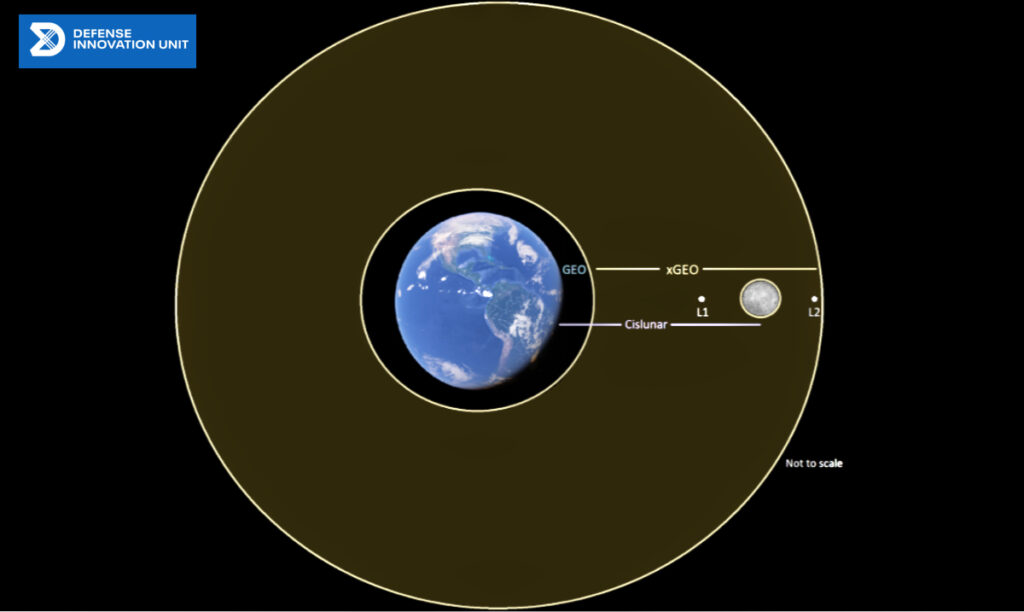
Sinequone will demonstrate the commercial launch and delivery of payloads or space vehicles (SVs) to a predetermined orbit, or orbits in xGEO. DIU selected Firefly Aerospace under the Sinequone effort to deliver three to six SVs across one or more launches to orbit(s) in xGEO/cislunar space, with the goal of reducing the time to deliver for each subsequent mission.

During the DoD mission, Elytra will serve as a space maneuver vehicle to perform a series of responsive on-orbit tasks, including space domain awareness (SDA) operations in LEO—this mission is set to launch as early as 2027.

As part of the mission, Elytra will host a suite of government payloads, including optical visible and infrared cameras, a responsive navigation unit, and a universal electrical bus with a payload interface module. Firefly’s Elytra Dawn configuration will use common components from the company’s launch vehicles and lunar landers, including the avionics, composite structures, and propulsion systems, to enable on-demand mobility, plane changes, and maneuvers with high delta-V capabilities and reliability. Elytra’s main engine, called Spectre, was recently flight-proven on Firefly’s Blue Ghost lunar lander as the reaction control system thrusters that successfully performed Firefly’s final descent on the Moon on March 2.

The DoD contract supports the DIU’s Sinequone project that aims to deliver cost-effective, responsive access beyond Geosynchronous orbits, referred to as xGEO. This mission in LEO is the first step to enable future access and operations in xGEO on a responsive timeline. The award follows Firefly’s initial trade studies that were completed for the DIU in 2024.

As demand for responsive on-orbit services continues to grow, Firefly is expanding its spacecraft production capabilities and was recently awarded an $8.2 million grant from the Texas Space Commission to add additional spacecraft clean room space, test facilities, and infrastructure. This will allow Firefly to mass produce Elytra in higher quantities at a lower cost in support of long-haul communications relays, on-orbit payload hosting, maneuverability, and other responsive services across cislunar space.

Firefly has proven our ability to rapidly and reliably launch, land, and operate in space as we continue to execute bold missions from LEO to lunar orbit and beyond,” said Jason Kim, CEO of Firefly Aerospace. “This national security mission will further demonstrate our ability to perform responsive on-orbit tasks when and where our customers need them with our highly maneuverable Elytra orbital vehicle. To achieve this, we equipped Elytra with many of the same flight-proven systems Firefly utilized to successfully land on the Moon after traveling 2.8 million miles across cislunar space.”

About Firefly Aerospace
Firefly Aerospace is an end-to-end responsive space company with launch, lunar, and on-orbit services. Headquartered in central Texas, Firefly is a portfolio company of AE Industrial Partners (“AEI”) focused on delivering rapid, reliable, and affordable space access for government and commercial customers. Firefly’s small- to medium-lift launch vehicles, lunar landers, and orbital vehicles provide the space industry with a single source for missions from low Earth orbit to the surface of the Moon and beyond.

Filed Under: News

Axiom Space to launch Orbital Data Center nodes

April 7, 2025 by editorial

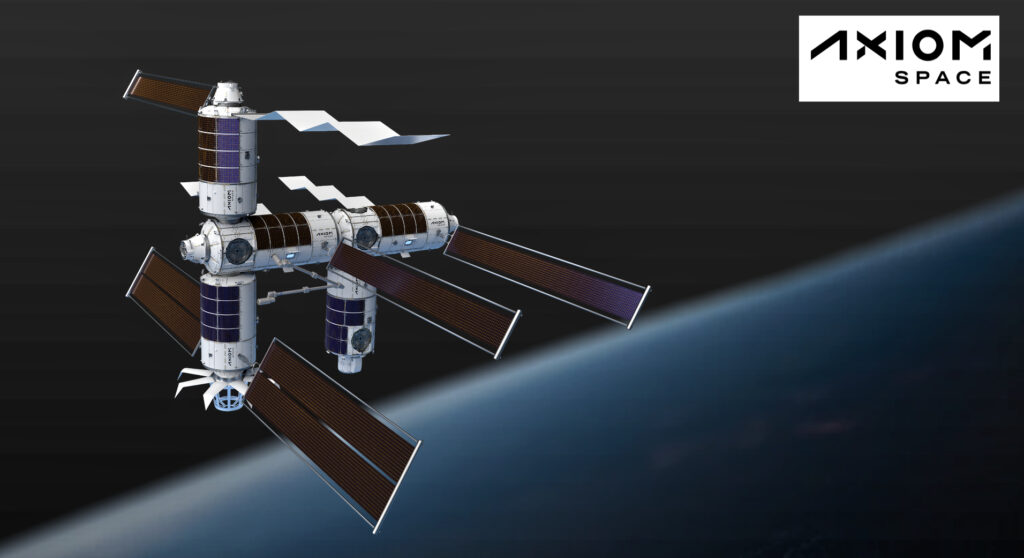
Axiom Space has revealed that the company will launch the first of two Orbital Data Center (ODC) nodes to LEO, by year’s end. These nodes will lay the foundation for space-based cloud computing, addressing growing needs for users around the world.

ODCs will provide secure, scalable, and cloud-enabled data storage and processing, and artificial intelligence/machine learning (AI/ML) solutions directly to satellites, constellations, and other spacecraft in Earth’s orbit, with the capability to operate independently of terrestrial infrastructure. This innovative approach reduces reliance on Earth-based systems and also enhances resiliency and security of emerging mesh networks in orbit but also enhances real-time operations of space assets by providing lower latency and higher availability cloud capabilities. Axiom Space’s ODCs will transform space operations, especially in the context of defense and security.

Use cases for ODCs include:

On-orbit and real-time processing, exploitation, and dissemination (PED) of data from multiple national security and commercial satellites

Lower-latency multi-sensor fusion for terrestrial or Space threat detection and tracking

AI/ML and Large Language Models (LLM) to enable real-time and autonomous or semi-autonomous decision making for satellites and other space assets

Earth-independent endpoint detection and response (EDR) capabilities to enhance the cyber security of the thousands of national security, commercial, and civil space assets

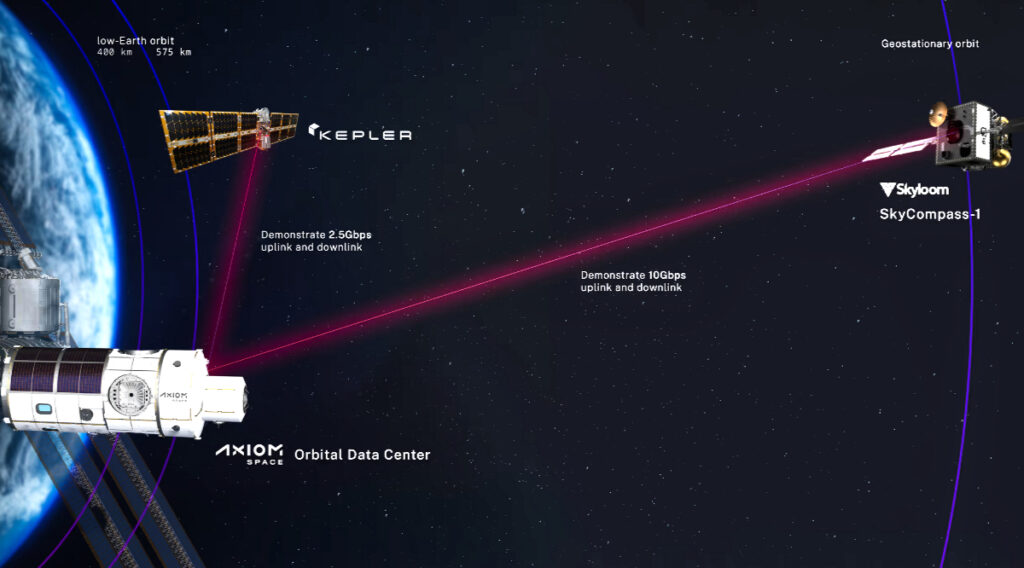
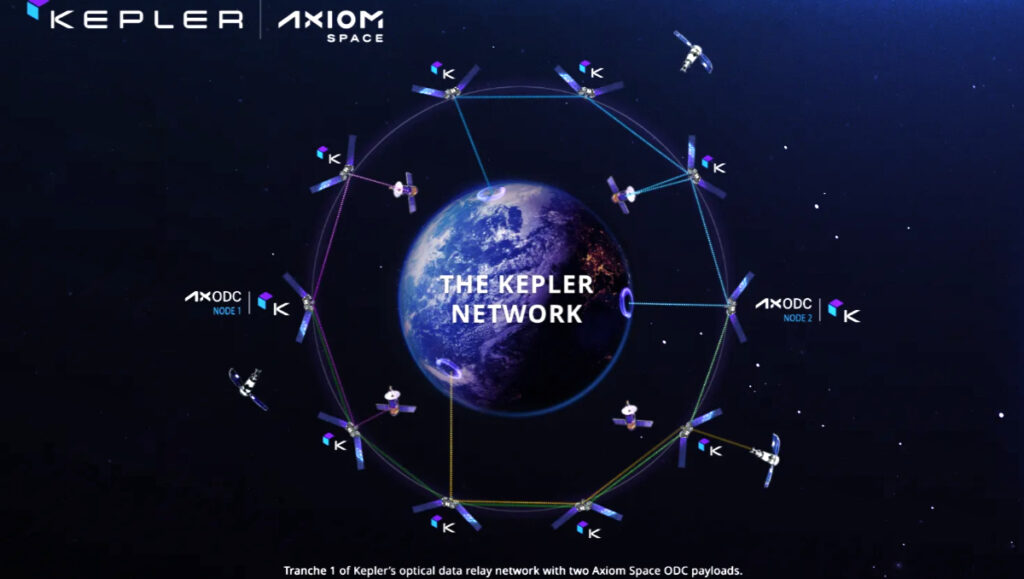
ODC Nodes 1 and 2 will be part of the Kepler Communications optical relay network constellation scheduled to launch by the end of the year. Axiom Space and Kepler Communications have been collaborating since 2023 on the integration of Optical Intersatellite Links (OISLs) with Axiom Space’s ODCs to enable high-speed data connections directly between ODCs and commercial and government spacecraft and networks on-orbit.

These ODC Nodes will feature high-speed, 2.5 Gbps-capable optical links to other Kepler Communications optical relay assets in LEO or other satellites, constellations and spacecraft that are compatible with the Space Development Agency’s (SDA) Tranche 1 optical communications standards. Data transfer will also be possible between the ground and the ODC nodes via optical or radio frequency links. SDA-compatible optical communications terminals will make these initial ODC nodes, and future nodes, interoperable with national security, other government, and commercial satellite networks.

Axiom Space will have options to purchase additional payloads on Kepler’s constellation to increase ODC capacity. The two companies will jointly collaborate on extending network and ODC services to national security, civil, commercial, and international customers.

As the rapid development of digital technology, driven by the proliferation and adoption of AI/ML, continues to transform industries, the limitations of terrestrial data centers — such as energy consumption, cooling, real estate, regulatory licensing and permitting, and exposure to human or natural disruptions — are becoming increasingly apparent, globally. Axiom Space is at the forefront of mitigating these challenges by developing a modular and scalable network of ODC nodes that will offer enhanced global digital sovereignty, security, and resilience to customer data and AI/ML needs, doing so by leveraging the abundant energy and domain of space.

Looking ahead, Axiom Space is committed to expanding its Docs network in the years to come, significantly increasing capacity and capability from kilowatts to megawatts of processing power on-orbit to provide customers with a viable alternative to resource-intensive terrestrial data centers.

We have been developing ODC capabilities since 2022with the launch of an AWS Snowcone to the International Space Station (ISS), followed by an array of demonstrations in Earth-independent cloud solutions from the station,” said Jason Aspiotis, global director of in-space data and security, Axiom Space. “In 2023, we announced our initial plans for an ODC Tranche 1 on Axiom Station, and in March, we shared news of the launch of a prototype data processing unit – AxDCU-1 – with Red Hat to the ISS this spring. ODC Nodes 1 and 2 are an acceleration of our plans to deploy a multitude of free-flyer ODC nodes in LEO to meet the rapidly emerging demand from users around the world, especially for defense applications where real-time, and cyber and quantum-secure data processing, AI/ML, and autonomous decision-making solutions are critically needed.”

Aspiotis continued, “Free-space optical communications have come a long way in the past few years, with significant investments by commercial entities, the Department of Defense, and NASA in advancing OISL capabilities. We plan to integrate emerging 10Gbps+ OISL and space-to-ground optical communications capabilities into our future ODC nodes, as they become available to facilitate connections to more satellites, more constellations, more ground sites, and ultimately Tbps-worth of data flow in the foreseeable future.”

Kam Ghaffarian, CEO, Executive Chairman, and Co-founder of Axiom Space, said, “Our ODC nodes will soon be open for business. We have agreements in place with users around the world to deploy initial, space-based cloud services, not just demonstrations of capabilities. We are also closely monitoring national security needs, especially the U.S. Golden Dome initiative, and how our evolving ODC infrastructure can support U.S. and allied capabilities in space-based data storage, processing, cybersecurity, and AI/ML. ODCs are integral to Axiom Space’s vision of era-defining space infrastructure, unlocking transformational capabilities and economic growth.”

About Axiom Space
Axiom Space is building the world’s first commercial space station – Axiom Station. Serving as a cornerstone for sustained human presence in space, this next-generation orbital platform fosters groundbreaking innovation and research in microgravity, and cultivates the vibrant, global space economy of tomorrow. Today, driven by the vision of leading humanity’s journey off planet, Axiom Space is the principal provider of commercial human spaceflight services to the International Space Station and developer of advanced spacesuits for the Moon and low-Earth orbit. Axiom Space is building era-defining space infrastructure that will empower our civilization to transcend Earth for the benefit of every human, everywhere.

Filed Under: News

Aitech unveils world’s 1st AI-enabled Picosatellite constellation platform

April 7, 2025 by editorial

Aitech has introduced the picosatellite (PicoSat) constellation platform, IQSat™. The IQSat is AI-enabled and includes Artificial Intelligence and Machine Learning (AI) ML) from Intuidex, Inc. incorporated in Intuidex’s Watchman for Space™ (W4S™) product for detecting and providing insight on patterns and anomalies for a range of applications, including public safety, agriculture, military, defense, climate, biology and more.
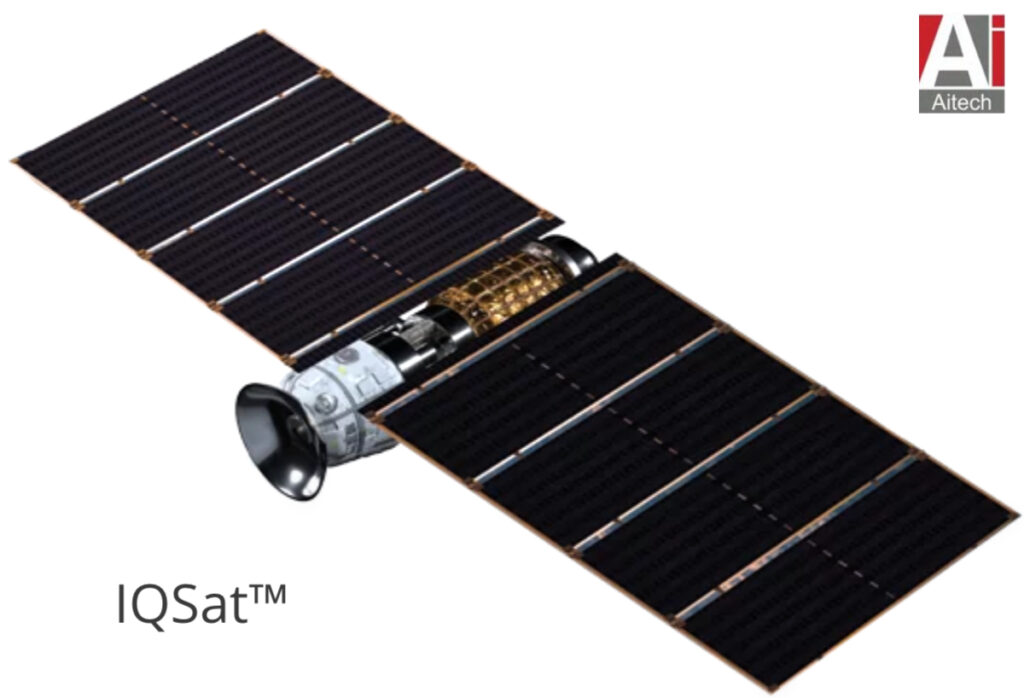
Built on Aitech’s 30 years of electronics legacy and trillions of miles flown in space, the IQSat is small enough to be held in the palm of a hand and can be deployed in a constellation of five to thousands. Offering coverage previously unattainable, IQSat is powerful enough to deliver actionable pattern of life analysis, rapidly and frequently, from any desired point on Earth.

Leveraging Intuidex’s Watchman for Space product, the IQSat offers Higher-Order Low-Resource Learning™ (HO-LRL™) in support of rapid do-it-yourself user-based modeling, detection and tracking, pattern of life and anomaly detection, and constellation operations capabilities that enable new uses across a range of markets:

Military and Defense: With a low probability of intercept and low probability of detection, IQSat can deliver critical information on threat locations, directions and velocities in any area of interest at tactically significant update rates directly to the warfighter

Space Situational Awareness: With flexible sensor options and constellation configurations, IQSat brings low-cost capability to detect space debris to prevent space collisions and monitor orbital traffic, as well as detect changes in satellite trajectories or potential anti-satellite threats

Space Habitat: Placed in the vicinity of Space Habitats, IQSat can deliver temperature, radiation levels and other data variables to evaluate structure integrity by detecting micro-meteorite impacts and material degradation or external surveillance to detect space debris collision threats

Public Safety: A low-cost LEO constellation of IQSats can provide rapid detection of remote areas to identify natural disasters such as floods and fires; assist in remote search and rescue operations through detection of objects, locations and movement directly to the rescuer; or monitor infrastructure surveillance of dams, bridges and other structures

Agriculture: IQSat can assist farmers by delivering fast and frequent insight on soil, crops, disease, weather and other critical variables to help improve crop output

Science and Research: A constellation of IQSats can provide researchers and scientists with a low-cost solution for tracking unique weather patterns, monitoring wildlife migrations around the world, tracking ocean currents and wildlife and many more capabilities

The IQSat provides mission flexibility for quick and cost-effective constellation design, reducing delivery time and cost of custom sensing satellites and constellation configurations.

Leveraging Watchman for Space, the IQSat platform dynamically updates its incident, event, object or threat detection priorities to meet ever-changing mission needs through uplinked software and configuration driven by users. Additionally, IQSat offers the industry’s first common payload interface designed to host multiple payloads on a single flexible electrical and mechanical interface, allowing for quick and standardized designs to reduce cost, NRE and time to launch.

The IQSat platform will be available in Q4 2025 for mission development and ready for LEO flight in Q1 2026. Based on mission needs, the IQSat offers:

  • Small size and ruggedized, standardized design for low-cost access to space
  • Rapid development and deployment to create constellations in months
  • Flexible sensor options to meet a range of mission needs
  • The latest relevant information from areas of interest in minutes, with a constellation of thousands, frequent revisit rates and human-in-the-loop management in Watchman for Space
  • High accuracy pattern of life and anomaly detection of incidents, events and items of interest through on-board AI/ML processing capabilities using HO-LRL
  • Low uplink and downlink bandwidth utilization for rapid delivery of critical information directly to the point of need

Space-based infrastructure solves big problems and fuels big advancements on Earth. The new IQSat platform is integral to space accessibility by delivering low cost, rapid deployment constellations that provide access to actionable information quickly and frequently for infinite applications,” said Pratish Shah, U.S. general manager, Aitech. “Whether used for military and defense, environmental or agricultural applications, communications or scientific research, the flexibility, cost and availability of a solution like IQSat has not existed before – providing more accessibility to the power of space.”

==> Aitech is showcasing the new IQSat PicoSat constellation platform at the Space Symposium in Colorado Springs, Colorado, in booth #612 from April 7-10.

Filed Under: Featured, News

Rocket Lab announces expanded radio products for reliable C&C

April 7, 2025 by editorial

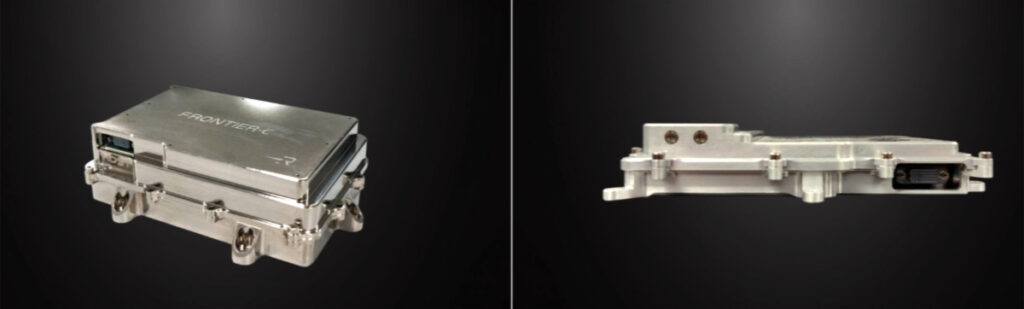
Rocket Lab USA, Inc. (Nasdaq: RKLB) has expanded the company’s suite of space-grade radio frequency (RF) communications systems, the Frontier radios—they are flight-proven, software-defined and designed for reliable telemetry, tracking, and command (TT&C).

Photo of Rocket Lab’s Frontier radio, courtesy of the company.

Adapted from the Johns Hopkins University Applied Physics Laboratory’s Frontier Lite radio, Rocket Lab’s high-performance Frontier radios have over 13 years of flight heritage and are now available in L-, S-, C-, X-, and Ka-band models. The radio is designed from the ground up for reliable and secure communications to support any orbit or space environment and have advanced capabilities like ranging waveforms for radiometric navigation. Frontier radios are compact and lightweight for easy integration onto any satellite.

As part of Rocket Lab’s vertically integrated subsystems and components, Frontier radios are compatible with the Deep Space Network and other global ground stations, including the Near Earth Network, Air Force Satellite Control Network, KSAT, SSC, Viasat, and other commercial networks.

This RF product suite is a further expansion of Rocket Lab’s component products, joining a portfolio that includes reaction wheels, star trackers, solar power systems, flight software, ground software, separation systems, and more.

Frontier radios are flight-proven across a range of missions including Rocket Lab’s Photon Pathstone, three Rocket Lab Pioneer spacecraft for Varda Space Industries, NASA’s CAPSTONE, NASA’s Europa Clipper, NASA’s Solar Probe Plus, Emirates Mars, and Van Allen Probes. Upcoming, Rocket Lab’s Frontier L-band radio will be used for Viasat to support their hybrid space communications network demonstrations for NASA’s Communications Services Project.

Viasat’s high-capacity Ka-band network of satellites in geostationary orbit (GEO) will enable LEO operators on-demand access to critical mission data.

The Frontier Radio was also selected as a 2024 R&D 100 Award for innovations pushing the boundaries of research and development.

We are excited to add this suite of software-defined radios to our expanding portfolio of products,” said Brad Clevenger, Vice President of Rocket Lab Space Systems.  “We continue to demonstrate our ability to deliver high reliability, high performance products at constellation scale.  While much of the industry struggles with supply chain challenges, Rocket Lab continues to demonstrate that it is the right partner for merchant component supply to the most demanding missions.”

Filed Under: News

Fraunhofer IIS brings satellites into the 5G era

April 5, 2025 by editorial

Fraunhofer IIS has now researched a splitting method that allows satellites of different classes to be integrated into the 5G network—despite that shortcoming.

With 5G, communication on the ground is to merge with space for the first time to form non-terrestrial networks, in which satellites can completely take over the role of base stations. However, the technical challenges to be resolved are enormous: the existing mobile communications standards are not designed to allow signals to cover thousands of kilometers with the associated latency.

Although the satellites themselves are increasingly being equipped with intelligent on-board processors, they are still reaching their performance limits.

Fraunhofer IIS has successfully demonstrated in the lab how satellites can be integrated into mobile communications, even if their performance falls short. To do this, the researchers split a 5G base station in half, so that only part of the signal processing is moved into space while the rest remains on the ground. This allows the satellites to be active players in the network and support wireless communications while minimizing the use of computing power, energy, and resources.

For the experiment, Fraunhofer IIS used a channel emulator to realistically recreate the extreme conditions of space. This made it possible to simulate the connection to a geostationary satellite located at an altitude of 36,000 kilometers. Fraunhofer IIS used the DVB-S2X satellite communication standard to connect the base station and link the two split components together. Finally, part of the base station ran on a commercially available field-programmable gate array (FPGA), which could conceivably be used on future satellites.

After all, the industry is focused on building cost-effective satellites with robust and energy-efficient components,” said Rainer Wansch, Head of the RF and SatCom Systems Department at Fraunhofer IIS. “Our splitting method opens the door to new and more complex architectures,” Wansch says. That’s because splitting makes it possible to distribute and design functions and tasks variably across different satellite orbits and performance classes. This is particularly relevant for the development of future 6G mobile communications, which are set to integrate not only satellites but also airborne platforms such as drones or aircraft.”

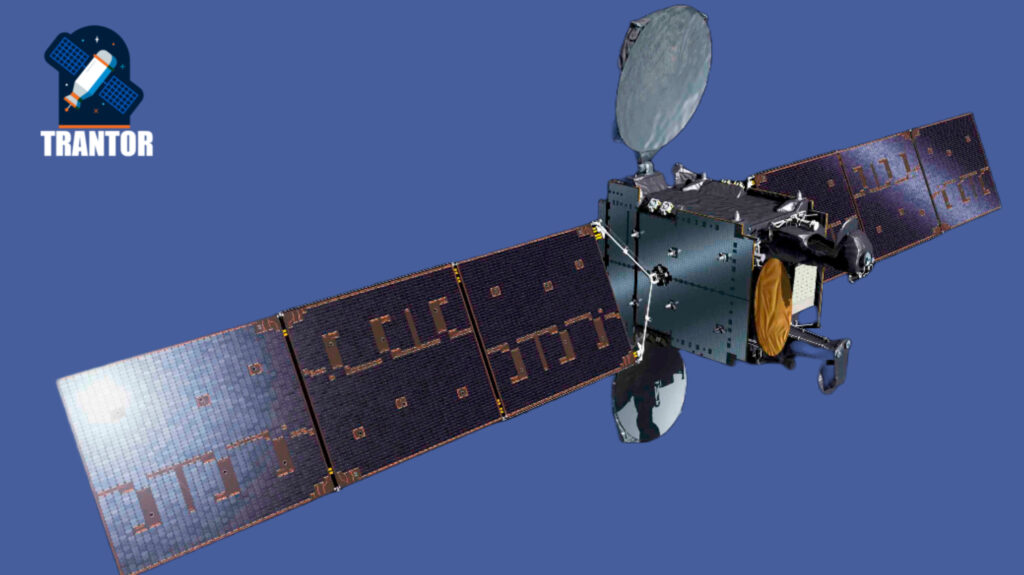
This demonstration of the splitting method is Fraunhofer IIS’s contribution to the TRANTOR project, which the European Commission is funding to prepare the transition of satellite communications from 5G to 6G. By consistently integrating satellites into mobile networks, research and industry hope to create a dense and universally available communications network that is highly resilient, even in crisis situations.

Fraunhofer IIS is currently working on this in numerous other research projects; it’s also involved in 5G standardization through its role on the 3rd Generation Partnership Project (3GPP). Last year, the research institute was appointed to the Steering Board of the newly founded NTN Forum of the European Space Agency (ESA). 

Filed Under: News

MDA Space acquiring SatixFy

April 4, 2025 by editorial

MDA Space Ltd. (TSX:MDA) and SatixFy Communications Ltd. (NYSE American: SATX) have entered into a definitive agreement under which MDA Space will acquire all outstanding shares of SatixFy in an all-cash transaction for $2.10 per share—this transaction, which represents an equity value for SatixFy of approximately $193 million (approximately C$278 million), is expected to further enhance the end-to-end satellite systems offering of MDA Space as demand for next generation digital satellite communications continues to accelerate.

Founded in 2012, SatixFy is a supplier of cutting-edge semiconductors and solutions for the space and the satellite communications value chain. SatixFy’s technology enables satellite broadband and direct-to-device constellations with its radiation hardened digital beamformers enabling them to generate hundreds of beams, designed to significantly improve satellite performance and decrease cost.

SatixFy has invested approximately $270 million in research and development to date, and once closed, the transaction will bring to MDA Space a differentiated technology portfolio including more than 60 patents issued and pending, as well as a talented and largely specialized technical employee base of approximately 165 people globally. In addition to chips to support satellite payload solutions and satellite communications, the SatixFy portfolio includes gateways, multi-beam digital antennas, user terminals and modems.

The market for software-defined digital satellite constellations is rapidly expanding, driven by increased demand for satellite-based broadband, direct-to-device connectivity and IoT. Market research firm NSR forecasts that more than 89% of all communications satellites built in the ten years between 2023 and 2032 will include some level of software-defined technology.

The acquisition of SatixFy is expected to enhance MDA Space’s capabilities in this growing digital satellite communications market by:

  • Adding complementary technology and a rich IP portfolio to enable end-to-end satellite communications solutions and expand offerings by combining MDA Space technology and capabilities in digital LEO and MEO satellites (MDA AURORA™) with SatixFy’s space grade chips and communications systems


  • Vertically integrating a key and differentiated technology provider for MDA Space Satellite Systems business
  • Adding a highly specialized and complementary technical team to MDA Space
  • Aligning the technology roadmap for MDA Space next generation software-defined digital satellites to continue to meet evolving needs of customers

With this acquisition MDA Space is taking a logical next step to further reinforce our technical differentiation as the global market transitions from analog to digital satellite technology,” said Mike Greenley, Chief Executive Officer of MDA Space. “Similar to MDA Space, SatixFy is an innovation company at its core, and bringing these two highly skilled teams together adds complementary expertise and technology that will allow us to further enhance our value proposition for current and future customers by providing vertically integrated and differentiated digital satellite solutions.”

SatixFy has consistently aimed to revolutionize the market with digital chip-based solutions while establishing a world-leading space technology company. Joining MDA Space marks a significant milestone in that journey,” said Nir Barkan, Chief Executive Officer of SatixFy. “This transaction is a testament to the innovation and dedication of our employees over the past decade. It will provide the scale, resources, and stability needed to continue delivering groundbreaking solutions for our customers.”

Filed Under: Featured, News

KONGSBERG to deliver 280 microsatellites to SpinLaunch’s LEO SATCOM constellation

April 4, 2025 by editorial

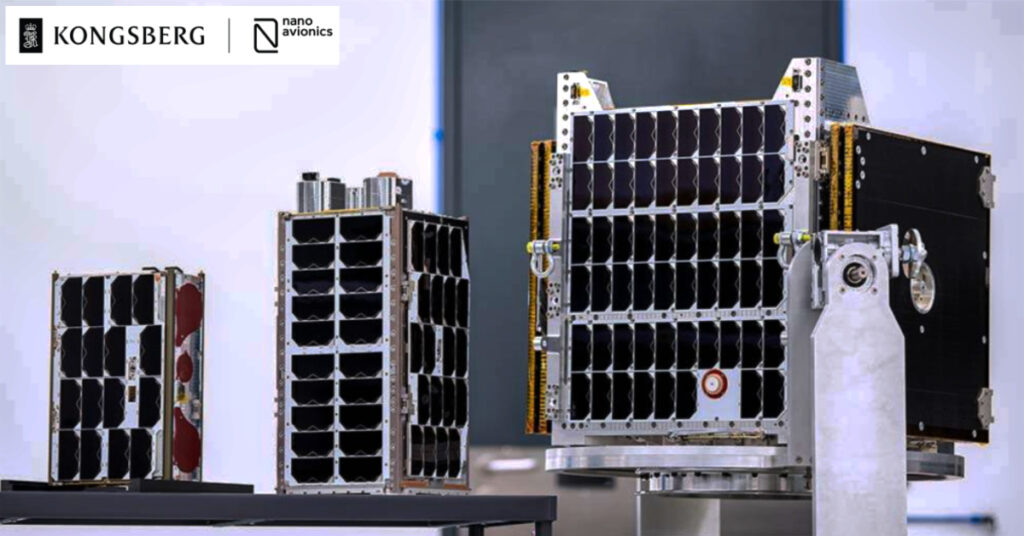
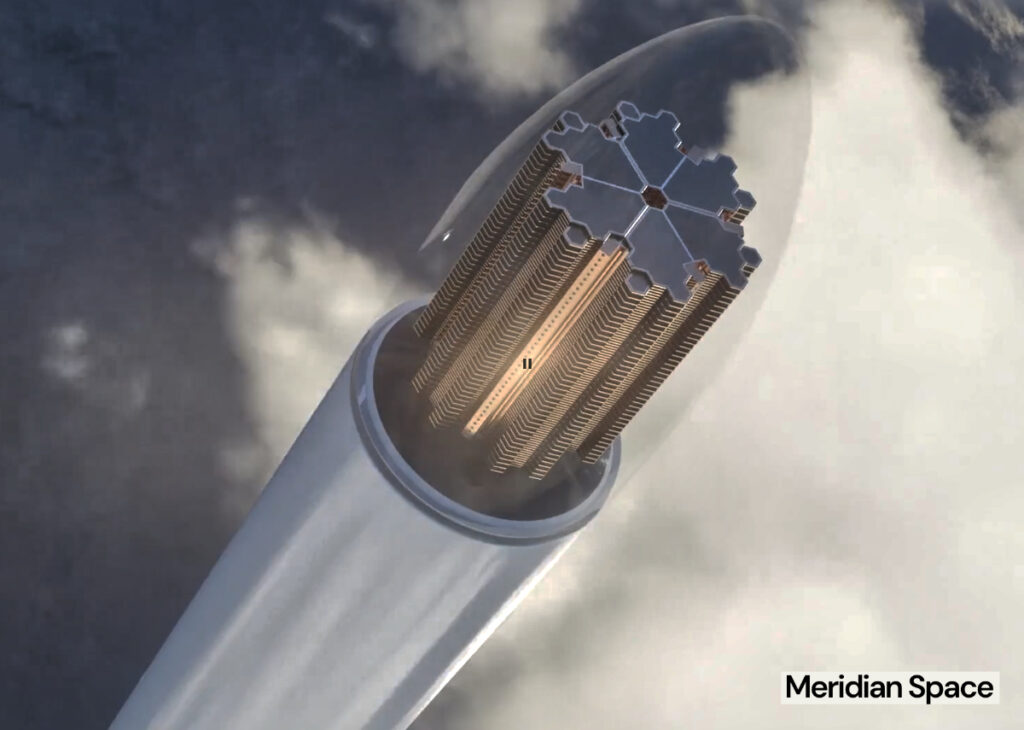
SpinLaunch has selected Kongsberg NanoAvionics (‘KONGSBERG’) as its exclusive satellite supplier for their LEO broadband communication constellation, Meridian Space—the parties have signed a contract for the delivery of 280 of these smallsats, worth 122.5 million euros.

The Meridian Space constellation is taking a fundamentally new approach to space-based broadband by combining a series of advanced technologies never before deployed in a commercial satellite constellation. The partnership includes two prototypes as well as the development and serial production of 280 satellites.

NanoAvionics and SpinLaunch will develop a prototype satellite optimized for higher performance and launch efficiency. The approximately 70 kg satellites for this project are much lighter than currently operational SATCOM platforms, enabling significant performance advantages per kilogram. The unique design combined with the high-performance avionics and payload will allow these satellites to deliver uninterrupted global connectivity with terabits-per-second capacity in a single rocket launch. 

As part of the transaction, Kongsberg Defence & Aerospace has acquired a minority stake in SpinLaunch to support the commercialization of Meridian’s pioneering SATCOM solution. This partnership underscores both organizations’ commitment to delivering affordable and sustainable space services worldwide.

Over time, SpinLaunch plans to grow the Meridian constellation to 1,200 satellites, as originally outlined in the company’s 2021 spectrum filings. To meet the needs of the 280-satellite constellation production schedule, Kongsberg NanoAvionics will ramp up its manufacturing capabilities with the addition of a new assembly and testing facility at its European headquarters in Vilnius, Lithuania. 

The Meridian Space solution, supported by KONGSBERG, will offer significantly higher broadband capacity in a satellite constellation compared with what is available on the market today,” said Eirik Lie, President of Kongsberg Defence & Aerospace. “KONGSBERG’s decision to partner with SpinLaunch reflects our belief in their innovative approach to satellite communications.”

Our supply contract for Meridian is a clear example of how Kongsberg NanoAvionics enables complex satellite missions with standardized, scalable technology,” said Atle Wollo, CEO of Kongsberg NanoAvionics. 

Kongsberg NanoAvionics brings a strong track record in small satellite manufacturing that aligns well with our goal of bringing a highly differentiated satcom constellation to market,” said David Wrenn, CEO of SpinLaunch. ”Together, we are taking meaningful steps towards providing a low-cost, reliable, high-speed broadband service to global enterprises.” 

Filed Under: News

Northrop Grumman selected for in-space demo of refueling technologies

April 4, 2025 by editorial

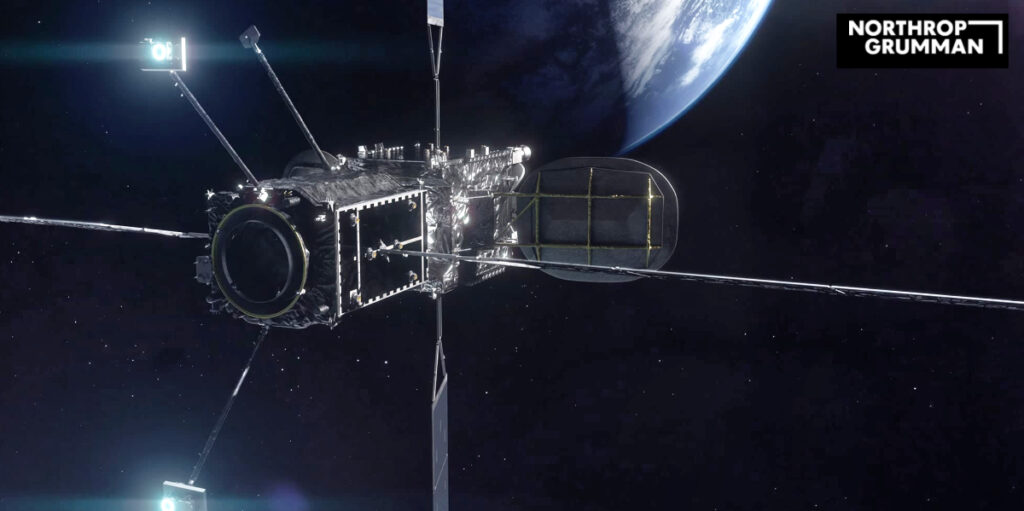
The United States Space Force (USSF) awarded Northrop Grumman Corporation (NYSE: NOC) two national security contracts, including a technology demonstration for in-space refueling—these contracts build on Northrop Grumman’s proven, on-orbit satellite servicing and refueling innovation, including first-of-its-kind mission extension services that protect critical space assets in geosynchronous orbit for both U.S. government and commercial partners.

Northrop Grumman’s GAS-T design will leverage an ESPAStar-D satellite platform to add fuel and extend the life of in-orbit assets. (Image credit: Northrop Grumman) 

  • Space Systems Command (SSC) awarded Northrop Grumman a contract for the Elixir refueling payload program, which will enable the Space Force to refine tactics and procedures for rendezvous and proximity operations, docking, refueling, and undocking of on-orbit vehicles – foundational capabilities for servicing, mobility and logistics.
  • Under the Elixir program contract, the company will design, build and integrate a refueling payload onto a space vehicle and demonstrate refueling with a demonstration client satellite.
  • Under a separate contract, Northrop Grumman has been awarded a multi-unit award of four of the company’s proven ESPAStar spacecraft, one of which will host the refueling demonstration payload on its ride to space.
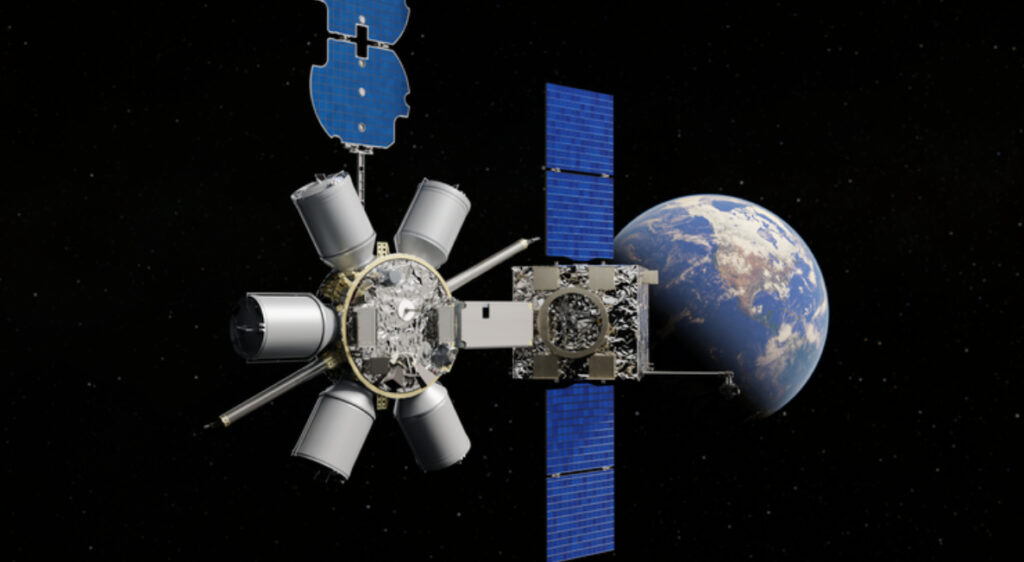
The platform is optimized for GEO missions, but is also adaptable for LEO and MEO missions. Image is courtesy of Northrop Grumman.

The USSF has made a multi-unit ESPAStar purchase, underscoring the increasing demand for rideshare vehicles and rapid access to space. Since its first award in 2016, the ESPAStar product line has provided proven and reliable capability. Each upgraded bus can hold more than 330kg of payload mass on each of its six ports, providing additional mass-to-orbit.

The Elixir program includes elements to successfully perform rendezvous and proximity operations, dock and undock with a demonstration client satellite, to transfer and receive fuel. The refueling payload will be equipped with the company’s Active Refueling Module (ARM), which interfaces with Northrop Grumman’s Passive Refueling Module (PRM) for the transfer and receipt of fuel. Operational client satellites equipped with PRMs will benefit from this mature technology because they can be refueled.

In 2023, the company’s PRM was approved by SSC’s Space Systems Integration Office (SSIO) as a refueling interface for consideration by SSC programs. Multiple PRM flight units are currently in production for the Space Force and will also be integrated onto Northrop Grumman’s next-generation satellite servicing vehicle, the Mission Robotic Vehicle.

The in-orbit demonstration will advance and validate the company’s on-orbit servicing and refueling technology – paving the way for fully operational refueling spacecraft in the future. These developments follow years of work by Northrop Grumman across commercial and U.S. government contracts to mature all elements of key refueling technologies and mission architecture.

Lauren Smith, program manager, in-space refueling, Northrop Grumman, said, “This technology will unlock new possibilities for dynamic space operations, providing the sustained maneuverability our customers need in a complex environment. To deliver this critical national security capability, our team will build on Northrop Grumman’s in-space servicing success and trailblaze new refueling solutions to meet mission needs.”

Matt Verock, vice president, space security systems, Northrop Grumman, said, “Northrop Grumman’s refueling capabilities are pioneering the next generation of satellite technology. The ability to refuel on orbit will have a direct impact on the success of our nation’s most important missions – allowing warfighters to continue operating quickly and safely.”

Filed Under: News

  • « Go to Previous Page
  • Page 1
  • Interim pages omitted …
  • Page 36
  • Page 37
  • Page 38
  • Page 39
  • Page 40
  • Interim pages omitted …
  • Page 338
  • Go to Next Page »

Primary Sidebar

WEEKLY NEWSLETTER

Archives

  • June 2026
  • May 2026
  • April 2026
  • March 2026
  • February 2026
  • January 2026
  • December 2025
  • November 2025
  • October 2025
  • September 2025
  • August 2025
  • July 2025
  • June 2025
  • May 2025
  • April 2025
  • March 2025
  • February 2025
  • January 2025
  • December 2024
  • November 2024
  • October 2024
  • September 2024
  • August 2024
  • July 2024
  • June 2024
  • May 2024
  • April 2024
  • March 2024
  • February 2024
  • January 2024
  • December 2023
  • November 2023
  • October 2023
  • September 2023
  • August 2023
  • July 2023
  • June 2023
  • May 2023
  • April 2023
  • March 2023
  • February 2023
  • January 2023
  • December 2022
  • November 2022
  • October 2022
  • September 2022
  • August 2022
  • July 2022
  • June 2022
  • May 2022
  • April 2022
  • March 2022
  • February 2022
  • January 2022
  • December 2021
  • November 2021
  • October 2021
  • September 2021
  • August 2021
  • July 2021
  • June 2021
  • May 2021
  • April 2021
  • March 2021
  • February 2021
  • January 2021
  • December 2020
  • November 2020
  • October 2020
  • September 2020
  • August 2020
  • July 2020
  • June 2020
  • May 2020
  • April 2020
  • March 2020
  • February 2020
  • January 2020
  • December 2019
  • November 2019
  • October 2019

© 2019–2026 SatNews

Insert/edit link

Enter the destination URL

Or link to existing content

    No search term specified. Showing recent items. Search or use up and down arrow keys to select an item.
      x
      Sign Up Now!

      Enjoy a free weekly newsletter with recent headlines from the global SmallSat industry.

      Invalid email address
      We promise not to spam you. You can unsubscribe at any time.
      Thanks for subscribing! You will now receive weekly SmallSat News updates.
      We love our advertisers.
      And you will too!

      Please disable Ad Blocker to continue... We promise to keep it unobtrusive.
      We promise not to spam you. You can unsubscribe at any time.
      Invalid email address
      Thanks for subscribing!