• Skip to main content
  • Skip to primary sidebar
  • Home
  • News
  • Featured
  • More News ⌄
    • SatNews
    • SatMagazine
    • MilSatMagazine
  • Events ⌄
    • MilSat Symposium
    • SmallSat Symposium
    • Satellite Innovation
  • Contacts
  • SUBSCRIPTION

SmallSat News

You are here: Home / Archives for Featured

Featured

Kayhan Space unveils their nexgen spaceflight safety platform

August 24, 2022 by editorial

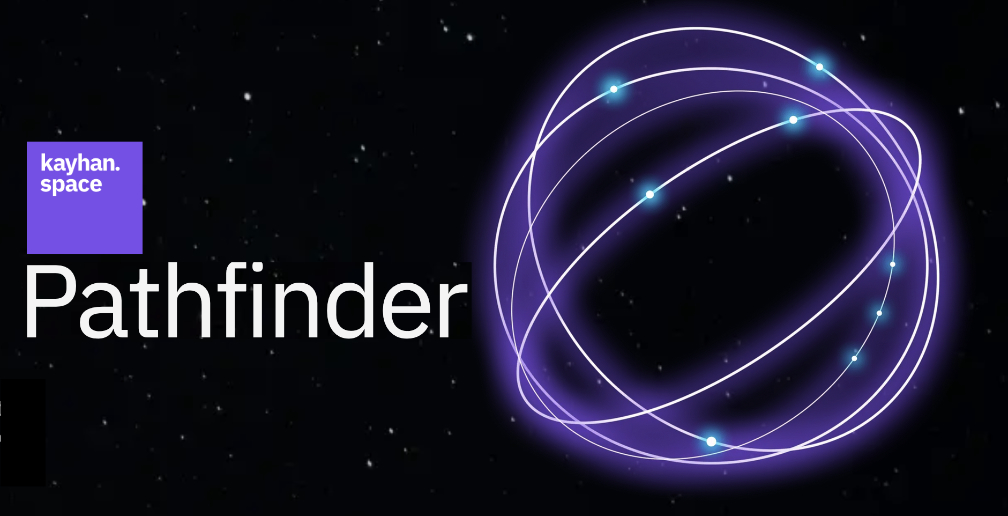
With thousands of satellites and countless debris bound for busy orbits, Kayhan Space has now unveiled their next-gen Pathfinder™ spaceflight safety platform to enable satellite and mission operators to better manage operational risks and make preemptive maneuvers based on precision analytics to avoid pileups in space.
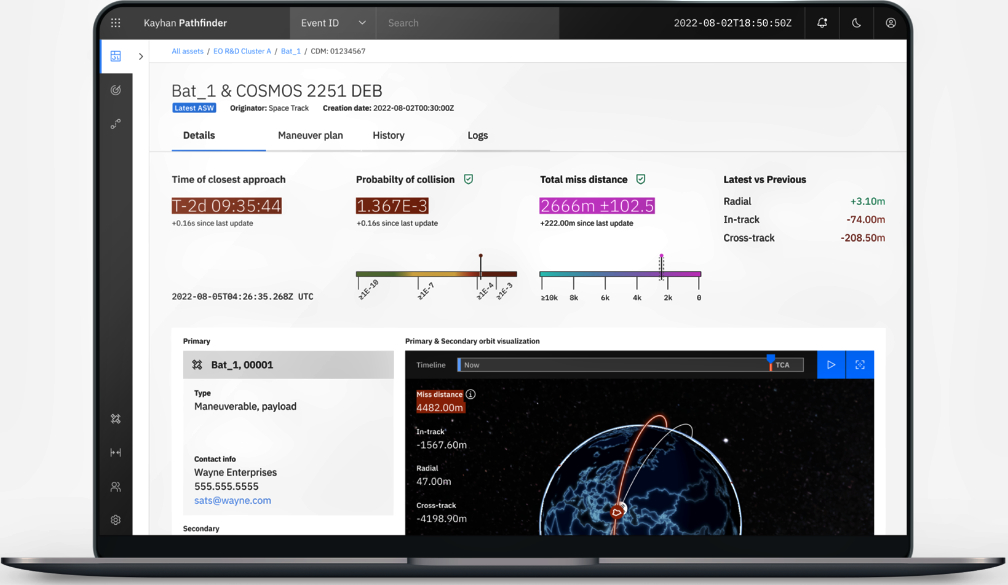
Screenshot of Kayhan Space’s Pathfinder.

Capella Space, Globalstar and Lynk Global are among an initial group of leading operators using Kayhan’s subscription-based, autonomous, Pathfinder platform following successful beta deployments of the solution, which was officially rolled out for general availability last week.

Among the product’s advanced capabilities, the cloud-delivered offering uses proprietary advanced algorithms along with precise space catalog data, the operators’ GPS positioning signals, propulsion capabilities, and flight plans to simulate, coordinate and quickly generate optimal maneuver options in the event of a potential oncoming collision threat or conjunction. This breakthrough platform enhances communication and coordination capabilities across operators and agencies to improve overall situational awareness in global space.

Kayhan Pathfinder can also optimize revenue-generating missions whenever possible by scheduling preemptive and preplanned maneuvers during operational downtimes. An advanced edition of the product enables precise orbit determination capabilities to significantly improve the accuracy of the satellite trajectory predictions, keeping rendezvous proximity operations (RPO) and other sophisticated in-space servicing moves safe.

The Kayhan Space roadmap leads to a spaceflight safety software solution that encompasses the full mission lifecycle – from launch and on-orbit collision avoidance maneuvers to deorbiting and decommissioning the spacecraft.

“Our next-gen Kayhan Pathfinder comes at a critical time as satellite and mission operators need precise, real-time data to inform automatic alerts and decisions to safely navigate busy orbits and evade accidents in space,” said Siamak Hesar, Kayhan Space co-founder and CEO. “Manual collision avoidance processes are prone to human error and simply can’t stay ahead of the increasingly congested orbits and the growing number of complex collision scenarios they represent. Kayhan Pathfinder is an autonomous spaceflight safety platform that enables operators to run their missions in the busiest orbits with confidence.”

“We are thrilled to be among the first to use Kayhan Space’s next-gen Pathfinder spaceflight safety platform across a portion of our satellite fleet,” said Rico Walker, Director of Mission Operations for Capella Space. “Capella is committed to making space operationally sustainable and safe. Our collaboration with Kayhan Space plays a big part in our ability to fly in increasingly congested orbits that have become a priority for the communities and businesses depending on connectivity and content around the world.”

“Kayhan Space is already providing a broad range of spaceflight safety services to many of the world’s leading satellite operators, running hundreds of satellites on our Pathfinder platform in multiple orbital regimes around the Earth,” said Araz Feyzi, Kayhan Space co-founder and CTO. “Pathfinder allows operators to optimize missions by avoiding unnecessary and costly maneuvers and provides an exciting path for safe and secure operations across the new space economy.”

Filed Under: Featured, News

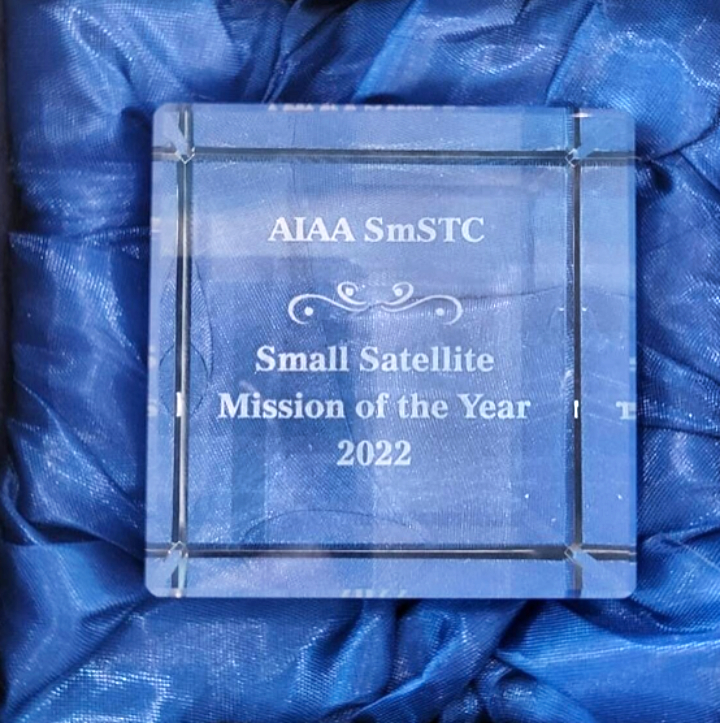
Advanced Space LLC receives the Mission of the Year award for the CAPSTONE mission.

August 12, 2022 by editorial

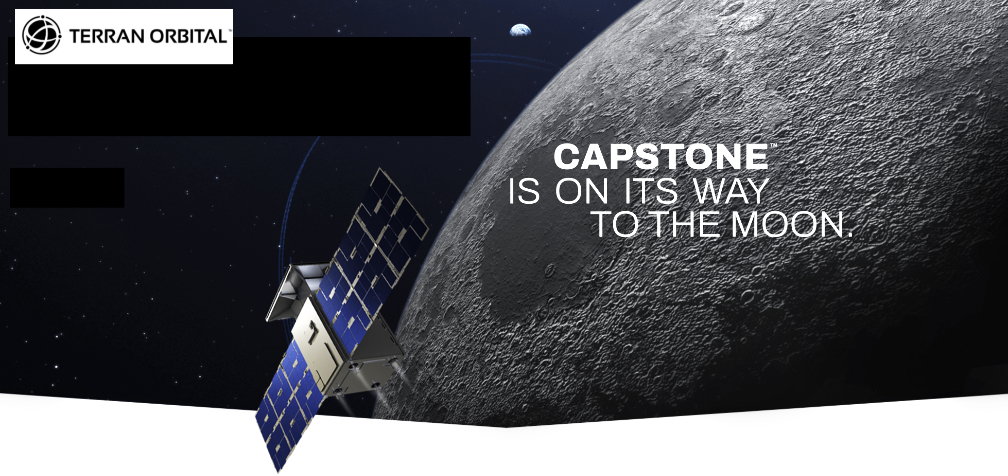
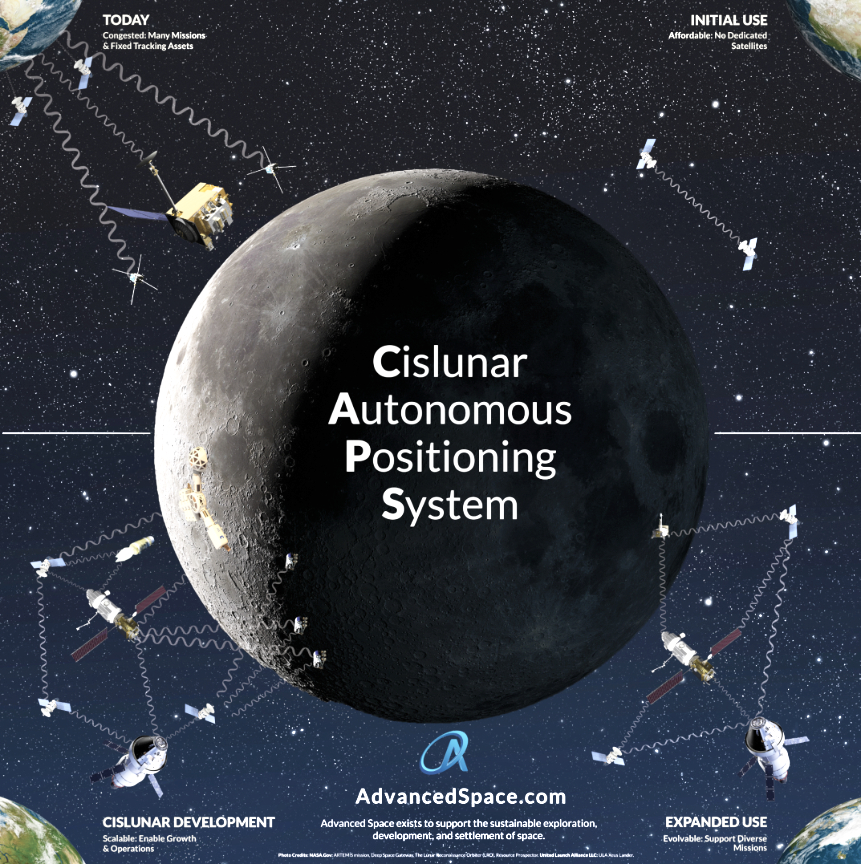
The Cislunar Autonomous Positioning System Technology Operations and Navigation Experiment, CAPSTONE, led by Advanced Space, was launched seven weeks ago to perform its historic pathfinding mission to the Moon for NASA.

The award was selected by the American Institute of Aeronautics and Astronautics Small Spacecraft Technical Committee, Some of the criteria for the award were to demonstrate a significant improvement in the capability of small satellites, spacecraft structural design, scientific instrument development, and communications capabilities, all characteristics of the microwave-sized 12U smallsat designed and built by Terran Orbital.

CAPSTONE is 55 pounds and will help inform future operations in cislunar space and for the future lunar space station in the near rectilinear halo orbit (NRHO), the intended orbit for the Gateway as part of the Artemis program.

The spacecraft also will demonstrate the Cislunar Autonomous Positioning System (CAPS) technology that will enable spacecraft-to-spacecraft navigation services reducing reliance on Earth-based ground systems.

CAPSTONE’s cubesat creation and operations success stems from the collaboration of many small businesses transforming the future of space exploration.

Chris Baker, Small Spacecraft Technology program executive of NASA’s Space Technology Mission Directorate (STMD), received the award on stage at the 36th Annual Small Satellite Conference in Utah. He was joined on stage by key members of the CAPSTONE Mission team – principal investigator and CEO of Advanced Space, Bradley Cheetham, chief engineer of Advanced Space and mission program manager, Tom Gardner, NASA Ames STMD Deputy Program Manager, Elwood Agasid, Keith Thompson of Terran Orbital, Tomas Svitek of Stellar Exploration, and Richard French of Rocket Lab. CAPSTONE uses a monopropellant, hydrazine-fueled, propulsion system that was developed and implemented by Stellar Exploration Inc. and was launched on an Electron by Rocket Lab.

“Thank you to NASA Ames for the nomination, to the SmallSat committee for the recognition, and to our resilient Advanced Space team, and to all our mission partners. We have come a long way and still have a way to go but are on a trajectory to arrive at the Moon on November 13th and we continue to make history,” said Bradley Cheetham, Advanced Space’s chief executive officer. “Congratulations to all the nominees for the award, we are honored to be recognized among such competition. It is tremendous to see the breadth of technical prowess in the category.”

CAPSTONE is owned and operated by Advanced Space and is the first cubesat to fly in cislunar space – the orbital area near and around the Moon – and demonstrate an innovative spacecraft-to-spacecraft navigation technology. Critical partners in the CAPSTONE mission include:

  • NASA: CAPSTONE’s development is supported by the Space Technology Mission Directorate via the Small Spacecraft Technology and Small Business Innovation Research programs at NASA’s Ames Research Center in California’s Silicon Valley.
  • The Artemis Campaign Development Division within NASA’s Exploration Systems Development Mission Directorate supports the launch and mission operations.
  • NASA’s Launch Services Program at Kennedy Space Center in Florida is responsible for launch management.
  • NASA’s Jet Propulsion Laboratory supported the communication, tracking, and telemetry downlink via NASA’s Deep Space Network, Iris radio design and groundbreaking 1-way navigation algorithms.
  • Terran Orbital Corporation: Spacecraft design, development and implementation, hardware manufacturing, assembly, testing and mission operations support.
  • Stellar Exploration: Propulsion subsystem provider.
  • Rocket Lab USA, Inc.: Launch provider launching CAPSTONE on a three-stage Electron launch vehicle.
  • Space Dynamics Lab (SDL): Iris radio and navigation firmware provider.
  • Orion Space Solutions (formerly Astra): Chip Scale Atomic Clock (CSAC) hardware provider necessary for the 1-way ranging experiment.
  • Tethers Unlimited, Inc.: Cross Link radio provider.
  • Morehead State University (MSU): Operates the newest “affiliated node” on the NASA Deep Space Network (DSN). Providing telemetry, tracking and control services for NASA and commercial space missions and to engage university students in deep space mission operations.

Filed Under: Featured, News

UPDATE 3: Rocket Lab’s Electron rocket pushes NROL-199 to the satellite’s assigned slot

August 4, 2022 by editorial

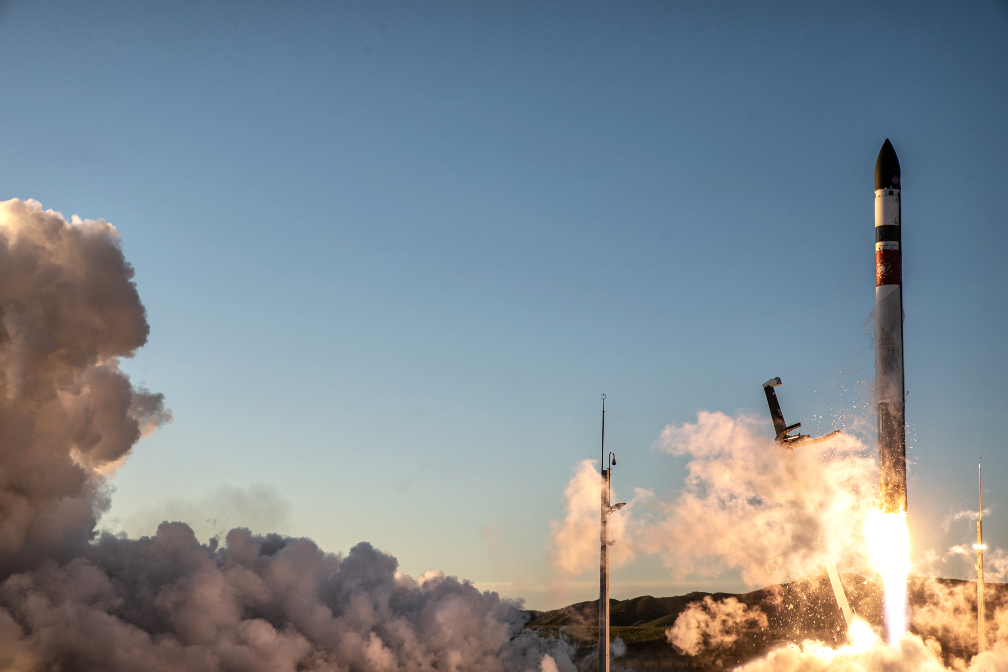
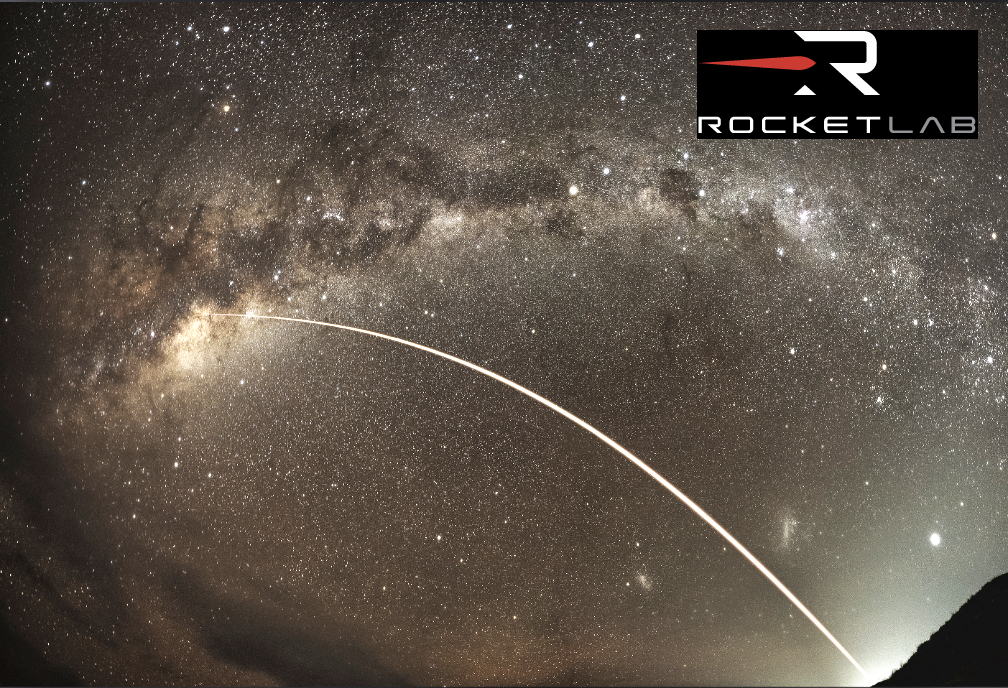
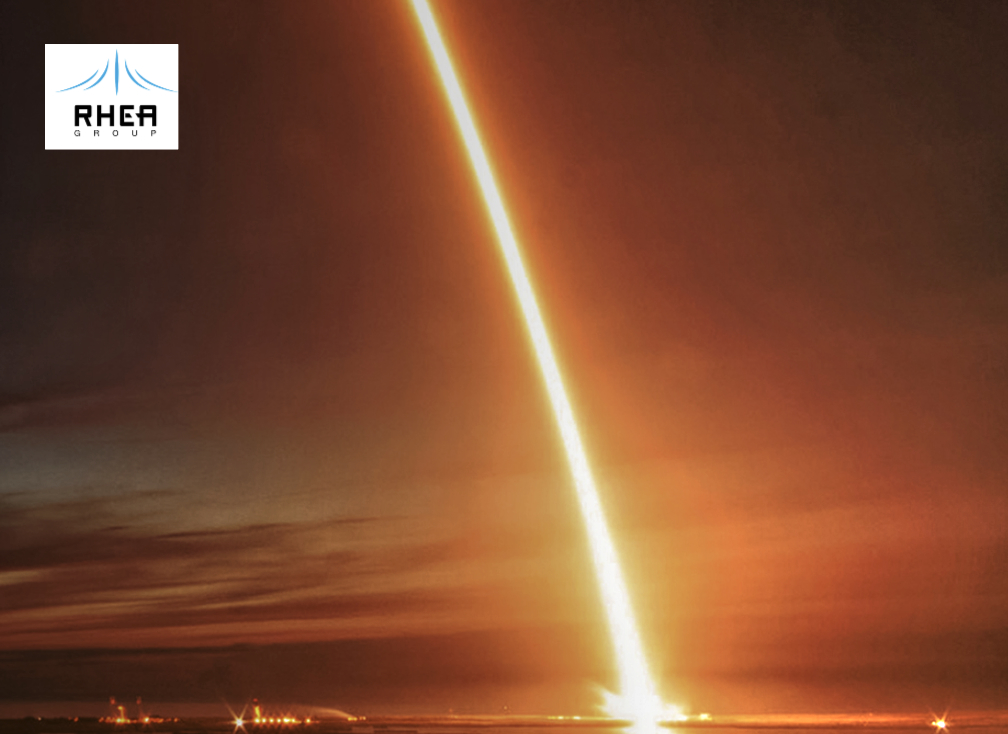
The launch of the NROL-199 by Rocket Lab.
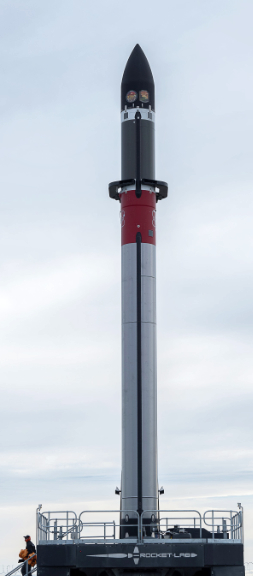
Rocket Lab’s ELECTRON launch vehicle on the pad.

At 05:00 UTC on August 4, 2022, Rocket Lab successfully launched the company’s second of two, back-to-back, national security missions for the National Reconnaissance Office.

Highlights of this mission include:

  • This mission follows the successful delivery to orbit of its predecessor NROL-162 three weeks earlier, launched on the “Wise One Looks Ahead” mission on July 13, 2022.
  • The launches of NROL-162 and NROL-199, combined with the successful launch of the CAPSTONE mission to the Moon for NASA on June 28, 2022, make up a record launch cadence for Rocket Lab of three successful Electron launches in just over five weeks.
  • The turnaround between NROL-162 and this NROL-199 launch is the shortest time between national security missions by a small launch provider, setting a new standard in responsive space.  

Previous mission postings…

Electron is on the pad and ready to launch a national security mission for the National Reconnaissance Office — the second of two missions for the NRO from a spaceport outside the United States.

Lift-off of NROL-199 was scheduled for:

  • UTC | 05:00, Aug 4
  • NZT | 17:00, Aug 4
  • EDT | 01:00, Aug
  • PDT | 22:00, Aug 3

Rocket Lab USA, Inc. (Nasdaq: RKLB) has confirmed that the second of two, back-to-back, national security launches for the National Reconnaissance Office (NRO), originally scheduled for August 2 UTC, is now pushed out to at least Thursday, August 4th, due to rather windy conditions.

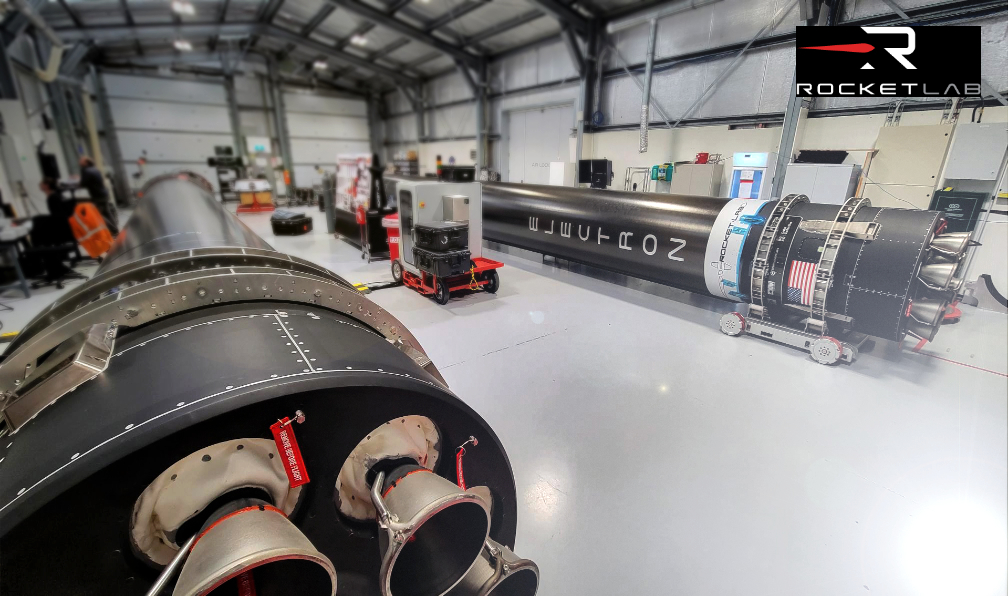
Two Electron rockets @ Launch-Complex 1 prepped for NRO launches. Photo is courtesy of Rocket Lab.

The NROL-199 (“Antipodean Adventure”) mission was scheduled to lift-off from Pad B at Rocket Lab Launch Complex 1 during a launch window opening on August 2, 05:00 UTC. This Electron mission follows on from an earlier successful launch for the NRO on July 12, 2022 that deployed the NROL-162 national security payload to orbit.

The NROL-199 mission will launch a national security payload designed, built, and operated by the NRO in partnership with the Australian Department of Defence as part of a broad range of cooperative satellite activities with Australia. The satellites will support the NRO to provide critical information to government agencies and decision makers monitoring international issues

The mission was originally scheduled for lift-off on July 22; however, the launch was rescheduled to allow the NRO additional time to implement required payload software updates. This schedule shift demonstrated Rocket Lab’s responsive space capabilities, which provide customers with a high degree of flexibility over their mission, including orbit and launch timing. By operating a private launch complex, Rocket Lab doesn’t have to wait in a launch queue behind other operators and could instead quickly reschedule the launch to suit the NRO’s preferred timeline.

“Antipodean Adventure” launch details:

Launch Window Opens: August 02, 05:00 UTC
Launch vehicle: Electron
Customer: National Reconnaissance Office
Launch site: Rocket Lab Launch Complex 1, Pad B
Mission type: Dedicated
Payload: NROL-199

Filed Under: Featured, News

Virgin Orbit’s 1st UK launch is for RHEA Group’s DOVER Pathfinder smallsat

July 26, 2022 by editorial

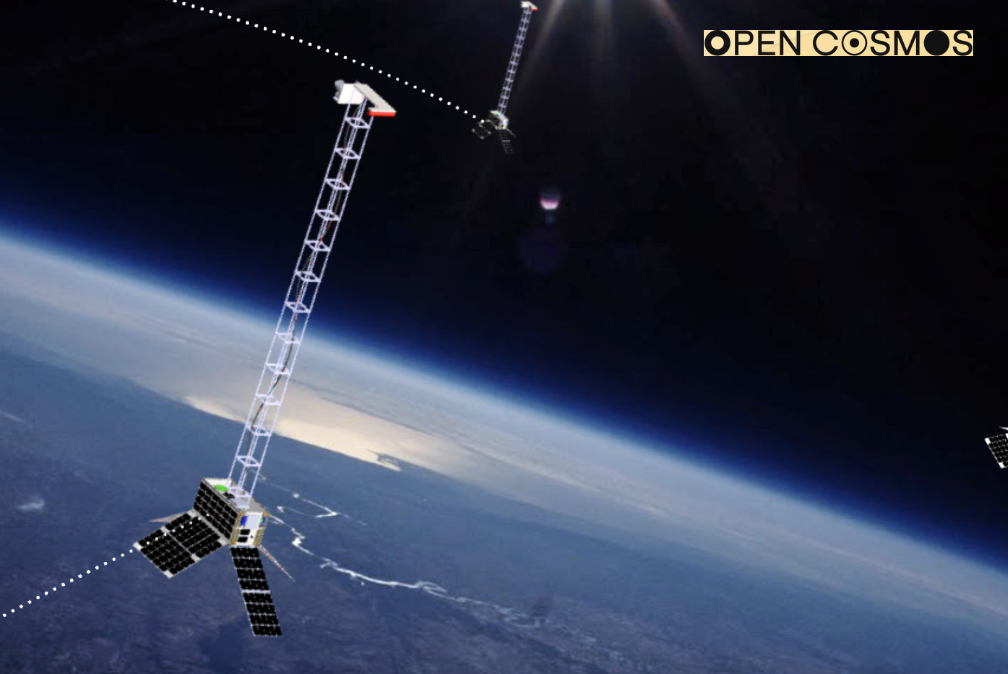
Virgin Orbit has been selected to launch RHEA Group’s first satellite into space. The company is working with Open Cosmos to design, build and operate this missions.

Open Cosmos and RHEA Group have selected Virgin Orbit from that firm’s UK business to carry the satellite — DOVER Pathfinder — to LEO aboard the upcoming and historic flight from Spaceport Cornwall later this year. The mission will mark the first time in history that a satellite launch has been conducted from British soil, helping to fulfill the goals of the UK government to enable full, end-to-end, space capability.

The DOVER Pathfinder is funded, in part, by the UK Space Agency through the European Space Agency’s (ESA) Navigation Program (NAVISP), which was created to support innovation and competitiveness in European position, navigation and timing (PNT) landscape. The DOVER Pathfinder satellite, for which the payload was designed by the RHEA team in the UK and is built by UK-based Open Cosmos, will serve as a pathfinder for resilient, global, navigation satellite systems.

“We are delighted to have been selected by RHEA Group and Open Cosmos for their first, joint mission.The fact that the DOVER Pathfinder satellite was designed and built in the UK by Open Cosmos, was co-funded by the UK Space Agency and the European Space Agency, and will now be launched by Virgin Orbit fro Spaceport Cornwall, is a great example of the power that comes with the infusion of space collaboration that is taking place across the globe,” said Virgin Orbit CEO, Dan Hart. “The work RHEA will do with DOVER Pathfinder will help to assure reliable navigation, which touches all of us and can be vital for everything from environmentally efficient shipping to national security.”

Filed Under: Featured, News

OneWeb Technologies CEO to retire

July 21, 2022 by editorial

OneWeb Technologies has announced that the company’s long-time Chief Executive Officer, Bob Roe, plans to retire.

Bob Roe

Mr. Roe joined OneWeb Technologies as Chief Executive Officer in March of 2012, then TrustComm, Inc. His leadership and deep understanding of the market helped grow TrustComm, Inc., into a trusted SATCOM solutions provider to the U.S. government and commercial enterprise customers. Under Roe’s guidance, the company has grown operationally and financially, culminating with its acquisition by OneWeb. Since the acquisition, Roe and his management team have successfully positioned the company as an innovator that is now better equipped to serve its customers through access to OneWeb’s services and network.

“I am honored to have led this great company and work with such a talented team of people committed to serving our customers,” said Roe. “I am proud of the work we have accomplished in delivering innovative solutions to our customers and am excited for the next phase of the company’s growth as part of OneWeb. I’m optimistic about OneWeb Technologies’ future and look forward to watching the company continue to flourish.”

“I want to thank Bob for his strategic leadership and guidance these past several months,” said OneWeb Technologies’ Chairwoman, Sue Gordon, who joined the Board of Directors in March of 2022. “Bob Roe’s leadership and vision have been essential to fulfilling OneWeb Technologies’ promise to deliver the power of OneWeb’s LEO services to our U.S. Government customers. With the current team and the identified new hires, I confident this company is poised for even more success in the future.”

Mr. Roe’s transition is being coordinated closely with the Board of the Directors and is expected to be finalized this summer.

Filed Under: Featured, News

With the success of the inaugural flight under their belt, Arianespace is initiating Vega C operations

July 13, 2022 by editorial

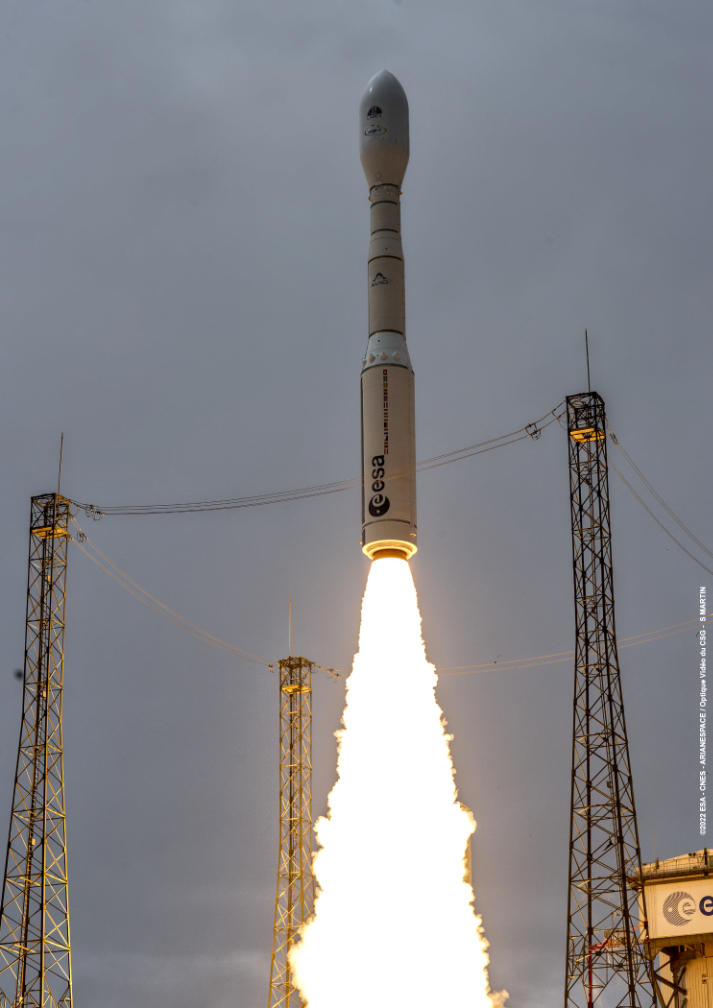
The liftoff of the Vega C rocket by Arianespace from Kourou, French Guiana.

On Wednesday, July 13 at 10:13 a.m., local time in Kourou, French Guiana, the first Vega C — the new European launcher designed and manufactured by AVIO — was successfully launched by Arianespace under the supervision of ESA from the Guiana Space Center, Europe’s Spaceport in Kourou, French Guiana (South America).

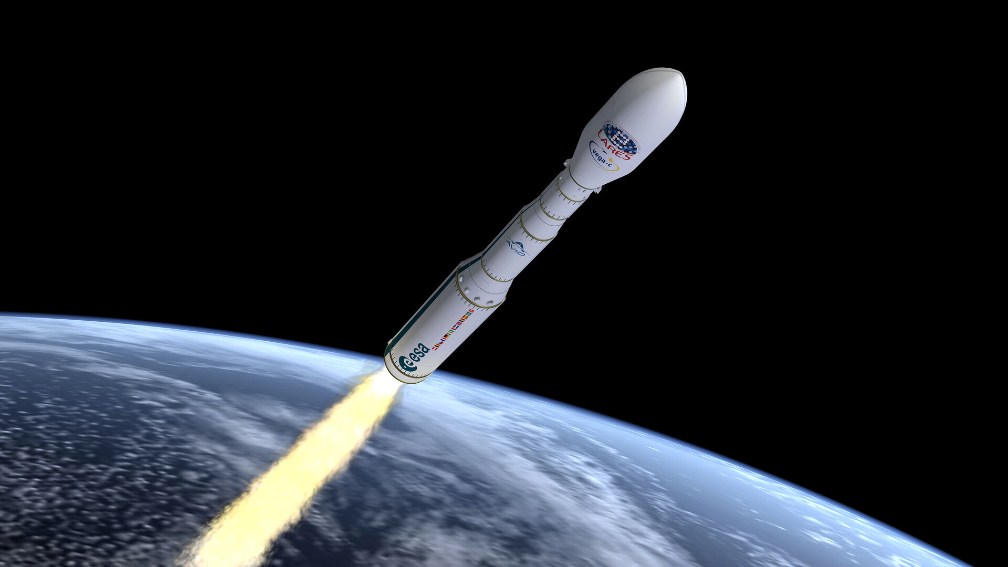
Artistic rendition of the Vega C rocket in flight.

Seven Vega C have been already filled and will serve both institutional and commercial missions: Among the institutional mission:

  • Sentinel-1C that will be launched for ESA on behalf of the European Commission
  • FLEX and ALTIUS, two ESA programs at the service of the environment
  • CSG 3 that is developed by Thales Alenia Space for the benefit of the Italian Space Agency (ASI) and Italian MoD
  • PLATiNO 2 that is developed by SITAEL for ASI
  • Microcarb contracted by the European Commission on behalf of CNES

Among the main commercial missions:

  • Pléiades Néo constellation, composed of four satellites for Airbus Defence and Space
  • KOMPSAT 7 for KARI (Korean Aerospace Research Institute)
  • Theos-2 manufactured by Airbus Defence and Space for the Geo-Informatics and Space Technology Development Agency of Thailand
  • Formosat-7R, manufactured by NSPO for Taiwan

Multiple small spacecraft missions are already contracted by Arianespace and will complete most of the Vega C flight configurations, thanks to the modular SSMS (Small Spacecraft Mission Service) adaptation systems.

First in the series, Vega C Flight VV22 is planned for November of 2022. With this flight, Arianespace will orbit Pléiades Neo 5 and 6, two additional satellites that will join Airbus’ Earth Observation (EO) Pléaides constellation. With 30 cm-native-resolution, best-in-class geolocation accuracy and twice-a-day revisit capability, the four Pléiades Neo satellites unlock new possibilities with the ultimate in reactivity. The satellite constellation has been fully funded and manufactured by its operator Airbus, whose team will also operate the satellites and sell services to commercial customers.

Vega C, which stands for Consolidation, will better respond to customers’ needs based on the lessons learned from the first decade (2012-2022) of Vega operations. The launcher has been upgraded with more powerful first and second stage Solid Rocket Motors, the first SRM being shared with Ariane 6 (where it will be used as a side booster), and with a larger fairing that will significantly increase payload mass (up to 2,350 T in SSO) and double allowable volume.

This performance increase will allow Vega C to launch larger radar satellites of the class of Sentinel 1C, part of Copernicus program, previously flown on Soyuz. The launcher will also be able to better meet the specific needs of small spacecraft, thanks to its improved SSMS dispenser and to its AVUM+ that will allow seven re-ignitions instead of five. This means the Vega C can achieve three reference orbits for its multiple payloads on the same mission, instead of the two previously possible with Vega.

Vega C development program is managed by ESA and associates 12 Member States of the Agency. Avio Spa (Colleferro, Italy) is the industrial prime contractor for both launch vehicle and the interfacing ground infrastructure. Avio is also responsible for campaign operations and preparation of the launch vehicle up to lift-off. Avio hands over a “ready to fly” rocket to Arianespace, which sells the Vega C, prepares its missions, validates its flight worthiness, and operates it from Europe’s Spaceport in French Guiana.

During launch campaigns, Arianespace works closely with CNES, the launch range authority at the European Spaceport in Kourou who is notably in charge of the satellite preparation facilities as well as the protection of populations.

“With this inaugural launch officially declared a success, Arianespace will now commence Vega C operations, a key milestone for European sovereign access to space. My warm congratulations on this success go to ESA, who operated this inaugural launch, as well as to Avio, who is responsible for the Vega C launch systems,” said Stéphane Israël, CEO of Arianespace. “Vega C, with its increased capabilities and versatility, already allowed Arianespace to capture many important customers; we are confident this is only the beginning of a true success story! Its configuration, based on our customers’ needs, has been designed in alignment with our upcoming heavy launcher, Ariane 6. This is a first step towards the full renewal of our product range, which will allow us to honor our motto: any mass, any orbit, anytime!”

Filed Under: Featured, News

On average, one ton of smallsats to be launched per day during the next decade

July 13, 2022 by editorial

The latest update of Euroconsult‘s “Prospects for the Small Satellite Market” was released this week by Euroconsult, forecasting further growth in the global supply and demand of government, commercial and academic satellites weighing up to 500 kg.

The market intelligence report, now in its 8th edition, anticipates that about 18,500 smallsats will be launched during the 2022-2031 timeframe, representing about 365 tons per year, i.e., one ton per day to be launched on average over the next ten years. However, the smallsat market presents a growing number of challenges such as high inflation, limited market addressability, difficult profitability, oversupply risk and concentration of the market by a handful of established players.

The main driver for continued growth at times of macro-economic uncertainty due to the war in Ukraine, the COVID pandemic, disrupted supply chains, high inflation and central bank monetary policy changes remains NGSO constellations, driven by LEO broadband and Earth Observation (EO) and the continuous necessity for replenishment launches. Of all smallsats to be launched over 2022-2031, 81% are expected to be part of constellations.

Alexandre Najjar, Senior Consultant at Euroconsult, said, “While the war has had severe consequences on players that have part of their supply chains in Russia or Ukraine, it has demonstrated the value of smallsat applications, enabling commercial operators to showcase their capabilities and the merits of their constellations. Consequently, a growing number of government agencies are considering investing in their own smallsat systems or dedicating a budget to the procurement of commercial third-party smallsat-based services, supporting growth of the sector. However, growth in numbers, mass and value will not prevent high inflation and supply chain disruptions from impacting constellation materialization probability by inflating the capex and lead times of smallsat projects. We anticipate that stakeholders that have yet to raise significant amounts of capital will likely face a difficult situation, leading to smaller constellations, cancelled projects and scope reductions, as well as consolidation between players. Smallsats still represent a significant capability building opportunity for new entrants in the space sector, and the war in Ukraine has put the spotlight on the value proposition enabled by commercial satcom and Earth observation smallsat constellations, showcasing their merits around the world. A growing number of governments and commercial ventures alike ramp up their investments in small satellite systems and services, as well as manufacturing and launch capacities.”

The smallsat manufacturing and launch market value will quadruple over the next decade, to $56 billion and $29 billion respectively, driven by the multiplication of constellation projects from both commercial and government stakeholders. Euroconsult has released its updated findings at a time of smallsat mega-factory multiplication in various nations across the world, initiated in the U.S. and China.

Flagship examples of LEO broadband constellations, such as SpaceX’s Starlink and China’s GuoWang, account for more than half (53%) of the projected demand over 2022-2031 in units. Readers are therefore advised to go beyond raw numbers as vertical integration keeps growing with numerous players seeking to manufacture, operate and launch their own smallsats. Significant future market shares are now captive of a region, country or of an integrator and/or launch provider, challenging both commercial satellite integrators and launch providers which see more of their target customers not only leaving their addressable market, but also competing with their own services.

The updated report comes with an option to access premium features, including Euroconsult’s Smallsat Constellation Database and its new Launcher Database – exclusive access to Euroconsult’s databases for the first time in its history.

Other valuable updates to Prospects for the Small Satellite Market include a reviewed and refined pricing model for manufacturing and launch prices, most notably with regards to inflation-driven cost and price increases already witnessed in the manufacturing and launch industries and anticipated in coming years. The Euroconsult report incorporates new content to help give decision makers key knowledge in this area, as well as a reviewed and up-to-date forecast accounting for the economic situation and the ongoing impact of COVID-19.

Discover more about the report and the table of contents by downloading the free extract of the report at this direct link…

Filed Under: Featured, News

KONGSBERG sets in motion a feasibility study for a Norwegian national oceanic surveillance satellite constellation

July 11, 2022 by editorial

Recently, Kongsberg Defence & Aerospace (KONGSBERG) signed a contract with the European Space Agency (ESA) to initiate a feasibility study on building a national satellite infrastructure for ocean surveillance.

Photo illustration contains modified Copernicus Sentinel data (2017), processed by ESA, CC BY-SA 3.0 IGO. Credit: ESA

In collaboration with the Norwegian Maritime Authority, the Norwegian Space Agency (NoSA) will facilitate the development of a constellation of national smallsats for maritime surveillance – Arctic Ocean Surveillance Constellation (AOS) – delivered and operated by Norwegian actors.

The goal is to develop national suitability for space-based maritime surveillance capacity. The first part of the development of AOS will be carried out as a Norwegian industrial project in ESA. The goal of the ESA-project is to develop the Norwegian space industry across the entire value chain.

KONGSBERG has signed a contract with ESA for a feasibility study for AOS. The feasibility study is the first phase in the AOS project and alongside other studies, it will form the basis for an announcement in open competition for the realization of AOS. KONGSBERG will involve the Norwegian Defense Research Establishment (FFI) and other Norwegian industrial aerospace actors in the implementation of the feasibility study.

KONGSBERG now takes a leading position in the development of a complete national industrial value chain for space-based infrastructure and services for small satellites and a Norwegian, internationally competitive, space industry.

“The AOS study will build on the collaboration with FFI, Seatex, EIDEL and Kongsberg Satellite Services (KSAT) connected to the realization of the three satellites Kongsberg Defence & Aerospace already have invested in. With an increased number of satellites and with other sensors in addition to the navigation radar detector and AIS, the AOS constellation will further strengthen the monitoring of national interests in the High North,” said Aage Sørensen, Senior System Engineer for Emerging Products in KONGSBERG.

Filed Under: Featured, News

Northrop Grumman selects Airbus U.S. Space — Defense Inc. to supply 42 satellite bus platforms

July 6, 2022 by editorial

Northrop Grumman’s T1TL mesh satellite constellation will provide resilient, low-latency, high-volume data transport supporting U.S. military missions around the world and serve as a critical element for Joint-All Domain Command Control. Image is courtesy of the company.

Northrop Grumman Corporation (NGC) (NYSE: NOC) has selected Airbus U.S. Space & Defense Inc. as the commercial provider of satellite platforms for NGC’s proliferated-LEO constellation. Under the terms of the contract, Airbus U.S. will supply 42 satellite “bus” platforms, as well as support vehicle assembly, integration and testing.

Northrop Grumman’s T1TL mesh satellite constellation will provide resilient, low-latency, high-volume data transport supporting U.S. military missions around the world and serve as a critical element for Joint-All Domain Command Control. In May, Northrop Grumman announced the selection of Mynaric and Innoflight as its suppliers for laser communications and encryption, decryption capabilities.

The Space Development Agency (SDA) selected Northrop Grumman in February to develop and field a portion of its Tranche 1 Transport Layer (T1TL) constellation. The T1TL network will deliver persistent, secure connectivity for the U.S. military and serve as a critical element for Joint All-Domain Command and Control.

Derived from the flight-proven ARROW platform, the Airbus U.S. solution expands on its commoditized satellite bus design providing more power and a larger payload accommodation. This modular solution offers a scalable 300 – 500 kg. bus for the Northrop Grumman payload and future U.S. Government missions.

Airbus U.S. has designed a highly adaptable spacecraft platform and will use Airbus OneWeb Satellites (AOS), the Airbus U.S. and OneWeb joint venture in Merritt Island, Florida, to assemble it using their state-of-the-art production line. This line is currently delivering up to two satellites per day to OneWeb. AOS achieves this industry-leading result through its mature supply chain and manufacturing approach. To date, this facility has already produced over 400 of the 648 satellites on order for OneWeb.

“The addition of Airbus U.S. as one of our key commercial suppliers complements our end-to-end satellite system integration and heritage communication mission expertise,” said Blake Bullock, vice president, communication systems, strategic space systems, Northrop Grumman.

“The SDA Tranche 1 Transport Layer is a critical national security program, and we are honored to support Northrop Grumman and the Space Development Agency,” said Rob Geckle, President and CEO of Airbus U.S. Space and Defense. “This award underscores Airbus U.S.’s mission to develop and deliver, in the U.S., technology critical to the U.S. warfighter.”

Northrop Grumman is a technology company, focused on global security and human discovery. Our pioneering solutions equip our customers with capabilities they need to connect, advance, and protect the U.S. and its allies. Driven by a shared purpose to solve our customers’ toughest problems, our 90,000 employees define possible every day.

Headquartered in Arlington, Virginia, and operating under a Special Security Agreement (SSA), Airbus U.S. Space & Defense, Inc. offers advanced solutions to meet the most complex U.S. defense, security, space, and intelligence requirements. A long time U.S. government partner, Airbus U.S. leverages world-class satellite, laser communication, rotary and fixed wing solutions to help its National Security focused customers meet their missions.

Filed Under: Featured, News

Rocket Lab’s two upcoming smallsat Launch Responsive Missions 10 days apart for National Reconnaissance Office

July 6, 2022 by editorial

Rocket Lab’s Launch Complex 1 Pad A

These twin missions will be a demonstration of responsive launch under NRO’s Rapid Acquisition of a Small Rocket (RASR) contract for launching small satellite through a streamlined, commercial approach, and are the third and fourth missions contracted to Rocket Lab by the NRO under the contract.

Rocket Lab USA, Inc’s (“Rocket Lab” or “the Company”) latest announcement is that their next two launches will be responsive space missions for the United States Government’s National Reconnaissance Office (NRO). Rocket Lab is a leading launch and space systems company.

Two Electron rockets for the NRO ready for launch processing at Rocket Lab Launch Complex 1. (Photo: Business Wire)

Launching from Rocket Lab Launch Complex 1 on two Electron rockets, Rocket Lab is scheduled to deploy satellites to space for the NRO within only 10 days of each other. NROL-162 (“Wise One Looks Ahead”) will launch from Rocket Lab Launch Complex 1’s Pad A no earlier than July 12, with NROL-199 (“Antipodean Adventure”) scheduled to launch from Pad B no earlier than July 22.

The NROL-162 and NROL-199 missions will carry national security payloads designed, built, and operated by the National Reconnaissance Office in partnership with the Australian Department of Defense as part of a broad range of cooperative satellite activities with Australia. The satellites will support the NRO to provide critical information to government agencies and decision makers monitoring international issues.

These twin missions will be a demonstration of responsive launch under NRO’s Rapid Acquisition of a Small Rocket (RASR) contract for launching small satellite through a streamlined, commercial approach, and are the third and fourth missions contracted to Rocket Lab by the NRO under the contract. NROL-151 (RASR-1) was successfully deployed to space on a dedicated Electron launch in early 2020, followed by RASR-2 on another Electron launch in June 2020.

Rocket Lab CEO and founder, Peter Beck, says, “Space plays such a critical role in providing immediate insights and informing time-sensitive decisions, so a responsive, modern approach accessing orbit is crucial. This is what we’ve established with Electron and multiple launch sites – reliable rockets and multiple pads at the ready to support the national security community’s responsive space needs. Our quick turnaround for these two national security missions will be just the latest demonstration of our responsive space capability, and we’re honored to be a trusted mission partner to the NRO once again for these important RASR missions.”

Rocket Lab’s upcoming launch details

“Wise One Looks Ahead” launch details:

  • Launch Window Opens: July 12, UTC
  • Launch vehicle: Electron
  • Customer: National Reconnaissance Office
  • Launch site: Rocket Lab Launch Complex 1, Pad A
  • Mission type: Dedicated
  • Payload: NROL-162

“Antipodean Adventure” launch details:

  • Launch Window Opens: July 22, UTC
  • Launch vehicle: Electron
  • Customer: National Reconnaissance Office
  • Launch site: Rocket Lab Launch Complex 1, Pad B
  • Mission type: Dedicated
  • Payload: NROL-199

Filed Under: Featured, News

  • « Go to Previous Page
  • Go to page 1
  • Interim pages omitted …
  • Go to page 30
  • Go to page 31
  • Go to page 32
  • Go to page 33
  • Go to page 34
  • Interim pages omitted …
  • Go to page 58
  • Go to Next Page »

Primary Sidebar

WEEKLY NEWSLETTER

Archives

  • February 2026
  • January 2026
  • December 2025
  • November 2025
  • October 2025
  • September 2025
  • August 2025
  • July 2025
  • June 2025
  • May 2025
  • April 2025
  • March 2025
  • February 2025
  • January 2025
  • December 2024
  • November 2024
  • October 2024
  • September 2024
  • August 2024
  • July 2024
  • June 2024
  • May 2024
  • April 2024
  • March 2024
  • February 2024
  • January 2024
  • December 2023
  • November 2023
  • October 2023
  • September 2023
  • August 2023
  • July 2023
  • June 2023
  • May 2023
  • April 2023
  • March 2023
  • February 2023
  • January 2023
  • December 2022
  • November 2022
  • October 2022
  • September 2022
  • August 2022
  • July 2022
  • June 2022
  • May 2022
  • April 2022
  • March 2022
  • February 2022
  • January 2022
  • December 2021
  • November 2021
  • October 2021
  • September 2021
  • August 2021
  • July 2021
  • June 2021
  • May 2021
  • April 2021
  • March 2021
  • February 2021
  • January 2021
  • December 2020
  • November 2020
  • October 2020
  • September 2020
  • August 2020
  • July 2020
  • June 2020
  • May 2020
  • April 2020
  • March 2020
  • February 2020
  • January 2020
  • December 2019
  • November 2019
  • October 2019

© 2019–2026 SatNews

Insert/edit link

Enter the destination URL

Or link to existing content

    No search term specified. Showing recent items. Search or use up and down arrow keys to select an item.
      x
      Sign Up Now!

      Enjoy a free weekly newsletter with recent headlines from the global SmallSat industry.

      Invalid email address
      We promise not to spam you. You can unsubscribe at any time.
      Thanks for subscribing! You will now receive weekly SmallSat News updates.
      We love our advertisers.
      And you will too!

      Please disable Ad Blocker to continue... We promise to keep it unobtrusive.
      We promise not to spam you. You can unsubscribe at any time.
      Invalid email address
      Thanks for subscribing! Please check your email for further instructions.