• Skip to main content
  • Skip to primary sidebar
  • Home
  • News
  • Featured
  • More News ⌄
    • SatNews
    • SatMagazine
    • MilSatMagazine
  • Events ⌄
    • MilSat Symposium
    • SmallSat Symposium
    • Satellite Innovation
  • Contacts
  • SUBSCRIPTION

SmallSat News

You are here: Home / Archives for Featured

Featured

General Atomics EMS’ LINCS Smallsats Now Reside @ Cape Canaveral Awaiting SpaceX Launch

June 8, 2021 by editorial

General Atomics Electromagnetic Systems (GA-EMS) Laser Interconnect and Networking Communication System (LINCS) satellites have arrived at Kennedy Space Center, Cape Canaveral, Florida, to prepare for launch.

Artistic rendition of GA-EMS smallsats on-orbit. Image is courtesy of the company.

Using LINCS, GA-EMS, in partnership with the Space Development Agency (SDA), will conduct a series of experiments demonstrating optical communication in and from space. The LINCS satellites will be launched on a SpaceX Falcon 9 rocket.

The LINCS system is comprised of two, 12U cubesats, each hosting a C-band, dual-wavelength, full duplex, Optical Communication Terminal (OCT) and an Infrared (IR) payload, with all elements internally designed and built by GA-EMS at their facilities in San Diego, California, and Huntsville, Alabama. In partnership with SDA, this is one of the first Department of Defense (DoD) contracted efforts to develop and deploy a state-of-the-art, 1550 nm OCT to test capabilities to increase the speed, distance, and variability of communication in space.

“The arrival of GA-EMS’ LINCS system at Cape Canaveral marks the start of final preparations and integration on board the Falcon 9, bringing us one step closer to demonstrating the next evolution of space-based optical communication,” said Scott Forney, president of GA-EMS. “It is an honor to support SDA on their first launch and to demonstrate this critical technology that will enable the future national security space architecture.”

“The launch of our two cubesats, supporting the LINCS mission, demonstrates GA-EMS’ ability to provide a complete tailored solution of both satellites and payloads integrated into an affordable design that provides customers significant launch versatility and cost effective solutions to their missions,” said Nick Bucci, vice president of Missile Defense and Space Systems at GA-EMS.

Filed Under: Featured, News

Reaping $$$M With Series B Financing Is LeoLabs

June 5, 2021 by editorial

LeoLabs, Inc., has closed a $65 million Series B financing round, jointly led by Insight Partners and existing investor Velvet Sea Ventures. With this round, LeoLabs has raised over $100 million in total capital.

LEO is rapidly emerging as the commercial frontier in space. Rapid deployment of new satellite constellations, the demand for innovative services from imaging to broadband to Internet of Things (IoT) and the billions of dollars of new investment in space-based infrastructure are redefining a domain shared by governments, space agencies, regulators, commercial operators and space insurance.

Against this backdrop of unprecedented opportunity are two challenges critical to investment and the long-term viability of LEO. The first is the need to develop LEO sustainably by addressing the threat posed by space debris. Approximately 250,000 dangerous pieces of orbital debris have gone untracked by government legacy systems that can no longer keep pace with increasing risks to satellite constellations. Sustainability is not just an arena for operators to address, but also for regulators to establish international best practices, set standards, and define rules of behavior.

The second challenge critical to the long-term viability of LEO is keeping it open and secure. As the number of private space enterprises and space-faring nations continue to grow, so does the need to track and make transparent the full range of threats to an open space environment.

“This latest round of funding is a testament to our mission to inform, secure and enable the revolution of services entering Low Earth Orbit,” said Dan Ceperley, LeoLabs CEO and co- Founder. “It sets the stage for the next phase of our growth as we build our team and our global footprint in the SSA domain. We now have the resources to accelerate the global deployment of next-generation radars for tracking small debris and satellites in LEO, and to expand development of our scalable LEO mapping and SSA platform. The single greatest challenge to both the sustainability and security threats in LEO is solving the ‘data deficit’. The number of assets in LEO doubled last year, will double again this year, and is expected to grow 25x in the next five years. LeoLabs is already the largest provider of data for LEO today, and this lead will expand rapidly as we execute on our constellation of radars.”

Ceperley continued, “The legacy government-built SSA infrastructures of the past simply cannot scale to track the new levels of LEO activity, and they have no path to get there. Our market-driven infrastructure is the only viable and scalable way to address this “data deficit.” The growth phase for LeoLabs is all about scaling our business along two dimensions. The first is infrastructure. With the Kiwi and Costa Rica space radars, we’ve proven our rapid deployment model for building radars, and we are actively evaluating additional sites. June, 2021 We intend to upscale our model to build out multiple radar sites concurrently, beginning this year. Our goal is simple, establish a global constellation of ground-based radars. The second dimension is scaling our SaaS business offering, which is a strategic advantage in deploying innovative, critical services to our customers. We are especially pleased to welcome our new lead investors who bring decades of experience in building world-class SaaS companies.”

“We are excited about LeoLabs’ vision and the progress they’ve made on both the radar network and the SSA platform,” said Nick Sinai, Senior Advisor at Insight Partners. “LeoLabs is uniquely positioned to deliver the data, analytics, and software that government and commercial customers need to understand where satellites and debris are at all times. We are thrilled to back an all-star team at LeoLabs as they develop the leading space awareness software company.” As part of the financing round, Nick Sinai will join the LeoLabs Board of Directors.

“As one of the first investors in LeoLabs, I have watched the team build an end-to-end solution, from radars to its platform that makes mission critical analytics available and actionable as a commercial off-the-shelf service to any company interested in leveraging low-earth orbit solutions as a growth driver,” said John Giampetroni, Managing Partner of Velvet Sea Ventures and LeoLabs angel investor. “Their vision for the future of the commercial space industry and their ability to execute on that vision makes LeoLabs a formidable industry leader.”

Filed Under: Featured, News

Viasat’s to Deliver Enhanced Military-Grade Encryption on the First-Ever Link 16-Capable Low Earth Orbit Spacecraft

June 1, 2021 by editorial

 Viasat Inc. (NASDAQ: VSAT) will integrate its In-line Network Encryptor (INE) into the world’s first Link 16-capable Low Earth Orbit (LEO) satellite that Viasat is developing for the U.S. Air Force Research Laboratory Space Vehicles XVI program.

Viasat’s INE will be the first crypto deployment on a Link 16-capable LEO satellite, and will provide communications security (COMSEC) and additional enhanced cybersecurity capabilities initially associated with mission data transfer, with future evolutions expected to simultaneously secure user data; telemetry, tracking and command (TT&C) management; and inter-satellite communications—at multiple security levels.

Viasat’s INE, which was designed for a very low Size, Weight and Power (SWaP) constrained system, is expected to provide radiation-tolerant network encryption aligned with the LEO space environment and will be capable of supporting speeds exceeding 100 Megabits per second (Mbps) aggregate throughput, which makes it an outstanding encryptor to secure Link 16-to-LEO communications. The INE will also be able to secure the data flow between an unclassified spacecraft bus and the classified processing domain.

“In addition to building and testing the first-ever Link 16-capable LEO satellite prototype, Viasat is also focused on delivering the first high assurance, fully-programmable crypto deployed in space,” said Craig Miller, president, Government Systems, Viasat. “Our focus is on revolutionizing space-based cryptographic and cybersecurity solutions by moving away from embedded, fixed single-application ASICs and moving to ‘plug and play,’ fully-programmable, multi-functional and highly-efficient military-grade cryptos that can be rapidly deployed by supporting commercial off the shelf technology enhancements for small satellites.”

Filed Under: Featured, News

OneWeb’s Constellation Smallsats Successfully Launched By Arianespace Via A Soyuz Rocket @ Vostochny Cosmodrome

May 31, 2021 by editorial

On Friday, May 28, 2021, OneWeb launched 36 satellites to bring the company one step closer to completing their commercial service by the end of the year — this was OneWeb’s seventh overall launch and the fourth in a five-launch program to fulfill the company’s ‘Five to 50’ service,.

The satellites are manufactured by OneWeb Satellites, a joint venture between OneWeb and Airbus Defence and Space, based in Space Coast, Florida.

The venture developed a production line process for manufacturing the satellites that dramatically lowers costs and also significantly accelerates output.

With two production lines in their Florida factory, each line can build one satellite in a single eight-hour shift, allowing OneWeb Satellites to produce satellites at a scale that will enable OneWeb to rapidly build out its full constellation. OneWeb Satellites employs more than 180 people in Florida and is on track to have a headcount of 200 at the Merritt Island facility on the Space Coast by the end of the year. OneWeb has now increased their satellite constellation to more than 200 spacecraft.

This latest launch adds 36 satellites to OneWeb’s constellation as the company works to complete their 648 LEO satellite fleet that will deliver high-speed, low-latency global connectivity. This launch placed the smallsats in their designated orbits and represents 80 percent of the constellation required to enable the firm’s connectivity solution to reach all regions north of 50 degrees latitude by June of 2021.

OneWeb plans to offer connectivity across the United Kingdom, Alaska, Northern Europe, Greenland, Iceland, the Arctic Seas and Canada. Their service is expected to be switched on before the end of the year and OneWeb intends to make global service available in 2022.

The launch occurred from the Vostochny Cosmodrome and was be conducted by Arianespace. This was the 57th Soyuz mission conducted by Arianespace and their Starsem affiliate.

By operating this flight on behalf of OneWeb, Arianespace continues their record of fulfilling their customer’s ultimate ambition, that being to provide internet access for everyone, everywhere, all the time.

Filed Under: Featured, News

Small Rocket Launch Site Given The O.K. By Australia’s Queensland Government

May 20, 2021 by editorial

Locals and tourists in the Whitsunday region of Australia could soon be watching rockets launching into space, with the Queensland government announcing their support for the local space launch industry.

In a statement, Deputy Premier and Minister for State Development, Steven Miles, said, “Growing our space industry in Queensland will add billions to the economy and create thousands of local jobs. That’s why we are committed the development of launch infrastructure. Our easterly facing position, proximity to the equator, and our leading launch and propulsion companies make Queensland the perfect place to invest in space.”

The announcement follows a technical and environmental study commissioned on Abbot Point last year, which concluded that the site is suitable for small-scale launch vehicles.

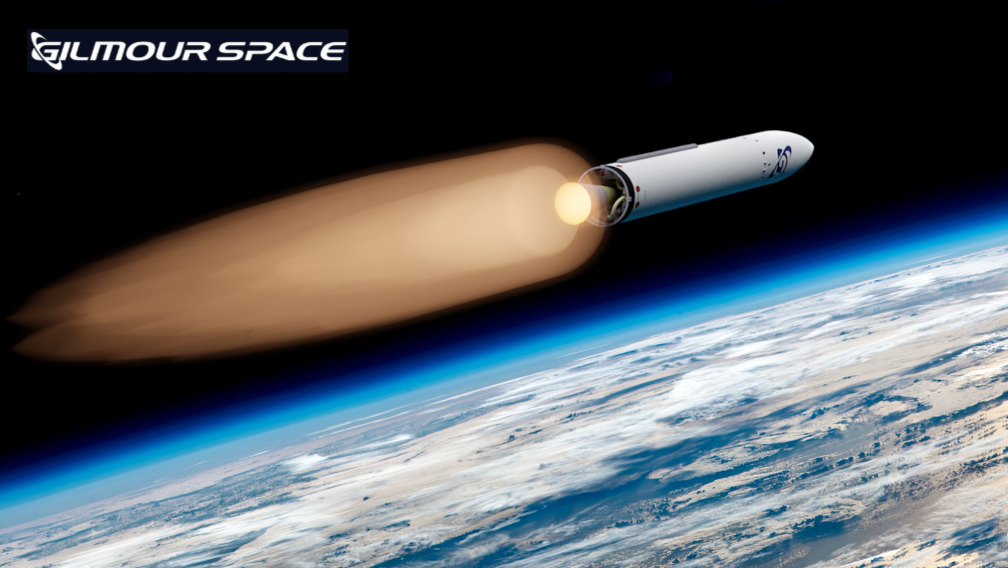
Enter Gilmour Space Technologies, a venture-funded rocket company on Australia’s Gold Coast that is developing lower cost rockets to launch smallsats into LEO starting in 2022.

“Gilmour Space Technologies has expressed an interest in the site (and) we are keen to work with the team at Gilmour and local stakeholders,” said Mr Miles.

Launching on Gilmour’s first Eris rocket next year will be several Australian payloads, including a ‘space taxi’ by Sydney-based Space Machines Company and a fire detection satellite by Fireball International, another Queensland company on the Sunshine Coast.

“A launch site at Abbot Point in North Queensland would give our customers a range of valuable orbits, inclinations, and altitudes that they will require,” said Gilmour Space co-founder and Head of Launch Operations, James Gilmour.

The company is also looking at a proposed launch site in South Australia for complementary polar orbits, in line with their vision to achieve ‘All Orbits, All Planets.’

“Our next step is to continue to work with key stakeholders to get all the necessary approvals we need to proceed on building and operating an orbital launch facility at Abbot Point,” said Mr Gilmour. “With sufficient and timely support, I see no reason why we can’t be demonstrating key, sovereign space capability next year, launching our first Australian-made rocket, with Australian payloads, from an Australian launch site.”

Filed Under: Featured, News

SES Government Solutions Develops Mission-Critical Comms For Key Combatant Command Via O3b MEO Constellation

May 17, 2021 by editorial

SES Government Solutions, a wholly-owned subsidiary of SES, in close partnership with a key U.S. Government customer, designed, developed and fielded an O3b Medium Earth Orbit (MEO) reachback capability to provide mission-critical communications for a key combatant command.

Four O3b MEO smallsats.

The awarded task order for $11.8 million is against the single-award $516.7 million Blanket Purchase Agreement (BPA) for Medium Earth Orbit (MEO), low-latency, High Throughput Satellite (HTS) services. This is the 15th task order awarded to SES GS on this BPA.

With this agreement, SES Government Solutions expands its high-throughput, low-latency services in support of mission-essential combatant command requirements, as the customer needs evolve, by providing innovative, flexible and secure communications solutions.

Using O3b services, U.S. Government customers can take advantage of the field-proven capabilities to support the provisioning of enterprise services to deployed warfighters. The solution leverages the MEO constellation by providing fiber-like connectivity to austere deployed locations.  

“The Department of Defense has vast and expansive information at their fingertips,” said President and CEO of SES Government Solutions, Brigadier General Pete Hoene, USAF (retired). “Utilizing reachback technology gives our warfighters the information and support needed for mission success. By leveraging the O3b MEO constellation, deployed U.S. military personnel have access to near real-time decision-making intelligence at the tactical edge.”

Filed Under: Featured, News

SpaceX’s 20th Starlink Mission Quite Uplifting

May 15, 2021 by editorial

The target for SpaceX: Saturday, May 15, for the company’s follow-up Starlink mission, with the smallsats nestled aboard a Falcon 9 launch vehicle that lifted off from Launch Complex 39A (LC-39A) at Kennedy Space Center in Florida.

On board this mission are 52 Starlink satellites, a Capella Synthetic Aperture Radar (SAR) satellite, and Tyvak-0130, an optical spectrum astronomy observation satellite.

Capella Space SAR satellite.

The Falcon 9 first stage booster that supports this mission previously launched NASA astronauts Bob Behnken and Doug Hurley to the International Space Station, ANASIS-II, CRS-21, Transporter-1, and three Starlink missions.

Following stage separation, SpaceX landed the Falcon 9’s first stage on the “Of Course I Still Love You” droneship located in the Atlantic Ocean. One half of this mission’s Falcon 9’s fairing previously supported the SXM-7 mission, and the other half previously supported the NROL-108 mission.

Spacelink on-orbit map, as of this writing. For continual on-orbit updates of the Starlink constellation, please visit https://satellitemap.space/

Filed Under: Featured, News

Raytheon I&S Selects CAES Technology for LEO Satellite Demo

May 12, 2021 by editorial

CAES has partnered with Raytheon Intelligence & Space to develop and provide RF signal conversion technology for use in a U.S. Air Force Research Laboratory (AFRL) program.

The Defense Experimentation Using Commercial Space Internet (DEUCSI) or Global Lightning program seeks to connect military aircraft to emerging commercial satellite internet constellations in LEO. CAES will provide multi-band block frequency converters for design into a new Raytheon phased array antenna and will allow communications with satellite internet constellations and aircraft to seamlessly jump between different satellites. The program culminates with a flight demonstration in 2022.

Commercial LEO satellites have the potential to allow communications at significantly faster speeds than is currently available on today’s military aircraft. As a result, the DEUCSI program seeks to leverage evolving space internet networks for USAF communications and data sharing capabilities.

CAES offers a full range of high performance RF modules and integrated microwave assemblies, featuring low phase noise, high spurious suppression and excellent gain flatness which enable superior signal integrity. CAES’ trusted frequency converters support uplink and downlink functionality that enable an efficient link of new space data services and a complete airborne, multi-band satellite terminal system.

In addition, CAES frequency converters feature unique packaging techniques allowing for very high density circuit integration, high channel-to-channel isolation, excellent thermal management and small form-factor solutions.

“CAES is excited to be chosen as a key partner for Raytheon’s DEUCSI solution, in what could become a widely used, high capacity data communications capability for the United States military,” said Mike Kahn, President and CEO, CAES. “CAES has a long history of pioneering high performance, narrowband and wideband millimeter wave solutions for military and space applications. In addition, our longstanding design-for-manufacturing expertise allows CAES to automate certain assembly and test functions to meet the most challenging customer design requirements.”

For additional information, please select this direct infolink…

Filed Under: Featured, News

OneWeb Adds 36 Satellites To The Firm’s Constellation Via Arianespace Soyuz

April 26, 2021 by editorial

Performed on Monday, April 26, at precisely 07:14 a.m. local time at Russia’s Vostochny Cosmodrome (22:14 a.m. on April 25, UTC), Soyuz Flight ST31 orbited 36 new OneWeb satellites. That brings the size of the OneWeb fleet on-orbit to 182 in number.

Flight ST31 was the 56th Soyuz mission carried out by Arianespace and its Starsem affiliate.

Arianespace has launched 182 OneWeb satellites through six Soyuz launches to date. Pursuant to an amended launch contract with OneWeb, Arianespace will perform 13 more Soyuz launches through 2021 and 2022.

These launches will enable OneWeb to complete the deployment of its full global constellation of low Earth orbit satellites by the end of 2022. OneWeb’s mission is to bring internet everywhere to everyone, by creating a global connectivity platform through a next-generation satellite constellation in LEO.

The OneWeb constellation will deliver high-speed, low-latency connectivity to a wide range of customer sectors, including aviation, maritime, backhaul services, and for governments, emergency response services and more. Central to its purpose, OneWeb seeks to bring connectivity to every place where fiber cannot reach, and thereby bridge the digital divide.

The satellite prime contractor is OneWeb Satellites, a joint venture of OneWeb and Airbus Defence and Space. The satellites were produced in Florida, USA, in the company’s leading-edge satellite manufacturing facilities that can build up to two satellites per day on a series production line dedicated to spacecraft assembly, integration, and testing.

“Congratulations to all the teams who made this latest mission from the Vostochny Cosmodrome a success. This launch again confirms Arianespace’s ability to deploy the OneWeb constellation through the use of three different Soyuz launch sites – in French Guiana, Kazakhstan and Russia,” said Stéphane Israël, Chief Executive Officer of Arianespace. “I want to sincerely thank OneWeb for its trust. I am delighted that our company has contributed – for the sixth time – to this client’s ultimate ambition of providing Internet access to everyone, anywhere, at any time.”

Filed Under: Featured, News

LEO Constellation Support By Gilat’s Wavestream Results In $$$Millions Of Orders

April 21, 2021 by editorial

Gilat Satellite Networks Ltd. (Nasdaq: GILT, TASE: GILT has received orders of more than $20 million for support of gateways of LEO constellations.

Gilat’s subsidiary, Wavestream, was selected as the vendor of choice to supply Gateway Solid State Power Amplifiers (SSPAs) to a leading satellite operator to support LEO constellation gateways. The orders were received as part of the previously announced contract.

Wavestream’s Gateway-Class PowerStream 160Ka SSPAs, designed specifically for networks using wide bandwidth uplinks and high order modulation schemes, were selected due to their best-in-class technical performance and their unmatched reliability in harsh environments, best addressing the stringent requirements of Non-Geostationary Satellite Orbit (NGSO) constellations.

“We are fully engaged and committed to deliver the essential SSPAs for the LEO constellation Gateways,” said Bob Huffman, Wavestream’s General Manager. “Wavestream’s proven technological advantage, as well as our unmatched production capacity, make us a perfect supplier for the high volume of Ka-band Gateway-class SSPAs required for this constellation.”

Filed Under: Featured, News

  • « Go to Previous Page
  • Go to page 1
  • Interim pages omitted …
  • Go to page 39
  • Go to page 40
  • Go to page 41
  • Go to page 42
  • Go to page 43
  • Interim pages omitted …
  • Go to page 57
  • Go to Next Page »

Primary Sidebar

WEEKLY NEWSLETTER

Archives

  • December 2025
  • November 2025
  • October 2025
  • September 2025
  • August 2025
  • July 2025
  • June 2025
  • May 2025
  • April 2025
  • March 2025
  • February 2025
  • January 2025
  • December 2024
  • November 2024
  • October 2024
  • September 2024
  • August 2024
  • July 2024
  • June 2024
  • May 2024
  • April 2024
  • March 2024
  • February 2024
  • January 2024
  • December 2023
  • November 2023
  • October 2023
  • September 2023
  • August 2023
  • July 2023
  • June 2023
  • May 2023
  • April 2023
  • March 2023
  • February 2023
  • January 2023
  • December 2022
  • November 2022
  • October 2022
  • September 2022
  • August 2022
  • July 2022
  • June 2022
  • May 2022
  • April 2022
  • March 2022
  • February 2022
  • January 2022
  • December 2021
  • November 2021
  • October 2021
  • September 2021
  • August 2021
  • July 2021
  • June 2021
  • May 2021
  • April 2021
  • March 2021
  • February 2021
  • January 2021
  • December 2020
  • November 2020
  • October 2020
  • September 2020
  • August 2020
  • July 2020
  • June 2020
  • May 2020
  • April 2020
  • March 2020
  • February 2020
  • January 2020
  • December 2019
  • November 2019
  • October 2019

© 2019–2025 SatNews

Insert/edit link

Enter the destination URL

Or link to existing content

    No search term specified. Showing recent items. Search or use up and down arrow keys to select an item.
      x
      Sign Up Now!

      Enjoy a free weekly newsletter with recent headlines from the global SmallSat industry.

      Invalid email address
      We promise not to spam you. You can unsubscribe at any time.
      Thanks for subscribing! You will now receive weekly SmallSat News updates.
      We love our advertisers.
      And you will too!

      Please disable Ad Blocker to continue... We promise to keep it unobtrusive.
      We promise not to spam you. You can unsubscribe at any time.
      Invalid email address
      Thanks for subscribing! Please check your email for further instructions.