• Skip to main content
  • Skip to primary sidebar
  • Home
  • News
  • Featured
  • More News ⌄
    • SatNews
    • SatMagazine
    • MilSatMagazine
  • Events ⌄
    • MilSat Symposium
    • SmallSat Symposium
    • Satellite Innovation
  • Contacts
  • SUBSCRIPTION

SmallSat News

You are here: Home / Archives for Featured

Featured

Skyrora’s Skylark Micro Rocket Set For Icelandic Launch

August 10, 2020 by editorial

Skyrora continues with its de-risking program by preparing to launch the Skylark Micro rocket from Iceland later this month.

Skyrora’s Skylark Micro rocket.

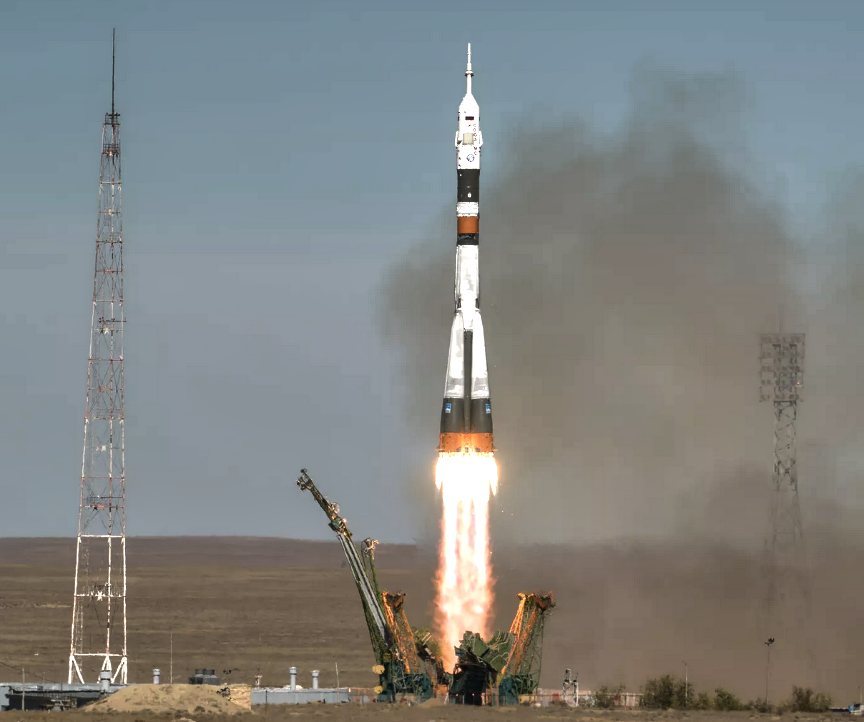
With the first launch window scheduled for August 12, the two-stage, four-meter tall, sub-orbital rocket is set for take-off from Langanes Peninsula, Iceland.

Following the July test for trajectory and hardware on the Skylark Nano, the Icelandic launch of the Skylark Micro will test onboard avionics and communications as well as practice marine recovery operations.

Skyrora’s de-risking program is based on testing its systems with smaller and more cost-effective vehicles before they are used in their larger Skylark L and Skyrora XL rockets. The company’s LEO rocket, the Skyrora XL, is scheduled to launch in 2023.

Executive Comment

Volodymyr Levykin

Volodymyr Levykin, the CEO of Skyrora, said, “Skyrora’s de-risking programme is essential for scaling, learning and education before we launch our two commercial vehicles, Skylark L and Skyrora XL. The entire team is working at a pace and has made great efforts to get another launch underway. I’d also like to express my thanks and gratitude towards Space Iceland and Iceland’s government, both of which have been tremendously supportive with the preparations for this upcoming launch.”

Filed Under: Featured, News

UK Space Sector Urged To Continue Building The Nation’s Launch Sector

August 7, 2020 by editorial

Scotland as viewed from space.

Industry leaders are urging the UK government to establish world-class rules to enable safe, environmentally conscious and commercially viable space launches from British soil.

A series of UK-wide workshops aimed at developing a common industry position across key issues related to a sovereign launch capability have just been delivered by the Scottish Space Leadership Council (SSLC). They were designed to foster collaboration and a common UK space sector voice for issues of concern during the UK government’s consultation on its Space Industry Regulations, which runs until October 21 and will create secondary legislation under the Space Industry Act 2018.

A report summarizing the output of four workshop modules — range and trajectory management and governance, spaceport operations, and launch safety and indemnity — will be published by SSLC in early September.

More than 60 representatives from across the UK space sector, including both industry and academia, attended each of the virtual sessions. Government agencies — including the UK Space Agency, Civil Aviation Authority, Centre for the Protection of National Infrastructure, the Ministry of Defence, the Scottish Environmental Protection Agency, Marine Coastguard Agency and Marine Scotland — were also present as observers.

The UK space industry wants to work closely with government legislators to create regulations that will enable a technologically innovative spaceflight economy for the UK.

SSLC is a voluntary, cross-sectoral representative organisation with membership is open to all across the UK space industry sector and representation from across government and its agencies welcomed. Set up in 2017, it provides a platform for industry, academia and government to work collaboratively, promote the sector and take a united approach to shared challenges, such as satellite operations and data analysis, launch vehicle development and integration, the testing of engines and other sub-systems and expansion of new, innovative space sector offerings.

Of these challenges, a key enabler for the sector is the development of practical launch legislation to govern all facets of safe spaceflight from UK soil. This area is felt to require immediate attention given global competition, the legislative process and its overall importance to realising the UK’s space sector potential.

Sub-orbital rocket launches have been taking place in Scotland and across the UK since the 1930s. The 21st century now offers the potential for UK industry to expand its range of launch offerings and services to deliver a full spectrum of launch, including vertical and horizontal orbital launches.

The UK Space Agency’s target to capture 10% of the global space market by 2030 has led to significant investment in a number of developing spaceports. The majority of these launch locations are located in Scotland due to geographical benefits related to flight trajectories, particularly for vertical rocket launches.

SSLC is now exploring ways in which the cross-sector collaboration can be continued and some of the common sectoral messages produced by the Workshops, ongoing Work Streams and from messaging being received by the Council can be input to the Space Industry Regulation consultation now underway.

Executive Comments

“The industry’s perception is that regulations must promote safety and environmental considerations while still allowing the commercial viability required for the sector to truly thrive,” said John Innes, Chair of the Scottish Space Leadership Council. “The space industry is therefore keen to seek ways to inform the legislative process and position the UK as a leader in European spaceflight. It demonstrates a strong desire to work collaboratively across the whole UK Space sector as well as with regulators to ensure the appropriate balance of safety and practicality.” Also, according to Innes, the high level of interest and support for the workshops from across the UK space sector underscores the fundamental importance of launch to the industry.”

Miles Carden, Program Director at Spaceport Cornwall, said, “This workshop series was a fantastic initiative enabling cross-sector input that will ultimately strengthen the UK Space Industry. Collaboration will be the backbone of our next chapter and will help create the regulations for safe and responsible launch.”

Mick O’Connor of Prestwick Spaceport stated, “The sector’s success will be determined by how well we collaborate, these workshops are a great start.”

Mark Roberts of Spaceport One, referred to the collegiate approach as “fantastic”, adding, “Government, the agencies, industry and academia enthusiastically rallying around the common purpose of making launch a success; great news for the UK”.

Scott Hammond from the Shetland Space Center noted, “We were delighted to play a part in the recent Range workshop run by SSLC, it was important to bring all parts of the UK Space industry together to start to craft a range solution that will suit all.”

Roy Kirk, from Space Hub Sutherland, commented, “The workshops were a great success. SSLC provided a valuable opportunity for key players in Scotland’s space sector to share knowledge and experience while learning from specialists in a range of subjects.”

Spaceport artistic rendition is courtesy of Norr / Highlands & Islands Enterprise.

Filed Under: Featured, News

SpaceX Set For Starlink + BlackSky Smallsats Launch

August 7, 2020 by editorial

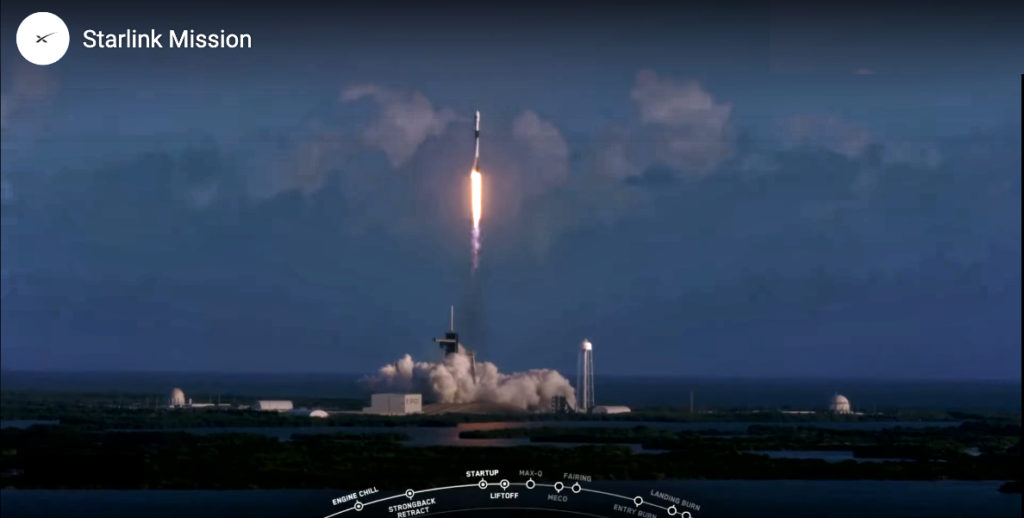
SpaceX is targeting Friday, August 7, at 1:12 a.m., EDT, 5:12 UTC, for the launch of the company’s tenth Starlink mission that will include 57 Starlink satellites and 2 satellites from BlackSky, a Spaceflight customer.

The Falcon 9 launch vehicle will lift off from Launch Complex 39A (LC-39A) at Kennedy Space Center in Florida. A backup opportunity is available on Saturday, August 8, at 12:50 a.m., EDT, 4:50 UTC.

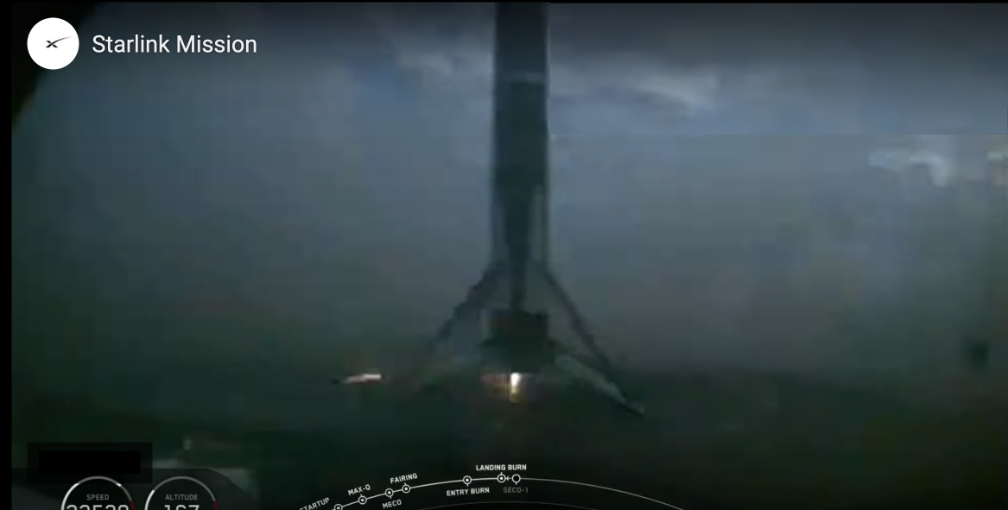
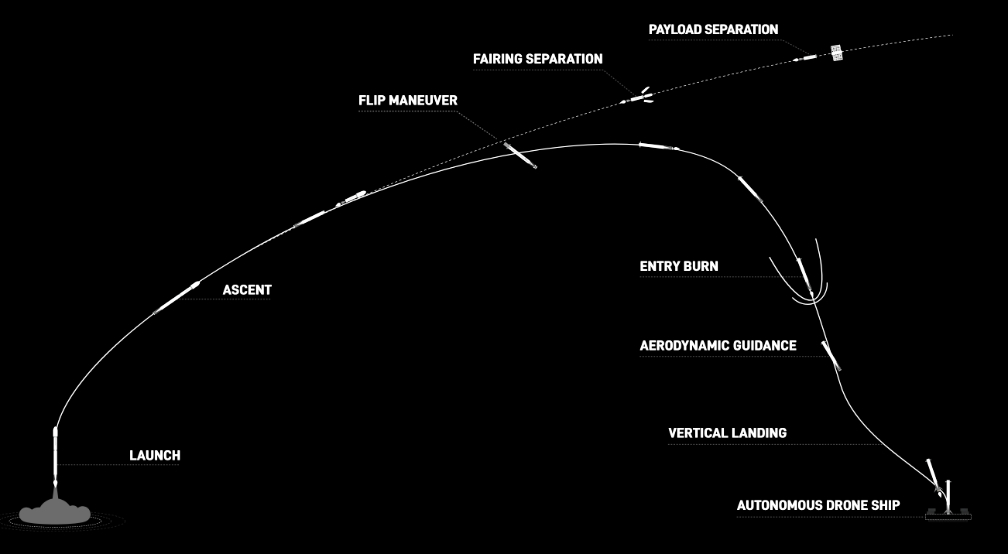
Falcon 9’s first stage previously supported Crew Dragon’s first demonstration mission to the International Space Station, launch of the RADARSAT Constellation Mission and the fourth and seventh Starlink missions. Following stage separation, SpaceX will land Falcon 9’s first stage on the “Of Course I Still Love You” droneship, which will be stationed in the Atlantic Ocean.

The BlackSky Global spacecraft will deploy sequentially starting 1 hour and 1 minute after liftoff and the Starlink satellites will deploy approximately 1 hour and 33 minutes after liftoff. Starlink satellites will be deployed in a circular orbit, as was done on the first through fourth Starlink missions. Additionally, all Starlink satellites on this flight are equipped with a deployable visor to block sunlight from hitting the brightest spots of the spacecraft – a measure SpaceX has taken as part of our work with leading astronomical groups to mitigate satellite reflectivity.

Watch the launch webcast at this direct link, starting about 15 minutes before liftoff.

Filed Under: Featured, News

Spaceflight + Benchmark Space Engage In An Exclusive Services Agreement

August 5, 2020 by editorial

Benchmark Space Systems has announced an exclusive services agreement with Spaceflight Inc. to provide a full range of non-toxic, chemical propulsion solutions that are designed to accelerate satellite rideshare deployments to prime orbital locations aboard the company’s next-generation Sherpa orbital transfer vehicles (OTVs).

Announced last month, Spaceflight’s first OTV in the Sherpa-NG family, Sherpa FX, will carry 16 customer spacecraft and several hosted payloads aboard a Falcon 9 no earlier than December 2020. Benchmark’s safe chemical propulsion will be equipped on an upgraded vehicle called Sherpa-LT as early as late next year.

Benchmark’s On-Demand Pressurization System

Benchmark’s propulsion features a patented On-Demand Pressurization System (ODPS) that securely fires up the thruster once the OTV is safely in space and deployed from the launch vehicle. The exclusive propulsion agreement enables Spaceflight’s small satellite rideshare missions to take full advantage of low-cost rideshare launches to sub-optimal locations in space, where its Sherpa-LT vehicle propelled by a Benchmark green thruster can maneuver rideshare and dedicated spacecraft to ideal orbits in a matter of hours.

Benchmark’s scalable, launch vehicle agnostic propulsion product and services set supports a broad spectrum of spacecraft, from 1U cubesats through ESPA-class (1-500 kg) satellites, large lunar landers, and orbital transfer vehicles (OTVs), offering far safer and faster rideshare options than electric propulsion systems, which can take months to complete their trips to orbit.

Artistic rendition of Spaceflight’s Sherpa OTV.

Spaceflight has launched more than 270 satellites across nearly 30 rideshare missions. In 2019, the company successfully executed nine missions, the most it’s ever launched in one year, sending more than 50 payloads to space.

Executive Comments

Curt Blake

“By exclusively adding Benchmark’s reliable, green in-space propulsion systems to our portfolio of powered Sherpa vehicles, we can cost-effectively deliver our customers’ spacecraft to optimal orbits with greater precision, and then rapidly de-orbit. That’s good for everyone – including the environment,” said Curt Blake, Spaceflight president and CEO.

Ryan McDevitt

“Benchmark Space Systems is thrilled to support Spaceflight’s Sherpa OTV program, bringing our patented non-toxic chemical propulsion solutions to this exciting next-gen deployer to enable a whole new level of rideshare capabilities and options for faster, safer missions to the best orbital locations around the world,” said Ryan McDevitt, Benchmark Space Systems CEO. “The Sherpa OTV and its rideshare customers can reach optimal orbits in no time with up to one-thousand times the thrust of electric propulsion, which is so slow the journey to orbit often cuts mission time and revenue in space. We are looking forward to our first milestone launch with Spaceflight’s Sherpa OTV next year. The integration of Benchmark’s non-toxic chemical propulsion solutions across the propulsion-equipped Sherpa OTV series will add speed and precision to Spaceflight’s market-leading rideshare services and capabilities.”

“The Spaceflight-Benchmark collaborative agreement delivers on big demand for innovative green rideshare options that leverage low-cost launches to sub-optimal space with propulsion-equipped transporters offering quick, precise payload deliveries to premier orbit locations,” said Chris Carella, Executive VP of Business Development and Strategy, Benchmark Space Systems. “Both companies are agile developers and share a passion for always creating better solution designs that are launch vehicle agnostic and keenly focused on enabling new space accessibility with rapid, reliable in-space transport.”

Filed Under: Featured, News

Open Cosmos Begins the Build and Operation of One of the One Hundred Smallsats for Sateliot’s Constellation

July 28, 2020 by editorial

Open Cosmos announced that they have ‘sealed a deal’ with satellite communications operator Sateliot to build and operate their small satellite constellation. This enables continuous global connectivity for Internet of Things (IoT) under 5G architecture.

Open Cosmos is already manufacturing the first of the one hundred that will comprise the full constellation, that Sateliot has scheduled for construction before the end of 2022. Additionally they will control the mission management and launch of the first satellites.

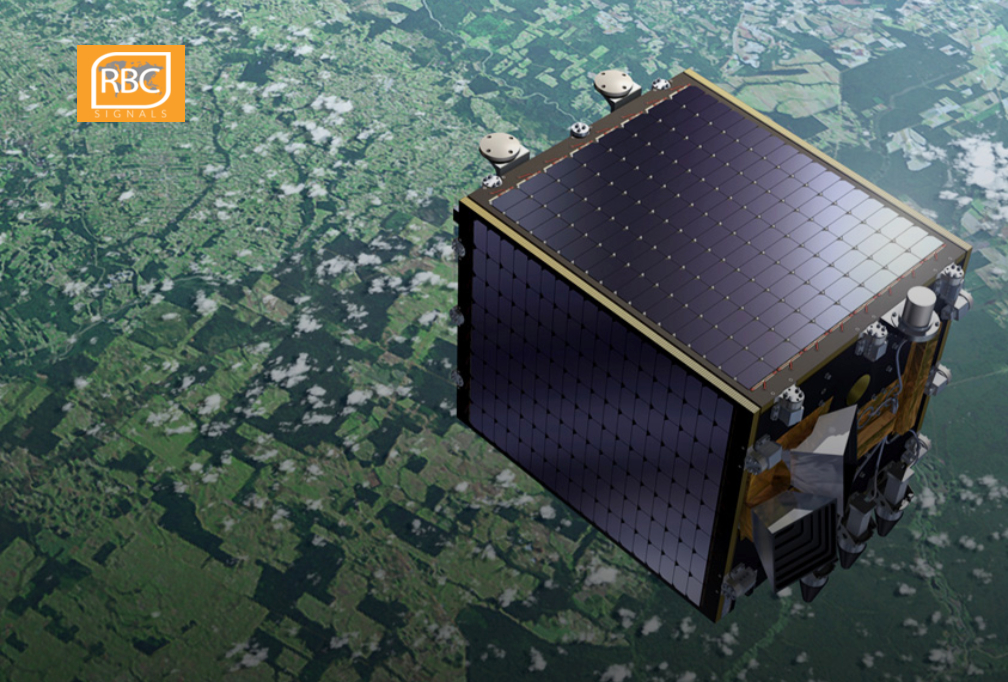
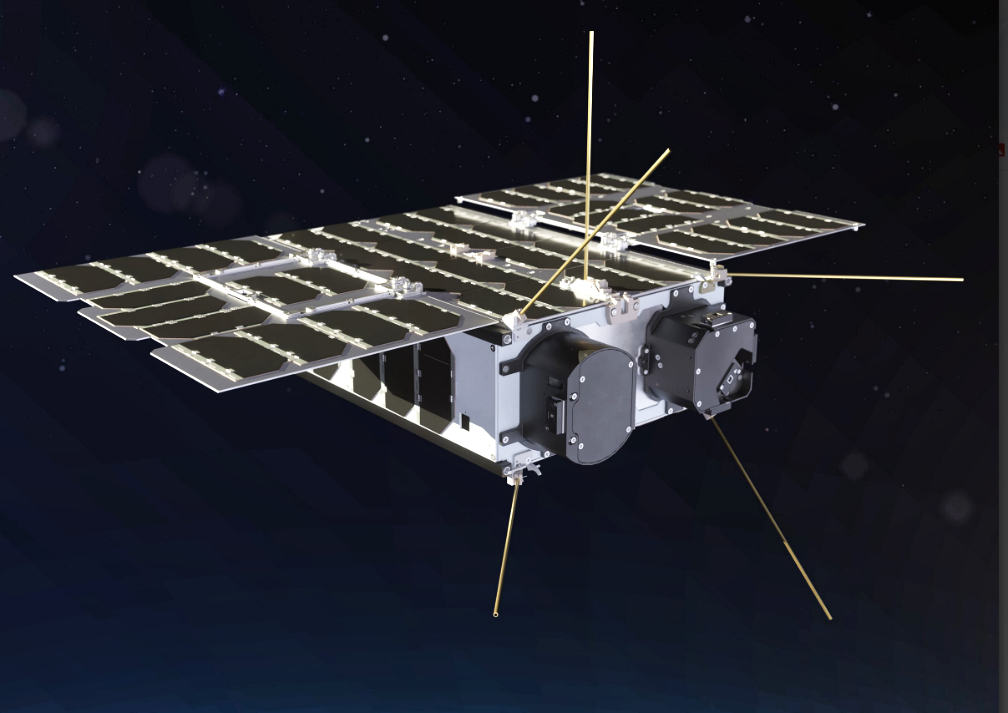
These microwave oven-sized satellites operate in Low Earth Orbit (LEO), flying at an approximate altitude of 500km to guarantee IoT connectivity at a global scale and in almost real-time.

In the next two years it is forecast that there will be more than 50 billion IoT devices globally, and with this constellation Sateliot is perfectly positioned to partner with conventional telecommunication providers to ensure ubiquitous coverage.

Sateliot will also offer monitoring and tracking systems, data analysis, and processes in areas such as: maritime, railways, aeronautical, agriculture and farming, gas and petroleum exploration, electric or critical infrastructure.

Rafel Jordá, Founder and CEO of Open Cosmos said, “We are excited to have satellite production underway for these satellites and be progressing all other aspects of the mission, including system integration, launch, licensing and logistics, as well as orbit operations. We are delighted to partner with Sateliot to enable the reality of IoT anywhere.”

Jaume Sanpera, co-founder and CEO of Sateliot, added that, “A bond with a partner, such as Open Cosmos, allows us to move forward with our project, meeting head-on the requirements and challenges the New Space industry faces, while keeping control over the design of the antennae and the radio that will allow the operational and commercial management of our telecommunications service.”

Filed Under: Featured, News

HawkEye 360 Now Delivering Daily Regional Awareness Subscription Service

July 28, 2020 by editorial

HawkEye 360 Inc. is now offering a daily Regional Awareness Subscription (RAS) service.

Leveraging the company’s RFGeo product, RAS delivers mission-critical insights by allowing organizations to identify, monitor, and analyze signal behavior over time. Large-scale RF signal mapping provides deeper situational awareness in these regions, with the data sets enabling trend analysis using traditional and artificial intelligence algorithms.

HawkEye 360 will work with customers to define a Regional Awareness Subscription that can span millions of square kilometers. Current RAS collection areas include the Mediterranean, South China Sea, and the Korean Peninsula. HawkEye 360 curates a collection plan that routinely gathers a combination of high-demand signals. The company delivers the data in an open standard GeoJSON format that seamlessly integrates with most applications.

HawkEye 360’s RFGeo product identifies and geolocates RF signals collected by HawkEye 360’s proprietary satellite constellation. RFGeo is the first commercially available product offering global spectrum awareness across a broad range of radio signals. HawkEye 360 plans to expand the RAS offering to include new areas of interest important to customers.

Executive Comments

“We’re offering a massive collection of data across a broad area. We are also enabling organizations to access periodic data and analytics for areas they want to monitor,” said Tim Pavlick, VP of Product, HawkEye 360. “Subscribers will receive a daily collection of RF data, allowing them to gain comprehensive insight into their regions, establish historical analysis, and augment other geospatial intelligence solutions.”

“With our Regional Awareness Subscription service, we provide customers with a dependable source of timely, trusted RF signal insights that have been detected, characterized, and geolocated over the region,” said Alex Fox, EVP Business Development, Sales and Marketing, HawkEye 360. “These insights allow our customers to identify, understand, and respond to activities important to their operations more effectively.”

Filed Under: Featured, News

Ground Segment Services For Agnikul’s Agnibaan Rocket To Be Managed by Leaf Space

July 24, 2020 by editorial

Leaf Space has announced their official partnership with Agnikul, a company building an affordable launch vehicle that is capable of launching smallsats on-demand.

Under the MoU just signed, the company will be supporting Agnikul in the provisioning of ground segment services for their highly portable launch vehicle – Agnibaan – through Leaf Space’s ground station network infrastructure.

Leaf Space’s support will be delivered via the development of a mobile and versatile ground station that is capable of supporting the Agnibaan launcher in the initial phases of lift-off from any of their launch locations. Short setup and turnaround time will be key elements of the Leaf Space service support. Furthermore, the launcher will be supported by the rest of Leaf Space’s ground station network infrastructure.

The company is also exploring the ability to offer to Agnikul’s customers the firm’s ground segment support as a package with the Agnibaan launch service itself. This will further simplify mission management for the firm’s customers.

Filed Under: Featured, News

An Analysis of Prospects for the Small Satellite Market

July 24, 2020 by editorial

In the 6th edition of its latest research titled “Prospects for the Small Satellite Market,” Euroconsult forecasts that two mega-constellations will account for half of the smallsats to be launched between 2020 and 2029, yet only account for one fifth of the total smallsat market value due to economies of scale, mass manufacturing and batch launches.

The report also addresses the impact of COVID-19 on the small satellite industry and provides updated analysis of the ongoing uncertainties related to the pandemic, smallsat constellations and the OneWeb bankruptcy, despite its recent acquisition.

The 2020s are predicted to be the decade of small satellites with an annual average of 1,000 smallsats to be launched. By comparison, 2019 had the highest number of smallsats to date, with 385 smallsats launched. These spacecraft generated $2.8 billion of market value in 2019, of which 70 percent for manufacturing and 30 percent for launch.

From 2020 to 2029, the smallsat market value is projected to reach $51 billion, of which $33 billion for manufacturing and $18 billion for launch. This is more than four times the market size of the previous decade.

In the coming decade, smallsat market growth will be dominated by communication satellites with nearly 5,700 units forecasted for launch. In contrast, Earth Observation satellites will decrease in market share but will nonetheless triple in terms of units, with 1,520 anticipated. Nonetheless, high levels of uncertainty remain as the smallsat market is, by definition, very volatile. The failure (or market entry) of a single constellation may represent hundreds of satellites of variation.

Executive Comment

Alexandre Najjar

“The COVID-19 pandemic is expected to have a significant impact on the industry. This impact will however vary depending on the size and nature of stakeholders. While many early-stage commercial new entrants will fail to raise funding and deploy their constellations, the two market leaders, SpaceX and Amazon, have been strengthened by the pandemic,” said Alexandre Najjar, Senior Consultant at Euroconsult. “While the commercial sector (Starlink and Kuiper excepted) will decrease compared to previous years due to a COVID-19-induced market rationalization, growth in government smallsat projects is accelerating as nations now recognize the potential and cost savings enabled by the smallsat form, both for civilian and military use cases. Vertical integration is increasing in the smallsat industry. Significant future market shares are now captive of a region, of a country or of an integrator and/or launch provider, challenging both commercial satellite integrators and launch providers which see more of their target customers now competing with their own services. The Asian market, 72% of which is government-driven, will account for 1,600 smallsats over the next decade, competing with US companies to provide connectivity services to foreign countries. The regional market is largely driven by, but not limited to China.”

Filed Under: Featured, News

BlackSky To Track COVID-19’s Impact on Military Bases

July 21, 2020 by editorial

BlackSky has been awarded a U.S. Air Force contract through AFWERX and the Air Force Research Lab (AFRL) to monitor the efficacy of COVID-19 mitigation efforts worldwide.

The contract calls for BlackSky to monitor overseas U.S. military bases and help maintain secure supply chains using its Spectra artificial intelligence and machine learning platform. Near-real time global monitoring capabilities will track the spread of COVID-19 to ensure the protection of deployed personnel, and secure critical nodes of the supply chain.

BlackSky’s Spectra platform will leverage state-of-the-art image exploitation techniques to automatically analyze anomalies and monitor the application of social distancing. These measurements will then be correlated against the reported infection numbers coming from local governments and integrated into the latest epidemiology models to predict the risk to deployed U.S. Air Force personnel and the surrounding communities.

The major economies of the world have experienced the impact of the rapid onset of the coronavirus. BlackSky will help critical components of the defense industrial supply chain recover by monitoring logistics depots, maintenance facilities, petroleum reserves, and airport facilities. BlackSky will provide alerts and notifications when changes in activity level or other anomalies are observed.

Executive Comments

Brian O’Toole

“BlackSky is giving decision makers the crucial information they need to protect U.S. interests at home and overseas amid today’s rapidly shifting threat landscape,” said Brian O’Toole, CEO of BlackSky. “By combining global geospatial data sources with satellite remote sensing data, Spectra provides a near-real time look at the evolving pandemic and provides critical insights to inform national security. It is imperative to have transparency into the status of critical nodes of the supply chain for planning purposes. With BlackSky’s global monitoring capability, the U.S. Air Force can maintain a watchful eye over its supply chain. Spectra will provide the Air Force an easy to use outbreak monitoring and decision support tool. The platform will help us combat the spread of COVID-19, manage risk and ensure the protection of personnel around the globe.”

Filed Under: Featured, News

Spaceflight Inc. Sets Up 16 Smallsats & Their Own OTV for SpaceX’s Next Rideshare Mission

July 17, 2020 by editorial

Spaceflight Inc. will be flying their next generation orbital transfer vehicle, Sherpa-FX, on a fully dedicated rideshare mission with SpaceX.

The mission, called SXRS-3 by Spaceflight, is scheduled to launch on a Falcon 9 no earlier than December 2020. Spaceflight has contracted 16 spacecraft for this mission from organizations that include iQPS, Loft Orbital, HawkEye 360, NASA’s Small Spacecraft Technology program, Astrocast, and the University of South Florida Institute of Applied Engineering.

In addition to the customer spacecraft, Sherpa-FX will transport multiple hosted payloads including one for Celestis Inc., as well as several that will demonstrate technologies designed to identify and track spacecraft once deployed. By demonstrating these tracking systems on orbit, Spaceflight customers will have access to flight-proven technologies that can mitigate space congestion and provide the foundation of effective and responsible space traffic management.

Technologies onboard Sherpa-FX include payloads by NearSpace Launch, Keplerian Technologies and their hardware partner Tiger Innovations, and Space Domain Awareness Inc. These innovative payloads will provide spacecraft developers an independent capability to identify and track their spacecraft without drawing on the host spacecraft resources.

Spaceflight’s Sherpa-FX is the first innovative orbital transfer vehicle to debut in the company’s Sherpa-NG (next generation) program. The vehicle is capable of executing multiple deployments, providing independent and detailed deployment telemetry, and flexible interfaces, all at a low cost. The company’s Sherpa-NG program is a family of space vehicles, continuing the tradition of the company’s first orbital free flyer on the historic SSO-A mission, which successfully delivered 64 unique spacecraft on orbit aboard a Falcon 9. 

In June 2020, Spaceflight announced it signed a Multi-Launch Agreement with SpaceX, securing capacity on several upcoming flights. The companies are currently working toward the launch of an upcoming Starlink mission in which Spaceflight procured a portion of the launch for its customer BlackSky, designed and built the adapter and harnessing, integrated the spacecraft, and provided mission management services for its customer.

Spaceflight works with a large portfolio of launch vehicles, including Falcon 9, Antares, Electron, Vega, and PSLV, to provide a variety of launch options to its customers. The company has launched more than 270 satellites across nearly 30 rideshare missions. In 2019, the company successfully executed nine missions, the most it’s ever launched in one year, sending more than 50 payloads to space.

Executive Comments

Grant Bonin

“Spaceflight is committed to providing unmatched launch flexibility for customers — whether that’s re-manifesting on a different vehicle due to delays, deployments to exotic or special orbits, or the ability to fly and operate hosted payloads,” said Grant Bonin, SVP of business development for Spaceflight Inc. “In-space transportation is essential to meeting our customer’s specific needs to get their spacecraft delivered to orbit exactly when and where they want it. If you think of typical rideshare as sharing a seat on a train headed to a popular destination, our next-generation Sherpa program enables us to provide a more complete ‘door-to-door transportation service’.”

Curt Blake

“We aim to make getting to space easier, faster and with more reliability than ever before,” added Curt Blake, president and CEO of Spaceflight. “To do that, we have to build flexibility into everything we offer — from our contracting practices, to integration processes that enable spacecraft to move seamlessly between launch vehicles, to providing customers with a wide range of mission services. Now we’re solving some of the industry’s most pressing challenges by providing greater spacecraft management awareness and customized orbital delivery. We couldn’t be more excited to expand our comprehensive suite of launch services to support our customers’ mission needs.”

Filed Under: Featured, News

  • « Go to Previous Page
  • Page 1
  • Interim pages omitted …
  • Page 50
  • Page 51
  • Page 52
  • Page 53
  • Page 54
  • Interim pages omitted …
  • Page 59
  • Go to Next Page »

Primary Sidebar

WEEKLY NEWSLETTER

Archives

  • April 2026
  • March 2026
  • February 2026
  • January 2026
  • December 2025
  • November 2025
  • October 2025
  • September 2025
  • August 2025
  • July 2025
  • June 2025
  • May 2025
  • April 2025
  • March 2025
  • February 2025
  • January 2025
  • December 2024
  • November 2024
  • October 2024
  • September 2024
  • August 2024
  • July 2024
  • June 2024
  • May 2024
  • April 2024
  • March 2024
  • February 2024
  • January 2024
  • December 2023
  • November 2023
  • October 2023
  • September 2023
  • August 2023
  • July 2023
  • June 2023
  • May 2023
  • April 2023
  • March 2023
  • February 2023
  • January 2023
  • December 2022
  • November 2022
  • October 2022
  • September 2022
  • August 2022
  • July 2022
  • June 2022
  • May 2022
  • April 2022
  • March 2022
  • February 2022
  • January 2022
  • December 2021
  • November 2021
  • October 2021
  • September 2021
  • August 2021
  • July 2021
  • June 2021
  • May 2021
  • April 2021
  • March 2021
  • February 2021
  • January 2021
  • December 2020
  • November 2020
  • October 2020
  • September 2020
  • August 2020
  • July 2020
  • June 2020
  • May 2020
  • April 2020
  • March 2020
  • February 2020
  • January 2020
  • December 2019
  • November 2019
  • October 2019

© 2019–2026 SatNews

Insert/edit link

Enter the destination URL

Or link to existing content

    No search term specified. Showing recent items. Search or use up and down arrow keys to select an item.
      x
      Sign Up Now!

      Enjoy a free weekly newsletter with recent headlines from the global SmallSat industry.

      Invalid email address
      We promise not to spam you. You can unsubscribe at any time.
      Thanks for subscribing! You will now receive weekly SmallSat News updates.
      We love our advertisers.
      And you will too!

      Please disable Ad Blocker to continue... We promise to keep it unobtrusive.
      We promise not to spam you. You can unsubscribe at any time.
      Invalid email address
      Thanks for subscribing!