• Skip to main content
  • Skip to primary sidebar
  • Home
  • News
  • Featured
  • More News ⌄
    • SatNews
    • SatMagazine
    • MilSatMagazine
  • Events ⌄
    • MilSat Symposium
    • SmallSat Symposium
    • Satellite Innovation
  • Contacts
  • SUBSCRIPTION

SmallSat News

You are here: Home / Archives for Featured

Featured

Exolaunch Integrates 30 Smallsats for SpaceX First Dedicated Rideshare Launch

December 22, 2020 by editorial

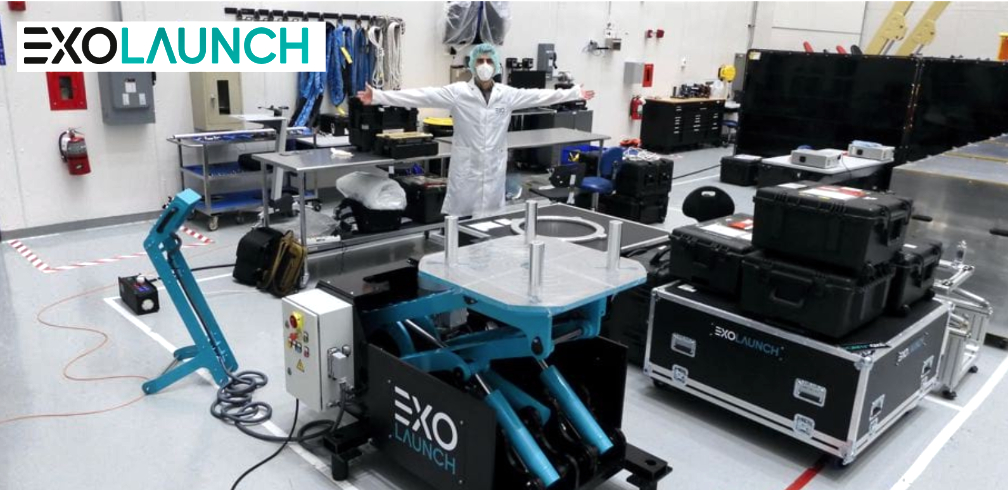
Exolaunch has initiated their launch campaign to integrate 30 smallsats from the U.S. and Europe aboard SpaceX’s Falcon 9 rideshare mission that is planned to launch no earlier than January 2021. This is the first dedicated rideshare mission of SpaceX’s SmallSat Rideshare Program and the first of several rideshares Exolaunch is manifesting on Falcon 9 as part of a multi-launch agreement the company signed with SpaceX earlier this year.

For each Falcon 9 launch, Exolaunch will provide comprehensive rideshare mission management, deployment, and satellite integration services for its customers. This launch will be one of the largest and most diverse rideshare missions of the company, which also announced it will open a U.S. office to better serve its U.S. customers.

Most of the smallsats have been integrated into their launch deployers in the company’s Berlin facilities, at the moment the team of Exolaunch is performing the final integration of the diverse small satellite cluster with Falcon 9 at SpaceX’s facilities in Cape Canaveral, Florida. Launch Services.

Exolaunch’s manifest on the mission includes smallsats from the German Aerospace Center (DLR), Dresden Technical University, NanoAvionics and other commercial companies for the IoT, Earth Observation and scientific applications. Launch Services

Exolaunch will use its brand-new product, the EXOport, which is a flexible multi-satellite adapter designed to enable optimal accommodation of microsats and nanosats on the Falcon 9 ESPA ports. The company will also utilize its proprietary flight-proven separation systems – CarboNIX, the next generation shock-free separation system for microsatellites, upgraded modifications of EXOpod deployers and EXObox sequencers to flawlessly deploy its customers’ satellites into the target orbit.

“Through our partnership with SpaceX, Exolaunch has become the bridge for multiple European smallsat developers and others from around the world interested to launch on Falcon 9,” said Jeanne Medvedeva, Vice President of Launch Services at Exolaunch. “As the SpaceX’s SmallSat Rideshare Program takes off and expands, more organizations will have the opportunity to launch their satellites into orbit though our tailored, flight-proven, and cost-effective launch and deployment solutions. The team at Exolaunch extends its gratitude to all customers for their loyalty and trust in Exolaunch’s services and wishes to thank SpaceX for their excellent launch preparations. We look forward to the upcoming successful launch opening up a new chapter in rideshare missions.”

All news item imagery is courtesy of Exolaunch.

Filed Under: Featured, News

Hughes To Drive Ground System Tech For OneWeb

December 16, 2020 by editorial

Hughes Network Systems, LLC (HUGHES) has been selected by OneWeb to develop and manufacture essential ground system technology for the company’s new LEO constellation.

In a three-year contract valued at approximately $250 million, Hughes will produce the gateway electronics for the OneWeb system as well as the core module that will be used in every user terminal.

Designed by Hughes engineers, each OneWeb gateway is capable of 10,000 hand-offs per second, orchestrating handover and tracking of hundreds of gigabits of data across hundreds of beams and millions of users.

Under an agreement with OneWeb prior to a restructuring in March, seven gateways had been installed with several more in various stages of production. Under the new agreement, Hughes has ramped up production on the gateway equipment and resumed testing on the installed systems.

This agreement also calls for Hughes to develop and manufacture the core module for the OneWeb user terminals. Designed by Hughes, the core module is uniquely adaptable across fixed as well as aeronautical and maritime mobility terminals, for either electronically or mechanically steered antennas.

After filing for bankruptcy protection in March, OneWeb is now under ownership by a new consortium led by the U.K. Government and Bharti Enterprises and in which Hughes has agreed in principle to invest $50 million.

Pradman Kaul

“Today’s announcement of a continued technology partnership with OneWeb reflects our position as the trusted innovator in the industry,” said Pradman Kaul, President, Hughes. “The ground system we develop will enable reliable, low latency broadband data, ideal for a wide range of customer applications.”

Neil Masterson

Neil Masterson, CEO, OneWeb, said, “OneWeb is building a global broadband network to deliver high-throughput, low latency enterprise grade connectivity services for a wide range of government, commercial, and mobility use cases. Our goal is to commercialize services in a year, and our partnership with Hughes will be vital in helping us launch a secure, trusted, resilient, space-based network.”

Filed Under: Featured, News

Blue Canyon’s CDR for DARPA’s BlackJack Space Program Successfully Completed

December 15, 2020 by editorial

Blue Canyon Technologies, Inc. (“BCT” or “Blue Canyon”) has completed their Critical Design Review (CDR) for the Blackjack Program, a military space capabilities demonstration being developed by the Defense Advanced Research Projects Agency (DARPA).

By incorporating commercial sector advances in LEO, including designs used for LEO broadband internet service, the goal of the Blackjack program is to demonstrate that a constellation of LEO satellites meets U.S. Department of Defense (DoD) performance and payload requirements, at a significantly lower cost, with shorter design cycles and with easier and more frequent technology upgrades. The Blackjack program aims to establish an economy of scale not previously available with current National Security Space (NSS) assets, which are large, costly, and would take years to replace if degraded or destroyed.

The Blackjack program CDR took place over a two-day period at BCT’s Satellite Constellation Factory in Lafayette, Colorado. It was conducted both virtually, as well in person, while in complete accordance with appropriate COVID-19 safety precautions to keep team members from each organization safe.

With approximately 40 engineers and scientific partners participating, BCT was able to demonstrate maturity of the X-SAT Saturn-class bus design, validating the design and capabilities of the system in support of the Blackjack program. The CDR completes the third milestone, which will culminate in the first two flight buses being delivered to DARPA for payload integration in August 2021.

The DARPA contract has an initial award value of $14.2 million with a total potential value of $99.4 million if all options are exercised. Now that the final design of the multi-mission bus has been completed, BCT will begin procurement for the build of the first four satellites. The customized X-SAT bus will include state-of-the-art electric propulsion, a robust power system, command and data handling, RF communications and dedicated payload interfaces capable of hosting several different DoD payloads.

The spacecraft will be delivered on a rapid timeline to support the critical DARPA demonstration schedule, with the first spacecraft to be delivered in mid-2021.

George Stafford

“BCT is proud to have reached this new milestone in the development of the Blackjack program for DARPA,” said George Stafford, President and CEO of Blue Canyon Technologies. “The completion of this CDR has instilled further confidence in our design and displayed more power capability than was initially expected. This not only reflects the hard work and expertise of the extremely talented team at BCT, but also the great potential for the Blackjack program to reduce costs while maximizing performance capabilities and meeting payload requirements.”

Filed Under: Featured, News

Arianespace Resuming OneWeb Satellite Launches Via Soyuz Rocket

December 14, 2020 by editorial

OneWeb is about to resume their constellation satellite-add launches. The 53rd Soyuz mission conducted by Arianespace and their Starsem affiliate will be operated from Vostochny Cosmodrome and represents OneWeb’s fourth launch overall and the third one for this year.

This mission will deliver 36 satellites into orbit, bringing the total fleet to 110 satellites in LEO. By operating this fourth flight on behalf of OneWeb, Arianespace participates in the fulfillment of its customer’s ultimate ambition: providing internet access for everyone, everywhere, all the time.

OneWeb’s mission is to bring internet everywhere to everyone by creating a global connectivity platform through a next generation satellite constellation in LEO. OneWeb’s constellation will deliver high-speed, low-latency connectivity services to a wide range of customer sectors that include aviation, maritime, backhaul services, and for governments, emergency response services and more.

Central to its purpose, OneWeb seeks to bring connectivity to every place where fiber cannot reach, and thereby bridge the digital divide.

Once deployed, the OneWeb constellation will enable user terminals that are capable of offering 3G, LTE, 5G and Wi-Fi coverage, providing high-speed access globally – by air, sea and land.

OneWeb Satellites is a joint venture between OneWeb and Airbus Defence and Space, where OneWeb Satellites is the constellation’s prime contractor. The satellites were built thanks to its leading-edge satellite manufacturing process that can build up to two satellites a day on a series production line dedicated to the assembly, integration, and testing of the satellites.

Flight ST29 will orbit the 75th to 110th OneWeb satellites to be launched by Arianespace.

The Arianespace poster for the Soyuz ST28 launch that occurred in March of 2020 with 34 OneWeb satellites guided into orbit.

Filed Under: Featured, News

A Full Mission Launch Set For TriSept’s Satellite Mix Aboard Relativity’s 3D Printed Terran 1 Rocket

December 11, 2020 by editorial

Artistic renditon of Relativity’s Terran 1 rocket launching from Cape Canaveral. Image is courtesy of the company.

Supporting a rideshare manifest with a mix of small and large satellites, TriSept Corporation has selected Relativity Space for a full mission aboard Relativity’s Terran 1, the world’s first entirely 3D printed rocket.

Launch integration, photo courtesy of TriSept.

Under the signed agreement, TriSept has secured a full mission on Terran 1 as early as 2022. The launch will take place from one of Relativity’s launch sites at Cape Canaveral in Florida or Vandenberg Air Force Base in California.

TriSept, the first company to 3D print an entire rocket and build the largest metal 3D printers in the world, is disrupting aerospace with the first and only aerospace factory to integrate 3D printing, artificial intelligence, and autonomous robotics, allowing rockets to be built in less than 60 days, with 100x fewer parts and a radically simplified supply chain.

Relativity will demonstrate its advantage to offer both government and commercial customers affordable access to space in LEO and beyond. TriSept is a long-time, go-to launch integration provider in the US and UK space markets, and has enabled the launch of more than 200 satellites, including a broad range of small rideshare spacecraft into LEO, MEO and GEO orbits.

TriSept is already in discussions with several large and small satellite developers with missions to launch within the timeframe covered under the launch services agreement with Relativity.

Relativity has recently achieved significant technical, commercial, infrastructure, and team momentum. This agreement with TriSept is the seventh publicly announced launch customer for Relativity, following partnership announcements with both commercial and government industry leaders such as Lockheed Martin, Iridium, and NASA, to name a few.

Tim Ellis

“We are excited to partner with TriSept, a seasoned leader in providing innovative solutions for its customers in mission management, rideshare brokerage, and launch integration,” said Tim Ellis, Co-Founder and CEO of Relativity Space. “At Relativity, we are revolutionizing access to space through our disruptive approach to manufacturing and are fortunate to work with companies like TriSept that reflect our forward-thinking mission and relentless pursuit to build humanity’s multi-planetary future.”

Rob Spicer

“Relativity is building something our team is very excited about and their Terran 1 rocket architecture is designed to accommodate the evolving needs of our government and commercial customers,” said Rob Spicer, TriSept CEO. “Because Terran 1 is a larger launch vehicle with more performance to LEO, it offers our prime and rideshare customers with bigger satellites a low-cost alternative for launch.” 

Filed Under: Featured, News

Momentus + Gilmour Space Sign Launch + Orbital Transport Services Agreement

November 30, 2020 by editorial

Momentus Inc. (“Momentus” or the “Company”) and Gilmour Space Technologies have signed a new agreement for launch and orbital transport services.

Under the agreement, Momentus will gain access to low inclination and equatorial orbits using Gilmour Space’s Eris launch services. With Momentus’ Vigoride transportation service, Gilmour Space will have the capability to expand the flight domain of the Eris rockets (the company has several larger models planned coming to market beginning in 2023) and enable constellation deployments and missions beyond LEO.

Gilmour Space has the option to book up to three Vigoride charter missions for orbital transfer services from Momentus over the 2023-2025 period, while Momentus will purchase one dedicated Eris launch service from an Australian launch site.

Gilmour Space is a venture-backed rocket company in Queensland, Australia that is developing new launch vehicles powered by lower-cost hybrid propulsion technologies. The Eris launch vehicle will debut its services in 2022 and offer lift-off capability to LEO in the 300 kg class.

A more capable variant, Eris Heavy, is intended to be commercially available in 2025 with a lift off capacity up to two tons. The Eris family of launch vehicles will launch from Australian and international launch sites, offering access to low inclination as well as Sun-synchronous orbits.

Executive Comments

Mikhail Kokorich

“Momentus is proud to announce another partnership with the Australian space industry, shortly after sealing an agreement to launch Skykraft’s satellite in 2021,” said Mikhail Kokorich, CEO of Momentus. ”We are looking forward to supporting ambitious projects in partnership with Gilmour Space, such as flagship missions with the Australian Space Agency and development of sovereign space capabilities with the local industry.”

Adam Gilmour

“This is the first international contract we’ve announced this year, and a great example of how innovative companies are coming together to accelerate development and provide new access to space,” said Gilmour Space CEO, Adam Gilmour.

Filed Under: Featured, News

Slingshot Aerospace Garners $8 Million In Series A Funding

November 25, 2020 by editorial

Slingshot Aerospace, Inc. has raised $8 million in Series A funds for a total raised of $17.1 million to date — the round is led by ATX Venture Partners, and includes additional investments from Revolution’s Rise of the Rest Seed Fund, Techstars Ventures and Okapi Venture Capital.

Angel investors that participated in the round include former CEO of the United States Geospatial Intelligence Foundation and current Principal Consultant for Plum Run, LLC, Keith Masback; Gregory Mead and Marie-Alicia Chang, co-founders of Semetric; and Glenn Degenaars who was recognized as a Top Wealth Advisor for 2020 by Forbes.

Slingshot Aerospace is creating situational awareness technologies that provide customizable solutions to quickly navigate, analyze, and leverage data from earth and space. The funds raised will be used to further develop Slingshot Aerospace products for commercialization, enable the company to expand into new industry verticals outside of aerospace and defense, and grow the team.

Satellites, airplanes, drones, and ground-based sensors generate petabytes of data every day, but it’s impossible to quickly analyze and use the information in a meaningful way. Slingshot Aerospace is creating tools that unlock the power of data intelligence to save lives, time and money.

In less than 3 years, Slingshot Aerospace has experienced rapid growth by earning millions of dollars in revenue from early customer contracts, and is leveraging government contracts to accelerate digital transformation within defense to build the company’s intellectual property. The innovation of Slingshot Aerospace has helped the company cultivate a strong foundation of customers over the last three years including NASA, United States Air Force, BAE Systems, Boeing, Northrop Grumman, and more. The company is currently working with the United States Space Force to create Slingshot Orbital Laboratory, and has partnered with the United States Air Force on two contracts to develop Slingshot Edge and another solution for the military branch’s Base of the Future initiative. Slingshot Aerospace aims to disrupt a $51.5 billion market by significantly improving the value of data.

Executive Comments

Chris Shonk

“Slingshot Aerospace is providing government and commercial customers a high-impact return on investment through its innovative situational intelligence technologies,” said Chris Shonk, Co-Founder and Partner, ATX Venture Partners. “There is no doubt Slingshot Aerospace will continue to experience high growth as the company has only scratched the surface in terms of customer acquisition and industry use across verticals.”

David Hall

“Our mission is to invest in startups that are upending traditional industries with innovative technologies outside of Silicon Valley,” said David Hall, Managing Partner of Revolution’s Rise of the Rest Seed Fund. “Slingshot Aerospace’s innovation speaks for itself as the company has already brought in significant revenue while building its IP. We look forward to working with Slingshot Aerospace as it continues to scale operations and product development.”

David Godwin

“The funds we raise enable us to continue developing our innovative technology, bringing us one step closer to creating a safer and more sustainable world,” said David Godwin, Co-Founder and CEO, Slingshot Aerospace. “By providing users with the right data, at the right time, all in one place, we are giving users the tools they need to make faster, better informed decisions so they can protect and improve our way of life.”

Filed Under: Featured, News

End-To-End Cubesat Solution Developed By WORK Microwave + IQ Spacecom

November 24, 2020 by editorial

WORK Microwave has announced one of the first end-to-end solutions for cubesat missions, thanks to a new collaboration with IQ Spacecom, a provider of satellite radio solutions.

By combining WORK Microwave‘s AX-60 IP modem (photo above) with IQ Spacecom‘s XLink advanced transceiver system, a brand of IQ wireless GmbH, operators have an affordable, one-stop-shop solution for new space applications, including LEO satellite missions for Earth Observation (EO).

The end-to-end solution includes WORK Microwave’s AX-60 19-inch rack-mount modem unit and XLink cubesat-sized communication module from IQ Spacecom. Both platforms connect to IP networks and provide easy-to-use, straightforward connectivity. Supporting satellite communication for the ground and space segments, the solution allows operators to reliably perform telecommand and telemetry transmission tasks to and from satellites. Featuring space communication waveforms according to Consultative Committee for Space Date System‘s (CCSDS) Recommended Standards (Blue Books) 131.0 and 231.0, it is one of the first cubesat solutions.

Executive Comment

“Using the standardized CCSDS waveforms, we have created a cost-efficient, end-to-end solution for CubeSat missions, solving a critical challenge for the wider industry,” said Jörg Rockstroh, Director, Business Development and Digital Products at WORK Microwave. “There are few companies with our longstanding experience and track record in the field of satellite communications, and by making this solution available with our partner, IQ Spacecom, we can provide customers with the reliability that WORK Microwave is known for.”

Filed Under: Featured, News

SmallSat Symposium 2021 Offers Early Bird Pricing

November 19, 2020 by editorial

Created in partnership with more than 100 subject-matter experts, participants in this year’s SmallSat Symposium conference will collaboratively identify the most important market trends and new technologies that are set to alter the smallsat market.

Save 20 percent through Early Bird pricing, which expires on December 18.

The presentations offered during the SmallSat Symposium are virtually better in virtual!

Filed Under: Featured, News

Rocket Lab To Engage “Return to Sender” Launch On November 20

November 19, 2020 by editorial

Rocket Lab is currently targeting no earlier than 01:44 hours, November 20, UTC, for lift-off of the company’s 16th Electron launch, the ‘Return to Sender’ mission.

This is Rocket Lab’s first recovery mission (they will be attempting to bring Electron’s first stage back under a parachute).

Launch Window:

  • UTC: November 20 (01:44 – 04:34)
  • NZT: November 20 (14:44 – 17:34) PT:
  • November 19 (17:44 – 20:34) ET: November 19 (20:44 – 23:34)

There are launch backup opportunities available through November 30th should Rocket Lab need to stand down for any reason.

Mission Information

• ‘Return to Sender’ will deploy 30 satellites to a 500 km circular LEO for several small satellite operators including TriSept, Unseenlabs, Swarm Technologies, the University of Auckland, and Valve’s Gabe Newell.

• The mission will be Rocket Lab’s 16th launch overall and sixth mission of 2020.

• For the first time, Rocket Lab will also attempt to bring Electron’s first stage back from space under a parachute for a water landing. The mission will be the first time Rocket Lab has attempted to recover a stage after launch and is a major milestone in Rocket Lab’s pursuit to make Electron a reusable rocket to support an increased launch cadence for small satellite missions.

• For every person who watches the live launch webcast via www.rocketlabusa.com/live-stream, Valve’s Gabe Newell will donate $1 to Starship children’s hospital

More information about the mission is downloadable at this direct link…

A live webcast of the launch will be available approximately 15-20 minutes prior to the target T-0 time at this direct link…

Payloads…

DRAGRACER — Organization: TriSept

The DRAGRACER mission will test the effectiveness of new tether technologies designed to accelerate spacecraft reentry and reduce orbital debris at the conclusion of space missions. TriSept has completed the integration of a pair of qualified Millennium Space Systems 6U small satellites, one featuring the tether drag device and one without. The controlled spacecraft should deorbit in approximately 45 days, while the second spacecraft is expected to remain in orbit for seven to nine years, according to Tethers Unlimited, developer of the 70-meter-long (230 feet) Terminator Tape aboard the control satellite.

BRO-2 and BRO-3 — Organization: Unseenlabs

BRO-2 and BRO-3 are the second and third satellites in French company Unseenlabs’ planned constellation of about 20 satellites dedicated to maritime surveillance. The first BRO satellite was launched to orbit by Rocket Lab in August 2019. Unseenlabs’ constellation enables improved monitoring of activities at sea, such as illegal fishing and anti-environmental behavior. Thanks to a unique proprietary technology, the BRO satellites are the first to be able to independently and precisely locate and fingerprint Radio Frequency (RF) emitters all around the globe, day or night, in any weather condition, and without requiring any special embarked tracking device. With three satellites in orbit, Unseenlabs’ clients can now benefit from the shortest revisit time available on the satellite RF geolocation market.

APSS-1 — Organization: Auckland Program for Space Systems, The University of Auckland

The student-built Waka Āmiorangi Aotearoa APSS-1 satellite is designed to monitor electrical activity in Earth’s upper atmosphere to test whether ionospheric disturbances might be linked to earthquakes. The data from this mission will deliver deeper knowledge of these hard-to-access altitudes and drive understanding of how phenomena such as solar wind and geophysical events affect this atmospheric region.

Spacebees — Organization: Swarm Technologies

Swarm will launch the latest 24 1/4U SpaceBEE satellites to continue building out its planned constellation of 150 satellites to provide affordable satellite communications services to IoT devices in remote regions around the world. Swarm’s uniquely small satellites enable the company to provide network services and user hardware at the industry’s lowest cost and deliver maximum value to customers across a range of industries including maritime shipping, agriculture, energy, and ground transportation. The SpaceBEES will be integrated into two of Rocket Lab’s 3U Maxwell CubeSat dispensers for orbital deployment.

Mass Simulator: Gnome Chompski — Organization: Gabe Newell, Founder of Valve Software

Gabe Newell

Manufactured with support from multi-award-winning design studio Weta Workshop, the unique space component is additively manufactured from titanium and printed in the shape of Half-Life gaming icon Gnome Chompski. The mission serves as an homage to the innovation and creativity of gamers worldwide, and also aims to test and qualify a novel 3D printing technique that could be employed for future spacecraft components. The 150 mm gnome will remain attached to the Kick Stage during all mission phases and will burn up upon re-entry into Earth’s atmosphere during the de-orbiting process.

Filed Under: Featured, News

  • « Go to Previous Page
  • Page 1
  • Interim pages omitted …
  • Page 49
  • Page 50
  • Page 51
  • Page 52
  • Page 53
  • Interim pages omitted …
  • Page 62
  • Go to Next Page »

Primary Sidebar

WEEKLY NEWSLETTER

Archives

  • November 2026
  • October 2026
  • September 2026
  • August 2026
  • July 2026
  • June 2026
  • May 2026
  • April 2026
  • March 2026
  • February 2026
  • January 2026
  • December 2025
  • November 2025
  • October 2025
  • September 2025
  • August 2025
  • July 2025
  • June 2025
  • May 2025
  • April 2025
  • March 2025
  • February 2025
  • January 2025
  • December 2024
  • November 2024
  • October 2024
  • September 2024
  • August 2024
  • July 2024
  • June 2024
  • May 2024
  • April 2024
  • March 2024
  • February 2024
  • January 2024
  • December 2023
  • November 2023
  • October 2023
  • September 2023
  • August 2023
  • July 2023
  • June 2023
  • May 2023
  • April 2023
  • March 2023
  • February 2023
  • January 2023
  • December 2022
  • November 2022
  • October 2022
  • September 2022
  • August 2022
  • July 2022
  • June 2022
  • May 2022
  • April 2022
  • March 2022
  • February 2022
  • January 2022
  • December 2021
  • November 2021
  • October 2021
  • September 2021
  • August 2021
  • July 2021
  • June 2021
  • May 2021
  • April 2021
  • March 2021
  • February 2021
  • January 2021
  • December 2020
  • November 2020
  • October 2020
  • September 2020
  • August 2020
  • July 2020
  • June 2020
  • May 2020
  • April 2020
  • March 2020
  • February 2020
  • January 2020
  • December 2019
  • November 2019
  • October 2019

© 2019–2026 SatNews

Insert/edit link

Enter the destination URL

Or link to existing content

    No search term specified. Showing recent items. Search or use up and down arrow keys to select an item.
      x
      Sign Up Now!

      Enjoy a free weekly newsletter with recent headlines from the global SmallSat industry.

      Invalid email address
      We promise not to spam you. You can unsubscribe at any time.
      Thanks for subscribing! You will now receive weekly SmallSat News updates.
      We love our advertisers.
      And you will too!

      Please disable Ad Blocker to continue... We promise to keep it unobtrusive.
      We promise not to spam you. You can unsubscribe at any time.
      Invalid email address
      Thanks for subscribing!