• Skip to main content
  • Skip to primary sidebar
  • Home
  • News
  • Featured
  • More News ⌄
    • SatNews
    • SatMagazine
    • MilSatMagazine
  • Events ⌄
    • MilSat Symposium
    • SmallSat Symposium
    • Satellite Innovation
  • Contacts
  • SUBSCRIPTION

SmallSat News

You are here: Home / Archives for News

News

Loft Orbital’s Contracts with LeoStella to Build Several Smallsats

July 22, 2020 by editorial

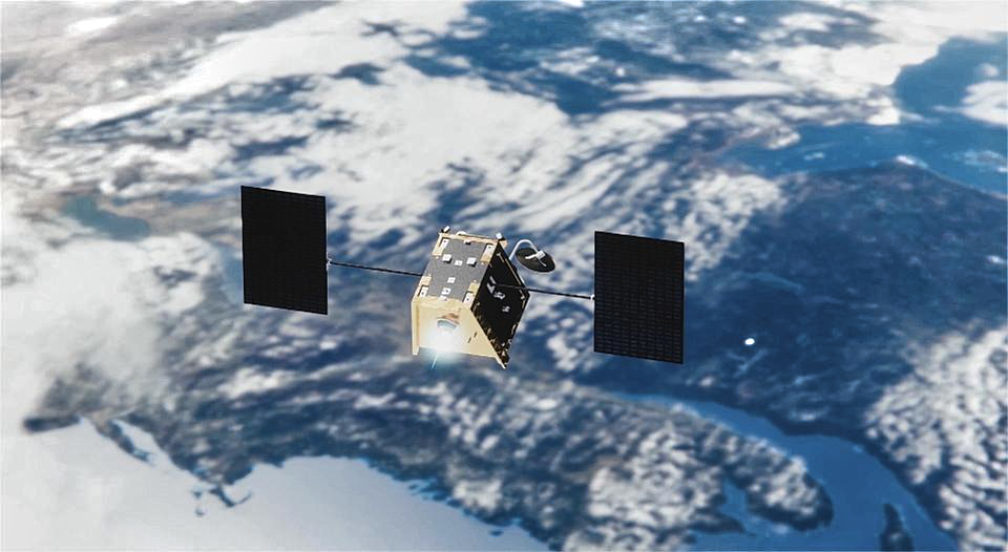
Loft Orbital Solutions Inc. (Loft Orbital) has signed a contract with LeoStella to build and integrate satellite buses for several upcoming Loft Orbital missions.

Under the contract, LeoStella will use their state-of-the-art manufacturing facility, which opened in 2019, to produce multiple satellites, based on ESPA-class buses for use in Loft Orbital’s upcoming missions, including its YAM-3 and YAM-5 satellites. YAM stands for “Yet Another Mission.” These buses will be nearly identical in design to the LeoStella satellite bus product line it has developed for other customers.

Loft Orbital flies customer payloads as a service, handling the entire mission on behalf of its customers while ensuring that the customer remains in control of payload operations. Loft Orbital has developed the hardware and software technologies needed to fly multiple payloads on a common bus design without mission-specific customization.

These technologies allow it to procure satellite buses in advance of knowing the payload configuration of the mission, supporting imagers and cameras, radio frequency sensors, scientific payloads for geophysical research or space science, weather and climate sensors, and specialized sensors focused on national security missions. This approach results in a service that provides unparalleled speed to orbit and reliability for Loft customers.

Loft Orbital’s upcoming missions will fly a variety of customer payloads, including a demonstration for the Defense Advanced Research Projects Agency’s (DARPA) Blackjack program, multiple Internet of Things (IoT) payloads for Eutelsat as well as a hyperspectral imager for the United Arab Emirates government. Loft Orbital is currently executing several YAM missions scheduled to launch throughout the next 24 months.

Both LeoStella and Loft Orbital are approaching the increasing industry demand with a similar mindset. LeoStella is leveraging its new facility, outfitted with intelligent workstations, connected tools, and unique automated integration and test approaches combined with a robust supply chain to introduce newfound flexibility and efficiency into satellite production.

Loft Orbital has developed the Payload Hub, a modular, hardware and software payload interface unit that enables it to rideshare any payload configuration on a standard satellite bus. The company has also developed the highly automated Cockpit Mission Control System, which enables customers to task their payload without the burden of conducting mission operations.

Executive Comments

Pierre-Damien Vaujoiur

“Loft has developed the hardware and software product stack that enables us to fly a wide range of payloads on a standard bus design,” said Pierre-Damien Vaujour, Co-CEO of Loft Orbital. “Leveraging LeoStella’s existing bus architecture and its flexible production facility provides us with a reliable satellite bus twice as fast as any other vendor. That translates into massive value for our customers in the form of a faster schedule and lower program risk because we procure satellites well in advance of manifesting our missions. We couldn’t be more excited for this partnership.”

Brian Rider

“Loft’s innovative approach to payload configuration coupled with LeoStella’s rapid manufacturing of high-quality satellites reduces the barrier of access to space,” said Brian Rider, the CTO at LeoStella. “We are excited about this program with Loft as it demonstrates our ability to minimize the cost and reduce the time required to manufacture satellites. The road to space has never been shorter.”


Filed Under: News

Morgan Stanley Analysis… LEO Satellites: Possibilities And Obstacles

July 22, 2020 by editorial

Morgan Stanley believes two to three LEO constellations could be fully operational within the next five years; however, funding and technology remain strong impediments.

LEO operators could drive gross global satellite capacity up by 20x in the coming years: Current global high-throughput satellite (HTS) capacity is sits at less than 3 Tbps with LEO operators looking to launch close to 200 Tbps more over the next five years.

SpaceX’s Starlink is the largest contributor by far, but we are also focused on efforts from OneWeb, Telesat, Kepler and Kuiper (Amazon). In order to provide continuous coverage at low elevations, each of these companies plans to launch hundreds or thousands of satellites to service customers globally.

Significant obstacles remain: While the current LEO race was borne out of a desire to connect the ~4 billion people globally currently without internet access, the economic viability of these constellations is still a key debate. By their design, LEO systems distribute capacity evenly across the Earth’s surface, but populations are unevenly distributed as ~70% of the Earth is covered by water with people largely concentrated in just 10% of the remaining area.

Other key concerns include ground network technology, user terminal costs, high ongoing capex needs and regulatory hurdles (including orbital debris). Total build costs for the proposed LEO constellations are still unknown and vary widely given the scope of each project. In our separate SpaceX note, we estimate the full Starlink constellation could ultimately cost ~$40 billion to build with an additional ~$130 billion for user terminals (see Space: The Wide Range of Outcomes for SpaceX).

LEOs are likely to struggle against VHTS GEO but could impair older GEO satellites: The company performed an analysis comparing LEO constellation capacity costs against various types of GEO satellites and found that next-generation VHTS Ka-band GEO satellites are ~5x more efficient. However, they could outperform legacy HTS Ku-band satellites, which could impair those legacy assets and exert further pricing pressure in the industry.

Significant addressable markets, but economics remain a major factor: As noted above, the largest addressable market is providing internet to the billions of unserved and underserved people globally. However, satellite broadband has struggled to grow beyond 2% market share in the US and 1% globally due to its high relative cost and capacity limitations, while LEO constellations will also have to address user terminals that cost three times as much as GEO terminals.

More attractive markets that lack terrestrial alternatives and face fewer economic barriers include aeronautical, maritime, enterprise, wireless backhaul, IoT and government with each offering the potential for billions in annual revenue.

Filed Under: News

BlackSky To Track COVID-19’s Impact on Military Bases

July 21, 2020 by editorial

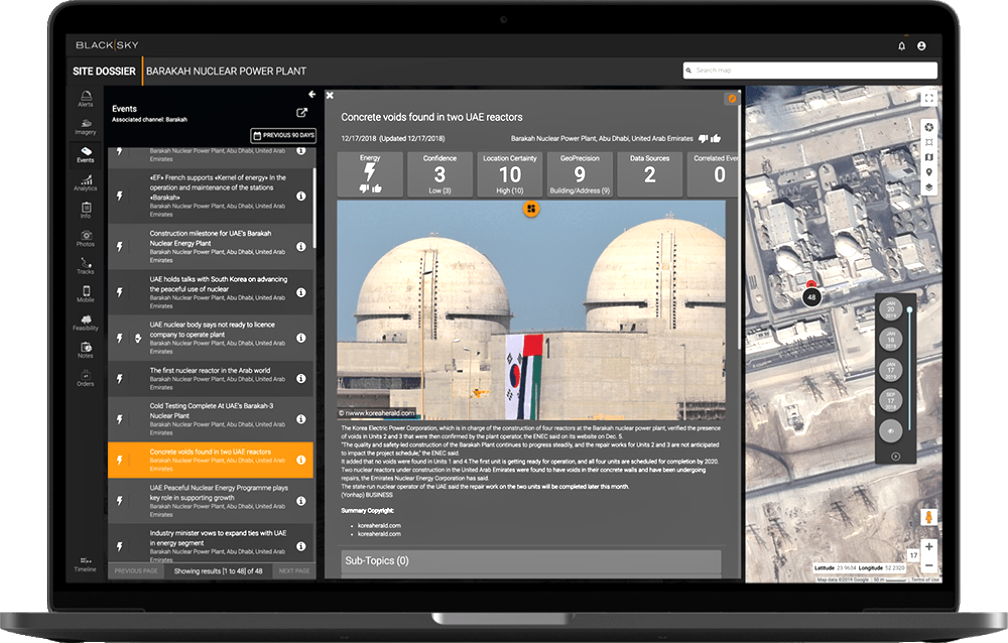
BlackSky has been awarded a U.S. Air Force contract through AFWERX and the Air Force Research Lab (AFRL) to monitor the efficacy of COVID-19 mitigation efforts worldwide.

The contract calls for BlackSky to monitor overseas U.S. military bases and help maintain secure supply chains using its Spectra artificial intelligence and machine learning platform. Near-real time global monitoring capabilities will track the spread of COVID-19 to ensure the protection of deployed personnel, and secure critical nodes of the supply chain.

BlackSky’s Spectra platform will leverage state-of-the-art image exploitation techniques to automatically analyze anomalies and monitor the application of social distancing. These measurements will then be correlated against the reported infection numbers coming from local governments and integrated into the latest epidemiology models to predict the risk to deployed U.S. Air Force personnel and the surrounding communities.

The major economies of the world have experienced the impact of the rapid onset of the coronavirus. BlackSky will help critical components of the defense industrial supply chain recover by monitoring logistics depots, maintenance facilities, petroleum reserves, and airport facilities. BlackSky will provide alerts and notifications when changes in activity level or other anomalies are observed.

Executive Comments

Brian O’Toole

“BlackSky is giving decision makers the crucial information they need to protect U.S. interests at home and overseas amid today’s rapidly shifting threat landscape,” said Brian O’Toole, CEO of BlackSky. “By combining global geospatial data sources with satellite remote sensing data, Spectra provides a near-real time look at the evolving pandemic and provides critical insights to inform national security. It is imperative to have transparency into the status of critical nodes of the supply chain for planning purposes. With BlackSky’s global monitoring capability, the U.S. Air Force can maintain a watchful eye over its supply chain. Spectra will provide the Air Force an easy to use outbreak monitoring and decision support tool. The platform will help us combat the spread of COVID-19, manage risk and ensure the protection of personnel around the globe.”

Filed Under: Featured, News

Questioning The UK Plan For OneWeb

July 21, 2020 by editorial

OneWeb, now in the process of being acquired by the British government and Indian telco giant Bharti Global, is going ahead with building satellites ahead of any decision to incorporate the UK’s plans for a rival global positioning system to rival Europe’s Galileo.

OneWeb’s bankruptcy court permitted the British and Indian joint-venture, (called ‘BidCo 100’) to pay $50.7 million into OneWeb in order to start re-building its initial constellation of some 648 satellites. OneWeb is authorized by the FCC to launch 720 craft out of a potential 1,980 mega-constellation. OneWeb also has an application with the FCC to dramatically expand the number of satellites up to 48,000.

OneWeb is under an ITU timetable to get its satellites into orbit, not the least of which is because the ITU requires a large proportion of the fleet to be in orbit. OneWeb told the FCC that it would be providing service to Alaska by 2019 and rapidly rolling out its service to the rest of the US.

OneWeb is obliged by the ITU to launch 360 satellites by June 2023 and 720 by June 2026. Failure to keep to this timetable will risk the core OneWeb spectrum licenses. The FCC has endorsed this timetable.

Currently, OneWeb has just 74 satellites on-orbit and the agreement with the incoming new owners UK/Bharti will honor most of the existing supply and launch contracts. Arianespace, for example, was under contract to launch 21 of its Soyuz rockets plus 3 launches of the new Ariane-6 rocket (itself delayed until later in 2021). Each Soyuz would carry 34 satellites.

However, Arianespace also wants more cash. The old contract called for a total of $273.8 million for the launches. Arianespace now says that the original sum, of course, does not include interest owed on the old contract and is now seeking $286 million.

Add to these complications the inevitable bankruptcy process and it is highly unlikely that the current fleet of satellites under production will be further delayed in order for global positioning modifications to take place.

Prior to the bankruptcy, OneWeb was producing satellites at around two per day. At 34 satellites per launch – and an obliged 300 craft still to be launched to meet the ITU rules – ten launches will see the task completed; however, the demands are considerable. Waiting for the bankruptcy to be fully concluded, and making positioning modifications, makes this timetable much tighter.

Last week, Airbus confirmed that it was committed to its joint-venture with OneWeb in Florida and would continue operating the joint venture’s Florida factory to turn out OneWeb’s satellites. The joint venture would also continue to seek other – non-OneWeb – satellite orders.

There are also reports that the UK is not insisting on early adoption of its satellite positioning plans. The UK’s science, research and innovation minister Amanda Solloway said that she believes ‘new’ OneWeb would be profitable. “This investment is likely to make an economic return, with due diligence showing a strong commercial basis for investment. The deal contributes to the government’s plan to join the first rank of space nations, and signals the government’s ambition for the UK to be a pioneer in the research, development, manufacturing, and exploitation of novel satellite technologies enabling enhanced broadband through the ownership of a fleet of Low Earth Orbit satellites.”

Report by journalist Chris Forrester, filing at the Advanced Television infosite…
Filed Under: News

Equatorial Space Qualifies For Space Accelerator Program

July 20, 2020 by editorial

Singapore’s answer to the global small launch vehicle movement, Equatorial Space Systems, joins Singapore Space & Technology Ltd. (SSTL)’s Space-based Accelerator Program.

The is set to provide regional space and deep tech startups with insights, skill sets and resources to become commercially viable, and leverages SSTL’s deep space industry network to assist startups with high-growth potential.

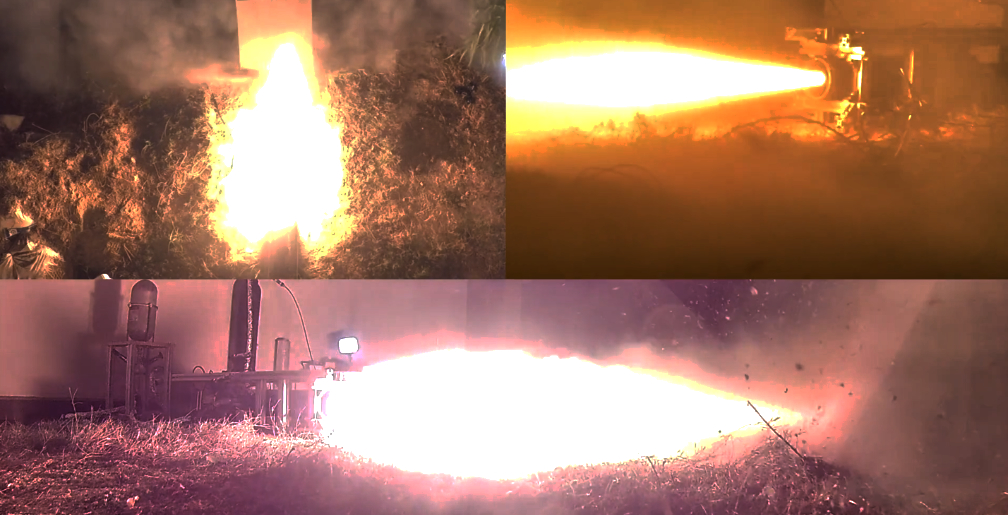
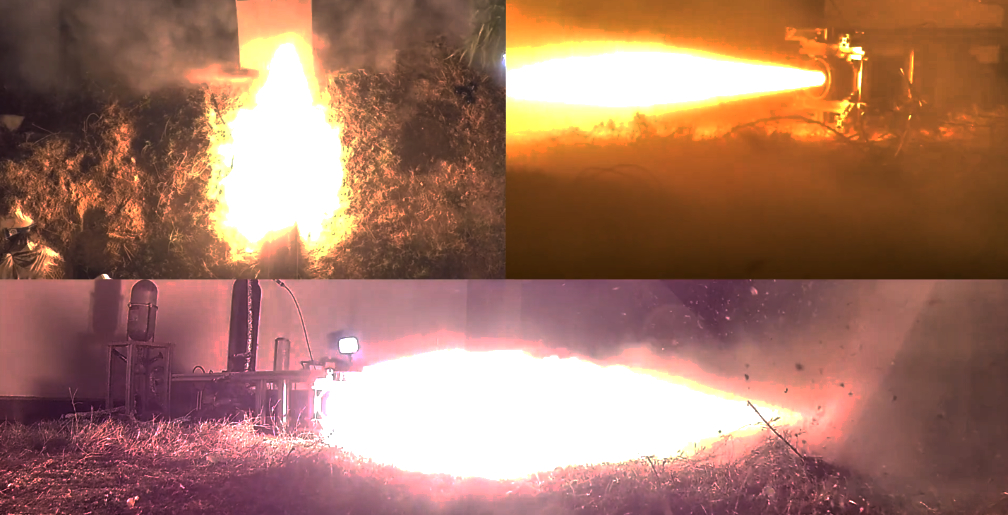
Equatorial Space Systems is a Singapore-based space tech startup developing innovative technologies for space launch and exploration activities. With its proprietary hybrid propulsion technology, ESS makes rockets safer, less expensive and more flexible than ever before.

Aiming for the first orbital launch by 2022, ESI has previously been crowned the winner of MBRSC Innovation Cup 2018 in Dubai, a Top 500 Deep Tech Startup by Hello Tomorrow 2018, as well as the Most Promising Startup at the NAMIC Innovation Day 2019.

The Singapore Space and Technology Ltd (SSTL), previously Singapore Space and Technology Association (SSTA), is a leading space organization in Southeast Asia. As an advocate and thought leader, SSTL is active in the space industry, spearheading the adoption of space-related technologies, and fostering partnerships between various stakeholders to promote and grow the regional space ecosystem.

Through hosting global meets that involve consumers, space research organisations, leading and emerging technology companies, venture capitalists and space agencies from around the world, it promotes and creates opportunities for accelerating innovation and talent development.

Executive Comments

Simon Gwozdz

For the Founder and CEO of Equatorial Space, Simon Gwozdz, this is more than business – it’s personal. “I remember attending the presentation day of the Singapore Space Challenge back in 2015. I was looking for a way into the ecosystem and SSC looked like a good place to start. Some of the SSTL’s staff had a chat with me, and decided to give me a shot at volunteering at their events. That’s how I got the insights and contacts essential to starting Equatorial Space,” he stated.

“It is heartening to see how SSTL’s suite of programs synergistically spur and support interest in this exciting industry. The accelerator program aims to take on the uphill task of encouraging practical adoption of space-related technologies and at the same time, grow a collaborative space tech ecosystem in the region. ” said Lynette Tan, Chief Executive of SSTL.

Filed Under: News

Tyvak + Lawrence Livermore National Labs To Produce Smallsat Telescopes

July 19, 2020 by editorial

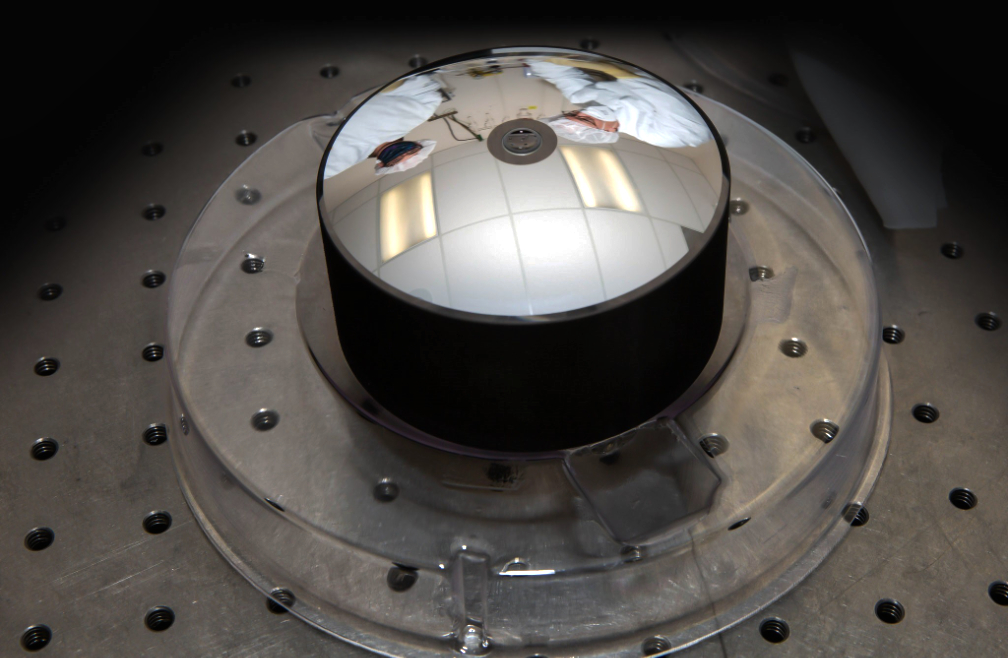
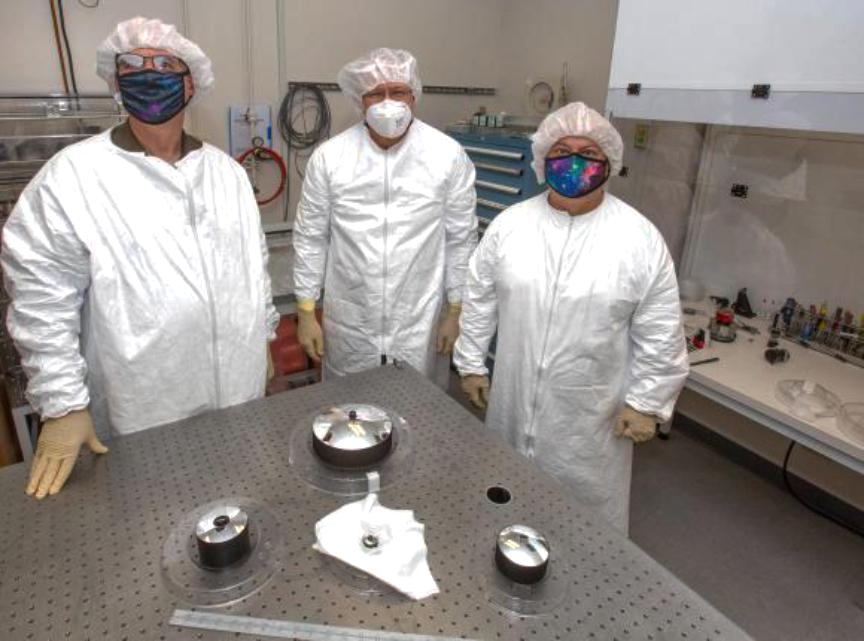
A space telescope, dubbed the V4 and an identical twin to this one, flew on LLNL’s GEOstare1 mission, where it was employed to demonstrate the utility of nanosatellites for space situational awareness. Photo by Julie Russell/Lawrence Livermore National Laboratory.

Lawrence Livermore National Laboratory (LLNL) and Tyvak Nano-Satellite Systems, Inc. have reached a cooperative research and development agreement (CRADA) to develop innovative compact and robust telescopes for smallsats.

The four-year, $2 million CRADA will combine LLNL’s Monolithic Telescope (MonoTele) technology with Tyvak’s expertise producing high-reliability spacecraft. In the future, the advanced optical imaging payloads may be employed to collect information for remote sensing data users.

The MonoTele consists of a space telescope fabricated from a single, monolithic fused silica slab, allowing the optic lens to operate within tight tolerances. This approach does not require on-orbit alignment, greatly simplifying spacecraft design and favorably affecting spacecraft size, weight and power needs.

Tyvak will provide the spacecraft and payload, consisting of the MonoTele, sensor, and electronics, ensuring survivability in a demanding vibration environment during launch and wide-ranging temperatures on-orbit. LLNL will then apply its knowledge of novel optical payloads to develop, test, and process data gathered from the sensors.

Developed by LLNL over the past eight years, the MonoTele space telescopes range in size from one inch (called the mini-monolith) to 14 inches.

The MonoTele technology provides imaging for nanosatellites, about the size of a large shoebox and weighing less than 22 pounds, and microsatellites, about the size of a dorm refrigerator and weighing up to several hundred pounds.

LLNL researchers undertook the development of the tiny one-inch, mini-monolith for use in star trackers, a component that every satellite has one or more of, and is used to find the satellite’s “attitude” or orientation. Attached to the satellite’s body, the star trackers compare the satellite’s position relative to the position of the stars to determine their orientation.

Typically, space telescopes have two optical mirrors – a larger primary mirror and a smaller secondary mirror – that face each other. If the mirrors go out of alignment, the image becomes fuzzy.

To keep the mirrors in alignment, a metering structure is typically employed to maintain the mirrors in place. But metering structures can be expensive and can go out of alignment.

To solve this problem, LLNL optical scientist Brian Bauman came up with the idea of the MonoTele – replacing the two mirrors and metering structure with one solid piece of glass, with optical shapes and reflective coatings at both ends of the glass.

The MonoTele concept was inspired by the design of the mirrors used for the Large Synoptic Survey Telescope that is under construction in Chile, due to come online in 2023 and expected to image some 20 billion galaxies.

Under this CRADA, LLNL and Tyvak expect to develop additional MonoTele-type telescopes capable of operating in other wavelength bands, such as ultraviolet and short-wave infrared, and as a spectrometer instrument.

The telescopes, which would be demonstrated in space, also would feature compact and low-power focus mechanisms for missions requiring agile optics technology.

The MonoTele smallsat imaging payloads can be used across multiple applications and will serve Earth observation, space situational awareness, and satellite navigation initiatives.

Executive Comments

“I’m excited about this technology transitioning from LLNL to space demonstration and eventual commercial use,” said Alex Pertica, the deputy program leader for LLNL’s Space Science and Security Program (SSSP).

“We are delighted to have formalized this collaborative effort with LLNL to demonstrate and commercialize advanced optical imaging technology,” said Anthony Previte, Tyvak’s CEO. “Together, we will enable end users to achieve their mission goals in many space-based markets. Several telescopes with the MonoTele technology have flown in space. They’ve performed very well — the one-inch, mini-monolith version is now flying aboard Tyvak-0129. The technology’s first space mission was the GEOstare satellite, which launched in January 2018.”

“Partnering under a CRADA with outside industry was the natural next step for commercializing the technology,” said David Dawes, Business Development Executive commercializing lasers, optics and radiation detection innovations at LLNL. “We look forward to working with Tyvak. The CRADA gives Tyvak the option to license LLNL intellectual property (IP) or joint IP developed under this collaboration, in addition to any of the Lab’s existing background IP required to practice the subject inventions.”

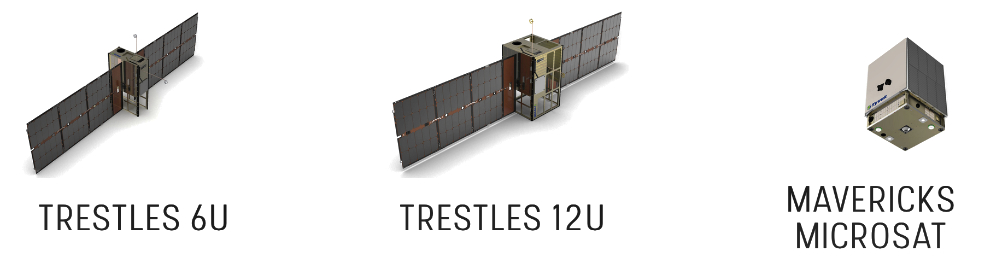
Tyvak’s standard 6U and 12U nanosatellite production units.

Filed Under: News

HawkEye 360’s Second Smallsat Constellation Cluster Maxes Milestone

July 17, 2020 by editorial

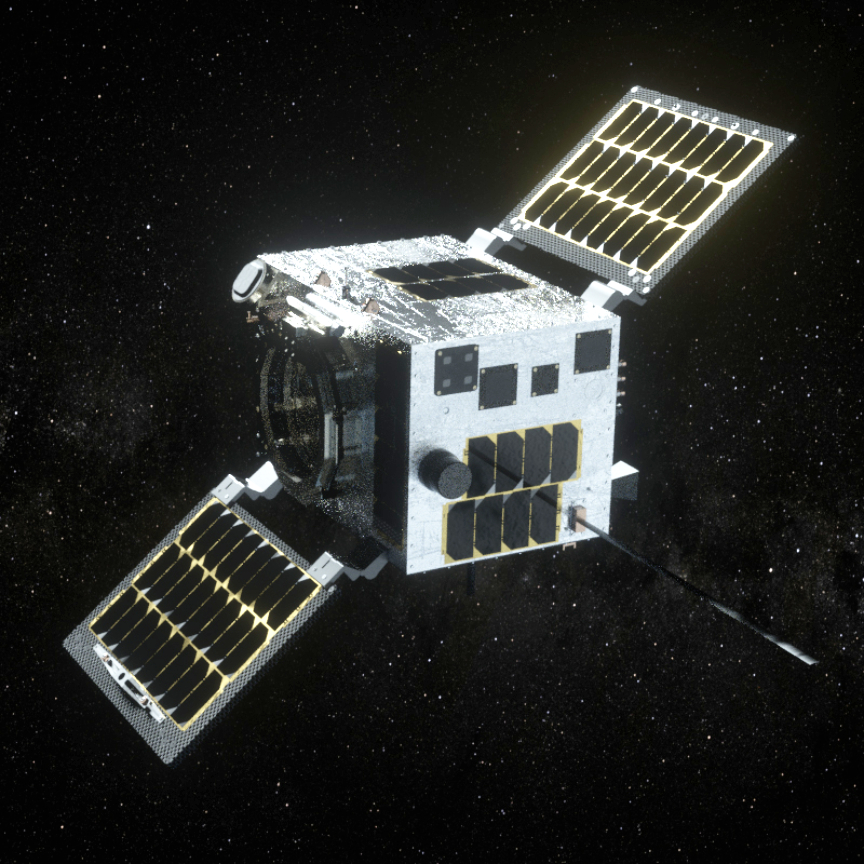
HawkEye 360 completes milestone in preparation to launch second cluster – artistic rendition.

HawkEye 360 Inc. has successfully completed environmental testing of their second cluster of three smallsats.

This significant milestone for HawkEye Cluster 2 clears the way to prepare for launch, which is scheduled for late 2020. HawkEye Cluster 2 will join the company’s first cluster of satellites that were launched in December 2018, doubling the size of HawkEye 360’s constellation.

This is the first cluster in a series of next generation satellites that will improve revisit rates and bring increasingly robust RF data insights to US and international customers to inform their decision-making processes.

HawkEye 360 has five more clusters of satellites fully financed and under development for launch in 2021 and early 2022. This growing constellation identifies and precisely geolocates a broad set of RF signals from emitters such as VHF marine radios, UHF push-to-talk radios, maritime radar systems, AIS beacons, L-band satellite devices, emergency beacons and more. HawkEye 360 processes and analyzes this data using proprietary algorithms and machine-learning tools to deliver actionable insights to customers.

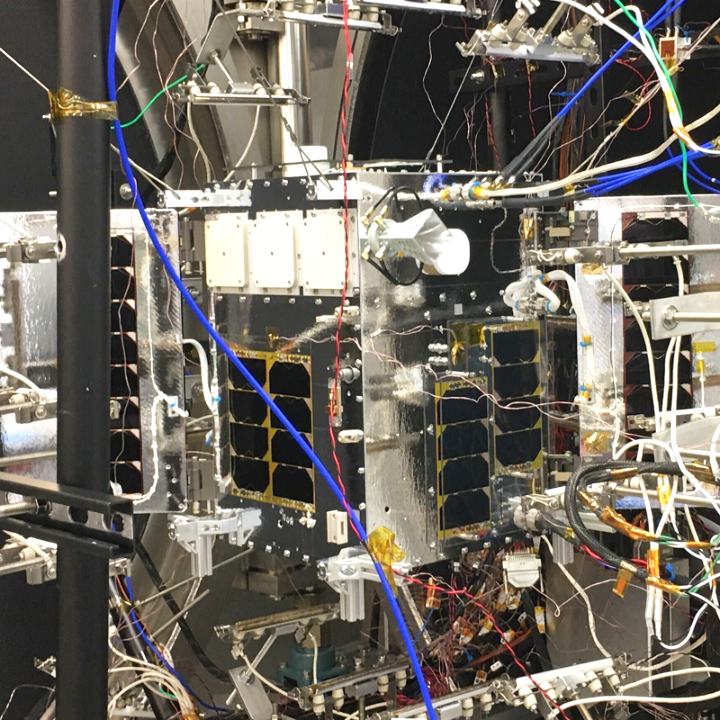
HawkEye Cluster 2 satellite undergoing thermal vacuum testing. Photo is courtesy of SFL.

HawkEye Cluster 2 features significant advancements:

  • Improved Capability: The satellites contain a new and improved software-defined radio (SDR) that can tune to a wide range of frequencies and gather higher-resolution signal data to deliver quality results to customers.
  • Greater Accuracy: With powerful updated on-board computing, the satellites can process data at a faster rate, leading to increased geolocations with an even greater degree of accuracy, so customers receive the best possible RF geospatial intelligence.
  • Simultaneous Collection: The satellites can simultaneously collect multiple signals over a single region for enhanced analytics that help customers make more informed decisions.

HawkEye 360 built the RF payloads, which UTIAS Space Flight Laboratory (SFL) integrated into the satellite bus. SFL conducted the environmental testing efforts, which included vibration, thermal vacuum, and electromagnetic interference testing. These tests simulate the environment the satellites will encounter in space. The next step is to prepare the satellites for launch integration.

Executive Comment

John Serafini

“HawkEye 360’s investment to advance the field of space-based RF geoanalytics isn’t just about defense and intelligence missions, but it’s also about protecting our global commons by identifying and tracking illicit activities such as illegal fishing, human trafficking, and animal poaching,” said HawkEye 360’s CEO, John Serafini. “In just 18 months, our first cluster has tracked 20 million geolocations and signals of interest to feed growing demand from civil service and defense clients around the world. The successful environmental testing of our HawkEye Cluster 2 satellites brings us one step closer to our goal of a fully operational constellation that will transform invisible signals into insights that make the world a safer place.”

Rob Rainhart

“Each new cluster increases HawkEye 360’s capacity to collect more data that we can then process, analyze and deliver as relevant and robust data insights,” said HawkEye 360’s COO, Rob Rainhart. “The highly advanced HawkEye Cluster 2 satellites can capture multiple signal layers at once to create a more accurate and detailed visual of activity and then bring that data down in a shorter period of time for our customers’ benefit.”

A HawkEye 360 Cluster 2 smallsat. Image is courtesy of the company.

Filed Under: News

Spaceflight Inc. Sets Up 16 Smallsats & Their Own OTV for SpaceX’s Next Rideshare Mission

July 17, 2020 by editorial

Spaceflight Inc. will be flying their next generation orbital transfer vehicle, Sherpa-FX, on a fully dedicated rideshare mission with SpaceX.

The mission, called SXRS-3 by Spaceflight, is scheduled to launch on a Falcon 9 no earlier than December 2020. Spaceflight has contracted 16 spacecraft for this mission from organizations that include iQPS, Loft Orbital, HawkEye 360, NASA’s Small Spacecraft Technology program, Astrocast, and the University of South Florida Institute of Applied Engineering.

In addition to the customer spacecraft, Sherpa-FX will transport multiple hosted payloads including one for Celestis Inc., as well as several that will demonstrate technologies designed to identify and track spacecraft once deployed. By demonstrating these tracking systems on orbit, Spaceflight customers will have access to flight-proven technologies that can mitigate space congestion and provide the foundation of effective and responsible space traffic management.

Technologies onboard Sherpa-FX include payloads by NearSpace Launch, Keplerian Technologies and their hardware partner Tiger Innovations, and Space Domain Awareness Inc. These innovative payloads will provide spacecraft developers an independent capability to identify and track their spacecraft without drawing on the host spacecraft resources.

Spaceflight’s Sherpa-FX is the first innovative orbital transfer vehicle to debut in the company’s Sherpa-NG (next generation) program. The vehicle is capable of executing multiple deployments, providing independent and detailed deployment telemetry, and flexible interfaces, all at a low cost. The company’s Sherpa-NG program is a family of space vehicles, continuing the tradition of the company’s first orbital free flyer on the historic SSO-A mission, which successfully delivered 64 unique spacecraft on orbit aboard a Falcon 9. 

In June 2020, Spaceflight announced it signed a Multi-Launch Agreement with SpaceX, securing capacity on several upcoming flights. The companies are currently working toward the launch of an upcoming Starlink mission in which Spaceflight procured a portion of the launch for its customer BlackSky, designed and built the adapter and harnessing, integrated the spacecraft, and provided mission management services for its customer.

Spaceflight works with a large portfolio of launch vehicles, including Falcon 9, Antares, Electron, Vega, and PSLV, to provide a variety of launch options to its customers. The company has launched more than 270 satellites across nearly 30 rideshare missions. In 2019, the company successfully executed nine missions, the most it’s ever launched in one year, sending more than 50 payloads to space.

Executive Comments

Grant Bonin

“Spaceflight is committed to providing unmatched launch flexibility for customers — whether that’s re-manifesting on a different vehicle due to delays, deployments to exotic or special orbits, or the ability to fly and operate hosted payloads,” said Grant Bonin, SVP of business development for Spaceflight Inc. “In-space transportation is essential to meeting our customer’s specific needs to get their spacecraft delivered to orbit exactly when and where they want it. If you think of typical rideshare as sharing a seat on a train headed to a popular destination, our next-generation Sherpa program enables us to provide a more complete ‘door-to-door transportation service’.”

Curt Blake

“We aim to make getting to space easier, faster and with more reliability than ever before,” added Curt Blake, president and CEO of Spaceflight. “To do that, we have to build flexibility into everything we offer — from our contracting practices, to integration processes that enable spacecraft to move seamlessly between launch vehicles, to providing customers with a wide range of mission services. Now we’re solving some of the industry’s most pressing challenges by providing greater spacecraft management awareness and customized orbital delivery. We couldn’t be more excited to expand our comprehensive suite of launch services to support our customers’ mission needs.”

Filed Under: Featured, News

DRAG RACER Satellite Qualification Completed

July 16, 2020 by editorial

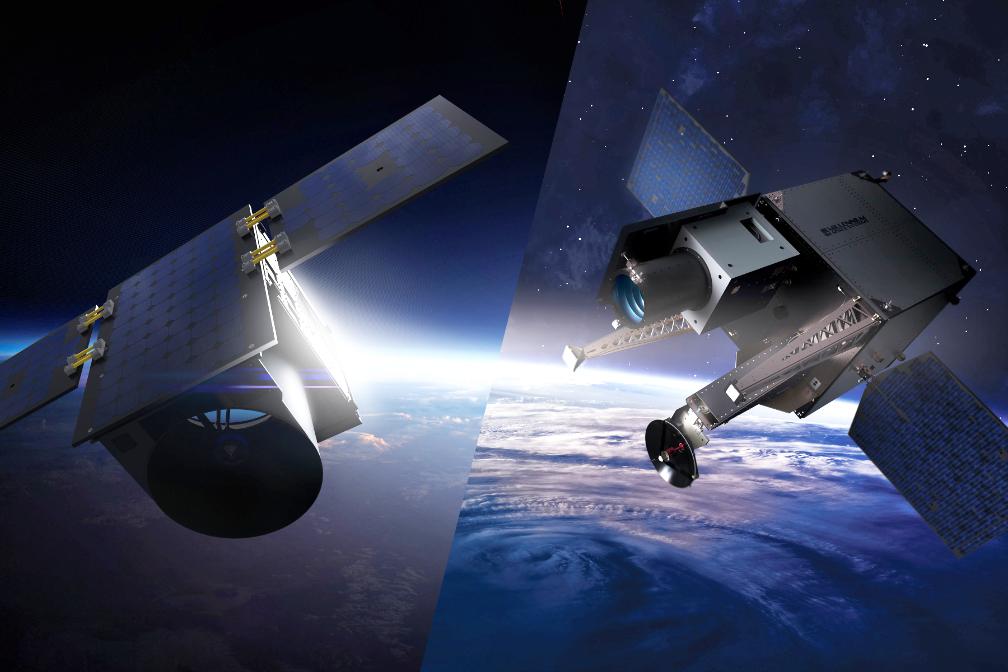
Image is courtesy of Millennium Space Systems.

TriSept Corporation and Millennium Space Systems preparations are underway for the experimental DRAG RACER orbital debris mission payload to be delivered to New Zealand and integrated aboard a Rocket Lab Electron before the planned launch this fall.

Millennium has completed space qualification of its two DRAG RACER smallsats that will embark on a first-of-its-kind LEO mission to help solve the orbital debris challenge in space.

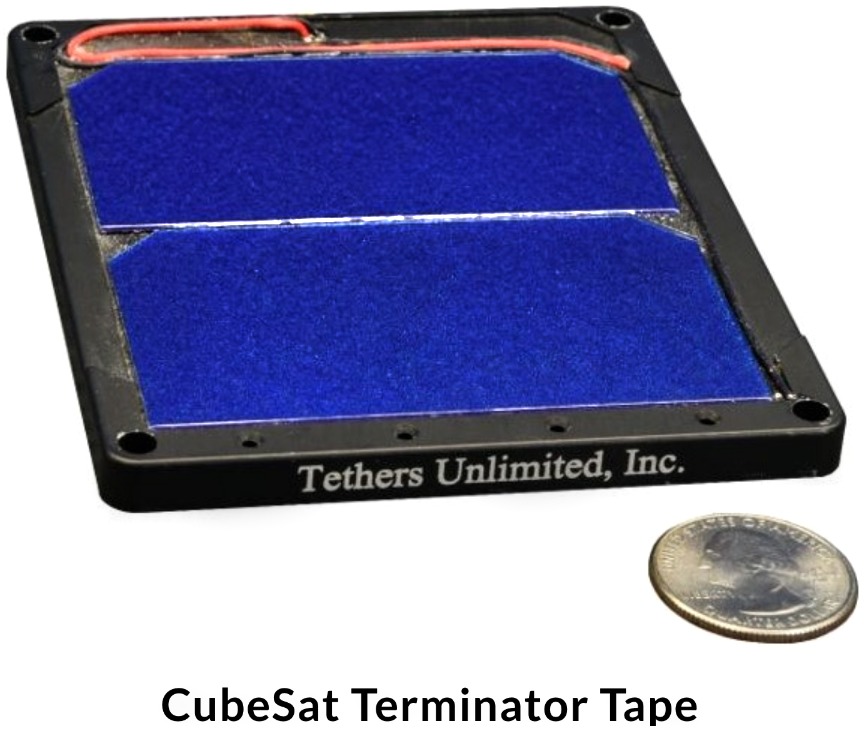
The DRAG RACER mission will use scientific methods to compare the de-orbit performance of two identical satellites – one that will reenter naturally and a second satellite featuring a tether developed by Tethers Unlimited, Inc. (TUI) that is expected to significantly accelerate the de-orbit process.

Millennium plans to observe, evaluate and characterize the satellite hosting the 70-meter-long (230 feet) Terminator Tape tether aboard the control satellite, while calibrating predictive models through the use of radar tracking data. An onboard timer will trigger the tether deployment on the experimental satellite a few days into the mission, with reentry estimates averaging about a month-and-a-half, while the untethered spacecraft could take up to nine years to reenter the Earth’s atmosphere and burn up.

Once launched, the DRAG RACER mission payload will separate into two identical 6U satellites with identical stowed mass properties and drag coefficients.

Executive Comments

Stan Dubyn

“We are motivated to study and quantify space tether applications as they will offer the LEO space community worldwide both improved deorbit capabilities and unique propulsive solutions,” said Stan Dubyn, Millennium Space Systems Founder and CEO. “This orbital debris mitigation experiment exemplifies our commitment to fielding innovative concepts using low-cost solutions.”

“The DRAG RACER mission is built on an innovative collaboration between Millennium Space Systems, TriSept, Tether’s Unlimited and Rocket Lab that is dedicated to exploring and enabling creative and affordable solutions to the orbital debris challenge,” said Rob Spicer, TriSept President and CEO. “We look forward to leading the integration effort for this historic payload that could ultimately play an integral role in clearing orbital debris from Low Earth Orbit for years and generations to come.”

Dr. Robert Hoyt

“The space community understands tether systems can expedite reentry, but this is our first opportunity to truly quantify performance directly and more effectively calibrate models developed over the last 50 years,” said Dr. Robert Hoyt, President of Tether’s Unlimited. “Predictions suggest the tethered spacecraft will deorbit in approximately 45 days, while the untethered spacecraft remains in orbit for approximately seven to nine years.”

Filed Under: News

Successful Fundraising Propulsion for Exotrail

July 16, 2020 by editorial

Exotrail’s vision: onboard propulsion, on-orbit transportation and on-orbit servicing. Image credit: Real Dream, Exotrail

Exotrail has raised 11 million euros ($13 million) — this Series A round was led by two European Venture Capital firms, Karista (through Paris Region Venture Fund) and Innovacom. IXO Private Equity, NCI-Waterstart, Turenne Capital and returning investors 360 Capital, Irdi Soridec Gestion and Bpifrance also invested.

This round will further boost Exotrail’s development by allowing the company to extend its product portfolio and scale-up its manufacturing and business development capabilities. The Series A fundraising will enable Exotrail to continue to bring unique solutions to significantly enhance deployment, improve performance and reduce space pollution in the rapidly growing small satellite space market.

Exotrail’s propulsion systems and mission design and operations software will now allow smallsats to optimize their deployment in space, choose their orbit, and prevent collisions thus reducing space debris.

Exotrail was incorporated in 2017 and has now raised 17 million euros to date. The company has designed, built and qualified a first propulsion system demonstrator in only 10 months. It was delivered in September 2019 and is now awaiting launch. Since the beginning of the year, the company has signed multiple contracts, including Clyde Space, Eutelsat, CNES and ESA, as well as with an Asian company. With a staff of 27 in Massy and Toulouse in France, the company intends to grow to 50 people during 2022 in order to be able to produce 100 propulsion systems per year.

Executive Comments

David Henri

“This fundraising reinforces our core mission which is to build sustainable constellations of small satellites. Sustainable in terms of launch costs, performance capabilities and of course space environment. Raising this money in this challenging period is hugely important for us and is a significant success for the company, further underlining the accomplishments of our team in the past two years. Looking to the future, our ambition is to become a leading player in the European NewSpace sector.” said David Henri, one of the four Co-Founders and CEO of Exotrail.

“We are delighted to have the opportunity to invest in Exotrail, a company with outstanding New Space solutions, supported by a visionary team with a unique go-to-market approach, which has already signed strategic business contracts with major Space players. Exotrail’s success is proof of our ability to identify and invest in promising companies in the New Space field, a sector which is at the heart of the strategy of our forthcoming fund supported by CNES, CosmiCapital.” said Yvan-Michel Ehkirch and Michael Thomas from Karista.

“We were won over by Exotrail’s ambition and expertise. We are delighted to support the best of French “deep tech” in space.” said Fréderic Humbert from Innovacom.

Filed Under: News

  • « Go to Previous Page
  • Page 1
  • Interim pages omitted …
  • Page 295
  • Page 296
  • Page 297
  • Page 298
  • Page 299
  • Interim pages omitted …
  • Page 338
  • Go to Next Page »

Primary Sidebar

WEEKLY NEWSLETTER

Archives

  • March 2026
  • February 2026
  • January 2026
  • December 2025
  • November 2025
  • October 2025
  • September 2025
  • August 2025
  • July 2025
  • June 2025
  • May 2025
  • April 2025
  • March 2025
  • February 2025
  • January 2025
  • December 2024
  • November 2024
  • October 2024
  • September 2024
  • August 2024
  • July 2024
  • June 2024
  • May 2024
  • April 2024
  • March 2024
  • February 2024
  • January 2024
  • December 2023
  • November 2023
  • October 2023
  • September 2023
  • August 2023
  • July 2023
  • June 2023
  • May 2023
  • April 2023
  • March 2023
  • February 2023
  • January 2023
  • December 2022
  • November 2022
  • October 2022
  • September 2022
  • August 2022
  • July 2022
  • June 2022
  • May 2022
  • April 2022
  • March 2022
  • February 2022
  • January 2022
  • December 2021
  • November 2021
  • October 2021
  • September 2021
  • August 2021
  • July 2021
  • June 2021
  • May 2021
  • April 2021
  • March 2021
  • February 2021
  • January 2021
  • December 2020
  • November 2020
  • October 2020
  • September 2020
  • August 2020
  • July 2020
  • June 2020
  • May 2020
  • April 2020
  • March 2020
  • February 2020
  • January 2020
  • December 2019
  • November 2019
  • October 2019

© 2019–2026 SatNews

Insert/edit link

Enter the destination URL

Or link to existing content

    No search term specified. Showing recent items. Search or use up and down arrow keys to select an item.
      x
      Sign Up Now!

      Enjoy a free weekly newsletter with recent headlines from the global SmallSat industry.

      Invalid email address
      We promise not to spam you. You can unsubscribe at any time.
      Thanks for subscribing! You will now receive weekly SmallSat News updates.
      We love our advertisers.
      And you will too!

      Please disable Ad Blocker to continue... We promise to keep it unobtrusive.
      We promise not to spam you. You can unsubscribe at any time.
      Invalid email address
      Thanks for subscribing!