• Skip to main content
  • Skip to primary sidebar
  • Home
  • News
  • Featured
  • More News ⌄
    • SatNews
    • SatMagazine
    • MilSatMagazine
  • Events ⌄
    • MilSat Symposium
    • SmallSat Symposium
    • Satellite Innovation
  • Contacts
  • SUBSCRIPTION

SmallSat News

You are here: Home / Archives for News

News

Satnews Perspectives Video Interview with Daniel L. Jablonsky, President and CEO, Maxar Technologies

July 8, 2020 by minisat

Daniel L. Jablonsky was appointed to the role of President and Chief Executive Officer of Maxar Technologies and to the Company’s Board of Directors on January 13, 2019.

Previously, Mr. Jablonsky had served as President of DigitalGlobe since October 2017, when the company became part of Maxar Technologies. He joined DigitalGlobe in 2012 as Senior Vice President, General Counsel and Corporate Secretary, and also held the role of General Manager, International Defense & Intelligence from 2015 to 2017.

Prior to DigitalGlobe, Mr. Jablonsky was a shareholder at the law firm of Brownstein, Hyatt, Farber, Schreck, LLP from 2011 to March 2012, where he practiced corporate and securities law. From 2010 to 2011, Mr. Jablonsky served as the Interim Co-General Counsel of Flextronics International Ltd., and from 2007 to 2010, he held the role of Senior Corporate Counsel, Securities and Mergers & Acquisitions at Flextronics.

Mr. Jablonsky previously was in-house counsel at UBS Financial Services, Inc., served in the enforcement division of the U.S. Securities and Exchange Commission, and practiced corporate and securities law with O’Melveny & Myers LLP. Mr. Jablonsky holds a Bachelor of Science in Mechanical Engineering from the United States Naval Academy and a Juris Doctor degree from the University of Washington School of Law. Prior to law school, Mr. Jablonsky was an officer and nuclear engineer in the U.S. Navy.

Filed Under: Featured, News

Partnership by AImotive + CS3 to Drive Onboard Satellite AI

July 8, 2020 by editorial

AImotive test vehicle on the road.

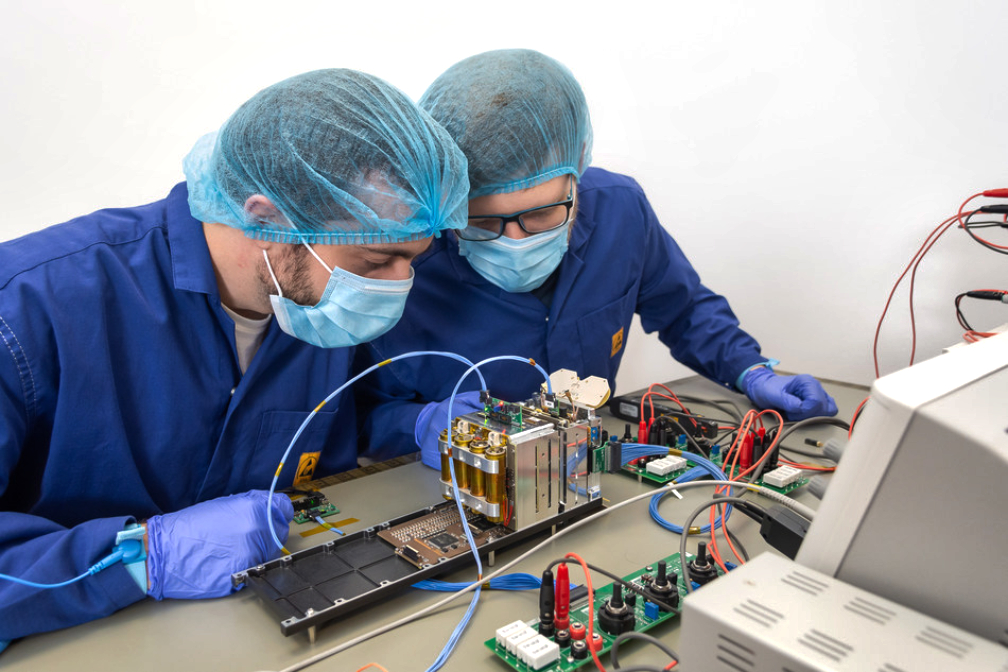
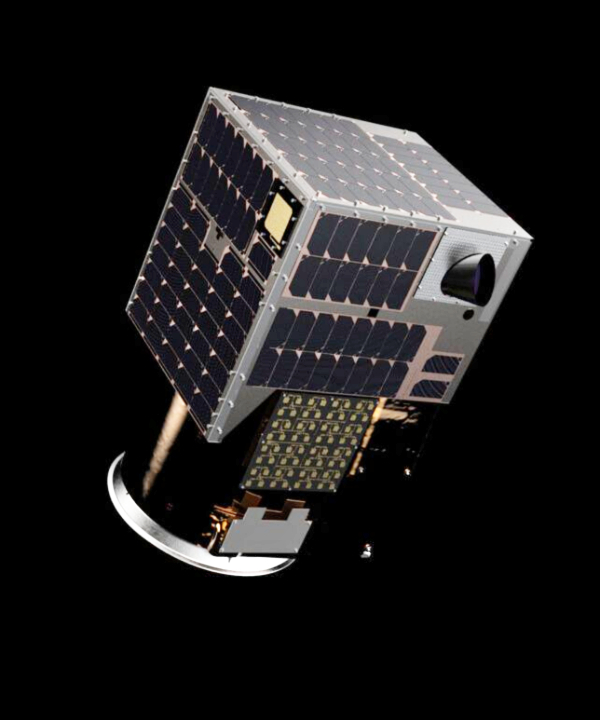
AImotive and C3S are collaborating to create a prototype hardware platform for the efficient execution of artificial intelligence (AI) onboard satellites by H2 2021.

C3S will adapt AImotive’s aiWare NN hardware acceleration technology in its space electronics platform to enable high performance AI capabilities in small, power-constrained satellites. The results of this collaboration are expected to accelerate the commercialization of a wide range of services for both specialized and mass-market applications, such as telecommunications, Earth and space observation, autonomous satellite operation, docking support, asteroid mining etc.

Autonomous, intelligent operation has always been expected of satellites to a certain extent. However, currently widespread solutions are highly dependent on ground stations. Typically, satellites collect business or scientific data and downlink them to the ground in full without pre-processing. This is insufficient in use cases that require immediate action, for example natural disasters, precision agricultural solutions, remote sensing data-based forecasting and alerting, cargo tracking.

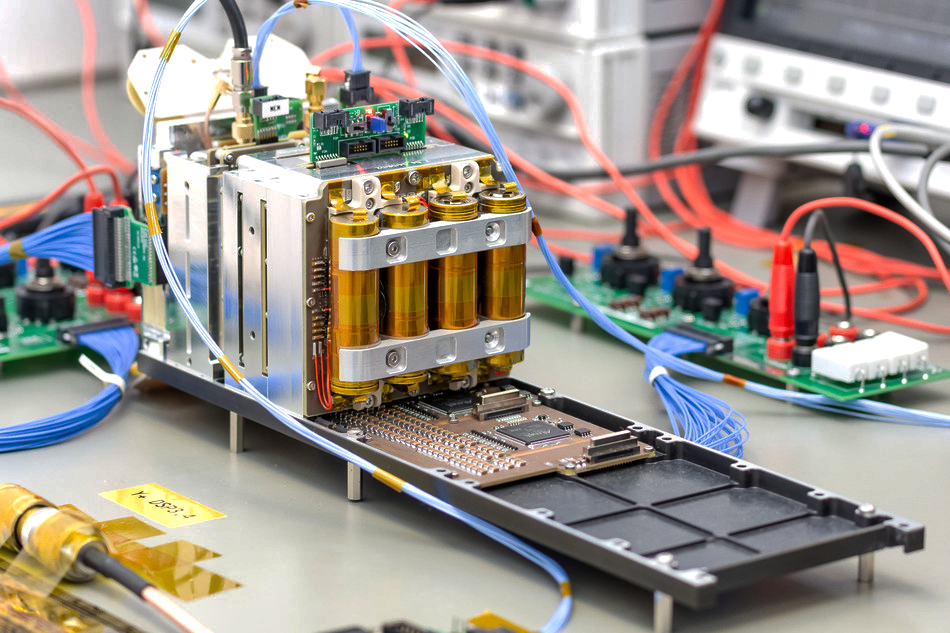
The build of a smallsat prototype.

The use of AI for automated operation in many perception and decision-making tasks is widespread in the automotive industry. However, significant processing capabilities are needed to compute the large amount of data needed for neural networks (NN) and AI intensive workloads. AImotive has been developing automotive NNs on automotive-grade hardware platforms for over four years. The company has realized that the lack of optimal hardware is one of the biggest limitations of automated driving and is pioneering development in this area.

AImotive has a deep understanding of many of the challenges of deploying AI in highly constrained embedded environments, such as ensuring all data movement is tightly controlled to minimize power consumption and maximize system robustness for high reliability. However, the requirements of the space industry are even more demanding than for automotive, requiring the best minds from both automotive and space industries to come together to identify new approaches.

In addition to large satellite solutions developments, C3S specializes in highly reliable, 3-16U smallsat platforms that support In Orbit Demonstration (IOD), Earth Observation (EO), space weather forecast, and IoT missions. In addition, C3S provides a turnkey solution for nanosat missions covering the whole lifecycle from mission planning to deorbiting.

Executive Comments

“AImotive’s vast experience in deploying AI in highly constrained embedded environments is why C3S chose to adapt its aiWare NN acceleration platform for use in space,” said Gyula Horváth, CEO of C3S. “Adapting automotive or military grade tools and technologies for the space industry is not uncommon. The strong experience C3S holds in working with both cubic and large-scale satellites is an enormous advantage for this process, and we are excited to be joining forces with AImotive to make sure our space electronics platform will be the most robust on the market.“

“It is a very exciting time for the AImotive team to be involved in the introduction of such an innovative terrestrial technology to the space industry,” said László Kishonti, Founder and Chief Executive Officer at AImotive. “The solution will include extensions of our low-power aiWare hardware NN acceleration architectures specifically designed to withstand the demanding habitat of space, including heat fluctuations and cosmic radiation.”

Filed Under: News

New VP of Business Development Named by AAC Clyde Space

July 8, 2020 by editorial

Peter Anderson has been appointed Vice President, Business Development, with responsibility for Sales and Marketing of AAC Clyde Space’s portfolio of products and services.

In his new role, he will also join the group’s management team.

Peter Anderson joined AAC Clyde Space in 2015 and has, in his previous role as Head of Business Development Mission & Services, been instrumental in developing AAC Clyde Space’s Space as a Service offering. He has also led negotiations on various key contracts.

Peter Anderson has a Bachelor of Engineering in Mechanical Engineering from the University of Glasgow and a Postgraduate Diploma in Computer Aided Engineering and Analysis from the University of West of Scotland.

Executive Comment

Luis Gomes

“Leveraging his extensive commercial and technical background, Peter has formed strong relationships with AAC Clyde Space’s customers and developed new and exciting propositions. He excels in providing the business direction on the latest innovations and market growth areas“, said AAC Clyde Space CEO, Luis Gomes.

Filed Under: News

NanoAvionics Captures ESA Smallsat Propulsion Systems Contract

July 8, 2020 by editorial

The European Space Agency (ESA) recently granted 1 million euros to smallsat mission integrator, NanoAvionics, to develop key components for smallsat propulsion systems.

The new propulsion technologies, with a thrust of up to 5N, aim to further reduce the cost of small satellite projects while making each satellite more reliable, propellant supply chains safer, and constellations more economical. Based on those components a new generation of propulsion systems for small satellites will be used in future ESA missions, and available to commercial satellite operators across the world.

The first two R&D projects for NanoAvionics by ESA include the development of a miniature latch valve and a double-seat 1N valve for mono-propellant applications. They are a result of the Plan for European Cooperating States (PECS) in Lithuania.

NanoAvionics will also participate, as a partner organisation, in two additional ESA funded satellite technology R&D projects. The first, led by Vilnius University, will develop a resistojet thruster for small satellites that uses water as a propellant. The main advantages of the proposed solution will be the reduction of manufacturing costs, increased efficiency compared to existing low power thrusters and the use of a very safe propellant.

The Baltic Institute of Advanced Technologies leads the second project, which will develop an ultra-wideband software-defined radio for space communications. This technology will cover the vast majority of the space communication bands.

Funded under the 4th call for outline proposals of PECS, NanoAvionics will develop a miniature latch valve (MLV) to improve the safety and performance of mono-propellant thrusters. Designed to isolate the propellant tank from the thrusters, the MLV’s sealed construction and normally-closed configuration will prevent unwanted leaks of propellant during the satellite’s launch and orbital operations. Under the PECS grant, NanoAvionics will refine and test a prototype, demonstrating the MLV’s utility for use in chemical or electric propulsion systems.

NanoAvionics also received funding under the 5th call for outline proposals of PECS to develop a double-seat 1N valve (DSV) for mono-propellant applications. Intended to reduce the mass and complexity relative to existing valves, the DSV will make propellant supply chains in small satellites safer and more reliable.

As a European Space Agency cooperating state since 2014, Lithuania has fostered closer ties between ESA, the Lithuanian space industry, and the Lithuanian academic community.

Executive Comment

Vytenis J. Buzas

NanoAvionics CEO, Vytenis J. Buzas, said, “Designing and developing propulsion components specifically for smallsats, instead of optimising systems based on larger spacecraft, signifies a new paradigm in satellite development. By putting mass efficiency and reliability of satellite components on centre stage it will help to reduce production cost and increase revenues. At NanoAvionics we are proud to contribute to Lithuania’s growing cooperation with the European Space Agency. As a leader in nanosatellite technologies, NanoAvionics is well-positioned to support ESA in finding a new and improved solution propulsion technologies for smallsats.”

Filed Under: News

L3Harris Launches USAF Constellation Demo Smallsat

July 6, 2020 by editorial

L3Harris Technologies (NYSE:LHX) launched the latest in a demonstration series of end-to-end smallsats as part of a U.S. Air Force constellation the company is responsible for developing.

As the prime contractor for the firm fixed-price development space mission, L3Harris is designing, developing, building, testing and deploying the satellites. The company will task, command and control the satellite system, as well as perform on-board processing of data to deliver imagery products directly to warfighters on tactical timelines.

The Evolved Expendable Launch Vehicles Secondary Payload Adapter, or ESPA-class, satellite system will use L3Harris’ fully reprogrammable payload platform — allowing operators to reconfigure smallsat payloads on orbit to changing missions.

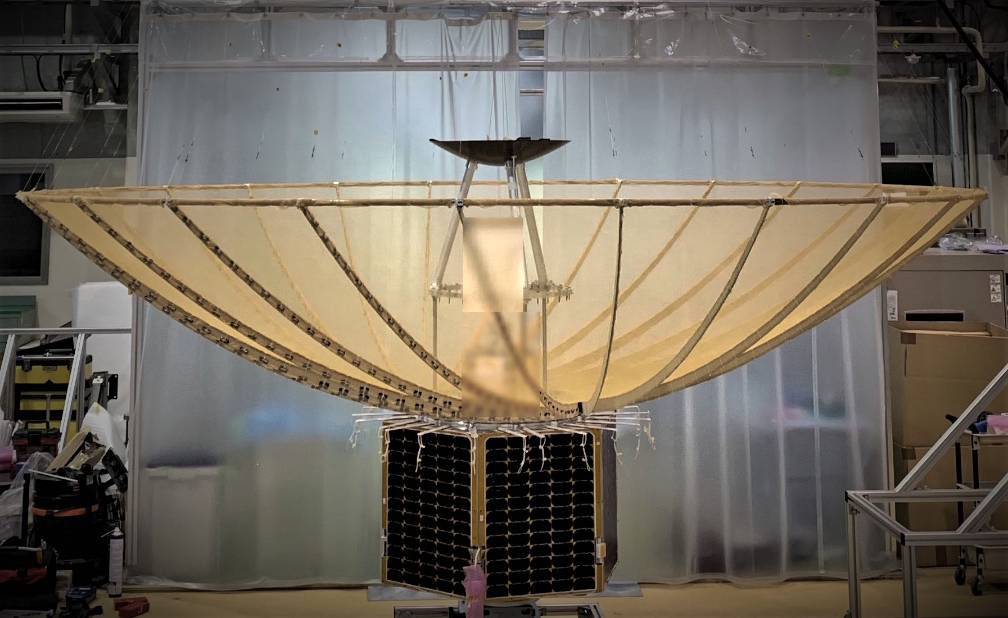
The company’s High Compaction Ratio unfurlable X-band reflector is also on board to enable high-speed data communication.

Ed Zoiss

“L3Harris has developed and supported various aspects of satellite missions over the last several decades as a component supplier or hosted payload,” said Ed Zoiss, President, Space and Airborne Systems, L3Harris. “In collaboration with the U.S. Air Force, we pulled the pieces together to successfully plan, develop and execute an affordable, high-performance space mission, which is part of a responsive constellation contract.”

Filed Under: Featured, News

Blue Canyon Gleans DARPA Smallsat Contract

July 6, 2020 by editorial

As many as 20 smallsat buses are now contracted to Blue Canyon Technologies by the Defense Advanced Research Projects Agency (DARPA).

The smallsats — based on the company’s X-SAT smallsat — will be an integral part of a proposed DARPA LEO network, with SA Photonics also selected by the agency to participate in this project.

A total of $ 14.1 million is the base value of the Blue Canyon contract and will require the company to engage in system design development as well as the implementation of all of the tech that will be necessary to ensure the spacecraft are fully compatible with the autonomous C&C platform called “Pit Boss.”

Pit Boss will acquire the smallsats’ data and, while the smallsats are on-orbit, process that information and then forward to users on Earth… all without human input. The DARPA Blackjack constellation will be built using Commercial-Off-The-Shelf (COTS) packaged solutions that are designed for military uses.

Deployment of these smallsats is expected to occur by 2022.

Artistic rendition of the DARPA Blackjack smallsat constellation. Image is courtesy of DARPA.

Filed Under: News

In-Space to Continue their Faraday Satellite Program Despite Devastating Loss

July 6, 2020 by editorial

Despite the devasting news of losing their maiden satellite, Faraday-1, In-Space Missions has vowed to continue its Faraday satellite program

Although the nanosat was launched on a Rocket Lab Electron rocket yesterday evening (July 4th) from New Zealand, the launch vehicle failed in its late ascent, losing Faraday-1 and its seven payloads on-board, as well as several other satellites launching with Electron.

“The In-Space team sat poised yesterday evening watching the launch of Faraday-1, which was a culmination of two years of hard work. When we heard that the launch vehicle failed four minutes into the flight, we were all absolutely gutted,” said Doug Liddle, CEO and Founder of In-Space Missions, which is based in Bordon, Hampshire.

Faraday-1 had been carrying payloads from several customers including Airbus Defence and Space, Kleos Space, Lacuna Space, the Space Environment Research Centre in Canberra, Canadensys Aerospace and Aeternum.

“Many of our team have been involved in previous space missions, so we’re fully aware of the fragile nature of launches. However, this knowledge and experience doesn’t make this failed mission any easier to accept. We are also extremely disappointed for the seven customers on-board our satellite but will work hard with them all to ensure their planned missions successfully reach orbit as soon as possible,” added Doug.

Rocket Lab had previously launched 12 successful missions. Following launch, Rocket Lab founder and CEO, Peter Beck, tweeted, “We are deeply sorry to our customers Spaceflight Inc., Canon Electronics Inc., Planet, and In-Space Missions for the loss of their payloads. We know many people poured their hearts and souls into those spacecraft. Today’s anomaly is a reminder that space launch can be unforgiving, but we will identify the issue, rectify it, and be safely back on the pad as soon as possible.”

Looking to the future, Doug said, “In-Space will not be deterred by this unfortunate accident. A lot of amazing work has been achieved to date, and we are already putting our experiences on Faraday-1 to work on our Faraday-2nd generation ESA program as well as on a number of other satellites we have under contract. We were planning a Faraday-1b for launch in the middle of 2021 and we will now look to bring this forward. We will continue to work closely with our payload customers and plan to be on the launchpad again in the very near future.”

Filed Under: News

Rocket Lab Launch Mishap

July 5, 2020 by editorial

Following a successful lift-off, first stage burn, and stage separation, Rocket Lab experienced an anomaly during the company’s 13th Electron mission ‘Pics Or It Didn’t Happen.’ The vehicle has been lost due to this mishap.

The issue occurred approximately four minutes into the flight on July 4, 2020, and resulted in the safe loss of the vehicle. As a result, the payloads onboard Electron were not deployed to orbit. Electron remained within the predicted launch corridors and caused no harm to personnel or the launch site. Rocket Lab is working closely with the FAA to investigate the anomaly and identify its root cause to correct the issue to move forward.

This anomaly occurred after 11 consecutive successful orbital launches of the Electron launch vehicle. Rocket Lab currently has more than eight Electron vehicles in production, ready for a rapid return to flight as soon as investigations are complete and any required corrective actions are in place.

Peter Beck

“We are deeply sorry to our customers Spaceflight Inc., Canon Electronics Inc., Planet, and In-Space Missions for the loss of their payloads. We know many people poured their hearts and souls into those spacecraft. Today’s anomaly is a reminder that space launch can be unforgiving, but we will identify the issue, rectify it, and be safely back on the pad as soon as possible,” said Peter Beck, Rocket Lab founder and CEO. “The launch team operated with professionalism and expertise to implement systems and procedures that ensured the anomaly was managed safely. I’m proud of the way they have responded to a tough day. We’re working together as a team to comb through the data, learn from today, and prepare for our next mission.”

Photo of the liftoff of the Rocket Lab’s Pics Or It Didn’t Happen mission.

Filed Under: News

Horizon Technologies’ Additional £100,000 Innovate UK Grant for AMBER™ CubeSat-based Intelligence Data Service

July 2, 2020 by editorial

Horizon Technologies has received an additional £100,000 Grant to help fund its AMBER™ CubeSat-based Intelligence Data Service. Horizon Technologies CEO John Beckner stated, “We are thrilled and grateful to receive this additional Innovate UK Grant as it gives us a further stamp of approval from the UK Government for our AMBER™ program.”

“As European business travel is coming back, the Horizon Technologies team is back again conducting face-to-face meetings with commercial and government end-users. As AMBER™ is a Public/Private partnership with the UK Government, we are most grateful for the continuing support from the UK Government; DIT and DSO in particular.” Beckner noted, “Despite the worldwide disruptions due to COVID-19, our legacy FlyingFish™ business is increasing, and our list of AMBER™ end-users continues to grow—2020 will be our most successful year yet.”

“The Innovate UK Grant is a Continuance Grant which will be put to good use in making sure our AMBER™ Processing Centre (APC) will be up and running in the near future.” Beckner notes, “The APC needs to be fully tested and operational in order be able to provide terrestrial AMBER™ data for integration testing for our AMBER™ end-users in addressing their Maritime Domain Awareness (MDA) requirements. Using Horizon Technologies’ unique IP, the APC processes AIS, Sat Phone, Maritime Radar, and GNSS Spoofer signals sent to it from the AMBER™ payload.”

Filed Under: News

Telesat Also Wants OneWeb’s Satellites??

July 1, 2020 by editorial

Ottawa-based Telesat has reportedly entered a bid for OneWeb’s satellite assets. But it isn’t alone.

There will be an auction process on July 2nd in New York. The UK is widely reported to have committed to a $500 million (£405 million) participation for a 20 percent stake in OneWeb. The UK bid is said to be backed by India’s Bharti Telecom and its Bharti Airtel division, owned by billionaire Sunil Mittal. In fact, it is also reported that Telesat had hoped to partner with UK interests on a bid.

Bharti was already a backer and investor in OneWeb (now in bankruptcy protection) alongside other key players such as chip-maker Qualcomm and Europe’s Airbus. OneWeb’s major backer was Japanese media conglomerate SoftBank.

Bharti is a huge Indian company and the nation’s second-biggest wireless operator. Its market value is about $41 billion, and as part of its investment in OneWeb it had the distribution rights to its broadband services and as well as India covering Bangladesh, Sri Lanka and Africa.

Airbus has a very special interest in the bankruptcy and its outcome. First up, it is a 50/50 shareholder with OneWeb in the Florida factory turning out OneWeb’s satellites.

OneWeb has 68 working satellites in orbit out of a total initial plan of at least 648 with each operating at 1200 kms altitude. The OneWeb/Airbus joint venture, prior to the bankruptcy, was making two satellites a day from its facility in Florida.

However, there are also rumors that Telesat and Airbus, and possibly including Thales Alenia Spac,e are also interested in OneWeb’s assets. With Europe’s two important satellite-building companies interested, and a possibility that the European Commission might back a French bid – with Telesat – and which includes satellite operator Eutelsat. Eutelsat is alone among the ‘big four’ satellite operators in NOT having a LEO component.

Canada’s Telesat is also a very keen fan of LEO satellites. Telesat is the fourth-largest geostationary satellite operator and supplies DTH TV signals of some 200 channels for the likes of Bell TV and Shaw Direct. It operates the Anik, Nimiq and Telstar fleets of satellites.

It has recently tested its own debut LEO satellites in an exercise with Telefonica. The tests, described by the pair as “rigorous” were designed to explore the performance and feasibility of leveraging LEO satellites for high-end services. Testing demonstrated that Telesat LEO could be a viable option for wireless backhaul and presents a substantial improvement in performance over geostationary orbit (GEO) links.

Those tests included the delivery of HD video streaming and video conferencing as well as VPN connections. Telesat was planning to launch just 117 LEO satellites into orbit. That plan was expanded to 298 craft and in May, Telesat announced that it would like FCC permission to dramatically extend that number to an overall 1671 satellites.

Telesat’s bid – if accepted – could be the ‘fast-track’ to launching its own LEO fleet. For example, it could trim the OneWeb planned fleet to suit the Canadian company’s own purposes.

Chris Forrester

Article posted by journalist Chris Forrester at the
Advanced Television infosite.
Chris is also a Senior Contributor for Satnews Publishers.

Filed Under: Featured, News

  • « Go to Previous Page
  • Go to page 1
  • Interim pages omitted …
  • Go to page 297
  • Go to page 298
  • Go to page 299
  • Go to page 300
  • Go to page 301
  • Interim pages omitted …
  • Go to page 338
  • Go to Next Page »

Primary Sidebar

WEEKLY NEWSLETTER

Archives

  • February 2026
  • January 2026
  • December 2025
  • November 2025
  • October 2025
  • September 2025
  • August 2025
  • July 2025
  • June 2025
  • May 2025
  • April 2025
  • March 2025
  • February 2025
  • January 2025
  • December 2024
  • November 2024
  • October 2024
  • September 2024
  • August 2024
  • July 2024
  • June 2024
  • May 2024
  • April 2024
  • March 2024
  • February 2024
  • January 2024
  • December 2023
  • November 2023
  • October 2023
  • September 2023
  • August 2023
  • July 2023
  • June 2023
  • May 2023
  • April 2023
  • March 2023
  • February 2023
  • January 2023
  • December 2022
  • November 2022
  • October 2022
  • September 2022
  • August 2022
  • July 2022
  • June 2022
  • May 2022
  • April 2022
  • March 2022
  • February 2022
  • January 2022
  • December 2021
  • November 2021
  • October 2021
  • September 2021
  • August 2021
  • July 2021
  • June 2021
  • May 2021
  • April 2021
  • March 2021
  • February 2021
  • January 2021
  • December 2020
  • November 2020
  • October 2020
  • September 2020
  • August 2020
  • July 2020
  • June 2020
  • May 2020
  • April 2020
  • March 2020
  • February 2020
  • January 2020
  • December 2019
  • November 2019
  • October 2019

© 2019–2026 SatNews

Insert/edit link

Enter the destination URL

Or link to existing content

    No search term specified. Showing recent items. Search or use up and down arrow keys to select an item.
      x
      Sign Up Now!

      Enjoy a free weekly newsletter with recent headlines from the global SmallSat industry.

      Invalid email address
      We promise not to spam you. You can unsubscribe at any time.
      Thanks for subscribing! You will now receive weekly SmallSat News updates.
      We love our advertisers.
      And you will too!

      Please disable Ad Blocker to continue... We promise to keep it unobtrusive.
      We promise not to spam you. You can unsubscribe at any time.
      Invalid email address
      Thanks for subscribing! Please check your email for further instructions.