
• Skip to main content
  • Skip to primary sidebar
  • Home
  • News
  • Featured
  • More News ⌄
    • SatNews
    • SatMagazine
    • MilSatMagazine
  • Events ⌄
    • MilSat Symposium
    • SmallSat Symposium
    • Satellite Innovation
  • Contacts
  • SUBSCRIPTION

SmallSat News

You are here: Home / Archives for News

News

Firefly Aerospace Executes a Launch Services Agreement with SATLANTIS

February 6, 2020 by editorial

Firefly Aerospace, Inc. (Firefly) has executed a Launch Services Agreement with SATLANTIS, a provider of high-performance payload technologies for Earth Observation (EO) and remote sensing.

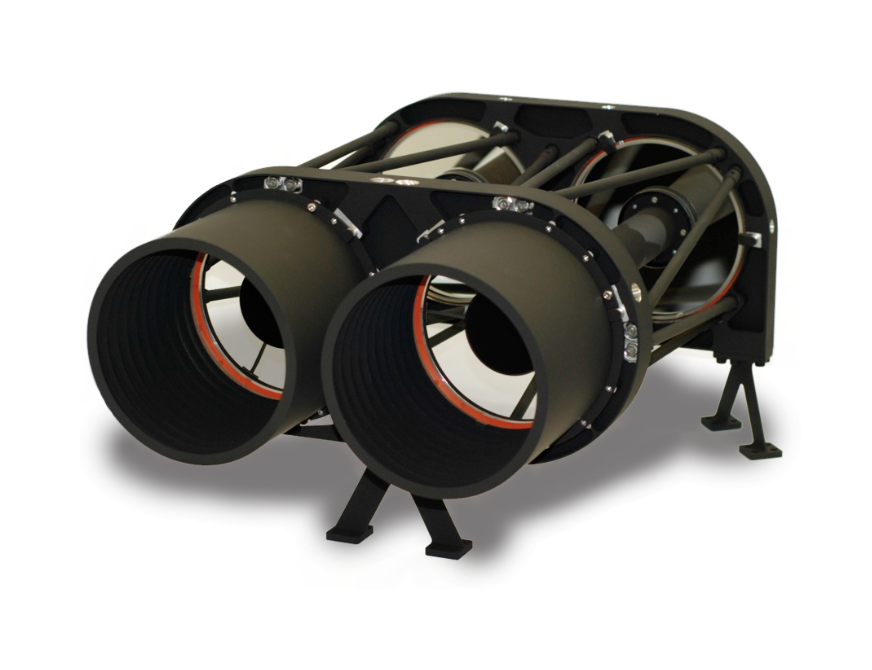
Starting in 2022, SATLANTIS will use the Firefly Alpha launch vehicle to deploy a constellation of satellites with breakthrough high-resolution multi-spectral cameras with four bands of 80 cm. native resolution.
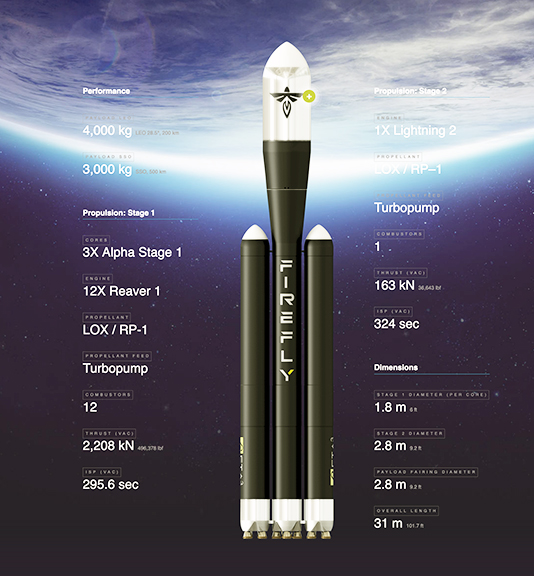
Firefly CEO Dr. Tom Markusic said SATLANTIS is constantly developing cutting-edge technologies to support the growing need for high-accuracy and high-revisit Earth Observation. The Firefly Alpha was specifically designed to support the new wave of LEO observation constellations and the company is  pleased to be selected by SATLANTIS to provide launch services for their constellation.”

SATLANTIS CEO Juan Hernani noted that the company’s efforts are aimed at providing governments, national space agencies and industries seeking space capabilities with unparalleled access to high-quality Earth Observation data, without the need to develop costly programs of their own. This partnership with Firefly complements SATLANTIS strategy to deliver these products – by providing cost-efficient, on-demand launch services to meet the stringent orbit and revisit requirements of the SATLANTIS constellation.

Filed Under: News

Firefly Aerospace Will Launch SATLANTIS’ Constellation of Satellites

February 5, 2020 by editorial

Firefly Aerospace will be providing launch services for SATLANTIS which beginning in 2022, SATLANTIS will use the Firefly Alpha launch vehicle to deploy a constellation of satellites with breakthrough high-resolution multispectral cameras with four bands of 80 cm native resolution. SATLANTIS provides high-performance payload technologies for Earth observation and remote sensing. 


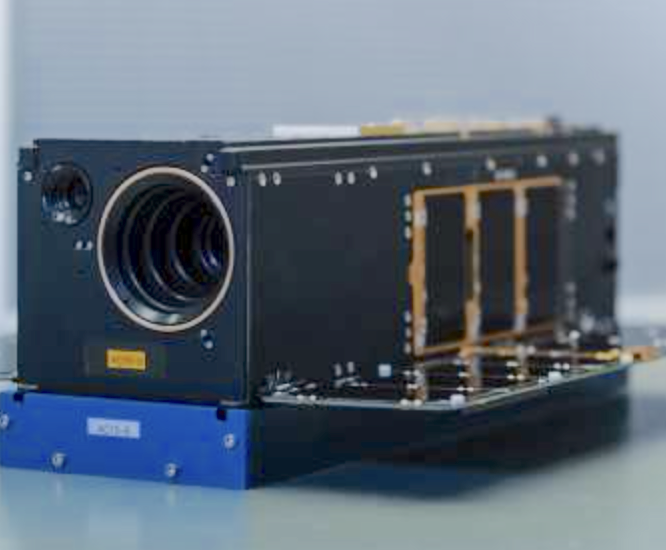
Space Imagers: A broad catalog of high resolution multispectral cameras

Firefly CEO Dr. Tom Markusic said that SATLANTIS is constantly developing cutting-edge technologies to support the growing need for high-accuracy and high-revisit Earth observation. The Firefly Alpha was specifically designed to support the new wave of low Earth orbit observation constellations and they are pleased to be selected by SATLANTIS to provide launch services for their constellation. 

SATLANTIS CEO Juan Hernan said that SATLANTIS efforts are aimed at providing governments, national space agencies, and industries seeking space capabilities with unparalleled access to high-quality Earth observation data, without the need to develop costly programs of their own. Their partnership with Firefly complements SATLANTIS strategy to deliver these products — by providing cost-efficient, on-demand launch services to meet the stringent orbit and revisit requirements of their constellation. 

Alona Kolisnyk, Firefly Director of International Business Development, added that the have worked closely with SATLANTIS to ensure that they will be able to structure the multiple missions required to deliver their spacecraft to the inclinations of their choosing, on the schedule they require in order to achieve their business goals. They look forward to many successful missions together.


Filed Under: News

SSTL Enters the Implementation Phase for the Lunar Pathfinder Mission

February 5, 2020 by editorial

Following the European Space Agency Ministerial Council Space19+ meeting in Seville, the UK Space Agency confirmed they will invest £374 million per year with ESA and Surrey Satellite Technology Ltd. (SSTL) announced their kick-off for the implementation phase of the firm’s Lunar data-relay spacecraft, Lunar Pathfinder.

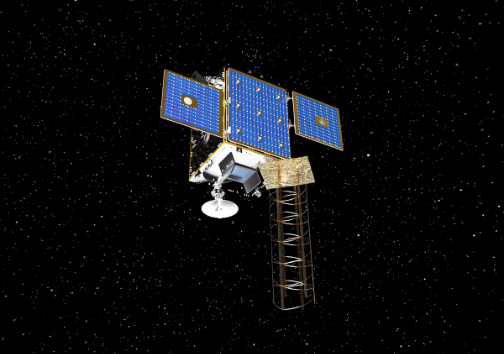
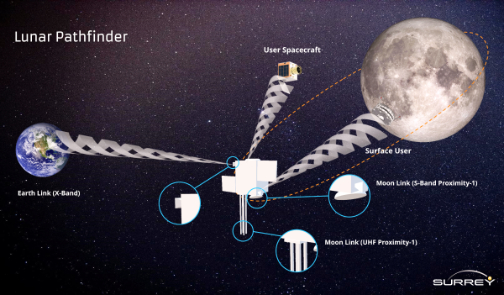
The Lunar Pathfinder spacecraft is designed to provide affordable communications services to lunar missions via S-band and UHF links to lunar assets on the surface and in orbit around the Moon, and an X-band link to Earth.

As early as Q4 2022, the 280 kg. Lunar Pathfinder spacecraft will be a mission enabler for polar and far-side missions, which, without direct line of sight of the Earth, would otherwise have to procure their own communications relay spacecraft.


Artistic rendition of the Lunar Pathfinder smallsat.

Image is courtesy of SSTL.

Lunar Pathfinder is a more cost effective alternative to Direct-to-Earth solutions and a credible alternative to institutional deep-space ground stations, offering orbiters and near-side missions a better availability, enhanced safety and improved data-rate.

To support booming demand from Lunar missions and a clear goal in the scientific community to undertake detailed study and analysis of the Aitken Basin, Lunar Pathfinder intends to operate in a stable elliptical orbit to provide long duration visibility of the Southern Lunar Hemisphere each day, with maximum opportunities for the transmission and reception of data between Earth and the lunar surface.

NASA’s Artemis program also calls for “landing the first American woman and next American man at the South Pole of the Moon by 2024, followed by a sustained presence on and around the Moon by 2028” and Lunar Pathfinder is accordingly working toward a launch in Q4 2022 to support early NASA missions.

In parallel to the Lunar Pathfinder mission, SSTL has been working on future plans for a constellation of spacecraft around the Moon that will be capable of providing enhanced communications, as well as navigation services for the Lunar market as it grows from exploration to commercial exploitation and even tourism.

Acting both as technology and service demonstrator, Lunar Pathfinder is the opportunity for scientific and commercial mission developers to support the development, test and standardization of Lunar communication infrastructure, and for emerging off-planet telcos to acquire experience of lunar asset operations and off-planet service delivery.


Infographic of the Lunar Pathfinder mission.

Image is courtesy of SSTL.

Lunar Pathfinder is laying the foundation to support sustainable science and exploration for the next twenty years and beyond—bringing with it the possibility that when humans next set foot on the Moon we will be hearing not “Houston we’ve landed” but instead “Guildford…

Phil Brownnett, SSTL’s Managing Director said  that Lunar Pathfinder will be the first commercial service to address the need for data relay around the Moon and will demonstrate an innovative business idea and the company fully expect sit to also stimulate the emerging Lunar market. By pioneering a commercial solution and service delivery model in lunar orbit, SSTL and ESA are opening the door to providing services to the solar system and contributing to the scientific progress of deep space exploration.

David Parker, ESA’s Director of Human and Robotic Exploration commented that the Moon is a cornerstone of ESA’s exploration strategy. This decade, humans and robots will visit uncharted territory and return with new discoveries—communications is key to send scientific and operational data to Earth. ESA is returning to the Moon with commercial and international partners, and the Lunar Pathfinder mission will be an integral part of these missions.

Filed Under: News

EXOLAUNCH to Lift Four Spire Global Smallsats to Orbit via an Indian PSLV Launch Vehicle

February 5, 2020 by editorial

During the SmallSat Symposium now in session in Mountain View, California, Exolaunch announced their intention to manage the lift of four, Spire Global cubesats into LEO via an Indian Polar Satellite Launch Vehicle (PSLV) later this year.

Exolaunch is integrating the Spire smallsats into EXOpod, which is a deployer that is large enough to contain 12 single cubesats. Plus, Exolaunch is providing launch services and technical support for the Spire mission. Exolaunch has helped to deploy about one-third of Spire’s on-orbit constellation and has launched more than 100 cubesats, with some 80 spacecraft now on-orbit.

This mission will also serve as a cooperation conduit between the company and Indian launch services provider, New Space India Ltd. (NSIL)—the commercial arm of the Indian Space Research Organization (ISRO). NSIL was established in 2019 to provide commercial customers with access to Indian launch vehicles.

Robert Sproles, Spire director of Ground Stations and Launch, said that the company first launched to an equatorial orbit on a Polar Satellite Launch Vehicle mission in 2015. The firm is excited to again be launching to a low inclination orbit with NSIL, this time through Exolaunch. Exolaunch has been a long-standing consistent launch partner for Spire.

Jeanne Medvedeva, Exolaunch Commercial Director, added that Spire is the firm’s long-time, valued customer and they ensure their satellites can reach a variety of orbits. For this launch, Exolaunch improved the firm’s EXOpod deployer by reducing its mass while also increasing its available satellite mass. The company is also looking forward to the start of an important cooperation with the NSIL team, who broadens the commercial horizons for PSLV launches.

Radhakrishnan Durairaj, NSIL’s Executive Director, noted that the company thrives to make space access affordable to commercial satellites using ISRO’s launch vehicles, including the PSLV, Geosynchronous Satellite Launch Vehicle, Geosynchronous Satellite Launch Vehicle Mark 3 and the launch on-demand Small Satellite Launch Vehicle for meeting smallsat launch needs.

Filed Under: News

Accion Systems Raises $11 Million in Series B Funding

February 4, 2020 by editorial

Accion Systems has raised $11 million in Series B funding — the round is being co-led by Boeing HorizonX Ventures and Shasta Ventures.
 
The Series B round brings Accion’s total funding to date to $36 million, which includes $14 million in U.S. Deptartment of Defense (DoD) and NASA contracts. The new capital will be used to ramp up production of Accion’s next-generation propulsion product and to expand hiring.
 
Spun out of Massachusetts Institute of Technology (MIT) in 2014, Accion is redefining in-space propulsion. Accion’s TILE (Tiled Ionic Liquid Electrospray) propulsion system aims to increase the lifespan and maneuverability of satellites and other vehicles in space. Leveraging a non-toxic, ionic liquid propellant and postage stamp-size thrusters, the TILE system is smaller, lighter and more cost-effective than traditional ion engines.

Boeing HorizonX, an innovation and venture organization within Boeing, discovers, shapes and accelerates the next generation of game-changing ideas, products and markets through ventures investments, partnerships and trend discovery.


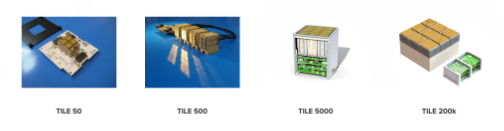
The TILE product family features four systems.

Accion Systems has a number of launches already scheduled for 2020, including collaborations with student organizations at the Irvine CubeSat STEM Program in Irvine, CA and BeaverCube, an educational mission led by MIT to introduce University students to aerospace science and technology through designing a 3U CubeSat.

Accion also was recently one of fourteen companies selected by NASA as part of its Tipping Point partnership for Moon and Mars technologies. Accion’s in-space propulsion system will be used on replicas of the MarCO CubeSats, NASA’s first cubesats that traveled on an interplanetary mission. Accion will work with NASA’s Jet Propulsion Laboratory (JPL) to replace the cold gas propulsion system that was used on the MarCO cubesats with a more efficient ion electrospray propulsion system. Accion received $3.9 million for the project, which was successfully kicked off in January 2020 and will launch in the summer of 2021.

Natalya Bailey, CEO of Accion Systems, said that at the size of a postage stamp, the company’s propulsion system is re-writing the rules of smallsat navigation and maneuverability, The firm is excited to ramp up production and offer clients benefits such as extending mission lifetime, station-keeping, and de-orbiting capabilities.

Brian Schettler, Senior Managing Director of Boeing HorizonX Venture, noted that Accion’s propulsion system brings new capabilities to satellites, space vehicles and ultimately, customers. This support of Accion supports Boeing’s leadership in adopting next-generation technologies to advance satellite capabilities.

Shasta Ventures led Accion’s Series A funding round and Rob Coneybeer sits on Accion’s Board of Directors.

Rob Coneybeer, Managing Director at Shasta Ventures, added that only 60 satellites were launched during the first nine years of space exploration, but now there are that many smallsats launched in a single mission. A new approach to in-space propulsion and smallsat mobility is in order, and the company believes Accion has the solution.

Filed Under: News

SSTL and NOC Demo Polar Sea Ice Detection via Smallsat Instrument

February 4, 2020 by editorial

Surrey Satellite Technology Ltd. (SSTL) and partner the National Oceanography Centre (NOC) have released new datasets that demonstrate how reflections of satellite navigation signals collected in space can be used to accurately map the extent of the sea ice in the Arctic and Antarctic.

The measurements were taken by an SSTL smallsat called TechDemoSat-1 that was launched in 2014. The smallsat carried the SGR-ReSI, an instrument designed to demonstrate accurate measurement of ocean wind speeds around the globe using GNSS reflectometry.


The innovative new datasets use reflected Navigation signals from small satellite TechDemoSat-1.

Chart is courtesy of SSTL.

With funding from ESA, NOC developed the algorithms to estimate the wind speed from GNSS reflections, and recently added the capability to discriminate between ocean and ice. By exploiting the way that GNSS signals are used as radar sources it is believed that the ice edges can be detected with a higher resolution than using passive sensing methods, and this information is potentially valuable for shipping and off-shore energy, as well as climate and polar ice research.

Images show the sea ice extent during November 2018 over the Arctic and Antarctic. The hole over the North Pole shows the high latitude limit of the TechDemoSat-1 satellite’s ability to collect GPS satellite reflections.  The full set of Sea Ice detection data is available free of charge from data portal www.merrbys.co.uk.

The SGR-ReSI instrument from SSTL is flying on the 8-satellite NASA CYGNSS mission that was launched in 2016 to enable the measurement of hurricanes. The sensor can be carried on a smallsate and a future constellation could offer low delay, high accuracy ice edge mapping, in addition to the other benefits GNSS reflectometry brings over land, ice and ocean.


Artistic rendition of SSTl’s TechDemoSat-1 smallsat.

SSTL is working on a number of projects to exploit GNSS reflectometry for different applications and the SSTL HydroGNSS concept for sensing land hydrographic climate variables using GNSS reflectometry has recently been down-selected for the ESA Scout mission opportunity.

Phil Brownnett, Managing Director of SSTL, said that this is another important demonstration of the benefits of GNSS-Reflectometry for both commercial and scientific communities. SSTL, in collaboration with partners, has taken this new technique from feasibility to a world-leading capability which will see new missions uncovering further applications over ocean, ice and land.

Giuseppe Foti, Senior Scientist of NOC, added that these recent results show how collaboration between academia and industry is critically important to improve our understanding of ocean and ice processes that have a global impact on our planet.

Filed Under: News

Lockheed Martin’s First Smallsat Enables Space Mesh Networking

February 4, 2020 by editorial

A new era of space-based computing is now being tested on-orbit that will enable artificial intelligence (AI), data analytics, cloud networking and advanced SATCOMs in a robust, new, software-defined architecture.

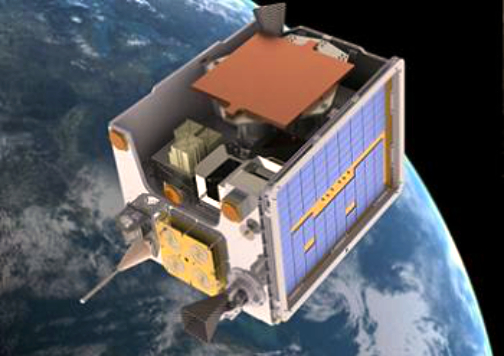
In January of this year, Lockheed Martin (NYSE: LMT) launched the Pony Express 1 mission as a hosted payload on Tyvak-0129, a next-generation Tyvak 6U spacecraft.


The Lockheed Martin Pony Express 1 mission is a hosted payload on Tyvak-0129 smallsat.

Image is courtesy of Tyvak Nano-Satellite Systems, Inc.

Pony Express 1, an example of rapid prototyping, was developed, built and integrated in nine months, and was funded completely by Lockheed Martin Research and Development funding. This orbital proving ground is validating payload hardware and software, and is packed with new technology that fits into a satellite the size of a shoebox. Some of the key technologies being flight-tested include:

HiveStar™ software validates advanced adaptive mesh communications between satellites, shared processing capabilities and can take advantage of sensors aboard other smart satellites to customize missions in new ways previously difficult to achieve in space.

A software-defined radio (SDR) that allows for high-bandwidth hosting of multiple RF applications, store-and-forward RF collection, data compression, digital signal processing and waveform transmission.


A technician works on Lockheed Martin’s Pony Express 1 payload.

Image is courtesy of Lockheed Martin Space.

Pony Express 1 is a dual-use payload that enables mesh networks in space through HiveStar™ and a second function that tests space to ground remote sensing. Future research missions this year, like Pony Express 2, will further advance cloud networking concepts among satellites, as well as validating Lockheed Martin’s SmartSat™ software-defined satellite architecture which enables streamlined hosting of flexible mission apps.

This mission consists of two 12U cubesats with faster, more capable ultra-scale processors that unlock in-orbit data analytics and artificial intelligence. Equipped with miniaturized cross-link and precision timing, Pony Express 2 is a trailblazer for autonomous teaming in space and true cloud networking.

Rick Ambrose, EVP of Lockheed Martin Space, said that early on-orbit data show Pony Express 1 is performing its important pathfinding mission very well. Lockheed Martin’s HiveStar™ technology on board will give the firm’s customers unparalleled speed, resiliency and flexibility for their changing mission needs by unlocking even greater processing power in space. This is the first of several rapid, self-funded experiments demonstrating Lockheed Martin Space’s ability to systematically accelerate the firm’s customers’ speed to mission while reducing risk from new technologies.

Filed Under: News

SMC’s Successful Mission Deploys Aerospace Rogue CubeSats from ISS

February 4, 2020 by editorial

Mission accomplished on behalf of the U.S. Space Force’s Space and Missile Systems Center and its mission partners as they successfully deployed Aerospace’s Rogue Alpha and Rogue Beta CubeSats from the Northrop Grumman Cygnus capsule at 1 p.m. and 4:10 p.m. respectively, on January 31, 2020 marking the beginning of the program’s mission experiment plan.  


The Aerospace Rogue Alpha/Beta CubeSat in the lab (Photo: Jeff Berting/Aerospace)

The plan involves the two satellites using their short-wave infrared sensors to create a baseline for processing cloud backgrounds and inform future low Earth orbit satellites. The Air Force will also utilize this program’s unclassified data to investigate potential uses of the capability.

Col. Dennis Bythewood, Program Executive Officer for Space Development said that the Space and Missile Systems Center is proud of this team’s accomplishments and the speed at which this program developed.

The CubeSats were designed, built, and tested by The Aerospace Corporation, a national nonprofit corporation that operates as a federally funded research and development center dedicated to advancing the nation’s missions in space.

Jeff Emdee, general manager of the Space Development Division at The Aerospace Corporation said that Aerospace is proud to present its Rogue CubeSats to support the Space Force’s mission of achieving a secure and resilient space architecture. Each three-unit CubeSat is about the size of a shoe box and contains both visible and infrared sensing, as well as a laser communications downlink, that will allow them to explore operations in low Earth orbit to benefit future system concepts.


Filed Under: News

ResponsiveAccess’ “One Stop Shop” for Smallsat Launches Present @ Smallsat Symposium 2020

February 3, 2020 by editorial

Following an award for funding provided as part of an initiative to help Britain’s small businesses achieve their exporting ambitions, Edinburgh, Scotland, based ResponsiveAccess has flown out to the SmallSat Symposium in California in search of partnerships and customers.

Under the banner of the Department for International Trade’s ‘Exporting is GREAT’ campaign, Heathrow Airport awarded a total of £40,000 in seed money to firms seeking funding for international trade missions and foreign market research. Responsive Access, part of a growing number of space sector start-up firms emerging throughout Scotland and the rest of the UK, is focused on simplifying access to space for smallsat customers looking to reach orbit in the near future.

The company, based at Edinburgh’s Royal Observatory building, is a participant in the ESA BIC UK, a prestigious business incubation program funded by the European Space Agency and UK Science and Technology Facilities Council.

As well as attending this major event, the company is understood to have lined up visits to the facilities of a number of launch vehicle developers to discuss the formalization of partnerships that will allow their customers to select the most suitable ride to orbit for their payloads.

On the business’ most recent award, CEO Andrew Paliwoda said the company is really excited to have the opportunity to travel to this event as it holds enormous potential for the firm to raise awareness about this project and to source potential customers. Heathrow Airport and the DIT’s support, such as the ESA funding previously received, is something the company immensely proud of obtaining. We can’t wait to show potential partners the results of the team’s hard work to date and the firm’s message to anyone looking to launch a payload into space is simple – let’s set up a meeting.

Ross Baker, Heathrow’s CCO, said that Britain’s small businesses are the backbone of our economy and Heathrow is proud to stand behind them. Whether it’s a Scottish company looking to cut the cost of space travel or a premium chocolate company from Yorkshire, this year’s winners set a new mark and Heathrow is proud to be helping take their products to markets around the world.

Filed Under: News

Get SAT and Hellas Sat Demo Enhanced Capabilities on Hellas Sat’s Network

February 3, 2020 by editorial

Get SAT and Hellas Sat have successfully demonstrated SATCOM capabilities on Hellas Sat’s network.

Hellas Sat and GetSAT’s partnership offers significant capability enhancements on Hellas Sat 4 satellite, with coverage over Europe, the Middle East and Southern Africa.

Using Get SAT’s MilliSAT-W terminal installed at Hellas Sat’s Kofinou, Cyprus, Earth Station and the Hellas Sat 4 Ku-Band satellite located at 39°E, the companies created a powerful comms link that exceeded expected parameters.

The satellite, which began commercial operations in Q3 2019, meets the growing capacity demand for applications including video, maritime connectivity, cellular backhaul, corporate networks and government services.


Artistic rendition of a Hellas Sat member of the firm’s constellation. Image is courtesy of the company.

Get SAT terminals provide highly versatile, mobile solutions for applications requiring smaller terminals. As the leading provider of new generation micronized terminals, they set new standards for lightweight, small-sized and low power consumption communication devices.

Their fast-tracking technologies, using a miniaturized interlaced flat panel antenna that combines receive and transmit elements and moves at speeds of 200 degrees per second, enable quick and easy access to broadband services.

Ilias Tsakalis, COO of Hellas Sat, stated that the company is proud to enhance Hellas Sat 4’s Ku-band capabilities via Get SAT’s terminals to our customers, including those requiring SATCOM-On-The-Move (SOTM). By expanding options for the customers’ applications, the company more closely aligns to their growing businesses and adds more capacity for their needs.

Kfir Benjamin, Get SAT CEO, added that Hellas Sat 4’s Ku-band has allowed the firm to fully demonstrate the capability of Get SAT’s exciting technologies. The cooperation between Get SAT and Hellas Sat technologies supports high data rates, adds value for their customers and enables us to pursue new potential users.

Filed Under: News

  • « Go to Previous Page
  • Page 1
  • Interim pages omitted …
  • Page 321
  • Page 322
  • Page 323
  • Page 324
  • Page 325
  • Interim pages omitted …
  • Page 339
  • Go to Next Page »

Primary Sidebar

WEEKLY NEWSLETTER

Archives

  • March 2026
  • February 2026
  • January 2026
  • December 2025
  • November 2025
  • October 2025
  • September 2025
  • August 2025
  • July 2025
  • June 2025
  • May 2025
  • April 2025
  • March 2025
  • February 2025
  • January 2025
  • December 2024
  • November 2024
  • October 2024
  • September 2024
  • August 2024
  • July 2024
  • June 2024
  • May 2024
  • April 2024
  • March 2024
  • February 2024
  • January 2024
  • December 2023
  • November 2023
  • October 2023
  • September 2023
  • August 2023
  • July 2023
  • June 2023
  • May 2023
  • April 2023
  • March 2023
  • February 2023
  • January 2023
  • December 2022
  • November 2022
  • October 2022
  • September 2022
  • August 2022
  • July 2022
  • June 2022
  • May 2022
  • April 2022
  • March 2022
  • February 2022
  • January 2022
  • December 2021
  • November 2021
  • October 2021
  • September 2021
  • August 2021
  • July 2021
  • June 2021
  • May 2021
  • April 2021
  • March 2021
  • February 2021
  • January 2021
  • December 2020
  • November 2020
  • October 2020
  • September 2020
  • August 2020
  • July 2020
  • June 2020
  • May 2020
  • April 2020
  • March 2020
  • February 2020
  • January 2020
  • December 2019
  • November 2019
  • October 2019

© 2019–2026 SatNews

Insert/edit link

Enter the destination URL

Or link to existing content

    No search term specified. Showing recent items. Search or use up and down arrow keys to select an item.
      x
      Sign Up Now!

      Enjoy a free weekly newsletter with recent headlines from the global SmallSat industry.

      Invalid email address
      We promise not to spam you. You can unsubscribe at any time.
      Thanks for subscribing! You will now receive weekly SmallSat News updates.
      We love our advertisers.
      And you will too!

      Please disable Ad Blocker to continue... We promise to keep it unobtrusive.
      We promise not to spam you. You can unsubscribe at any time.
      Invalid email address
      Thanks for subscribing!