• Skip to main content
  • Skip to primary sidebar
  • Home
  • News
  • Featured
  • More News ⌄
    • SatNews
    • SatMagazine
    • MilSatMagazine
  • Events ⌄
    • MilSat Symposium
    • SmallSat Symposium
    • Satellite Innovation
  • Contacts
  • SUBSCRIPTION

SmallSat News

You are here: Home / Archives for 2021

Archives for 2021

Dawn Aerospace’s Smallsat Green Propellant Thruster Proves Itself On-Orbit With D-Orbit’s ION Space Tug

May 4, 2021 by editorial

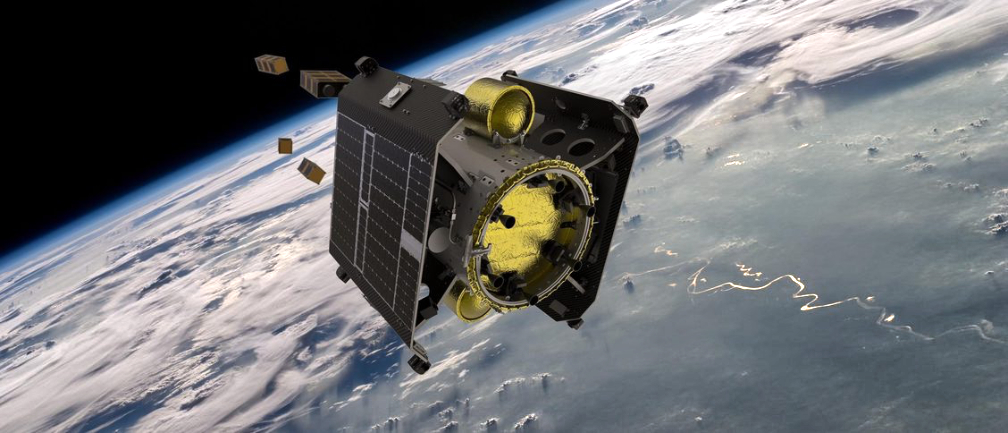
Dawn Aerospace has confirmed the company’s novel satellite thruster has been proven in space —six thrusters were onboard D-Orbit’s ION Satellite Carrier — the companies have been working together since early 2019.
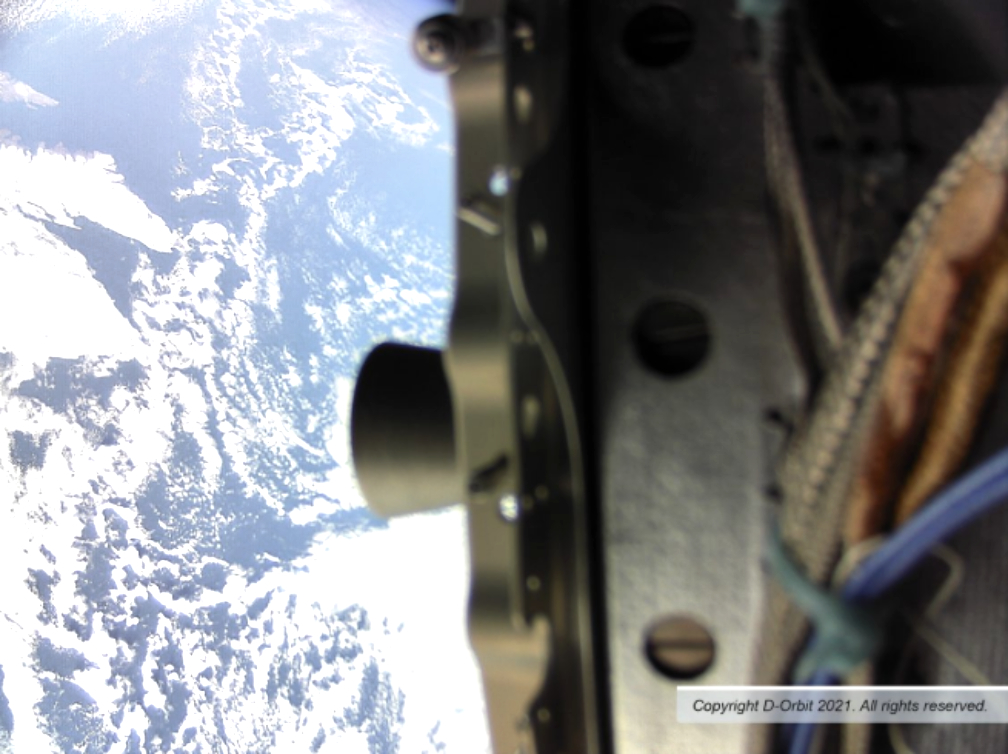
Dawn Aerospace’s B20 thruster at work on-orbit. Image is courtesy of D-Orbit.

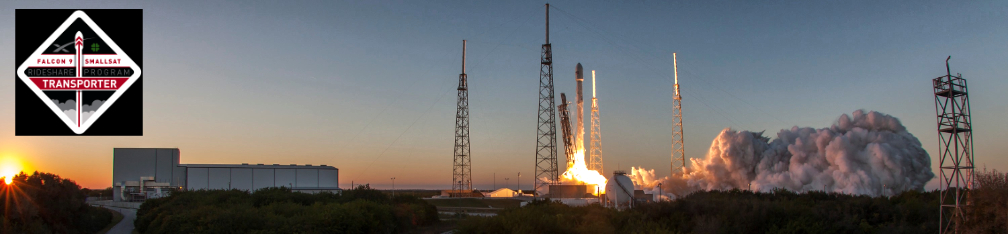
Since launching on SpaceX’s Transporter-1 mission in January of 2021, D-Orbit’s ION space-tug for satellites has performed hundreds of in-space firings of each Dawn Aerospace B20 thruster.
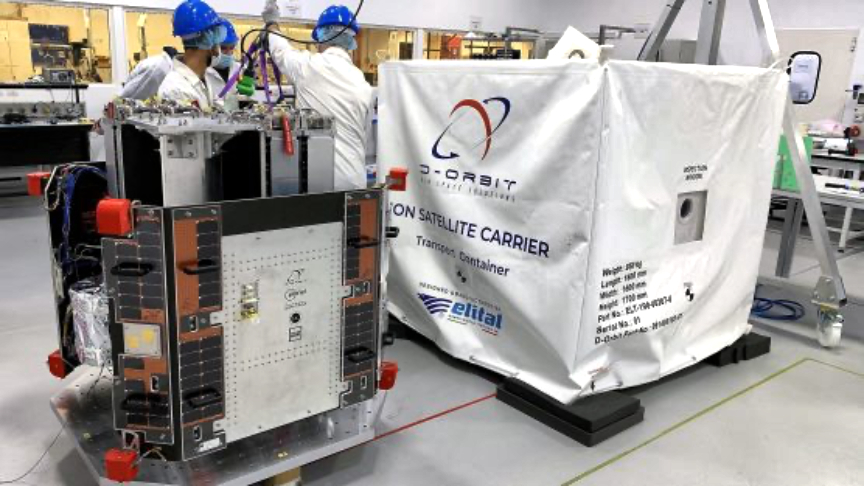
Photo is courtesy of D-Orbit.

This success is significant, due to the thruster’s use of alternative propellants to hydrazine, a fuel commonly used to propel satellites that is difficult to store and harmful to human health. Dawn’s B20 thruster achieves similar performance by using a unique, green-propellant combination; nitrous oxide and propylene. Having delivered this technology to both cubesats and smallsats, Dawn is demonstrating this technology can be applied to satellites of all sizes.

Thrusters, or in-space propulsion, are small rocket motors that form part of the satellite itself. They allow satellites to maneuver in space after their initial boost onto orbit. Thrusters serve several functions; they can perform corrective maneuvers if a satellite has been delivered to an incorrect orbit, they can orientate a satellite, can be used for collision avoidance, and can carry a satellite further afield, for example to a higher orbit or on a mission to the moon or another planet.

Using nontoxic propellants is naturally far less risky than using something such as hydrazine, which is toxic at extremely low concentrations – 40 parts per million. Dawn’s green propellants are great for the environment, but can also save the satellite operator about half a million (USD) per satellite by eliminating the safety precautions required to store and handle hydrazine. As Stefan Powell, the CTO of Dawn Aerospace, said, “That’s massive for small satellite companies for whom a total mission might only cost one million dollars or less. This in-orbit demonstration of our B20 product is the ultimate verification that our unique technology works. It is now possible to have the performance that satellite manufacturers loved about Hydrazine, with none of the environmental and cost drawbacks of using toxic fuels.”
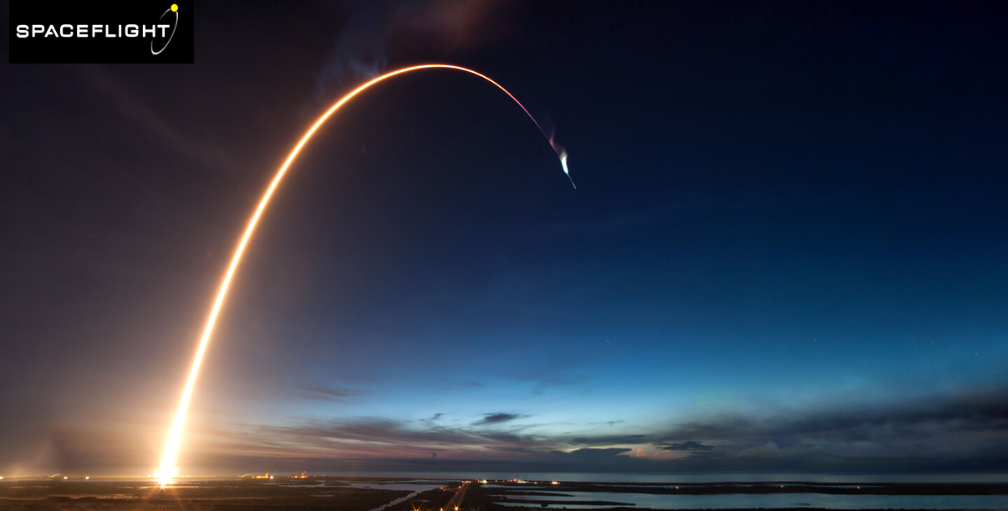
On board SpaceX’s Transporter-1 mission were 133 commercial and government spacecraft (including cubesats, smallsats and orbital transfer vehicles) as well as 10 Starlink satellites – the most spacecraft ever deployed on a single mission.
Filed Under: News

Spaceflight Preps Four Rocket Lab Electron Launches For BlackSky

May 4, 2021 by editorial

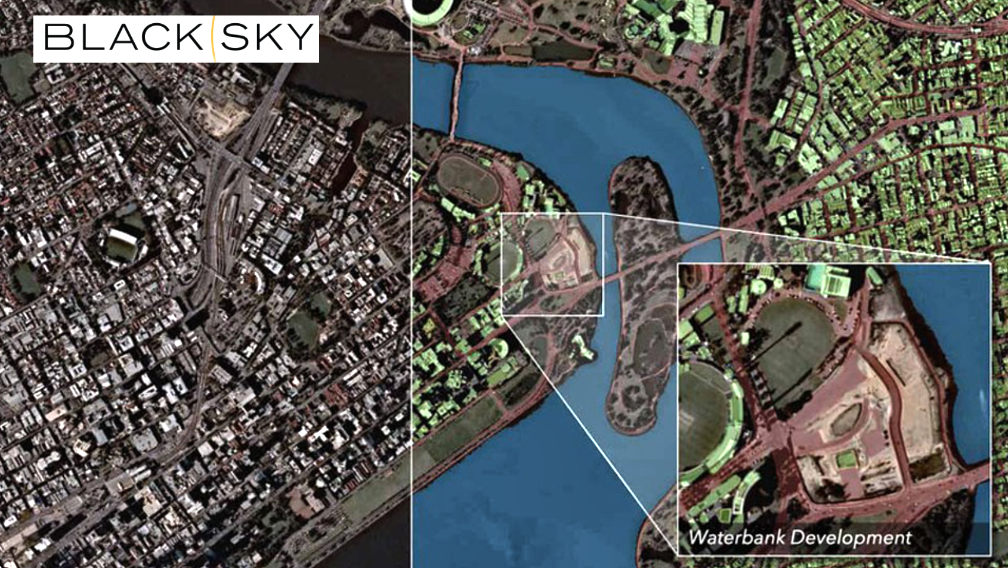
Spaceflight Inc. recently secured four, dedicated, Rocket Lab launches on behalf of the company’s customer, BlackSky. Spaceflight will provide the integration and launch services for eight BlackSky smallsats across four dedicated Electron missions throughout 2021 — the agreement also includes options for an additional two dedicated missions on Electron in Q4 2021.

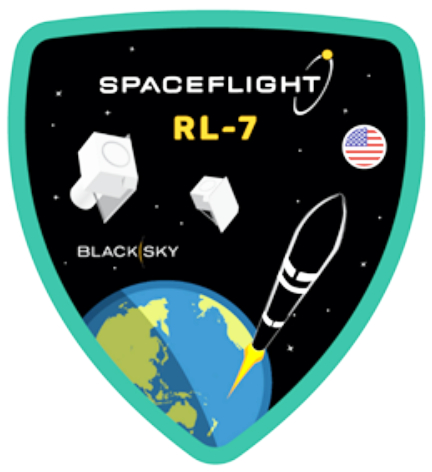
The first of these four dedicated missions is scheduled to launch in May of 2021 from Rocket Lab’s Launch Complex 1 in New Zealand. The mission, called “Running Out of Toes” by Rocket Lab, and “RL-7” by Spaceflight to signify its seventh mission with Rocket Lab, will carry two 55 kilogram class BlackSky smallsats to LEO. The following three dedicated launches under contract will each take two more BlackSky satellites, furthering BlackSky’s goal of launching nine satellites during 2021.

Following the successful deployment of one BlackSky smallsat on Rocket Lab’s “They Go Up So Fast” rideshare mission (RL-6) on March 22, 2021, the new dedicated launches provide BlackSky additional scheduled launches and orbital control to get its constellation on orbit in an accelerated timeline.

In addition to the upcoming dedicated launches, Spaceflight has managed many rideshare missions for BlackSky over the past years, including ISRO’s PSLV-C43 mission and Spaceflight’s SSO-A dedicated Falcon 9 rideshare mission in 2018, Rocket Lab’s “Make It Rain” and “Look Ma, No Hands” missions in 2019, a SpaceX Starlink rideshare mission in 2020 and, most recently, Rocket Lab’s “They Go Up So Fast” mission earlier this year.

Spaceflight is preparing several ESPA-class orbital transfer vehicles (OTVs) complete with electric and chemical propulsion for missions later this year along with many traditional rideshare and dedicated missions for a total of approximately 10 launches in 2021.

Celebrating 10 years of providing innovative launch services, Spaceflight has launched nearly 350 satellites across 38 missions on eight different launch vehicles, including the Falcon 9, Electron, PSLV, and Vega. The company has orchestrated several industry firsts including the first fully dedicated rideshare with 64 smallsats aboard the historic SSO-A mission and the first-ever rideshare mission to GTO with a lunar lander.

“Organizations may have a strategic business reason to choose a dedicated launch — they need to have spacecraft reach a specific orbit not served by traditional rideshare, or at a specific time when a traditional rideshare option is unavailable,” said Curt Blake, CEO and president of Spaceflight. “Spaceflight arranges a mix of both traditional rideshare and dedicated launches across our large vehicle portfolio to deliver maximum flexibility for organizations and ensure they get to space, exactly when and where they want. Plus, with the purchase of an entire launch vehicle, Spaceflight’s rideshare expertise continues to come into play as we’re often able to help offset the premium price by ‘filling up’ any additional capacity with other smallsats.”

“For our customers, it’s the combination of the launch options that’s powerful — traditional rideshare, dedication launches, or last mile delivery via one of our Sherpa transportation vehicles,” added Grant Bonin, senior vice president of business development for Spaceflight. “We work closely with each customer to find the most cost-effective option to address their mission needs each and every time they need a launch, leveraging our years of experience and long-standing relationships with a wide variety of launch vehicle providers.”

Filed Under: News

Virgin Orbit Selected By Brazilian Space Agency + Air Force For Orbital Launches

May 1, 2021 by editorial

The Brazilian Space Agency (Agência Espacial Brasileira; AEB) and Brazilian Air Force (Força Aérea Brasileira, FAB) announced today that Virgin Orbit has been selected to bring orbital launch capability to Brazil, a country which has never successfully completed a domestic launch to orbit. Thanks to the unique mobility and small footprint of Virgin Orbit’s air-launched system architecture, launches to a wide range of orbital inclinations could quickly become possible without the need for new permanent infrastructure, nor the expansion of existing facilities.

Launches would occur from the Alcântara Launch Center (Centro de Lançamento de Alcântara, CLA) on Brazil’s northern coast, located just two degrees south of the equator. Virgin Orbit’s LauncherOne system, which uses a customized 747 aircraft as its flying launch pad and fully reusable first stage, could conduct launches from the existing airbase at the site, flying hundreds of miles before releasing the rocket directly above the equator or at other locations optimized for each individual mission. The approach enables Alcântara to become one of the only continental spaceports in the world capable of reaching any orbital inclination.

Since construction of the facility began in 1982, Alcântara has hosted dozens of launches of uncrewed, suborbital sounding rockets — but the facility has not yet been used to reach orbit. By bringing that long-sought capability to Alcântara, Virgin Orbit, AEB, and FAB will create an important new capability for the region while delivering on the promised economic value of the site for the local quilombo communities. All of the equipment required for Virgin Orbit to conduct a launch to orbit is fully transportable, from the ground vehicles that prepare the rocket for flight to the rocket and aircraft itself — meaning that the team can securely transport the entire system in, conduct a launch campaign, and return to one of the company’s other facilities without requiring any further construction beyond the airbase.

The Brazilian Space Agency (Agência Espacial Brasileira; AEB) and Brazilian Air Force (Força Aérea Brasileira, FAB) have selected Virgin Orbit to bring orbital launch capability to Brazil. Due to the unique mobility and small footprint of Virgin Orbit’s air-launched system architecture, launches to a wide range of orbital inclinations could quickly become possible without the need for new permanent infrastructure, nor the expansion of existing facilities.

Launches would occur from the Alcântara Launch Center (Centro de Lançamento de Alcântara, CLA) on Brazil’s northern coast, located just two degrees south of the equator. Virgin Orbit’s LauncherOne system, which uses a customized 747 aircraft as its flying launch pad and fully reusable first stage, could conduct launches from the existing airbase at the site, flying hundreds of miles before releasing the rocket directly above the equator or at other locations optimized for each individual mission. The approach enables Alcântara to become one of the only continental spaceports in the world capable of reaching any orbital inclination.

Since construction of the facility began in 1982, Alcântara has hosted dozens of launches of uncrewed, suborbital sounding rockets — but the facility has not yet been used to reach orbit. By bringing that long-sought capability to Alcântara, Virgin Orbit, AEB, and FAB will create an important new capability for the region while delivering on the promised economic value of the site for the local quilombo communities.

All of the equipment required for Virgin Orbit to conduct a launch to orbit is fully transportable, from the ground vehicles that prepare the rocket for flight to the rocket and aircraft itself — meaning that the team can securely transport the entire system in, conduct a launch campaign, and return to one of the company’s other facilities without requiring any further construction beyond the airbase.

LauncherOne’s first flight from the facility would transform Alcântara into the second orbital-class spaceport in all of South America, and only the fifth in the entire Southern Hemisphere.

Since the start of his term, the President of AEB, Carlos Moura, has stated that making the Alcântara Launch Center a reference for space activities in Brazil and in the world is at the center of the priorities of the Brazilian space program. “Alcântara is one of the most ideal places in the world for launching rockets. It is close to the equator, which increases the launcher’s payload capacity, and allows a wide range of azimuths for launches, with access to all orbits. When we put the Center into operation, we will overcome a historic challenge for the program, which means a commitment to Brazil and the world community towards ever greater achievements for humanity,” he said.

“The people of Brazil have been patiently and diligently working towards orbital launch for many years now, and it will be a tremendous honor to help make that vision a domestic reality,” said Dan Hart, the CEO of Virgin Orbit. “Space launch will bring a key capability to the nation and to the space community, while helping address the long-standing needs of the local community. There’s really no better place on the planet than Alcântara for an equatorial launch site. And with hundreds of miles of cross range on our flying launch pad, the potential is boundless. We’re eager to work with our colleagues at AEB and FAB to bring this vital new capability to Alcântara.”

Filed Under: News

OneWeb To Open Service Demonstration Center Managed By Satellite Applications Catapult In The UK

April 30, 2021 by editorial

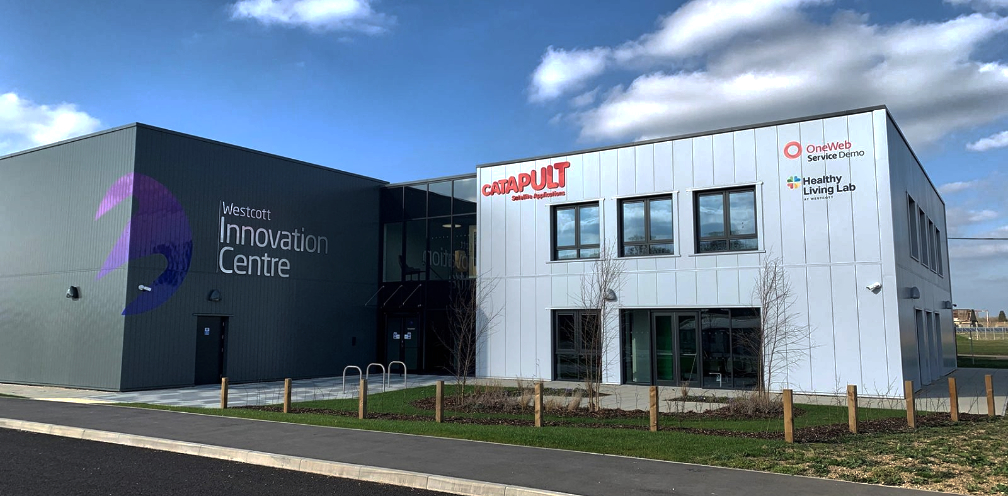
OneWeb is opening a state-of-the-art Service Demonstration experience at the new Innovation Center at Westcott Venture Park, which is run and managed by the Satellite Applications Catapult and was funded by Buckinghamshire LEP through the Local Growth Fund.

Situated in Buckinghamshire, UK, OneWeb’s unique facility will welcome customers from May 1st to demonstrate the performance and potential applications of their satellite network in real-time.

The Service Demo will showcase equipment and high-speed connectivity, and visitors will be able to see the OneWeb network in action including download and upload speeds and latency. Sales support staff will also be on hand to discuss the technology, potential partnerships, testing requirements and further collaboration opportunities.

Focused on attracting partnerships with commercial communications or internet solution providers, the Service Demo experience will play a vital role in launching OneWeb’s unique service for UK businesses. The center will develop a long-term commercial proposition for its technology in collaboration with the UK’s innovative satellite communications sector.

OneWeb selected Westcott as part of its collaboration with the Satellite Applications Catapult to demonstrate high speed data transfer through space to their 5G network. Aligned to OneWeb’s mission to deliver broadband connectivity and bridge the Digital Divide, this strategic business partnership is the next step in OneWeb’s journey to enable a cross-fertilization of technologies to enable other businesses to collaborate and benefit from advances in the UK space sector.

Opening the Service Demo is yet another milestone for OneWeb as it continues to demonstrate its progress in commercialization of the network. In recent weeks the company has also announced an Innovation Challenge further onboarding of customers globally, and in March 2021, OneWeb conducted network demonstrations to the U.S. Government and will be rolling out additional demonstration kits and demo centers in key markets globally.

Filed Under: News

Space Flight Laboratory’s NorSat-3 Maritime Smallsat Launched — Commissioning Underway For The Norwegian Space Agency

April 30, 2021 by editorial

The Norwegian Space Agency has announced the successful launch of the NorSat-3 maritime tracking smallsat, built by Space Flight Laboratory (SFL) in Toronto, successfully launched on April 28, 2012, aboard Arianespace‘s Vega Flight VV18 from the Guiana Space Center in French Guiana — this is the 17th SFL satellite launched within the past eight months.

NorSat-3 carries two instrument payloads. The primary device is an Automatic Identification System (AIS) receiver that acquires messages from civilian maritime vessels to provide information on ship locations and marine traffic.

The smallsat is also equipped with an experimental navigation radar detector developed by the Norwegian Defence Research Establishment (FFI) to augment the AIS receiver.

Combining a navigation radar detector and AIS receiver will potentially provide much better maritime awareness for the Norwegian Coastal Administration, Armed Forces and other maritime authorities. Detection of navigation radar from ships will provide the ability to verify the accuracy of received AIS messages and to detect vessels whose AIS messages have not been received.

SFL developed the 16.5 kg NorSat-3 smallsat on the company’s space-proven, Next Generation, Earth Monitoring and Observation (NEMO) platform,under contract to the Norwegian Space Agency, with funding from the Norwegian Coastal Administration. SFL also built the NorSat-1 and -2 maritime tracking smallsats now on-orbit and the firm is currently developing the NorSat-TD (Technology Demonstrator) satellite that is slated for launch in 2022.

“SFL congratulates Norway on its leadership in space-based maritime traffic monitoring,” said SFL Director Dr. Robert E. Zee. “NorSat-3 was contacted shortly after launch and is healthy. Commissioning is underway.”

Other launches of SFL-built satellites in just the past eight months include missions developed for the Dubai-based Mohammed Bin Rashid Space Centre (MBRSC) in the United Arab Emirates, GHGSat Inc. of Canada, HawkEye 360 of the U.S., Space-SI of Slovenia, and a Canadian-based telecommunications company.

SFL offers a complete suite of smallsats that satisfy the needs of a broad range of mission types from 3 to 500 kilograms. Dating from 1998, SFL’s heritage of on-orbit successes includes 69 satellites and distinct missions related to Earth observation, atmospheric monitoring, ship tracking, communication, radio frequency (RF) geolocation, technology demonstration, space astronomy, solar physics, space plasma, and other scientific research. In its 23-year history, SFL has developed a variety of satellites that have achieved more than 144 cumulative years of operation in orbit. These smallsat missions have included SFL’s trusted attitude control and, in some cases, formation-flying capabilities. Other core SFL-developed components include modular (scalable) power systems, onboard radios, flight computers, and control software.

Filed Under: News

Successful Comms Established With Aurora Insight’s Just Launched Bravo Smallsat By NanoAvionics

April 29, 2021 by editorial

NanoAvionics has successfully established communications with “Bravo,” the second smallsat the company built and launched for Aurora Insight, a U.S. business analytics company for the wireless industry.

“Bravo” was sent into LEO on April 28 onboard an Arianespace Vega rocket by Italian rocket maker Avio. It followed the launch of its twin satellite “Charlie” earlier this year on SpaceX’s Transporter-1 rideshare mission, and the demo-satellite “Alpha” launched in 2018.

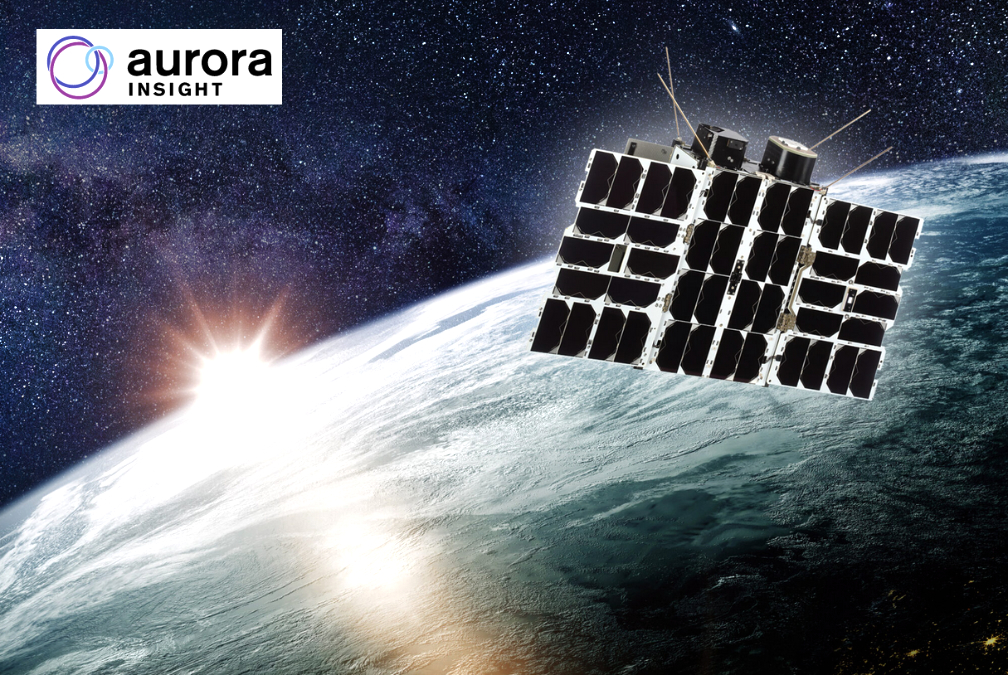
Artistic rendition of the Bravo smallsat on-orbit. Image is courtesy of Aurora Insight.

Flying at a height of 500-600 miles above Earth, scanning radio frequencies (RF), these satellites form a critical part of Aurora’s technology, which maps network activity around the world. The company’s technology also includes RF sensors on vehicles, aircraft, buildings and other objects to measure spectrum and wireless networks, including 5G deployments. 

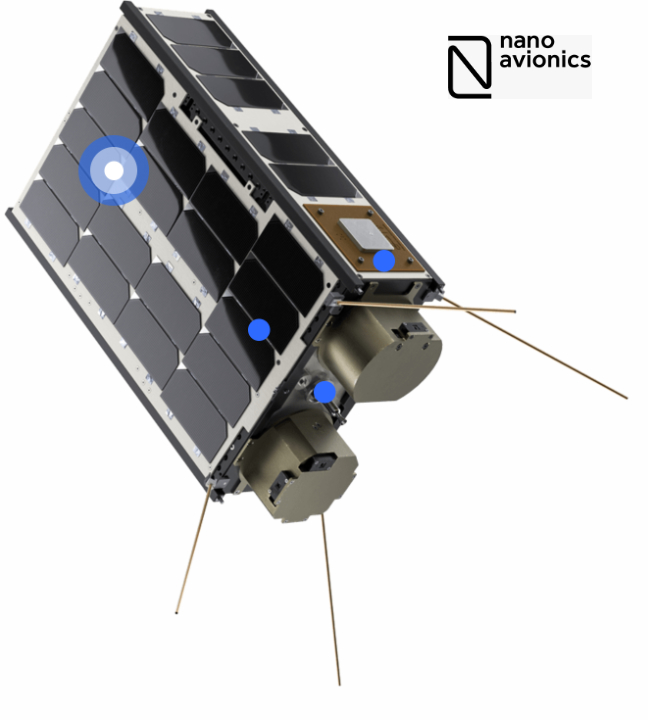
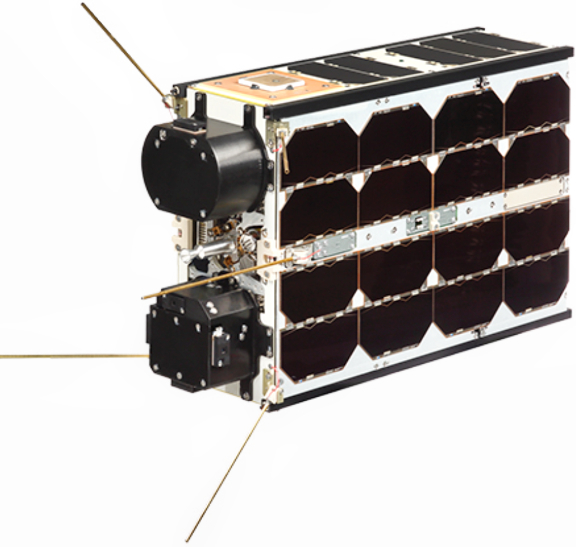
NanoAvionics, which recently announced its business expansion into the smallsat market, built the buses, integrated the sensor payloads and provided launch and operation services for Aurora Insight, headquartered in Denver, Colorado. Both 6U smallsats are based on NanoAvionics’ flight-proven M6P bus. To provide the required capabilities for Aurora’s radio frequency spectrum mission, they include a higher performance configuration to provide more power through deployable panels and the most precise method for pointing and navigation in nanosats by an added star tracker subsystem.

Photo of the NanoAvionics M6P smallsat bus, courtesy of the company.

Using machine learning algorithms, Aurora creates accurate information on the availability of radio frequency spectrum and wireless infrastructure, measuring 5G, LTE, IoT, 3G/2G, Wi-Fi and TV signals. This information enables mobile network operators, mobile service operators, tower companies, and RF spectrum users to innovate and invest in wireless networks, resulting in stronger connections for communities and smarter industries.

“While we had many launches, the excitement that comes with each successful mission – like the twin satellites for Aurora Insight – never ceases,” said Vytenis J. Buzas, CEO of NanoAvionics. “The advantage that attracts our customers is the combination of our standardized buses, already lowering cost, with easy and thus cost-effective custom modification. Due to our experience and services, they can outsource the whole end-to-end satellite infrastructure and operations to us and focus entirely on their data and business.”

Jennifer Alvarez, CEO of Aurora Insight, said, “Our newest satellites will capture unprecedented data on wireless networks, including 5G deployments. With this new layer of global spectrum data, Aurora Insight is well-equipped to provide the wireless industry with actionable insights for investment decisions and long-term growth.” 

Filed Under: News

Rocket Factory Augsburg Secures European Launch Site

April 29, 2021 by editorial

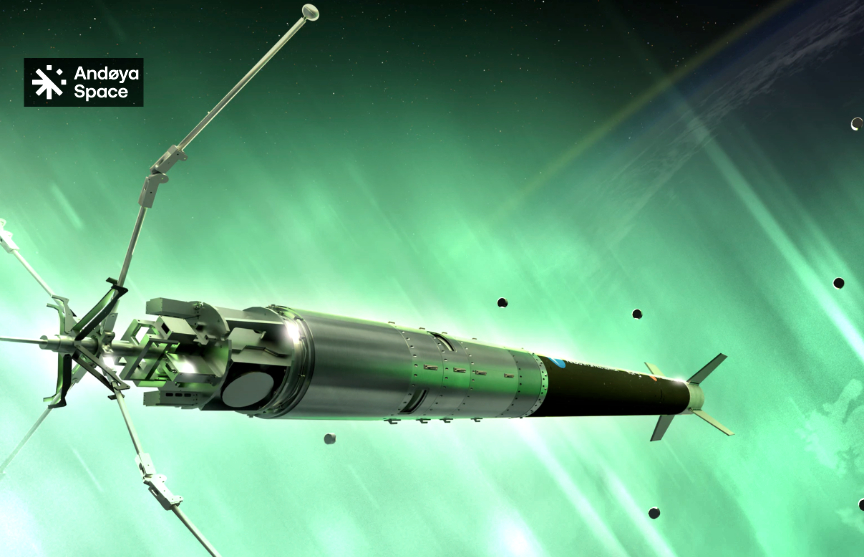
Rocket Factory Augsburg (RFA) has signed a contract with Norway’s Andøya Space, securing one of the most coveted launch sites in Europe.

RFA is engaged in launch vehicle development for NewSpace with its state-of-the-art staged combustion engine technology. This high-performance engine design, coupled with the most cost-effective production techniques possible, is essentially new to Europe.

With OHB’s support, RFA has succeeded in acquiring key technologies and key talent that will drive the RFA ONE launch vehicle business case to global market dominance. Recent fire tests have shown that RFA is on a successful path to establishing an efficient and powerful rocket motor technology for Europe.

Andøya Space got their zonal area approval September 2020 and have permit for 30 launches per year from their new spaceport 35 km south of the existing launch site. The spaceport’s location, 69 degrees north and above the Arctic circle on the coastline of Andøya in Nordland county, possesses a flightpath that ensures a trajectory whose ground track does not cross populated areas. Andøya Space,provides launch pads, payload integration facilities as well as technical infrastructure on site.

“This agreement secures launch capacity to cover the first years of operation for us. We are very happy that Europe’s most advanced rocket launch complex is partnering with us. We have everything in place now from launch site, over customers to traction on the development program to get the first launch campaign going“, said Jörn Spurmann, Chief Commercial Officer of RFA. “Flexible access to space from continental Europe aids RFA in offering its customers the best and most cost-effective launch service for their payloads.”

“A partnership with Rocket Factory is another big milestone for the European New Space Industry,” said Odd Roger Enoksen, CEO and President of Andøya Space. “We look forward to supporting their ambitious launch cadence from our spaceport. Our relationship with RFA has grown strong through the past years and we are particularly proud that RFA continues to be part of our vision to create a competitive European New Space industry.”

Filed Under: News

York Space Systems Engaged In Larger Smallsat Bus Production

April 29, 2021 by editorial

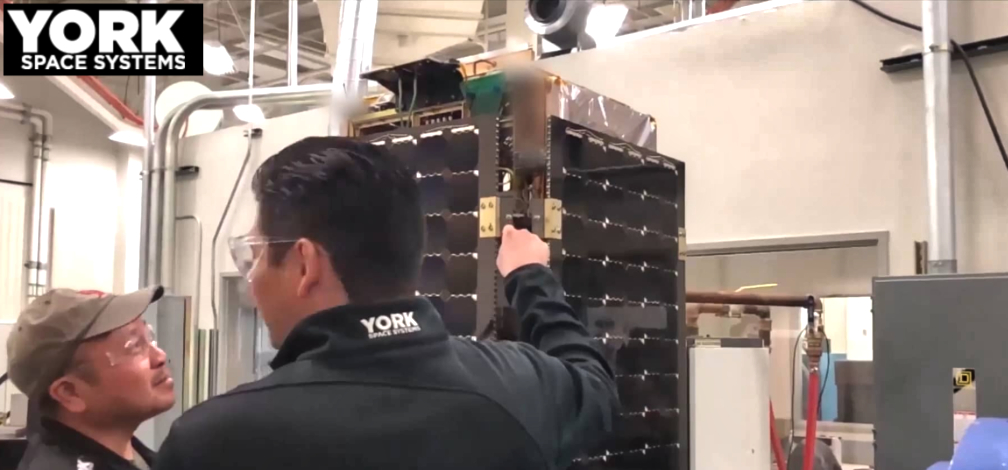
York Space Systems is now producing a larger satellite platform with double the payload volume of the company’s current spacecraft bus in response to market demand.

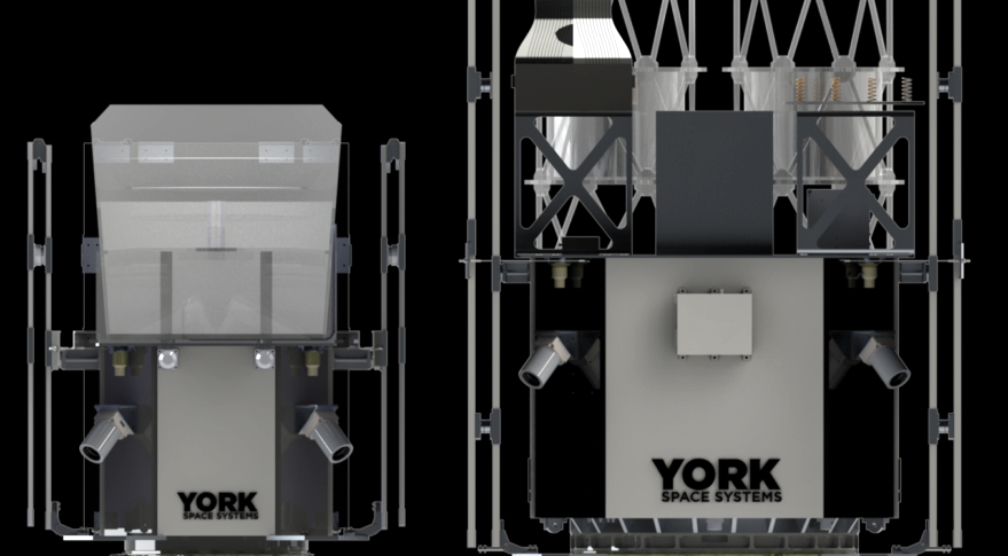
The new LX-CLASS is designed to have a total mass of more than 350 kilograms, up from 180 kilograms for its flight-proven S-CLASS satellite platform. The LX-CLASS will reuse more than 90% of the S-CLASS design, reducing schedule and cost risk for missions ranging from communications to EO and will also include cybersecurity and encryption systems developed for military customers on the S-CLASS.

The new, York Space Systems’ LX-CLASS platform (pictured right) will enable more powerful payloads than its S-CLASS spacecraft (left). Image is courtesy of York Space Systems.

The company is currently building 15 under-contract spacecraft in a facility designed to produce 20 simultaneously. The number of S-CLASS under production is exceeding 10 in number and the LX-CLASS [is] ramping production throughout this year. As the platforms share more than 90% of components and systems, York can scale and shift production between them based on market demand.

In October 2019, before the COVID-19 pandemic disrupted supply chains and businesses around the world, York had plans to produce 50 satellites in 2020 — and hundreds annually in the future. According to the company, demand is continuing to align with its previous expectations.

York’s LX-CLASS will also feature the same autonomous operations capability used by the S-CLASS, which enabled the company to reduce the number of people needed to operate a constellation for a specific customer from 15 to zero. In August, the Pentagon’s Space Development Agency awarded York a $94 million contract to partly build a network of satellites in low Earth orbit for the military.

York and Lockheed Martin are building 10 satellites each for the Space Development Agency’s Transport Layer Tranche 0 mesh network, slated to launch in 2022.

Filed Under: News

Five Year Collaboration Between Gilmour Space + DEWC To Develop Space-Based, EW System

April 29, 2021 by editorial

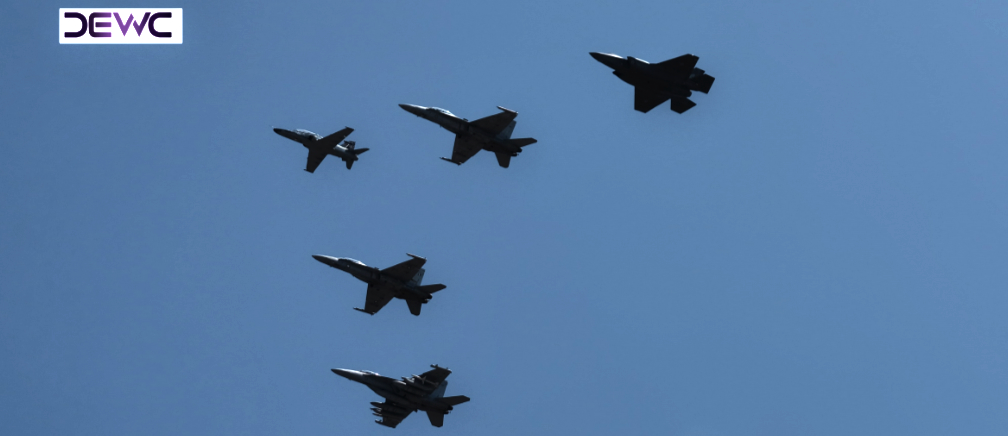
DEWC Systems and Australian launch services company Gilmour Space Technologies have signed a Memorandum of Understanding (MoU) to launch the next generation Miniaturized Orbital Electronic Warfare Sensor Systems (MOESS) system as a sovereign, space-based, Electronic Warfare (EW) system.

In a bid to increase Australia’s Intelligence, Surveillance, Reconnaissance and Electronic Warfare (ISREW) capability, DEWC Systems and Gilmour Space have signed a five-year sovereign collaboration to advance the sensor capability, deployment and uptake of ISREW satellites in LEO.

The companies also envisage co-development projects based on the current 3U platform including assets in the 80 to 100 kg class that will lead to a smallsat prototype. A joint research activity will be conducted to understand the requirements of manufacturing a prototype satellite using commercially available components.

DEWC Systems role in the partnership is to further develop its Miniaturized Orbital Electronic Warfare Sensor Systems (MOESS) – a dynamically reprogrammable, multi-purpose, Electromagnetic sensor system integrated and deployed on smallsats to provide a unique and enhanced space-based EW capability for Australia. MOESS was DEWC Systems’ first collaborative project with top South Australian universities and the Defence Science and Technology Group (DSTG) where the development of a proof-of-concept was funded by the Defence Innovation Partnerships two years ago.

Phase Two, funded through a Defence Innovation Hub contract, enabled DEWC Systems to work on the design and development of assembled systems and demonstrate the technology.

Phase three will see a maturing of the system with a view to integrate with a small satellite, launch the prototype to orbit and demonstrate the live capability. This collaboration seeks to develop the technologies required to ensure that the launch will be on an Australian made rocket.

DEWC Systems, being the first Australian company to launch a payload on a space-capable rocket from Australian soil that helped lead Australia into the Space 4.0 era, will be a step closer to launching a constellation of cubesats.

“We are committed to developing a LEO launch and satellite platform that will support new and valuable sovereign space capabilities, such as DEWC System’s ISREW solution for Defence,” said Adam Gilmour, CEO of Gilmour Space.

“I believe in the ingenuity, innovation and the ‘can do’ attitude of the Australian spirit. Through effective collaboration with like-minded Australian companies, such as DEWC Systems and Gilmour Space Technologies, I am confident that we can deliver a true and enduring sovereign Defence space capability,” said Ian Spencer CEO of DEWC Systems.

DEWC Systems is a South Australian owned technology company founded by veteran EW operators for the purpose of enhancing Australia’s technological capabilities in EW system design and development. DEWC Systems is focused on developing innovative, state-of-the-art systems and sub-systems for Defence and Space applications including the Wombat S3 (Smart Sensor Suite) and STAC (Sensor Telemetry and Communications) products.

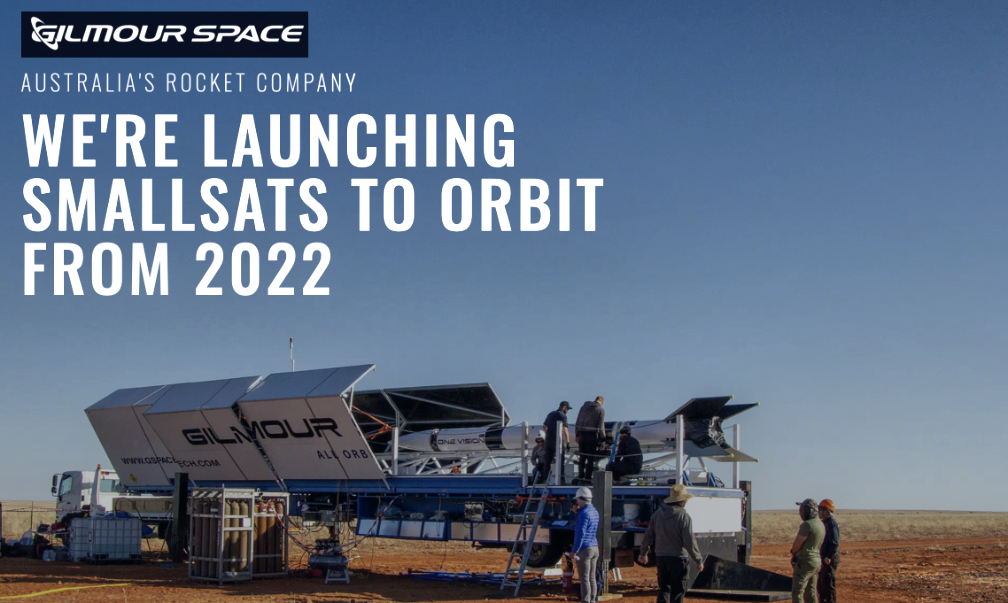
Gilmour Space Technologies is a leading venture-backed Australian launch services provider and spacecraft manufacturer. The company’s mission is to provide affordable and reliable spacecraft and launch services to global customers with their next-generation G-class satellite platform and Eris orbital rockets. Launching in 2022.

Filed Under: News

UPDATE: Arianespace’s 1st Vega Mission Of The Year Launches Pléiades Neo 3 + Five Additional Smallsat Payloads

April 29, 2021 by editorial

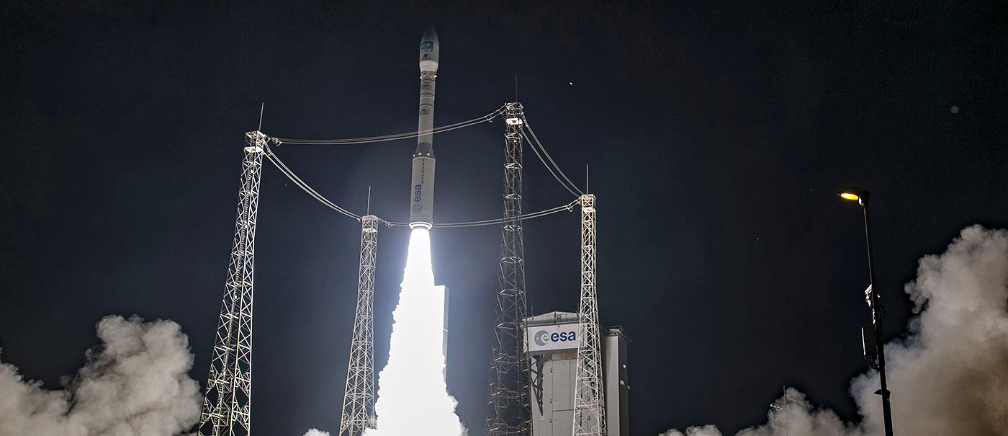
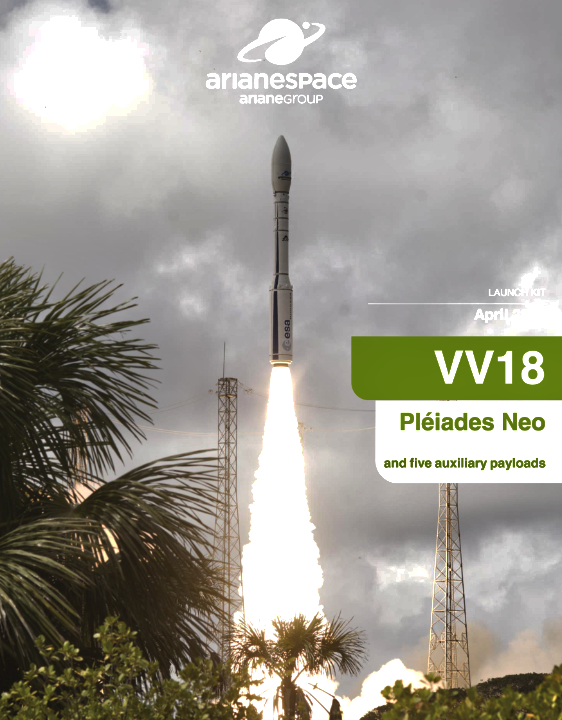
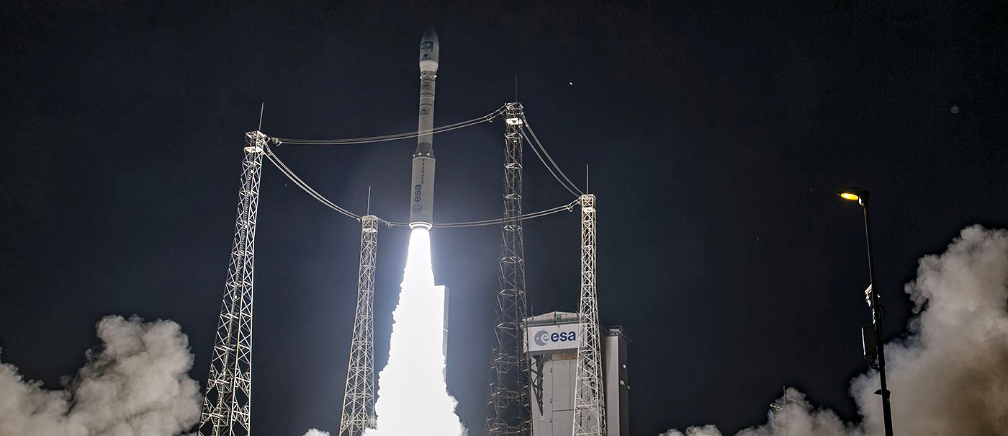
On Wednesday, April 28, 2021, at 10:50 pm local time (01:50 UTC on Thursday, April 29), a Vega launch vehicle operated by Arianespace lifted off successfully from the Guiana Space Center, Europe’s Spaceport in French Guiana (South America) –this mission marked Vega’s return to flight and was also the second successful launch by Arianespace’s teams in less than 72 hours.

The Arianespace VV18 launch.

The mission’s primary purpose was to orbit Pleiades Neo 3, the first of four satellites in an advanced EO constellation. Pleiades Neo 3 was wholly funded and manufactured by its operator, Airbus.

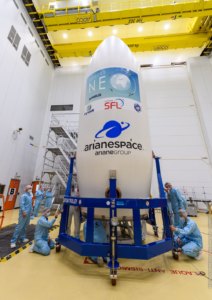
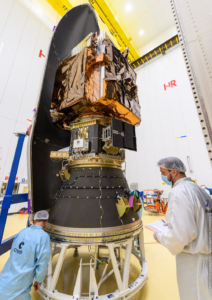
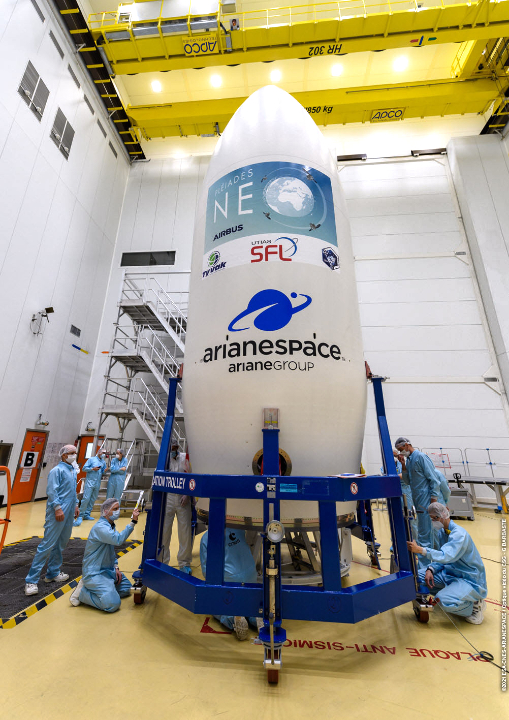
Payload fairing encapsulation. Photo is courtesy of Arianespace.

Arianespace’s 18th Vega mission also deployed several smallsats using the company’s rideshare service SSMS (Small Spacecraft Mission Service). These auxiliary payloads included an observation smallsat for the Norwegian space agency, Norsat-3, and four cubesats for the operators Eutelsat, NanoAvionics/Aurora Insight and Spire.

Artistic rendition of the Pléiades Neo 3 satellite, courtesy of Airbus.
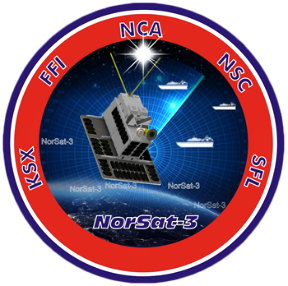
NorSat-3 patch courtesy of UTIAS Space-Flight Laboratory.

The SSMS rideshare service, developed with the support of the European space industry, was first deployed by Arianespace in September of 2020. Funded by the European Space Agency (ESA), Arianespace’s SSMS service will soon be joined by the Multiple Launch Service (MLS), a similar offering that uses the Ariane 6 launch vehicle. With these two services, Arianespace can offer a wide range of affordable launch opportunities for small satellites and constellations.

The production of the Vega launcher and preparations for mission VV18 were handled by Avio, industrial prime contractor for the Vega launcher, under the direction of Arianespace and ESA. They followed all recommendations issued by the Independent Inquiry Commission set up after the failure of the 17th Vega mission (VV17).

VV18 is the third Arianespace mission of 2021, following two successful Soyuz launches, on March 25 and April 26, from the Vostochny launch base in Russia.

Vega is a new-generation light launcher, perfectly suited to both commercial and government payloads. Because of its high performance and versatility, Arianespace provides the best possible launch solution for small and medium spacecraft headed into a wide range of orbits (Sun-synchronous, ballistic, transfer to the Lagrange point L1, etc.), for EO, science, education, defense and other applications. With Vega C, Arianespace will offer enhanced performance and greater payload volume for future customers at the same price as for launches by Vega.

“I would like to congratulate everybody involved at Arianespace, ESA and Avio for successfully returning Vega to flight,” said Stéphane Israël, Chief Executive Officer of Arianespace. “I am especially proud of our teams who were able to carry out two launches, on two different continents, in less than 72 hours – kudos!”

The AVUM stage will ignite its engine for the first time, in a powered phase lasting about eight minutes, followed by a ballistic phase lasting 37 minutes. The AVUM stage will then restart its engine for a second burn lasting a little over one minute, before releasing the Pleiades Neo 3 satellite.

The next two AVUM ignition phases will last about 37 minutes in all, followed by the release of the five auxiliary payloads. That will mark the end of mission VV18, one hour and 42 minutes after liftoff.

The first of four satellites in an advanced EO constellation, Pleiades Neo 3 was wholly funded and manufactured by its operator, Airbus. The 18th mission of Europe’s Vega light launcher will also orbit an observation smallsat for the Norwegian space agency, Norsat-3, plus four cubesats for the operators Eutelsat, NanoAvionics/Aurora Insight and Spire. These smallsats will be carried as auxiliary payloads on the innovative Small Spacecraft Mission Service (SSMS) deployment system. The SSMS rideshare service, developed with the support of the European space industry, was first deployed by Arianespace in September 2020.

Funded by the European Space Agency (ESA), Arianespace’s SSMS service will soon be joined by the Multiple Launch Service (MLS), a similar offering that uses the Ariane 6 launch vehicle. With these two services, Arianespace can offer a wide range of affordable launch opportunities for small satellites and constellations.

The production of the Vega launcher and preparations for mission VV18 were overseen by Avio, the prime contractor for the Vega launcher, under the direction of Arianespace and ESA. They followed all recommendations issued by the Independent Inquiry Commission established after the failure of the 17th Vega mission (VV17).

About the Pléiades Neo 3 satellite

Pléiades Neo 3 is the first of the Pléiades Neo constellation to be launched. Entirely funded, manufactured, owned and operated by Airbus, Pléiades Neo is a breakthrough in Earth observation domain.

With 30 cm resolution, best-in-class geolocation accuracy and twice-a-day revisit, the four Pléiades Neo satellites unlock new possibilities with ultimate reactivity. Thanks to these state-of-the-art satellites, each step of the acquisition and delivery cycle offers top-level EO services now and going forward for the next ten years. In addition, their reactive tasking ability allows urgent acquisitions 30 to 40 minutes following request – which is five times higher than previous constellations – and respond to the most critical situations in near real-time, very useful for natural disaster. Pléiades Neo will also operate for mapping, urban and defence applications.

The Pléiades Neo constellation is 100% commercially available and will provide institutional and commercial customer’s needs. Images captured by Pléiades Neo will be streamed into the OneAtlas on-line platform, allowing customers to have immediate data access, analytics and correlation with Airbus’ unique archive of optical and radar data.

There are two additional Airbus Defence and Space Intelligence missions for three satellites in the Arianespace backlog to be launched on Vega from the Guiana space center.

Pleiades Neo 3 will be the 131st Airbus Defence and Space built satellite to be launched by Arianespace. There are currently 20 Airbus Defence and Space built satellites in Arianespace’s backlog: CERES (x3), SYRACUSE 4B (COMSAT NG 2), EUTELSAT QUANTUM, METOP-SG A1 & METOP-SG B1, THEOS-2, CSO 3, Pléiades Neo (x3), JUICE, Measat-3d, Biomass, EarthCARE and CO3D (x4). In addition, Airbus Defence and Space is involved in the construction of the OneWeb satellites.

Filed Under: News

  • « Go to Previous Page
  • Page 1
  • Interim pages omitted …
  • Page 40
  • Page 41
  • Page 42
  • Page 43
  • Page 44
  • Interim pages omitted …
  • Page 65
  • Go to Next Page »

Primary Sidebar

WEEKLY NEWSLETTER

Archives

  • August 2026
  • July 2026
  • June 2026
  • May 2026
  • April 2026
  • March 2026
  • February 2026
  • January 2026
  • December 2025
  • November 2025
  • October 2025
  • September 2025
  • August 2025
  • July 2025
  • June 2025
  • May 2025
  • April 2025
  • March 2025
  • February 2025
  • January 2025
  • December 2024
  • November 2024
  • October 2024
  • September 2024
  • August 2024
  • July 2024
  • June 2024
  • May 2024
  • April 2024
  • March 2024
  • February 2024
  • January 2024
  • December 2023
  • November 2023
  • October 2023
  • September 2023
  • August 2023
  • July 2023
  • June 2023
  • May 2023
  • April 2023
  • March 2023
  • February 2023
  • January 2023
  • December 2022
  • November 2022
  • October 2022
  • September 2022
  • August 2022
  • July 2022
  • June 2022
  • May 2022
  • April 2022
  • March 2022
  • February 2022
  • January 2022
  • December 2021
  • November 2021
  • October 2021
  • September 2021
  • August 2021
  • July 2021
  • June 2021
  • May 2021
  • April 2021
  • March 2021
  • February 2021
  • January 2021
  • December 2020
  • November 2020
  • October 2020
  • September 2020
  • August 2020
  • July 2020
  • June 2020
  • May 2020
  • April 2020
  • March 2020
  • February 2020
  • January 2020
  • December 2019
  • November 2019
  • October 2019

© 2019–2026 SatNews

Insert/edit link

Enter the destination URL

Or link to existing content

    No search term specified. Showing recent items. Search or use up and down arrow keys to select an item.
      x
      Sign Up Now!

      Enjoy a free weekly newsletter with recent headlines from the global SmallSat industry.

      Invalid email address
      We promise not to spam you. You can unsubscribe at any time.
      Thanks for subscribing! You will now receive weekly SmallSat News updates.
      We love our advertisers.
      And you will too!

      Please disable Ad Blocker to continue... We promise to keep it unobtrusive.
      We promise not to spam you. You can unsubscribe at any time.
      Invalid email address
      Thanks for subscribing!