• Skip to main content
  • Skip to primary sidebar
  • Home
  • News
  • Featured
  • More News ⌄
    • SatNews
    • SatMagazine
    • MilSatMagazine
  • Events ⌄
    • MilSat Symposium
    • SmallSat Symposium
    • Satellite Innovation
  • Contacts
  • SUBSCRIPTION

SmallSat News

You are here: Home / Archives for 2021

Archives for 2021

OneWeb Adds 36 Satellites To The Firm’s Constellation Via Arianespace Soyuz

April 26, 2021 by editorial

Performed on Monday, April 26, at precisely 07:14 a.m. local time at Russia’s Vostochny Cosmodrome (22:14 a.m. on April 25, UTC), Soyuz Flight ST31 orbited 36 new OneWeb satellites. That brings the size of the OneWeb fleet on-orbit to 182 in number.

Flight ST31 was the 56th Soyuz mission carried out by Arianespace and its Starsem affiliate.

Arianespace has launched 182 OneWeb satellites through six Soyuz launches to date. Pursuant to an amended launch contract with OneWeb, Arianespace will perform 13 more Soyuz launches through 2021 and 2022.

These launches will enable OneWeb to complete the deployment of its full global constellation of low Earth orbit satellites by the end of 2022. OneWeb’s mission is to bring internet everywhere to everyone, by creating a global connectivity platform through a next-generation satellite constellation in LEO.

The OneWeb constellation will deliver high-speed, low-latency connectivity to a wide range of customer sectors, including aviation, maritime, backhaul services, and for governments, emergency response services and more. Central to its purpose, OneWeb seeks to bring connectivity to every place where fiber cannot reach, and thereby bridge the digital divide.

The satellite prime contractor is OneWeb Satellites, a joint venture of OneWeb and Airbus Defence and Space. The satellites were produced in Florida, USA, in the company’s leading-edge satellite manufacturing facilities that can build up to two satellites per day on a series production line dedicated to spacecraft assembly, integration, and testing.

“Congratulations to all the teams who made this latest mission from the Vostochny Cosmodrome a success. This launch again confirms Arianespace’s ability to deploy the OneWeb constellation through the use of three different Soyuz launch sites – in French Guiana, Kazakhstan and Russia,” said Stéphane Israël, Chief Executive Officer of Arianespace. “I want to sincerely thank OneWeb for its trust. I am delighted that our company has contributed – for the sixth time – to this client’s ultimate ambition of providing Internet access to everyone, anywhere, at any time.”


Filed Under: Featured, News

Albedo’s Seed Round Delivers $$$Millions

April 23, 2021 by editorial

Albedo has plans to design and operate a constellation of satellites that capture visible and thermal imagery at the highest resolution available and the company has announced a successful seed round that resulted in $10 million in funding to help meet their business and technology goals.

The firm’s mission is to be the catalyst in unlocking satellite imagery’s latent potential, with the goal of expanding current applications and propelling the discovery of new use cases. They stated that, whether their imagery is being used to reduce wildfire risk, assess the environmental impact of global forestry, contribute to timely 3D reconstructions of urban areas, or monitor carbon emissions from industrial power plants, their plan is to get better high-resolution data into the hands of decision makers… fast.

As a key step towards this goal, Albedo’s seed round was led by Initialized Capital, with participation from Liquid 2 Ventures, Soma Capital, Jetstream, Rebel Fund, and others.

In addition, Albedo’s angel investors have infused domain expertise and operating experience into the company and include… Keith Masback (former USGIF CEO), Tom Sheridan (Lt. General, USAF, Ret.), Kevin Mahaffey (Lookout co-founder), Daniel Kan (Cruise co-founder/CPO), Immad Akhund (Mercury co-founder/CEO), James Park (Fitbit co-founder / former CEO), and Harsh Patel (former Galvanize CEO).

This funding will be key in building out the company’s team of mission-driven experts, maturing their ground software and satellite design and partnering with hardware suppliers to start the development of Albedo’s first system.

Filed Under: News

The Integration Readiness Review is Successfully Passed By Kleos For Their Polar Vigilance Smallsats

April 23, 2021 by editorial

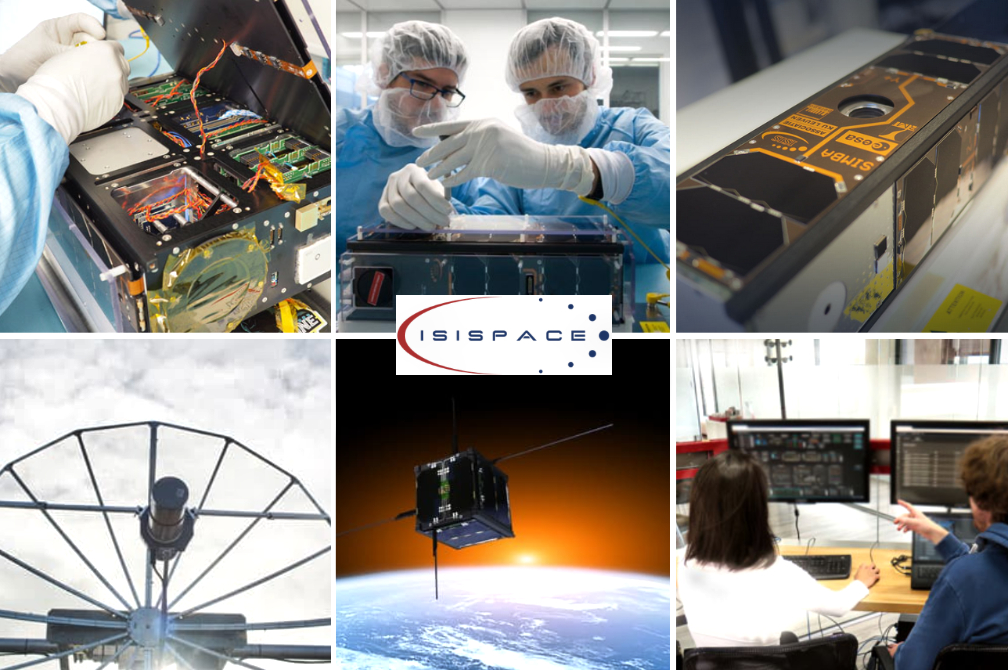
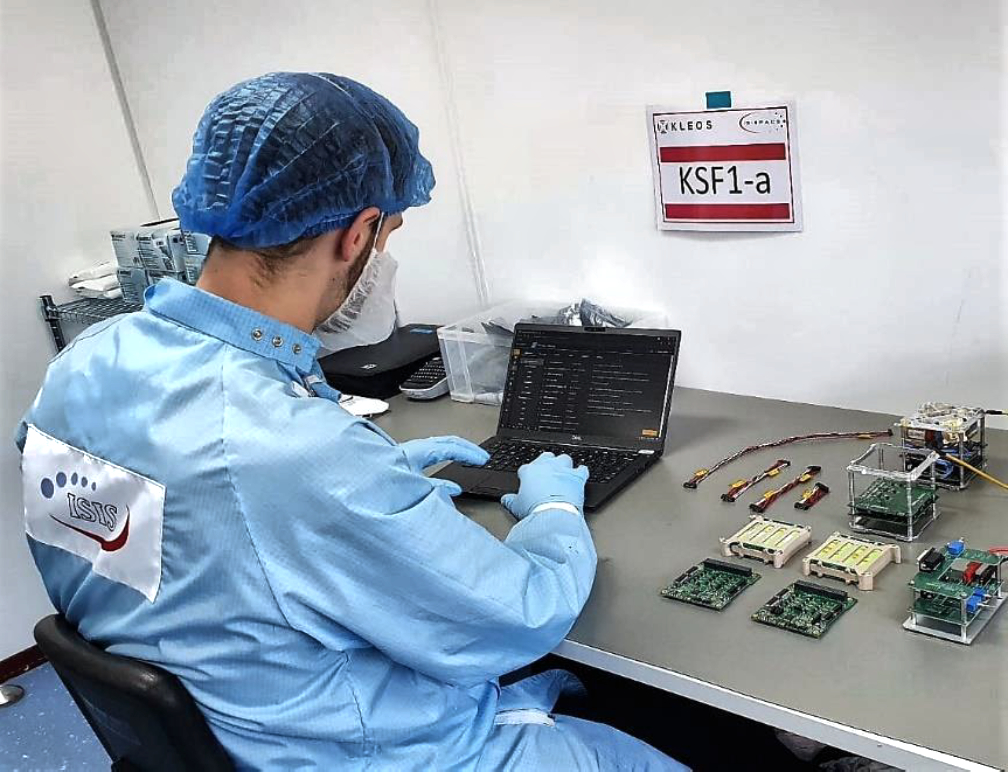
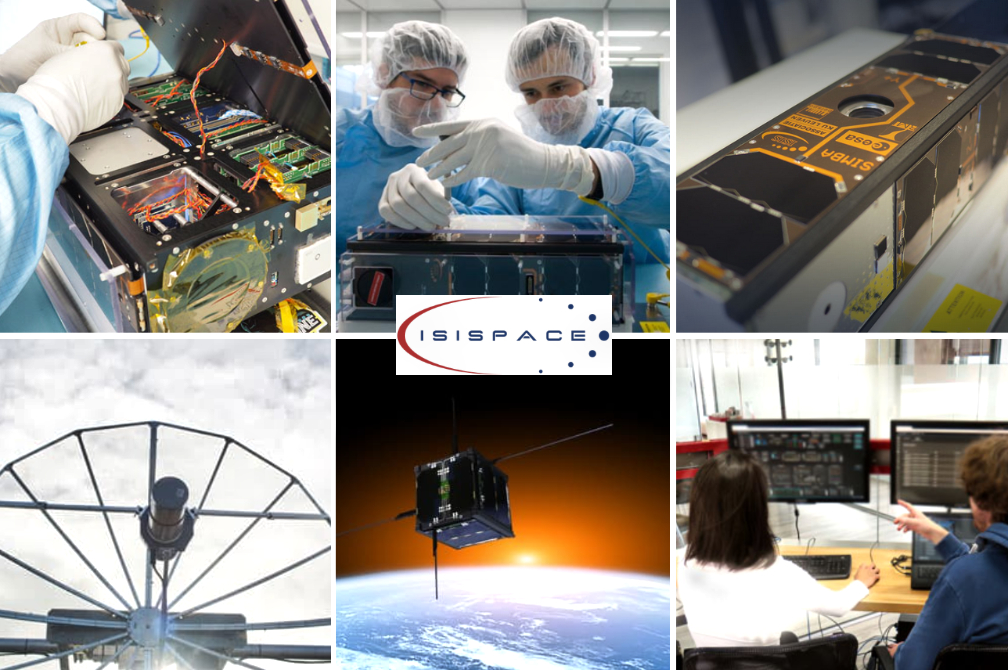
Kleos Space S.A (ASX:KSS, Frankfurt:KS1, Kleos or Company) has confirmed that the development of the company’s second satellite cluster, the Polar Vigilance Mission (KSF1), is on track for a mid-2021 SpaceX launch, this news coming after the firm successfully completed their Integration Readiness Review and the satellites start the build process with satellite builder ISISPACE.

The four Polar Vigilance smallsats are in the assembly and testing phase in preparation for final acceptance. Kleos’ satellites will then be delivered to the launch site for integration into the SpaceX Falcon 9 launch vehicle.

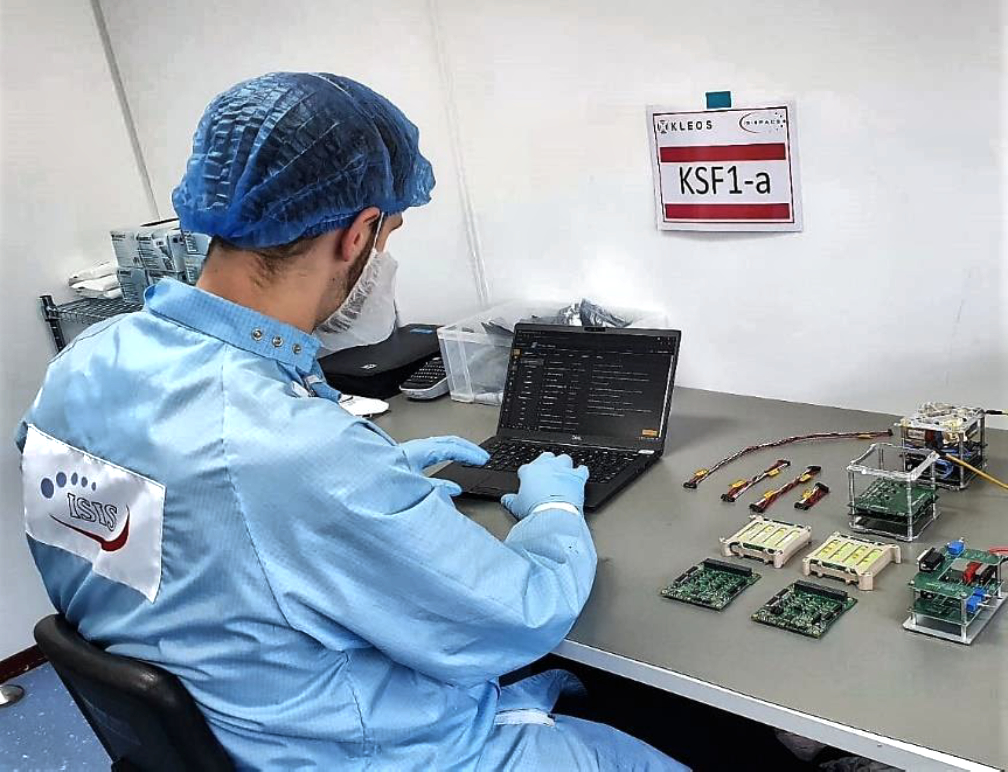
The KSF1a satellite component assembly in progress.

The KSF1 Polar Vigilance Mission satellites are scheduled for a mid-2021 launch under a rideshare contract with Spaceflight Inc. The KSF1 satellites will launch into a 500 to 600 km SSO, increasing Kleos’ coverage to the north and south of the 37° inclination of the Scouting Mission satellites, which successfully launched in early November of 2020. Kleos’ third satellite cluster, the Polar Patrol Mission, is scheduled to launch in December 2021 aboard a SpaceX Falcon 9.

Kleos’ satellites detect and geolocate radio frequency transmissions to provide global activity-based intelligence, improving the detection of ‘dark’ activities such as drug and people smuggling, border challenges, and illegal fishing.

Kleos Space CTO Miles Ashcroft said, “Development of the KSF1 cluster is progressing at an incredible pace with delivery to site planned for the end of May. Kleos is leveraging the experience and enthusiasm of its satellite builder, Netherlands-based ISISPACE, to develop and deliver the satellites quickly as well as improve hardware and software capability. We are growing our constellation rapidly in 2021 with a further cluster scheduled for launch towards the end of the year. Every satellite cluster launched increases the ground covered and the time covered, thus, the value of our radio frequency geolocation data increases, enabling tiered subscription licenses for governments and commercial entities to be offered.”

Filed Under: News

Rocket Lab Tapped To Create Mission Operations Control Center For MethaneSAT

April 23, 2021 by editorial

Rocket Lab will play a critical role in an international climate change mission by developing a Mission Operations Control Center (MOCC) for MethaneSAT, a unique satellite mission created to foster and accelerate reductions in the emissions of methane, a potent greenhouse gas responsible for at least a quarter of today’s planetary warming.

Rocket Lab Mission Control.

Led by the non-profit Environmental Defense Fund, the 350 kg class MethaneSAT will locate and measure methane from the oil, gas, and agriculture industries around the globe, enabling regulators, businesses, and researchers to track and reduce emissions faster. With a highly sensitive spectrometer capable of detecting methane concentrations as low as two parts per billion, MethaneSAT will quantify and report emissions in near real-time from sources large and small, providing regular monitoring of regions accounting for more than 80% of global oil and gas production. MethaneSAT will publish data free of charge so that stakeholders and the public can compare progress by both companies and countries.

Rocket Lab will develop, manage, and operate the Mission Operations and Control Center (MOCC) for MethaneSAT in Auckland, New Zealand, as part of the New Zealand Government’s NZD$26 million commitment to the international program. Rocket Lab will deliver the critical IT and software infrastructure necessary to task the satellite on orbit including tracking, pointing and positioning, and collision avoidance.

Rocket Lab will also manage the collection and dissemination of climate change data generated by MethaneSAT to the program’s international cohort of scientists and researchers. MethaneSAT’s team includes experts from some of the world’s most seasoned aerospace organizations in both the commercial and public sectors, as well as researchers from Harvard University and the Smithsonian Astrophysical Observatory who are developing MethaneSAT’s data acquisition and analytical capabilities.

Rocket Lab brings deep space heritage to the MethaneSAT project having launched 19 missions, deployed more than 100 satellites and operated its own Photon spacecraft on-orbit. Having developed two state-of-the-art Mission Control Centers in New Zealand and the United States, Rocket Lab is able to bring extensive experience to the MethaneSAT project, enabling the New Zealand Government to deliver on its commitments to the MethaneSAT program and participate in its first internationally partnered space mission.

Rocket Lab will manage mission operations for the first 12 months before continuing in an ongoing support capacity by training New Zealand’s future space operators and scientists in mission management and satellite operations. In addition to hosting the MOCC, New Zealand’s commitment to MethaneSAT will also provide overall project support and an expanded scientific research effort using data from MethaneSAT.

The Mission Operations Control Center for MethaneSAT will be functional by mid-2022 ahead of on-orbit operations expected to begin in Q4 later that year.

Rocket Lab CEO and founder, Peter Beck, said, “In the same way that Rocket Lab’s technology changed the way satellites are launched and operated, the ability to detect and measure gas leaks from space will undoubtedly change the way climate change is understood and managed. This is an internationally significant mission that can help alleviate modern society’s impact on Earth in a big way, and we’re thrilled to be able to play our part in helping to mitigate climate change through MethaneSAT.”

Filed Under: News

The Integration Readiness Review is Successfully Passed By Kleos For Their Polar Vigilance Smallsats

April 23, 2021 by editorial

Kleos Space S.A (ASX:KSS, Frankfurt:KS1, Kleos or Company) has confirmed that the development of the company’s second satellite cluster, the Polar Vigilance Mission (KSF1), is on track for a mid-2021 SpaceX launch, this news coming after the firm successfully completed their Integration Readiness Review and the satellites start the build process with satellite builder ISISPACE.

The four Polar Vigilance smallsats are in the assembly and testing phase in preparation for final acceptance. Kleos’ satellites will then be delivered to the launch site for integration into the SpaceX Falcon 9 launch vehicle.

The KSF1a satellite component assembly in progress.

The KSF1 Polar Vigilance Mission satellites are scheduled for a mid-2021 launch under a rideshare contract with Spaceflight Inc. The KSF1 satellites will launch into a 500 to 600 km SSO, increasing Kleos’ coverage to the north and south of the 37° inclination of the Scouting Mission satellites, which successfully launched in early November of 2020. Kleos’ third satellite cluster, the Polar Patrol Mission, is scheduled to launch in December 2021 aboard a SpaceX Falcon 9.

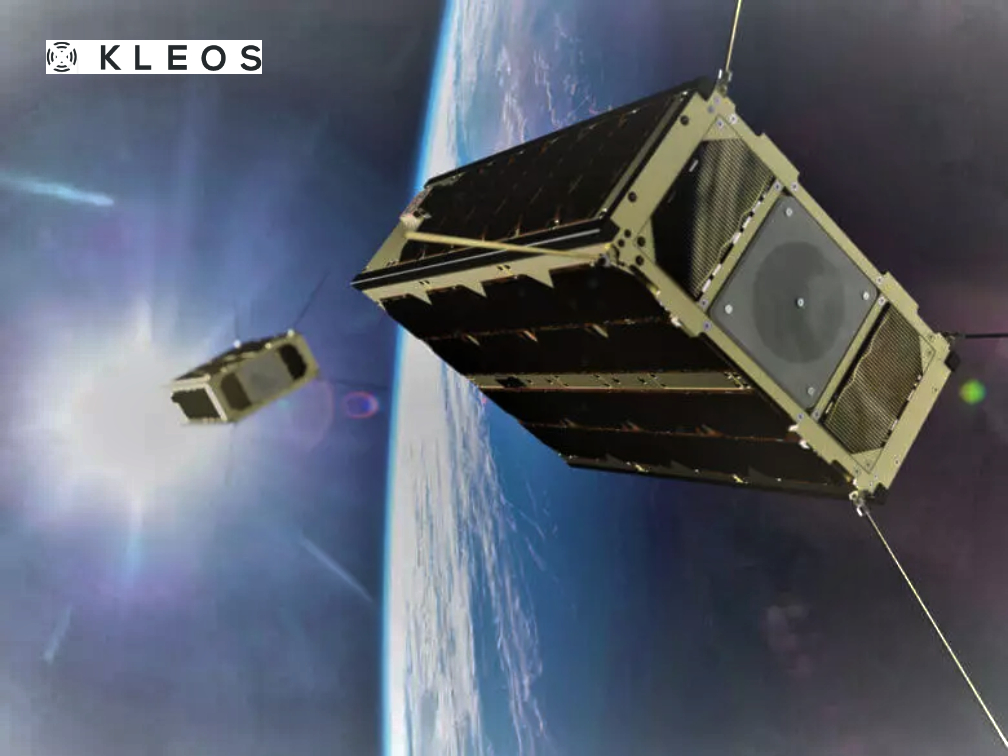
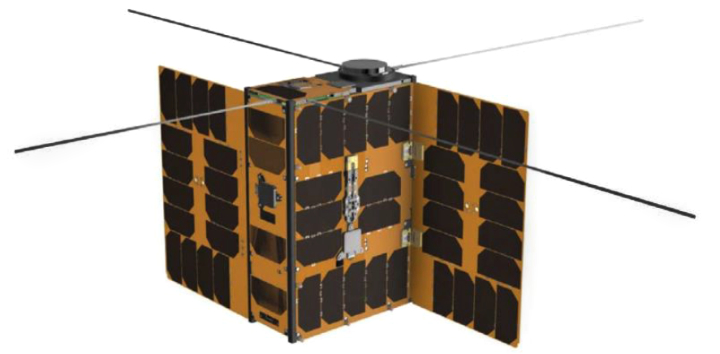
The KSF1 Satellite, model, image courtesy of ISISPACE.

Kleos’ satellites detect and geolocate radio frequency transmissions to provide global activity-based intelligence, improving the detection of ‘dark’ activities such as drug and people smuggling, border challenges, and illegal fishing.

Kleos Space CTO Miles Ashcroft said, “Development of the KSF1 cluster is progressing at an incredible pace with delivery to site planned for the end of May. Kleos is leveraging the experience and enthusiasm of its satellite builder, Netherlands-based ISISPACE, to develop and deliver the satellites quickly as well as improve hardware and software capability. We are growing our constellation rapidly in 2021 with a further cluster scheduled for launch towards the end of the year. Every satellite cluster launched increases the ground covered and the time covered, thus, the value of our radio frequency geolocation data increases, enabling tiered subscription licenses for governments and commercial entities to be offered.”

Filed Under: News

OQ Technology Signs Spaceflight For Multiple Launches

April 22, 2021 by editorial

OQ Technology has signed an agreement with Spaceflight Inc. to procure launch capacity and provide associated launch and integration services for the company’s first batch of six satellites from their planned constellation of more than 60 spacecraft.

The agreement allots launch capacity and reservation on combined rideshare and dedicated launches in a fast and agile approach while offering OQ Technology the necessary flexibility in price, volume and time of launch. The agreement concerns the deployment of OQ’s Batch-1 for favorable pricing and the right to bid for future Batch-2 deployment.

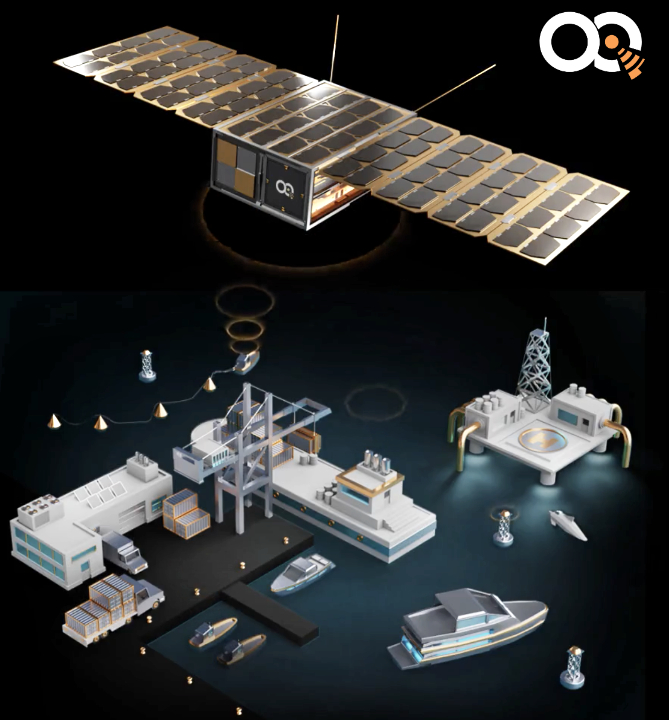
OQ has developed an innovative solution extending cellular 5G Internet-of-Things (IoT) coverage beyond the cell tower, enabling mobile operators to extend their services to areas they were previously unable to reach as well as offering seamless roaming connectivity for mobile assets in remote and rural areas at a fraction of the price of what today’s satellite operators charge.

In 2019, OQ managed to test cellular Narrowband IoT (NB-IoT) using commercial LEO smallsats with a “direct-to-satellite” communication. The technology enables mobile users to roam seamlessly between terrestrial and satellite networks. Unlike other services, NB-IoT meets the global open standard established by 3GPP and has an existing worldwide ecosystem of mobile operators, vendors, chip manufacturers, and users.

OQ is planning the gradual deployment of a global network of more than 60 satellites in multiple batches to enable fast scalability and global coverage. The spacecraft will be a combination of owned satellites, hosted payloads, or software deployment on other companies’ regenerative payload satellites. OQ is planning another additional launch of one satellite, working with Spaceflight to manage the launch.

Spaceflight has successfully launched more than 350 customer payloads across 37 launches across eight different launch vehicles, including the Falcon 9, Electron, PSLV, and Vega. Spaceflight’s diverse portfolio of launches offers customers a variety of rideshare, dedicated and last mile delivery launch options to meet their unique mission needs.

“Spaceflight developed a very attractive and flexible plan that allows us to deploy the network easily and in a record time. This helps us to meet the growing market demand of cellular IoT globally. The first Batch of satellites will address latency-tolerant IoT/M2M users that need Narrowband IoT connectivity, followed by gradual constellation deployment for critical near-real time applications,” said Omar Qaise, CEO of OQ Technology.

Filed Under: News

QuinetiQ To Lead Hypersat’s Hyperspectral Satellite Design Development

April 22, 2021 by editorial

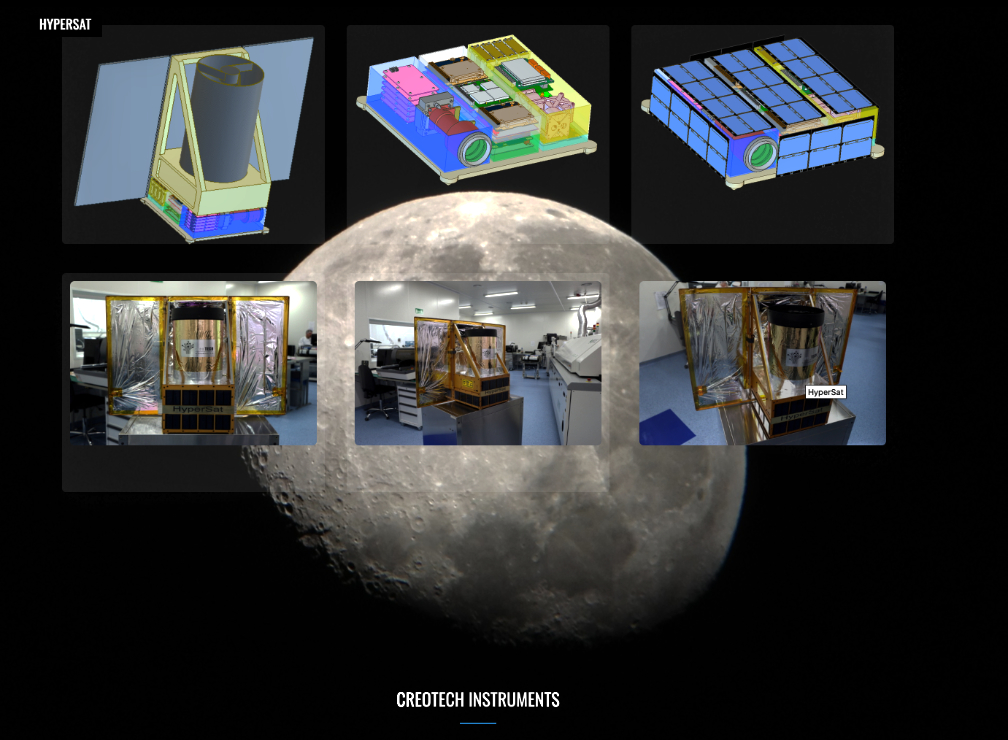
Hypersat has awarded a design-phase contract to QinetiQ Inc. (QinetiQ) for their next generation hyperspectral satellite — this study will be an enabling activity for a potential constellation of six LEO satellites that Hypersat plans to launch and that will be capable of producing greater information about the material properties on Earth than any current capability in orbit.

QinetiQ will lead a team of specialist engineering and technology organisations across the US that includes Redwire, Millennium Engineering and Integration, LLC and Brandywine Photonics. The team selected Virgin Orbit as the launch provider in part because of the unparalleled agility, mobility, and responsiveness afforded by air-launch, which allows for shorter call-up times and more flexible scheduling for customers, as well as direct injection into precise target orbits. In addition to the value for commercial customers, this capability enables a major strategic advantage to government organisations seeking to maintain unencumbered overhead intelligence.

Each satellite will achieve its incredible resolution by offering hyperspectral imaging – the ability to capture and process an image at wavelengths across the whole reflective spectrum from visible light to longwave infrared, pixel by pixel. This enables the identification of items in an image with superb precision, whether a camouflaged vehicle; diseased crops within a harvest; or gases leaking from a pipeline. That level of information allows users to make informed decisions only dreamed of in the past.

The first satellite, to be launched in early 2023, will have 500 spectral bands across the visible to shortwave infrared region and a ground sample distance of 6m – almost twice that available from existing LEO satellites. The following five satellites will offer longwave infrared images and even more capability in the shortwave infrared region.

The high spatial and high spectrum pixel resolution available from its sensor payload will allow the satellites to be used not only in defense and security applications, but also for other commercial sectors, such as agriculture and insurance, where highly accurate earth observation images can inform critical decisions.

Derek Woods, Founder, President and CEO of Hypersat LLC, said, “The partnership with QinetiQ and Virgin Orbit ensures our satellites are on a path to orbit with the most capable team possible. We look forward to redefining earth observation with an unparalleled hyperspectral and long wave capability.”

Mary Williams, President, QinetiQ Inc. said, “We are excited to partner with Hypersat and Virgin Orbit on this ground breaking program. QinetiQ’s expertise in hyperspectral systems development and data analytics is helping to provide cutting edge technology for both public and commercial organizations; bringing space-based technology to defense and security customers while also supporting the remote sensing needs of civil, environmental and commercial industries.”

“Virgin Orbit is making good on our promise to unleash the small satellite revolution,” said Virgin Orbit CEO Dan Hart. “QinetiQ’s team embodies the bold energy of this new era of space. It’s extremely exciting to join with our partners to deploy new capabilities and new ideas that will shape our world.”

Filed Under: News

WARPSPACE Developing Inter-Satellite Optical Comms Net + Raises $$$Millions Via Series A Financing Round

April 22, 2021 by editorial

WARPSPACE Co., Ltd., a space startup from the University of Tsukuba in Japan, has closed their Series A financing round with additional funding of 400M JPY ($3.6 million) from The Space Frontier Fund (operated by Sparks Innovation for Future Co., Ltd.) and KSK Angel Fund LLC, which is led by professional soccer player Keisuke Honda. This funding marks the first close of the Series A round and the second close is scheduled to be in May of this year.

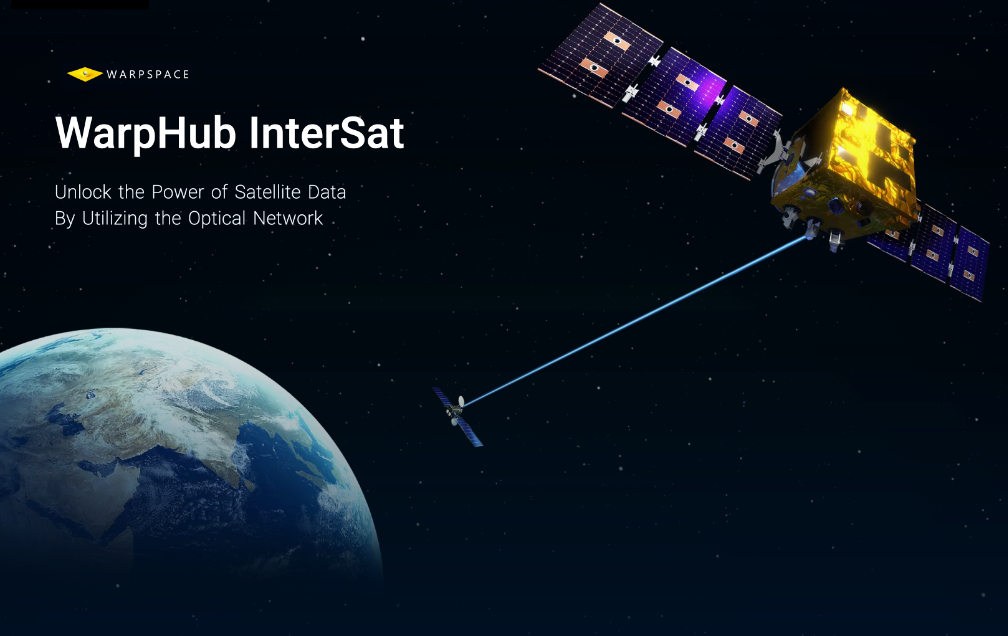
In addition, as of March 8, WARPSPACE has transitioned to a company with a board of directors. Misuzu Onuki, who is in charge of investment in the Space Frontier Fund and also serves as a member and director of space industry-related organizations, is taking the role of an outside director at WARPSPACE. Through a series of efforts, the company will accelerate the development of “WarpHub InterSat,” which is scheduled to be launched at the end of 2022.

WarpHub InterSat is the world’s first inter-satellite optical communication relay network service using small optical relay satellites. The company isaiming to launch the service in 2023. The number of satellites is increasing exponentially in LEO, which is between 500 to 800 km from the surface of the Earth. WarpHub Intersat enables the satellites to constantly communicate with the ground stations with high-speed optical communication, which also enables the satellite operators to access more satellite data in near real-time, which contributes to the realization of a sustainable global economy of the earth.

Established in 2016. WARPSPACE has launched three communication satellites including the one made in the predecessor university project. In addition to expertise in satellite engineering, the firm is developing space business by taking advantage of partnerships with research institutes, such as JAXA and the experimental and test facilities owned by Tsukuba Science City.

Filed Under: News

The “Go Ahead” Given By ESA For The Second Scout Satellite Mission — HydroGNSS

April 21, 2021 by editorial

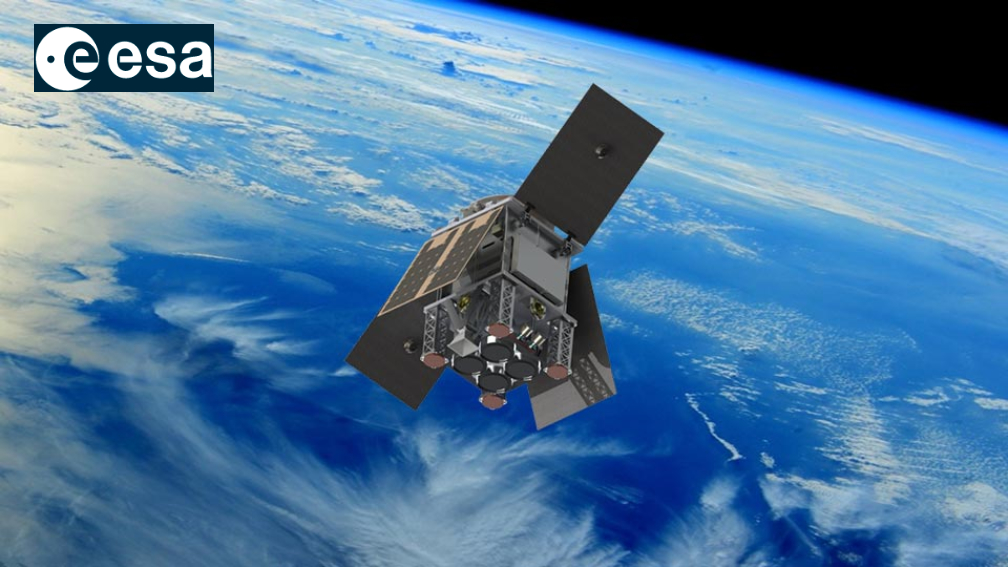
The second Earth Observation Scout mission, HydroGNSS, will provide measurements of key hydrological climate variables, including soil moisture, freeze–thaw state over permafrost, inundation and wetlands, and above-ground biomass, using a technique called Global Navigation Satellite System (GNSS) reflectometry. In doing so it will complement missions such as ESA’s SMOS and Biomass, Copernicus Sentinel-1 and NASA’s SMAP. Image is courtesy of SSTL.

Following the selection of the first Scout satellite mission last December, ESA has also given the greenlight to start negotiations with Surrey Satellite Technology Ltd. in the UK to lead the development of HydroGNSS.

Complementing ESA’s series of Earth Explorer research missions, Scout missions are a new element in ESA’s Earth Observation FutureEO Program. The idea is to demonstrate the capability of smallsats to deliver value-added science, either by the miniaturization of existing technologies or by demonstrating new sensing techniques.

Adopting an agile development process, the aim is to implement a Scout mission, from kick-off to launch, within three years, and for a maximum of 30 million euros. This budget includes the development of the space and ground segments, launch, and in-orbit commissioning.

The first Scout mission, ESP-MACCS, focuses on understanding and quantifying processes in the upper atmosphere over the Tropics – these processes play an important role in the overall evolution of the atmosphere.

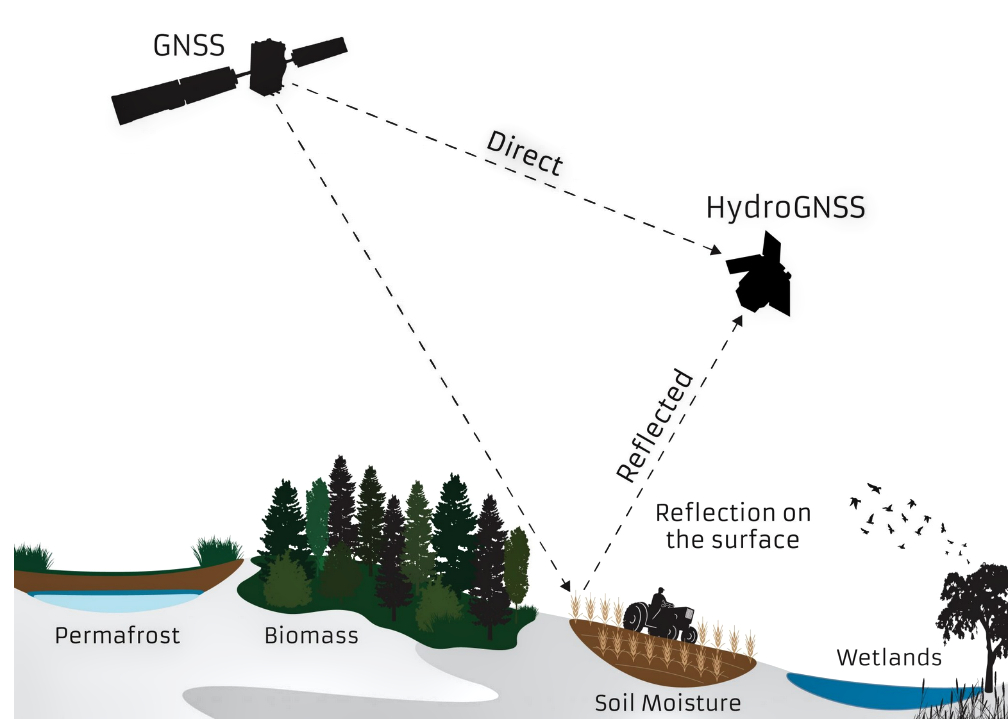
This second Scout mission will provide measurements of key hydrological climate variables, including soil moisture, freeze–thaw state over permafrost, inundation and wetlands, and above-ground biomass, using a technique called GNSS reflectometry. The satellite measures the signal reflected off the land, ice, and ocean from existing GNSS missions such as Galileo and GPS. Although these signals are faint, they can be collected by a low power receiver that can be accommodated on a smallsat in LEO, making it compatible with a Scout mission.

HydroGNSS will provide measurements of key hydrological climate variables, including soil moisture, freeze–thaw state over permafrost, inundation and wetlands, and above-ground biomass, using a technique called Global Navigation Satellite System (GNSS) reflectometry. In doing so it will complement missions such as ESA’s SMOS and Biomass, Copernicus Sentinel-1 and NASA’s SMAP. The satellite measures the signal reflected off the land, ice, and ocean from existing GNSS missions such as Galileo and GPS. Credit: SSTL

The industrial consortium consists of Surrey Satellite Technology Ltd (UK) in charge of the development of the complete system, and a consortium of scientific institutes that will develop the retrieval techniques to access these key hydrological climate variable from the reflected signal: the National Oceanography Centre (UK), the Nottingham Geospatial Institute (UK), the University of Rome La Sapienza (IT), the Institute of Space Studies Catalonia (ES), and the Finnish Meteorological Institute (FI).

ESA’s Acting Director of Earth Observation Programs, Toni Tolker-Nielsen, said, “The decision to implement HydroGNSS after ESP-MACCS demonstrates that the Earth observation community is very interested in the concept of Scout missions. We are confident that this interest will further flourish when we see the first data in 2024.”

Filed Under: News

LEO Constellation Support By Gilat’s Wavestream Results In $$$Millions Of Orders

April 21, 2021 by editorial

Gilat Satellite Networks Ltd. (Nasdaq: GILT, TASE: GILT has received orders of more than $20 million for support of gateways of LEO constellations.

Gilat’s subsidiary, Wavestream, was selected as the vendor of choice to supply Gateway Solid State Power Amplifiers (SSPAs) to a leading satellite operator to support LEO constellation gateways. The orders were received as part of the previously announced contract.

Wavestream’s Gateway-Class PowerStream 160Ka SSPAs, designed specifically for networks using wide bandwidth uplinks and high order modulation schemes, were selected due to their best-in-class technical performance and their unmatched reliability in harsh environments, best addressing the stringent requirements of Non-Geostationary Satellite Orbit (NGSO) constellations.

“We are fully engaged and committed to deliver the essential SSPAs for the LEO constellation Gateways,” said Bob Huffman, Wavestream’s General Manager. “Wavestream’s proven technological advantage, as well as our unmatched production capacity, make us a perfect supplier for the high volume of Ka-band Gateway-class SSPAs required for this constellation.”

Filed Under: Featured, News

  • « Go to Previous Page
  • Page 1
  • Interim pages omitted …
  • Page 42
  • Page 43
  • Page 44
  • Page 45
  • Page 46
  • Interim pages omitted …
  • Page 65
  • Go to Next Page »

Primary Sidebar

WEEKLY NEWSLETTER

Archives

  • August 2026
  • July 2026
  • June 2026
  • May 2026
  • April 2026
  • March 2026
  • February 2026
  • January 2026
  • December 2025
  • November 2025
  • October 2025
  • September 2025
  • August 2025
  • July 2025
  • June 2025
  • May 2025
  • April 2025
  • March 2025
  • February 2025
  • January 2025
  • December 2024
  • November 2024
  • October 2024
  • September 2024
  • August 2024
  • July 2024
  • June 2024
  • May 2024
  • April 2024
  • March 2024
  • February 2024
  • January 2024
  • December 2023
  • November 2023
  • October 2023
  • September 2023
  • August 2023
  • July 2023
  • June 2023
  • May 2023
  • April 2023
  • March 2023
  • February 2023
  • January 2023
  • December 2022
  • November 2022
  • October 2022
  • September 2022
  • August 2022
  • July 2022
  • June 2022
  • May 2022
  • April 2022
  • March 2022
  • February 2022
  • January 2022
  • December 2021
  • November 2021
  • October 2021
  • September 2021
  • August 2021
  • July 2021
  • June 2021
  • May 2021
  • April 2021
  • March 2021
  • February 2021
  • January 2021
  • December 2020
  • November 2020
  • October 2020
  • September 2020
  • August 2020
  • July 2020
  • June 2020
  • May 2020
  • April 2020
  • March 2020
  • February 2020
  • January 2020
  • December 2019
  • November 2019
  • October 2019

© 2019–2026 SatNews

Insert/edit link

Enter the destination URL

Or link to existing content

    No search term specified. Showing recent items. Search or use up and down arrow keys to select an item.
      x
      Sign Up Now!

      Enjoy a free weekly newsletter with recent headlines from the global SmallSat industry.

      Invalid email address
      We promise not to spam you. You can unsubscribe at any time.
      Thanks for subscribing! You will now receive weekly SmallSat News updates.
      We love our advertisers.
      And you will too!

      Please disable Ad Blocker to continue... We promise to keep it unobtrusive.
      We promise not to spam you. You can unsubscribe at any time.
      Invalid email address
      Thanks for subscribing!