• Skip to main content
  • Skip to primary sidebar
  • Home
  • News
  • Featured
  • More News ⌄
    • SatNews
    • SatMagazine
    • MilSatMagazine
  • Events ⌄
    • MilSat Symposium
    • SmallSat Symposium
    • Satellite Innovation
  • Contacts
  • SUBSCRIPTION

SmallSat News

You are here: Home / Archives for 2021

Archives for 2021

Astranis Completes Series C Financing Round

April 15, 2021 by editorial

Astranis has announced a $250 million Series C financing round, valuing the company at $1.4 billion.

The financing was led by funds managed by BlackRock, with significant participation from new investors Baillie Gifford, Fidelity Management & Research Company LLC, Koch Strategic Platforms, Monashee Investment Management, and Uncorrelated Ventures.

Existing investors Andreessen Horowitz, Venrock, Fifty Years, ACE Early Stage Partners, Harpoon Ventures, Indicator Fund, Industry Ventures, Jaan Tallinn, Jeff Dean, Jerry Yang’s AME Cloud, Jude Gomila, Refactor Capital, Rising Tide Fund, SOMA Capital, and others also participated in the round. BofA Securities, Inc. acted as sole placement agent on this transaction.

Astranis states the company is solving one of the largest challenges facing the modern world, that being the reduction of the cost of internet access to get the next four billion people online.

The new funding will be used to significantly expand production of Astranis’s smallsat platform, built to satisfy the significant global demand for affordable broadband. Additionally, Astranis will accelerate new technology research and development to support its next-generation platforms. That includes the company’s proprietary, Software-Defined Radio (SDR) technology that increases satellite performance and flexibility and allows manufacturing at scale, lowering the price point to end-consumers.

Astranis’s satellites can be deployed at a low cost and be built in months, not years. That’s in contrast to traditional satellites that require hundreds of millions of dollars of capital and five or more years to get new capacity online.
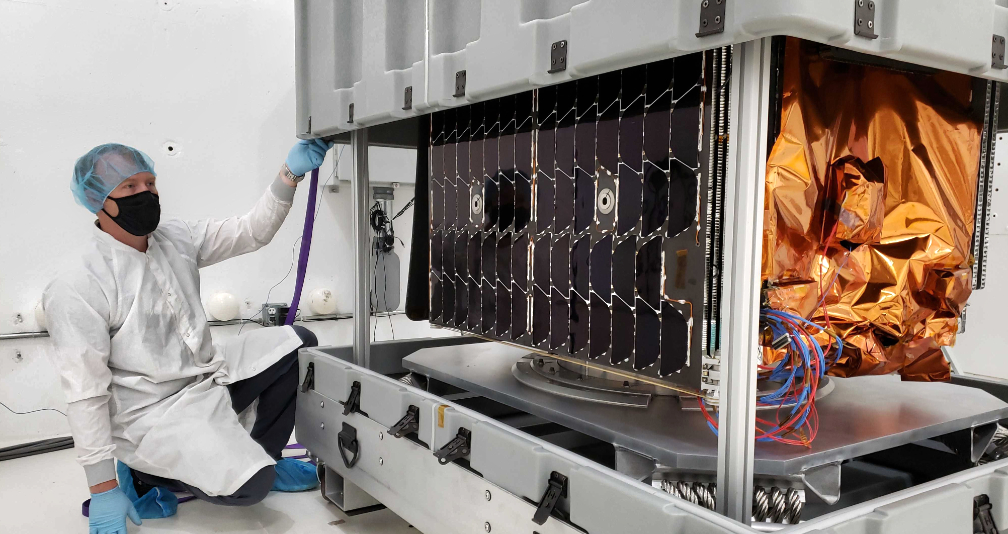
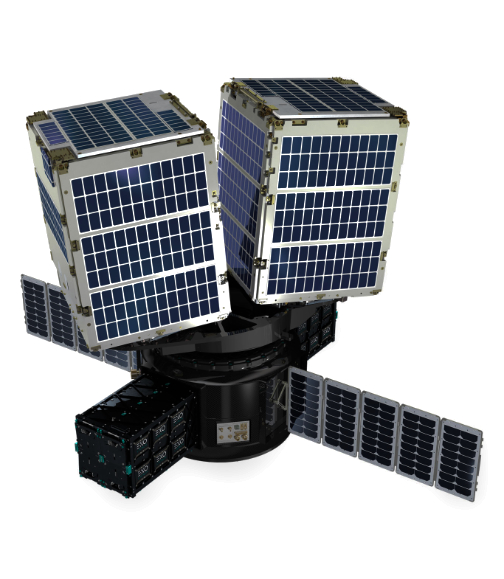
The smaller size of Astranis’s satellites — just 350 kg, or about 20 times less than traditional satellites — and their deployment into Geostationary Orbit (GEO) allows Astranis to start providing coverage with just a single MicroGEO satellite and bring capacity online quickly, focusing beams of broadband connectivity right where it’s needed.
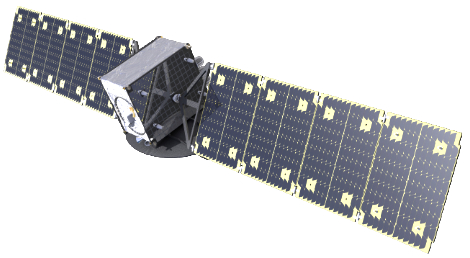
Artistic rendition of Astranis’s MicroGEO smallsat.

Astranis has projects in work around the globe to deploy satellites to bring connectivity to some of the world’s most underserved areas.

“We are solving one of the biggest problems facing the world today,” said Astranis co-founder and CEO John Gedmark. “Four billion people do not have reliable access to broadband internet. Getting connectivity to those who need it the most changes lives in a profound way. It empowers people to take control of their health, education, and economic situation. We’re talking about something that is now absolutely part of the base of the hierarchy of needs.”

Filed Under: News

HawkEye 360 Secures Additional Funding

April 14, 2021 by editorial

HawkEye 360 Inc. has secured $55 million in additional funding, bringing the total raised by the firm to more than $155 million — the Series C round was led by NightDragon and included further investment from existing investors Advance, Razor’s Edge Ventures, Shield Capital, Dorilton Ventures, Adage Capital, and Esri International.

Organizations and governments are increasingly expanding their digital ecosystems and seeking to leverage new information and analysis services to gain an edge in intelligence. HawkEye 360’s platform delivers RF signal data for a broad range of actionable insights across the globe. This source of commercial and unclassified information is useful to augment national security operations, maritime domain awareness, environmental protection, and many additional applications.

The funding will support the development and launch of three additional satellite clusters, expanding the scope of HawkEye 360’s planned constellation. When fully deployed by the end of 2022, the company will have nine next generation satellite clusters in orbit. The funding will also support development of complementary ground infrastructure, communications, and software to enable high-speed data processing and delivery for time-critical applications.

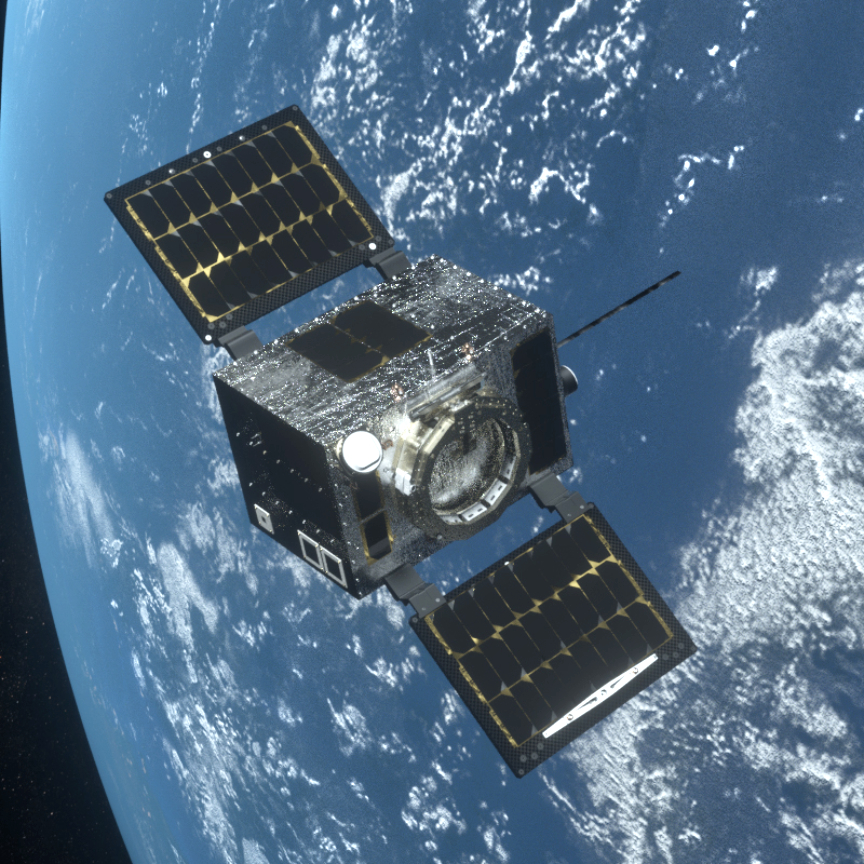
Artistic rendition of a HawkEye 360 smallsat on-orbit.

HawkEye 360 is the first commercial company to use formation-flying satellites to create a new class of RF data and data analytics. The company recently commissioned the first of its next generation satellites for commercial operations. Five more clusters are already funded and are on track for launches throughout 2021 and 2022.

NightDragon, which specializes in innovative growth and late-stage companies in cybersecurity, safety, security, and privacy industries, will be represented on the HawkEye 360 Board of Directors by Founder and Managing Director Dave DeWalt.

WillmerHale acted as legal counsel for HawkEye 360 in connection with the transaction.

“Satellite technology is the next frontier in today’s digital world,” said Dave DeWalt, NightDragon Founder and Managing Director. “NightDragon is proud to invest in HawkEye 360, which leads the way in commercial RF-sensing satellites. Filling this knowledge gap will allow governments, companies, and organizations to maximize their digital ecosystems. This is about cyber meeting space, using HawkEye 360’s tools for better management and protection of critical infrastructure.”

“HawkEye 360 is grateful to have NightDragon join us as a strategic investor and we believe this fundraising is indicative of our success and substantial momentum with our customers,” said HawkEye 360 CEO John Serafini. “HawkEye 360 continues to grow rapidly and improve our constellation to meet increasing customer demand. This investment will further our goal of rapid revisit and low-latency data and data analytics, so our global customers can use this information to react quickly to pressing concerns.”

Filed Under: News

ADTANCE’s Fieldstreaming Solution Optimized For SpaceX’s Starlink Beta Use

April 14, 2021 by editorial

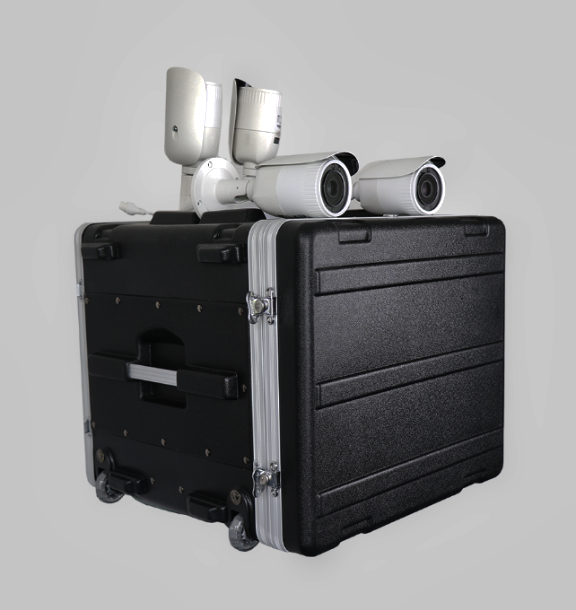
ADTANCE has announced the company’s ADTANCE Support and Fieldstreaming solution has now been optimized to work with the Starlink beta — the combined solution marks the first time multi-camera streamlining video customer support is possible in locations where internet access is not currently available or reliable. 

With Starlink, ADTANCE enables customer support technicians across the globe to provide multi-camera video assistance to users located in rural and remote areas, including the middle of the ocean, deep in a rainforest or inside an underground building where WiFi and mobile data connections are not possible.  

Starlink, a division of SpaceX, is a satellite internet constellation designed to deliver high-speed broadband internet to locations of the globe where connectivity has typically been a challenge. Starlink satellites are more than 60 times closer to Earth than traditional satellites, resulting in lower latency and the ability to support services typically not possible with traditional satellite internet.

ADTANCE Fieldstreaming solution.

The demand for live remote video customer support, testing and training has skyrocketed due to COVID-19 mandates combined with the shortage of highly skilled technicians available to work on increasingly complex machines. However, live remote support can be challenging for companies that have machinery located in remote areas, underground, at sea or in other areas where internet connections are not possible.

“Our customers operate in almost every continent – some in very remote areas where conventional mobile connection reaches its limits,” said Moritz Seger, Digital Transformation Manager at ZAHORANSKY AG and an ADTANCE customer. “The ability to use Starlink in combination with the ADTANCE Support and Fieldstreaming solution is very promising for our company and our customers. This solution allows us to gain independence from internationally varying conditions and poorly developed mobile networks in rural areas. We already use ADTANCE solutions on a daily basis in our global customer service and with the combination of both solutions, we are well prepared for the future.”

“As a supplier of airfield tankers operating around the world in the most isolated areas, we rely on reliable and fast communication for our service,” said Nico Hanemann, Head of Aviation Department, Dr.-Ing. Ulrich Esterer GmbH & Co. Fahrzeugaufbauten und Anlagen KG and also an   ADTANCE customer. “The combination of the innovative remote assistance solution we already have in place with ADTANCE Support along with Starlink provides this capability and is also unbeatable in terms of cost.”

Nils Arnold,

“With Starlink our customers will experience the best quality livestream customer support with nearly no latency anywhere in the world,” said Nils Arnold, CEO and co-Founder of ADTANCE. “Even in the middle of an ocean or deep in the rainforest it is possible to use our multi-camera fieldstreaming video assistance with a high speed internet connection. This means that every place can now be serviced remotely, even where there wasn’t internet access in the past.”

Note: ADTANCE customers need to have Starlink installed in order to use it with the ADTANCE Support and Fieldstreaming solution. The Starlink beta is now available in most locales, with new regions being added on a regular basis.

Filed Under: News

Series A Funding Round For Orbital Sidekick Completed

April 13, 2021 by editorial

Orbital Sidekick (OSK), the first US commercial company to deploy hyperspectral sensors in space, has announced a $16 million Series A funding round led by Temasek, an investment company headquartered in Singapore, to expand its innovative product offerings, new strategic partnerships, and introduce its advanced monitoring technology to new industries. The round also includes Energy Innovation Capital, existing investors Allied Minds and 11.2 Capital, and Syndicate 708.

In response to the energy sector’s demand for better leak prevention and monitoring, OSK has developed various external partnerships to execute pilot programs, most notably with global energy leader Phillips 66 and the iPIPE Partnership, which is managed by the Energy & Environmental Research Center and includes premier natural gas pipeline transporters Energy Transfer and TC Energy, among others. OSK is transitioning to and expanding satellite operations within these partnerships in 2021 with a path towards full commercialization next year. OSK is also launching its Global Hyperspectral Observation Satellite constellation, known as GHOSt, on multiple SpaceX Falcon 9 missions beginning in Q1 2022.

Beyond pipeline monitoring, OSK is exploring new markets to help solve pressing global challenges. One such capability is regional fire risk detection in response to a global proliferation of extreme wildfires brought on by climate change and deforestation. The company is also employing its analytics platform for global emissions monitoring, clean energy exploration, and mineral detection. 

“Paired with our recent $16M United States Air Force contract award in October 2020, the close of this Series A round allows us to focus on the deployment of the GHOSt constellation and the commercial release of our monitoring services platform SIGMATM,” Tushar Prabhakar, COO and Co-Founder of Orbital Sidekick, said. “With our growing list of commercial and government partners, OSK is primed to become a global leader in providing targeted solutions for customer pain points.”

“The OSK business model is naturally aligned with improvements sought by the energy and space sectors during this and coming years,” said Dan Katz, CEO and Co-Founder of OSK. “By bringing new investors Temasek and Energy Innovation Capital on board, we are now able to strengthen our commitment to providing improved asset monitoring services for traditional energy infrastructure while expanding product offerings that support environmental sustainability and clean energy exploration.”

“The energy and industrial sectors are under intense pressure to achieve ESG excellence.  Meeting increasing social and regulatory expectations requires persistent and sophisticated asset and environmental monitoring. Orbital Sidekick’s Spectral IntelligenceTM uniquely delivers hyperspectral imaging from space, allowing operators to monitor assets beyond the visual spectrum, across the globe, on a daily frequency.  We are excited to join industry veterans, Dan and Tushar,  Temasek, and other early investors in delivering a step change in Earth Observation,” said Christopher Smith, Managing Director, Energy Innovation Capital.

Filed Under: News

Exolaunch Unveils Their Reliant Exo Space Tug Program

April 12, 2021 by editorial

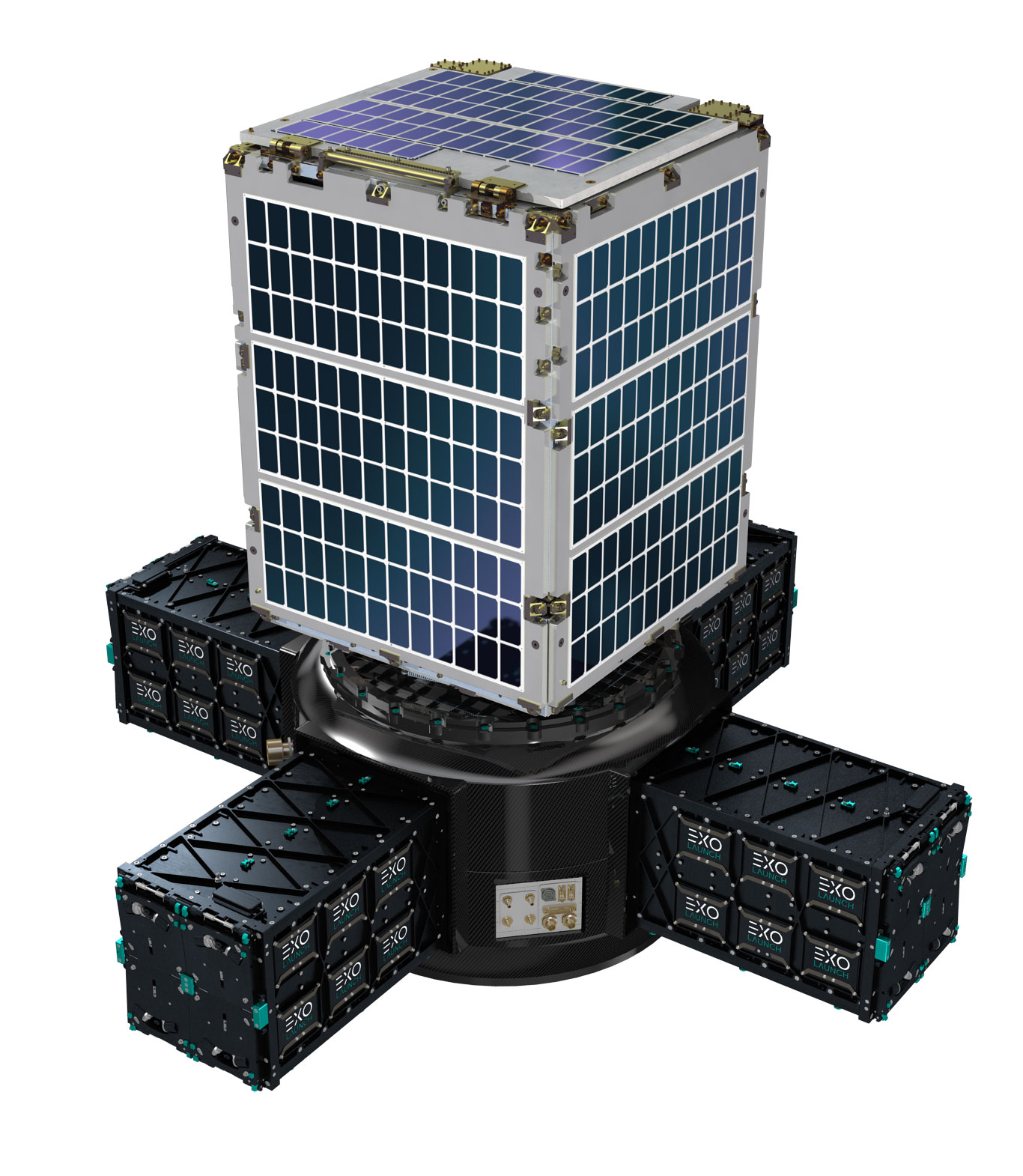
Exolaunch is discussing their new line of orbital transfer vehicles (OTVs) that will launch satellites to custom orbits in an environmentally responsible way which, according the firm, are the first of their kind in the OTV industry. The company’s space tug testing and flight qualification will start in 2022 on SpaceX’s Falcon 9 rideshare missions.

With more than 140 satellites deployed to date across different launch vehicles, Exolaunch has an industry insight it can leverage to develop solutions tailored towards meeting customer needs and addressing market trends. Named Reliant, Exolaunch claims this will be the most robust OTV platform on the market for performance, payload, capacity, and flexibility in executing orbital maneuvers.

Exolaunch’s tug is powered by a company-described, innovative, green propulsion system, which also provides a high thrust-to-weight ratio and meets the highest standards for environmental safety. Its design also leverages additive technologies using lightweight carbon fiber composites and 3D printing, resulting in low mass and high cost-efficiency. The Reliant currently comes in two configurations, Standard and Pro.

EXOLAUNCH

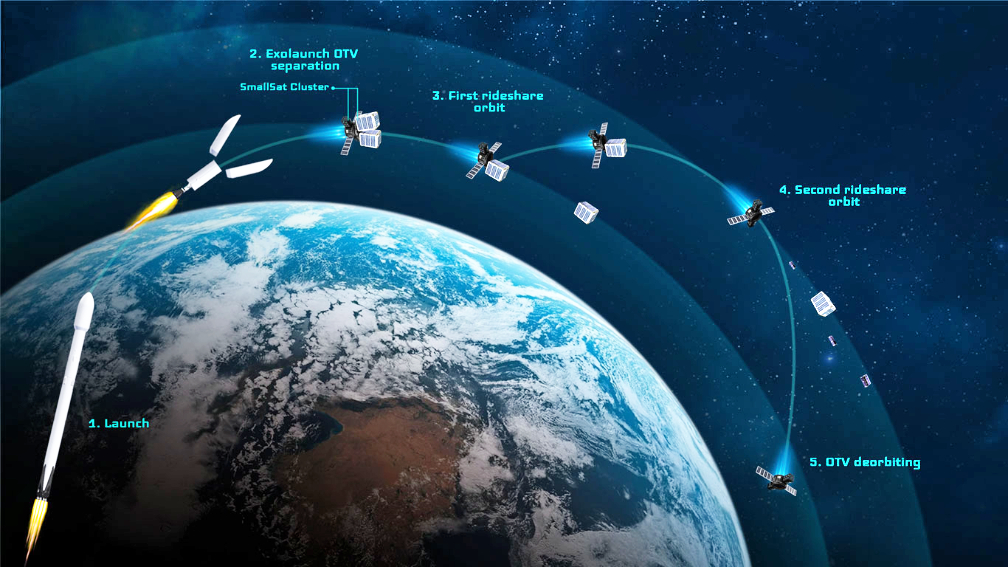
The Standard configuration is optimal for moving satellites to a custom orbit altitude after they’ve been deployed from a launch vehicle on a set rideshare orbit. For example, the propulsion system lifts the orbit from 250-300 km to 550 km in one hour, expanding the reach of existing missions to the small satellite community.

The Pro configuration is equipped with a hybrid propulsion system, which combines the advantages of green propulsion and the capabilities of an electric propulsion system. The Reliant Pro enables customers to change the orbit altitude as well as adjust the inclination, LTAN/LTDN and perform orbital phasing for satellite constellations. Additionally, it is designed to deorbit in less than two hours after deployment completion, minimizing the risks of space collisions and reducing orbital debris.

Reliant will also set the standard for environmentally conscious OTVs, featuring the ability to install modular payloads with the purpose of tackling the growing issue of space debris. After safely deploying satellites into their target orbits, an essential task of the Reliant Pro would be to collect authorized space debris prior to deorbiting, thereby fostering the sustainable use of space.

Exolaunch’s space tugs are compatible with any launch vehicle, with the primary target use on Falcon 9 under SpaceX’s SmallSat Rideshare Program. This allows Exolaunch customers to benefit from best-in-class tailored launch services, launch cost optimization, and flexible mission management while also offering access to custom orbits within the reach of a general rideshare program in an environmentally responsible way.

Exolaunch’s OTVs are fully compatible with its proprietary flight-proven deployment technologies, including CarboNIX, a next-gen scalable and shock-free microsatellite separation system; EXOpod, a cutting-edge cubesat deployer; EXOport, a flexible multi-satellite adapter, and an EXObox sequencer.

Reliant is one aspect of Exolaunch’s Environmental Stewardship and Sustainability impact initiative. As a responsible business, Exolaunch prioritizes environmental performance of its products and is committed to guaranteeing the conduct of its activities in a safe and ethical manner.

Jeanne Medvedeva

“There is an increased demand from our customers and the NewSpace industry for dedicated injection and custom orbit in their constellation deployment programs, but until now they’ve been limited to one orbit per launch,” said Jeanne Medvedeva, Vice President of Launch Services at Exolaunch. “Our space tug program will now offer customers multiple orbit options for smallsat deployments on any given mission, enabling wider access to space and diverse constellation launch strategies. It is also our contribution to the capacity-building of in-space logistics, a new emerging niche that is gaining value in the Exolaunch portfolio.”

Dr. Olga Stelmakh-Drescher

“In designing our OTV, we paid due regard to the space sustainability and space debris mitigation guidelines with constant thought as to how we could make a positive change and go beyond what has been done to set a new benchmark,” said Dr. Olga Stelmakh-Drescher, Exolaunch Chief Policy and Government Relations Officer. “With that in mind, we developed a feature that would allow Exolaunch to not only mitigate the risk of space debris generation, but also to reduce the amount of debris in orbit every time Reliant is launched. We believe this dedicated OTV service will be in high demand by space governmental and intergovernmental organizations, and later on by private actors once the practice is established.”

Exolaunch provides launch, in-space logistics and deployment services for NewSpace. Its flight heritage includes the successful deployment of 140 small satellites into orbit (with 60+ satellites scheduled for flight in 2021) through its global network of launch vehicle providers. Exolaunch executes launch contracts for NewSpace leaders, the world’s most innovative startups, research institutions, government organizations, and space agencies. The company manufactures flight-proven separation systems to deliver the best-in-class integration and deployment services for small satellites, and develops a line of space tugs to provide last-mile delivery services and combat space debris.

Filed Under: Featured, News

Rocket Lab’s Next Mission To Attempt The Recover Of The Electron Rocket’s Booster

April 11, 2021 by editorial

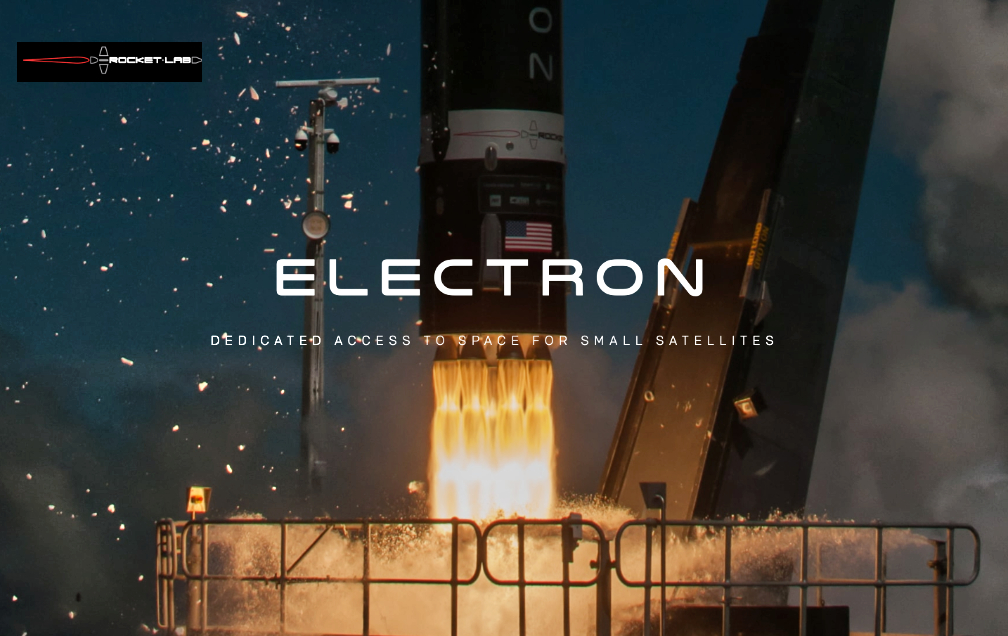
Rocket Lab‘s next mission will find the company attempting to bring their rocket back from space, slowing the Electron launch vehicle down from speeds of >Mach 8 as it re-enter’s Earth’s atmosphere before splashdown in the ocean.

This complex mission is the next major step toward making Electron the first orbital-class, reusable, small launch vehicle, enabling rapid-turnaround launches for smallsats. 

Scheduled for launch in May 2021 from Launch Complex 1 in New Zealand, the ‘Running Out of Toes’ mission will be Rocket Lab’s 20th Electron launch overall and the second of three planned, ocean splashdown, recovery missions. The mission will see Electron deploy two EO satellites for BlackSky’s global monitoring constellation. While Electron’s second stage delivers the satellites to orbit, Electron’s first stage will undertake a series of complex maneuvers designed to enable the stage to survive the extreme heat and forces of atmospheric re-entry on the way back to Earth.

As the rocket reaches speeds of around eight times the speed of sound on its descent, the air around Electron heats up to 2,400 °C generating an extremely hot plasma that creates a red-orange glow around the re-entering stage. Because Electron will enter the atmosphere engines first, the nine 3D printed Rutherford engines on the first stage will bear the brunt of this extreme heating. To withstand the immense temperatures, this Electron features an evolved heat shield designed to protect the engines and direct the force of the plasma away from the rocket.

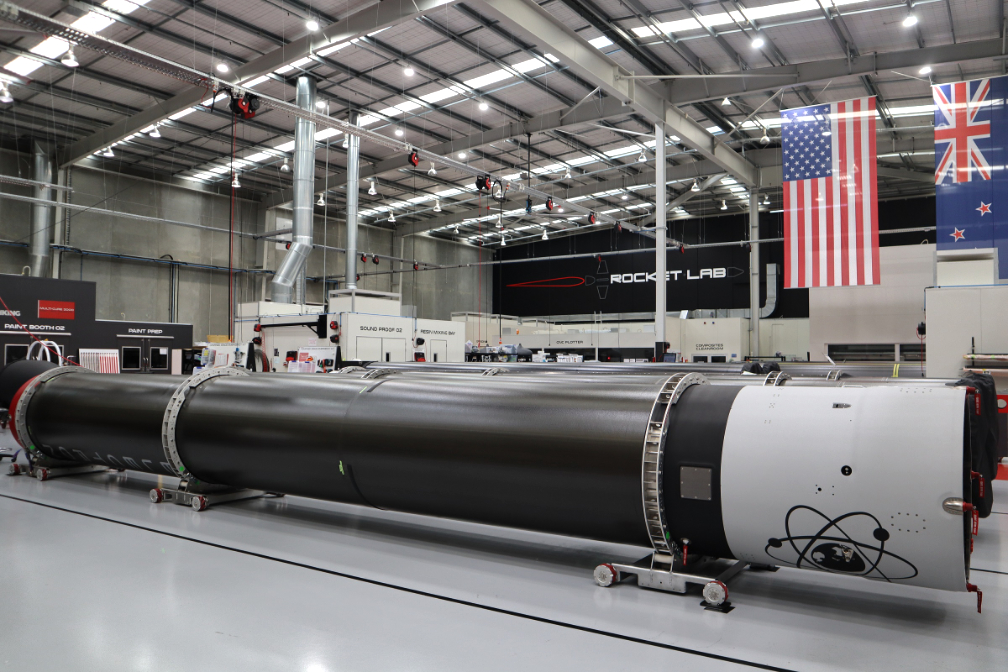
Rocket Lab’s recovery Electron rocket.

After entering the atmosphere, Electron will deploy a drogue parachute to help begin the process of slowing the rocket down and stabilizing its descent. Once Electron is at subsonic speeds, a circular parachute is deployed to help further slow the rocket in preparation for a gentle ocean splashdown. A Rocket Lab vessel will then rendezvous with the stage in the splashdown zone, approximately 650 km from Launch Complex 1, and retrieve it for transport back to Rocket Lab’s Production Complex for inspection.

Following the successful completion of the ocean splashdown tests this year, Rocket Lab intends to move into the final phase of the recovery program, that being mid-air recovery. Using this approach, Electron stages will be captured mid-air by a helicopter.

While Electron is designed for mid-air capture, Rocket Lab’s newest launch vehicle, the 8,000 kg. class Neutron rocket under development, is designed for propulsive landing. This process will see Neutron’s engines reignite during the re-entry phase to slow the stage’s descent before landing legs are deployed to enable a vertical landing on an ocean platform. Information about Neutron can be found at this direct infolink…

‘Running Out of Toes’ follows on from Rocket Lab’s first recovery mission, ‘Return to Sender,’ which launched in November 2020 and saw the company successfully deploy the parachute system and recover a stage from an ocean splashdown for the first time. In doing so, Rocket Lab became only the second company to successfully recover an orbital class booster from space. The ‘Running Out of Toes’ mission is designed to validate the findings from the first recovery mission and to test updated systems including the new advanced heat shield.

Peter Beck

“Reusability is hard for any launch vehicle, but it’s a particularly complex challenge for small rockets. The Return to Sender mission proved we could successfully bring Electron back from space. Now it’s about validating re-entry data a second time and starting to introduce the advanced systems that will enable us to launch, catch and repeat,” said Rocket Lab Founder and CEO, Peter Beck. “Electron is already the second most frequently launched U.S. rocket. Reusability will enable us to further increase launch cadence giving our customers on-demand access to space.”

Filed Under: News

OneWeb Engages The AST Group With An MoU

April 8, 2021 by editorial

OneWeb has signed a Memorandum of Understanding (MoU) with The AST Group (AST) — by working together, AST and OneWeb will offer fixed-land and maritime customers access to OneWeb’s fast, flexible and affordable connectivity solutions seamlessly in even the most remote locations on land and at sea.

Customer beta trials will be undertaken with AST before the end of the year and will be focused on delivering fixed services to support remote connectivity in Northern Europe.

Once full commercial service is available in 2022, OneWeb seeks to provide AST’s customers, primarily in the commercial shipping, fishing and high-end offshore sectors, with access to viable, high speed, low latency connectivity as an alternative to the current VSAT internet solutions to truly enable digitization and deliver the long-awaited leap in operational efficiencies.

This comes at a time when regulatory and commercial influences are driving demand for companies in maritime and offshore industries to decarbonize, improve broader sustainability and governance standards as well as improving business performance – all of which are underpinned by the need for more technology and data.

Gregory Darling,

Commenting on the partnership, Gregory Darling, AST’s founder and Chairman, said, “We’re delighted to strengthen our relationship with OneWeb by becoming its distribution partner so that we can offer customers a fibre-like alternative to current solutions. AST’s focus is solution-based to ensure that customers improve their overall operational efficiency. OneWeb’s new satellite constellation and next-generation connectivity aligned with AST’s  INTEGRA network services will enable faster and better communications for the maritime industry. This new agreement marks further progress towards this transition.”

Carole Plessy, Head of Maritime at OneWeb, said, “OneWeb believes that connectivity at sea should be as seamless and simple as it is onshore to improve the overall efficiency, sustainability and profitability of the maritime and offshore industries. We’re proud to work with The AST Group, not just because of the strength of its market insight, reach and capabilities, but because of our shared belief that remote, faultless connectivity is essential to delivering operational excellence. By partnering with AST, we are another step closer to making LEO connectivity available to more marine and offshore customers, ending the legacy of complex, slow and costly VSAT systems.”

Filed Under: News

Euroconsult: Smallsat Market Report Updated

April 8, 2021 by editorial

The latest update of “Prospects for the Small Satellite Market” was released this week by Euroconsult, forecasting further growth in the global supply and demand of government, commercial and academic satellites weighing up to 500 kg.

The market intelligence report, now in its 7th edition, builds upon Euroconsult’s previous iteration that accurately predicted more than 1,000 satellites would be launched during 2020, a record year despite COVID-19. The new release further reinforces the sentiment that the 2020s will be the decade of small satellites, anticipating the launch of close to 14,000 smallsats before 2030.

The main driver for this continued growth during a time where many face pandemic-related challenges is plans for SATCOM broadband “mega-constellations” and the continuous necessity for replenishment launches. Of all smallsats to be launched, 84% are expected to be part of constellations.

Furthermore, the smallsat manufacturing and launch market are set to do more than triple over the next decade, to $35 billion and $19 billion respectively, driven by the multiplication of constellation projects from both commercial and government stakeholders.

Euroconsult, who operates from locations across North America, Europe and Asia and specializes in the space sector and satellite enabled verticals, have released their updated findings at a time when launch rates are at least on par with last year, suggesting that the era of the mega-constellation has truly arrived.

Flagship examples of LEO broadband constellations, such as SpaceX’s Starlink and Amazon’s Kuiper, account for almost half of the projected demand over 2021-2030. Readers are therefore advised to go beyond raw numbers as vertical integration keeps growing with numerous players seeking to manufacture, operate and launch their own smallsats.

Significant future market shares are now captive of a region, country or of an integrator and/or launch provider, challenging both commercial satellite integrators and launch providers which see more of their target customers not only leaving their addressable market, but also competing with their own services. The smallsat market is, however, more open to procurement from third parties at the subsystem level than at the satellite level.

The updated report, free extract available, comes with an option to access premium features, including Euroconsult’s Smallsat Constellation Database that covers extensive past, current and future data – the first time Euroconsult have ever shared their “secret ingredients” with customers.

A free report abstract is available at this direct link…

Alexandre Najjar, Senior Consultant at Euroconsult stated, “Our smallsat report is once again in high-demand and with major intelligence updates being drawn from post-pandemic data and reviews of key pricing models and SATCOM application forecasts, plus the inclusion of Space Logistics information that features In-Orbit Servicing, Debris Removal, Last Mile Logistics and In-Orbit Manufacturing, we believe this report will be invaluable to key industry stakeholders and investors. A plethora of new market insights include the mitigation of concerns around the impact of COVID-19 in our previous edition by an increased availability of capital for the space sector, most notably with the recent M&A and SPAC funding trend.”

Other valuable updates to Prospects for the Small Satellite Market include a reviewed and refined pricing model for manufacturing and launch prices, while satellite applications in the database have been rebalanced, most notably with regard to Information, Earth Observation (EO) and Security applications. The Euroconsult report incorporates new content to help give decision makers key knowledge in this area, as well as a reviewed and up-to-date forecast accounting for the economic situation and impact of COVID-19. With its increasing importance, the extensive Euroconsult database has been updated to reflect the significant growth and developments of the Chinese constellations, with input from Chinese-speaking stakeholders.

This publication includes extensive data points on units, mass, and value for manufacturing and launch services. It provides a forecast for the next decade broken down by application, orbit, operator type, mass category, operator region, as well as integrator and launch provider, type of integrator, type of launcher and other subsets.

This report has now been added to the Euroconsult shop alongside a portfolio of high-demand space sector research that includes the 24th edition of Satellites to be Built & Launched and the 8th edition of Euroconsult’s Space Economy Report. All Euroconsult reports are available for purchase through the firm’s online infosite at this direct link…

The Euroconsult Group is a leading international consulting and research firm specialized in high technology industries, with expertise in the space industry, satellite-based applications, aero connectivity, information and data services. Privately owned and fully independent, we have over thirty years of experience developing comprehensive research programs and working with private companies and government entities, providing end-to-end consulting services, from project strategy definition to implementation, bringing data-led perspectives on the most critical issues. The Euroconsult Group is trusted by 600 clients in over 50 countries. The Group is headquartered in France, with offices in the U.S., Canada, Japan and Singapore.


Filed Under: News

Opinion: How Satellites May Lead To Broadband Service For Rural Alaska

April 8, 2021 by editorial

Low Earth orbiting satellites may soon help Alaska to achieve a task force goal.

COVID-19 has focused our attention on the plight of students struggling to go to school on the internet. It’s been worse in rural Alaska, where kids have huddled outside closed schools, trying to pick up a Wi-Fi signal to complete their homework assignments. And their parents depend on the internet, too. Like urban folks, they use it to order groceries, clothing, and medications. They use it to attend Zoom meetings and, of course, to watch television and movies — needed entertainment on a stormy winter night. Like their city friends, rural residents need high-speed internet service. It’s called broadband.

The official Federal Communications Commission definition of broadband is known as 25/3 — 25 Mbps toward the user and 3 Mbps away from the user. This will make sense to the geeks among us, but for the rest of us, it’s simply service that’s fast enough to surf the web, watch videos and do all the other things we’ve come to expect from the internet. In the 1970s and 1980s, I helped a small group of dedicated professionals working to provide modern telecommunication service to Alaska’s villages. And it worked. By the early 1980s, most rural residents had access to what then passed for modern service – telephones, a radio station, and a TV channel. But then the internet happened.

By the dawn of the 21st Century, it was clear that Internet would become an essential service. More than a decade later, Gov. Sean Parnell appointed an advisory group he called Alaska’s “Statewide Broadband Task Force,” and in August 2013 the panel published its report, “A Blueprint for Alaska’s Broadband Future.” They recognized the importance of broadband, especially in rural Alaska, and its top recommendation was that Alaska pursue a goal of 100/100 broadband service “to households and businesses throughout Alaska by 2020.” Now, nearly eight years later and one year after the panel’s target date, rural Alaskans are far from realizing that goal or even the FCC’s more modest definition of broadband. Complaints from rural Alaska residents abound. They have told us clearly and emphatically that they need more and better broadband service.

But there has been some progress in the past decade. In 2011 GCI began its TERRA, or Terrestrial for Every Rural Region in Alaska, project. This project uses a combination of fiber-optic cables and microwave relay links to provide service to big parts of western Alaska. It’s been an improvement, but it has not provided the broadband service that rural Alaskans need. In December 2017, Quintillion, a less familiar company, completed construction of an undersea fiber-optic cable providing high-speed connections to Prudhoe Bay, Utqiagvik, Wainwright, Point Hope, Kotzebue and Nome. These coastal communities now have access to broadband, but without access to the cable, inland communities generally do not.

In August 2016 the Alaska Telecom Association, on behalf of its member companies, struck a deal with the FCC to provide broadband to rural Alaska. Called the “Alaska Plan,” it committed the association’s member companies to provide a modest 10/1 version of broadband service to most rural Alaska communities by the year 2026. That’s better than what was available in many of those communities in 2016 but still short of the FCC’s 25/3 broadband definition.

But even with all these helpful and well-intentioned efforts, the goal that the broadband task force wanted to achieve by 2020 has not been reached. Rural Alaskans do not have access to the broadband service they need. What can be done?

Well, there is hope. The new technology of low Earth orbiting satellites may soon help Alaska to achieve the task force goal. These new satellites — many already in orbit — will provide worldwide broadband service – including, of course, service to rural Alaska. More than 1,300 of the satellites are already in orbit, and more are being launched each month. Several companies have announced plans to provide the new service, but the two companies that already have satellites in orbit are SpaceX and OneWeb, the latter represented in Alaska by Pacific Dataport Inc. According to SpaceX, satellite-based broadband service will be available across all of Alaska next year.

Many have worked over the past decade to provide broadband service to our rural residents. There has been progress, but more is needed. Low Earth orbiting satellites — combined with the work of Alaskan companies — may finally lead to the broadband service that rural Alaskans need.

• Alex Hills arrived in rural Alaska in 1970 to help build its telecom systems. The work that he and others did is described in his book, “Finding Alaska’s Villages: And Connecting Them.” He worked for Gov. Jay Hammond as Alaska’s top telecom official and is now distinguished service professor at Carnegie Mellon University but lives in Palmer. 

By Alex Hills for Juneau Empire

Filed Under: News

SpaceX Sends 60 Starlinks Skyward

April 8, 2021 by editorial

Another group of SpaceX Starlinks were sent skyward…

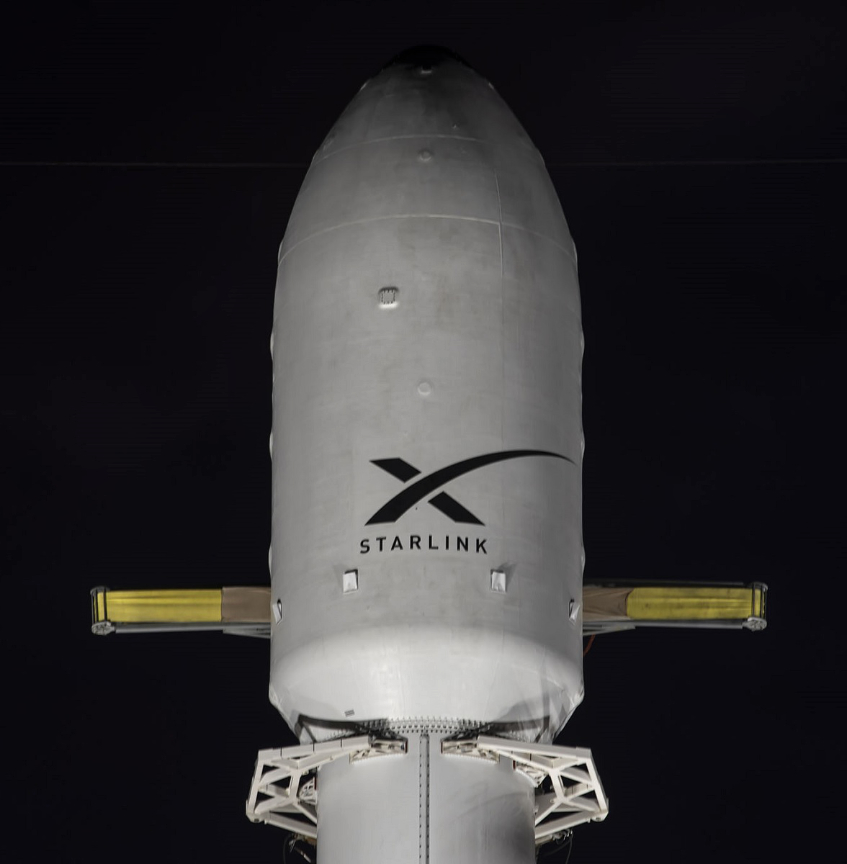
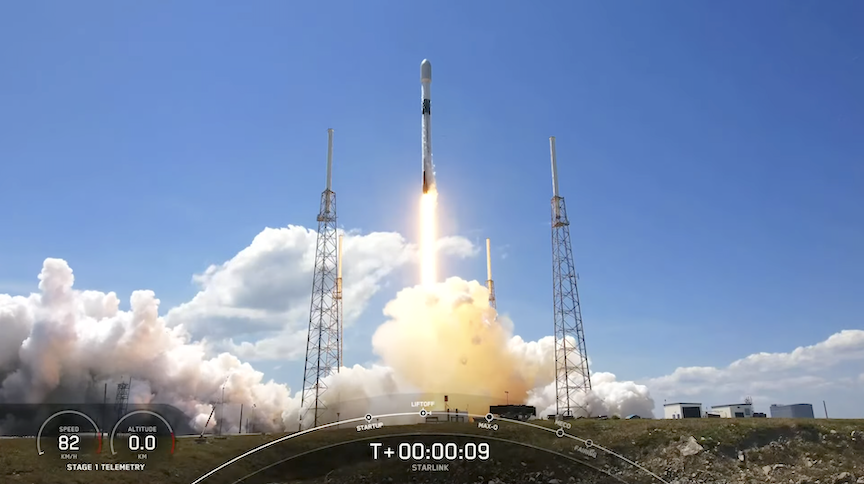
On Wednesday, April 7 at 12:34 p.m. EDT, SpaceX launched 60 Starlink satellites from Space Launch Complex 40 (SLC-40) at Cape Canaveral Space Force Station in Florida.

About eight minutes after launch, the Falcon 9 booster came back down landing on the “Of Course I Still Love You” droneship in the Atlantic Ocean. The first-stage booster has launched six other times, including on the first SpaceX launch sending astronauts to the International Space Station.

This was the seventh launch and landing of this Falcon 9 first stage booster, which previously launched NASA astronauts Bob Behnken and Doug Hurley to the International Space Station, ANASIS-II, CRS-21, Transporter-1, and two Starlink missions. One half of Falcon 9’s fairing previously supported the AMOS-17 and two Starlink missions, and the other supported one Starlink mission.

“Our drone trips are equivalent in size to a football field, and the landing area that you see right there is approximately 200 feet by 150 feet, that’s big enough that a hockey rink would fit inside that landing area,” SpaceX Dragon engineer Youmei Zhou said during the livestream.

Filed Under: Featured, News

  • « Go to Previous Page
  • Page 1
  • Interim pages omitted …
  • Page 44
  • Page 45
  • Page 46
  • Page 47
  • Page 48
  • Interim pages omitted …
  • Page 65
  • Go to Next Page »

Primary Sidebar

WEEKLY NEWSLETTER

Archives

  • August 2026
  • July 2026
  • June 2026
  • May 2026
  • April 2026
  • March 2026
  • February 2026
  • January 2026
  • December 2025
  • November 2025
  • October 2025
  • September 2025
  • August 2025
  • July 2025
  • June 2025
  • May 2025
  • April 2025
  • March 2025
  • February 2025
  • January 2025
  • December 2024
  • November 2024
  • October 2024
  • September 2024
  • August 2024
  • July 2024
  • June 2024
  • May 2024
  • April 2024
  • March 2024
  • February 2024
  • January 2024
  • December 2023
  • November 2023
  • October 2023
  • September 2023
  • August 2023
  • July 2023
  • June 2023
  • May 2023
  • April 2023
  • March 2023
  • February 2023
  • January 2023
  • December 2022
  • November 2022
  • October 2022
  • September 2022
  • August 2022
  • July 2022
  • June 2022
  • May 2022
  • April 2022
  • March 2022
  • February 2022
  • January 2022
  • December 2021
  • November 2021
  • October 2021
  • September 2021
  • August 2021
  • July 2021
  • June 2021
  • May 2021
  • April 2021
  • March 2021
  • February 2021
  • January 2021
  • December 2020
  • November 2020
  • October 2020
  • September 2020
  • August 2020
  • July 2020
  • June 2020
  • May 2020
  • April 2020
  • March 2020
  • February 2020
  • January 2020
  • December 2019
  • November 2019
  • October 2019

© 2019–2026 SatNews

Insert/edit link

Enter the destination URL

Or link to existing content

    No search term specified. Showing recent items. Search or use up and down arrow keys to select an item.
      x
      Sign Up Now!

      Enjoy a free weekly newsletter with recent headlines from the global SmallSat industry.

      Invalid email address
      We promise not to spam you. You can unsubscribe at any time.
      Thanks for subscribing! You will now receive weekly SmallSat News updates.
      We love our advertisers.
      And you will too!

      Please disable Ad Blocker to continue... We promise to keep it unobtrusive.
      We promise not to spam you. You can unsubscribe at any time.
      Invalid email address
      Thanks for subscribing!