• Skip to main content
  • Skip to primary sidebar
  • Home
  • News
  • Featured
  • More News ⌄
    • SatNews
    • SatMagazine
    • MilSatMagazine
  • Events ⌄
    • MilSat Symposium
    • SmallSat Symposium
    • Satellite Innovation
  • Contacts
  • SUBSCRIPTION

SmallSat News

You are here: Home / Archives for 2021

Archives for 2021

Real-Time Global AIS Tracking Augmented By exactEarth’s Latest Service

March 29, 2021 by editorial

exactEarth Ltd. (“the Company”) (TSX: XCT) has launched exactAIS® Platinum Plus, the newest member of the company’s exactAIS® family of global real-time AIS vessel identification and tracking data services.

The addition of Platinum Plus to the exactAIS family of data services augments the Company’s real-time satellite AIS capability through the addition of thousands of coastal and vessel-based terrestrial AIS receivers to raise exactAIS performance to an unprecedented level. The additional AIS receivers will provide significantly enhanced vessel detection in ports and regions of high vessel density to deliver the ultimate in real-time global AIS vessel identification and location data services.

At the core of the exactAIS family of services is exactView RT, the Company’s second-generation satellite constellation. exactView RT consists of 58 payloads that are hosted onboard the Iridium NEXT constellation of satellites and is capable of delivering AIS data services from any vessel, anywhere on the globe, relaying that data securely to customers in real-time.

Platinum Plus will track and identify more than 600,000 AIS equipped vessels globally – of which approximately 250,000 of those vessels are in daily operation – with industry leading update rates and lowest available data latency.

Platinum Plus is available in a wide range of data delivery methods, formats and area or vessel list filtering to meet the full range of customer and partner needs. 

“exactEarth pioneered commercial satellite AIS, and our continued pledge to our customers and partners is to always provide them with the best in global AIS service performance and reliability,” said Peter Mabson, exactEarth CEO. “We continue to fulfill that pledge by launching our Platinum Plus service which raises our performance bar even higher. Platinum Plus will further enhance the service level we can offer our customers, and we believe it will be essential for companies who are developing advanced analytics for surveillance, fisheries and fleet management markets.”

Filed Under: News

Global, Commercial SatIoT Services Started By Myriota

March 26, 2021 by editorial

Myriota has initiated commercial IoT services in the United States and Canada, with the first of three new smallsats having launched on Rocket Lab’s ‘They Go Up So Fast’ mission.

Weighing less than seven kilograms and the size of a loaf of bread, the smallsats will deliver an improved, second-generation Myriota Network that will be open to customers in the US and Canada for the first time.

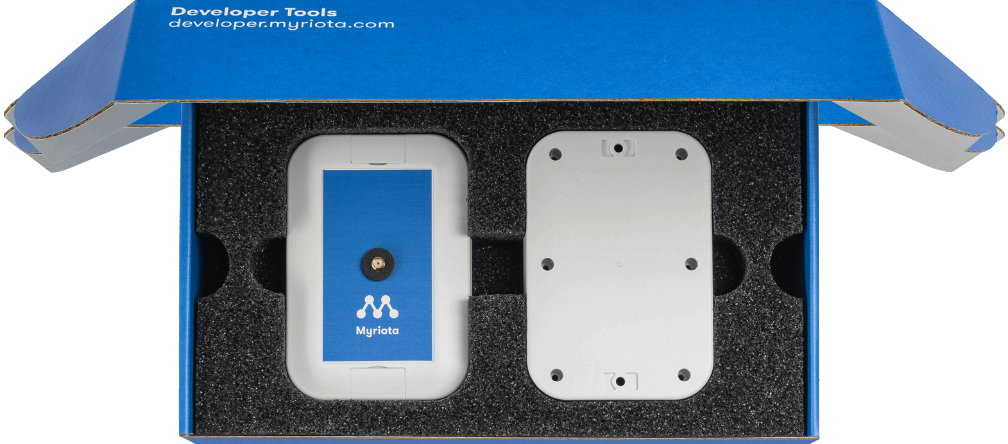
The service launch is accompanied by a new Myriota Developer Toolkit, which provides developers with the tools needed to unlock their industry’s full potential, thanks to Myriota IoT connectivity. Myriota’s first-generation network is already delivering millions of messages in Australia and New Zealand and connecting critical industries like environmental monitoring, agriculture and mining. Myriota Certified commercially available products include Goanna Ag’s rain gauge and water tank level monitor – GoRain and GoTank, Yabby’s dam level monitor – the Yabby Floating Level Sensor – and the Yabby Level Sensor and Rain Gauge.

Myriota has attracted more than $38.6 million in venture capital from investors that have included US-based Boeing HorizonX Ventures, In-Q-Tel and Singtel Innov8. The launch of Myriota’s American and Canadian services follows the acquisition of select satellites and ground stations from exactEarth Ltd. (TSE: XCT) in April 2020.

Myriota’s second-generation network will:

  • Reduce latency and enable faster transfer of data between assets located anywhere on Earth and Myriota’s constellation.
  • Increase uplink capacity on the network, allowing customers to send larger amounts of data from devices each day.
  • Increase downlink capacity on the network, enhancing Myriota cloud-to-device communications capabilities including existing over-the-air updates.
  • Support the activation of commercial network services in the United States and Canada.

The launch with Rocket Lab was the first for Myriota in 2021, with two additional launches planned. 

“The launch of our second-generation network ushers in a new era for the global IoT sector – one where data from devices is accessible anywhere on the planet in a secure and affordable manner,” said Dr. David Haley, Myriota CTO and co-founder. “Myriota Certified devices developed by our customers are already in the hands of end-users and are revolutionizing their industries. With our second-generation platform, they will now be able to send more messages and larger amounts of data each day. This US and Canadian expansion puts the company in pole position in the race to provide connectivity everywhere to support a global IoT market that is expected to triple in size to more than 25.4 billion devices by 2030. As the first network of this kind to be supporting commercially available products, the company has demonstrated the power of the firm’s unique direct-to-orbit technologies to transform the IoT sector. We see huge potential to help our customers develop and bring new IoT-driven solutions to the American and Canadian markets.”

Filed Under: News

BlackSky Signs Rocket Lab For Nine Smallsat Launches

March 26, 2021 by editorial

BlackSky, who recently announced a planned business combination with Osprey Technology Acquisition Corp. (NYSE: SFTW), has secured five Rocket Lab missions to deploy nine satellites between March and the end of 2021.

The first of these launches occurred on March 22, 2021. BlackSky is accelerating the deployment of their Gen-2 constellation of high-revisit, high-resolution imaging satellites Gen-2 satellites and expects to deliver capabilities in 2021 that were originally planned for delivery in 2022.

Photo above: Using high-revisit satellite imagery, BlackSky’s Spectra AI has detected the use of major facilities at Tokyo’s Haneda Airport. Parking spaces shown in green are rarely used, while red indicates frequent occupancy. BlackSky customers can also understand inflow/outflow of cargo and monitor airline maintenance activity.

Photo above: Rocket Lab’s recent Electron “They Go Up So Fast” mission.

These launch missions enable BlackSky to fast-track their plans to offer one-hour average, dawn-to-dusk, imaging revisits and 90-minute average delivery times for customers. In 2023, BlackSky expects to begin including their recently announced Gen-3 satellites, which are intended to have 50 cm resolution and short-wave infrared (SWIR) for low light and nighttime imaging capabilities, moving toward the completion of the firm’s projected 30-spacecraft constellation.

The multi-launch agreement, inked with launch services provider Spaceflight Inc., who will manage the integration and launch services for BlackSky, includes the launch of nine BlackSky satellites across five Electron missions this year.

Collectively, BlackSky, Spaceflight and Rocket Lab are demonstrating how established expertise, shared understanding of systems as well as innovative technologies work together to help accelerate speed to space.

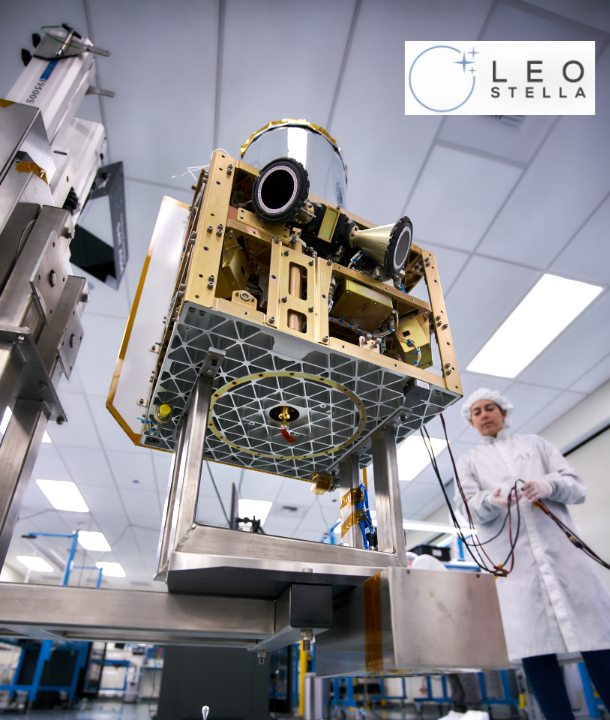
LeoStella, BlackSky’s smallsat development and manufacturing partner, produced the nine BlackSky Gen-2 satellites that are being delivered to Rocket Lab’s launch site in New Zealand.

“These deployments with Rocket Lab are intended to advance our delivery of real-time geospatial intelligence solutions to our government and commercial customers worldwide,” said Brian E. O’Toole, CEO of BlackSky. “Combined with our AI/ML platform, Spectra AI, BlackSky aims to provide customers with access to dawn-to-dusk global monitoring of key locations around the world. We’re proud to be working with Rocket Lab to achieve this launch cadence and advance our constellation network configuration, which is the foundation of our high-revisit imaging performance.”

“We’re thrilled to be providing BlackSky with dedicated, rapid, and reliable launches on Electron. Flying on dedicated Electron launches provides BlackSky with certainty around launch schedule, control over tailored orbits, and confidence and reliability at a critical time in its constellation and business development,” said Peter Beck, CEO of Rocket Lab. “After two back-to-back launches for BlackSky on Electron in 2019 and our latest just this week, we’re fortunate to continue partnering with industry leaders to deliver reliable and rapid access to space.”

BlackSky is a provider of real-time geospatial intelligence. BlackSky monitors activities and facilities worldwide by harnessing the world’s emerging sensor networks and leveraging its own satellite constellation. BlackSky processes millions of observations from its constellation as well as a variety of space, IoT, and terrestrial based sensors and data feeds. BlackSky’s on-demand constellation of satellites can image a location multiple times throughout the day. BlackSky monitors for pattern-of-life anomalies to produce alerts and enhance situational awareness. BlackSky’s monitoring service, Spectra AI, is powered by cutting-edge computer techniques including machine learning, artificial intelligence, computer vision, and natural language processing.

Filed Under: News

Enabling LEO Connectivity To Government Is The Plan For OneWeb + TrustComm

March 26, 2021 by editorial

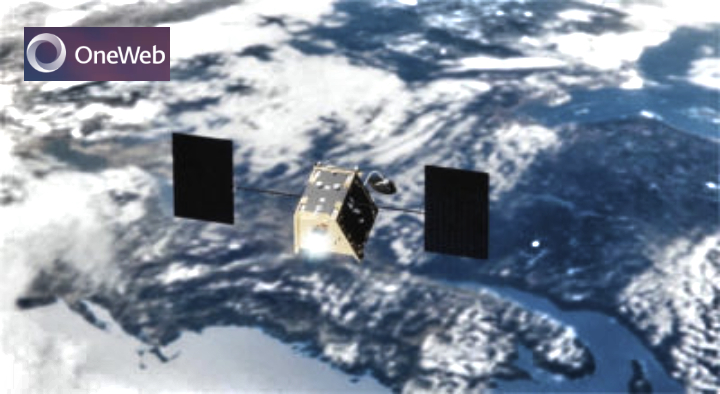
OneWeb has announced a Memorandum of Understanding (MoU) with TrustComm Inc. The companies plan to enable LEO connectivity to government customers.

The agreement, signed on March 16, envisions OneWeb and TrustComm working together to deliver OneWeb’s high speed, low latency, beyond line-of-sight communications services – with initial focus on the northern latitudes. 

The partnership between OneWeb and TrustComm will enable LEO – delivered connectivity to government customers, bringing unprecedented opportunity to end users.

Supported by a global network of gateways and air, maritime and land user terminals, OneWeb’s Global Connectivity Platform will provide secure, high bandwidth and low latency secure data and internet connectivity to government customers across the globe. Initial services are expected to be available starting 4th quarter of 2021.

TrustComm specializes in combining satellite and terrestrial communication systems into fully interoperable networks, providing customers with best-fit and customized end-to-end connectivity solutions in Ku, Ka, L, C and X-band frequency ranges. TrustComm operates a Teleport and Secure Managed Services Operations Center at Ellington Field Joint Reserve Base in Houston, Texas, and holds a number of DoD contract vehicles to provide managed satellite services. 

OneWeb’s partnership with TrustComm will focus on early adopters looking to take advantage of LEO technology including the US Naval Research Lab, US Army Futures Research Lab and others. Solutions will be deployed initially into areas of operation including the Arctic which continues to suffer from poor levels in connectivity due to its high latitude and extreme terrain. OneWeb and TrustComm also expect to support the biennial Ice Exercise (ICEX) in 2022. 

OneWeb’s Head of Government Services, Dylan Browne said, “The US DoD is OneWeb’s largest single customer and so we will ensure we have the tools and vehicles in place to contract for service this November when our network goes live above the 50th parallel.  I’m delighted we can now count on the support of the TrustComm team who are experts in satellite and terrestrial managed network service for DoD customers.”

TrustComm’s Chief Executive Office, Bob Roe, said, “We are truly excited by the potential and advantages that OneWeb’s LEO system brings to the US and other government users on a global scale.  With more OneWeb satellites being deployed on a monthly basis and the ground/service infrastructure coming online, we will be able to bring this capability to market quickly using our existing US Government contracts, especially CS3 and GSA. OneWeb’s unique architecture and focus on scalable solutions supported by clear SLA’s make it a perfect fit for the TrustComm portfolio.”

OneWeb is co-owned by a consortium of investors led by the UK Government and the global telecommunications provider, Bharti Global Limited.

Filed Under: News

Arianespace Successfully Launches 36 Of OneWeb’s Smallsats

March 25, 2021 by editorial

The followinig is a statement issued from Arianespace: OneWeb, the Low Earth Orbit (LEO) satellite communications company, has confirmed the successful launch of all 36 satellites by Arianespace from the Vostochny Cosmodrome. This launch, its second under new ownership, brings its total in-orbit constellation to 146 satellites. These will form part of OneWeb’s 648 LEO satellite fleet that will deliver high-speed, low-latency global connectivity. Flight ST30 was the 55th Soyuz mission carried out by Arianespace and its Starsem affiliate. Performed on Thursday, March 25 at precisely 11:47 a.m. local time at Russia’s Vostochny Cosmodrome (02:47 a.m. UTC), Flight ST30 orbited 36 new OneWeb satellites — bringing the size of the fleet in orbit to 146.

“Congratulations to all the teams who made this latest mission from the Vostochny Cosmodrome a success. This launch confirms Arianespace’s ability to deploy the OneWeb constellation through the use of three different Soyuz launch sites — in French Guiana, Kazakhstan and Russia,” said Stéphane Israël, Chief Executive Officer of Arianespace. “I want to sincerely thank OneWeb for its trust. I am delighted that our company has contributed — for the fifth time — to this client’s ultimate ambition of providing Internet access to everyone, anywhere, at any time.” 

Arianespace has launched 146 OneWeb satellites to date. Soyuz successfully orbited the initial six from French Guiana during February 2019. In February and March 2020, Arianespace and its Starsem affiliate successfully launched 68 OneWeb satellites from Baikonur Cosmodrome, as well as an additional batch of 36 satellites from the Vostochny Cosmodrome during December 2020.

Pursuant to an amended launch contract with OneWeb, Arianespace will perform 14 more Soyuz launches through 2021 and 2022. These launches will enable OneWeb to complete the deployment of its full global constellation of low Earth orbit satellites by the end of 2022.

OneWeb’s mission is to bring internet everywhere to everyone, by creating a global connectivity platform through a next-generation satellite constellation in low Earth orbit. The OneWeb constellation will deliver high-speed, low-latency connectivity to a wide range of customer sectors, including aviation, maritime, backhaul services, and for governments, emergency response services and more. Central to its purpose, OneWeb seeks to bring connectivity to every place where fiber cannot reach, and thereby bridge the digital divide. 

The satellite prime contractor is OneWeb Satellites, a joint venture of OneWeb and Airbus Defence and Space. The satellites were produced in Florida, USA in its leading-edge satellite manufacturing facilities that can build up to two satellites per day on a series production line dedicated to spacecraft assembly, integration, and testing. 

Filed Under: News

ATLAS Expands Scope + Impact With The Latest Launch

March 25, 2021 by editorial

With the recent launch of a Soyuz-2.1a rocket from Russia’s Baikonur Cosmodrome, ATLAS Space Operations has grown to support three, brand new missions with the firm’s Freedom™ Platform. With this multinational launch, ATLAS will support Astroscale, LinaSpace, and Axelspace in their space-based missions.

The challenge of how to address space debris has emerged as an urgent question for the space community to answer. Through a series of technical demonstrations that span several months, Astroscale’s ELSA-d spacecraft, will respond to this question by demonstrating the core technologies and capabilities necessary for debris removal and docking.

ATLAS, from its Brewster, Washington, ground station, as well as from its new ground station in Miami, which ATLAS expects to be operational next quarter, is one of the providers that will support the communications that power the Astroscale ELSA-d spacecraft which will use the company’s Freedom API, Freedom Pass Server, and ATLAS’ proprietary Flex Scheduler. 

The Freedom Pass Server (FPS) provides ATLAS’ clients with state-of-the-art networking and Transmission Control Protocol (TCP) abilities. Through its mixed modem capability, the FPS enables ATLAS clients to interface with a diverse range of modems from different ground sites by abstracting away the hardware differences. For this mission, the client’s Command and Control System (C2) is designed for a KRATOS frame format; here, the FPS enables it to execute Commands and Telemetry using an Amergint Technologies modem.

LinaSpace is also making use of ATLAS’ global network of ground stations and Freedom Pass Server. ATLAS will support LinaSpace through their Ghana ground station, as well as two new ground stations in Scotland and New Zealand. LinaSpace specializes in EO and communications. With this launch, LinaSpace has delivered an EO satellite to orbit, with ATLAS supporting the data transfer process to monitor and control the mission. 

Axelspace, a Tokyo-based smallsat company building an EO constellation, also launched four satellites from Baikonur. ATLAS will support their mission from its new ground station in New Zealand, bringing valuable insights down from space. 

All of these initiatives work to further ATLAS’ mission in line with the interests of its clients: to connect humanity through space. 

Brad Bode

“ATLAS’ clients can come with their existing integrations and the FPS will translate to any ground site hardware without the need for additional coding. Adaptive software can address a lot of these issues, and talking to the users and people closest to the problem has allowed us to significantly reduce costs and integration time for our clients. ATLAS offers our clients the freedom to get their data quickly and securely—on their terms,” said Brad Bode, Chief Technical Officer at ATLAS. 

Filed Under: News

SpaceLink Establishes New HQ Near D.C. As They Build Their MEO / LEO / Ground Relay Network

March 25, 2021 by editorial

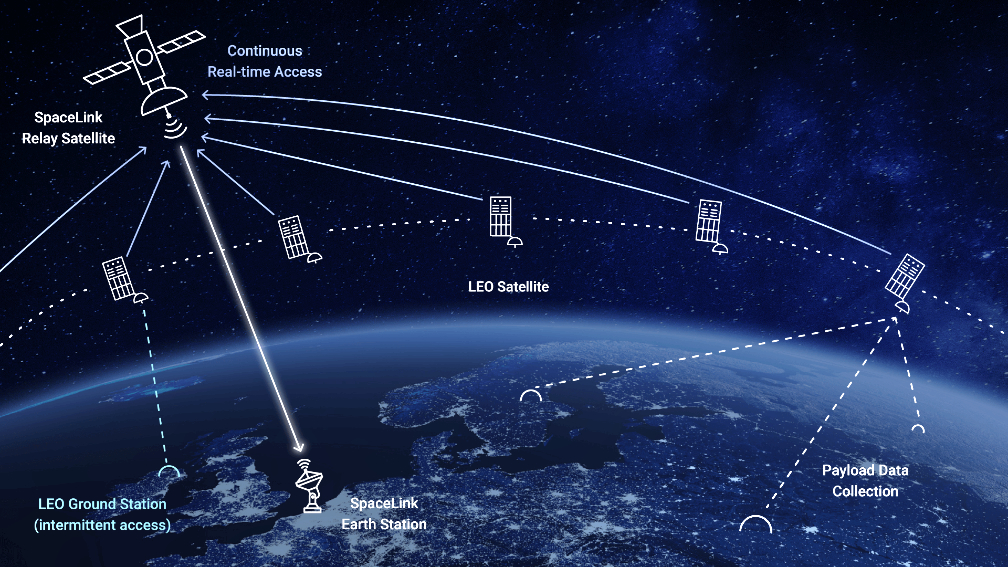
SpaceLink has established the company headquarters office in Tysons Corner, Virginia, near Washington, DC. The company is building a space relay network in MEO to provide secure, continuous, high-bandwidth communications between customers’ LEO spacecraft and the ground. 

The SpaceLink relay network is designed to pick up where the U.S. Tracking and Data Relay Satellite System (TDRSS) leaves off and go beyond with unprecedented capacity that leverages today’s technology advances. It helps close the business case for Earth observation companies, commercial space stations, satellite servicers and tugs and meets requirements for the U.S. government and close allies that need to leverage industry solutions to maximize capabilities. 

The MEO constellation is designed so that at least one of the relay satellites is always visible to any spacecraft in LEO and the SpaceLink constellation is always within line of sight of its gateway Earth stations.

In addition to its headquarters in northern Virginia, SpaceLink has operations in California’s Silicon Valley and in Huntsville, Alabama. The company is a subsidiary of Electro Optic Systems of Australia (EOS) and benefits from financing, support, and advanced technology from its corporate parent, including optical communications which unlock massively scalable capacity. 

David Bettinger

“The new headquarters office is another indicator of how our business strategy is gaining momentum,” said David Bettinger, Chief Executive Officer at SpaceLink. “The northern Virginia location provides a hub for activities that serve a broad range of spacecraft operators who need continuous connectivity in near Earth orbit.”

SpaceLink continues to build its team and is recruiting satellite and network engineering talent, as well as experts in ground infrastructure, RF and optical terminals, and a range of business functions. For information on positions available visit this direct infolink… .

SpaceLink will help advance humanity to a new age of space commerce, exploration, environmental awareness, and security. The Always in Sight™ data relay system provides global coverage to empower space system operators to maximize use of their assets. SpaceLink Corporation is headquartered in the Washington DC area, with offices in Silicon Valley and secure facilities collocated with sister company EOS Defense Systems USA, Inc. in Huntsville, Alabama. It is a wholly owned subsidiary of Electro Optic Systems Holdings Limited, a public company traded on the Australian stock exchange.
Filed Under: News

Synspective Selects Exolaunch To Send Their Smallsat StriX-β To Orbit

March 24, 2021 by editorial

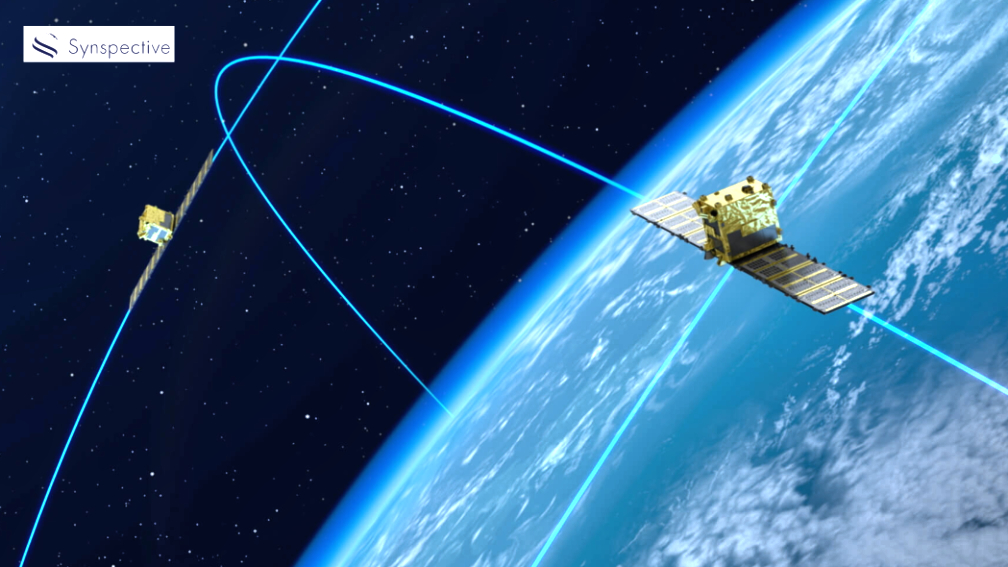
Synspective Inc. has signed a Launch Agreement with Exolaunch to launch the second demonstration satellite “StriX-β” on a Soyuz-2  launch vehicle from Vostochny Cosmodrome in Russia in late 2021.     

StriX-β is the second demonstration satellite following Strix-α and is aimed to demonstrate “InSAR (Interferometric SAR)” technology in orbit, a special SAR analytics technique to detect millimeter-level displacements on the ground surface.

Under the agreement, Exolaunch will provide launch, mission management and integration services for the Strix-β satellite that will be delivered to a Synspective’s custom orbit. The Strix-β is the second satellite of a 30 SAR satellite constellation that Synspective plans to build by the late 2020s.

Dr. Motoyuki Arai, founder and CEO of Synspective, said, “We are very pleased to entrust the launch of StriX-β, our second small SAR satellite, to Exolaunch, which has an extensive track record. Synspective has already begun operating its first satellite, as well as providing solution services. We are now entering a phase of business expansion. StriX-β is a crucial satellite to demonstrate InSAR technology and to deepen satellite-operation know-how, which are strengths in our business expansion. We will accomplish this mission and steadily achieve results to enhance global efficiency and resilience.”

Jeanne Medvedeva, VP of Launch Services at Exolaunch, said, “We are delighted to welcome Synspective as our customer and to launch StriX-β with Soyuz-2, which is known for its outstanding reliability. Synspective is a company with an ambitious mission to revolutionize an Earth Observation market by introducing new SAR technologies and solutions. Exolaunch’s commitment to working with global conscientious companies is the perfect complement to Synspective’s mission of advancing the world through data-driven decisions that have a lasting positive impact. We are proud of being both flexible and authentic, capable of providing on demand launches to requested custom orbits tailored to Synspective’s constellation needs.”

Synspective provides one-stop-solutions using geospatial data from its own SAR satellites, upon its mission to create a progressive world based on real data. The core technology was developed by the ImPACT program led by The Cabinet Office, Government of Japan.  Synspective is building a constellation of its own small SAR satellites and to provide its data and analytic information to governments and commercial outfits.

Filed Under: News

An ESA Boost! For Orbex-Designed Space Transit

March 24, 2021 by editorial

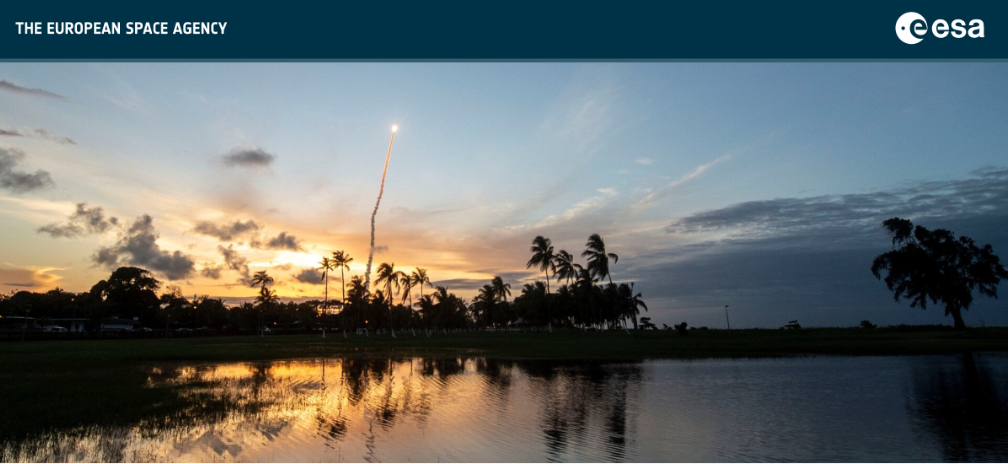
The European Space Agency (ESA) has awarded Orbex €7.45 million through its Boost! Commercial Space Transportation Services and Support (C-STS) program, designed to support commercially sustainable space transportation services in Europe.

The Boost! contract was awarded to Orbex following an in-depth evaluation process, assessing Orbex’s commercial strategy, financial stability and technical progress. This is the largest award made to date by the program. Orbex will supplement the funding with an additional €4.7 million in matching private investment. 

The Boost! program was adopted at Space19+ (ESA’s Council Meeting at Ministerial Level), with the aim of supporting the European space transportation industry to improve competitiveness and stimulate innovation, in light of evolving commercial demand. ESA is an intergovernmental organization, created in 1975, with the mission of shaping the development of Europe’s space capability and ensuring that investment in space delivers benefits to the citizens of Europe and the world — currently, there are 22 Member States.

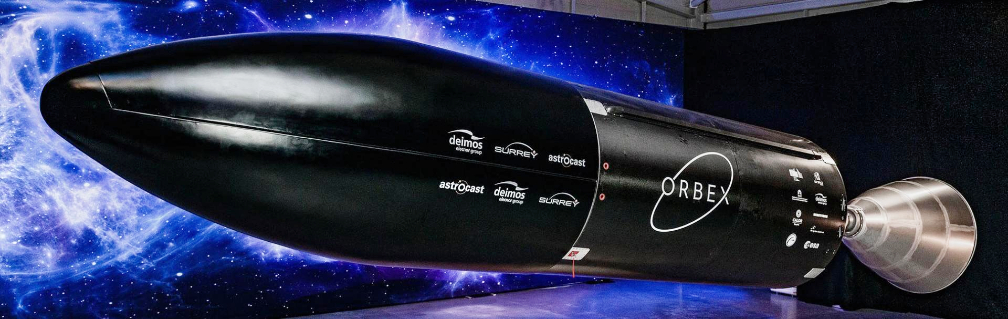
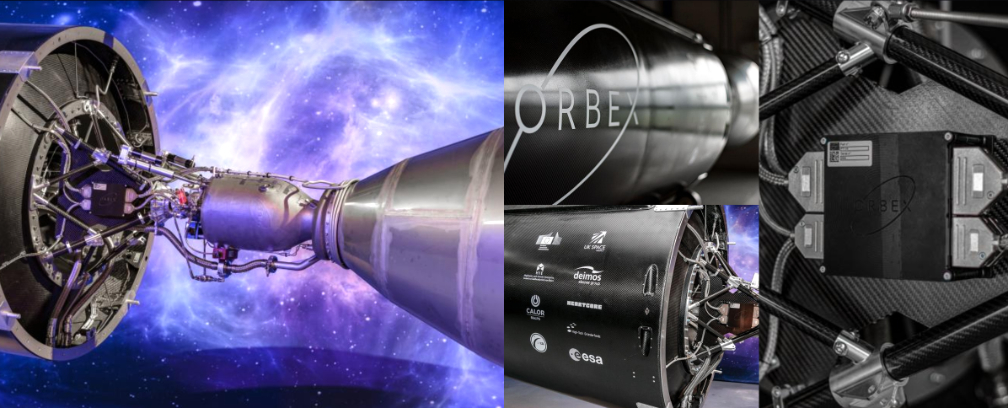
The funds from the award will go toward the completion of spaceflight systems in preparation for the first launches of Orbex’s 19 meter ‘microlauncher’ rocket, Prime, with €11.25 million of the total funding being assigned to work that will be undertaken in the UK, in particular the lightweight avionics designed in-house by Orbex in Forres, Scotland, and the guidance, navigation and control (GNC) software subsystem being designed by Elecnor Deimos, a strategic investor and partner of Orbex. The remaining €900,000 of the total funding package will support the development of the GNC for the orbital phase being developed by Elecnor Deimos for Orbex in Portugal.

The Boost! funding will support the creation of a significant number of new jobs in the UK, in particular at the Orbex headquarters in Forre. As Orbex prepares for its first UK Pathfinder launch, the company has ramped up its recruitment efforts, most recently hiring a new Head of GNC with experience from several European spaceflight programs.

Orbex has already signed six commercial customers for satellite launches, with the first launch expected in 2022 from Orbex’s carbon-neutral home spaceport, Space Hub Sutherland on the A’Mhoine peninsula in Scotland. Planning permission for the spaceport was granted in August 2020, with construction expected to begin in 2021. Space Hub Sutherland is currently the only vertical launch spaceport in the UK that has received planning permission.

Uniquely for a commercial rocket, Prime is fueled by bio-propane, a clean-burning, renewable fuel which reduces CO2 emissions by 90% compared to kerosene-based fuels, and creates no atmospheric black carbon. The Prime rocket was designed to be re-usable, incorporating a novel recovery and reusability system. The rocket has also been designed to leave zero debris in orbit around the Earth.

Orbex announced in December 2020 that it had secured $24 million in a funding round led by BGF, the UK’s most active investment company, and Octopus Ventures, one of the largest VCs in Europe. In February 2020, the company also announced that it had commissioned the largest industrial 3D printer in Europe, capable of printing 35 rocket engines per year.

“During the evaluation process that preceded this award, we examined Orbex’s service proposal in detail and developed an appreciation for the underlying technical concept as well as the entrepreneurial and commercial approach,” said Thilo Kranz, Commercial Space Transportation Program Manager at the European Space Agency. “There is excitement and momentum in European spaceflight and privately led initiatives, like the one from Orbex, are going to be a critical component of the long-term success of the European space industry.”

“We very much appreciate the investment in new, commercially-focused microlauncher technologies from ESA’s new Boost! program,” said Chris Larmour, CEO of Orbex. “And we’re especially grateful for the strong support we received from the UK Space Agency and the Portuguese Space Agency, PT Space. Orbex´s environmentally sustainable microlaunchers will soon be launching for the first time from the UK, and ESA’s recognition of the commercial and scientific opportunities this brings to Europe is significant.”

“The UK’s space industry is thriving and we have bold ambitions to be Europe’s leading destination for small satellite launches, developing world class commercial spaceflight capability up and down the country,” said UK Science Minister, Amanda Solloway. “Today’s funding for Orbex, one of our most innovative space businesses, is not only a step forward for UK spaceflight, but it will also help to create highly skilled jobs and local opportunities as we build back better from the pandemic.” 

Orbex is a UK-based spaceflight company with headquarters, production and testing facilities in Scotland, and design, production and testing facilities in Denmark. Orbex staff members have professional backgrounds with NASA, ESA and international commercial spaceflight organisations. The company is now funded by two of the UK’s largest and most active venture capital funds, BGF and Octopus Ventures, who join two of Europe’s largest venture capital funds, Heartcore Capital and the High-Tech Gründerfonds, as well as strategic investor Elecnor, parent company of Deimos, the UK Space Agency (UKSA), the European Space Agency (ESA) and the European Commission Horizon 2020 programme.

Filed Under: Featured, News

Starlinks Sent Soaring Skywards

March 24, 2021 by editorial

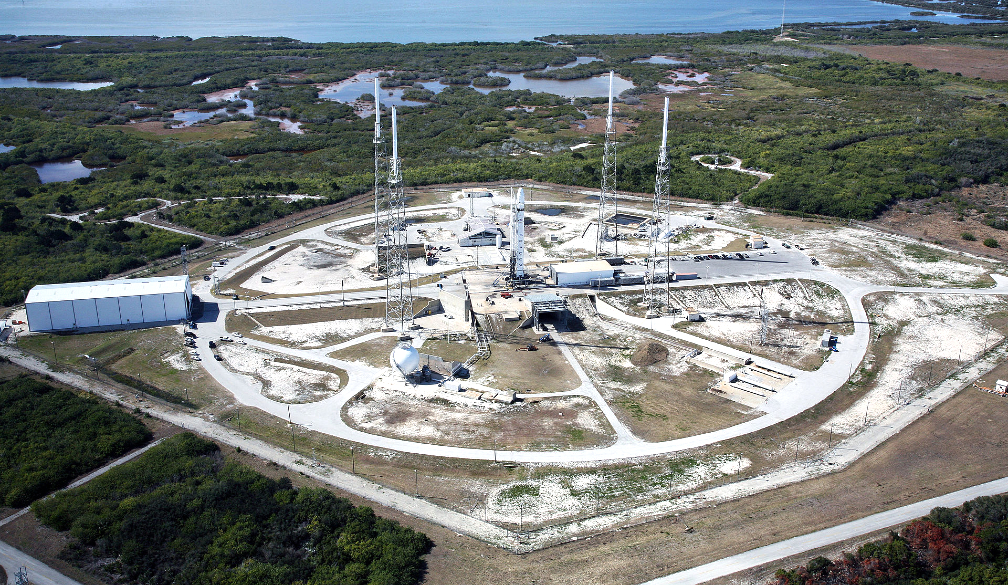
On Wednesday, March 24, at 4:28 a.m. EDT, SpaceX launched another flight of 60 Starlink satellites from Space Launch Complex 40 (SLC-40) at Cape Canaveral Space Force Station (AFS) in Florida.

Cape Canaveral AFS’ Space Launch Complex 40.

This was the sixth launch and landing of this Falcon 9 first stage booster, which previously supported launch of GPS-III Space Vehicle 03, Turksat 5A, and three Starlink missions.

One half of Falcon 9’s fairing had supported the Sentinel-6A mission and the other half had supported a previous Starlink mission.

Filed Under: News

  • « Go to Previous Page
  • Page 1
  • Interim pages omitted …
  • Page 46
  • Page 47
  • Page 48
  • Page 49
  • Page 50
  • Interim pages omitted …
  • Page 65
  • Go to Next Page »

Primary Sidebar

WEEKLY NEWSLETTER

Archives

  • August 2026
  • July 2026
  • June 2026
  • May 2026
  • April 2026
  • March 2026
  • February 2026
  • January 2026
  • December 2025
  • November 2025
  • October 2025
  • September 2025
  • August 2025
  • July 2025
  • June 2025
  • May 2025
  • April 2025
  • March 2025
  • February 2025
  • January 2025
  • December 2024
  • November 2024
  • October 2024
  • September 2024
  • August 2024
  • July 2024
  • June 2024
  • May 2024
  • April 2024
  • March 2024
  • February 2024
  • January 2024
  • December 2023
  • November 2023
  • October 2023
  • September 2023
  • August 2023
  • July 2023
  • June 2023
  • May 2023
  • April 2023
  • March 2023
  • February 2023
  • January 2023
  • December 2022
  • November 2022
  • October 2022
  • September 2022
  • August 2022
  • July 2022
  • June 2022
  • May 2022
  • April 2022
  • March 2022
  • February 2022
  • January 2022
  • December 2021
  • November 2021
  • October 2021
  • September 2021
  • August 2021
  • July 2021
  • June 2021
  • May 2021
  • April 2021
  • March 2021
  • February 2021
  • January 2021
  • December 2020
  • November 2020
  • October 2020
  • September 2020
  • August 2020
  • July 2020
  • June 2020
  • May 2020
  • April 2020
  • March 2020
  • February 2020
  • January 2020
  • December 2019
  • November 2019
  • October 2019

© 2019–2026 SatNews

Insert/edit link

Enter the destination URL

Or link to existing content

    No search term specified. Showing recent items. Search or use up and down arrow keys to select an item.
      x
      Sign Up Now!

      Enjoy a free weekly newsletter with recent headlines from the global SmallSat industry.

      Invalid email address
      We promise not to spam you. You can unsubscribe at any time.
      Thanks for subscribing! You will now receive weekly SmallSat News updates.
      We love our advertisers.
      And you will too!

      Please disable Ad Blocker to continue... We promise to keep it unobtrusive.
      We promise not to spam you. You can unsubscribe at any time.
      Invalid email address
      Thanks for subscribing!