• Skip to main content
  • Skip to primary sidebar
  • Home
  • News
  • Featured
  • More News ⌄
    • SatNews
    • SatMagazine
    • MilSatMagazine
  • Events ⌄
    • MilSat Symposium
    • SmallSat Symposium
    • Satellite Innovation
  • Contacts
  • SUBSCRIPTION

SmallSat News

You are here: Home / Archives for 2021

Archives for 2021

RUAG’s Space Dispenser Will Dispense OneWeb’s 36 Smallsats In Upcoming Launch

March 22, 2021 by editorial

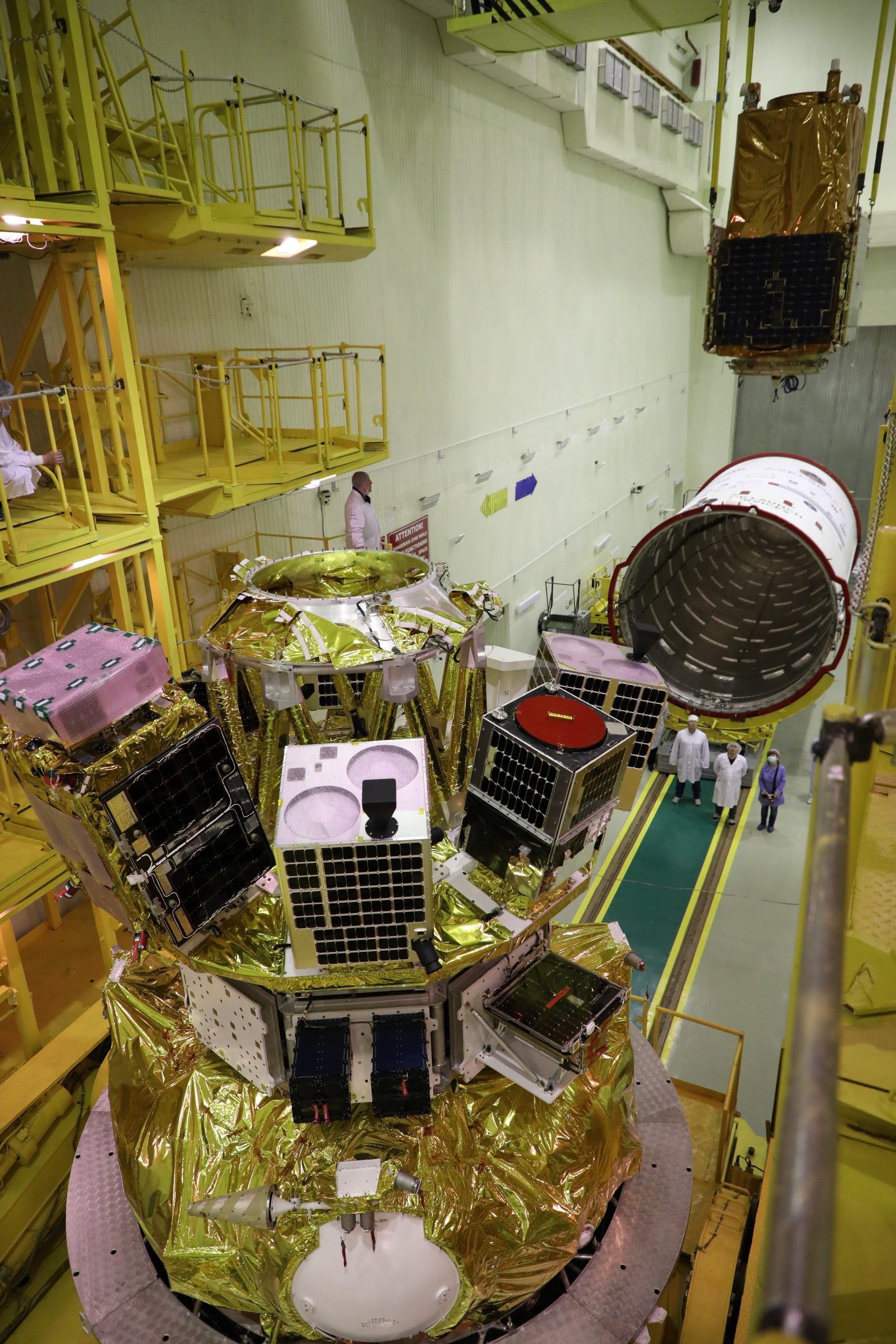
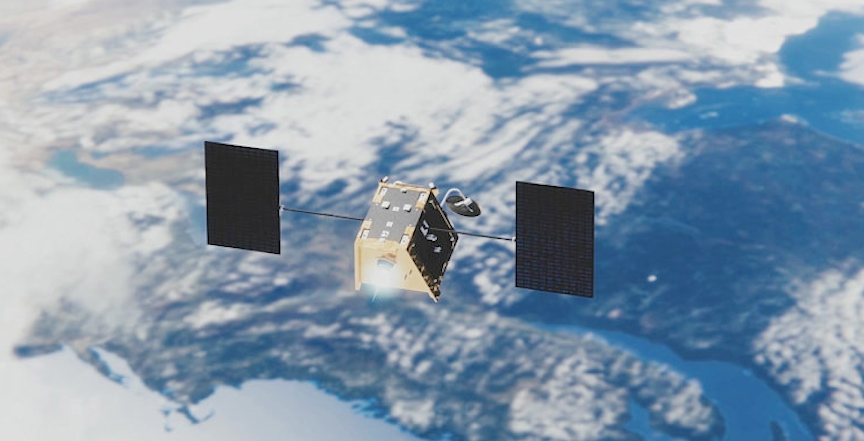
The OneWeb satellites are protected from heat and cold in orbit by golden foils from RUAG Space. Copyright: OneWeb Satellites.

When 36 OneWeb satellites launch on March 25 RUAG Space has critical mission products onboard like the satellite dispenser that was customized for the mega satellite constellation...

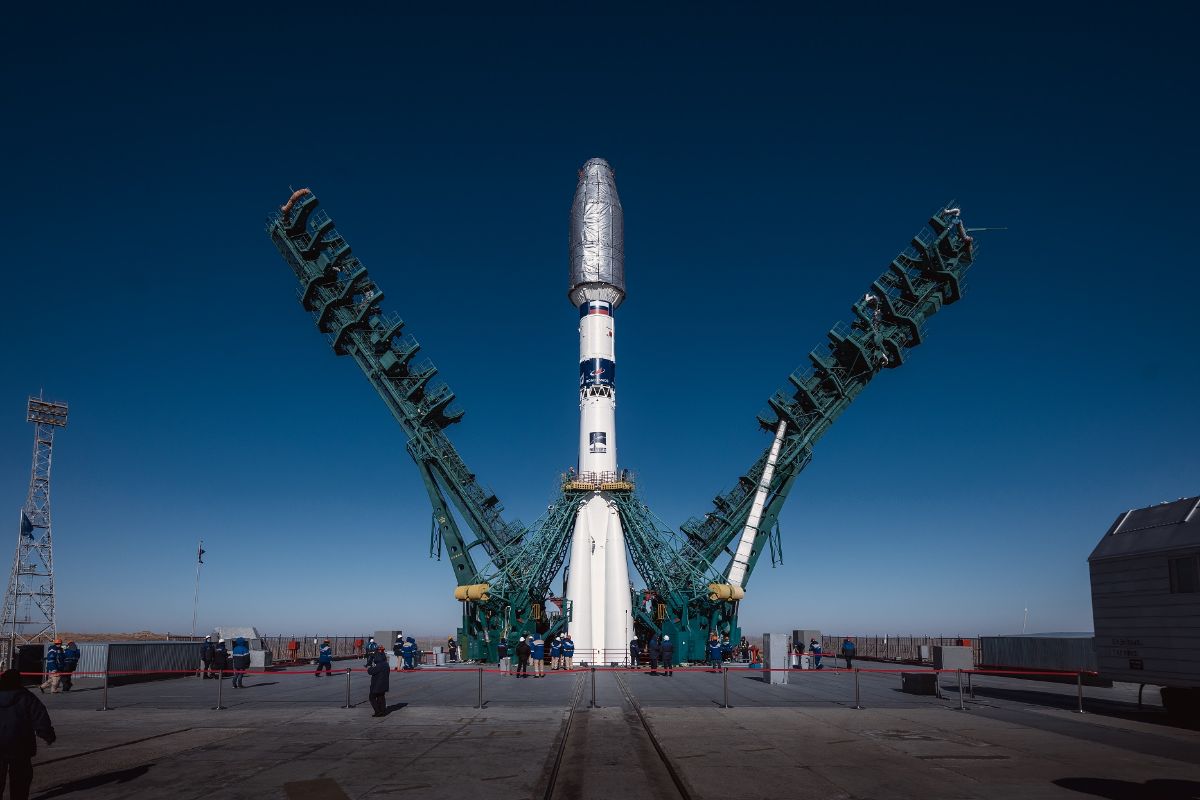
On March 25 OneWeb will launch another 36 broadband satellites aboard a Soyuz launch vehicle from the Vostochny Cosmodrome, Russia. OneWeb is building a communications network with a constellation of low-Earth-orbit satellites that will deliver affordable internet access around the world.

As a key supplier to OneWeb Satellites, RUAG Space built the satellite dispenser, which functions as an interface between the Soyuz rocket and satellites. The dispenser is tailored to the need of a constellation such as OneWeb, being able to deposit up to 36 satellites safely into space. “Our dispenser is super-light and includes state-of-the-art technology to safely place the satellites in orbit,” says Holger Wentscher, Senior Vice President Product Group Launchers at RUAG Space. Dispensers from RUAG Space, produced in Sweden, are especially suitable for spacecraft constellations such as OneWeb, where a high number of satellites need to be placed in orbit within a short time frame. OneWeb Satellites—a joint venture between OneWeb and Airbus—is OneWeb’s industrial partner and leads the design and manufacturing of OneWeb’s fleet of satellites.
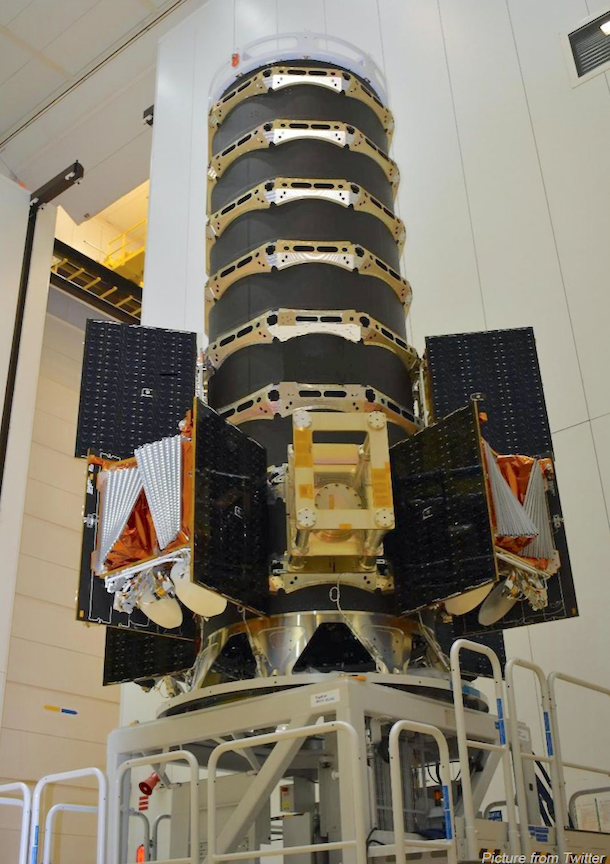
The dispenser from RUAG Space is able to deposit 36 satellites safely into orbit. Copyright: OneWeb Satellites.

RUAG Space manufactures the satellite panels used by OneWeb Satellites in Titusville, Florida. The OneWeb structures (satellite back-bone) are manufactured using the Automated Potting Process (APM). The APM process—developed by RUAG Space—is a revolutionary production method that uses a pick and place machine to rapidly position special inserts filled with adhesive into the satellite structure’s sandwich panels.

In Austria, RUAG Space produces the multi-layer thermal insulation which protects the OneWeb satellites against the cold and heat in space from approximately minus 150°C to plus 150°C (-238 degrees F to 302 degrees F). The insulation consists of several layers of metal-evaporated polyimide film. RUAG Space in Austria also built handle equipment and containers. The high-tech, custom satellite containers are used to transport the assembled OneWeb satellites from Florida to the launch sites, in this case Russia. The containers are equipped with a specifically designed damping system and climate-control.

Filed Under: News

Aussies’ Fleet Space Technologies Applies for $5 Million Grant Will Increase Building From Three Smallsats to 50 Per Year

March 22, 2021 by editorial

Fleet Space Smallsat Payload

If the grant application is successful, Fleet Space will become a major satellite manufacturing hub and increase its payroll from 31 staff today to 128 by 2024…

Australia’s satellite manufacturer, Fleet Space Technologies of Adelaide, has applied for a $5 Million Federal government Modern Manufacturing Initiative (MMI) grant so that it can jump from building three hand-built smallsats a year to mass-producing 50. Additional support from the South Australian government will supplement nearly $4 Million the company is raising itself.

Fleet Space CEO Flavia Tata Nardini

If the grant application is successful, Fleet Space will become a major satellite manufacturing hub and increase its payroll from 31 staff today to 128 by 2024, says its CEO and co-founder Ms. Flavia Tata Nardini. Most of the new employees will be engineers and specialist satellite assembly technicians.

Fleet Space has spent $12 Million since 2015 on R&D to develop the world’s most advanced beam-steering antenna and to miniaturize its satellites’ com where previously this level of connectivity was only possible with a 100kg satellite.

The company, which has already launched four smallsats, has applied for a $5 million grant under the Department of Industry, Science, Energy and Resources’ Modern Manufacturing Initiative (MMI) to help it make the jump. Fleet Space plans to build a new factory with more than double the space for R&D and manufacturing and has partnered with the University of Adelaide’s Institute of Photonics and Advanced Sensing, local company Redarc Electronics, Hawker Richardson in Melbourne and NSW-based Lintek to build the industrial capability to manufacture these smallsats in Australia.

The Nebula service for utilities, mining and energy companies uses satellites to connect sensors monitoring critical infrastructure such as remote mine sites, alternative energy sites, gas pipelines and rurally dispersed electricity pylons with central base stations, 24 hours a day. This also allows operators to conduct geological surveys and operate unmanned vehicles such as drones remotely from a proper control centre, rather than having to visit a distant, inaccessible site.

This is the Industrial Internet of Things (IIoT) and it’s transforming the ability of Australian companies to manage and control remote assets in real time, says Ms Tata Nardini. The full constellation of 140 nanosatellites could generate a lifetime revenue of $1.82 billion, she estimates.

The heart of Fleet Space’s 10kg Centauri-series satellites is its Nebula System, consisting of the smart, lightweight, low-power communications payload and antenna, ground-based Portal satellite modem and the Nebula Network Management System. The company designs all of these, including the advanced on-board Artificial Intelligence system that manages them, itself in Adelaide. However, it is forced to get the antenna and some of the complex electronics manufactured by space-qualified specialist suppliers in Switzerland.

In order to achieve seamless global coverage, the company needs a constellation of 140 satellites in Low Earth Orbit (LEO). Up to 50 will need to be replaced each year due to the rate of orbital decay associated with LEO as well as battery and solar panel degradation. A fifth satellite in Fleet Space’s constellation, Centauri 3, will be launched from New Zealand in just days, with two more scheduled for launch this year and 16 in 2022-23.

“At present, every satellite launched by an Australian company is hand-made, and many of the components come from overseas,” says Ms Tata Nardini. “Our manufacturing rate is very low. Australia lacks many of the manufacturing capabilities its industry needs to build satellite payloads and the satellites themselves. And we certainly can’t produce them in volume.”

“We want to establish these manufacturing capabilities here in Adelaide so that we can kick-start Australia’s space industry.”

Fleet Space’s goal, says Ms. Tata Nardini, is to be able to manufacture the entire payload in Australia. That includes 3D printing the advanced beam-steering antenna and designing and manufacturing increasingly complex Printed Circuit Board Assemblies (PCBAs).

As well as high-precision 3D printers, with trained operators, Fleet Space needs to be able to design and prototype complex PCBAs up to 26 layers deep. The best that Australian firms can do at present is 12 layers. Fleet Space currently gets its complex PCBAs manufactured overseas and much of its pre-launch testing must be done overseas too.

“Winning this grant would mean Fleet Space and its partners can develop and manufacture the smartest parts of future satellites right here in Australia and provide an Australian service to a worldwide customer base,” says Ms. Tata Nardini. “Only a handful of companies worldwide such as SpaceX and Airbus have the capacity to mass-produce satellites. We can join them, if we move quickly.”

Filed Under: News

UPDATE: Astroscale’s ELSA-d Launch Is Rescheduled

March 22, 2021 by editorial

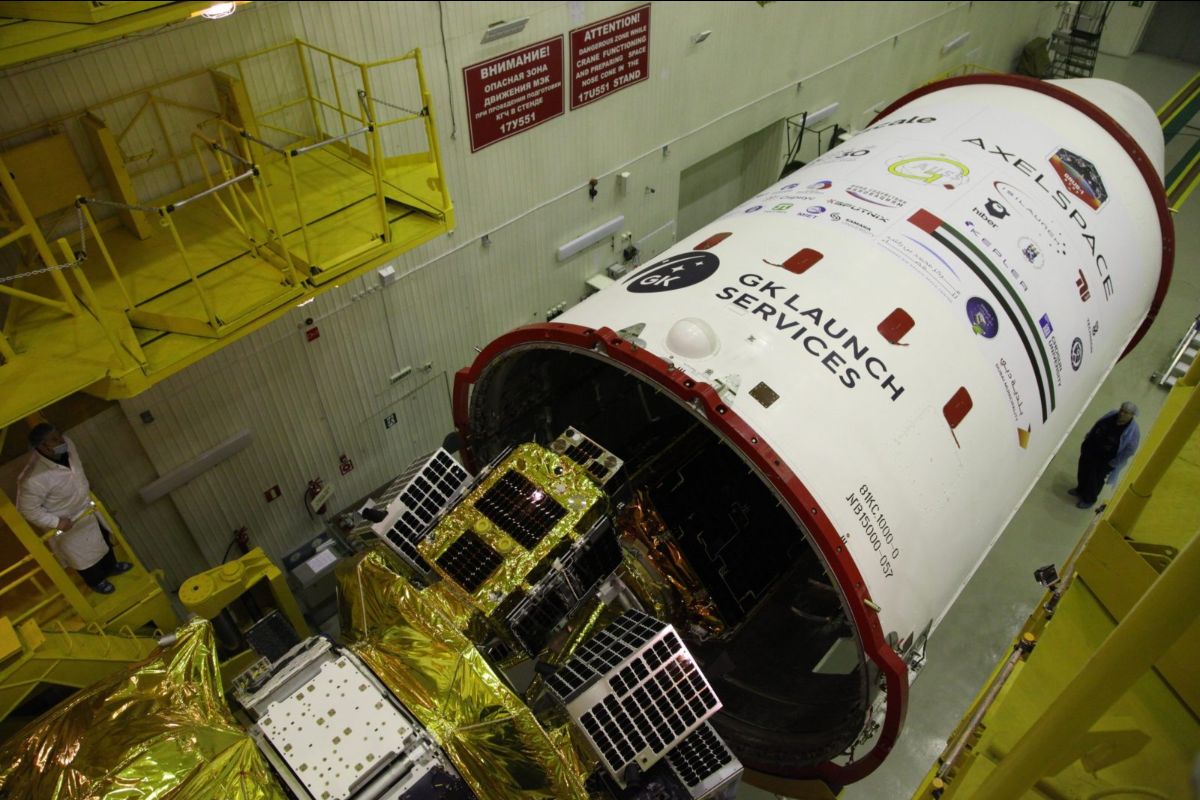
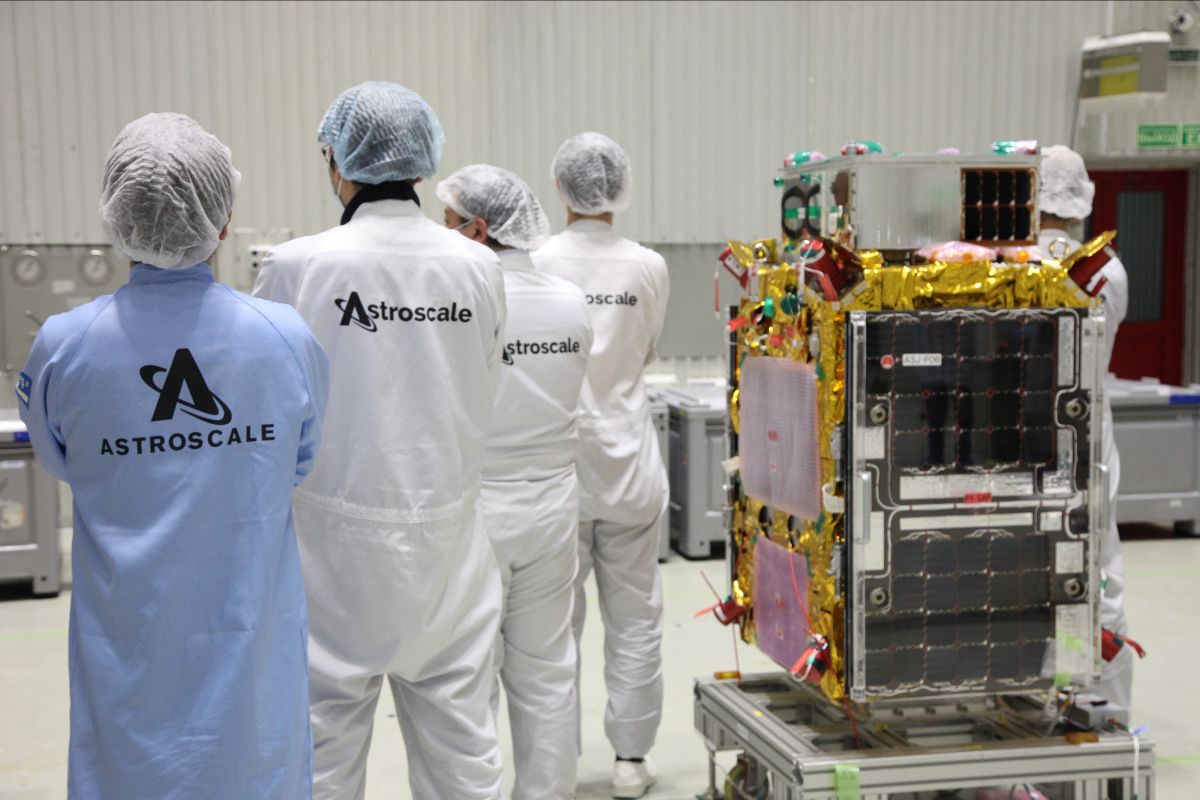
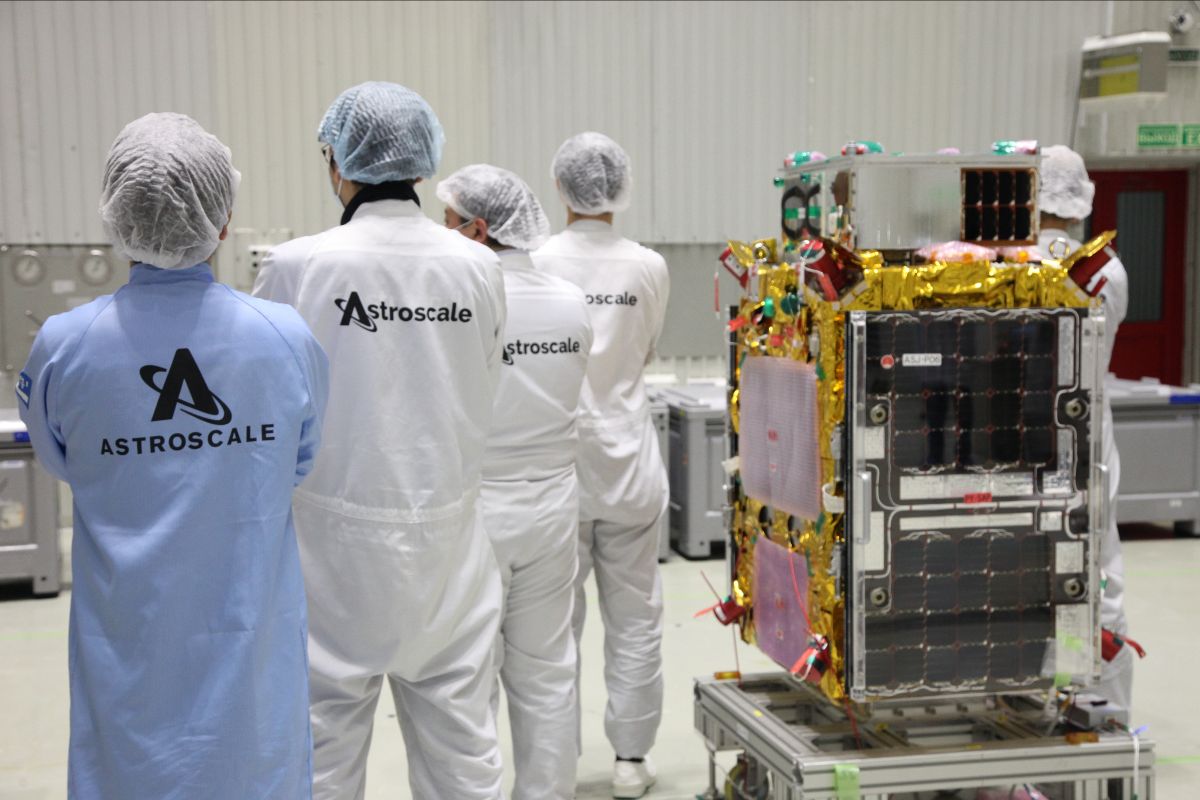
Astroscale has informed all that GK Launch Services has postponed the launch of the firm’s ELSA-d has been rescheduled to Monday, March 22, at 06:07 UTC.

The company’s launch livestream will be hosted by the company’s Founder and CEO, Nobu Okada, from Tokyo and will include live coverage of the Baikonur Cosmodrome liftoff.

Coverage will be in Japanese with English translation — to listen to the English audio translation of the event, follow these steps:  

1.Download the Interactio App from the Apple Store or Google Play store, or access the web app from your laptop: https://app.interactio.io/​.  

2. Enter the event code GOELSAD  

3. Plug in headphones.  

4. Open the App and select the English or Japanese channel.

Filed Under: News

Astroscale’s ELSA-d Ready For Baikonur Launch By GK Launch Services

March 19, 2021 by editorial

Join Astroscale as the countdown to liftoff of ELSA-d begins:
The launch window is from 2:00 to 3:30 p.m., JST, (approximate launch time is 3:07 p.m.), or 5:00 to 6:30 a.m., UTC.

The company’s launch livestream will be hosted by the company’s Founder and CEO, Nobu Okada, from Tokyo and will include live coverage of the Baikonur Cosmodrome liftoff.

Coverage will be in Japanese with English translation — to listen to the English audio translation of the event, follow these steps:  

1.Download the Interactio App from the Apple Store or Google Play store, or access the web app from your laptop: https://app.interactio.io/​.  

2. Enter the event code GOELSAD  

3. Plug in headphones.  

4. Open the App and select the English or Japanese channel.

Filed Under: News

Pixxel To Build World’s Highest Resolution Hyperspectral Satellite Array

March 19, 2021 by editorial

Pixxel co-founders Awais Ahmed (on the right) and Kshitij Khandelwal (on the left)

“We are very excited to finally speak about what we are building at Pixxel. Our new funding enables us to build a health monitor for the planet through the world’s most advanced hyperspectral small-satellites...

Pixxel, India’s first private Earth imaging company, said it has closed its $7.3 million seed round with new capital from Omnivore and Techstars joining alongside previous investors Lightspeed Ventures, Blume Ventures, growX and Ryan Johnson, ex-President at Planet Labs.

Also, for the first time on Thursday, Pixxel lifted the veil of secrecy and publicly discussed its mission to build the world’s highest resolution hyperspectral satellite constellation. The company’s first hyperspectral satellite will launch within the next few months.

“We are very excited to finally speak about what we are building at Pixxel. Our new funding enables us to build a health monitor for the planet through the world’s most advanced hyperspectral small-satellites. This enables us to capture some of the richest imagery that’s ever been beamed down to earth,” said Awais Ahmed, CEO, Pixxel. “Our hyperspectral satellites will allow society to tackle many of humanity’s most pressing issues and we believe they will become the holy grail of remote sensing – providing the best combination of spatial, temporal and spectral resolutions to date and empowering humans to see the earth like never before,” he said.

Compared to the common multispectral satellites prevalent today, Pixxel’s hyperspectral earth-imaging satellites will beam down 50x more information by capturing light reflected from the earth in far more detail and in much narrower bands than just red, green and blue. This allows Pixxel to capture exact chemical signatures and offer much more accurate solutions to seemingly unsolvable issues in agriculture, energy and environment conservation. Once deployed, Pixxel’s constellation will provide 24-hour global coverage in higher quality resolution and lower cost than any existing satellite competitors.

The additional funding will be utilised to boost Pixxel’s efforts in making the agricultural industry more efficient in the country and worldwide. The satellite imagery with agricultural datasets can help in improving the existing crop and water management analytics as well as identifying a spectrum of issues that crop up during the growing season. The funding will also enable Pixxel to continue to rapidly scale its operations to meet the growing demand for high-quality remote sensing data through hyperspectral imaging.

To date, Pixxel has built partnerships and worked alongside the Indian Space Research Organization (ISRO), Maxar, and NASA’s Jet Propulsion Laboratory (JPL).

Pixxel, is expected to soon launch its first remote-sensing satellite on the Indian Space Research Organisation (Isro) workhorse – the Polar Satellite Launch Vehicle (PSLV). For this, the Bengaluru-based firm has entered into an agreement with NewSpace India Limited (NSIL), a Government of India company under the Department of Space.

The agreement with NSIL is one of its kind and one of the first since the setting up of IN-SPACe, the authorisation and regulatory body under the Department of Space (DoS) to enable private players undertaking space activities in India.

The DoS and Pixxel will work in collaboration to enhance utilisation and maximise the benefits of space assets for India. This first-of-a-kind private earth-observation mission will help provide solutions to many pressing environmental and agricultural issues, among other things.

Pixxel has also signed an agreement with Silicon Valley-based in-space satellite transportation and infrastructure company Momentus Inc, to launch its second satellite into space. The launch is scheduled for this year on top of a SpaceX Falcon-9 to SSO orbit (Sun-synchronous orbit), a particular kind of polar orbit.

By Peerzada Abrar, From Business-Standard.com

Filed Under: News

Arianespace To Send 36 OneWeb Satellites To Orbit Via Soyuz

March 19, 2021 by editorial

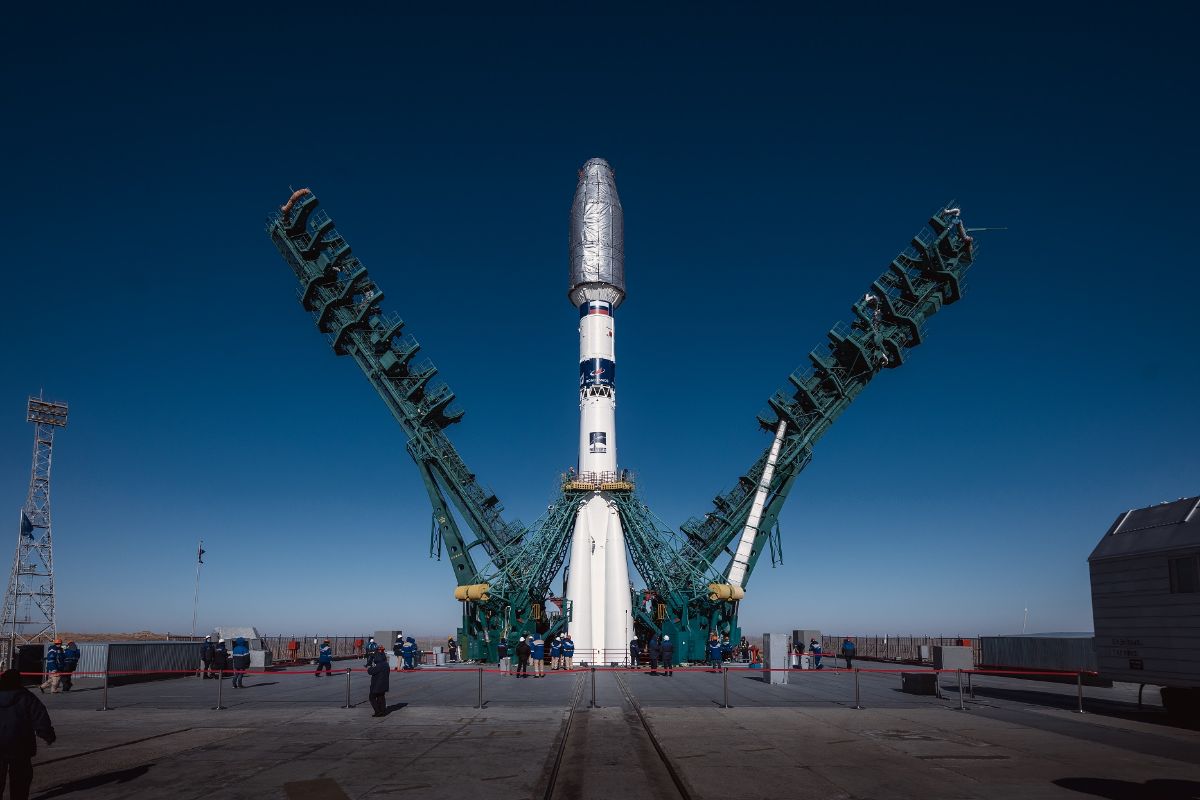
The next Arianespace mission is planned from Vostochny Cosmodrome with Soyuz on March 25, 2021, to deliver 36 satellites into orbit.

By operating this fifth flight on behalf of OneWeb, Arianespace will bring the total fleet to 146 satellites in LEO.

Flight ST30, the second commercial mission performed by Arianespace and its Starsem affiliate from the Vostochny Cosmodrome, will put 36 of OneWeb’s satellites into a near-polar orbit at an altitude of 450 kilometers. The mission will have a total duration of three hours and 51 minutes and will include nine separations of four satellites, that will raise themselves to their operational orbit. This launch will bring up to speed Arianespace’s operations this year to the benefit of OneWeb, and will raise to 146 the number of satellites deployed for the global telecommunications operator.

OneWeb’s constellation will deliver high-speed, low-latency connectivity services to a wide range of customer sectors including aviation, maritime, backhaul services, as well as governments, emergency response services and more. Central to its purpose, OneWeb seeks to bring connectivity to every place where fiber cannot reach, and thereby bridge the digital divide.

Once deployed, the OneWeb constellation will enable user terminals that are capable of offering 3G, LTE, 5G and Wi-Fi coverage, providing high-speed access globally – by air, sea and land.

OneWeb Satellites, a joint venture between OneWeb and Airbus Defence and Space, is the constellation’s prime contractor. The satellites were built thanks to its leading-edge satellite manufacturing process that can build up to two satellites a day on a series production line dedicated to the assembly, integration, and testing of the satellites.

A total of 110 OneWeb satellites have already been orbited by Arianespace: the first six were successfully orbited by Arianespace from French Guiana on February 27, 2019. On February and March 2020, Arianespace and its Starsem affiliate successfully launched 68 OneWeb satellites from Baikonur Cosmodrome on two successful Soyuz flights. On December 2020, the team successfully delivered an additional 36 satellites into orbit, with first commercial flight operated from new Vostochny Cosmodrome.

Filed Under: News

Sateliot And Open Cosmos Ready To Launch Their First Smallsat In Preparation Of A Constellation

March 18, 2021 by editorial

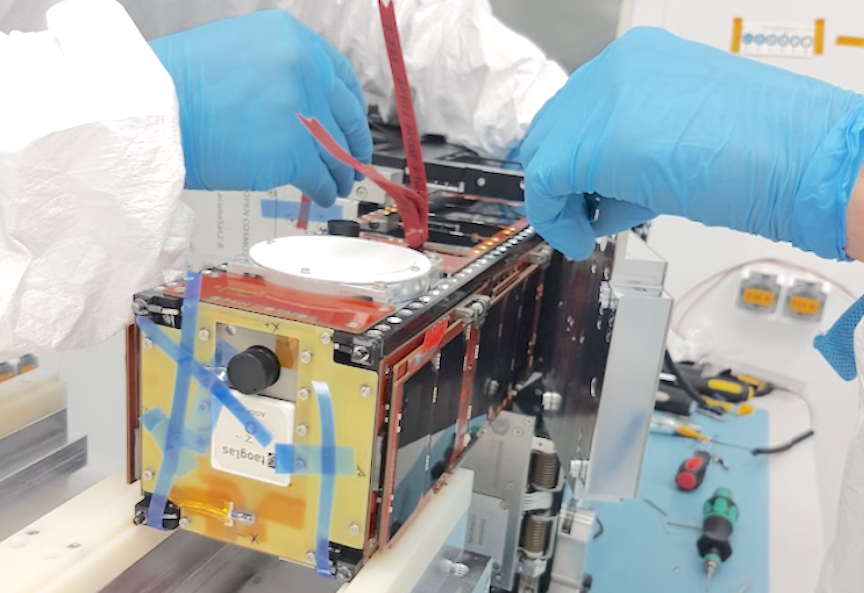
Open Cosmos experts integrate Sateliot’s nanosatellite into the deployer to be carried aboard the Soyuz rocket.

Sateliot, the satellite telecommunications operator, is finalizing with Open Cosmos, the company that operates end-to-end space missions, the launch of its first smallsat, which is scheduled for the morning of March 20 from the Baikonur Cosmodrome in Kazakhstan.

Open Cosmos is the design creator and manufacturer of this first smallsat of what will eventually total one hundred satellites. These satellites will make up the constellation in which Sateliot will extend the IoT connection with 5G coverage globally and massively in the coming years. In addition, in recent weeks the company has been working on the integration of the payload, as well as on the logistics and exhaustive pre-launch testing phase.

The satellite has arrived from the Harwell technology and innovation campus where it has been manufactured in the United Kingdom, to Kazakhstan, where it is undergoing strict export and verification regimes in controlled environments to ensure its viability in its development.

Additionally, the satellite has already been integrated into the deployer, the box where it will be inserted into the rocket that will be responsible for its ejection into space once it reaches the orbit where it will operate, located around 500 km from Earth. A deployer that is connected to a sequencer will be responsible for activating the opening of the deployment system.

Once this phase is completed, Sateliot’s nanosatellite awaits launch aboard the Soyuz 2.1A rocket. Until it is launched into orbit, it will share the journey with the mission’s main satellite, the South Korean earth observation satellite CAS500-1, as well as some thirty other satellites.

Once it is launched into orbit, it will share the journey with the mission’s main satellite, the South Korean earth observation satellite CAS500-1, as well as some thirty other satellites.

With its launch into orbit, Sateliot will then enter a new technological phase, which will allow it to carry out field tests in real environments, providing very useful information for the evolution of its constellation, which is expected to start offering commercial service from 2022.

About the nanosatellite

This nanosatellite, 3B5GSAT, is the first of three in which Sateliot will test the IoT service with 5G coverage, and it comprises an innovative small technology, smaller than a microwave and weighing no more than 10 kg, made up of 10x10x10 cm cubes whose standards are adapted to the function to be performed.

Moreover, unlike large geostationary satellites that are almost 36,000 kilometres high, it will be in a low orbit, flying at only about 500 kilometres to ensure global IoT connectivity. It will travel at a speed of about 7 km per second, circling the Earth once every 90 minutes.

Open Cosmos is a space company that operates end-to-end satellite missions. It offers a comprehensive service that addresses the entire value chain of the space sector, covering the design, manufacture, mission management and launch of customised satellites for companies, institutions and governments around the world. These satellites are used primarily to do three things: collect critical Earth data for economic, environmental or security decisions; provide telecommunications services on a global scale; or develop space science and technology. Founded in 2015 in the UK, the company has experienced stellar growth and is currently expanding its business internationally. Its team is made up of a multidisciplinary group of more than 50 highly qualified professionals who make Open Cosmos an innovative, cutting-edge company and a leader in what they call ‘Enabling Space’, a sector whose space technology enables other industries to make profitable business decisions based on reliable global data. More information at https://www.open-cosmos.com/

Sateliot is the first satellite telecommunications operator to provide global and continuous connectivity to all the elements that will make up the Internet of Things (IoT) universe under the 5G protocol. Thanks to a constellation of state-of-the-art nanosatellites, located at low altitude and acting as mobile towers, Sateliot is the perfect complement to large telecommunications companies by providing them with the necessary infrastructure where terrestrial technologies do not reach. More information on our website, Twitter and LinkedIn.

Filed Under: News

SpacePath Awarded New Contracts for Commercial + Military Uplink Applications

March 17, 2021 by editorial

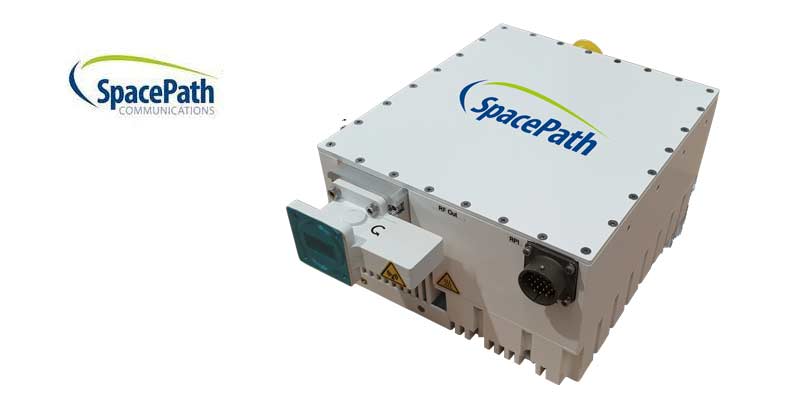
SpacePath Communications (‘SpacePath’) has been awarded a contract for their super-compact solid-state amplifiers by a major U.S. satellite equipment manufacturer.

SpacePath will supply Ku- and X-band compact form factor, high efficiency and proven performance solid-state power amplifiers (SSPA). At 4.45 kg for the 100W Ku-band unit, these lightweight SSPAs will be deployed for commercial and secure, military communications in smallsat uplink terminals.

SpacePath’s high performance uplink amplifiers cover all mission-critical segments, including digital satellite newsgathering (DSNG), flyaway or truck-based systems, fixed-Earth stations and MILSATCOM.

Colin Bolton

Colin Bolton, Director of Business Development, SpacePath Communications, said, “We are delighted that our lightweight and compact solid-state amplifiers have been selected for these new applications. This latest order yet again underlines our proven credentials in advanced, uplink amplifier technology among the global telecommunications and SATCOM market.”

Filed Under: News

LOFT ORBITAL + ANYWAVES Engage In A Partnership Agreement For The YAM Smallsat

March 17, 2021 by editorial

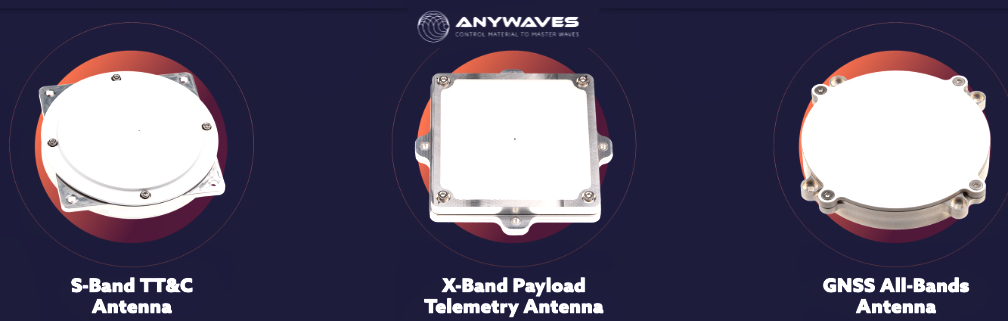
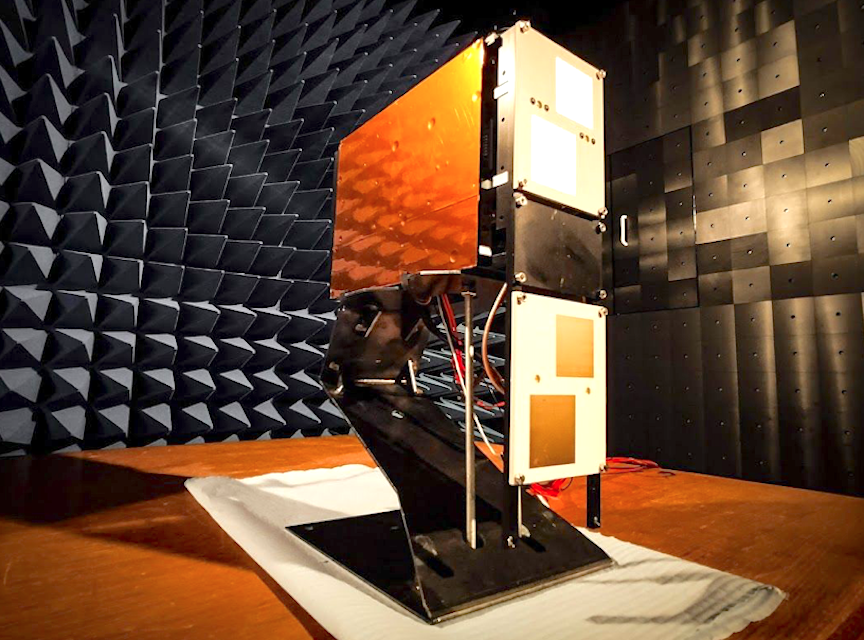
LOFT ORBITAL has enlisted ANYWAVES’ services to carry the manufacturer’s S-band antenna onboard a future YAM smallsat — this is the first collaboration between the two space companies.

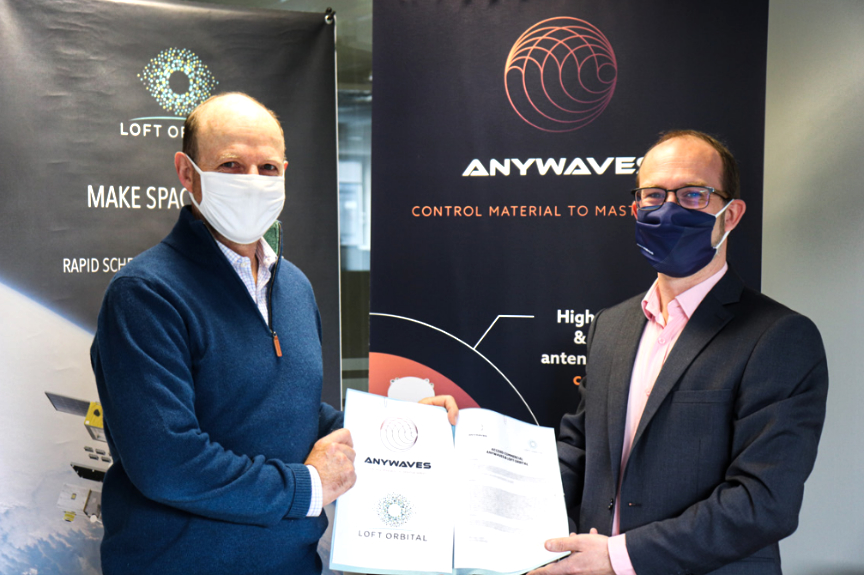
In early March, Nicolas Capet, ANYWAVES’ CEO, and Antoine de Chassy, LOFT ORBITAL’ s Co-founder and President, signed a partnership agreement at ANYWAVES’ headquarters. In addition to the delivery of two space antennas within one week, this first step exemplifies both companies’ willingness to enter into a strong partnership, with long-term prospects.

According to Capet, “This is a huge step having this level of confidence from one of our major customers. This is also an opportunity for significant commercial and business development between our two companies.”

“The meaning of this partnership with ANYWAVES stems from an intimate knowledge of the technology,” said de Chassy. “Each of us focuses on their area of expertise and that is how we can bring the cost and delays down which is exactly what the customers want right now.”

Artistic rendition of the YAM-3 smallsat.

YAMs, short for ‘Yet Another Mission,’ fly various payloads or dedicated missions, such as precision positioning, Earth Observation (EO) and IoT. The bus is manufactured by LeoStella, a joint-venture between
TAS and Spaceflight, based in Seattle. Loft Orbital’s first two missions, YAM-2 and YAM-3 will carry several payloads from multiple customers, including Eutelsat and the US Defense Advanced Research Projects Agency (DARPA) for the Blackjack program.

ANYWAVES, a CNES (French Space Agency) spin off that was created in 2017, develops antennas for the satellite constellations market and designs and manufactures according to the space standards of a new generation of high quality antennas. ANYWAVES has tripled its work force within two years, put five of its products into orbit since the firm’s inception, sold more than 60 antennas and reached a 1 million euros turn-over in 2020.

Loft Orbital deploys and operates space infrastructure as a service, providing rapid, reliable, and simplified access to orbit for customer payloads. The company has developed the Payload Hub, a hardware and software interface which enables Loft Orbital to fly dedicated missions or multiple customer payloads simultaneously on a standard satellite bus design. The Payload Hub is a modular, bus agnostic and payload agnostic interface adapter that allows a plug-and-play approach to satellite missions. Together with the firm’s Orbital’s Cockpit Mission Control System, it is able to deliver unprecedented speed-to-orbit without compromising reliability or schedule for even the most demanding customer payloads. Loft Orbital has three missions planned for 2021 and quarterly missions in 2022.

Filed Under: Featured, News

From Baikonur, 38 SmallSats Preparing For Push To Orbit By GK Launch Services

March 17, 2021 by editorial

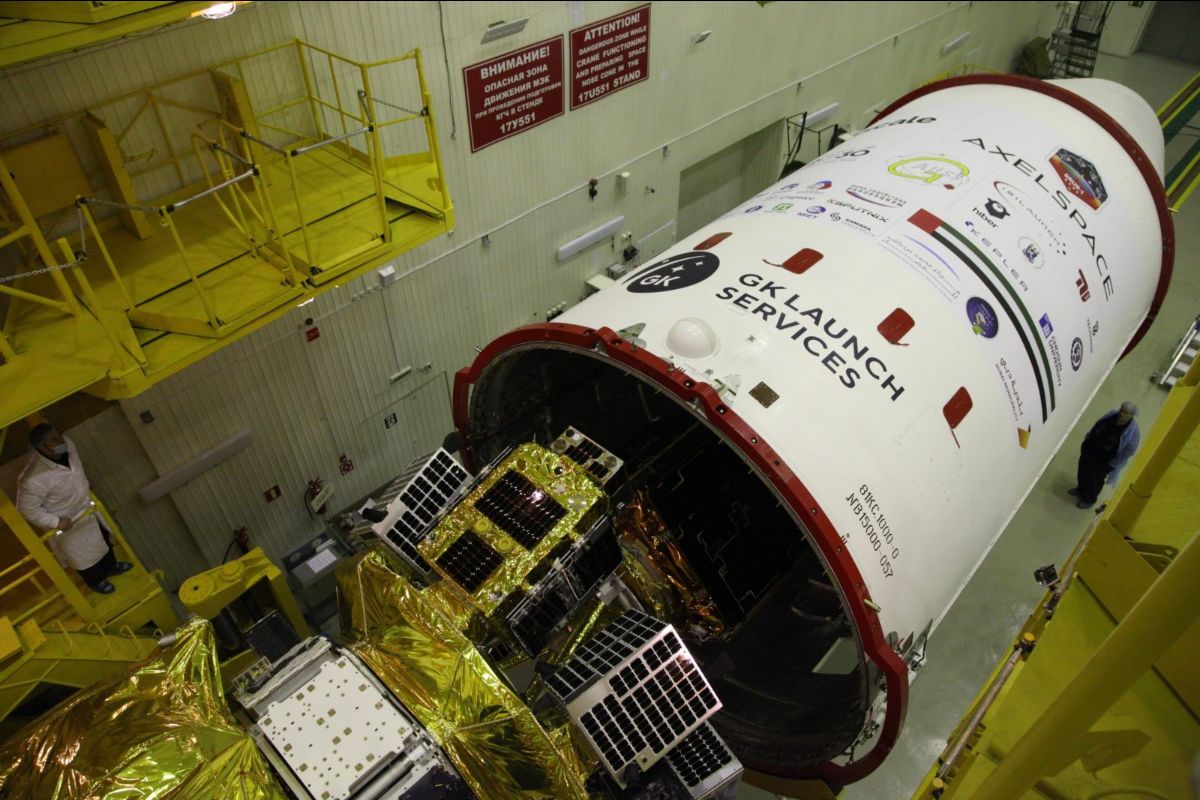
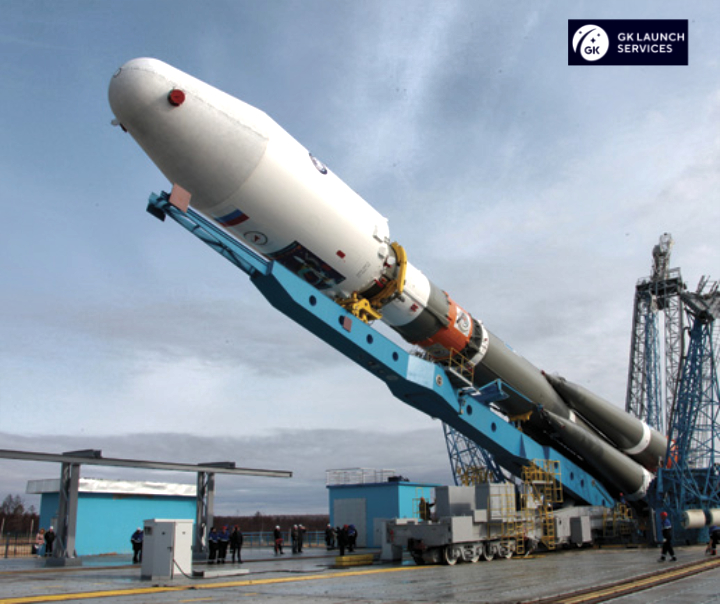
On March 20, at 9:07 a.m., Moscow Time, a launch of the Soyuz-2 launch vehicle with the Fregat upper stage by GK Launch Services is scheduled from the Baikonur Cosmodrome that will deliver 38 spacecraft from 18 countries into three Sun Synchronous Orbits (SSO).

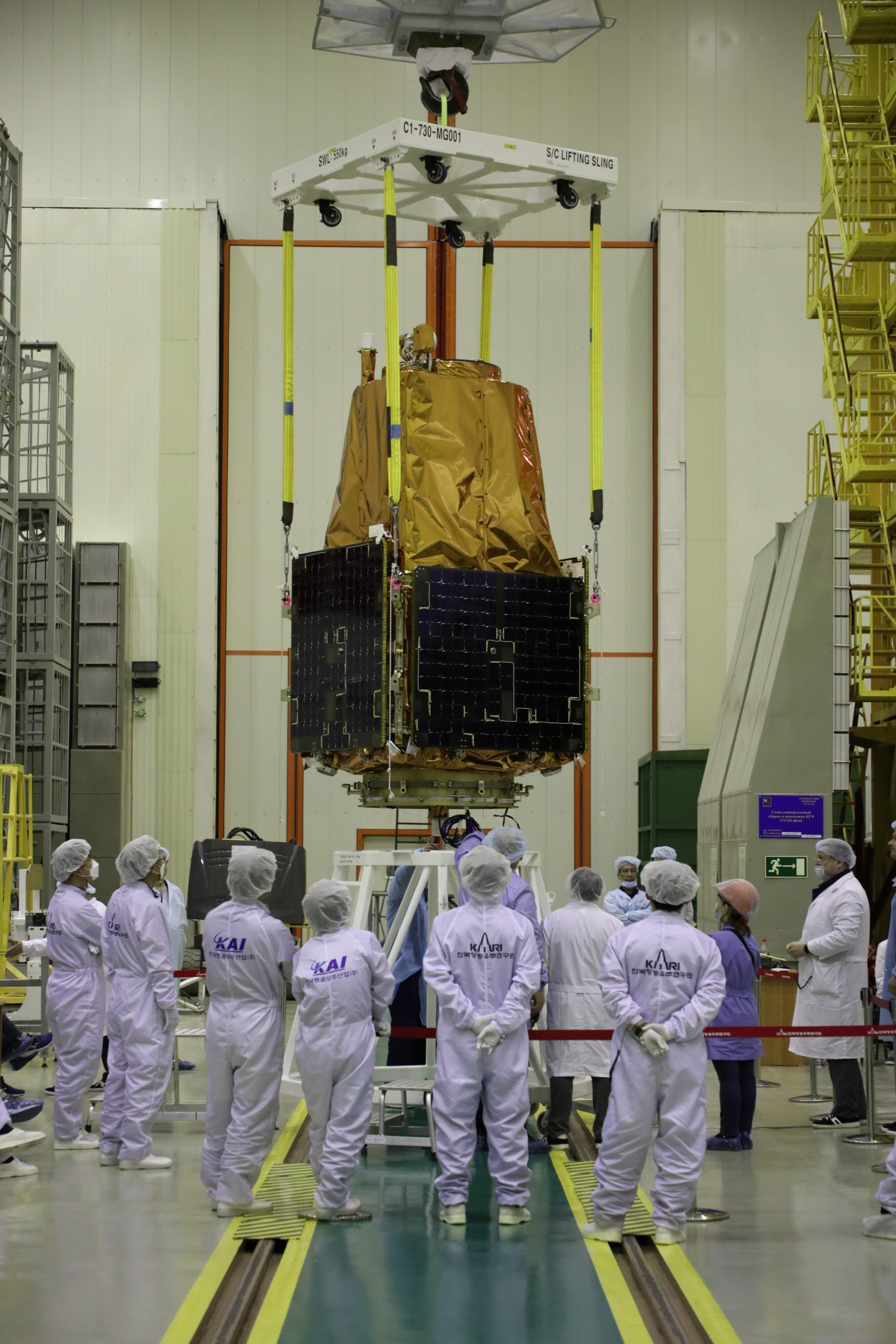
CAS500-1 smallsat of the Korea Aerospace Research Institute (KARI), a government-funded research institute, engages not only in developing aerospace-related technologies but also in supporting a national aerospace development policy, is undertaking the implementation of Compact Advanced Satellite 500-1 (“CAS500-1,” hereafter) program for the Republic of Korea. The CAS500-1 program is a national program of Korean government to develop and operate 500 kg class medium size satellites with high resolution electro optical payload for earth observation mission on the low earth orbit. The primary mission of CAS500-1 is to provide high-resolution electro-optical images.

  • a communications subsystem in the UHF band
  • an X-band transmitter, an experimental GNSS (global positioning satellite system) receiver
  • an optical payload for attitude determination
  • laser ranging from ground for precise orbit determination.

ELSA-d smallsat, Astroscale Company, Japan, will be the first satellite to demonstrate the core technologies necessary for space debris docking and removal.

Four GRUS smallsat, Axelspace Company, Japan, are designed for the Earth observation at strict revisit rate.

NAJM-1 smallsat, Saudi Arabia, is an experimental/educational small satellite pathfinder mission for low-duty cycle earth imaging and communication from LEO.

DMSAT-1 smallsat is developed for the Mohammed Bin Rashid Space Centre to perform multi-spectral observations in the visible and near-infrared bands in order to detect and monitor aerosols in the upper atmosphere.

3 ADELIS-SAMSON (1, 2, 3) smallsat, Technion, Israel Institute of Technology, are designed for demonstration of long-term autonomous cluster flight of multiple satellites and geolocation of the position of a terrestrial transmitter.

2 Kepler 6/7 smallsat, Kepler Communications Inc., Canada, are designed for the wideband and high data-rate communication in Ku-Band, as well as low-data rate narrowband communication in S-band. The spacecraft provide data transfer services to locations, assets, and IoT systems distributed across the globe with the Global Data Service (GDS) and EverywhereIoT services.

NANOSATC-BR2 smallsat is a scientific, academic and technological satellite designed for monitoring of the Earth’s Ionosphere and Magnetic Field, Southern Regional Space Research Center, University of Santa Maria, Brazil.

KMSL smallsat is a scientific satellite (experiments in microgravity), College of Engineering, Chosun University, Gwangju, Republic of Korea.

Pumbaa and Timon smallsats are designed for obtaining images of solar corona—including the region that is 10 times the Sun’s angular diameter. Astrodynamics and Control Laboratory of Yonsei University, Seoul City, Republic of Korea.

4 Beesat-5,-6,-7,-8 smallsats, Technische Universität Berlin, Germany.

Hiber-3 smallsat, the Netherlands, are designed for the provision of satellite connectivity to “internet-of-things” (IOT) devices.

Unisat-7 smallsat, GAUSS Srl, Italy, has been developed for the tryout of technology for the precise orbit insertion of small satellites of CubeSat format. The mission is based on the successful idea of acting first as an in-orbit deployer of third-party satellites, then operating as a flexible in-orbit demonstrator for space technology, while maintaining the telemetry RF link open for radio amateurs worldwide. UNISAT-7 will release six smallsats:

  • Unicorn-1, tryout of technology for the precise orbit insertion of small satellites of CubeSat format, Germany
  • DIY-1, test of deorbiting mechanism and verification of space qualification of the radio and solar cells, Argentina
  • FEES, educational and scientific research satellite, Italy
  • STECCO, educational and scientific research satellite, tryout of attitude control technology using the gravity gradient, Italy
  • SMOG-1, Educational and scientific research satellite, Hungary
  • BCCSAT-1, Educational and scientific research satellite, Thailand.

The First smallsat of High School of Economics “NIU VShE — DZZ”. The NRU HSE Earth Observation spacecraft has been developed through joint efforts by the Moscow Institute of Electronics and Mathematics (MIEM) and SPUTNIX. The 3U CubeSat is equipped with an experimental camera based on the stepped (Fresnel) lenses developed by the Samara University, and with a high-speed X-range transmitter. MIEM students were responsible for qualification of the satellite’s control systems.

3U CubeSat of Sirius Center and NRU HSE. The spacecraft is equipped with an improved DeCor-type instrument to monitor quick changes in the space radiation fluxes. Researchers from the Sirius University and the Moscow University’s Scientific and Research Institute of Nuclear Physics are in charge of the project’s scientific component – handling the space radiation detector and mission’s mathematical algorithms.

6U CubeSat Zorkiy (Sputniks). The satellite is equipped with a high-resolution (up to several meters per a pixel) telescope camera manufactured by the Lepton Research and Production Association (NPO Lepton). This makes it stand out among other spacecraft of a similar size.

SIMBA smallsat, Sapienza – University of Rome, is designed for monitoring of the wildlife behavior.

GRBAlpha smallsat, University of Košice, has been developed to demonstrate the detector technology and electronics for the future “Cubesats Applied for MEasuring and LOcalizing Transients” (CAMELOT) mission, which is a planned constellation of nanosatellites providing all-sky coverage with high sensitivity and localization accuracy following detections of gamma-ray transients.

Open Cosmos, the space company that provides end-to-end satellite missions, is the supplier of two of the missions to be launched on board. The company has been responsible for the design, manufacturing, integration and mission management of the custom-built nanosatellites for Lacuna Space and Sateliot.

Challenge One smallsat is an “Internet of Things” satellite, includes an innovative communication technology developed in TELNET facilities by Tunisian expertise. This Tunisian Satellite Launch will be the basis for the creation of a new space ecosystem for Tunisia and its region.

KSU CubeSat by the College of engineering (COE) at King Saud University is sending telemetry data and photos from the space to the ground station.

Lacuna Space based in UK and NL provides global connectivity for Internet-of-Things devices.

Sateliot is the satellite telecommunications operator that will launch a constellation of nanosatellites to democratize the Internet of Things with 5G coverage. The company plans to deploy 16 satellites from 2022 reaching 96 and an investment of over 100 million euros by 2025.

The launch operator is GK Launch Services (a subsidiary to the Roscosmos State Corporation).

GK Launch Services is a company established by Glavkosmos (a subsidiary of ROSCOSMOS State Space Corporation) and International Space Company Kosmotras. Its business is focused on setting-up and management of Soyuz-2 commercial launches from the Russian spaceports.

Filed Under: News

  • « Go to Previous Page
  • Page 1
  • Interim pages omitted …
  • Page 48
  • Page 49
  • Page 50
  • Page 51
  • Page 52
  • Interim pages omitted …
  • Page 65
  • Go to Next Page »

Primary Sidebar

WEEKLY NEWSLETTER

Archives

  • August 2026
  • July 2026
  • June 2026
  • May 2026
  • April 2026
  • March 2026
  • February 2026
  • January 2026
  • December 2025
  • November 2025
  • October 2025
  • September 2025
  • August 2025
  • July 2025
  • June 2025
  • May 2025
  • April 2025
  • March 2025
  • February 2025
  • January 2025
  • December 2024
  • November 2024
  • October 2024
  • September 2024
  • August 2024
  • July 2024
  • June 2024
  • May 2024
  • April 2024
  • March 2024
  • February 2024
  • January 2024
  • December 2023
  • November 2023
  • October 2023
  • September 2023
  • August 2023
  • July 2023
  • June 2023
  • May 2023
  • April 2023
  • March 2023
  • February 2023
  • January 2023
  • December 2022
  • November 2022
  • October 2022
  • September 2022
  • August 2022
  • July 2022
  • June 2022
  • May 2022
  • April 2022
  • March 2022
  • February 2022
  • January 2022
  • December 2021
  • November 2021
  • October 2021
  • September 2021
  • August 2021
  • July 2021
  • June 2021
  • May 2021
  • April 2021
  • March 2021
  • February 2021
  • January 2021
  • December 2020
  • November 2020
  • October 2020
  • September 2020
  • August 2020
  • July 2020
  • June 2020
  • May 2020
  • April 2020
  • March 2020
  • February 2020
  • January 2020
  • December 2019
  • November 2019
  • October 2019

© 2019–2026 SatNews

Insert/edit link

Enter the destination URL

Or link to existing content

    No search term specified. Showing recent items. Search or use up and down arrow keys to select an item.
      x
      Sign Up Now!

      Enjoy a free weekly newsletter with recent headlines from the global SmallSat industry.

      Invalid email address
      We promise not to spam you. You can unsubscribe at any time.
      Thanks for subscribing! You will now receive weekly SmallSat News updates.
      We love our advertisers.
      And you will too!

      Please disable Ad Blocker to continue... We promise to keep it unobtrusive.
      We promise not to spam you. You can unsubscribe at any time.
      Invalid email address
      Thanks for subscribing!