• Skip to main content
  • Skip to primary sidebar
  • Home
  • News
  • Featured
  • More News ⌄
    • SatNews
    • SatMagazine
    • MilSatMagazine
  • Events ⌄
    • MilSat Symposium
    • SmallSat Symposium
    • Satellite Innovation
  • Contacts
  • SUBSCRIPTION

SmallSat News

You are here: Home / Archives for 2021

Archives for 2021

New Tech Director @ Kleos Space

March 16, 2021 by editorial

Kleos Space S.A (ASX:KSS, Frankfurt:KS1, Kleos or Company) has appointed experienced satellite software and systems engineer Vincent (Vinny) Furia as Technical Director.

In the newly created role, Mr. Furia will report to the CTO, with responsibility for effective and efficient development and deployment of the Kleos space based systems (progressing toward a constellation of satellite clusters), ground support, analytics and data delivery. Mr Furia was previously Space Operations Director at smallsat operator Spire Global, where he was responsible for managing a constellation of more than 100 satellites and 30 ground stations.

He brings more than eight years’ program and project management experience to Kleos and has 15 years’ expertise in software and systems engineering, including 11 years at global aerospace and defence technology innovator Harris Corporation.

Mr Furia’s appointment follows the establishment of Kleos’ Denver engineering office in January and builds on the recent preparation for commercialization of its radio frequency geolocation intelligence data with additional US-based appointments of Chief Revenue Officer Eric von Eckartsberg, Product Manager Guillermo Gutierrez and Sales Executive Alex Johnson. Kleos has engineering offices in Denver CO, the UK and Luxembourg.

Kleos successfully launched its first satellite cluster, the Kleos Scouting Mission, in November of 2020 and is on track to launch their Polar Vigilance Mission satellites mid-year aboard a SpaceX Falcon 9. Kleos’ third satellite cluster, the Polar Patrol Mission, is scheduled to launch in December 2021.

Andy Bowyer is the CEO of Kleos Space.

Filed Under: News

Smallsat Market Analysis Tackled By Trends Market Research

March 15, 2021 by editorial

According to a new report published by Trends Market Research titled, “Small Satellite Market by Type, Application, and End-User: Global Opportunity Analysis and Industry Forecast, 2019-2026,” the small satellite market accounted for revenue of $3,632.4 million in 2018 and is anticipated to generate $15,686.3 million by 2026. The market is projected to experience growth at a CAGR of 20.1% from 2019 to 2026.

The major factors that propel the smallsat market are low cost, lightweight, and increased applications of small satellites across diverse sectors. Technological developments and increase in investments by governments are anticipated to further augment the growth. High demand for these satellites from emerging economies, such as Asia-Pacific and LAMEA, along with rise in involvement of commercial companies, startups, and educational institutes in the market is anticipated to offer numerous growth opportunities during the forecast period.

The smallsat market is segmented based on type, application, end-user, and region. By type, the market is classified into minisatellite, microsatellite, nanosatellite, and pico-satellites, femto satellites. On the basis of application, it is categorized into imaging and earth observations, satellite communications, science and explorations, technology development, and space situational awareness. Based on end-user, the market is bifurcated into civil & commercial, and government & defense Based on region, the small satellite market is analyzed across North America, Europe, Asia-Pacific, and LAMEA.

Based on type, the nanosatellite segment is anticipated to grow at the fastest rate during the forecast period. This is attributed to the rising demand for nanosatellites in earth observation application and increased investments in nanosatellite technologies.

Based on application, the satellite communications segment is expected to be the fastest-growing application during the forecast period. This is attributed to increase in demand for small satellite in military applications and navigation, radio broadcasting, and others. 

Based on the region, Asia-Pacific is expected to grow at the fastest growth rate. The major countries in Asia-Pacific aim to improve their connectivity during the coming years. Owing to these factors, there is a rise in demand for small satellites in the communication sector. Countries with a dominant share in the Asia-Pacific market are China, Japan, South Korea, and India.

The smallsat market analysis covers in-depth information of the major industry participants. The key player operating and profiled in the market includes Sierra Nevada Corporation, Lockheed Martin Corporation, Airbus S.A.S., Northrop Grumman Corporation, L3Harris Technologies, Inc., The Aerospace Corporation, Planet Labs Inc., Boeing, Thales Group, GomSpace and Blue Canyon Technologies

Other players in the value chain of the small satellite market include Orbital ATK, Space Systems Loral, OHB AG, Spire Global Inc., Geooptics Inc., Lockheed Martin Corporation, and others.

Filed Under: Featured, News

SpaceX Continues Their Historic Starlink Launches

March 14, 2021 by editorial

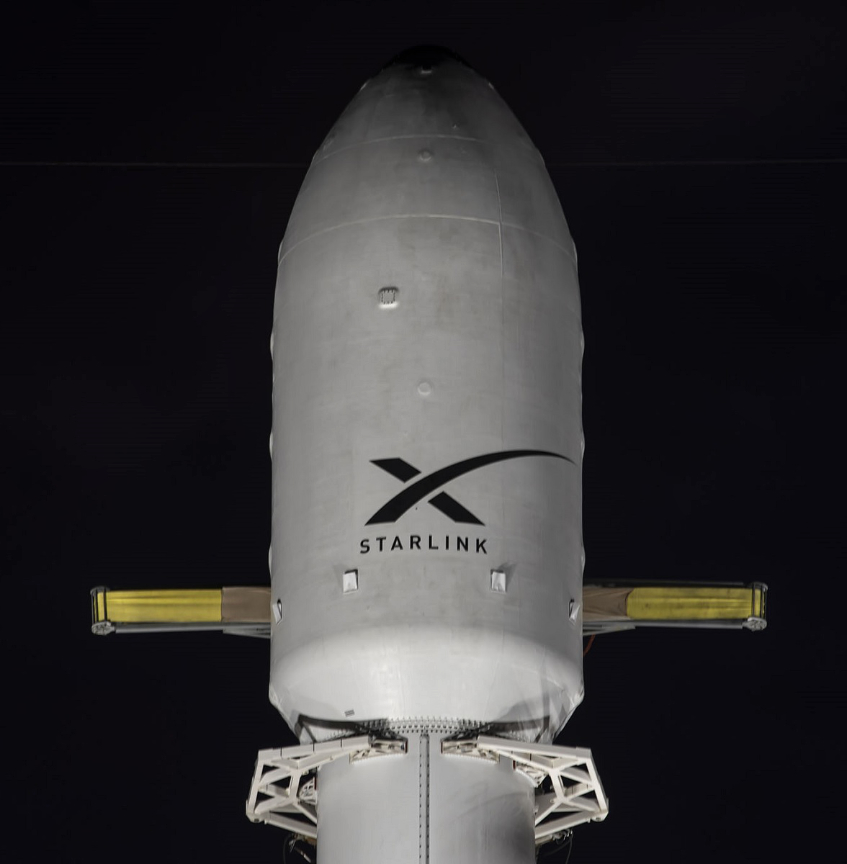
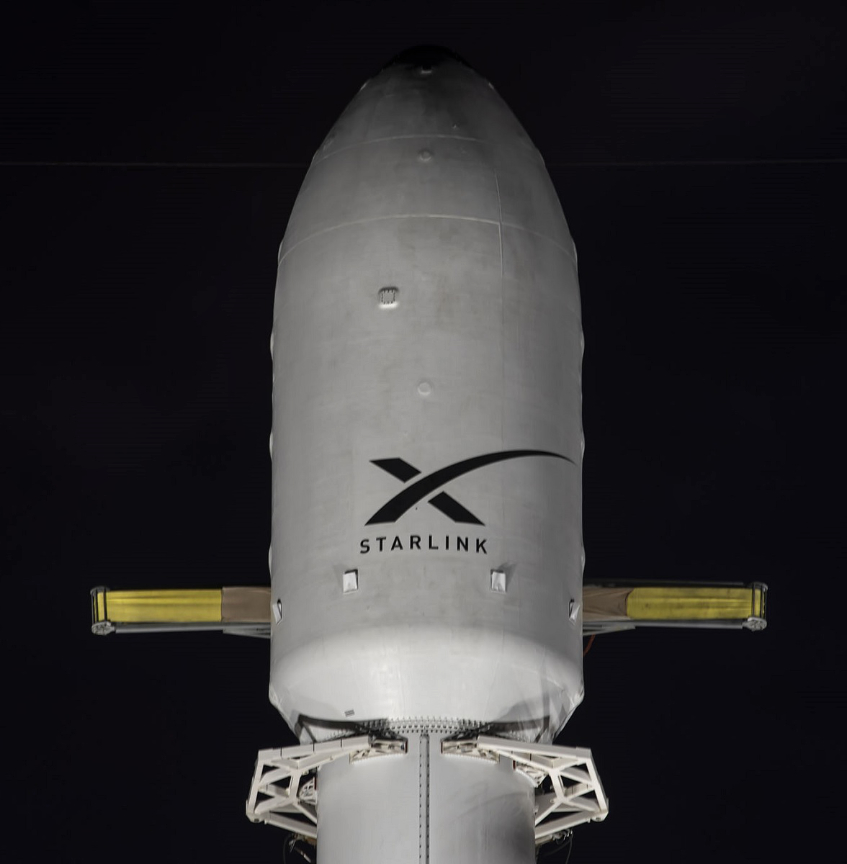
On Sunday, March 14, at 6:01 a.m. EDT, SpaceX launched 60 Starlink satellites from Launch Complex 39A (LC-39A) at Kennedy Space Center in Florida.

This was the ninth launch and landing of this Falcon 9 first stage booster, which previously supported launch of Crew Dragon Demo-1, RADARSAT Constellation, SXM-7, and five Starlink missions.

A video replay of this mission is available at this direct link…

Filed Under: News

Satellogic Partners With Four Major Space Organizations

March 14, 2021 by editorial

Satellogic has announced new partnerships with four, major, US-based space organizations: The United States Geospatial Intelligence Foundation (USGIF), Intelligence and National Security Alliance (INSA), SmallSat Alliance and Open Geospatial Consortium (OGC).

Through its partnership with USGIF and INSA, Satellogic will help promote the application of geospatial intelligence (GEOINT) toward national security challenges, as well as advance intelligence and national security priorities. These organizational goals align with Satellogic’s long-term mission of providing the public sector with geospatial insights that enable decision makers to improve or protect their environments, including border, resource and infrastructure monitoring.

The SmallSat Alliance similarly aligns with Satellogic’s strategic goals through the Alliance’s trusted relationship with Congress and broader government officials. By joining the SmallSat Alliance, Satellogic will be able to help promote the usage of smallsat capabilities to complement government programs and roadmaps.

Through their member-driven consensus process, OGC serves as the leading authority on geospatial standards, ensuring that location information is findable, accessible, integratable and reusable. Together with OGC, Satellogic plans to lead discussions that ensure interoperability of geospatial data. Particularly given Satellogic’s global employee and customer-base, compatibility of geospatial data across country and use case is a leading priority for the company.

This series of partnerships comes on the heels of Tirman and VanMatre’s recent hires, which further expanded Satellogic’s US presence. Driven by Satellogic’s industry-leading in-orbit capacity and high-resolution imagery, Satellogic has a growing base of US government, international governments and commercial partners.

Matthew Tirman

“The US government is leading the way when it comes to partnerships with commercial space companies, and we are thrilled to see them diversifying their portfolio to partner with companies like Satellogic to leverage the potential of high-frequency, high-resolution data,” said Matthew Tirman, Head of Satellogic North America. “US officials know that they can take full advantage of the power of industry to help fuel and support their missions, and organizations like USGIF, INSA and SmallSat are instrumental in ensuring the long-term success of these relationships. As the commercial provider with more capacity in orbit than any other, it makes sense for Satellogic to play a leading role through these partnerships.”

“As commercial space capabilities become more accessible globally, and public-private partnerships become increasingly important to both commercial and federal space entities, the relevance of interoperability through standards and policy cannot be understated,” said Thomas VanMatre, Vice President of Global Business Development at Satellogic. “That’s why Satellogic is proud to join the Open Geospatial Consortium and help guide discussions around the future use and integration of our impactful data.”

Founded in 2010, Satellogic is a global company with more than 200 employees and offices across the United States, South America, Europe and Asia. The company’s LEO satellite constellation, platform, and data science teams work together to deliver high-frequency, high resolution, end-to-end solutions at the right price point.

Filed Under: News

Accion Systems + NanoAvionics US Sign Space Propulsion Partnership Agreement

March 12, 2021 by editorial

Accion Systems has signed a new partnership agreement with NanoAvionics US Inc. — the TILE in-space propulsion system will be listed as a preferred option for all appropriate missions that require electric in-space propulsion and Accion Systems will provide preferred pricing to NanoAvionics US Inc.

NanoAvionics is a smallsat mission integrator focused on delivering new generation satellite buses and propulsion systems for the satellite applications market. With facilities in North America and Europe, NanoAvionics has led more than 85 successful satellite missions and commercial projects, and counting.

The TILE propulsion system is uniquely superior to conventional electric propulsion, pioneering ionic liquid electrospray for commercial propulsion activities. TILE combines the use of a safe, inert liquid propellant with a simple mechanical design with few moving parts to create a propulsion system that is low-cost, compact, low pressure, and has less than 50% of the power draw of other propulsion technologies. The compact design and low power draw of the TILE system allow satellite bus manufacturers such as NanoAvionics to allocate more satellite volume and power to revenue generating payloads.

TILE’s modular design can be flexibly configured to meet various mission needs, mounting on almost any surface of the spacecraft, and easily and seamlessly integrated with existing mission control software.

Peter Kant

“Our partnership with NanoAvionics continues the expansion of our safe, reliable and efficient TILE thrusters into the growing global satellite market,” said Peter Kant, CEO of Accion Systems.

F. Brent Abbott

“We are glad to add the unique capabilities of the TILE thrusters to enhance our product line for our customers and their ever-diverse missions,” said F. Brent Abbott, CEO of NanoAvionics US Inc.

Accion Systems develops advanced satellite propulsion systems for the space industry. Accion’s in-space propulsion technologies optimize scalability, performance, and efficiency. Accion’s flagship product, TILE, uses proprietary ion electrospray thrusters, bringing electric propulsion to satellites of all sizes and redefining in-space capabilities. Accion Systems was founded in 2014 and is based in Boston, Massachusetts.

Filed Under: News

UPDATE: SpaceX Starlink March Mission Success

March 11, 2021 by editorial

On Thursday, March 11 at 3:13 a.m., EST, SpaceX launched 60 Starlink satellites from Space Launch Complex 40 (SLC-40) at Cape Canaveral Space Force Station in Florida.

This was the sixth launch and landing of this Falcon 9 booster, which previously supported launch of NASA astronauts Bob Behnken and Doug Hurley to the International Space Station, ANASIS-II, CRS-21, Transporter-1, and a Starlink mission.

A video replay of this mission is available at this direct link…

Filed Under: News

Telesat’s Agreement With SatixFy Earns Early Access To Modem Chip

March 10, 2021 by editorial

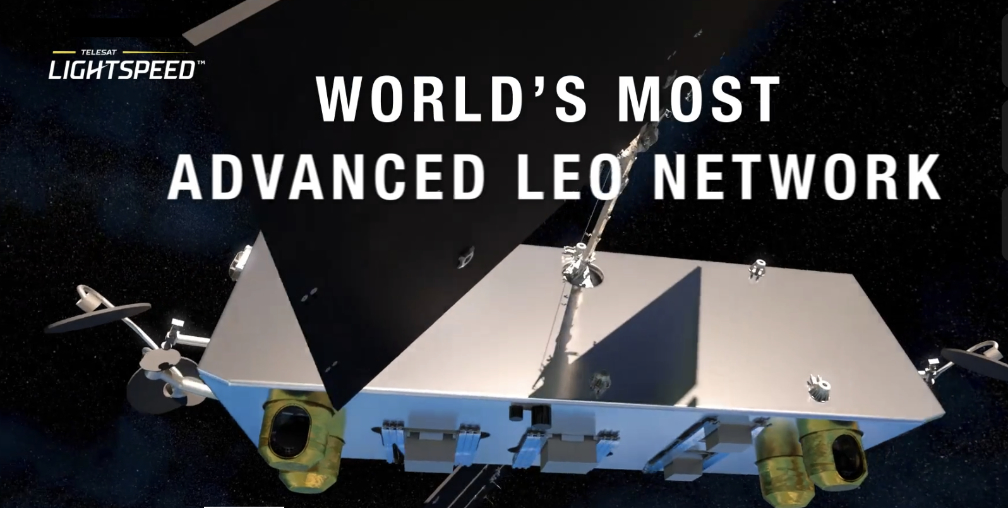
Telesat has an agreement with SatixFy, giving Telesat early access to SatixFy’s second-generation Sx3099 modem chip. Under the agreement, SatixFy and Telesat will demonstrate advanced modem designs for both Landing Stations and User Terminals for Telesat Lightspeed, Telesat’s LEO satellite network. 

The SatixFy Sx3099 modem chip.

The companies will perform a six-month requirements verification program, focused on the development and testing of evaluation boards and prototype modem units. The companies will also conduct integration work and interoperability tests with the Telesat Lightspeed satellite onboard processor. 

SatixFy’s advanced Sx3099 modem chip is capable of processing multiple gigabits per second in both transmit and receive directions. The highly integrated, high-performance chip is well suited for the advanced requirements of the Telesat Lightspeed network and can support high-capacity links and beam hopping with lower power consumption, smaller cell size, and lower price points than competitive offerings. 

“SatixFy is at the forefront of high capacity, high-performance SATCOM chip development, and the Sx3099 modem chip has the features and capabilities to meet the challenging enterprise-grade service delivery requirements of the Telesat Lightspeed network,” said Erwin Hudson, Vice President, LEO at Telesat. “SatixFy shares Telesat’s commitment to redefining satellite-delivered broadband connectivity and we have been impressed with SatixFy’s consistent and focused execution of their technology roadmap.”

“We are proud to make Telesat our first customer for the Sx3099,” said Yoel Gat, the CEO of SatixFy. “The technology fit between the high-performing Sx3099 modem chip and the Telesat Lightspeed ground segment infrastructure is excellent. We are excited to partner with Telesat to redefine broadband connectivity and to support the early deployment of Telesat Lightspeed services.”

Filed Under: News

Redwire Contracted By PlanetiQ For Smallsat Solar Arrays

March 10, 2021 by editorial

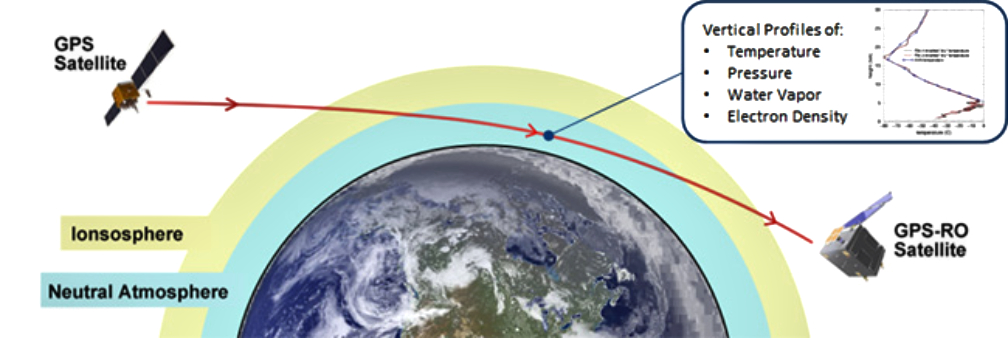
Redwire has been selected by PlanetiQ to supply solar arrays for their HD GPS-RO weather satellites — the contract will include delivery of a 130-watt solar array for PlanetiQ’s spacecraft.

This agreement marks PlanetiQ’s third flight contract for Redwire’s solar arrays. Previously, Redwire’s subsidiary Roccor delivered two sets of solar arrays to PlanetiQ, dating back to 2018.

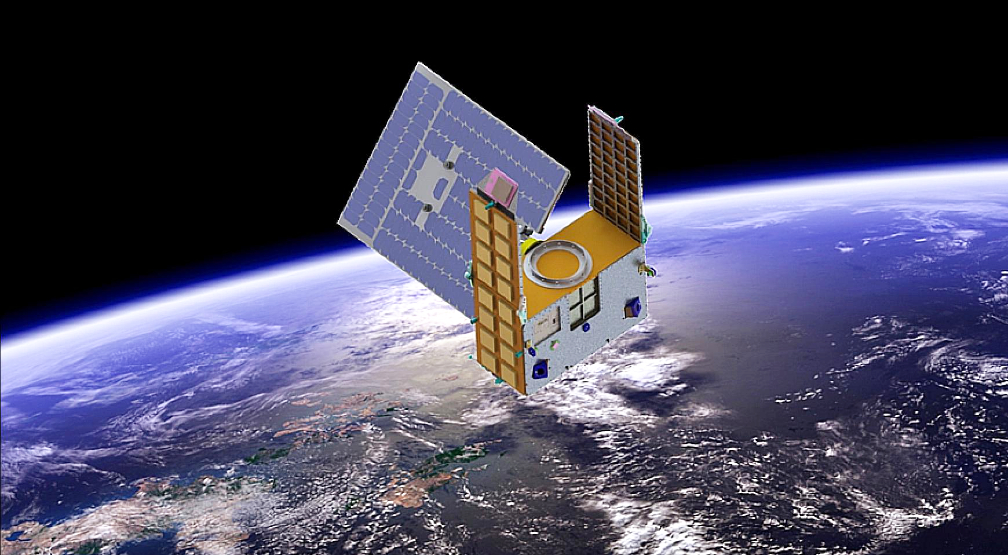
In June of 2021, PlanetiQ will launch their next GNSS Navigation and Occultation Measurement Satellite (GNOMES) on the SpaceX Transporter 2 launch from Cape Canaveral. The satellite is designed to provide radio occultation data to improve weather forecasting and climate research and to help monitor space weather.

Artistic rendition of PlanetiQ’s GNSS Navigation and Occultation Measurement Satellite (GNOMES).

The company is building additional satellites to launch within the next two years as it builds out a full constellation of 20 LEO smallsats that will gather near real-time, high-quality weather, climate and space weather data.

Al Tadros

“We are proud to partner with PlanetiQ as a trusted solar array provider to enable their important mission to improve weather forecasting and climate monitoring,” said Al Tadros, Chief Growth Officer and Executive Vice President of Space Infrastructure for Redwire. “Our cost-effective solar array solutions are enabling greater power generation for small satellites that is driving new innovation.”

Chris McCormick

“We are very pleased to continue to work with Redwire as one of our primary spacecraft component supplier base,” said Chris McCormick, Chairman of PlanetiQ. “Their space-based expertise on deployable structures and solar arrays has been invaluable to our mission.”

Filed Under: News

Next SpaceX Starlink Mission Scheduled To Occur On March 11

March 10, 2021 by editorial

Expect the next SpaceX Starlink launch to occur on Thursday, March 11, for launch of 60 satellites from Space Launch Complex 40 (SLC-40) at Cape Canaveral Space Force Station in Florida. The instantaneous window is at 3:13 a.m. EST, or 8:13 UTC.

The Falcon 9 first stage rocket booster supporting this mission previously supported launch of NASA astronauts Bob Behnken and Doug Hurley to the International Space Station, ANASIS-II, CRS-21, Transporter-1, and a Starlink mission.

Following stage separation, SpaceX will land Falcon 9’s first stage on the “Just Read the Instructions” droneship, which will be located in the Atlantic Ocean. One half of Falcon 9’s fairing previously flew on the ANASIS-II and SXM-7 missions, and the other half previously supported launch of Sentinel-6A.

A live webcast of this mission will start about 15 minutes prior to liftoff at this direct link…

Filed Under: News

SpaceX Requesting FCC License To Approve Mobile Comms Via The Starlink Constellation

March 9, 2021 by editorial

With another Starlink satellite launch expected this evening (March 9, 2021), there is now a move underway by SpaceX in their latest request to the Federal Communications Commission (FCC) to bring all manner of moving vehicles into the communications delivery fold via a blanket license.

Currently, there are 1,122 LEO satellites serving the needs of communities in six countries. With antennas mounted to vehicles — from cars to ships to planes to RVs — these dishes will be quite similar to the current antennas used for home and business connectivity. However, due to their large size, these antennas will not be installed on Musk’s Tesla vehicles.

The Starlink constellation is planning to have as many as 42,000 satellites on-orbit by the middle of 2027. Currently, there some 10,000 users of this SpaceX constellation.

David Goldman, who is the Director of Satellite Policy for SpaceX, explained to the FCC that these Starlink antennas for mobile connectivity would certainly serve the public interest and will enable increased productivity, and such comms are now expected, regardless if the user is stationary or mobile.

Filed Under: News

  • « Go to Previous Page
  • Page 1
  • Interim pages omitted …
  • Page 49
  • Page 50
  • Page 51
  • Page 52
  • Page 53
  • Interim pages omitted …
  • Page 65
  • Go to Next Page »

Primary Sidebar

WEEKLY NEWSLETTER

Archives

  • August 2026
  • July 2026
  • June 2026
  • May 2026
  • April 2026
  • March 2026
  • February 2026
  • January 2026
  • December 2025
  • November 2025
  • October 2025
  • September 2025
  • August 2025
  • July 2025
  • June 2025
  • May 2025
  • April 2025
  • March 2025
  • February 2025
  • January 2025
  • December 2024
  • November 2024
  • October 2024
  • September 2024
  • August 2024
  • July 2024
  • June 2024
  • May 2024
  • April 2024
  • March 2024
  • February 2024
  • January 2024
  • December 2023
  • November 2023
  • October 2023
  • September 2023
  • August 2023
  • July 2023
  • June 2023
  • May 2023
  • April 2023
  • March 2023
  • February 2023
  • January 2023
  • December 2022
  • November 2022
  • October 2022
  • September 2022
  • August 2022
  • July 2022
  • June 2022
  • May 2022
  • April 2022
  • March 2022
  • February 2022
  • January 2022
  • December 2021
  • November 2021
  • October 2021
  • September 2021
  • August 2021
  • July 2021
  • June 2021
  • May 2021
  • April 2021
  • March 2021
  • February 2021
  • January 2021
  • December 2020
  • November 2020
  • October 2020
  • September 2020
  • August 2020
  • July 2020
  • June 2020
  • May 2020
  • April 2020
  • March 2020
  • February 2020
  • January 2020
  • December 2019
  • November 2019
  • October 2019

© 2019–2026 SatNews

Insert/edit link

Enter the destination URL

Or link to existing content

    No search term specified. Showing recent items. Search or use up and down arrow keys to select an item.
      x
      Sign Up Now!

      Enjoy a free weekly newsletter with recent headlines from the global SmallSat industry.

      Invalid email address
      We promise not to spam you. You can unsubscribe at any time.
      Thanks for subscribing! You will now receive weekly SmallSat News updates.
      We love our advertisers.
      And you will too!

      Please disable Ad Blocker to continue... We promise to keep it unobtrusive.
      We promise not to spam you. You can unsubscribe at any time.
      Invalid email address
      Thanks for subscribing!