• Skip to main content
  • Skip to primary sidebar
  • Home
  • News
  • Featured
  • More News ⌄
    • SatNews
    • SatMagazine
    • MilSatMagazine
  • Events ⌄
    • MilSat Symposium
    • SmallSat Symposium
    • Satellite Innovation
  • Contacts
  • SUBSCRIPTION

SmallSat News

You are here: Home / Archives for 2021

Archives for 2021

A SPAC For Spire Global

March 2, 2021 by editorial

Spire Global, Inc. (“Spire” or the “Company”) and SPAC company NavSight Holdings Inc. (“NavSight”) (NYSE: NSH) have entered into a definitive merger agreement for a business combination that would result in Spire becoming a publicly listed company.
Spire collects space-based data using a proprietary constellation of multi-purpose smallsats called LEMUR (Low Earth Multi-Use Receiver). The company’s software analytics generate proprietary data, insights and predictive analytics for its global customers through a subscription model. Spire monetizes this information across a broad and growing number of industries including weather, aviation, maritime, and government, with global coverage and near real-time data that can be easily integrated into customer business operations.

Spire is also pioneering an innovative “space-as-a-service” business model. Leveraging the company’s fully deployed infrastructure and large-scale operation, customers can operate their own payloads on orbit through Spire’s API and can begin receiving data in less than a year and a simple subscription agreement.

The Board of Directors of each of Spire and NavSight have unanimously approved the transaction “Proposed Transaction.” The Proposed Transaction will require the approval of the stockholders of Spire and NavSight, and is subject to other customary closing conditions, including the receipt of certain regulatory approvals. The Proposed Transaction is expected to close in summer of 2021.

Assuming no redemptions by NavSight stockholders, the Proposed Transaction is expected to deliver up to $475 million of gross proceeds, including the contribution of up to $230 million of cash held in NavSight’s trust account. The Proposed Transaction is further supported by a $245 million fully committed PIPE anchored by Tiger Global Management, BlackRock Advisors, Hedosophia, Jaws Estates Capital, and Bloom Tree Partners.

Spire stockholders will retain 100% of their equity holdings in the combined company. Spire’s existing stockholders will hold approximately 67% of the fully diluted shares of common stock immediately following the closing of the business combination, assuming no redemptions by NavSight’s existing public stockholders.

Additional information about the Proposed Transaction, including copies of certain documents related to the Proposed Transaction, including the investor presentation, will be provided in a Current Report on Form 8-K to be filed by NavSight today with the Securities and Exchange Commission (the “SEC”) and available at www.sec.gov. The investor presentation can also be found on Spire’s website at https://www.Spire.com and NavSight’s website at https://www.NavSight.com. In addition, NavSight intends to file a registration statement on Form S-4 with the SEC, which will include a proxy statement/prospectus/information statement (the “Registration Statement”), and will file other documents regarding the Proposed Transaction with the SEC.

Peter Platzer

“Spire was founded nearly a decade ago to help lead, inspire, and create the business of space-based data. Today, our proprietary data and solutions help customers solve some of earth’s greatest challenges, including Net Zero and Climate Change adaptation. It has been immensely inspiring to see customers from all over the world turn to Spire’s solutions to help them make decisions about their business with confidence and speed and we are excited about the continued growth ahead. This transaction funds these growth plans and allows us to pursue, on a more aggressive timetable, this massive and growing long-term opportunity ahead of us,” said Peter Platzer, Founder and Chief Executive Officer of Spire, “I am thrilled to partner with Bob and Jack from NavSight.”

Bob Coleman

“Peter and the outstanding Spire leadership team have deep domain expertise. They have built a company that delivers exceptional value to their global commercial and government customers. Spire is leading the way with its modern SaaS-based approach to meet the significant, growing demand for space-based data,” said Bob Coleman, Chairman and Chief Executive Officer of NavSight. “We look forward to working together to build long-term value for Spire stockholders.”

Filed Under: News

ASTRA Selected By NASA To Provide TROPICS Mission Launch Services

March 2, 2021 by editorial

NASA has selected Astra Space Inc. to provide a launch service for the agency’s Time-Resolved Observations of Precipitation Structure and Storm Intensity with a Constellation of SmallSats (TROPICS) mission.

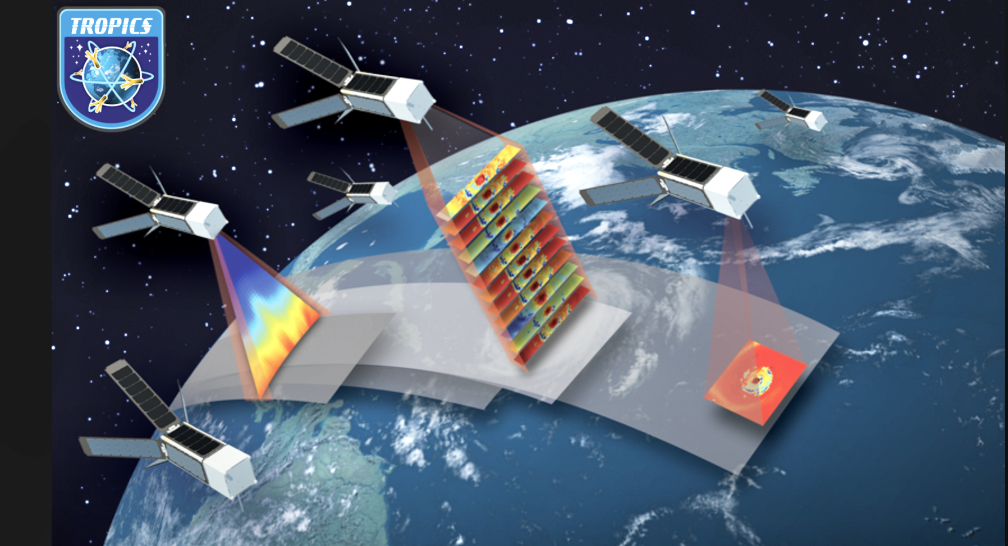
The TROPICS mission consists of a constellation of six cubesats and will increase the scientific community’s understanding of storm processes.

The launch service contract for the TROPICS mission is a firm fixed-price contract valued at $7.95 million. NASA’s Launch Services Program at the agency’s Kennedy Space Center in Florida will manage the launch service.

The cubesats, each the size of a shoebox, will provide rapid-refresh microwave measurements that can be used to determine temperature, pressure, and humidity inside hurricanes as they form and evolve. The TROPICS mission’s high-revisit imaging and sounding observations are enabled by microwave technology developed at the Massachusetts Institute of Technology’s Lincoln Laboratory. These observations will profoundly improve scientists’ understanding of processes driving high-impact storms.

This TROPICS mission overview igraphic is courtesy of MIT’s Lincoln Laboratory.

Astra Space will launch these smallsats on the company’s Rocket 3 from Kwajalein Atoll in the Marshall Islands with three separate launches over a 120-day period. The TROPICS mission is targeted for launch between January 8 and July 31, 2022, under a Federal Aviation Administration (FAA) launch license.

ASTRA’s Alameda, California, development and launch site with test rocket firing.

Filed Under: News

Space-SI Releases Their First Multi-Spectral Image From The SFL-Built NEMO-HD Smallsat

March 2, 2021 by editorial

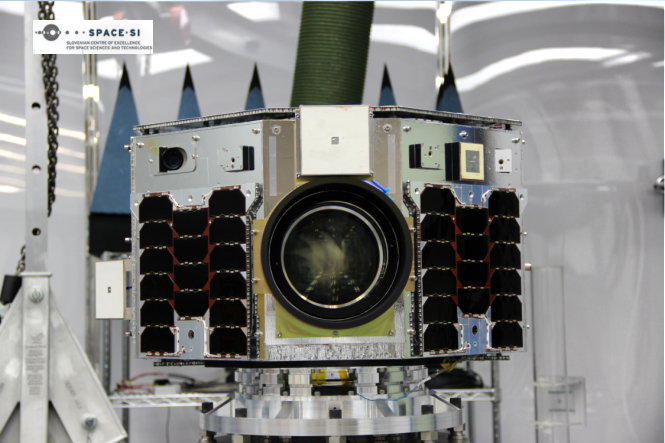
Space-SI’s NEMO-HD EO smallsat.

Space-SI, the Slovenian Centre of Excellence for Space Sciences and Technologies, recently released the first multi-spectral image captured by the company’s NEMO-HD Earth Observation (EO) smallsat, just 16 days after launch. Built by Space Flight Laboratory (SFL) in collaboration with SPACE-SI, NEMO-HD is Slovenia’s first smallsat carrying a multi-spectral high-definition Earth observation instrument.

The Slovenia satellite was built on SFL’s NAUTILUS smallsat bus, which is an augmentation of SFL’s NEMO bus that has been used for numerous, successful, microspace missions. With a mass of only 65 kg, and dimensions of 60x60x30 centimeters, NEMO-HD captures multi-pectral (RGB/NIR) images that can be sharpened by a panchromatic channel to 2.8-meter resolution.

Multispectral image captured over Slovenia during commissioning phase of NEMO-HD which was launched September 2, 2020.

The satellite also collects high-definition video at 25 frames per second. The main instrument can be operated in real-time imaging mode, allowing an operator at mission control on the ground to view the video feed as it is captured. If an event or feature of interest is spotted, a command can be sent to the satellite to collect a still image of the area.

Imagery and video data acquired by NEMO-HD will be used to monitor agriculture, forestry, urban development, and marine transport, according to Space-SI. NEMO-HD acquired its first historic multi-spectral image over Eastern Slovenia on September 18, 2020.

“SFL congratulates Slovenia on this auspicious first step toward building a robust national space program,” said SFL Director, Dr. Robert E. Zee. “NEMO-HD represents a breakthrough in next-generation, compact microsatellite missions, and pushes the envelope of what can be accomplished by a small microsatellite in Earth Observation. SFL’s ability to develop compact spacecraft with space-proven attitude control and precise pointing technologies at relatively low cost was a major factor in delivering a successful NEMO-HD satellite. These are critical technical requirements for successful collection of high-quality Earth observation data with microspace platforms.”

“NEMO-HD is enabling a new Earth observation concept by combining multi-spectral and video imaging from space. This can be controlled interactively in real time if needed when NEMO-HD is flying in the range of a ground station,” said Prof. Tomaž Rodič, CEO of SPACE- SI. “With NEMO-HD successfully in orbit, we have achieved a very innovative and cost-effective remote sensing system which combines the agile microsatellite with our transportable ground station system, STREAM, and the advanced EO data processing chain, STORM.”

Filed Under: News

OQ Technology To Manage + Operate The MACSAT Mission For ESA

March 2, 2021 by editorial

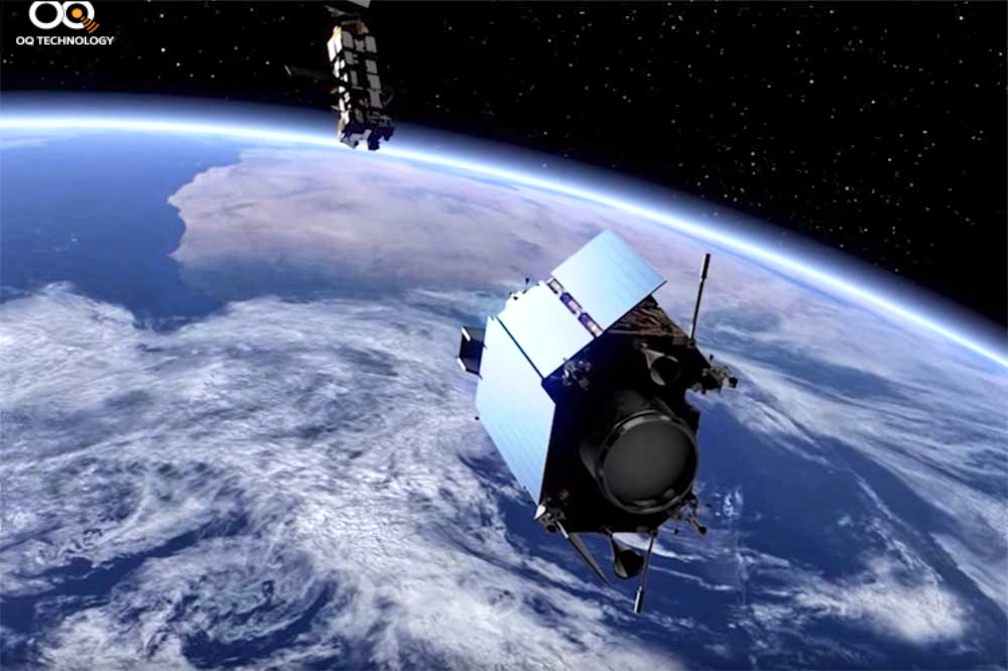
OQ Technology recently signed a 2 million euros contract with the European Space Agency as part of the Luxembourg National Space program (“LuxIMPULSE”) for the on-orbit pathfinder mission (MACSAT). The contract aims to foster Luxembourg and European space partnerships and involves the development of a 6U smallsat, an advanced flight payload and user terminals and their software stack.

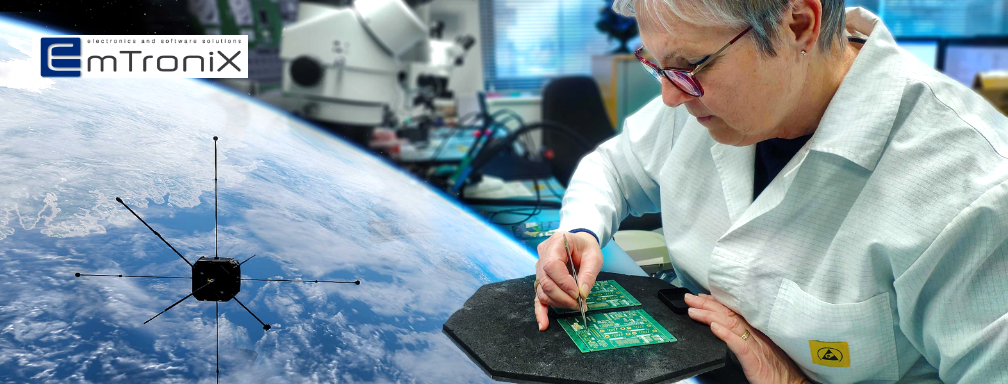
OQ Technology will manage and operate the mission, procurement of the satellite, and also continue development and testing in lab and on-orbit of satellite-based, narrowband, IoT software and algorithms (the wireless technology proposed for 5G machine communication), while EmTroniX (Luxembourg based company) will be responsible for the payload hardware and user hardware. OQ Technology is the prime contractor and is currently in talks with candidate satellite manufacturers that would be announced soon.

OQ Technology will also install a ground station in Luxembourg to run its spacecraft flight operations from its control center in Leudelange (LU). The mission is planned for launch in 2021/2022 and will be a flagship for demonstrating advanced 5G IoT services in strategic satellite frequencies and for different end-customers.

OQ Technology has been on the quest of providing global IoT and machine communication through satellites. What makes OQ’s offering different from others is that their technology follows the global 3GPP standard of cellular communication with a large ecosystem which allows to reduce the cost of ownership for end users as they can use the same cellular hardware with satellites instead of buying a proprietary expensive satellite modem.

The technology is also highly secure and scalable making millions of devices capable of connecting to the satellite network. OQ Technology has developed under this program (contrast to buying black box foreign IP) essential software layers of the cellular base station payload on the satellite giving them control over the performance of the system to ensure high quality of service for end-users.

“The MACSAT project represents state-of-the art development and first in the world agile nanosatellite mission dedicated to 5G technology in low earth orbit. Thanks to the technical management of the European Space Agency and business-oriented support of Luxembourg Space Agency we have advanced in a short time Narrowband IoT technology on all levels (space and ground) to be a new and attractive solution in the world of satellite communication, we are very grateful to the teams involved and happy to kick off 2021 with this collaboration,” said Omar Qaise, Founder and CEO, OQ Technology.

Filed Under: News

Rocket Lab SPAC’s Up To Become A Publicly Traded Company + Unveils Their New Launch Vehicle, Neutron

March 1, 2021 by editorial

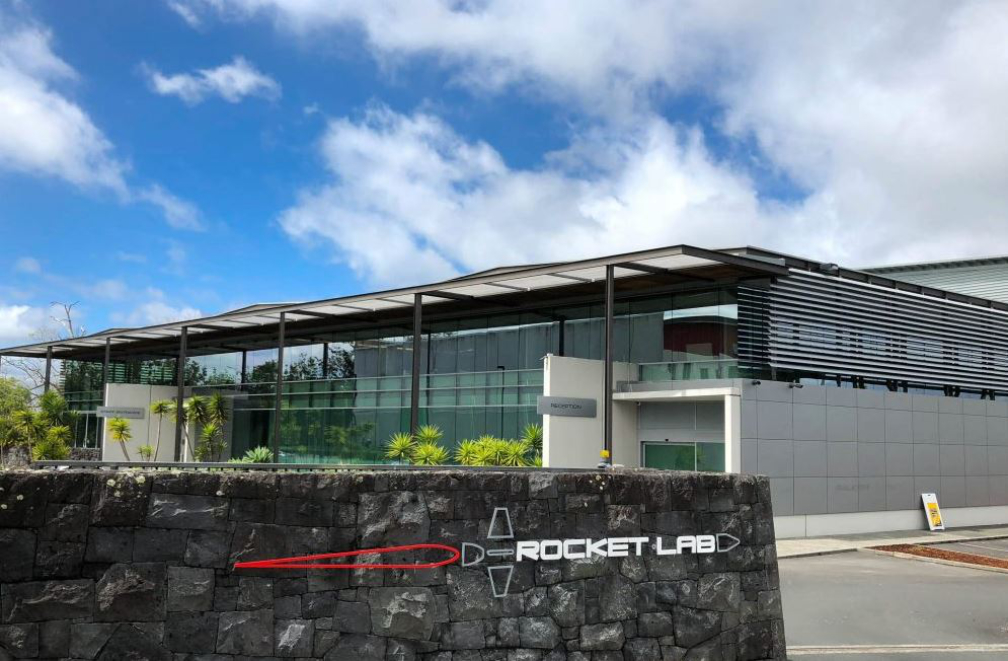
If you happened to attend the recent SmallSat Symposium 2021, you know that one of the “hot’ topics for keynotes, panels and discussions targeted the information regarding the Special Purpose Acquisition Companies (SPAC) and the associated funding possibilities for satellite and space companies. Now, Rocket Lab USA, Inc. and the Vector Acquisition Corporation (Nasdaq: VACQ) (“Vector”) SPAC backed by technology investor Vector Capital have entered into a definitive merger agreement that will result in Rocket Lab becoming a publicly traded company.

The transaction is estimated to be completed in Q2 2021 and, at that time, Vector will change its name to Rocket Lab USA, Inc., and the combined company will trade under the Nasdaq ticker symbol RKLB.

Record Rocket Lab is transforming the way space is used and accessed by delivering end-to-end solutions across the launch and space systems markets. Since the Company’s first orbital launch in 2018, the firm’s Electron launch vehicle has become the second-most frequently launched U.S. rocket each year. To date, Rocket Lab has delivered 97 satellites to orbit for more than 20 public and private-sector organizations and technology-leading constellation operators.

Rocket Lab’s customer base is evenly split across government and commercial organizations that include NASA, the NRO and DARPA, as well as commercial satellite leaders. As the first company to deliver regular and reliable dedicated launch services for smallsats, Rocket Lab has also played a leading role in catalyzing the growth of the commercial small satellite industry.

The satellites launched by Rocket Lab enable operations in national security, Earth Observation (EO), space debris mitigation, weather and climate monitoring, communications and scientific research. Rocket Lab has an established space systems business that develops satellite and spacecraft solutions for a range of commercial and government missions, from LEO constellations to high-complexity,deep space and interplanetary missions.

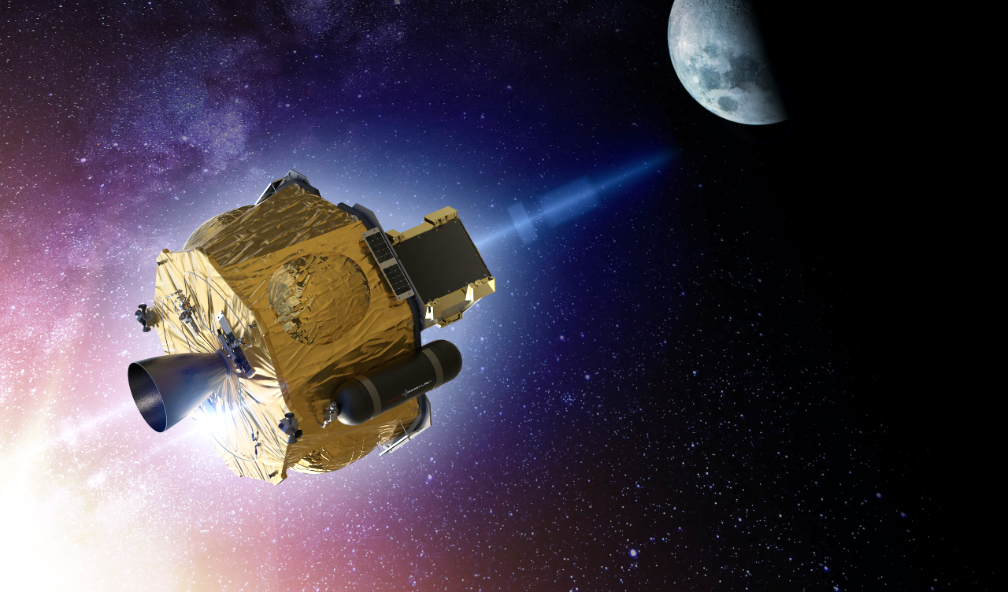
Artistic rendition of Rocket Lab’s Photon spacecraft.

Rocket Lab’s Photon spacecraft family delivers a satellite-as-a-service solution that eliminates the typical high cost, time and complexity customers face when building their own satellites. With Rocket Lab, customers can buy a launch, satellite, ground services and on-orbit management as a turn-key package, resulting in a disruptive reduction in cost and time to orbit. Rocket Lab has an operational Photon in orbit, with additional missions to the Moon, Mars and Venus planned.

Photon is a family of spacecraft designed to meet unique mission requirements and is available in LEO configurations through to interplanetary exploration models.

In 2021, Rocket Lab will employ Electron and Photon to launch a satellite to lunar orbit for NASA to serve as a precursor for Gateway, a Moon-orbiting outpost that is part of NASA’s Artemis program to return humans to the lunar surface.

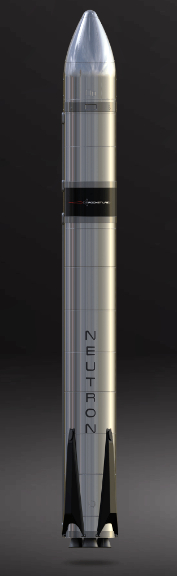
Rocket Lab also unveiled their medium-lift Neutron rocket — an advanced new generation, reusable, launch vehicle with an 8-ton payload lift capacity that is tailored for mega constellations, deep space missions and human spaceflight. Neutron will be able to lift more than 90% of all satellites forecast to launch through 2029 and introduces highly disruptive lower costs to the high-growth constellation market by leveraging Electron’s heritage, launch sites and architecture.

Rocket Lab’s in-house launch and space systems capabilities provide significant competitive advantages in entering the high-growth space applications market that comprises approximately $320 billion of the current $350+ billion space industry TAM. Having reached these milestones — and considering the unprecedented commercial investment and government expenditures driving rapid growth in the space economy — Rocket Lab and the firm’s Board of Directors believe that this proposed transaction is the appropriate next step to position the Company for continued success.

On March 1, 2021, Rocket Lab entered into a definitive merger agreement with Vector. The transaction reflects an implied pro forma enterprise value of $4.1 billionfor Rocket Lab, representing 5.4 x 2025 projected revenue of approximately $750million.The transaction is expected to result in pro forma cash on the balance sheet of approximately $750million through the contribution of existing cash estimated to be on Rocket Lab’s balance sheet prior to close, up to $320 million of cash held in Vector Acquisition Corporation’s trust account(assuming no redemptions by Vector’s public shareholders), and a concurrent, approximately $470 million PIPE of common stock, priced at $10.00 per share and led by Vector Capital, BlackRock and Neuberger Berman, among other top-tier institutional investors.

The transaction, which has been unanimously approved by the Boards of Directors of Rocket Lab and Vector, is subject to approval by Vector’s shareholders and other customary closing conditions. Following the closing of the transaction, the Company will continue to be led by Founder and CEO Peter Beck. Alex Slusky, CEO of Vector and CIO and Founder of Vector Capital, will join Rocket Lab’s Board of Directors alongside Sven Strohband of Khosla Ventures, David Cowan of Bessemer Venture Partners, Matt Ocko of DCVC and Mike Griffin, independent director.

Peter Beck

Peter Beck, CEO and Founder of Rocket Lab, said, “In the history of spaceflight, Rocket Lab is one of only two private companies that has delivered regular and reliable access to orbit. Not only are we the leader in small launch, we are the second most frequently launched rocket in the U.S. annually and the fourth most frequent launcher globally. Space has defined some of humanity’s greatest achievements,and it continues to shape our future.The satellites we build and launch are keeping countries connected and borders protected, monitoring weather and managing waste, providing insights on climate change, and helping us manage resources for future generations. Since day one, our talented Rocket Lab team has demonstrated stellar execution and a keen ability to seize growth opportunities. Now, we are thrilled to build upon this momentum and welcome Alex Slusky, a seasoned technology investor and public company director to our Board as we come together with Vector to become a publicly traded, pure-play, end-to-end space company. This milestone accelerates Rocket Lab’s ability to unlock the full potential of space through our launch and spacecraft platforms and catalyzes our ambition to create a new multi-billion-dollar business vertical in space applications.”

Alex Slusky

Alex Slusky, CEO of Vector and Founder and Chief Investment Officer of Vector Capital, said, “Rocket Lab is a once-in-a-generation company that is democratizing access to space through its constant innovation, leading technology and proven execution. Peter is a true visionary who has built a world-class company with discipline and grit. Rocket Lab is ideally positioned to continue to capture market share in the rapidly expanding space launch, systems and applications markets. Vector Capital has a nearly 25-year track record of identifying and building high-growth technology businesses and we are thrilled to partner with Peter and Rocket Lab’s talented team to support the Company’s next generation platforms and capabilities.Vector is thrilled to partner with Rocket Lab as it seeks to capitalize on unprecedented commercial and government spending in the burgeoning space economy.” Key

Additional information about the proposed transaction, including a copy of the merger agreement and investor presentation, will be available in a Current Report on Form 8-K to be filed by Vector with the Securities and Exchange Commission and at www.sec.gov.The investor presentation can also be found on Rocket Lab’s investor website at www.rocketlabusa.com/investors.

Filed Under: News

ST Engineering Geo-Insights Teams With BlackSky To Expand Imaging Services To Southeast Asia

March 1, 2021 by editorial

ST Engineering’s Earth Observation and geospatial analysis business, ST Engineering Geo-Insights (“Geo-Insights”), has partnered with BlackSky to provide customers in Southeast Asia an expanded satellite imaging and insights portfolio that now includes BlackSky products and services.

In addition to the appointment of ST Engineering Geo-Insights as an authorized reseller of BlackSky’s suite of satellite imaging and data analytics services in Southeast Asia, the partnership also allows Geo-Insights and the firm’s customers to leverage BlackSky’s imagery data to develop value-added products, which will be included in Geo-Insights’ offerings.

BlackSky currently offers geospatial solutions to customers, including optical data and analytics via the company’s Spectra AI platform. Established in Asia, Geo-Insights has the capability to provide geospatial solutions that integrate optical and synthetic aperture radar (SAR) data. Both parties expect to further evaluate options to expand their offerings with a new suite of jointly developed optical/SAR geospatial intelligence products powered by the latest advancements in artificial intelligence and machine learning algorithms.

“We believe demand for satellite imagery and analytics will grow in the future due to increasing demands for location-based technologies and growing interest in the remote monitoring of business operations and critical assets. The addition of BlackSky’s advanced imagery and analytics products to our portfolio will place us in a stronger position to meet the varied business needs of our government and commercial customers in this region. More importantly, we see this as a first step towards a longer-term relationship where both parties can further leverage each other’s unique strengths and networks to develop novel, differentiated products and services to meet new user demands and expand into new markets,” said Goh Ing Nam, General Manager of ST Engineering Geo-Insights.

“We are fortunate to have a recognized leader like ST Engineering Geo-Insights join the BlackSky reseller network. This partnership is expected to accelerate our go to market in the Southeast Asian region, building off the strong base of Geo-Insights’ recognized expertise and customer relationships,” said Brian E. O’Toole, CEO of BlackSky. “We’re also excited to explore opportunities to further integrate SAR and optical products to advance real-time geospatial intelligence solutions.”

Filed Under: News

SpaceX Delays Starlink Launch

March 1, 2021 by editorial

SpaceX had scheduled another 60 Starlink satellite launch for early in the a.m. on the first of March; however, that push has now been delayed until on later on that date from Launch Complex 39A (LC-39A) at Kennedy Space Center in Florida. As of this writing, no explanation for the delay had been offered by the company — expect this second attempt at 8:15 p.m., ET.

Filed Under: News

ISRO’s PSLV-C51 Launches Amazonia-1 + 18 Co-Passenger Smallsats

March 1, 2021 by editorial

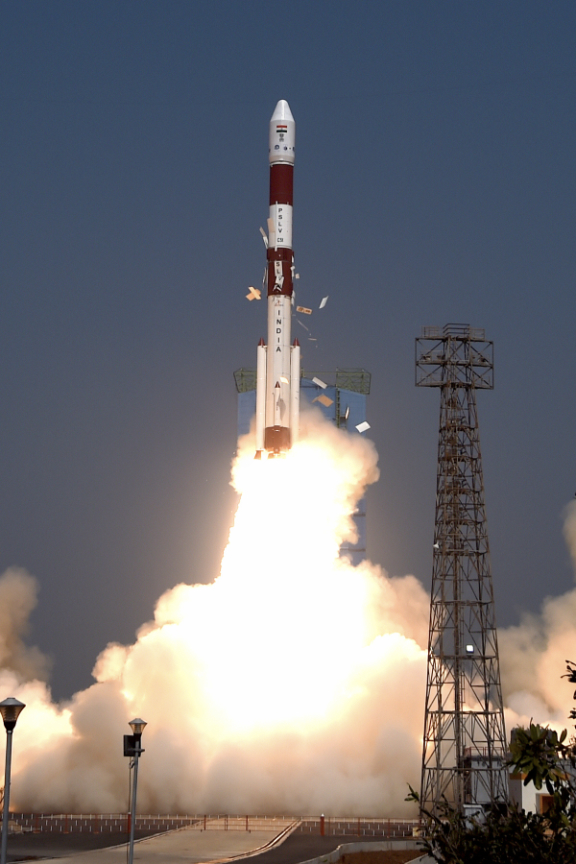
The ISRO PSLV-C51 mission launch. Image is courtesy of ISRO.

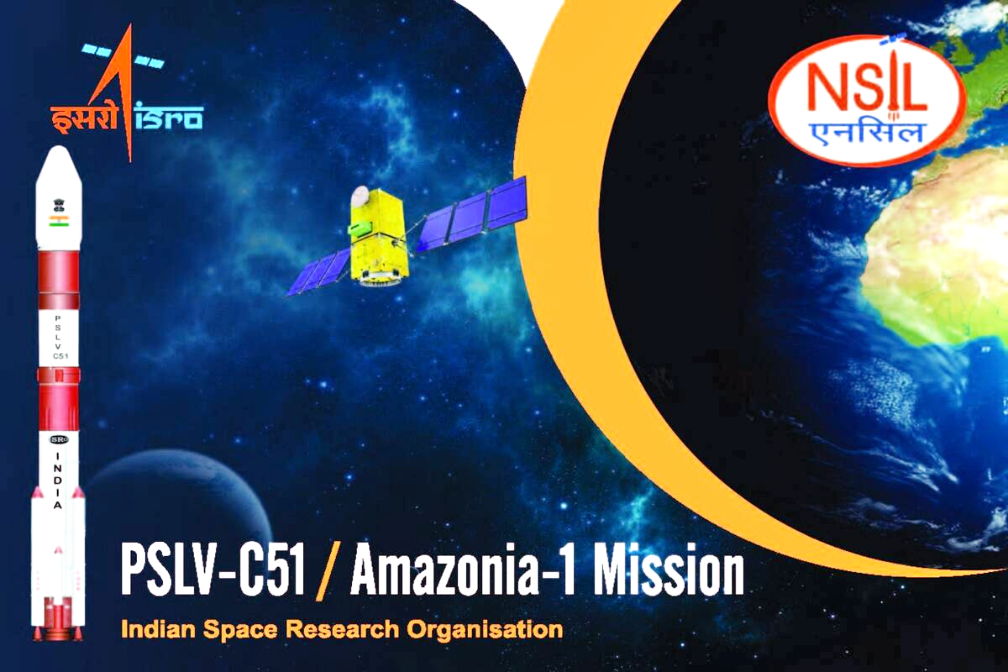
PSLV-C51, the first dedicated launch for NSIL, successfully launched Amazonia-1 and 18 co-passenger satellites from Sriharikota, India.

India’s Polar Satellite Launch Vehicle PSLV-C51 successfully launched Amazonia-1 along with 18 co-passenger satellite son February 28, 2021, from Satish Dhawan Space Centre SHAR.

Photo of the Satash Dhawan Space Center, First Launch Pad, with PSLV-C51 awaiting launch. Photo is courtesy of ISRO.

PSLV-C51 lifted off from the First Launch Pad of SDSC SHAR at 10:24 hours (IST) as planned. After a flight of about 17 minutes 23 seconds, the vehicle injected the Amazonia-1 into its intended orbit and in the succeeding 1 hour 38 minutes, all of the 18 co-passenger satellites successfully separated from the PSLV in a predetermined sequence.

Amazonia-1 is the optical Earth Observation (EO) satellite of National Institute for Space Research (INPE). This satellite would further strengthen the existing structure by providing remote sensing data to users for monitoring deforestation in the Amazon region and analysis of diversified agriculture across the Brazilian territory.

PSLV-C51/Amazonia-1 is the first dedicated commercial mission of NewSpace India Limited (NSIL), a Government of India company under Department of Space.

The 18 co-passenger satellites onboard PSLV-C51 included four from IN-SPACe and 14 from NSIL. Out of the four satellites from IN-SPACe, three were UNITYsats designed and built as a joint development by Jeppiaar Institute of Technology, Sriperumbudur (JITsat), G.H.Raisoni College of Engineering, Nagpur (GHRCEsat) and Sri Shakti Institute of Engineering and Technology, Coimbatore (Sri Shakthi Sat) and one was Satish Dhawan Sat (SDSAT) from Space Kidz India. The 14 satellites from NSIL carried were the commercial satellites from India (1) and USA (13).

PSLV-C51 is the 53rd flight of PSLV and 3rd flight of PSLV in ‘DL‘ configuration (with two, strap-on motors). This was the 78th launch vehicle mission from SDSC SHAR, Sriharikota.

With this launch, the total number of customer satellites from foreign countries placed in orbit by PSLV is 342 from 34 countries.

Filed Under: News

Coming Down The Virgin Orbit Pipeline

March 1, 2021 by editorial

Virgin Orbit’s Cosmic Girl and a LauncherOne flight. Photo is courtesy of the company.

As Virgin Orbit‘s first customer payloads take their victory laps around the Earth, the company is already looking ahead to the upcoming missions set to fly on LauncherOne later this year.

In the wake of the successful Launch Demo 2 mission in January, Virgin Orbit has since announced the addition of two exciting new customers to the launch manifest: SatRevolution, a satellite company based in Poland, and the Royal Netherlands Air Force (RNLAF).

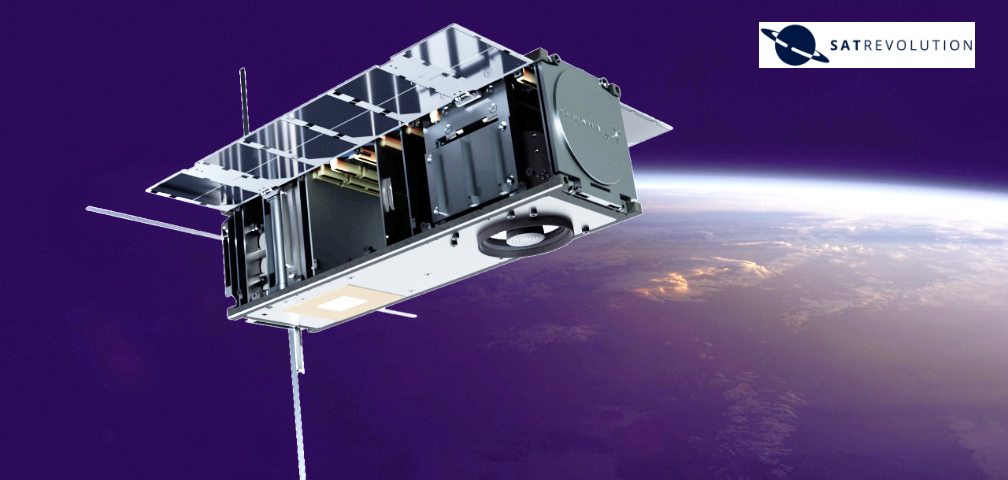
Artistic rendition of a SatRevolution STORK smallsat on-orbit.

SatRevolution has tasked the company with launching their first pair of smallsats — STORK-4 and STORK-5 (nicknamed MARTA) — of their 14-satellite STORK constellation. Once deployed, STORK-4 and MARTA will collect multi-spectral medium-resolution imagery and data for agricultural and energy customers in the US, in Poland and abroad.

SatRevolution’s broader ambition is to become the largest worldwide operator of Earth Observation(EO) satellites, with a plan in motion to launch more than 1,000 satellites to LEO by 2026 to provide round-the-clock data collection.

Filed Under: News

Four Axelspace GRUS To Launch At Baikonur In March

March 1, 2021 by editorial

The launch date of the four Axelspace satellites (GRUS-1B, 1C, 1D, 1E) is set for March 20, 2021, from Baikonur Cosmodrome in Kazakhstan.

These smallsats will become part of the AxelGlobe Earth Observation System and this will be the second launch for the company, after the successful deployment of GRUS-1A in December of 2018.

Promotional photo of a launch pad at Baikonur Cosmodrome in Kazakhstan.

Launch Campaign Members in Axelspace hoodies have been working on final preparation for the launch.

Filed Under: News

  • « Go to Previous Page
  • Page 1
  • Interim pages omitted …
  • Page 51
  • Page 52
  • Page 53
  • Page 54
  • Page 55
  • Interim pages omitted …
  • Page 65
  • Go to Next Page »

Primary Sidebar

WEEKLY NEWSLETTER

Archives

  • August 2026
  • July 2026
  • June 2026
  • May 2026
  • April 2026
  • March 2026
  • February 2026
  • January 2026
  • December 2025
  • November 2025
  • October 2025
  • September 2025
  • August 2025
  • July 2025
  • June 2025
  • May 2025
  • April 2025
  • March 2025
  • February 2025
  • January 2025
  • December 2024
  • November 2024
  • October 2024
  • September 2024
  • August 2024
  • July 2024
  • June 2024
  • May 2024
  • April 2024
  • March 2024
  • February 2024
  • January 2024
  • December 2023
  • November 2023
  • October 2023
  • September 2023
  • August 2023
  • July 2023
  • June 2023
  • May 2023
  • April 2023
  • March 2023
  • February 2023
  • January 2023
  • December 2022
  • November 2022
  • October 2022
  • September 2022
  • August 2022
  • July 2022
  • June 2022
  • May 2022
  • April 2022
  • March 2022
  • February 2022
  • January 2022
  • December 2021
  • November 2021
  • October 2021
  • September 2021
  • August 2021
  • July 2021
  • June 2021
  • May 2021
  • April 2021
  • March 2021
  • February 2021
  • January 2021
  • December 2020
  • November 2020
  • October 2020
  • September 2020
  • August 2020
  • July 2020
  • June 2020
  • May 2020
  • April 2020
  • March 2020
  • February 2020
  • January 2020
  • December 2019
  • November 2019
  • October 2019

© 2019–2026 SatNews

Insert/edit link

Enter the destination URL

Or link to existing content

    No search term specified. Showing recent items. Search or use up and down arrow keys to select an item.
      x
      Sign Up Now!

      Enjoy a free weekly newsletter with recent headlines from the global SmallSat industry.

      Invalid email address
      We promise not to spam you. You can unsubscribe at any time.
      Thanks for subscribing! You will now receive weekly SmallSat News updates.
      We love our advertisers.
      And you will too!

      Please disable Ad Blocker to continue... We promise to keep it unobtrusive.
      We promise not to spam you. You can unsubscribe at any time.
      Invalid email address
      Thanks for subscribing!