• Skip to main content
  • Skip to primary sidebar
  • Home
  • News
  • Featured
  • More News ⌄
    • SatNews
    • SatMagazine
    • MilSatMagazine
  • Events ⌄
    • MilSat Symposium
    • SmallSat Symposium
    • Satellite Innovation
  • Contacts
  • SUBSCRIPTION

SmallSat News

You are here: Home / Archives for 2022

Archives for 2022

Developed to—among other goals—track illegal maritime activities, Horizon Technologies’ Amber™ UK smallsat launch is upcoming

October 13, 2022 by editorial

Horizon Technologies, a British maritime intelligence company that developed innovative detection technology that equips governments to fight illegal maritime activity, is set to make history as it prepares for a momentous UK launch from Spaceport Cornwall.
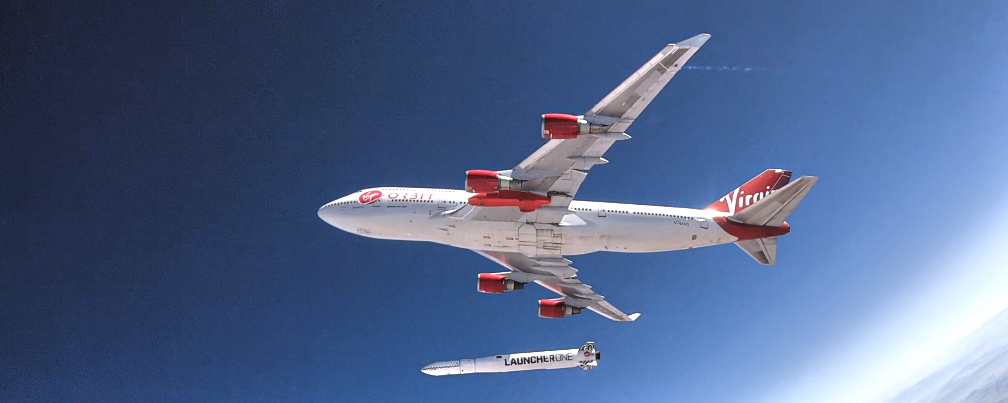
Horizon Technologies’ first Amber™ cubesat will be launched from Virgin Orbit’s 747 named Cosmic Girl, sent into space and placed in orbit as part of the ‘Start Me Up‘ Mission in the next few weeks.

Perhaps paying closest attention will be a small team of engineers watching from a workshop in Reading where a wild idea was birthed to fight piracy on the high seas, not by military might, but by the simple process of tracking their phones.

Takeoff of Virgin Orbit’s Cosmic Girl 747.

Amber’s patented, technology is the brainchild of Horizon Technologies CEO, John Beckner, who discovered the demand for satphone detection while visiting South Africa during the Somali pirate crisis where criminals were communicating via satellite telephones.

With clandestine maritime trade more relevant than ever, as Russian tankers seek to illegally trade and traffic fuel to support its war effort in Ukraine, the satellite will be used to capture sanctions-busters red-handed, bolstering the international effort to combat Russian aggression at a pivotal time.

Upon his return to the UK, Beckner formed a team of visionary experts to put together and manufacture a system which could be installed on aircraft to locate Sat Phones at sea. Beckner’s team integrated off-the-shelf, electronic components, and named this system, “FlyingFish.”
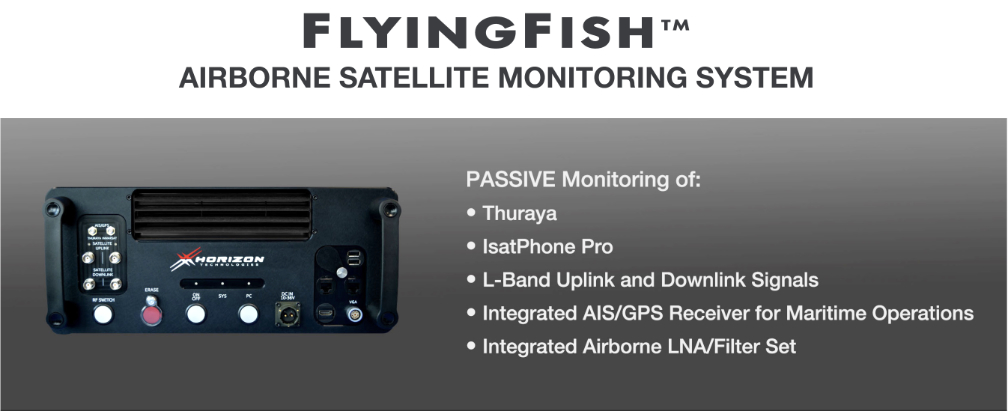
While Horizon Technologies started out as Beckner’s consulting company, it quickly grew into a profitable UK tech startup. FlyingFish™ production and support has since moved out of the garage and these systems are flying on numerous government aircraft worldwide. It is a key tool for many governments and agencies as part of their ISR (Intelligence, Surveillance, and Reconnaissance) capabilities.

In 2019, Beckner envisioned expanding FlyingFish™ capability to a global real-time platform, only possible from outer space. Once more, he challenged his team to come up with a solution. The idea was to develop and launch a constellation of small, shoebox sized cubesats to provide users with worldwide 24/7 capability in combating illegal activity at sea.

Buoyed by an initial grant by Innovate UK, the first of these satellites, named Amber-1, was developed in a partnership between Horizon Technologies and the Satellite Applications Catapult (SAC), and forms part of SAC’s In-Orbit Demonstration program (IOD). The satellites themselves are manufactured by AAC Clyde Space in Glasgow, Scotland.

Unlike Horizon Technologies’ hardware products, Amber™ is a data service. Once on-orbit, the tiny Amber™ cubesats will provide governments and companies with unique worldwide data ranging from radar “fingerprints” to satellite phones’ GPS locations to help combat illegal fishing, smuggling, trafficking, piracy, and terrorism. The initial data from Amber™ will be provided to the UK Government’s Joint Maritime Security Centre (JMSC).

Amber™ has a myriad of commercial applications as well. Since the smallsat detects data transmissions, it will have the capability of adding a key capability to the Industrial Internet of Things (IIoT). Just as it provides an important tool to verify ships’ locations, its receivers can also track vehicles, trains and aircraft using satellite data services. With today’s worldwide supply chain issues, the need to track all manner of transportation has never been greater.

“The first Amber™ mission is a milestone,” said Beckner.” “It demonstrates how public/private partnerships with SMEs, allow ideas and innovation to be turned into real products and services. Innovate UK and organizations like the Satellite Applications Catapult, give small companies the chance to rapidly deploy innovative technologies; and in our case, all the way to space!”
Filed Under: News

French institutions award Exotrail in-orbit logistics missions worth several million euros

October 12, 2022 by editorial

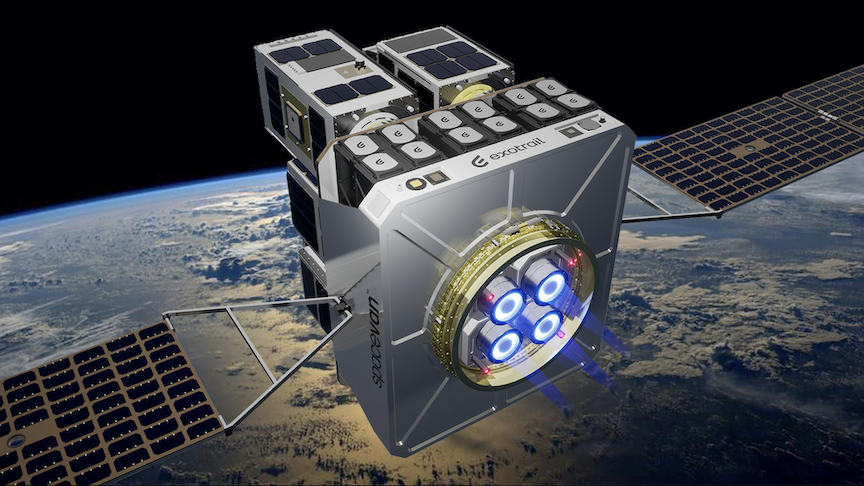
Exotrail’s in-orbit transport service spacedrop™, has been selected via a competitive tender process to perform the first orbital logistics missions ordered by French institutions.

In a contract worth several million euros, Exotrail is the in-orbit logistics operator the French institutions have selected to ensure a capacity for satellites transfer into low Earth orbit (LEO).

In 2021, the French government announced a national investment and stimulus package (France 2030), which included 1 billion euros to support emerging French space companies. As part of this package, Exotrail and the French government Space Agency (CNES) will ink a two-mission contract.

The first mission, scheduled for 2024, will see Exotrail’s spacevan™ vehicle demonstrate its ability to change satellite altitude and plan in combined maneuvers — a game changer for small satellite constellation deployment. In a second mission scheduled for 2025, the company will transport a microsatellite from the launcher’s delivery point to its final orbit.

This landmark contract is another meaningful step towards establishing Exotrail as a worldwide space logistics leader and creates significant opportunities for commercial and institutional space transportation companies to leverage the remaining capacity of these missions.

Exotrail’s spacedrop™ service gives satellite operators the flexibility they need to get their satellites to their operational orbits. Exotrail offers an integrated service by procuring access to space, integrating the platform with customers satellites onboard and performing required operations in orbit. The spacedrop™ service will be inaugurated in October 2023 and the missions performed in the context of France 2030 will benefit from an upgraded version of the vehicle; notably an improved propulsion system and a platform offering a greater payload capacity.

This contract emphasizes the benefits of a holistic vision of space mobility. Exotrail’s spacedrop™ vehicle will be powered by Exotrail’s space proven high-thrust, flexible propulsion systems spaceware™ electric thrusters and orbital operations will be completed using its proprietary software solution, spacetower™. Exotrail’s expertise in these two critical components gives its spacedrop™ service a clear edge on its competitors.

Jean-Luc Maria, Exotrail’s CEO stated, “We are honored to have been selected as part of the ambitious France 2030 plan, aimed at building next space leaders. This contract rewards Exotrail’s hardworking teams and the space logistics vision the company has pursued since its very foundation. It’s a crystal-clear message to our customers: spacedrop™ is the go-to service for operators looking for a high-capacity, flexible and competitive transfer solution in low, medium, geostationary orbits, and farther.”

Filed Under: News

Inaugural United Launch Alliance Vulcan test launch projected to occur in early 2023

October 12, 2022 by editorial

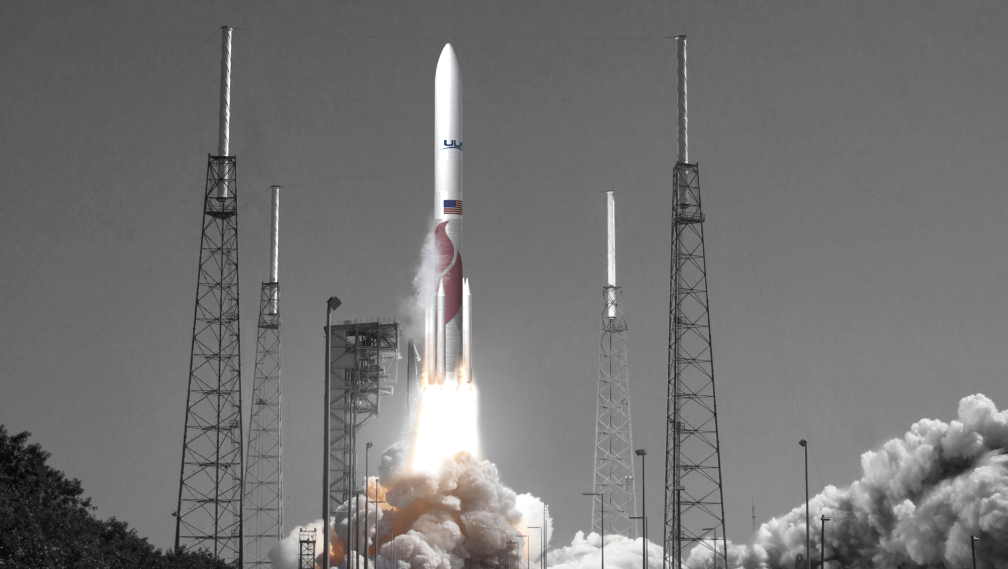
Vulcan Centaur. Image is courtesy of ULA.

United Launch Alliance (ULA) is nearing completion of the development of the next-generation Vulcan Centaur launch vehicle and sets path for its first launch early next year.

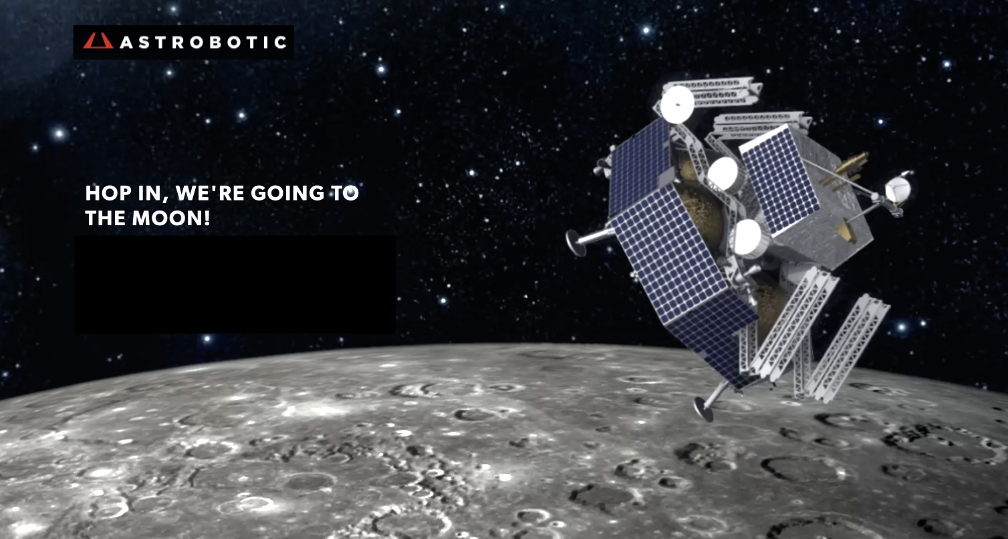
ULA is proceeding to a first flight of Vulcan 1st quarter 2023 to align with a request from its payload customer, Astrobotic, who will be flying its Peregrine lunar lander to the Moon for NASA’s Commercial Lunar Payload Services (CLPS) program.

This commercial mission is part of ULA’s requirement to meet the U.S. Space Force certification of its new launch vehicle. Mark Peller, vice president of Major Development, said, “We are committed to ensuring we fly the first certification mission and stay on schedule to achieve U.S. Space Force certification of Vulcan in advance of our first national security space mission in 4th quarter 2023.”

In addition to the Astrobotic and Celestis payloads, Vulcan will carry two demonstration satellites for Amazon as part of its Project Kuiper.

The first Vulcan launch vehicle is nearing completion in ULA’s factory in Decatur, Alabama, and is awaiting installation of its BE-4 engines. We expect to ship the completed vehicle to the launch site in November.

Once at the Cape, Vulcan will undergo a final series of tests to verify it readiness for flight consisting of multiple tanking tests and a wet dress rehearsal, culminating in flight readiness firing in December, which will be the final step prior to launch. Following the successful final testing, Astrobotic and the other payloads will be installed on the launch vehicle.

“We could not be more excited to be this close to seeing Vulcan lift off on its inaugural flight,” said Tory Bruno, ULA’s president and CEO. “Vulcan’s high energy design coupled with innovative technology provides one scalable system for all missions and will transform the future of space launch. This has been an incredible journey to get to this point and I am so proud of the development team. We look forward to the first flight as Vulcan offers all customers higher performance and greater affordability while continuing to deliver our unmatched reliability.”

Leveraging a legacy of 100 percent mission success launching more than 150 missions to explore, protect and enhance our world, ULA is the nation’s most experienced and reliable launch service provider with world-leading reliability, schedule confidence, and mission optimization. We deliver value unmatched by any launch services company in the industry, a tireless drive to improve, and commitment to the extraordinary.

Filed Under: News

AAC Clyde Space’s IOD-3 Amber is ready for the company’s first UK satellite launch

October 12, 2022 by editorial

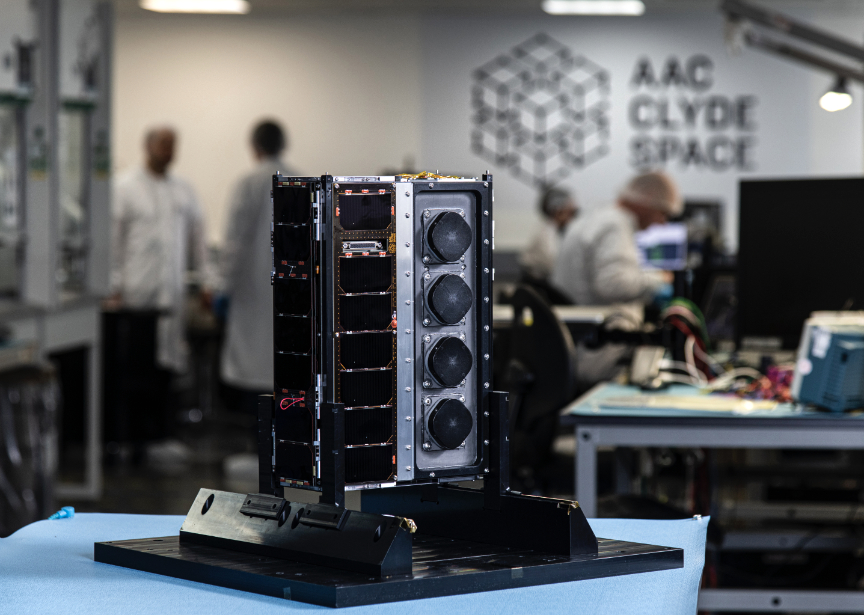
AAC Clyde Space’s has shipped the smallsat IOD-3 Amber™ to the launch site at Cornwall Spaceport where it has been prepared for launch on a Virgin Orbit launch vehicle, the first ever launch from UK soil — the launch is planned to take place before year-end.
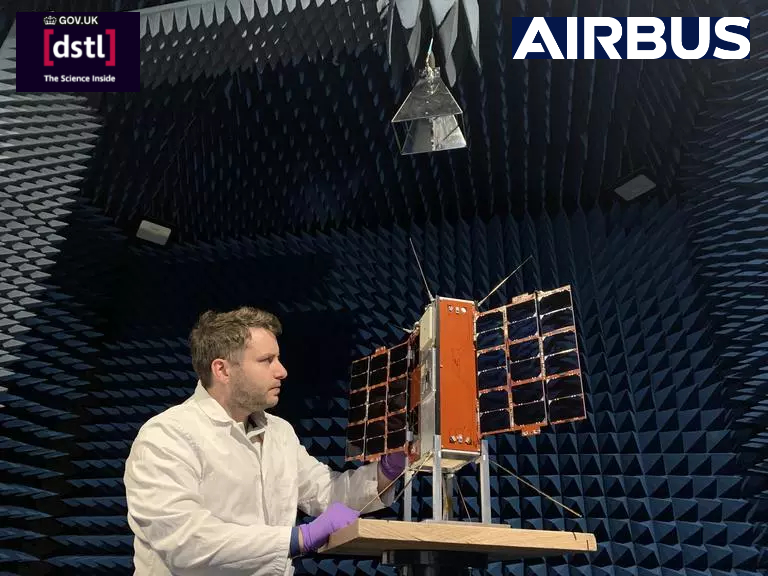
AAC Clyde Space’s IOD-3 Amber smallsat. Photo is courtesy of the company.

IOD-3 Amber forms part of the Satellite Applications Catapult’s In-Orbit Demonstration (IOD) program, which supports UK businesses to rapidly develop and launch a satellite data service into orbit. The 6U cubesat has been developed by the Satellite Applications Catapult, Horizon Technologies, the UK Space Agency and was designed and built by AAC Clyde Space.

This satellite is designed for communication missions and carries Horizon Space Technologies’ AMBER Payload, dedicated to delivering Maritime Domain Awareness intelligence data. It is highly integrated and uses in-built precision engineered avionics with decades of heritage from AAC Clyde Space’s widely used subsystems.

IOD-3 Amber will be able to locate and track vessels worldwide by geolocating and demodulating RF signals in a system that can be used to fight piracy, illegal trans-shipments, illegal fishing, and refugee smuggling, but can also be used for other purposes such as detecting and tracking a variety of RF emitters. The satellite will be the first of more than 20 in Horizon’s planned Amber constellation.

“The entire team at Horizon Technologies applauds this critical step in our path to orbit. We have been working closely with AAC Clyde Space and the Satellite Applications Catapult for many months now, and it’s great to see that our customers are now closer to receiving the unique dataset from the Amber™ constellation,” said John Beckner, CEO of Horizon Technologies

“This inaugural launch illustrates the strength of the UK space industry, placing several domestically developed cutting edge small satellites into orbit. AAC Clyde Space is proud to have a central role in the UK’s development of a sustainable, commercial small satellite launch market,” said AAC Clyde Space CEO, Luis Gomes.

“Glasgow is a global hub of small satellite manufacturing, pioneered by companies like AAC Clyde Space and supported by a thriving sector across the country. We’re building a sustainable, commercial launch market to give these companies access to space from UK soil and catalyse investment from all over the world. As we countdown to the first launch from Spaceport Cornwall, it’s very encouraging and exciting to see British-built satellites, including IOD-3 Amber, beginning their journey to orbit from the UK,” said Ian Annett, Deputy CEO of the UK Space Agency.

Filed Under: Featured, News

UPDATE 1: NASA’s DART mission can now confirm the asteroid’s motion in space was altered

October 11, 2022 by editorial

This imagery from NASA’s Hubble Space Telescope from Oct. 8, 2022, shows the debris blasted from the surface of Dimorphos 285 hours after the asteroid was intentionally impacted by NASA’s DART spacecraft on Sept. 26. The shape of that tail has changed over time. Scientists are continuing to study this material and how it moves in space, in order to better understand the asteroid.Credits: NASA/ESA/STScI/Hubble

Analysis of data obtained over the past two weeks by NASA’s Double Asteroid Redirection Test (DART) investigation team shows the spacecraft’s kinetic impact with its target asteroid, Dimorphos, successfully altered the asteroid’s orbit. This marks humanity’s first time purposely changing the motion of a celestial object and the first full-scale demonstration of asteroid deflection technology.

“All of us have a responsibility to protect our home planet. After all, it’s the only one we have,” said NASA Administrator, Bill Nelson. “This mission shows that NASA is trying to be ready for whatever the universe throws at us. NASA has proven we are serious as a defender of the planet. This is a watershed moment for planetary defense and all of humanity, demonstrating commitment from NASA’s exceptional team and partners from around the world.”

Prior to DART’s impact, it took Dimorphos 11 hours and 55 minutes to orbit its larger parent asteroid, Didymos. As DART’s intentional collision with Dimorphos on September 26th, astronomers have been using telescopes on Earth to measure how much that time has changed. Now, the investigation team has confirmed the spacecraft’s impact altered Dimorphos’ orbit around Didymos by 32 minutes, shortening the 11 hour and 55-minute orbit to 11 hours and 23 minutes. This measurement has a margin of uncertainty of approximately plus or minus 2 minutes.

Before its encounter, NASA had defined a minimum successful orbit period change of Dimorphos as change of 73 seconds or more. This early data show DART surpassed this minimum benchmark by more than 25 times.  

“This result is one important step toward understanding the full effect of DART’s impact with its target asteroid,” said Lori Glaze, director of NASA’s Planetary Science Division at NASA Headquarters in Washington. “As new data come in each day, astronomers will be able to better assess whether, and how, a mission like DART could be used in the future to help protect Earth from a collision with an asteroid if we ever discover one headed our way.”

The investigation team is still acquiring data with ground-based observatories around the world – as well as with radar facilities at NASA Jet Propulsion Laboratory’s Goldstone planetary radar in California and the National Science Foundation’s Green Bank Observatory in West Virginia. They are updating the period measurement with frequent observations to improve its precision.

Focus now is shifting toward measuring the efficiency of momentum transfer from DART’s roughly 14,000-mile (22,530-kilometer) per hour collision with its target. This includes further analysis of the “ejecta” – the many tons of asteroidal rock displaced and launched into space by the impact. The recoil from this blast of debris substantially enhanced DART’s push against Dimorphos – a little like a jet of air streaming out of a balloon sends the balloon in the opposite direction.

To successfully understand the effect of the recoil from the ejecta, more information on of the asteroid’s physical properties, such as the characteristics of its surface, and how strong or weak it is, is needed. These issues are still being investigated.

“DART has given us some fascinating data about both asteroid properties and the effectiveness of a kinetic impactor as a planetary defense technology,” said Nancy Chabot, the DART coordination lead from the Johns Hopkins Applied Physics Laboratory (APL) in Laurel, Maryland. “The DART team is continuing to work on this rich dataset to fully understand this first planetary defense test of asteroid deflection.”

For this analysis, astronomers will continue to study imagery of Dimorphos from DART’s terminal approach and from the Light Italian CubeSat for Imaging of Asteroids (LICIACube), provided by the Italian Space Agency, to approximate the asteroid’s mass and shape. Roughly four years from now, the European Space Agency’s Hera project is also planned to conduct detailed surveys of both Dimorphos and Didymos, with a particular focus on the crater left by DART’s collision and a precise measurement of Dimorphos’ mass.

Johns Hopkins APL built and operated the DART spacecraft and manages the DART mission for NASA’s Planetary Defense Coordination Office as a project of the agency’s Planetary Missions Program Office. Telescopic facilities contributing to the observations used by the DART team to determine this result include: Goldstone, Green Bank Observatory, Swope Telescope at the Las Campanas Observatory in Chile, the Danish Telescope at the La Silla Observatory in Chile, and the Las Cumbres Observatory global telescope network facilities in Chile and in South Africa.

NOTE: Neither Dimorphos nor Didymos poses any hazard to Earth before or after DART’s controlled collision with Dimorphos.

Original posting…

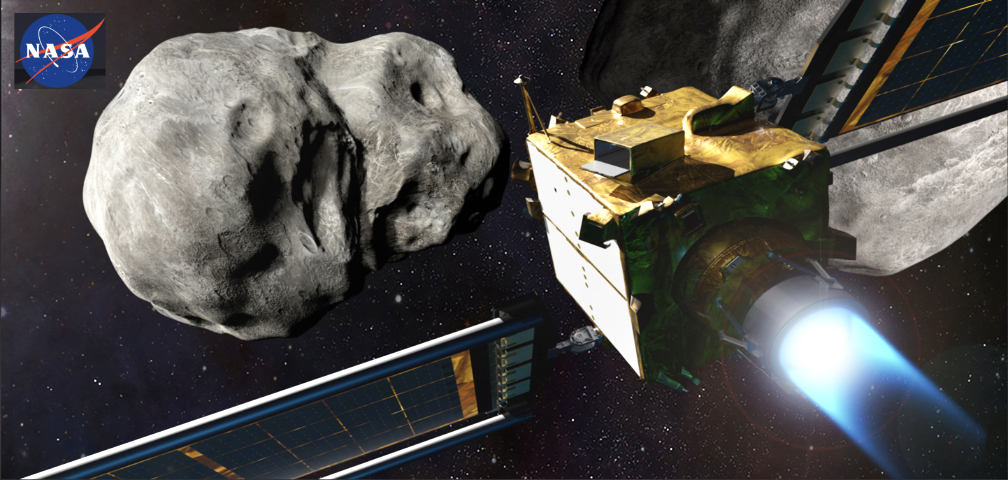
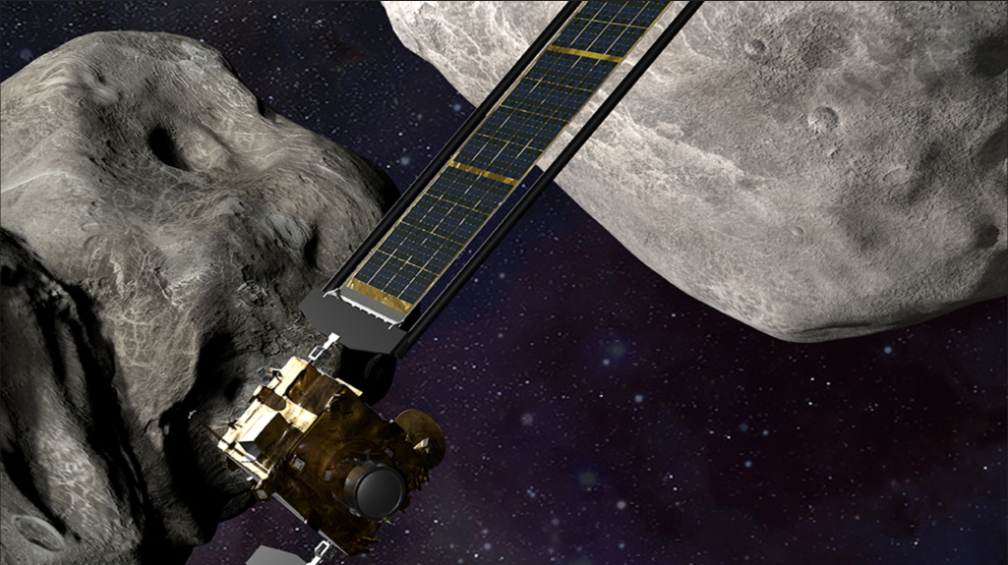
After 10 months flying in space, NASA’s Double Asteroid Redirection Test (DART) – the world’s first planetary defense technology demonstration – successfully impacted its asteroid target on Monday, the agency’s first attempt to move an asteroid in space.

The smallsat companion aboard NASA’s Double Asteroid Redirection Test (DART) — LICIACube from the Italian Space Agency — successfully separates from the main spacecraft, popping out of its spring-loaded box to capture valuable information about DART’s impact into an asteroid to forward information that will assist with future planetary defense efforts. Image is courtesy of Johns Hopkins Applied Physics Laboratory.

Mission control at the Johns Hopkins Applied Physics Laboratory (APL) in Laurel, Maryland, announced the successful impact at 7:14 p.m. EDT.

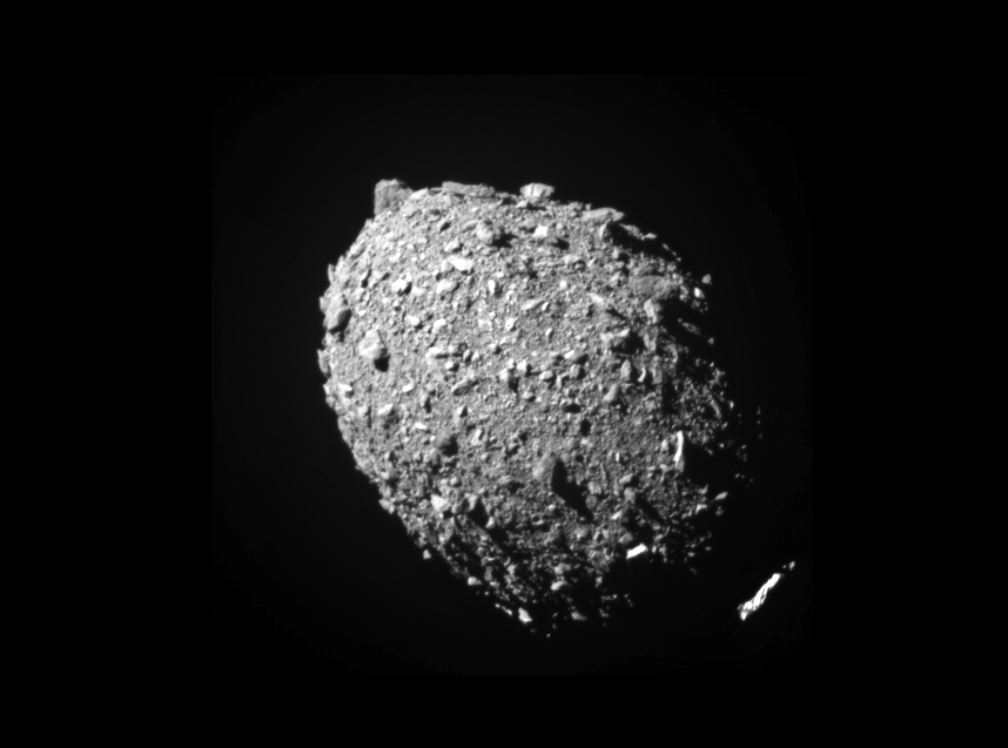
Asteroid moonlet Dimorphos as seen by the DART spacecraft 11 seconds before impact. DART’s onboard DRACO imager captured this image from a distance of 42 miles (68 kilometers). This image was the last to contain all of Dimorphos in the field of view. Dimorphos is roughly 525 feet (160 meters) in length. Dimorphos’ north is toward the top of the image.

As a part of NASA’s overall planetary defense strategy, DART’s impact with the asteroid Dimorphos demonstrates a viable mitigation technique for protecting the planet from an Earth-bound asteroid or comet, if one were discovered.

“At its core, DART represents an unprecedented success for planetary defense, but it is also a mission of unity with a real benefit for all humanity,” said NASA Administrator, Bill Nelson. “As NASA studies the cosmos and our home planet, we’re also working to protect that home, and this international collaboration turned science fiction into science fact, demonstrating one way to protect Earth.”

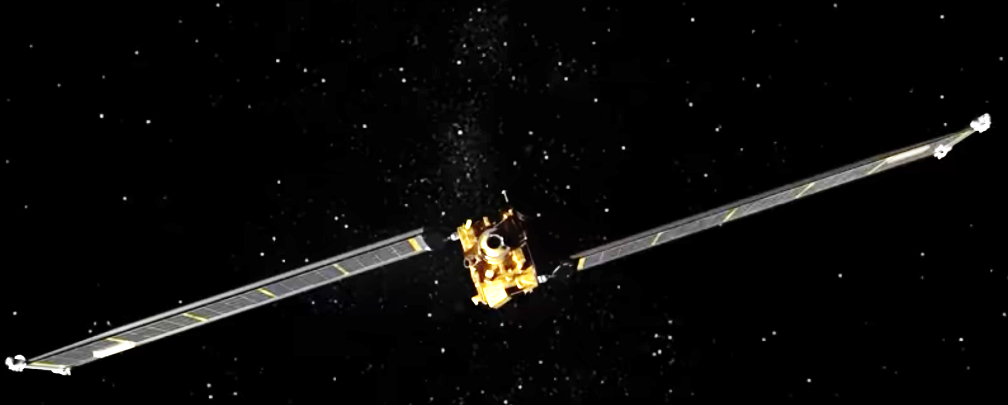
NASA’s DART spacecraft. Image is courtesy of Johns Hopkins Applied Physics Laboratory.

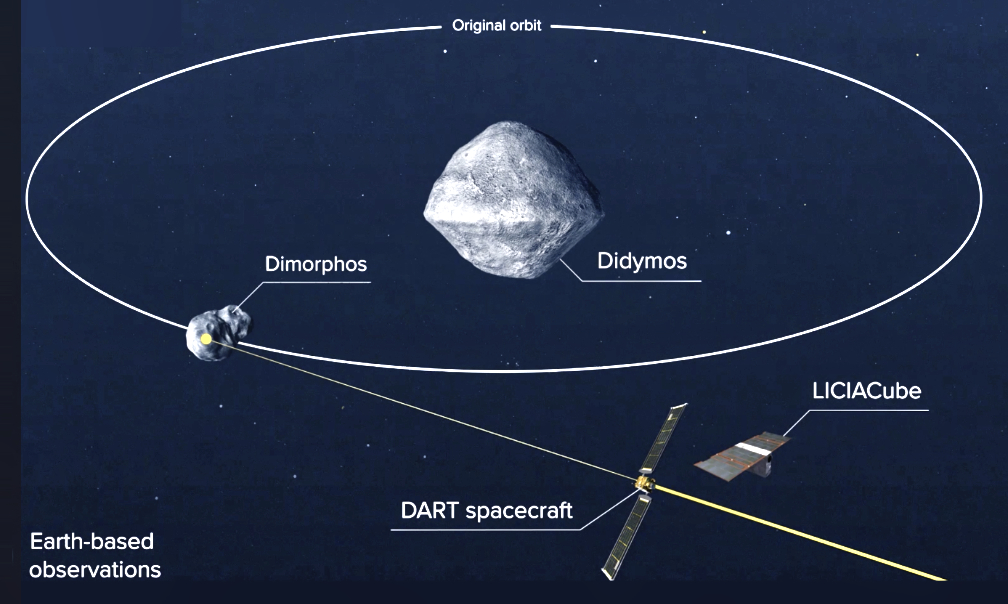
DART targeted the asteroid moonlet Dimorphos, a small body just 530 feet (160 meters) in diameter. It orbits a larger, 2,560-foot (780-meter) called Didymos — neither asteroid poses a threat to Earth.

The mission’s one-way trip confirmed NASA can successfully navigate a spacecraft to intentionally collide with an asteroid to deflect it, a technique known as kinetic impact.

The investigation team will now observe Dimorphos using ground-based telescopes to confirm that DART’s impact altered the asteroid’s orbit around Didymos. Researchers expect the impact to shorten Dimorphos’ orbit by about 1%, or roughly 10 minutes; precisely measuring how much the asteroid was deflected is one of the primary purposes of the full-scale test.

“Planetary Defense is a globally unifying effort that affects everyone living on Earth,” said Thomas Zurbuchen, associate administrator for the Science Mission Directorate at NASA Headquarters in Washington. “Now we know we can aim a spacecraft with the precision needed to impact even a small body in space. Just a small change in its speed is all we need to make a significant difference in the path an asteroid travels.”

The spacecraft’s sole instrument, the Didymos Reconnaissance and Asteroid Camera for Optical navigation (DRACO), together with a sophisticated guidance, navigation and control system that works in tandem with Small-body Maneuvering Autonomous Real Time Navigation (SMART Nav) algorithms, enabled DART to identify and distinguish between the two asteroids, targeting the smaller body.

These systems guided the 1,260-pound (570-kilogram) box-shaped spacecraft through the final 56,000 miles (90,000 kilometers) of space into Dimorphos, intentionally crashing into it at roughly 14,000 miles (22,530 kilometers) per hour to slightly slow the asteroid’s orbital speed. DRACO’s final images, obtained by the spacecraft seconds before impact, revealed the surface of Dimorphos in close-up detail.

Fifteen days before impact, DART’s cubesat companion, the Light Italian CubeSat for Imaging of Asteroids (LICIACube), provided by the Italian Space Agency, deployed from the spacecraft to capture images of DART’s impact and of the asteroid’s resulting cloud of ejected matter. In tandem with the images returned by DRACO, LICIACube’s images are intended to provide a view of the collision’s effects to help researchers better characterize the effectiveness of kinetic impact in deflecting an asteroid. As LICIACube does not carry a large antenna, images will be downlinked to Earth one by one in the coming weeks.

“DART’s success provides a significant addition to the essential toolbox we must have to protect Earth from a devastating impact by an asteroid,” said Lindley Johnson, NASA’s Planetary Defense Officer. “This demonstrates we are no longer powerless to prevent this type of natural disaster. Coupled with enhanced capabilities to accelerate finding the remaining hazardous asteroid population by our next Planetary Defense mission, the Near-Earth Object (NEO) Surveyor, a DART successor could provide what we need to save the day.”

With the asteroid pair within 7 million miles (11 million kilometers) of Earth, a global team is using dozens of telescopes stationed around the world and in space to observe the asteroid system. Over the coming weeks, they will characterize the ejecta produced and precisely measure Dimorphos’ orbital change to determine how effectively DART deflected the asteroid. The results will help validate and improve scientific computer models critical to predicting the effectiveness of this technique as a reliable method for asteroid deflection.

“This first-of-its-kind mission required incredible preparation and precision, and the team exceeded expectations on all counts,” said APL Director, Ralph Semmel. “Beyond the truly exciting success of the technology demonstration, capabilities based on DART could one day be used to change the course of an asteroid to protect our planet and preserve life on Earth as we know it.”

Roughly four years from now, the European Space Agency’s Hera project will conduct detailed surveys of both Dimorphos and Didymos, with a particular focus on the crater left by DART’s collision and a precise measurement of Dimorphos’ mass.

Johns Hopkins APL manages the DART mission for NASA’s Planetary Defense Coordination Office as a project of the agency’s Planetary Missions Program Office.

Filed Under: News

Mangata Networks selects Honeywell to provide control systems for new satellite constellations

October 11, 2022 by editorial

Mangata Networks has selected Honeywell‘s space integrated attitude control system (IACS) in support of its new constellations comprising 32 satellites. Mangata’s new, highly elliptical orbit (HEO) and MEO satellite constellations provide communications and weather monitoring in areas that typically lack in quality internet connectivity.

The precision and reliability of Honeywell’s space IACS platform enable seamless and continuous connectivity for users of Mangata’s network of telecommunications satellites. Together with other core elements of Mangata’s network architecture, the goal is to make possible secure and high-speed connectivity for businesses and individuals in remote areas without adequate access to the internet.

IACS is a comprehensive control and steering solution for satellites that ensures the proper altitude and position of space vehicles, which is essential for effective signal communication and solar power generation to keep the satellites operating efficiently.

“We are excited to announce our partnership with Honeywell as it will design, develop and deliver the avionics for Mangata’s constellation satellites,” said Andreas Doulaveris, vice president, space systems at Mangata Networks. “Honeywell is first-in-class, and we are looking forward to continuing our relationship as together we bring Mangata Networks’ vision to fruition.”

“The traditional geostationary equatorial orbit (GEO) constellations already provide broadband and other connectivity solutions for consumers and commercial applications, but the existing technology has become too slow by today’s standards,” said Ricky Freeman, president, defense, and space at Honeywell Aerospace. “As a result, global telecommunications companies are modernizing their networks and have started to look to HEO and MEO to provide higher data rates while lowering latency. Honeywell has extensive experience and a strong pedigree in navigation, data handling and momentum control products. Each of these is well suited to support these HEO and MEO satellite constellations, and our IACS platform will provide Mangata Networks with the precision and reliability it needs to operate its network of telecommunications satellites.”

Filed Under: News

DARPA’s SPCE program to push beyond power limitations in space

October 11, 2022 by editorial

Rapidly proliferating smallsats in LEO are expanding space-based capabilities critical to both government and industry. As the subsequent, ever-increasing demand strains operational limitations of LEO satellites, DARPA’s new Space Power Conversion Electronics (SPCE) program seeks greater efficiencies in usable power in the harsh space environment.

Space-based power consumption generates heat that can only be offloaded through radiation. This type of thermal management constrains the maximum operating power a satellite can consume. Usable power is further reduced by the inefficiencies in point-of-load (POL) converters.

The main function of POL converters is to deliver power at significantly lower voltage than the high-voltage main satellite power bus for payloads. These lower-voltage applications include onboard microsystems that execute computing and other electronic functions.

Today’s space POL converters comprise radiation-hardened, high-voltage switching transistors and radiation-resistant passive and active circuit elements to survive in challenging space conditions. These components, subject to extensive development and testing processes to withstand radiation damage, trail the performance of their counterparts built for non-radiated applications, such as ground-based systems. The latter can leverage faster, more cutting-edge components, but the radiation-hardening process reduces POL power efficiency in space to as little as 60% – severely limiting a satellite’s capabilities and battery lifetime.

Improved power efficiency in the harsh, radiated space environment is necessary to meet demands for new, increasingly advanced mission capabilities as well as extended lifetimes for persistent LEO constellations.

The goal of DARPA’s SPCE program is to boost the performance of space-based POL systems through development of high-voltage, radiation-tolerant transistors and integrated circuit technologies that are low-loss, high-voltage, and radiation tolerant.

The SPCE program consists of three program phases. The 20-month first phase will target radiation-tolerant, high-performance, high-voltage transistors development, while Phase 2 focuses on low-loss integration development and Phase 3 targets high-efficiency conversion circuit demonstration.

“SPCE will exploit a combination of materials and device-engineering, integrating advanced materials of different types and composition – or heterogenous material synthesis – and novel device designs. This will help achieve radiation-tolerant power transistors for space that offer performance that is competitive with terrestrial, state-of-the-art wide bandgap semiconductor power transistors,” said Jason Woo, DARPA program manager for SPCE. “With proliferation in LEO, 60% efficiency is no longer good enough.”

According to Woo, if successful, SPCE breakthroughs could extend system lifetimes and create new mission capabilities for persistent LEO constellations operating in difficult space terrains.

More information can be found in the Broad Agency Announcement via this direct link…

Filed Under: News

With the manifest complete, Virgin Orbit’s flight hardware is heading to Spaceport Cornwall for the 1st orbital launch from U.K. soil

October 11, 2022 by editorial

The countdown to Cornwall has begun as Virgin Orbit (Nasdaq: VORB) readies for Start Me Up, the newly-titled, forthcoming, historic launch from the United Kingdom.

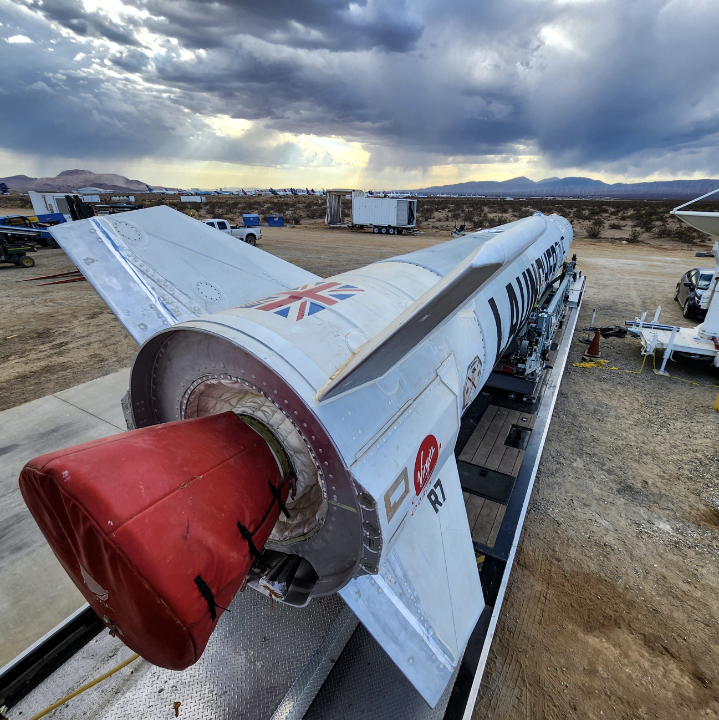
Virgin Orbit’s Cosmic Girl sends Launcher One on its mission. Photo is courtesy of the company.

The launch provider’s carrier aircraft, ground support equipment (GSE) and rocket will depart this week from California following the first round of now completed, wet dress rehearsals. On track for a November launch, Start Me Up is led by a joint mission between the U.S. and U.K. governments, launched by Virgin Orbit, the United Kingdom Space Agency (UKSA), UK Space Command, and Spaceport Cornwall.

Artistic rendition of Virgin Orbit’s Launcher One deploying a smallsat to orbit. Image courtesy of the company.

Start Me Up will be a launch of many firsts: the first orbital launch ever from the United Kingdom; the first international launch for Virgin Orbit, and the first commercial launch from Western Europe.

The first of the company’s hardware will begin its transport to Cornwall, U.K. on Sunday, October 9th, due to arrive at Spaceport Cornwall on Tuesday, October 11th, with the GSE and rocket quickly following later in the week.

This will be the fifth consecutive Virgin Orbit launch to carry payloads for both private companies and governmental agencies. The flight manifest, now completely full, includes payloads from seven global customers, a testament to the flexibility and possibilities offered through responsive launch solutions.

The launch service was acquired by the National Reconnaissance Office (NRO) from Virgin Orbit National Systems, a Virgin Orbit U.S. subsidiary serving classified customers, as the first task order on NRO’s Streamlined Launch Indefinite Delivery, Indefinite Quantity Contract or “SLIC.”

The Start Me Up manifest includes:

  • IOD-3 AMBER (aka IOD-3) — Developed by Satellite Applications Catapult (“SA Catapult”) and Horizon Technologies and built by AAC Clyde Space, all based in the U.K. IOD-3 Amber is expected to be the first of more than 20 Amber satellites to provide space-based Maritime Domain Awareness (MDA) data to users.
  • Prometheus-2 —Two cubesats owned by the U.K. Ministry of Defense’s (MOD) Defense Science & Technology Laboratory Dstl. These satellites, co-funded with Airbus Defence and Space who are designing them jointly with In-Space Missions, will support MOD science and technology (S&T) activities on-orbit and on the ground through the development of ground systems focused at Dstl’s site near Portsmouth.
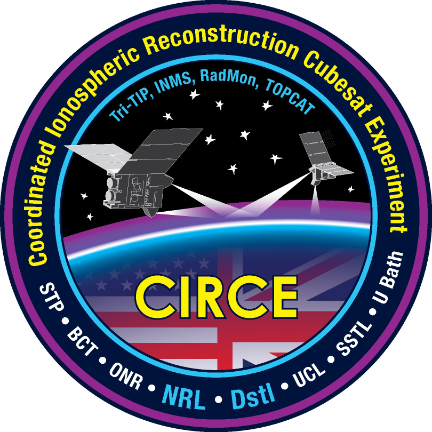
  • CIRCE (Coordinated Ionospheric Reconstruction CubeSat Experiment) — CIRCE is part of a joint mission between the U.K.’s Defense Science and Technology Laboratory and the U.S. Naval Research Laboratory (NRL).
  • DOVER — Developed by RHEA Group in the UK, this is the company’s first satellite in its 30 year history. The satellite is being co-funded through the European Space Agency’s (ESA) Navigation Program (NAVISP) and built by Open Cosmos of the United Kingdom. DOVER is a smallsat that was created as a pathfinder for resilient global navigation satellite systems.
  • ForgeStar-0 — Developed by Space Forge of Wales, the satellite is a fully returnable and reusable platform to enable in-space manufacturing. This launch will be the first for the company’s ForgeStar platform and will test future returns from space technology.
  • AMAN – Oman’s first orbital mission, it is a single, Earth Observation (EO) satellite meant to demonstrate the future feasibility of a larger constellation and was developed after a memorandum of understanding among the Sultanate of Oman, Polish smallsat manufacturer and operator SatRev, Poland-originated AI data analytics specialists TUATARA, and Omani-based merging technology innovator ETCO. The agreement includes additional planned small satellites, including this, the first in Oman’s history.
  • STORK-6 — STORK-6 is the next installment of Polish smallsat manufacturer and operator SatRev’s STORK constellation. Virgin Orbit previously launched two spacecraft in this constellation on a previous launch and looks forward to continuing to launch SatRev’s STORK spacecraft in the future. The missions of these satellites span a wide range of activities aimed at improving life on planet Earth, including reducing the environmental impact of production; preventing illegal trafficking, smuggling, and terrorism; and a host of national security functions.

Virgin Orbit has been working closely with the United Kingdom’s Civil Aviation Authority (CAA), the Royal Air Force (RAF), and the Spaceport Cornwall team to make all necessary preparations for liftoff.

Start Me Up is so named as a tribute to one of the most iconic British rock and roll bands of all time, the Rolling Stones. The hit song debuted on the 1981 album Tattoo You and was later released on the Forty Licks compilation by Virgin Records in 2002.

Dan Hart, CEO of Virgin Orbit, said, “What an incredible honor it is for us to be part of something as monumental as bringing Britain into the business of launch. Working with our partners across the UK government, we’re starting up a new capability that will serve the people, the economy, and the security of the UK.”

U.K. Minister of Science, Nusrat Ghani, said, “As we move ever closer to the first satellite launch from U.K. soil, it’s excellent to see the progress being made by Virgin Orbit, Spaceport Cornwall and those across government in delivering this historic mission, the first of its kind in Europe. With 47,000 jobs across the U.K., our growing space industry is a vital part of the economy and has an important role to play in catalysing investment, generating growth and prosperity. I’m looking forward to working with this innovative sector and delivering on our National Space Strategy.”

Ian Annett, Deputy CEO at the U.K. Space Agency, said, “Seeing Virgin Orbit’s aircraft take off is an exciting reminder that we are close to the first launch from U.K. soil and first launch of a satellite from Europe. This will be an iconic moment in the history of U.K. space endeavors, so it is fitting that the mission has been named after a song from the Rolling Stones, one of the U.K.’s most iconic bands.”

Air Vice-Marshal Paul Godfrey (Commander, U.K. Space Command), said, “The completion of the fuelling and pressurisation dress rehearsals in the USA, and the announcement of the mission name and manifest, has started countdown to launch from the U.K. I’ve seen first-hand the hard work and collaboration that has gone into making this happen, and we can now look forward to Virgin Orbit’s arrival in Cornwall. The very first space launch, carrying government and industry satellite payloads, marks Start Me Up as a historic moment for the United Kingdom. Developing new launch capabilities will build on the strengths of our space sector and attract companies from around the world to benefit from these commercial opportunities. This will catalyze investment, bring new jobs to communities and organisations right across the U.K., as well as inspiring the next generation of space scientists and engineers.”

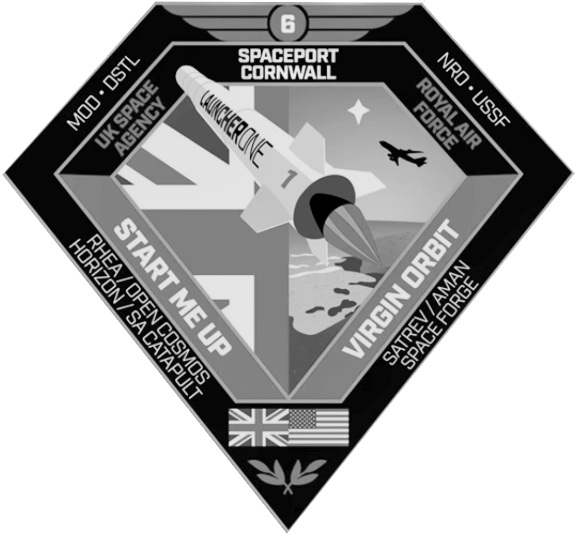
Melissa Thorpe, Head of Spaceport Cornwall, said, “It’s time to Start Us Up! This is a huge moment for us all in Cornwall as the journey to U.K. space launch has officially begun. The mission name and patch reflect and embrace the incredible partnerships between our two countries and teams.”

Filed Under: Featured, News

The former President + CEO of SES joins E-Space

October 11, 2022 by editorial

E-Space, a global space company focused on bridging Earth and space with the world’s most sustainable LEO network, has appointed Karim Michel Sabbagh to managing director, Europe and Middle East — he will report to E-Space Founder and CEO, Greg Wyler.

Karim Michel Sabbagh

Sabbagh will oversee all European and Middle East business strategy and operations, as well as provide support to the regional corporate development, technical and manufacturing team activities. He will also lead interactions with commercial, government and defense organizations as well as other key stakeholders in the region. Further, Sabbagh will help support Wyler on defining key programs, operational actions and general management functions.

Sabbagh was the former President and CEO of SES, Chairman of SES ASTRA and a member of the Board of Directors of O3b Networks, prior to its acquisition by SES. While at SES, Sabbagh was recognized for building a world-class space organization with admirable strategic focus, leadership and space capabilities. He joined SES from global consulting firm Booz & Co. where he served as global practice leader for communication, media and technology.

Greg Wyler said, “I have known Karim since working with SES, when he had the foresight to see how NGSO systems were going to change the industry. Not only does he have an impressive track record of accomplishments from leading major space organizations to building global teams, but he has the right experience, credibility and energy to immediately step into this role and make an impact. We have ambitious goals at E-Space, and Karim will help us disrupt traditional NewSpace markets as we fundamentally change the design of legacy LEO space systems to deliver entirely new satellite capabilities at a fraction of the cost.”

Karim Sabbagh said, “E-Space is on track to make a major step-change in how global governments, defense organizations, enterprises and small businesses leverage space as a global communications platform. The Company’s goals are bold, and their focus is directed on enabling an entirely new class of ubiquitous, real-time communications and Internet of Things services to support everything from basic messaging up to advanced voice, video and data communications. Having worked with Greg in the past, I’m energized and motivated to help make E-Space a success story within the larger global space and communications communities.”

E-Space is a global space company focused on bridging Earth and space with the world’s most sustainable low Earth orbit (LEO) network, which will grow past one hundred thousand sustainable, multi-application communication satellites to help governments and businesses securely and affordably access the power of space to solve problems on Earth. Founded by industry pioneer Greg Wyler, E-Space is focused on democratizing space and transforming industries by bringing down the cost of space-based communications, raising the level of satellite system resiliency and setting a new standard in sustainable space infrastructure that will effectively minimize and reduce space debris and destruction while preserving access to space for future generations.

Filed Under: News

Bright Ascension launches their Partner Program

October 11, 2022 by editorial

Bright Ascension Ltd. has launched their Partner Program as a key strategic initiative to support its on-going product expansion stage and is already seeing substantial interest.

The Partner Program is designed to offer collaboration and create multiple new pathways for commercial companies in the space sector across the globe to generate additional revenue streams through Bright Ascension’s product suite. The Bright Ascension’s Partner Program targets software and hardware technology providers.

Space tech companies across the world are offered a wide range of routes to build on Bright Ascension’s expertise and create new business opportunities, such as re-sale of software licenses, turnkey mission software solutions to complement existing services or fully integrated flight-payload package offers for highly specialised technology providers.

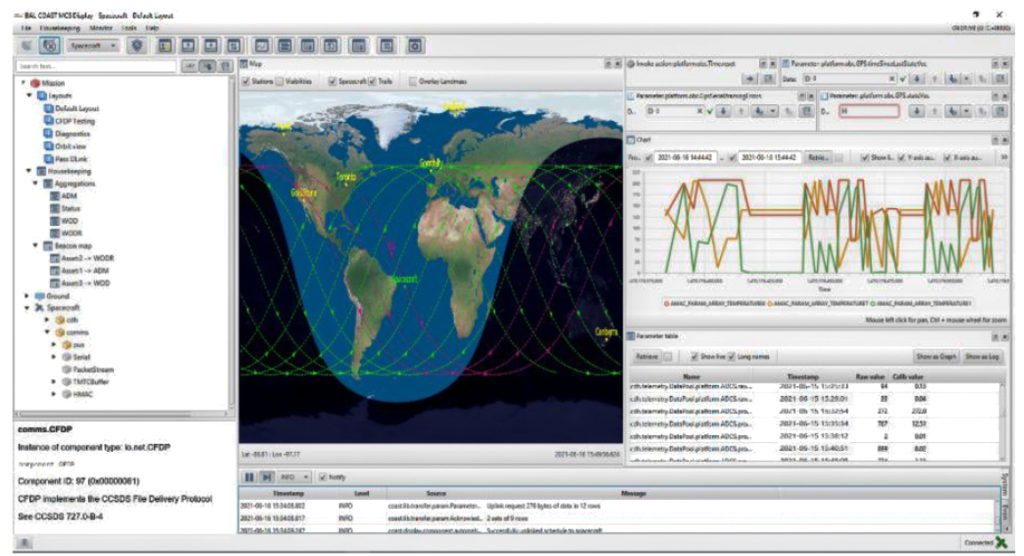
Bright Ascension Mission Control Software screenshot, courtesy of the company.

Bright Ascension is undergoing an extensive product development stage to create the next generation satellite software infrastructure and a complete end-to-end software solution for space-based service provision. The product suite covering software from early stages of development, validation, and operation through to data analysis and service delivery will significantly expand collaboration opportunities offered through the Partner Program.

Launched earlier this year, the Partner Program has already generated sizable interest in the sector and Bright Ascension is working with space tech companies in the UK, USA and Asian markets to develop and finalise collaboration agreements. The first partnership announcements are expected to be communicated in the coming weeks.

“We are so thrilled to see our Partner Programme take off,” said Peter Mendham, CEO at Bright Ascension. “We are in a position now to announce that we are ironing out the T&Cs with a few partners on a global level, but we are also discussing many other potential collaboration opportunities that are still in the early days of negotiations. It’s incredible to see space tech companies coming onboard both for existing opportunities and the product suite in development that reflects our vision of satellite software of tomorrow. This gives us reassurance that there is indeed a clear need and demand in the space sector for highly efficient, integrated and cost-effective software solutions.”

Filed Under: News

  • « Go to Previous Page
  • Page 1
  • Interim pages omitted …
  • Page 12
  • Page 13
  • Page 14
  • Page 15
  • Page 16
  • Interim pages omitted …
  • Page 58
  • Go to Next Page »

Primary Sidebar

WEEKLY NEWSLETTER

Archives

  • August 2026
  • July 2026
  • June 2026
  • May 2026
  • April 2026
  • March 2026
  • February 2026
  • January 2026
  • December 2025
  • November 2025
  • October 2025
  • September 2025
  • August 2025
  • July 2025
  • June 2025
  • May 2025
  • April 2025
  • March 2025
  • February 2025
  • January 2025
  • December 2024
  • November 2024
  • October 2024
  • September 2024
  • August 2024
  • July 2024
  • June 2024
  • May 2024
  • April 2024
  • March 2024
  • February 2024
  • January 2024
  • December 2023
  • November 2023
  • October 2023
  • September 2023
  • August 2023
  • July 2023
  • June 2023
  • May 2023
  • April 2023
  • March 2023
  • February 2023
  • January 2023
  • December 2022
  • November 2022
  • October 2022
  • September 2022
  • August 2022
  • July 2022
  • June 2022
  • May 2022
  • April 2022
  • March 2022
  • February 2022
  • January 2022
  • December 2021
  • November 2021
  • October 2021
  • September 2021
  • August 2021
  • July 2021
  • June 2021
  • May 2021
  • April 2021
  • March 2021
  • February 2021
  • January 2021
  • December 2020
  • November 2020
  • October 2020
  • September 2020
  • August 2020
  • July 2020
  • June 2020
  • May 2020
  • April 2020
  • March 2020
  • February 2020
  • January 2020
  • December 2019
  • November 2019
  • October 2019

© 2019–2026 SatNews

Insert/edit link

Enter the destination URL

Or link to existing content

    No search term specified. Showing recent items. Search or use up and down arrow keys to select an item.
      x
      Sign Up Now!

      Enjoy a free weekly newsletter with recent headlines from the global SmallSat industry.

      Invalid email address
      We promise not to spam you. You can unsubscribe at any time.
      Thanks for subscribing! You will now receive weekly SmallSat News updates.
      We love our advertisers.
      And you will too!

      Please disable Ad Blocker to continue... We promise to keep it unobtrusive.
      We promise not to spam you. You can unsubscribe at any time.
      Invalid email address
      Thanks for subscribing!