• Skip to main content
  • Skip to primary sidebar
  • Home
  • News
  • Featured
  • More News ⌄
    • SatNews
    • SatMagazine
    • MilSatMagazine
  • Events ⌄
    • MilSat Symposium
    • SmallSat Symposium
    • Satellite Innovation
  • Contacts
  • SUBSCRIPTION

SmallSat News

You are here: Home / Archives for 2022

Archives for 2022

SkyLabs Signs A New Collaboration Agreement With Elecnor Deimos

March 2, 2022 by editorial

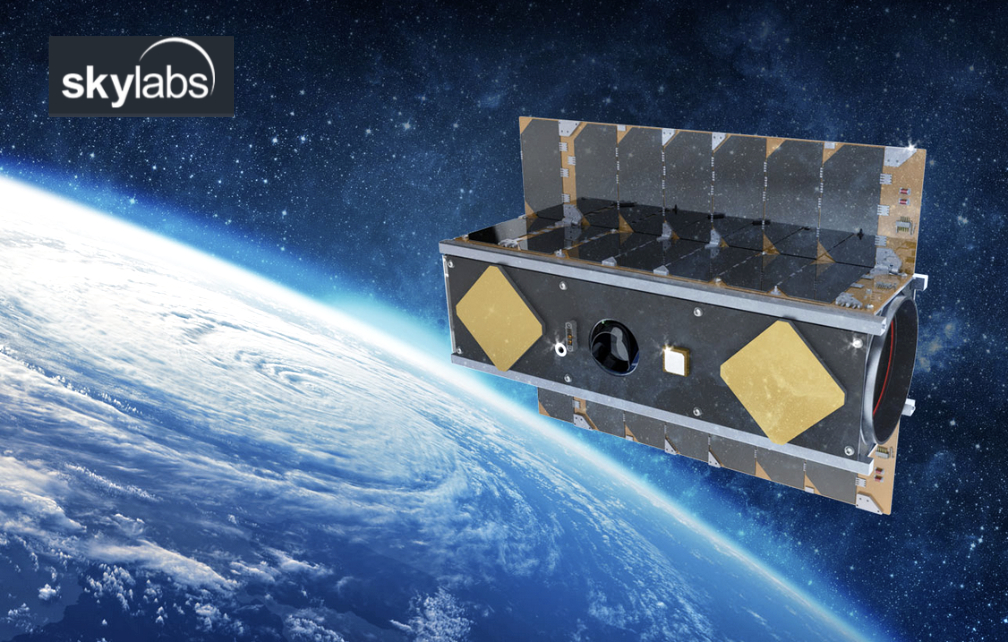
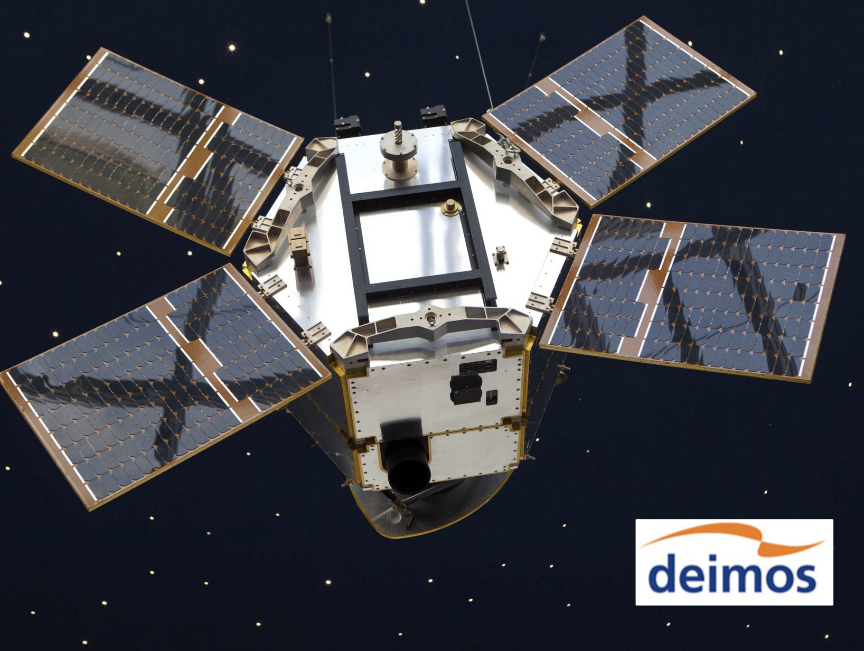
SkyLabs has signed a new Collaboration Agreement with Deimos Elecnor to provide On-Board Computer (OBC) and Remote Terminal Unit (RTU) equipment for DEIMOS’ standalone AOCS (Attitude and Orbit Control System) product for smallsats.
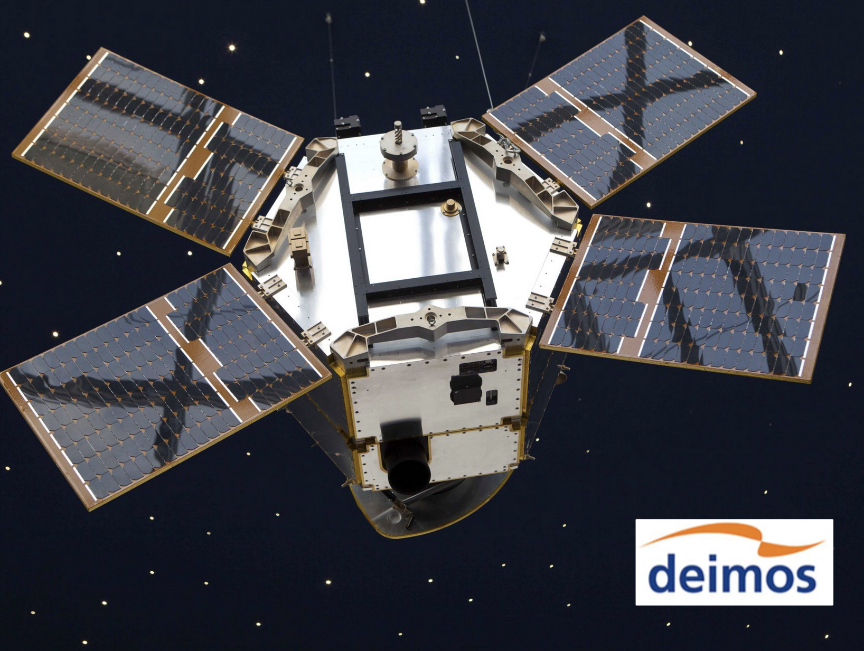
A modular AOCS for small satellites is being developed by Deimos to address the need for the rapid procurement of agile and high stability attitude control systems for platforms that are particularly suited for LEO and Earth Observation (EO) missions.

SkyLabs solution has been recognized by Deimos as the one that can enable Deimos to develop leading-edge AOCS product and, on top of that, offers high configurability and customization to address a wide variety of smallsat missions and a range of actuator and sensor solutions. In particular, SkyLabs’ solution for AOCS product is based on a NANOhpm-obc and picoRTU system, which is combination than can tackle the most demanding AOCS needs.

NANOhpm-obc is high performance OBC, one of the first solutions with RISC-V fault tolerant processor within to answer the most demanding LEO applications with very high-performance needs.

The picoRTU system is based on a distributed intelligence thanks to the PicoSkyFT IP solution that enables higher levels of subsystem autonomy, showcases the use of modern design techniques, facilitating higher modularity and interoperability of satellite equipment, and thereby enabling scalability of actuator and sensor interfaces according to mission needs. By entering collaboration agreement with Deimos, SkyLabs became a provider of the OBC and RTU solutions for the AOCS and beyond.

Dejan Gačnik, CTO of SkyLabs and responsible for overall cooperation with DEIMOS, said, ‘This cooperation agreement proves once again that SkyLabs is providing the leading-edge satellite solutions for the small satellites market, and thus enabling our customers to build innovative, dependable and cost-efficient systems. SkyLabs is going to supply DEIMOS picoRTU and NANOhpm-obc as critical equipment of the their highly innovative and modular AOCS. Both critical elements have been developed jointly under ESA General Support and Technology Programme, as the results of systematically well identified market needs years ago and condensate knowhow resulting from several R&D activities.‘

Dr. Murray Kerr, DEIMOS’ head of Flight Engineering and responsible for the SAT4EOCE project, said, ‘Our AOCS product is highly innovative, in both its provision of very high pointing stability and agility, and its low-price point. SkyLabs is just the partner we need to make our AOCS both modular and reliable. We hope to build a strong and enduring cooperation with SkyLabs in the commercial market.‘

“Cooperation with DEIMOS is another important milestone for SkyLabs, as we have been recognized as trustworthy supplier also in the domain of small-scale satellites. I am confident that this is just a beginning of our important and strategic cooperation with DEIMOS in the segment of small satellites and even beyond,” said Dr. Tomaž Rotovnik, CEO of SkyLabs.


Filed Under: News

MoU Signed Between AICRAFT + Antaris Space To Test AI/ML In Space

March 2, 2022 by editorial

Two emerging Australian space startups — AICRAFT and Antaris Space — have signed of a memorandum of understanding (MOU) to test new Artificial Intelligence and Machine Learning (AI/ML) models in space, with the goal of developing and space-qualifying new computational capabilities for satellite-based applications.

Under the MoU, the two startups, who are both members of the SmartSAT CRC-backed Aurora Space Cluster, will include an AICRAFT space-computing module as a part of the payload for Antaris’ three-year demonstrator mission launching to LEO in Q3 2022. This will provide an opportunity for Antaris Space and its collaborators to test out the module, and demonstrate the ability for on-orbit, autonomous satellite navigation and control.

AICRAFT will also be able to test various AI/ML models for Earth Observation (EO) data processing and communications management in the space environment. The objective will be to demonstrate five- to ten-times the processing speed compared with current state-of-the-art on-orbit ‘Space Edge’ processing solutions and to do so for a comparable form factor and power consumption level. AICRAFT’S module will be the only locally developed device aboard Antaris’ Tech Demonstrator (TD) satellite.

Speaking at the signing of the MOU, co-founder of Antaris Inc, Shankar Sivaprakasam, said, “We are excited about working with AICRAFT to space qualify their edge computing module and add it to the pool of resources for customers using the Antaris Software-as-a-Service (SaaS) platform for next-gen satellite systems. Our software-defined satellite platform is a means to broaden the space ecosystem by creating a trusted marketplace of qualified space-rated software and hardware components, a key goal for us.”

“We are thrilled to start our collaboration with Antaris and demonstrate our innovative AI edge computing module on orbit“, said Dr. Tony Scoleri, co-founder and CEO of AICRAFT. “This will include testing the execution of a large variety of AI models and input data formats (imagery, signals, Lidar point clouds) and we would like to thank Shankar and the whole Antaris founding team for the opportunity to accelerate our company’s entry into the global space marketplace. A special thank you also to Dr. Tim Parsons, Aurora Space Cluster Chair, and the entire SmartSat CRC team, for helping to bring Antaris and AICRAFT together and supporting Australian space start-ups.”

Commenting on the partnership announcement, Aurora Space Cluster Board Chair, Dr. Tim Parsons, said “This collaboration between Antaris and AICRAFT is exactly what the Aurora Space Cluster aimed to achieve w,ithin the Australian space start-up community – providing a framework for start-ups to grow together in commercial collaborations with one another, to win business, commercialize leap-frog R&D, lift TRL to space-qualified, and build world-class commercial capabilities.”

Antaris Space, a subsidiary of Antaris Inc., is a Sydney, NSW-based company offering a software-defined satellite platform to ease the design and build of satellites, the integration of payloads, and their operation and management on-orbit – all from a Software-as-a-Service (SaaS) platform.

AICRAFT is an Adelaide, South Australia-based company offering scalable, high-performance, low-power edge computing sensors and systems with embedded artificial intelligence (AI) models.

The Aurora Space Cluster connects over 70 early and growth-stage start-up and scale-up companies with mentors, supporting partners, corporates and aerospace primes to create opportunities for commercial and R&D collaboration and growth. A member-focused organisation, Aurora is itself a start-up, created by a diverse founding board with support from its parent, SmartSat CRC.

Filed Under: News

MoU Signed Between AICRAFT + Antaris Space To Test AI/ML In Space

March 2, 2022 by editorial

Two emerging Australian space startups — AICRAFT and Antaris Space — have signed of a memorandum of understanding (MOU) to test new Artificial Intelligence and Machine Learning (AI/ML) models in space, with the goal of developing and space-qualifying new computational capabilities for satellite-based applications.

Under the MoU, the two startups, who are both members of the SmartSAT CRC-backed Aurora Space Cluster, will include an AICRAFT space-computing module as a part of the payload for Antaris’ three-year demonstrator mission launching to LEO in Q3 2022. This will provide an opportunity for Antaris Space and its collaborators to test out the module, and demonstrate the ability for on-orbit, autonomous satellite navigation and control.

AICRAFT will also be able to test various AI/ML models for Earth Observation (EO) data processing and communications management in the space environment. The objective will be to demonstrate five- to ten-times the processing speed compared with current state-of-the-art on-orbit ‘Space Edge’ processing solutions and to do so for a comparable form factor and power consumption level. AICRAFT’S module will be the only locally developed device aboard Antaris’ Tech Demonstrator (TD) satellite.

Speaking at the signing of the MOU, co-founder of Antaris Inc, Shankar Sivaprakasam, said, “We are excited about working with AICRAFT to space qualify their edge computing module and add it to the pool of resources for customers using the Antaris Software-as-a-Service (SaaS) platform for next-gen satellite systems. Our software-defined satellite platform is a means to broaden the space ecosystem by creating a trusted marketplace of qualified space-rated software and hardware components, a key goal for us.”

“We are thrilled to start our collaboration with Antaris and demonstrate our innovative AI edge computing module on orbit“, said Dr. Tony Scoleri, co-founder and CEO of AICRAFT. “This will include testing the execution of a large variety of AI models and input data formats (imagery, signals, Lidar point clouds) and we would like to thank Shankar and the whole Antaris founding team for the opportunity to accelerate our company’s entry into the global space marketplace. A special thank you also to Dr. Tim Parsons, Aurora Space Cluster Chair, and the entire SmartSat CRC team, for helping to bring Antaris and AICRAFT together and supporting Australian space start-ups.”

Commenting on the partnership announcement, Aurora Space Cluster Board Chair, Dr. Tim Parsons, said “This collaboration between Antaris and AICRAFT is exactly what the Aurora Space Cluster aimed to achieve w,ithin the Australian space start-up community – providing a framework for start-ups to grow together in commercial collaborations with one another, to win business, commercialize leap-frog R&D, lift TRL to space-qualified, and build world-class commercial capabilities.”

Antaris Space, a subsidiary of Antaris Inc., is a Sydney, NSW-based company offering a software-defined satellite platform to ease the design and build of satellites, the integration of payloads, and their operation and management on-orbit – all from a Software-as-a-Service (SaaS) platform.

AICRAFT is an Adelaide, South Australia-based company offering scalable, high-performance, low-power edge computing sensors and systems with embedded artificial intelligence (AI) models.

The Aurora Space Cluster connects over 70 early and growth-stage start-up and scale-up companies with mentors, supporting partners, corporates and aerospace primes to create opportunities for commercial and R&D collaboration and growth. A member-focused organisation, Aurora is itself a start-up, created by a diverse founding board with support from its parent, SmartSat CRC.

Filed Under: News

SkyLabs Signs A New Collaboration Agreement With Elecnor Deimos

March 1, 2022 by editorial

SkyLabs has signed a new Collaboration Agreement with Deimos Elecnor to provide On-Board Computer (OBC) and Remote Terminal Unit (RTU) equipment for DEIMOS’ standalone AOCS (Attitude and Orbit Control System) product for smallsats.

A modular AOCS for small satellites is being developed by Deimos to address the need for the rapid procurement of agile and high stability attitude control systems for platforms that are particularly suited for LEO and Earth Observation (EO) missions.

SkyLabs solution has been recognized by Deimos as the one that can enable Deimos to develop leading-edge AOCS product and, on top of that, offers high configurability and customization to address a wide variety of smallsat missions and a range of actuator and sensor solutions. In particular, SkyLabs’ solution for AOCS product is based on a NANOhpm-obc and picoRTU system, which is combination than can tackle the most demanding AOCS needs.

NANOhpm-obc is high performance OBC, one of the first solutions with RISC-V fault tolerant processor within to answer the most demanding LEO applications with very high-performance needs.

The picoRTU system is based on a distributed intelligence thanks to the PicoSkyFT IP solution that enables higher levels of subsystem autonomy, showcases the use of modern design techniques, facilitating higher modularity and interoperability of satellite equipment, and thereby enabling scalability of actuator and sensor interfaces according to mission needs. By entering collaboration agreement with Deimos, SkyLabs became a provider of the OBC and RTU solutions for the AOCS and beyond.

Dejan Gačnik, CTO of SkyLabs and responsible for overall cooperation with DEIMOS, said, ‘This cooperation agreement proves once again that SkyLabs is providing the leading-edge satellite solutions for the small satellites market, and thus enabling our customers to build innovative, dependable and cost-efficient systems. SkyLabs is going to supply DEIMOS picoRTU and NANOhpm-obc as critical equipment of the their highly innovative and modular AOCS. Both critical elements have been developed jointly under ESA General Support and Technology Programme, as the results of systematically well identified market needs years ago and condensate knowhow resulting from several R&D activities.‘

Dr. Murray Kerr, DEIMOS’ head of Flight Engineering and responsible for the SAT4EOCE project, said, ‘Our AOCS product is highly innovative, in both its provision of very high pointing stability and agility, and its low-price point. SkyLabs is just the partner we need to make our AOCS both modular and reliable. We hope to build a strong and enduring cooperation with SkyLabs in the commercial market.‘

“Cooperation with DEIMOS is another important milestone for SkyLabs, as we have been recognized as trustworthy supplier also in the domain of small-scale satellites. I am confident that this is just a beginning of our important and strategic cooperation with DEIMOS in the segment of small satellites and even beyond,” said Dr. Tomaž Rotovnik, CEO of SkyLabs.

Filed Under: News

Capricorn Space Further Expands Their Ground Segment + Welcomes Leaf Space

March 1, 2022 by editorial

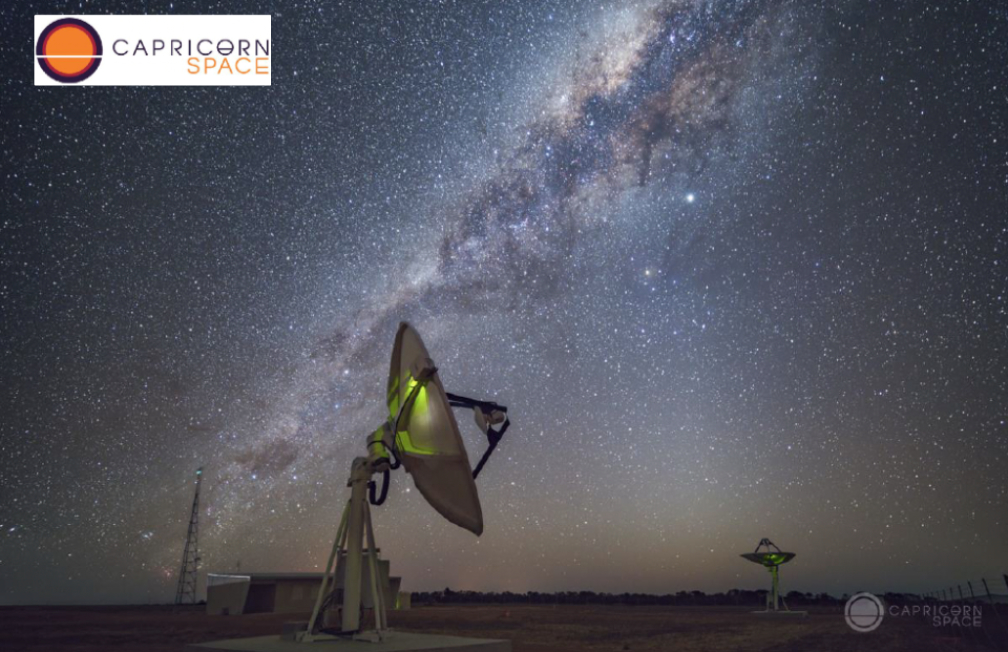
Capricorn Space Teleport at Mingenew, Western Australia.

Capricorn Space has recently added additional capabilities at its 35 hectare site in Mingenew, Western Australia, to support both the Australian and global space industry.

Capricorn Space’s two 5 meter S/X-Band antenna systems are being actively used, providing services to some of the major global satellite constellation operators with attractions being a strategic landing location for satellite data, clear sky environment, full horizon-to-horizon visibility, a no-fly zone and a region embargoed by the national regulator for supporting satellite services.

International satellite and ground station operators alike are also taking advantage of Capricorn Space’s A$5 million investment in flexible infrastructure, based on world’s best practice, to install their own bespoke technologies to provide reliable and quality access to the data streamed from satellites as they pass overhead. Reliable off-grid power and high-speed optical fiber and microwave communications at the site means the data collected can be instantly transferred for processing anywhere in the world.

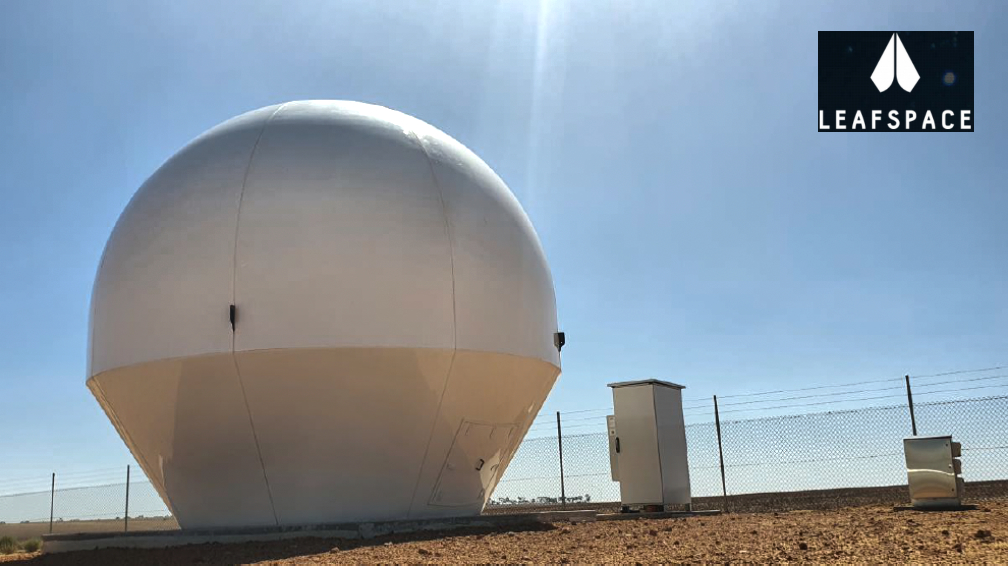
Multiple antenna systems are being currently being installed for Italian based Leaf Space Srl who provide ground segment services for smallsat operators across a global network of 15 sites.

Leaf Space’s Antenna #1 at Capricorn Space, Mingenew, Western Australia.

Capricorn Space CEO Mark Thompson said, “We are pleased to welcome Leaf Space as a tenant on our site. Capricorn Space offers specialised services from our initial ground station capability in Western Australia and we are keen to support the global operators of ground segment as a service from this perfect location 80 km south-east of Geraldton. The significant investment at our site has delivered a wonderful asset to the Australian, and in particular the Western Australian space industry, and we will continue to deliver capabilities that are in demand globally.”

Leaf Space CEO Jonata Puglia said, “The opportunity to use the Capricorn Space site was too good to pass up. Our customers need to access their satellites at very regular intervals and the relative lack of land and infrastructure in the southern hemisphere provides significant challenges. The Mingenew location provides a key asset to our global network and we can envision operating from this site for many years to come.”

Filed Under: News

Rocket Lab’s Electron Rocket Propels Synspective’s StriX-β SAR Smallsat To Orbit + Wallops Island Selected As The Firm’s Neutron Rocket Site

February 28, 2022 by editorial

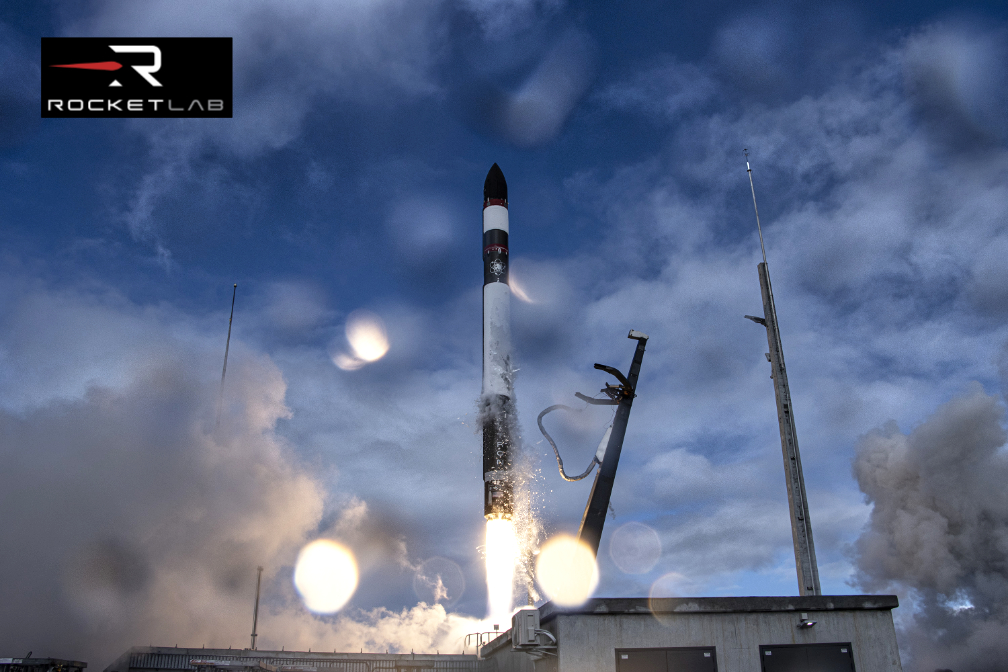
Photo of Rocket Lab’s launch of Synspective’s StriX-β SAR smallsat.

Rocket Lab USA, Inc. (Nasdaq: RKLB) has successfully deployed a second Synthetic Aperture Radar (SAR) satellite to orbit for data and solutions provider Synspective, bringing the total number of satellites deployed by Rocket Lab to 110. — ‘The Owl’s Night Continues” mission is Rocket Lab’s 24th Electron launch.

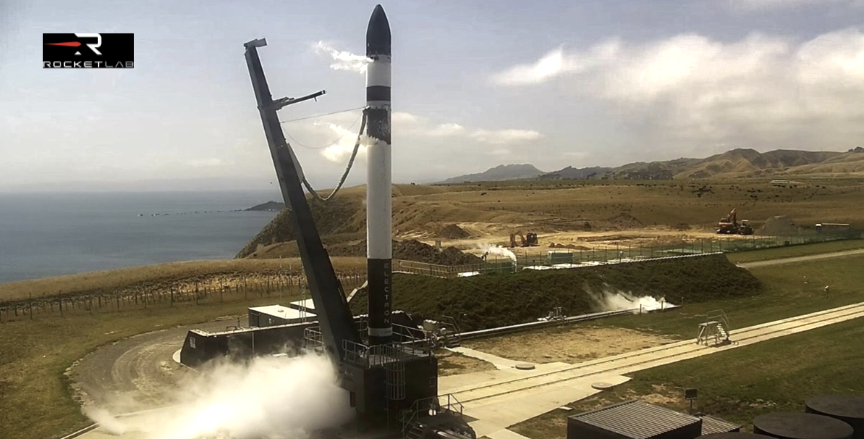
“The Owl’s Night Continues” mission was the first to launch from Rocket Lab’s second pad at Launch Complex 1, Pad B, on New Zealand’s Mahia Peninsula. Following lift-off at 20:37 UTC, February 28, 2022, Electron successfully delivered the StriX-β satellite, growing Synspective’s SAR constellation. The planned constellation of 30 satellites is designed to deliver imagery that can detect millimeter-level changes to the Earth’s surface from space, independent of weather conditions on Earth and at any time of the day or night.

Rocket Lab’s Launch Complex 1, Pad B, on New Zealand’s Mahia Peninsula.

“The Owl’s Night Continues” follows on from Rocket Lab’s first launch for Synspective in December 2020, called “The Owl’s Night Begins.” This mission was the first mission as part of a three-launch contract signed with Synspective in late 2021. Rocket Lab is scheduled to launch another Synspective mission in 2022 and the third in 2023.

The mission was the first to employ the new Pad B launch pad at Launch Complex 1, which is the company’s third pad globally. By operating two pads at Launch Complex 1, Rocket Lab can eliminate pad recycle time between missions to support more frequent and responsive launch capabilities.

Rocket Lab founder and CEO, Peter Beck, said “Congratulations to the team at Synspective for the successful deployment of the second satellite in their constellation. We are proud to continue our partnership with Synspective and to have provided flexibility around launch timing. We look forward to our upcoming missions with Synspective as they grow their SAR constellation.”

Synspective founder and CEO, Dr. Motoyuki Arai, said, “We thank both Rocket Lab and Synspective members for their diligence and teamwork to successfully put StriX-β into orbit promptly despite unforeseen circumstances and challenges due to the ongoing pandemic. With the successful insertion of our second SAR satellite, we will be able to improve our technology for operating multiple satellites and strengthen our data services. With this achievement, we will accelerate the expansion of a thirty SAR satellite constellation and enhance our data analysis technology to realize a “learning world” for a sustainable future.”

Details about Rocket Lab’s next planned launch will be announced shortly.

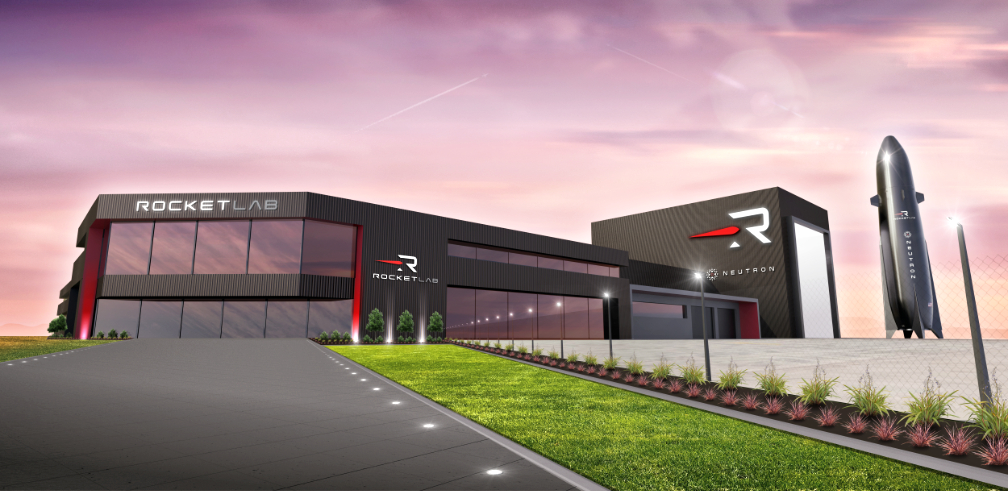
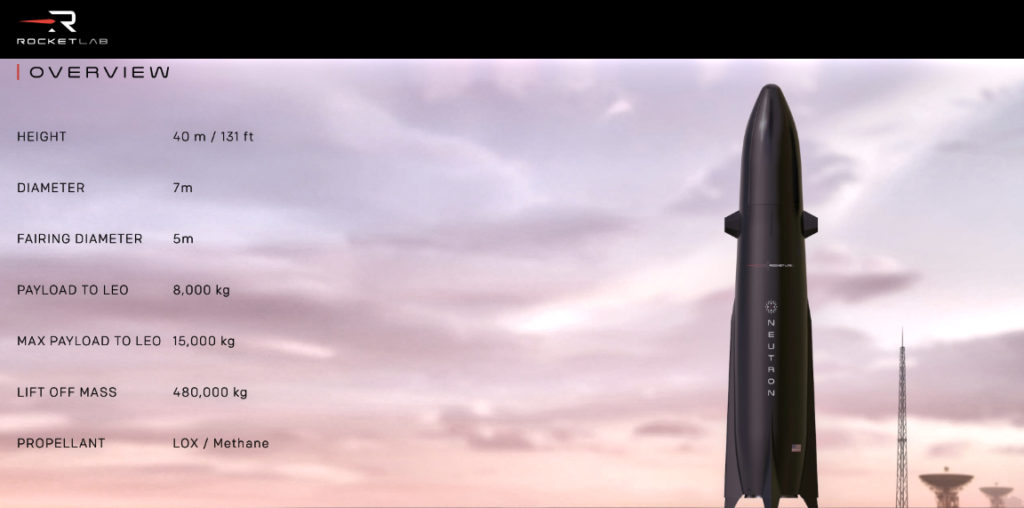
Additionally, Rocket Lab has officially selected Wallops Island, Virginia as the location for their first launch site and manufacturing and operations complex for Neutron, the company’s new 8-ton reusable rocket.

Some key points : The Neutron Production Complex and Neutron’s first launch pad will be located within the NASA Wallops Flight Facility and Mid-Atlantic Regional Spaceport. The complex will be home to a rocket production, assembly, and integration facility, as well as a dedicated launch pad for the Neutron rocket located on the southern end of Wallops Island.

Rocket Lab’s Neutron Production Complex is expected to create as many as 250 jobs in Virginia.

The manufacturing complex will be located within proximity of Rocket Lab Launch Complex 2, the Company’s launch site for the Electron launch vehicle, the second most frequently launched U.S. rocket annually since 2019.

Rocket Lab selected Virginia as the location of its Neutron expansion on the strength of the proposal from the Commonwealth of Virginia, which includes $30 million set aside for infrastructure and operational systems improvements to the Mid-Atlantic Regional Spaceport where the Neutron launch site will be located, along with $15 million from the MEI Project Approval Commission in site improvements and building construction in support of Neutron.

Rocket Lab expects to begin construction on the Neutron Production Complex in Virginia shortly, and further Neutron expansion will continue throughout the United States as the program develops toward first launch.

Commercial and government interest in Neutron is strong and includes a recent $24 million development contract granted by the U.S. Space Force’s Space Systems Commands (SSC) in support of Neutron’s capability to aid national security and defense missions ranging from scientific and experimental satellites to the largest and most critical national security payloads.

Filed Under: Featured, News

SDA Awards Contracts For 126 Satellites

February 28, 2022 by editorial

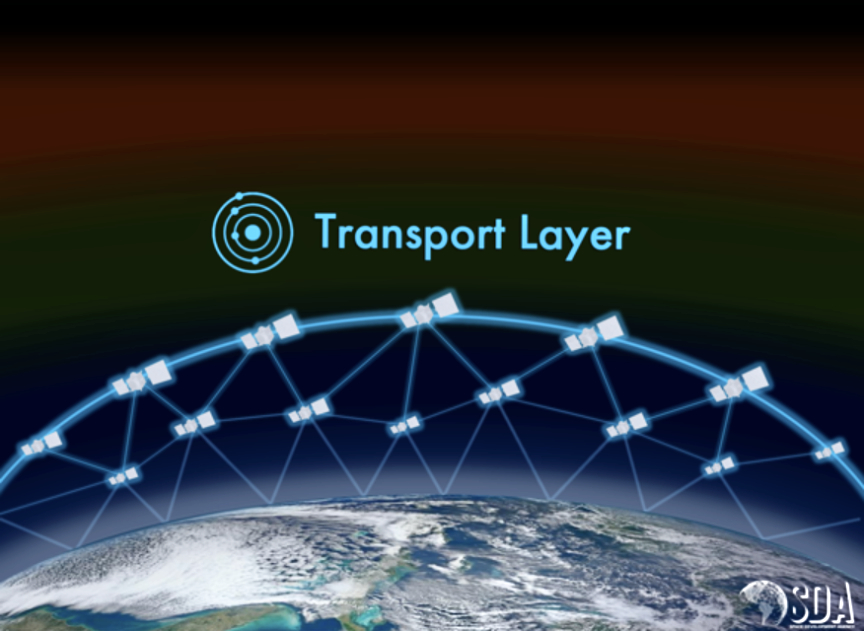
The Space Development Agency (SDA) has awarded three prototype agreements that are worth approximately $1.8 billion to establish the foundation for Tranche 1 Transport Layer (T1TL), a mesh network of 126 optically-interconnected space vehicles (SV) that will provide a resilient, low-latency, high-volume data transport communication system and be ready for launch starting in September 2024.

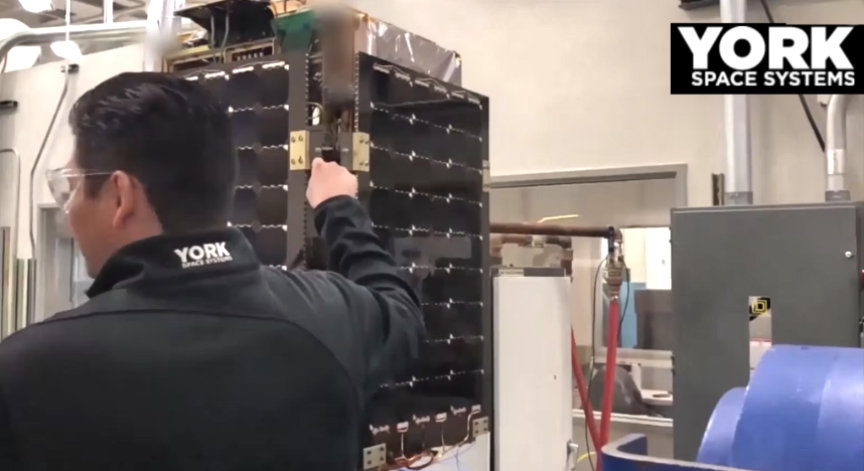
These agreements are awarded to Lockheed Martin Space, Northrop Grumman Space Systems and York Space Systems to each build and demonstrate effectiveness for two, near-polar, Low Earth Orbital (LEO) planes of the six-plane T1TL, which forms the initial warfighting capability tranche of the National Defense Space Architecture (NDSA).

Tranche 1 Transport Layer will leverage and proliferate the capabilities being demonstrated in Tranche 0 Transport Layer with targeted technology enhancements, mission-focused payload configurations, increased integration, and greater production efficiencies. The T1TL will provide global communications access and deliver persistent regional encrypted connectivity in support of warfighter missions around the globe by serving as the backbone for Joint All Domain Command and Control (JADC2) built on low-latency data transport, sensor-to-shooter connectivity, and direct-to-weapon platforms connectivity.

Lockheed Martin Corporation, Littleton, Colorado, is awarded a prototype agreement with a potential value of approximately $700 million to execute a research and development program for the development of a T1TL prototype constellation consisting of 42 satellites in two near-polar low Earth orbital planes (21 SVs for each orbital plane). The proposal was received and evaluated under an Other Transaction Authorities solicitation SDA-PS-22-01. “Our team at Lockheed Martin is thrilled to be awarded a T1TL contract,” said Erik Daehler, Protected Communications Mission Area leader at Lockheed Martin Space. “We’re looking forward to building upon our team’s success on Tranche 0 by approaching Tranche 1 with modernized and streamlined processes that do more, cost less and achieve mission goals faster. Producing these innovative spacecraft will be a collaborative effort, with Lockheed Martin using its longstanding partnerships to deliver high-quality products that will provide the right capabilities to the warfighter.”

Northrop Grumman Strategic Space Systems, Redondo Beach, California, is awarded a prototype agreement with potential value of approximately $692 million to execute a research and development program for the development of a T1TL prototype constellation consisting of 42 satellites in two near-polar low Earth orbital planes (21 SVs for each orbital plane). The proposal was received and evaluated under an Other Transaction Authorities solicitation SDA-PS-22-01. “Northrop Grumman recognizes information on the modern battlefield must be delivered to our warfighters at the speed of relevance,” said Robert Fleming, vice president and general manager, Strategic Space Systems. “Our T1TL solution combines proven end-to-end satellite system integration and heritage communication mission expertise accumulated over decades, across multiple orbital regimes to rapidly field these critical capabilities to warfighters in the field.”

York Space Systems, Denver, Colorado, is awarded a prototype agreement with a potential value of approximately $382 million to execute a research and development program for the development of a T1TL prototype constellation consisting of 42 satellites in two near-polar low Earth orbital planes (21 SVs for each orbital plane). The proposal was received and evaluated under an Other Transaction Authorities solicitation SDA-PS-22-01. “We are honored to again have SDA’s confidence in executing the agency’s vision,” said Dirk Wallinger, chief executive officer, York Space Systems. “Their competitive, fixed-price procurements leverage York’s private capital investments to deliver low-risk, industry-leading constellations today and well into the future.”

“These awards will drive delivery of the NDSA’s data and communications Transport Layer through a proliferated constellation of relatively small, mass-producible space vehicles in Low Earth Orbit,” said Derek Tournear, SDA director. “Through our solicitations, we aim to create a marketplace through two-year spiral development and regular, full and open solicitations for each tranche so that industry can plan, develop and grow accordingly. We look forward to collaborating with our industry partners to deliver the capabilities the warfighter needs through Tranche 1 and beyond.”

Recognized as DoD’s constructive disruptor for space acquisition, SDA will accelerate delivery of needed space-based capabilities to the joint warfighter to support terrestrial missions through development, fielding, and operation of the National Defense Space Architecture.

Filed Under: News

Capella Space Publishes SAR Imagery Of The Ukraine-Russia Crisis

February 28, 2022 by editorial

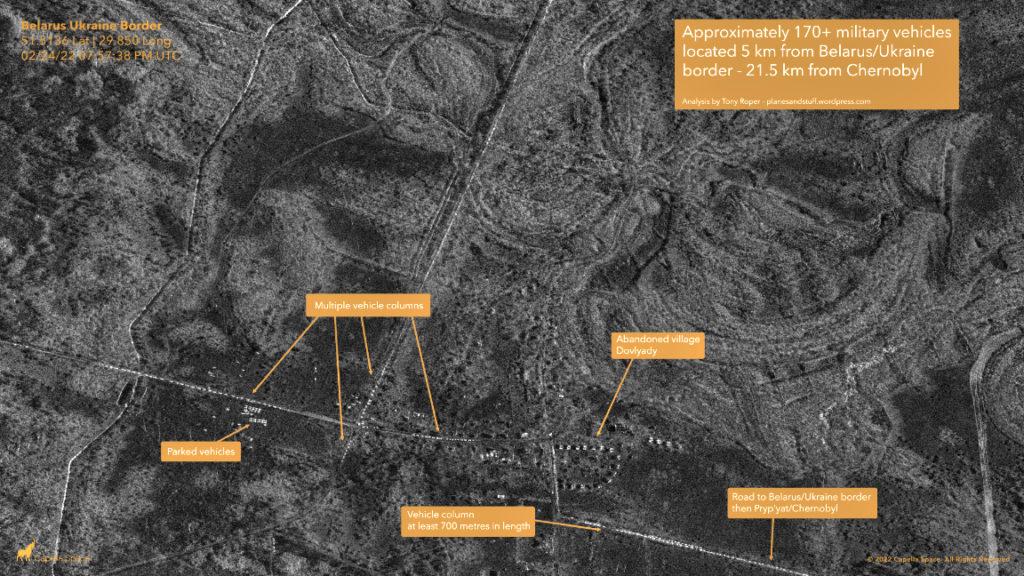
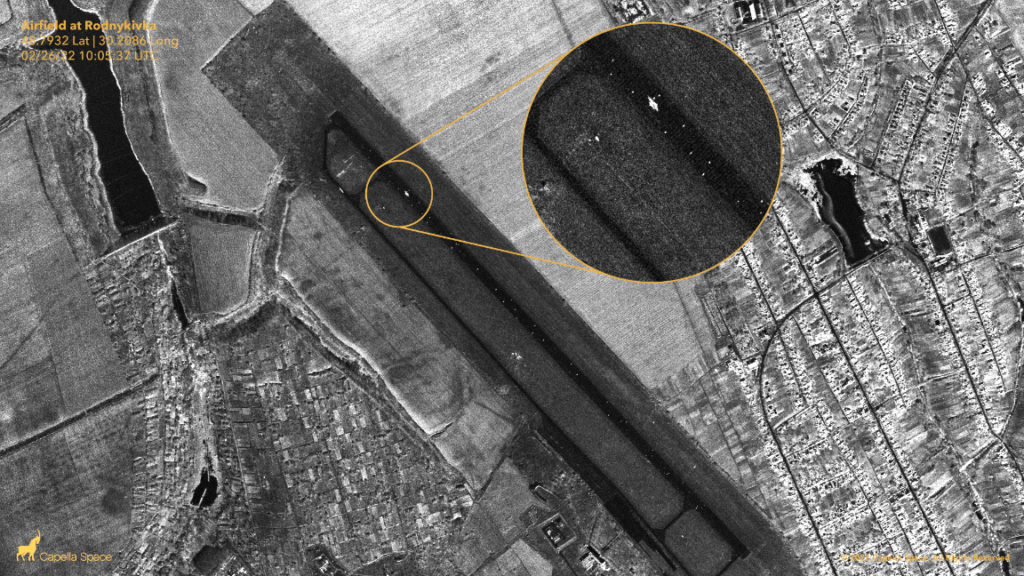
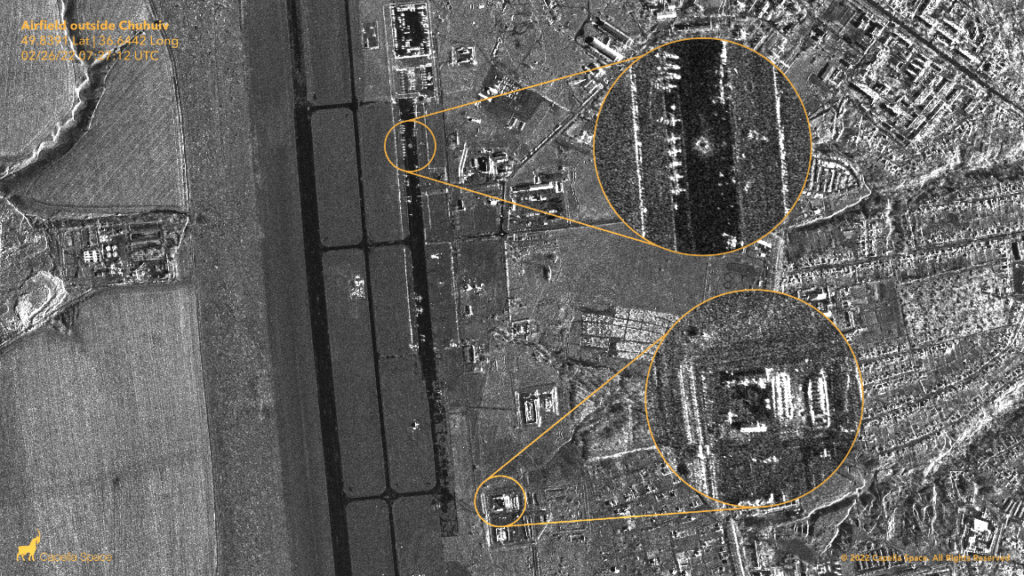
Capella Space has captured SAR imagery are from the airfield at Rodnykivka (48.7932 LAT, 30.2086 LONG – captured 2/26 at 10:05 am UTC) in the Ukraine.

Capella Space SARsat image capture of damage to the Rodnykivka airfield runway.
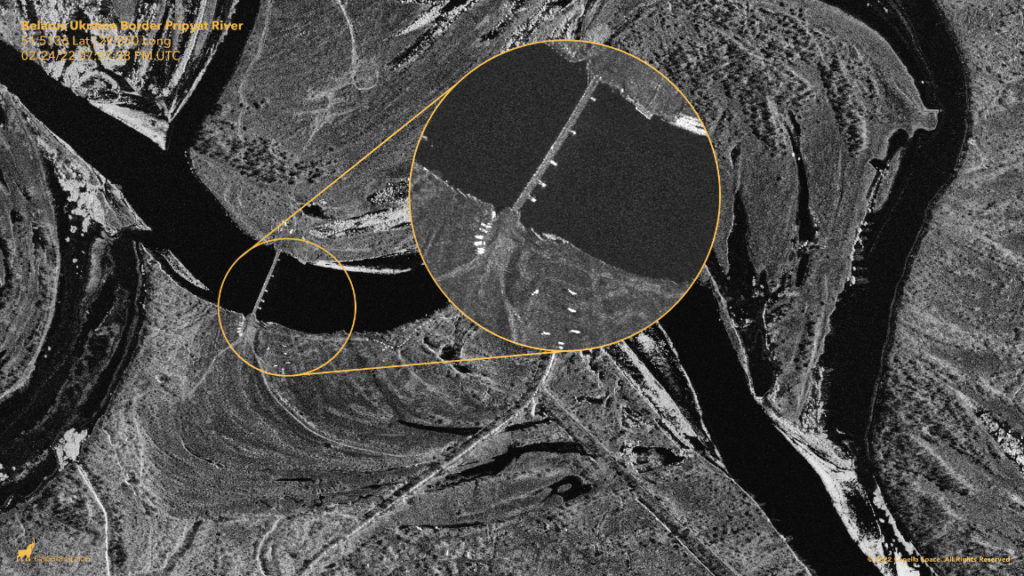
The Ukranian border at the Pripyat River, Russian offensive vehicles revealed.
Damage to the airfield just outside Chuhuiv, Ukraine.

All imagery is copyright Capella Space.

The company will be adding new imagery to this folder as such becomes available.

Filed Under: News

Records For Terran Orbital With New Contracts + Awards + Plus New Mfg. Facility

February 28, 2022 by editorial

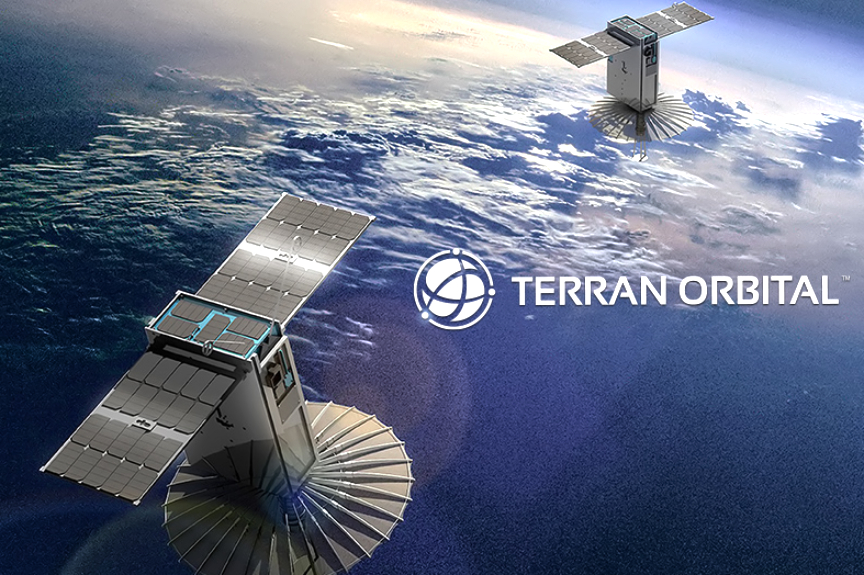
Terran Orbital Corporation (“Terran Orbital”) has announced that the firm has received contracts and awards totaling more than $170 million since September 30, 2021 — this includes multiple agreements and awards from several government and commercial customers.

Terran Orbital previously announced that the firm had entered into a business combination agreement with Tailwind Two Acquisition Corp. (NYSE: TWNT), (“Tailwind Two”), a special purpose acquisition company (SPAC), pursuant to which Terran Orbital will combine with Tailwind Two.

“Terran Orbital is fortunate to enjoy unique relationships with leaders in the defense, civil, and commercial sectors,” said Marc Bell, Co-Founder, Chairman and Chief Executive Officer of Terran Orbital. “Our team continues to focus on delivering the highest quality solutions at a compelling price. We are honored by the trust and partnership of our customers and look forward to delivering the capabilities they need.”

As always, government contracts and programs are subject to the availability of Congressional appropriations and authorizations, as well as the federal budget process. Accordingly, Terran Orbital may not predict if and when the anticipated revenue from these government programs and awards will be recognized.

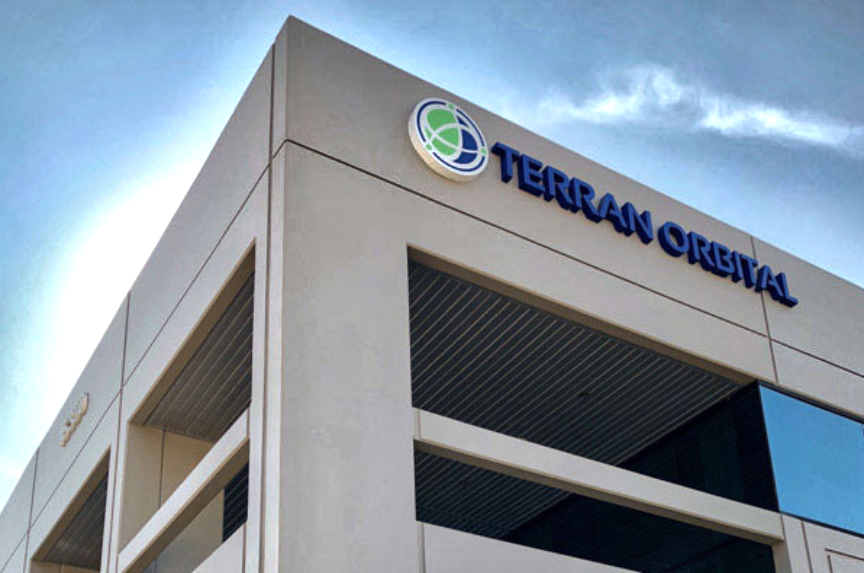
Additionally, Terran Orbital Corporation has signed a 10-year lease for a 60,000 square-foot commercial facility in Irvine, California — the location of the facility is adjacent to the Company’s existing facility. The new facility will focus on pure assembly and production. The facility will house staff and equipment starting later this year.

In September 2021, Terran Orbital announced it planned to build what the Company believes will be one of the largest satellite manufacturing complexes in the world in Brevard County, Florida. Once completed, it is expected that the 660,000 square-foot facility will create approximately 2,100 new jobs on Florida’s Space Coast.

“Terran Orbital continues to expand our status as an industry leader by growing our portfolio of satellite production and assembly facilities,” said Terran Orbital Co-Founder, Chairman and Chief Executive Officer, Marc Bell. “This is another in a long line of developments to maintain our leadership as a top small satellite manufacturer in the country.“

Filed Under: News

Advanced Space Completes Milestone Testing For Its Mission To The Moon

February 28, 2022 by editorial

Advanced Space LLC. is reporting a successful, recent test for CAPSTONE, a NASA-funded mission to the Moon.

Advanced Space owns and operates the CAPSTONE mission, a trailblazing pathfinder for the Gateway. The Gateway, a lunar orbiting outpost, will support NASA’s Artemis missions that will establish a long-term, human presence at the Moon. CAPSTONE is the Cislunar Autonomous Positioning System Technology Operations and Navigation Experiment and will help reduce risk for future spacecraft by validating innovative technologies and verifying the dynamics of the Earth-Moon halo orbit where the Gateway will operate.

The fourth Operational Readiness Test (ORT-4) for the CAPSTONE mission conducted by the Advanced Space team simulated a week of real-time mission operations in a Near Rectilinear Halo Orbit (NRHO), the designated orbit for Gateway, which is being developed by NASA and its international and commercial partners. The Gateway will provide astronauts access to the lunar surface and act as a staging point for deep space exploration and will feature living quarters for astronauts, a lab for science and research as well as ports for visiting spacecraft.

CAPSTONE will be the first spacecraft to fly in this NRHO and one of the first cubesats to fly in cislunar space. It will traverse a low-energy, ballistic, lunar transfer and use solar perturbations to greatly decrease the spacecraft propulsion requirements for the mission. It will also test the peer-to-peer navigation system developed by Advanced Space, CAPS (Cislunar Autonomous Positioning System), to determine its position via crosslink measurements with NASA’s Lunar Reconnaissance Orbiter without relying on ground stations.

CAPS is supported by NASA’s Small Business Innovation Research program. CAPS may enable autonomous navigation of satellites in cislunar space, helping to propel humans beyond Earth in a sustained way.

“These tests confirm our Advanced Space team is ready for launch,” said Bradley Cheetham, Advanced Space CEO. “We are excited to partner with NASA on this historic Moon mission. CAPSTONE will change the way we explore space.”

Previous tests also simulated NRHO operations, but an exciting addition for Advanced Space’s ORT- 4 was the expanded testing of CAPS crosslink procedures. As part of the CAPS planning procedures, operators generate appropriate commands, such as telling the spacecraft where to point, in order to execute the CAPS activities on board the spacecraft. Additionally, in ORT-4, operators performed real-time simulations of CAPS measurements on flight-like hardware.

“Our technology is a breakthrough for how NASA and other customers can navigate in space,” said Dr. Jeff Parker, co-founder of Advanced Space, Chief Technology Officer, and author of the book Low-Energy Lunar Trajectory Design. “Each time we have a test event, our lessons learned and ideas for improvements to our system allow us to better prepare for flight operations.”

The main objectives for ORT-4 were to demonstrate scripts and processes for Maneuver Planning and Payload Planning and to exercise the Operations team in nominal and contingency situations in NRHO operations. Additionally, the test conductors injected anomalies to test the Operations team and expose them to possible contingency situations they might see in flight. With the mission targeted for this Spring, these tests and constant communications with company partners such as Tyvak, the spacecraft manufacturer, and Rocket Lab, the launch provider, are critical and increasing the level of excitement.

Advanced Space of Colorado owns the satellite and is responsible for overall mission operations.

Filed Under: News

  • « Go to Previous Page
  • Page 1
  • Interim pages omitted …
  • Page 46
  • Page 47
  • Page 48
  • Page 49
  • Page 50
  • Interim pages omitted …
  • Page 58
  • Go to Next Page »

Primary Sidebar

WEEKLY NEWSLETTER

Archives

  • April 2026
  • March 2026
  • February 2026
  • January 2026
  • December 2025
  • November 2025
  • October 2025
  • September 2025
  • August 2025
  • July 2025
  • June 2025
  • May 2025
  • April 2025
  • March 2025
  • February 2025
  • January 2025
  • December 2024
  • November 2024
  • October 2024
  • September 2024
  • August 2024
  • July 2024
  • June 2024
  • May 2024
  • April 2024
  • March 2024
  • February 2024
  • January 2024
  • December 2023
  • November 2023
  • October 2023
  • September 2023
  • August 2023
  • July 2023
  • June 2023
  • May 2023
  • April 2023
  • March 2023
  • February 2023
  • January 2023
  • December 2022
  • November 2022
  • October 2022
  • September 2022
  • August 2022
  • July 2022
  • June 2022
  • May 2022
  • April 2022
  • March 2022
  • February 2022
  • January 2022
  • December 2021
  • November 2021
  • October 2021
  • September 2021
  • August 2021
  • July 2021
  • June 2021
  • May 2021
  • April 2021
  • March 2021
  • February 2021
  • January 2021
  • December 2020
  • November 2020
  • October 2020
  • September 2020
  • August 2020
  • July 2020
  • June 2020
  • May 2020
  • April 2020
  • March 2020
  • February 2020
  • January 2020
  • December 2019
  • November 2019
  • October 2019

© 2019–2026 SatNews

Insert/edit link

Enter the destination URL

Or link to existing content

    No search term specified. Showing recent items. Search or use up and down arrow keys to select an item.
      x
      Sign Up Now!

      Enjoy a free weekly newsletter with recent headlines from the global SmallSat industry.

      Invalid email address
      We promise not to spam you. You can unsubscribe at any time.
      Thanks for subscribing! You will now receive weekly SmallSat News updates.
      We love our advertisers.
      And you will too!

      Please disable Ad Blocker to continue... We promise to keep it unobtrusive.
      We promise not to spam you. You can unsubscribe at any time.
      Invalid email address
      Thanks for subscribing!