• Skip to main content
  • Skip to primary sidebar
  • Home
  • News
  • Featured
  • More News ⌄
    • SatNews
    • SatMagazine
    • MilSatMagazine
  • Events ⌄
    • MilSat Symposium
    • SmallSat Symposium
    • Satellite Innovation
  • Contacts
  • SUBSCRIPTION

SmallSat News

You are here: Home / Archives for 2022

Archives for 2022

SpaceLink Names Demo Implementation Partner — Axiom Space

February 27, 2022 by editorial

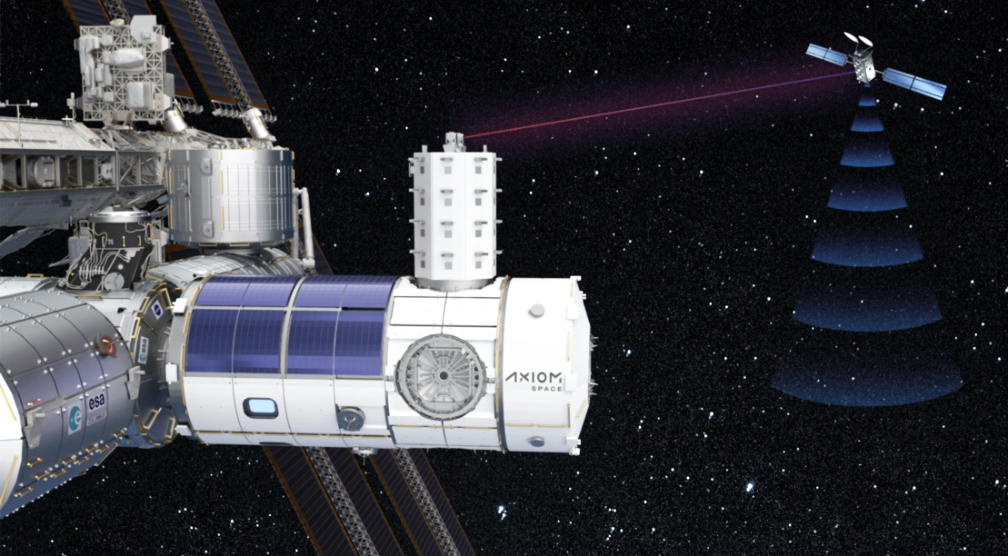
SpaceLink recently named Axiom Space as its Implementation Partner for demonstration of its end-to-end communications relay service on the International Space Station.

SpaceLink completed an agreement with the Center for the Advancement of Science in Space (CASIS), manager of the International Space Station (ISS) National Laboratory, last year, and signed its subcontract with Axiom last week, making Axiom the liaison to ensure that all interfaces and system requirements meet NASA standards.

The SpaceLink demonstration will validate the use of a 10 Gigabit per second optical terminal for real-time voice, video, and data relay for ISS crew, onboard systems, and experiments. Last August, SpaceLink announced that the company was selected by CASIS for a demonstration on the ISS under an agreement that is now fully executed.

As Implementation Partner, Axiom will leverage its expertise in working with NASA and the ISS National Laboratory to support mission integration, launch, and operations for the SpaceLink payload. Axiom will support SpaceLink as a liaison with NASA and will lead safety reviews to ensure SpaceLink hardware meets the requirements for the ISS.

The SpaceLink relay network is designed to pick up where NASA’s Tracking and Data Relay Satellite System (TDRSS) leaves off and go beyond with unprecedented capability that leverages the latest technology advances in optical communications.
“Team members who bring years of ISS experience to Axiom have made Axiom the ideal partner for our demonstration,” said David Bettinger, SpaceLink CEO. “As with many developments that begin with government support, commercial space stations and the networks that serve them are the future. It is an honor to work with the ISS National Laboratory and Axiom to further this important transition.”

“High-speed communication will be a critical component for the future where people live and work in space,” said Axiom President and CEO, Michael Suffredini, “Axiom looks forward to collaborating with SpaceLink and supporting its relay network, beginning with this important demonstration on the ISS.“

With the proliferation of spacecraft in LEO, the demand for fast, continuous, high-capacity connectivity continues to grow. SpaceLink is designed to help close the business case for commercial space stations, Earth Observation (EO) companies, satellite servicers, launch vehicles, space tugs, and lunar communications. It also meets requirements for the U.S. Government and close allies that want to leverage secure industry solutions to maximize capabilities.

SpaceLink will help advance humanity to a new age of space commerce, exploration, environmental awareness, and security. The Always in Sight™ data relay system provides global coverage to empower space system operators to maximize use of their assets. SpaceLink Corporation is headquartered in the Washington DC area and has offices in Silicon Valley, California. It is a wholly owned U.S. subsidiary of Electro Optic Systems Holdings Limited, a public company traded on the Australian stock exchange.


Filed Under: News

Firefly Aerospace Receives A Significant Financial Stake From AE Industrial Partners

February 27, 2022 by editorial

AE Industrial Partners, LP (“AEI”) has reached a definitive agreement to acquire a significant stake in Firefly Aerospace (“Firefly” or “the Company”), an emerging leader in economical launch vehicles, spacecraft and in-space services, from Noosphere Venture Partners LP (“Noosphere”).

Transaction closing is subject to the satisfaction of regulatory approvals, including Hart-Scott-Rodino (“HSR”) clearance. Other terms of the transaction were not disclosed.

With the acquisition of Noosphere’s stake in Firefly, AEI will further expand its space investment portfolio that includes investments in Redwire Space and Sierra Space. With the previous support and investment from Noosphere, the Company is now positioned for robust growth in the space transportation market.

Firefly raised Series A financing in May of 2021 at a $1.1 billion valuation and the company performed its first launch of Alpha, its flagship launch vehicle, in September of last year — the company’s second vehicle is awaiting necessary approvals ahead of its launch.

Firefly has also recently completed the “critical design review” phase for its Blue Ghost Lunar Lander Program, bringing the Company one step closer to launching in late 2023.

Having recently achieved several major milestones, Firefly is at an inflection point and AEI’s acquisition will allow the Company to realize the significant opportunities ahead. AEI’s portfolio companies have a history of serving as strategic partners to the top national security agencies, including the Department of Defense. AEI believes that leveraging this experience will be a critical advantage as Firefly looks to secure additional U.S. Federal Government contracts.

Firefly is developing a family of launch and in-space vehicles and services that provide industry-leading affordability, convenience, and reliability. Firefly’s launch vehicles utilize common technologies, manufacturing infrastructure and launch capabilities, providing LEO launch solutions for up to ten metric tons of payload at the lowest cost per kg. in the small-launch class. Combined with Firefly’s in-space vehicles, such as the Space Utility Vehicle and Blue Ghost Lunar Lander, Firefly provides the space industry with a single source for missions from LEO to the surface of the Moon or beyond. Firefly is headquartered in Cedar Park, Texas.

Noosphere Venture Partners LP, founded by Dr. Max Polyakov, is an international asset management firm with the strategic vision to transform high-potential companies into definitive market leaders. The company’s mission is to change the landscape of the digital economy and Noosphere invests in projects around the world that primarily are focused on space, consumer internet, advertising and marketing technologies.

AE Industrial Partners is a private equity firm specializing in aerospace, defense & government services, space, power & utility services, and specialty industrial markets. AE Industrial Partners invests in market-leading companies that can benefit from our deep industry knowledge, operating experience, and relationships throughout our target markets. AE Industrial Partners is a signatory to the United Nations Principles for Responsible Investment and the ILPA Diversity in Action initiative. Learn more at www.aeroequity.com.

Filed Under: News

Fifty Starlink Satellites Climb To Orbit Via The SpaceX Falcon 9 Launch

February 25, 2022 by editorial

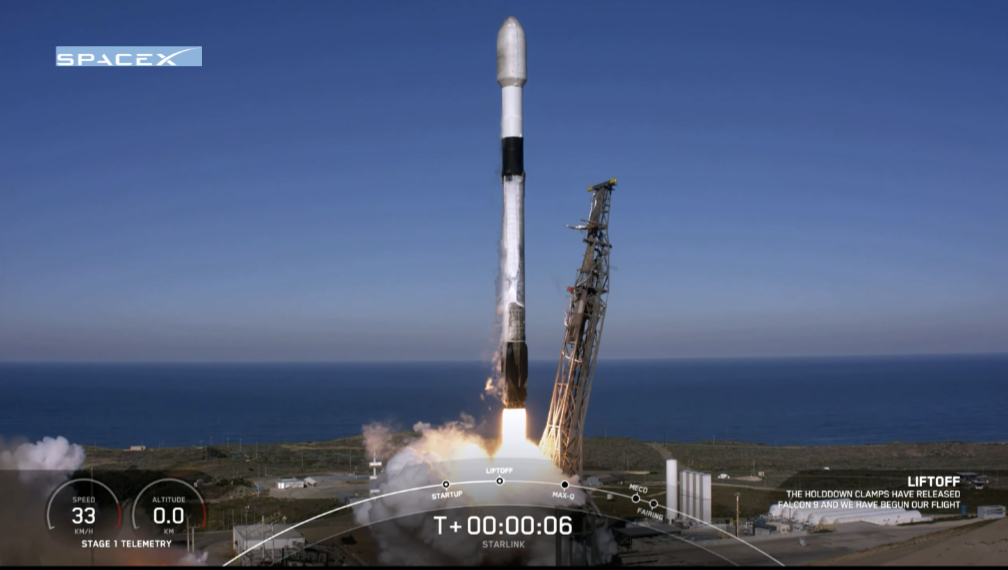
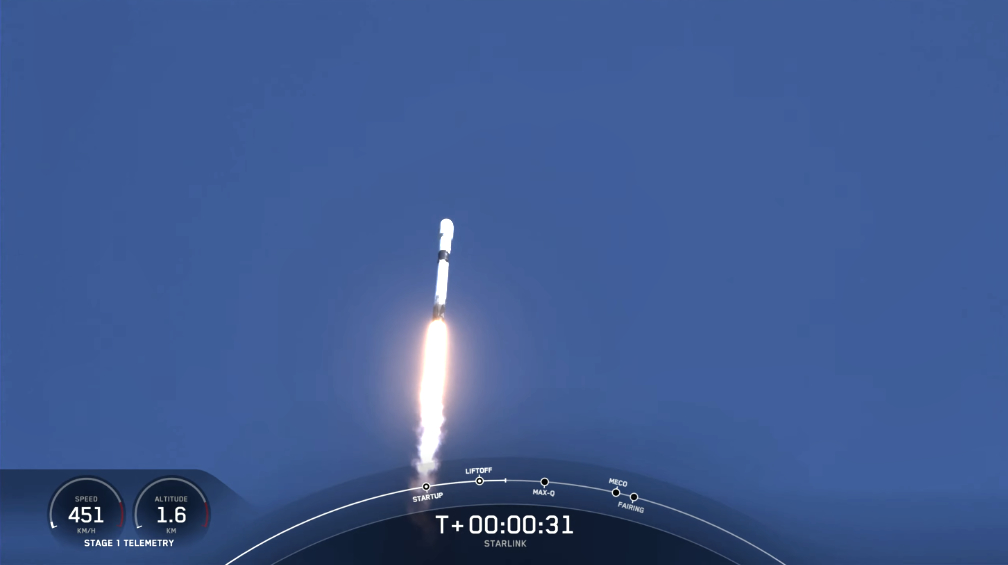
Once again, this time on Friday, February 25, at 9:12 a.m. PST, SpaceX launched 50 Starlink satellites to LEO from Space Launch Complex 4 East (SLC-4E) at Vandenberg Space Force Base in California.

This was the fourth flight for the Falcon 9 first stage booster supporting this mission — this booster previously supported Sentinel-6 Michael Freilich, DART and one Starlink mission. SpaceX’s booster successfully landed on the “Of Course I Still Love You” drone ship.

Filed Under: Featured, News

Forrester’s Digest: Blue Origin / Eclipse Global Connectivity + OneWeb / Intelsat /

February 25, 2022 by editorial

The Jeff Bezos-backed Blue Origin rocket system says it plans to more than double the number of people it lofts into sub-orbital space upon its New Shepard vehicle. It was a New Shepard rocket which carried William Shatner into sub-orbital space last October.

Bob Smith, chief executive of Blue Origin, speaking at the annual FAA Commercial Space Transportation event, explained that his company saw “robust” demand for passenger trips. “The market is robust. It’s very robust. The challenge for Blue at this point is that we’re actually supply-limited. No business ever wants to be supply-limited when there’s robust demand. It’s incumbent on us to go build new vehicles, get them ready and safely go fly, and also safely get our launch cadence up.”

Smith added that Blue Origin could easily double the number of passengers it carried this year. “We have a great understanding of not only, by name, people and what they would pay, but also the volume of people. We can see what that curve is from higher prices down to lower prices in terms of volume.”

Eclipse Global Connectivity is now an authorized OneWeb Distribution Partner (DP), following a signed agreement late last year. Through the partnership, Eclipse will offer new low-latency, fiber-like airtime services, hardware systems and certifications to government aircraft across Europe, the Middle East and Asia (EMEA) to facilitate a broad range of operational and mission goals.

“Our dedication to delivering airborne satellite communications solutions tailored to enable a wide range of government and military missions spans more than two-and-a-half decades,” said Marc Pinault, Eclipse Global Connectivity CEO. “The Eclipse team is incredibly enthusiastic about our new partnership with OneWeb. This new cost-effective, high-speed service promises a secure, innovative solution for government, military and civilian airborne communication needs.”

The initial focus is on providing innovative solutions for global-reach command and control, and manned and unmanned airborne ISR missions. The low-latency service will seamlessly enable combat cloud and applications like video transmission and cryptographic device synchronization. Additionally, native Office365 applications such as Teams and SharePoint, typically used onboard Head of State aircraft, will also experience improved performance. The scope can eventually expand to other market segments, such as business and commercial aviation.

“Eclipse and OneWeb share the vision of providing ingenious connectivity solutions to aircraft operators worldwide,” said OneWeb Head of Government Business Line, Dylan Browne. “Their lengthy and solid history of delivering complete solutions addressing the complex SATCOM requirements of government, military and Head of State operators makes Eclipse an optimal partner for us. It is one of the many reasons we are thrilled to have the Eclipse team onboard.”

Intelsat has formally confirmed its emergence from Chapter 11 reconstruction.

The satellite operator said it had emerged as a private company with a substantially strengthened capital structure to support its growth as the leader in satellite communications. This final milestone follows receipt of regulatory approvals, completion of certain corporate actions, and satisfaction of other customary conditions.

Intelsat’s now-effective Plan of Reorganization, supported by all creditor groups and confirmed by the Bankruptcy Court on December 16th 2021, has reduced the Company’s debt by more than half, from approximately $16 billion to $7 billion. In connection with emergence, Intelsat obtained $6.7 billion in new financing consisting of a revolving credit facility, term loan, and secured notes. Supported by new equity owners, the Company is now best positioned for long-term success as it continues to innovate and bring new services to market.

Intelsat also has a new Board of Directors, composed of the Company’s Chief Executive Officer and six new directors, including Lisa Hammitt, Intelsat’s Chairperson.

“For more than 50 years, Intelsat has led innovation in our sector and delivered high-performing services for customers,” said Intelsat’s CEO, Stephen Spengler. “Now that our financial restructuring has been completed successfully, we are driving Intelsat’s future development and growth from a position of even greater strength. We have significantly less debt as well as new financing to support our innovation and network plans, complementing our unparalleled global orbital and spectrum rights and strong operating model. We are positioned better than ever to fuel the success of our customers and partners, achieve our strategic objectives, and accelerate our growth. Building the world’s first global 5G satellite-based, software-defined, unified network is just one of Intelsat’s many ground-breaking projects well underway.”

Spengler continued, “Today’s emergence is the culmination of the hard work, collaboration, and vision of many. I especially want to thank our talented and committed Intelsat team members for their unwavering focus on customer service – and thank our valued customers, vendors, and other partners for their trust and support. With a focus on innovation, reliability, and high-performing service, we will advance our business for the benefit of all and continue onward as the leader in satellite communications.”

Filed Under: News

The UK’s Spaceport Cornwall Edges Closer To Initial Launch

February 25, 2022 by editorial

Set to deliver the first ever launch from UK soil this summer, Spaceport Cornwall is laying the foundations for long-term, responsible, smallsat services from Cornwall Airport Newquay with the build of the Centre for Space Technologies.

This state of the art facility is a nationally unique asset where the value of launch from Cornwall will realize its full potential. The Center comprises two main facilities: the Space Systems Integration Facility, where satellites will be integrated into the fairing of the rocket; and the Space Systems Operation Facility, an adjacent R&D work and office space.

The Center for Space Technologies will be home to academic partners, SMEs, multinationals and environmental organizations who will come together and collaborate on responsible launch practices and applications – showcasing how space can help solve some of our greatest challenges on Earth.

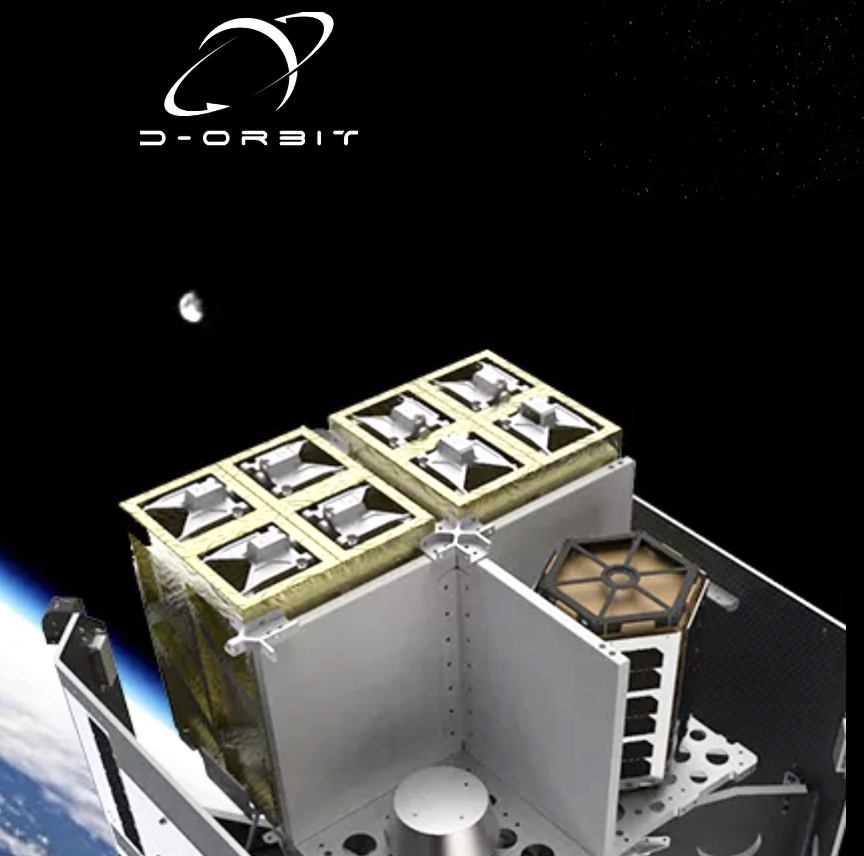
The facilities are key to Cornwall’s space cluster development and continued growth for cutting-edge practice within the region, and will serve as a catalyst to attract space businesses to work alongside academia in this unique capacity. Businesses from across the UK space sector and beyond, including satellite manufacturer D-Orbit, have already committed to using the center as a base for innovation and advancement.

The center will also be the on the ground base for Spaceport Cornwall’s mission to take a global lead in responsible launch and their ambition to achieve Net Zero. It will be home to Kernow Sat-1 – a G7 Legacy funded Community Satellite that will be launched to monitor ocean health around the coast of Cornwall – supporting Blue Carbon ambitions. Alongside this, further R&D will focus on Environmental Intelligence and Space.

Business Secretary, Kwasi Kwarteng, said, “From connecting people with their friends and family, to helping farmers to manage their crops, space is playing an increasingly pivotal role in our daily lives. Not only is this booming £16 billion sector a vital part of the UK economy, but it is also helping to protect British security interests abroad. The Centre for Space Technologies, backed by government funding, will be a hugely exciting asset to both Cornwall, and to the UK’s space sector as a whole. The facility will contribute to vital research and development in the field, bringing together industry and academia to exploit space to solve some of humanity’s greatest challenges. The Government is delighted to be able to support this fantastic site, which will bring 150 jobs to the local area while boosting Cornwall’s burgeoning space cluster.”

Melissa Thorpe, Head of Spaceport Cornwall, said, “Spaceport Cornwall is more than just a launch facility. The Centre for Space Technologies is proof of our ambitions to lead the way in a global industry shift. We want to show the key role environmental intelligence can play in solving global climate challenges and the centre will be home to vital R & D in this area – fostering collaboration across industry and academia to pioneer the use of space for good.”

Ian Annett, Deputy CEO of the UK Space Agency, said, “It’s fantastic to see how our investments in UK launch are leading to the development of impressive facilities that will support spaceflight operations, research and collaboration, and create high-skilled jobs. As we countdown to the first launch this summer, we are working closely with Spaceport Cornwall, Virgin Orbit and partners across the country to grow a sustainable new spaceflight industry in the UK.”

The £5.6 million innovative space has been jointly-funded by Cornwall Council, the European Regional Development Fund and the Cornwall and Isles of Scilly Local Enterprise Partnership, through the Government’s ‘Getting Building’ Fund. Accelerating UK Space and growing Cornwall’s economy Spaceport Cornwall, with the Centre for Space Technologies, will deliver 150 direct jobs and £200 million GVA.

Filed Under: News

New Project To Place Denmark On The Military Space Technology Map

February 25, 2022 by editorial

Space technology and satellites are not only important for monitoring climate change, for navigating ships and airplanes, and for communicating over long distances — they are also essential to the security of Denmark and the EU.

A new project develops a technology that makes it possible to monitor and identify military threats in space and on Earth. The AI-driven technology will contribute to process the vast data streams stemming from satellites and land-based sensors and thereby create the basis for using the space data and intelligence for military purposes.

The project, which goes under the name INTEGRAL and is a part of EU’s SSAEW SC2, Space Situational Awareness – Space Command and Control, is supported with funds from the European Defence Fund and is a cooperation between DTU (Technical University of Denmark), the Danish company Space Inventor and the French defence and technology company Thales in Denmark.

The Danish company Space Inventor is going to play a key role in the project by contributing to the development of the prototype for INTEGRAL and finding an algorithm that can trace the orbit of satellites. With the awarded funds follow a significantly increased visibility on the international stage as well as access to knowledge and powerful networks.

“It is incredibly exciting for Space Inventor to be a part of such a big international project, and we are looking forward to showing the world what we are able to do within space and defence,” said Karl Kaas, CEO of Space Inventor ApS.

“Research and development of new space technology in cooperation with the Danish industry increase the focus on science, and create growth and jobs,” said Professor Rasmus Larsen, Provost, Executive Vice President, CAO, M.Sc. (Eng) Ph.D. from DTU.

A unique cooperation with massive potential
The project is one of only 26 projects which have been approved by the EU Commission under the test program European Defence Industrial Development Program (EDIDP) in 2020. Thales sees great potential in the Danish Defence industry looking towards Europe.

“It is a unique project because we unite science and industry on multiple levels. We are, in Thales, a part of the Danish ecosystem within defence and also an international company with deep knowledge about the European defence market. We would like to contribute with this knowledge so that Danish companies can unlock the great potential which the Danish defence industry holds,” said Tommy Ayouty, CEO, Thales Danmark, VP Thales Group in the Nordics.

Several Danish companies are participating in EU projects such as project SAURON for SSA Sensors and the space & defence project SSA Early Warning which both have received funds from EDIDP 2020. Along with INTEGRAL, these projects can improve Denmark’s visibility within the defence and space sector and are expected to lay the foundation for further cooperation and to gather knowledge in connection with the surveillance of the Arctic in the future.

The INTEGRAL project runs until 2023, at which point the parties involved can seek funds to continue the work.

Filed Under: News

Globalstar Orders 17 New Satellites From Macdonald, Dettwiler and Associates

February 24, 2022 by editorial

Globalstar, Inc. (NYSE American: GSAT) has entered into a satellite procurement agreement with Macdonald, Dettwiler and Associates Corporation (“MDA”) pursuant to which Globalstar will acquire 17 new satellites that will replenish and extend the life of Globalstar’s existing constellation.

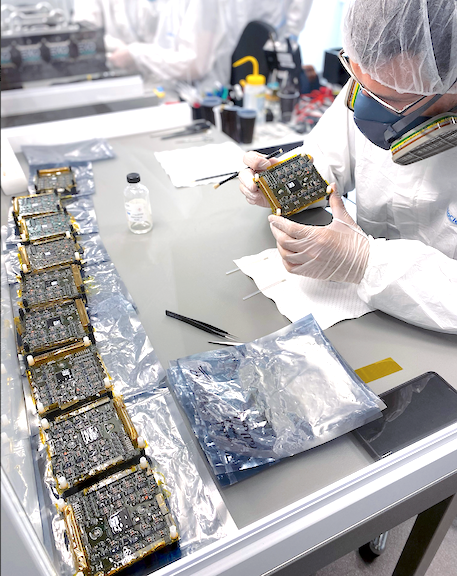
Globalstar is acquiring the satellites to provide continuous satellite services to the potential customer under the Terms Agreement described in the Company’s Annual Reports, as well as services to Globalstar’s current and future customers. Rocket Lab USA, Inc. is the principal satellite bus subcontractor under the Procurement Agreement.

Globalstar is acquiring the new satellites to provide satellite services to the potential customer under the Terms Agreement, as well as services to Globalstar’s current and future customers. Accordingly, as the potential customer has approved the amounts related to the construction of the new satellites, subject to certain conditions and limitations, the potential customer will reimburse Globalstar for 95% of the approved capital expenditures Globalstar makes in connection with the new satellites, interest costs of the Company’s borrowings related to the new satellites as well as termination costs, should any arise. In addition, if it elects to obtain services from Globalstar under the Terms Agreement, the potential customer is obligated to make service payments and cost reimbursements to Globalstar in amounts that would be material to the Company.

The total contract price for the initial 17 satellites is $327.0 million. Globalstar maintains the option to acquire up to nine additional satellites with flexibility in timing to place such order in addition to other optional services under the contract. If Globalstar elects to acquire new satellites, each satellite will be priced at $11.4 million, subject to certain price adjustments. The Procurement Agreement requires the Contractor to deliver the satellites by 2025, with an expectation that all satellites will be launched by the end of 2025. Globalstar plans to contract separately for launch services and launch insurance for the new satellites.

The Procurement Agreement provides for deferrals of milestone payments from February 2022 through August 2022, at a 0% interest rate. On August 16, 2022, all deferred payments will become due by which time Globalstar expects to complete a senior secured financing. This financing is expected to provide sufficient proceeds for the construction and launch of the new satellites, and the Company expects to refinance its current senior credit facility concurrent with or after the financing.

David Kagan, Globalstar’s CEO, said, “After running a competitive process with multiple bidders, we are very pleased to announce the selection of MDA in partnership with Rocket Lab for the construction of our new satellites. The combination of these vendors offered us the best overall balance of innovation, technical capability, schedule reliability and cost. These new satellites will ensure Globalstar’s ability to provide the highest quality mobile satellite services to its customer over the long-term. We look forward to beginning the process of bending metal and readying the new satellites for launch beginning in approximately three years.”

Filed Under: News

France Enlists Synchrocube’s Solutions When GNSS Navigation Signals Are Unusable

February 23, 2022 by editorial

A news update below regarding the Synchrocube project that aims to provide a complementary solution to navigation systems (GNSS: GALILEO; GPS) in order to provide synchronization functions when GNSS navigation signals are unusable. Synchrocube is part of the French space recovery plan. The main goal is to test this service, using a first satellite placed in low orbit.

Syrlinks is at the initiative of this innovative offer and will provide both the payload and the ground receiver necessary to provide this service. Synchrocube brings together several innovative technologies within a single 6U nanosatellite platform. U-Space, ANYWAVES, COMAT and Syrlinks, 4 French companies specializing in NewSpace are joining forces to promote their respective skills around this project.

Synchrocube relies on a consortium of French space industry players. U-Space, as supplier of the nanosatellite platform, has a key role in this in-orbit demonstration project. ANYWAVES and COMAT are also partners in the project, each contributing their own innovative technologies. By pooling their technologies, the companies in this consortium demonstrate their ability to provide effective and competitive solutions to respond to ambitious space programs.

Synchrocube is a unique project with great potential. Today, the digital economy requires increasingly complex systems with more and more data exchanges. Synchrocube is part of this evolution by meeting the synchronization needs of telecommunication networks, energy, intelligent transport and finance by providing a precise and secure time reference.

“Synchrocube represents a major evolution for Syrlinks. The implementation of a project as sizeable as this opens up new commercial prospects for the company. Syrlinks, initially known as a satellite subsystem manufacturer, is on its way to becoming a service provider.” explains Guy Richards, Syrlinks CEO.

“Being part of the Synchrocube project is very rewarding for ANYWAVES. First, because it allows us to act for our industry in the frame of the “France Relance” program. Then because this will give us the opportunity to take a new technological challenge and to propose world-class state of the art antennas. Finally , this development and this collaboration are perfectly aligned with ANYWAVES’ ambition : becoming the leader of miniature antennas for satellites constellations” comments Dr. Nicolas Capet, ANYWAVES CEO.

Filed Under: News

Rocket Lab Adds Their Second, Electron Launch Pad With Pad B In New Zealand… First Mission Already Scheduled

February 23, 2022 by editorial

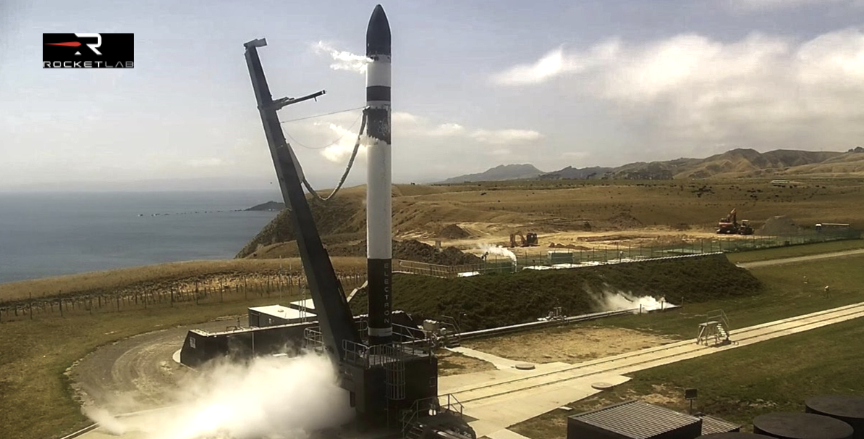
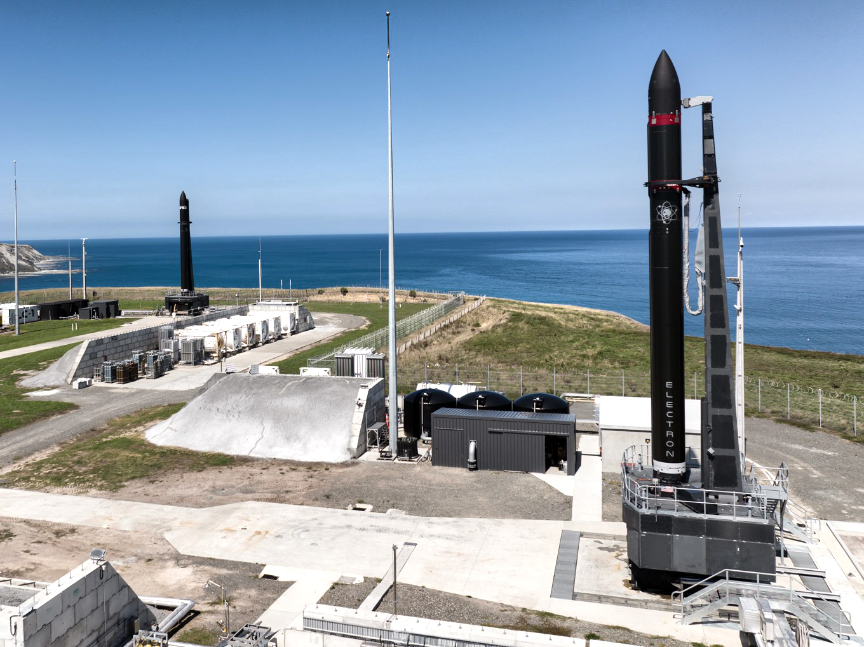
Rocket Lab USA, Inc (Nasdaq: RKLB) has completed their second orbital launch pad at Launch Complex 1 in New Zealand – the Company’s third dedicated pad for its Electron rocket – and confirmed the new pad’s first mission will be a dedicated commercial launch scheduled to lift-off within a week’s time.

Rocket Lab’s Launch Complex 1, Pad B, New Zealand.

Pad B is based within Rocket Lab Launch Complex 1, the world’s first private orbital launch site, located in Mahia, New Zealand. The new pad is Rocket Lab’s third for the Company’s Electron launch vehicle and joins the existing Pad A at Launch Complex 1 and a third launch pad at Rocket Lab Launch Complex 2 in Virginia, USA. With two operational pads within the same launch complex, Rocket Lab doubles the launch capacity of its Electron launch vehicle.

Rocket Lab Electron launch vehicle liftoff.

Launch Complex 1 Pad B will support the upcoming launch of a dedicated Electron mission for Japanese Earth-imaging company Synspective. Lift-off is currently scheduled for no earlier than February 28 UTC / March 1 NZT. Full detail about the mission can be found here: www.rocketlabusa.com/missions/next-mission/

With two launch pads and private range assets at Launch Complex 1, concurrent launch campaigns are now possible from the site. This enables resilient access to space by accommodating tailored customer requirements or late changes to a spacecraft while keeping Rocket Lab’s manifest on schedule. Operating two pads also eliminates pad recycle time, ensuring a launch pad is always available for a rapid-response mission. Launching from a private launch complex, Rocket Lab is also able to avoid the lofty range fees and overheads typically associated with shared launch sites, resulting in a cost-effective launch service for satellite operators.

Rocket Lab founder and CEO, Peter Beck, said, “A reliable launch vehicle is only one part of the puzzle to unlocking space access – operating multiple launch sites so we can launch when and where our customers need to is another crucial factor. We are proud to be delivering responsive space access for our customers, making back-to-back missions possible within hours or days, not weeks or months. Even with just one pad at Launch Complex 1, Electron quickly became the second most-frequently launched U.S. rocket every year. Now, with two pads at Launch Complex 1 and a third in Virginia, imagine what three pads across two continents can do for schedule control, flexibility, and rapid response for satellite operators globally.”

More than 50 local construction workers and contractors were involved in the development of Launch Complex 1 Pad B, which includes a 66-ton launch platform and 7.6-ton strongback customized to the Electron launch vehicle. With Pad B operational, several roles are available now at Launch Complex 1 to support Rocket Lab’s increased launch cadence.

Rocket Lab’s Vice President – Launch, Shaun D’Mello, said, “With Pad B we’ve kept things efficient. Its systems and layout replicates Pad A and shares much of Pad A’s infrastructure including the Electron vehicle integration hangar, runway to the pad, and our own range control facility. With that we’ve been able to double our operational capacity – all on a concrete area smaller than the average tennis court. I’m hugely proud of what the team has achieved: building and bringing a second pad online, all while continuing to service and operate Pad A for our Electron launches to date, and in the middle of a global pandemic no less.”

About Launch Complex 1

Located on the Mahia Peninsula in New Zealand, Launch Complex 1 is the world’s first and only private orbital launch site. As the launch site for Rocket Lab’s Electron rocket, Launch Complex 1 has supported the successful delivery of more than 100 satellites to space across a range of missions for environmental and marine monitoring, Earth observation, science and research, internet connectivity, technology research and development, and national security. An FAA-licensed spaceport, Launch Complex 1 is capable of supporting up to 120 launch opportunities every year. From the site it is possible to reach orbital inclinations from sun-synchronous through to 30 degrees, enabling a wide spectrum of inclinations to service the majority of the satellite industry’s missions to low Earth orbit. Located within Launch Complex 1 are Rocket Lab’s private range control facilities, three satellite cleanrooms, a launch vehicle assembly hangar which can process multiple Electrons for launch at once, and administrative offices. Operating a private orbital launch site alongside its own range and mission control centers allows Rocket Lab to reduce the overhead costs per mission, resulting in a cost-effective launch service for satellite operators.

‘The Owl’s Night Continues’ is the first of three dedicated Electron missions for Synspective, with two scheduled to launch in 2022 and a third in 2023. Each mission will deploy a single StriX satellite, growing Synspective’s synthetic aperture radar (SAR) constellation developed to deliver imagery that can detect millimeter-level changes to the Earth’s surface from space, independent of weather conditions on Earth and at any time of the day or night.

‘The Owl’s Night Continues’ mission follows on from Rocket Lab’s first launch for Synspective in December 2020. That mission, named ‘The Owl’s Night Begins’, witnessed Rocket Lab’s Electron launch vehicle deploy the StriX-α satellite – the first spacecraft in Synspective’s planned constellation of more than 30 SAR satellites designed to collate data of metropolitan centers on a daily basis to support urban development planning, construction and infrastructure monitoring, and disaster response.

Rocket Lab will not be attempting to recover Electron for this mission.

Filed Under: News

U Of South Wales Contracts NanoAvionics For “Harry v2” Nanosatellite Bus

February 22, 2022 by editorial

The University of New South Wales (UNSW) in Sydney, Australia, has contracted mission integrator NanoAvionics to build a nanosatellite bus for UNSW’s satellite innovation laboratory.

As part of the collaboration, NanoAvionics will deliver a 6U nanosatellite bus fully assembled and tested on a functional level, ready for its research and educational purposes. Payload integration for laboratory testing, modifications, and mission operations validation will be carried out by UNSW Sydney.

The intended GNSS (global navigational satellite systems) payload named “Harry v2” will consist of two “KEA” GPS receivers, developed by the Australian Centre for Space Engineering Research at UNSW, to perform remote Earth sensing operations using GPS reflectometry. Able to host multiple experiments, it will take measurements from reflections coming from the Earth while using navigation signals from other GPS satellites. The receivers, designed for both aircraft and CubeSat operations, are capable of recording intermediate frequency (IF) data and delay Doppler maps (DDM) with its associated metadata. The experiment data can be used to infer sea-state, wind speed, water-land boundaries and many other unexplored applications.

Dr. Joon Cheong, from UNSW Sydney, said, ”NanoAvionics offers a suite of state-of-the-art satellite buses that is cost-effective and suitable for modern payload research and development activities to take place.”

Vytenis J. Buzas, founder and CEO of NanoAvionics, added, “The Australian space market is of immense importance to us and we are looking into expanding our footprint there. We have been supplying Australian research centres and educational institutions with nanosatellite technology since the inception of the company. We keep nurturing these relationships by transferring our knowledge in nanosatellite technology with them. 

“NanoAvionics is already working with several Australian companies, acting as a technology partner, with intentions to provide our satellites for institutional and commercial segments, mostly for Earth Observation and IoT missions. As a result, and due to Australia’s constant development in the space industry, NanoAvionics is exploring the possibility of establishing local capabilities in the region.” 

Filed Under: News

  • « Go to Previous Page
  • Page 1
  • Interim pages omitted …
  • Page 47
  • Page 48
  • Page 49
  • Page 50
  • Page 51
  • Interim pages omitted …
  • Page 58
  • Go to Next Page »

Primary Sidebar

WEEKLY NEWSLETTER

Archives

  • April 2026
  • March 2026
  • February 2026
  • January 2026
  • December 2025
  • November 2025
  • October 2025
  • September 2025
  • August 2025
  • July 2025
  • June 2025
  • May 2025
  • April 2025
  • March 2025
  • February 2025
  • January 2025
  • December 2024
  • November 2024
  • October 2024
  • September 2024
  • August 2024
  • July 2024
  • June 2024
  • May 2024
  • April 2024
  • March 2024
  • February 2024
  • January 2024
  • December 2023
  • November 2023
  • October 2023
  • September 2023
  • August 2023
  • July 2023
  • June 2023
  • May 2023
  • April 2023
  • March 2023
  • February 2023
  • January 2023
  • December 2022
  • November 2022
  • October 2022
  • September 2022
  • August 2022
  • July 2022
  • June 2022
  • May 2022
  • April 2022
  • March 2022
  • February 2022
  • January 2022
  • December 2021
  • November 2021
  • October 2021
  • September 2021
  • August 2021
  • July 2021
  • June 2021
  • May 2021
  • April 2021
  • March 2021
  • February 2021
  • January 2021
  • December 2020
  • November 2020
  • October 2020
  • September 2020
  • August 2020
  • July 2020
  • June 2020
  • May 2020
  • April 2020
  • March 2020
  • February 2020
  • January 2020
  • December 2019
  • November 2019
  • October 2019

© 2019–2026 SatNews

Insert/edit link

Enter the destination URL

Or link to existing content

    No search term specified. Showing recent items. Search or use up and down arrow keys to select an item.
      x
      Sign Up Now!

      Enjoy a free weekly newsletter with recent headlines from the global SmallSat industry.

      Invalid email address
      We promise not to spam you. You can unsubscribe at any time.
      Thanks for subscribing! You will now receive weekly SmallSat News updates.
      We love our advertisers.
      And you will too!

      Please disable Ad Blocker to continue... We promise to keep it unobtrusive.
      We promise not to spam you. You can unsubscribe at any time.
      Invalid email address
      Thanks for subscribing!