• Skip to main content
  • Skip to primary sidebar
  • Home
  • News
  • Featured
  • More News ⌄
    • SatNews
    • SatMagazine
    • MilSatMagazine
  • Events ⌄
    • MilSat Symposium
    • SmallSat Symposium
    • Satellite Innovation
  • Contacts
  • SUBSCRIPTION

SmallSat News

You are here: Home / Archives for 2022

Archives for 2022

UPDATE 2: Arianespace offers new launch dates for the Vega C mission launch of the Pléiades Neo satellites

November 25, 2022 by editorial

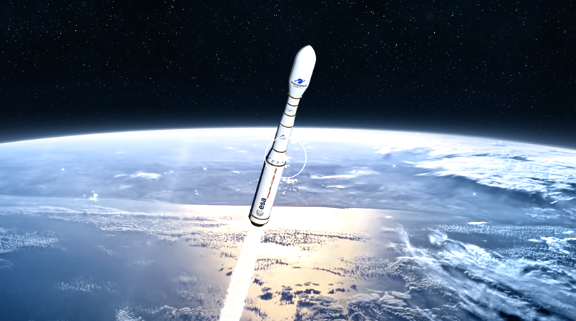
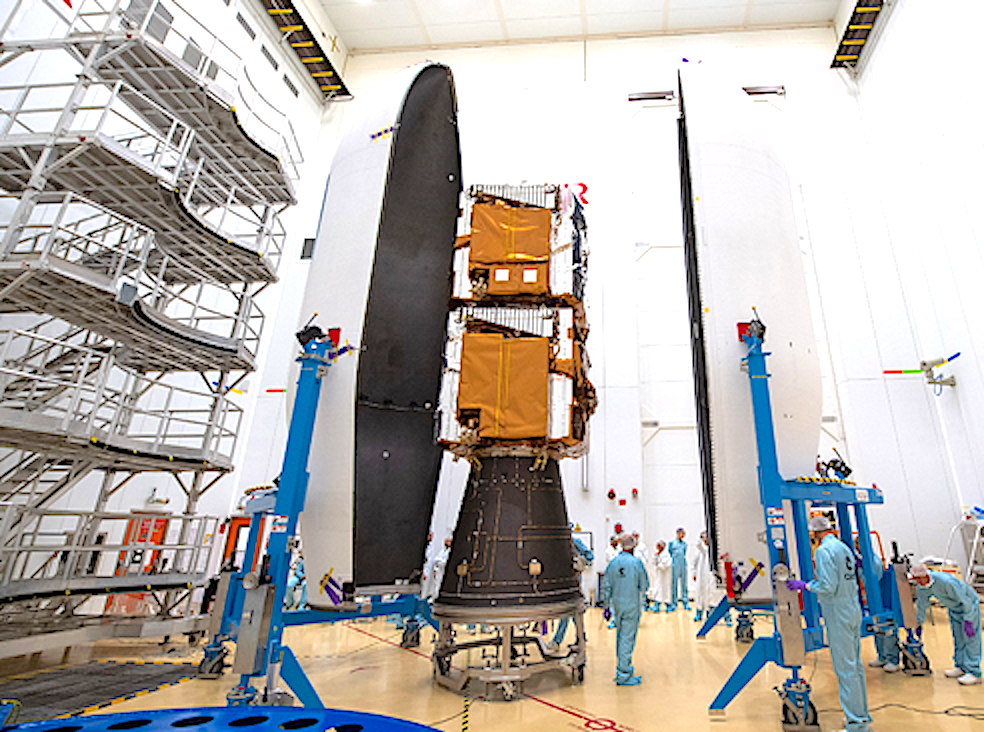
After the discovery of a defective equipment when arming the Vega C launcher for the Flight VV22, Arianespace has taken the decision to postpone the launch. In order to replace the equipment, the upper composite of the launcher will be taken back to the payload preparation facilities and the payload fairing will be opened for the intervention.

All the operations will be handled, in respect of the environmental requirements of the two Pléiades Neo satellites and in accordance with Arianespace’s quality policy. In order to secure both launch dates for Ariane 5 flight VA259 and Vega C flight VV22, Arianespace decided to update its manifest, swapping the two missions:

  • The new targeted launch date for VV22 now is December 20;
  • The new targeted launch date for VA259 –initially scheduled for December 14- now is December 13.

Update 1 posting…

Due to a defective equipment that needs to be replaced on the launcher, Flight VV22 – initially scheduled for November 24th from Europe’s Spaceport in French Guiana –must be postponed.

The Vega C launch vehicle and the two Pléiades Neo satellites are in safe conditions.

A new launch date, in December, will be shared as soon as possible.

Original posting…
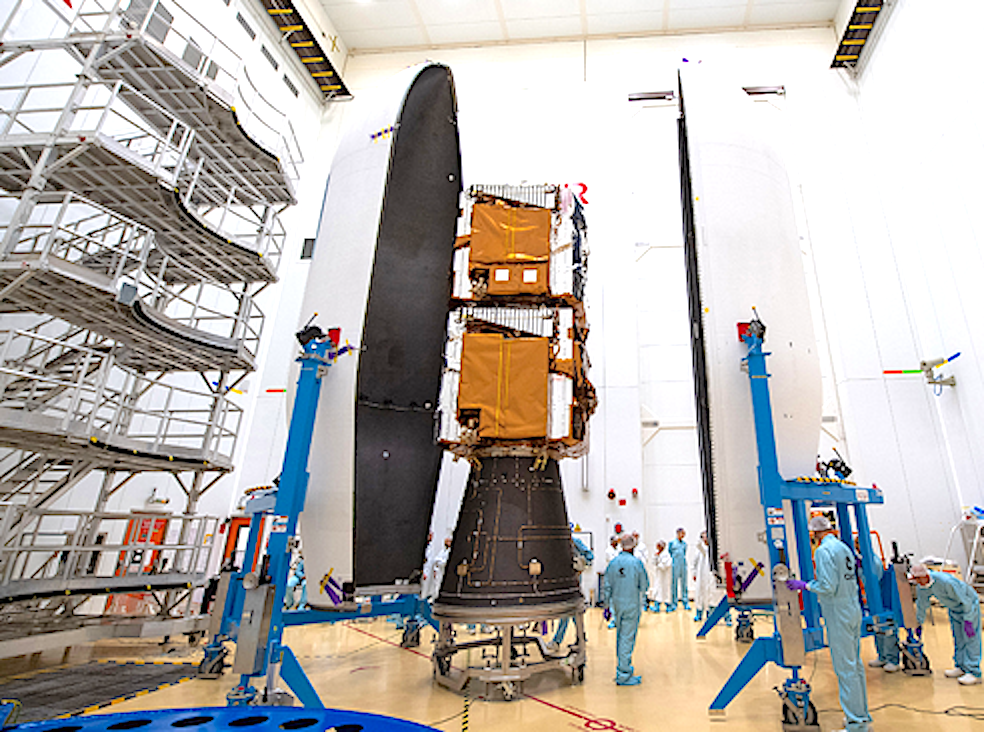
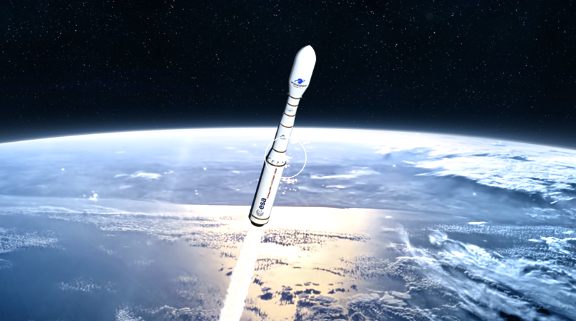
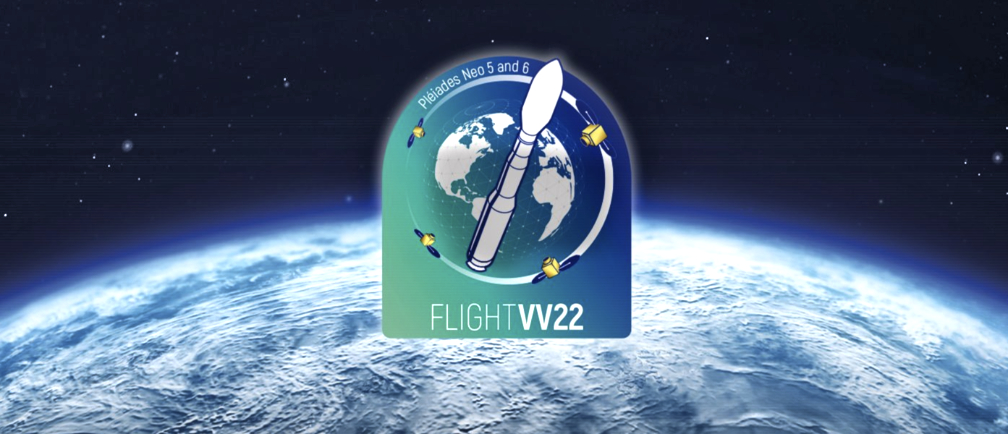
On Thursday, November 24, 2022 at 10:47 pm local time (01:47 am (UTC) on Friday, November 25), Arianespace’s first Vega C mission will lift off from Europe’s Spaceport in French Guiana, with the 30cm resolution satellites Pléiades Neo 5 and 6. This first commercial flight follows the success, July 13, of Vega C inaugural launch operated by the European Space Agency (ESA).

After liftoff from Europe’s Spaceport, the Vega C launcher will fly powered by the first three stages for a little over seven minutes. The third stage ZEFIRO 9 will then separate from the upper composite, which comprises the AVUM+ upper stage and the two Pléiades Neo satellites. The AVUM+ stage will ignite its engine for the first time about nine and an half minutes, followed by a ballistic phase lasting approximately 35 minutes, in order to reach the injection altitude of the first satellite.

The AVUM+ stage will then restart its engine for a second burn lasting 2 minutes and 30 seconds to circularize the orbit at an altitude of 629 km before releasing the first satellite. The next step, 6 minutes and 39 seconds later, will be a 15 seconds RACS boost leading to a new ballistic phase lasting about 36 minutes. It will be interrupted by a third AVUM+ ignition phase lasting exactly 5 seconds, and will be followed by the release of the second satellite at an altitude of 614 km.

Approximately nine minutes later will occur the fourth and last AVUM+ ignition for a period of 61 seconds, that will deorbit the launcher — marking the end of mission VV22, one hour, 53 minutes and 55 seconds after liftoff.

Pléiades Neo 5 and 6 fully funded and manufactured by its operator Airbus, are the two final satellites of the Pléiades Neo constellation that will respectively be the 139th and 138th Airbus Defence and Space satellites to be launched by Arianespace as well as the 120th and 119th satellites launched by a launcher of the Vega family.

The first one, Pléiades Neo 3, has been successfully orbited by Vega Flight 18 on April 28, 2021, and the second one, Pléiades Neo 4, by Vega Flight 19 on August 16, 2021. Built using the latest Airbus’ innovations and technological developments, the constellation allows imaging any point of the globe, several times per day, at 30cm resolution. Highly agile and reactive, they can be tasked up to 15 minutes before acquisition, and send the images back to Earth within the following hour. Smaller, lighter, more agile, accurate and reactive than the competition, they are the first of their class whose capacity will be fully commercially available. Thanks to these state-of-the-art satellites, each step of the acquisition and delivery cycle offers top-level Earth observation services now and going forward for the next ten years.

Vega C, which stands for Consolidation, has been developed to better respond to customers’ needs based on the lessons learned from the first decade (2012-2022) of Vega operations. The launcher has been upgraded with more powerful first and second stage Solid Rocket Motors, bigger AVUM tanks and with a larger fairing that significantly increase payload mass (up to 2,350t in SSO – Sun-Synchronous Orbit) and double allowable volume.

The launcher also better meets the specific needs of small spacecraft, as a result of its improved SSMS (Small Spacecraft Mission Service) dispenser and to its AVUM+ that will allow seven re-ignitions. Vega C can thus achieve three different orbits for its multiple payloads on the same mission, instead of the two previously possible with Vega.

Vega C development program has been managed by ESA. It associates 12 of Member States of the Agency. Avio Spa (Colleferro, Italy) is the industrial prime contractor for both launch vehicle and interfacing ground infrastructure. Avio is also responsible for campaign operations and preparation of the launch vehicle up to lift-off. Avio hands over a “ready to fly” rocket to Arianespace, which sells the Vega C, defines the missions’ requirements, validates its flight worthiness, and operates it from Europe’s Spaceport in French Guiana.

During launch campaigns, Arianespace works closely with CNES, the French space agency and the launch range authority at the European Spaceport in Kourou, who is notably looking after the satellite preparation facilities besides being responsible for the protection of populations.
Filed Under: Featured, News

UPDATE 1: Arianespace’s first Vega C mission to complete the Pléiades Neo constellation has to be delayed

November 24, 2022 by editorial

Due to a defective equipment that needs to be replaced on the launcher, Flight VV22 – initially scheduled for November 24th from Europe’s Spaceport in French Guiana –must be postponed.

The Vega C launch vehicle and the two Pléiades Neo satellites are in safe conditions.

A new launch date, in December, will be shared as soon as possible.

Original posting…

On Thursday, November 24, 2022 at 10:47 pm local time (01:47 am (UTC) on Friday, November 25), Arianespace’s first Vega C mission will lift off from Europe’s Spaceport in French Guiana, with the 30cm resolution satellites Pléiades Neo 5 and 6. This first commercial flight follows the success, July 13, of Vega C inaugural launch operated by the European Space Agency (ESA).

After liftoff from Europe’s Spaceport, the Vega C launcher will fly powered by the first three stages for a little over seven minutes. The third stage ZEFIRO 9 will then separate from the upper composite, which comprises the AVUM+ upper stage and the two Pléiades Neo satellites. The AVUM+ stage will ignite its engine for the first time about nine and an half minutes, followed by a ballistic phase lasting approximately 35 minutes, in order to reach the injection altitude of the first satellite.

The AVUM+ stage will then restart its engine for a second burn lasting 2 minutes and 30 seconds to circularize the orbit at an altitude of 629 km before releasing the first satellite. The next step, 6 minutes and 39 seconds later, will be a 15 seconds RACS boost leading to a new ballistic phase lasting about 36 minutes. It will be interrupted by a third AVUM+ ignition phase lasting exactly 5 seconds, and will be followed by the release of the second satellite at an altitude of 614 km.

Approximately nine minutes later will occur the fourth and last AVUM+ ignition for a period of 61 seconds, that will deorbit the launcher — marking the end of mission VV22, one hour, 53 minutes and 55 seconds after liftoff.

Pléiades Neo 5 and 6 fully funded and manufactured by its operator Airbus, are the two final satellites of the Pléiades Neo constellation that will respectively be the 139th and 138th Airbus Defence and Space satellites to be launched by Arianespace as well as the 120th and 119th satellites launched by a launcher of the Vega family.

The first one, Pléiades Neo 3, has been successfully orbited by Vega Flight 18 on April 28, 2021, and the second one, Pléiades Neo 4, by Vega Flight 19 on August 16, 2021. Built using the latest Airbus’ innovations and technological developments, the constellation allows imaging any point of the globe, several times per day, at 30cm resolution. Highly agile and reactive, they can be tasked up to 15 minutes before acquisition, and send the images back to Earth within the following hour. Smaller, lighter, more agile, accurate and reactive than the competition, they are the first of their class whose capacity will be fully commercially available. Thanks to these state-of-the-art satellites, each step of the acquisition and delivery cycle offers top-level Earth observation services now and going forward for the next ten years.

Vega C, which stands for Consolidation, has been developed to better respond to customers’ needs based on the lessons learned from the first decade (2012-2022) of Vega operations. The launcher has been upgraded with more powerful first and second stage Solid Rocket Motors, bigger AVUM tanks and with a larger fairing that significantly increase payload mass (up to 2,350t in SSO – Sun-Synchronous Orbit) and double allowable volume.

The launcher also better meets the specific needs of small spacecraft, as a result of its improved SSMS (Small Spacecraft Mission Service) dispenser and to its AVUM+ that will allow seven re-ignitions. Vega C can thus achieve three different orbits for its multiple payloads on the same mission, instead of the two previously possible with Vega.

Vega C development program has been managed by ESA. It associates 12 of Member States of the Agency. Avio Spa (Colleferro, Italy) is the industrial prime contractor for both launch vehicle and interfacing ground infrastructure. Avio is also responsible for campaign operations and preparation of the launch vehicle up to lift-off. Avio hands over a “ready to fly” rocket to Arianespace, which sells the Vega C, defines the missions’ requirements, validates its flight worthiness, and operates it from Europe’s Spaceport in French Guiana.

During launch campaigns, Arianespace works closely with CNES, the French space agency and the launch range authority at the European Spaceport in Kourou, who is notably looking after the satellite preparation facilities besides being responsible for the protection of populations.

Filed Under: News

Rocket Lab completes the final launch rehearsal prior to the 1st Electron mission from U.S. soil

November 22, 2022 by editorial

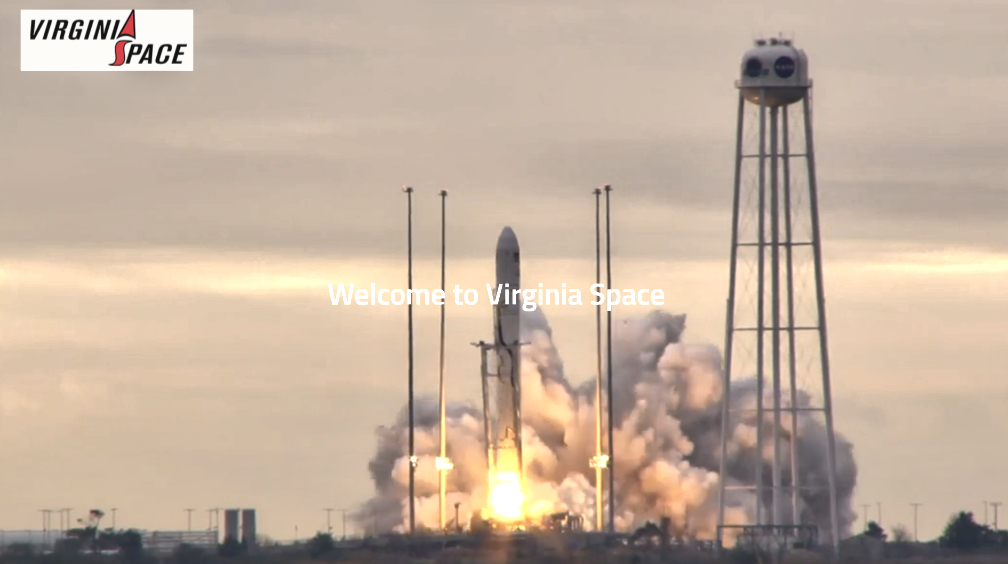
With rocket and launch pad checkouts complete, Rocket Lab is ready for its first mission from U.S. soil at Launch Complex 2 in Virginia

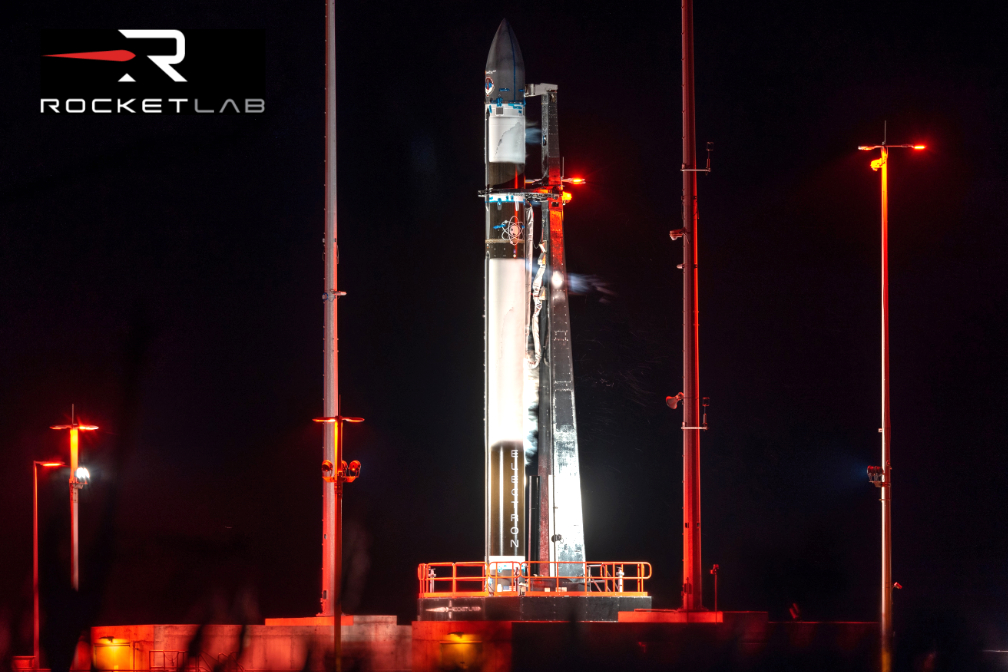
Rocket Lab USA, Inc. has completed a final launch rehearsal and is ready for the lift-off for the company’s first mission from U.S. soil as early as December 7th — the mission will occur at Rocket Lab Launch Complex 2 at Virginia Space’s Mid-Atlantic Regional Spaceport (MARS) that is located within NASA’s Wallops Flight Facility — a launch pad developed to support U.S. Electron missions for government and commercial customers.

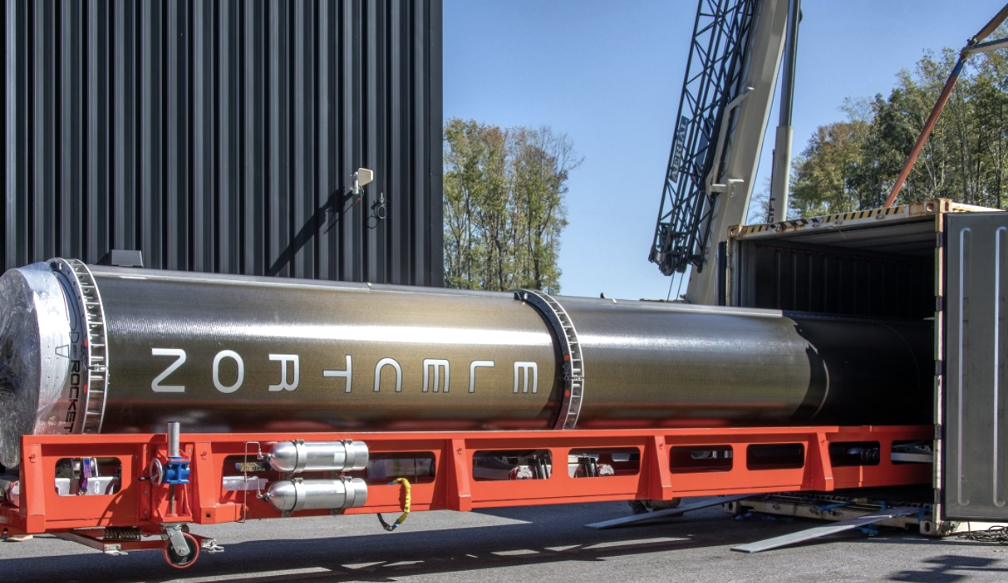
Electron Rocket Arrives at Launch Complex 2 for Rocket Lab’s Inaugural Mission from Virginia

Known as a Wet Dress Rehearsal, this pre-launch exercise sees the launch team carry out the same activities and procedures they will conduct on launch day to ensure the Electron rocket, launch pad, and supporting systems are ready for flight. As part of the rehearsal, Electron was rolled out to the launch pad and raised vertically before it was loaded with fuel and liquid oxygen to verify fueling procedures.

The launch team then conducted a full launch countdown, ending before the final step of engine ignition of Electron’s Rutherford engines. Electron was then de-tanked of fuel and returned to Rocket Lab’s Integration and Control Facility (ICF) at the Wallops Research Park to await launch during a window that extends from December 7 – 20.

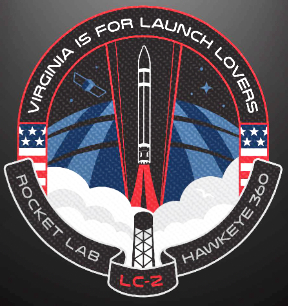
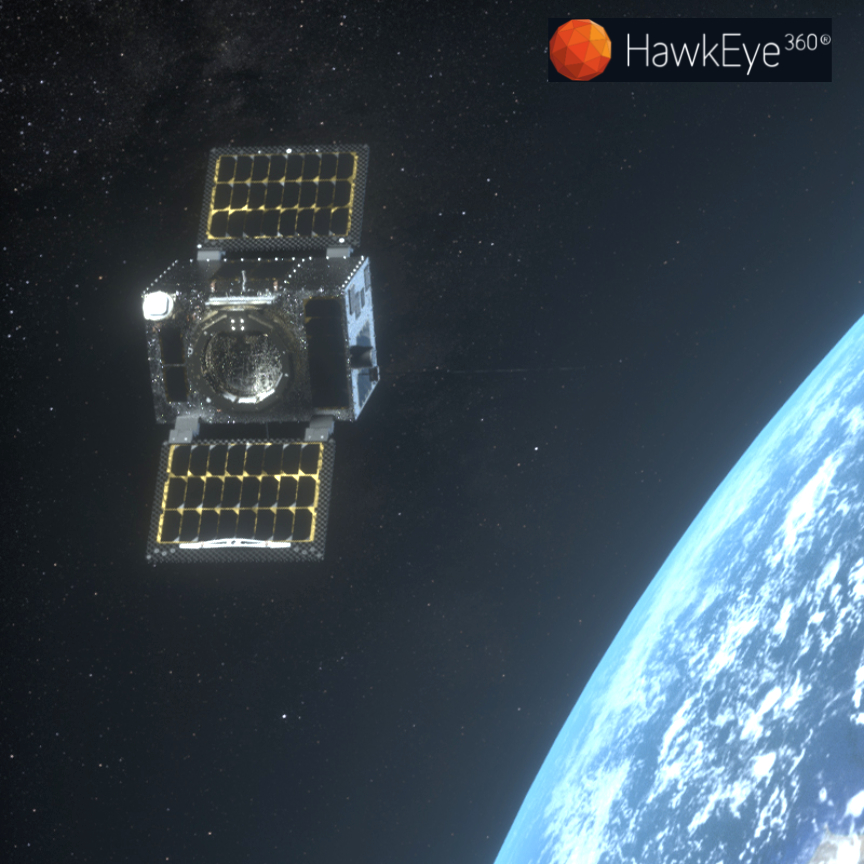
The “Virginia Is For Launch Lovers” mission will deploy three satellites for radio frequency (RF) geospatial analytics provider HawkEye 360, with integration of those satellites to Electron taking place in the coming days at Rocket Lab’s ICF.

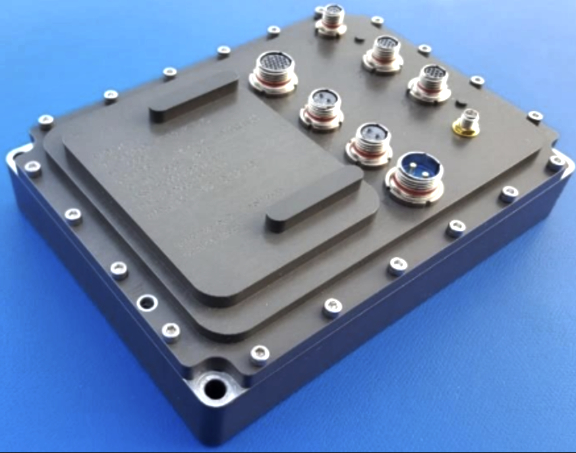
The NASA Autonomous Flight Termination Unit.
Credits: NASA

Meanwhile, NASA is continuing to make progress in certifying its Autonomous Flight Termination System (AFTS) software required for the launch. This will be the first time an AFTS will be flown from the Mid-Atlantic Regional Spaceport, representing a valuable new capability for the nation.

Rocket Lab has already conducted 32 Electron missions from Launch Complex 1 in New Zealand and has delivered 152 satellites to orbit for customers that have included NASA, the National Reconnaissance Office, DARPA, the U.S. Space Force and a range of commercial constellation operators. Electron is already the most frequently launched, small orbital rocket globally and, now with the capacity of the pads at Launch Complex 1 and 2 combined, Rocket Lab has more than 130 Electron launch opportunities every year.

This launch will be the first of three Electron launches for HawkEye 360 in a contract that will see Rocket Lab deliver 15 satellites to LEO between late 2022 and 2024. These missions will grow HawkEye 360’s constellation of RF monitoring satellites, enabling the company to better deliver precise geolocation of radio frequency emissions anywhere in the world.

“This mission is a significant moment for Rocket Lab and a pivotal milestone for Virginia’s long legacy in spaceflight,” said Rocket Lab CEO and founder, Peter Beck. “With wet dress rehearsal now complete, we’re excited to move into launch operations for this historic mission.”

“We are honored to support the launch of this historic mission,” said Ted Mercer, CEO and Executive Director of Virginia Space. “In addition to being Rocket Lab’s first and only U.S. launch location, we will also be building rockets and processing their payload right here in Accomack County – something that has never been done in Virginia. Our partnership with Rocket Lab is a unique opportunity for the Commonwealth of Virginia to create long-term economic development opportunities in the form of high-paying jobs, launch viewing tourism, and construction of new facilities on the Eastern Shore.”

A live launch webcast will at this direct link and will start at approximately T-40 minutes.

Filed Under: Featured, News

A new path for NASA’s future Artemis Moon missions is forged by CAPSTONE

November 21, 2022 by editorial

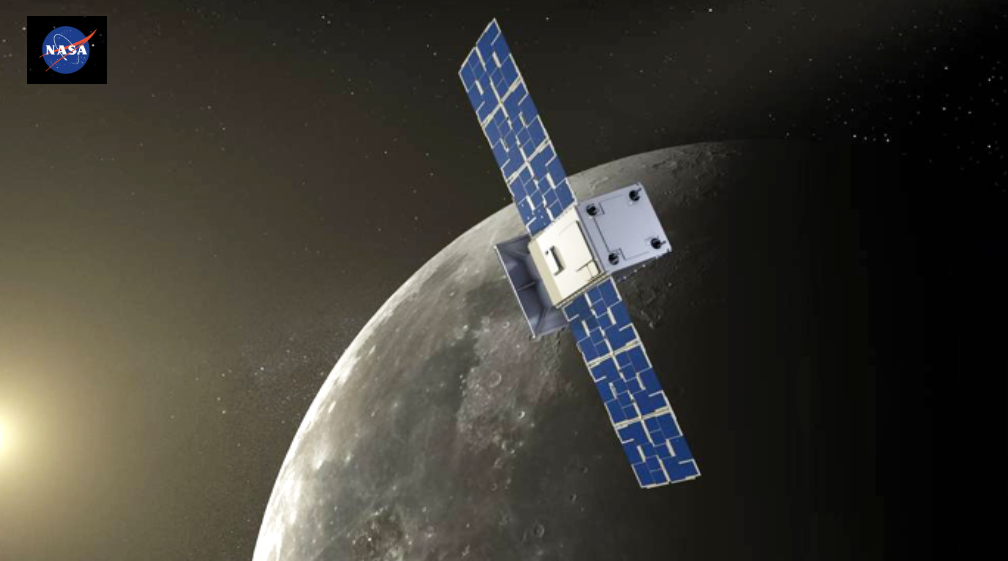
NASA’s CAPSTONE spacecraft has completed final maneuvers to place it in its target orbit around the Moon, refining its path in the orbit it arrived to last week — the spacecraft is now in the operational phase of its pathfinding mission, during which it will test an orbit key to future Artemis missions and demonstrate new technologies for spacecraft operating near the Moon.

CAPSTONE (Cislunar Autonomous Positioning System Technology Operations and Navigation Experiment) is a technology demo designed to prove the reliability of new capabilities so that they can be used in future missions. CAPSTONE is the first spacecraft to fly in a near-rectilinear halo orbit (NRHO) and the first cubesat to operate at the Moon. This orbit is the same planned for Gateway, an upcoming Moon-orbiting space station that will support NASA’s Artemis missions. CAPSTONE will gather data on this orbit for at least six months to support Gateway’s operational planning.

CAPSTONE took a four-month journey from launch to orbit – overcoming challenges related to communications and propulsion along the way – and performed an initial orbit insertion maneuver on November 13. In the following days, the CAPSTONE mission operations team, led by Advanced Space of Westminster, Colorado, analyzed data from the spacecraft to confirm it was in the expected orbit and carried out two clean-up maneuvers to refine its track.

In addition to studying this unique orbit, CAPSTONE’s mission also includes two technology demonstrations that could be used by future spacecraft. The Cislunar Autonomous Positioning System, or CAPS, is a navigational software developed by Advanced Space that would allow spacecraft operating near the Moon to determine their position in space without relying exclusively on tracking from Earth.

CAPSTONE will demonstrate this technology by communicating directly with NASA’s Lunar Reconnaissance Orbiter, which has been in orbit around the Moon since 2009. CAPSTONE will also demonstrate one-way ranging using a chip-scale atomic clock, which could allow spacecraft to determine their position in space without the need for a dedicated downlink to ground stations.

CAPSTONE launched June 28, 2022, aboard a Rocket Lab Electron rocket from Mahia, New Zealand. After launch, a Photon upper stage raised CAPSTONE’s orbit and injected the spacecraft into its ballistic lunar transfer, a long but fuel-efficient trajectory that carried the spacecraft to the Moon over the course of more than four months.

CAPSTONE is commercially owned and operated by Advanced Space. It represents an innovative collaboration between NASA and industry to provide rapid results and feedback to inform future exploration and science missions. The spacecraft was designed and built by Terran Orbital. Operations are performed jointly by teams at Advanced Space and Terran Orbital. The mission is also supported by Stellar Exploration, Space Dynamics Laboratory, Orion Space Solutions, Tethers Unlimited, Inc., and Morehead State University.

NASA’s Small Spacecraft Technology program within the agency’s Space Technology Mission Directorate (STMD) funds the demonstration mission. The program is based at NASA’s Ames Research Center in California’s Silicon Valley.

The development of CAPSTONE’s navigation technology is supported by NASA’s Small Business Innovation Research and Small Business Technology Transfer (SBIR/STTR) program, also within STMD. The Artemis Campaign Development Division within NASA’s Exploration Systems Development Mission Directorate funded the launch and supports mission operations.

“NASA’s partnership with Advanced Space on CAPSTONE is enabling NASA to gain critical, additional capabilities at a lower cost,” said NASA Administrator, Bill Nelson. “CAPSTONE is part of our new era of human exploration at the Moon, testing the unique orbit planned for the Gateway lunar space station.”

“Missions like CAPSTONE allow us to reduce risk for future spacecraft, giving us a chance to test our understanding and demonstrate technologies we intend to use in the future,” said Jim Reuter, associate administrator for NASA’s Space Technology Mission Directorate. “Partnering with innovative U.S. companies, including several small businesses, on CAPSTONE has given us the chance to forge new ground, merging commercial interests with NASA’s goals.”

“We have been working to this point since we started the company over 11 years ago. Getting into this orbit at the Moon validates so much hard work and grit by the combined CAPSTONE mission operations team,” said Bradley Cheetham, principal investigator for CAPSTONE and chief executive officer of Advanced Space. “The capabilities we have demonstrated and the technologies still to be matured will support future missions for decades to come.”

Filed Under: News

Spire Global has unveiled their next-gen smallsat bus

November 21, 2022 by editorial

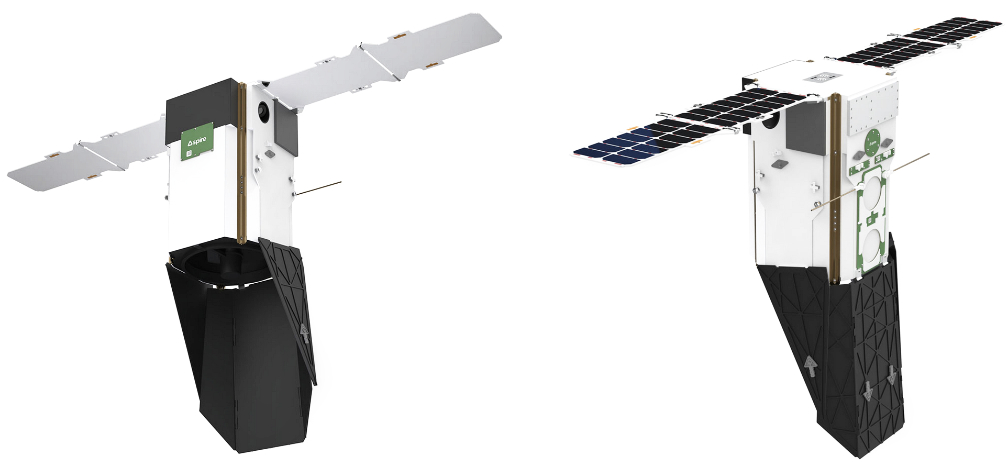
Earlier this month, Spire Global, Inc. revealed the firm’s next-gen 16U satellite bus design — the bus is tailored for customers with missions that require larger payloads and more power, volume, and data capabilities than a conventional 16U smallsat, such as EO and space domain awareness missions.

Spire, which operates the world’s largest, multipurpose, satellite constellation, designs and builds satellites entirely in house at the firm’s manufacturing facility in Glasgow, Scotland. The company has built and launched more than 150 satellites, carrying nearly 500 years of spaceflight heritage across its fleet.

Exolaunch’s EXOpod Nova deployer, a custom launch deployer developed in partnership with Spire, has enabled the company to optimize the capacity and volume of the satellite while still fitting into standard deployment settings. The 16U satellite can accommodate payloads of up to 30 kilograms.

Spire Space Services customers can leverage the company’s proven space, ground and web infrastructure to quickly scale their own constellation. In 2023, Spire will launch its next-gen 16U satellites to orbit, carrying payloads for Space Services customers NorthStar Earth & Space and GHGSat.

“Increasingly we’re seeing that our customers’ missions require buses that offer the performance of a larger satellite with the agility of a nanosatellite,” said Joel Spark, Co-Founder and General Manager, Space Services, Spire. “It’s a tall order, but we’ve leveraged our extensive space heritage and experience in satellite design and manufacturing to build a one-of-a-kind satellite bus that checks all those boxes. Our next-gen satellite has been a natural next step for us, driven by the needs of the market.“

“Spire Global is leading the market to address a growing demand for affordable access to space,” said Stewart Bain, NorthStar Earth & Space CEO and Co-Founder. “The timing of this new product fits well with NorthStar’s plans to launch the first commercial space-based services to improve space situational awareness precision and coverage over all near-Earth orbits. NorthStar is pleased to be engaged with Spire in this endeavor as part of a vibrant and innovative space economic ecosystem.”

“This is an exciting time for the space sector in Scotland. Businesses such as Spire Global are delivering innovative new satellites, helping to position Scotland as a global leader for commercial space developments gaining a £1 billion share of the global space market,” said Scottish Government Minister for Business, Trade, Tourism and Enterprise, Ivan McKee MSP. “We continue to lead the way in small satellite manufacturing, with our manufacturing hub in Glasgow and innovative new designs like the next-generation 16U satellite bus design from Spire highlighting the ambition set out in our 10 year transformation strategy to build an internationally competitive economy founded on entrepreneurship and innovation.”

Spire (NYSE: SPIR) is a leading global provider of space-based data, analytics and space services, offering access to unique datasets and powerful insights about Earth from the ultimate vantage point so that organizations can make decisions with confidence, accuracy, and speed. Spire uses one of the world’s largest multipurpose satellite constellations to source hard to acquire, valuable data and enriches it with predictive solutions. Spire then provides this data as a subscription to organizations around the world so they can improve business operations, decrease their environmental footprint, deploy resources for growth and competitive advantage, and mitigate risk. Spire gives commercial and government organizations the competitive advantage they seek to innovate and solve some of the world’s toughest problems with insights from space. Spire has offices in San Francisco, Boulder, Washington DC, Ontario, Glasgow, Oxfordshire, Luxembourg, and Singapore.

Filed Under: Featured, News

ULA launches NASA’s third in a series polar-orbiting weather satellites for NOAA and re-entry tech demo

November 21, 2022 by editorial

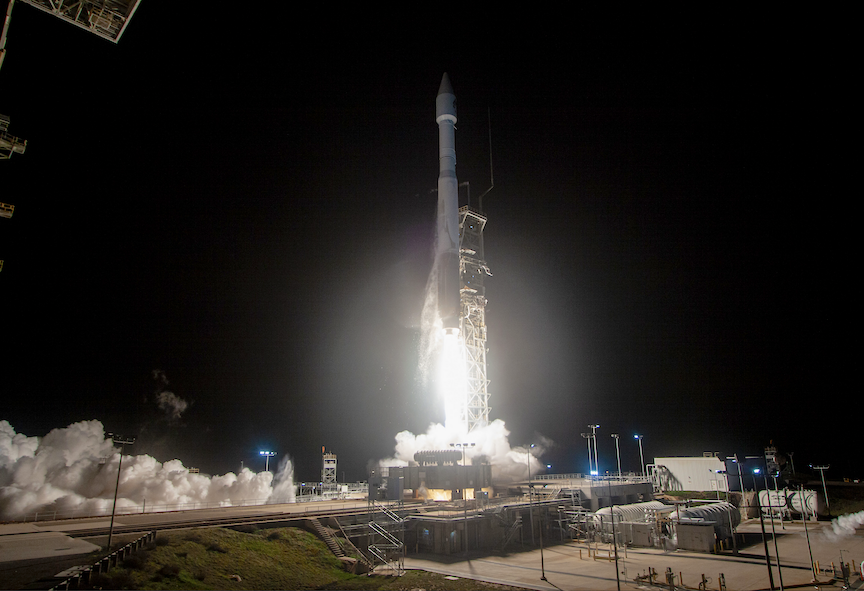
NASA successfully launched the third in a series of polar-orbiting weather satellites for the National Oceanic and Atmospheric Administration (NOAA) at 1:49 a.m. PST Thursday, as well as an agency technology demonstration on a United Launch Alliance Atlas V rocket from Vandenberg Space Force Base in California.

In addition to the newest Joint Polar Satellite System or JPSS-2, also aboard was NASA’s Low-Earth Orbit Flight Test of an Inflatable Decelerator, or LOFTID, a test of inflatable heat shield technology that could one day help land astronauts on Mars.

Mission managers for NOAA’s JPSS-2 confirm the satellite is now in Sun acquisition mode (initial operations mode) with the solar array fully deployed. The operations team will continue to evaluate an earlier solar array deployment issue, but at this time, the satellite is healthy and operating as expected. The team has resumed normal activities for the JPSS-2 mission.

“NOAA is an important partner for NASA in providing essential data about climate change, weather prediction, and environmental modeling for the benefit of citizens both in the U.S. and around the world,” said NASA Associate Administrator Bob Cabana. “Our Launch Services Program has successfully launched its 100th primary mission, and on this same flight enabled us to test a new technology for atmospheric re-entry with the LOFTID demonstration.”  

JPSS-2 will circle the globe 14 times a day 512 miles above Earth, providing forecasters the benefit of three polar-orbiting satellites operating simultaneously, joining its predecessors Suomi National Polar-orbiting Partnership (Suomi NPP) and NOAA-20.

“Exploring the unknowns of our planet to the benefit of our fellow citizens is in our DNA,” said Thomas Zurbuchen, associate administrator for NASA’s Science Mission Directorate. “The data that JPSS-2 will send back to our NASA and NOAA scientists on the ground will be critical in saving lives both on Earth and in space.”

The JPSS fleet will assist with weather forecasting, help predict extreme weather events, and help track and monitor climate change. JPSS-2 will be renamed NOAA-21 when it reaches its final orbit. The instruments will start collecting data about a month after launch.

“As partners, NOAA and NASA have successfully launched more than 60 satellite missions that have significantly improved weather forecasts, solar monitoring, and climate prediction,” said Steve Volz, director of NOAA’s Satellite and Information Service. “Launching JPSS-2 is just the latest example of what our collective agencies can achieve for the benefit of the Nation and the world at large.”

Following JPSS-2’s deployment, the LOFTID heat shield autonomously inflated and re-entered Earth’s atmosphere, splashing down about 500 miles off the coast of Hawaii just over two hours and ten minutes after launch.

Inflatable heat shields — also known as aeroshells — could enable landing heavier payloads on worlds like Mars, Venus, and Saturn’s moon Titan, as well as returning large components and samples to Earth. Inflatable aeroshells are not limited by the diameter of a launch vehicle fairing, so they can be made much larger than conventional rigid aeroshells. Larger aeroshells provide more drag, allowing them to slow heavier payloads for atmospheric entry — such as the many tons of equipment required for crewed missions to Mars.

“Proving new technologies through flight test is one of the main ways we expand capabilities for future missions,” said Jim Reuter, associate administrator for NASA’s Space Technology Mission Directorate. “We were pleased to work with our ULA, NASA science, and NOAA colleagues to perform this technology demonstration in conjunction with JPSS-2’s launch.”

The LOFTID team will review detailed data from the demonstration following the recovery of the aeroshell and ejectable data module to evaluate how the aeroshell performed. Results of the demonstration will be shared when available.

NOAA funds and manages the JPSS Program, operations, and data products. On behalf of NOAA, NASA develops and builds the instruments and spacecraft and launches the satellites. NASA developed the ground system, which NOAA operates and maintains. NASA’s Launch Services Program, based at the agency’s Kennedy Space Center in Florida, managed the launch service.

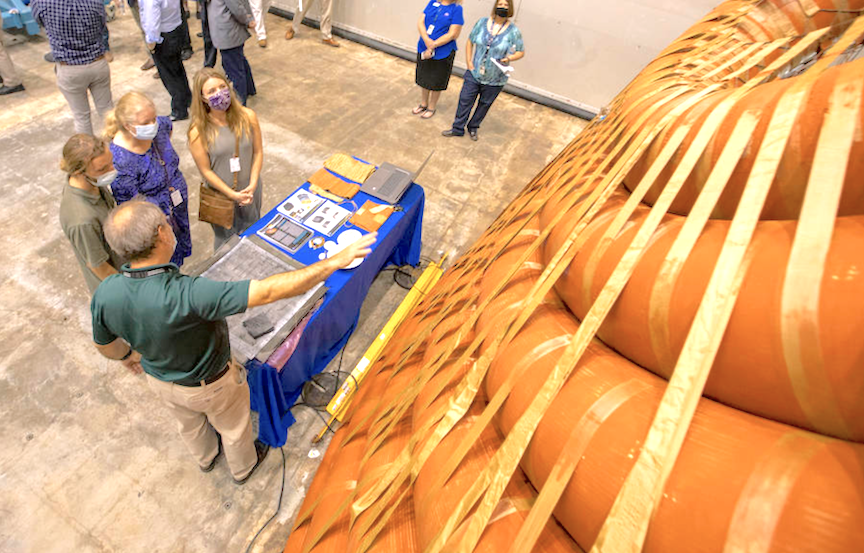
Members of the Kutter family attended the LOFTID dedication program at NASA’s Langley Research Center in Hampton, Virginia, and had the opportunity to view flight hardware.
Credits: NASA/David C. Bowman

LOFTID is a partnership between NASA and ULA. The mission is dedicated to the memory of Bernard Kutter, manager of advanced programs at ULA, who passed away in August 2020 and was an advocate for technologies like LOFTID that can lower the cost of access to space.

The LOFTID project is managed and funded through NASA’s Technology Demonstration Missions program, part of the agency’s Space Technology Mission Directorate. The project is led by NASA’s Langley Research Center in Hampton, Virginia, with contributions from NASA’s Ames Research Center in Silicon Valley, Marshall Space Flight Center in Huntsville, Alabama, and Armstrong Flight Research Center in Edwards, California.

Filed Under: News

Expleo reaches milestone for New Space smallsat launches

November 21, 2022 by editorial

Expleo has completed the Assembly Integration & Test (AIT) milestone for the payload of two smallsat projects.

With the completion of the AIT phase, the payload subsystems are qualified, validated and made ready for integration into their respective satellite systems, marking a significant step toward the realization of the two missions and their anticipated launches in early 2023.

The two smallsat programs which Expleo is supporting are:

  • ENSO (Expleo Nanosatellite for Solar-irradiance Observations) – The Expleo-led nanosatellite is part of an R&D program to measure solar radiation and monitor the ionosphere. The collected data will be used to understand the effects of solar activity on critical satellite and telecommunication systems such as those used in aviation.
  • HydroSat – Working with the State of Djibouti and Montpellier University Space Center, Expleo is developing the payload of a nanosatellite to collect data from local climatological stations spread across the territory, such as temperature, rainfall, river depth and hydrometry across the country. With the new nanosatellite, Djibouti can better track environmental changes across the country.

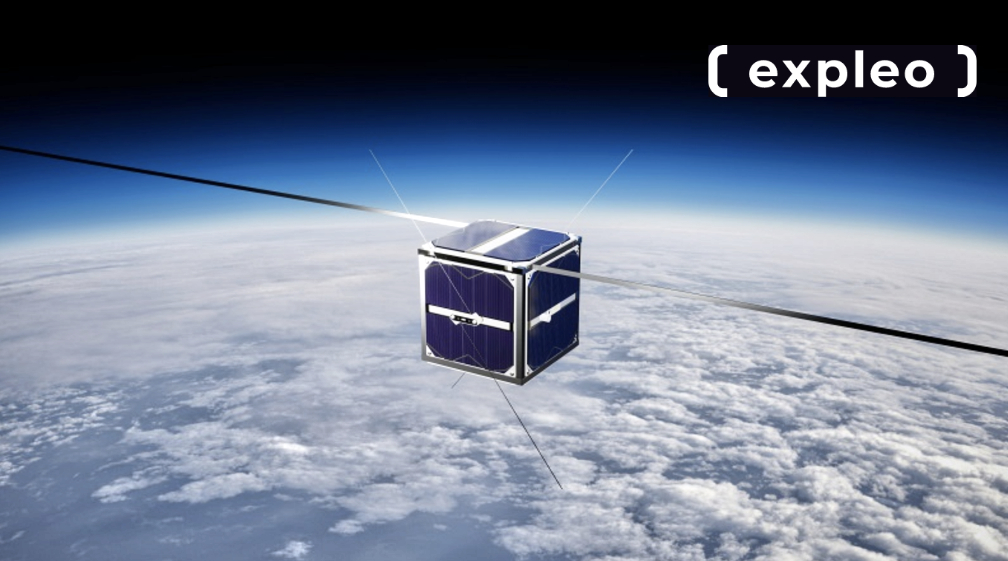
Nanosatellites are a smaller form of smallsat that are a major aspect of the growing New Space movement, capable of forming cost-effective satellite networks for applications such as connectivity, IoT, Earth Observation (EO) and on-orbit demos. The Expleo-developed satellites measure 10x10x10cm, weighs around 1kg. and are small enough to be held comfortably in one hand.

The ENSO and HydroSat projects will now start working towards the AIT at the satellite-system level and the final confirmation of their launch dates.

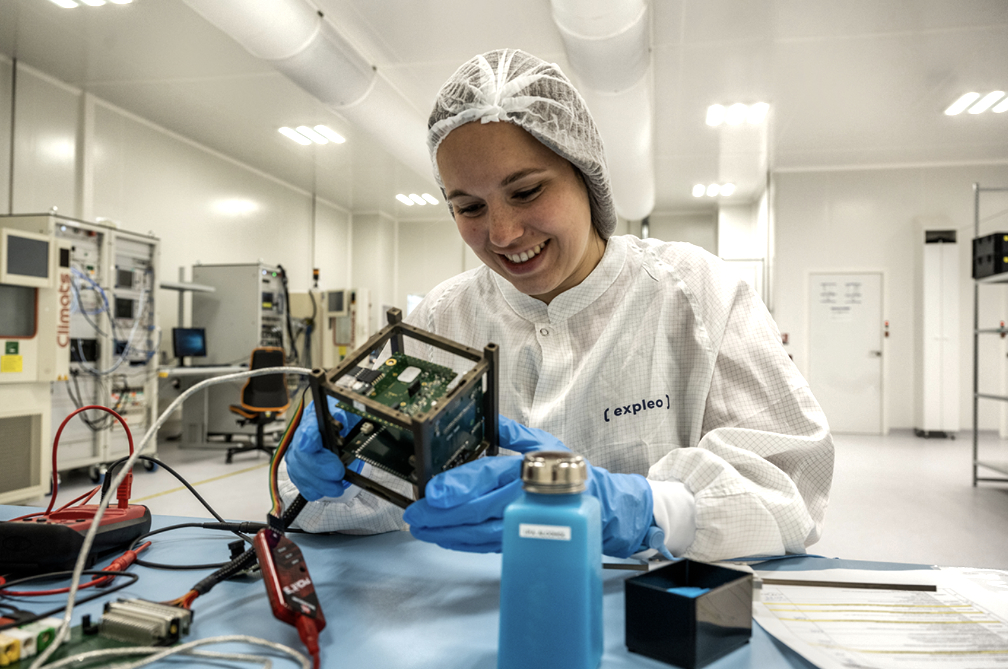
Expleo engineer at work on a company smallsat. Photo is courtesy of the company.

Frédérique Rebout, Senior Alliances & Partnerships Director for Defence & Space at Expleo, said, “As we look to solve the various environmental and business challenges on our planet, it’s outside our atmosphere where we can find the solutions. NewSpace innovations, such as nanosatellites, are democratising the benefits of space technology, opening up new possibilities for many more people. Expleo’s engineering and technology expertise is supporting this revolution and we are looking forward with pride to seeing HydroSat and ENSO take to orbit soon.”

Filed Under: News

Arianespace’s first Vega C mission to complete Pléiades Neo constellation for Airbus Defence and Space

November 21, 2022 by editorial

On Thursday, November 24, 2022 at 10:47 pm local time (01:47 am (UTC) on Friday, November 25), Arianespace’s first Vega C mission will lift off from Europe’s Spaceport in French Guiana, with the 30cm resolution satellites Pléiades Neo 5 and 6. This first commercial flight follows the success, July 13, of Vega C inaugural launch operated by the European Space Agency (ESA).

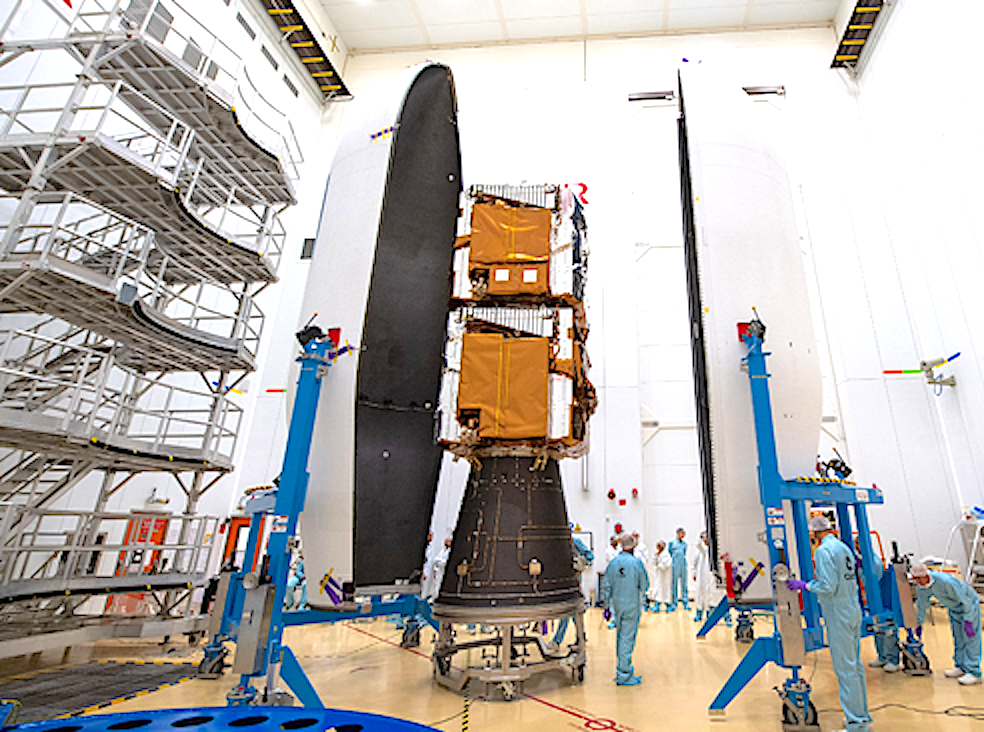
After liftoff from Europe’s Spaceport, the Vega C launcher will fly powered by the first three stages for a little over seven minutes. The third stage ZEFIRO 9 will then separate from the upper composite, which comprises the AVUM+ upper stage and the two Pléiades Neo satellites. The AVUM+ stage will ignite its engine for the first time about nine and an half minutes, followed by a ballistic phase lasting approximately 35 minutes, in order to reach the injection altitude of the first satellite.

The AVUM+ stage will then restart its engine for a second burn lasting 2 minutes and 30 seconds to circularize the orbit at an altitude of 629 km before releasing the first satellite. The next step, 6 minutes and 39 seconds later, will be a 15 seconds RACS boost leading to a new ballistic phase lasting about 36 minutes. It will be interrupted by a third AVUM+ ignition phase lasting exactly 5 seconds, and will be followed by the release of the second satellite at an altitude of 614 km. Approximately nine minutes later will occur the fourth and last AVUM+ ignition for a period of 61 seconds, that will deorbit the launcher — marking the end of mission VV22, one hour, 53 minutes and 55 seconds after liftoff.

Pléiades Neo 5 and 6 fully funded and manufactured by its operator Airbus, are the two final satellites of the Pléiades Neo constellation that will respectively be the 139th and 138th Airbus Defence and Space satellites to be launched by Arianespace as well as the 120th and 119th satellites launched by a launcher of the Vega family.

The first one, Pléiades Neo 3, has been successfully orbited by Vega Flight 18 on April 28, 2021, and the second one, Pléiades Neo 4, by Vega Flight 19 on August 16, 2021. Built using the latest Airbus’ innovations and technological developments, the constellation allows imaging any point of the globe, several times per day, at 30cm resolution. Highly agile and reactive, they can be tasked up to 15 minutes before acquisition, and send the images back to Earth within the following hour. Smaller, lighter, more agile, accurate and reactive than the competition, they are the first of their class whose capacity will be fully commercially available. Thanks to these state-of-the-art satellites, each step of the acquisition and delivery cycle offers top-level Earth observation services now and going forward for the next ten years.

Vega C, which stands for Consolidation, has been developed to better respond to customers’ needs based on the lessons learned from the first decade (2012-2022) of Vega operations. The launcher has been upgraded with more powerful first and second stage Solid Rocket Motors, bigger AVUM tanks and with a larger fairing that significantly increase payload mass (up to 2,350t in SSO – Sun-Synchronous Orbit) and double allowable volume.

The launcher also better meets the specific needs of small spacecraft, as a result of its improved SSMS (Small Spacecraft Mission Service) dispenser and to its AVUM+ that will allow seven re-ignitions. Vega C can thus achieve three different orbits for its multiple payloads on the same mission, instead of the two previously possible with Vega.

Vega C development program has been managed by ESA. It associates 12 of Member States of the Agency. Avio Spa (Colleferro, Italy) is the industrial prime contractor for both launch vehicle and interfacing ground infrastructure. Avio is also responsible for campaign operations and preparation of the launch vehicle up to lift-off. Avio hands over a “ready to fly” rocket to Arianespace, which sells the Vega C, defines the missions’ requirements, validates its flight worthiness, and operates it from Europe’s Spaceport in French Guiana.

During launch campaigns, Arianespace works closely with CNES, the French space agency and the launch range authority at the European Spaceport in Kourou, who is notably looking after the satellite preparation facilities besides being responsible for the protection of populations.
Filed Under: Featured, News

OneWeb + Q-KON Africa engage in a five year LEO connectivity services agreement

November 21, 2022 by editorial

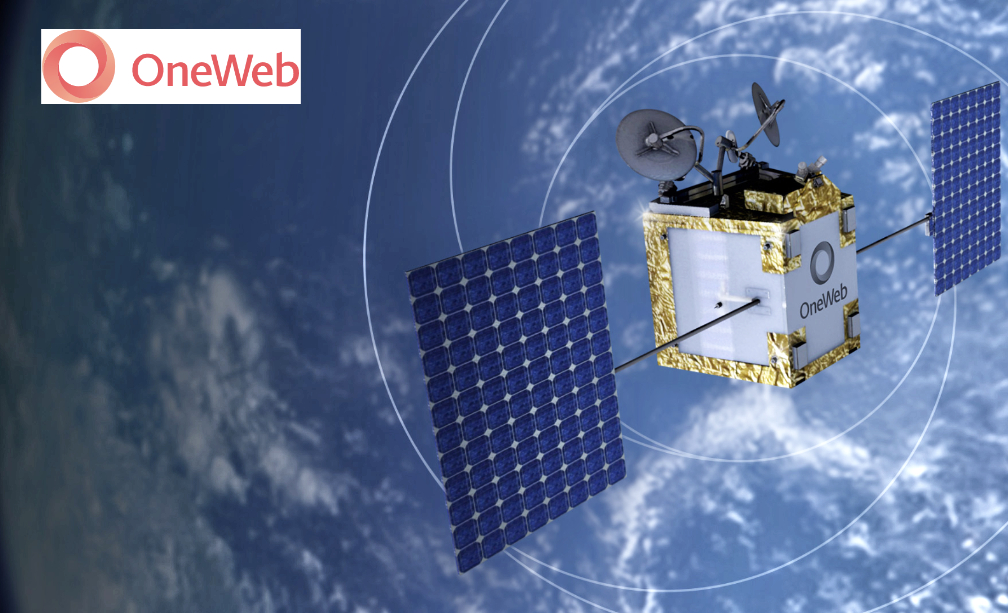
OneWeb now has a distribution partner agreement with Q-KON Africa, a specialist technology company that supplies solutions based on satellite, wireless and VoIP technologies, to offer broadband connectivity services in African countries.

Q-KON Africa connects “off-grid” locations through their satellite broadband service, Twoobii, to core networks throughout Africa reliably and effectively. The OneWeb LEO satellite network will give Q-KON Africa’s Twoobii customers access to high-speed, low-latency broadband to connect even the most rural or remote communities across several African countries. These include South Africa, Lesotho, Swaziland (eSwatini), Namibia, Botswana, Zimbabwe, Zambia, Malawi, and Mozambique.

This strategic five-year distribution agreement was finalized at AfricaCom. The agreement will enable Q-KON Africa to unleash the power of OneWeb’s network in order to provide vital internet service and Wi-Fi backhaul to connect schools, hospitals, civil government and other fixed enterprise and fintech services throughout the continent including banking, mining, and backhaul solutions.

This announcement is the latest effort for OneWeb to help bridge the digital divide across Africa through strong industry collaboration with local infrastructure and service providers. OneWeb remains on track to activate its coverage solutions in Africa, and elsewhere around the world, in 2023.

Ben Griffin, VP Mobility and AMEA at OneWeb, said, “At OneWeb, we believe that connection everywhere changes everything and that’s why we are thrilled to be partnering with the engineering experts at Q-KON Africa to further our mission to connect those hardest to reach to the internet. Q-KON Africa’s strong industry understanding, flexibility, agility and local support will help us see OneWeb’s LEO satellite network create opportunities to benefit unconnected and underconnected areas across Africa for today’s digital environment. This agreement is another example of OneWeb’s continued momentum, as we remain on track to activate coverage solutions in Africa and globally in 2023.”

Dawie de Wet, Group CEO of Q-KON Africa and Chief Engineer for Twoobii, said, “For us, OneWeb’s global lead and focus to deliver assured business grade, high-performance satellite services is the perfect option to expand our successful Twoobii Smart Satellite Services for Southern Africa. OneWeb’s technology innovations will deliver data speeds of 100Mbps and low latency of 70msec, which will enable us to further service the business, enterprise and financial markets. Leveraging emerging technologies to open new markets is in our DNA and we look forward to leading this new era in partnership with OneWeb.”

Filed Under: News

Sidus Space partners with GTM for LizzieSat™ solar panels

November 21, 2022 by editorial

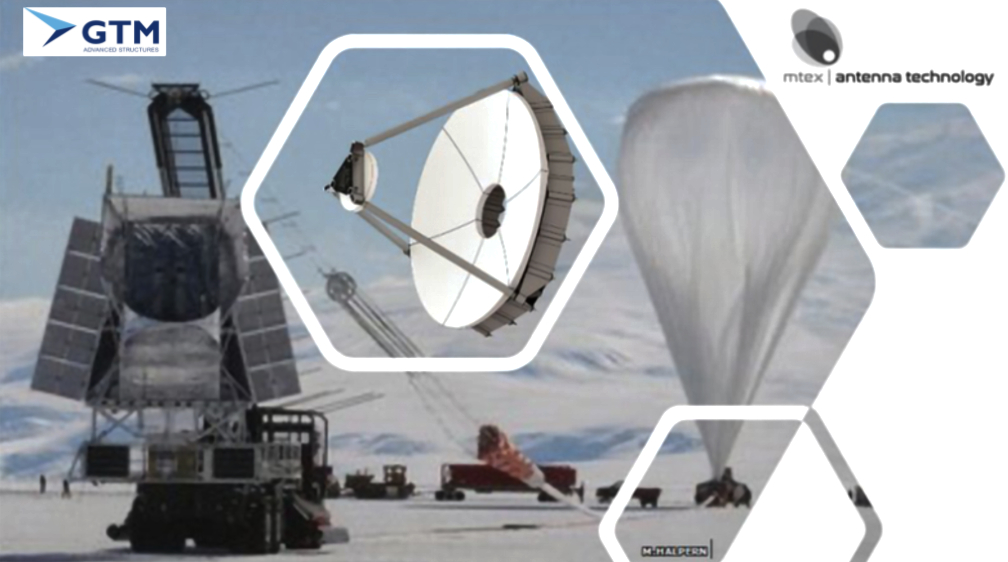
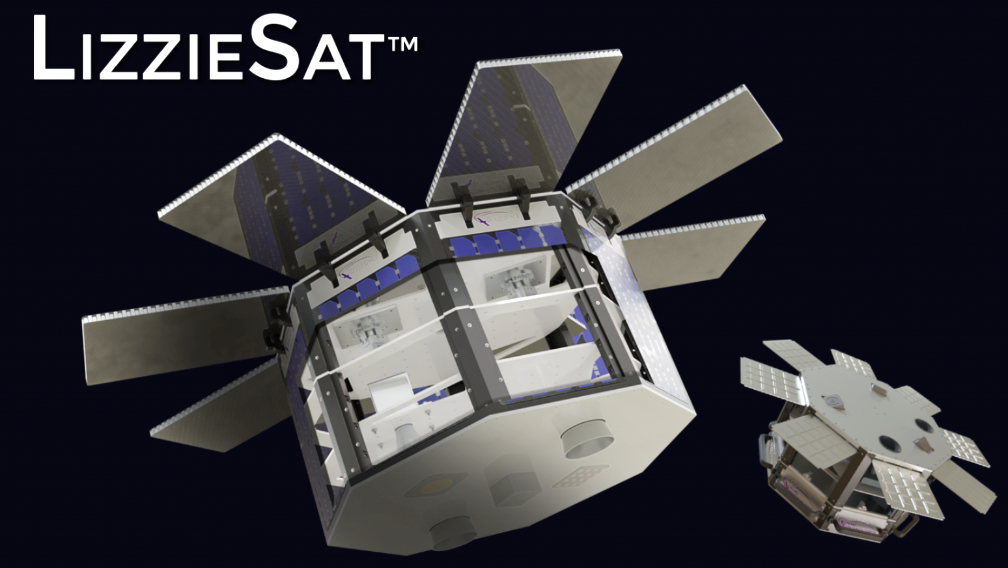
Sidus Space, Inc. has partnered with GTM Advanced Structures for space-proven solar panels integration into LizzieSat™.

Sidus Space is in the advanced stages of developing LizzieSat, a proprietary, partially 3D printed satellite that is expected to launch in 2023. The satellite design uses a combo of eight deployed and additional body mounted solar panels to generate as much as 400 watts of usable power for satellite operations and up to 50 watts continuous for payloads.

Since 2013, GTM has manufactured solar panels for the smallsat market from 1U up to 12U solar panels. In the past two years, GTM has integrated more than 1,400, triple junction cells onto solar panels. This, combined with GTM’s development of a Plug and Play substrate using industry proven methods and products, creates a rapidly producible, highly reliable, cost-effective product.

GTM’s experience, combined with the selection of Azur Space, ensure the efficiency and longevity of power collection that is vital to accommodating vehicle basic operations and supporting payloads throughout their orbital lifetimes. Azur Space assemblies provide space solutions with a higher integration level. Based on their high-efficiency solar cells of the 28% or 30%-Advanced class, the assemblies are additionally equipped with cover glasses and interconnectors.

“We’re excited to partner with GTM, an AS9100 certified company, to integrate its space-proven solar panels into LizzieSat™, providing our satellite with solar power and furthering our sustainability efforts. GTM is utilizing its space-proven solar panel manufacturing heritage, employing industry leading Azur Space solar cell assemblies (SCA) to provide Sidus Space with high reliability performance over the orbital lifetime of LizzieSat™. The solar panels are both fixed body mounted and deployable arrays providing a maximum level of exposure for power generation,” said Carol Craig, Sidus Space Founder and CEO.

Filed Under: News

  • « Go to Previous Page
  • Page 1
  • Interim pages omitted …
  • Page 4
  • Page 5
  • Page 6
  • Page 7
  • Page 8
  • Interim pages omitted …
  • Page 58
  • Go to Next Page »

Primary Sidebar

WEEKLY NEWSLETTER

Archives

  • May 2026
  • April 2026
  • March 2026
  • February 2026
  • January 2026
  • December 2025
  • November 2025
  • October 2025
  • September 2025
  • August 2025
  • July 2025
  • June 2025
  • May 2025
  • April 2025
  • March 2025
  • February 2025
  • January 2025
  • December 2024
  • November 2024
  • October 2024
  • September 2024
  • August 2024
  • July 2024
  • June 2024
  • May 2024
  • April 2024
  • March 2024
  • February 2024
  • January 2024
  • December 2023
  • November 2023
  • October 2023
  • September 2023
  • August 2023
  • July 2023
  • June 2023
  • May 2023
  • April 2023
  • March 2023
  • February 2023
  • January 2023
  • December 2022
  • November 2022
  • October 2022
  • September 2022
  • August 2022
  • July 2022
  • June 2022
  • May 2022
  • April 2022
  • March 2022
  • February 2022
  • January 2022
  • December 2021
  • November 2021
  • October 2021
  • September 2021
  • August 2021
  • July 2021
  • June 2021
  • May 2021
  • April 2021
  • March 2021
  • February 2021
  • January 2021
  • December 2020
  • November 2020
  • October 2020
  • September 2020
  • August 2020
  • July 2020
  • June 2020
  • May 2020
  • April 2020
  • March 2020
  • February 2020
  • January 2020
  • December 2019
  • November 2019
  • October 2019

© 2019–2026 SatNews

Insert/edit link

Enter the destination URL

Or link to existing content

    No search term specified. Showing recent items. Search or use up and down arrow keys to select an item.
      x
      Sign Up Now!

      Enjoy a free weekly newsletter with recent headlines from the global SmallSat industry.

      Invalid email address
      We promise not to spam you. You can unsubscribe at any time.
      Thanks for subscribing! You will now receive weekly SmallSat News updates.
      We love our advertisers.
      And you will too!

      Please disable Ad Blocker to continue... We promise to keep it unobtrusive.
      We promise not to spam you. You can unsubscribe at any time.
      Invalid email address
      Thanks for subscribing!