• Skip to main content
  • Skip to primary sidebar
  • Home
  • News
  • Featured
  • More News ⌄
    • SatNews
    • SatMagazine
    • MilSatMagazine
  • Events ⌄
    • MilSat Symposium
    • SmallSat Symposium
    • Satellite Innovation
  • Contacts
  • SUBSCRIPTION

SmallSat News

You are here: Home / Archives for 2022

Archives for 2022

SmallSat Symposium — Early Bird pricing ends on December 2nd… register ASAP…

November 20, 2022 by editorial

Conference objectives for 2023 include…

DEEP INDUSTRY INSIGHT AND A BROAD MARKET OVERVIEW

High speaker-to-attendee ratio gives unparalleled access to industry leaders, while selective exhibitor attendance ensures visitors are able to gain a comprehensive overview of the key players, trends and technologies in the market.

ENGAGING CONTENT

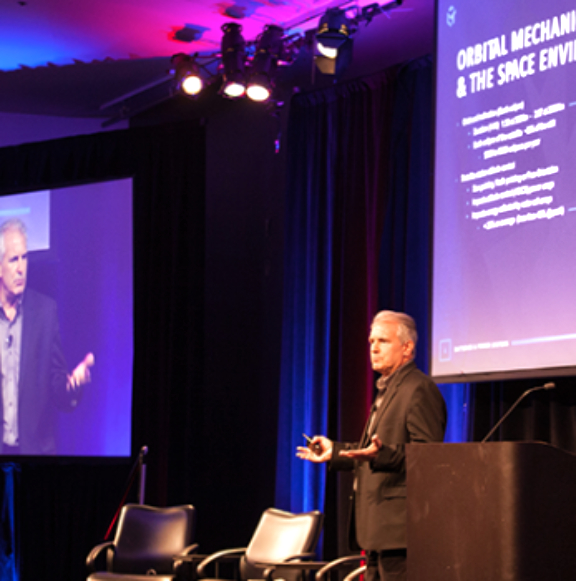
We livestream and record all presentations and sessions, making content accessible even if you need to miss a session or talk.  Access keynote speeches, exciting panels, Q&A, exhibitions, product demos, devoted meeting areas and coordinated networking events; the knowledge you need in the way you want.  
CONVENIENCE AND COMFORT TO MAKE YOUR WORKING LIFE EASIER

Set in a medium sized venue in the heart of Silicon Valley, SmallSat Symposium is centralized, accessible and straightforward to navigate. Combined with delicious complimentary meals, snacks and reception events, business and pleasure has never been easier.

There are early registration incentives that extend through December 2, 2022.


Filed Under: News

SpaceRyde’s MLAs with ISILAUNCH

November 17, 2022 by editorial

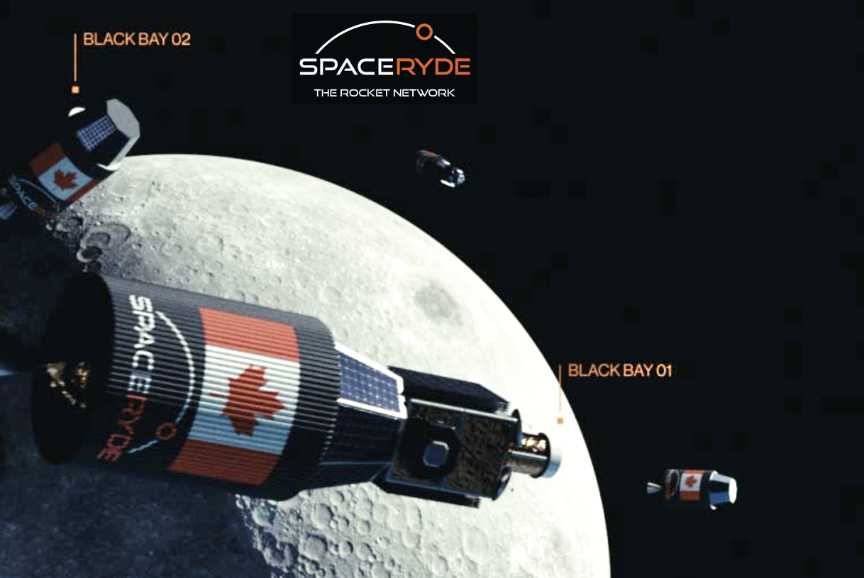
SpaceRyde has announced multiple launch agreements with ISILAUNCH — the MLA is an agreement for four of SpaceRyde’s commercial launches, starting in 2024, and confirms ISILAUNCH’s increased customer demand for private missions that are counter to rideshare options currently existing in the market. With the addition of SpaceRyde’s private space transportation services, ISILAUNCH will offer their customers private launches with customizations, including: launch scheduling as late as four weeks prior to launch; custom orbits and fairing configurations; all at a market-low price of $250,000 per launch.

‍

SpaceRyde builds its spacecraft and launch systems in-house and will manage everything from payload integration to launch. This vertical integration, teamed with its innovative private AI-powered balloon launch system, has allowed for leading rocket optimization, mission customization and customer cost savings. Its full-service solution aligns perfectly with ISILAUNCH’s goal of making its customers’ smallsat launches as simple and easy as possible.

With SpaceRyde as their space transportation provider, ISILAUNCH will be able to further uphold its promise of customer satisfaction by offering customizable dedicated rockets to precise orbits for the low minimum cost of $250,000.

SpaceRyde is offering space missions from Earth as a means to build its network of interplanetary rockets that will perform ongoing missions and serve the $1 trillion space economy. The company’s proprietary multi-purpose rocket can repeatedly refuel, rendezvous and maneuver in space. The MLA represents the addition of four of SpaceRyde’s in-space vehicles to its Rocket Network.

SpaceRyde has test flights scheduled for 2023. Commercial space flights begin in 2024, along with their first mission to the Moon. The signing of this MLA with an established industry player strongly indicates SpaceRyde’s technological readiness for commercial operations.

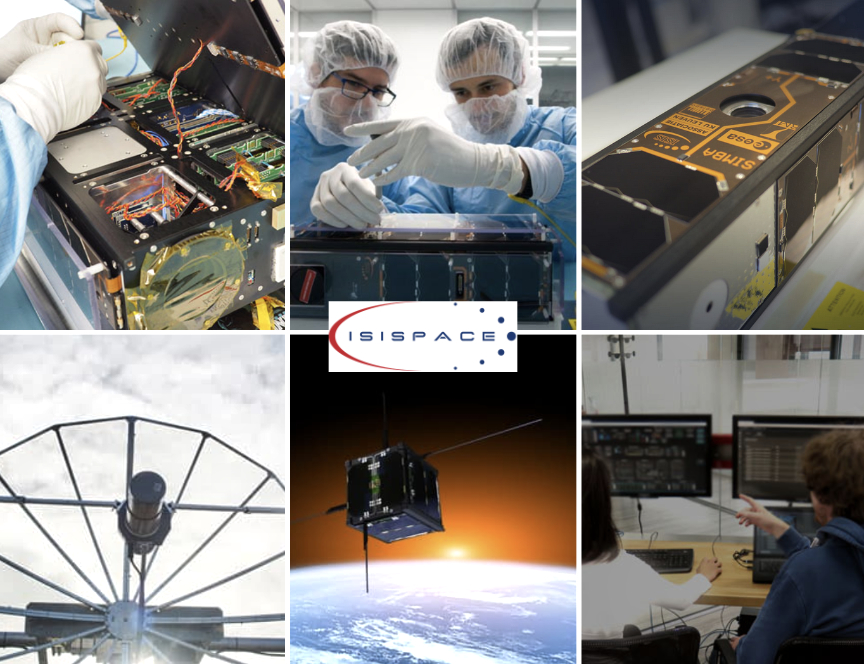
“We’re excited to add SpaceRyde to our roster of launch providers,” said ISISPACE and ISILAUNCH’s co-founder, Abe Bonnema. “Our mission is to provide the best launch experience to each of our customers, and with SpaceRyde’s reusable technology, we will be able to cater to even more customer missions in various inclinations and altitudes.”

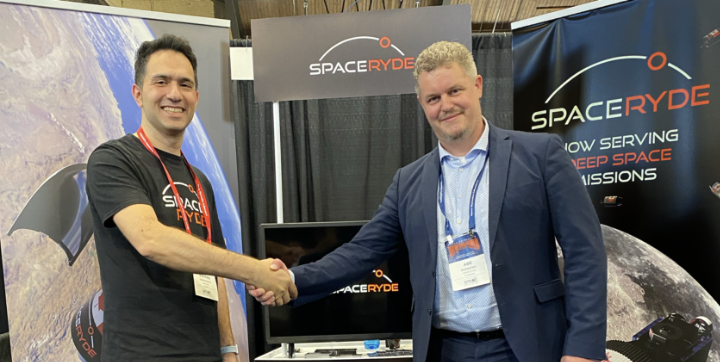
‍”SpaceRyde is excited to join ISILAUNCH’s portfolio of heritage launch partners,” said SpaceRyde’s CRO, Negar Feher. “A gap exists for fast and reliable access to custom orbits in space at a competitive price. These four launches are only the beginning.”

Filed Under: News

LEOcloud and Axiom Space collaborate and take their assistance to the sky with space-based cloud services

November 17, 2022 by editorial

LEOcloud Envisions A Strong Demand For Cloud Services In Space For Commercial, Government and Military Customers

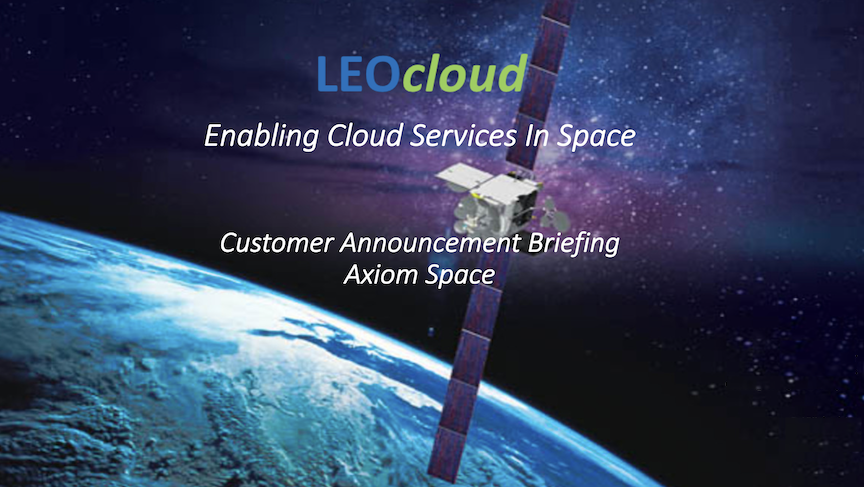
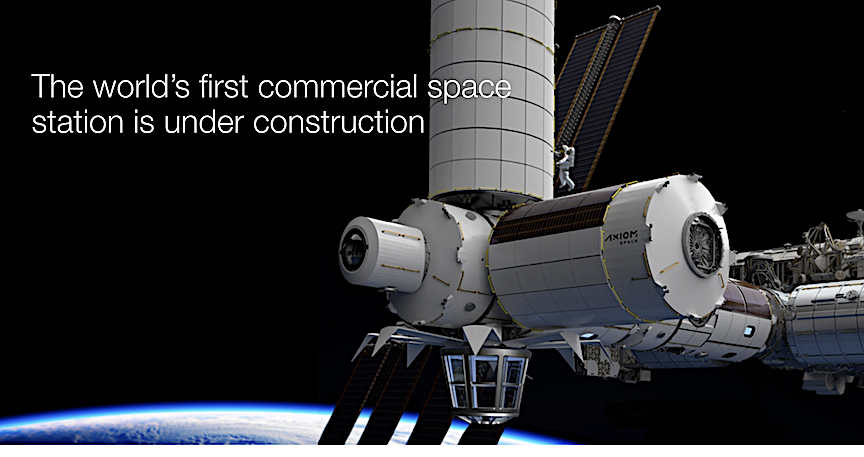
LEOcloud announced they have entered into a Strategic Collaboration Agreement with Axiom Space Inc., the developer of the world’s first commercial space station, for the purpose of developing and delivering space-based cloud services.

LEOcloud’s Space Edge™ Infrastructure as a Service (IaaS) will enable scalable, resilient, reliable Space-hardened cloud edge computing services that are a seamless extension of today’s terrestrial cloud services. Space Edge IaaS multi-cloud service will be part of the critical infrastructure that is evolving in Space where data can be sourced from anywhere in Space and on Earth to be processed by workloads hosted in Space. LEOcloud Space Edge IaaS includes support for Red Hat OpenShift, the industry’s leading enterprise Kubernetes platform, to enable cloud services across hybrid cloud and at the edge with greater speed, flexibility and consistency.
Space Edge IaaS is extensible from LEO to the lunar region and beyond, bringing the benefits of edge computing as close as possible to the sources and users of data. End users can operate their services or application workloads in a local hybrid cloud environment just as they would on Earth.

LEOcloud’s Space Edge IaaS is based on Ramon.Space compute and data storage technology that is Space-hardened and scalable for the Size, Weight and Power (SWAP) constraints of a satellite to the relatively large SWAP available on Space stations.

Microsoft and LEOcloud’s joint strategic vision is to extend cloud services into space where the combination of Azure Space hosted on LEOcloud’s IaaS will enable end users to run workloads in space-based hybrid cloud regions. For example, local Azure services on a space station will support researchers in space in effectively and efficiently advancing AI and ML insights on-orbit as well as collaborating with their colleagues on Earth. Our mutual customers will be able to realize these benefits in LEO, the cislunar region and beyond.

“Our collaboration combines the possibilities of space with the power of Microsoft Azure extending its capabilities anywhere in the universe through new space infrastructure making cloud connectivity and compute increasingly attainable for all at the ultimate edge—on-orbit in space,” said Steve Kitay, Senior Director of Azure Space at Microsoft. “Together, Microsoft and LEOcloud can unlock brand new edge and cloud computing scenarios equipping organizations around the globe with fresh insights from space data to drive innovative solutions to their most complex and time-consuming questions.”

“Red Hat is excited to be working with LEOcloud in this latest collaboration to deliver open hybrid cloud computing to the next frontier with edge computing. Hosted on LEOcloud’s Space Edge IaaS, Red Hat open source technologies provide a common foundation from core to edge to cloud to deliver a reliable and secure infrastructure for mission critical, high-stakes environments like Space,” said Francis Chow, vice president and general manager, In-Vehicle Operating System and Edge, Red Hat.

“LEOcloud is proud to be delivering Space Edge IaaS to Axiom Space to meet the anticipated demand of their customers,” said Dennis R. Gatens, CEO and founder of LEOcloud. “Space is the next domain for cloud edge computing where it will be part of the rapidly evolving critical infrastructure.”

Filed Under: News

Exobotics to build a smallsat for GenMat for mapping all of the Earth’s minerals

November 17, 2022 by editorial

Exobotics has won a multi-million-pound customer contract from advanced materials specialist Quantum Generative Materials (GenMat) to construct a high-precision, remote sensing, prospecting satellite.

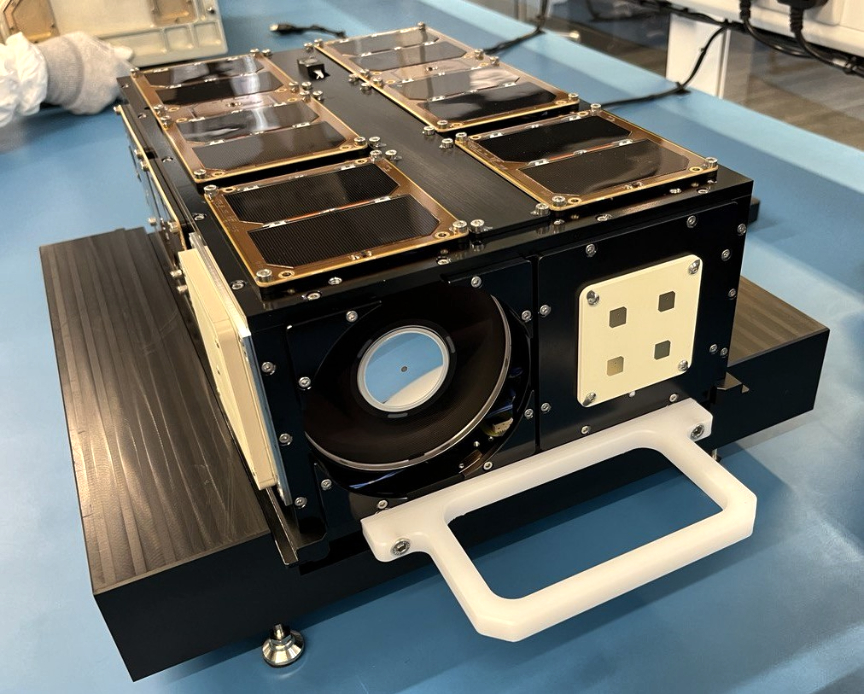
Exobotics will design, manufacture, and test a cubesat platform with a hyperspectral imaging payload to allow GenMat to canvas the natural environment anywhere on the planet. The GenMat technology locates minerals in untapped locations which will play a critical role in creating a novel circular ecosystem of advanced materials, such as semiconductors. This will form the first of GenMat’s constellations, which they say could reach up to 600 satellites to cover every inch of the Earth.

The satellite will be capable of identifying rich areas of resources and mineralization zones in previously under-used locations. Research from the International Energy Agency estimates that China controls over 71 percent of the world’s extraction and 87 percent of the world’s processing capacity of rare earths. With this satellite, GenMat aim to begin boosting material detection and extraction in other regions of the world, supporting national and regional economies.

GenMat will apply their machine learning and AI algorithms to the space data collected by the satellite in order to provide customers in the mining and agricultural industries with high-precision prospecting information of a target site location for advanced materials.

The hyperspectral imager, produced by Simera Sense, will be capable of high-resolution imaging at less than 5 meters per pixel in the 450 to 900nm range, with a payload support system to enable imaging with high-speed radios in S- and X-bands. This technology will lay the groundwork for the quantum sensing space roadmap.

With the project underway, Exobotics will oversee the end-to-end production of the smallsat platform in their London engineering labs, which is set to launch later this year by SpaceX aboard a Falcon 9 rocket.

Nadeem Gabbani, Founder of Exobotics, said, “We are delighted to be manufacturing GenMat’s high-precision prospecting satellite to help provide unique insights of advanced materials in the natural environment across the globe. Space data has a variety of under-explored applications which can greatly benefit industries such as mining, and we are excited to break down the barriers to entry to space for our customers in order to help them launch innovative solutions to macro issues. A key barrier for businesses outside of the industry is the length of time required to get into space. This project is being carried out through our fast-track program which will help GenMat to go from concept to launch in under 12 months, providing fast access to space.”

Deep Prasad, Founder & CEO of GenMat, said, “GenMat is developing products that are vitally important for creating sustainable technology infrastructures, both on Earth, and in Space Exploration. While we are building an AI that informs the production of advanced materials such as semiconductors, we also believe in the significance that our sensors play for the next generation of advancements in the agricultural, mining and defence sectors.”

Filed Under: News

Benchmark Space Systems grows nearly tripling their team and expanding production to meet propulsion system demand

November 16, 2022 by editorial

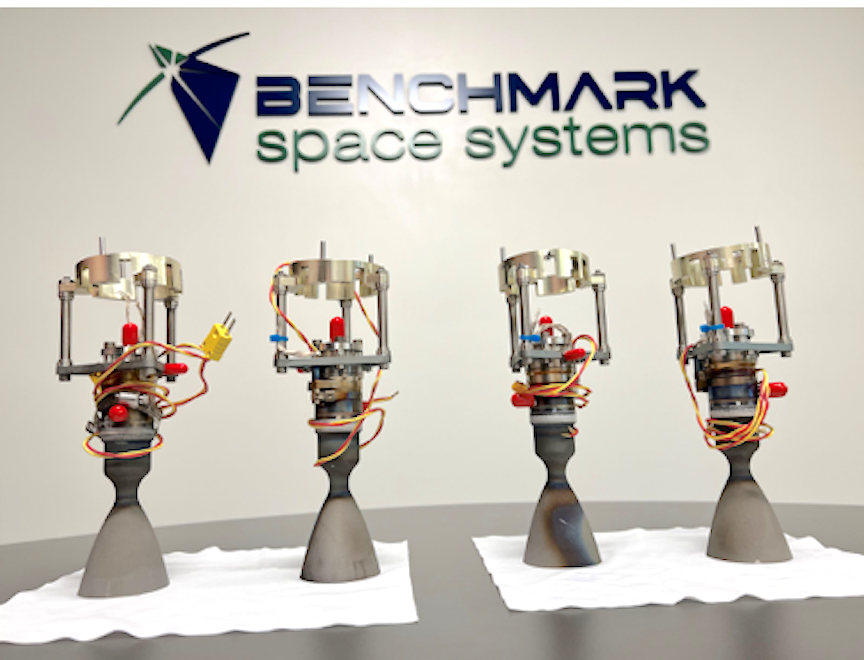
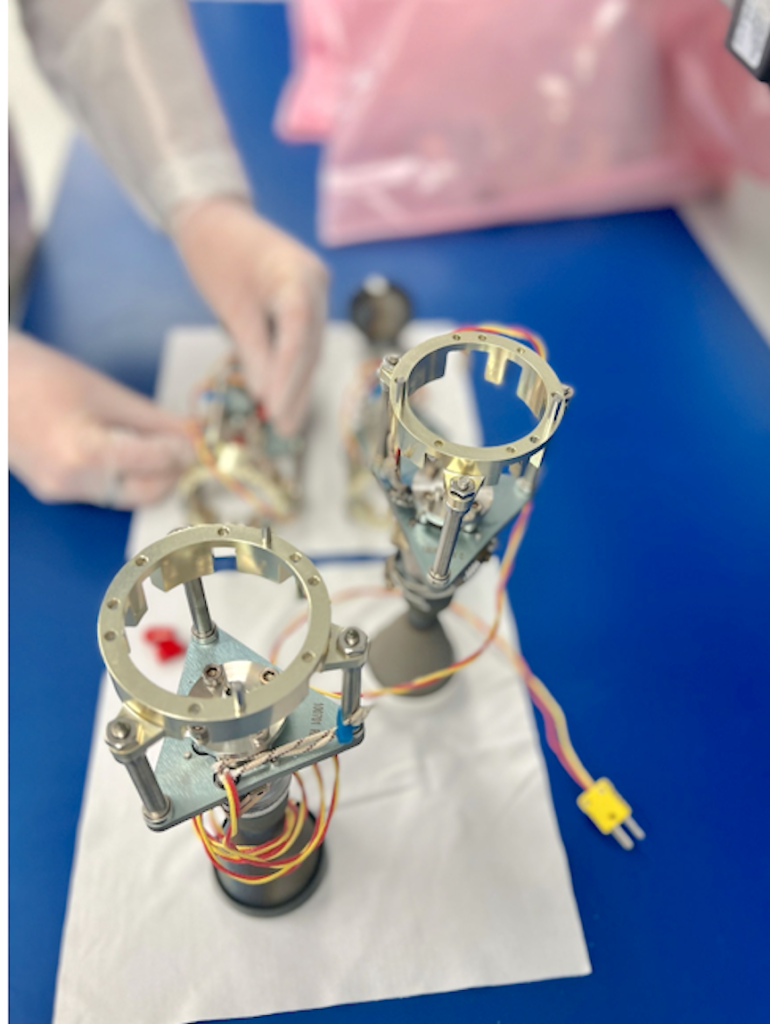
With its Halcyon propulsion systems playing pivotal roles in key military and commercial space missions this year, Benchmark Space Systems announced it has tripled its team from 30 to 83 and boosted its 5-year production capacity to one-thousand engines — all in the last twelve months to meet rapidly rising demand for its mission-proven thrusters.

Benchmark has booked more than 250 engine orders, with the majority of those systems being built and tested at the company’s headquarters facility in Burlington, Vermont, where the firm’s wave of recent hires includes new key executives, Wesley Grove, Senior Operations Manager and Matt Bradley, Vice President of Finance. Benchmark also appointed Kent Frankovich as Vice President of Electric Propulsion, who will be based at Benchmark’s pre-delivery system test center in Pleasanton, California.

Benchmark has expanded its Guidance, Navigation and Control (GNC) software engineering team to further develop its SmartAIM™ GNC for unprecedented operational versatility aboard cubesats, microsats and ESPAs powered by its Halcyon chemical and new Xantus electric metal plasma thruster (MPT) propulsion systems ‚ as well as complementary thrusters and positioning subsystems.
Benchmark also announced it is ready to initiate propulsion system production at its new UK manufacturing and test facility at the Westcott Innovation Centre Northwest of London in Aylesbury, England. A collaboration with UK-based Satellite Applications Catapult enabled Benchmark to accelerate the build out of its European assembly and clean room operations in less than six months.

The first propulsion engines to roll off Benchmark’s new UK production line will be Halcyon Avant bipropellant systems destined for Space Forge satellites, which are designed to return products made in space back to Earth. While the down mass re-entry market attracts much skepticism and scrutiny, it is a key aspect of the in-space market, proven and practiced for years by SpaceX. 

“The space market has seen our performance on orbit, and our breakthrough chemical, electric, and hybrid propulsion systems, and has responded with major engine orders we will deliver over the coming months. We have quickly emerged as the company that empowers leading satellite manufacturers and operators by unleashing the full potential of their missions with the best in-space mobility solutions,” said Ryan McDevitt, Benchmark Space Systems CEO. “Benchmark continues to grow exponentially, nearly tripling the size of our team this year alone and expanding our five-year production capacity to one-thousand engines in the U.S. and the UK. Benchmark is inking major contracts to enable mission-critical government and commercial space programs, and we have the people and infrastructure in place to deliver on the exciting demand.”

“Benchmark’s UK expansion is an important piece of our global strategy, as we are now very well positioned to meet the specific needs of the European space market with tailored chemical, electric and hybrid propulsion solutions,” according to Mark Arthur, Benchmark’s Director of European Operations.  “Our alignment with S.A.  Catapult has allowed Benchmark to stand up our UK manufacturing and testing capabilities in record time at the Westcott Innovation Centre, with access to specialized capital equipment available on campus. We expect to conduct our first hot fire testing early next year, and we will be exchanging ideas, capabilities and technologies across our teams in the UK, Vermont and California to solve key challenges for customers and partners around the world — from in-space manufacturing to space debris and collision avoidance.”

“We are thrilled to see our facilities at the Westcott Innovation Center play a role in Benchmark’s ability to accelerate the production and testing of propulsion systems customized to the requirements of UK and European space demands,” said Sam Adlen, Chief Strategy Officer for Satellite Applications Catapult. “Benchmark brings incredibly innovative propulsion systems and technologies to the region and is on the verge of rolling its first tailored offerings off its Westcott assembly line.”

Filed Under: Featured, News

Morpheus Space and Kayhan Space’s first all-in-one collision avoidance system for satellite operators

November 15, 2022 by editorial

Kayhan Space and Morpheus Space, both companies dedicated to enabling the accessibility and sustainability of space, announced a strategic partnership to offer satellite operators and missions a breakthrough one-click mobility-as-a-service collision avoidance solution. 

The new pay-as-you-go Morpheus Space propulsion service provides in-space mobility on demand, complete with built-in Kayhan Space Pathfinder™ spaceflight safety capabilities that deliver real-time conjunction alerts to satellite operators who can instantly review options for collision avoidance and other on-orbit maneuvers. 
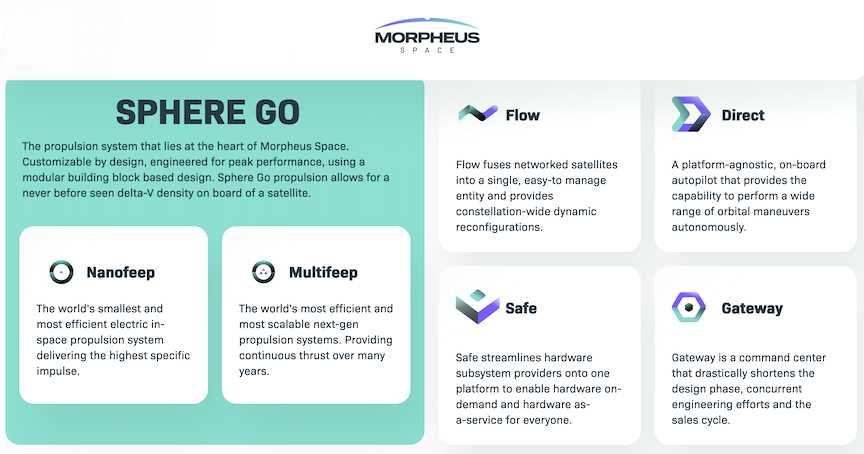
Morpheus’ intelligent mobility offering is designed to provide satellite and mission operators with peace of mind and the ability to focus on their missions, confident that optimal options for preemptive collision avoidance and on-orbit maneuver options will be delivered in real-time. Operators can use a seamless interface to make purchases of Delta-V fuel and complete Kayhan-recommended collision avoidance, orbit-raising, or station-keeping maneuvers without the upfront costs of the propulsion system hardware aboard the satellite. 

 “Morpheus Space has developed an affordable and accessible full-stack mobility solution that makes satellites more agile, intelligent and safe with Kayhan’s Pathfinder spaceflight safety software seamlessly integrated with our in-space mobility systems,” said Daniel Bock, Morpheus CEO. “The core focus of our partnership with Kayhan Space is lowering the risk and cost barriers to safe space operations by making smart maneuverability and collision avoidance capabilities simple and seamless to use as part of our on-demand and subscription-based mobility solutions.” 

“This milestone partnership between Kayhan Space and Morpheus Space is all about making spaceflight and satellite operations safer by providing operators with powerful, proactive, and preemptive propulsion solutions that enable precise pay-as-you-go maneuverability in increasingly busy orbits,” said Araz Feyzi, Kayhan Space Co-Founder and CTO. “The integration of Kayhan’s Pathfinder Pro spaceflight safety platform with the Morpheus mobility-as-a-service allows us to accelerate our ability to make these powerful and intelligent in-space mobility capabilities available to everyone in space. This collaborative solution is in direct response to requests from leading satellite operators, who will be among the first to contract for safe in-space mobility.”

Typically, satellite manufacturers have had to invest significant upfront costs to purchase propulsion systems to power and maneuver their mission payloads into optimal orbit and around potential collision threats from other spacecraft or orbital debris. The new Morpheus offering, featuring leading collision avoidance capabilities, allows operators to avoid capital costs and collision threats in space.

Some of the largest operators in LEO have played an integral role in the development of the intelligent propulsion offering and plan to deploy aboard satellite missions beginning in early 2023.

Filed Under: News

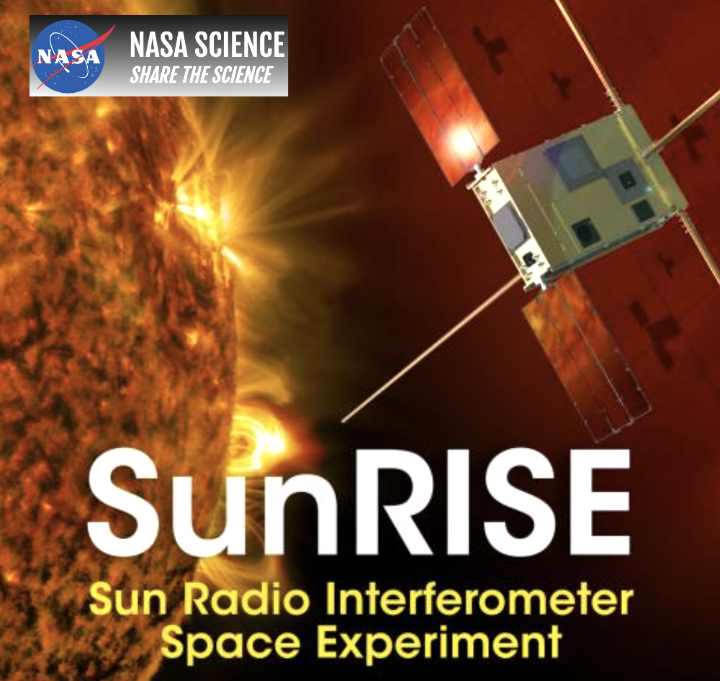
MMA Design’s HaWK solar arrays to empower NASA’s SunRISE Mission

November 15, 2022 by editorial

The Space Dynamics Laboratory (SDL) unveiled the first of a fleet of smallsats in Logan, Utah, earlier this year in support of NASA’s Sun Radio Interferometer Space Experiment (SunRISE) mission — the mission will be powered by MMA Design’s HaWK™ Solar Arrays. NASA selected SunRISE for development in 2020 as part of its Heliophysics Explorer program that aims to study space weather.
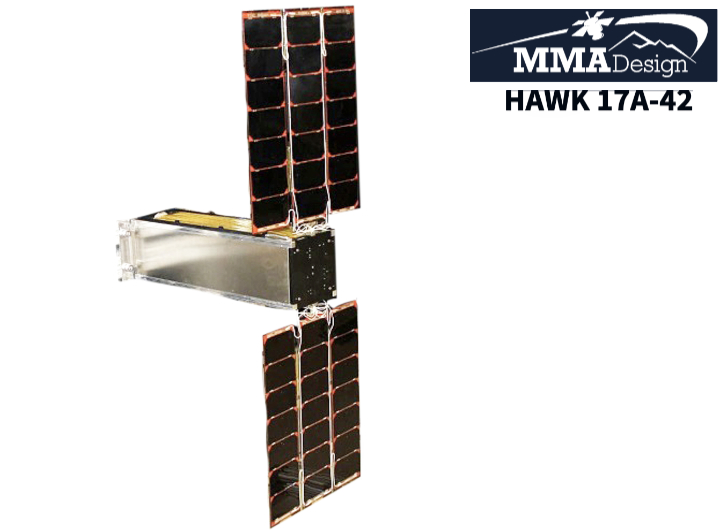


MMA completed the design, manufacture, test and delivery of 12 HaWK Solar Array wings to SDL that will power SunRISE’s 6U smallsat fleet. Each spacecraft is comprised of two wings that, combined, generate approximately 42 Watts of power.

MMA’s HaWK solar arrays are known for their packaging metrics, reliability and heritage in powering multiple civil, DoD and commercial missions. NASA will launch the fleet in mid-2024 for operation in a geostationary orbit.

The six 6U smallsats will operate independently but will fly together in a fleet and act as a single, virtual, large-aperture, radio antenna, using a technique known as interferometry. The mission aims to observe low radio frequency emissions in order for scientists to better understand how the Sun is able to generate intense space weather storms – known as solar particle storms – that can be hazardous to spacecraft and astronauts.

This research will help scientists forecast space weather, improve what we know of how our Sun works and may apply to studies of other stars – particularly those with planets.

SunRISE is a Mission of Opportunity under the Heliophysics Division of NASA’s Explorers Program Office, which is part of the agency’s Explorers Program, the oldest, continuous, NASA program designed to provide frequent, low-cost access to space using principal, investigator-led, space science investigations relevant to the Science Mission Directorate’s (SMD) astrophysics and heliophysics programs.

The program is managed by NASA’s Goddard Space Flight Center in Greenbelt, Maryland, for SMD and by JPL, a division of Caltech in Pasadena, California — the mission is led by the University of Michigan in Ann Arbor.

MMA Design is headquartered in Louisville, Colorado, where the firm’s creative and agile team is creating innovative, ingeniously packaged, disruptive, deployable solutions that are revolutionizing the industry. From R+D to Flight, the company thinks out of the box to put more into the box for your Space mission.


Filed Under: News

Ubotica + Open Cosmos agree to launch the CogniSat-6 smallsat

November 15, 2022 by editorial

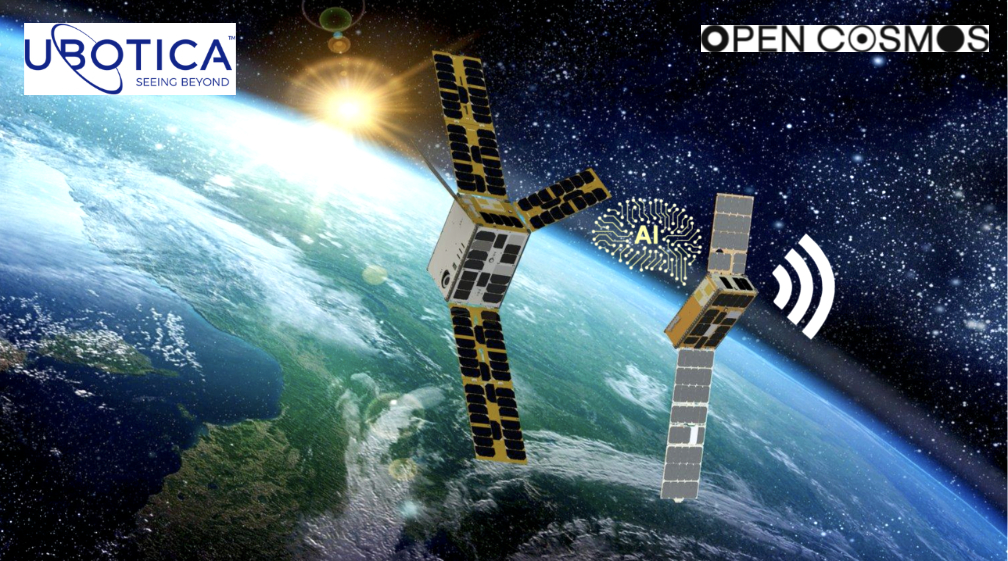
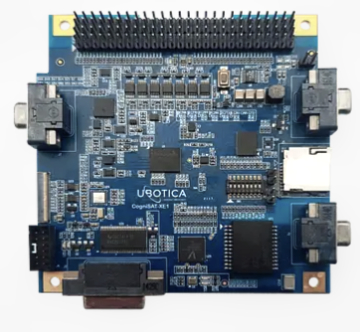
Ubotica Technologies™ and Open Cosmos have signed an agreement to deliver CogniSat-6, the first AI-centric cubesat mission to include autonomous capabilities. As part of the agreement, CogniSat-6 will carry the flight proven (TRL-9) CogniSat™ edge computing platform to LEO and will provide reactive retargeting to optimize image gathering on specific areas of interest identified on-orbit without requiring any intervention from ground stations. This allows faster response times for satellite tip and cue operations resulting in higher value data gathering which significantly accelerates the mission return on investment (ROI).

Open Cosmos’ DataCosmos is a multi-satellite data platform that simplifies image discovery and tasking, provides advanced visualization tools, and allows professional usage of data through a network of associated application providers and a public APIs
Flight proven and power efficient edge computing platform solution for AI on satellites.

Additionally, the mission will be used to execute a wide selection of CogniSat applications. These applications enhance the value of imagery available for analysis through smart AI-enabled compression techniques. This results in a six-fold increase in the usable data received by the ground station when compared with the transmission of uncompressed images and a two-fold increase when compared with the use of standard compression approaches.

Announcing the agreement, Fintan Buckley, Co-Founder and CEO of Ubotica Technologies, said, “CogniSat-6 builds on the solid foundation of flight proven Ubotica technology to deliver the first AI-centric cubesat mission with autonomous capabilities. CogniSat-6 also uses CogniSat on-board edge computing to realize considerable system savings. For example, applications running on CogniSat-6will increase the system value by expanding system data throughput and cutting downlink costs. Satellite System Designers are already telling us that it is a compelling proposition.”

This mission will be joining the OpenConstellation project: a global, shared satellite infrastructure built and managed by Open Cosmos to enable anyone to access satellite data to address challenges around the climate crisis, energy and natural resources. The OpenConstellation enables business, organisations, national and regional governments to participate and access insightful, actionable data from space for the first time while keeping high levels of governance and security.

Commenting on the agreement Rafel Jorda Siquier, founder and CEO of Open Cosmos, said, “We are delighted to announce Ubotica as the first edge computing and AI partner for the OpenConstellation. The OpenConstellation is attracting both private and public partners willing to share infrastructure with the aim to make data and information available to everyone. CogniSat-6 addresses real needs we see from customers and will enable OpenConstellation users to implement comprehensive AI-enabled system developments.”

Ubotica is currently hiring for specific roles to support the company’s planned growth. Details are available at this direct infolink…

Filed Under: News

NASA awards commercial smallsat data acquisition agreement to GeoOptics

November 15, 2022 by editorial

NASA has selected GeoOptics Inc. of Pasadena, California, to provide commercial small constellation satellite data products that may augment NASA-collected data in the future. This is a fixed-price, blanket purchase agreement and each call issued is not to exceed $7 million over a five-year period.

The work will be performed at the contractor’s facilities in Pasadena and other locations as specified in individual calls issued. The period of performance expires five years from the effective date of the agreement, Tuesday, November 15, 2022.

Under this agreement, GeoOptics shall be responsible for delivery of a comprehensive catalog of its commercial Earth Observation (EO) data, High Resolution Radio Occultation Commercial Earth Observation Data products indicating at a minimum: the data sets, associated metadata and ancillary information; data cadence; data latency; area coverage; and data usage policy.

NASA will assess and evaluate these small constellation satellite data products with the purpose of augmenting and/or complementing NASA-collected data in the future.

To facilitate standard scientific collaborations, NASA requires End User License Agreements to enable broad levels of dissemination and shareability of the commercial data with the U.S. government agencies and partners.

Filed Under: News

NASA awards commercial smallsat data acquisition agreement to GeoOptics

November 15, 2022 by editorial

NASA has selected GeoOptics Inc. of Pasadena, California, to provide commercial small constellation satellite data products that may augment NASA-collected data in the future. This is a fixed-price, blanket purchase agreement and each call issued is not to exceed $7 million over a five-year period.

The work will be performed at the contractor’s facilities in Pasadena and other locations as specified in individual calls issued. The period of performance expires five years from the effective date of the agreement, Tuesday, November 15, 2022.

Under this agreement, GeoOptics shall be responsible for delivery of a comprehensive catalog of its commercial Earth Observation (EO) data, High Resolution Radio Occultation Commercial Earth Observation Data products indicating at a minimum: the data sets, associated metadata and ancillary information; data cadence; data latency; area coverage; and data usage policy.

NASA will assess and evaluate these small constellation satellite data products with the purpose of augmenting and/or complementing NASA-collected data in the future.

To facilitate standard scientific collaborations, NASA requires End User License Agreements to enable broad levels of dissemination and shareability of the commercial data with the U.S. government agencies and partners.

Filed Under: News

  • « Go to Previous Page
  • Page 1
  • Interim pages omitted …
  • Page 5
  • Page 6
  • Page 7
  • Page 8
  • Page 9
  • Interim pages omitted …
  • Page 58
  • Go to Next Page »

Primary Sidebar

WEEKLY NEWSLETTER

Archives

  • April 2026
  • March 2026
  • February 2026
  • January 2026
  • December 2025
  • November 2025
  • October 2025
  • September 2025
  • August 2025
  • July 2025
  • June 2025
  • May 2025
  • April 2025
  • March 2025
  • February 2025
  • January 2025
  • December 2024
  • November 2024
  • October 2024
  • September 2024
  • August 2024
  • July 2024
  • June 2024
  • May 2024
  • April 2024
  • March 2024
  • February 2024
  • January 2024
  • December 2023
  • November 2023
  • October 2023
  • September 2023
  • August 2023
  • July 2023
  • June 2023
  • May 2023
  • April 2023
  • March 2023
  • February 2023
  • January 2023
  • December 2022
  • November 2022
  • October 2022
  • September 2022
  • August 2022
  • July 2022
  • June 2022
  • May 2022
  • April 2022
  • March 2022
  • February 2022
  • January 2022
  • December 2021
  • November 2021
  • October 2021
  • September 2021
  • August 2021
  • July 2021
  • June 2021
  • May 2021
  • April 2021
  • March 2021
  • February 2021
  • January 2021
  • December 2020
  • November 2020
  • October 2020
  • September 2020
  • August 2020
  • July 2020
  • June 2020
  • May 2020
  • April 2020
  • March 2020
  • February 2020
  • January 2020
  • December 2019
  • November 2019
  • October 2019

© 2019–2026 SatNews

Insert/edit link

Enter the destination URL

Or link to existing content

    No search term specified. Showing recent items. Search or use up and down arrow keys to select an item.
      x
      Sign Up Now!

      Enjoy a free weekly newsletter with recent headlines from the global SmallSat industry.

      Invalid email address
      We promise not to spam you. You can unsubscribe at any time.
      Thanks for subscribing! You will now receive weekly SmallSat News updates.
      We love our advertisers.
      And you will too!

      Please disable Ad Blocker to continue... We promise to keep it unobtrusive.
      We promise not to spam you. You can unsubscribe at any time.
      Invalid email address
      Thanks for subscribing!