• Skip to main content
  • Skip to primary sidebar
  • Home
  • News
  • Featured
  • More News ⌄
    • SatNews
    • SatMagazine
    • MilSatMagazine
  • Events ⌄
    • MilSat Symposium
    • SmallSat Symposium
    • Satellite Innovation
  • Contacts
  • SUBSCRIPTION

SmallSat News

You are here: Home / Archives for 2023

Archives for 2023

Iridium launches Iridium Certus for aviation connectivity

July 25, 2023 by editorial

Iridium Communications Inc. (NASDAQ: IRDM) has introduced their Iridium Certus® aviation commercial service, providing a secure cockpit domain with reliable voice and data capabilities.

Using L-band satellite frequencies that are superior for cockpit communications, Iridium Certus for aviation is an ideal complement to commercial transport passenger cabin connectivity Ka-/Ku-band services and can be a primary service for small-to-mid-size business jet cabins. It would also be preferred to HF/VHF for electronic flight bag (EFB), flight critical data, and passenger communications during oceanic flights.
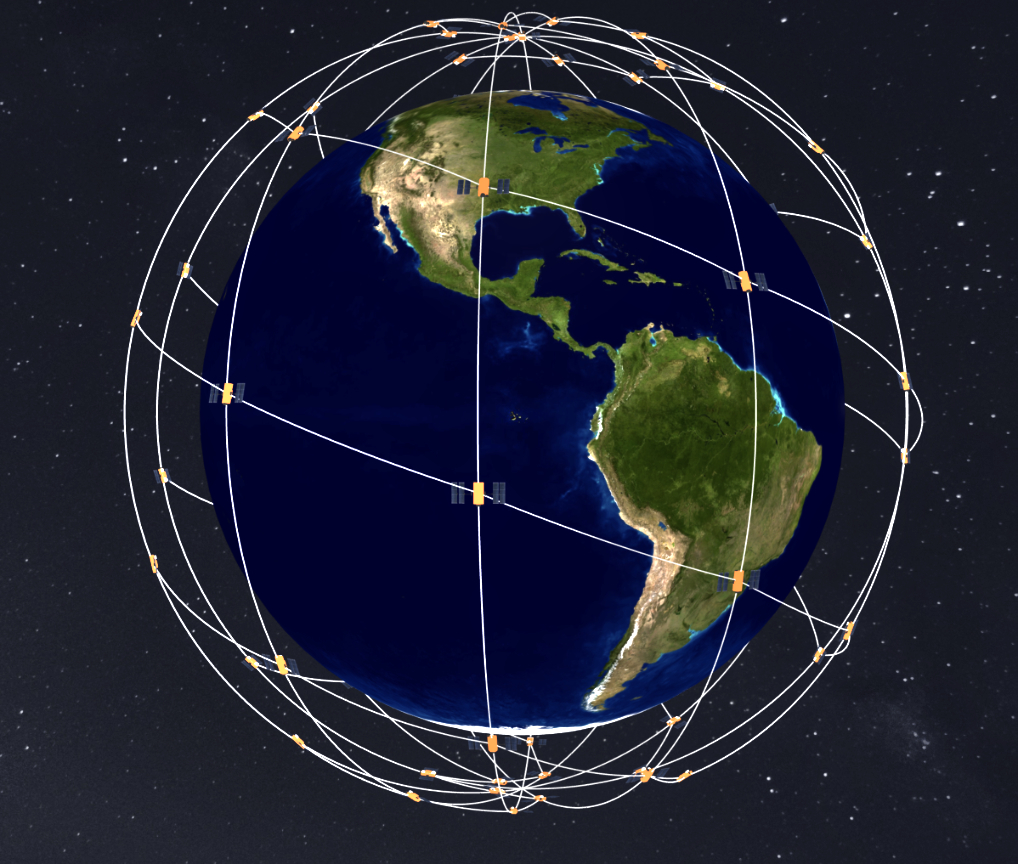
Artistic rendition of Iridium’s LEO network.

Iridium’s partners are introducing a range of multi-tier Iridium Certus solutions that complement other in-flight connectivity (IFC) systems installed on aircraft. Multiple Iridium Value Added Manufacturers (VAMs) and Value-Added Resellers (VARs) are providing a spectrum of Iridium Certus 100 and Iridium Certus 700 solutions. Safety certifications are currently in progress, with flight trials expected to begin by the end of 2023 and approvals expected in 2024, making it a valuable short-term and long-term investment for aircraft operators.

With its LEO satellite network, Iridium offers weather-resilient L-band connectivity and unparalleled global coverage versus GEO systems. The flexibility of Iridium Certus service to scale device SWaP requirements both up and down allows users to cater to various mission needs, offering different price points and versatility for diverse aircraft types and operational requirements. Iridium Certus also makes it affordable for aircraft operators to obtain real-time data from the cockpit, enabling better decision-making and improved operational efficiency.

The success of Iridium Certus technology in maritime and land applications has paved the way for its entry into the aviation realm. With thousands of subscribers currently using the Iridium Certus service, its deployment has been extensive and highly regarded. The aviation industry now benefits from the robust suite of solutions provided by Iridium Certus, supporting Uncrewed Aerial Vehicles (UAV)/Urban Air Mobility (UAM), business jet cabin connectivity, and paving the way for future flight deck applications. Iridium and its ecosystem of partners are continually developing new offerings, with additional announcements and terminal launches planned for later this year.

“The aviation industry is forecasting a period of unprecedented growth, where reliable connectivity has become crucial for both passenger and cockpit communications. Iridium Certus perfectly fits these applications due to the combination of its Size, Weight, and Power (SWaP) as well as the outstanding reliability of our global network. With our upgraded constellation, we have significantly improved and expanded our offerings, delivering air traffic control services, weather, and critical information to cockpits worldwide more affordably than ever before.” — Matt Desch, CEO, Iridium

“Iridium’s first generation voice and data solutions are installed on over 60,000 aircraft today and have been critical for flight safety and relied upon by pilots and airlines for years. As the preferred solution for a wide range of aviation applications, from drones to airliners, Iridium Certus is ready to support the industry’s evolving connectivity needs.” — John Peterson, Executive Director of Aviation, Iridium


Filed Under: News

Forrester’s Digest: Project Kuiper gets closer

July 25, 2023 by editorial

The Amazon-backed Project Kuiper LEO broadband satellite system moved a major step closer with the establishment of a satellite processing and test facility in Florida.

Kuiper is investing $120 million in a 100,000 sq. ft. factory which is being built near the Kennedy Space Center in Florida. Kuiper received its FCC license in July of 2020.

Project Kuiper calls for at least 3,236 LEO satellites to be launched that will provide broadband coverage to the entire planet. These LEO smallsats will be a direct competitor to Elon Musk’s fast-growing, Starlink service. Kuiper’s satellites will operate at heights between 590 and 630 kms.

The Kuiper satellites will be built at Amazon’s primary factories in Redmond and Kirkland, Washington. Kirkland is said to be producing five satellites per day. Upon completion, they will be shipped to Florida for final testing and integration into their rockets.

Business news channel CNBC quotes Steve Metayer, Amazon’s VP/Kuiper Production Operations, as confirming that the facility has commenced building and which will be ready to receive satellites in H2/2025. Project Kuiper’s own website states it expects it to start providing broadband services by the end of 2024.

“I am thrilled that Amazon is the first major tenant to locate [at the Florida Launch & Landing Facility],” Frank DiBello, CEO of Space Florida, told CNBC. “It’s a testament to the fact, though, that we view the whole state as an ecosystem supporting space.”

Kuiper is expected to launch the first couple of prototype test satellites later in 2023.

Filed Under: Featured, News

Rocket Lab’s next mission is for Capella Space

July 22, 2023 by editorial

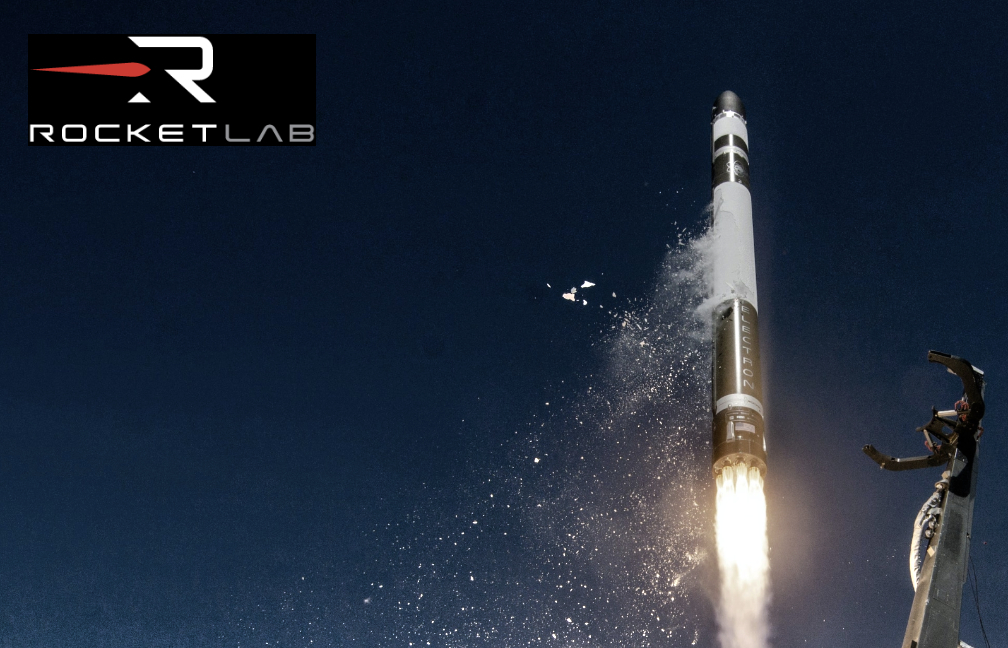
Rocket Lab USA, Inc. (Nasdaq: RKLB) has scheduled the company’s next Electron launch during a window that opens July 28, 2023, NZST/UTC.

The ‘We Love the Nightlife’ mission is scheduled to launch from Rocket Lab Launch Complex 1 on New Zealand’s Mahia Peninsula for Capella Space (Capella), a provider of commercial, Synthetic Aperture Radar (SAR) imagery.

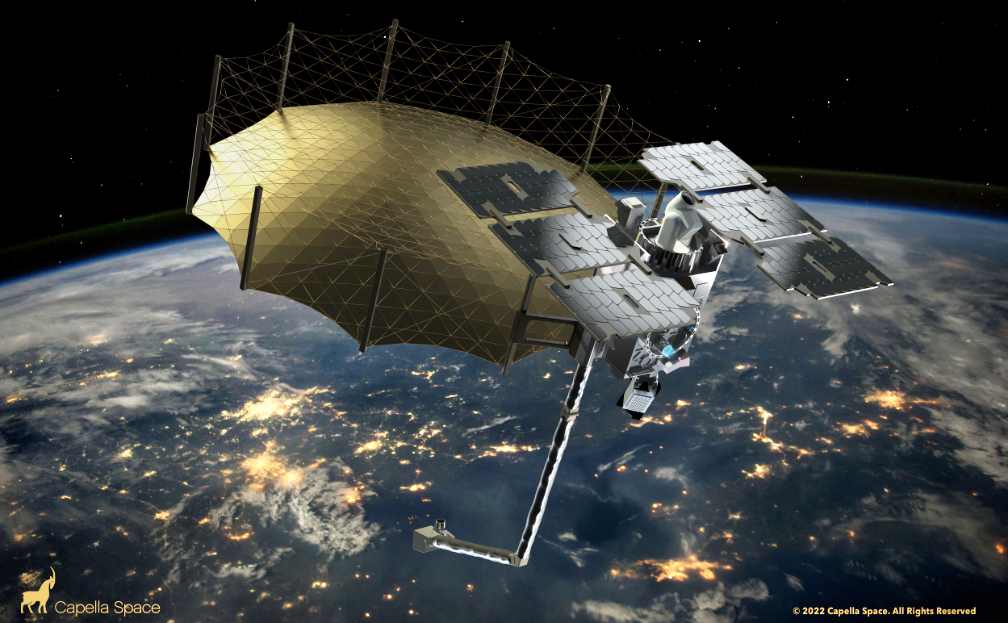
Artistic rendition of Capella Space’s Acadia SAR satellite, courtesy of the company.

‘We Love the Nightlife’ will be Rocket Lab’s third launch for Capella following the successful “Stronger Together” mission launched in March 2023 from Rocket Lab Launch Complex 2 in Virginia, USA, and the “I Can’t Believe It’s Not Optical” mission in August 2020 from Launch Complex 1, which deployed the first satellite in Capella’s SAR constellation.

‘We Love the Nightlife’ will be the first of four, new, dedicated launches on Electron for Capella, announced in February of 2023, to deploy Capella’s next-generation SAR Earth-imaging satellites called Acadia.

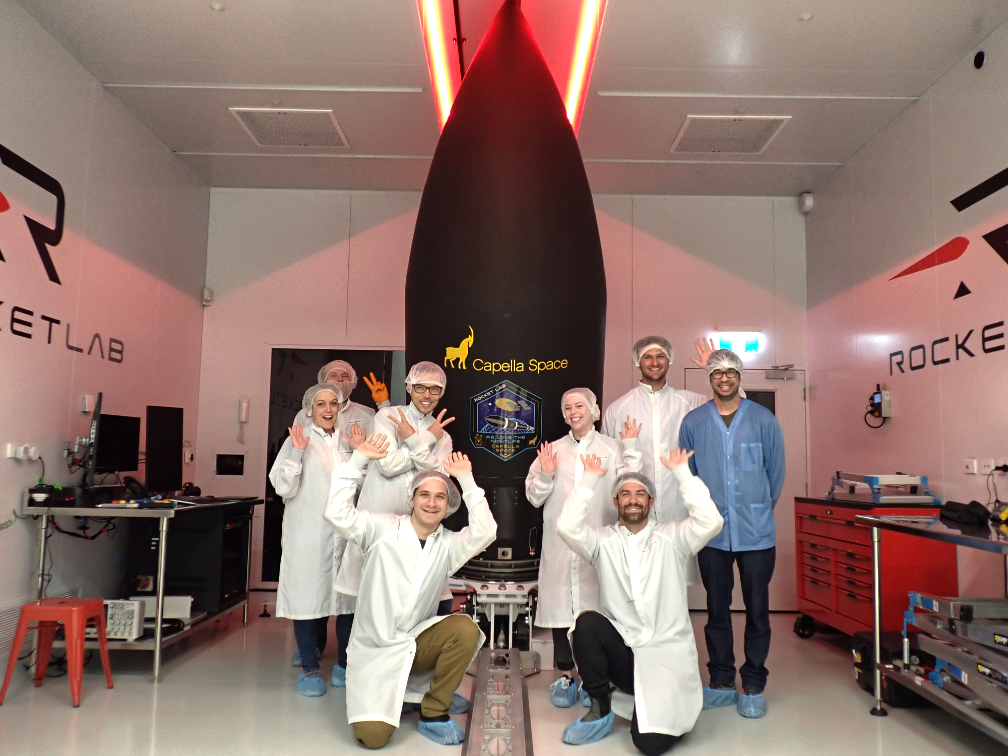
Payload integration is completed for Capella Space on Rocket Lab’s Electron launch vehicle. Photo is courtesy of Capella Space.

Capella’s satellites deliver high quality, high resolution SAR imagery capable of penetrating all weather conditions and capturing clear imagery 24-7, day and night, anywhere on Earth, delivered through Capella’s fully-automated ordering and delivery platform.

The next-generation Acadia satellites include a number of enhancements to Capella’s existing constellation, including increased bandwidth and power and faster downlink speeds. When combined with Capella’s existing long-dwell imaging capability and extended duty-cycle – which results in more images collected per orbit than other SAR systems – Acadia will continue to set the benchmark within the SAR industry.

All four upcoming Electron missions will launch from Rocket Lab Launch Complex 1, each deploying a single Acadia satellite to a 640 km mid-inclination orbit, expanding the existing Capella Space SAR constellation and providing more rapid revisit across diverse regions around the Earth.

Photo of Rocket Lab’s Launch Complex 1 in New Zealand, courtesy of the company.

Each Capella Space satellite will also be supported by a Rocket Lab-manufactured Advanced Lightband: separation systems for each satellite to attach to and deploy from Electron once launched to orbit.

Rocket Lab’s Advanced Lightband system.

“Electron was the trusted launch vehicle for Capella’s first publicly available satellite when we launched their mission in 2020, so it’s an honor once again to be entrusted with launching the first of their next generation Acadia satellites. Reaching 40 Electron launches is a wonderful milestone for our team members who have built the most reliable small launch vehicle in history and we’re delighted to share such a significant launch with our long-standing mission partner Capella.” — Peter Beck, CEO, Capella Space

“We are proud to partner with Rocket Lab to introduce Capella’s third-generation Acadia satellite technology to the world,” said . “Acadia is a reflection of our commitment to technology innovation and will preserve our track record of delivering high-quality and low latency SAR imagery to customers anywhere in the world.” — Payam Banazadeh, Founder and CEO, Capella Space

Filed Under: News

OneWeb Technologies successfully demos LEO SATCOM at “Exercise Northern Edge”

July 21, 2023 by editorial

OneWeb Technologies Inc. has successfully concluded several demos with MITRE and the Department of the Air Force’s Program Executive Office for Command, Control, Communication and Battle Management (PEO C3BM) during the U.S. Indo-Pacific Command “Exercise Northern Edge,” which took place recently in Alaska at the Joint Pacific-Alaska Range Complex (JPARC).

OneWeb Technologies deployed several terminals across the JPARC, including locations in the Gulf of Alaska, at Joint Base Elmendorf-Richardson in Anchorage, and at Eielson Air Force Base in Fairbanks, Alaska. Leveraging parent company OneWeb’s terminals, the company demonstrated high-capacity, low-latency, SATCOM connectivity for afloat and ashore locations and served as a critical linkage for the USAF’s Advanced Battle Management System.

OneWeb Technologies provided an alternate commercial data transport pathway increasing battle network resilience that is key to the service’s Agile Combat Employment concept.

OneWeb Technologies personnel also worked with MITRE to perform initial usability and proof-of-concept testing in early spring in Bedford, Massachusetts, ahead of the Alaska-area exercise. The results of the OneWeb SATCOM testing consistently exceeded available MILSATCOM capabilities in terms of throughput, latency, and availability.

OneWeb Technologies’ expansion of its ground architecture is expected to be complete in early 2024, with access to OneWeb’s full constellation of more than 600 satellites on-orbit, offering global service by the end of 2023. Today, OneWeb Technologies is providing mission-essential services to civil, commercial, and defense customers throughout the northern hemisphere, and will be expanding services in the coming months. Other advanced capabilities are in test and evaluation, and OneWeb Technologies is working with various defense agencies to support specialized and boutique requirements in accordance with its “customer-led, simplicity-first” business model.

“I am proud of the team for what they have accomplished and with the results of these demonstrations. The performance we are seeing from the OneWeb constellation, the OneWeb Technologies secure ground network, and user equipment is the result of hard work, and great partnership with our Department of Defense and Federally Funded Research and Development Center (FFRDC) customers. SATCOM is the lifeblood of today’s connected, precision military. Without capabilities like OneWeb and OneWeb Technologies, the world is a less secure, less sure place,” said Steen. “I’m honored to be part of enabling our country’s National Security and lifesaving capabilities and am proud to be working with our defense partners around the world.” — Kevin Steen, CEO, OneWeb Technologies

Filed Under: News

Sidus Space awarded subcontract by Parsons for USSF launch manifest systems

July 20, 2023 by editorial

Sidus Space, Inc. (NASDAQ:SIDU) has been awarded a new subcontract to produce hardware in support of Parsons Corporation’s (NYSE: PSN) Launch Manifest Systems Integration (LMSI) contract — under the terms of the agreement, Sidus Space will fabricate a master harness assembly and test cables for Parsons.

Sidus offers more than a decade of expertise in manufacturing mission critical hardware for customers including international and U.S. governments, NASA, and major space and defense prime contractors such as Parsons Corporation. With a proven history of success, space qualification know-how, and a rich legacy of hardware manufacturing, Sidus plays a pivotal role in missions that extend beyond LEO, encompassing destinations such as the moon, Mars and beyond.

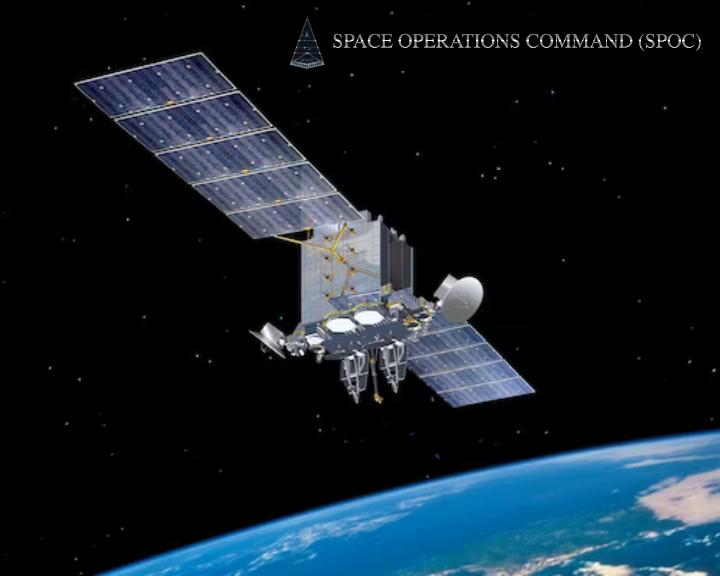
Parsons is the U.S. Space Force’s prime contractor leading LMSI, a multi-year contract to integrate and operate rideshare payloads in the national security and other U.S. Government (USG) missions. Parsons is delivering multi-manifest smallsat payload integration solutions to space for USG-owned and sponsored smallsat systems and has integrated payloads for several missions, including the U.S. Space Force’s Advanced Extremely High Frequency (AEHF)-5 communications satellite (artistic rendition below) and the joint NASA/U.S. Geological Survey’s Landsat 9 EO satellite.

“Parsons is an industry leader, and we are pleased to further our work on this important U.S. Space Force mission in collaboration with such a notable partner. This latest contract award again underscores our strong position in the space community where we are playing an increasingly vital role as a manufacturing partner with one of the U.S. Space Force’s leading prime contractors.” — Carol Craig, Founder and CEO, Sidus Space

Filed Under: News

Blue Canyon Technologies provides defense-critical smallsats on Transporter-8 Launch

July 20, 2023 by editorial

Blue Canyon Technologies, a subsidiary of RTX (NYSE: RTX), announced the firm’s contributions to the recent SpaceX Transporter-8 launch on June 12th, kickstarting several defense-critical missions.

Blue Canyon’s products on the Transporter-8 launch included four, Saturn-class smallsats for DARPA’s Blackjack mission, two 6U CubeSats for the Department of Defense (DoD) Modular ISR program (MISR) and one 12U CubeSat for a government customer.

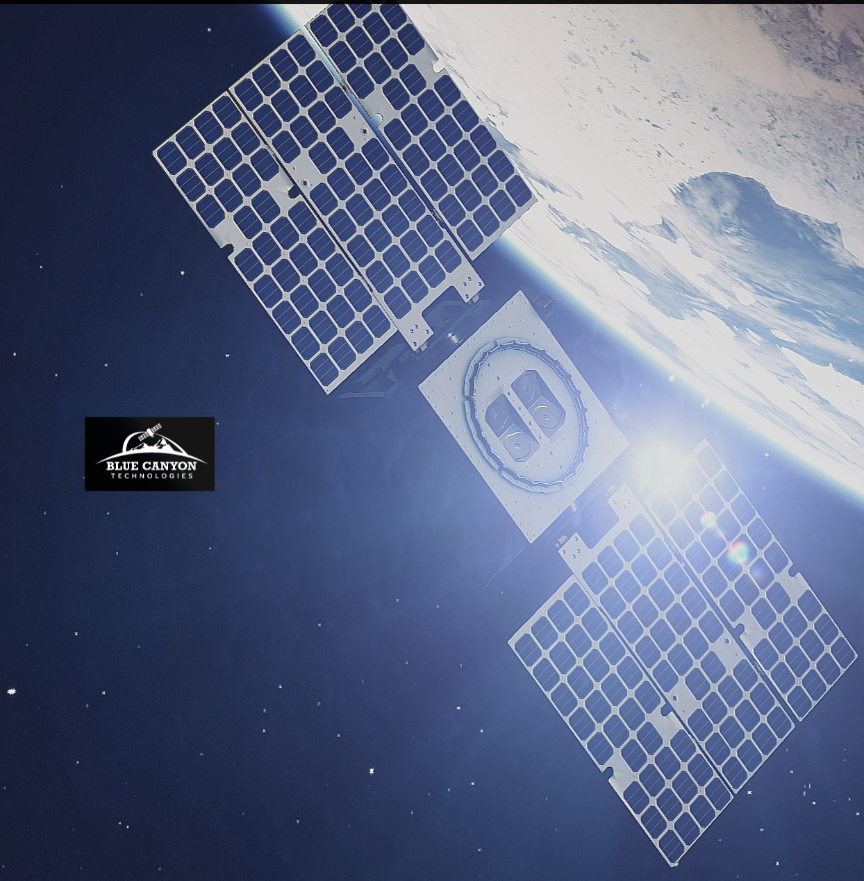
DARPA’s Blackjack mission aims to lay the groundwork for a high-speed, global network in LEO (artistic rendition below). This network will provide the DoD with connected, resilient, and persistent coverage. Each Blackjack satellite has a Pit Boss data processing node and a Storm King radio-frequency (RF) payload made by SEAKR Engineering, also an RTX subsidiary.

The MISR program is intended to demo a robust, responsive, multi-mission, CubeSat capability to satisfy various requirements. The pair of MISR CubeSats are the start in a series of missions to demonstrate various capabilities and mission effectiveness.

All seven spacecraft are in good working order and performing as expected following the launch. Commissioning activities are ongoing.

Blue Canyon’s work was performed in Lafayette, Colorado.

“Blue Canyon’s product line of smallsat buses provide the proven performance and heritage needed to support these critical defense missions. Our ability to also manufacture most of the components and subsystems for the spacecraft are what sets us apart within the industry.” — Jeff Watts, General Manager, Blue Canyon Technologies

Filed Under: Featured, News

Fleet Space Technologies acquires European frequency assets and continues the company’s global expansion

July 20, 2023 by editorial

Fleet Space Technologies has expanded its global footprint with its acquisition of rights to new, long-term, frequency filings in Europe — in the firm’s first commercial venture on the European continent, Fleet has purchased the frequency of assets of a Luxembourg-based company, giving the company effective, operational control over an existing frequency filing, adding to its already substantial holding of these mission-critical assets.

A filing provides a claim over spectrum and orbital resources for satellite networks with the International Telecommunication Union (ITU). Fleet’s newly acquired filing rights have seniority and that means means they will take priority over those that have been submitted more recently. The filings have been brought into use and Fleet will be able to use the new frequencies indefinitely, as long as it maintains a satellite on-orbit capable of using them.

The rapid growth in the global smallsat industry and LEO constellations — such as Fleet’s — has put increasing pressure on the limited radio frequency spectrum available for data transmission. The ITU frequency filing system is designed to support coordination among satellite operators and prevent interference between spacecraft using the shared resources.

In this context, the new frequency filings help secure Fleet’s access to uplink and downlink resources in the targeted frequency band, maximizing service availability to its satellite customers worldwide. Having a presence in Europe will also stimulate the recruitment and exchange of highly skilled talent between Europe and Australia as well as further improve established relationships with the European Space Agency (ESA).

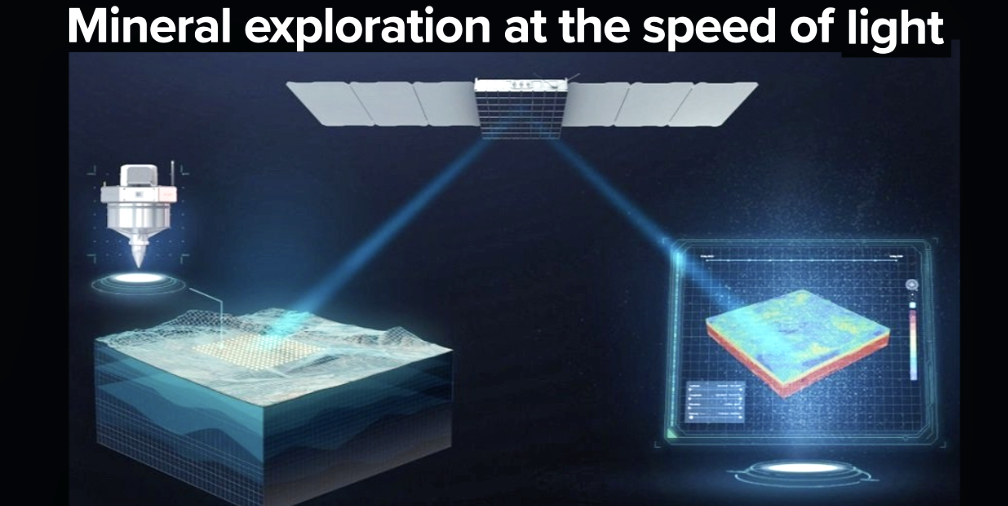
The requirement to incorporate assets from other companies leaving the industry is driven by sustained growth for Fleet across a multitude of sectors. This includes the signing of long-term, satellite aided, critical Earth transition mineral agreements with some of the world’s largest and most innovative miners.

Fleet also confirmed the firm’s first defence contract in April of 2023, signing a AUD$6.4 million contract with Australia’s Defense Space Command, a Series C funding round of $50 million in May and was recently awarded A$4 million Demonstrator Program contract by the Australian Space Agency to harness seismic data at the Moon’s South Pole. This key strategic acquisition will underpin further growth.

“As Fleet Space Technologies company is now providing innovative universal connectivity solutions through its network of satellites across the globe to sectors as diverse as critical mineral exploration and defence. To meet this sustained demand, we depend on access to the shared but limited radio frequency spectrum to operate our services. Securing access to these new frequency filings puts us in a strong position globally and gives us and our customers a real competitive advantage. It also represents another important step in our international expansion, by giving us a commercial foothold in Europe to complement our operations in Australia, USA, Canada and Chile.” — Flavia Tata Nardini, CEO and Co-Founder, Fleet Space Technologies

Filed Under: News

Space Flight Laboratory’s Telesat LEO 3 Microsatellite launches and deploys

July 20, 2023 by editorial

 Space Flight Laboratory (SFL) announced the launch and orbital deployment of the Telesat LEO 3 demonstration microsatellite at 1:27 UTC, July 18. Carried into orbit from New Zealand by the Rocket Lab Electron launch vehicle, LEO 3 is the 13thsuccessful deployment of an SFL-developed microspace mission in 2023.

Ground control established communications with LEO 3 shortly after launch, confirmed SFL. Having achieved signal acquisition, solar arrays deployment, and successfully passing initial satellite health tests, SFL and Telesat are now testing the full satellite.

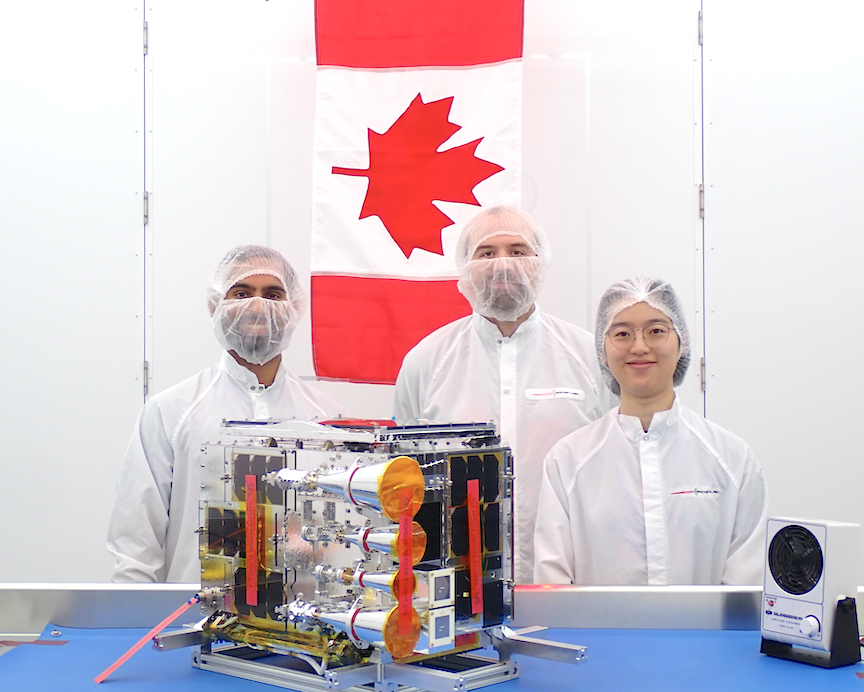
SFL built the compact 30-kg LEO 3 spacecraft on its space-proven DEFIANT microsatellite bus for Telesat of Ottawa, Ontario – one of the world’s largest and most innovative satellite operators. Once operational, LEO 3 will provide continuity for customer and ecosystem vendor testing campaigns following decommissioning of Telesat’s Phase 1 LEO satellite.

“SFL is pleased to have been selected by Telesat to develop LEO 3 based on our 25-year track record of building high-performing satellites on time and within budget,” said SFL Director Dr. Robert E. Zee. “LEO 3 is a robust microsatellite that will meet Telesat’s demanding demonstration goals in low Earth orbit.”

Other SFL microspace satellites developed and launched in 2023 include six radio frequency signal detecting microsatellites for HawkEye 360 in the U.S., three greenhouse gas monitoring microsatellites for GHGSat Inc. of Canada, an advanced maritime tracking microsatellite for Norwegian Space Agency of Norway, and two communications CubeSats for a telecommunications company in Canada.

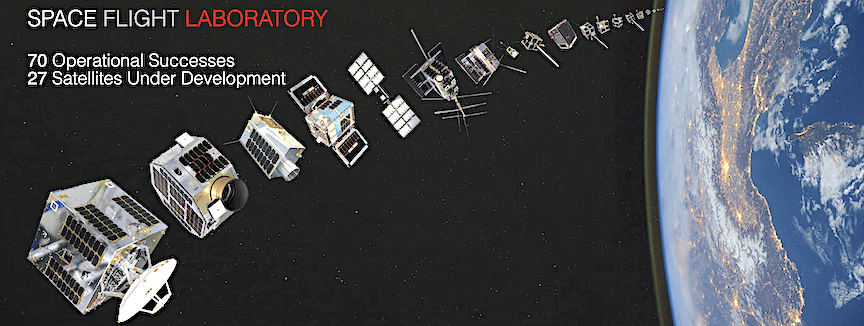
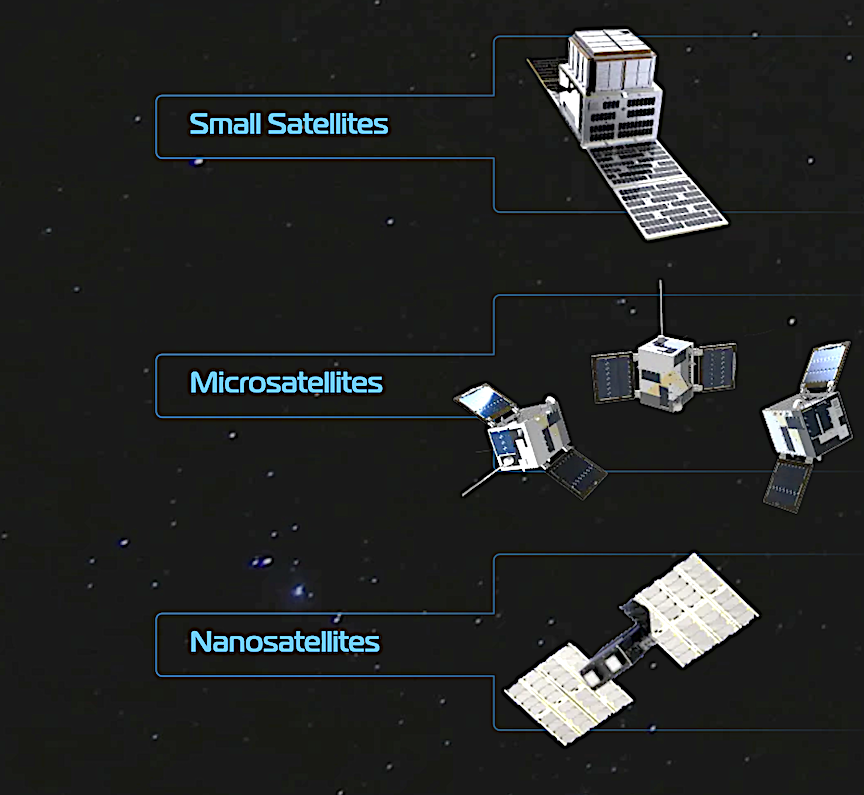
SFL’s 25-year heritage includes 70 operational successes totaling 255 cumulative years in orbit, with an additional 26 satellites under development or awaiting launch. SFL offers a complete suite of nano-, micro- and small satellites, including high-performance, low-cost CubeSats, that satisfy the needs of a broad range of mission types from 3 to 500 kilograms.

Filed Under: News

Millennium Space Systems Missile Track Custody PDR completed in four months

July 18, 2023 by editorial

Millennium Space Systems completed the U.S. Space Force Space Systems Command’s Missile Track Custody Program Design Review in just four months, ensuring the program is on schedule for Critical Design Review (CDR) in the fourth quarter.

SSC’s MTC Program underscores Assistant Secretary of the Air Force for Space Acquisition and Integration Frank Calvelli‘s move toward smaller, proliferated, and resilient systems across multiple mission areas.

“For example, we are pivoting from the legacy missile warning architecture to a resilient missile warning architecture that adds capability to actually track missile threats,” Calvelli said, and referred to MTC as an “outstanding effort building small sats in medium Earth orbit” during his Apr. 26 testimony with the House Armed Services Committee strategic forces subcommittee.”

“We’re clearly demonstrating we can design, build and test systems in shorter time frames on schedule,” said Jason Kim, CEO, Millennium Space Systems. “In the PDR, our team demonstrated sound technological understanding of mission needs and requirements, including the space and ground segments and how launch plays into those.”

The company’s ability to reduce risk and move fast is enabled by its flight-proven ALTAIR spacecraft – developed and invested in since 2015 – and by design for manufacturability and test processes, vertical integration of mature in-house components and software re-use. Following the PDR, Millennium Space Systems is focusing on the detailed design phase in preparation for CDR, with the digital model serving as the design’s authoritative single source of truth.

Millennium Space Systems is on contract for MTC space vehicle, or SV, one, with options for SVs two and three. The company expects those options to be exercised, in addition to a contract for SVs four through six in Q4 2023.

Filed Under: Featured, News

Rocket Lab Electron launches satellites for NASA, Space Flight Laboratory + Spire Global

July 18, 2023 by editorial

Rocket Lab USA, Inc. (Nasdaq: RKLB) successfully launched their rideshare Electron mission that carried seven smallsats to LEO.

Named the “Baby Come Back” mission, Electron lifted the smallsats from Pad A at Rocket Lab Launch Complex 1 in Mahia, New Zealand (photo below), to their assigned orbits.

Rocket Lab’s Launch Complex 1, Mahia, New Zealand.

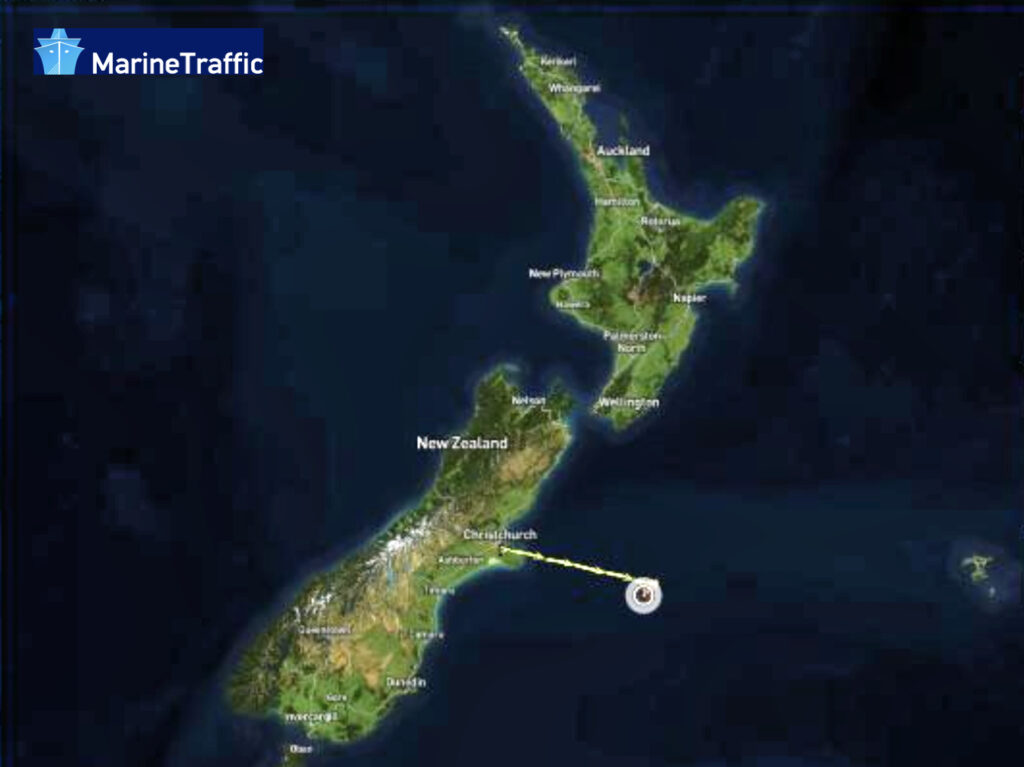
Rocket Lab is also planning to conduct a marine recovery of Electron’s first stage as part of this mission, with the recovery team aboard the vessel Seaworker.

Map showing the position of the Seaworker vessel for the Electron 1st stage recovery effort. Map and image are courtesy of MarineTraffic.

Payloads aboard the ‘Baby Come Back’ mission include…

  • NASA
    NASA’s Starling mission is a four CubeSat mission (built by Blue Canyon Technologies) and are designed to test technologies to enable future “swarm” missions. Spacecraft swarms refer to multiple spacecraft autonomously coordinating their activities to achieve certain goals. Starling will demonstrate technologies for in-space network communications, onboard relative navigation between spacecraft, autonomous maneuver planning and execution, and distributed spacecraft autonomy — an experiment for small spacecraft to autonomously react to observations, paving the way for future science missions.
  • Space Flight Laboratory (SFL)
    Space Flight Laboratory (SFL) selected Rocket Lab to launch Telesat’s LEO 3 demonstration satellite that will provide continuity for customer and ecosystem vendor testing campaigns following the decommissioning of Telesat’s Phase 1 LEO satellite.
  • Spire Global
    Spire will launch two LEMUR (Low Earth Multi-Use Receiver) 3U satellites carrying Global Navigation Satellite System Radio Occultation (GNSS-RO) payloads to replenish its fully deployed constellation of more than 100 multipurpose satellites. Spire’s satellites observe the Earth in real time using radio frequency technology. The data acquired by Spire’s GNSS-RO payloads provide global weather intelligence that can be assimilated into weather models to improve the accuracy of forecasts. Spire is the largest producer of GNSS-RO weather data, collecting over 20,000 RO profiles a day.

Filed Under: News

  • « Go to Previous Page
  • Page 1
  • Interim pages omitted …
  • Page 21
  • Page 22
  • Page 23
  • Page 24
  • Page 25
  • Interim pages omitted …
  • Page 60
  • Go to Next Page »

Primary Sidebar

WEEKLY NEWSLETTER

Archives

  • June 2026
  • May 2026
  • April 2026
  • March 2026
  • February 2026
  • January 2026
  • December 2025
  • November 2025
  • October 2025
  • September 2025
  • August 2025
  • July 2025
  • June 2025
  • May 2025
  • April 2025
  • March 2025
  • February 2025
  • January 2025
  • December 2024
  • November 2024
  • October 2024
  • September 2024
  • August 2024
  • July 2024
  • June 2024
  • May 2024
  • April 2024
  • March 2024
  • February 2024
  • January 2024
  • December 2023
  • November 2023
  • October 2023
  • September 2023
  • August 2023
  • July 2023
  • June 2023
  • May 2023
  • April 2023
  • March 2023
  • February 2023
  • January 2023
  • December 2022
  • November 2022
  • October 2022
  • September 2022
  • August 2022
  • July 2022
  • June 2022
  • May 2022
  • April 2022
  • March 2022
  • February 2022
  • January 2022
  • December 2021
  • November 2021
  • October 2021
  • September 2021
  • August 2021
  • July 2021
  • June 2021
  • May 2021
  • April 2021
  • March 2021
  • February 2021
  • January 2021
  • December 2020
  • November 2020
  • October 2020
  • September 2020
  • August 2020
  • July 2020
  • June 2020
  • May 2020
  • April 2020
  • March 2020
  • February 2020
  • January 2020
  • December 2019
  • November 2019
  • October 2019

© 2019–2026 SatNews

Insert/edit link

Enter the destination URL

Or link to existing content

    No search term specified. Showing recent items. Search or use up and down arrow keys to select an item.
      x
      Sign Up Now!

      Enjoy a free weekly newsletter with recent headlines from the global SmallSat industry.

      Invalid email address
      We promise not to spam you. You can unsubscribe at any time.
      Thanks for subscribing! You will now receive weekly SmallSat News updates.
      We love our advertisers.
      And you will too!

      Please disable Ad Blocker to continue... We promise to keep it unobtrusive.
      We promise not to spam you. You can unsubscribe at any time.
      Invalid email address
      Thanks for subscribing!