
• Skip to main content
  • Skip to primary sidebar
  • Home
  • News
  • Featured
  • More News ⌄
    • SatNews
    • SatMagazine
    • MilSatMagazine
  • Events ⌄
    • MilSat Symposium
    • SmallSat Symposium
    • Satellite Innovation
  • Contacts
  • SUBSCRIPTION

SmallSat News

You are here: Home / Archives for 2023

Archives for 2023

Skykraft’s first ever air traffic management with space-based VHF communication

August 1, 2023 by editorial

 A world first trial of space-based VHF voice communications has been successfully completed by Skykraft as part of their development of satellites to provide space-based aviation communications and surveillance services. This trial supports the work on operational space-based aviation VHF services leading up to the World Radio Congress 2023 (WRC-23). 
  

Voice radio communications in the VHF band are used for communications between pilots and air traffic controllers. VHF radios are standard aircraft equipment around the world and are vital in ensuring the safety of air travel. Currently, VHF voice communications services are only available when the aircraft is within range of a ground-based radio. This means that large areas of the Earth’s surface, including much of the world’s oceans, are not covered.  

Skykraft’s space-based Air Traffic Management Service

Skykraft’s trial of space-based voice communications in the VHF aviation band demonstrates the feasibility of satellite communication directly with aircraft using existing equipment. The use of satellites in place of ground-based radio systems will enable global real-time communications between pilots and air traffic controllers for the first time.  

The testing took place in the southern area of Australia’s Flight Information Region. Skykraft worked in collaboration with Airservices Australia to implement appropriate test protocols that ensured that there was no interference to the operational Air Traffic Management (ATM) system. 

“We are proud to have taken another step to bringing this world-first capability to market,” said Dr. Michael Frater, CEO of Skykraft.  

Artist’s impression of Skykraft’s satellite in orbit. Image credit: Skykraft

“VHF voice and data communication that covers the entire extent of an aircraft’s journey is the missing piece for Air Traffic Management and will unlock efficiency gains globally.”  

The five satellites used for this trial of VHF voice services have undergone six weeks of successful operational testing prior to the trials of space-based ATM services. Skykraft’s initial constellation continues to be under rapid development with two launches already in 2023, and more planned for 2024. 

“The success of the current round of test activities is a tribute to the capabilities of the engineering team at Skykraft. We recognized the need to deliver these space-based ATM services to ANSPs (Air Navigation Service Providers) as soon as possible and our team of engineers, project managers andtechnicians has delivered” noted Mark Skidmore, Chair of Skykraft. 

Skykraft’s Air Traffic Management Constellation 

Skykraft is developing a constellation of more than 200 satellites in low-Earth orbit to provide global ATM services from space, providing: 

  • Surveillance services using ADS-B and UAT. 
  • Multilateration services for:
    • validation of ADS-B and UAT messages received from aircraft, and 
    • independent aircraft position data in the event of GNSS failure. 
  • VHF voice communications. 
  • VHF data communications. 

Skykraft’s initial constellation will enter service in 2025.  

A highlight of Skykraft’s next space mission in Q2 2024 will be a demonstration of multilateration to provide independent aircraft position data in the event of GNSS failure. 

Filed Under: News

Forrester’s Digest: China wanted to buy OneWeb + is Viasat is going to alter Inmarsat’s LEO plans??

August 1, 2023 by editorial

There was reportedly once an attempted takeover of OneWeb by Chinese interests. An article in the Sunday Telegraph stated that the UK’s MI5 security service investigated the China involvement, and this prompted the UK government to step in and buy a major stake in OneWeb.

There was also a further complication in that OneWeb is being merged with Paris-based Eutelsat, which already has a major Chinese shareholder. OneWeb operates 600 LEO satellites providing broadband connectivity around the planet.

The UK government purchased a £400 million stake in OneWeb as the company emerged from bankruptcy. The purchase in OneWeb also gives the UK a ‘golden share’ and thus a strong influence in what happens to the business.

The newspaper claims that a report from the UK’s GCHQ (the UK government’s intelligence, security and cyber agency) as well as the UK’s parliamentary Intelligence & Security Committee, investigated the Chinese interests.

Chinese bidders, including the state-owned China Aerospace Science and Technology Corporation, were considering investment in OneWeb.

However, OneWeb is now on the verge of being acquired and merged into Eutelsat. The acquisition is expected to formally close by the end of September.

China is already a shareholder in Eutelsat with China Investment Corporation (CIC), described as a sovereign wealth fund that manages part of the People’s Republic of China’s foreign exchange reserves. CIC is frequently said to be a “passive” investor in Eutelsat and does not influence board decisions.

The Chinese stake in Eutelsat was engineered when Michel Rosen was CEO at Eutelsat in 2012. CIC obtained a 7 percent stake from Spanish infrastructure company Abertis.

Is Viasat changing Inmarsat’s plan for LEOs?

Inmarsat, prior to its acquisition by US-based Viasat, had planned to launch a fleet of LEO satellites (Orchestra) and now it seems that Viasat is re-thinking the scheme that would save millions in terms of investment.

Viasat has written to the Federal Communications Commission (FCC) withdrawing its applications for V-band satellite spectrum. The letter from Viasat to the FCC said, “Viasat’s wholly owned subsidiary, Inmarsat Inc., is today withdrawing its application for authority to access the US market with a planned NGSO system using portions of the V band.”

Inmarsat itself has not helped clear any confusion, given that it Tweeted a statement on July 26th stating, “Communication lies at the heart of everything we do and being in touch no matter where you are is an expectation. Orchestra will combine multiple orbits & 5G into a single seamless solution so you don’t have to worry about getting connected – you just are.”

Inmarsat already has a test satellite on-orbit that is testing new concepts and system configurations for Orchestra’s proposed LEO constellation, “which will seamlessly integrate with geosynchronous orbit (GEO) and highly elliptical orbit (HEO) satellites, and a terrestrial 5G network, to deliver a uniquely powerful global communications solution for mobility and government customers,” said Inmarsat as long ago as December of 2021.

Inmarsat claimed, “Orchestra the first global network of its kind; creating a global, multi-dimensional, dynamic mesh network that will redefine connectivity at scale with the highest capacity for mobility worldwide and at hot spots across the world. It will deliver the fastest average speeds and the lowest average latency of any network, planned or in existence.”

Rajeev Suri, CEO of Inmarsat and now a Viasat board member, speaking in 2021, said, “Our vision for Orchestra is a network that uses the right technology for the right purpose. We are not beholden to a single approach and believe that the best way to meet customer needs is a multidimensional approach that includes GEO, LEO and terrestrial 5G in a dynamic mesh that brings capacity to where it is needed in the most efficient way possible. [The] announcement is yet another testament to the fact that Inmarsat is a company with commercial momentum and technology leadership.”

Filed Under: Featured, News

AAC Clyde Space: xSPANSION project moves into final phase

August 1, 2023 by editorial

AAC Clyde Space and partners have agreed to move into the phase 3B of the xSPANCION project, wherein the project will be completed with the manufacturing of ten novel spacecraft, of which four will be launched within the project’s framework — the UK Space Agency, through the ESA Pioneer Partnership Projects, will co-fund the Group’s investments in the project with 4.5 million (approx. SEK 51.7 million).

The xSPANCION project aims to develop an innovative satellite constellation service and is expected to be operational in Q4 2024. The decision to move into phase 3B was taken while completing the phase 3A with satellite platform qualification, scaling production capacity with increased automation and the development of cloud-based software for delivery of data services to users. The first four Earth observation satellites will become part of AAC Clyde Space’s Space Data as a Service (SDaaS) constellation, whereas the six following satellites will be offered for client payloads.

Through Space Data as a Service agreements, customers can access space-based data more quickly and cheaply, without the need to own and operate space assets. Customer agreements can take three different forms; pay-per-access, non-exclusive access by annual subscription, or exclusive access under a capacity subscription. Since the Group aims for a flexible and dynamic constellation, it has, together with its partners, agreed to move into this final phase before finalizing customer agreements. Larger customer agreements will be announced when they are finalized.

The xSPANCION project is structured as a Public Private Partnership, wherein AAC Clyde Space Ltd. and its partners, Bright Ascension Ltd., the University of Strathclyde, D-Orbit UK, Alden Legal UK and the Satellite Applications Catapult are working in partnership with the UK Space Agency and the European Space Agency to develop a Space Data as a Service offering.

“Good quality and timely data are key aspects of our SDaaS offering and we are delighted to see the xSPANCION project move into its final stretch. These satellites will offer customers new data sets, in a timely manner, opening a variety of opportunities to collect information that will improve life on Earth.” Luis Gomes, CEO, AAC Clyde Space

Filed Under: News

Momentus deploys all payloads from Vigoride-6 mission + offers updates

July 31, 2023 by editorial

Momentus Inc. (NASDAQ: MNTS) has deployed all customer payloads from its Vigoride-6 Orbital Service Vehicle that launched in April of 2023 aboard the SpaceX Transporter-7 mission.

To date, Momentus has deployed a total of 15 customer satellites over three missions conducted over the past year and has also placed three Vigoride Orbital Service Vehicles (OSVs) into orbit. While these initial three missions were demonstration missions focused on testing the performance of the Vigoride OSV, Momentus orbited a number of customer satellites in the missions summarized below:

Vigoride-3 launched in May of 2022: Momentus’ inaugural mission deployed six satellites for FOSSA Space Systems and the SelfieSat satellite for Orbit NTNU from Vigoride. The Company also used a third-party deployer to deliver a satellite to orbit for CalPoly Pomona for a total of eight satellites deployed from Vigoride-3 and a third-party deployer.

Vigoride-5 launched in January of 2023: Momentus’ second mission included the deployment of the Qosmosys Zeus-1 payload. The Company is providing ongoing hosted payload services to Caltech’s Solar Power Project Demonstrator (SSPD) mission. Caltech reports that its payload recently demonstrated its ability to wirelessly transmit power in space and to beam detectable power to Earth. Momentus will continue to provide hosted payload support to SSPD over the coming months as it continues its operations.

During the Vigoride-5 mission, the Momentus team also tested its Microwave Electrothermal Thruster (MET) that uses water as a propellant. This included 35 firings of the thruster that demonstrated its ability to perform its intended use cases in LEO.

Momentus Vigoriride-5 tug on-orbit, powered by the company’s Microwave Electrothermal Thruster. Image is courtesy of the company.

Vigoride-6 launched in April of 2023: The Vigoride-6 mission successfully deployed the REVELA payload for ARCA Dynamics, the VIREO CubeSat for C3S LLC., the DISCO-1 CubeSat for Aarhus University, and the IRIS-C payload for an Asian customer booked through ISILAUNCH.

During the Vigoride-6 mission, Momentus also deployed two CubeSats into LEO as part of the NASA LLITED (Low-Latitude Ionosphere/Thermosphere Enhancements in Density) mission. These two CubeSats, housed behind a single deployer door, were released from the Vigoride OSV earlier than scheduled.

While the CubeSats were deployed at the intended altitude of 495 km., they were deployed at a different inclination than the intended target orbit needed for the science experiment. NASA has confirmed the two CubeSats are functional and the team will be able to operate the science instruments onboard. Momentus conducted a thorough investigation and identified the root cause as human error in the mapping of a software command. The Company is implementing corrective actions to prevent a recurrence.

LLITED launched in April as ELaNa 40 (Educational Launch of a Nanosatellite) managed by NASA’s CubeSat Launch Initiative.

The TASSA features 11-meter-long metal sheets with flexible solar cells bonded to them. To stow, they are tightly coiled around a mandrel. After launch, motors unroll the mandrel, deploying the solar array. The goal of the TASSA program is to reduce the cost per watt of power generated by 50% over arrays currently on the market. Momentus aims to drive down vehicle production costs and streamline on-orbit operations, while reducing the cost of power for the satellite, with this technology once operational.

Along with Vigoride-6, Momentus is concurrently operating its Vigoride-5 spacecraft that launched in January of 2023. As mentioned above, the Vigoride-5 spacecraft is providing ongoing hosted payload services to Caltech’s SSPD mission.

The Company’s next flight is targeted for no earlier than November of 2023 aboard the SpaceX Transporter-9 mission. During this mission, Momentus will use a deployer to place three satellites into Low-Earth Orbit for three different customers:

  • The AMAN-1 Earth Observation satellite will be deployed for SatRev. The satellite can also be used for other services such as land survey, precision agriculture, weather, environmental and smart cities.
  • The JINJUSat-1 satellite will be deployed for CONTEC Co. of the Republic of Korea. JINJUSat-1 is spearheaded by three entities: Jinju City, Korea Testing Laboratory, and Gyeongsang National University. Once on-orbit, cameras mounted on the satellite will carry out a mission to take pictures of the Earth.
  • The Picacho satellite will be deployed for Lunasonde – a U.S. sub-surface imaging company with the goal of making underground resources – such as water and minerals – easier to find. The Picacho CubeSat is a technology demonstration of Lunasonde’s sensors. It will measure the power spectral density of low-frequency radio signals in the ionosphere, which will help inform designs for the company’s future satellites.

Additionally, Momentus now plans to launch its Vigoride-7 OSV, originally scheduled for launch in October of 2023, on SpaceX’s Transporter-10 mission that is targeted for no earlier than February of 2024. On the Vigoride-7 mission, Momentus will aim to deploy several customer satellites in LEO and provide services to a hosted payload.

The Company will also release a target satellite and maneuver the OSV into proximity with the target satellite for a Remote Proximity Operations demonstration. The revised mission plans will enable Momentus to launch Vigoride-7 with a fuller load of payloads for deployment in LEO with better mission economics, while still meeting the needs of customers requiring orbital delivery in 2023.

“One of the upcoming events that we are looking forward to conducting on the Vigoride-6 mission is a test of the Tape Spring Solar Array (TASSA), a Momentus technology demonstration of a new kind of solar array.” — Krishnan Anand, Vice President of Program Management, Momentus

Filed Under: News

Starlinks sent spacewards

July 28, 2023 by editorial

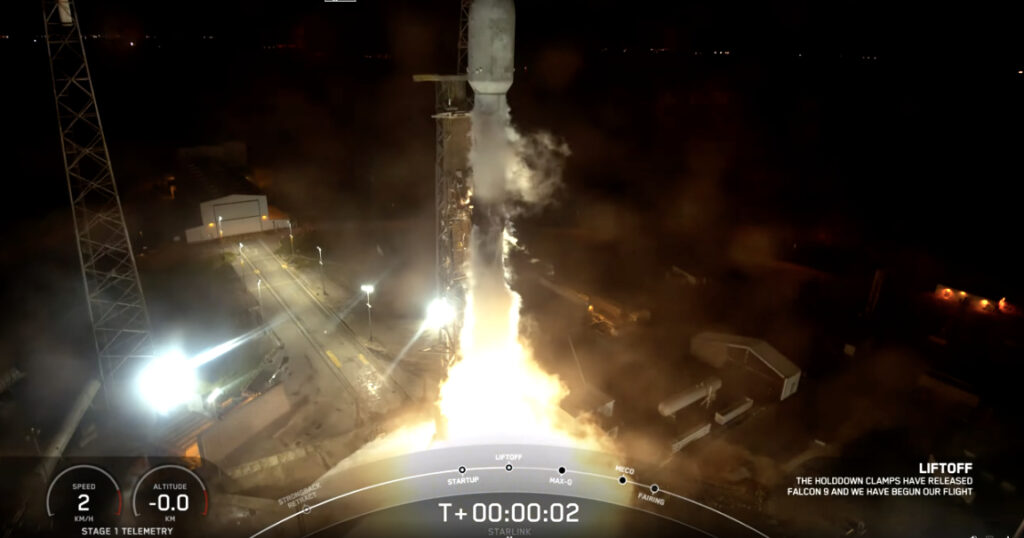
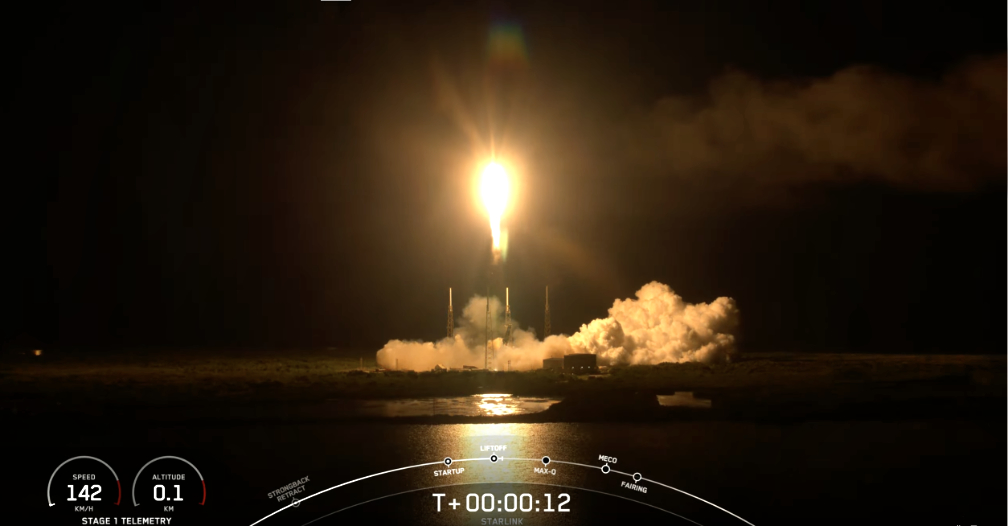
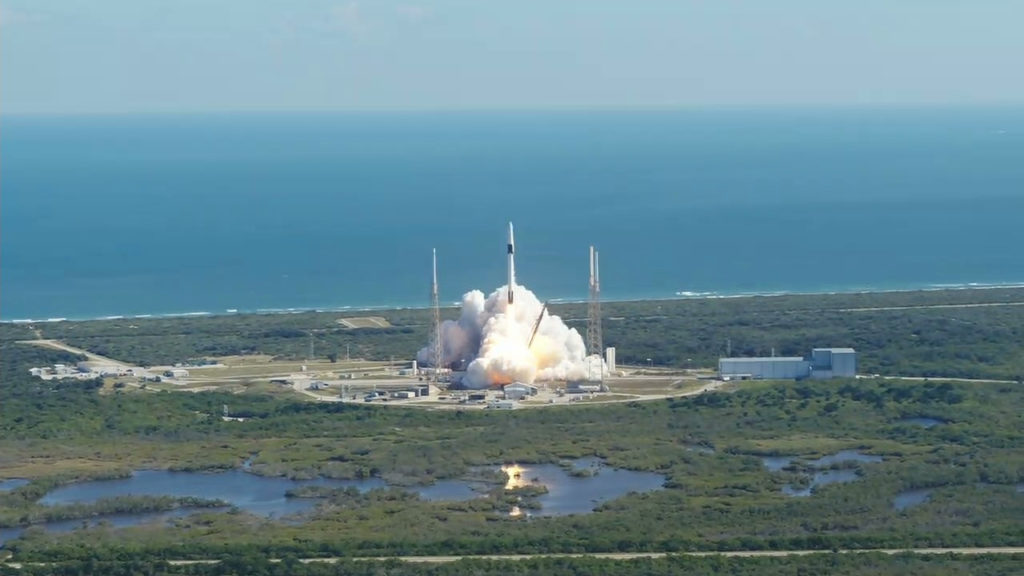
SpaceX engaged the company’s Falcon 9 launch vehicle to send 22 Starlink satellites to LEO from Space Launch Complex 40 (SLC-40) at Cape Canaveral Space Force Base in Florida.

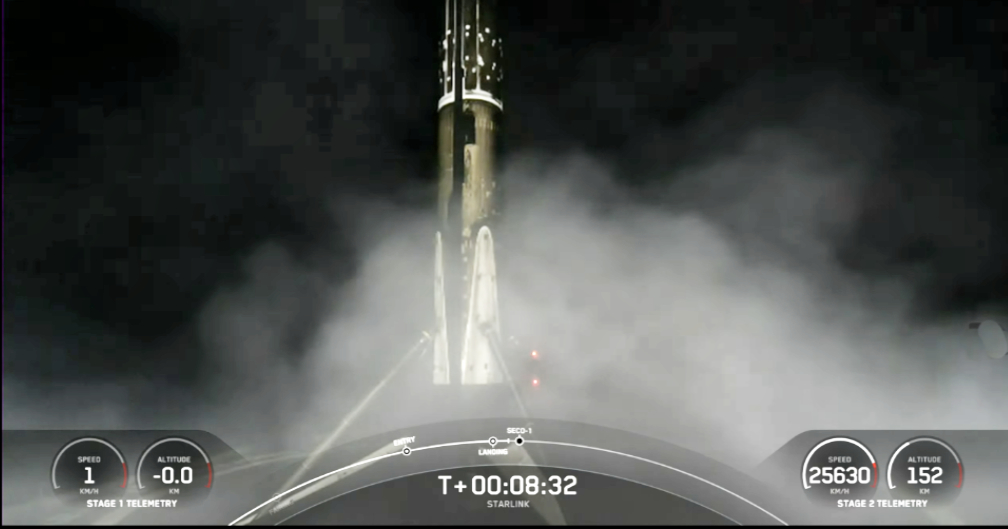
This is the 15th flight for the first stage booster supporting this mission, which previously launched GPS III Space Vehicle 04, GPS III Space Vehicle 05, Inspiration4, Ax-1, Nilesat 301, OneWeb Launch 17, ARABSAT BADR-8, and seven Starlink missions.

Photo of an earlier SpaceX Falcon 9 launch from Space Launch Complex 40 at Cape Canaveral SFB.

Following stage separation, the first stage landed on the A Shortfall of Gravitas droneship stationed in the Atlantic Ocean.

Filed Under: News

OneWeb Technologies demos seamless LEO and GEO multi-orbit services for the U.S.M.C.

July 28, 2023 by editorial

OneWeb Technologies, Inc. has successfully concluded a series of demonstrations during the U.S. Marine Corps’ 1st Air Naval Gunfire Liaison Company (ANGLICO) “Exercise Red Flag.”

The demonstrations showcased the seamless integration of a combined multi-orbit, LEO and GEO solution to deliver high-bandwidth, reliable communications in denied and degraded environments.

Exercise Red Flag showcased 1st ANGLICO’s ability to support Large Force Employment training across the full spectrum of conflict, including air superiority, precision engagement, close air support, command and control, intelligence coordination, and personnel recovery.

The demonstration consisted of OneWeb Technologies’ global, low-latency LEO communications network, Kymeta Corporation’s LEO terminal for low-latency and high-bandwidth connectivity, along with Viasat’s high-capacity, and multi-band, multi-mission terminal (MMT) connecting to the Viasat GEO Global Network (VGNet). The solution used Viasat’s NetAgility™ SD-WAN router to connect the LEO and GEO networks together.


A key part of this training was demonstrating the ability to interoperate with other systems, and multiple orbital planes. The combined OneWeb Technologies, Viasat and Kymeta solution showcased multi-orbit capability and connectivity is possible between solution providers, which is an important component of the 1st ANGLICO’s automated primary, alternate, contingency, and emergency (PACE) plan.

The PACE plan supports the maneuvering warfighting function’s (WFF) mission command requirement to maintain communications, seamlessly by transitioning connectivity across multiple networks.

The trial followed OneWeb Technologies’ participation in a similar successful demonstration, known as “Exercise Northern Edge,” held at the Joint Pacific-Alaska Range Complex (JPARC) in Alaska.

“Connectivity in a denied and degraded communications environment is an essential safety requirement, and I am proud of OneWeb Technologies’ ability to support the 1st ANGLICO at Exercise Red Flag. We are looking forward to future opportunities to enable Marine Corps operations with advanced satellite communications (SATCOM) solutions. Our collaboration with Kymeta and Viasat highlights our commitment to leveraging cutting-edge technologies and strategic partnerships to offer our government customers the mission-critical connectivity solutions they require.” — Kevin Steen, CEO, OneWeb Technologies

“Viasat is pleased to collaborate with partners like OneWeb Technologies and Kymeta to demonstrate multi-network mission capabilities with the optionality and increased resilience required to operate in contested environments. Our advanced network orchestration technology is a critical component, enabling assured connectivity and a seamless user experience across a multi-orbit, multi-network SATCOM solution that offers the operational flexibility warfighters need.” — Craig Miller, President, Viasat Government Systems

“Kymeta has been steadily working on ruggedized and hardened communications on the pause and move tactical systems. The combination of our terminals and OneWeb’s low latency, high data rate, and satellite communications available through OneWeb Technologies will provide warfighters with the tactical edge they need today.” — Walter Berger, President and Co-CEO, Kymeta

Filed Under: Featured, News

Rivada appoints a sales VP for APAC

July 27, 2023 by editorial

Rivada Space Networks GmbH has appointed satellite industry veteran Donald Chew to lead commercial activities for the company in the Asia Pacific (APAC) region and he will be based in Singapore.

Donald Chew

Donald Chew has more than 25 years of experience in the telecom and satellite industries in Asia Pacific, including key roles developing maritime and aero connectivity for Singtel and overseeing data and maritime projects for AsiaSat. For SES, Donald was responsible for growing revenue in new markets, including Indochina and Papua New Guinea. He was also responsible for developing special connectivity projects at Kacific, a company which delivers satellite broadband to isolated islands in the Pacific Ocean and Southeast Asia.

Rivada is launching a global, low-latency, point-to-point connectivity network of 600 LEO satellites: the “OuterNET.” This nexgen architecture combines inter-satellite laser links with advanced, onboard, data routers to create an optical mesh network in space.

This approach to “orbital networking,” in which data stays in space from origin to destination, creates an ultra-secure satellite network with pole-to-pole reach, offering end-to-end latencies similar to or better than terrestrial fiber. This is a unique capability for operations in the government services, enterprise, telecom, maritime and energy markets. The first satellite launch is set for 2025, with global service starting in 2026.

By allowing satellites to go beyond their traditional role of “gap-filler,” Rivada’s LEO system will become the technology of choice for data communications in Asia-Pacific and a more dynamic extension of the terrestrial telecoms networks. Rivada’s OuterNET will solve essential communications and connectivity challenges and meet the ever-growing need for an enterprise-grade, on-demand experience anywhere in the world for multinational enterprises and governments. For regional satellite operators, Rivada’s LEO network will complement their existing GEO infrastructure and help them expand into new markets.

A wholly owned subsidiary of Rivada Networks, Inc., Rivada Space Networks is rapidly moving ahead to deliver a game-changing LEO network of 600 Ka-band communications satellites. The company has placed a contract with Terran Orbital to build the satellites and SpaceX for the launch.

“I am excited to be joining Rivada Space Networks at this time when everything is on track to deliver a LEO network unlike any other. The OuterNET addresses real market needs of enterprise and government customers in Asia and around the globe, utilizing key attributes of low latency, high throughput and data sovereignty. I look forward to contributing my experience to bring this new opportunity in data communications to the Asia Pacific region.” — Donald Chew, VIce President, Asia-Pacific, Rivada Space Networks

Filed Under: News

Smallsat market continues growth

July 26, 2023 by editorial

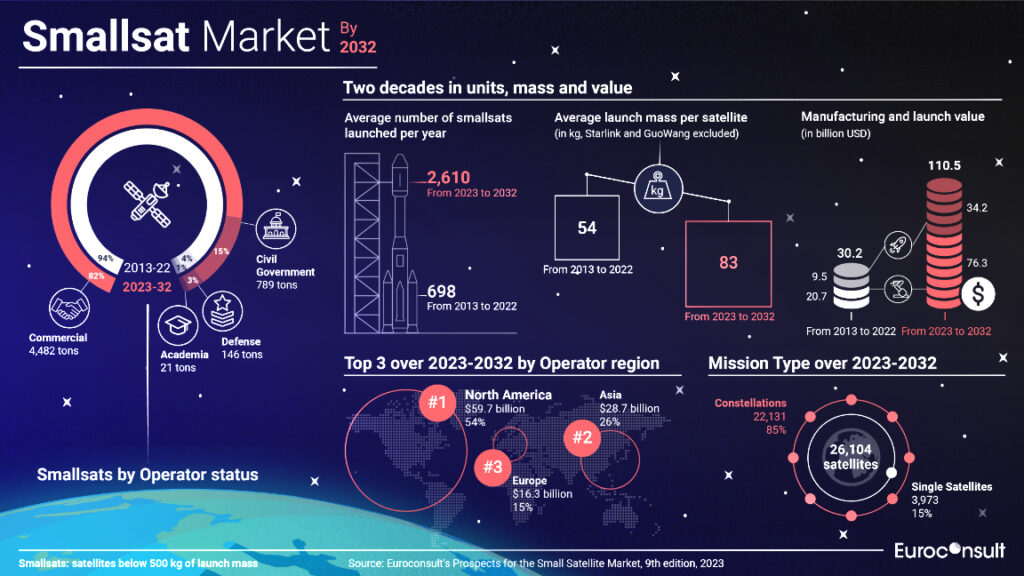
Approximately 26,104 smallsats (satellites <500 kg) will be launched between 2023-2032, representing a daily launch mass of 1.5 tons over the 10 year period, according to Euroconsult.

Two constellations – Starlink (SpaceX) and GuoWang (China SatNet) – will collectively account for nearly two-thirds of the smallsats to be launched throughout the next decade and more than four-fifths of smallsat launch mass. This significant prominence is largely a consequence of the Federal Communications Commission’s (FCC) partial approval of Starlink Gen 2 filings, alongside SpaceX’s launch of 1G satellites on 2G orbital planes and the substantial expansion of GuoWang activities in China. However, the two mega-constellations will only represent less than a quarter of market value, due to the considerable cost efficiencies of mega-constellations, leaving significant opportunities for other market participants.

Euroconsult’s latest ‘Prospects for the Small Satellite Market’ market intelligence report, now in its 9th edition, anticipates that the smallsat industry will accumulate around $110.5 billion in market value over the next decade, driven by the replenishment cycles of constellations around the world but also by more complex and costly single satellite missions for government users. Yet, the high-volume market keeps presenting several challenges, including limited market addressability for suppliers, difficult profitability, oversupply, and dominance of commercial activities by a handful of established players.

Regional demand retention rates and vertical integration are expected to only increase in the future, according to Euroconsult, as more emerging countries and operators seek to procure their own smallsat systems and develop their manufacturing or launch capabilities.

However, this will impose constraints on the addressable markets for many commercial smallsat players, with emerging launch operators also actively exploring opportunities to diversify into subsystems and satellite manufacturing, enticed by the higher profit margins offered compared to the launch industry. Some launch providers are even venturing into satellite operations and downstream services to further expand their business horizons. Several players are thus considering >500 kg constellations, including Starlink 2G, Project Kuiper, Telesat Lightspeed, Rivada, Intelsat MEO, and O3b mPower.

Though, as some constellation operators transition to larger satellites in a quest for more performance and lower capacity costs, this may create the impression of a shrinking smallsat market towards the end of the decade. SpaceX’s shift alone, powered by Starship’s entrance to the launch market, can lead to a perceived deficit in the industry. However, Euroconsult indicates that the industry’s growth is forecasted to continue at a steady rate when removing Starlink and GuoWang from the equation.

Long-term government agency contracts will continue to serve as a pivotal driver for this growth by offering reassurance and resilience to investors, including ESA’s commercial additions to its Copernicus program, Starlink’s government support, and the National Reconnaissance Office’s 10 year contract with Maxar, BlackSky, and Planet Labs.

Euroconsult will provide an even more in-depth overview of the next decade’s outlook for the smallsat market at the Small Satellite Conference in Utah on August 8th in a one-time-only presentation. Their ‘Prospects for the Small Satellite Market’ report, now available with a free extract, includes a comprehensive analysis of market drivers and inhibitors across five mass categories, six regions, seven satellite applications, five manufacturer typologies, and four types of operators.

The intelligence report also carries a unique and exhaustive database of over 325 projects featuring tens of thousands of satellites, as well as Euroconsult’s brand new “Data Behind the Graphs” feature, which enables access to data from all the graphs in the report and a complete understanding of smallsat market trends.

‘Prospects for the Small Satellite Market’ is the ninth edition in the series and presents the various factors that will drive/inhibit growth in demand for small satellites (<500 kg) over the next 10 years. It considers satellites by five mass categories, six regions, seven satellite applications, five manufacturer typologies, four types of operators, and much more. Consolidated figures for three metrics (units, mass, value) over two decades, including Euroconsult’s forecast for the next decade, are broken down by application, orbit, operator type, mass category, region of the operator as well as integrator and launch provider, type of integrator and type of launcher.

“New constellations are expected to face scope reductions and consolidation, as inflation will keep impacting their materialization probability, alongside supply chain issues and growing costs or limited availability of semiconductors and raw materials. Nonetheless, smallsats still represent a significant capability-building opportunity for new entrants in the space sector, with the conflict in Ukraine spotlighting the merits and value of commercial satcom and Earth observation smallsat constellations.” — Alexandre Najjar, Lead Report Author

Space and Satellite Market Intelligence and Data

Filed Under: Featured, News

The UK’s NPL + RAL Space to deliver smallsat state-of-the-art facility

July 26, 2023 by editorial

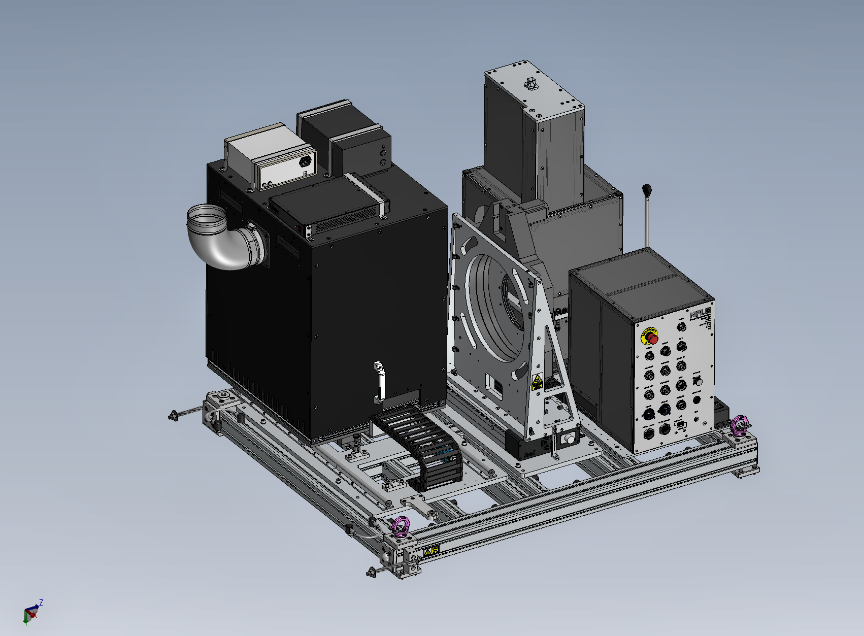
Scientists and engineers at the National Physical Laboratory (NPL) are working with colleagues at the Science and Technology Facilities Council’s (STFC) RAL Space to deliver a smallsat calibration facility.

The new facility is being designed, manufactured and tested at NPL’s Teddington site in south-west London and will be located at Harwell Campus. It will draw on expertise from NPL’s STAR-cc-OGSE facility, which provides innovative solutions for calibrating scientific instruments on satellites before their launch into space.

Aerial photo of the Harwell Campus in the UK.

The facility will provide a state-of-the-art solution to instrument calibration and characterization, ensuring the required performance for both full satellite payloads and components is achieved.

The facility is intended for use by smallsat providers at short notice to perform essential pre-flight calibration and characterization tasks for individual satellites. This will ensure the end-to-end performance of a satellite instrument is understood before it is launched, which is a critical task for any space mission. By checking that all on-board instruments are correctly calibrated before launch, the new facility ensures that the satellite will collect reliable, accurate and trusted Earth Observation (EO) information that can be used by governments to make informed decisions on policies relating to climate change and emission reduction.

The new facility forms part of the UK Government’s Department for Science, Innovation and Technology’s £200 million ‘Earth Observation Investment Package’ that was launched last year to drive innovation in the UK EO sector. It will build on NPL’s and RAL Space’s existing programs that support the UK’s thriving EO sector, with a particular focus on how EO technology and data can help solve global challenges such as climate change. These programs also aim to create attractive opportunities to encourage individuals to develop their skills and build their careers here, and explore exciting new international collaborations.

The facility will support the government’s aim for the UK to become the global home for trusted climate and Earth information services.

The ‘new space’ sector is developing smallsat instruments that operate in a range of wavelengths for various EO applications. Calibration of these sensors is essential in ensuring the usefulness of data collected by these missions.

Large satellite missions developed under international space agency programmes may invest in bespoke calibration equipment solutions which would be a significant barrier to smaller private companies. These companies typically do not have the capability, budgets or expertise to individually develop their own pre-launch calibration testing facilities and programs. However, this facility, supported by experts from NPL and RAL Space, will provide state-of-the-art calibration to these companies at short notice and at a relatively low cost.

“Small satellite companies often struggle to find affordable and accessible calibration facilities, limiting the prospect of innovative new companies thriving in the UK’s fast growing space sector now worth £17.5bn. This new facility will provide a much-needed service to level the playing field for these companies, while driving economic growth in the UK. Such companies are playing an increasingly important role in monitoring our planet and collecting vital data on climate change, emissions and sustainable development. By ensuring that these satellites are properly calibrated, we can be confident that the data they collect is accurate and reliable – helping us to make better decisions about how to protect our planet, through means such as monitoring Earth’s temperature levels. This is the UK delivering on our commitment to support the UK Earth Observation sector.” — George Freeman MP, Department for Science, Innovation and Technology, UK Minister of State

“This new facility forms part of NPL’s commitment to delivering the UK’s National Space Strategy. Space technology, as well as trusted earth observation data, is intrinsic to addressing challenges such as climate change on a global scale. By supporting companies in developing and measuring the performance of their instrumentation we’re ensuring they can be used with confidence.” — Dr. Emma Haynes, Partnerships Director, NPL

“We’re thrilled to be delivering this new facility to support the UK’s thriving Earth observation sector. Thanks to the expertise of RAL Space and NPL staff, the Small Satellite Calibration Facility will play a pivotal role in allowing companies to enhance the quality of their satellite data for a growing user community, at lower cost.” — Dr. Sarah Beardsley, Director, RAL Space

“The UK has a rich heritage in satellite manufacturing and Earth observation technology, with innovative start-ups and space companies developing powerful capabilities that would have been unthinkable only a decade ago. Thanks to government funding, this new small satellite calibration facility will open up access to NPL’s world-leading calibration expertise to even more companies, supporting the continued growth of the UK’s vibrant Earth Observation sector and increasing the value of the data it provides on our planet.” — Harshbir Sangha, Missions and Capabilities Delivery Director, UK Space Agency

Filed Under: News

Spire Global + Cloudeo join forces for global satellite-powered weather data

July 25, 2023 by editorial

Cloudeo has partnered with Spire Global to bring weather data to more than 34,000 GIS and Earth Observation (EO) experts from around the world.

Spire Global builds, owns and operates a fully deployed satellite constellation that observes the Earth in real time using radio frequency (RF) technology. Spire’s radio occultation (RO) technology processes more than 20,000 atmospheric readings daily and has been trusted by leading weather service providers such as ECMWF, NOAA, and NCAR.

Spire Global will be the exclusive weather data provider on Cloudeo’s platform, bringing already historical, current and 15 day weather forecast data sets. Satellite-powered weather data enables GIS experts to perform spatial analysis, emergency management, environmental studies, urban planning, natural resource management, among other decision-support utilities.

Spire’s listing on Cloudeo’s marketplace will encompass a wide range of weather datasets, including maritime, soil moisture, historical weather and more. This partnership will pave the way for researchers and commercial entities to build better decision-support products, particularly when integrated with other Earth Observation data.

Numerous opportunities for growth and continued innovation in the industry will be resultant of this agreement by allowing…

  • Expanded Data Access: The partnership will lead to expanded access to satellite powered weather data.
  • Enhanced Data Analytics: Collaborations between Spire Global and cloudeo’s partners specializing in data analytics and Earth Observation can result in more advanced and refined analytical tools.
  • Improved Data Processing and Delivery: Partnerships such as this can streamline data processing and delivery workflows. This allows for quicker access to up-to-date information, benefiting various industries and applications.

“Through our partnership with Cloudeo, we are excited to expand our market reach and unlock new opportunities. By combining our weather and satellite expertise, resources, and networks, we can offer integrated solutions that address specific industry needs, reaching new markets and customers. This partnership is an enabler for breakthroughs in the industry, opening up new applications and expanding our customer base.” — Mike Eilts, General Manager of Weather and Earth Intelligence, Spire Global

“By teaming up with Spire, we are expanding access to high-quality weather data and driving innovation in the industry. This partnership represents a significant milestone for Cloudeo and addresses the growing demand for accurate and reliable data, by empowering commercial entities and researchers to build better decision-support products. We are confident that this collaboration will drive growth and innovation in our network of partners and customers while benefiting various sectors and applications.” — Dr. Manfred Krischke, CEO, Cloudeo

Filed Under: News

  • « Go to Previous Page
  • Page 1
  • Interim pages omitted …
  • Page 20
  • Page 21
  • Page 22
  • Page 23
  • Page 24
  • Interim pages omitted …
  • Page 60
  • Go to Next Page »

Primary Sidebar

WEEKLY NEWSLETTER

Archives

  • June 2026
  • May 2026
  • April 2026
  • March 2026
  • February 2026
  • January 2026
  • December 2025
  • November 2025
  • October 2025
  • September 2025
  • August 2025
  • July 2025
  • June 2025
  • May 2025
  • April 2025
  • March 2025
  • February 2025
  • January 2025
  • December 2024
  • November 2024
  • October 2024
  • September 2024
  • August 2024
  • July 2024
  • June 2024
  • May 2024
  • April 2024
  • March 2024
  • February 2024
  • January 2024
  • December 2023
  • November 2023
  • October 2023
  • September 2023
  • August 2023
  • July 2023
  • June 2023
  • May 2023
  • April 2023
  • March 2023
  • February 2023
  • January 2023
  • December 2022
  • November 2022
  • October 2022
  • September 2022
  • August 2022
  • July 2022
  • June 2022
  • May 2022
  • April 2022
  • March 2022
  • February 2022
  • January 2022
  • December 2021
  • November 2021
  • October 2021
  • September 2021
  • August 2021
  • July 2021
  • June 2021
  • May 2021
  • April 2021
  • March 2021
  • February 2021
  • January 2021
  • December 2020
  • November 2020
  • October 2020
  • September 2020
  • August 2020
  • July 2020
  • June 2020
  • May 2020
  • April 2020
  • March 2020
  • February 2020
  • January 2020
  • December 2019
  • November 2019
  • October 2019

© 2019–2026 SatNews

Insert/edit link

Enter the destination URL

Or link to existing content

    No search term specified. Showing recent items. Search or use up and down arrow keys to select an item.
      x
      Sign Up Now!

      Enjoy a free weekly newsletter with recent headlines from the global SmallSat industry.

      Invalid email address
      We promise not to spam you. You can unsubscribe at any time.
      Thanks for subscribing! You will now receive weekly SmallSat News updates.
      We love our advertisers.
      And you will too!

      Please disable Ad Blocker to continue... We promise to keep it unobtrusive.
      We promise not to spam you. You can unsubscribe at any time.
      Invalid email address
      Thanks for subscribing!