• Skip to main content
  • Skip to primary sidebar
  • Home
  • News
  • Featured
  • More News ⌄
    • SatNews
    • SatMagazine
    • MilSatMagazine
  • Events ⌄
    • MilSat Symposium
    • SmallSat Symposium
    • Satellite Innovation
  • Contacts
  • SUBSCRIPTION

SmallSat News

You are here: Home / Archives for 2023

Archives for 2023

Blue Canyon Technologies receives JPL smallsats build award

April 14, 2023 by editorial

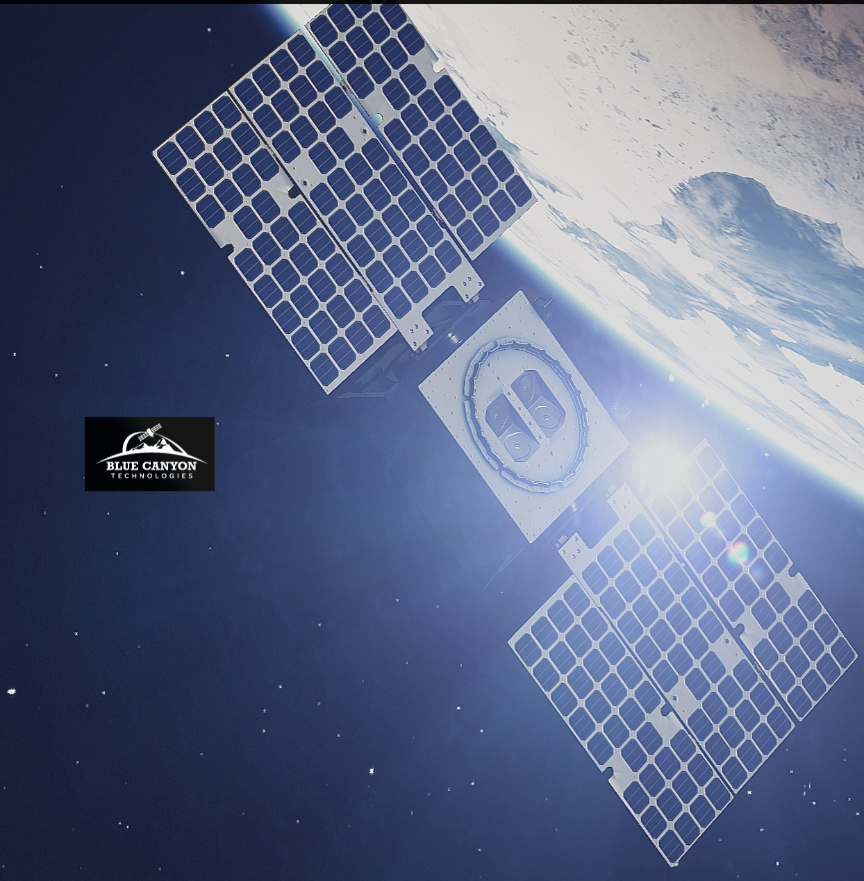
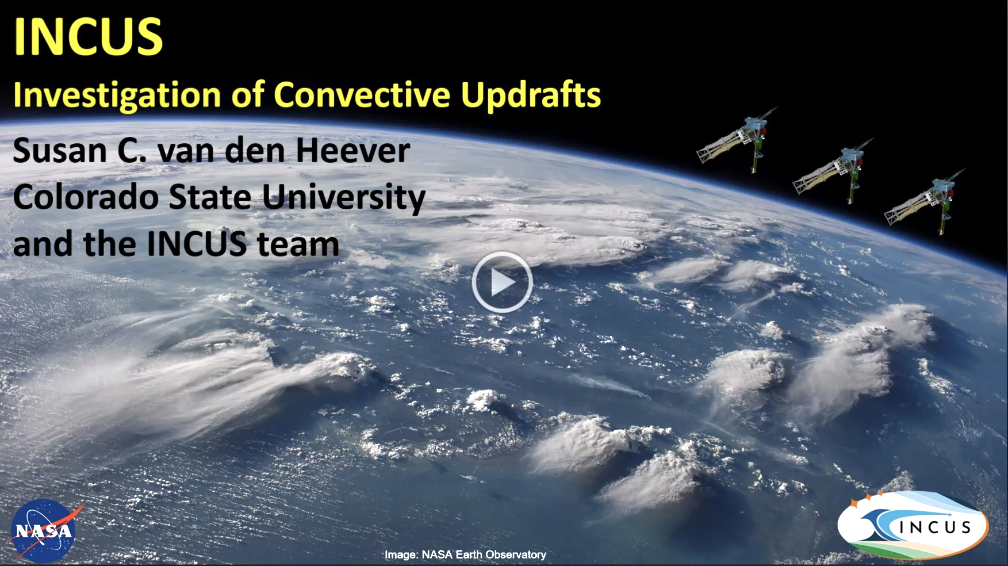
Blue Canyon Technologies, a Raytheon Technologies (NYSE: RTX) subsidiary, will design and manufacture three smallsats to support NASA’s Investigation of Convective Updrafts, or INCUS, mission. The principal investigator is Susan van den Heever of Colorado State University.

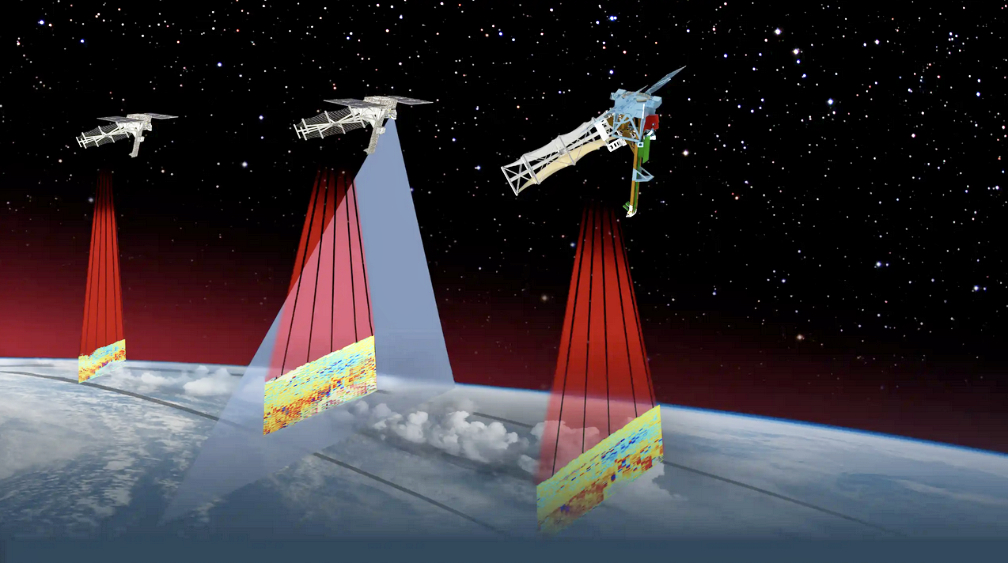
The INCUS mission — led by Colorado State University and managed by NASA’s Jet Propulsion Laboratory – aims to better understand the complex dynamics of thunderstorms and their impact on Earth’s climate and weather models.

Blue Canyon’s smallsats will fly in tandem coordination, each displaying a dynamic atmospheric radar and dynamic microwave radiometer measuring the atmospheric conditions of Earth.
Blue Canyon’s work will be performed at the firm’s Crescent Constellation Factory located in Lafayette, Colorado.

“BCT’s successful science exploration programs and our experience controlling large flexible structures will be key to supporting this critical science mission.” — Jeff Schrader, President, Blue Canyon Technologies.

INCUS overview video

Filed Under: Featured, News

General Atomics now tests simulated space environments inhouse with commissioning of Thermal Vacuum Chamber

April 14, 2023 by editorial

General Atomics Electromagnetic Systems (GA-EMS) announced today that Thermal Vacuum Chamber commissioning has been completed at the company’s Centennial, Colorado, space system development facilities. The commissioning completes GA-EMS’ process of bringing in-house the capability to perform testing under simulated space environmental conditions, and supports testing and qualification of components, subassemblies, payloads, and integrated spacecraft up to ESPA-Grande class satellites.

GA-EMS offers complete “end-to-end” solutions supporting complex missions and single satellite to constellation-sized requirements. From satellite design, prototype, manufacture, and test, to payload integration, launch coordination, and on-orbit mission control services, GA-EMS is helping customers rapidly and efficiently access the possibilities of space.

“The thermal vacuum chambers add yet another key component to our expanding space capabilities portfolio, allowing us to improve efficiencies and seamlessly transition spacecraft from production to environmental testing without the spacecraft ever having to leave our clean rooms or facilities,” said Scott Forney, president of GA-EMS. “The ability to test components, payloads and spacecraft in a controlled, simulated space environment is essential to evaluating their performance and ability to withstand the rigors of space, and address any issues that may arise prior to flight.”

“Having three fully commissioned thermal vacuum chambers in-house translates into tangible benefits for our customers, helping reduce program risks and added costs associated with transporting satellites to and from third party testing facilities. With a range of chambers readily available, our assembly, integration and test teams can complete component and system environmental testing and process the results in real-time and with greater efficiency,” said Gregg Burgess, vice president of GA-EMS Space Systems. 

For satellites ranging from sub-U to 500kg ESPA-Grande class, GA-EMS offers broad expertise and experience in the design, manufacture, integration, and test of satellites and space systems. The three thermal vacuum chambers add to the company’s expanding space portfolio of design to on-orbit solutions to meet the mission requirements and growing needs of the military, intelligence community, civil and commercial satellite communities.

Filed Under: News

Slingshot Aerospace expands their commercial optical tracking system for LEO satellites

April 13, 2023 by editorial

Slingshot Aerospace has significantly expanded their Slingshot Global Sensor Network‘s LEO tracking capabilities to make its network the largest, commercial, optical sensor network for LEO observation in the world – providing first-of-its-kind optical tracking of LEO objects at scale.

By the end of 2023, Slingshot plans to deploy more than 80 new optical sensors, which include proprietary telescopes and ultra-wide field of view sensors, bringing the total network to more than 200 sensors across more than 20 sites globally.

The expansion will include two new Southern Hemisphere sites, with additional sensors being added to many of the existing sites around the world. The expansion to the network will increase Slingshot’s daily LEO observations by 100x, resulting in more than one million observations per day.

Slingshot’s Global Sensor Network generates precise angular and brightness data that provides additional context beyond existing LEO radar tracking capabilities. Angular data enables enhanced orbital state generation (how the object is moving), while brightness data enables object characterization and change detection.

The Slingshot Global Sensor Network leverages proprietary sensors with daytime LEO tracking capabilities that allow for 5x the observation opportunities of night-only systems. This increased observation window provides customers with more frequent observations of their satellites and objects of interest. The expansion also adds additional redundancy to the network that further mitigates any intermittent weather outages which are historically associated with smaller electro-optical observation networks.

The rapid pace of LEO constellation deployment is creating an urgent need for more regular object tracking and characterization of objects in LEO. Slingshot’s global network of sensors will dramatically improve observation frequency – accelerating revisit rates and providing more persistent optical tracking of the more than 6,500 active satellites in LEO today.

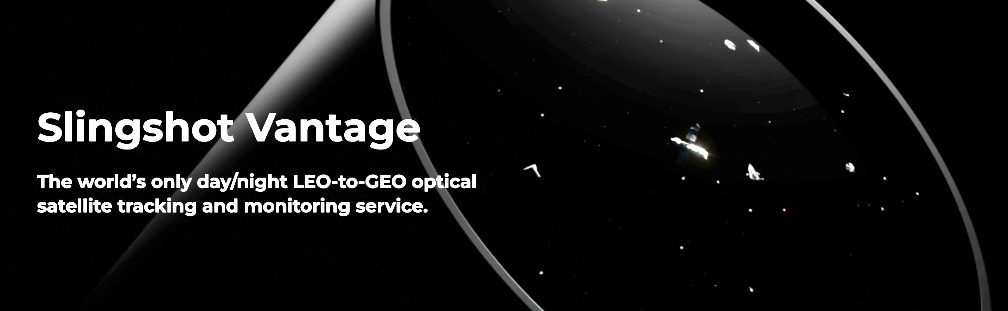
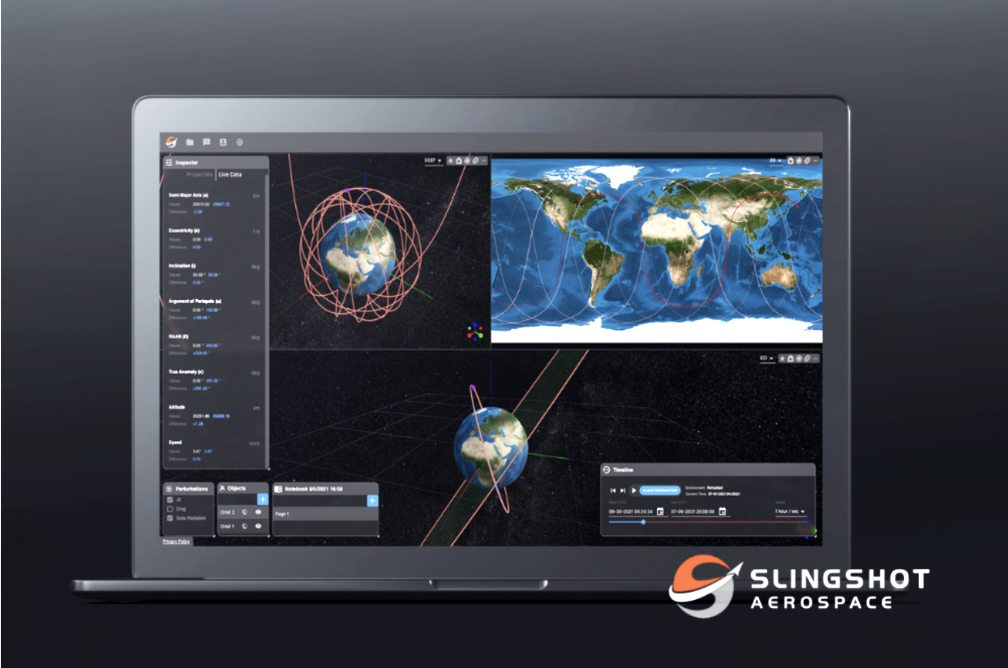
The Global Sensor Network powers Slingshot Vantage, the world’s first and only day and night LEO-to-GEO optical satellite tracking and monitoring service. The service enables government and commercial customers around the world to enhance their space situational awareness with best-in-class observations, orbital analytics, and event detection.

In addition to enhancing the quality of Slingshot’s Vantage services, the data collected via the Global Sensor Network will feed Slingshot Digital Space Twin™.

The digital space twin serves as the intelligence core that powers Slingshot’s products, including Slingshot Beacon, the industry’s first two-sided coordination and data-sharing solution for satellite collision avoidance.

“Slingshot’s enhanced space situational awareness data is already trusted by government organizations and satellite operators worldwide, and this expansion will allow us to significantly increase industry-leading LEO tracking data for satellite operators around the globe. We are making Slingshot’s Global Sensor Network the go-to commercial space surveillance and tracking provider for all orbital regimes. This expansion introduces an unprecedented level of space situational awareness that gives operators the critical insights they need for successful space operations.” — Melanie Stricklan, Co-founder and CEO, Slingshot Aerospace

Slingshot has also recently announced an expansion of its executive team with two key executive appointments. Leslie Hildebrand, a former executive at Lockheed Martin, has been appointed to the role of Senior Vice President of Government Business Development and Strategy. Hildebrand brings more than 23 years of experience in senior strategic business development roles to her new position. Pieter Kreuk has been named Chief Financial Officer, bringing more than a decade of financial leadership experience with senior positions at Ernst & Young and other companies.

Filed Under: News

GA-ASI flies MQ-20 Avenger autonomously using LEO SATCOM datalink

April 13, 2023 by editorial

On April 6, 2023, General Atomics Aeronautical Systems (GA-ASI) conducted live, tactical, air combat maneuvers using Artificial Intelligence (AI) pilots to control a company-owned MQ-20 Avenger® Unmanned Aircraft System (UAS).

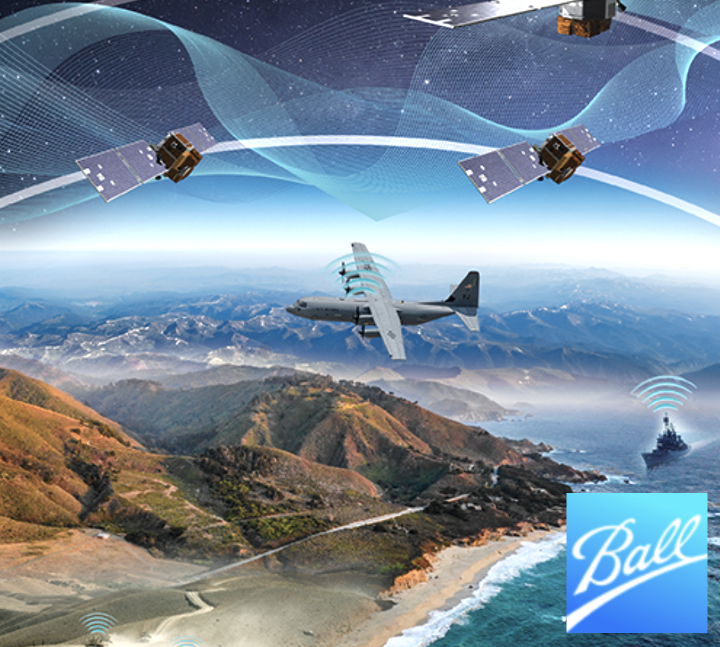
Collaborative maneuvers between human and AI pilots were conducted using GA-ASI’s Live, Virtual, Constructive (LVC) collaborative combat aircraft (CCA) ecosystem over LEO SATCOM provider’s IP-based Mission Beyond Line of Sight (BLOS) datalink. The LEO SATCOM connection was also used to rapidly retrain and redeploy AI pilots while the aircraft was airborne, demonstrating GA-ASI’s ability to update AI pilots within minutes.

GA-ASI’s Integrated Intelligence Center (iic) for
Multi-domain, Multi-INT ISR Mission Planning, Command & Control, and Exploitation

This marks the first deployment of a LEO SATCOM provider connections running on an operationally relevant unmanned combat aerial vehicle (UCAV) platform. The team used two L3Harris Technologies RASOR Multi-Functional Processors (MFPs) – one that housed the transceiver card and another that controlled the BLOS Active Electronically Scanned Array (AESA).

The test aircraft was outfitted with a Ball Aerospace BLOS AESA system, capable of full duplex operation. The demonstration highlighted GA-ASI’s commitment to operationalizing CCA by fusing innovative future warfare technologies, such as GA-ASI’s AI pilots and LVC ecosystem, and L3Harris and Ball Aerospace BLOS datalink solutions.

GA-ASI leveraged its end-to-end CCA ecosystem for the flight that fused third-party capabilities, human-on-the-loop control, and autonomy to enable effective human-machine teaming for 21st century conflicts. Operator commands were captured via hands on throttle-and-stick (HOTAS) controls and were sent via LEO SATCOM to AI pilots running Reinforcement Learning (RL) algorithms.

AI pilots autonomously tracked and maneuvered around dynamically, and updated entities specified via HOTAS. Operators were provided updates from AI pilots on a cockpit heads-up display and could dynamically re-task via HOTAS as the mission evolved. In addition, data from agent performance was collected and sent to the ground where agents were retrained to improve performance, and then redeployed via LEO SATCOM in a matter of minutes.

This is another in an ongoing series of technology insertion and autonomous flights performed using internal research and development funding to prove out important concepts for UAS.

“The flight demonstrated GA-ASI’s unmatched ability to fly autonomy on real, tactically relevant, unmanned combat aerial vehicles. It displayed effective BLOS Command and Control through the collaboration between three defense primes. This showcases our rapidly maturing CCA mission system suite and moves us one step closer to providing this revolutionary capability to the warfighter.” — GA-ASI Senior Director of Advanced Programs, Michael Atwood

Filed Under: News

GomSpace receives 845 k euros order from Argotec

April 13, 2023 by editorial

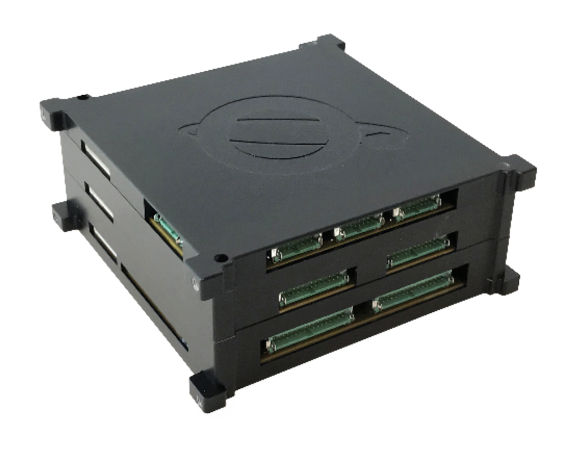
Argotec has placed an order with GomSpace for power systems at a value of 845,000 euros to be delivered over the coming 12 months, to be completed by Q1 of 2024.

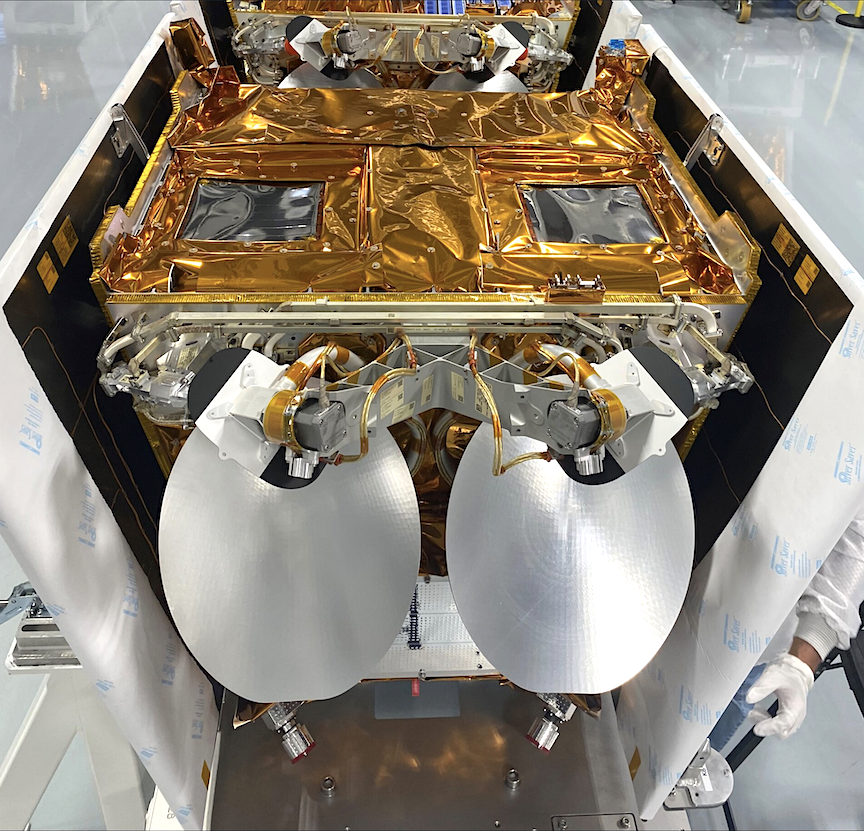
GomSpace NanoPower P80 unit

“We are happy that GomSpace technologies and expertise in power systems are recognized by a company like Argotec. NanoPower P80 and BP8 are our latest releases of power systems building our track record in managing on-orbit energy. NanoPower product series can be used in a multitude of configurations, which allows our customers to benefit from product reliability strategy, while building specific use cases.” — Carsten Drachmann, CEO, GomSpace.

Filed Under: Featured, News

UPDATE 3: SpaceX has now moved the Transporter 7 launch with 51 payloads to April 13th — see the payload listings…

April 12, 2023 by editorial

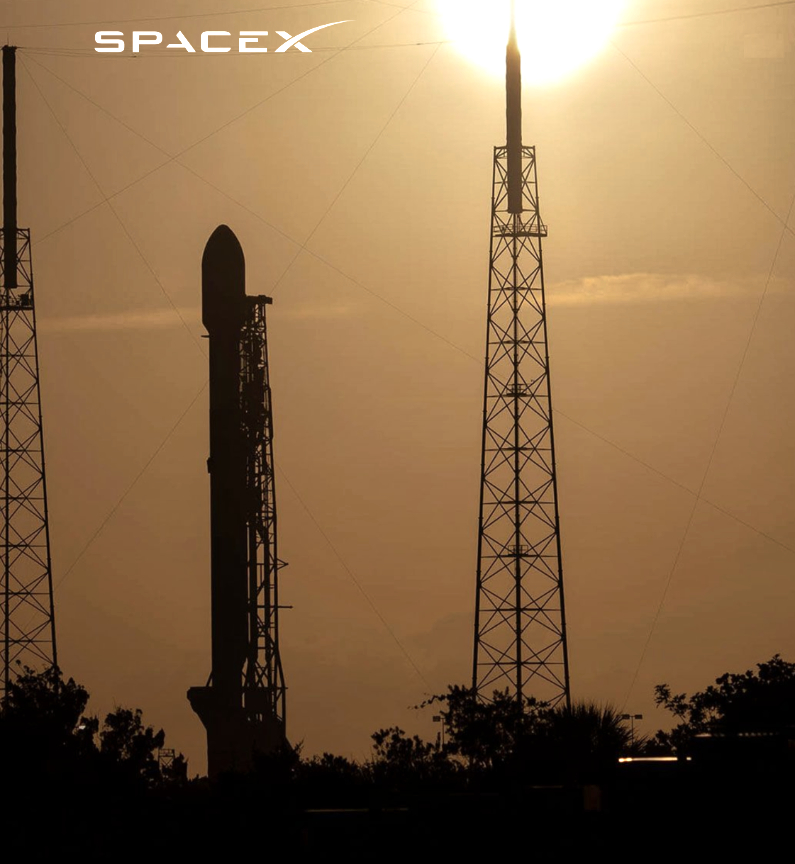
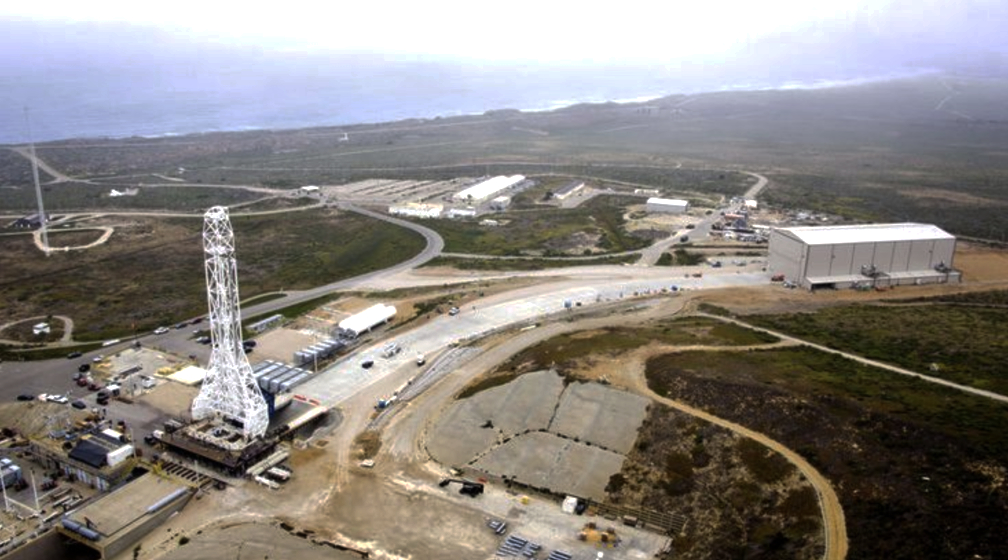
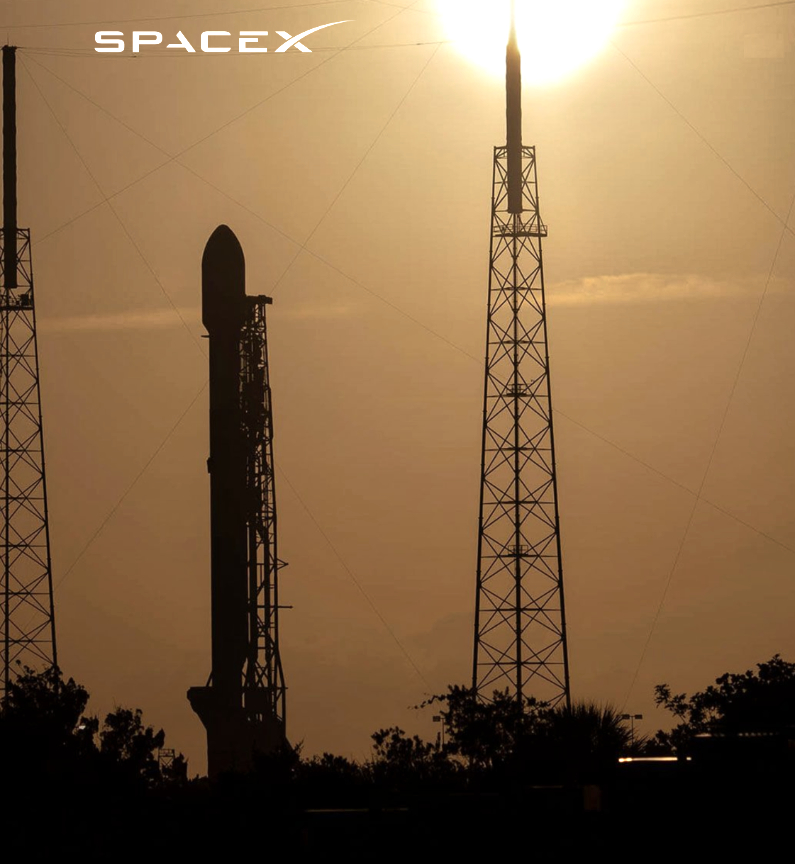
SpaceX is now targeting no earlier than Thursday, April 13th., at 11:47 p.m. PT (06:47 UTC on April 14) for Falcon 9’s launch of the Transporter-7 mission to LEO from Space Launch Complex 4E (SLC-4E) at Vandenberg Space Force Base in California.

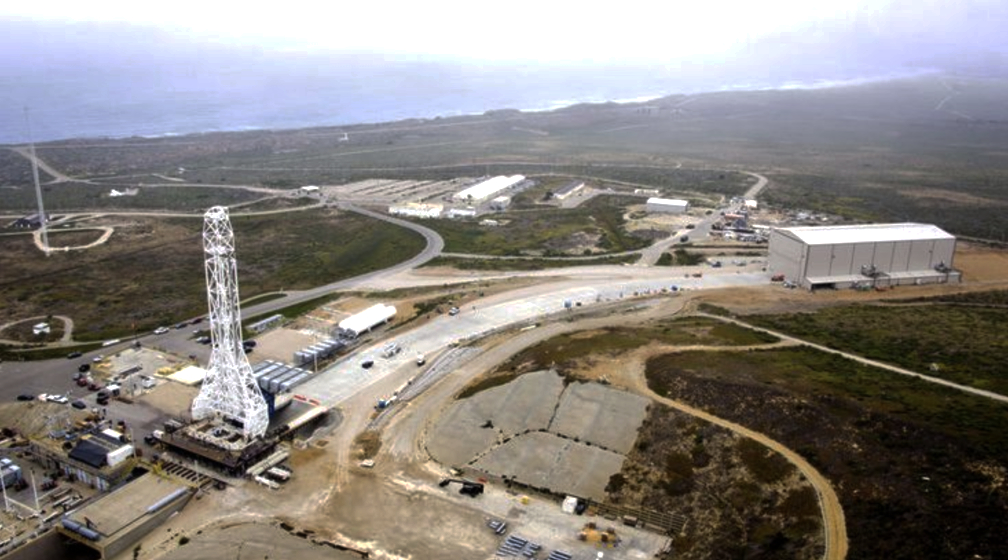
Vandenberg SFB’s SLC-4E, photo courtesy of SpaceX

The first stage booster supporting this mission previously launched Sentinel-6 Michael Freilich, DART, and seven Starlink missions.

Following stage separation, Falcon 9 will land on Landing Zone 4 (LZ-4) at Vandenberg Space Force Base.

Transporter-7 is SpaceX’s seventh, dedicated, smallsat rideshare mission. There will be 51 payloads on this flight, including CubeSats, MicroSats, hosted payloads, and orbital transfer vehicles carrying spacecraft that will be deployed at a later time.

A live webcast of this mission will start about 10 minutes prior to liftoff.

Possible payload list for the Transporter 7 mission… there are also two unspecified smallsats within this payload, as well…

Aarhus University, Denmark
DISCO-1 (1U)

Aerospace Corporation
LLITED A/B (2x 1.5U)

Alba Orbital
Cluster 7

ARCA, Italy
REVELA (3U)
SMPOD03 (hosted payload — 3U deployer)

AstroForge
Brokkr-1 (6U)

D-Orbit
ION

Exolaunch (21 satellites, 16 cubesat, 5 microsat)
Bronco Space (at Cal Poly Pomona)
GomSpace
FACSAT-2 (Colombian Air Force-(6U, Colombian Air Force, GomSpace bus)
EnduroSat
TAIFA-1 (3U, SayariLabs [Kenya]
Sateliot-0
(Platform-3)
ISILAUNCH
on behalf of Orbital Solutions Monaco (OSM) + Laboratoire
Athmosphères

Kenya Space Agency with SayariLabs + EnduroSat
NanoAvionics
DEWA SAT-2 (6U, DEWA, UAE)
Observations Spatiales (LATMOS)
Plan-S
Connecta T2.1 (6U)
SSS-2B

Spire Global
Space Flight Laboratory
NORSAT-TD (~40kg, Space Flight Laboratory for Norwegian Space Agency)
Stanford Student Space Initiative
Sapling-2
TÜBİTAK UZAY
IMECE (800 kg., TÜBİTAK UZAY, Turkey)
Unseenlabs
BRO-9 (6U)

GHGSat
GHGSat-C6/C7/C8 (3x 15k g.)

Hawkeye 360
Cluster 7 (3x 33 kg.)

InspireSat 7
(2U, Latmos)

ISILaunch
IRIS-C (3U, NCKU, Taiwan)

Istanbul
(1P, Hello Space)

Kepler Space
Kepler (2x 6U)

KILICSAT
(3U, Turkey)

LEMUR-2
ONREFLECTION
ROMEO-N-LEO
SPACEGUS

Maverick

Momentus
Vigoride VR-6

Orbital Sidekick
GHOSt (2x microsat)

Orbital Solutions Monaco
RoseyCubesat-1 (1U, ISIS platform)

RomSpace, Romania
ROM-2 (1P)

Satellogic
NewSat 36-39 (4x microsat)

Solar Array
(hosted payload)

Spire Global
(2x 6U for customers, 1x 3U)

Technical University of Budapest, Hungary
MRC-100 (3P)

Tomorrow.io
Tomorrow-R1 (85 kg)

Umbra
Umbra-06

University of Colorado Denver
CIRBE (3U, CU Boulder/LASP)

VIREO
(3U, C3S, Hungary)

Two undisclosed smallsats

Filed Under: News

UPDATE 1: SpaceX scheduled to move 51 payloads from VSFB via Falcon 9 on April 11th — possible payload listings now included…

April 11, 2023 by editorial

SpaceX is targeting no earlier than Tuesday, April 11th., at 11:48 p.m.,PT, (06:48 UTC on April 12th) for Falcon 9’s launch of the Transporter-7 mission to LEO from Space Launch Complex 4E (SLC-4E) at Vandenberg Space Force Base in California.

Vandenberg SFB’s SLC-4E, photo courtesy of SpaceX

The first stage booster supporting this mission previously launched Sentinel-6 Michael Freilich, DART, and seven Starlink missions.

Following stage separation, Falcon 9 will land on Landing Zone 4 (LZ-4) at Vandenberg Space Force Base.

Transporter-7 is SpaceX’s seventh, dedicated, smallsat rideshare mission. There will be 51 payloads on this flight, including CubeSats, MicroSats, hosted payloads, and orbital transfer vehicles carrying spacecraft that will be deployed at a later time.

A live webcast of this mission will start about 10 minutes prior to liftoff.

Possible payload list for the Transporter 7 mission… there are also two unspecified smallsats within this payload, as well…

Aarhus University, Denmark
DISCO-1 (1U)

Aerospace Corporation
LLITED A/B (2x 1.5U)

Alba Orbital
Cluster 7

ARCA, Italy
REVELA (3U)
SMPOD03 (hosted payload — 3U deployer)

AstroForce
Brokkr-1 (6U)

D-Orbit
ION

Exolaunch (21 satellites, 16 cubesat, 5 microsat)
Bronco Space (at Cal Poly Pomona)
GomSpace
FACSAT-2 (Colombian Air Force-(6U, Colombian Air Force, GomSpace bus)
EnduroSat
TAIFA-1 (3U, SayariLabs [Kenya]
Sateliot-0
(Platform-3)
ISILAUNCH
on behalf of Orbital Solutions Monaco (OSM) + Laboratoire
Athmosphères

Kenya Space Agency with SayariLabs + EnduroSat
NanoAvionics
DEWA SAT-2 (6U, DEWA, UAE)
Observations Spatiales (LATMOS)
Plan-S
Connecta T2.1 (6U)
SSS-2B

Spire Global
Space Flight Laboratory
NORSAT-TD (~40kg, Space Flight Laboratory for Norwegian Space Agency)
Stanford Student Space Initiative
Sapling-2
TÜBİTAK UZAY
IMECE (800 kg., TÜBİTAK UZAY, Turkey)
Unseenlabs
BRO-9 (6U)

GHGSat
GHGSat-C6/C7/C8 (3x 15k g.)

Hawkeye 360
Cluster 7 (3x 33 kg.)

InspireSat 7
(2U, Latmos)

ISILaunch
IRIS-C (3U, NCKU, Taiwan)

Istanbul
(1P, Hello Space)

Kepler Space
Kepler (2x 6U)

KILICSAT
(3U, Turkey)

LEMUR-2
ONREFLECTION
ROMEO-N-LEO
SPACEGUS

Maverick

Momentus
Vigoride VR-6

Orbital Sidekick
GHOSt (2x microsat)

Orbital Solutions Monaco
RoseyCubesat-1 (1U, ISIS platform)

RomSpace, Romania
ROM-2 (1P)

Satellogic
NewSat 36-39 (4x microsat)

Solar Array
(hosted payload)

Spire Global
(2x 6U for customers, 1x 3U)

Technical University of Budapest, Hungary
MRC-100 (3P)

Tomorrow.io
Tomorrow-R1 (85 kg)

Umbra
Umbra-06

University of Colorado Denver
CIRBE (3U, CU Boulder/LASP)

VIREO
(3U, C3S, Hungary)

Two undisclosed smallsats

Filed Under: News

Beam-hopping JoeySat can switch the satellite capacity between different places on Earth up to 1000 times per second ready for launch

April 11, 2023 by editorial

An advanced broadband satellite that will provide high-speed internet connectivity from low Earth orbit has left OneWeb Florida Facilities on April 4 for a road journey across America to Vandenberg launch pad.

The beam-hopping satellite – nicknamed JoeySat after a baby kangaroo – will demonstrate connectivity for people traveling by air, sea or on land, and preparing for low latency 5G connectivity from space.

Its fully digital beam-hopping and beam-steering payload can switch the satellite capacity between different places on Earth up to 1000 times per second. The signal strength can also be adjusted to meet demand.

This will enable JoeySat to respond to real-time surges in commercial high-quality and low latency connectivity demands — or during emergencies such as natural disasters, with rapid deployment of 5G Mini Hubs connected to OneWeb communication network.

Developed under the Sunrise Partnership Project between ESA and telecommunications operator OneWeb, JoeySat will demonstrate key technologies for OneWeb’s next generation constellation, as part of the ESA Sunrise project with support from the UK Space Agency.

Its advanced digital regenerative payload was built by SatixFy in the UK and the payload environmental tests were completed in the UK.

Filed Under: News

Fly Your Satellite! design booster teams starts baseline design reviews

April 11, 2023 by editorial

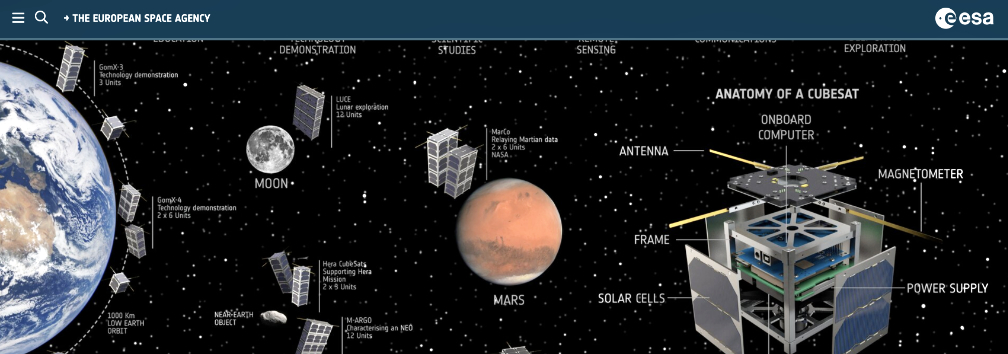
Fly Your Satellite! Design Booster is an educational program for university student teams that have a preliminary CubeSat design — ESA offers the students support and expert advice, guiding them through the stages necessary to develop an initial idea into a robust final plan.

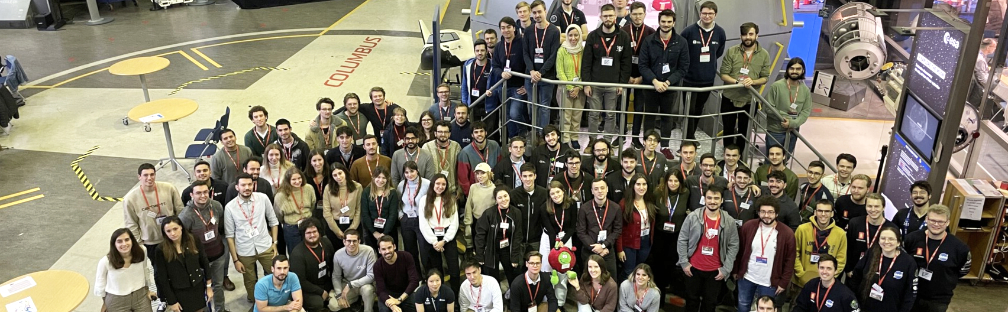
Photo of the selected ESA CubeSat teams

A key milestone within this process is a Baseline Design Review, which helps flag issues and ultimately empowers students to make effective design choices.

The Baseline Design Review is tailored from the ESA standard review process to fit the scope of university student projects. Six teams incorporating more than 200 students have now reached this stage with meetings between students and ESA experts taking place between April 3 and 21, 2023:

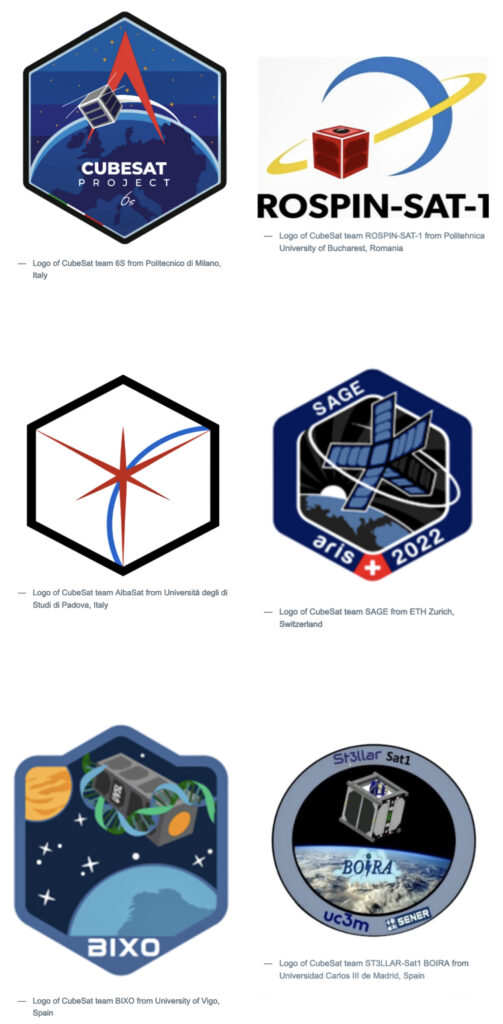
  • 6S Politecnico di Milano, Italy
  • AlbaSat Università degli di Studi di Padova, Italy
  • BIXO University of Vigo, Spain
  • ROSPIN-SAT-1 Politehnica University of Bucharest, Romania
  • SAGE ETH Zurich, Switzerland
  • ST3LLAR-Sat1 Universidad Carlos III de Madrid, Spain

Ever since the official program kick-off last November, each participating team has been working hard on a key document called a CubeSat Project File. This contains a detailed description of the satellite, project management, and assembly, integration and verification (AIV) plans.

These CubeSat Project Files were sent to ESA experts and the Fly Your Satellite! team in advance, who studied them carefully to identify potential issues. Every point flagged is known as a Review Item Discrepancy (RID), and these form the foundation of the Baseline Design Review. During a series of online meetings, dubbed “colocations meetings,” ESA and Fly Your Satellite! experts are currently discussing RIDs with the teams, enhancing students‘ knowledge of the topics, and allowing them to interpret and implement solutions to their CubeSat design.

Upon completion of the Baseline Design Review, the students will be tasked with completing the actions identified in these RIDs. It is normal for there to be a long list and teams will have about one year to make enhancements, consolidate their detailed designs, and test prototypes.

The Final Design Review will then take place, which will conclude with the teams presenting their fully refined CubeSat mission design.

Fly Your Satellite winning team logos

Filed Under: Featured, News

Rocket Lab to launch NASA’s Cyclone-Tracking Satellite Constellation from New Zealand

April 11, 2023 by editorial

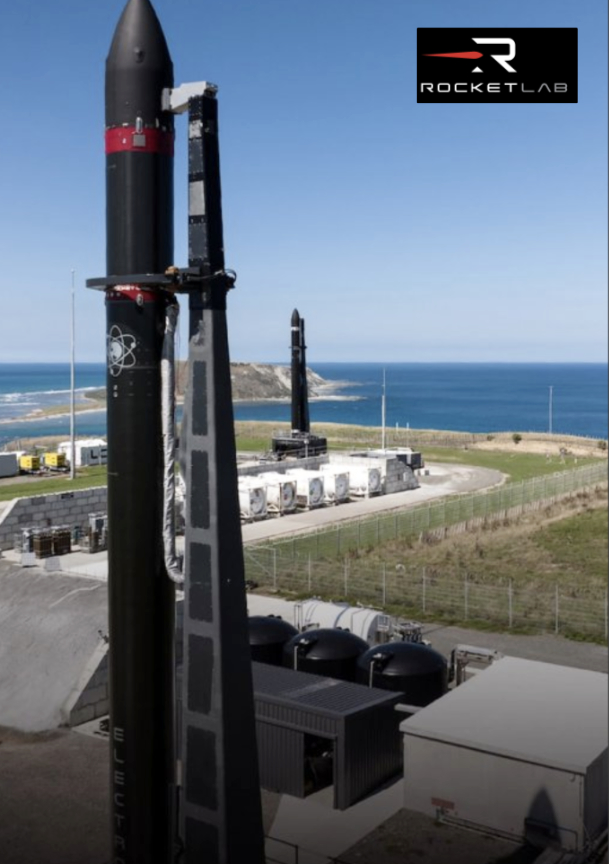
Rocket Lab’s Launch Complex 1 in New Zealand

Rocket Lab USA, Inc. (Nasdaq: RKLB) will launch NASA’s TROPICS constellation across two dedicated Electron missions lifting off from Launch Complex 1 in New Zealand, scheduled for May of 2023.

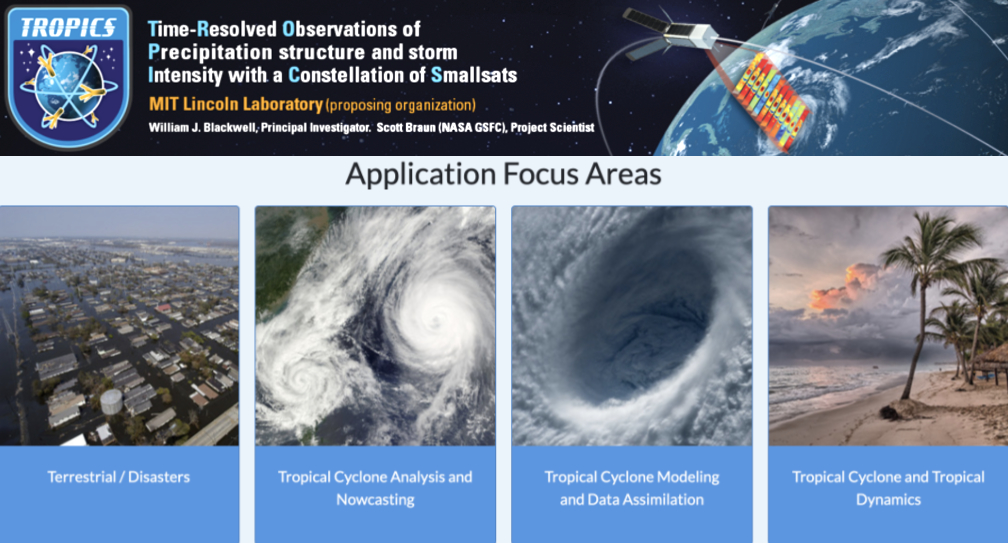
The TROPICS constellation (Time-Resolved Observations of Precipitation Structure and Storm Intensity with a Constellation of Small Sats) will monitor the formation and evolution of tropical cyclones, including hurricanes, and will provide rapidly updating observations of storm intensity. This data will help scientists better understand the processes that effect these high-impact storms, ultimately leading to improved modelling and prediction.

The two missions are expected to launch within approximately two weeks of each other in May 2023. The first launch, named ‘Rocket Like a Hurricane,’ is expected to launch as soon as May 1 NZST (30 April EDT) and the second mission, named ‘Coming to a Storm Near You,’ is expected to follow around May 16 NZST (May 15 EDT).

The constellation, which is part of NASA’s Earth System Science Pathfinder Program, consists of four CubeSats that require launch to a specific orbit at an altitude of 550 kilometers and inclination of about 30 degrees. All four satellites need to be deployed into their operational orbit within a 60-day period, making Electron the ideal launch vehicle as it enables dedicated launch to unique orbits on highly responsive timelines.

The two missions were initially scheduled to lift-off from Launch Complex 2 at the Mid-Atlantic Regional Spaceport within NASA’s Wallops Flight Facility in Virginia but will now take place at Launch Complex 1 in New Zealand to support a Q2 launch window that will see the satellites reach orbit in time for the North American 2023 hurricane season.

Rocket Lab was selected to launch the TROPICS missions as part of NASA’s Venture-class Acquisition of Dedicated and Rideshare (VADR) launch services contract.

“The need for improved climate and weather data from space is acute and growing. Hurricanes and tropical storms have a devastating effect on lives and livelihoods, so we’re immensely proud to be entrusted by NASA to launch the TROPICS missions which will enable scientists and researchers to accurately predict storm strength and give people time to evacuate and make plans. With the 2023 hurricane season fast approaching, time is of the essence for these missions. Because we operate three launch pads across two countries, we can constantly assess the launch manifest and adapt launch schedules and locations based on customer and mission requirements.” — Rocket Lab founder and CEO, Peter Beck

“The ability to advance our understanding of tropical cyclones from space has been limited by the ability to take frequent measurements, particularly from microwave instruments that see into the storms. Historically, satellites have been too large and expensive to provide observations at a time-frequency that is consistent with the timescales at which tropical cyclones can evolve. The CubeSat era has allowed for smaller, less expensive satellites. With modern small satellite design, we designed a constellation that optimizes the scientific utility of the mission in a way that we can launch in a cost-effective manner. These factors enable TROPICS to provide a new understanding of tropical cyclones by decreasing the time by which a given storm is revisited by the satellites.” — Will McCarty, Program Scientist for the TROPICS Mission

Filed Under: Featured, News

  • « Go to Previous Page
  • Page 1
  • Interim pages omitted …
  • Page 39
  • Page 40
  • Page 41
  • Page 42
  • Page 43
  • Interim pages omitted …
  • Page 60
  • Go to Next Page »

Primary Sidebar

WEEKLY NEWSLETTER

Archives

  • June 2026
  • May 2026
  • April 2026
  • March 2026
  • February 2026
  • January 2026
  • December 2025
  • November 2025
  • October 2025
  • September 2025
  • August 2025
  • July 2025
  • June 2025
  • May 2025
  • April 2025
  • March 2025
  • February 2025
  • January 2025
  • December 2024
  • November 2024
  • October 2024
  • September 2024
  • August 2024
  • July 2024
  • June 2024
  • May 2024
  • April 2024
  • March 2024
  • February 2024
  • January 2024
  • December 2023
  • November 2023
  • October 2023
  • September 2023
  • August 2023
  • July 2023
  • June 2023
  • May 2023
  • April 2023
  • March 2023
  • February 2023
  • January 2023
  • December 2022
  • November 2022
  • October 2022
  • September 2022
  • August 2022
  • July 2022
  • June 2022
  • May 2022
  • April 2022
  • March 2022
  • February 2022
  • January 2022
  • December 2021
  • November 2021
  • October 2021
  • September 2021
  • August 2021
  • July 2021
  • June 2021
  • May 2021
  • April 2021
  • March 2021
  • February 2021
  • January 2021
  • December 2020
  • November 2020
  • October 2020
  • September 2020
  • August 2020
  • July 2020
  • June 2020
  • May 2020
  • April 2020
  • March 2020
  • February 2020
  • January 2020
  • December 2019
  • November 2019
  • October 2019

© 2019–2026 SatNews

Insert/edit link

Enter the destination URL

Or link to existing content

    No search term specified. Showing recent items. Search or use up and down arrow keys to select an item.
      x
      Sign Up Now!

      Enjoy a free weekly newsletter with recent headlines from the global SmallSat industry.

      Invalid email address
      We promise not to spam you. You can unsubscribe at any time.
      Thanks for subscribing! You will now receive weekly SmallSat News updates.
      We love our advertisers.
      And you will too!

      Please disable Ad Blocker to continue... We promise to keep it unobtrusive.
      We promise not to spam you. You can unsubscribe at any time.
      Invalid email address
      Thanks for subscribing!