• Skip to main content
  • Skip to primary sidebar
  • Home
  • News
  • Featured
  • More News ⌄
    • SatNews
    • SatMagazine
    • MilSatMagazine
  • Events ⌄
    • MilSat Symposium
    • SmallSat Symposium
    • Satellite Innovation
  • Contacts
  • SUBSCRIPTION

SmallSat News

You are here: Home / Archives for 2023

Archives for 2023

Techno Planet providing power to the Momentus Vigoride-5 OSV

April 11, 2023 by editorial

Techno Planet Inc. (TPI) has has worked with partner Momentus Inc. to design and build Solar Array Drive Assemblies (SADA’s) for the Vigoride Orbital Service Vehicle (OSV).
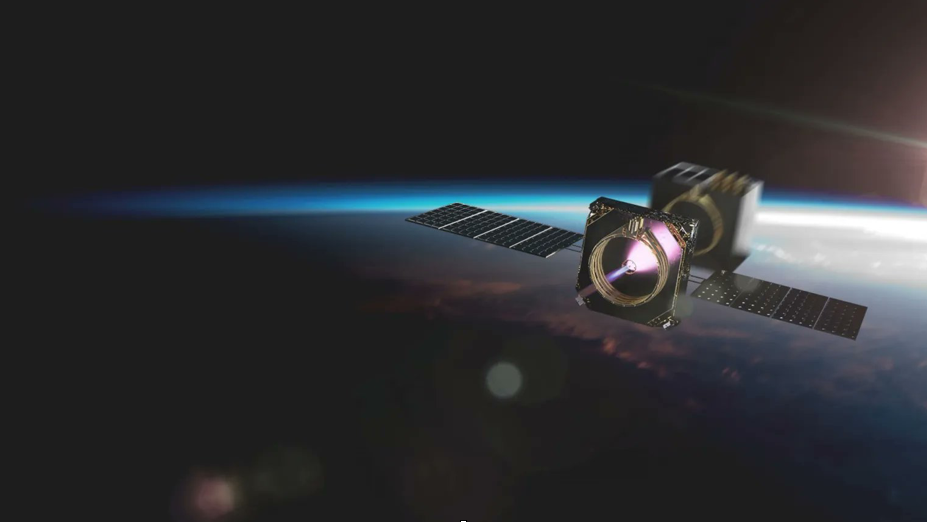
Artistic rendition of the Momentus Vigoride-5 OSV on-orbit, courtesy of the company

The Vigoride-5 OSV launched in January of 2023 and Momentus has confirmed the successful deployment and full operation of the OSV’s solar arrays and has also recently announced the successful in-space testing of the TPI pioneering propulsion system that uses water as a propellant.

TPI SADA’s have been developed for small spacecraft that require solar array pointing and power transfer. In addition to the scalable SADA designs, Techno Planet Inc. has the experience and capabilities required to design and build a range of space mechanisms including thruster gimbals, antenna positioners, sample acquisition and handling devices, and release mechanisms, along with almost any custom mechanism.
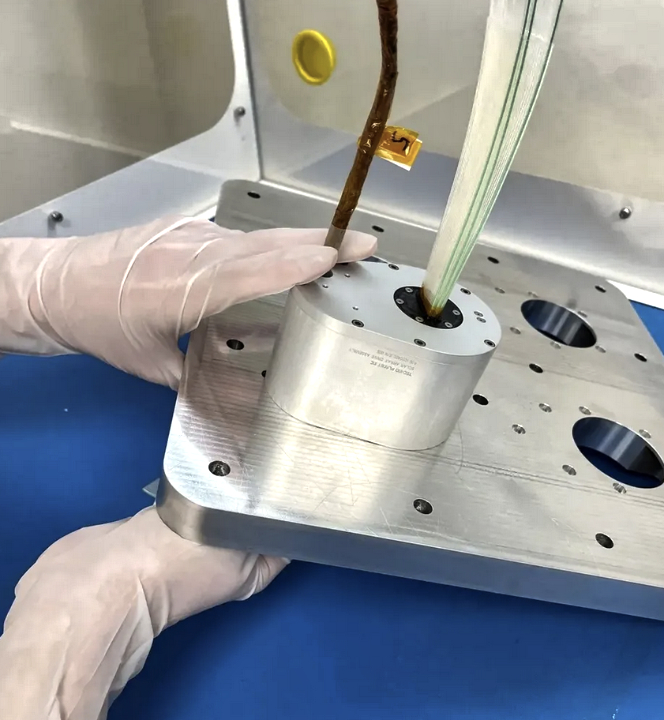
Techno Planet’s SADA

“To know our company’s hardware operate in space demonstrates the successful evolution of Techno Planet. I’m proud of our team’s achievements, and I’m energized that this is the start of a sustained flow of space-bound TPI hardware. Congratulations to our partner Momentus and I thank them for the confidence they’ve shown in us to get here. This successful launch also marks an exciting time in aerospace for small businesses like ours to provide proven engineering expertise in support of new space ventures. Plenty of our designs have flown over the years, but these are the first with our name on them.” — Scott Stanley, TPI Chief Technology Officer.


Filed Under: News

Dubai Electricity & Water Authority (DEWA) is ready to launch their 2nd smallsat

April 10, 2023 by editorial

Artistic rendition of DEWA’s SAT-1 on-orbit, courtesy of AETOSWire

Dubai Electricity and Water Authority (DEWA) has completed preparations to launch the utility’s second smallsat for remote sensing applications this April.

The 6U nanosatellite is part of DEWA’s Space-D program. DEWA Sat-2 will be launched by a SpaceX Falcon 9 rocket from Vandenberg Air Force Base in California, USA. The smallsat was designed and developed at DEWA’s Research and Development Centre, in cooperation with NanoAvionics in Lithuania.

The new satellite features a high-resolution camera (4.7 meters) that will be used for Earth Observation (EO) missions and provides continuous line-scan imaging in 7 spectral bands from an approximately 500 km orbit. The new satellite is also equipped with Infrared equipment to measure greenhouse gases.

The combined use of DEWA SAT-2 images and Internet of Things (IoT) measurements from DEWA SAT-1 will enable DEWA to improve the operational performance of power generation and water desalination plants by providing accurate estimates of seawater temperature, seawater salinity, detection of red-tide, as well as fog monitoring and forecasting.

DEWA launched DEWA-SAT1 in January of 2022. It uses LoRa IoT communication technology, a new wireless protocol designed for long-range and low-power communications, to expand the coverage of the existing terrestrial communications network. DEWA is the first utility in the world to launch nanosatellites to improve its planning, operation and maintenance activities.

Using satellite network communication, IoT and Artificial Intelligence (AI) contributes to improving the efficiency of photovoltaic solar panels at the Mohammed bin Rashid Al Maktoum Solar Park, the largest single-site solar park in the world, using the Independent Power Producer (IPP) model.

Photo of the Mohammed bin Rashid Al Maktoum Solar Park, courtesy of same

Filed Under: News

Dubai Electricity & Water Authority (DEWA) is ready to launch their 2nd smallsat

April 9, 2023 by editorial

Artistic rendition of DEWA’s SAT-1 on-orbit, courtesy of AETOSWire

Dubai Electricity and Water Authority (DEWA) has completed preparations to launch the utility’s second smallsat for remote sensing applications this April.

The 6U nanosatellite is part of DEWA’s Space-D program. DEWA Sat-2 will be launched by a SpaceX Falcon 9 rocket from Vandenberg Air Force Base in California, USA. The smallsat was designed and developed at DEWA’s Research and Development Centre, in cooperation with NanoAvionics in Lithuania.

The new satellite features a high-resolution camera (4.7 meters) that will be used for Earth Observation (EO) missions and provides continuous line-scan imaging in 7 spectral bands from an approximately 500 km orbit. The new satellite is also equipped with Infrared equipment to measure greenhouse gases.

The combined use of DEWA SAT-2 images and Internet of Things (IoT) measurements from DEWA SAT-1 will enable DEWA to improve the operational performance of power generation and water desalination plants by providing accurate estimates of seawater temperature, seawater salinity, detection of red-tide, as well as fog monitoring and forecasting.

DEWA launched DEWA-SAT1 in January of 2022. It uses LoRa IoT communication technology, a new wireless protocol designed for long-range and low-power communications, to expand the coverage of the existing terrestrial communications network. DEWA is the first utility in the world to launch nanosatellites to improve its planning, operation and maintenance activities.

Using satellite network communication, IoT and Artificial Intelligence (AI) contributes to improving the efficiency of photovoltaic solar panels at the Mohammed bin Rashid Al Maktoum Solar Park, the largest single-site solar park in the world, using the Independent Power Producer (IPP) model.

Photo of the Mohammed bin Rashid Al Maktoum Solar Park, courtesy of same

Filed Under: News

A new adventure for the AcubeSAT team

April 6, 2023 by editorial

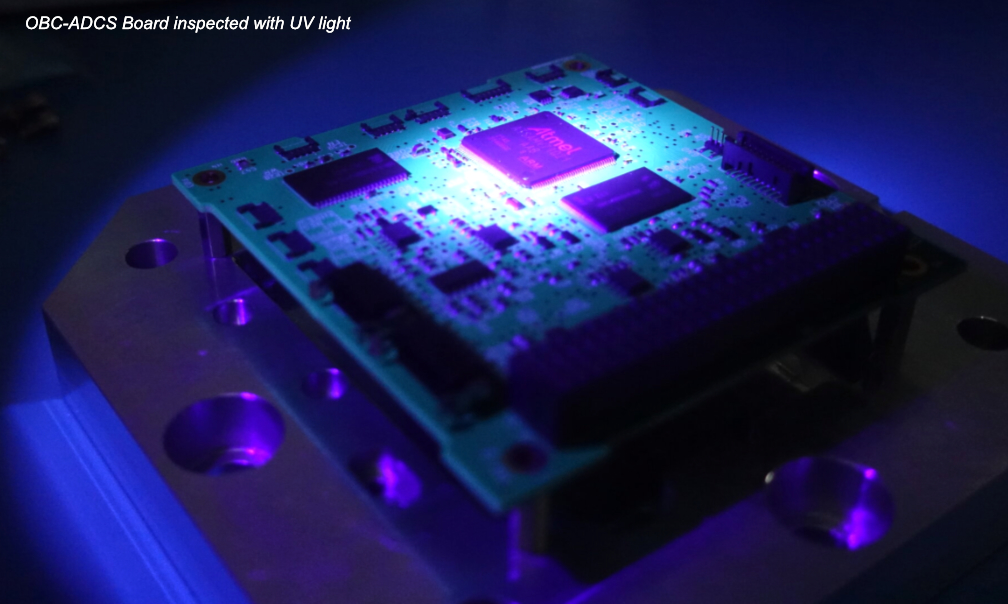
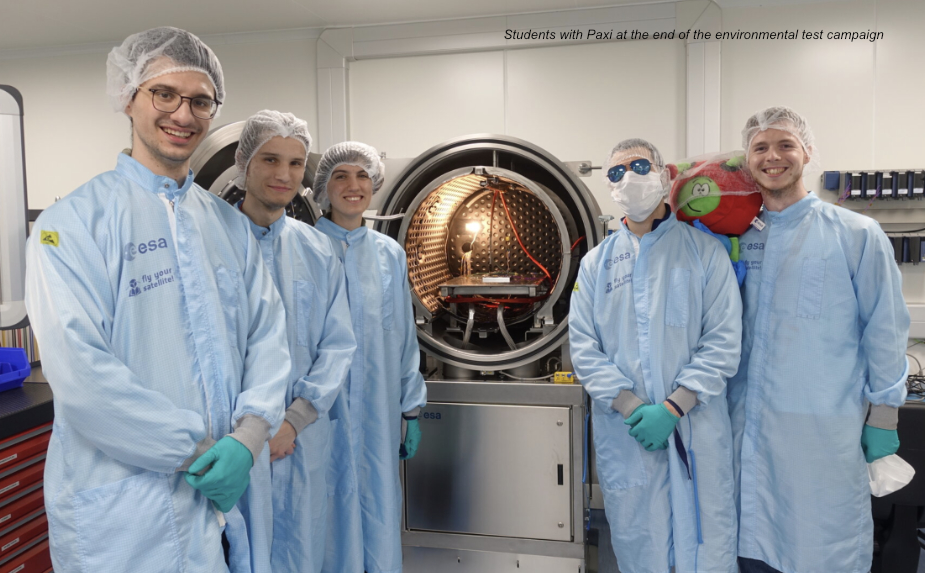
Five students from the AcubeSAT team, participating in the 3rd edition of ESA’s Fly Your Satellite! program, have travelled from their home base in Thessaloniki, Greece, to the CubeSat Support Facility (CSF), in ESA ESEC, Belgium, to conduct environmental testing on their On-Board Computer/Attitude Determination & Control System (OBC-ADCS) board.

AcubeSAT is a project by SpaceDot, with a multidisciplinary team of students primarily from the Aristotle University of Thessaloniki with members from various Greek and European universities.

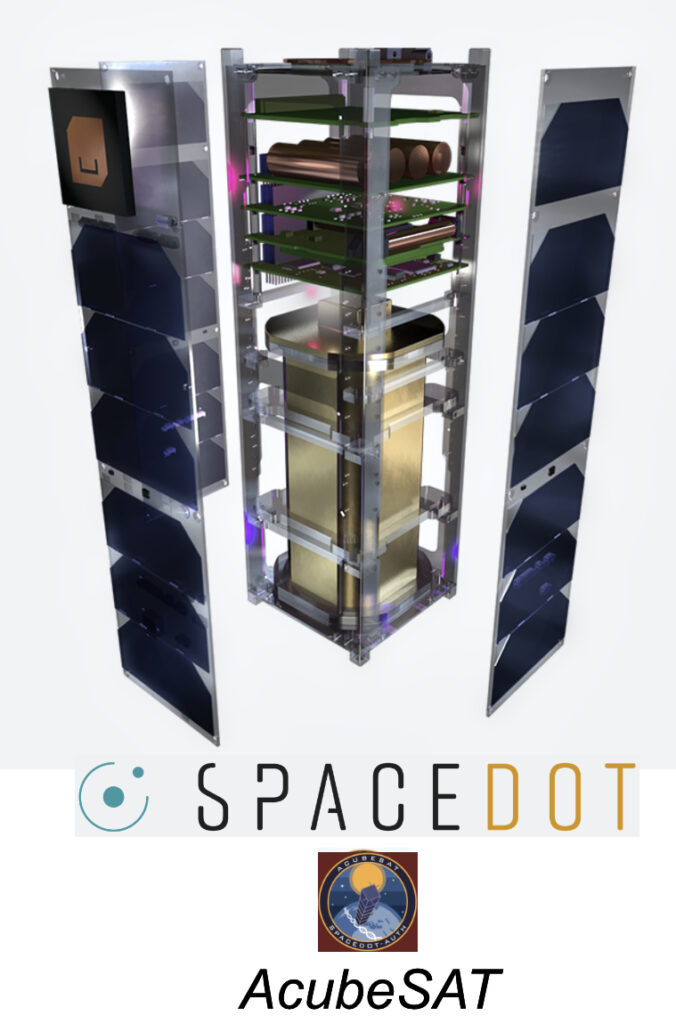
AcubeSAT is a three units CubeSat that is under development to investigate eukaryotic cells’ molecular behavior under the microgravity and radiation conditions of LEO.

The smallsat will contain many components that have been designed by the students themselves, including the OBC-ADCS. This gives students a wealth of experience but comes with the additional challenges of using in-house solutions. Hence, a series of rigorous tests need to be performed to ensure the success of the AcubeSAT mission and spot possible issues before being launched in orbit.

The tested item is the OBC-ADCS board which is responsible for controlling all basic spacecraft functions and handling the communication with all the other subsystems. The ADCS subsystem hosted on this board is responsible for stabilizing the spacecraft and controlling its orientation.

The Environmental Test Campaign is composed of a Vibration Test and a Thermal Vacuum Chamber (TVAC) Test. The key concept of the campaign can be represented by CSF testing mantra: ‘Test as you fly, fly as you test!’. Therefore, the OBC-ADCS board was subject to vibration testing, as it recreates the launch conditions, before going to the TVAC testing, simulating the on-orbit environment.

The item was first unpacked, carefully visually inspected, and functionally tested. After test sensors were installed and the board was placed into the test adapter, it was subjected to different types of vibration tests to simulate the environment of the rocket and to verify that the OBC-ADCS board can withstand such loads. Testing was performed in all three axes of the spacecraft to ensure the structural integrity of the sub-system.

With no issues spotted, the vibration testing was deemed successful granting the ticket to the next phase, the Thermal Vacuum Chamber (TVAC) test campaign.

On the third day, the preparation for TVAC testing started with a cleaning process and the installation of thermocouples on both OBC and ADCS side. Due to some anomalies, and despite the best effort of the teams, only a limited test could be performed. The students were able to adjust admirably to performing lab work and responded excellently under pressure, without losing heart in the face of unexpected events, but instead being always proactive in seeking a solution.

Following the travel back to Thessaloniki, the team will investigate and correct the issues in view of a future re-qualification at the CSF in the near future.

Filed Under: News

ClearSpace and LeoLabs’ MOU to advance a safer, more sustainable space environment

April 5, 2023 by editorial

ClearSpace, the in-orbit satellite servicing company announced today a memorandum of understanding (MOU) with LeoLabs, a commercial provider of low Earth orbit (LEO) Space Situational Awareness (SSA) and Space Traffic Management (STM) services. The MOU recognizes the two companies’ shared vision of a safe and sustainable space ecosystem and their mutual efforts in making this vision a reality.

ClearSpace secures a major UK contract to help clean up space

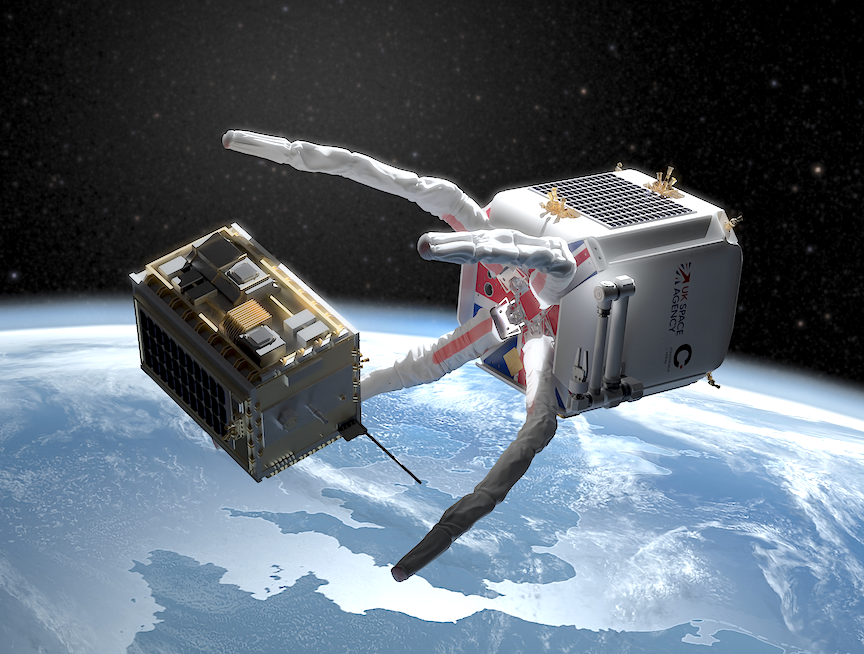
This strategic partnership comes at a time when both companies are finding commercial success within government and industrial markets. As examples, in 2022 ClearSpace received a Phase B demo contract from the UK Space Agency to demonstrate its active debris removal technology and LeoLabs received a contract to help support the development of a U.S., civil-led STM prototype from the U.S. Department of Commerce.

The partnership announced today signals a desire to build on this mutual success and previous collaborative efforts, such as the joint LEO Kinetic Space Safety Workshop — hosted in May 2022 at EPFL (Ecole Polytechnique Fédérale, Lausanne). The MOU also serves as a formal declaration of ClearSpace and LeoLabs’ intent to work together on several new initiatives. These initiatives include thought leadership opportunities that promote space safety and responsible stewardship of the space environment, as well as business opportunities that promote their services and programs. In addition, they have agreed to exchange advisory board appointments, with Dr. Timothy Maclay from ClearSpace becoming a member of LeoLabs’ Commercial Strategic Advisory Board and LeoLabs’ Dr. Darren McKnight joining ClearSpace’s Advisory Board.

“With the acceleration of commercial space activity, the industry is developing approaches to create a more circular space ecosystem,”  said ClearSpace CEO and Co-founder Luc Piguet. “LeoLabs is providing data and services that are critical to operational safety, and we are excited to be working with them to address comprehensively the complex challenges of space safety and sustainability.”

“As the traffic in low Earth orbit grows, innovative, scalable solutions are needed, including active debris removal technologies and in-orbit servicing,”  said LeoLabs CEO Dan Ceperley. “ClearSpace is an industry leader in both, and we’re proud to kick off a partnership with them to build a safer, more sustainable future in space.”

This strategic partnership between ClearSpace and LeoLabs will catalyze the development of effective, multi-faceted strategies to address the growing debris problem in space and mitigate the risks posed to operational spacecraft.

Filed Under: Featured, News

Spire Global receives NRO contract for RF data

April 4, 2023 by editorial

Spire Global, Inc. (NYSE: SPIR) has been awarded a contract by the National Reconnaissance Office (NRO) for commercial radio frequency (RF) remote sensing.

Spire won a contract as part of the NRO’s Strategic Commercial Enhancements (SCE) Broad Agency Announcement (BAA) program in September of 2022. The company also exercised two options that extend the performance period through March 1, 2025.

The agency will continue to use Spire’s data to evaluate how commercial radio frequency (RF) will be integrated into its overhead architecture. The contract demonstrates the agency’s commitment to expand the acquisition and integration of commercial space-based data for situational awareness and to address new intelligence challenges.

Spire’s fully deployed constellation of more than 100 satellites monitors RF signals to provide data and analytics on global weather intelligence, ship and plane movements, and spoofing and jamming detection to better predict how their patterns impact global security, economies, and human potential. The Company operates over 40 satellites that help detect and geolocate signal interference, jamming, and spoofing. These satellites can identify the power, location, and directionality of such events.

“The NRO has continued to show its commitment to innovation by recognizing the value of RF data in providing situational awareness and strengthening global security. In a rapidly changing world, we at Spire aim to provide government organizations the competitive advantage they need to solve some of the world’s toughest problems with insights from space.” — Chuck Cash, Vice President of Federal Sales, Spire

Filed Under: News

AAC Clyde Space receives avionic orders

April 4, 2023 by editorial

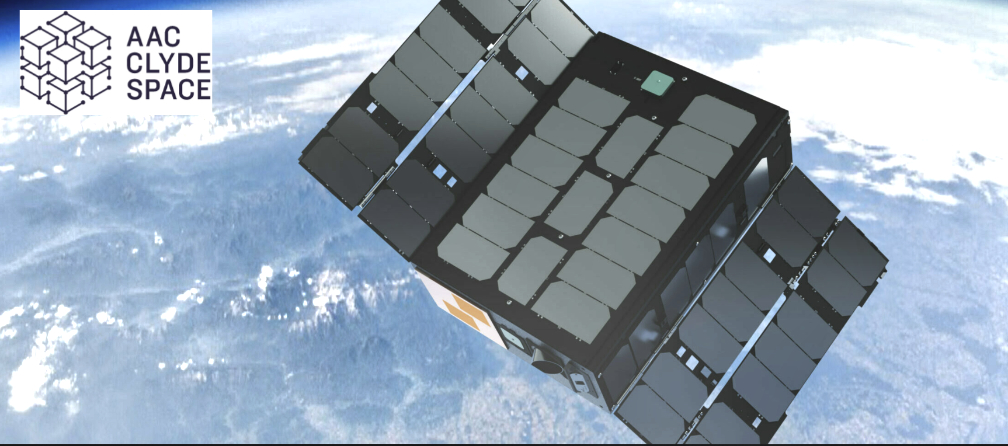
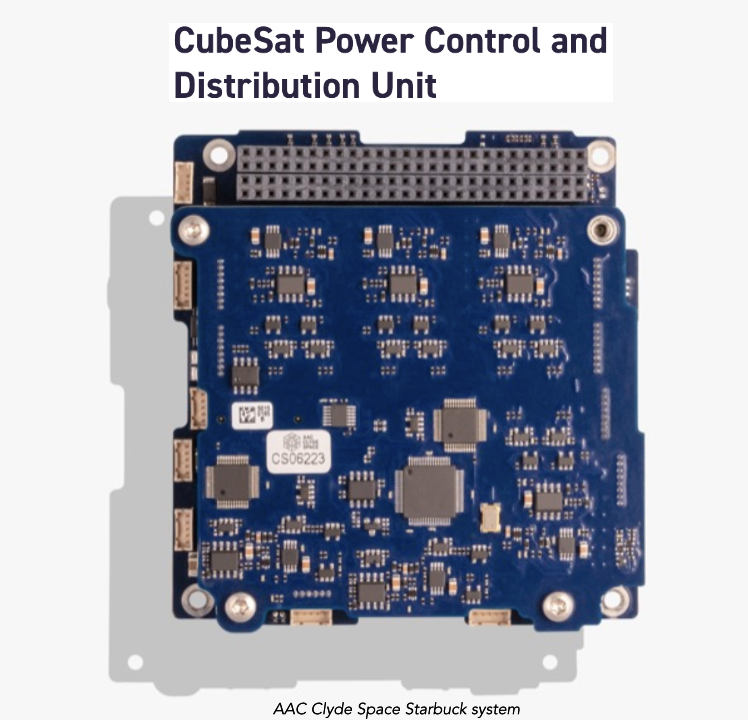
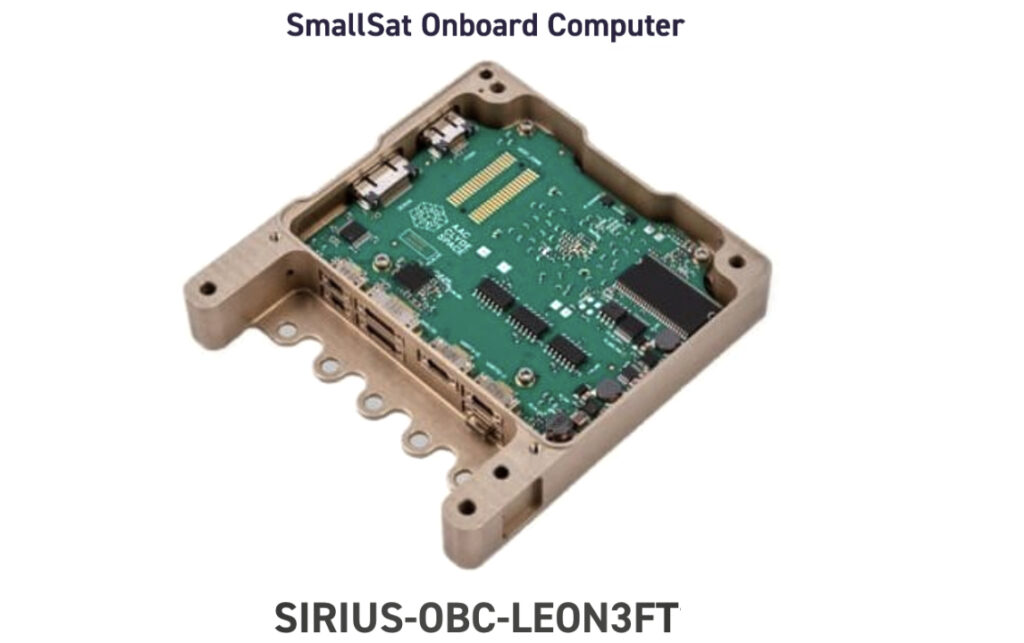
AAC Clyde Space has received orders for the company’s Starbuck power system and Sirius computers from several customers amounting to a total of approximately SEK 20.1 million. The orders are scheduled for delivery from Q4 2023 until mid-2024.

AAC Clyde Space’s SmallSat PCDU (Power Conditioning and Distribution Unit) solutions and Sirius computers have demonstrated impressive capabilities in space, gaining a market reputation for reliability, resiliency and performance. With their modular design, the solutions can be used and adapted for an array of different applications stretching from lunar exploratory and deep space scientific missions to military and commercial constellation applications.

“We are proud to continue to win orders for our Starbuck power systems and Sirius computers. Their proven reliability, modular design, and flexibility are key characteristics for their popularity among our customers. We have had a great start first quarter of 2023 with press released orders amounting to SEK 80.5 million. ” — AAC Clyde Space CEO, Luis Gomes

Filed Under: News

Fleet Space ExoSphere to be used by Atlantic Lithium for a West African geophysical survey

April 4, 2023 by editorial

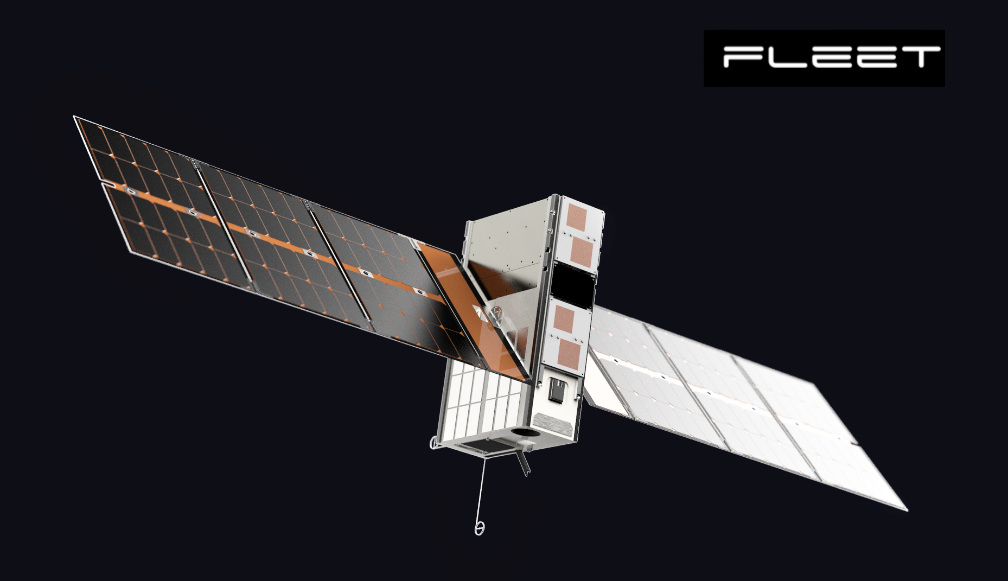
Fleet Space Technologies is engaging with Atlantic Lithium to provide its technology to enable accurate sourcing of lithium pegmatites at the Ewoyaa Lithium Project in Ghana, West Africa — the survey will use Fleet Space’s ExoSphere solution to search for potential, concealed pegmatites within the Ewoyaa footprint.

Atlantic Lithium has already commenced auger drilling as part of its 2023 exploration and resource drilling program in Ghana, and is targeting to start the survey during Q2 2023. The company has also initiated a 100 x 100m grid soil geochemistry survey over the Cape Coast license ahead of target definition. The survey is expected to provide additional insights into the potential of the project area and the broader 560km-square Cape Coast Lithium portfolio.

Fleet Space’s ExoSphere solution has been successfully deployed on lithium pegmatite targeting with Core Lithium, based at their Finnis Project in the Northern Territory, Australia. The company’s ExoSphere solution is expected to provide valuable data for Atlantic Lithium’s exploration efforts in Ghana.

“We are thrilled to be working with Atlantic Lithium to provide our cutting-edge ExoSphere solution for their Ewoyaa Lithium Project. Our technology has a proven track record in successful lithium pegmatite targeting, and we are confident that it will deliver valuable insights to Atlantic Lithium’s exploration efforts in Ghana. As we strive to reach net-zero goals, the sourcing of critical minerals like lithium becomes increasingly important, and we are proud to be part of the solution by providing advanced technologies that help unlock these valuable resources.” — Flavia Tata Nardini, CEO & Co-Founder, Fleet Space Technologies

“The objectives of these significant 2023 exploration and resource drilling programs are to test for concealed pegmatites within the immediate Resource footprint, improve Resource confidence, add potential tonnes to the current MRE and expand the regional exploration pipeline of targets. We are excited to have engaged Fleet Space Technologies to complete a passive seismic geophysical survey, using the ExoSphere solution, over the Ewoyaa footprint looking for potential concealed pegmatites.” — Atlantic Lithium Interim CEO, Lennard Kolff

Filed Under: News

UPDATE 5: No further delays… SDA’s Tranche 0 mission launched by SpaceX to LEO via Falcon 9 — SDA info regarding the launch

April 3, 2023 by editorial

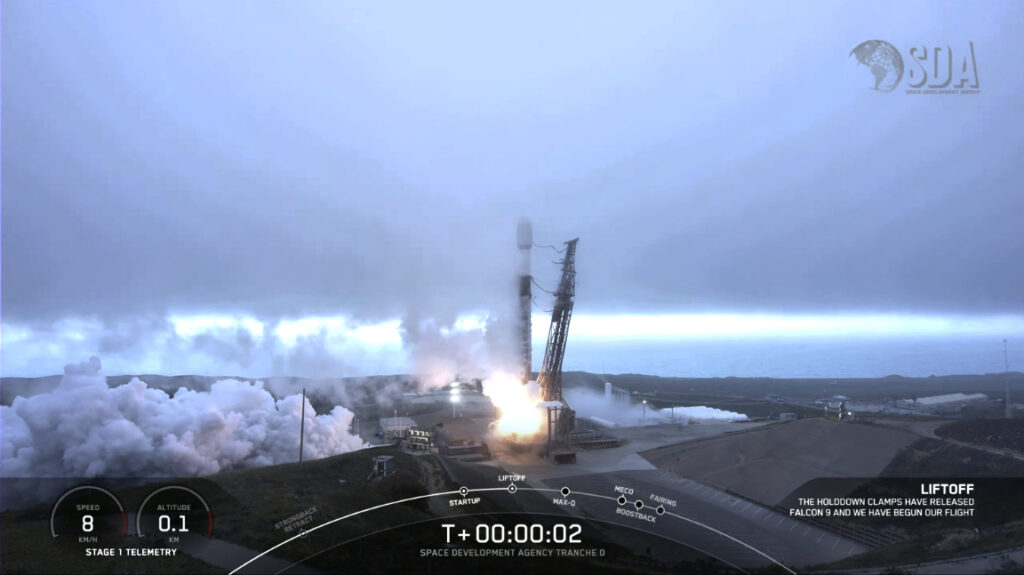
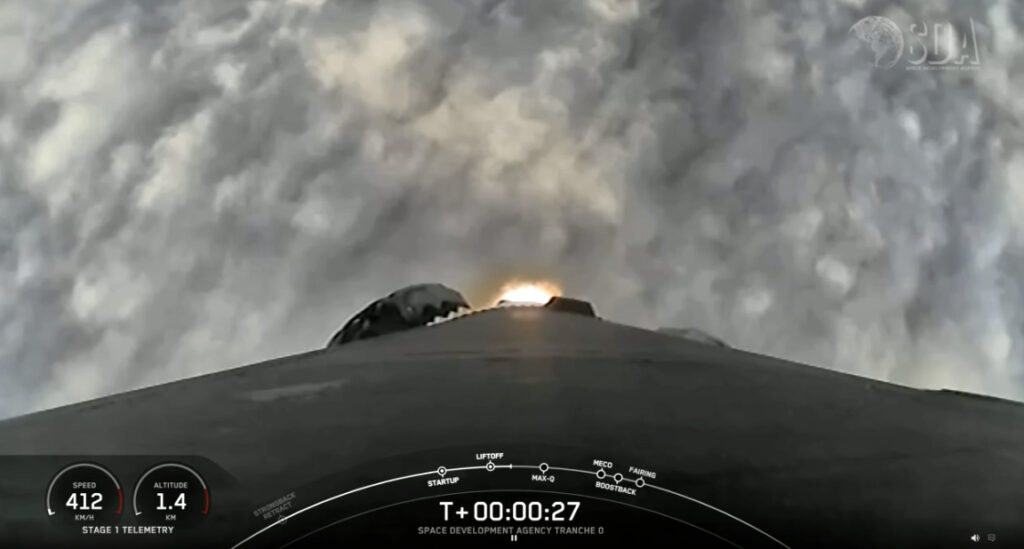
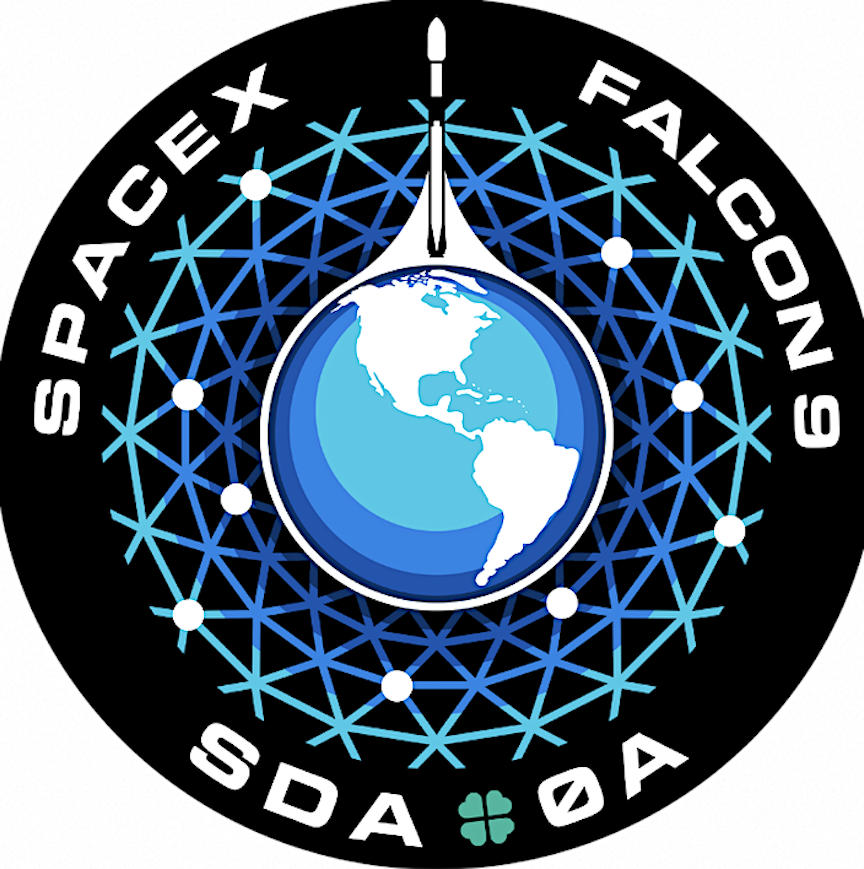
SpaceX successfully launched the Space Development Agency’s Tranche 0 mission via a Falcon 9 rocket on Sunday, April 2nd., at 7:29 a.m., PT (14:29 UTC).

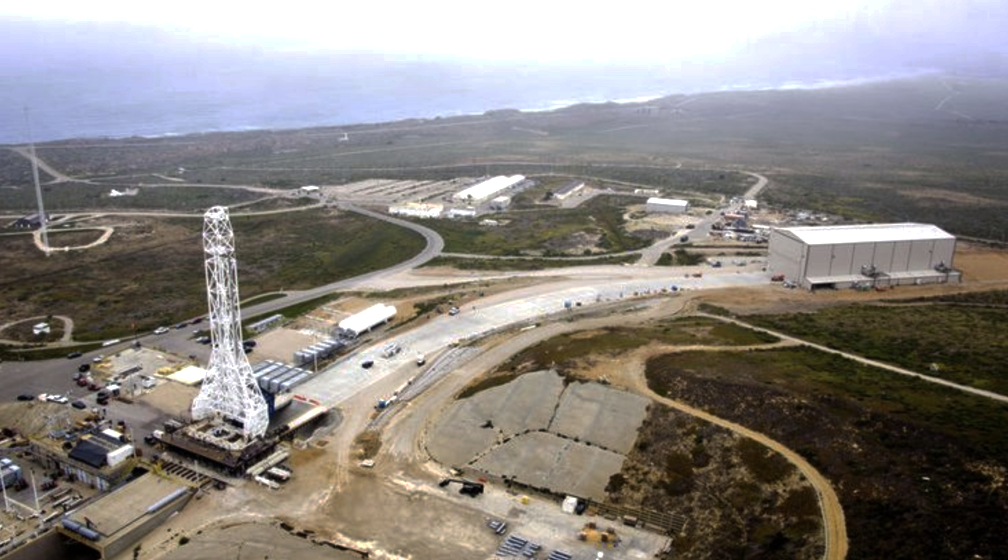
This national security payload was dispatched to LEO from Space Launch Complex 4E (SLC-4E) at Vandenberg Space Force Base in California (VSFB).

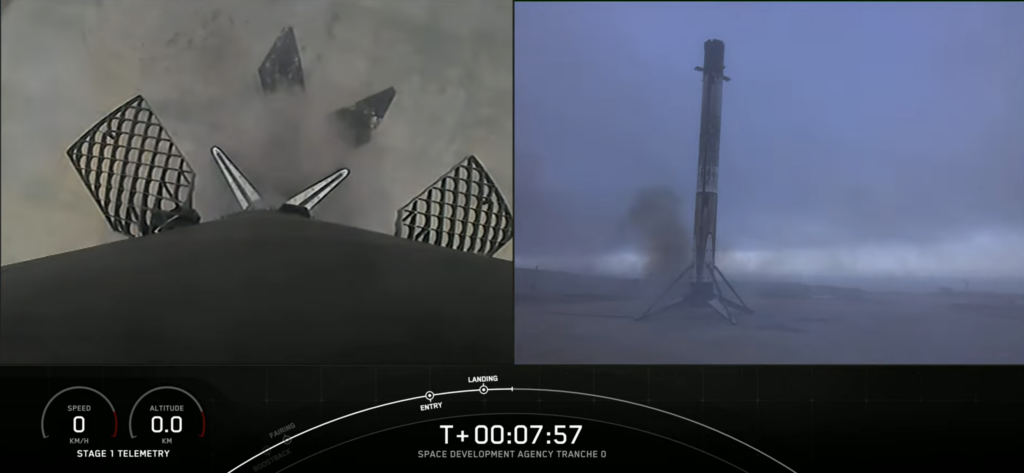
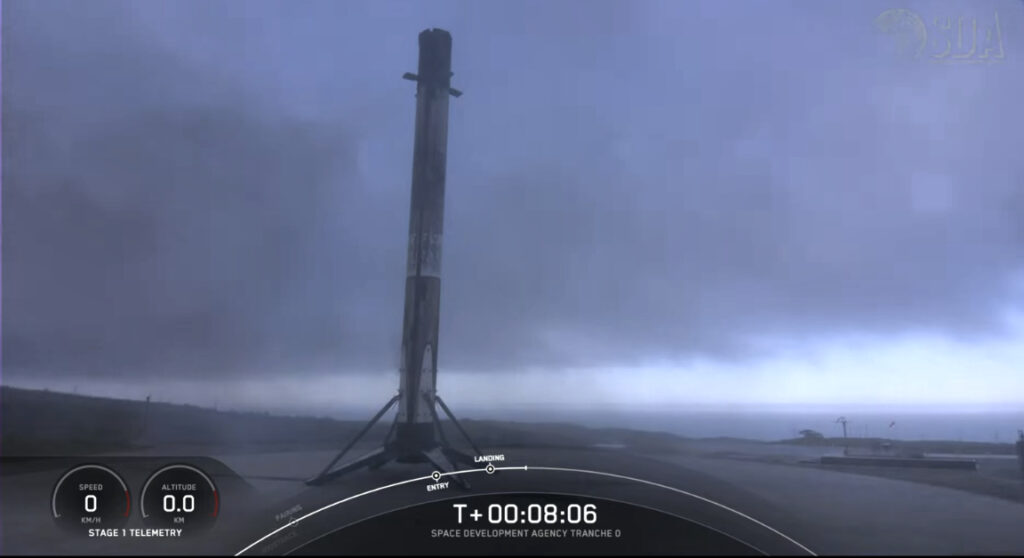
The first stage booster that supported this mission previously landed (photo below) without problem on LZ-4 at VSFB.

Space Development Agency Tranche 0 satellites launch

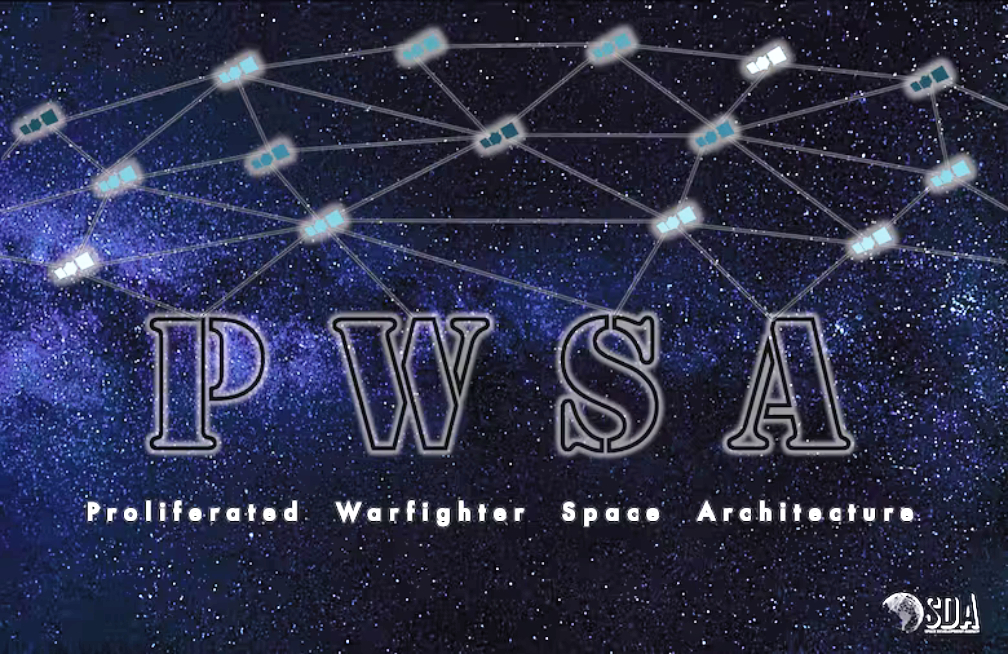
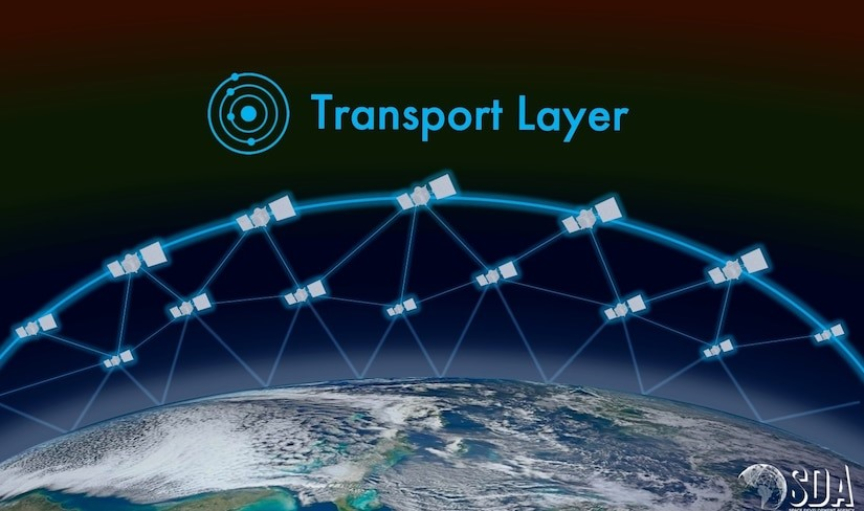
The Space Development Agency (SDA) successfully launched the Tranche 0 (T0) of the Proliferated Warfighter Space Architecture (PWSA), the Transport and Tracking Layer satellites that will demonstrate the low-latency communication links to support the warfighter with a resilient network of integrated capabilities, including tracking of advanced missile threats, from low-Earth orbit (LEO).

A SpaceX Falcon 9 reusable, two stage rocket from Vandenberg Space Force Base, California, launched the first 10 of the planned 28 satellites. Once completed, Tranche 0 will include 20, optically-connected, data transport satellites and eigh,t optically-connected, missile warning/missile tracking satellites equipped with wide-field-of-view sensors. A second SDA launch of Tranche 0 satellites is scheduled for June.

The launch, originally scheduled for March 30, was delayed out of an abundance of caution to investigate technical issues with the launch vehicle. This T0 Launch carried 10 satellites. York Space Systems provided eight Transport and SpaceX provided two Tracking satellites. To fully populate Tranche 0, York Space Systems and Lockheed Martin will produce 10 Transport satellites each, for a total of 20, T0, Transport satellites. SpaceX and L3Harris will provide four Tracking satellites each for a total of eight T0 satellites. Tranche 0 ground support is provided by the U.S. Naval Research Laboratory.

SDA awarded firm-fixed-price contracts for T0 satellites, resulting in a cost of approximately $15 million per Transport satellite, and is fielding the constellation approximately 30 months after authority-to-proceed on each contract.

The T0 demonstration constellation will fly in two orbital planes at an altitude of approximately 1,000 km. Once on-orbit, the satellites must undergo a period of test and checkout of the bus and mission payloads before demonstrations can begin.

The constellation will serve as the warfighter immersion tranche and support military exercises, including advanced missile tracking tests, in the summer of 2023 and beyond. Tranche 0 will demonstrate the feasibility of the following:

  • Low latency data connectivity
  • Beyond line of sight targeting
  • Missile warning/missile tracking
  • On-orbit fusion
  • Multi-phenomenology ground-based sensor fusion

SDA plans to field the first operational generation of the PWSA, Tranche 1, starting in late 2024. Tranche 1 will include 126 Transport Layer satellites, 35 Tracking satellites, and 12 tactical demonstration satellites (called T1DES). Tranche 1 will be operated by SDA’s groundbreaking space operations centers based heavily on commercial space operations models.

“This is a major accomplishment for SDA and for the whole Department of Defense. It shows that our key pillars, proliferation and spiral development, can deliver for national security space. Through this launch, we’ve demonstrated that SDA can keep a schedule to deliver enhanced capabilities every two years. This revolutionary approach is enabled by growth in the commercial marketplace, allowing the PWSA to move forward to deliver warfighting capabilities in each future tranche.” — Derek Tournear, director of SDA

SDA transferred to U.S. Space Force as a direct reporting unit in October 2022. SDA brings a unique acquisition strategy that enables faster and cheaper capability delivery by designing and rapidly deploying a threat-driven resilient constellation of small satellites in LEO. SDA programs provide an integral part of the national security hybrid space architecture in the areas of communications, data transport, and missile warning.

Previous information postings…

UPDATE 3: SpaceX is now targeting Sunday, April 2 at 7:29 a.m. PT (14:29 UTC) for a Falcon 9 launch of the Space Development Agency’s Tranche 0 mission to low-Earth orbit from Space Launch Complex 4E (SLC-4E) at Vandenberg Space Force Base in California. If needed, a backup launch opportunity is available Monday, April 3 at the same time.

Previously:
UPDATE 2: SpaceX is targeting no earlier than Saturday, April 1 for a Falcon 9 launch of the Space Development Agency’s Tranche 0 mission to low-Earth orbit from Space Launch Complex 4E (SLC-4E) at Vandenberg Space Force Base in California.

UPDATE: Orders came, “Abort, abort, abort,” as the Tranche 0 launch scrubbed at T-3.
SpaceX is now targeting Friday, March 31 at 7:29 a.m. PT (14:29 UTC) for a Falcon 9 launch of the Space Development Agency’s Tranche 0 mission to low-Earth orbit from Space Launch Complex 4E (SLC-4E) at Vandenberg Space Force Base in California. The next launch attempt is set for early Thursday. The first stage booster supporting this mission previously launched one Starlink mission. Following stage separation, the first stage will land on Landing Zone 4 (LZ-4) at Vandenberg Space Force Base.

The space vehicles launched during this mission will serve a part of SDA’s Proliferated Warfighter Space Architecture, a new layered network of satellites in low-Earth orbit and supporting elements that will provide global military communication and missile warning, indication, and tracking capabilities.

A live webcast of this mission will begin about 15 minutes prior to liftoff.

Previously:
SpaceX is targeting Thursday, March 30th., at 7:29 a.m., PT, (14:29 UTC) for a Falcon 9 launch of the Space Development Agency’s Tranche 0 mission to LEO from Space Launch Complex 4E (SLC-4E) at Vandenberg Space Force Base in California.

If needed, a backup opportunity is available on Friday, March 31st., at the same time.

The first stage booster supporting this mission previously launched one Starlink mission.

Following stage separation, the first stage will land on Landing Zone 4 (LZ-4) at Vandenberg SFB.

The space vehicles launched during this mission will serve a part of SDA’s Proliferated Warfighter Space Architecture, a new layered network of satellites in LEO and supporting elements that will provide global military communication and missile warning, indication, and tracking capabilities.

A live webcast of this mission will begin about 15 minutes prior to liftoff … watch via this direct link…

Filed Under: Featured, News

Unseenlabs to launch their BRO-9 vessel geolocation smallsat

April 3, 2023 by editorial

Unseenlabs, a world radio frequency data and solutions provider for Maritime Domain Awareness, is announcing the coming launch of BRO-9, the 9th satellite of the company’s constellation that is dedicated to the geolocation of all the vessels at sea.

Artistic rendition of the Unseen Labs BRO-9 smallsat, courtesy of the company.

BRO-9 will be launched in April of 2023 as part of the SpaceX Transporter-7 Mission aboard Falcon 9 from Vandenberg Space Force Base (VSFB) in California. This launch is a step forward for the development of Unseenlabs.

Unseenlabs provides solutions for maritime surveillance, based on exclusive RF data to allow the geolocation and characterization of any type of vessel anywhere around the globe. Many public and private customers (French Navy, NGOs, marine insurers, etc.) are already using these solutions.

“The launch of BRO-9 is an important milestone for Unseenlabs and our solutions’ ongoing development, the most advanced in the industry. Our one-of-a-kind technology allows our customers to make informed strategic decisions to protect their assets and preserve ocean biodiversity.” — Jonathan Galic, CTO and co-founder of Unseenlabs

“BRO-9 will strengthen our capabilities to detect and track vessels — including uncooperative ones — and to fight against unlawful activities at sea (IUU fishing, smuggling, piracy, marine pollution, etc.). Unlike conventional maritime surveillance systems, our technology is limitless: at any time of the day or night, anywhere on the globe, and in any weather conditions, we can detect all the vessels navigating at sea, even those willing to go uncovered. We are convinced that our solutions offer significant added value to our customers, and contribute to creating safer oceans and seas for all.” — Clément Galic, CEO and co-founder of Unseenlabs

Filed Under: News

  • « Go to Previous Page
  • Page 1
  • Interim pages omitted …
  • Page 40
  • Page 41
  • Page 42
  • Page 43
  • Page 44
  • Interim pages omitted …
  • Page 60
  • Go to Next Page »

Primary Sidebar

WEEKLY NEWSLETTER

Archives

  • June 2026
  • May 2026
  • April 2026
  • March 2026
  • February 2026
  • January 2026
  • December 2025
  • November 2025
  • October 2025
  • September 2025
  • August 2025
  • July 2025
  • June 2025
  • May 2025
  • April 2025
  • March 2025
  • February 2025
  • January 2025
  • December 2024
  • November 2024
  • October 2024
  • September 2024
  • August 2024
  • July 2024
  • June 2024
  • May 2024
  • April 2024
  • March 2024
  • February 2024
  • January 2024
  • December 2023
  • November 2023
  • October 2023
  • September 2023
  • August 2023
  • July 2023
  • June 2023
  • May 2023
  • April 2023
  • March 2023
  • February 2023
  • January 2023
  • December 2022
  • November 2022
  • October 2022
  • September 2022
  • August 2022
  • July 2022
  • June 2022
  • May 2022
  • April 2022
  • March 2022
  • February 2022
  • January 2022
  • December 2021
  • November 2021
  • October 2021
  • September 2021
  • August 2021
  • July 2021
  • June 2021
  • May 2021
  • April 2021
  • March 2021
  • February 2021
  • January 2021
  • December 2020
  • November 2020
  • October 2020
  • September 2020
  • August 2020
  • July 2020
  • June 2020
  • May 2020
  • April 2020
  • March 2020
  • February 2020
  • January 2020
  • December 2019
  • November 2019
  • October 2019

© 2019–2026 SatNews

Insert/edit link

Enter the destination URL

Or link to existing content

    No search term specified. Showing recent items. Search or use up and down arrow keys to select an item.
      x
      Sign Up Now!

      Enjoy a free weekly newsletter with recent headlines from the global SmallSat industry.

      Invalid email address
      We promise not to spam you. You can unsubscribe at any time.
      Thanks for subscribing! You will now receive weekly SmallSat News updates.
      We love our advertisers.
      And you will too!

      Please disable Ad Blocker to continue... We promise to keep it unobtrusive.
      We promise not to spam you. You can unsubscribe at any time.
      Invalid email address
      Thanks for subscribing!