• Skip to main content
  • Skip to primary sidebar
  • Home
  • News
  • Featured
  • More News ⌄
    • SatNews
    • SatMagazine
    • MilSatMagazine
  • Events ⌄
    • MilSat Symposium
    • SmallSat Symposium
    • Satellite Innovation
  • Contacts
  • SUBSCRIPTION

SmallSat News

You are here: Home / Archives for 2024

Archives for 2024

ESA selects Open Cosmos to build an optical constellation for Greece

May 29, 2024 by editorial

Open Cosmos has gained a €60 million contract to deploy an Earth Observation (EO) constellation consisting of seven satellites that will supply daily high-resolution and very-high-resolution imagery for Greece.

This flagship project forms part of the Hellenic Government‘s procurement of an advanced satellite constellation, demonstrating its commitment to delivering economic and environmental benefits for Greece and European citizens at large. The data collected from this constellation will be instrumental in improving public services such as the land registry, combating sea pollution, and increasing agricultural efficiency.

The seven satellites in the Greek constellation will gather data from a multi-sensor instrument suite in LEO, including very-high resolution optical multispectral and hyperspectral cameras, Internet-of-Things (IoT) and Automatic Identification System (AIS) receivers, complemented by on-board AI to maximize efficiency. The program will be delivered in partnership with the European Space Agency and complement existing systems such as EU Copernicus, while being fully compatible with the Atlantic constellation.

The satellites will be built and operated by Open Cosmos Aegean, a new manufacturing center that will enhance sovereign capabilities in satellite technologies and attract further investment to the country. By overseeing regional sales and complementing other European operations, it will play a crucial role in future European and international programs.

Open Cosmos was founded in 2015 with a mission to address global sustainability challenges by making actionable information from space available to everyone. Part of this vision is the OpenConstellation, a mutualized constellation, set to become the largest shared infrastructure in space. Greece is set to join in this global partnership of nations and companies in the private sector, exchanging valuable data in respect of disaster responses and environmental monitoring.

The Minister of Digital Governance, Mr. Dimitris Papastergiou, said, “Greece is making significant steps in Space. By investing in both capacity-buying and capacity-building space programs, our aim is to stimulate local high-tech space industries, foster job creation, retain our skilled engineers and space experts in the country and attract additional talent. The development of cutting-edge satellite technology will cultivate a sustainable economic framework that integrates advanced science and technology sectors, bolstering long-term economic resilience in the country.”

Rafel Jorda Siquier, Founder and CEO of Open Cosmos, said, “It is an honor to be chosen for such a crucial program for Greece and incredibly proud of the team’s achievement in securing this contract. We faced competition from some of the world’s leading players in the industry, and to win is a true testament to the hard work of everyone at Open Cosmos and the strength of our advanced satellite technology. Delivering this contract will position us at the forefront of satellite data providers, opening up further collaborations and growing the OpenConstellation.”

Simonetta Cheli, director of the Earth Observation programs at ESA, said, “The assignment of the development of the Greek Constellation to Open Cosmos is a proof of the Agency’s continuous commitment in supporting National initiatives from the ESA Member States, in close coordination with the National Authorities and on compressed timescales. ESA has the unique ability to maximise the cross-benefit of all such initiatives by providing a unified framework for observations exchange among and for the benefit of Member States.”

Dr. Maria Kalama, Director of Open Cosmos Aegean, said, “We have created a vibrant ecosystem of suppliers and service providers around us, in every country we are present, and Greece will be no exception. We would like to thank all partners for their contribution to securing this contract, and in particular our main collaborators in Greece, Nova ICT, EMTECH-Space, the Libre Space Foundation, Planetek Hellas, Adamant Composites and Priority consultants.”

Filed Under: News

Ovzon receives 12-months renewal for continued support to UK MoD

May 29, 2024 by editorial

Ovzon has, for the fourth consecutive year, been awarded a 12-months service renewal contract for delivery of Ovzon SATCOM-as-a-Service to the UK MoD.

The order is received from Babcock International, an international defense, aerospace and security company, with the total order value amounts to approximately $1 million.

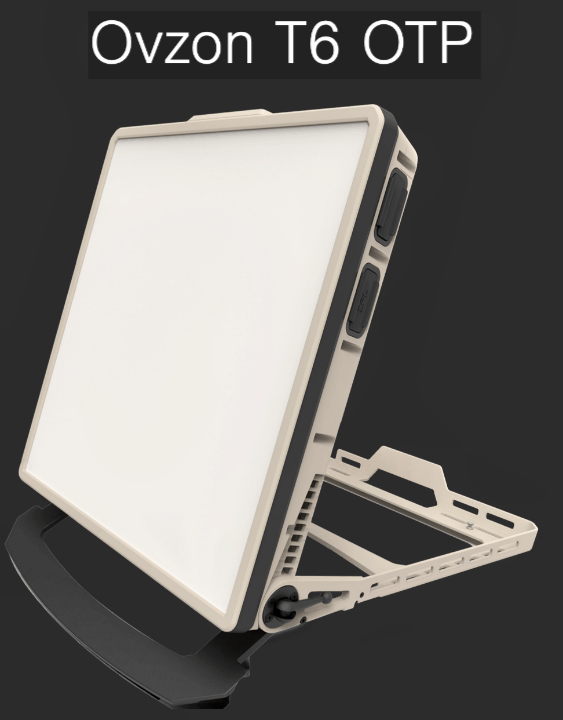
Ovzon’s SATCOM-as-a-Service offering includes high performing and resilient satellite network, and the industry leading Ovzon T6 “On-The-Pause” mobile satellite terminals, as well as gateway services and Ovzon’s dedicated customer service and support. The service is relied upon by the UK and many western governments when resilient, no-fail communications are required.

“We are proud to receive this continuous renewal which is a testament to our longstanding delivery and good relationship with the UK MoD. We are also excited to start a new partnership with Babcock International. It is an honor to, together, continue to support the UK MoD’s critical missions”, said Ovzon’s CEO, Per Norén.

Filed Under: Featured, News

Intelsat multi-orbit IFC coming to Japan Airlines 

May 29, 2024 by editorial

Intelsat has been selected by Japan Airlines to provide multi-orbit, inflight connectivity (IFC) service on more than 20 Boeing 737 MAX aircraft to be delivered in the coming years.

The airline will become one of the first in the Asia-Pacific (APAC) region to offer reliable, multi-orbit service using Intelsat’s new electronically steered array (ESA) antenna (pictured below, courtesy of Intelsat).

The new service will be installed by Boeing in the factory, making JAL one of the first airlines to take delivery of a Boeing aircraft with ESA inflight service ready for immediate passenger use. The first linefit aircraft is expected to be delivered in 2026.

The Intelsat ESA is less than seven centimeters tall and interoperates on both Intelsat’s family of geo-stationary satellites and its partner’s constellation of LEO satellites.

In addition to JAL’s Boeing 737s and 767s flying with 2Ku service, JAL’s subsidiary airline, J-AIR Co., Ltd.. is currently installing Intelsat’s 2Ku system on the carrier’s fleet of Embraer E190 aircraft. As recently announced, J-AIR will complete installation of the 2Ku system on 14 E190s in the coming months. When completed, J-AIR will be the first regional airline in Japan to offer inflight entertainment and connectivity services.

“Japan Airlines’ passengers will soon benefit from multi-orbit connectivity that will provide the same fast and dependable internet access they enjoy at home, thanks to wide coverage and low latency,” said Dave Bijur, Senior Vice President for Commercial Aviation. “JAL was Intelsat’s first non-U.S. commercial aviation customer, and we look forward to continuing to support JAL’s market-leading inflight connectivity service in Japan where their guests enjoy free service.”

“Intelsat has been a trusted partner of JAL since 2013,” said Junko Sakihara, Deputy SVP, Customer Experience Division at Japan Airlines. “We are proud to have been among the first airlines in the world to offer free service for all passengers flying on our domestic routes starting in 2017 and look forward to the greater speed and reliability benefits the new multi-orbit service will bring to our customers.” 

Filed Under: News

Rivada Space Networks announces new APAC partners

May 28, 2024 by editorial

Rivada Space Networks has announced new partners in the Asia Pacific (APAC) region — the company has now lined up more than $9 billion of business across the globe for the company’s LEO network.

As the first unified global communications network, Rivada’s Outernet is transformative. A global low-latency, point-to-point network of 600 LEO satellites, the constellation combines inter-satellite laser links with advanced onboard processing and routing to create a ubiquitous optical mesh network in space. This “orbital network,” in which data stays in space from origin to destination, creates an ultra-secure, private satellite network with pole-to-pole coverage, offering end-to-end latencies much lower than terrestrial fiber over long distances. By routing traffic on a physically separated network, it provides a layer of defense for any enterprise or government organization that needs to securely share data across Asia and beyond.

For Enterprise and Government customers, the key attributes of the outernet are ideal for a variety of applications, for example, to give banks and global companies secured networks with distributed offices, provide significantly more bandwidth for oil & gas exploration than is available today, enable seamless connectivity for shipping and fleet management, or provide 5G satellite backhaul connectivity network expansion for cellular operators. Connectivity providers in Asia can offer a competitive advantage by expanding these markets, enabling new opportunities through secure, multi-gigabit bi-directional performance, combined with worldwide reach.

  • KT SAT – Korea
    KT SAT, Korea’s national satellite communications provider will deploy Rivada’s outernet to provide ultra-secure connectivity to Enterprise, Government and Maritime companies looking for scalable and resilient solutions for their expanding networks. And with Asia’s subsea cables increasingly becoming a focal point of geopolitical tensions, the region now, more than ever, needs resilient infrastructure, which is fast, secure, and reliable.
  • Connecto Network Systems Inc. (CNSI) – Philippines
    Connecto Network Systems Inc. will work with Rivada to improve connectivity for enterprise and government customers across the Philippines, ensuring seamless coverage, even in remote provinces. Connecto is spearheading the transformation of communities into smart cities, harnessing cutting-edge technologies to boost operational efficiency, facilitate public access to information and elevate the quality of government services.
  • NiAT – Brunei
    NiAT is a key provider of connectivity services for the Oil & Gas sector in Brunei. The company is experiencing an increased demand for high bandwidth connectivity from its customer base and sees Rivada’s Outernet as the ideal solution to provide enterprise-grade, secure bandwidth combined with the high availability and guaranteed Service-Level-Agreements which underpins business for premium customers.
  • AT Communications – Japan
    AT Communications provides national agencies with secure communications infrastructure for their sites across Japan and supports telcos with international connectivity. AT Communications will harness the Outernet’s seamless connectivity to ramp up performance, improve security, and increase customer efficiency. Rivada’s Outernet is particularly well suited for the low latency and secure connectivity required by national and local government and defense sectors.
  • Teleport Access Services – Taiwan
    TAS will deploy Rivada’s Outernet to enhance the connectivity infrastructure in Taiwan, providing coverage of remote and underserved areas and ushering in a new era of secure communications and technological innovation. For telecoms services providers, government agencies and media companies, the deployment of LEO satellite services in Taiwan will drive positive change and empower communities through enhanced connectivity.

Declan Ganley, CEO of Rivada Space Networks, said, “We are seeing a huge uptake in our business in Asia, underlining the growing appetite for our unique space-based network. The outernet’s ability to meet the requirements of Asia’s connectivity providers in terms of security, latency, capacity, and coverage is a game-changer for the region. Our completely new type of LEO constellation will provide the whole of Asia with a transformative next-generation infrastructure for secure, resilient communications and network expansion.”

Rivada’s Vice President of Sales for Asia Pacific, Donald Chew, said, “The Outernet is what data communications has been waiting for – a next-generation data infrastructure providing unrivaled secure and resilient connectivity and fueling new opportunities for network expansion.”

Filed Under: News

IQ spacecom + RBC Signals collaborate on Go.BIC

May 27, 2024 by editorial

IQ spacecom and RBC Signals join forces to deliver Go.BIC, the first, dynamic, Global On-Demand, Bi-directional Intersatellite Connection Service, aimed at supporting inter-satellite connections for LEO operators — connectivity for the service will be powered by Viasat’s global, L-band satellite network.

RBC Signals, a pioneering provider of satellite data communication solutions with a vast ground station network, is partnering with IQ spacecom, a product branch of the German IQ Technologies for Earth and Space GmbH, known for its more than 15 years of experience in broadband data communication for small satellites. Together, the companies have launched Go.BIC, a highly flexible service set to support inter-satellite connections for LEO satellites.

Picture L-R: Dr. Wolfgang Weber (Business Development Manager, IQ Technologies), Mathias Reibe (CTO/Head of Engineering, IQ Technologies), Dr. Kurt Winter (CEO, IQ Technologies), Christopher Richins (Founder & Chief Strategy Officer, RBC Signals), Dr. Vassilis Tsiafakis (MD, RBC Signals UK) and Lukas Felderhoff (Sales Engineer, IQ Technologies)

Go.BIC will use dynamic, on-demand capacity from Viasat’s global L-band network of GEO satellites. This first of a kind service ensures real-time allocation of L-band capacity on a global scale, specifically tailored to meet the needs of LEO operators.

The service complements existing ground station networks to extend coverage to previously unconnected regions like remote oceans, bridging communication gaps for satellite operators worldwide and making their satellites reachable at any point of time. This enhances operational efficiency and offers cost-effective telemetry and telecommand options, empowering LEO satellite operators with improved flexibility and control over their missions.

Designed to cater to time-sensitive space applications, Go.BIC facilitates on-demand communication with LEO satellites without waiting for ground station passes. Serving scientific missions, university projects, satellite manufacturers and operators, Go.BIC can facilitate a variety of use cases including satellite tasking (TM/TC), scheduled data transmission, natural disaster monitoring, real-time satellite maneuvering, and backup communications.

Go.BIC is powered by IQ spacecom’s
XLink-L SDR platform and its L-band patch antennas onboard the LEO satellite, combined with RBC Signals’ ground station infrastructure and Spectrum Trading Orchestration and Resource Management (STORM) platform.

In January, IQ spacecom, RBC Signals and Viasat successfully completed Over-the-Air tests: a pivotal milestone in validating the robustness and reliability of this solution. This lays the foundation for widespread adoption and deployment.

The next phase includes an In-Orbit Demonstration mission with the XLink-L platform that is slated for later in 2024.

Dr. Kurt Winter, CEO of IQ Technologies, said, “We firmly believe that this solution represents a significant step forward in advancing satellite communication capabilities and will meet the evolving demands of the global market.”

Ron Faith, CEO of RBC Signals, said, “This collaboration represents a milestone in small satellite communications. By combining both our industry expertise with Viasat’s L-band network, we will significantly enhance the capabilities of the industry.”

Andy Kessler, Vice President, Viasat Enterprise and Land Mobile, said “Our connectivity can help operators work more safely, sustainably, efficiently, and with assured security. It’s exciting to see innovative partners like IQ spacecom and RBC Signals bringing that reliable connectivity to every domain – including now Low Earth Orbit.”

IQ Technologies for Earth and Space GmbH (former IQ wireless GmbH), headquartered in Berlin, Germany, is a well-established business for more than 20 years with two main innovative business units: IQ FireWatch and IQ spacecom. IQ FireWatch provides a terrestrial early detection system of fires in forests, outdoor industrial facilities, and wildland-urban interfaces.

IQ spacecom comprises high-performance radio communication solutions providing flexible and highly efficient broadband data communication for small satellites, such as CubeSats. The equipment has been qualified for several years of operation in LEO and is used for scientific missions, Earth observation, remote sensing and communication solutions. Outstanding hardware and software platforms enable a fast, flexible and reliable adaptation to customer-specific requirements. More than 50 employees are constantly developing the products and optimizing them to meet the needs of the customers, in order to be able to provide solutions for complex requirements of the future. The technical innovations of IQ Technologies for Earth and Space GmbH are researched, developed, manufactured, and tested at the headquarters in Berlin.

RBC Signals is an innovative provider of global satellite data communication products and solutions. They offer secure space communication solutions in every major frequency band, utilizing a worldwide network of both company-owned and partner-owned systems. RBC Signals delivers dynamic solutions offering affordability, flexibility, and resiliency. Their diverse products and services enable them to be a complete end-to-end solution provider for every organization that needs best-in-class multi-network solutions.

Viasat is a global communications company that believes everyone and everything in the world can be connected. With offices in 24 countries around the world, our mission shapes how consumers, businesses, governments and militaries around the world communicate and connect. Viasat is developing the ultimate global communications network to power high-quality, reliable, secure, affordable, fast connections to positively impact people’s lives anywhere they are—on the ground, in the air or at sea, while building a sustainable future in space. In May 2023, Viasat completed its acquisition of Inmarsat, combining the teams, technologies and resources of the two companies to create a new global communications partner.

Filed Under: Featured, News

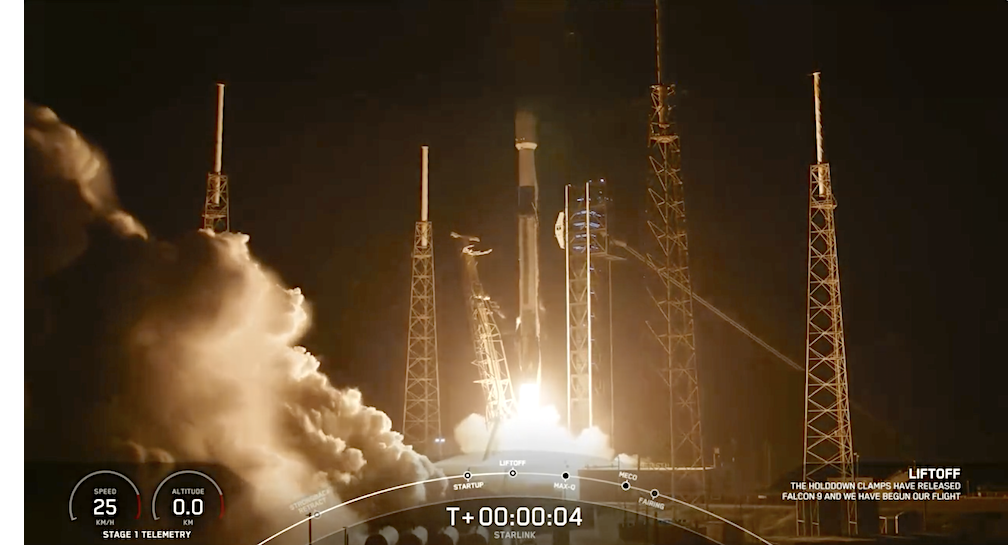
SpaceX’s hat trick succeeds with two same-day launches and one today on 5th anniversary of first Starlink launch

May 24, 2024 by editorial

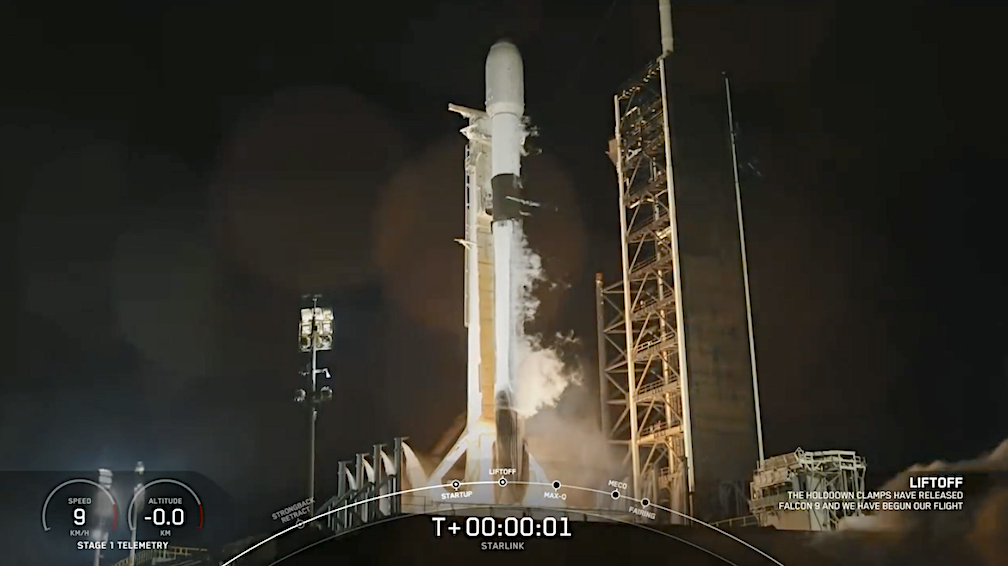
Photo captured on Thursday, May 23, by Satnews from SpaceX video stream.

SpaceX Falcon 9 launched 23 Starlink satellites to low-Earth orbit from Launch Complex 39A (LC-39A) at NASA’s Kennedy Space Center in Florida at 10:45 p.m. ET. This was the third launch in two days. The Starlink 6-63 mission was also notable as it occurred on the fifth anniversary of the first dedicated Starlink launch, Starlink v0.9 on May 23, 2019.

SpaceX sent another batch of 23 Starlink smallsats off on May 22 aboard Falcon 9 to low-Earth orbit from Launch Complex 39A (LC-39A) at NASA’s Kennedy Space Center in Florida at 10:35 p.m. which was the second mission in less than 24 hours for the company when earlier on Wednesday morning NROL146 was launched from Vandenberg in California.

Photo captured on Thursday, May 23, by Satnews from SpaceX video stream.

This is the 13th flight for the first stage booster supporting this mission, which previously launched Crew-5, GPS III Space Vehicle 06, Inmarsat I6-F2, CRS-28, Intelsat G-37, NG-20, and six Starlink missions. Following stage separation, the first stage landed on the Just Read the Instructions droneship, stationed in the Atlantic Ocean.

SpaceX’s hat trick with two launches down yesterday and one today

This image has an empty alt attribute; its file name is Screen-Shot-2024-05-22-at-11.48.42-PM.png

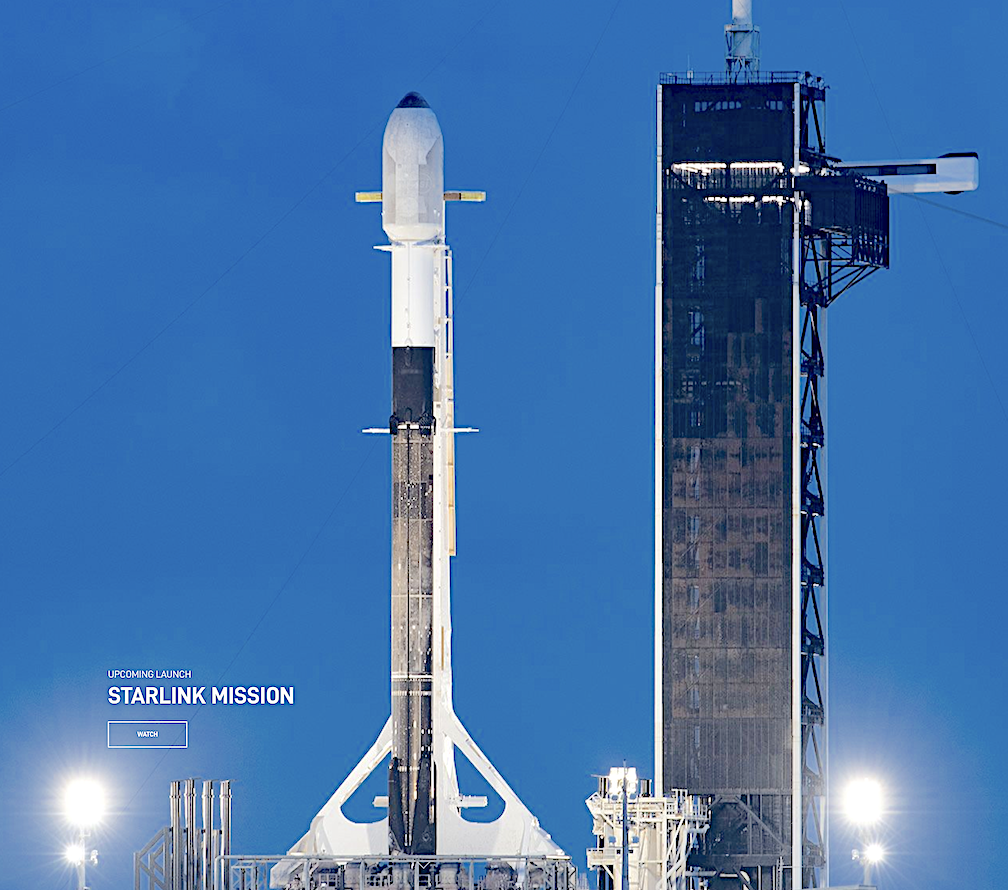
SpaceX is targeting Thursday, May 23 for a Falcon 9 launch of 23 Starlink satellites to low-Earth orbit from Launch Complex 39A (LC-39A) at NASA’s Kennedy Space Center in Florida. Liftoff is targeted for 10:45 p.m. ET, with backup opportunities available until 10:13 p.m. ET. If needed, additional opportunities are also available on Friday, May 24 starting at 6:26 p.m. ET.

A live webcast of this mission will begin on X @SpaceX about five minutes prior to liftoff. Watch live.

This is the 13th flight for the first stage booster supporting this mission, which previously launched Crew-5, GPS III Space Vehicle 06, Inmarsat I6-F2, CRS-28, Intelsat G-37, NG-20, and six Starlink missions. Following stage separation, the first stage will land on the Just Read the Instructions droneship, which will be stationed in the Atlantic Ocean.

SpaceX’s second launch in under 24 on two coasts

This image has an empty alt attribute; its file name is Screen-Shot-2024-05-22-at-11.33.17-PM-1.png
Photo captured on Wednesday, May 22, by Satnews from SpaceX video stream.

UPDATE SpaceX launches NROL146 on next gen spy mission sending the first reconnaissance satellite constellation

This image has an empty alt attribute; its file name is Screen-Shot-2024-05-22-at-12.14.44-PM.png

The NROL146 launch was obscured with heavy fog early in the morning at Vandenberg.Photo captured on Wednesday, May 22, by Satnews from SpaceX video stream.

Filed Under: Featured, News

Satellite-based sensors provide valuable data for pipeline monitoring, crop production and more

May 23, 2024 by editorial

ISS National Lab Plays Key Role in Advancing Startup’s Sensor Technology

View of the NREP through a window in the Japanese Experiment Module, nicknamed Kibō.

Using satellite-based hyperspectral sensors that can capture images of Earth beyond the visible light we can see with our eyes, startup Orbital Sidekick provides valuable global monitoring services to customers around the world.

So far, the company has launched five commercial satellites, two of which were placed into orbit in March, and the company has plans to launch a sixth later this year. Co-founder and CEO Dan Katz attributes much of the company’s success to leveraging the International Space Station (ISS) National Laboratory to test its new sensor technology.

Hyperspectral imaging can reveal the presence of specific chemicals and materials in an area, providing important insights into things like pipeline leaks, crop health, wildfire risk, and materials for mining. To test its new hyperspectral sensor technology, Orbital Sidekick launched its sensor to the ISS, where it was installed on the Nanoracks External Platform (NREP) mounted to the exterior of the orbiting laboratory.

An article in the latest issue of Upward, official magazine of the ISS National Lab, tells the story of Orbital Sidekick and what’s possible through research and technology development on the space station.

Following its ISS National Lab-sponsored investigation, Orbital Sidekick raised nearly $50 million in investment dollars and signed more than a dozen large energy companies for pipeline monitoring services. The company plans to expand its satellite constellation to include 14 satellites, allowing Orbital Sidekick to monitor millions of miles of pipeline around the globe on a weekly basis.

Katz commented on the value of the company’s ISS research in Upward and said, “It allowed us to focus our resources on what’s really driving value for our company, which is our intelligence platform, analytics engine, and product development for our end user—that’s what’s important for our commercialization effort. The mission was wildly successful and really set the table for everything we’re doing today with our commercial satellites.”

Filed Under: News

DoD extends Sidus Space + L3Harris Mentor-Protégé Program

May 23, 2024 by editorial

Sidus Space, Inc. (NASDAQ: SIDU) announced that the Department of Defense (DoD) Mentor-Protégé Program (MPP) relationship with L3Harris Technologies (NYSE:LHX) has been extended for an additional year.

The DoD Mentor-Protégé Program was designed to foster partnerships between established defense contractors and smaller, emerging businesses, to help them expand their footprint in the defense industry.

“We had a successful year in the program with L3Harris, and are eager to deepen our partnership, focused on supporting government customers,” said Carol Craig, Founder and CEO of Sidus Space. “The L3Harris Space and Airborne Systems segment and Sidus Space are both located on Florida’s Space Coast which we see as advantageous for further strengthening our relationship.”

The Sidus-L3Harris MPP agreement was extended through March 31, 2025.

Filed Under: News

Inmarsat launches NexusWave maritime comms network service

May 22, 2024 by editorial

Inmarsat Maritime, a Viasat company, has launched NexusWave, a fully managed connectivity service underpinned by a ‘bonded’ multi-dimensional network, offering high-speed connectivity, unlimited data, global coverage, and ‘secure by design’ infrastructure.

Delivered by a single provider, NexusWave is a fully managed service that seamlessly integrates multiple high-speed networks in real time – Global Xpress (GX) Ka-band, LEO services, and as-available coastal LTE service – with an additional layer of L-band for resiliency – for fast, always-on connectivity. The solution also offers enterprise grade firewall security trusted by global enterprises and governments.

The future-proof NexusWave will also integrate the next-generation ultra-high capacity high-speed ViaSat-3 Ka-band service, following expected entry into service in 2025. As a unified solution, NexusWave ensures managed performance levels regardless of the vessel’s location or requirements, while providing complete transparency on total cost of ownership – with no unexpected charges.

Designed to provide an unparalleled experience in line with evolving customer needs, the new service supports digitization and crew welfare initiatives by transforming ships into floating offices and homes.

Supported globally and fully managed by Inmarsat, NexusWave comes with top-tier technical assistance and guidance derived from decades of experience. The solution will be continuously enhanced over time, in line with Inmarsat’s commitment to delivering excellence.

Ben Palmer OBE, President, Inmarsat Maritime, said, “Maritime operators face ever-growing demand for data consumption and speeds on board their vessels, coupled with the operational challenges of connecting worldwide while ensuring the security and efficiency of their communications. Meeting all these requirements typically relies on multiple, disjointed solutions, resulting in a complex patchwork of data caps, speeds, and coverage, in addition to unverifiable cyber security. At a time when reliable communications are a competitive advantage, maritime operators are seeking a value proposition tailored to their needs and rooted in high performance, certainty, and targeted outcomes. This is where NexusWave fulfils all of those demands, and more. Truly a game-changer in maritime communications, the new solution gives our customers the confidence to operate on their own terms, anywhere in the world, with complete peace of mind. Our combination with Viasat last year brought together the extraordinary people, innovation capabilities, and network assets of both businesses, creating a synergy that has been integral to the development of NexusWave – through which we will ensure unmatched connected confidence for our customers well into the future.”

Filed Under: News

SWISSto12 supplies Radio Frequency products for Northrop Grumman’s GEOStar-3 commercial satellite program

May 21, 2024 by editorial

St12 RF Solutions, the US entity of the manufacturer of advanced satellite products, payloads and Radio Frequency (RF) systems SWISSto12,  has developed, qualified and delivered three fully-integrated RF Antenna Feed Chains in various bands for a Northrop Grumman commercial GEOStar-3 satellite program. SWISSto12 completed the qualification program in January 2024, delivering the three integrated feed chains to Northrop Grumman for payload integration.

The space-qualification and shipment of SWISSto12’s RF Antenna Feed Chains to Northrop Grumman represents a significant milestone in the availability of next-generation RF payload solutions. SWISSto12’s RF Feed Chains are designed as fully-integrated monolithic assemblies; including diplexers, filters, polarizers, horn apertures and mechanical interfaces 3D printed as a single-piece assembly. SWISSto12’s proprietary Radio Frequency Additive Manufacturing (RFAM) processes allow for design optimization to minimize size and weight, while successfully meeting the stringent RF performance and qualification requirements established for this Northrop Grumman’s commercial GEOStar-3 program.

SWISSto12 has pioneered the development of advanced Additive Manufacturing technology for RF applications since 2011, creating strong momentum in the aerospace industry. Previously, RF product designs were constrained by manufacturing limitations impacting performance, weight, size, and cost competitiveness. SWISSto12’s RFAM technology enables the production of highly complex, intricate and non-conventional product designs which were previously not achievable. Through optimized manufacturing tolerances, surface finishes, plating techniques, and RF designs, SWISSto12 can deliver advanced RF performance, size, and weight savings while maintaining product competitiveness.

Scott Wolf, Managing Director of St12 RF Solutions, the US entity of SWISSto12, said, “SWISSto12 is delighted to announce this first delivery to Northrop Grumman of cutting-edge Radio Frequency Antenna Feed Chains for one of its commercial GEOStar-3 programs. Our novel Radio Frequency Additive Manufacturing capabilities coupled with advanced monolithic designs enabled by 3D printing have created a new benchmark in Antenna Feed Chain size, weight and performance. Our Radio Frequency Additive Manufacturing and HummingSat geostationary SmallSat businesses have delivered over $200 million in customer orders to date, validating  our mission to push the limits of existing payload capabilities to better protect and connect every corner of the world.”

Filed Under: News

  • « Go to Previous Page
  • Page 1
  • Interim pages omitted …
  • Page 22
  • Page 23
  • Page 24
  • Page 25
  • Page 26
  • Interim pages omitted …
  • Page 42
  • Go to Next Page »

Primary Sidebar

WEEKLY NEWSLETTER

Archives

  • August 2026
  • July 2026
  • June 2026
  • May 2026
  • April 2026
  • March 2026
  • February 2026
  • January 2026
  • December 2025
  • November 2025
  • October 2025
  • September 2025
  • August 2025
  • July 2025
  • June 2025
  • May 2025
  • April 2025
  • March 2025
  • February 2025
  • January 2025
  • December 2024
  • November 2024
  • October 2024
  • September 2024
  • August 2024
  • July 2024
  • June 2024
  • May 2024
  • April 2024
  • March 2024
  • February 2024
  • January 2024
  • December 2023
  • November 2023
  • October 2023
  • September 2023
  • August 2023
  • July 2023
  • June 2023
  • May 2023
  • April 2023
  • March 2023
  • February 2023
  • January 2023
  • December 2022
  • November 2022
  • October 2022
  • September 2022
  • August 2022
  • July 2022
  • June 2022
  • May 2022
  • April 2022
  • March 2022
  • February 2022
  • January 2022
  • December 2021
  • November 2021
  • October 2021
  • September 2021
  • August 2021
  • July 2021
  • June 2021
  • May 2021
  • April 2021
  • March 2021
  • February 2021
  • January 2021
  • December 2020
  • November 2020
  • October 2020
  • September 2020
  • August 2020
  • July 2020
  • June 2020
  • May 2020
  • April 2020
  • March 2020
  • February 2020
  • January 2020
  • December 2019
  • November 2019
  • October 2019

© 2019–2026 SatNews

Insert/edit link

Enter the destination URL

Or link to existing content

    No search term specified. Showing recent items. Search or use up and down arrow keys to select an item.
      x
      Sign Up Now!

      Enjoy a free weekly newsletter with recent headlines from the global SmallSat industry.

      Invalid email address
      We promise not to spam you. You can unsubscribe at any time.
      Thanks for subscribing! You will now receive weekly SmallSat News updates.
      We love our advertisers.
      And you will too!

      Please disable Ad Blocker to continue... We promise to keep it unobtrusive.
      We promise not to spam you. You can unsubscribe at any time.
      Invalid email address
      Thanks for subscribing!