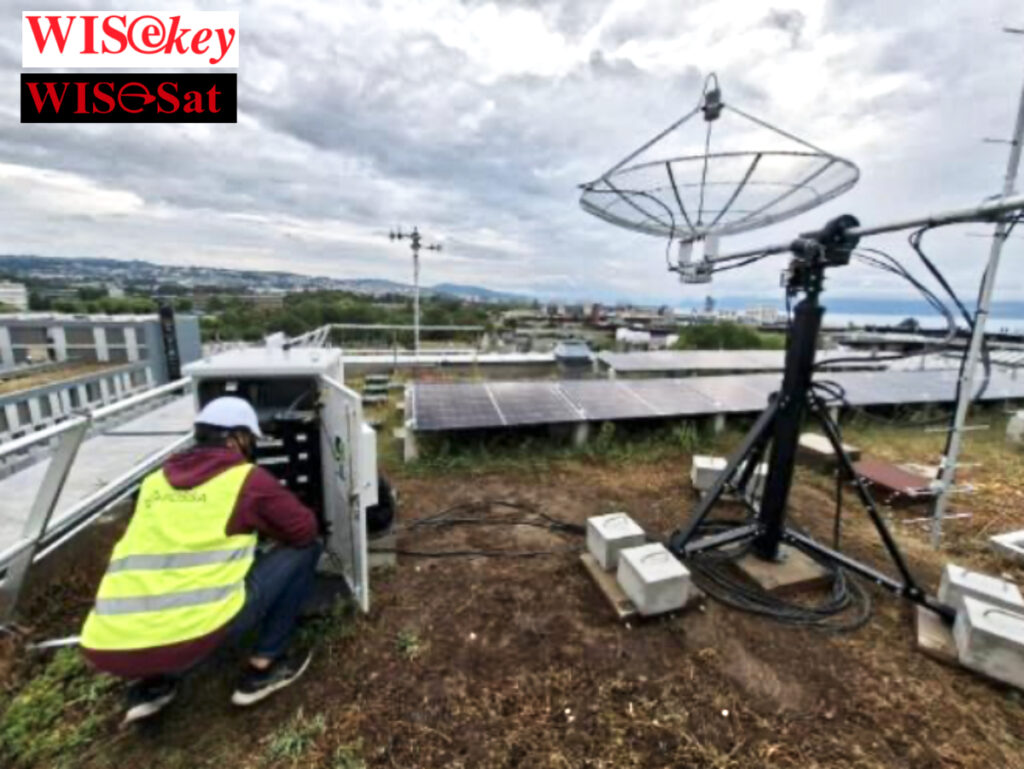
WISeKey International Holding Ltd. (SIX: WIHN, NASDAQ: WKEY) has announced that the company’s subsidiary, WISeSat AG, which focuses on space technology for secure SATCOM, specifically for IoT applications, has successfully installed its third ground station, located near Ecublens, in the Lausanne region of Switzerland.
This new antenna will serve as a control base for the management and direction of IoT satellites, further strengthening WISeSat’s global ground infrastructure.
This installation builds on the deployment of WISeSat’s European antenna in La Línea de la Concepción, Spain, where the municipality is collaborating with WISeKey to establish the LLG 4th Industrial Revolution Center of Excellence in Gibraltar. Together, these ground stations form a robust backbone for satellite connectivity and IoT innovation across Europe.
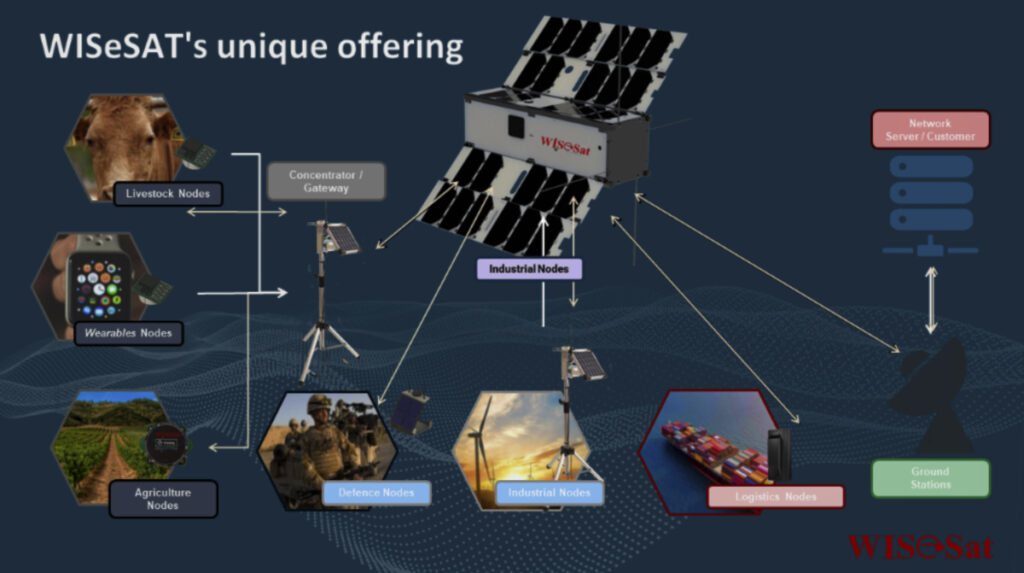
This new ground station positions the Lausanne region as a critical hub for the deployment, control, and communication of IoT satellites. It will play a central role in supporting WISeSat’s constellation of satellites, developed by WISeKey, to provide dedicated and secure IoT connectivity anywhere on Earth using picosatellites and low-power sensors.
WISeSat delivers a highly reliable IoT connectivity solution that ensures secure communications for critical applications, from smart cities and agriculture to logistics, energy, and environmental monitoring. By expanding its network of ground stations, WISeSat is laying the foundation for a fully European-controlled and operated satellite connectivity system aligned with Europe’s strategic digital and space independence goals.
This installation marks another milestone in building a secure and independent IoT satellite infrastructure in Europe,” said Carlos Moreira, CEO and founder at WISeKey. “By partnering with the Space Campus at the Ecole Polytechnique Fédérale de Lausanne, multidisciplinary hub dedicated to advancing space technologies, research, and innovation, we are strengthening collaboration across academia, startups, industry, and government. This unique ecosystem, anchored within one of Europe’s leading technical universities, is driving forward cutting-edge projects in satellite systems, space communications.”
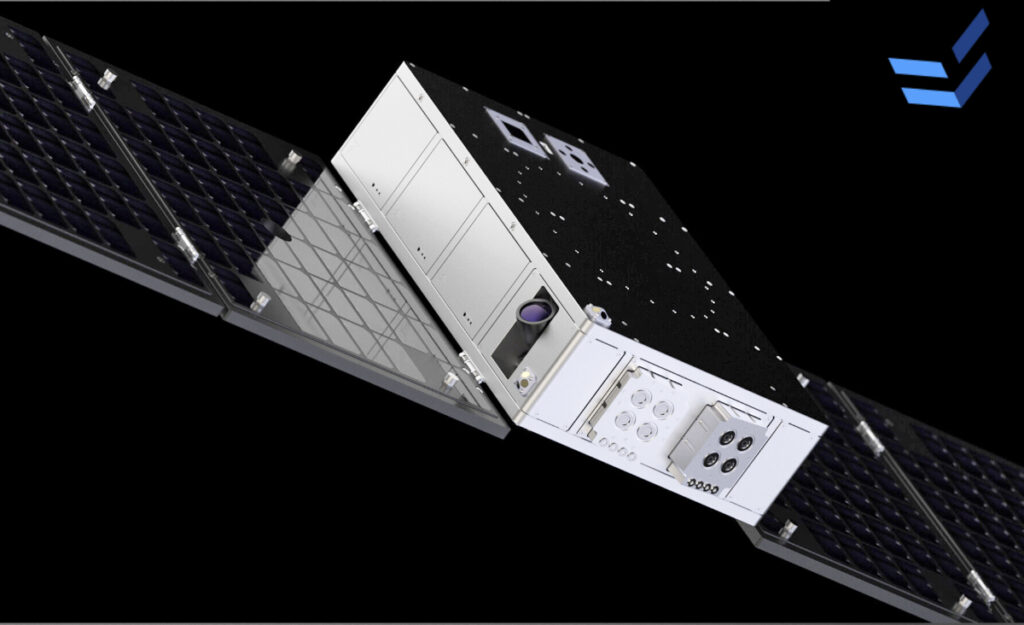
Also, WISeKey International Holding AG (SIX: WIHN, NASDAQ: WKEY), via its subsidiary WISeSat.Space AG, and EnduroSat, recently signed a Memorandum of Understanding (MoU) to establish a framework aimed at achieving a strategic partnership to extend the development and deployment of ultra-secure, quantum-resilient, nanosatellite systems for Internet of Things (IoT) applications.
The cooperation targets the integration of SEALSQ secure elements, such as the VaultIC292, VaultIC408, and QS7001, into satellite payloads and ground-level endpoints. These components enable strong hardware-based security and digital identity protection, ensuring encrypted communications and trusted authentication across the IoT satellite network.
The project aims to implement post-quantum cryptographic (PQC) algorithms, aligned with NIST recommendations such as CRYSTALS-Kyber and CRYSTALS-Dilithium, to safeguard against future quantum computing threats. WISeSat will provide the PQC algorithmic stack and support, while EnduroSat will incorporate these into its satellite and communication platform.
EnduroSat brings its expertise in modular satellite design, on-orbit validation, and scalable deployment systems and will lead the physical integration of SEALSQ secure components into next-generation satellite buses and contribute to the overall mission architecture. WISeSat will support cryptographic integration and field engineering resources, ensuring that each system meets high-security and resilience benchmarks.
The partnership further outlines the future integration of post-quantum cryptographic solutions and secure elements into both EnduroSat and WISeSat satellite infrastructures. EnduroSat will also support the design and deployment of WISeSat’s future missions, ensuring compliance with defined security and performance requirements.
This collaboration builds on WISeSat’s successful deployment of its new-generation PQC-ready nanosatellite in December of 2025 and EnduroSat’s proven record of delivering more than 60+ satellites to orbit for institutional, scientific, and commercial customers. The resulting architecture will offer scalable, tamper-proof IoT connectivity services from LEO, critical for use-cases in logistics, critical infrastructure, defense, and environmental monitoring.
This partnership with EnduroSat marks a significant step forward in our mission to deliver quantum-resilient, end-to-end secure satellite infrastructure,” said Carlos Moreira, Founder and CEO of WISeKey. “By integrating SEALSQ’s advanced secure elements into the expanding WISeSat constellation, we are building a tamper-proof communications backbone in space. Together with EnduroSat’s modular satellite technology, we are enabling scalable and ultra-secure IoT connectivity services from Low Earth Orbit—critical for securing data and infrastructure in the quantum era.”
We are excited to initiate this partnership,” said Raycho Raychev, founder & CEO of EnduroSat. “We hope to accelerate the introduction and establishment of much stronger encryption capabilities into the satellite industry.”
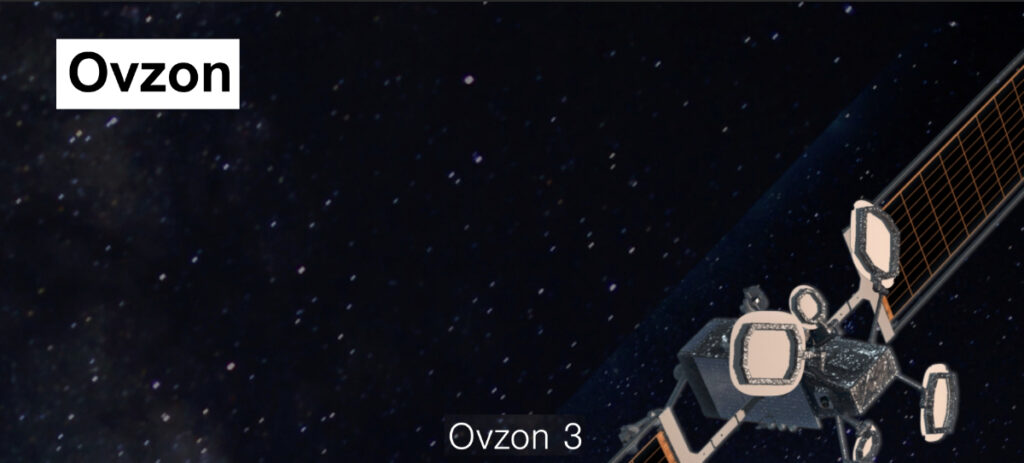
Ovzon AB (publ) has entered into a facilities agreement with Danske Bank for a term loan and a revolving credit facility to refinance existing loan, which will reduce interest expenses and secure financing for future growth.
The facilities agreement, which comprises a term loan of 300 MSEK and a revolving credit facility of 300 MSEK, has a tenor of two years, with the option of a one-year extension. The interest rate is 3-month STIBOR + 220-290 basis points in accordance with a margin ratchet.
The transaction is expected to be completed during the third quarter of 2025, provided that the usual conditions are met.
We appreciate the trust and foresight of our new banking partner and would also like to take the opportunity to thank P Capital Partners for enabling the development and launch of our first proprietary satellite, Ovzon 3. Ovzon’s strong order intake, solid financial performance, and market outlook have made this refinancing possible. Upon full utilization of the new facilities and repayment of existing loan, interest expenses are estimated to be reduced by approximately 70 MSEK annually,” said André Löfgren, CFO at Ovzon.
CNES has awarded €31 million in strategic funding to UNIVITY—formerly Constellation Technologies & Operations— as part of a France 2030 call for projects operated by CNES—this support marks a decisive step in the development of space-based 5G made in France and in the realization of UNIVITY’s industrial ambition.
While American and Chinese giants dominate the race for satellite connectivity, a French startup is changing the game with a bold vision rooted in innovation and industrial sovereignty.
Selected under the France 2030 space program following a competitive bidding process, UNIVITY—together with TDF—will carry out a groundbreaking demonstration of satellite-based 5G connectivity. Through real-world use cases, this experiment will validate the relevance of a fully integrated 5G NTN solution, designed and built in France, combining very Low Earth Orbit (vLEO) satellites with terrestrial infrastructure.
TDF will play a central role in the project’s operational implementation, managing the hosting, installation, operation, and maintenance of three gateway stations—two in mainland France and one overseas. These gateways will be essential to ensure seamless interoperability between the satellite system and telecom operators’ terrestrial networks.
With €31 million in funding from CNES and additional industrial co-financing from UNIVITY, the contract amounts to a total of €44 million and reflects a proactive commitment to technological sovereignty. As a true accelerator for the space industry, France 2030 supports the development of critical technologies for France’s economy and Europe’s technological independence. The selected project aims to validate this technology in real-world operational conditions.
The France 2030 co-funded project, with 30% industrial contribution, will unfold through to 2028 in two phases:
Phase 1 (July 2025 – April 2026): technical specification and use case studies.
Phase 2 (April 2026 – February 2028): assembly, integration, testing, launch, and in-orbit operation of two VLEO 5G satellites communicating with gateways and ground terminals to demonstrate high-throughput, low-latency services.
Backed by CNES, this funding underscores the credibility of the project while validating the technological and business choices made by UNIVITY and TDF. It also acts as a powerful industrial accelerator.
UNIVITY is not just another technological evolution, it is a strategic solution arriving at a historic moment in the telecom sector, marked by the convergence of terrestrial and space networks. As a future global provider of space-based internet services, the French company is developing a VLEO constellation leveraging operators’ own 5G mmWave spectrum to deliver high-speed, low-latency connectivity – just as they do today with terrestrial networks. This breakthrough opens new possibilities for connecting rural, remote, and underserved regions without requiring massive infrastructure investments.
This €44 million program consolidates UNIVITY’s ambitious trajectory. Less than six months after raising €9.3 million, the company successfully launched in June 2025 its first regenerative 5G mmWave payload for space telecommunications. It has also signed strategic agreements with TDF and with ESA. Next milestones include the launch of two prototype satellites in 2027, followed by the gradual deployment of the constellation between 2028 and 2030.
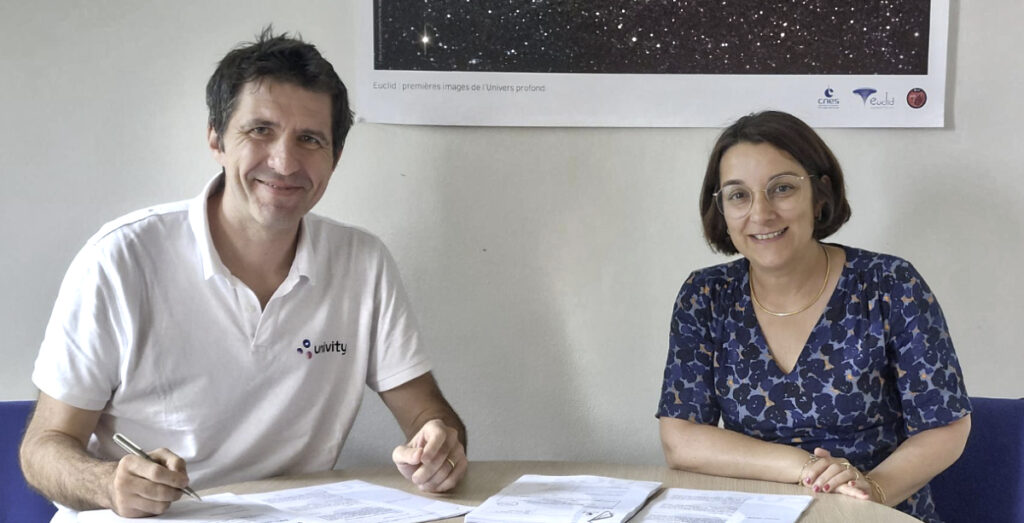
From left to right: Charles Delfieux, CEO, UNIVITY, and Christelle Boustie, Deputy Director of Telecommunications and Navigation Projects at CNES, during the official contract signing. Photo is courtesy of UNIVITY / CNES
Thanks to France 2030 funding, CNES is supporting UNIVITY in preparing, through the in-orbit demonstration ‘uniShape,’ a satellite-based 5G-NTN service designed to meet the needs of terrestrial operators. UNIVITY’s ‘uniSky’ constellation aims to deliver a distinctive French solution for high-speed space-based 5G-NTN connectivity, serving both consumer and professional users, built on innovative concepts and breakthrough technologies,” said Caroline Laurent, Director of Orbital Systems and Applications, CNES.
We are proud to have the support of France 2030 for this project, which represents a true strategic milestone for us. This recognition validates both our expertise and our vision of converging terrestrial and space networks. Our entire team is fully committed to this challenge, ready to deliver with enthusiasm, ambition, and determination,” said Véronique Bonnet, Program Director at UNIVITY.
This project is a key milestone for TDF, underscoring our ability to integrate the space dimension into our telecom infrastructure offering. By combining our field expertise, local presence, and technological know-how, we are actively contributing to the emergence of a hybrid, resilient, and sovereign connectivity model driven by French players,” said Jean-Louis Mounier, Managing Director of TDF’s TowerCo Business Unit.
Space is the new frontier for telecommunications,” said Charles Delfieux, President of UNIVITY.