• Skip to main content
  • Skip to primary sidebar
  • Home
  • News
  • Featured
  • More News ⌄
    • SatNews
    • SatMagazine
    • MilSatMagazine
  • Events ⌄
    • MilSat Symposium
    • SmallSat Symposium
    • Satellite Innovation
  • Contacts
  • SUBSCRIPTION

SmallSat News

You are here: Home / Archives for 2025

Archives for 2025

ThrustMe celebrates the firm’s 100th propulsion system launched into space

June 24, 2025 by editorial

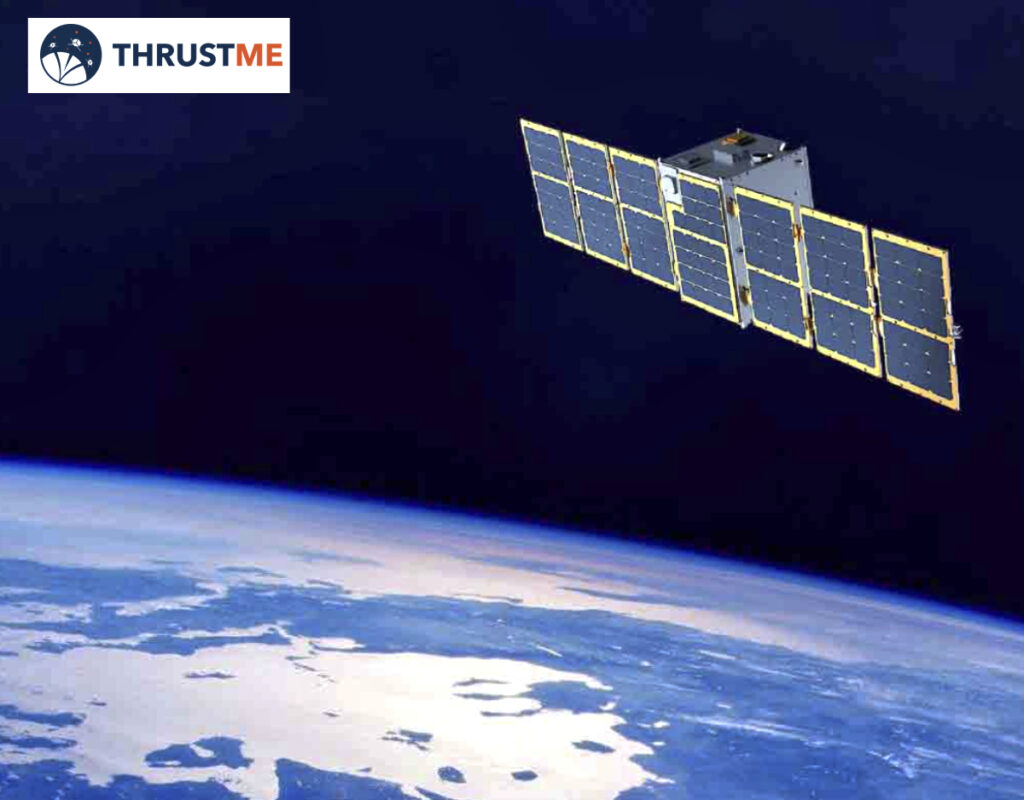
ThrustMe has successfully launched its 100th propulsion system into space—this milestone was achieved aboard the SpaceX Falcon 9 Transporter-14 mission that launched to space on June 23rd. The launcher carried a total of 26 ThrustMe propulsion units across seven satellites.
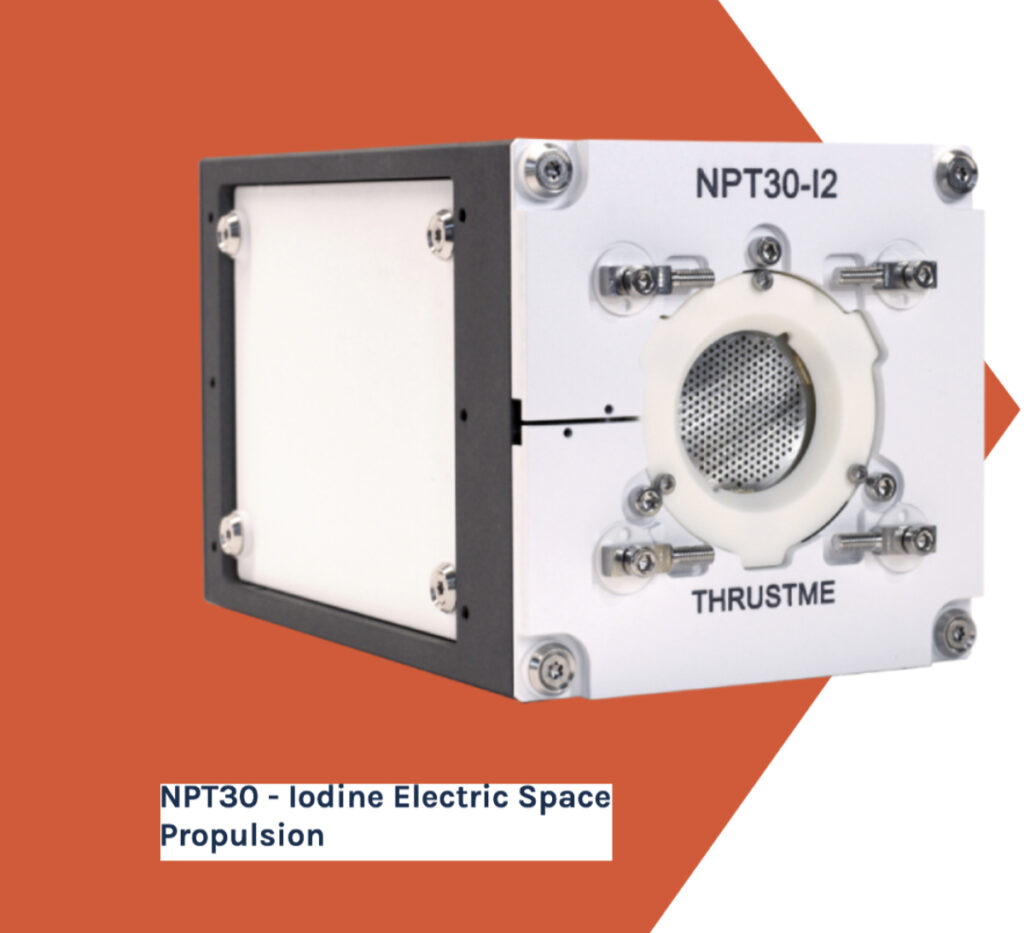
The electric space propulsion industry has grown rapidly in recent years. Just six years ago, fewer than ten electric propulsion systems were launched globally each year. Today, SpaceX alone deploys more than 1,500 propulsion systems on the Starlink fleet per year, with the rest of the industry contributing modestly with an additional 500. With this exponential growth, market forecasts now predict an annual demand for between 3,000 and 8,000 propulsion units in the coming years.

ThrustMe’s propulsion systems have accumulated more than 12,000 operational hours in orbit. One system has already completed its full mission lifetime after a few years in orbit, while another has achieved a 30 km orbit raise in just 12 days. In this latest launch, one of the satellites will soon attempt the world’s first proximity operation using electric propulsion; a significant step forward in on-orbit servicing and inspection capabilities.

As satellite missions become more complex and automated, and autonomous maneuvers more critical, scalable and reliable in-orbit propulsion has become essential. ThrustMe’s innovative use of solid iodine propellant eliminates the complexity and supply constraints of traditional xenon systems, enabling safer and more cost-effective satellite operations.

ThrustMe is doubling its production capacity annually since 2023, an exceptional pace for such sophisticated space systems. As one of the few companies capable of delivering high- reliability propulsion solutions at industrial scale, ThrustMe is uniquely positioned to meet the accelerating needs of the global space sector.

There is a clear production bottleneck in the propulsion supply chain,” says Dr. Ane Aanesland, co-founder and CEO of ThrustMe, “but increasing production capacity must be done carefully to preserve the product quality and reliability that are vital for both our clients and the global space ecosystem.”
Filed Under: News

SpaceX launches the Transporter-14 on a dedicated smallsat rideshare mission from foggy Vandenberg

June 24, 2025 by editorial

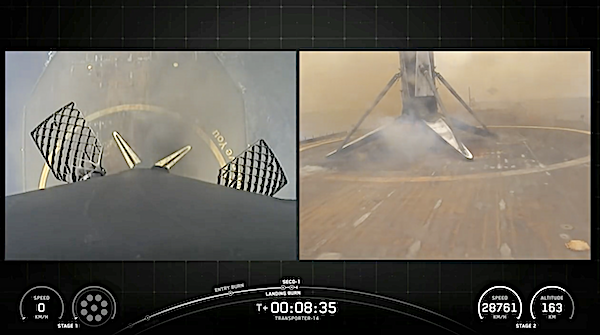
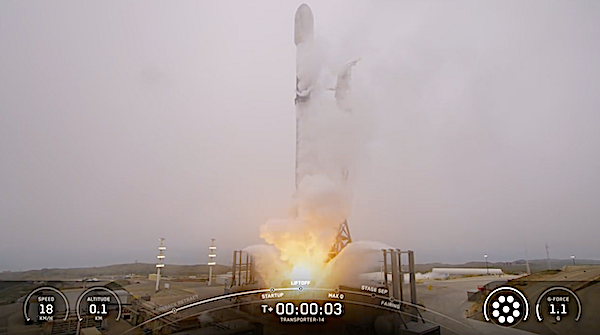
On Monday, June 23 at 2:25 p.m. PT, Falcon 9 launched the Transporter-14 mission to low-Earth orbit from Space Launch Complex 4E (SLC-4E) at Vandenberg Space Force Base in California. Photos by Satnews.

This was the 26th flight for the first stage booster supporting this mission which previously launched NROL-87, NROL-85, SARah-1, SWOT, Transporter-8, Transporter-9, NROL-146, Bandwagon-2, NROL-153, NROL-192, and 15 Starlink missions.

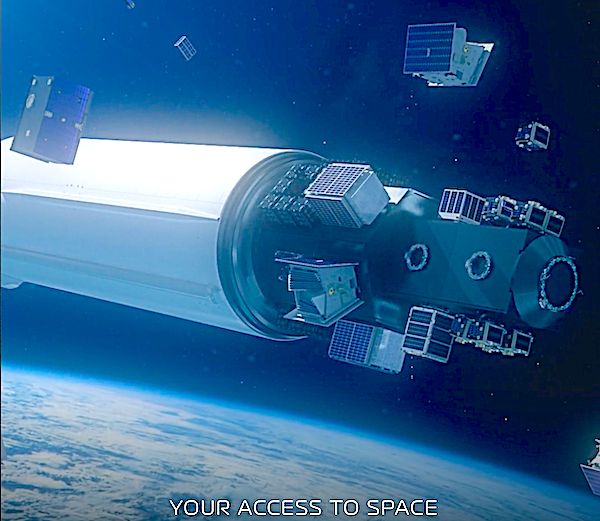
Transporter-14 was a dedicated smallsat rideshare mission. There were 70 payloads on this flight, including cubesats, microsats, re-entry capsules, and orbital transfer vehicles carrying three of those payloads to be deployed at a later time.

SpaceX to launch Transporter-14 mission on Monday from California

SpaceX is targeting Monday, June 23 for a Falcon 9 launch of the Transporter-14 mission to low-Earth orbit from Space Launch Complex 4E (SLC-4E) at Vandenberg Space Force Base in California. The 57-minute launch window opens at 2:18 p.m. PT.

A live webcast of this mission will begin about 15 minutes prior to liftoff, which you can watch on X @SpaceX. You can also watch the webcast on the new X TV app.

This will be the 26th flight for the first stage booster supporting this mission which previously launched NROL-87, NROL-85, SARah-1, SWOT, Transporter-8, Transporter-9, NROL-146, Bandwagon-2, NROL-153, NROL-192, and 15 Starlink missions. Following stage separation, Falcon 9 will land on the Of Course I Still Love You droneship stationed in the Pacific Ocean.

Transporter-14 is a dedicated smallsat rideshare mission. There are 70 payloads on this flight, including cubesats, microsats, re-entry capsules, and orbital transfer vehicles carrying three of those payloads to be deployed at a later time.

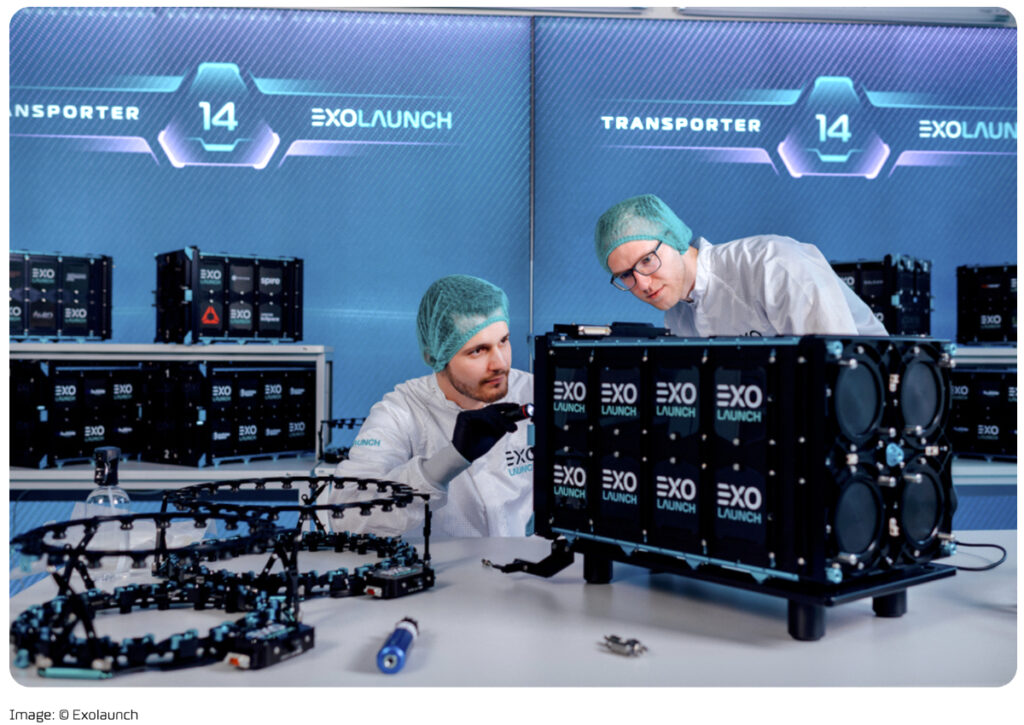
Exolaunch to deploy their largest mission to date — 45 customer satellites on Transporter-14

Exolaunch is set to deploy 45 customer satellites on the upcoming Transporter-14 rideshare mission with SpaceX aboard a Falcon 9 rocket. This mission highlights Exolaunch’s role as a trusted partner for rideshare launches and represents unparalleled expertise and flight heritage

Flight-proven hardware: CarboNIX, Nova, and Quadro deployment systems

The Transporter-14 mission represents a major milestone for Exolaunch as its largest mission to date, building on the company’s track record of providing reliable and precise access to orbit for customers worldwide. Exolaunch’s teams of experts will manage the deployment of numerous microsatellites, up to 250 kilograms, and CubeSats, up to 16U in size, supporting 25 new and returning customers from the USA, UK, Lithuania, Finland, Belgium, Germany, Australia, Canada, South Korea, France, Japan, Spain, Norway, Italy, and Greece.

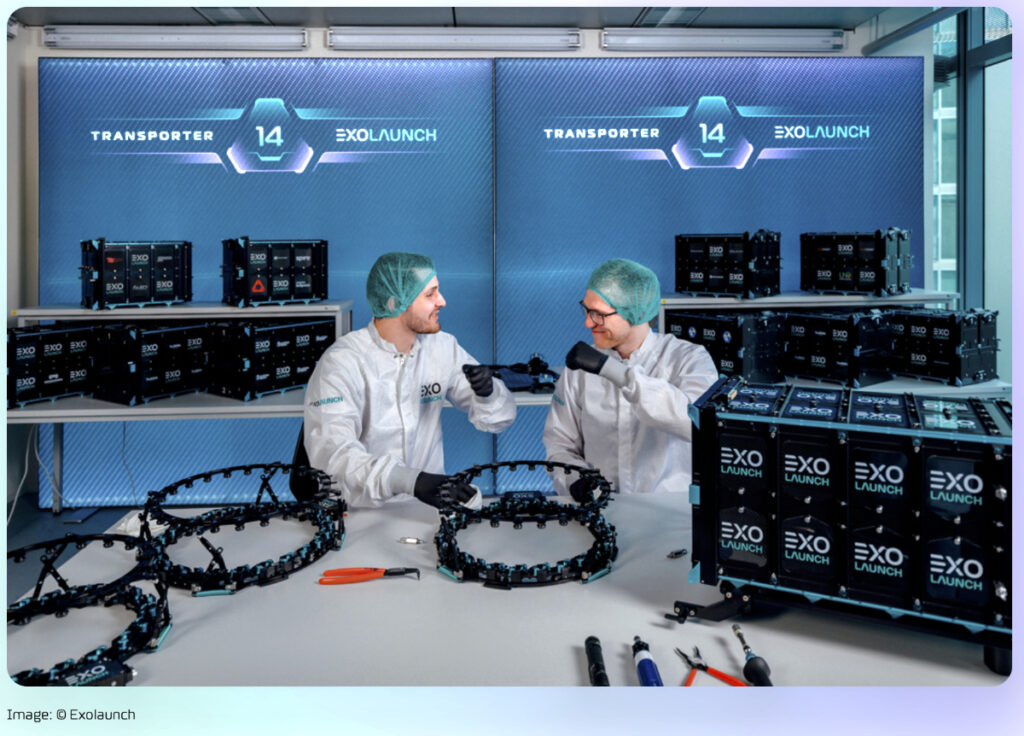
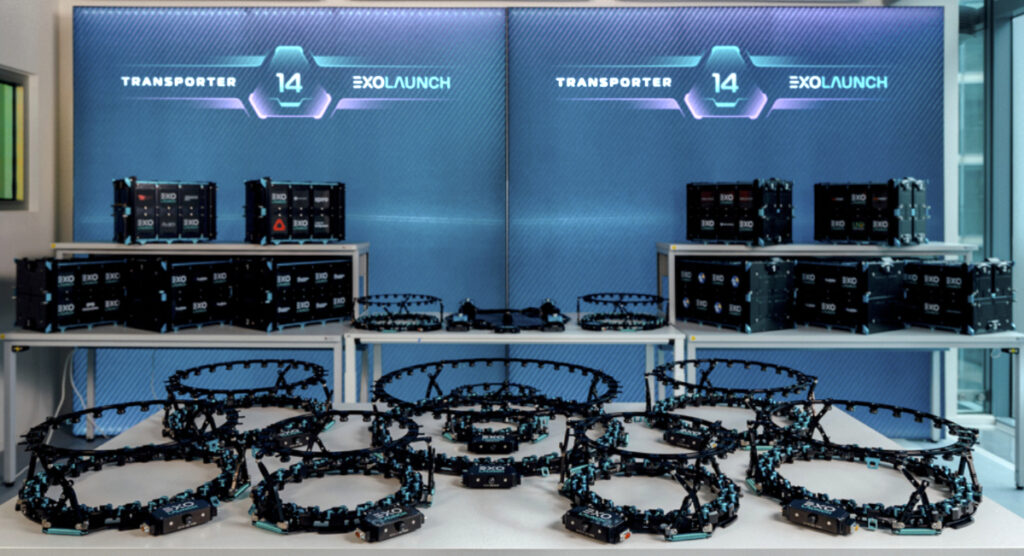
On this mission, Exolaunch will use its flight-proven deployment systems, including:

  • CarboNIX microsatellite separation rings in 8″, 11″, 15″, and 24″ sizes
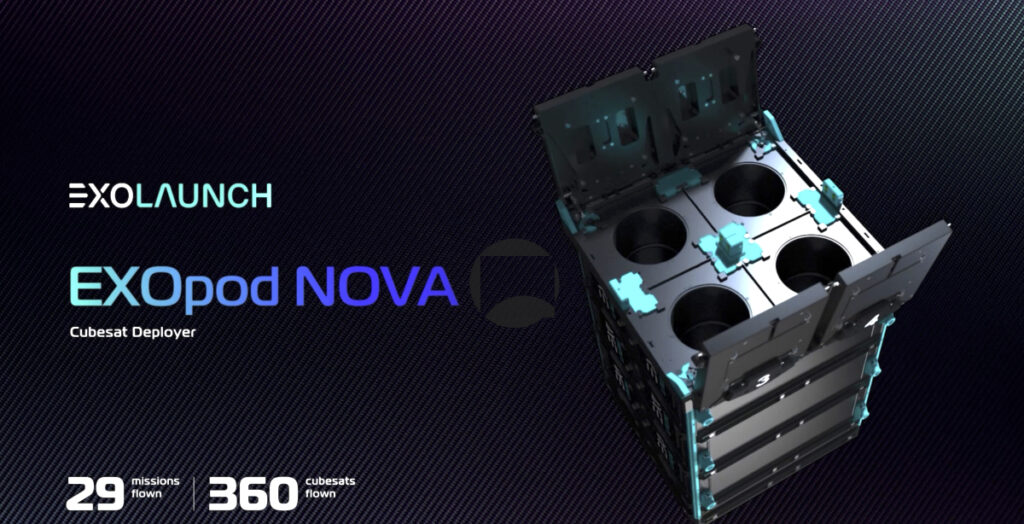
  • EXOpod Nova advanced CubeSat deployers, supporting higher-mass and larger volume satellites with exceptional reliability
  • Quadro four-point separation systems, offering synchronized release and ultra-low tip-off rates for precision microsatellite deployments

Exolaunch’s EXOpod Nova deployers have now supported more than 100 delivered units and hundreds of successful CubeSat deployments, reinforcing Nova’s reputation as a trusted next-generation deployer for CubeSat mission.

Exolaunch continues to be the only launch integrator to have manifested satellites on every Transporter mission since the program’s inception in 2020. With Transporter-14, Exolaunch will celebrate its 37th mission overall, having deployed over 530 satellites across 36 previous missions on different global launch vehicles.

As part of the company’s comprehensive service offering, Exolaunch has managed global logistics, satellite integration, deployment, and testing for its customers aboard the Transporter-14 mission—a turnkey solution trusted by the world’s most ambitious space programs.

Transporter-14 marks a historic achievement for Exolaunch and our customers,” said Robert Sproles, Chief Executive Officer at Exolaunch. “Our flight heritage, reliability, and hardware performance continue to set the standard in the rideshare industry. We are grateful to our customers for their trust and to SpaceX for being an outstanding partner as we continue to open space for all.”

This milestone reflects not just the growth of Exolaunch, but also the expanding demand for global access to space,” said Jeanne Allarie, Chief Commercial and Marketing Officer at Exolaunch. “Our unmatched success across these missions and the growing adoption of our Nova, CarboNIX, Quadro and Neo systems highlight the strength of our technology and services. We deeply appreciate our customers’ and SpaceX’s ongoing confidence in our team.”

Filed Under: Booster, Booster Recovery, Cubesats, Droneship, Droneship Landings, Exolaunch, Falcon 9, LEO Payloads, Low Earth Orbit (LEO), Microsat, Microsatellites, Mission Payloads, Rideshare, Rideshare Mission, Smallsat Launch Vehicles, Space Vehicles, SpaceX, SpaceX Rideshare, Transporter-14, Vandenberg SFB

Filed Under: News

United Launch Alliance + Amazon launch the Kuiper 2 mission

June 23, 2025 by editorial

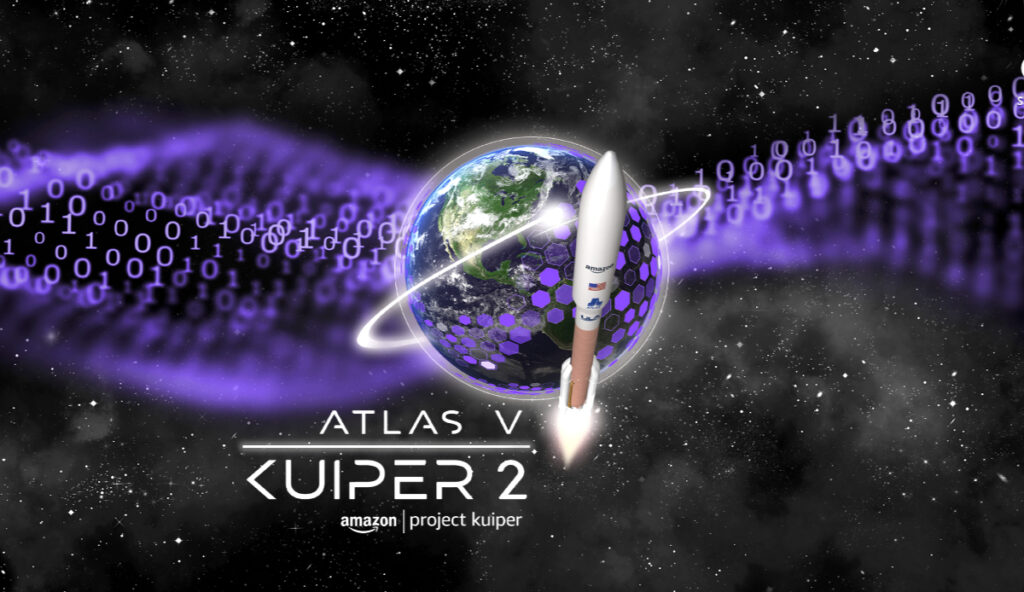
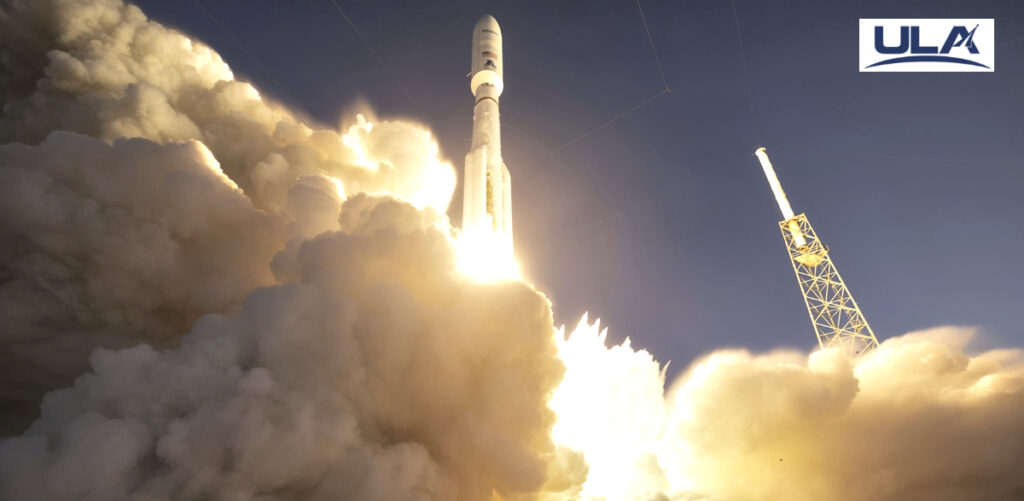
A United Launch Alliance (ULA) Atlas V rocket carrying the Kuiper 2 mission for Amazon’s Project Kuiper lifted off on June 23 at 6:54 a.m. EDT from Space Launch Complex-41 at Cape Canaveral Space Force Station.

This mission marks the next step in Amazon’s initiative to provide fast, reliable internet to customers around the world, including those in unserved and underserved communities.

The Kuiper 2 launch deployed the second batch of operational Project Kuiper satellites into the intended orbit. There are six remaining Kuiper missions on the Atlas V rocket, building up to 38, high-cadence, rapid fire launches on the next-generation Vulcan rocket. ULA will deliver more than half of the Project Kuiper constellation’s 3,200 satellites, through the world’s largest commercial launch agreement. 

We are proud to continue our strong partnership with Amazon and empower their mission to bridge the digital divide through reliable satellite technology,” said Gary Wentz, ULA vice president of Government and Commercial Programs. “ULA, working as a catalyst to global connectivity in collaboration with Amazon, enables delivery of these critical satellites designed to drive innovation and connect the world.” 

TLA’s next launch is the first Vulcan mission for the U.S. Space Force, USSF-106.

Read more at this direct SatNews link…

Filed Under: News

Exolaunch to deploy their largest mission to date — 45 customer satellites on Transporter-14

June 23, 2025 by editorial

Exolaunch is set to deploy 45 customer satellites on the upcoming Transporter-14 rideshare mission with SpaceX aboard a Falcon 9 rocket. This mission highlights Exolaunch’s role as a trusted partner for rideshare launches and represents unparalleled expertise and flight heritage

Flight-proven hardware: CarboNIX, Nova, and Quadro deployment systems

The Transporter-14 mission represents a major milestone for Exolaunch as its largest mission to date, building on the company’s track record of providing reliable and precise access to orbit for customers worldwide. Exolaunch’s teams of experts will manage the deployment of numerous microsatellites, up to 250 kilograms, and CubeSats, up to 16U in size, supporting 25 new and returning customers from the USA, UK, Lithuania, Finland, Belgium, Germany, Australia, Canada, South Korea, France, Japan, Spain, Norway, Italy, and Greece.

On this mission, Exolaunch will use its flight-proven deployment systems, including:

  • CarboNIX microsatellite separation rings in 8″, 11″, 15″, and 24″ sizes
  • EXOpod Nova advanced CubeSat deployers, supporting higher-mass and larger volume satellites with exceptional reliability
  • Quadro four-point separation systems, offering synchronized release and ultra-low tip-off rates for precision microsatellite deployments

Exolaunch’s EXOpod Nova deployers have now supported more than 100 delivered units and hundreds of successful CubeSat deployments, reinforcing Nova’s reputation as a trusted next-generation deployer for CubeSat mission.

Exolaunch continues to be the only launch integrator to have manifested satellites on every Transporter mission since the program’s inception in 2020. With Transporter-14, Exolaunch will celebrate its 37th mission overall, having deployed over 530 satellites across 36 previous missions on different global launch vehicles.

As part of the company’s comprehensive service offering, Exolaunch has managed global logistics, satellite integration, deployment, and testing for its customers aboard the Transporter-14 mission—a turnkey solution trusted by the world’s most ambitious space programs.

Transporter-14 marks a historic achievement for Exolaunch and our customers,” said Robert Sproles, Chief Executive Officer at Exolaunch. “Our flight heritage, reliability, and hardware performance continue to set the standard in the rideshare industry. We are grateful to our customers for their trust and to SpaceX for being an outstanding partner as we continue to open space for all.”

This milestone reflects not just the growth of Exolaunch, but also the expanding demand for global access to space,” said Jeanne Allarie, Chief Commercial and Marketing Officer at Exolaunch. “Our unmatched success across these missions and the growing adoption of our Nova, CarboNIX, Quadro and Neo systems highlight the strength of our technology and services. We deeply appreciate our customers’ and SpaceX’s ongoing confidence in our team.”

Filed Under: Booster, Booster Recovery, Cubesats, Droneship, Droneship Landings, Exolaunch, Falcon 9, LEO Payloads, Low Earth Orbit (LEO), Microsat, Microsatellites, Mission Payloads, Rideshare, Rideshare Mission, Smallsat Launch Vehicles, Space Vehicles, SpaceX, SpaceX Rideshare, Transporter-14, Vandenberg SFB

Filed Under: News

GHGSat: Satellites reveal methane as an unintended consequence of palm oil production and points toward solutions

June 20, 2025 by editorial

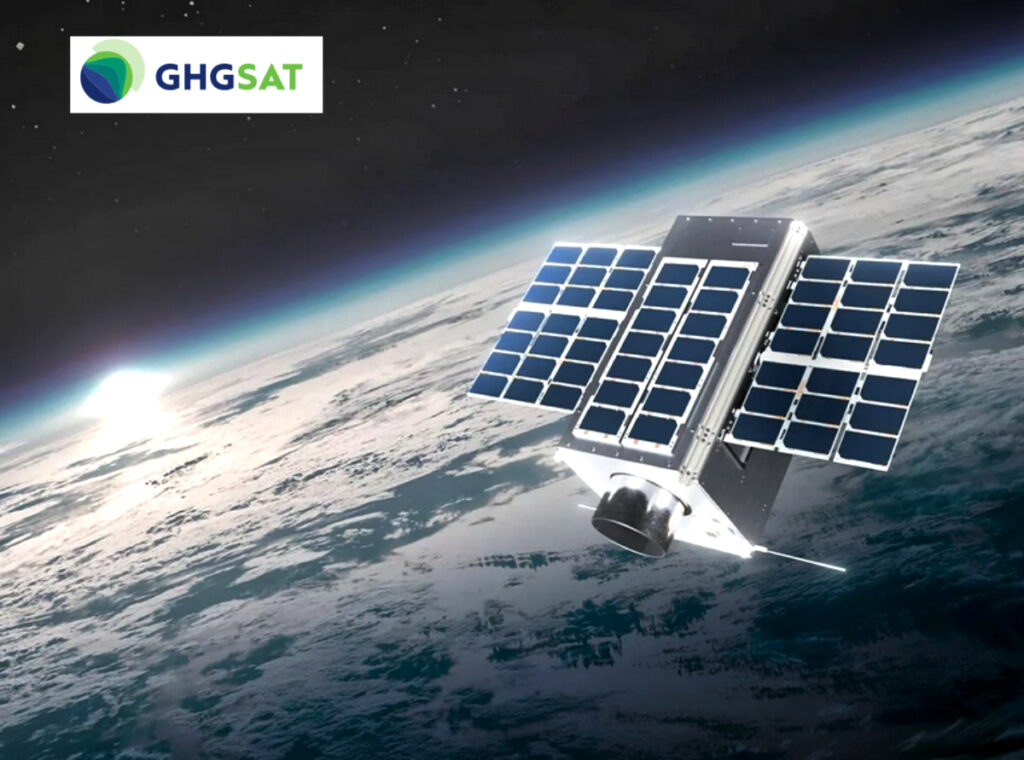
GHGSat-C10 ‘Vanguard’, the world’s first commercial high-resolution CO2 sensor

Palm oil, the world’s most widely consumed vegetable oil, is an inescapable component of most manufactured consumer products, present in roughly 50% of supermarket packaged products ranging from pizza to toothpaste, or products like animal feed and biofuels.

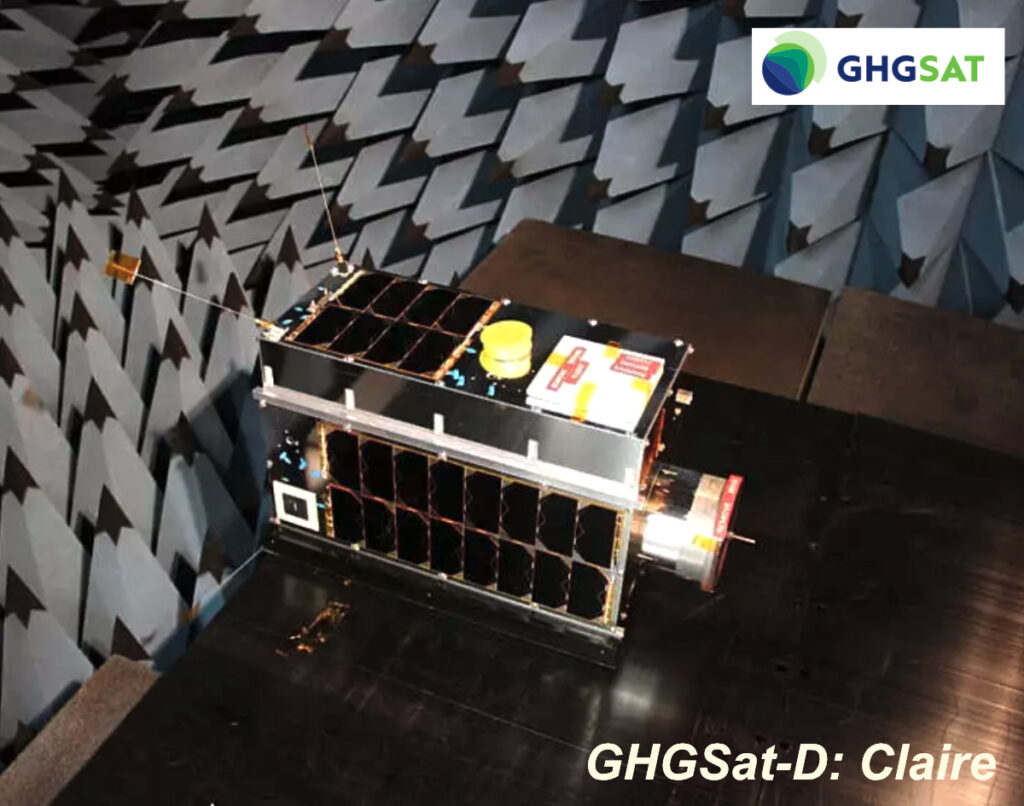
GHGSat-D, also known as Claire, is the first satellite launched by GHGSat and redefined the landscape of emission monitoring.

Grown primarily near the equator, palm oil production is incredibly efficient, with the highest yield per hectare among vegetable oils, but still has traditionally been known for its deforestation impacts, as rainforest in tropical areas has been cleared to make way for plantations.

While the deforestation impacts are widely known, satellites are now also beginning to uncover a previously unseen impact of palm oil production: methane emissions.

Following the publication of a scientific study in Environmental Research Letters, which confirmed the accuracy of GHGSat’s high-resolution satellites in measuring methane from palm oil mills, GHGSat’s constellation has increasingly homed in on palm oil ponds in tropical regions around the world, including South America, Asia, and Africa. As of late April 2025, GHGSat’s fleet of satellites has identified more than 50 methane emissions from 12 different countries.

Methane from palm oil mills is not unexpected, as it stems from the industry’s standard production processes and byproducts. Palm oil production produces a large amount of wastewater, known as POME (palm oil mill effluent), which is typically stored in open ponds. As the organic waste in the ponds, such as pulp and shells from the palm fruits, decomposes, it produces methane in a process much like decomposing trash in a landfill. The pond system was designed to curb local water contamination from releasing POME into the riverways and channels, but had an unintended impact. Now, however, for the first time it can be accurately quantified by satellites.

Now, the ability of satellites to quantify the methane from palm oil mills paves the way for potential better accounting of the industry’s total environmental impacts and effective, profitable mitigation of the emissions.

Landfill operators and municipalities with similar methane challenges have seized on the potential of waste diversion, recycling, or and gas capture systems to limit methane emissions or even transform them into a source of additional profit—converting it to natural gas to sell back to local power grids or power on-site operations. Similar approaches and technologies exist for palm oil mill operators.

The Roundtable on Sustainable Palm Oil (RSPO) was formed in 2004, and sets sustainability standards for the palm oil sector, certifying growers that meet those standards. Alongside other initiatives related to deforestation and workers’ rights, RSPO has developed a PalmGHG calculator to enable palm oil growers to estimate their net greenhouse gas emissions and implement more sustainable practices.

Palm oil is a $48.1 billion industry, concentrated in countries near the equator, with Indonesia and Malaysia estimated to produce roughly 90% of the global supply. The Roundtable for Sustainable Palm Oil estimates that the industry provides a living for some seven million smallholder farmers globally, including direct jobs for four million people in Indonesia and nearly a million in Malaysia. Many of the economic benefits of palm oil are focused in remote, rural areas where work can be hard to find.

This is the power of high-resolution satellite technology: it illuminates a previously opaque challenge, and delivers the insights required to map out a solution,” said Stephane Germain, CEO of GHGSat. “Precise data is the first step toward action, and satellite technologies are a part of the puzzle.”

As industries worldwide, from the energy sector to mining or palm oil, seek to mitigate emissions from their activities, GHGSat serves as a trusted partner, providing independent data to global industry and government leaders so that they can tackle emissions with confidence. GHGSat made history in 2016 with the launch of the world’s first satellite capable of directly attributing methane emissions to individual industrial facilities. Since then, the company has steadily expanded its proprietary constellation, which currently includes 12 commercial satellites in orbit, which track emissions from tens of thousands of sites per day—a number far exceeding the capacity of any emerging competitor. GHGSat’s expanding fleet continues to set the standard in satellite emissions monitoring, enabling faster response times and greater coverage than any other player in the market.

Filed Under: News

STMicroelectronics launches radiation-hardened point-of-load converters for LEO applications

June 19, 2025 by editorial

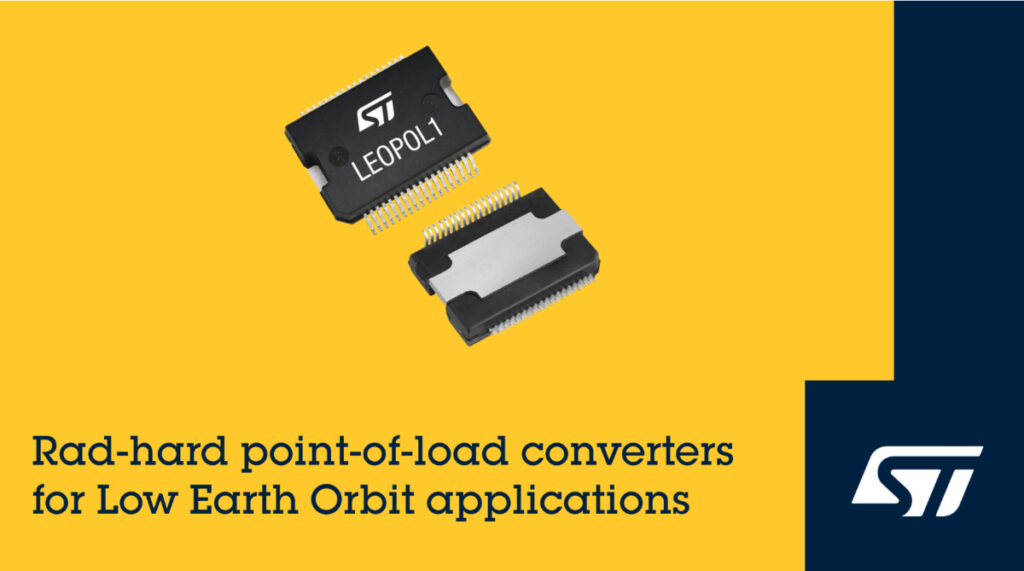
STMicroelectronics’ LEOPOL1 point-of-load step-down converter for Low Earth Orbit (LEO) deployments meets the needs of equipment developers targeting the New Space market, now expanding throughout North America, Asia, and Europe.

The emerging New Space industry, driven by private-sector companies, is enabling new services such as communication and earth observation, delivered from satellites built and launched cost-effectively into low earth orbits. The LEOPOL1 is the latest in ST’s LEO series of power, analog, and logic ICs developed for low cost of ownership with quality assurance and radiation hardness optimized for LEO satellites, leveraging automotive best practices including statistical process control.

The LEOPOL1 is radiation hardened by design to withstand the hazards encountered in LEO altitudes, leveraging ST’s space-proven BCD6-SOI (Silicon-On-Insulator) technology. Key hardness parameters include 50 krad(Si) total ionizing dose (TID) and 3.1011 proton/cm2 total non-ionizing dose (TNID). Single-event effects (SEE) performance is characterized up to 62 MeV.cm2/mg.

The LEOPOL1 provides extended flexible features including out-of-phase current sharing, which permits multiplying the current to the load with multiple LEOPOL1 converters working in parallel. In addition, synchronization capability allows easy sequencing to power-up equipment with multiple voltage rails. The converter delivers up to 7A and accept an input voltage up to 12V at ground level and has demonstrated 5A at 6V at 62 MeV.cm2/mg s.

With the LEOPOL1, ST’s LEO series now covers a wide range of circuit-design needs. The portfolio also includes popular logic gates and buffers, an LVDS transceiver, 8-channel 12-bit ADC, and a low-dropout regulator (LDO). All devices meet ST’s proprietary specification developed specifically for LEO applications, which covers performance parameters as well as manufacturing controls, qualification and are delivered with a Certificate of Conformance (CoC).

The LEOPOL1 is in production now. It is available in 31-piece tubes, 250-piece tape and reel, and 7-piece tape sticks for samples. Pricing information is provided on request.

Filed Under: News

AAC Clyde Space wins strategic order for first phase of ESA-backed satellite swarm mission

June 19, 2025 by editorial

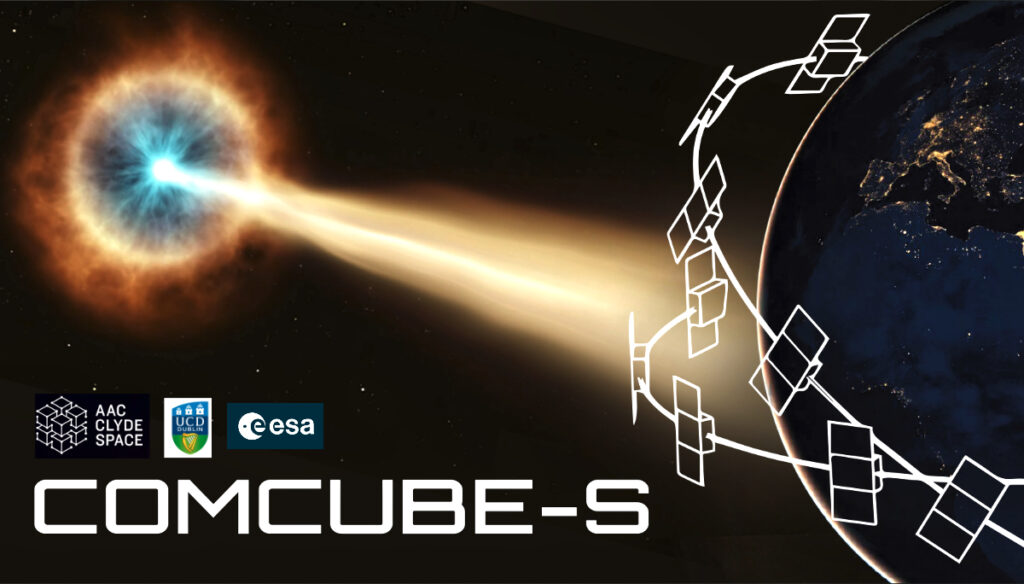
Image is courtesy of ESA

AAC Clyde Space has won an order worth 0.12 million euros (approx. SEK 1.3 million) from University College Dublin for a mission study in the first phase of the development program COMCUBE-S.

The study will assess the technical feasibility of the proposed mission and marks an initial step in a structured process that may lead to a CubeSat Swarm In-orbit Demonstration mission. The study is scheduled for delivery in the fourth quarter of 2025.

COMCUBE-S is a technical project aiming to develop new capabilities for observing Gamma Ray Bursts (GRB)—short-lived and extremely powerful events in space. By delivering faster and more detailed information about these phenomena, the mission will support scientists in making new discoveries about the nature and origins of GRBs.

The project follows ESA‘s established In-Orbit Demonstration process and begins with a so-called Phase A study, which assesses the mission’s technical feasibility. AAC Clyde Space is responsible for the system design in this initial phase, working in close collaboration with the project lead, University College Dublin.

A decision on further development is expected at the end of 2025, once the study is completed. A central element of COMCUBE-S is the use of a satellite swarm: a coordinated network of many small satellites operating together on-orbit. The swarm enables rapid, multi-angle observations of short-lived space phenomena and improves the ability to measure polarization—a key property of gamma-ray bursts that can help reveal how these violent events originate.

To achieve sufficient coverage and accuracy, the project ultimately aims to build a constellation of as many as 27 satellites. The assignment strengthens AAC Clyde Space’s position as a supplier of complete satellite missions—from design to operations—in technically advanced projects. It provides an opportunity to apply the company’s own components, systems engineering and methods for constellation development.

Experience gained through the ESA-funded xSPANCION program, in which AAC Clyde Space developed scalable solutions for satellite swarms, will be directly applicable. The work forms part of a broader collaboration with University College Dublin to advance the COMCUBE-S mission. The selection of COMCUBE-S from among seven European finalists in ESA’s SysNova Challenge confirms the strength of the technical concept and the partner constellation.

This project demonstrates how we translate technical expertise into real-world results. COMCUBE-S clearly illustrates our ability to take the lead in missions that combine scientific objectives with the highest technical demands,” said AAC Clyde Space CEO Luis Gomes.

COMCUBE-S represents a significant step forward in our ability to study gamma ray bursts and unlock new scientific insights into the most energetic events in the universe,” said Lorraine Hanlon, Director at UCD Centre for Space Research.

About COMCUBE-S
The project is led by University College Dublin and aims to improve understanding of gamma-ray bursts – extremely bright and short-lived explosions that occur, for example, when neutron stars collide. Using a swarm of satellites, the project will collect polarimetric data and localise these events in real time. This opens new opportunities in so-called multi-messenger astronomy, where different types of space data are combined to provide a more complete picture of cosmic phenomena. AAC Clyde Space is responsible for system design in the project’s initial phase and serves as the industrial partner in the first delivery. COMCUBE-S is one of two selected concepts from ESA’s SysNova Challenge and is supported through the Discovery & Preparation programme. The Consortium partners also include Laboratoire de Physique des 2 Infinis Irène Joliot-Curie (IJCLab), France, Commissariat à l’Energie Atomique et aux Energies Alternatives (CEA), France, and Kungliga Tekniska Högskolan (KTH), Sweden.

Filed Under: News

Qorvo offers new Ka-band PA for LEO sats + strengthens radar with BAW S-band switched filter bank modules

June 19, 2025 by editorial

Qorvo® (Nasdaq: QRVO) has launched their new Ka-band power amplifier (PA) that is designed to improve the performance and integration of Low Earth Orbit (LEO) satellites.

Developed to meet the evolving demands of next-generation payloads, Qorvo’s newest PA further expands its proven GaN-on-SiC SATCOM portfolio, giving system designers a more efficient, compact and scalable option for space-based payloads.

Qorvo’s QPA1722 PA offers customers three times the instantaneous bandwidth, a 38% smaller footprint and 10% higher efficiency than competing devices. These enhancements enable greater data throughput and more flexible payload architectures, critical for meeting global connectivity goals in size- and power-constrained satellite platforms.

Key Features of the QPA1722:

  • Frequency Range: 17.7–20.2 GHz
  • Output power: 10W (saturated); 6W (linear)
  • 1 GHz instantaneous bandwidth for high data-rate applications
  • 36% efficiency for improved power handling and thermal management
  • Compact SMT package for streamlined system integration

Qorvo’s existing Ka-band ground solutions are already enabling global connectivity, and a next-generation, higher-performance lineup is scheduled to debut this summer. Paired with the QPA1722 and Qorvo’s full portfolio of SATCOM products, these enhancements will deliver a more powerful, efficient end-to-end ground-to-space link that reinforces Qorvo’s commitment to connecting the world through space. Additional offerings can be found on our SATCOM solutions page.

The QPA1722 is sampling now, with volume production planned for the Fall of 2025. Qorvo also provides evaluation kits upon request.

The QPA1722 helps us meet the rising demand for LEO constellation deployment,” said Doug Bostrom, general manager of Qorvo’s Defense and Aerospace business. “According to Gartner® research, the most obvious opportunity for LEO satellites is the ubiquitous provision of broadband services to consumers and businesses, reinforcing the demand for compact, high-efficiency payload solutions in space-based networks.”

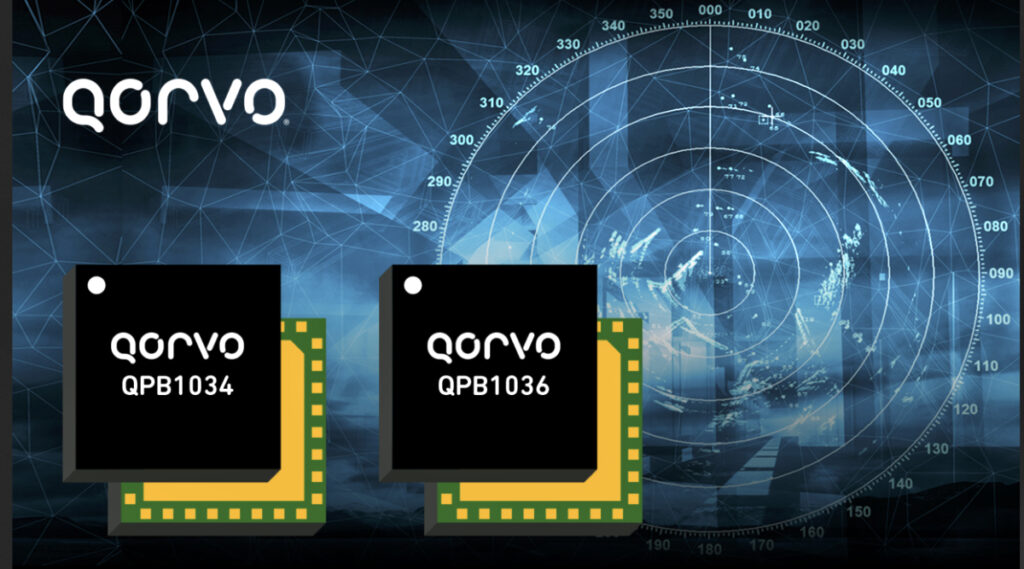
Qorvo® (Nasdaq: QRVO) has also introduced two, high-performance, S-Band, switched filter bank (SFB) modules designed to meet the rising demand for agile, compact and efficient radar systems in aerospace and defense applications.

As radar platforms evolve to support multi-function capabilities in compact form factors, designers need faster frequency agility and tighter spectral control. Qorvo’s new QPB1034 and QPB1036 modules meet these needs with integrated BAW filtering and fast-switching logic in a compact 6 x 6 mm package—reducing size while enhancing performance.

The QPB1034 and QPB1036 modules, sampling now, integrate high-selectivity BAW filters and bypass paths into compact packages, supporting S-Band radar systems that require rapid tuning and precise signal control. The QPB1034 is optimized for lower S-Band frequencies, while the QPB1036 offers broader coverage and higher channel density, while keeping the same fast switching speed.

Qorvo’s switched filter bank modules enable radar designers to reduce size and complexity without sacrificing performance,” said Dean White, senior director of Defense and Aerospace Market Strategy at Qorvo. “Our BAW technology enables unmatched rejection and channel density in a fully integrated form factor—making these solutions ideal for agile radar front ends.”

Qorvo provides scalable, high-performance RF solutions that meet the rigorous demands of the aerospace and defense industries. For more information on Qorvo’s wide-ranging radar solutions, including land, sea and airborne radar platforms, please visit Qorvo’s Radar Technology page.

Filed Under: News

Qorvo offers new Ka-band PA for LEO sats + strengthens radar with BAW S-band switched filter bank modules

June 17, 2025 by editorial

Qorvo® (Nasdaq: QRVO) has launched their new Ka-band power amplifier (PA) that is designed to improve the performance and integration of Low Earth Orbit (LEO) satellites.

Developed to meet the evolving demands of next-generation payloads, Qorvo’s newest PA further expands its proven GaN-on-SiC SATCOM portfolio, giving system designers a more efficient, compact and scalable option for space-based payloads.

Qorvo’s QPA1722 PA offers customers three times the instantaneous bandwidth, a 38% smaller footprint and 10% higher efficiency than competing devices. These enhancements enable greater data throughput and more flexible payload architectures, critical for meeting global connectivity goals in size- and power-constrained satellite platforms.

Key Features of the QPA1722:

  • Frequency Range: 17.7–20.2 GHz
  • Output power: 10W (saturated); 6W (linear)
  • 1 GHz instantaneous bandwidth for high data-rate applications
  • 36% efficiency for improved power handling and thermal management
  • Compact SMT package for streamlined system integration

Qorvo’s existing Ka-band ground solutions are already enabling global connectivity, and a next-generation, higher-performance lineup is scheduled to debut this summer. Paired with the QPA1722 and Qorvo’s full portfolio of SATCOM products, these enhancements will deliver a more powerful, efficient end-to-end ground-to-space link that reinforces Qorvo’s commitment to connecting the world through space. Additional offerings can be found on our SATCOM solutions page.

The QPA1722 is sampling now, with volume production planned for the Fall of 2025. Qorvo also provides evaluation kits upon request.

The QPA1722 helps us meet the rising demand for LEO constellation deployment,” said Doug Bostrom, general manager of Qorvo’s Defense and Aerospace business. “According to Gartner® research, the most obvious opportunity for LEO satellites is the ubiquitous provision of broadband services to consumers and businesses, reinforcing the demand for compact, high-efficiency payload solutions in space-based networks.”

Qorvo® (Nasdaq: QRVO) has also introduced two, high-performance, S-Band, switched filter bank (SFB) modules designed to meet the rising demand for agile, compact and efficient radar systems in aerospace and defense applications.

As radar platforms evolve to support multi-function capabilities in compact form factors, designers need faster frequency agility and tighter spectral control. Qorvo’s new QPB1034 and QPB1036 modules meet these needs with integrated BAW filtering and fast-switching logic in a compact 6 x 6 mm package—reducing size while enhancing performance.

The QPB1034 and QPB1036 modules, sampling now, integrate high-selectivity BAW filters and bypass paths into compact packages, supporting S-Band radar systems that require rapid tuning and precise signal control. The QPB1034 is optimized for lower S-Band frequencies, while the QPB1036 offers broader coverage and higher channel density, while keeping the same fast switching speed.

Qorvo’s switched filter bank modules enable radar designers to reduce size and complexity without sacrificing performance,” said Dean White, senior director of Defense and Aerospace Market Strategy at Qorvo. “Our BAW technology enables unmatched rejection and channel density in a fully integrated form factor—making these solutions ideal for agile radar front ends.”

Qorvo provides scalable, high-performance RF solutions that meet the rigorous demands of the aerospace and defense industries. For more information on Qorvo’s wide-ranging radar solutions, including land, sea and airborne radar platforms, please visit Qorvo’s Radar Technology page.

Filed Under: News

Open Cosmos + Astroscale partner on £5.15 million UK Defence contract for Orpheus mission to enhance SSA

June 16, 2025 by editorial

Open Cosmos and Astroscale Ltd. have been awarded a contract worth £5.15 million by the UK’s Defence Science and Technology Laboratory (Dstl), an executive agency of the Ministry of Defence (MOD) dedicated to science and technology in the defence and security sectors, via BAE Systems, as the Dstl Serapis Framework lead.

As global reliance on space infrastructure grows, so do the threats posed by space weather, adversarial actions, and orbital congestion. As a critical step in strengthening the UK’s capabilities in space, the Orpheus mission objectives are to enhance our understanding of space weather and improve space situational awareness, advancing global initiatives toward a joint space architecture.

A recent Lloyd’s of London report highlights that an extreme space weather event, such as a severe solar storm, could result in global economic losses of up to $2.4 trillion, with disruptions to the ionosphere posing a significant threat to satellite communications, navigation systems, and critical defence infrastructure.

This fully funded project will run for three years, concluding in 2028, and will cover the complete lifecycle of the mission, from design to launch and operations. The contract award from Dstl was made under the Serapis framework.

As geopolitical and environmental threats to space infrastructure rise, Orpheus will deliver crucial insights, safeguarding vital UK and allied operations against emerging challenges.

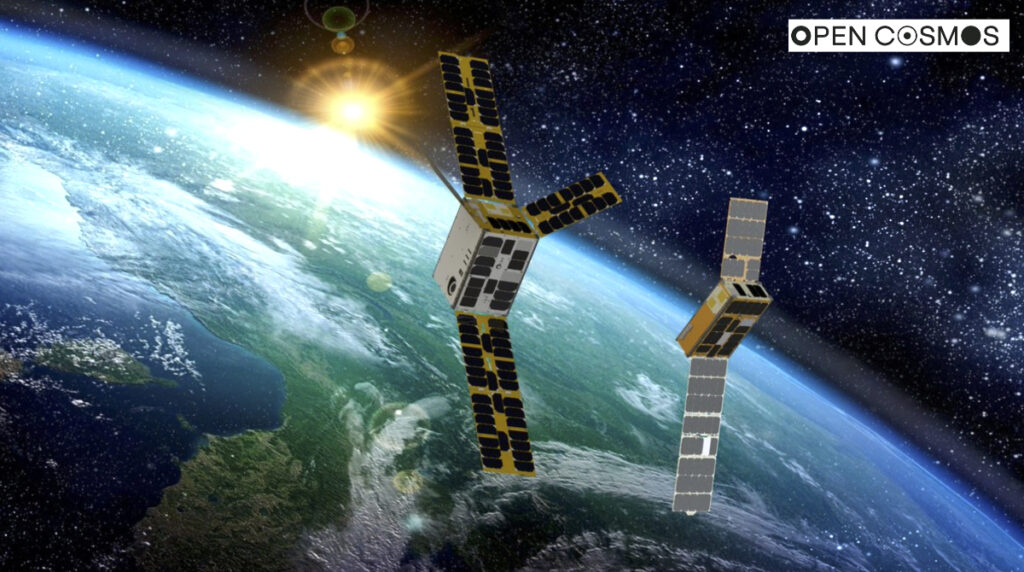
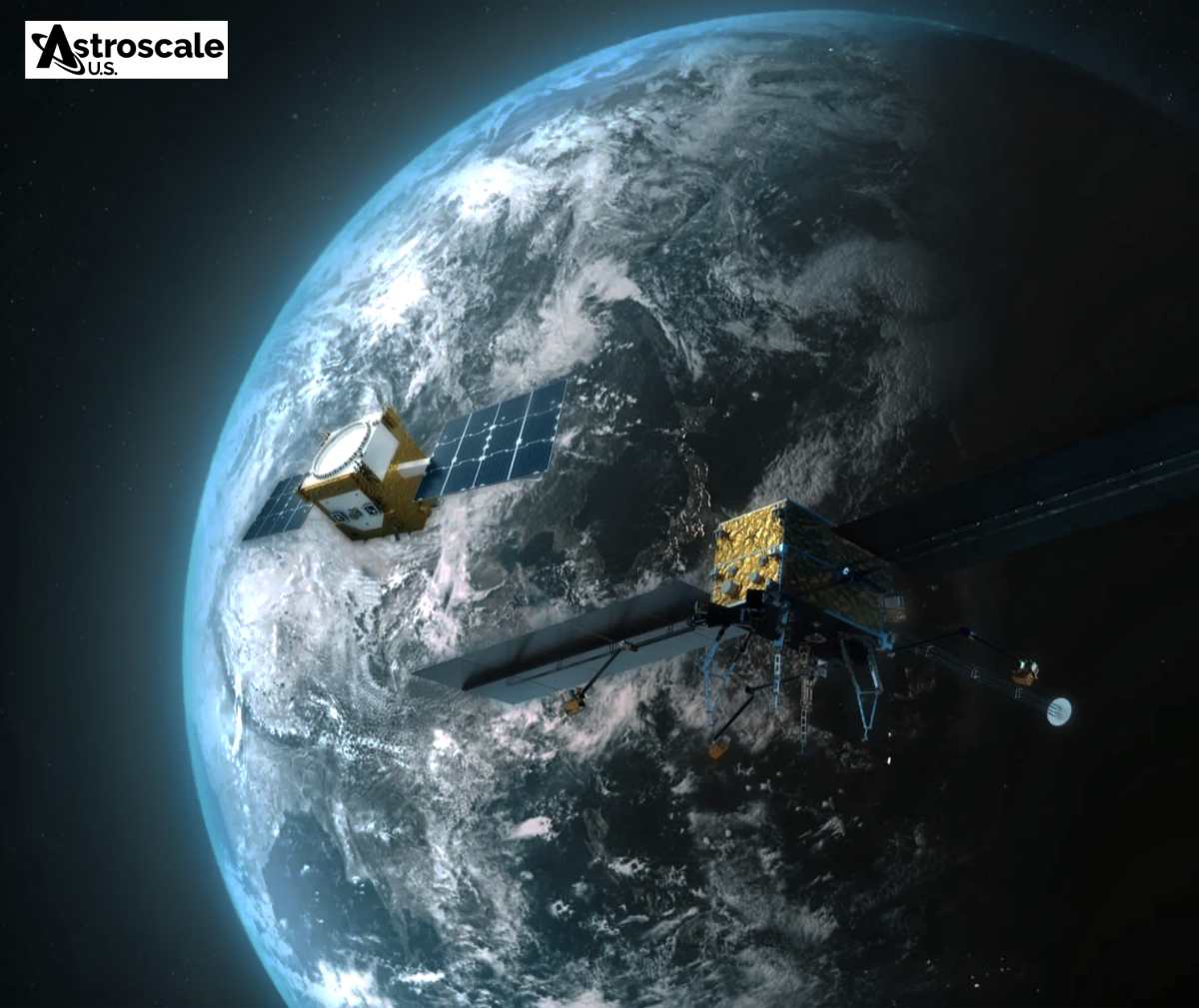
Open Cosmos is partnering with Astroscale UK to design and build two near-identical satellites that the company will operate for the mission. The satellites will fly in formation to observe and collect critical data using in-situ and remote sensing techniques, to enable faster space-based data acquisition. The payloads designed to characterize the ionosphere are being developed by the U.S. Naval Research Laboratory, the University of Bath and Surrey Satellite Technology Ltd.

Dstl Chief Executive, Dr. Paul Hollinshead, said, “Changes in space weather can have a critical impact on satellites which provide navigation aids, telecommunications and data transmission. Sustained investment in space research in collaboration with our international partners strengthens the security of UK interests in space.”

Nick Shave, Managing Director of Astroscale UK, said, “The Dstl Orpheus mission is an important opportunity for Astroscale to demonstrate our capability to deliver innovative missions in the Defence arena and in support of national security. We have successfully demonstrated our space mission implementation capability during our ELSA-d mission in 2021, and the ADRAS-J close proximity inspection mission in 2024. We are pleased to contribute our space mission design, development, integration and operations experience to ensure a successful mission which will also demonstrate the UK’s value to international partner nations.”

Rafel Jordà Siquier, founder and CEO of Open Cosmos, said, “We are thrilled to partner with Astroscale on the Orpheus mission to enhance space domain awareness. Our advanced satellite solutions will provide the critical data needed to understand the ionosphere and protect vital space infrastructure. This mission exemplifies the power of collaboration in driving innovation and ensuring the security of our space assets.”

Filed Under: Featured, News

  • « Go to Previous Page
  • Page 1
  • Interim pages omitted …
  • Page 22
  • Page 23
  • Page 24
  • Page 25
  • Page 26
  • Interim pages omitted …
  • Page 43
  • Go to Next Page »

Primary Sidebar

WEEKLY NEWSLETTER

Archives

  • September 2026
  • August 2026
  • July 2026
  • June 2026
  • May 2026
  • April 2026
  • March 2026
  • February 2026
  • January 2026
  • December 2025
  • November 2025
  • October 2025
  • September 2025
  • August 2025
  • July 2025
  • June 2025
  • May 2025
  • April 2025
  • March 2025
  • February 2025
  • January 2025
  • December 2024
  • November 2024
  • October 2024
  • September 2024
  • August 2024
  • July 2024
  • June 2024
  • May 2024
  • April 2024
  • March 2024
  • February 2024
  • January 2024
  • December 2023
  • November 2023
  • October 2023
  • September 2023
  • August 2023
  • July 2023
  • June 2023
  • May 2023
  • April 2023
  • March 2023
  • February 2023
  • January 2023
  • December 2022
  • November 2022
  • October 2022
  • September 2022
  • August 2022
  • July 2022
  • June 2022
  • May 2022
  • April 2022
  • March 2022
  • February 2022
  • January 2022
  • December 2021
  • November 2021
  • October 2021
  • September 2021
  • August 2021
  • July 2021
  • June 2021
  • May 2021
  • April 2021
  • March 2021
  • February 2021
  • January 2021
  • December 2020
  • November 2020
  • October 2020
  • September 2020
  • August 2020
  • July 2020
  • June 2020
  • May 2020
  • April 2020
  • March 2020
  • February 2020
  • January 2020
  • December 2019
  • November 2019
  • October 2019

© 2019–2026 SatNews

Insert/edit link

Enter the destination URL

Or link to existing content

    No search term specified. Showing recent items. Search or use up and down arrow keys to select an item.
      x
      Sign Up Now!

      Enjoy a free weekly newsletter with recent headlines from the global SmallSat industry.

      Invalid email address
      We promise not to spam you. You can unsubscribe at any time.
      Thanks for subscribing! You will now receive weekly SmallSat News updates.
      We love our advertisers.
      And you will too!

      Please disable Ad Blocker to continue... We promise to keep it unobtrusive.
      We promise not to spam you. You can unsubscribe at any time.
      Invalid email address
      Thanks for subscribing!