
• Skip to main content
  • Skip to primary sidebar
  • Home
  • News
  • Featured
  • More News ⌄
    • SatNews
    • SatMagazine
    • MilSatMagazine
  • Events ⌄
    • MilSat Symposium
    • SmallSat Symposium
    • Satellite Innovation
  • Contacts
  • SUBSCRIPTION

SmallSat News

You are here: Home / Archives for 2025

Archives for 2025

Embraer to offer Gogo Galileo connectivity as an aftermarket solution for Phenom 300 jets

June 9, 2025 by editorial

Embraer will offer the Gogo Galileo HDX connectivity solution for its Phenom 300 aftermarket customers through a Supplemental Type Certificate (STC) generated in partnership with Gogo.

Gogo’s fuselage-mounted antenna on top of an aircraft

The installation of the compact, half-duplex antenna and one Line Replaceable Unit will allow Embraer business jet owners to enjoy in-flight connectivity with performance that mirrors the best ground-based solutions.

Passengers using Gogo’s in-flight connectivity can expect performance at the same level they have at home or in the office, with 4K streaming, high-quality video conferencing, online gaming, and large file transfers. Leveraging the Eutelsat OneWeb Low-Earth-Orbit (LEO) satellite network, the Gogo Galileo HDX system offers a unique, reliable, and speedy connectivity solution.
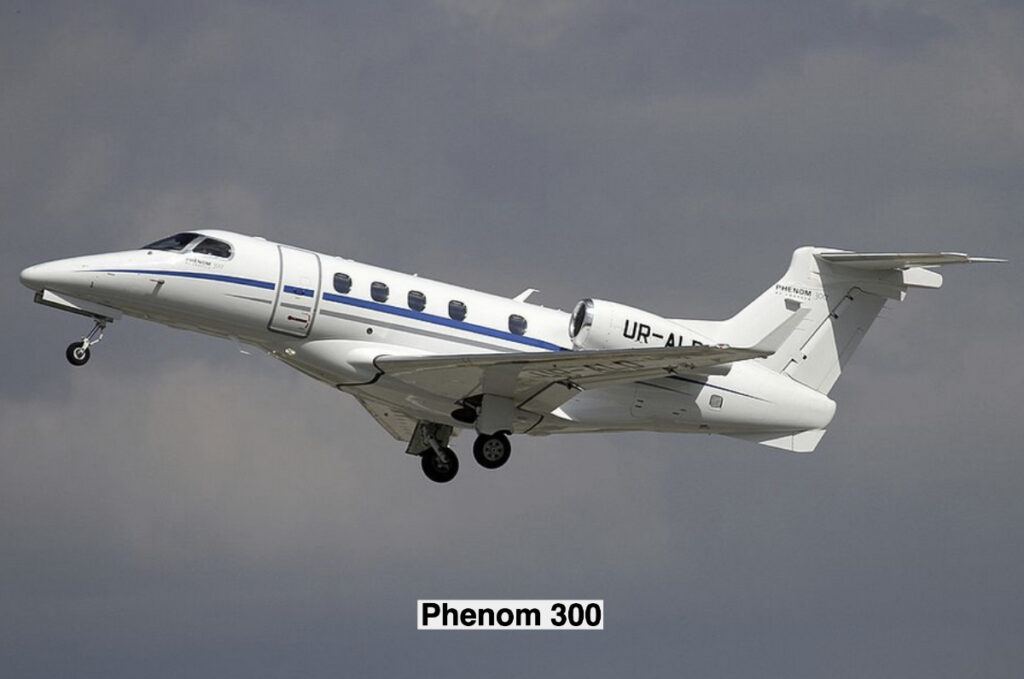
Embraer will provide the solution for the Phenom 300 model aircraft, followed by other configurations. Availability of the new connectivity solution will vary depending on region. FAA certification through Embraer is expected in Q3, 2025; ANAC in Q4, 2025; and EASA in Q1, 2026. The Phenom 300E model will follow suit, and dates will be announced in the future.

The Embraer Owned Service Center Network, and the Embraer Authorized Service Network will be available and prepared to support customers who wish to install the STC.

Filed Under: News

Enpulsion unveils their Nexus electric propulsion system

June 6, 2025 by editorial

Enpulsion has launched Nexus, the company’s most advanced propulsion system to date. Designed for spacecraft up to 500 kilograms, Nexus delivers significantly increased thrust and enhanced orbit-raising capabilities, addressing the growing demand for responsive, high-performance electric propulsion in smallsat missions.

Built on Enpulsion’s heritage Field Emission Electric Propulsion (FEEP) platform, Nexus is a direct evolution of the company’s TRL 9 Micro R3 system that leverages the flight heritage of more than 280 units on-orbit. With a thrust-to-power ratio optimized for early mission phases, Nexus mitigates one of the primary limitations traditionally associated with electric propulsion—initial orbit-raising speed. With this innovation, Enpulsion’s Nexus offers a groundbreaking alternative to Hall Effect Thrusters (HET) in the smallsat class.

Nexus is ideally suited for a range of mission profiles, including orbit-raising and deorbiting for SDA-class buses, constellation maneuvering and maintenance, responsive government and defense missions, and station keeping support for larger platforms. Nexus is also designed for flexible clustering and offers a compact, non-ITAR solution for international customers seeking high-thrust performance in a scalable architecture.

Nexus continues Enpulsion’s commitment to innovative spacecraft maneuverability throughout mission life, supporting sustainable satellite operations and celestial stewardship. Seamlessly integrating with Enpulsion’s Cortex Smart Mobility Interface (SMI), the system features no pressurized tanks or chemical energy storage and uses a solid indium propellant for safe handling.

Nexus development is already underway, with Preliminary Design Review (PDR) scheduled for Q3 2025, Critical Design Review (CDR) in Q1 2026, qualification completion in Q3 2026, and production deliveries starting in Q4 2026.

With Nexus, we’re building on everything we’ve learned from years of flight heritage and direct customer collaboration,” said Alexander Reissner, CEO & Founder of Enpulsion. “This system brings new performance to the table while staying true to what sets our propulsion apart: precision, simplicity, safety, and superior performance for the entire mission life.”

Filed Under: News

Eutelsat + Orange reinforce partnership with new multi-year LEO agreement

June 5, 2025 by editorial

Eutelsat Group and Orange have signed an agreement enabling Orange to reinforce its position in LEO satellite communications, leveraging Eutelsat’s OneWeb constellation.

Through this latest investment, Orange aims to strengthen its satellite solutions portfolio with LEO connectivity solutions providing high throughput, low latency, resilient and sovereign services to its enterprise and government customers wherever they are located and support mobile backhauling globally.

By combining OneWeb’s satellite coverage with its terrestrial networks, Orange will deliver seamless continuity of service and enhanced security as part of a digital inclusion approach for businesses allowing them to access critical services even in the most complex environments and underserved or remote areas of the globe.

  • New multi-year agreement builds on long-standing relationship between the two companies
  • Enhances access to the benefits of LEO satellite communications to Orange’s enterprise and government customers and supports mobile backhauling to meet demand globally
  • Further demonstrates the role of LEO connectivity as a complementary component of the global telecoms offer

Orange and Eutelsat enjoy a long-standing partnership. Orange is the exclusive reseller of KONNECT VHTS capacity for consumer broadband in France under an agreement dating back to 2020, while earlier this year Orange Middle East and Africa inked an agreement for capacity on the EUTELSAT KONNECT satellite to deliver satellite internet over its footprint.

Cyril Dujardin, President of the Connectivity Business Unit at Eutelsat said, “Eutelsat is delighted to further reinforce its relationship with Orange and looks forward to supporting its ambitious project to provide premium, ubiquitous connectivity to its customers. LEO-enabled services are becoming an integral technology for global telco operators. We are delighted to have been selected by Orange to enhance its service to its enterprise customers.”

Jean Louis Le Roux, EVP Orange International Networks, said, “It is of strategic importance for Orange to invest in the unique LEO European solution that provides best in class, resilient, tailored and sovereign digital connectivity services to serve our customers wherever they are located. The partnership with Eutelsat for OneWeb services is of vital importance to support their digital transformation.”

Filed Under: News

Impulse Space secures $300 million Series C

June 4, 2025 by editorial

Impulse Space has raised $300 million in a Series C funding round—one of the largest venture rounds in the history of the space industry—the round, led by Linse Capital, brings Impulse’s total capital raised to $525 million.

The pre-emptive raise is both a positive signal about Impulse’s business trajectory and a direct response to surging customer demand. With more than 30 signed contracts (totaling nearly $200 million in value) and growing interest from every sector, Impulse will use the funding to scale and execute a backlog of missions that require faster, more flexible, and more cost-effective in-space mobility.

This Series C funding will accelerate Impulse’s mission in three key ways:

  • Growing headcount across engineering, manufacturing, and mission operations while continuing to vertically integrate for cost, quality, and schedule control.
  • Accelerating R&D to expand mission profiles—including integrating electric propulsion for long-duration missions—and develop new vehicles for national security and NASA applications.
  • Scaling production on Mira and Helios to meet a growing backlog of demand.

Since the company’s founding in 2021, Impulse has quietly built a track record of technical achievement, successful missions, and commercial momentum. Led by Tom Mueller, a SpaceX founding member and the architect behind the Merlin engine family, Impulse is powered by a veteran team with a proven history of designing, testing, and delivering. This raise is more than capital—it affirms Impulse’s emergence as the front runner for in-space mobility.

In less than four years, Impulse Space has already:

  • Built and flown Mira—a high-thrust, highly maneuverable space vehicle for payload hosting and deployment—on two successful customer missions.
  • Executed what is believed to be the two largest orbital maneuvers ever by a nitrous-based propulsion system.
  • Secured more than 30 commercial and government contracts.
  • Developed Helios—a high-energy kick stage to rapidly deliver payloads to MEO, GEO, and beyond—on track to fly in 2026.
  • Launched a roadmap for a customizable GEO Rideshare Program, debuting in 2027.

Missions across all sectors—commercial, defense, and civil—are requiring unprecedented levels of in-space mobility. Commercial operators need faster, more cost-effective ways to deploy and reposition satellites. Defense agencies require tactically responsive capabilities to stay ahead of evolving threats. Civil missions depend on precise, flexible movement to support Earth Observation (EO) and deep space exploration—often on tight timelines and limited budgets. All of these sectors need mobility on demand.

Impulse’s team and proven track record is answering the call with its fleet of space vehicles designed to deliver reliable, cost-effective, and rapid transportation within, and across, orbits.

This raise comes as demand for Impulse’s vehicles skyrockets across the orbital economy. With Linse Capital leading, the round also includes participation from new investor DFJ Growth, as well as returning investors Valor Equity Partners, Founders Fund, Lux Capital, RTX Ventures, DCVC, Airbus Ventures, Spring Tide, First Principles Group, Balerion Space Ventures, Tamarack Global, and Trousdale Ventures.

We’ve proven that we can build fast and fly successfully. Now, the market is demanding more,” said Mueller, CEO and founder. “This raise helps us scale production and technical capabilities to meet that demand head-on. Achieving a true space age is going to require new levels of in-space mobility to move payloads quickly and precisely, both within and between orbits. That capability is what we’re building at Impulse.”

Impulse is tackling one of the most technically demanding challenges in aerospace with a speed and precision we rarely see,” said Bastiaan Janmaat, Managing Partner at Linse Capital. “Their vertically integrated approach, proven track record, and ability to execute quickly in this market give them a real advantage. We’re excited to support their vision as they build the infrastructure that will power the next generation of space missions.”

Filed Under: News

Exolaunch + INNOSPACE sign strategic partnership agreement for global smallsat launch services

June 3, 2025 by editorial

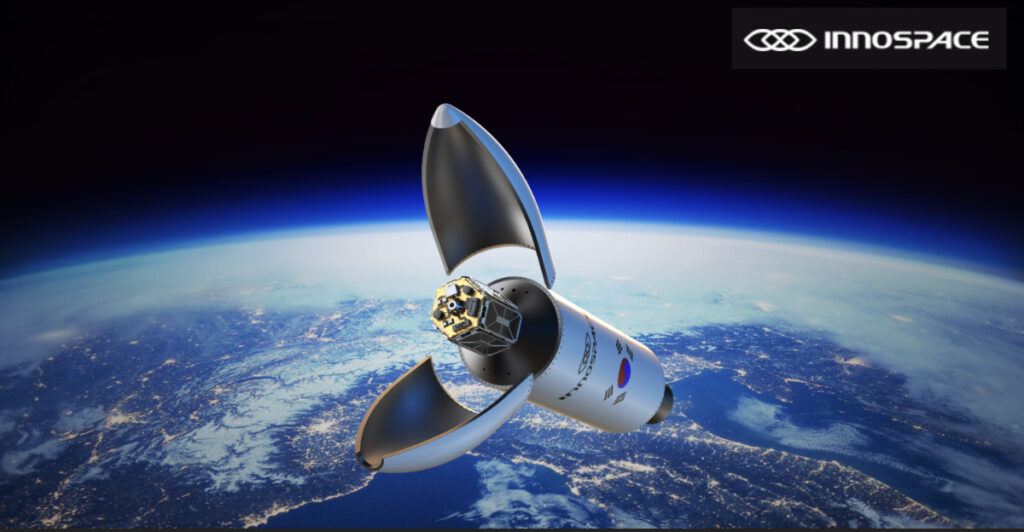
Exolaunch and INNOSPACE have signed a Strategic Partnership Agreement (SPA) to collaborate on launch integration services and broaden access to orbit for global satellite customers.

Through this agreement, Exolaunch and INNOSPACE will work together on launch manifest planning, mission management and payload integration for upcoming commercial launch campaigns. Exolaunch will provide its flight-proven separation systems for cubesats and microsatellites (smallsats), with its hardware positioned as the deployment solution for INNOSPACE customers across dedicated and rideshare missions.

The partnership also includes the use of Exolaunch’s EXOtube, a modular and scalable launch platform designed to optimize multi-payload configurations, increase mission flexibility, and enhance vehicle utilization. The teams will further collaborate on launch campaign planning, system integration, and on-site execution support.

Exolaunch’s mission heritage includes more than 530 satellites deployed across 36 missions, with customers ranging from leading commercial operators and startups to space agencies, leading universities and research institutions. INNOSPACE is currently ramping up launch services with the HANBIT series powered by hybrid and methane engines.

We’re proud to partner and formalize our work with INNOSPACE to bring new flexibility and reliability to global customers seeking access to orbit,” said Jeanne Allarie, Chief Commercial and Marketing Officer at Exolaunch. “Our separation hardware and mission services are designed to scale across launch vehicle platforms, and this partnership supports our commitment to enabling global launch diversity. We look forward to launching with the HANBIT series in the near future.”

Exolaunch’s hardware heritage and integration experience make them an ideal partner as we expand INNOSPACE’s launch cadence and international customer base,” said Soojong Kim, founder and CEO of INNOSPACE. “This collaboration will help us deliver smooth, safe, and efficient launch campaigns for a growing range of payload configurations.”

Photo of agreement signing participants courtesy of INNOSPACE

Filed Under: News

Colt, Honeywell + Nokia join forces to trial space-based quantum-safe cryptography

June 3, 2025 by editorial

Colt Technology Services (Colt), Honeywell and Nokia are collaborating to explore quantum-safe networking using SATCOM.

As part of the initiative, the companies are planning to test new ways of protecting encrypted optical network traffic from risks presented when quantum computing potentially breaks through traditional encryption methods, leaving data vulnerable to cyber threats.

Traditional encryption methods, or cryptography, rely on complex mathematical problems that are difficult for computers to solve, but quantum computers are expected to solve these problems faster, potentially breaking through traditional encryption methods and putting data at risk.

One promising advancement in this field is quantum key distribution (QKD), a technology central to the quantum evolution. However, QKD currently faces a major limitation: terrestrial physical constraints restrict its range to around 100 kilometers. To achieve global coverage of QKD, the technology can overcome these limitations by moving into space.

Colt, Honeywell and Nokia plan to explore quantum-safe cryptography, trialling space-based and subsea techniques which are resistant to quantum computing attacks.

The companies will trial quantum key distribution—a method used to securely share encryption keys between two parties—using LEO satellites for ultra-long distances and transatlantic reach. The three companies share a collective goal: enable customers to benefit from the huge potential of quantum computing in ways that help solve pressing challenges, while protecting them from risk.

This trial is expected to be of interest to organisations responsible for vast amounts of highly sensitive data such as financial firms, healthcare and pharmaceutical organisations and government bodies. Before the trial, Colt, Honeywell and Nokia have drafted a white paper with more detail on the risks, threats and opportunities presented by quantum cryptography. The paper, entitled ’The Journey to Quantum-Safe Networking’ is available for download at this direct link…

Fundamental to the collaboration between Colt, Honeywell and Nokia is a shared passion and determination to push the boundaries of technology to find solutions which safeguard our customers and help them succeed. At Colt, we do everything we can to make life easier for our customers. It’s why we’re taking action now to protect our customers from future cybersecurity risks, tackling tomorrow’s threats, today,” said Buddy Bayer, chief operating officer, Colt Technology Services.

With over five decades of aerospace expertise, Honeywell has witnessed and adapted to the evolution of the global communications landscape. We are proud to continue as a leader in innovating future-proof solutions such as the QEYSSat and QKDSat missions for the quantum era. This collaboration represents a significant step forward in securing the future of critical data: designing solutions to enhance resilience, ensuring long-term data security for critical infrastructure and communications systems,” said Lisa Napolitano, vice president and general manager, Space, Honeywell Aerospace Technologies.

Filed Under: News

Airbus, CNES + VAST reaffirm commitment to strengthening EO capabilities in Vietnam

June 3, 2025 by editorial

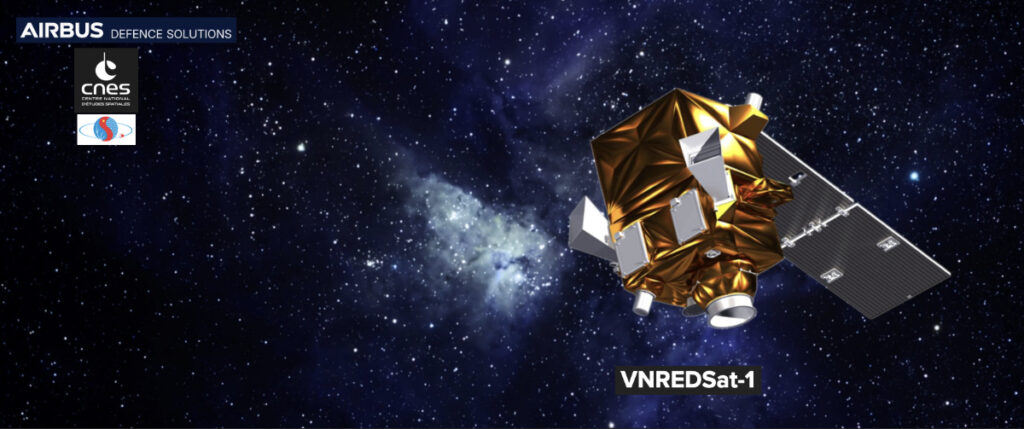
Airbus Defence and Space, the French Space Agency (CNES), and the Vietnam Academy of Science and Technology (VAST), have signed a Declaration of Intent (DoI) to strengthen their longstanding cooperation in the field of Earth Observation (EO), building on the success of the VNREDSat-1 space program.

This agreement reaffirms the three parties’ shared ambition to develop and implement the next generation of EO satellite systems in support of Vietnam’s climate change mitigation, disaster monitoring, and natural resource management.

Airbus and VAST will pursue deeper technical cooperation to ensure the continued performance of VNREDSat-1, while jointly exploring a future program, using advanced satellite technologies developed by CNES and Airbus under the CO3D constellation. The DoI also paves the way for comprehensive definition of a training and transfer of technologies solution as part of this program.

As part of this broader collaboration, CNES and VAST intend to expand their scientific and technical exchange in areas such as EO data while exploring the development of targeted applications based on shared data sets, and supporting capacity-building programs

The partnership continues the spirit of collaboration established with the launch of VNREDSat-1 by Airbus in 2013. The satellite, which has doubled its expected lifetime, under the operation of VAST, marked a major milestone in Vietnam’s space journey and continues to deliver valuable EO data for scientific and environmental applications.

Stéphane Vesval, Senior Vice President Sales Space Systems, Airbus Defence and Space, said, “The renewed cooperation between Airbus, CNES and VAST reflects a clear dedication to long-term partnerships that build sovereign capabilities and deliver meaningful societal value. We are proud to continue supporting Vietnam’s vision of becoming a leading spacefaring nation in Southeast Asia, and we look forward to enabling the future evolution of the VNREDSat program.”

Filed Under: News

Space Norway launches global LEO satellite services as an Authorized Starlink Reseller.

June 2, 2025 by editorial

Space Norway, Northern Europe’s leading satellite operator, has signed an agreement with Starlink by SpaceX to provide Low Earth Orbit (LEO) satellite connectivity services starting with immediate effect.

This contract further extends the company’s strategy of offering multi-orbit infrastructure combining geostationary (GEO), Highly Elliptical Orbit (HEO) and LEO satellites.

The Starlink satellite constellation will enable Space Norway to provide low-latency LEO services to maritime mobility clients globally as well as land-based enterprise clients throughout the EMEA region.

Maritime image with STARLINK antennas is courtesy of STARLINK

The Starlink LEO service is set to roll out in the coming weeks and will be supported by Space Norway’s customer portal, allowing clients to effectively manage their service by monitoring usage, as well as upgrading and downgrading their service. Clients will be able to purchase the necessary hardware to run Starlink services directly from Space Norway.

Jan Hetland, Space Norway’s Director, Data Services, said, “This agreement allows Space Norway to complement its leading maritime mobility services, and will significantly enhance critical connectivity for our land-based enterprise customers. With Starlink’s cutting-edge LEO network and commitment to technological innovation, we are delighted to deliver resilient, world-class connectivity to both current and new clients. Our expert engineering team and 24/7 support desk are dedicated to ensuring seamless integration and continuous service excellence for our customers’ connectivity needs.”

Space Norway’s CEO, Morten Tengs, said, “This agreement as an Authorized Starlink Reseller marks a significant milestone in our journey toward becoming a comprehensive multi-orbit service provider. By leveraging Starlink’s advanced LEO satellite network, we are positioned to deliver enhanced value to our diverse clients worldwide.”

Filed Under: News

Successful completion of JoeySat testing demonstrates 1st reliable multi-beam Ka-band Gateway 

June 1, 2025 by editorial

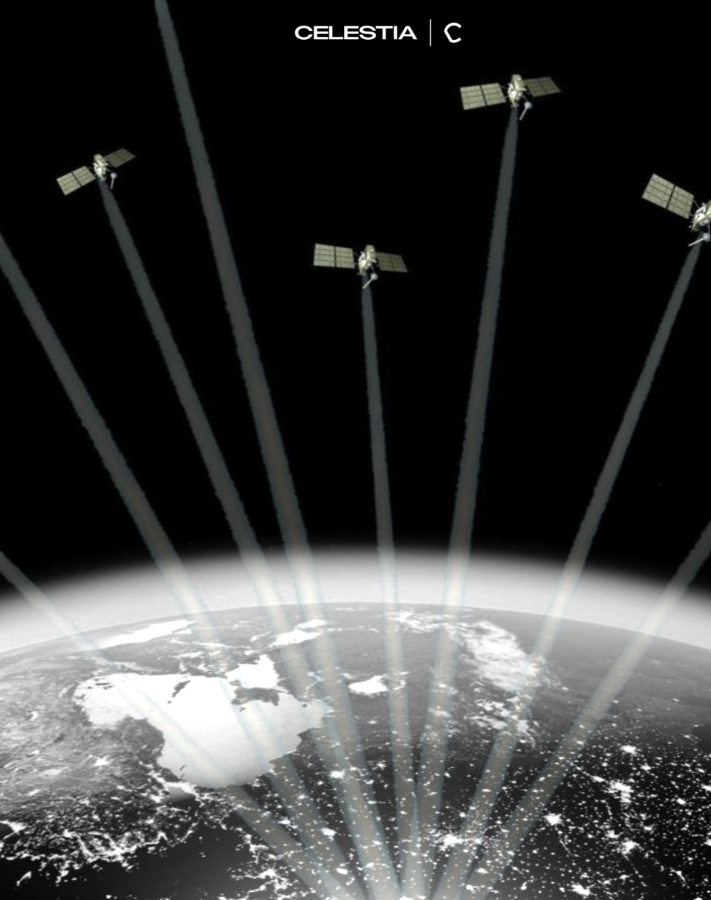
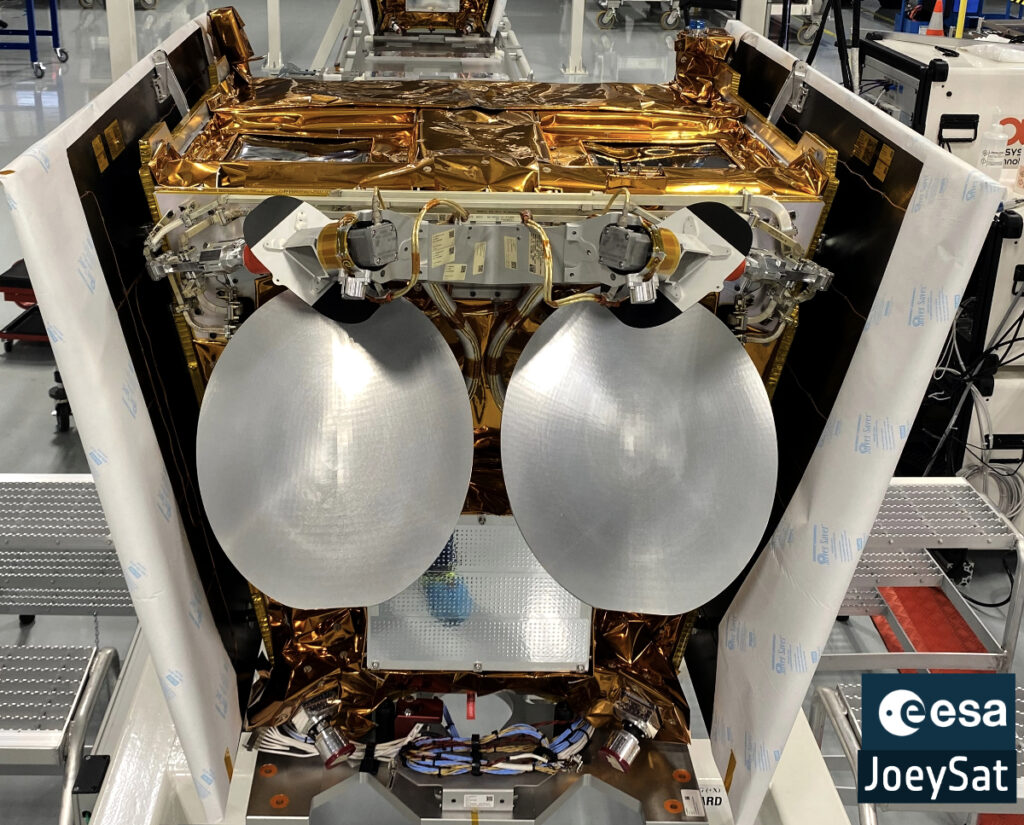
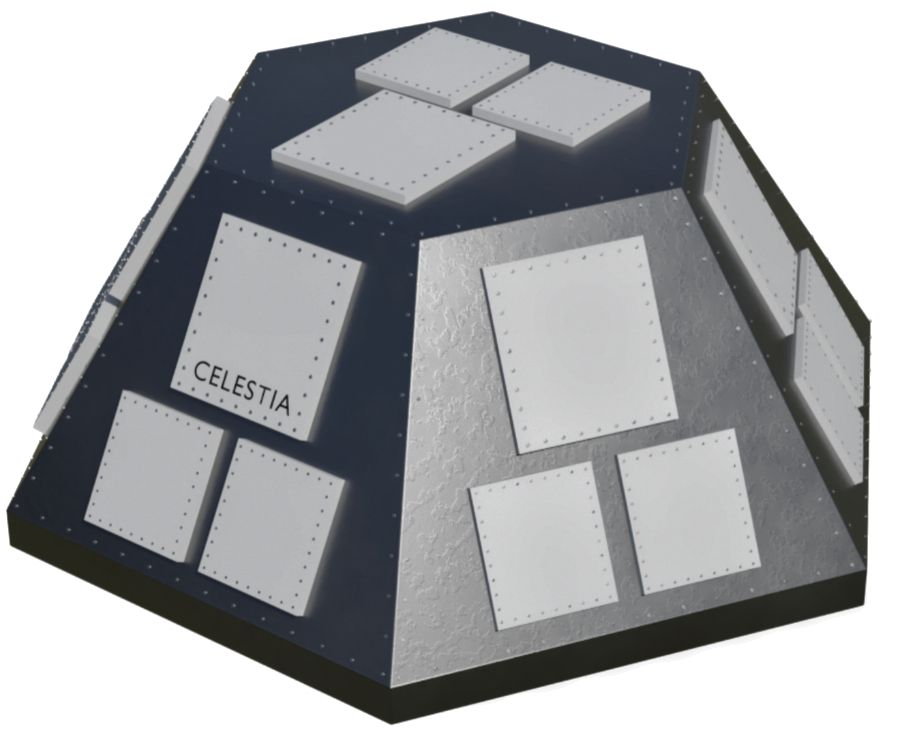
Celestia has announced that it has successfully completed the testing of its multi-beam Ka-band gateway with JoeySat, marking a major milestone in the evolution of satellite communications infrastructure. The system has been operational for nine months without the need for maintenance, reinforcing its robustness, reliability and performance in real world conditions.

JoeySat

The testing carried out by the Celestia team demonstrated the gateway’s ability to communicate successfully with spacecraft over an extended duration, highlighting the benefits of its design, which eliminates the need for moving parts. The system has been shown to be effective across a range of climate conditions, further validating its long-term viability.

Photo of the Ka-Band Gateway solution is|
courtesy of Celestia.

With this successful demonstration complete, Celestia is now advancing towards production capability, ready to offer a field-proven, resilient and efficient Ka-band gateway solution for next-generation satellite communications capable of tracking and communicating with up to 28 satellites simultaneously.

The development of this breakthrough technology was supported through the ESA Connectivity and Secure Communications Directorate’s Sunrise Partnership Project and received funding from European Space Agency – ESA and the UK Space Agency. The project was made possible through collaboration with key industry partners, including Eutelsat OneWeb, MDA Space and the Dundee Ground Station.

This achievement underscores the strength of our Ka-band gateway technology, paving the way for broader deployment,” said Dr. Malachy Devlin, Celestia CEO. “A maintenance-free system with high reliability and operational efficiency is a game-changer for the satellite industry, and we are excited to take the next step towards production capability.”

The extensive testing of the gateway multi-beam electronic antenna system with JoeySat orbiting at different altitudes, in challenging conditions, has proven the robustness of this innovative technology, providing an attractive solution for constellations where a high number of satellites are visible from a single point on Earth,” said Nicolas Girault from ESA.up-uk

Filed Under: News

Northrop Grumman invests $50 million in Firefly Aerospace to advance Eclipse™ medium launch vehicle

May 29, 2025 by editorial

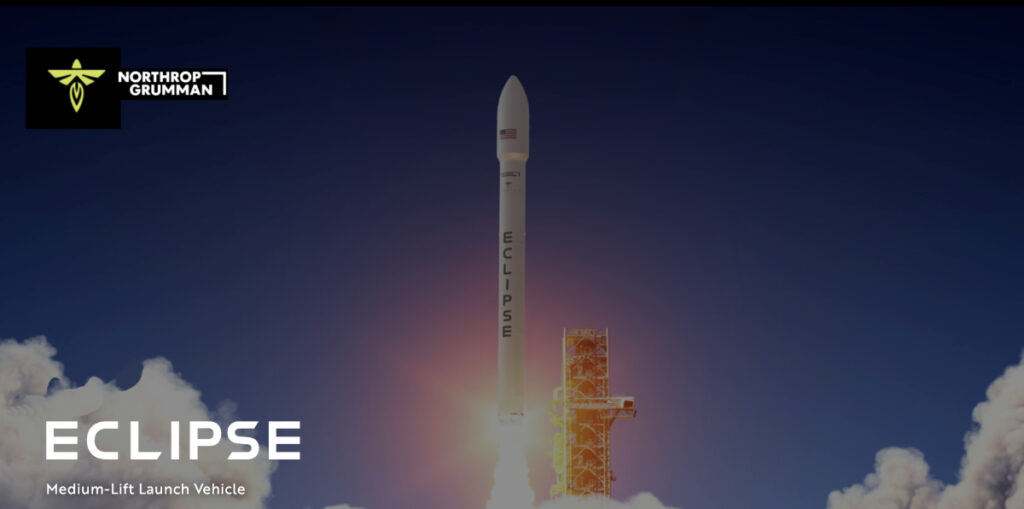
Northrop Grumman Corporation (NYSE: NOC) has invested $50 million into Firefly Aerospace to further advance production of the companies’ co-developed medium launch vehicle, now known as Eclipse™.

Filling a void in an underserved market, Eclipse will launch up to 16,300 kg of cargo to Low Earth Orbit or 3,200 kg of cargo to Geosynchronous Transfer Orbit. Eclipse will first launch from Wallops Island, Virginia, and be able to support space station resupply, commercial spacecraft, critical national security missions and scientific payloads for the domestic and international markets.

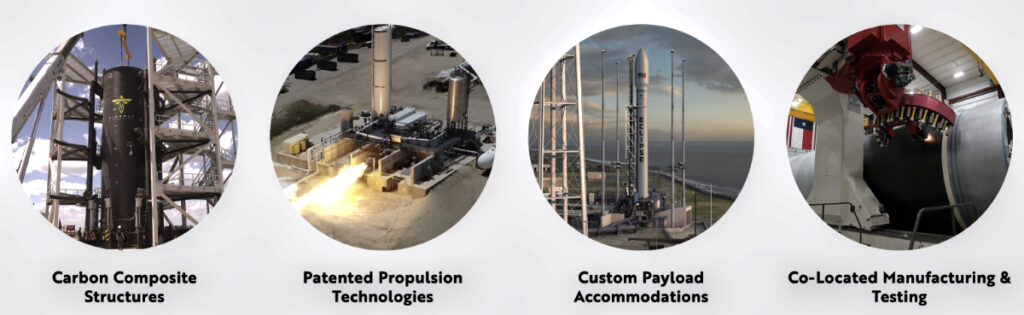
Built on Northrop Grumman’s Antares and Firefly’s Alpha rocket, Eclipse offers a significant leap in power, performance, production cadence and payload capacity. The launch vehicle retains the flight-proven avionics from Antares while delivering additional performance upgrades, including a larger 5.4 meter-class payload fairing. Eclipse also retains a scaled-up version of Alpha’s propulsion systems and carbon composite structures, allowing the team to rapidly build and test Eclipse with significant production efficiencies and economies of scale.

Firefly used the same patented tap-off cycle architecture from Alpha’s Reaver and Lightning engines for Eclipse’s Miranda and Vira engines, and completed mission duty cycle with a 206-second Miranda hot fire test, matching the longest time the engine will burn during a flight. Following several development test campaigns, flight hardware has been manufactured for the common dome propellant tanks, engine bay and interstage.

Eclipse is manufactured in Briggs, Texas, and Chandler, Arizona, and uses the same first stage Firefly is developing for the Northrop Grumman Antares 330 rocket. Both launch vehicles will use seven of Firefly’s Miranda engines.

Eclipse qualification testing is underway, with flight hardware developed, more than 60 Miranda engine hot fire tests performed to date and a targeted first launch no earlier than 2026.

Wendy Williams, vice president and general manager, launch and missile defense systems, Northrop Grumman, said, “Eclipse gives customers the right balance of payload capacity and affordability. Our partnership with Firefly builds on our capacity to provide crucial spaced-based communication, observation, and exploration for civil and national security customers.”

Jason Kim, CEO, Firefly Aerospace, said, “Firefly is incredibly grateful for Northrop Grumman’s investment that further solidifies our first-of-its-kind partnership to build the first stage of Antares 330 and jointly develop Eclipse. Eclipse represents two powerful forces coming together to transform the launch market, with decades of flight heritage and a rapid, iterative approach and bold innovation. With a 16 metric ton to orbit capability, Eclipse is a sweet spot for programs like NSSL Lane 1 and a natural fit to launch proliferated constellations in LEO, MEO, GEO and TLI.”

Filed Under: News

  • « Go to Previous Page
  • Page 1
  • Interim pages omitted …
  • Page 24
  • Page 25
  • Page 26
  • Page 27
  • Page 28
  • Interim pages omitted …
  • Page 43
  • Go to Next Page »

Primary Sidebar

WEEKLY NEWSLETTER

Archives

  • August 2026
  • July 2026
  • June 2026
  • May 2026
  • April 2026
  • March 2026
  • February 2026
  • January 2026
  • December 2025
  • November 2025
  • October 2025
  • September 2025
  • August 2025
  • July 2025
  • June 2025
  • May 2025
  • April 2025
  • March 2025
  • February 2025
  • January 2025
  • December 2024
  • November 2024
  • October 2024
  • September 2024
  • August 2024
  • July 2024
  • June 2024
  • May 2024
  • April 2024
  • March 2024
  • February 2024
  • January 2024
  • December 2023
  • November 2023
  • October 2023
  • September 2023
  • August 2023
  • July 2023
  • June 2023
  • May 2023
  • April 2023
  • March 2023
  • February 2023
  • January 2023
  • December 2022
  • November 2022
  • October 2022
  • September 2022
  • August 2022
  • July 2022
  • June 2022
  • May 2022
  • April 2022
  • March 2022
  • February 2022
  • January 2022
  • December 2021
  • November 2021
  • October 2021
  • September 2021
  • August 2021
  • July 2021
  • June 2021
  • May 2021
  • April 2021
  • March 2021
  • February 2021
  • January 2021
  • December 2020
  • November 2020
  • October 2020
  • September 2020
  • August 2020
  • July 2020
  • June 2020
  • May 2020
  • April 2020
  • March 2020
  • February 2020
  • January 2020
  • December 2019
  • November 2019
  • October 2019

© 2019–2026 SatNews

Insert/edit link

Enter the destination URL

Or link to existing content

    No search term specified. Showing recent items. Search or use up and down arrow keys to select an item.
      x
      Sign Up Now!

      Enjoy a free weekly newsletter with recent headlines from the global SmallSat industry.

      Invalid email address
      We promise not to spam you. You can unsubscribe at any time.
      Thanks for subscribing! You will now receive weekly SmallSat News updates.
      We love our advertisers.
      And you will too!

      Please disable Ad Blocker to continue... We promise to keep it unobtrusive.
      We promise not to spam you. You can unsubscribe at any time.
      Invalid email address
      Thanks for subscribing!