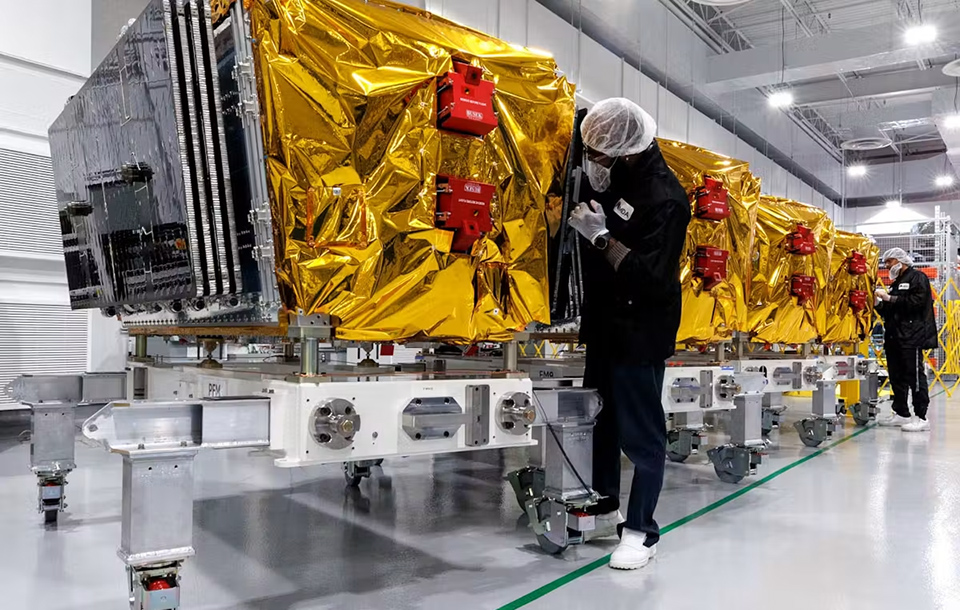
Motion and fluid control systems manufacturer Moog Inc. announced a new High Delta-V configuration for its flight-proven METEORITE satellite bus platform.
The platform variant provides increased thrust and expanded propellant storage capacity to support high-maneuverability missions—including rapid plane changes, active station-keeping, and dynamic space domain awareness—without requiring structural redesigns or lengthy qualification cycles.
Platform Architecture and High Delta-V Technical Specifications
The High Delta-V METEORITE variant adapts Moog’s standardized ESPA-class footprint to host higher-volume liquid propulsion modules and thruster gimbals. The bus incorporates TRL-9 radiation-tolerant avionics, high-efficiency power distribution units, and integrated motion control subsystems.
Key platform specifications include:
- Propulsion Subsystems: Integration of Moog’s Model-S Thruster Gimbal Assembly paired with high-velocity liquid thrusters and feed control valves.
- Avionics & Power: Space-qualified Integrated Avionics Units (IAUs) and power electronics rated for multi-year operations in harsh radiation environments.
- Mission Capabilities: Optimized for velocity-intensive mission profiles, including active threat avoidance, high-energy orbital transfers, space domain awareness (SDA), and tactical intelligence, surveillance, and reconnaissance (ISR).
Infrastructure Expansion and Production Footprint
The High Delta-V propulsion units are manufactured and tested at Moog’s propulsion facility in Niagara Falls, New York. To accommodate growing delivery volumes for defense and commercial smallsat operators, Moog expanded its dedicated clean-room footprint at the Niagara Falls site by over 80 percent, streamlining assembly, integration, and testing (AIT) schedules.
This capability builds on Moog’s 2025 propulsion module integrations across its ESPA-Grande class satellite platforms, reinforcing vertical integration across its East Aurora, New York; Gilbert, Arizona; and Niagara Falls, New York manufacturing centers.
“Our customers are asking for spacecraft that can move farther, respond faster, and carry increasingly capable payloads,” said Bob McArthur, General Manager of Moog Space Vehicles. “These enhancements reflect Moog’s continued investment in scalable, resilient spacecraft platforms that keep pace with today’s rapidly evolving space environment.”
Final spacecraft integration, payload accommodation, and testing for the High Delta-V METEORITE line take place at Moog’s satellite manufacturing facility in Denver, Colorado. The facility maintains operational capacity to integrate dozens of ESPA-class platforms annually, with multiple baseline METEORITE buses currently deployed on orbit supporting active national security space missions.