• Skip to main content
  • Skip to primary sidebar
  • Home
  • News
  • Featured
  • More News ⌄
    • SatNews
    • SatMagazine
    • MilSatMagazine
  • Events ⌄
    • MilSat Symposium
    • SmallSat Symposium
    • Satellite Innovation
  • Contacts
  • SUBSCRIPTION

SmallSat News

You are here: Home / Archives for 2026

Archives for 2026

Kepler Commissions First NVIDIA-Powered “Cloud Infrastructure” Across Optical Constellation

March 17, 2026 by donmcgee

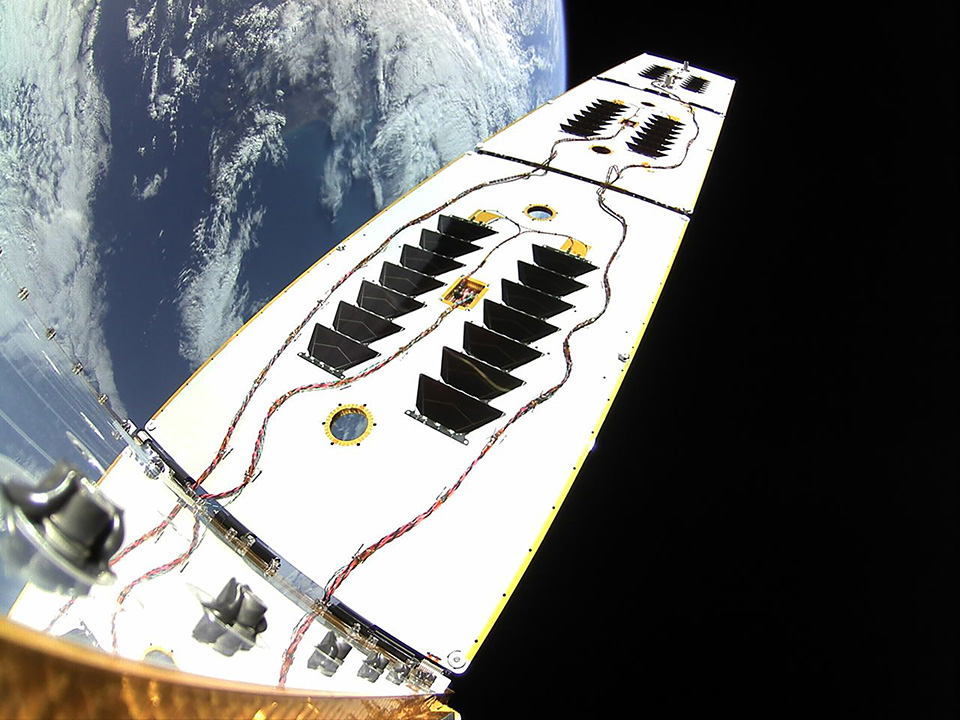
Kepler Communications announced the successful commissioning of distributed on-orbit computing across its Tranche 1 optical data relay constellation on Monday, March 16, 2026. This milestone transitions Kepler’s network from a high-speed data transport layer into a scalable, cloud-native processing environment, allowing customers to execute AI-driven workloads directly in orbit rather than relying on ground-based data centers.

The Hardware of Orbital AI

The “Kepler Compute” fabric is powered by 40 NVIDIA Jetson Orin modules, deployed as distributed edge GPUs across the ten satellites that make up the Tranche 1 “Aether” series. By integrating these modules with SDA-compatible optical inter-satellite links (OISLs), Kepler has created a decentralized compute cluster where workloads can scale dynamically across the constellation.

Component Specification
Compute Units 40x NVIDIA Jetson Orin Modules (4 per satellite)
Storage Terabytes of SSD-based onboard storage
Connectivity Real-time Optical Mesh (SDA & ESTOL compatible)
Architecture IP-based decentralized edge fabric
Deployment 10 Satellites (Tranche 1)

Overcoming the Downlink Bottleneck

Traditionally, Earth Observation (EO) and Signal Intelligence (SIGINT) operators have been limited by “downlink latency”—the hours-long wait for a satellite to pass over a ground station to dump raw data. By running NVIDIA CUDA-accelerated AI models directly on Kepler’s satellites, mission operators can perform:

  • Real-time Detection: Automated identification of wildfires, maritime anomalies, or military movements.
  • Data Optimization: Thinning massive imagery archives to transmit only “actionable pixels” to the ground.
  • Autonomous Tasking: Using on-orbit insights to automatically retask sensors without human intervention.

Strategic Context and Constellation Growth

The commissioning follows the successful January 2026 launch of the Tranche 1 satellites aboard a SpaceX Falcon 9. This deployment marks Kepler’s shift from technology pathfinders to a fully operational commercial network. The architecture is designed for high resiliency; if an individual satellite node becomes unavailable, the network’s software-defined routing can shift compute tasks to other nodes in the ring to maintain service continuity.

“By leveraging NVIDIA AI infrastructure in our optical network, data can be processed, routed, and acted on in orbit rather than waiting to return to Earth,” said Mina Mitry, CEO and co-founder of Kepler. “As we extend the scale of our infrastructure, this becomes a natural extension of terrestrial computing, enabling faster decision-making and new mission architectures.”

Tranche 2 and 100-Gigabit Links

Kepler plans to launch additional tranches every two years, with Tranche 2 scheduled for early 2028. Future tranches will introduce 100-gigabit optical technology and increased GPU density to support the growing demand for “Orbital Data Centers” (ODCs). This roadmap aligns with Kepler’s ongoing partnership with Axiom Space, which seeks to operationalize large-scale data processing for the first commercial modules of the Axiom Station.

Filed Under: Featured, News

Lynk Global Files for FCC Experimental License to Test Multi-Orbit D2D Relay

March 16, 2026 by donmcgee

Direct-to-Device (D2D) pioneer Lynk Global, Inc. has filed a request with the Federal Communications Commission (FCC) for an experimental license to begin technical validation of a first-of-its-kind multi-orbit relay architecture.

The application, accepted for filing on Monday, March 16, 2026, marks a critical step in Lynk’s strategic partnership with SES, aimed at utilizing Medium Earth Orbit (MEO) and Geostationary (GEO) assets to backhaul cellular traffic from Low Earth Orbit (LEO) “cell-towers-in-space.”

Solving the “Ground Station Gap”

Current D2D solutions, including those from SpaceX/T-Mobile and AST SpaceMobile, typically rely on a dense network of terrestrial ground stations to relay signals from satellites back to the public switched telephone network (PSTN). This requirement creates significant geographical limitations, particularly over oceans and in politically sensitive regions.

Lynk’s proposed experimental campaign seeks to bypass this bottleneck by testing inter-satellite links. Under the “multi-orbit, multi-spectrum” model, a user’s text or voice data is received by a Lynk LEO satellite, relayed upward to an SES mPOWER (MEO) or SES-17 (GEO) satellite, and then down-linked to an existing SES gateway. This approach potentially allows for “always-on” global connectivity without the capital-intensive deployment of thousands of new ground stations.

Merger Integration and Spectrum Expansion

The experimental request coincides with the finalization of Lynk’s merger with Omnispace. The combined entity, which will operate as Lynk Global Holdings, Inc., integrates Lynk’s operational LEO platform with Omnispace’s 60 MHz of globally coordinated S-band spectrum.

  • Frequency Bands: The testing will utilize S-band frequencies (2 GHz) compatible with 3GPP Non-Terrestrial Network (NTN) standards.
  • Network Depth: SES, a major shareholder in the merged company, provides access to over 70 satellites across MEO and GEO orbits.
  • Target Device: Unmodified standard 5G and LTE smartphones.

Strategic Validation

The FCC filing follows a series of successful 2025 field trials, including a notable demonstration in Portugal with MEO where Lynk proved its ability to provide two-way messaging and emergency alerts in remote maritime environments.

“The D2D market is entering a phase where reliability and guaranteed SLAs [Service Level Agreements] will separate the winners,” stated SES CEO Adel Al-Saleh during a briefing at MWC 2026. “By utilizing our multi-orbit edge, Lynk can deliver a lower-cost business case with higher resilience than LEO-only systems.”

Technical Objectives: The “Relay Payload”

The experimental license specifically covers the operation of a new “Relay Payload” slated for launch on Lynk’s next generation of “Tower” satellites. Key technical benchmarks include:

  • Latency Management: Measuring the round-trip delay of LEO-to-MEO-to-Ground paths for real-time voice applications.
  • Handover Stability: Testing the seamless transfer of a mobile session as LEO satellites move across the field of view of the MEO relay.
  • Interference Mitigation: Ensuring the high-power relay links do not disrupt adjacent terrestrial or primary satellite services.

Outlook for 2027

Pending FCC approval, testing is expected to begin in the third quarter of 2026. If successful, the multi-orbit relay function will become a standard feature of the “Lynk-Omnispace” constellation, which targets a 5,000-satellite deployment by 2030. This architecture is designed to provide broadband speeds directly to mobile phones, positioning the company to compete for the 5.2 billion existing mobile users globally who frequently traverse “not-spots” in terrestrial coverage.

Filed Under: Uncategorized

Titans of LEO in a Heavenly Price battle

March 12, 2026 by donmcgee

The global Low Earth Orbit (LEO) market has officially transitioned from a period of capacity scarcity to one of commoditization, This structural shift is driving a significant “pricing plunge” as established players like SpaceX’s Starlink face intensifying competition from Eutelsat OneWeb and the commercial ramp-up of Amazon’s rebranded “Amazon Leo” constellation.

Strategic Shifts in Orbital Connectivity

The transition marks a departure from the early 2020s, where “having capacity” was the primary market differentiator. According to the eighth edition of the Capacity Pricing Trends survey, the rapid expansion of mega-constellations has outpaced demand in several key regions, shifting the competitive battleground toward service integration and aggressive cost compression.

The report highlights that the entry of Amazon Leo—formerly Project Kuiper—into the commercial market in early 2026 has served as the primary catalyst for the current pricing battle. With Amazon now securing major reseller agreements, such as the February 2026 pact with MTN for maritime deployment, the market is bracing for a sustained drop in Average Revenue Per User (ARPU).

Historical Context and Market Maturation

The current landscape is the result of massive capital expenditure programs and strategic mergers initiated in 2023-2024. Eutelsat Group, following its merger with OneWeb, has pivoted toward a “hybrid” GEO-LEO model. This strategy aims to blend the high-capacity broadcast capabilities of geostationary assets with the low-latency advantages of LEO, a move reinforced by the appointment of Jean-François Fallacher as CEO in June 2025.

SpaceX remains the dominant force with roughly 9,500 working satellites in orbit, yet its focus has recently shifted toward vertical integration. Following the merger with xAI on February 2, 2026, the company is increasingly marketing Starlink as the primary conduit for space-based artificial intelligence, recently filing for an unprecedented “million-satellite” application to support orbital data centers.

Executive Perspective

“The market has fundamentally moved beyond capacity as a differentiator,” notes Grace Khanuja, Manager at Novaspace. “As supply expands and economics converge, the real battleground is end-user pricing and integrated service delivery. By accelerating this shift, Starlink is forcing the entire industry to rethink where and how value is created.”

Hardware and Network Specifications

To maintain margins in a falling price environment, operators are focusing on reducing ground segment costs:

  • Amazon Leo: Utilizing three hardware tiers, including the high-performance “Leo Ultra” (1 Gbps) and the “Leo Nano” terminal designed to make satellite connectivity more affordable for residential users.
  • Starlink: Leveraging Gen3 hardware with integrated “Edge” processing capabilities for enterprise users, reset by an aggressive cost structure targeting below $0.30 per gigabyte.
  • Eutelsat OneWeb: Currently adding 340 satellites to its fleet via a major contract with Airbus, targeting sovereign-grade connectivity and participation in the European IRIS² multi-orbit scheme.

Outlook for 2027 and Beyond

While consumers benefit from lower prices, the abundance of capacity has turned satellite internet into a commoditized service. Amazon faces a critical regulatory hurdle as it moves toward its July 2026 FCC mandate to have 50% of its initial constellation (roughly 1,618 satellites) operational. Meanwhile, Eutelsat is targeting LEO revenue growth of approximately 50% through 2027, banking on its position in the IRIS² project to secure long-term financial stability in an increasingly crowded orbital environment.

Filed Under: Uncategorized

NBN Co Unveils LEO Wholesale Pricing to Protect Market Share from Starlink

February 19, 2026 by editorial

SYDNEY — In a statement released Thursday, February 19, 2026, NBN Co launched an industry consultation on wholesale pricing for its upcoming residential Low Earth Orbit (LEO) satellite service, powered by Amazon Leo (formerly Project Kuiper).

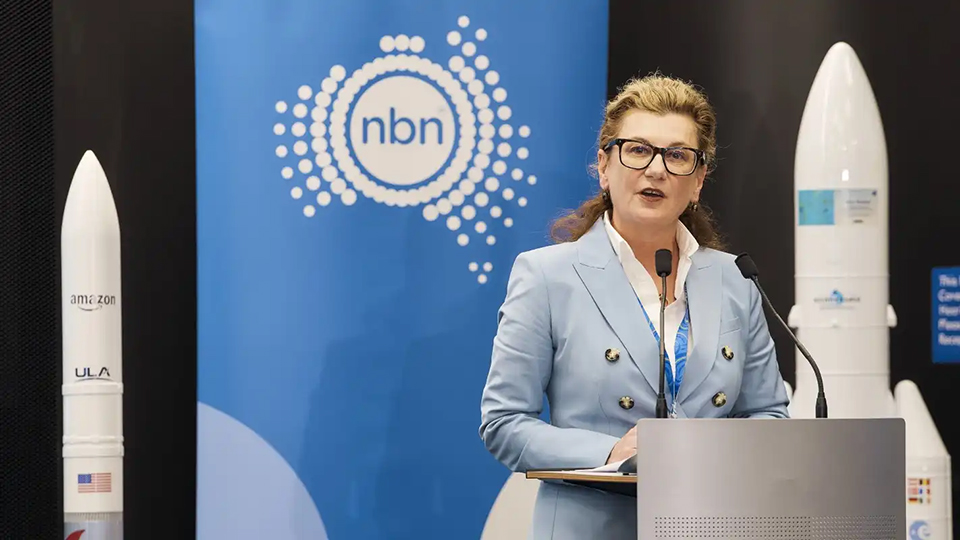
Ellie Sweeney, CEO of NBN Co

The move is a strategic attempt to lock in regional customers before a full-scale migration from the aging Sky Muster geostationary (GEO) fleet begins later this year.

The government-owned wholesaler is proposing an aggressive “introductory” price tier for existing satellite customers who upgrade early. Under the proposal, a new 50/10 Mbps LEO plan would be offered to retailers at a wholesale price of $35.84 per month—a rate designed to be equal to or lower than current Sky Muster Plus pricing.

Strategic Migration and “Amazon Leo” Integration

The partnership with Amazon, first announced in August 2025, positions NBN Co to compete directly with SpaceX’s Starlink, which currently dominates the Australian LEO market. Key parameters of the transition include:

  • Consolidated Tiers: NBN Co plans to fold its existing 12/1 Mbps and 25/5 Mbps Sky Muster tiers into a single 50/10 Mbps LEO-based service.
  • Hardware Incentives: To accelerate the shift, NBN Co is proposing to provide and install the new Amazon Leo receiving equipment at no cost to eligible existing customers.
  • Footprint: The service is expected to cover approximately 300,000 users in regional, rural, and remote Australia who lack access to fixed-line or fixed-wireless infrastructure.

Technical Performance and Resilience

The shift to Amazon Leo’s LEO constellation—which currently has more than 150 satellites in orbit and is scaling toward a 3,200-satellite mesh network—will provide significantly lower latency compared to the 600ms+ delay inherent in GEO satellites.

“We want all eligible customers, delivery partners and regional communities to be ready for a smooth transition,” said Gavin Williams, NBN Co Chief Development Officer, Regional & Remote. He noted that the LEO service is designed to deliver “city-fast” broadband to the most remote areas of the continent.

Timeline to 2030

NBN Co has established a multi-year roadmap for the complete decommissioning of its legacy satellite infrastructure.

  1. July – September 2026: Proof-of-concept trials are scheduled to begin in Tasmania.
  2. Q4 2026: Expected commencement of the full commercial rollout.
  3. Q4 2027: Deadline for the bulk of customer migrations to the LEO network.
  4. 2028 – 2030: Decommissioning of the two Sky Muster geostationary satellites, which are projected to reach end-of-life by the early 2030s.

Ellie Sweeney, CEO of NBN Co, emphasized that this transition is critical to ensuring the network remains “future-ready” and resilient. While Sky Muster will continue to operate until at least 2028 to ensure continuity, the company is already exploring options for the legacy assets once the transition to Amazon’s LEO network is finalized.

Filed Under: News

MTN Authorized to Provide SpaceX Government Satellite Connectivity

February 18, 2026 by editorial

FORT LAUDERDALE, Fla. — In a statement released Wednesday, February 18, 2026, MTN Satellite Communications (MTN) announced it has reached an agreement with SpaceX to become an authorized provider of SpaceX’s government-specific satellite connectivity ecosystem.

The agreement allows MTN to integrate SpaceX’s specialized government Low Earth Orbit (LEO) constellation—distinct from the standard commercial Starlink service—into its managed network offerings. This ecosystem is designed to meet the high-assurance security and resiliency requirements of defense, government, and energy sector clients.

Government-Grade Specifications and Hardware

Under the terms of the deal, MTN will deploy specialized user equipment tailored for military use cases, including secure Command and Control (C2) and Earth Observation. Key technical differentiators of the government-focused service include:

  • High-Assurance Cryptography: Security protocols designed for classified operations and sensitive data processing that exceed standard commercial encryption.
  • Proliferated LEO Architecture: Utilization of SpaceX’s densified constellation to ensure signal redundancy and resilience for mobile platforms in contested environments.
  • Ruggedized Deployment: MTN is launching a specialized version of its MTN Rugged Mini Kit, an all-in-one portable deployment system modified specifically for field-based government operations.

Executive Perspective

“The addition of this government-focused ecosystem from SpaceX is a crucial differentiator for MTN,” said Scott Davis, President and CEO of MTN Government Solutions. “Our aerospace, defense and government clients demand connectivity that is not just fast and global, but 100% secure and highly resilient. This move enables us to deliver communications with the highest assurance levels, perfectly complementing our existing Starlink-based commercial solutions.”

Immediate Rollout and Integration

The new services are being integrated immediately into MTN’s existing government and defense portfolio. This rollout follows the recent launch of MTN’s StarEdge Horizon, a Layer 2-based private network. While StarEdge Horizon manages enterprise traffic over commercial Starlink, this new SpaceX agreement provides the military-grade hardware and orbital priority required for mission-critical continuity at sea or in remote terrestrial sites.

Filed Under: News

SpaceX Unveils ‘Stargaze’ System to Revolutionize Space Traffic Management

February 18, 2026 by editorial

Addressing the critical challenge of increasing orbital congestion, SpaceX has officially unveiled “Stargaze,” a novel Space Situational Awareness (SSA) system designed to enhance the safety of the low Earth orbit (LEO) environment.

Stargaze utilizes the existing hardware on the Starlink constellation to track thousands of objects in near real-time, offering a significant upgrade over traditional ground-based radar systems.

A New Approach to Orbital Monitoring

Traditional Space Situational Awareness (SSA) relies heavily on ground-based sensors that observe satellites only a few times per day, often leading to large uncertainties in orbital predictions. By contrast, Stargaze leverages the nearly 30,000 star trackers distributed across the Starlink fleet. These sensors, originally designed for satellite orientation, now perform continuous observations of nearby objects, detecting approximately 30 million transits daily. This creates a dense, constantly refreshed map of LEO activity, allowing for the identification of potential collisions within minutes rather than hours.

Technical Performance and Collision Avoidance

The Stargaze platform autonomously aggregates observations to generate precise orbit estimates and predictions. A key feature is the generation of Conjunction Data Messages (CDMs) at a frequency previously unattainable in the industry.

  • Detection Frequency: 30 million transits per day across the fleet.
  • Latency: Conjunction screening results delivered within minutes.
  • Maneuver Detection: The system can identify uncoordinated maneuvers by third-party satellites—a capability demonstrated in late 2025 when Stargaze allowed a Starlink satellite to avoid a collision with an uncooperative spacecraft with only five hours’ notice.
  • Data Sharing: SpaceX is offering these screening results free of charge to any operator that submits its own ephemeris (trajectory) data to the platform.

Rationale: Mitigating the Risk of Orbital Debris

The launch of Stargaze comes as LEO becomes increasingly crowded with active satellites, spent rocket stages, and orbital debris. Irresponsible practices, such as anti-satellite tests or failing to share trajectory predictions, have heightened the risk of the Kessler Syndrome—a chain reaction of collisions. By providing a transparent, low-latency data layer, SpaceX aims to motivate other operators toward collaborative flight safety and more rigorous de-confliction.

Filed Under: News

New Survey Highlights Shift from Leisure to Professional Mobile Starlink Use

February 17, 2026 by editorial

Targeting the growing gap in data regarding on-the-go satellite internet usage, TRIO Flatmount released its 2026 Mobile Starlink Survey on February 17. The report, which compiled data from approximately 600 users, indicates a significant pivot in how mobile satellite terminals are utilized, moving away from purely recreational use toward essential income generation.

Shifting Demographics and Use Cases

The survey found that nearly half of respondents (47%) now depend on mobile connectivity for remote work or professional income. While leisure use remains a factor, the professionalization of mobile connectivity is the primary driver for recent hardware adoption.

The most common deployment environments for these mobile users include:

  • Recreational Vehicles (RVs): 37%
  • Marine Vessels: 15%
  • Van Builds: 11%
  • Passenger Vehicles: 10%

Geographic and Economic Factors

Geographically, the Western and Southern United States account for the majority of users (55%). However, a significant international presence is emerging, with 25% of respondents residing in Canada, Australia, Europe, or operating at sea.

One of the most striking findings in the 2026 data is the inelasticity of price regarding hardware and service. According to the report, 85% of respondents stated that price was not a primary factor in their purchasing decision. This suggests that reliability and the ability to maintain “office-like” connectivity in remote regions outweigh the cost of equipment and monthly subscriptions for the majority of the mobile workforce.

Rationale for Specialized Hardware

The surge in professional use has increased the demand for ruggedized, in-motion mounting solutions. Users cite the need for “park-and-play” or “drive-and-play” capabilities as essential to meeting work deadlines while traveling. This data aligns with the broader industry trend of Low Earth Orbit (LEO) constellations becoming the primary infrastructure for the global “digital nomad” economy.

Comparative Service Utilization: Land vs. Marine

Additional analysis reveals a stark contrast in service plan preferences between maritime and land-based users, driven primarily by geographic restrictions and data priority requirements.

The survey data indicates that while land-based users (RVs at 37%, Van builds at 11%) predominantly utilize the Roam Unlimited plan ($165/mo), maritime users (15%) are increasingly opting for Global Priority tiers despite significantly higher costs. This disparity is tied to Starlink’s “Ocean Mode” requirements, which mandate metered priority data for vessels operating beyond territorial waters.

Economic Disparity in Service Plans:

  • Land-Based Mobile: $165/month for unlimited “Best Effort” data.
  • Maritime/Coastal: Starts at $250/month for 50GB of “Global Priority” data.
  • High-Demand Marine: Scales to $2,150/month for 2TB of priority data.

Rationale for High-Cost Adoption

The finding that 85% of users do not view price as a primary factor is particularly evident in the maritime sector. For the 47% of respondents who depend on Starlink for remote income, the “Global Priority” plan is viewed as a business necessity rather than a luxury. Marine users reported a higher willingness to pay for “Priority Data” to ensure sub-second latency for video conferencing and cloud-based applications, which are often throttled on the standard land-based Roam plans during peak congestion.

Outlook for 2026 Infrastructure

The survey coincides with Starlink’s 2026 service upgrades, which introduce the “Performance Kit” capable of 400+ Mbps. TRIO’s data suggests that as mobile connectivity evolves, the market is splitting into two distinct tiers: recreational “Roam” users and professional “Priority” users, with the latter group driving the demand for specialized flatmount hardware to support in-motion operations.

Filed Under: News

Kepler Communications Names NanoAvionics as Preferred European Bus Provider for Optical Relay Missions

February 17, 2026 by editorial

On February 17, 2026, Kepler Communications announced the selection of Kongsberg NanoAvionics (“NanoAvionics”) as its preferred European satellite bus provider for upcoming hosted payload initiatives.

The partnership targets spacecraft with a mass of up to 500kg and focuses on integrating NanoAvionics’ platforms with The Kepler Network to provide satellite operators with real-time optical connectivity and on-orbit compute services.

Strategic Alignment and The Kepler Network

The agreement follows the successful SpaceX ‘Twilight’ mission on January 11, 2026, which deployed the first tranche of Kepler’s optical relay satellites. This partnership aims to simplify the adoption of optical communications by utilizing U.S. Space Development Agency (SDA) standards for secure, interoperable data transfer. Under the terms of the deal, NanoAvionics will offer Kepler’s optical data relay and edge computing services as an optional feature within its portfolio of inter-satellite link solutions.

Technical Specifications for Optical Inter-Satellite Links

The collaboration will initially focus on the MP42 microsatellite platform before expanding to NanoAvionics’ CubeSat lines. Key performance metrics for the integrated systems include:

  • Throughput: Connectivity speeds of up to 2.5 Gbps.
  • Latency: Near-real-time, sub-second data transport.
  • Data Volume: Capacity to handle terabytes of data per day.
  • Interoperability: Full alignment with SDA optical communication terminal standards.

Executive Commentary

“NanoAvionics has earned a reputation for being one of the most reliable bus providers, helping customers with demanding mission requirements scale quickly and with confidence,” said Mina Mitry, CEO and Co-Founder of Kepler Communications. “By integrating our optical network and on-orbit compute services with NanoAvionics’ platforms, we are enabling the transformation of space from a store-and-forward model to a responsive environment.“

Atle Wøllo, CEO of NanoAvionics, added: “Through this cooperation with Kepler, we are positioning NanoAvionics at the forefront of the industry’s adoption of optical communications. This industry-wide move can provide an exponential boost for sovereign national security missions and for commercial operators serving time-sensitive data.“

Timeline for Initial Operating Capability

The partnership comes as Kepler moves toward Initial Operating Capability (IOC) for its optical network in early 2026. As the network scales to 100 Gbps-class capacity with future tranches, NanoAvionics is positioned for priority access to these higher data rates. The combined offering is designed to meet the increasing demand for high-bandwidth, low-latency communications and on-orbit edge processing, allowing operators to run artificial intelligence and machine learning models directly in space.

Filed Under: Featured, News

The Hybrid Architecture Is No Longer Theoretical

February 12, 2026 by editorial

By Abbey White, Staff Writer, SatNews

Dispatch from SmallSat Symposium. Coverage and analysis from across the conference, tracking the forces shaping the next phase of the SmallSat market.

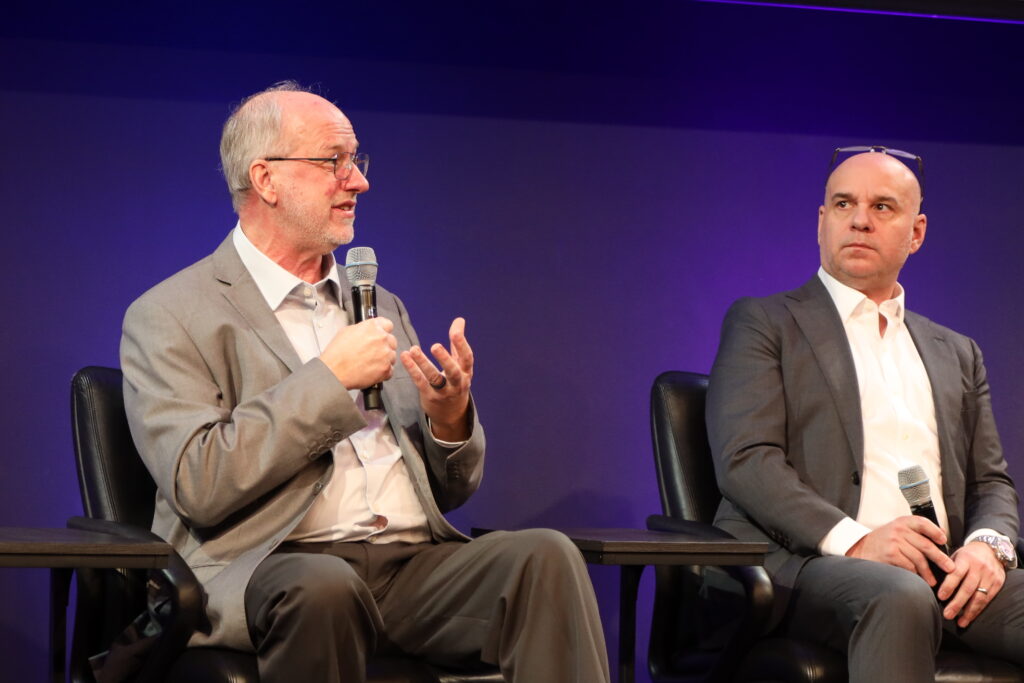
MOUNTAIN VIEW — If there was any doubt that the center of gravity in the commercial space sector has shifted from venture capital speculation to kinetic necessity, that doubt was shattered by the final session, Smallsats at the Tactical Edge – Hybrid ISR and Defense Integration. SmallSat Symposium this year was no longer about democratization for the sake of access. It is about survival, deterrence, and the industrialization of the kill chain.

The session’s panelists—representing the bleeding edge of propulsion, sensing, and compute—made one thing clear: Any distinction between a commercial satellite and a military asset has effectively evaporated.

The Department of War Reality

The rhetorical shift was immediate and jarring. Throughout the session, speakers abandoned the polite euphemism of defense in favor of a blunter reality.

“The Department of War? Doesn’t just roll off the tongue,” Impulse Space President Eric Romo remarked, acknowledging the strange bedfellows of Silicon Valley innovation and lethal force. Yet Romo admitted that the Pentagon is where the industry’s traction lies. This is not a reluctant partnership, but a necessary fusion driven by the Space Development Agency and its spiral development cycles, which have forced a terrifying pace on an industry used to moving slow.

The mandate is integration prior to crisis. Gone are the days when commercial space acted merely as a break-glass emergency backup for bandwidth surges. Commercial sensors are now weaving inextricably into the operational fabric before the first shot is fired.

Decision Superiority, Not Just Data

The panel dismantled the legacy obsession with resolution and bandwidth. In a contested environment, a pretty picture is useless if it arrives twenty minutes late. The new currency is latency.

Mark Gombo of HawkEye 360, a former Marine electronic warfare officer, cut through the technical noise. “I submit that it’s more about decision superiority,” Gombo argued. “It is the decision space to understand what’s going on.”

This aligns perfectly with the tactical realities seen in Ukraine and Gaza, where commercial signals are jammed and logistics chains are hunted by AI-enabled sensors. The objective is no longer to hoard terabytes of data, but to deliver a target track to a weapon system.

Jonny Dyer, CEO of Muon Space, reinforced this urgency, noting that whether tracking wildfires for first responders or missile trucks for the SDA, the requirement is identical: “We really have to rethink how we architect a lot of these core systems to enable what I think is really ultimately a latency driven requirement.”

The Friction of Space Compute

Despite the unity on mission, the panel fractured over the how. A sharp disagreement emerged regarding the role of edge computing and specifically whether to process data on the satellite or on the ground.

Jeff Janicik, CEO of Innoflight, championed the need for trusted, high-assurance on-orbit computing. To close the latency gap, he stipulated, the decision loop must move to space. “We all know that we can, if we can take the decision making and all the data collection and data fusion that is currently happening on the ground, bring it into the space,” Janicik claimed. The barrier is not the processor, he emphasized, but the trust required to let an AI make a decision that could trigger a kinetic effect.

Dyer was less convinced. In a moment of refreshing candor that typified the session, he pushed back against the industry obsession with putting data centers in orbit.

“I might be the outlier on this panel, but I just don’t think space compute’s that interesting of an idea,” Dyer said. “Ultimately, we shouldn’t care where processing is being done.”

Dyer’s skepticism highlights a critical engineering tension. Launching high-power GPUs into orbit creates massive thermal management headaches, a point reinforced by research on Andy Kwas’s work at Northrop Grumman. If the communications link is fat enough, processing on the ground is cheaper and easier. The satellites, Dyer argued, should look like a data center rack, but the software must be agnostic.

The Debris Euphemism

The most telling exchange occurred when moderator Andy Kwas raised the topic of debris removal and the recent DIU solicitation for de-orbiting unprepared satellites. In the polite society of civil space, this is an environmental discussion. In the context of a hybrid space war, it is a discussion about clearing lanes and neutralizing threats.

Romo stripped away the pretense entirely, asking the room, “Does anybody actually believe that that’s about space debris?”

The laughter was nervous but knowing. Janicik concurred, noting that right now the Department of War would be more focused on fighting through it.

The implication is heavy. Technologies developed for active debris removal are dual-use. If you can grab a dead satellite to de-orbit it, then you can grab a live adversary satellite to disable it. The industry is building ASAT capabilities under the guise of environmental stewardship, and everyone in the room knows it.

Are We Actually Ahead?

For all the bravado about American innovation, the panel ended on a note of strategic anxiety. When asked if the United States maintains superiority over peer adversaries, the answers were mixed.

Gombo was confident: “Absolutely.”

Romo, conversely, pointed to the lack of situational awareness in higher orbits, specifically Geostationary Orbit where critical national assets reside.

“I’m not so sure that—for battlefield awareness in the battlefield of GEO and probably MEO as well—that we actually are ahead,” Romo warned. He cited Chinese RPO-capable spacecraft performing inspection loops around U.S. assets with little public response.

The Bottom Line

The SmallSat Symposium has evolved. The New Space optimism of the past decade has hardened into a cold, pragmatic focus on national security. The validated gaps are lethal, the customers are wearing uniforms, and the companies that survive will not be the ones with the best PowerPoint slides. They will be the ones that can plug directly into a classified network and help a commander win a fight.

As Gombo bluntly advised the room: “If you bring me a capability that’s not on my gap list, you’re just bringing me another rock. And I don’t need any more rocks.”

Filed Under: Featured, News

SmallSat Launch Prices Rise as Competitors Stall on the Pad

February 12, 2026 by editorial

By Abbey White, Staff Writer, SatNews

Dispatch from SmallSat Symposium. Coverage and analysis from across the conference, tracking the forces shaping the next phase of the SmallSat market.

MOUNTAIN VIEW. The era of cheap, plentiful, and diverse access to space was supposed to be here by now. Instead, the industry arrived at the 2026 SmallSat Symposium only to find itself trapped in a bottleneck of its own making.

During the Small Payloads, Large Upmass session, the polite veneer of industry camaraderie barely concealed the tension in the room. The narrative of a vibrant, multi-provider marketplace has collapsed. In its place sits a single, dominant provider, SpaceX, flanked by a long line of customers paying premium rates to stand in line. While panelists from Rocket Lab, Stoke Space, and European challengers like Isar Aerospace and PLD Space offered visions of a diverse future, the audience is living in a present defined by scarcity.

The Aggregator is the New Gatekeeper

The most telling dynamic onstage was not between the rocket builders but rather centered on the empty chair left by the neutral broker. With the dissolution of Spaceflight Inc.’s independent brokerage model, Exolaunch has emerged as the primary funnel for the industry’s volume.

Kier Fortier, Chief Revenue Officer at Exolaunch, did not shy away from the congestion defining the current market. The days of simply booking a slot and flying are over; operators must now plan for delays as a fundamental business condition.

Fortier stated, “I do think rebooking now is just the baseline expectation to salvage your launch budget.”

This admission signals a profound shift. Launch is no longer a commodity you buy, but a probability you manage. The consolidation of demand onto SpaceX Transporter missions has created waitlists. Fortier noted that despite the high flight rates, “There are folks eager to get up on orbit, and there is some scarcity there.”

The Paper Rocket Problem

This scarcity stems from the simple fact that the challengers are late. Rocket Lab’s Neutron was originally promised for 2024, yet it is now targeting mid-to-late 2026. Brian Rogers, Rocket Lab’s Vice President of Global Launch Services, framed this delay as a necessary hurdle of scaling.

Rogers argued, “Building your first rocket is ridiculously hard. Building your next 10 at rate is actually way harder.”

While Rogers is correct, the market is unforgiving. Every month Neutron remains on the ground is a month where mega-constellations sign long-term contracts with SpaceX’s Falcon 9. The session moderator, Curt Blake, former CEO of Spaceflight, pressed the panel on the risks of a monopoly trap.

Devon Papandrew, VP of Business Development at Stoke Space, addressed the monopoly question head-on. He dismissed the idea that SpaceX’s dominance is accidental or unfair, attributing it instead to technical superiority that others failed to match in time.

“Why is SpaceX a monopoly today?” Papandrew asked, then answered, “They created a step change in capability that unlocked higher cadence and lower cost.”

Stoke Space is betting $510 million that partial reusability is a dead end. Papandrew contended that the only way to break the current pricing floor, now rising toward $6,500/kg, is full reusability.

“If you look what SpaceX has done with Falcon, it’s amazing,” Papandrew said. “But if you ask them what constrains their flight rate, it’s production of the upper stage.”

The Sovereign Illusion

For the European representatives, the challenge is existential. Isar Aerospace, PLD Space, and Avio are fighting for a slice of the market that isn’t captive to U.S. dominance. Yet their value proposition relies heavily on the sovereignty premium—the idea that European institutions will pay more to fly European.

Francesco Sgarbossa, Sales Director for Avio, was refreshingly blunt about the limitations of European cadence compared to the American juggernaut.

“We are aiming at six, which sounds like a very low number when you think about it when you see SpaceX launching 160 times,” Sgarbossa admitted. “But even going from four to six is a 50% increase and that requires huge investments.”

This is the cold math of the 2026 launch market. A 50% increase for Avio is a rounding error for SpaceX. Daniele Dallari of PLD Space tried to reframe the conversation away from mass commoditization, questioning the industry’s obsession with replicating the SpaceX Transporter model.

Dallari asked, “Do we need another Transporter program? Does the market really need another Transporter program?”

The market’s answer, evidenced by the rising prices and full manifests on Falcon 9, appears to be yes. Operators want reliability and low cost. They are less concerned with the bespoke orbital insertions Dallari’s Miura 5 might offer if the price tag is double that of a rideshare slot.

The Ancient Game of Launch Chicken

The friction between satellite readiness and rocket availability remains the industry’s favorite scapegoat. Brian Rogers described the constant shuffling of manifests as a necessary evil.

“We’re no strangers to the ancient game of launch chicken,” Rogers said. “Spacecraft can be late. And that can be a problem when you’re trying to plan a manifest.”

But in 2026, the chicken has come home to roost. The delays are no longer just about spacecraft. The launch vehicles themselves are the bottleneck. The regulatory environment has tightened, and the FAA licensing backlog is real. The flexible slotting discussed by the panel is merely a band-aid for a lack of capacity.

“You got to launch”

The dream of a dozen thriving small launch providers competing on price has faded. The reality is a barbell market: a massive, efficient monopoly on one end, and a collection of hopeful, delayed challengers on the other.

Until Neutron flies, Stoke reaches orbit, and the European launchers prove they can hit a cadence higher than single digits, the SmallSat customer has no real leverage. They will pay the $6,500/kg, they will sign the multi-launch agreements, and they will thank Exolaunch for the privilege of a slot.

As the session concluded, the applause felt less like a celebration of innovation and more like relief that the status quo, however expensive, is at least a known and predictable factor. Curt Blake ended the panel by asking about the challenge to survive. Brian Rogers offered the only advice that matters in an industry choked by promises.

“You got to launch.”

Filed Under: Featured, News

  • « Go to Previous Page
  • Page 1
  • Interim pages omitted …
  • Page 4
  • Page 5
  • Page 6
  • Page 7
  • Page 8
  • Interim pages omitted …
  • Page 10
  • Go to Next Page »

Primary Sidebar

WEEKLY NEWSLETTER

Archives

  • June 2026
  • May 2026
  • April 2026
  • March 2026
  • February 2026
  • January 2026
  • December 2025
  • November 2025
  • October 2025
  • September 2025
  • August 2025
  • July 2025
  • June 2025
  • May 2025
  • April 2025
  • March 2025
  • February 2025
  • January 2025
  • December 2024
  • November 2024
  • October 2024
  • September 2024
  • August 2024
  • July 2024
  • June 2024
  • May 2024
  • April 2024
  • March 2024
  • February 2024
  • January 2024
  • December 2023
  • November 2023
  • October 2023
  • September 2023
  • August 2023
  • July 2023
  • June 2023
  • May 2023
  • April 2023
  • March 2023
  • February 2023
  • January 2023
  • December 2022
  • November 2022
  • October 2022
  • September 2022
  • August 2022
  • July 2022
  • June 2022
  • May 2022
  • April 2022
  • March 2022
  • February 2022
  • January 2022
  • December 2021
  • November 2021
  • October 2021
  • September 2021
  • August 2021
  • July 2021
  • June 2021
  • May 2021
  • April 2021
  • March 2021
  • February 2021
  • January 2021
  • December 2020
  • November 2020
  • October 2020
  • September 2020
  • August 2020
  • July 2020
  • June 2020
  • May 2020
  • April 2020
  • March 2020
  • February 2020
  • January 2020
  • December 2019
  • November 2019
  • October 2019

© 2019–2026 SatNews

Insert/edit link

Enter the destination URL

Or link to existing content

    No search term specified. Showing recent items. Search or use up and down arrow keys to select an item.
      x
      Sign Up Now!

      Enjoy a free weekly newsletter with recent headlines from the global SmallSat industry.

      Invalid email address
      We promise not to spam you. You can unsubscribe at any time.
      Thanks for subscribing! You will now receive weekly SmallSat News updates.
      We love our advertisers.
      And you will too!

      Please disable Ad Blocker to continue... We promise to keep it unobtrusive.
      We promise not to spam you. You can unsubscribe at any time.
      Invalid email address
      Thanks for subscribing!