• Skip to main content
  • Skip to primary sidebar
  • Home
  • News
  • Featured
  • More News ⌄
    • SatNews
    • SatMagazine
    • MilSatMagazine
  • Events ⌄
    • MilSat Symposium
    • SmallSat Symposium
    • Satellite Innovation
  • Contacts
  • SUBSCRIPTION

SmallSat News

You are here: Home / Archives for editorial

editorial

Two Satellogic Smallsats Engage in Trip to LEO Placements

January 15, 2020 by editorial

The Satellogic team is proud to share that the company has successfully delivered two new spacecraft into LEO — the satellites were launched via a Long March 2D rocket from the Taiyuan Satellite Launch Center in China,  joining Satellogic’s eight other satellites that are already on-orbit.
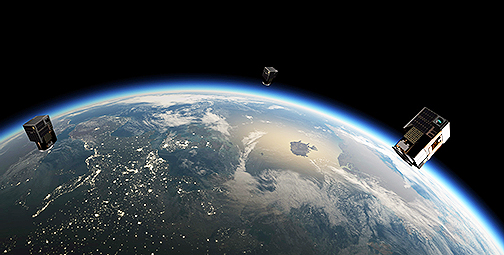
This launch is but the first of many planned such events scheduled for 2020. Satellogic is excited by how the company has grown alongside the firm’s customers’ needs and has increased the capabilities of the fleet, allowing the firm to consistently improve what is offered to our customers in regard to geospatial analytics and insights for decision making.
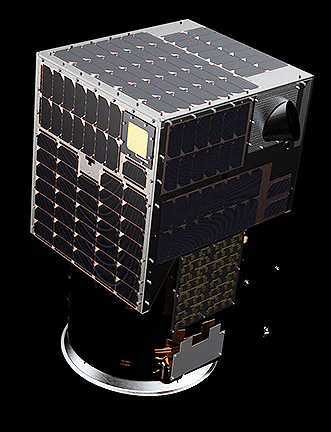
 

Both satellites are equipped with two payloads: a multi-spectral camera with 1 meter resolution and a hyperspectral camera with 30 meter resolution. During launch, each stage was completed successfully and on schedule, as follows:

  • 03:00 — 1st stage separation.
  • 03:05:30 — Main payload separation.
  • 03:06:00 — NewSat-7 separation, powered up for the first time in space. A new satellite was born: Sophie.
  • 03:06:30 — NewSat-8 separation, powered up for the first time in space. A new satellite was born: Marie.
  • 03:31 — First pass over Troll ground station in Antarctica, first telemetry packets received, Sophie and Marie are part of the Aleph constellation and welcomed to our space family! Early verification of satellites’ good health through beacons. Each subsystem responsible checked online telemetry.
  • 07:25 — Later pass over Svalbard North Pole ground station, tests and verifications completed to understand satellite health. Early orbits stored telemetry download, analysis and maneuvers for satellite stabilization and verification process performed by the Operations and Commissioning team at the company’s Buenos Aires office.

Filed Under: News

Beam Hopping Tech to be Included in Upcoming Smallsat Launch Set for 2021

January 15, 2020 by editorial

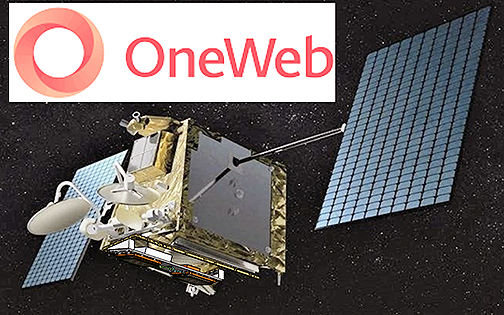
OneWeb and SatixFy UK now have plans to add a digital technology pathway payload that will include a full digital payload into OneWeb’s launch schedule during 2021.

This new technology will pave the way for satellites with a higher level of flexibility to efficiently support peaks in demand without oversizing the constellation.

The digital-transparent payload will demonstrate full Beam Hopping capability in both Forward and Return Links. It will include an On-Board-Processing subsystem capable of running independent links on the User and Gateway links on the ground with different capacities. Electronically Steered Multi-Beam Antenna with True Time Delay beam-forming, capable of pointing and switching multiple beams to multiple directions simultaneously, are an additional major feature.

This combination of features enables significantly higher throughput to designated areas within satellite coverage, while continuing to meet all national security concerns. Active areas are dynamically allocated much higher capacity than areas that do not require as much bandwidth and are just being scanned to gauge demand.

The Beam hopping capability also enables seamless handover for mobile devices, between beams and satellites. An example would be an Aero terminal for In-Flight Connectivity, able to operate on both LEO and GEO simultaneously and maintaining make-before-break connectivity between the rising and setting satellites. Maximum capacity can be directed from multiple sources to hot-spots like busy airports.

Advanced discussions are in progress for collaboration and support from the European Space Agency and the UK Space Agency.

OneWeb launched its first satellites in February 2019 and will shortly start a regular launch program to deliver global commercial broadband services at the end of 2021.

Yoel Gat, CEO of the SatixFy Group, stated the firm has designed several chip sets across the full satellite value chain, including terminals, payloads and gateways, creating a full eco-system based on the company’s own software. This new OneWeb satellite will demonstrate all of these capabilities.

Massimiliano Ladovaz, CTO at OneWeb, said this leading-edge satellite will be fully operational and is a great opportunity to showcase what can be delivered with the company’s payload technology. The improved performance, greater efficiency and targeted capacity, together with sophisticated ground infrastructure, puts OneWeb at the forefront of LEO communications network services.


Filed Under: News

Plant Power for Smallsats

January 14, 2020 by editorial

The first-ever, plant-powered sensor has successfully transmitted to a satellite in space — the pilot service, using plants as the energy source, has been developed by Plant-e and Lacuna Space.

The sensor doesn’t need batteries, due to the internal storage in the system, it’ll reduce cost, maintenance requirements and environmental impact. As long as plants continue to grow, electricity will be produced.

Combining the innovative energy harvesting technology developed by Plant-e with the extremely power efficient devices from Lacuna Space, these devices are completely self-sustainable and operate independent from sunlight, day and night.


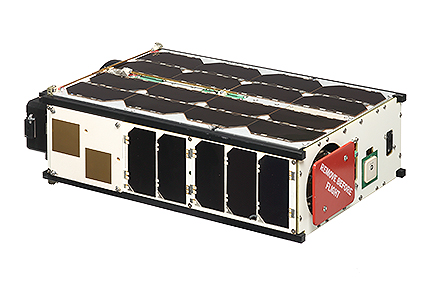
Photo of an M6P smallsat.

Image is courtesy of Lacuna Space.

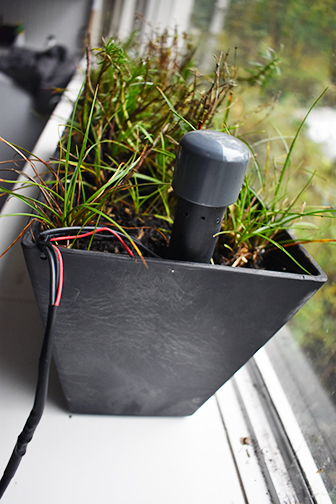
The Internet of Things (IoT) prototype device, developed by the two companies, uses the electricity generated by living plants to transmit LoRa messages about air humidity, soil moisture, temperature, cell voltage and electrode potential straight to Lacuna’s satellite.


Plant-e schematic.

Future applications can be found in critical data gathering from agricultural land, rice fields or other aquatic environments without the need for any external energy sources. The pilot service is supported by the ARTES program from the European Space Agency (ESA).

Plant-e, a start-up from Wageningen, the Netherlands, has developed a technology to harvest electrical energy from living plants and bacteria to generate carbon-negative electricity. The output generates enough energy to power LEDs and sensors in small-scale products.

Lacuna, based in the UK and the Netherlands, is launching a LEO satellite system that will provide a global IoT service. The service allows collecting data from sensors even in remote areas with little or no connectivity. Currently, Lacuna Space is offering a pilot service with one satellite in orbit,and three more satellites are awaiting launch during the next few months.

Frank Zeppenfeldt, who works on future satellite communication systems at ESA, said the organization is enthusiastic about this demonstration that combines biotechnology and space technology. A number of new opportunities for satellite-based Internet-of-Things will be enabled by this technology.

Plant-e CEO Marjolein Helder added that this collaboration shows how effective plant-electricity already is at its current state of development. The company hopes this inspires others to consider plant-electricity as a serious option for powering sensors.”

Rob Spurrett, CEO and co-founder of Lacuna Space, noted that this opens up a new era in sustainable satellite communications. There are many regions in the world that are difficult to reach, making regular maintenance expensive and the use of solar power impossible. Through this technology, the company can help people, communities and companies in those regions to improve their lives and businesses.

Filed Under: News

Forrester Reports: A 2020 Boom for the Indian Space Research Organization (ISRO)

January 14, 2020 by editorial


Chris Forrester

The Indian Space Research Organisation (ISRO) and its commercial arm, Antrix, have had a tough few years with legal actions as well as allegations of fraud and malpractice that resulted in criminal convictions for some key individuals — those problems now seem to be in the past, according to a report by journalist Chris Forrester at the Advanced Television infosite.

ISRO saw overall revenues last year (financial year 2018-2019) of some $255 million. ISRO says that for 2020 that revenue could rise to more than $300 million, helped by a growing success of rocket-building and launching and never-ending growth in demand for satellite communications.

Antrix Corporation Chairman and MD Director Rakesh Sasibhushan said the revenue will be shared between the corporation and New Space India Limited, a new commercial arm of ISRO that was established in March 2019 to collaborate with the private sector for the manufacture of launch vehicles.

ISRO says that the organization also has foreign launch contracts in place for U.S. and Singapore-based businesses.

Such is the demand that ISRO is building a third launch pad near in the Thoothukudi district of Tamil Nadu for smallsats. This need for additional launch pads has arisen as a result of the increase in the number of satellite launches from India. ISRO conducted 13 launches from its two launch pads since 2018.

Filed Under: News

Tyvak’s 6U Smallsat Achieves Mission Success

January 14, 2020 by editorial

Tyvak‘s latest 6U smallsat, Tyvak-0129, which launched on PSLV C48 in December, has achieved mission success — this was the company’s on-orbit technology demonstration mission and marks the inaugural flight of the company’s next-generation spacecraft systems, which performed beyond expectations.


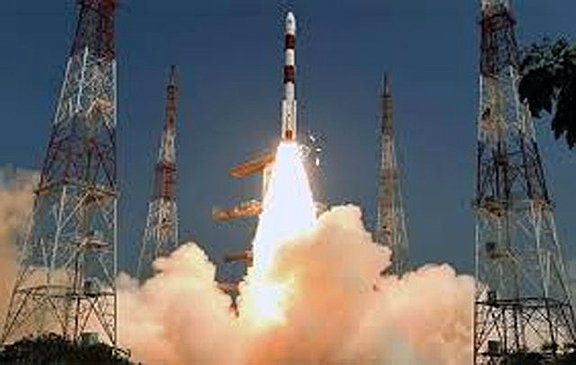
The launch of the Tyvak-0129 smallsat aboard a Polar Satellite Launch Vehicle (PSLV) rocket on December 11, 2019.

Photo is courtesy of ISRO.

Tyvak-0129 consists of 32 next-generation spacecraft subsystems, designed and qualified by Tyvak, based on proven design heritage. The technologies include communications, control, power, and computer processing systems.

All the vehicle’s subsystems, from reaction wheels to rad-hard watchdog, possess levels of autonomy and machine intelligence never before put into space. These technologies serve as the foundation for all future Tyvak missions, enabling Tyvak’s customers to achieve their mission objectives with flexible and scalable space-qualified systems.


Artistic rendition of Tyvak’s 6U smallsat platform.

Image is courtesy of the company.

The modular design of Tyvak’s new smallsat platforms allows spacecraft to be configured and manufactured in a few months for missions from 10 to 290 kg.

Anthony Previte, Tyvak’s CEO, said the company’s next-generation technologies are the result of advancements and investments made throughout multiple iterations of the firm’s spacecraft subsystems over the past six years. Tyvak-0129 is a prime example of how the company’s agile mission principles guide everything the firm accomplishes. With the successful on-orbit demonstration completed, Tyvalk will now commence the large-scale production of these subsystems in the firm’s state-of-the-art facilities using the company’s proven quality assurance processes.

Filed Under: News

New HQ for Rocket Lab

January 14, 2020 by editorial

Rocket Lab will open a new facility in Long Beach, California, that will serve as the firm’s Corporate Headquarters, provide incremental production capacity as well as Mission Control Center capabilities.

Construction on Rocket Lab’s Long Beach Complex has begun, with the facility scheduled for completion in the second quarter of 2020. The Complex has been designed to produce more than 12 full Electron launch vehicles each year to support a monthly launch cadence from Rocket Lab’s first U.S. launch site, Launch Complex 2 in Wallops Island, Virginia. Production facilities for Rocket Lab’s flagship Rutherford engine will also be expanded, with the company planning to produce more than 150 engines for the Electron launch vehicle in 2020.


Artistic rendition of Rocket Lab’s new Huntington Beach HQ.

Rocket Lab’s rapidly growing satellite manufacturing capabilities are a key driver behind the new Long Beach complex. In 2019 the company expanded beyond launch services and began designing and manufacturing Rocket Lab satellites to provide an end-to-end mission service. Based on flight-proven technology employed in the Electron Kick Stage, Rocket Lab satellites are a complete spacecraft solution for a range of LEO and Lunar orbit missions, from constellation development, through to technology demonstrations and hosted payloads. The new Long Beach complex will support end-to-end production and testing of Rocket Lab satellites, with the first satellites booked to launch on Electron from Q3 2020.

Rocket Lab’s first U.S-based Mission Control Center will also be located at the Long Beach Complex. By operating two launch sites and two Mission Control Centers, Rocket Lab can conduct simultaneous launches from Launch Complexes 1 and 2 to meet the growing need for responsive space launch.

Rocket Lab Founder and CEO, Peter Beck, stated that the new Long Beach Complex will mean larger production facilities, purpose-built customer experience areas and room to grow as the company enters another busy launch year. He said that as the company enters their third year of orbital launches and expand into satellite manufacturing, Rocket Lab is investing in major infrastructure and growing the team to provide frequent and reliable access to orbit for small satellites. Long Beach is an ideal location for the team; it has a vibrant space community, it’s close to many of the firm’s suppliers and offers room to grow. The City of Long Beach has been incredibly welcoming and we look forward to working with them to continue growing the local space economy.

There are currently more than 50 roles open for positions at the new Long Beach Complex, including positions in engineering, avionics production, Mission Management, Launch Services and more.

Filed Under: News

ANGELS Satellite’s Successful Payload 

January 13, 2020 by editorial

The test was conducted and was described as a complete success according to Thales Alenia Space.

The first test of the ARGOS NEO instrument on the ANGELS nanosatellite, launched on December 20, 2019, was a complete success. Messages from Argos beacons were picked up by the ARGOS NEO instrument and then transmitted to the L-band receiving station in Fairbanks, Alaska.

The beacon sending the first signals picked up by the instrument was on a Japanese fishing vessel off the coast of Australia.  Thales Alenia Space supplied the ARGOS NEO instrument to French space agency CNES in partnership with the company SKYLINKS.  These initial results confirm Thales Alenia Space’s expertise in The Internet of Things systems operating on very low power, a market segment pioneered in part by the Argos system. 

The French Space Agency, CNES, launched the first Argos nanosatellite, creating the beginning of a revolution in the Argos system. This nanosat is the prototype mission for Kinéis, a constellation of 25 nanosatellites with Argos instruments onboard that will be launched in 2022. This new constellation will receive data from around the globe with only 10-15 minutes between satellite passes, and is fully backward compatible with existing Argos beacons. It will also allow for more data transmission and two-way communication. This constellation represents a revolution in satellite telemetry. It will be the ultimate constellation for space IoT data collection and tracking, covering a wide-range of environmental applications.

Filed Under: News

Celestia Technologies Group Gathers Antwerp Space into their Fold

January 9, 2020 by editorial

Celestia Technologies Group has announced the company has acquired the satellite ground systems division of Antwerp Space, part of the Bremen-based OHB SE Group, in a deal that will boost Celestia’s existing expertise in EGSE and ground systems.

The Celestia Technologies Group is a pan-European network of SME’s based on innovation and development of high technology products for the space, defence, telecom and scientific markets.  The addition of the Belgian business adds further capability to the group, enabling Celestia to offer customers a wider product portfolio of EGSE products alongside complete turnkey solutions and also boosts annual group turnover by 4 million euros.

All the ground segment activities previously carried out by Antwerp Space will continue in a newly created Belgian entity Celestia Antwerp BV, a fully owned subsidiary focusing on the EGSE and ground segment activities that have been the cornerstone of the Antwerp Space business for the last 50 years.

Celestia already owns C-STS, formerly part of the SSBV group, also with a strong market position in satellite EGSE and modems for ground stations.  This latest move reinforces Celestia’s overall standing in the ground systems market, opening up a more extensive product portfolio alongside important technology and cost synergies.

The combined yearly turnover for both companies will be 8 million euros, representing 25% of the Celestia group turnover.

In welcoming the 17-strong team of Antwerp Space engineers to the business, Celestia group chairman José Alonso said the firm is delighted to announce the inclusion of one of Belgium’s most well-established and experienced ground station specialists into the Celestia fold. This strategic move brings together the best of two formerly competing companies, allowing the company to exploit synergies and knowledge while providing greater integration capabilities and expertise to customers.


Filed Under: News

December Set for York Space Systems Launch of their Hydra Mission Series

January 7, 2020 by editorial

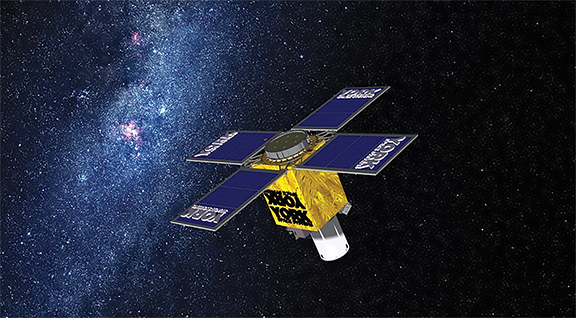
Aerospace company York Space Systems has announced their Hydra Mission Series, slated for launch later this year.

The Hydra series leverages York Space Systems’ fully qualified operational spacecraft design and standardized payload interfaces, as well as an enhanced production and integration facility for government and commercial manifested payload missions. Entry to orbit timelines for the Hydra series are as short as three months from delivery of customer hardware to York Space Systems’ headquarters in Denver, Colorado.

The Hydra series of spacecraft allows space system providers to flight qualify their new designs for payloads, subsystems, or components for an unprecedented low cost and minimal wait time. Customers will simply deliver their payloads to York Space Systems who will manage everything from spacecraft integration, environmental testing, launch procurement, ground systems, mission operations, licensing and insurance.

Customers can acquire the entire payload allocation for $3 million to orbit, with many securing a fraction of the available allocation for pro-rated amounts, as low as $300,000. Additionally, customers will receive completely confidential encrypted data from the Hydra series satellites on-orbit automatically. An added benefit to the program is the Hydra Flat-Sat software, a development tool that further streamlines payload integration and responsive access to space.

York Space Systems is currently seeking concepts that demonstrate the next generation of hybrid space architectures to further promote competition of ideas and collaboration among partners for a more resilient space ecosystem. The Hydra I mission is fully subscribed with multiple customers and is planned for launch in December of this year. As each spacecraft in the series becomes subscribed, York Space Systems will continue to prep quarterly missions for launch. The company is currently in discussions for payloads for Hydra II, which will launch three months after Hydra I.

The reveal of the new Hydra Series follows the successful launch of York Space Systems spacecraft earlier this year and the news of its manufacturing facilities expansion in Denver. The company also recently opened an office in Washington D.C., further signifying York Space Systems growth and momentum in the sector.

Melanie Preisser, VP of National Systems at York Space Systems, said the company began with a strategic focus on enabling advanced space solutions that leverage standardization. The firm’s customers are expanding the scope of innovation in the industry for both commercial and government use, and York remains committed to supporting their ambitions. With this new Hydra mission series, York Space Systems is to provide the next generation of space and space data entrepreneurs a simple and low risk method to accelerate their concepts to reality and strengthen the nation’s space infrastructure.

Filed Under: News

Blue Canyon Technologies to Build Smallsat Bus for MethaneSAT

January 7, 2020 by editorial

Blue Canyon Technologies (BCT) has been selected by MethaneSAT LLC (“MethaneSAT”) to develop and build the spacecraft bus for this groundbreaking mission.

MethaneSAT is a subsidiary of the non-profit Environmental Defense Fund (EDF). The donor-funded mission, which is scheduled to launch in 2022, will provide global, high-resolution detection and quantification of methane emissions from oil and gas facilities, as well as measure emissions from other human-generated methane sources.


Artistic rendition of MethaneSAT on-orbit.

Image is courtesy of MethaneSAT™.

This comprehensive data will be made available to the public, and provide companies, governments and other stakeholders with a new way to track, quantify and take actionable steps to reduce methane emissions.

Human-generated methane emissions are responsible for more than 25 percent of global warming we currently experience. EDF calculates that reducing global oil and gas methane emissions 45 percent by 2025 would deliver the same near-term benefit to the climate as closing 1,300 coal-fired power plants.


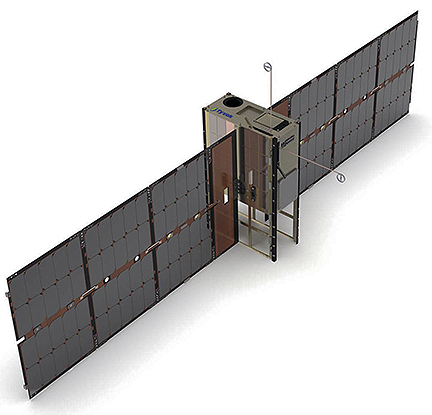
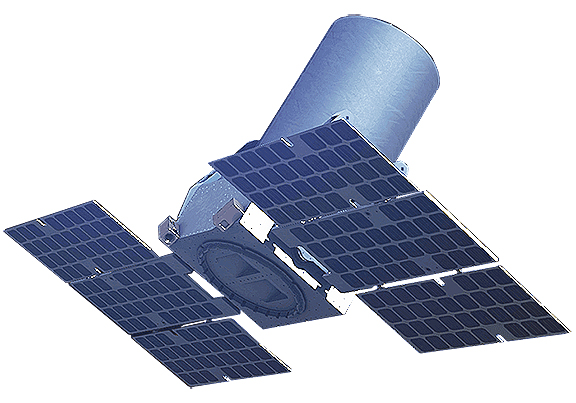
Blue Canyon Technologies’ X-SAT.

Blue Canyon’s diverse spacecraft platform has the proven capability to enable a broad range of missions and technological advances for the New Space economy, further reducing the barriers of space entry. BCT is currently building more than 60 spacecraft for government, commercial and academic missions. The company has doubled in size over the past 12 months and plans to open its new 80,000-square-foot headquarters and production facility in 2020.

The satellite will be designed using BCT’s newest X-SAT line of spacecraft, specifically the X-SAT Saturn-Class which can carry payloads up to 200 kg. As with other BCT X-SAT buses, the X-SAT Saturn-Class is a high-agility platform, enabling the onboard instrument to collect data and revisit sites frequently. The X-SAT Saturn-Class’s compact profile is designed to maximize the volume, mass and power available for the methane measuring instrument.

George Stafford, President and CEO of Blue Canyon Technologies, said that reducing methane emissions is critical to slowing the pace of climate change, and the firm is proud that the company’s small satellite technology will help MethaneSAT [and Environmental Defense Fund] with this important mission. Blue Canyon’s technology will make it less expensive and quicker to launch, allowing them to collect more data sooner.”

Dr. Steven Hamburg, MethaneSAT project co-lead, added that MethaneSAT has a unique and demanding mission involving some of the most seasoned, innovative organizations and individuals from both the commercial and public aerospace sectors. Blue Canyon Technologies is a best-in-class bus provider and the organization is in their ability to deliver a spacecraft that meets the demanding performance requirements of this mission.

Filed Under: News

  • « Go to Previous Page
  • Page 1
  • Interim pages omitted …
  • Page 324
  • Page 325
  • Page 326
  • Page 327
  • Page 328
  • Interim pages omitted …
  • Page 338
  • Go to Next Page »

Primary Sidebar

WEEKLY NEWSLETTER

Archives

  • March 2026
  • February 2026
  • January 2026
  • December 2025
  • November 2025
  • October 2025
  • September 2025
  • August 2025
  • July 2025
  • June 2025
  • May 2025
  • April 2025
  • March 2025
  • February 2025
  • January 2025
  • December 2024
  • November 2024
  • October 2024
  • September 2024
  • August 2024
  • July 2024
  • June 2024
  • May 2024
  • April 2024
  • March 2024
  • February 2024
  • January 2024
  • December 2023
  • November 2023
  • October 2023
  • September 2023
  • August 2023
  • July 2023
  • June 2023
  • May 2023
  • April 2023
  • March 2023
  • February 2023
  • January 2023
  • December 2022
  • November 2022
  • October 2022
  • September 2022
  • August 2022
  • July 2022
  • June 2022
  • May 2022
  • April 2022
  • March 2022
  • February 2022
  • January 2022
  • December 2021
  • November 2021
  • October 2021
  • September 2021
  • August 2021
  • July 2021
  • June 2021
  • May 2021
  • April 2021
  • March 2021
  • February 2021
  • January 2021
  • December 2020
  • November 2020
  • October 2020
  • September 2020
  • August 2020
  • July 2020
  • June 2020
  • May 2020
  • April 2020
  • March 2020
  • February 2020
  • January 2020
  • December 2019
  • November 2019
  • October 2019

© 2019–2026 SatNews

Insert/edit link

Enter the destination URL

Or link to existing content

    No search term specified. Showing recent items. Search or use up and down arrow keys to select an item.
      x
      Sign Up Now!

      Enjoy a free weekly newsletter with recent headlines from the global SmallSat industry.

      Invalid email address
      We promise not to spam you. You can unsubscribe at any time.
      Thanks for subscribing! You will now receive weekly SmallSat News updates.
      We love our advertisers.
      And you will too!

      Please disable Ad Blocker to continue... We promise to keep it unobtrusive.
      We promise not to spam you. You can unsubscribe at any time.
      Invalid email address
      Thanks for subscribing!