• Skip to main content
  • Skip to primary sidebar
  • Home
  • News
  • Featured
  • More News ⌄
    • SatNews
    • SatMagazine
    • MilSatMagazine
  • Events ⌄
    • MilSat Symposium
    • SmallSat Symposium
    • Satellite Innovation
  • Contacts
  • SUBSCRIPTION

SmallSat News

You are here: Home / Archives for editorial

editorial

Arianespace Successfully Lifts Multiple Payloads to Orbit

December 18, 2019 by editorial

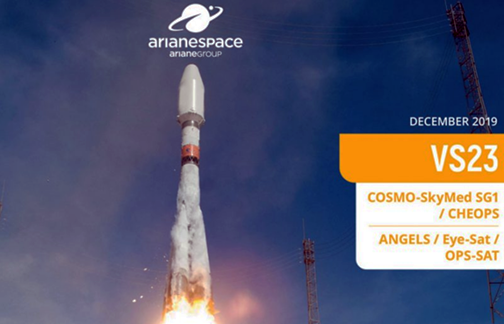
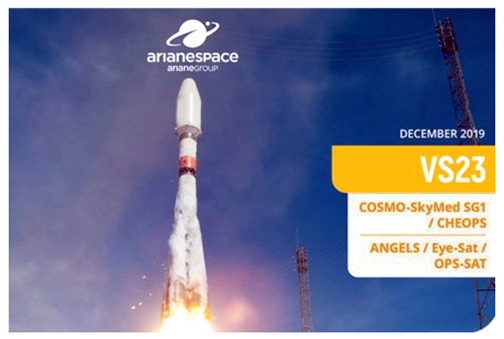
Arianespace successfully launched five satellites on the company’s year-ending Soyuz mission — departing at the exact planned liftoff moment of 5:54:20 a.m., local time.
 
The Soyuz ST-A launcher version flew a four-hour-plus profile to release its multi-satellite payload into SSO – starting with primary passenger COSMO-SkyMed Second Generation, then CHEOPS (Characterizing Exoplanet Satellite) and three auxiliary payloads: EyeSat, OPS-SAT and ANGELS.
 
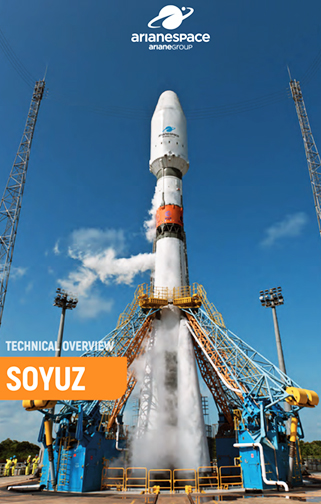
To read the Soyuz technical overview by Arianespace, please access this direct link…
 
This morning launch marked the Russian-built vehicle’s 23rd liftoff from the Spaceport in French Guiana and the 49th Soyuz mission overall for Arianespace (including 26 originating from Baikonur Cosmodrome in Kazakhstan, performed by the company’s Starsem affiliate). It provided an estimated total lift performance of 3,250 kg., including the satellites and ASAP-S multi-passenger dispenser system.
 

Artistic rendition of one of two, second-generation Cosmo-SkyMed radar reconnaissance satellites. Image is courtesy of Thales Alenia Space.

COSMO-SkyMed 2Gen
To be used for Earth Observation (EO), COSMO-SkyMed Second Generation is the fourth satellite launched by Arianespace for the Italian Space Agency (ISA) and Ministry of Defence. The satellite was produced by Thales Alenia Space based on the manufacturer’s PRISMA platform and will deliver global coverage with a 16-day repeat cycle.
     The full system of COSMO-SkyMed Second Generation satellites – developed to address the requirements of both commercial and government customers, as well as the scientific community – is designed to set new performance standards for space-based radar observation systems in terms of precision, image quality and the flexibility of user services.
     COSMO-SkyMed Second Generation satellites, including the primary passenger orbited on this mission success with Soyuz, are equipped with synthetic aperture radars (SAR), allowing them to make observations under any weather or light conditions, both day and night.

     This second-generation system, including its ground segment, will set a new performance standard for space-based radar observation systems in terms of precision, image quality and the flexibility of user services. It is a dual (civil/military) system, designed to address the requirements of both commercial and government customers, as well as the scientific community.
     COSMO-SkyMed Second Generation will be the 162nd satellite manufactured by this constructor to be launched by Arianespace. There currently are five Thales Alenia Space’s satellites in Arianespace’s backlog.
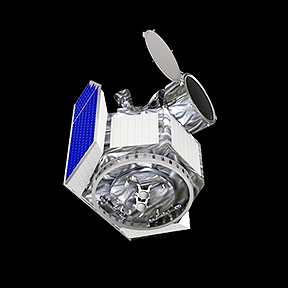

An artistic rendition of the CHEOPS satellite. Image is courtesy of ESA.

CHEOPS
Produced by Airbus, the Characterizing Exoplanet Satellite (CHEOPS) will be used by the European Space Agency (ESA) on a mission to study bright, nearby stars that already are known to host exoplanets, in order to make high-precision observations of the planet’s size. It is the 74th satellite launched by Arianespace at the service of ESA.
     CHEOPS will focus on planets in the super-Earth to Neptune size range, with its data enabling the bulk density of the planets to be derived – a first characterization step towards understanding these alien worlds.

     This is an ESA mission implemented in partnership — in particular — with Switzerland. This 74th satellite to be launched by Arianespace for ESA will mark the 52nd mission conducted by the launch services provider at the service of this space agency.
     The spacecraft will focus on planets in the super-Earth to Neptune size range, with its data enabling the bulk density of the planets to be derived – a first characterization step towards understanding these alien worlds.
    This is the 25th scientific mission (and the 32nd satellite) to be launched by Arianespace.
     Airbus in Spain is prime contractor for the mission, with the University of Bern being responsible for the telescope. Airbus led a consortium of 24 companies (seven From Spain) representing 11 European countries. The spacecraft was built in two years.
     CHEOPS is the 128th Airbus satellite to be launched by Arianespace and there are currently 21 Airbus satellites in Arianespace’s backlog.

Smallsat Passengers
The three auxiliary passengers on this Soyuz mission, designated Flight VS23 in Arianespace’s numbering system, were orbited for the benefit of European institutions.
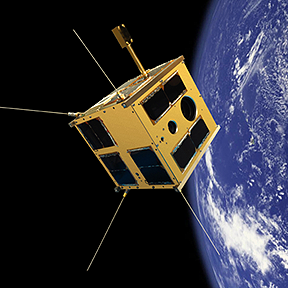

OPS-SAT

OPS-SAT
OPS-SAT is the world’s first free-for-use, on-orbit testbed for new software, applications and techniques in satellite control and brings Europe forward to a new era of space flight innovation and commercial opportunity. Its launch was performed for Tyvak Nano-Satellite Systems on behalf of ESA.
   This a 3U CubeSat and the first satellite to be launched by Arianespace for Tyvak on behalf of ESA. Tyvak International of Italy provided the deployer and launch service for OPS-SAT on behalf of ESA. During the satellite’s first year of operation, OPS-SAT will host more than 100 in-flight experiments submitted from many ESA Member States. OPS-SAT was developed by the Graz University of Technology with subcontractors from Austria, Germany, Poland and Denmark. It will be operated by ESA from the European Space Operations Center (ESOC) in Germany.
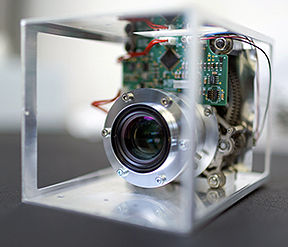

EyeSat

EyeSat
EyeSat, a cubesat designed to study zodiacal light and image the Milky Way, is being financed and developed by the French CNES space agency within the scope of the Janus project, which is designed to encourage students in universities and engineering schools to develop their own very small satellites.
     Jointly financed and developed by CNES and Hemeria, ANGELS (for: Argos Néo on a Generic Economical and Light Satellite) is the first smallsat produced by French industry and will collect and determine the position of low-power signals and messages sent by the 20,000 ARGOS beacons now in service worldwide.
The satellite is fitted with an instrument called IRIS, which is a small space telescope.
     EyeSat will be the 16th satellite (including Pleiades satellites) to be launched by Arianespace for CNES. There is one additional CNES satellite to be launched in the Arianespace’s backlog: TARANIS.
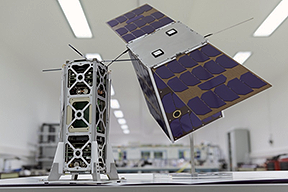

The ANGELS smallsat.

ANGELS
Argos Néo on a Generic Economical and Light Satellite (ANGELS) is jointly financed and developed by the French CNES space agency (Centre National d’Etudes Spatiales) and Hemeria – an innovative industrial group active in the aerospace, defense, energy, rail and automotive markets (which is an affiliate of Nexeya).
     ANGELS is a 12U CubeSat, and is the French industry’s first smallsat. The satellite will be fitted with a miniaturized ARGOS Néo instrument, which is 10-times smaller than the equivalent previous-generation device. The instrument collects and determines the position of low-power signals and messages sent by the 20,000 ARGOS beacons now in service worldwide.
     There are two project teams – CNES and Hemeria for ANGELS; and CNES, Thales Alenia Space and Syrlinks for ARGOS Néo – and they worked together on this French space project. ANGELS is paving the way for French industry to build operational smallsats within the “new space” environment.
     ANGELS will be the 17th satellite (including Pleiades satellites) to be launched by Arianespace for CNES.

Flight VS23 was Arianespace’s third launch in 2019 using a medium-lift Soyuz, and the ninth overall this year across its full family of launchers – which also includes the heavy-lift Ariane 5 and lightweight Vega.

Arianespace CEO Stéphane Israël, who provided his post-flight comments from the Spaceport’s mission control center, said for the company’s ninth and last launch of the year, success is here for Arianespace’s customers and partners. This success shows Arianespace’s ability to deliver for European institutions and to orbit innovative small satellites.

Filed Under: News

Rocket Lab Starts Construction on their Third Launch Pad

December 18, 2019 by editorial

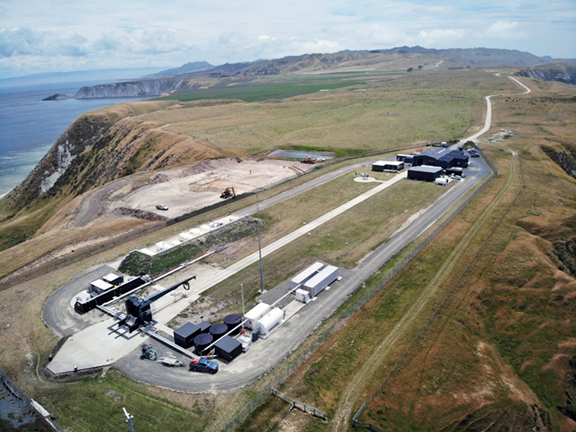
Rocket Lab has started construction on a new launch pad located at Launch Complex 1 in New Zealand.

The new pad will be the company’s third launch pad for the Electron launch vehicle, joining the existing pad at Launch Complex 1 in New Zealand and the newly opened pad at Launch Complex 2 in Virginia, USA.


Rocket Lab Launch Complex 1, Pad B.

Photo is courtesy of the company.

The new pad, to be named Launch Complex 1 Pad B, is the latest in a series of developments by Rocket Lab to support frequent and responsive launch capability for smallsats. As the world’s only private orbital launch site, Launch Complex 1 is licensed for as many as 120 missions per year. The addition of a new pad within the complex will bring that high-frequency launch cadence closer by eliminating pad recycle time and enabling launches just days apart.

Initially opened in 2016 with a single pad and vehicle hangar, Launch Complex 1 has grown to include extensive range control operations and vehicle integration facilities equipped to process two Electron vehicles simultaneously. The site is also home to two 100K class cleanrooms for payload processing on site, each with dedicated and private customer facilities.

Ground works on the Launch Complex 1 Pad B began in December of 2019 with construction due for completion in late 2020. Concurrent launches from Launch Complex 1 will be possible from the site within the next 12 months.

Pad B will replicate the layout and systems of the current operational Pad A, including a 7.6-ton strongback and launch mount for the Electron vehicle. Pad B will also make use of existing shared infrastructure, including the vehicle integration facility and range control. In the next 12-18 months, around 15 new roles will be recruited to support Launch Complex 1 across engineering and pad technicians, site operations and maintenance, launch safety, and administration.

Rocket Lab Founder and CEO Peter Beck said that responsive access to space is about more than the rocket – it also requires responsive launch pads. With the opening of Launch Complex 2 in the U.S. and now the addition of Pad B at Launch Complex 1, Rocket Lab operates three individual launch pads to provide unmatched launch frequency and responsiveness for small satellites.
Rocket Lab’s Vice President – Launch, Shaun D’Mello, added that by operating two pads at Launch Complex 1, the company eliminates the stand down period required between launches for a full pad recycle. Pad A at Launch Complex 1 has been a workhorse for the company with 10 Electron launches so far. Rocket Lab is now looking forward to expanding on that launch heritage with a new pad and growing launch team.

Filed Under: News

ABL Space Systems’ Successful Rocket Engine Tests at Spaceport America

December 18, 2019 by editorial

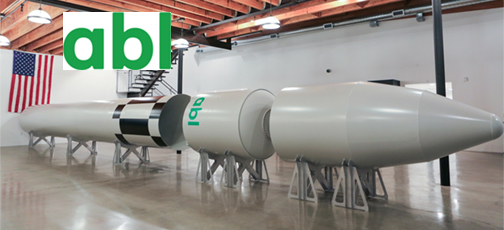
ABL Space Systems, a company founded by former SpaceX engineers, recently completed a successful test campaign of its E2 rocket engine at Spaceport America.

When operational, RS1 will fill an important role in the global launch vehicle market, providing bulk deployment of cubesats, deployment of three to six larger, more capable satellites, or dedicated launch of single satellites with aggressive mission requirements.

ABL CFO Dan Piemont said Spaceport America provided the perfect location and support staff for us to test the E2 rocket engine. The team did a great job rapidly activating the firm’s deployable test site and are happy with how E2 performed. This campaign was an important step toward bringing the RS1 launch vehicle to market.

Dan Hicks, Spaceport America CEO, said Spaceport America is providing testing support for a variety of commercial and government clients. With the company’s excellent staff, near perfect climate and restricted airspace, we are a leader in providing service for the space industry.

Filed Under: News

UPDATE Scrubbed… Soyuz Launch of CHEOPS, OPS-SAT, EyeSat, ANGELS Satellites

December 17, 2019 by editorial

During final countdown operations for Flight VS23, the Soyuz launcher’s automated sequence was interrupted at 1 hour 25 minutes before liftoff. 

As a result, the launch of the COSMO-SkyMed Second Generation, CHEOPS, OPS-SAT, EyeSat, ANGELS satellites – originally scheduled for December 17 – has been postponed.

The Soyuz launcher and its satellite payloads were placed in a fully safe standby mode.

The new target launch date will be announced as soon as possible.

The launch will take place via an Arianespace Soyuz rocket from Kourou, French Guiana (with co-passenger CHEOPS), European Space Agency‘s (ESA) 30 cm. high OPS-SAT smallsat flying lab is planned for injection into a circular, polar orbit at 515 km. altitude.


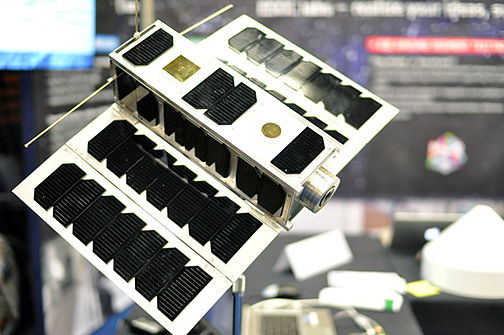
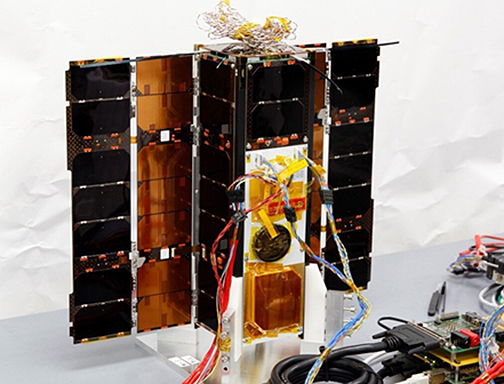
Photo of a replica of ESA’s OPS-SAT. The smallsat is made up of three standardized 10x10x10 cm. cubesat units with deployable solar panels on each side. Image is courtesy of ESA.

The smallsat will be controlled from the dedicated SMILE control room at ESOC. A flying laboratory, ESA’s OPS-SAT’s sole purpose is to test and validate improved mission control and on-board satellite systems, especially relevant when smallsats are able to fly with more powerful computers aboard them. OPS-SAT will pack a computer that is 10x more powerful than any previous or current ESA satellite.

The robustness of the basic satellite itself will give ESA flight control teams the confidence they need to upload and try out new, innovative control software submitted by experimenters; the satellite can be pushed to its limits but can always be recovered if something goes wrong. To manage these tasks, OPS-SAT combines off-the-shelf subsystems typically used with cubesats, the latest terrestrial microelectronics for the on-board computer and the experience ESA has gained in operating satellites for the last 40 years in keeping missions safe.


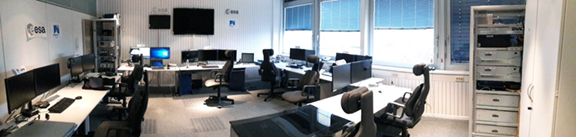
The SMILE lab – known more formally as the Special Mission Infrastructure Lab Environment – offers a flexible operations control area, a suite of small antennas and ESA’s expertise and know-how to support academia, business and start-ups in the area of mission operations. Photo is courtesy of ESA.

The result is an open, flying ‘laboratory’ that will be available for on-orbit demonstration of new control systems and software that would be too risky to trial on a ‘real’ satellite. More than 100 companies and institutions from 17 European countries have registered experimental proposals to fly on OPS-SAT.

The on-orbit laboratory will offer a range of resources, including processors, field-programmable gate arrays (FPGAs), cameras, and an attitude determination and control system, all of which experimenters will be able to exploit for demonstrating new mission and operations concepts.


OPS-SAT during testing of its solar arrays at the Graz University of Technology, Austria.

Photo is courtesy of TU Graz.

The OPS-SAT architecture consists of two major parts. The first is the OPS-SAT ‘bus,’ which provides the necessary infrastructure to operate the second part, the payload. However, in this case, once the payload is running, it can take over control of the entire satellite, while the bus monitors and is ready to take control back at any moment.

The Payload

Processing Platform
The heart of the OPS-SAT satellite payload is the processing platform, which is responsible for providing a reconfigurable environment able to fulfil the objectives of each experiment. The processing platform runs Linux, as the operating system consists of a flexible and reconfigurable framework, featuring sophisticated processing capabilities, interfaces, memory integrity and reconfigurable logic.


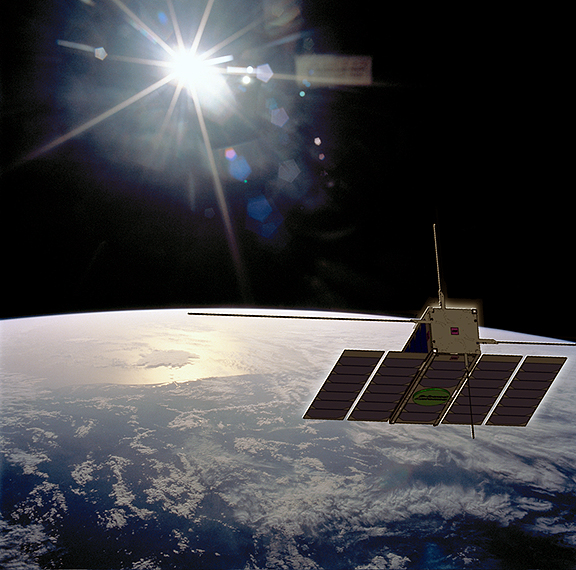
Artistic rendition of ESA’s OP-SAT on-orbit.

Image is courtesy of ESA.

The platform consists of an ‘Altera Cyclone V SoC’ with an ARM dual-core Cortex-A9 MPCore and a Cyclone V FPGA. OPS-SAT experimenters will provide bootable images for this processing platform. These images will undergo certain pre-checks before loading to the spacecraft. Power consumption and temperature of the processing core will also be monitored by the on-board computer to provide additional safety mechanisms.

Fine Attitude Determination Control System (ADCS) + GPS Receiver
An integrated, fine ADCS will provide the experimenters with access to sensors and actuators as well as integrated attitude control functionality and consists of gyros, accelerometers, magnetometers, reaction wheels, three magnetorquers and a Star Tracker. A GPS module is also provided in order for experimenters to have access to positioning data and time information.

S-Band Transponder
For high data-rate communications, a CCSDS-compatible S-band communication link, acting as the main link for data communications and TM/TC with ESA ground stations, is provided. This comms link will provide uplink speeds of up to 256 kbit/s and downlink speeds of up to 1 Mbit/s. The S-band link will be used to upload experimenter’s’ software and download results of on-board experiments.

X-Band Transmitter
An X-band transmitter with high data-rate communications of up to 50 Mbit/s.

Camera
A high-resolution camera which can provide a ground resolution of up to 80m x 80m per pixel.

Optical Uplink
An optical receiver will be provided that can receive commands from a laser ranging station on Earth. An uplink rate of 2 kbps is expected.

Software Defined Radio (SDR)
A software-defined radio front end will be provided, connected to one of the pair of dipoles in the UHF antenna. The results of this experiment will be made available on the processing core for further processing by experimenters, for example, providing a flying spectrum analyzer.

Interfaces
Experimenters will be able to communicate with their flying experiments in various ways, ranging from offline file transfer only, to receiving and sending space packets in real-time with a brand new CCSDS protocol (MO services) over the internet.


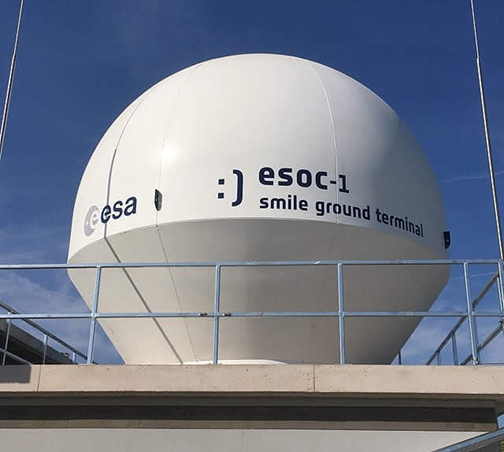
The ESOC-1 antenna is a 3.7 meter single parabolic reflector – a key part of ESA’s SMILE mini-mission control and validation center.

Photo is courtesy of ESA.

Project status
SMILE!, ESA’s mini-mission control facilities, are now open to the public

Funding
The project is funded by the ESA General Support Technology Program. This project kicked off on February 4, 2015, with the prime contractor, the Technische Universität Graz, and subcontractors.


Filed Under: News

GomSpace, Lockheed Martin Space and Orbital Micro Systems to Combine Expertise for Smallsat Project

December 17, 2019 by editorial

GomSpace (GS) and Lockheed Martin Space have agreed to develop and deliver a tailored GS 6U smallsat to Orbital Micro Systems (OMS) in the United Kingdom (UK).

The contract is worth 17 MSEK and will be financed through an industrial corporation commitment made by Lockheed Martin to the state of Denmark.

The project stems from initial introductory meetings first held in 2017, during B2B17 a business networking event aimed at developing new business relationships for the US-based technology company in Denmark.

OMS has developed a proprietary microwave sensor with significant potential to add value to weather forecasting and climate understanding to the benefit of users in a range of commercial and institutional segments. OMS is planning a future nanosatellite constellation to capture data for their intended service offerings and is currently in the early stages of constellation deployment.

Lockheed Martin will financially assist GS to design, develop an optimised 6U smallsat platform for the OMS sensor and GS will deliver the integrated 6U satellite to OMS by the end of 2020 for expected launch and evaluation in 2021. Lockheed Martin will also assist GS by providing technical assistance to review and improve GS quality systems, as well as enhance the smallsat’s design life.

​OMS, established both in the United States and the UK, consists of an experienced team with unique microwave technology and application knowledge. For Lockheed Martin, which has launched more than 150 smallsats, investing in this project aligns with the company’s expectations that many future space missions will be flown using hybrid architectures with a mixture of SmallSats and traditional larger satellites in a variety of orbits.

Niels Buus, the GomSpace CEO, said this is an exciting opportunity to demonstrate how GomSpace’s flight-proven systems can be tailored into a dedicated solution for OMS that will hopefully prove itself as the building block for OMS’ intended constellation.

CEO, William Hosack, from OMS, added that the company looks forward to working with GomSpace and are truly impressed with their demonstrated capabilities in space and the prospect of leveraging these capabilities in a new 6U platform, adding robustness to the company’s supply chain.

Amber Gell, International Advanced Programs Development Manager from Lockheed Martin, noted the company is pleased to be able to bring together this project to help create a state-of-the-art nanosatellite and microwave sensing capabilities.

Filed Under: News

Orbion and the Space Physics Research Laboratory to Send Small Satellites Spaceward

December 17, 2019 by editorial

A partnership was announced that will enable a developer of next-generation smallsat propulsion systems to work with a major university that will build and test the first flight units of this propulsion system.

The names of those involved are as follows;

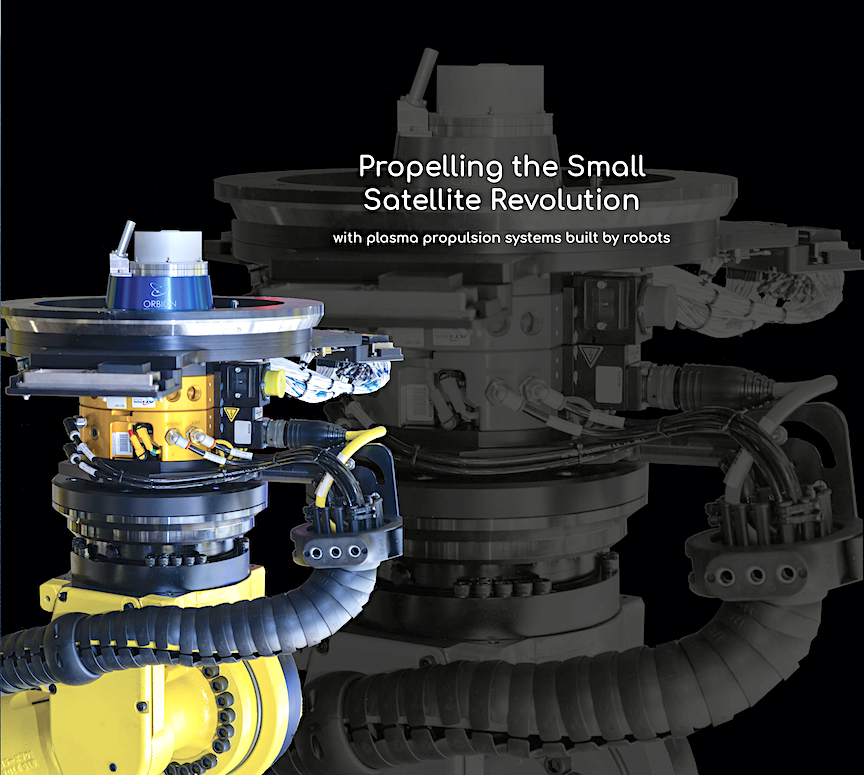
Orbion Space Technology, developer of next-generation smallsat propulsion systems, announced a partnership with the University of Michigan’s Space Physics Research Laboratory (UM-SPRL), described as a world leader in the design, construction, operation, and analysis of space flight instruments. The University will build and test Orbion’s first flight units of the electrical power processor (PPU) used to drive their plasma thruster.

The Orbion PPU is an electrical component that transmits the energy harvested from spacecraft solar panels to the plasma thruster, where the energy is used to exhaust a beam of ions to create gentle yet efficient thrust.

Orbion and SPRL will implement an innovative architecture that takes advantage of recent advances in high-end automotive electrical components to dramatically reduce the cost and complexity of space power systems. This will not only reduce the cost of Orbion’s PPU by 20x, but it will also allow Orbion to mass-produce their plasma propulsion system using assembly-line manufacturing techniques.

With the PPU design and prototype units already developed and tested extensively by Orbion in space-simulation facilities, UM-SPRL will qualify the Orbion PPU for use in the most rigorous space environments and will supply the first units that will propel Orbion systems to Earth orbit, the Moon, and beyond.

Founded in 1946 at the University of Michigan, SPRL has a rich history of building electronics for interplanetary probes to Jupiter, Saturn, and Mars, with several Mars instrumentation projects ongoing for both NASA and the ESA.

Dr. Brad King, CEO of Orbion Space Technology said that plasma thrusters are the most efficient propulsion systems available for smallsat applications, but historically they have been too expensive for commercial use and they take too long to build. They look forward to working with SPRL to pioneer new design and manufacturing techniques that will industrialize space propulsion systems to allow smallsat operators to maximize their investments, and ultimately, their long-distance missions.

Patrick McNally, Managing Director of UM-SPRL added that UM-SPRL specializes in advancing new technologies and demonstrating their capabilities in extreme environments, including space.  They have complete facilities and personnel for the design, fabrication, and qualification of space flight hardware.  The collaboration with Orbion is part of their mission to support Michigan companies and is a continuation of the work they have done for over 72 years.  

Orbion recently announced plans to manufacture and mass-produce the Orbion Aurora Hall-effect plasma thruster system for small satellites. Orbion states that Aurora is the highest-performing system of its kind in the world, and will deliver the accelerated access and efficiency gains that New Space operators need to drive greater ROI for smallsat missions. 
Filed Under: News

China’s First LEO 5G Satellite to Launch This Month

December 16, 2019 by editorial


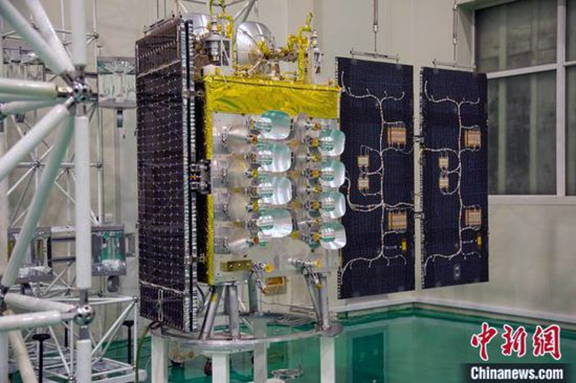
China’s first LEO 5G broadband satellite.

Photo is courtesy of China News Service.

China’s first LEO 5G broadband satellite with high capacity to meet international competition will be launched by Chinese commercial aerospace company, Galaxy Space, at the end of December, according to a statement sent to the Global Times.

The satellite is the first in China to be built with a capacity of 10 gigabits per second (Gbps) and it will be, according to the company, the world’s first LEO broadband satellite in the Q-/V-band, an extremely high frequency band.

The satellite has already been developed and ground tests have been carried out with stable results. Once in place, the satellite will be able to cover an area of 300,000 square kilometers, roughly 50 times the size of Shanghai. It is expected to narrow the technological gap between Chinese and U.S. companies OneWweb and SpaceX, who have already deployed LEO communications satellites.

Aerospace expert, Zhang Shijie, said it is increasingly important for Chinese commercial aerospace companies to achieve high spectrum band resources, alongside the rapid development of global commercial communications satellites.

The broad coverage of LEO satellites could mean easier access to internet for people in remote areas, as well as more simultaneous data transmission for time-sensitive professions, including live news broadcasting and trading.

Article source: Global Times, Li Yan

Filed Under: News

SpooQy-1 Smallsat Now Operated by SpeQtral for the Centre for Quantum Technologies

December 16, 2019 by editorial

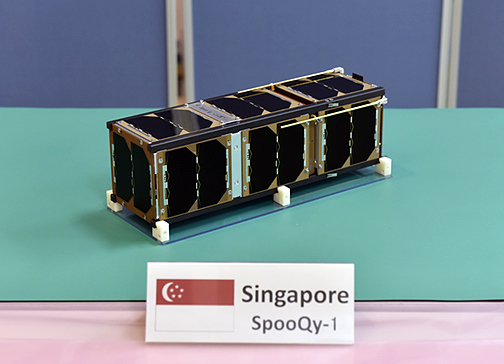
SpeQtral has now accepted the operations of the SpooQy-1 smallsat on behalf of the Centre for Quantum Technologies (CQT) at the National University of Singapore.

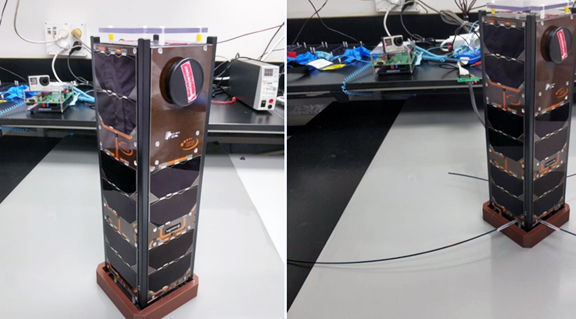
SpooQy-1 is a shoebox-sized, 3U cubesat hosting a quantum payload developed at CQT. The smallsat was launched April of 2019 and then deployed from the International Space Station on June 17, 2019. The quantum payload is the world’s first entangled photon source compact enough to fit on a smallsat and qualified for the harsh space environment.

The primary objective of the SpooQy-1 mission is to produce and characterize entangled photon pairs in space such that they violate the CHSH (Clauser-Horne-Shimony-Holt) Bell’s inequality. This is a core capability for future quantum communication networks. The CQT team is analyzing scientific data from the mission and expects to publish results on the source’s performance in 2020.


The SpooQy-1 smallsat.

In the meantime, CQT and SpeQtral have signed an agreement allowing SpeQtral to manage ongoing operations. Formed as a spin-out company to commercialize quantum communications technologies developed at CQT, SpeQtral will monitor the long-term performance of the quantum payload for radiation damage and other degradation effects in the space environment. This information will help guide the development of long-lived quantum systems in space, necessary for the commercial deployment of space-based QKD systems.

Artur Ekert, Director of CQT, said establishing a partnership for the SpooQy mission plays to all of the firm’s strengths: at the Centre for Quantum Technologies, the organization will concentrate on scientific objectives, while SpeQtral focuses on commercial applications.

Chune Yang Lum, Co-Founder and CEO of SpeQtral, added that SpooQy-1 is pioneering quantum technologies for space-based quantum key distribution (QKD) systems. Being involved in this mission gives SpeQtral know-how that serves the company;s goal of delivering next-generation secure communication networks.

Additional information is available at this infolink…

Filed Under: News

Israeli Students’ Duchifat-3 Satellite Lifted to Orbit

December 15, 2019 by editorial


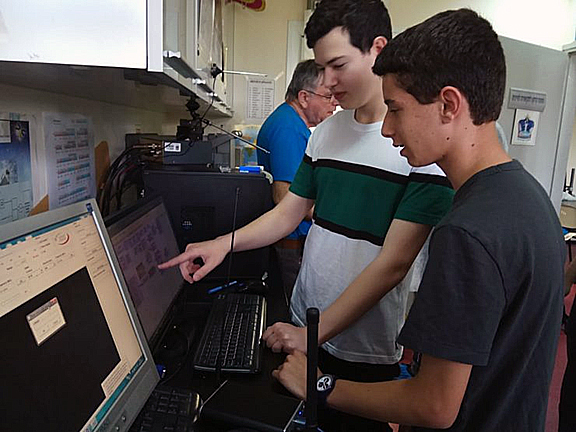
Israeli students at work on the Duchifat-3 satellite.

Duchifat-3, the third satellite in the Duchifat satellite series, is an experimental and educational spacecraft developed by high school students at the Space Laboratory of the Herzliya Science Center (HSC) and students from the Sha’ar HaNegev High school in Israel’s southern region.

The smallsat was launched by the Indian Space Research Organisation’s (ISRO) Polar Satellite Launch Vehicle (PSLV-C48), which lifted off at 3:25 p.m. on Wednesday, December 11, from the Srikarikota launch site.

According to the posting at JewishPress.com by author Arye Green, alongside its educational purpose, the Duchifat-3 smallsat has two missions which will be carried out in parallel, featuring an on-board camera for Earth imaging and a radio transponder for communication missions. The satellite images will be used for ecological research.


The Duchifat-3 smallsat.

The Duchifat-3 satellite measures 10x10x30 centimeters and weighs 2.3 kilograms.

The students worked on the project for nearly two and a half years, during which they designed the satellite, programmed its software and put it through rigorous tests until they were certain it was prepared for launch.

During their work, the students faced various scientific and technological challenges including the preparation of the satellite for its scientific mission, managing its energy resources, communications system, and more.

Additionally, the satellite must be stabilized in space for successful space-borne photography, a complex task that requires control of the satellite’s position in orbit.

Funding for this project was provided by the ICA charitable organization in Israel, whose main focus is agriculture and education-related projects.

Filed Under: News

‘We Are Going to Get It Done’ – SpaceX Says It is Trying to Stop Its Starlink Satellites Ruining the Night Sky

December 12, 2019 by editorial


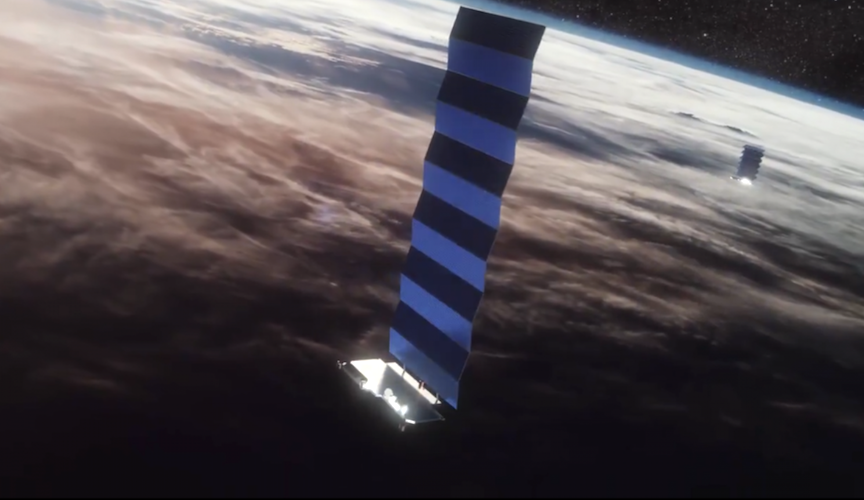
SpaceX’s Starlink satellites were brighter than many expected.SPACEX

SpaceX has said it is taking measures to tackle some of the concerns raised by astronomers about its Starlink constellation, as it gears up to launch more than a thousand satellites in the next 12 months.

The company’s Starlink mega constellation, which will add up to 42,000 satellites to orbit (only 2,000 active satellites in total orbit Earth today) to beam high-speed internet around the globe, has been taking shape in 2019. The company launched its first 60 satellites in May, followed by a second launch in November.

A third launch is planned in late December, and a fourth in January – with 24 in total planned by the end of 2020. The company hopes to launch 60 Starlink satellites roughly once every two weeks, adding more than 1,500 satellites to orbit by the end of next year alone.

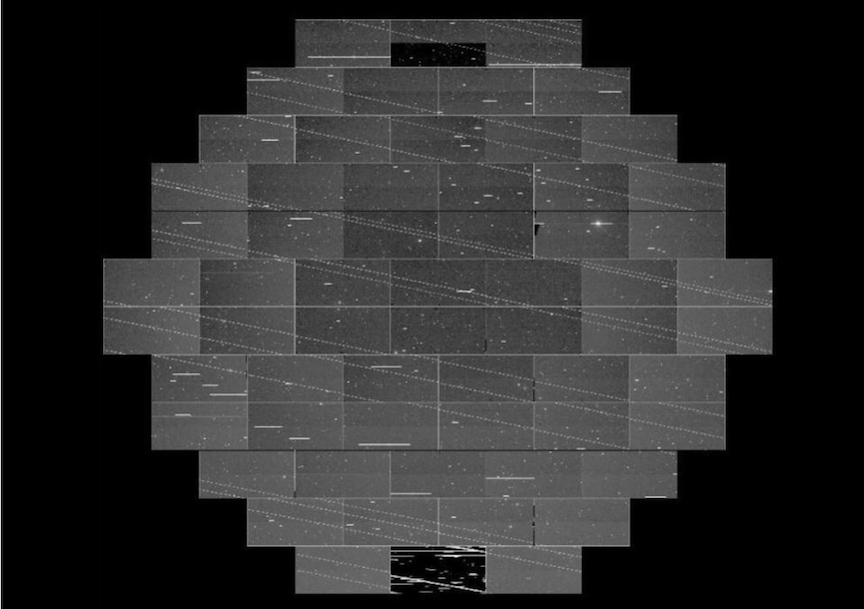
While this has raised considerable concerns about space debris, it has also rankled astronomers. Already, some have reported that their observations of the night sky have been ruined by passing Starlink satellites. As more launch, many fear that the views of the universe could be changed forever.

One issue is that each Starlink satellite, weighing about 225 kilograms, is brighter than expected, and clearly visible at dusk and dawn. However, in a meeting with reporters on Friday, December 6, SpaceX President Gwynne Shotwell said the company wanted to do “the right thing”, and prevent such an impact on the night sky.

Shotwell said that one of SpaceX’s next Starlink satellites launched in December would be “treated with a special coating designed to make the spacecraft less reflective and less likely to interfere with space observations”, reported SpaceNews. 

“We are going to get it done.”


Starlink trails seen in an astronomical observation of nearby galaxies.
CLIFF JOHNSON/CLARAE MARTÍNEZ-VÁZQUEZ/DELVE

In the meeting, Shotwell said there would be “a coating on the bottom” of one of the satellites, and the company would “do trial and error to figure out the best way to get this done.”

“We want to make sure we do the right thing to make sure little kids can look through their telescope,” she added. “Astronomy is one of the few things that gets little kids excited about space.”

Shotwell noted that lowering the reflecitivity of the satellites “definitely changes the performance of the satellite, thermally,” according to Business Insider. However, they would experiment with different ideas to see what works best.

And she noted, too, the impact this could have on professional astronomy. “There are a lot of adults that get excited, too, who either depend on [the night sky] for their living or for entertainment,” she said, reported SpaceFlight Now.

“There are lots of people that have looked at Starlink and looked at the satellites, lots of people knew what we were doing, and no one thought of this,” she added. “We didn’t think of it. The astronomy community didn’t think of it. It happened… Let’s go figure that out.”

Several astronomy groups are currently in contact with SpaceX, including the National Radio Astronomy Observatory (NRAO) and the American Astronomical Society (AAS), to work out better solutions to the problem. The latter, in a recent statement, said that things were “moving in a hopeful direction after our last two telecons [with SpaceX].”

Now, many astronomers will be hoping SpaceX’s efforts can ensure the night sky is not permanently altered. While about 120 Starlink satellites have already launched, with 120 more to follow in the coming weeks, it may well be a case of “better late than never” if a solution can be found.

Jonathan O’Callaghan, Forbes

Filed Under: News

  • « Go to Previous Page
  • Page 1
  • Interim pages omitted …
  • Page 326
  • Page 327
  • Page 328
  • Page 329
  • Page 330
  • Interim pages omitted …
  • Page 338
  • Go to Next Page »

Primary Sidebar

WEEKLY NEWSLETTER

Archives

  • March 2026
  • February 2026
  • January 2026
  • December 2025
  • November 2025
  • October 2025
  • September 2025
  • August 2025
  • July 2025
  • June 2025
  • May 2025
  • April 2025
  • March 2025
  • February 2025
  • January 2025
  • December 2024
  • November 2024
  • October 2024
  • September 2024
  • August 2024
  • July 2024
  • June 2024
  • May 2024
  • April 2024
  • March 2024
  • February 2024
  • January 2024
  • December 2023
  • November 2023
  • October 2023
  • September 2023
  • August 2023
  • July 2023
  • June 2023
  • May 2023
  • April 2023
  • March 2023
  • February 2023
  • January 2023
  • December 2022
  • November 2022
  • October 2022
  • September 2022
  • August 2022
  • July 2022
  • June 2022
  • May 2022
  • April 2022
  • March 2022
  • February 2022
  • January 2022
  • December 2021
  • November 2021
  • October 2021
  • September 2021
  • August 2021
  • July 2021
  • June 2021
  • May 2021
  • April 2021
  • March 2021
  • February 2021
  • January 2021
  • December 2020
  • November 2020
  • October 2020
  • September 2020
  • August 2020
  • July 2020
  • June 2020
  • May 2020
  • April 2020
  • March 2020
  • February 2020
  • January 2020
  • December 2019
  • November 2019
  • October 2019

© 2019–2026 SatNews

Insert/edit link

Enter the destination URL

Or link to existing content

    No search term specified. Showing recent items. Search or use up and down arrow keys to select an item.
      x
      Sign Up Now!

      Enjoy a free weekly newsletter with recent headlines from the global SmallSat industry.

      Invalid email address
      We promise not to spam you. You can unsubscribe at any time.
      Thanks for subscribing! You will now receive weekly SmallSat News updates.
      We love our advertisers.
      And you will too!

      Please disable Ad Blocker to continue... We promise to keep it unobtrusive.
      We promise not to spam you. You can unsubscribe at any time.
      Invalid email address
      Thanks for subscribing!