• Skip to main content
  • Skip to primary sidebar
  • Home
  • News
  • Featured
  • More News ⌄
    • SatNews
    • SatMagazine
    • MilSatMagazine
  • Events ⌄
    • MilSat Symposium
    • SmallSat Symposium
    • Satellite Innovation
  • Contacts
  • SUBSCRIPTION

SmallSat News

You are here: Home / Archives for editorial

editorial

Alba Orbital launches 5 satellites via SpaceX— now a total of 53 launched satellites for the firm

March 17, 2025 by editorial

Alba Orbital integrated five PocketQube satellites from three different countries for their flight on-board SpaceX’s Transporter-13 Rideshare mission.

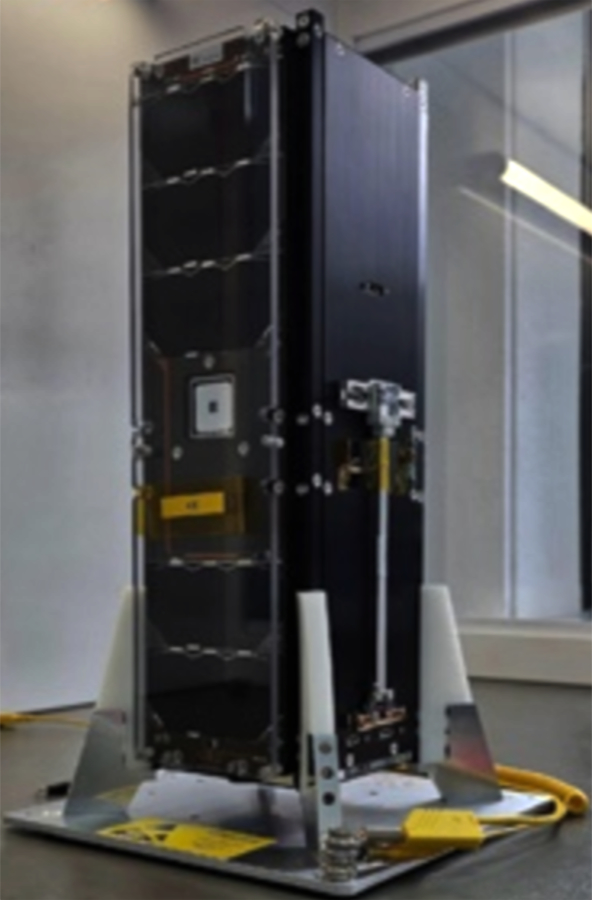
The satellites were integrated into Alba Orbital’s PocketQube Deployer, AlbaPod, at their new facilities in Hillington Industrial Estate, Glasgow, the world’s first PocketQube factory. After integration, the cluster of pocket-sized satellites were shipped out to SpaceX and then hitched their ride to LEO.

Alba Orbital’s AlbaPod

PocketQubes are highly miniaturized satellites, typically 5 cm cubed per unit (‘P’), that can be launched to orbit for as little as 25K euros via Alba Orbital’s rideshare services. PocketQubes are cost-effective, quicker to build, and provide versatile options for a variety of missions that range from educational projects to advanced technological demonstrations.
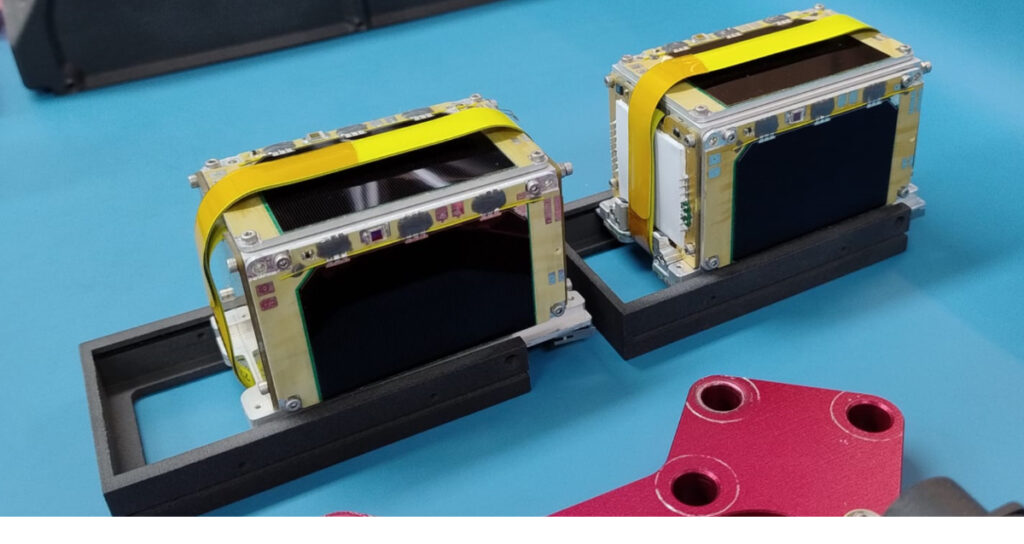
Payloads aboard this mission…

HADES-ICM – HYDRA SPACE / IC MERCURY / SMART IR
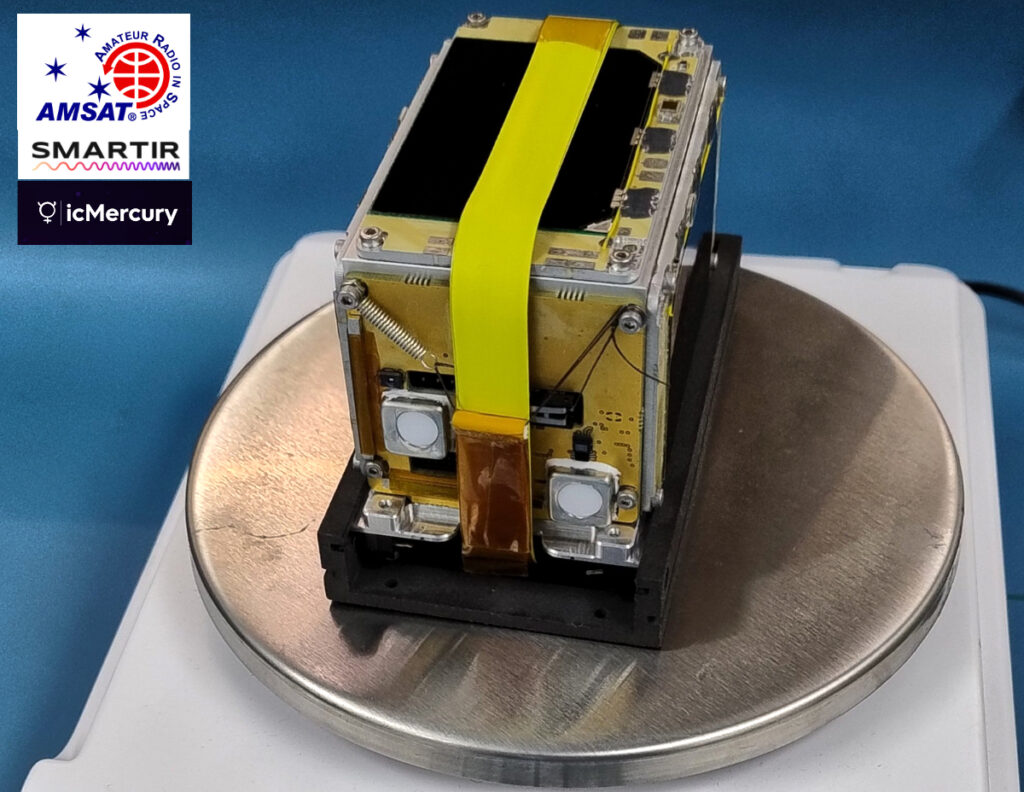
A 1.5p PocketQube, this smallsat is carrying an open voice transponder for the radio amateur community. It will be operated by the non-proft organization AMSAT-EA. The PocketQube includes the UK based Smart IR second, graphene based technology experiment that will ber conducted on-orbit. The PocketQube also includes icMercury, Interstellar Communication Holdings Inc. nspiring space sustainability text messages that will be broadcasted periodically by HADES-ICM

HYDRA-W – HYDRA SPACE

Returning customer Hydra Space is developing an IoT network using their 1.5p PocketQube platform. Hydra-W will add to this growing constellation. This PocketQube Includes an on-orbit experiment from UC3M – Universidad Carlos III (Spain) implemented by Terahertz Research group and IoT connectivity experiment by Hydra Space

UNICORN-2O, 2P & 2Q – ALBA ORBITAL
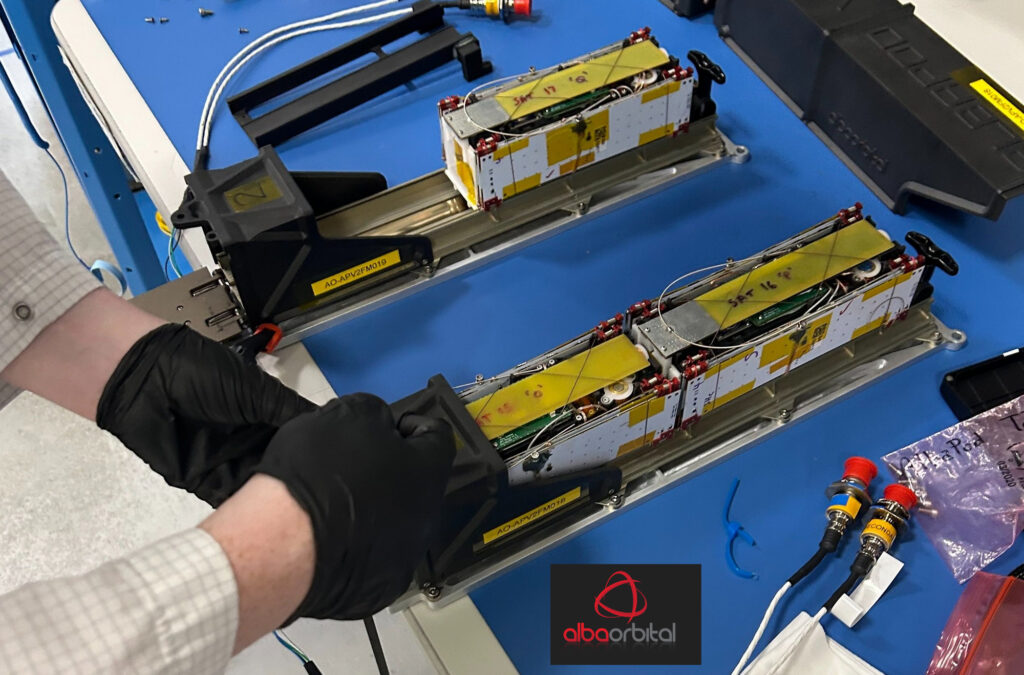
Three 3p PocketQubes imaging satellites for Alba night time earth observation constellation to image earth in daytime and night time. These are the 15th, 16th and 17th Unicorn-2 satellites to launch into orbit.

About Alba Orbital
Alba Orbital (UK, USA, Germany) is the world’s leading PocketQube company that has delivered 53 pico-satellites on-orbit to date. Alba is a vertically integrated NewSpace company ‘democratizing access to space’, providing turnkey solutions from advanced pico-satellite platforms, low-cost launch opportunities, and ground station services. Alba has worked with more than er 40 customers across four continents, including clients such as Stanford University, Carnegie Mellon University and TU Delft.


Filed Under: Featured, News

Bahrain launches 1st domestically built satellite via the SpaceX Transporter-13 mission

March 17, 2025 by editorial

In a landmark moment for the Kingdom of Bahrain, the National Space Science Agency (NSSA) has successfully launched Al Munther, the nation’s first domestically designed and built satellite—the satellite was launched aboard a SpaceX Falcon 9 rocket as part of the Transporter-13 mission from Vandenberg Space Force Base in California, USA, on Saturday, March 15, 2025.

Photo of the
Al Munther nanosatellite.

This historic achievement marks a significant milestone in Bahrain’s journey towards becoming a regional leader in space technology and innovation. The launch of Al Munther underscores the Kingdom’s commitment to advancing its capabilities in space science and technology, while showcasing the expertise of Bahraini engineers and scientists.

The Al Munther satellite was successfully deployed into its designated orbit at an altitude of 550 km above sea level. The satellite will now undergo a series of orbital tests to ensure its operational readiness before commencing full-scale operations.

The satellite is equipped with advanced technological payloads, including a medium-resolution space camera (20 meters/pixel) designed to capture high-quality images of Bahrain and its territorial waters, an artificial intelligence (AI) system capable of real-time image analysis, making Al Munther the first nanosatellite in the region to incorporate such advanced AI capabilities, a cybersecurity payload featuring advanced encryption technologies to safeguard the satellite’s data from unauthorized access or tampering, and a radio broadcast payload that will transmit the Bahraini national anthem and a special message from His Majesty King Hamad bin Isa Al Khalifa, King of Bahrain, to radio enthusiasts worldwide.

One of the most distinctive features of Al Munther is its ability to broadcast the Bahraini national anthem and a royal message via digital signals. These transmissions can be received by amateur radio operators and space enthusiasts around the globe using simple equipment. This initiative aims to promote Bahrain’s space achievements and enhance its international presence in the field of space exploration.

The “Al Munther” project has provided a unique opportunity for a team of young Bahraini engineers to gain hands-on experience in developing advanced space systems. From mission concept development and engineering requirements to system design, software development, and environmental testing, the project has enabled Bahraini talent to contribute to every stage of the satellite’s development.

The National Space Science Agency (NSSA) is responsible for advancing Bahrain’s space sector and fostering innovation in space science and technology. The agency works to develop national capabilities in space exploration, satellite technology, and space applications, contributing to Bahrain’s sustainable development and economic diversification.

Article source: Bahrain News Agency

    Filed Under: News

    SpaceX launches Transporter-13 rideshare mission that includes 74 payloads

    March 17, 2025 by editorial

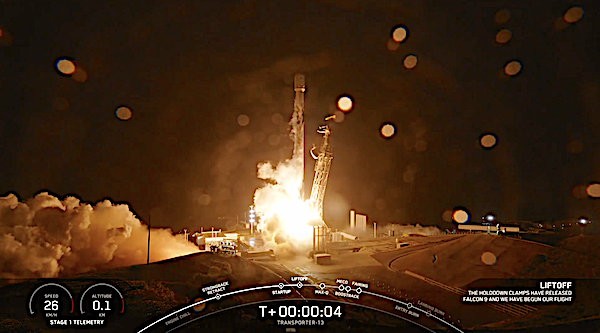
    On Friday, March 14 at 11:43 p.m. PT, SpaceX launched the Transporter-13 mission to orbit from Space Launch Complex 4E (SLC-4E) at Vandenberg Space Force Base in California. Photos by Satnews.

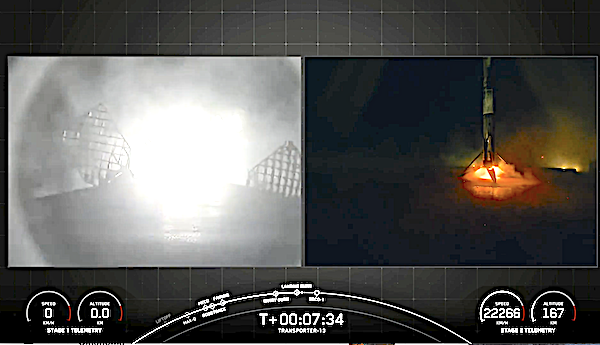
    This was the 13th flight of the first stage booster supporting this mission, which previously launched Crew-7, CRS-29, PACE, Transporter-10, EarthCARE, NROL-186, and six Starlink missions.

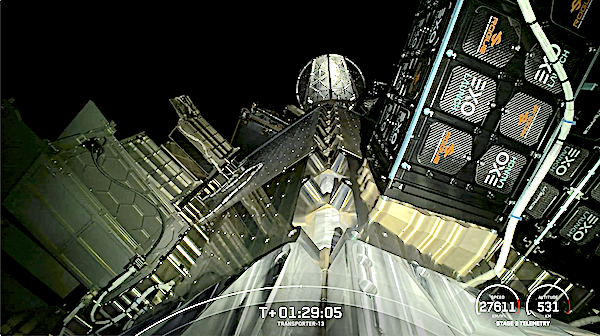
    Transporter-13 is a dedicated smallsat rideshare mission. There were 74 payloads on this flight, including cubesats, microsats, hosted payloads, a re-entry capsule, and an orbital transfer vehicle carrying 11 of those payloads to be deployed at a later time. To date, SpaceX has launched more than 1,200 payloads to orbit for 130+ customers across our entire Rideshare program.

    Filed Under: News

    INNOSPACE completes the launch pad-vehicle interface integrated system test for the HANBIT-Nano launch vehicle

    March 17, 2025 by editorial

    Artistic rendition of a HANBIT-Nano launch from the Andøya Spaceport in Norway,
    courtesy of the company.

    INNOSPACE (KS: 462350) has successfully completed the Launch Pad-Vehicle Interface Integrated System Test for the HANBIT-Nano launch vehicle.

    INNOSPACE’s Launch-Pad Vehicle Integrated System

    The company independently developed a new portable launch pad, a key infrastructure for the satellite launch, and conducted the test at Samwooeco, the partner company responsible for manufacturing the launch pad, located in Gwangyang, South Korea. 

    The HANBIT-Nano launch vehicle is a two-stage orbital launcher designed to deploy payloads into a 500 km Sun-Synchronous Orbit (SSO). It features a 25-ton-thrust hybrid rocket engine in the first stage and a 3-ton-thrust methane engine in the second stage. INNOSPACE is set to conduct its first commercial launch in July of 2025, carrying payloads from five international customers, including the Federal University of Maranhão (UFMA) and Castro Leite Consultoria (CLC) in Brazil.

    The Launch Pad-Vehicle Interface Integrated System Test comprehensively verifies the operational readiness of the launch vehicle and launch pad, covering processes from vehicle assembly and pad integration to vertical erection, propellant supply system checks, and final operational validation. During the test, INNOSPACE confirmed the mechanical and electrical interfaces between the launch pad and vehicle, the transporter erector launcher system, the detachment of the Umbilical, the fuel and oxidizer supply system, and the separation of the launch vehicle hold-down mechanism, ensuring technical reliability and operational stability.

    The launch pad that successfully completed the test, is scheduled for maritime transportation to the Alcântara Space Center in Brazil on April 2. Upon arrival in May, the launch vehicle will undergo installation and final verification in the local environment to complete preparations for launch operations. In addition, the launch vehicle used in this test was the HANBIT-Nano Qualification Model (QM), which shares the same specifications—21.8 meters in height and 1.4 meters in diameter—as the Flight Model (FM) scheduled for launch in July.

    “The Launch Pad-Vehicle Interface Integrated System Test marks a crucial milestone in the development of HANBIT-Nano,” said Soojong Kim, founder and CEO of INNOSPACE. “With this achievement, INNOSPACE’s proprietary technology and operational capabilities with our internally developed launch pad successfully validated, we are now fully committed to final launch preparations, ensuring the highest reliability in our launch services.”

    Filed Under: News

    Rocket Lab’s Pioneer spacecraft is deployed to orbit, powering Varda Space’ Industries’ 3rd in-space manufacturing mission

    March 16, 2025 by editorial

    Rocket Lab USA, Inc.’s third Pioneer spacecraft for Varda Space Industries, Inc. is successfully operating on-orbit—the W-3 mission launched on March 14th from Vandenberg Space Force Base.

    The new mission is underway on-orbit just 15 days after the successful re-entry and landing of Varda’s W-2 mission, which was also powered by Rocket Lab’s Pioneer Spacecraft.

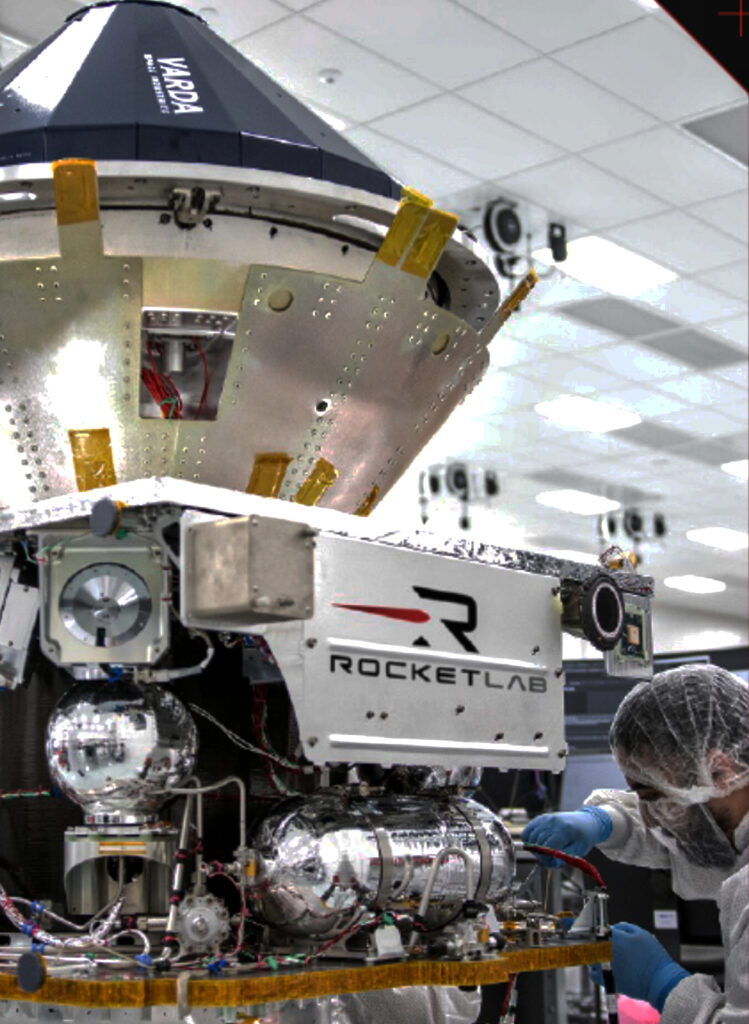
    Rocket Lab’s Pioneer spacecraft supports Varda’s 120 kg manufacturing capsule on-orbit, providing power, communications, propulsion, and attitude control for the mission. Inside the capsule, Varda carries out in-space manufacturing and processing of pharmaceutical products that benefit from the microgravity environment that is impossible to recreate on Earth.

    Rocket Lab’s spacecraft, image courtesy of the company.

    The Pioneer spacecraft leverages Rocket Lab’s vertically integrated spacecraft components and subsystems, including spacecraft propulsion, flight software, avionics, reaction wheels, star trackers, separation system, solar panels, radios, composite structures and tanks, and more.

    Once Varda’s in-space manufacturing processes are completed on-orbit, Rocket Lab conducts in-space operations, deorbiting, and reentry positioning maneuvers to set the capsule on a reentry course to Earth for landing at the Koonibba Test Range in South Australia, operated by Southern Launch. The W-3 mission is Rocket Lab’s third for Varda. The first, W-1, was successfully completed in February 2024 and landed in the Utah desert, while the latest mission, W-2, was completed and landed in south Australia on Feb. 27, 2025.

    The Company’s fourth contracted Pioneer spacecraft for Varda is currently undergoing final assembly at Rocket Lab’s Spacecraft Production Complex and Headquarters in Long Beach, California.

    Photo of Rocket Lab’s Pioneer spacecraft,
    courtesy of the company

    Sir Peter Beck, Rocket Lab Founder and CEO, said, “The W-1 mission was the first in-space manufacturing mission to happen outside of the International Space Station. Now, just over a year later, we have a third mission on orbit after bringing another one safely back home. We’re immensely proud to have supported our mission partner Varda to usher in a new era of rapid, reliable, and innovative commercial in-space manufacturing and hypersonic reentry capability.”

    “It’s remarkable that we have been able to launch our third mission in such rapid succession after the reentry of our second. High cadence launch and return will soon be commonplace, and reentry of materials from space to Earth will go from being novel to being normal,” said Wendy Shimata, VP of Autonomous Systems at Varda.

    Filed Under: News

    Rocket Lab launches 61st Electron mission, the 2nd launch for iQPS

    March 15, 2025 by editorial

    Photo of the Electron launch of the iQPS SAR satellite, courtesy of Rocket Lab.

    Rocket Lab USA, Inc. (Nasdaq: RKLB) has successfully launched their second mission for Japanese customer, the Institute for Q-shu Pioneers of Space, Inc. (iQPS).

    Artistic rendition of an iQPS SAR satellite on-orbit, courtesy of the company.

    ‘The Lightning God Reigns’ mission lifted-off from Rocket Lab Launch Complex 1 in Mahia, New Zealand, at 1:00 p.m. NZDT (00:00 UTC) on March 15, 2025, to successfully deploy iQPS’ QPS-SAR-9 spacecraft to a 575 km circular Earth orbit.

    The mission follows Rocket Lab’s first launch for the company in December of 2023, when Electron deployed another QPS-SAR satellite as part of iQPS’ newly established radar imaging constellation.

    “The Lightning God Reigns” is the first of eight new launches for iQPS that are scheduled to launch throughout 2025 and 2026 as part of one of the largest Electron launch agreements to date. Five more launches are expected to take place in 2025, with the remaining two scheduled for 2026. Rocket Lab’s next mission for iQPS is scheduled to launch no earlier than May 2025.

    Each mission has been commissioned to build out iQPS’ planned constellation of up to 36 synthetic aperture radar (SAR) satellites. The constellation is capable of imaging the Earth day and night and through any weather, to provide near real-time observation data for almost any location in the world.

    Rocket Lab’s next mission is scheduled to launch from Rocket Lab Launch Complex 1 in just three days on March 18, 2025, NZDT.

    Rocket Lab founder and CEO, Sir Peter Beck, said, “Congratulations to the Rocket Lab and iQPS teams on yet another successful mission together. Every Electron launch in 2025 so far has been to expand a satellite constellation and with this latest mission success, you can see why. Electron provides our customers with total flexibility and control over their schedule, orbit, and other critical mission elements to create their constellation exactly as they need it. We’re looking forward to continuing our constellation build out for iQPS this year and next.”

    iQPS CEO, Dr. Shunsuke Onishi, said, “I sincerely appreciate the dedication and hard work of the teams at iQPS and Rocket Lab in making this launch mission a success, and I am truly impressed by the short timeline from QPS-SAR-9’s departure from Fukuoka, Japan, through its journey via Mahia Peninsula, to its successful deployment into LEO. As we prepare for the launch of seven more QPS-SARs between this year and next year, I am reassured by the reliability and efficiency of Electron in executing missions like this one.”

    Filed Under: News

    Airbus awards Rocket Lab contract to power next generation OneWeb constellation for Eutelsat

    March 14, 2025 by editorial

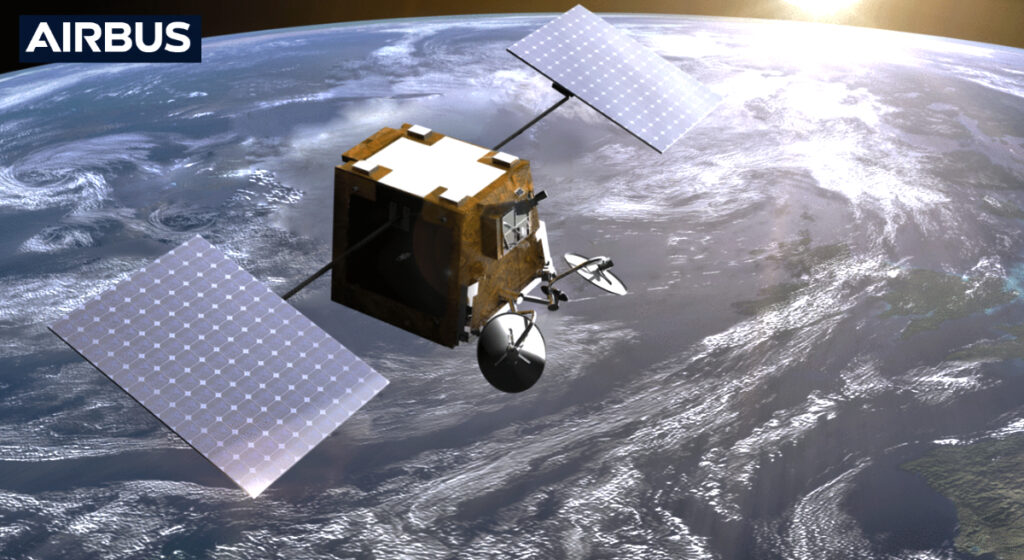
    Rocket Lab USA, Inc. (Nasdaq: RKLB) has been selected by Airbus Constellation Satellites to provide high efficiency, space grade solar panels for 100 OneWeb Low Earth Orbit (LEO) satellites for Eutelsat Group—OneWeb satellites are designed to provide high-speed, low-latency global internet access to remote and underserved areas.

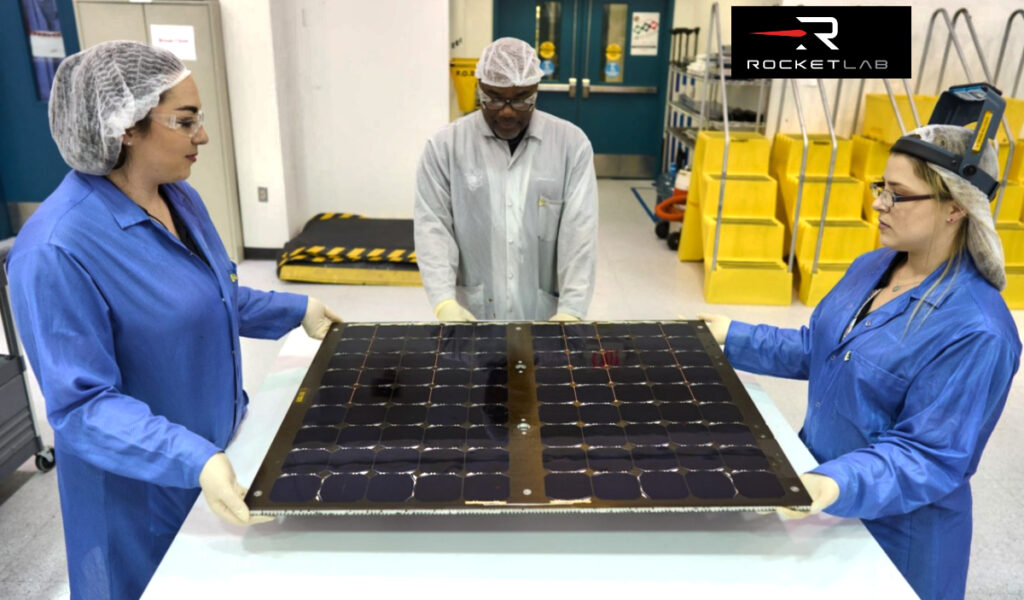
    Rocket Lab solar panels are fully tested and wired for integration into solar array assemblies

    Rocket Lab will provide 200 solar panels, inclusive of carbon composite panel substrates, solar cells, and photovoltaic assemblies. These panels will be manufactured at Rocket Lab’s 150,000 square-foot space solar production facility in Albuquerque, New Mexico.

    Rocket Lab’s panels will provide the large LEO constellation with approximately 80 kW of power, enough to power 16 Hubble-sized space telescopes. Rocket Lab’s panels will provide the large LEO constellation with approximately 80 kW of power, enough to power 16 Hubble-sized space telescopes.

    Brad Clevenger, Vice President of Space Systems at Rocket Lab, said, “We’re thrilled to extend our partnership with Airbus by providing our world-leading space solar panels to power Eutelsat’s next-gen OneWeb constellation. This collaboration will see 100 more satellites equipped with Rocket Lab technology, ensuring dependable, cutting-edge solutions that advance global connectivity.”

    I

    Filed Under: News

    Dawn Aerospace to provide Reditus Space satellite propulsion for satellite-based on-orbit manufacturing

    March 13, 2025 by editorial

    Dawn Aerospace has signed a new partnership with Reditus Space Inc, marking it Dawn’s first venture supporting on-orbit manufacturing applications in space.

    Image credit: Reditus Space

    Reditus Space is a company focused on developing reusable satellites for zero-gravity manufacturing, particularly in materials, pharmaceutical and biologics, to leverage the unique manufacturing opportunities that microgravity environments offer. The company aims to unlock a unique manufacturing environment with sustained access to and from space through a reusable re-entry capsule. Reditus, like Dawn, employs a modular approach, allowing for responsive and flexible solutions for their customers and values reusability, the key to a sustained space economy.

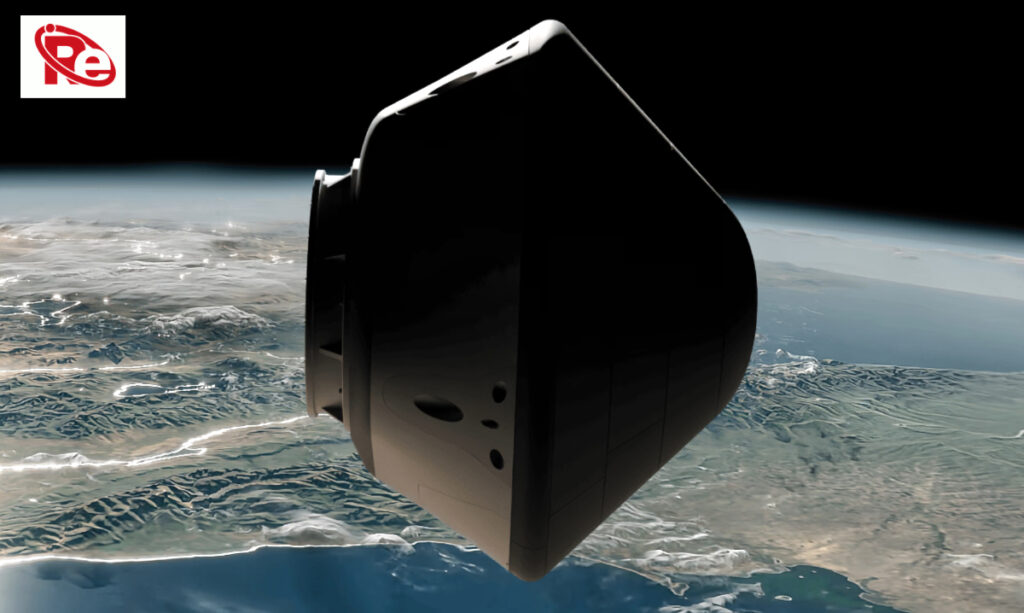
    Reditus is preparing for its first full-scale re-entry mission, named ENOS, scheduled to launch on a Falcon 9 rocket in a launch window opening in March of 2026. This mission will host a pharmaceutical research and development payload, with plans to fully re-enter and recover the satellite. Dawn Aerospace will be providing its signature SatDrive systems, with five already on-orbit across three customers. Dawn plans to work closely with Reditus to explore reusability of the SatDrive propulsion system.

    Artistic rendition of ENOS, courtesy of Reditus Space.

    The collaboration highlights the growing intersection of space technology and terrestrial industry, with sustainability and reusable spacecraft hardware becoming critical factors in reducing the costs and footprint of commercial space operations.

    “This mission is demonstrates how Dawn’s scalable propulsion systems can support any mission, from traditional satellite operations to novel development of reusable satellites,” said Jeroen Wink. “Sustainability in space is about more than just reducing waste—it’s about rethinking how we design, use, and reuse components to push the boundaries of what’s possible.” 

    “Incredibly excited to work with a forward-thinking, green propulsion company like Dawn Aerospace,” said Stef Crum. “This mission will allow us to explore the potential for reusability in propulsion systems while advancing manufacturing in space.”

    Filed Under: News

    ORBCOMM® announces OGx enhancements to improve satellite IoT accessibility

    March 11, 2025 by editorial

    ORBCOMM has produced a major upgrade to the company’s OGx satellite IoT service that enables larger and faster messages more cost-effectively, empowering solution providers to offer innovative satellite IoT applications that were previously cost-prohibitive.

    OGx can now support messages as large as 16 kb at speeds up to four times faster than ORBCOMM’s previous IDP satellite service. OGx’s ability to transmit larger files—such as images, over-the-air updates, data logs and more—without having to split them into smaller pieces drastically simplifies data transfers. This can eliminate the need for manual device updates, conserve device power and enhance overall business operations for solutions leveraging the OGx service.

    OGx’s flexible, service-based pricing, combined with the new capabilities, enables a wide range of new IoT applications. Using OGx, new solutions can now be deployed at price points significantly lower than those of other satellite IoT services on the market. This helps ORBCOMM’s partners expand the IoT applications they can build in both existing and new markets, providing opportunities for growth.

    Launched last year, OGx features an innovative network design and patented technology that can significantly reduce IoT device power consumption.

    “With these enhancements, OGx delivers the messaging capabilities that solution providers need to build new and better solutions for their customers across agriculture, transportation, maritime, oil and gas, heavy equipment, mining and more,” said Dave Roscoe, ORBCOMM’s President of Satellite IoT. “Sending larger messages faster unlocks IoT applications that were previously unfeasible due to cost, enabling solution providers to tackle industry challenges, increase revenue and exceed customer expectations. We will continue to set the industry standard in satellite IoT innovation by strengthening our OGx offering to meet the evolving needs of our customers. These latest enhancements are part of a series of additional features and functionalities that will be rolled out in the future.“

    Zeus Agrotech, a smart agriculture IoT provider and ORBCOMM partner based in Brazil, currently deploys solutions with ORBCOMM technology and will be using OGx for its enhanced messaging functionalities, according to Zeus CTO Christian Machado. “With richer field data in their hands faster, our customers can make even more informed decisions to improve crop yield and reduce resource waste,” said Machado. “We’re excited to see our customers improve operations and grow their businesses with OGx’s increased messaging capabilities.

    Filed Under: News

    Xona Space Systems to collaborate with Trimble to develop next generation navigation services

    March 11, 2025 by editorial

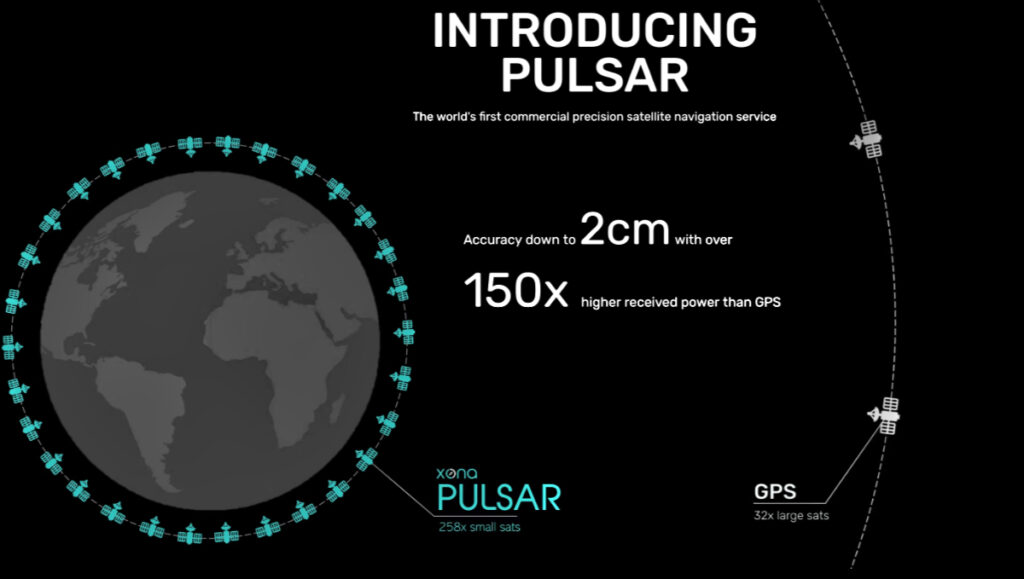
    Xona Space Systems (Xona) collaboration with Trimble® (Nasdaq: TRMB) is in pursuit of Trimble correction services integration with Xona’s PULSAR™, high-performance, navigation service.

    Initial satellite launches are expected in late 2026, with service starting in 2027 through the PULSAR satellite network, enabling secure, high-precision positioning for applications ranging from geospatial to low-power mass mobile and IoT.

    In support of this new and developing collaboration, Xona has received an investment from Trimble Ventures. Xona PULSAR, powered by Xona’s planned network of small satellites in LEO, is being developed to deliver powerful and secure high-precision positioning and navigation services directly to current GNSS hardware.

    The PULSAR service, which will include high precision correction services through this collaboration, has the potential to provide scalable, cost-effective solutions for industries with demanding positioning and navigation requirements, such as civil construction, surveying and mapping, and automotive and IoT applications. Xona’s signals are also expected to enable operations inside low-rise buildings, as well as improve resistance to jamming and interference compared to current GNSS capabilities.

    Precision positioning solutions from LEO constellations are intended to provide new enhanced capabilities along with high levels of uptime to meet the rapidly evolving needs of industries around the world. The inclusion of Trimble correction services with Xona PULSAR is expected to enhance the reliability of Trimble1 correction services delivery, which is crucial for users in areas without reliable cell coverage, limited sky visibility environments, including high-latitude regions and other challenging geographies.

    Xona Space Systems’ co-founder and CEO, Brian Manning, said, “Trimble’s experience and track record in high- integrity precision navigation is world class. We are thrilled to work towards combining the knowledge and capabilities of Trimble and Xona, to deliver unmatched performance to customers in the future through our PULSAR next-gen position, navigation, and timing (PNT) service. By integrating Trimble correction services with Xona PULSAR, customers can expect to have aordable access to the centimeter precision they need without constant cellular data streaming, worrying about cellular dead zones or the need for additional SATCOM hardware.”

    Trimble’s Vice President of Advanced Positioning, Olivier Casabianca, said, “Our collaboration with Xona demonstrates our commitment to pushing the boundaries of innovation. The combination of Trimble correction services with Xona PULSAR has the potential to create a seamless, scalable solution that meets the evolving needs of industries reliant on precise satellite navigation.”

    About Xona
    Xona is a provider of navigation solutions aimed at enabling modern technologies to operate safely and eciently in any environment, anywhere on Earth. Xona PULSAR™ delivers the security and precision needed for autonomous operations from a network of cutting-edge small satellites, to form the backbone of the next generation of navigation technologies.

    About Trimble
    Trimble is transforming the ways people move, build and live. Core technologies in positioning, modeling and data analytics connect the digital and physical worlds to improve our customers’ productivity, quality, safety, transparency and sustainability.

    Filed Under: News

    • « Go to Previous Page
    • Page 1
    • Interim pages omitted …
    • Page 39
    • Page 40
    • Page 41
    • Page 42
    • Page 43
    • Interim pages omitted …
    • Page 338
    • Go to Next Page »

    Primary Sidebar

    WEEKLY NEWSLETTER

    Archives

    • June 2026
    • May 2026
    • April 2026
    • March 2026
    • February 2026
    • January 2026
    • December 2025
    • November 2025
    • October 2025
    • September 2025
    • August 2025
    • July 2025
    • June 2025
    • May 2025
    • April 2025
    • March 2025
    • February 2025
    • January 2025
    • December 2024
    • November 2024
    • October 2024
    • September 2024
    • August 2024
    • July 2024
    • June 2024
    • May 2024
    • April 2024
    • March 2024
    • February 2024
    • January 2024
    • December 2023
    • November 2023
    • October 2023
    • September 2023
    • August 2023
    • July 2023
    • June 2023
    • May 2023
    • April 2023
    • March 2023
    • February 2023
    • January 2023
    • December 2022
    • November 2022
    • October 2022
    • September 2022
    • August 2022
    • July 2022
    • June 2022
    • May 2022
    • April 2022
    • March 2022
    • February 2022
    • January 2022
    • December 2021
    • November 2021
    • October 2021
    • September 2021
    • August 2021
    • July 2021
    • June 2021
    • May 2021
    • April 2021
    • March 2021
    • February 2021
    • January 2021
    • December 2020
    • November 2020
    • October 2020
    • September 2020
    • August 2020
    • July 2020
    • June 2020
    • May 2020
    • April 2020
    • March 2020
    • February 2020
    • January 2020
    • December 2019
    • November 2019
    • October 2019

    © 2019–2026 SatNews

    Insert/edit link

    Enter the destination URL

    Or link to existing content

      No search term specified. Showing recent items. Search or use up and down arrow keys to select an item.
        x
        Sign Up Now!

        Enjoy a free weekly newsletter with recent headlines from the global SmallSat industry.

        Invalid email address
        We promise not to spam you. You can unsubscribe at any time.
        Thanks for subscribing! You will now receive weekly SmallSat News updates.
        We love our advertisers.
        And you will too!

        Please disable Ad Blocker to continue... We promise to keep it unobtrusive.
        We promise not to spam you. You can unsubscribe at any time.
        Invalid email address
        Thanks for subscribing!