• Skip to main content
  • Skip to primary sidebar
  • Home
  • News
  • Featured
  • More News ⌄
    • SatNews
    • SatMagazine
    • MilSatMagazine
  • Events ⌄
    • MilSat Symposium
    • SmallSat Symposium
    • Satellite Innovation
  • Contacts
  • SUBSCRIPTION

SmallSat News

You are here: Home / Archives for editorial

editorial

Planet launches Project Centinela to provide the latest satellite-derived tools and insights

October 3, 2024 by editorial

Planet Labs PBC (NYSE:PL) has launched Project Centinela , a new program aiming to equip the world’s leading biodiversity scientists and conservation advocates with an unprecedented array of high-resolution, high-frequency satellite imagery, analytics, and Planetary Variables.
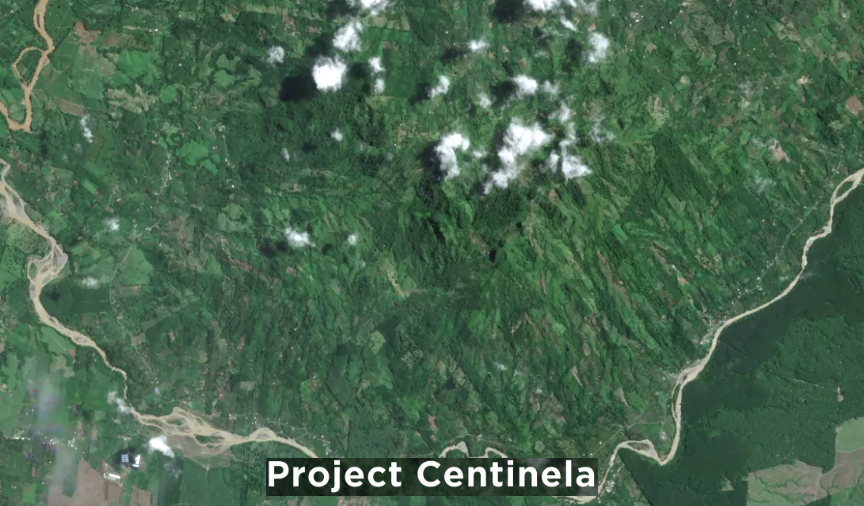
As part of Planet’s mission, over the next three years the program will help support teams working at the forefront of the biodiversity crisis to monitor and safeguard up to 50 of the world’s vulnerable biodiversity hotspots.

These eight vulnerable, high-biodiversity locations are the first sites for Project Centinela, implemented in collaboration with local site teams.
Graphic: Business Wire

Planet owns and operates the largest constellation of Earth imaging satellites in history, capturing the Earth on a near-daily cadence. This high-frequency satellite imagery enables communities and researchers to see Earth’s changing surface, characterize ecosystem health, and track the success of conservation and restoration efforts over time. With access to Planet’s Planetary Variables, such as Forest Carbon, Soil Moisture, and Land Surface Temperature, Project Centinela participants will have a unique suite of tools to derive quantifiable insights that advance conservation of their target sites.

At its onset, Project Centinela has already engaged teams in eight biodiversity-vulnerable locations across the globe including: the Osa Peninsula in Costa Rica, Vale do Javari in Brazil, Rio Matos Ramsar site in Bolivia, Virunga National Park in the Democratic Republic of the Congo, Eastern Chimpanzee Conservation Areas in western Tanzania and Uganda, northern coastal Mozambique, Terai Arc Landscape in Nepal, and Gunung Naning Protection Forest in Borneo, Indonesia.

As a Public Benefit Corporation (PBC), Planet’s mission is to accelerate humanity toward a more sustainable, secure, and prosperous world, by illuminating environmental and social change. Project Centinela advances Planet’s mission as part of its contributions to support the Kunming-Montreal Global Biodiversity Framework.

Institutions from these sites are already accessing these data to better advance their work:

Microsoft AI For Good Research Lab
“Tracking and detecting deforestation is essential for preserving our planet’s biodiversity. We are proud to collaborate with Planet Labs, which stands out for its unique ability to provide daily, high-resolution satellite data that is critical to this mission. Their unparalleled capabilities enable crucial conservation efforts, and together we support the courageous staff at Virunga National Park in their vital work,” said Juan M. Lavista Ferres, Corporate Vice President and Chief Data Scientist at Microsoft and Director of the Microsoft AI For Good Lab.

Jane Goodall Institute
Planet’s Planetary Variables will provide new insights into chimpanzee habitats and threats, a core area of focus at the Jane Goodall Institute. “Through this partnership, JGI will support implementation of the Uganda National Chimpanzee Conservation Strategy and Tanzania Chimpanzee Conservation Action Plan. Forest carbon, soil moisture, crop biomass and other products will help enable our local communities and government partners to better monitor and manage their land use plans and protected areas, from village land and local authority forest reserves to National Parks, supporting their livelihoods and contributing towards conservation of the most vulnerable biodiversity hotspots,” said Dr. Lilian Pintea, VP Conservation Science, Jane Goodall Institute.

“I am very proud of the JGI partnership with Planet because supporting solution-oriented teams with powerful technology tools is critical to addressing the existential threats to the health of the planet that all life depends upon,” said Dr. Jane Goodall, founder of the Jane Goodall Institute and UN Messenger of Peace.

WildMon
“WildMon equips front-line conservationists with a tech ecosystem to measure the impact of their actions on biodiversity, reducing the reliance on external experts. By leveraging Planetary Variables—key environmental and climatic data crucial to biodiversity health—we are excited to contribute to Project Centinela. We will explore how Planet’s data can enhance community-led decision making in Borneo, enabling Indigenous Peoples (IPs) and Local Communities (LCs) to strengthen the conservation work they are already leading,” said Chrissy Durkin, President & Chief Development Officer, WildMon.

Osa Conservation
“As a ground-up NGO working in the tropics, it’s challenging to gather the type of actionable data, at both large geographical and fine temporal scale, that we need to guide our conservation actions and to monitor the impacts of our restoration efforts on the landscape. This project will allow us to assess that impact and guide our conservation plans into the future. And that is critical for us and our local partners to showcase how ground-up efforts can have major environmental impact and uplift, translating actions into results for partners, donors, and maybe someday, investors,” said Dr. Andrew Whitworth, Executive Director, Osa Conservation.

“Time is of the essence. Ecosystems around the world are in peril, and we risk losing some of Earth’s most iconic species. We now have the tools to tackle the biodiversity crisis at speed and scale,” said Planet Chief Impact Officer Andrew Zolli. “Leveraging daily satellite data and modern AI, we can monitor critical hotspots and tackle threats before it’s too late. The biggest challenges remain around access to this data, and Project Centinela is leading the way in getting these game-changing tools into the hands of scientists and stewards around the world.”

“In the hands of communities, decision makers, and researchers, Planet’s powerful imagery and tools help us see Earth’s changing surface, characterize ecosystem and biodiversity conditions, and track the success of conservation and restoration efforts over time,” said Amy Rosenthal, Planet’s Senior Global Director for Conservation Initiatives.

Filed Under: News

Rocket Lab completes 2nd spacecraft for Varda Space Industries, Advancing In-Space Mfg.

October 2, 2024 by editorial

Rocket Lab has completed testing and integration of its second Pioneer spacecraft for Varda Space Industries, Inc. at its Spacecraft Production Complex and headquarters in Long Beach, California. (Photo: Rocket Lab)

LONG BEACH, Calif.–(BUSINESS WIRE)–Rocket Lab USA, Inc. (Nasdaq: RKLB) (“Rocket Lab” or “the Company”), a global leader in launch services and space systems, has completed testing and integration of its second Pioneer spacecraft for Varda Space Industries, Inc. (“Varda”), the world’s first in-space pharmaceutical processing and hypersonic Earth re-entry logistics company.

Rocket Lab’s first Pioneer spacecraft for Varda was launched in June 2023. Varda successfully crystallized the HIV drug Ritonavir while on orbit and Rocket Lab and Varda successfully landed the re-entry capsule in the Utah desert in February 2024. The Company is now preparing Varda’s second mission during which Rocket Lab and Varda will once again conduct in-space operations, reentry positioning maneuvers, and deorbiting to recover Varda’s capsule. Varda received permission from the FAA under a Part 450 license earlier this month, making them the only company to ever secure a second reentry license.

Rocket Lab’s Photon spacecraft integrated with Varda Space Industry’s in-space manufacturing capsule. (Photo: Business Wire)

Designed and built at Rocket Lab’s Spacecraft Production Complex and Headquarters in Long Beach, California, the Pioneer spacecraft will provide power, communications, propulsion, and attitude control for Varda’s 120 kg reentry capsule. Each Pioneer spacecraft leverages the company’s vertically integrated spacecraft components and subsystems, including star trackers, reaction wheels, solar panels, flight software, and radios. Rocket Lab’s Pioneer spacecraft is a flight proven highly configurable medium delta-V platform designed to support large payloads, re-entry capabilities, and dynamic space operations.

Rocket Lab’s Pioneer spacecraft.
Photo courtesy of the company.

“By leveraging Rocket Lab’s vertically integrated approach to spacecraft production, we can rapidly develop and deliver the highly capable and reliable spacecraft that Varda needs for their missions,” said Rocket Lab Founder and CEO, Sir Peter Beck. “This close collaboration allows us to push the boundaries of innovation, enabling Varda to create high-value products in microgravity and bring them back to Earth. We’re excited to work alongside Varda as they revolutionize manufacturing processes and open new markets through space.”

“Our partnership with Rocket Lab demonstrates the power of collaboration to evolve the orbital economy,” said Varda CEO and co-founder Will Bruey. “Each reentry is a remarkable milestone that paves the way for future innovations, and the day when reentry is as common as launch.”

Varda’s W-1 capsule landing at the Utah Test and Training Range after a successful re-entry. Credit: John Kraus

Filed Under: Featured, News

AAC Clyde Space wins million€ PCDU order

October 2, 2024 by editorial

AAC Clyde Space mini Starbuck system.

AAC Clyde Space has won a 1.025 million euros order for four Starbuck power systems and related services — the company expects to have completed delivery of the order during the second quarter of 2025.

The power systems will be used in a planned constellation. The name of the client cannot be disclosed at this time.

Filed Under: News

Smart satellite services driving healthcare excellence + improved patient outcomes

October 2, 2024 by editorial

Last month, Q-KON installed a Eutelsat OneWeb LEO system at the Platinum Health Modikwa Clinic, the first time that a LEO satellite service has been used in the healthcare industry in South Africa.

Situated at the Modikwa Mine in Mpumalanga near Burgersfort, Modikwa Clinic is one of 23 healthcare facilities run by Platinum Health – a medical scheme and healthcare provider that specializes in meeting the needs of employees and their families in the platinum and chrome mining sector.

This Twoobii-OneWeb solution was made possible through a partnership between Q-KON, Gijima and Platinum Health, and delivers seamless satellite connectivity that perfectly integrates with Platinum Health’s systems and network infrastructure. The Twoobii-OneWeb solution has been developed on the global Eutelsat OneWeb constellation with additional network integration, quality-of-service profiles and service level delivery requirements in order to meet the needs of South African enterprises. This solution is integrated with Gijima’s core network at Teraco Isando to ensure the minimal latency, and provide visibility to the Gijima managed services team.

Like many such facilities, Modikwa Clinic is located in a remote rural area which can experience challenges when using conventional and terrestrial communications links. This makes mining healthcare facilities a prime candidate for the use of Smart Satellite Services such as Twoobii-OneWeb LEO as part of the ongoing digitization of healthcare provisioning.

In a groundbreaking trial at the Platinum Health Modikwa Clinic, Gijima has successfully transitioned from fixed wireless access to a state-of-the-art Twoobii-OneWeb LEO satellite link. This pilot program, conducted over two weeks without the users’ knowledge, was designed to ensure unbiased results and has demonstrated impressive results that have led to the immediate initiation of a second installation.

The trial replaced the clinic’s previous fixed wireless system with the advanced Twoobii-OneWeb LEO satellite technology. The new satellite link has delivered substantial improvements when measured against the trial success criteria of markedly reduced latency, a reliable and fast connection, and an absence of downtime.

The digital transformation trend in global healthcare – driven by a determination to provide improved patient outcomes – requires always-on connectivity in order for the industry to truly move online. Through digitization, healthcare service providers can be more productive, and treat more patients. With access to centralized patient records, they can accelerate the diagnosis process and ensure that they are delivering personalized patient care as part of the new, patient-centric model.

The Platinum Health management team has, therefore, agreed to continue the service and contract negotiations are under way with Gijima to facilitate access to Twoobii-OneWeb LEO services across the Platinum Health WAN. Having always-on satellite connectivity will further enhance the benefits of Platinum Health membership for mine employees and their families.

“Our Health Maintenance Organisation (HMO) model depends on our own health service providers and facilities having constant online access,” said Quantin van Rensburg, CIO for Platinum Health. “This allows all service providers to access centralized patient records and results in streamlined, seamless diagnosis and treatment, and improved patient satisfaction.”

“We are committed to enabling Platinum Health to deliver patient-centric care at all their healthcare facilities,” said Louis Kirstein, Solutions Architect at Gijima. “The Twoobii-OneWeb LEO Smart Satellite Services connectivity will enhance the interface between the scheme, healthcare professionals and patients through providing additional digital touchpoints, and enabling mobile-friendly services,.”

“The Twoobii-OneWeb LEO solution provided with Gijima to Platinum Health provides for a fully managed and tightly integrated WAN link that meets the requirement for a reliable always-on, anywhere broadband option with applications in emergency disaster response, healthcare training, health education and disease management strategies – all of which are especially relevant to South Africa’s mining industry,” said Hendrik Bezuidenhout, Q-KON Account Director.

Filed Under: News

Impulse Space Secures million$$$ in Series B funding

October 1, 2024 by editorial

Impulse Space has gained $150 million via a Series B funding round, led by Founders Fund. The round also included participation from other returning investors, such as Lux Capital and Spring Tide, as well as attracting new investors, such as DCVC. Other participants in the funding round included Airbus Ventures, Alumni Ventures, Balerion Space Ventures, RTX Ventures, Tamarack Global, 137 Ventures, Elysium, First Principles Group, Island Green, Overmatch, and Trousdale Ventures.

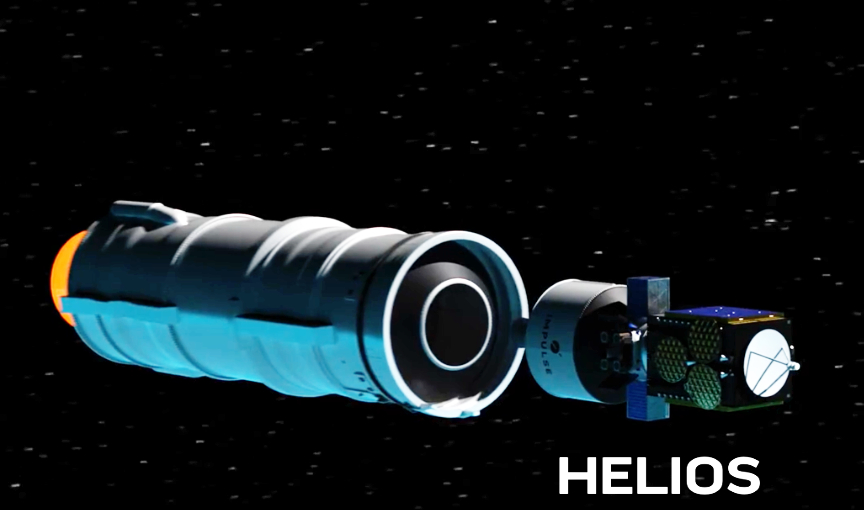
The funding, which follows a series of recent milestone moments for the company, will be used to further grow the Impulse team and to support the ongoing production of both the Helios and Mira vehicles. The Series B round brings Impulse’s total funding to date to $225 million.

The Series B funding continues the strong momentum for Impulse. This year alone, the company has been selected by SpaceWERX for a Strategic Funding Increase (STRATFI) award, two Small Business Innovation Research Program (SBIR) awards, announced a new GEO Rideshare Program, and completed the record-setting LEO Express-1 mission. The team is currently preparing for the upcoming launch of the LEO Express-2 mission, which will see a Mira vehicle support deployment and hosting services for multiple customers.

Mira, LEO Express-2, photo courtesy of Impulse Space.

Operations are based out of Impulse’s 60,000-square-foot headquarters in Redondo Beach, Calif., where the company handles the majority of vehicle design, manufacturing, testing, and assembly under one roof. Impulse also operates facilities at the Mojave Air and Space Port, where additional testing work is underway for the Helios Deneb engine.

Impulse Space’s vehicles, Helios and Mira, stand out in two key ways from other market entrants. Each features predominantly in-house components, from thrusters and valves to star trackers and avionics. This vertically-integrated approach enables the team to advance innovation and improve reliability while staying on time and on budget.

Second, both vehicles offer a high delta-v capability due to their chemical propulsion systems, which also feature non-toxic propellants, simplifying mission operations. Helios, a high-performance kick stage, uses liquid oxygen and liquid methane to transport more than 5 tons of payload from LEO to GEO in less than 24 hours.

Mira, designed for payload hosting, deployment, and movement within orbits, uses a storable nitrous oxide and ethane bipropellant to offer up to 900 m/s of delta-v for a 100 kg payload.

Together, the two vehicles address a critical need in the in-space transportation infrastructure by supporting rapid maneuverability within and between orbits.

With this latest funding, Impulse will continue growing its team of more than 140 employees and working to execute against an upcoming roadmap that includes the first mission for the upgraded Mira design in late 2025 and the inaugural launch of Helios in 2026.

“The satellite market is demanding enhanced maneuverability and rapid on-orbit responsiveness, which requires Impulse Space’s powerful, high delta-v vehicles,” said Scott Nolan, Partner at Founders Fund. “Tom has built a team with deep expertise innovating on mission-critical technologies, positioning the company to reliably deliver while driving the future of in-space transportation.”

“This funding is not only a testament to our team’s achievements over the past year but also a validation of our vision for the in-space transportation industry,” said Tom Mueller, founder and CEO of Impulse Space. “We’re proud to have so many partners who understand and support the importance of our work to accelerate humanity’s future in space by unlocking reliable, affordable, and efficient access to any orbit.”

Filed Under: News

Apex + Anduril announce partnership to advance space capabilities

October 1, 2024 by editorial

Image taken from the first Anduril-Apex joint mission launched aboard SpaceX Transporter-10.

Anduril Industries has announced a strategic partnership with Apex to enable rapid development and delivery of space systems for the United States and partners.

Anduril will use Apex’s buses for missions where Apex’s off-the-shelf approach and scalable manufacturing enable Anduril to rapidly deliver capability to customers; such as space situational awareness (SSA), proliferated LEO (pLEO) architectures, and missile warning and tracking. Together, Anduril and Apex aim to set a new standard for quality, scale, and capability that can be delivered to customers to responsively meet their needs.

The agreement combines Apex’s capabilities as an innovative spacecraft bus manufacturer with Anduril’s AI-powered payloads and systems integration expertise. As part of this agreement, Anduril will use its capabilities as a mission systems integrator to field operational systems by bringing together technology across the industrial base. Anduril will also contribute its own products from on-orbit edge processing, versatile payloads, ground C2 systems, and other autonomous operations support that is essential to field mission-ready satellite constellations.

As a merchant supplier of satellite buses, Apex will provide its off the shelf spacecraft designed for mass manufacturing. These productized buses offer Anduril the scale, quality, and reliability it needs to advance their missions in space.Satellite buses provide necessary components for any spacecraft, allowing systems to maneuver, communicate, provide power, and more. Apex’s productized satellite buses are unique in their rapid manufacturability, allowing the company to deliver high-quality spacecraft in quantity at a pace necessary to meet critical mission needs.

Earlier this year, Anduril and Apex successfully launched their first joint mission, Aries SN1, with Anduril’s edge-processing payload. Pictured above is a photo taken by SN-1 sensors and processed by Anduril’s edge-payload, all tasked through Anduril’s Lattice platform. From initial concept to flight-ready delivery, this entire project was completed in just 2 months – an unprecedented speed – demonstrating the value of Anduril and Apex’s product-led approach that prioritizes interoperable components and productized off the shelf spacecraft, which can be rapidly integrated and customized for mission needs.

In 2025, Anduril will launch its own self-funded mission, powered by Apex’s Aries bus, featuring upgraded mission data processing and new infrared imaging capabilities, marking the next phase of their collaboration. This next mission will serve as an essential tech maturation demo, and it will be the foundation for Anduril and Apex’s commitment to regularly deploying more mass to orbit.

This partnership follows significant milestones for both companies, including Apex’s $95 million Series B round, Anduril’s $1.5 billion Series F round, and the announcement of Anduril’s Arsenal-1 manufacturing facility.

“We’re proud to partner with Apex to put our software-defined, hardware-enabled capabilities in space,” said Gokul Subramanian, Anduril’s SVP of Space and Engineering. “Apex’s productized, off-the shelf, approach to bus development offers the high quality and reliability Anduril needs for our IRAD mission as well as their ability to manufacture at scale to meet future demand.”

“Apex and Anduril are aligned in our approach to getting decisive capabilities into the hands of the warfighter at the necessary scale and speed,” said Ian Cinnamon, Apex Founder and CEO. “Anduril was founded on the belief that the exquisite, bespoke approach to defense capabilities will not keep pace with threats from China and Russia. Apex takes that same approach in space, providing productized capabilities to help our customers get on orbit as fast as possible. Together, Anduril and Apex can meet the Pentagon’s goal of rapidly proliferating capabilities in space.”

Filed Under: News

KMI + ExoSat announce strategic partnership for active debris removal solutions

October 1, 2024 by editorial

Kall Morris Inc (KMI) and ExoSat in early September announced a strategic partnership to advance space debris removal operations.

This collaboration combines KMI’s Removal As A Service Laelaps spacecraft equipped with its REACCH system and ExoSat’s Debris-Fed Spacecraft (DeFeS). The partnership will enable both companies to offer comprehensive Active Debris Removal solutions, addressing the growing challenge of orbital debris.

Artistic rendition of KMI’s Laelaps spacecraft,

The non-exclusive agreement allows for mutual service offerings, technology coordination, and client referrals based on orbital capabilities. Both firms will collaborate on grant opportunities and development efforts, aiming to conduct integrated missions by 2028.

“Engaging ExoSat for future KMI missions expands the opportunities for us both in reaching customers where they are located on Earth, on-orbit, and providing unique in-space logistics solutions. By growing these partnerships, together we can better address the challenges and seize our shared success in space,” said Troy M. Morris, Co-Founder & CEO of Kall Morris Inc (KMI).

Guillaume Ramaré, Co-founder and CEO of ExoSat Aerospace Industries, said, “ExoSat is delighted to partner with KMI in space debris removal. It’s one small step for our companies, but one giant leap for our customers, offering tailored solutions for a sustainable future in space.”

Filed Under: News

D-Orbit closes a million€€€ Series C round

September 29, 2024 by editorial

D-Orbit has announced the second and final closing of the company’s 150 million euros Series C Round, making one the biggest space deals in the last 12 months.

This raise was underpinned by D-Orbit’s track record of 16 successful missions; 14 ION Satellite Carriers and the Company’s proprietary orbital transfer vehicle, which has been on-orbit since 2020, and a further seven launches that are planned for 2025.

These missions have allowed the company to test both D-Orbit’s proprietary technologies and pioneering third party innovations on-orbit and they range from sensors designed to track and map the size, speed, and paths of sub-centimeters debris to help protect satellites from collisions, to AI/ML applications designed, for example, to promptly detect flooding and relay flood maps to emergency responders, thereby accelerating response time to environmental crises, potentially saving lives, and minimizing damage to communities.

The round allows D-Orbit to continue developing its capabilities in space cloud computing and on-orbit servicing. It will also facilitate and accelerate its collaborations with governments and space agencies as well as broaden its customer reach across geographies and industries. It is also expected that part of the procedures will be used to make strategic acquisitions to broaden the Company’s product set.

The round is led by Marubeni Corporation, a powerhouse in the Japanese industrial sector, cementing a long-term commercial collaboration poised to revolutionize the space logistics industry. This partnership builds on Marubeni’s exclusive rights to distribute D-Orbit’s services in Japan, now expanding to Southeast Asia, and leverages Marubeni’s extensive network and expertise to accelerate D-Orbit’s growth as a leading provider of satellite logistics solutions in key global markets.

D-Orbit’s existing investors CDP Venture Capital, Seraphim Space Investment Trust, Indaco Venture Partners, Neva SGR (the Intesa Sanpaolo Group’s venture capital company), and Primo Ventures also participated.

The large size of the round has also allowed for new market leading investors to join the shareholder register. These include Avantgarde, a well-established family office with roots in the pharmaceutical and space industries, Iberis Capital, leading Portuguese private equity and venture capital portfolio manager, European Innovation Council (EIC) Fund that supports game changing innovative companies, Phaistos Investment Fund, a venture capital fund managed by 5G Ventures and backed by the Greek state, Terna Forward, the Corporate Venture Capital vehicle of the Italian Transmission System Operator Terna, and private investors with focus on tech investments. Furthermore, a consortium led by the existing shareholder United Ventures (primary Italian fund focused on technology), including the European Investment Bank, and the European Investment Fund, participated re-iterating strong support to the Company’s strategic plan.

These funds will support the development of a ‘circular space economy’, turning space debris into a valuable resource. This will include advances in in-orbit servicing to enable the collection and recycling of debris in orbit, as well as the manufacture of spacecraft for interplanetary travel. With the increasing number of satellites launches, D-Orbit remains dedicated to promoting space sustainability and environmental responsibility.

The Company is set to expand its services to include satellite lifespan extension and space debris removal alongside its existing satellite deployment and hosted payload on- orbit services.

Filed Under: Featured, News

Satellogic selected for NASA’s Commercial SmallSat Data Acquisition program 

September 29, 2024 by editorial

Satellogic Inc. (NASDAQ: SATL) was recently selected as one of eight recipients of NASA’s Commercial SmallSat Data Acquisition Program (CSDA) On-Ramp1 Multiple Award contract, with a maximum cumulative value of $476 million for all award winners — this award highlights Satellogic’s commitment to deliver high-quality Earth Observation (EO) data to advance scientific research and enhance life on Earth.

Under the CSDA On-Ramp1, Satellogic will provide NASA with high-resolution multispectral imagery under a multiple-award contract in effect until November 15, 2028. The program aims to offer NASA a cost-effective solution for augmenting or complementing the Earth observation data gathered by the agency, other U.S. government entities, and international agencies. This data will be pivotal in efforts to understand and mitigate the effects of climate change, monitor environmental trends, and improve various applications that benefit humanity.

The CSDA program is a strategic initiative designed to leverage the rapidly evolving commercial space sector. By working with commercial partners such as Satellogic, NASA can enhance its ability to gather crucial EO data efficiently and affordably. This collaboration underscores the importance of public-private partnerships in driving innovation and contributing to a better understanding of our planet.

“We are excited to contribute to NASA’s pioneering efforts in advancing Earth science research through commercial satellite data,” said Matt Tirman, President, at Satellogic. “This award recognizes our commitment to delivering accessible and actionable geospatial data, and we look forward to supporting NASA’s ongoing research and applications through this collaboration.”

Filed Under: Featured, News

The West of Scotland Space Cluster launches

September 29, 2024 by editorial

The West of Scotland Space Cluster, the newest addition to the UK’s thriving ecosystem of regional space clusters, recently launched.

The region is a key hub in the Scottish space sector, operating at the forefront of a European revolution in spacecraft systems, payload manufacture, launch (upstream) and data analysis (downstream) activity. Space companies, such as AAC Clyde Space and Spire Global, have led the way, building more satellites in Glasgow than any other city in Europe, with other players such as Craft Prospect and Alba Orbital introducing further innovation in the global small satellites market. 

Aligned with the regional space clusters operating across the UK, the West of Scotland Space Clusters incorporates industry, universities and colleges, as well as economic development and support organisations, aiming to capitalize and expand on existing regional strengths in space technologies. The region’s capability extends from small satellite design, manufacture and mission capability and advanced space data-driven services to leading-edge R&D in fields such as quantum, photonics, communications and AI. It is widely acknowledged that the growth of the West of Scotland Space Cluster companies will be critical in helping Scotland achieve its ambition of securing £4 billion of the global space market by 2030.

Craig Clark MBE, space entrepreneur, the founder of AAC Clyde Space and a Professor of Practice in the University of Strathclyde’s space cluster, said that the new cluster would help drive regional growth, combining pioneering research, industry innovation and manufacturing facilities to provide the foundation for Scotland’s emerging end-to-end capability in the European small satellite value chain.

Mr. Clark said, “With SaxaVord Spaceport now operating as the first fully-licensed vertical launch Spaceport in Europe, the West of Scotland has a pivotal role to play in the delivery of the country’s end-to-end capability and helping to attract international companies to set up operations here as we have recently seen with the South African CubeSat imaging company, Simera Sense. From a standing start in 2005, Scotland now has one of the fastest-growing space sectors in the world, fuelled by global excellence in space-related research and a long history of innovation and entrepreneurship in engineering. The aim of the West of Scotland Space Cluster is to grease the wheels of the continued growth of the sector in the region and help make Scotland a leading global space player.”

John Ward, Senior Director of Research & Development at Spire Global, which designs and builds the world’s largest multipurpose satellite constellation in Glasgow, said that the new cluster would serve as a platform for greater connectivity and collaboration between the region’s key players. Mr. Ward said, “Spire Global has manufactured over 175 satellites right here in Glasgow, where the majority of our R&D efforts take place. This new space cluster will enhance collaboration and connectivity among regional players, accelerating innovation and creating a more integrated supply chain. By fostering this ecosystem, we can unlock new opportunities for growth and cement the West of Scotland as a leading hub in the global space industry.”

Andrew Strain, Chief Technology Officer at AAC Clyde Space, added that the cluster’s new advisory group would be focused on actions that drive growth across a region which stretches all the way to the Prestwick, home to Scotland’s largest aerospace hub. He said, “The West of Scotland has amassed an incredible amount of capability in the space industry over the past two decades, particularly in small satellite design and manufacturing.  This year marks the 10th anniversary of the launch of Scotland’s first satellite UKube-1, built by Clyde Space Ltd, now part of AAC Clyde Space. In the following decade, Scotland has gone from never having launched a satellite to building more than anywhere else in Europe.  Satellites and systems designed and built here account for hundreds of years of accumulated on-orbit heritage – very few places in the world can claim that.  Through the West of Scotland Space Cluster, we have to opportunity to maintain and grow our admirable position in this innovative section of the space industry.”

Antonia Yendell, Head of the Space Ecosystem team at the UK Space Agency, said, “The UK Space Agency strongly supports and is investing in the growth of the Scottish Space Economy. The UK Space Ecosystem is a competitive advantage for the UK Space Sector and Scotland plays a critical role in our thriving and interconnected cluster network, developing our national capabilities and driving economic growth.”

Filed Under: News

  • « Go to Previous Page
  • Page 1
  • Interim pages omitted …
  • Page 52
  • Page 53
  • Page 54
  • Page 55
  • Page 56
  • Interim pages omitted …
  • Page 338
  • Go to Next Page »

Primary Sidebar

WEEKLY NEWSLETTER

Archives

  • July 2026
  • June 2026
  • May 2026
  • April 2026
  • March 2026
  • February 2026
  • January 2026
  • December 2025
  • November 2025
  • October 2025
  • September 2025
  • August 2025
  • July 2025
  • June 2025
  • May 2025
  • April 2025
  • March 2025
  • February 2025
  • January 2025
  • December 2024
  • November 2024
  • October 2024
  • September 2024
  • August 2024
  • July 2024
  • June 2024
  • May 2024
  • April 2024
  • March 2024
  • February 2024
  • January 2024
  • December 2023
  • November 2023
  • October 2023
  • September 2023
  • August 2023
  • July 2023
  • June 2023
  • May 2023
  • April 2023
  • March 2023
  • February 2023
  • January 2023
  • December 2022
  • November 2022
  • October 2022
  • September 2022
  • August 2022
  • July 2022
  • June 2022
  • May 2022
  • April 2022
  • March 2022
  • February 2022
  • January 2022
  • December 2021
  • November 2021
  • October 2021
  • September 2021
  • August 2021
  • July 2021
  • June 2021
  • May 2021
  • April 2021
  • March 2021
  • February 2021
  • January 2021
  • December 2020
  • November 2020
  • October 2020
  • September 2020
  • August 2020
  • July 2020
  • June 2020
  • May 2020
  • April 2020
  • March 2020
  • February 2020
  • January 2020
  • December 2019
  • November 2019
  • October 2019

© 2019–2026 SatNews

Insert/edit link

Enter the destination URL

Or link to existing content

    No search term specified. Showing recent items. Search or use up and down arrow keys to select an item.
      x
      Sign Up Now!

      Enjoy a free weekly newsletter with recent headlines from the global SmallSat industry.

      Invalid email address
      We promise not to spam you. You can unsubscribe at any time.
      Thanks for subscribing! You will now receive weekly SmallSat News updates.
      We love our advertisers.
      And you will too!

      Please disable Ad Blocker to continue... We promise to keep it unobtrusive.
      We promise not to spam you. You can unsubscribe at any time.
      Invalid email address
      Thanks for subscribing!