• Skip to main content
  • Skip to primary sidebar
  • Home
  • News
  • Featured
  • More News ⌄
    • SatNews
    • SatMagazine
    • MilSatMagazine
  • Events ⌄
    • MilSat Symposium
    • SmallSat Symposium
    • Satellite Innovation
  • Contacts
  • SUBSCRIPTION

SmallSat News

You are here: Home / Archives for editorial

editorial

NASA selects 3 new Venture-class launch service providers

August 22, 2024 by editorial

NASA has selected three additional companies to provide launch services for future agency missions through its VADR (Venture-Class Acquisition of Dedicated and Rideshare) contract.

The companies awarded are:

  • Arrow Science and Technology LLC of Webster, Texas
  • Impulse Space Inc. of Redondo Beach, California
  • Momentus Space LLC of San Jose, California

The VADR contract is a firm-fixed-price, indefinite-delivery/indefinite-quantity instrument with an ordering period through Feb. 3, 2027 and a maximum total value of $300 million across all VADR contracts. NASA selected the new launch providers in accordance with VADR’s on-ramp provision, allowing the agency to add new capabilities not available or identified at the time of the initial award. NASA will issue firm-fixed-price task orders for launch services as needed for future agency and agency-sponsored missions.

The VADR contract builds on NASA’s previous procurement efforts, such as the VCLS (Venture Class Launch Services) and VCLS Demo 2, providing a broad range of Federal Aviation Administration-licensed commercial launch services capable of delivering Class D, CubeSats, and higher risk-tolerant payloads to a variety of orbits. By using a lower level of mission assurance and commercial best practices for launching rockets, these highly flexible contracts help broaden access to space through lower launch costs and serve as an ideal platform for contributing to NASA’s science research and technology development.

NASA’s Launch Services Program, based at the agency’s Kennedy Space Center in Florida, manages the VADR contracts. The program also works with private industry, spacecraft projects, and international partners to launch science payloads ranging from small satellites with colleges and universities to NASA’s highest priority missions.


Filed Under: Featured, News

SpaceX still a Go! for Friday’s launch of Starlink Group 9-5 smallsats

August 22, 2024 by editorial

On Friday SpaceX plans to launch to Low Earth Orbit Starlink Group 9-5, a batch of satellites for the Starlink mega-constellation from Vandenber SFB’s Space Launch Complex 4E, California at 1:00 AM – 5:23 AM PDT.

The forecast calls for a temperature of 57°F, few clouds, 19% cloud cover and a wind speed of 5mph.

The expense of the mission is $52 million.

Space Launch Complex 4E has witnessed the launch of 155 rockets, including 155 orbital launch attempts, while Vandenberg SFB, CA, USA, has been the site for 767 rocket launches.

The second ASDS barge, Of Course I Still Love You (OCISLY), services launches in the Pacific Ocean and will be the site of the booster recovery of the Falcon 9 booster.

Filed Under: News

Ovzon receives Ovzon 3 order from Swedish Space Corporation (SSC)

August 21, 2024 by editorial

Ovzon recently received an initial limited order for Ovzon SATCOM-as-a-Service using the newly operationalized Ovzon 3 satellite from partner Swedish Space Corporation (SSC) — the service was delivered within 24 hours of being requested.

Ovzon’s SATCOM-as-a-Service is known for supporting critical missions with high performance, mobility and resiliency. The delivery highlights the continued confidence of SSC in Ovzon’s capabilities to provide advanced SATCOM services to Swedish government agencies. This order relates to a different end-customer than the order received from SSC in December 2023.

“We are very pleased to receive another order from SSC. With the Ovzon 3 satellite now in commercial service, we are committed to providing Swedish and other nations progressive governments and organizations with unmatched guaranteed communication solutions via satellite,” said Ovzon’s CEO, Per Norén.

Filed Under: News

Planet Signs contract with NCIA for APSS

August 20, 2024 by editorial

Artistic rendition of SkySats on-orbit, courtesy of Planet.

Planet Labs PBC (NYSE: PL), a leading provider of daily data and insights about Earth, has signed a new contract with the NATO Communications and Information Agency (NCIA). NCIA’s Alliance Persistent Surveillance from Space (APSS) program will use Planet’s SkySat high-resolution satellite data to support NATO missions.

Planet’s tasking capabilities will empower NATO decision makers by providing imagery for use with detailed tracking and analysis of foreign military capabilities and activities, monitoring of military infrastructure, detecting movements, assessing threats effectively, filling missing intelligence gaps and helping provide an unclassified common operating picture between allies.

Founded in February 2023, APSS is a multi-year, multinational initiative that aims to use space to collect data on any location at any given time, increase space-based intelligence sharing, improve NATO’s overall intelligence through space-based assets, and increase the speed, usability and management efficiency at which space-based data is collected, aggregated and delivered. APSS also enhances how NATO engages with future technologies including cloud solutions and AI analytical tools that will be key to better manage the growing amounts of space data available.

This contract highlights Planet’s continued business growth in the government sector this year, following a recently announced contract expansion with a U.S.-allied International Government Agency and a pilot contract signed with an International Ministry of Defense Customer.

“In a time of heightened global conflict, this ability to supply NATO is more critical than ever to reinforce multinational alliances and advance peace around the world through transparency and accountability from space,” said Will Marshall, co-founder and CEO of Planet. “We look forward to working with the APSS team as it continues to adopt new space technology to advance global security.”

“Space is critical for NATO, from supporting the navigation and tracking of forces, detecting missile launches, maintaining situational awareness, to ensuring effective command and control,” said Laryssa Patten, Head of Space Technology Adoption and Resilience at NCIA. “Planet’s sub-daily tasking brings new capabilities which enable monitoring of large areas of NATO interest, bolstering our technological advantage, and fulfilling our mission of preserving peace and security for nearly one billion people.”

Filed Under: News

UK Space Command successfully launches first military satellite 

August 20, 2024 by editorial

A UK satellite to support military operations has been successfully launched. Named Tyche, the satellite is UK Space Command’s first satellite which can capture daytime images and videos of the Earth’s surface. The satellite will strengthen the UK’s Intelligence, Surveillance, and Reconnaissance (ISR) capabilities.   

As the conflict in Ukraine has shown, the use of space is crucial to military operations. Tyche is the first satellite to be launched under the UK Ministry of Defence’s space-based ISR program, which will deliver a constellation of satellites and supporting ground systems by 2031.  

These satellites will support military operations as well as contribute to other government tasks, including natural disaster monitoring, the development of mapping information, environmental monitoring and tracking the impact of climate change around the world.   

Designed and built in the UK through a £22 million contract awarded by Defence Equipment & Support to Surrey Satellites Technology Limited (SSTL), Tyche is the first satellite to be fully owned by the Ministry of Defence.

SSTL received the first signals from Tyche – which is comparable in size to a washing machine – a few hours after lift-off, confirming the successful launch.

Operating in LEOover a five-year lifespan, Tyche will provide timely space-based imagery in support of the UK Armed Forces.  The design and build of the 150-kilogram satellite has supported around 100 high-skilled roles at SSTL since 2022.  

Tyche was launched from Vandenberg Space Force Base, California, by SpaceX, on their re-usable Falcon 9 rocket, as part of the Transporter 11 mission.

Minister for Defence Procurement and Industry, Maria Eagle, said.  “Tyche will provide essential intelligence for military operations as well as supporting wider tasks across government. Tyche also shows the UK’s commitment to support innovation in science and technology, stimulating growth across the sector and supporting highly skilled jobs in the UK.”  

UK Space Commander, Major General Paul Tedman, said,   “This is a fabulous day for UK space. The successful launch of Tyche has shown that UK Space Command, and its essential partners across defence and industry, can rapidly take a concept through to the delivery of a satellite capability on orbit. Tyche represents the first of a future constellation of Intelligence, Surveillance, and Reconnaissance satellites that we’ll launch over the coming years. I’d like to take this opportunity to congratulate everybody involved with Tyche and thank them for their support.”  

Paul Russell, DE&S Space Team Leader, said, “Working closely with UK Space Command, Dstl and industry to understand how to deliver in a new, complex and critical environment has been an exciting journey. To see Tyche – the first of a new generation of UK military capabilities – delivered into orbit is an incredibly proud moment and a tribute to everyone’s commitment to this key project.” 

Filed Under: News

Terran Orbital’s Tyvak awarded million$$$ with a prototype agreement from SDA

August 20, 2024 by editorial

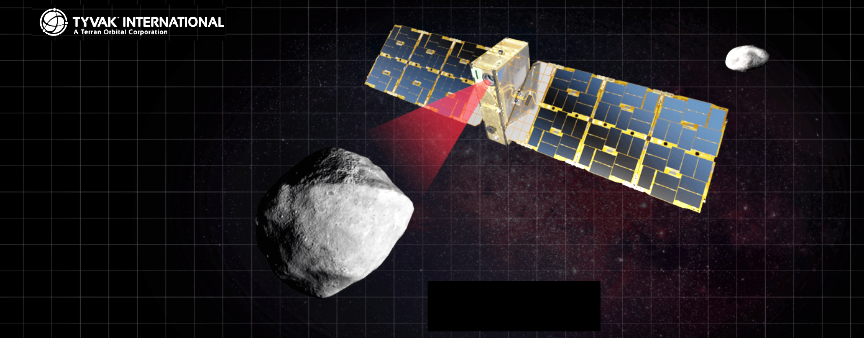
Tyvak Nano-Satellite Systems, Inc. (a Terran Orbital Corporation) (NYSE: LLAP) has been selected by the Space Development Agency (SDA) to produce 10 satellites for the Tranche 2 Transport Layer (T2TL) Gamma contract.

Terran Orbital will undertake the comprehensive design, construction, integration, testing, and delivery of 10 T2TL Gamma satellites based on its Ambassador platform. This will also include the integration of the associated ground control system and the execution of Launch and Early Operations (LEOPs).

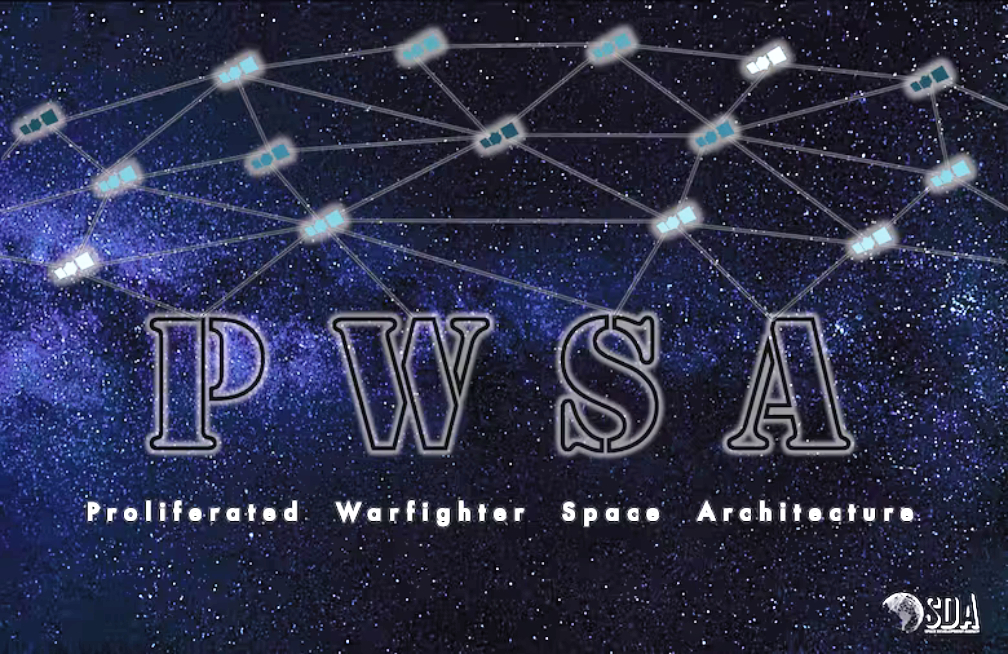
These satellites will be equipped with payloads specifically designed to enhance future kill chain capabilities through the Proliferated Warfighter Space Architecture (PWSA). The PWSA envisions a constellation of hundreds of satellites in low-Earth orbit, featuring advanced satellite communications, data transport, missile warning, and missile-tracking functionalities.

Gamma will maintain several core characteristics shared with other T2TL variants, including Beta. In addition to Gamma, and as previously announced, Terran Orbital is collaborating with Lockheed Martin to produce 36 space vehicles for T2TL Beta and 18 for the T2 Tracking Layer. The Company has already successfully delivered 10 buses for the Tranche 0 Transport Layer and is now manufacturing 42 buses for the Tranche 1 Transport Layer (T1TL), with launches planned for late 2024 and 2025.

“We are honored to have been chosen for this program. Our ongoing collaboration with the SDA across multiple Tranche iterations has been immensely rewarding, and we deeply value their continued trust in our capabilities,” said Marc Bell, Chairman, Co-Founder, and Chief Executive Officer at Terran Orbital.

Filed Under: Featured, News

Hydrosat launches VanZyl-1 to pursue global thermal imaging

August 19, 2024 by editorial

On Friday, August 16, Hydrosat, a climate technology company focused on leveraging thermal imagery to measure water stress in agriculture and combat the effects of climate change, successfully launched VanZyl-1 — the company’s first proprietary satellite.

According to the company, this marks a groundbreaking achievement in global thermal imaging. VanZyl-1, equipped with a cutting-edge, thermal infrared camera, was carried on Loft Orbital’s YAM-7 spacecraft and launched via SpaceX’s Falcon 9 rocket from Vandenberg Space Force Base in California via the Transporter-11 rideshare mission.

This VanZyl-1 mission represents a significant advancement in delivering high-resolution thermal imaging technology across the entire planet. For the first time, Hydrosat’s proprietary commercial satellite will provide detailed thermal imagery and insights covering both land and water, offering an invaluable tool for growers, government agencies, and researchers. 

The data collected from VanZyl-1 will play a crucial role in enhancing agricultural and climate models – transforming how we understand and manage resources and enabling more precise and timely decision-making to address critical global issues. 

Filed Under: News

Blue Canyon launches several smallsats via the SpaceX Transporter-11 mission

August 19, 2024 by editorial

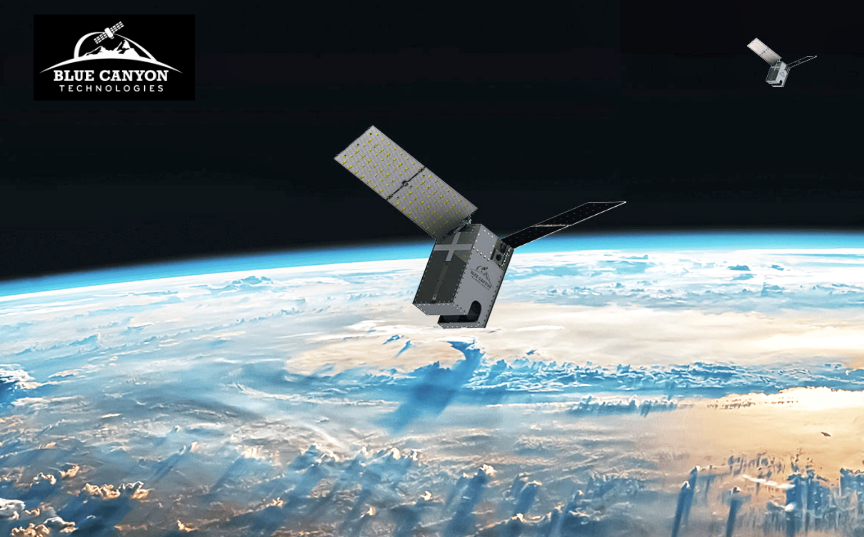
Multiple spacecraft and components designed by Blue Canyon Technologies were successfully launched on the recent SpaceX Transporter-11 rideshare mission.

Ridesharing is a cost-effective way for the company’s diverse customers to launch their crucial missions. Onboard this latest launch, Blue Canyon Technologies provided:

  • Two 6U CubeSats
  • A custom microsatellite for weather monitoring
  • Seven high-performance FleXcore attitude control systems
  • Two XACT attitude control systems
  • Twelve flight sets of reaction wheels, four coarse sun sensors, six torque rods and
    a nano star tracker

Overall, the launch included more than 100, high-performance, Blue Canyon Technologies components, as well as the company’s 50th CubeSat, to orbit.

Blue Canyon’s vertically integrated structure and diverse product portfolio have allowed us to meet each customer’s unique mission requirements.

Filed Under: News

HawkEye 360’s Cluster 10 satellites launched + contact established

August 19, 2024 by editorial

HawkEye 360 Inc. has announced that the company’s Cluster 10 satellites have successfully deployed to orbit after launching aboard SpaceX’s Transporter-11 Rideshare mission via launch integrator Exolaunch and HawkEye 360’s operations team has established communication with the satellites.

This trio of satellites will increase the company’s constellation to 31, significantly augmenting global RF monitoring capabilities. Cluster 10 will reinforce HawkEye 360’s capacity for frequent revisits to areas of strategic interest. Once operational, these satellites will enhance data collection, providing more comprehensive coverage and timely information across vital regions. Cluster 10 will advance HawkEye 360’s mission of delivering precise and actionable RF insights, ensuring expanded coverage and improved monitoring.

“Our team’s dedication and commitment to technological advancement have been the driving force behind reaching this significant milestone of 30 satellites built and launched,” said Rob Rainhart, President of HawkEye 360. “The successful launch and contact with Cluster 10 demonstrate our continuous efforts in engineering and operations, enabling us to enhance our global RF monitoring capabilities and provide more precise, actionable insights.”

Filed Under: News

Umbra boosts SAR with 2 satellites on the SpaceX Transporter-11 rideshare mission

August 19, 2024 by editorial

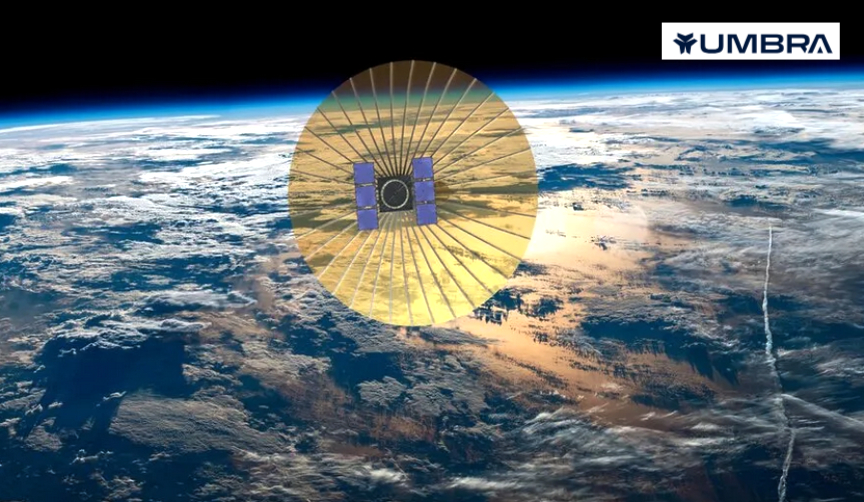
Umbra has successfully launched a new pair of SAR satellites — Umbra-09 and Umbra-10 — aboard the Transporter-11 Rideshare mission with SpaceX on August 16, 2024.

Umbra launched their first mission that included two-satellite tandem operations, Umbra-07 and Umbra-08, aboard the Transporter-9 mission on November 9, 2023. Umbra will continue deploying its constellation to satisfy global commercial demand for high-resolution, densely spaced monostatic and multi-static imagery.

Umbra satellites capture seven times more images over high-demand areas and in higher resolution than any commercial competitor. The company has won several contracts with government and commercial organizations, such as the commercial satellite imagery provider, Maxar.

Umbra recently expanded its business by launching a Mission Solutions line, leveraging its vertical integration and remote sensing expertise to develop custom satellite solutions for governments and large multinational corporations.

Since its establishment in 2015, Umbra has become a leader in remote sensing. Umbra’s innovative SAR imaging and patented satellite technology solutions offer all-weather, day-and-night monitoring, setting new standards for reliability, precision, and intelligence gathering.

“Umbra already delivers the largest volume of high-resolution SAR imagery in the concentrated areas of highest demand,” said Todd Master, Chief Operating Officer of Umbra. “These additional satellites will unlock even more imagery over high-demand areas for our customers, and our paired operations offer the ability to generate incredible data products uniquely enabled by Umbra.”  

Umbra is a vertically integrated space technology company providing satellite technology solutions and intelligence data as a service to commercial and government customers. Our cutting-edge products help customers solve complex business, environmental, and security challenges. Umbra is founded, funded, built and operated in the USA with headquarters in Santa Barbara, California, and has a presence in Austin, Texas, and Washington, D.C.

Filed Under: News

  • « Go to Previous Page
  • Page 1
  • Interim pages omitted …
  • Page 57
  • Page 58
  • Page 59
  • Page 60
  • Page 61
  • Interim pages omitted …
  • Page 338
  • Go to Next Page »

Primary Sidebar

WEEKLY NEWSLETTER

Archives

  • July 2026
  • June 2026
  • May 2026
  • April 2026
  • March 2026
  • February 2026
  • January 2026
  • December 2025
  • November 2025
  • October 2025
  • September 2025
  • August 2025
  • July 2025
  • June 2025
  • May 2025
  • April 2025
  • March 2025
  • February 2025
  • January 2025
  • December 2024
  • November 2024
  • October 2024
  • September 2024
  • August 2024
  • July 2024
  • June 2024
  • May 2024
  • April 2024
  • March 2024
  • February 2024
  • January 2024
  • December 2023
  • November 2023
  • October 2023
  • September 2023
  • August 2023
  • July 2023
  • June 2023
  • May 2023
  • April 2023
  • March 2023
  • February 2023
  • January 2023
  • December 2022
  • November 2022
  • October 2022
  • September 2022
  • August 2022
  • July 2022
  • June 2022
  • May 2022
  • April 2022
  • March 2022
  • February 2022
  • January 2022
  • December 2021
  • November 2021
  • October 2021
  • September 2021
  • August 2021
  • July 2021
  • June 2021
  • May 2021
  • April 2021
  • March 2021
  • February 2021
  • January 2021
  • December 2020
  • November 2020
  • October 2020
  • September 2020
  • August 2020
  • July 2020
  • June 2020
  • May 2020
  • April 2020
  • March 2020
  • February 2020
  • January 2020
  • December 2019
  • November 2019
  • October 2019

© 2019–2026 SatNews

Insert/edit link

Enter the destination URL

Or link to existing content

    No search term specified. Showing recent items. Search or use up and down arrow keys to select an item.
      x
      Sign Up Now!

      Enjoy a free weekly newsletter with recent headlines from the global SmallSat industry.

      Invalid email address
      We promise not to spam you. You can unsubscribe at any time.
      Thanks for subscribing! You will now receive weekly SmallSat News updates.
      We love our advertisers.
      And you will too!

      Please disable Ad Blocker to continue... We promise to keep it unobtrusive.
      We promise not to spam you. You can unsubscribe at any time.
      Invalid email address
      Thanks for subscribing!