• Skip to main content
  • Skip to primary sidebar
  • Home
  • News
  • Featured
  • More News ⌄
    • SatNews
    • SatMagazine
    • MilSatMagazine
  • Events ⌄
    • MilSat Symposium
    • SmallSat Symposium
    • Satellite Innovation
  • Contacts
  • SUBSCRIPTION

SmallSat News

You are here: Home / Archives for editorial

editorial

Ovzon receives first order for Ovzon 3 from the U.S. Department of Defense

August 15, 2024 by editorial

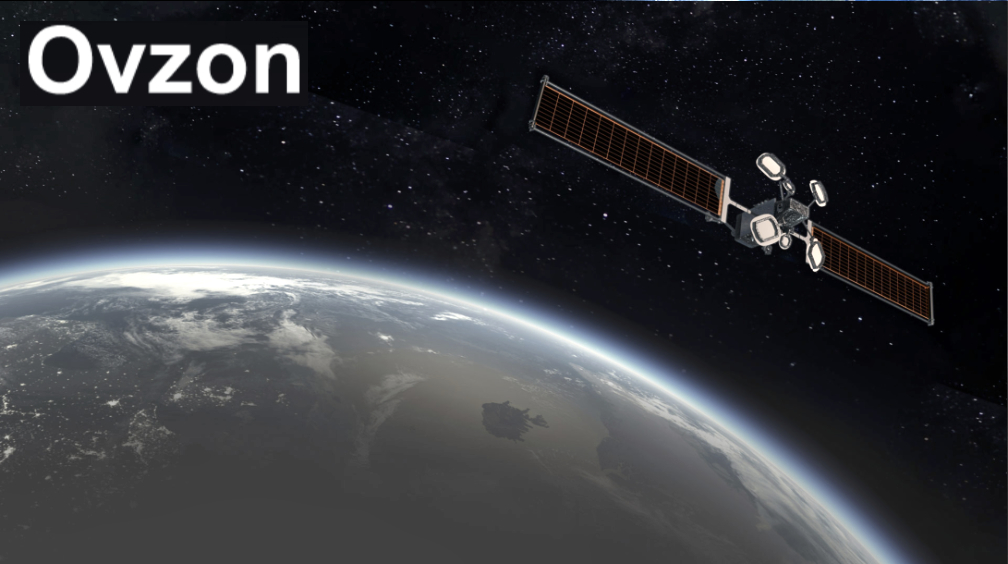
Ovzon has received, through Viasat Government Services, its first order for Ovzon Pegasus service on the new Ovzon 3 satellite. This represents the transition from current Ovzon SATCOM-as-a-Service delivered to the U.S. Department of Defense (DoD) using leased satellite capacity to now using Ovzon 3. The order is for 12 months and the service was activated on August 1, 2024. The order value amounts to approximately $6.2 million.

This order, specific to U.S. DoD requirements, replaces the previous eight-month contract that was signed in December 2023. The Ovzon 3 satellite was launched in January 2024. After the conclusion of successful in-orbit tests the satellite entered into commercial service on July 5, 2024.

“The U.S. Department of Defense has been a valued long-term customer for Ovzon. They were the first to rely on Ovzon SATCOM-as-Service for their critical missions, the first to order the Ovzon T7 mobile satellite terminal, and now first to take advantage of the unique capabilities of the industry first Ovzon 3 satellite. We are proud to support the U.S. DoD and deliver specialized applications for enhanced performance, mobility, and resiliency. Transitioning from leased satellite networks to Ovzon 3 is in progress, and we are confident it will play a critical role for the U.S. DOD and other key customers in the years to come,” said Per Norén, CEO of Ovzon.

Filed Under: News

AST SpaceMobile’s satellites arrive at Cape Canaveral for upcoming launch

August 14, 2024 by editorial

AST SpaceMobile BlueBird satellites arrive at Cape Canaveral.

AST SpaceMobile, Inc. (“AST SpaceMobile”) (NASDAQ: ASTS) has announced that the firm’s first five commercial satellites, called BlueBirds, have arrived in Cape Canaveral, Florida, ahead of the planned orbital launch during a 7 day launch window this September.”

The BlueBird satellites feature the largest-ever commercial communications arrays to be deployed in LEO, at a remarkable 693 square feet, a technological leap forward in AST SpaceMobile’s ability to deliver seamless cellular broadband connectivity to billions of mobile users worldwide.

Building on the success of its BlueWalker 3 satellite, AST SpaceMobile’s first five commercial satellites will have a tenfold increase in processing capacity. This advancement sets the stage for delivering global space-based cellular broadband directly to everyday smartphones, starting with non-continuous coverage across the continental United States using over 5,600 cells on premium low-band spectrum.

These first five commercial satellites were built in AST SpaceMobile state-of-the-art 185,000 square feet facilities in Midland, TX, specifically designed for satellite production. This advanced facility, equipped with cutting-edge technology, is a testament to AST SpaceMobile’s commitment to innovation and operational excellence.

During 2024, AST SpaceMobile has secured additional strategic investment from AT&T, Verizon, Google and Vodafone, as well as a new contract award with the United States Government through a prime contractor. The company has agreements with more than 45 mobile network operators globally, which have more than 2.8 billion existing subscribers total, including Vodafone Group, AT&T, Verizon, Rakuten Mobile, Bell Canada, Orange, Telefonica, TIM, Saudi Telecom Company, Zain KSA, Etisalat, Indosat Ooredoo Hutchison, Telkomsel, Smart Communications, Globe Telecom, Millicom, Smartfren, Telecom Argentina, MTN, Telstra, Africell, Liberty Latin America and others. AT&T, Verizon, Vodafone, Google, Rakuten, American Tower, and Bell Canada are also existing investors in AST SpaceMobile.

“These satellites represent years of relentless innovation,” said Abel Avellan, Founder, Chairman and CEO of AST SpaceMobile. “We are excited to take yet another step towards bridging the digital divide on a global scale with space-base cellular broadband.”

Filed Under: News

Forrester’s Digest: Terran Orbital — Cash is tight

August 13, 2024 by editorial

“As of July 31st 2024, the Company’s cash and cash equivalents balance was approximately $14.6 million which, without additional funding, will not be sufficient to meet its obligations within the next twelve months from the issuance of this quarterly report.” So said the cautionary note which accompanied Terran Orbital’s quarterly trading statement (for the three months to June 30th) which warned that the business must raise more capital.

Terran, part-owned by Lockheed-Martin (LM), is busy equipping a new 94,000 sq. ft. factory and handling orders for LM as well as for the US government. However, its largest order is a 300 satellite commitment from Rivada Space Networks (Rivada’s OuterNET system).

Terran did not hold the typical Q&A with analysts after the financial announcements but during an event hosted by investment bank Jefferies on June 25th, Terran CEO Marc Bell said that pre-manufacturing design of Rivada’s satellites was taking longer than anticipated. As to the financing crunch, Bell said, “We feel very comfortable. No issues on our side.”

In other words, the cautionary notes on the August 12th statement might just be the usual ‘boilerplate.’ As to the specific financials, Terran posted revenues of $30.39 million for the quarter ended June 2024. Its share price tumbled 8.54 percent to just 65 cents per share. This is also a problem in that the NASDAQ exchange requires listed businesses to maintain a share price above $1 per share.

A breakdown of Terran’s order book reveals… “During the three months ended June 30, 2024 and 2023, Lockheed Martin represented approximately 69 percent and 84 percent of consolidated revenue, respectively, and Rivada Space Networks represented approximately 15 per cent and 4 per cent of consolidated revenue, respectively. During the six months ended June 30th 2024 and 2023, Lockheed Martin represented approximately 71 per cent and 79 per cent of consolidated revenue, respectively, and Rivada represented approximately 11 per cent and 2 per cent of consolidated revenue, respectively. There were no other individual customers who accounted for more than 10 percent of the Company’s revenue during these periods,” stated Terran.

On the upside, as of June 30th, Terran had approximately $312.7 million of remaining performance obligations. The Company estimates that approximately 90 percent of the remaining performance obligations will be recognised as revenue by December 31st 2025 and the remainder by December 31st 2026.

Rivada’s obligations amount to $2.4 billion. The amount of revenue recognised under the Rivada Agreement duringthe three months ended June 30th 2024 and 2023 was $4.6 million and $1.2 million, respectively, and $6.2 million and $1.2 million during the six months ended June 30th 2024 and 2023, respectively. As of June 30th 2024, the Company’s remaining performance obligations included $1.6 million related to the Rivada agreement, which represents the associated contract liability.

Terran’s existing debt totals some $200.39 million. On May 30th it announced a share sale and received $37.1 million from the exercise. It has similar options which, if carried out, could realise up to a total of $60 million in fresh cash over and above the $37 million.

On May 16th, the company hired a new CFO (Adarsh Parekh) and on May 20th a new COO (Peter Krauss), both of whom will, no doubt, be working hard to keep the company’s head above water.

Filed Under: News

SmallSat Europe to debut in May of 2025

August 13, 2024 by editorial

SmallSat Europe is far more than just another conference – SmallSat Europe is the launchpad for all of your small satellite ambitions.

Here’s what awaits you:

  • Technical presentations: Deep dives into mission design, propulsion, payloads, communications, and more.
  • Business forums: Insightful discussions on market trends, investment opportunities, and regulatory landscapes.
  • Networking opportunities: Meet potential partners, investors, and collaborators at dedicated events and social gatherings.
  • Exhibition hall: Explore cutting-edge technologies from leading industry players and uncover solutions to your project challenges.
  • Student Exhibitions: Meet future leaders at the dedicated student exhibition hall

Continue to prepare for the future and gain the knowledge and insights necessary to ensure smallsat success — mark you calendar for SmallSat Europe today.

Important show dates…

  • May 20, 2024: Early Bird Registration Open
  • May 20, 2024: Open Call For Participation
  • December 1, 2024: Abstract Submission Deadline
  • January 17, 2025: Abstract Notification
  • March 3, 2025: Technical Papers Due
  • March 3, 2025: Open Call For Business Track Presenters
  • April 11, 2025: Early Bird Deadline

NOTE: Exhibition and sponsorship opportunities are currently available!  

Learn more about SmallSat Europe via this direct link…

Filed Under: News

ClearSpace + Plextek partnership to develop In-Orbit Servicing 

August 13, 2024 by editorial

ClearSpace and Plextek continue their successful partnership to address the key technical challenges of space debris removal and satellite servicing. In the dynamic field of in-orbit servicing, this cooperative venture will leverage the core competencies of both entities to enhance the reliability and precision of in-orbit operations. 

Plextek’s role is to engineer solutions that provide the navigational eyes for ClearSpace’s missions. Capitalizing the many years’ experience in radar, particularly in mmWave solutions with fully integrated antenna, waveguide, RF electronic and digital signal processing elements. These technologies are critical for the delicate maneuvers required to rendezvous with, capture, and ultimately deorbit defunct satellites and debris. 

Power and weight are a premium on a satellite, and Plextek’s proposed radar uses two times less electrical power and is less than one-third less of the weight compared to other RPO sensing solutions.

The collaboration is instrumental for both ClearSpace and Plextek, impacting broader economic and technological goals within the space sector. As space operations become more congested, the demand for effective debris management and servicing solutions increases, highlighting the significance of this collaboration in promoting sustainable space exploration. 

Driving the cooperation is a shared imperative towards sustainable space exploration. Beyond commercial and technical ambitions, there is a conscious passion for advancing responsible conduct in this area. As space becomes increasingly populated with commercial satellites, the potential for debris and the risk of collisions rise, making the requirement for debris removal a priority. 

The partnership is facilitating advancements in radar technology and operational approaches necessary for effective in-orbit servicing. By combining Plextek’s technical expertise in radar systems with ClearSpace’s solutions, the partnership is setting benchmarks for innovation and operational excellence in the space sector. 

“Solving the complex puzzle of space debris requires more than just technical capability; it demands an innovative spirit and collaborative mindset. Plextek is proud to be at the forefront of this challenge alongside ClearSpace, combining our rich heritage in engineering with cutting-edge solutions to support sustainable space operations,” said Brent Hudson, CEO, Plextek 

“In this mission, we chose Plextek due to their proven technical expertise. Their radar systems are instrumental for achieving the paramount need for safety and precision in proximity operations,” said Valentin Valhondo, Technical Program Manager, ClearSpace. “In the realm of in-orbit services, the capacity to approach and manipulate objects safely is non-negotiable. Plextek’s radar systems will serve this critical function. Our work with Plextek not only advances our technical capabilities but also contributes to the robustness of the UK’s growing space industry, supporting local technology development and implementation.“

“Leveraging Plextek’s strength in advanced radar and sensor technology, we’re pioneering the development of tailored solutions that not only meet but exceed the demands of modern space applications. Our dedication to engineering excellence fuels our mission to deliver precision and reliability in every project,” said Richard Jacklin, Commercial Lead, Plextek  “Our collaboration with Plextek enhances our capabilities, thereby supporting not only ClearSpace’s immediate operational goals but also expanding our Servicing to include satellite life extension and refueling operations. At Plextek, we understand that innovation is not a solo journey but a collaborative effort. With ClearSpace’s visionary approach to space logistics and our cutting-edge radar systems, we’re proud to set new industry standards for space sustainability and operational efficiency.”” 

Nicolas Croisard, Senior Spacecraft Systems Engineer at ClearSpace, said, “We perceive ourselves as an enabler of sustainable space operations. The core ClearSpace technologies are being forged for today’s debris removal tasks, with a clear vision to encompass other in-orbit servicing markets. We are developing technologies that allow for a responsible and sustainable use of space. Plextek’s role is pivotal as an enabler in this aspect of space sustainability.“

The ClearSpace-Plextek partnership is a key development in the evolution of space servicing. By addressing the complex challenges associated with space debris and satellite servicing, this collaboration underscores the combined commitment of both firms to advancing the frontiers of space technology and operations.  This partnership is a solid example of how technical collaboration can drive innovation and enhance capabilities, ensuring the sustainability and safety of space operations for future generations. 

ClearSpace, an in-orbit servicing (IOS) company created in 2018, is intent on revolutionizing how space missions are conducted. ClearSpace is becoming now a global company with dynamic engineering teams in Switzerland, the UK, Germany, Luxembourg and in the United States. ClearSpace is creating the technologies that will support a wide range of IOS applications, from disposal and in-orbit transport to inspection, assembly, manufacturing, repair, and recycling. ClearSpace aims to support institutions and commercial operators alike to enhance sustainable space operations and promote a circular space economy.  

Filed Under: News

Airbus + Astroscale UK sign MoU to explore In-Orbit Servicing collaboration

August 12, 2024 by editorial

Airbus Defence and Space Limited (“Airbus”) and Astroscale Limited (“Astroscale UK”), the UK subsidiary of Astroscale Holdings Inc. (“Astroscale”), have signed a Memorandum of Understanding (MoU) to explore collaborative opportunities in the field of in-orbit servicing and space debris removal. 

This strategic partnership aims to leverage the strengths and capabilities of both companies to address the growing challenges of space sustainability and satellite longevity, with a particular focus on advancing the UK’s efforts in the in-orbit servicing and manufacturing industry and building a circular economy in space.

The key objectives of this collaboration include…

  • Space Debris Removal: Exploring innovative methods to identify, capture, and remove space debris from Earth’s orbit. This is critical for ensuring the safety of current and future space missions and maintaining a sustainable space environment. This area includes the ongoing collaboration on use of the Airbus VISPA robotic arm on future Astroscale missions. 
  • In-Orbit Servicing: Developing technologies and solutions for the maintenance, repair, and enhancement of satellites while in orbit. This effort aims to extend the operational lifespan of satellites, reduce space debris, and improve the overall efficiency of space operations.
  • In-Orbit Rendezvous and Proximity Operations: Enhancing capabilities for precise and safe satellite maneuvering in space. This includes the development of sophisticated navigation and docking technologies essential for satellite servicing and debris removal missions.
  • In-Orbit Space Assembly and Manufacture: Exploring new possibilities for constructing and assembling spacecraft components directly in space. This ground breaking approach supports the development of a circular economy in space, where resources can be reused and repurposed to reduce waste and lower the cost of space missions.
  • Satellite Refueling and Life Extension: Ensuring the continued operation and extended lifespan of existing satellites through in-orbit refueling and other services. This reduces the need for launching replacement satellites, contributing to a more sustainable space industry.

This partnership underscores the commitment of both Airbus and Astroscale to drive innovation and sustainability in the space industry. By combining Airbus’s extensive experience in satellite manufacturing and space systems with Astroscale’s pioneering flight-proven rendezvous and proximity operations and in-orbit servicing technologies, the collaboration aims to set new standards in space safety and operational efficiency.

“By partnering with Airbus, we are taking a major step forward in advancing the UK’s leadership in the in-orbit servicing and manufacturing industry,” said Managing Director of Astroscale UK, Nick Shave. “Our combined efforts will not only enhance the longevity and efficiency of space assets but also contribute to building a circular economy in space, where resources are reused and repurposed. This collaboration is crucial for addressing the challenges of space debris and ensuring a sustainable space environment for future generations.”

Patrick Wood, Head of Space Systems UK, Airbus Defence and Space, said, “With thousands of tons of space junk in orbit, ensuring space sustainability is vital to protect the space environment and the satellites which are key to our daily lives, providing navigation and global connectivity, climate monitoring and accurate weather forecasts.”

Filed Under: News

KSAT intros fully automated KSATlite launch + deorbit Service following Rocket Lab collaboration

August 9, 2024 by editorial

Kongsberg Satellite Services (KSAT) has announced the launch of the company’s fully automated launch and deorbit service on the KSATlite network. The development of this service has been greatly enhanced by the close collaboration between KSAT and Rocket Lab, a global leader in launch services and space systems.

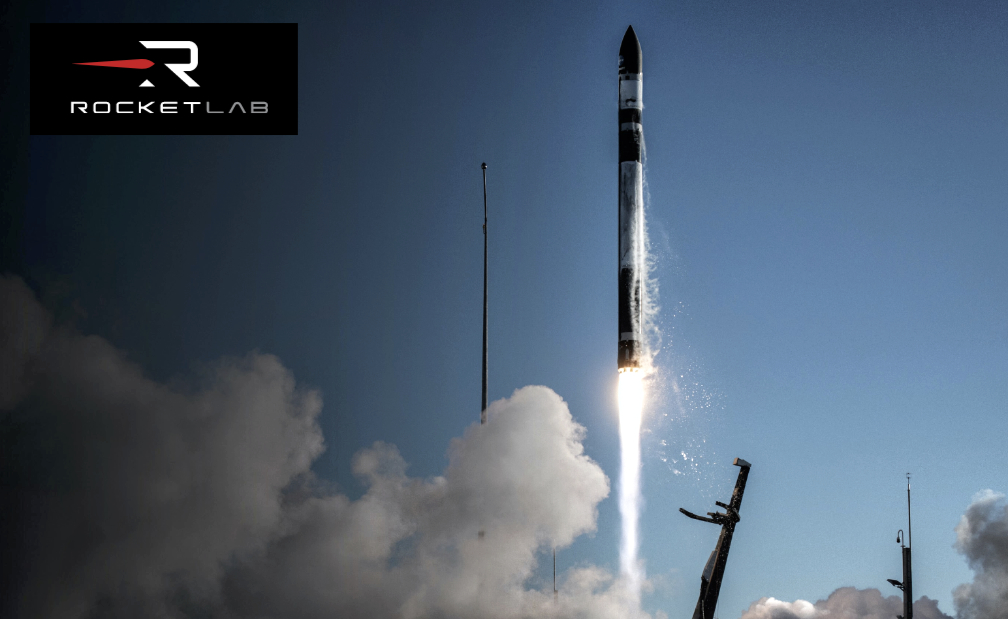
An Electron launch, photo courtesy of Rocket Lab.

The new service is an enhancement of the existing KSATlite portfolio to provide seamless, automated support for launch vehicles and deorbit operations. Designed to meet the growing demands of the space industry, this new service with unique antenna tracking features and extended monitoring and control capabilities enables complex mission support.

Rocket Lab’s Electron launch vehicle is one of the world’s most frequently launched rockets, having successfully delivered 190+ satellites to space for government and commercial customers across science and exploration missions, Earth observation, weather monitoring, and national security.

Further expanding its launch capabilities, Rocket Lab is developing its new medium lift reusable rocket Neutron to launch constellations of satellites, national security and defense missions, and interplanetary missions from mid 2025.

Rocket Lab also designs, builds, launches, and operates spacecraft for a variety of government and commercial satellite operators, enabling missions to the Moon for NASA, and providing in space operations, deorbit, and return to Earth spacecraft re entry operations for commercial customers such as Varda Space Industries.

By working together, both companies have leveraged their expertise to create a more efficient and reliable service. This co-engineering effort not only benefits KSAT and Rocket Lab but also provides significant advantages for launch and satellite operators by offering improved service quality and reduced operational costs.

Key Features and Benefits

  • Automation: The service offers end-to-end automation, from the pre-launch test to the actual launch event, eliminating the need for manual intervention and reducing the risk of human error.
  • New features: Unique antenna tracking features suitable for support of complex mission design and extended monitoring and control capabilities
  • Scalability: The KSATlite network’s scalable infrastructure ensures that the service can accommodate a wide range of missions across any location
  • Global Coverage: With an extensive network of ground stations strategically located around the globe, KSATlite provides unparalleled coverage and connectivity for launchers and satellite operators
  • Reliability: The automated system is built on KSAT’s proven technology, ensuring high reliability and uptime for critical operations
  • Cost Efficiency: By automating key processes, the service reduces operational costs, providing a cost-effective solution for launch companies and satellite operators
  • Standardization: Application of industry standards including IRIG-106 ensures compatibility for mission operations

“Our fully automated launch and deorbit service represents a major advancement in ground station technology,” said Arthur Kvalheim Merlin, Director of Ground Network Products. “By integrating this capability into our KSATlite network, we are setting a new standard for efficiency and reliability in space operations. This innovation will not only streamline the process for our customers but also significantly reduce operational risks and costs.” KSAT targets an operational readiness of the service in 2025, with one of its earlier customers being Rocket Lab and their brand-new Neutron rocket.”

“Since partnering with KSAT in 2019, KSATlite has been the primary ground station network supporting our Electron launch vehicle and LEO satellites. We’ve worked closely with KSAT to develop new capabilities unique within the Ground-Segment-as-a-Service industry. These capabilities have enabled us to reliably support a high Electron launch cadence and missions with complex mission designs, including launch of a spacecraft into lunar orbit and earth atmosphere re-entry of a manufacturing probe,” said Bill Lance, Global Director of RF Engineering. “This collaboration sets a new standard within the industry. Leveraging a standardized, global ground station network that supports the needs of both our launch and space systems divisions enables us to focus on our strategic programs and enhance the overall service we provide to our customers.”

Filed Under: News

Little Place Labs + Loft team up to compute real-time insights on the edge

August 8, 2024 by editorial

Little Place Labs (LPL) is teaming up with Loft Orbital (Loft) to push the boundaries of real-time data processing and insight delivery.

The companies will pair Loft’s low-latency operations, using its space infrastructure, with LPL’s analytics to enhance maritime domain awareness under a US Air Force Phase 2 STTR by deploying the firm’s software to Loft’s YAM-6 satellite as a virtual mission.

The demand for real-time, onboard processing and low-latency insight delivery is growing across sectors for applications from wildfire response and national security to environmental or asset monitoring. Traditionally, obtaining actionable information from satellites involves a multi-step process lasting several hours: data collection, transmission to ground stations, processing, and then delivery. As a result, data and insights are often delivered too late to be actionable where it truly matters. 

Enter edge-computing and low-latency communications. At Little Place Labs, the firm specializes in near real-time space analytics for terrestrial and space applications, leveraging AI to derive critical insights. We remove the data bottleneck by processing raw data on-orbit immediately after collection, and the latency bottleneck via high availability communications links via inter-satellite relay. Together, these solutions enhance response times and decision-making for threats against civilians, national assets, and our guardians, as well as unlock new commercial applications.

Loft will deploy Little Place Labs’ applications to its constellation of satellites, with each satellite node equipped with an array of sensing resources, from visible and infrared imagers to configurable software-defined radios (SDRs). These satellite nodes comprise Loft’s space infrastructure, each including onboard edge compute and connectivity resources to complement its sensing capabilities. This infrastructure is used to build and complete complex missions such as the low-latency maritime domain awareness application we’re working on, without having to deploy any new hardware.

“Our on-orbit data processing solutions, paired with Loft’s satellite platform, allow us to derive and deliver insights in near real-time for time-sensitive situations,” said Bosco Lai, co-founder and CEO of Little Place Labs. “These insights are critical to commercial and national security stakeholders, including those in the US government. This collaboration highlights the new space age, where companies like Little Place Labs and Loft come together, integrating our solutions into powerful capabilities.”

“We are proud to support customers like Little Place Labs in pushing the limits of what’s possible with low latency applications and onboard edge compute,” said Mitchell Scher, Director of Business Development at Loft. “While we’re providing the infrastructure to support these kinds of low-latency operations, it is only as useful as the applications our customers deploy and the operational value they produce for their end users.”

This post was originally published by Little Place Labs on their blog.

Filed Under: News

GomSpace receives contract from Unseenlabs for smallsat components

August 8, 2024 by editorial

GomSpace recently received a new product order of 10 MSEK from Unseenlabs for advanced products and subsystems.

These components will play a crucial role in the development of Unseenlabs’ next generation payloads, aimed at enhancing situational and marine awareness.

Henrik Kalstrup, Vice President of Products Business Unit of GomSpace, said, “We always value our partnership with Unseenlabs. This time, they have selected GomSpace as the supplier for their cutting-edge payloads, reinforcing our commitment to providing world-class solutions.”

Filed Under: News

Rocket Lab intros next generation satellite dispenser

August 7, 2024 by editorial

Rocket Lab USA, Inc. (Nasdaq: RKLB) has introduced the company’s next generation satellite separation system, the Advanced Satellite Dispenser (ASD).

The ASD is a cost-effective, versatile, and reliable deployment mechanism for small satellites in the CubeSat form factor and builds upon Rocket Lab’s heritage Canisterized Satellite Dispenser (CSD) technology, which has successfully deployed more than 60 satellites to orbit across more than 11 years in use.

The ASD provides customers with the option to remove encapsulation of the payload during flight or use optional walls and door, giving it the ability to fly with or without canisterization. This feature allows satellite designers increased flexibility to adapt their payloads to mission needs. This next generation satellite dispenser uses the heritage preloaded tab interface to ensure there is no slipping or gapping within the system, providing mission assurance for the payload, other payloads sharing the fairing, and the launch vehicle.

Rocket Lab expanded its development and supply of satellite separation systems and dispenser when the Company acquired Planetary Systems Corporation in 2021, a Maryland-based leader in separation systems and satellite dispensers that has been trusted by the global space industry for more than 25 years. Today, Rocket Lab’s separation systems are used on most active U.S. launch vehicles and have successfully deployed more than 360 spacecraft to orbit.

“Satellite separation systems are critical. Every payload needs one, and as the final step before a spacecraft enters orbit, they need to be dependable. For more than 25 years, first as Planetary Systems Corporation and now as Rocket Lab, our separation systems have provided this dependability with 100% mission success,” said Rocket Lab’s Vice President – Space Systems, Brad Clevenger. “The Advanced Satellite Dispenser further strengthens this deep heritage and adds another innovative product to our vertically integrated line of space systems products and services. We’ve had the benefit of working closely with customers for more than two decades to design separation systems to meet their ever-evolving needs. ASD is a direct result of this constant iteration, giving payload designers a cost-effective dispenser with fewer technical constraints, without sacrificing the reliability that Rocket Lab is known for.”

Filed Under: News

  • « Go to Previous Page
  • Page 1
  • Interim pages omitted …
  • Page 59
  • Page 60
  • Page 61
  • Page 62
  • Page 63
  • Interim pages omitted …
  • Page 338
  • Go to Next Page »

Primary Sidebar

WEEKLY NEWSLETTER

Archives

  • July 2026
  • June 2026
  • May 2026
  • April 2026
  • March 2026
  • February 2026
  • January 2026
  • December 2025
  • November 2025
  • October 2025
  • September 2025
  • August 2025
  • July 2025
  • June 2025
  • May 2025
  • April 2025
  • March 2025
  • February 2025
  • January 2025
  • December 2024
  • November 2024
  • October 2024
  • September 2024
  • August 2024
  • July 2024
  • June 2024
  • May 2024
  • April 2024
  • March 2024
  • February 2024
  • January 2024
  • December 2023
  • November 2023
  • October 2023
  • September 2023
  • August 2023
  • July 2023
  • June 2023
  • May 2023
  • April 2023
  • March 2023
  • February 2023
  • January 2023
  • December 2022
  • November 2022
  • October 2022
  • September 2022
  • August 2022
  • July 2022
  • June 2022
  • May 2022
  • April 2022
  • March 2022
  • February 2022
  • January 2022
  • December 2021
  • November 2021
  • October 2021
  • September 2021
  • August 2021
  • July 2021
  • June 2021
  • May 2021
  • April 2021
  • March 2021
  • February 2021
  • January 2021
  • December 2020
  • November 2020
  • October 2020
  • September 2020
  • August 2020
  • July 2020
  • June 2020
  • May 2020
  • April 2020
  • March 2020
  • February 2020
  • January 2020
  • December 2019
  • November 2019
  • October 2019

© 2019–2026 SatNews

Insert/edit link

Enter the destination URL

Or link to existing content

    No search term specified. Showing recent items. Search or use up and down arrow keys to select an item.
      x
      Sign Up Now!

      Enjoy a free weekly newsletter with recent headlines from the global SmallSat industry.

      Invalid email address
      We promise not to spam you. You can unsubscribe at any time.
      Thanks for subscribing! You will now receive weekly SmallSat News updates.
      We love our advertisers.
      And you will too!

      Please disable Ad Blocker to continue... We promise to keep it unobtrusive.
      We promise not to spam you. You can unsubscribe at any time.
      Invalid email address
      Thanks for subscribing!