• Skip to main content
  • Skip to primary sidebar
  • Home
  • News
  • Featured
  • More News ⌄
    • SatNews
    • SatMagazine
    • MilSatMagazine
  • Events ⌄
    • MilSat Symposium
    • SmallSat Symposium
    • Satellite Innovation
  • Contacts
  • SUBSCRIPTION

SmallSat News

You are here: Home / Archives for editorial

editorial

Safran boosts production of advanced satellite propulsion systems in the U.S.

August 7, 2024 by editorial

Safran Electronics & Defense is building its U.S. manufacturing capabilities for small satellite propulsion systems to meet the increasing demand in the commercial and defense sectors.

This strategic initiative will support the projected growth of the North American smallsat market, which is expected to reach more than $5 billion by 2030.

The “Made-in-the-USA” EPS®X00 system will be manufactured by Safran Electronics & Defense through its U.S.-based subsidiary, with first delivery in Q1 2026. By establishing a new production facility in Colorado, Safran reaffirms its position as a trusted provider of satellite propulsion turnkey solutions for both American and global markets. This initiative continues Safran’s long-standing commitment to investing in the U.S. to provide critical solutions and best-in-class support to U.S. commercial and government customers. Strategically located, the new Colorado site will also host Safran’s U.S. team for satellite communications as well as space and ground domain awareness.

Safran’s electric propulsion system, named EPS®X00 (pronounced “Xhundred”), which includes the PPS®X00 thruster, solidifies its position as a leading provider of electric propulsion for small satellites. The PPS®X00, priced competitively to meet the specific requirements of the New Space market environment, boasts a total thrust time of up to 5,000 hours and a very high specific impulse, making it extremely versatile and adapted to all types of applications in LEO.

“Safran is committed to advancing our manufacturing capabilities to meet the dynamic needs of the U.S. small satellite market,” said Jean-Marie Bétermier, Space Global Business Unit Director, Safran Electronics & Defense. “By targeting the global demand for electric propulsion in small satellites, we will address the challenge of increasingly stringent international regulations for sustainability and resilience around the world. Our enhanced production efforts are poised to support these developments and foster innovation in satellite technology. Our advancements will also ensure greater spacecraft maneuverability to avoid collisions and facilitate the deorbiting of Low Earth Orbit (LEO) satellites at the end of their service life.”

Safran is an international high-technology group, operating in the aviation (propulsion, equipment and interiors), defense and space markets. Its core purpose is to contribute to a safer, more sustainable world, where air transport is more environmentally friendly, comfortable and accessible. Safran has a global presence, with 92 000 employees and sales of 23.2 billion euros in 2023, and holds, alone or in partnership, world or regional leadership positions in its core markets. Safran is listed on the Euronext Paris stock exchange and is part of the CAC 40 and Euro Stoxx 50 indices

Safran Electronics & Defense offers its customers on-board intelligence solutions allowing them to understand the environment, to reduce mental load and to guarantee a trajectory, even in critical situations, in all environments: on land, at sea, in the sky or space. The company harnesses the expertise of its 13,000 employees towards these three functions: observe, decide and guide, for the civil and military markets.

Filed Under: News

Helsing tests real-time AI capabilities in space

August 7, 2024 by editorial

Helsing, a new defence company in Europe, has successfully deployed advanced AI capabilities on YAM-6, a satellite node part of Loft Orbital space infrastructure — these extended tests focus on real-time onboard radio frequency (RF) signal detection and their characterization to enable upcoming military grade Signal Intelligence and Cognitive Anti-Jamming applications.

Artistic rendition of an EarthDaily constellation satellite, courtesy of Loft Orbital.

Space has become the new frontier in Security and Defence. Western governments and armed forces are increasingly challenged by frequent jamming attacks or interferences against satellites. AI is the defining capability to protect European space assets against these threats. To this end, Helsing is working on delivering advanced capabilities to be available for upcoming constellations such as the EU’s IRIS².

“In the past three months we have demonstrated that AI can be deployed rapidly and safely on in-orbit satellites, providing immediate and significant capability gains. Our focus now is to scale those capabilities and make them available to more European armed forces and governments,” said Marc Fontaine CEO of Helsing France.

“We’re very excited to see operational use cases deployed on our space infrastructure. We started Loft with the goal to make it simple for customers to deploy applications on an infrastructure, the same way applications can be deployed on a cloud infrastructure. It is clear that we are at an inflection point where the future holds unbounded capabilities and opportunities, powered by the combination of AI applications and space infrastructure,” said Pierre-Damien Vaujour, CEO of Loft Orbital.

Late last year, the company has also raised €450 million in a Series C financing round led by General Catalyst, with participation from Elad Gil, Accel, Saab, Lightspeed, Plural and Greenoaks. The funds will be used for product development and R&D; a particular focus will be on capabilities to secure European sovereignty including protecting the NATO Eastern Flank.

Helsing has been active in Ukraine since 2022 and recently established the Defence Manufacturers Alliance, a joint initiative with the Ukrainian government. Since its founding in 2021, the company has secured a series of government contracts, including the German Eurofighter Electronic Warfare upgrade (with strategic investor and committed partner Saab AB), the AI infrastructure for the Future Combat Air System (FCAS, with consortium HIS), and a number of classified contracts in the maritime and land domain.

The financing round is subject to government approval.

In a joint statement, the company’s three founders Niklas Köhler, Torsten Reil and Gundbert Scherf said — “European security is at a crossroads and Helsing will play a significant role in giving democratic societies the ability to deter and defend. But speed is of the essence. This new funding round allows us to further up the tempo and invest in large-scale R&D and capabilities across all domains.”

Jeannette zu Fürstenberg, MD and Head of Europe at General Catalyst, said, “Since its inception, we have been able to watch the Helsing team execute with a great sense of urgency to build AI-based defense capabilities for European democracies. I have deep conviction that Helsing is on the path to becoming a global category leader. As we witness battlefronts on European soil for the first time in decades, we believe the role of companies like Helsing has never been more critical.”

Filed Under: News

Space Flight Laboratory (SFL) awarded GHGSat contract for 2 additional smallsats

August 7, 2024 by editorial

Space Flight Laboratory (SFL) has been contracted by GHGSat to develop two additional greenhouse gas monitoring microsatellites – GHGSat–C12 and C13 — the company will develop the new satellites on thefirnm’s low-cost, high-performance 15 kg NEMO bus, the same bus that was used to build the first nine GHGSat spacecraft.

GHGSat is a world leader in detecting and measuring facility-level greenhouse gas emissions from industrial sources on the Earth’s surface from space. Decision-makers across government and industries including oil and gas, power generation, mining, waste management, and agriculture rely on GHGSat emissions data to drive emissions reduction and accelerate the decarbonization of the planet. In 2023 alone, its satellite constellation made more than three million measurements across 85 countries, enabling the mitigation of more than six million metric tons of CO2e of methane emissions, equivalent to removing more than 1.4 million cars from the road for a year.

All nine GHGSat spacecraft developed by SFL are in excellent operational health. SFL developed the GHGSat-D (Claire) demo satellite for its launch in 2016 and was then selected to build the commercial GHGSat-C1 through C8 spacecraft launched since 2020. GHGSat-D has surpassed its design operational life by three years, and the eight commercial microsatellites achieved sustained detection and measurement of methane emissions on the ground at double their design capacities.

Development of GHGSat-C12 and C13 is underway at the SFL facility in Toronto. The two new satellites will be identical in design and technical capabilities to GHGSat-C6, C7, C8 that were launched in 2023.

GHGSat originally selected SFL to develop the breakthrough Claire demonstration mission due in part to SFL’s expertise in implementing advanced attitude control and stability technologies that enable smaller spacecraft to accurately point sensors at targets on the ground. Rare in satellites of that size and price point, this capability was crucial to GHGSat’s mission objectives.

Screenshot

In addition. SFL incorporates robust design margins into every satellite, and these include the onboard power systems, data storage, and downlink capacities. These margins in orbit translate into better operations and longer missions, contributing to the better-than-anticipated collection capacity of the GHGSat smallsats.

“SFL is pleased to build upon our long-standing relationship with GHGSat as it continues to leverage our exceptional microspace technology and develop a world-class commercial greenhouse gas monitoring constellation,” said SFL Director Dr. Robert E. Zee. “We take pride in building cost-effective small satellites that outperform and often exceed operational specifications.”

“As GHGSat continues to rapidly expand its constellation of high-resolution emissions-monitoring satellites, we are proud to once again partner with SFL for an additional two satellites. These spacecraft, which will build on the extensive track record of the previous nine SFL-built GHGSat satellites, mark exciting progress in GHGSat’s mission to measure emissions at every industrial site, worldwide, every day. The insights they generate will enable tangible emissions reductions for GHGSat’s government and industry customers, creating global climate impact,” said GHGSat President Stéphane Germain.

SFL’s 25-year heritage includes 76 operational successes totaling 325 cumulative years in orbit, with an additional 30 satellites under development or awaiting launch. SFL offers a complete suite of nano-, micro- and small satellites – including high-performance, low-cost CubeSats – that satisfy the needs of a broad range of mission types from 3 to 500 kilograms. These missions relate to Earth observation, atmospheric monitoring, ship tracking, communication, radio frequency (RF) geolocation, technology demonstration, space astronomy, solar physics, space plasma, and other scientific research.

Filed Under: News

HyImpulse Technologies GmbH + Spacemanic CZ s.r.o sign an MoU for launch services

August 7, 2024 by editorial

Image of the S1 on launch pad, courtesy of HyImpulse.

HyImpulse Technologies GmbH and Spacemanic CZ s.r.o. have signed a Memorandum of Understanding (MoU) and will now collaborate on launch services.

Image of the SR75 launcher in flight, courtesy of HyImpulse.

Under this MoU, HyImpulse and Spacemanic will prepare and enter into launch contracts for as many as 10 orbital missions from 2026 to 2036. This collaboration includes the use of HyImpulse’s Small Launcher 1 (SL1) for orbital services and the SR75 vehicle for suborbital technology demonstration missions.

Screenshot

HyImpulse will provide comprehensive launch services, including payload integration and pre-flight activities, ensuring the successful deployment of Spacemanic’s payloads into designated orbits.

This partnership marks a significant step towards advancing access to space, demonstrating both companies’ commitment to innovation and excellence in the aerospace sector.

HyImpulse Technologies GmbH is a leading German and UK based manufacturer and system provider of commercial launch vehicles for suborbital and orbital launch services. Our small satellite launch vehicles, with unique hybrid propulsion made of oxygen and paraffin, set new standards in the commercial space sector. With over 65 employees at sites in Neuenstadt, Ottobrunn, and Glasgow, we develop rockets to transport commercial payloads efficiently, sustainably, and reliably into low Earth orbits and beyond.

Spacemanic is a turnkey nanosatellite mission provider focused on delivering flight-proven CubeSat platforms. The plug&play methodology accelerates mission deployment, enabling broader access to space for scientific, tech, or private customers, and is ideal for diverse applications including rapid-response solutions for the defense sector, or technological IOD/IOV missions.

Filed Under: News

Alén Space to participate in ESA’s LEO-PNT mission

August 7, 2024 by editorial

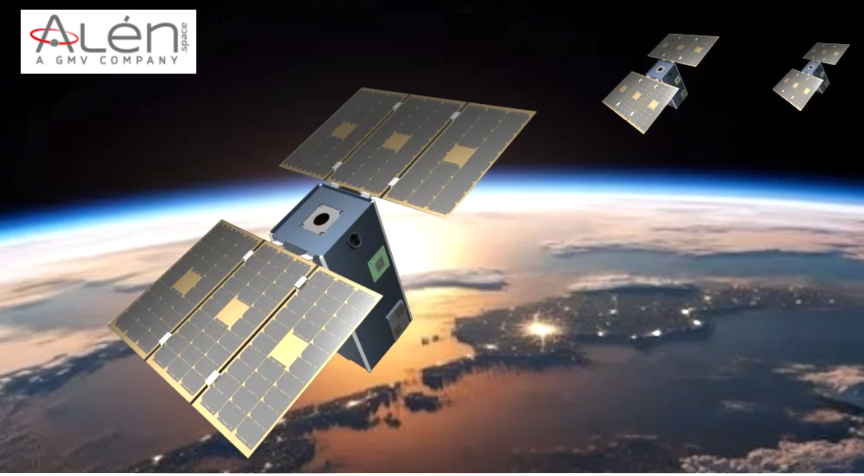
The LEO-PNT mission by the European Space Agency (ESA) is already underway and Alén Space will be one of the key partners in the consortium of companies that will design and deploy the project, led by GMV.

The aim of this mission is to develop key technologies and demonstrate the benefits of LEO satellites in positioning, navigation, and timing (PNT) services. The program includes the development and launch of a constellation consisting of five satellites.

Among the main members of the consortium are OHB System AG, Beyond Gravity, and Indra. Additionally, 14 representatives of end users and stakeholders from the LEO-PNT value chain are participating, with a presence in potential markets such as roads, railways, maritime, fishing, IoT for asset tracking, critical infrastructure, or indoor positioning.

Alén Space will provide the initial platforms for CubeSat technology demonstration and collaborate with Beyond Gravity in manufacturing components of the payloads of the satellites that comprise the constellation. The company based in Nigrán (Spain) will also contribute its expertise in new key space methodologies for the mission.

This groundbreaking project, awarded to GMV for 78.4 million euros, will mark a before and after in the space industry. LEO-PNT will usher in a new generation of satellite-based navigation systems in key markets and applications, providing greater resilience, robustness, and signal accuracy compared to the traditional method in MEO.

The LEO-PNT mission includes the deployment of five satellites into orbit, the first of which will be launched within 20 months from the start of the project. This will act as a technology demonstrator based on a 12U CubeSat architecture. The constellation will be completed in 2027 with the launch of the remaining four satellites.

This contract, to be carried out under the coordination of GMV, includes the design and development of satellites and payloads, the acquisition of launch services, the provision of a ground segment as a service (GSaaS), the development of a test user receiver, system operations, and experimentation and demonstration of LEO-PNT services with end users.

The LEO-PNT satellites developed in this project will transmit new signals in UHF, L, S, and C bands that will complement those currently transmitted by navigation satellites such as Galileo and GPS. It will also demonstrate an innovative function called LEO shield, capable of assessing the integrity of GNSS signals received on board LEO satellites in real-time and alerting users in case of malfunction.

Filed Under: News

IQ spacecom + RBC Signals launch the Go.BIC service

August 6, 2024 by editorial

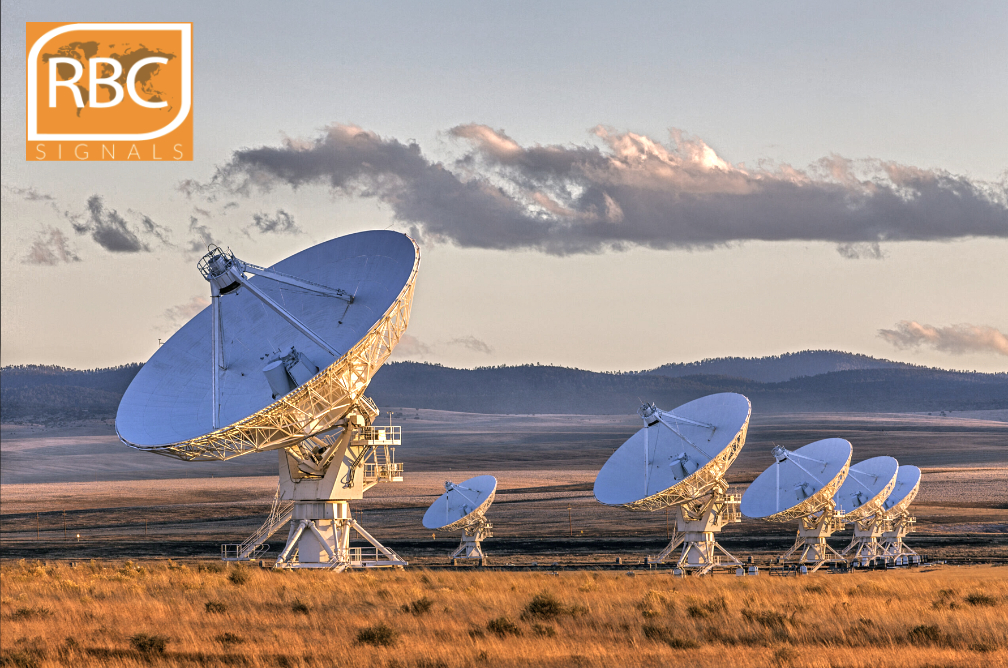
IQ spacecom and RBC Signals have launched their jointly developed Go.BIC service — this service is designed to provide inter-satellite connections for LEO operators and is powered by Viasat’s global L-band satellite network.

IQ spacecom and RBC Signals have developed different service concepts based on the Go.BIC service. These service concepts meet all possible operational requirements, can be individually customized and even support time-sensitive space applications. Communication links can be either pre-booked or made available on short notice. The billing is based on minutes of use.

Go.BIC complements existing ground station networks to extend connectivity to previously unreachable regions, such as oceans, ensuring satellite operators can maintain communication at any time. As a result, it improves operational efficiency by providing cost effective telemetry and telecommand options, giving LEO satellite operators greater flexibility and control over their missions. This is critical for time-sensitive space applications, including natural disaster monitoring and real-time satellite maneuvering.

At the heart of the system is IQ spacecom’s XLink-L SDR platform and L-band patch antennas on board the LEO satellite, combined with RBC Signals’ ground station infrastructure and Spectrum Trading Orchestration and Resource Management (STORM) platform. Leveraging Viasat’s L-band network of geostationary (GEO) satellites, Go.BIC provides real-time allocation of L-band capacity on a global scale, tailored to the specific needs of LEO satellite operators.

Screenshot

Dr. Kurt Winter, CEO of IQ Technologies, said, “We are proud to be able to offer a market-ready solution in such a short time together with RBC Signals. Go.BIC will enable new horizons for satellite operators.”

Ron Faith, CEO of RBC Signals, said, “We believe the Go.BIC service, with its flexibility and improved efficiency, will be highly beneficial for a wide range of applications. We look forward to solving many of the industry’s challenges.”

IQ Technologies for Earth and Space GmbH (former IQ wireless GmbH), headquartered in Berlin, Germany, is a well-established business for more than 20 years with two main innovative business units: IQ FireWatch and IQ spacecom. IQ FireWatch provides a terrestrial early detection system of fires in forests, outdoor industrial facilities, and wildland-urban interfaces.

IQ spacecom comprises high-performance radio communication solutions providing flexible and highly efficient broadband data communication for small satellites, such as CubeSats. The equipment has been qualified for several years of operation in low earth orbit (LEO) and is used for scientific missions, Earth observation, remote sensing and communication solutions. Outstanding hardware and software platforms enable a fast, flexible and reliable adaptation to customer-specific requirements. More than 50 employees are constantly developing the products and optimizing them to meet the needs of the customers, in order to be able to provide solutions for complex requirements of the future. The technical innovations of IQ Technologies for Earth and Space GmbH are researched, developed, manufactured, and tested at the headquarters in Berlin.

RBC Signals is an innovative provider of global satellite data communication products and solutions. They offer secure space communication solutions in every major frequency band, using a worldwide network of both company-owned and partner-owned systems. RBC Signals delivers dynamic solutions offering affordability, flexibility, and resiliency. Their diverse products and services enable them to be a complete end-to-end solution provider for every organization that needs best-in-class multi-network solutions.

Filed Under: News

USSF approves Orbit Fab’s RAFTI as accepted refueling interface for military satellites 

August 6, 2024 by editorial

Orbit Fab has announced that the firm’s RAFTI™ (Rapidly Attachable Fluid Transfer Interface) refueling port has been designated by the U.S. Space Force’s Space Systems Command (SSC) as a refueling interface for in-space fueling of military satellites.

The SSC’s System Engineering Review Board (SERB) made the recommendation following mission-critical assessments that RAFTI meets the technical qualifications to support a wide range of U.S. Government space missions.

Orbit Fab is well positioned with its RAFTI refueling port and GRIP™ refueling nozzle to meet the Space Force’s request and need for refueling as a commercial service. In-space fuel depots equipped with RAFTIs, and fuel shuttles equipped with the GRIP will enable reusable fuel shuttles and satellites.

The Space Force Tetra-5 program satellites are set to be among the first to use Orbit Fab’s RAFTI refueling ports during a first-of-its-kind refueling operations, expecting to launch next year. That’s just one of many named and yet-to-be named government and commercial programs that have purchased RAFTI for spacecraft ground and on-orbit fueling capabilities. 

The DoD’s Defense Innovation Unit (DIU) has contracted with Orbit Fab for the first in-space fuel sale in GEO orbit and selected Orbit Fab as part of its RAPIDS Refueling and Fuel Depot Initiative. 

Built as a small, affordable, commercially available refueling interface, Orbit Fab’s RAFTI refueling port is ready for launch site fueling and in-space refueling of satellites of any size in any orbit, including the biggest national security, civil, and commercial spacecraft.

Orbit Fab’s RAFTI is the first refueling interface to be flight qualified, a milestone reached earlier this year after completing a battery of stringent tests and rigorous evaluations. The RAFTI refueling port can be easily combined with the RAFTI Ground Coupling™, a ground infrastructure interface that enables spacecraft operators, manufacturers, and payload processing facilities to replace typical fill-and-drain service valves with RAFTI for secure and reliable ground fueling at the launch site as well as in-space refueling.

Orbit Fab has priced the RAFTI refueling port at $30,000 to make it easily accessible for missions of all sizes. RAFTI shipments to customers are underway and expanding on the heels of the successful qualification tests. 

“This important thumbs up from the Space Systems Command is a critical step in providing the government and commercial space markets a trusted refueling standard in Orbit Fab’s RAFTI refueling port,” said Daniel Faber, Orbit Fab CEO. “Our RAFTI refueling port is designed to integrate easily and affordably with any spacecraft, with a small footprint and price tag aimed at unleashing the full potential of refueling in space. We are thrilled to be working with SSC and their System Engineering Review Board and look forward to playing an integral role in enabling mission-critical maneuverability and mission extension in space. Reusable satellites enabled by unlimited delta-v are the future.”

“Orbit Fab thanks the Space Force’ Space Systems Command for its rigorous review, which marks a great collaborative milestone for us working together,” said Adam Harris, Orbit Fab’s Chief Commercial Officer.  “With this validation, Orbit Fab will work with any propulsion company and spacecraft builder to meet the Space Force need for unlimited maneuverability.”

Filed Under: News

SATLANTIS set to launch 2 smallsats under the GARAI Project in partnership with OHB Sweden

August 6, 2024 by editorial

SATLANTIS is a global reference for space technology applied to Earth Observation (EO) and it is unique in the market for the specific characteristics of agility, spectral resolution, image quality of is HR and VHR optical payloads and video capability.

SATLANTIS is active in the key sectors of Environment and Energy [Oil & Gas] focusing on the provision of full-satellite solutions related to greenhouse gases (GHG) monitoring and social and governance (ESG) applications. SATLANTIS is set to launch its latest project, together with OHB Sweden — the GARAI Mission.

SATLANTIS is finalizing two micro satellites under the project name GARAI, in partnership with OHB Sweden, with the first launch scheduled for Q4 2024. The GARAI mission incorporates SATLANTIS’ flight-proven imaging technology, embarked on the demonstrated OHB Sweden’s InnoSat micro satellite platform.

Artistic rendition of the Arctic Weather Satellite, courtesy of OHB Sweden.

This mission features two cutting-edge twin microsatellites, each equipped with two iSIM binocular imagers, offering high resolution with swath values up to 14 km and covering 14 different filters across PAN, VNIR, SWIR spectra, plus Polarimetry to support a variety of applications such as monitoring of greenhouse gases, environmental changes and energy resources, precision agriculture, infrastructure monitoring, among other. These missions are part of SATLANTS’ broader initiative to deliver innovative solutions for Earth Observation and Universe Exploration.

The GARAI satellites, using OHB Sweden’s proven InnoSat platform, are scheduled for launch in Q4 2024 (GARAI A) and Q2 2025 (GARAI B). Each satellite will combine high-resolution optical channels with advanced imaging technologies, including SWIR, Polarimetry, and VNIR spectra, providing a range of capabilities from methane detection to high-resolution surveillance.

SATLANTIS’s technology, known for its precision and robustness, will support a variety of applications through its advanced imaging systems and high-performance data handling. The mission is part of SATLANTIS’s broader initiative to deliver innovative space observation solutions for both Earth and deep-space missions.

The GARAI satellites will weight around 100 kg including around 30 kg of payload and feature Earth Observation state of art technology such as:

  • High data rate through a high-speed X-band link capable to downlink payload data at > 500 Mb/s.
  • A high slew-rate mode for tracking of linear profiles such as borders, coastlines or pipelines, resulting in maximum efficiency for data capture around the globe.
  • High delta-V propulsion system for station keeping capabilities, orbit transfer to accommodate a wide variety of mission profiles, and active atmospheric reentry.
  • An optical bench with a vibration isolation solution and high thermal stability through its own dedicated thermal control system accommodating both payloads and star trackers minimizing thermoelastic misalignments for precise pointing and geolocation.

SATLANTIS will operate the satellite using its own Mission Control Center and Software integrated with the Mission Control Software “RAMSES” from OHB Sweden and will process the data at SATLANTIS Data-Hub. SATLANTIS’ Mission Control Center and Software, including the Data Hub, are currently being used to operate and handle data from 3 missions already launched by the company. GARAI form part of a new generation of payloads and missions SATLANTIS is developing through the adoption of COTS and the New Space approach, to shorten development cycles while maintaining high quality.

Following the success and heritage of this technology in missions such as IOD (2020), CASPR (2021), ARMSAT1 (2022), MANTIS (2023), GEISAT (2023), and HORACIO (2024), a new generation of Earth/Moon/Space Observation solutions and missions to come will be mostly focused on various applications such as:

  • Methane detection and quantification with geolocation and quantification of the leaks simultaneous to visible observation of the scene.
  • Defence & Security: Surveillance of critical infrastructure, borders, coasts at highest visible spatial-resolution and detection of activity through thermal infrared.
  • Science & Space Exploration: Reconnaissance of lunar landing sites: research of dark-matter.
  • Civil: infrastructure and agriculture state monitoring; among others.

Filed Under: News

FCC approves AST SpaceMobile’s 1st commercial satellite launch

August 6, 2024 by editorial

AST SpaceMobile first five commercial satellites, BlueBird 1-5.

AST SpaceMobile, Inc. (NASDAQ: ASTS) has announced that the U.S. Federal Communications Commission (FCC) has granted an initial license for space-based operations in the United States.

With this initial license, AST SpaceMobile is now authorized to launch and operate V, S and UHF frequencies to support gateway, feeder link and telemetry, tracking, and control operations for the first five commercial BlueBird satellites.

AST SpaceMobile has successfully completed the manufacturing, assembly, and environmental testing its first five BlueBird commercial satellites and are now ready for shipment to Cape Canaveral during the first week of August, with a 7-day launch window in September.

This FCC grant represents a critical step to advancing several important goals shared by AST SpaceMobile and the Commission, including closing the digital divide, expanding access to emergency communications, accelerating digital transformation and advancing U.S. leadership in direct-to-device regulation. This step follows the March 2024 update of AST SpaceMobile’s constellation filings with the International Telecommunication Union (ITU) and related filings with the FCC, placing the planned commercial satellites under the jurisdiction of the United States.

During 2024, AST SpaceMobile has secured additional strategic investment from AT&T, Verizon, Google and Vodafone, as well as a new contract award with the United States Government through a prime contractor.

The company has agreements with more than 45 mobile network operators globally, which have more than 2.8 billion existing subscribers total, including Vodafone Group, AT&T, Verizon, Rakuten Mobile, Bell Canada, Orange, Telefonica, TIM, Saudi Telecom Company, Zain KSA, Etisalat, Indosat Ooredoo Hutchison, Telkomsel, Smart Communications, Globe Telecom, Millicom, Smartfren, Telecom Argentina, MTN, Telstra, Africell, Liberty Latin America and others. AT&T, Verizon, Vodafone, Google, Rakuten, American Tower, and Bell Canada are also existing investors in AST SpaceMobile.

“This regulatory milestone is a significant step to targeting 100% nationwide coverage from space of the continental United States on premium cellular spectrum,” said Scott Wisniewski, President of AST SpaceMobile. “Through our strategic partnerships with companies like AT&T, Verizon, Vodafone and our other key partners around the world, we aim to enhance cellular connectivity globally, essentially eliminating dead zones and empowering remote areas with space-based cellular broadband connectivity.”

“The FCC grant paves the way for commercial space-based broadband services in the United States,” said Vikram Raval, Head of Global Regulatory Affairs. “By approving the launch of our first five BlueBirds, the largest-ever commercial communications arrays to be deployed in low Earth orbit, the FCC has taken a significant step forward for both AST SpaceMobile and U.S. leadership in space. As a U.S. company, we are committed to building our constellation and fostering regulatory relationships domestically and across the globe to provide this vital space-based infrastructure to the United States and across the world.”

Filed Under: News

Muon Space gains million$$ in Series B funding

August 6, 2024 by editorial

Muon Space and Earth Fire Alliance partner on FireSat

Muon Space has successfully completed a $56.7 million Series B funding round led by Activate Capital. Acme Capital and existing investors Costanoa Ventures, Radical Ventures, and Congruent Ventures all joined the round.  This equity financing accelerates buildout of Muon’s Halo™ Platform and positions the company to scale the spectrum of capabilities it delivers to a growing customer base . 

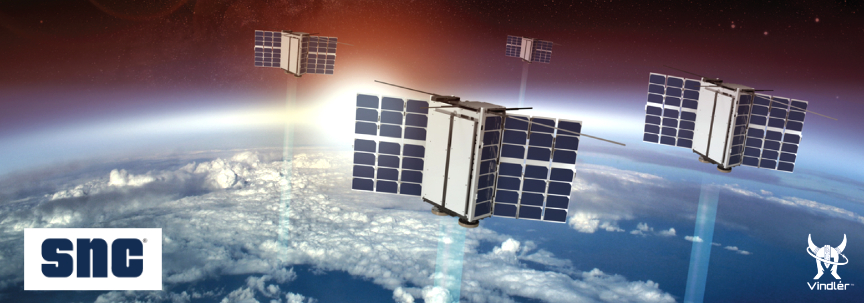
In a testament to its rapidly growing traction in the space technology sector, Muon Space has now secured over $100 million in committed customer contracts in 2024 for its Halo LEO satellites. A key highlight of these contracts is a landmark agreement with SNC for the development and delivery of three next-generation satellites to further SNC’s Vindler commercial RF technology. The first Muon satellite block is slated for launch in 2025.

SNC’s Vindler constellation delivers industry-leading RF collection and analytics functionality. The additional satellites will significantly enhance the ability to simultaneously collect multiple signals of interest over an unprecedented range of the RF spectrum. This will also increase total downlink volumes, thereby transforming current commercial possibilities and supporting an expanding array of mission sets.

The partnership between Muon Space and SNC underscores the combined strengths of an industry leader in ELINT/tactical sensors and the innovative potential of New Space and agility of modular design in Muon’s Halo satellite technology. This collaboration is set to redefine commercial RF solutions and deliver unparalleled value to various mission applications.

The Series B funding round underscores investor confidence in Muon Space’s innovative approach and market potential. With this capital raise, Muon Space plans to scale its operations, expand its product offerings, and continue to pioneer advancements in space-based sensing and analytics. This funding will be instrumental in supporting the company’s growth and the execution of its strategic initiatives.

“SNC teamed up with Muon Space for an advanced radio frequency sensing satellite capability and end-to-end mission solution,” said Tim Owings, Executive Vice President of SNC’s MST business area. “Muon’s scalable design, instrument development, and operations support, coupled with our RF technology, diverse data sets, and analytic capabilities, will provide a new level of commercial possibilities starting in 2025.”

“Having an established industry leader like SNC select Muon Space for this mission really underlines our competitive edge,” said Gregory Smirin, President of Muon Space. “Our end-to-end solution offers a significant advantage, providing SNC with a seamless and integrated approach from design to deployment and operations. This partnership validates our commitment to delivering comprehensive, cutting-edge constellation performance that stands out in an extremely competitive market.”

“Muon Space’s cutting-edge technology, phenomenal track record of execution, and multi-billion dollar market potential make it a highly compelling investment opportunity,” said Raj Atluru, Managing Partner of Activate Capital. “With the industry’s best team and technology built around a compelling vision and huge opportunity, we believe Muon Space is positioned to define the next era of space infrastructure.”

“Our mission at Muon Space is to harness the power of space to deliver critical insights and data that drive meaningful change on Earth,” said Jonny Dyer, CEO of Muon Space. “This funding and our growing list of top-tier strategic partners, like SNC, position us to accelerate our mission and make space-based intelligence accessible and impactful across a variety of sectors. We are dedicated to pushing the boundaries of what is possible in space to unlock a safer and more resilient world.”

Founded in 2021, Muon Space is an end-to-end Space Systems Provider that designs, builds, and operates LEO satellite constellations delivering mission-critical data. Our revolutionary, integrated technology stack enables customers to optimize every dimension of their missions for faster time-to-orbit and superior constellation remote sensing performance. Our state-of-the-art facility in the heart of Silicon Valley is optimized for manufacturing spacecraft and rapid, flexible payload integration at scale. From climate monitoring to national security, Muon Space is dedicated to delivering Earth Intelligence for a safer and more resilient world.

Filed Under: News

  • « Go to Previous Page
  • Page 1
  • Interim pages omitted …
  • Page 60
  • Page 61
  • Page 62
  • Page 63
  • Page 64
  • Interim pages omitted …
  • Page 338
  • Go to Next Page »

Primary Sidebar

WEEKLY NEWSLETTER

Archives

  • July 2026
  • June 2026
  • May 2026
  • April 2026
  • March 2026
  • February 2026
  • January 2026
  • December 2025
  • November 2025
  • October 2025
  • September 2025
  • August 2025
  • July 2025
  • June 2025
  • May 2025
  • April 2025
  • March 2025
  • February 2025
  • January 2025
  • December 2024
  • November 2024
  • October 2024
  • September 2024
  • August 2024
  • July 2024
  • June 2024
  • May 2024
  • April 2024
  • March 2024
  • February 2024
  • January 2024
  • December 2023
  • November 2023
  • October 2023
  • September 2023
  • August 2023
  • July 2023
  • June 2023
  • May 2023
  • April 2023
  • March 2023
  • February 2023
  • January 2023
  • December 2022
  • November 2022
  • October 2022
  • September 2022
  • August 2022
  • July 2022
  • June 2022
  • May 2022
  • April 2022
  • March 2022
  • February 2022
  • January 2022
  • December 2021
  • November 2021
  • October 2021
  • September 2021
  • August 2021
  • July 2021
  • June 2021
  • May 2021
  • April 2021
  • March 2021
  • February 2021
  • January 2021
  • December 2020
  • November 2020
  • October 2020
  • September 2020
  • August 2020
  • July 2020
  • June 2020
  • May 2020
  • April 2020
  • March 2020
  • February 2020
  • January 2020
  • December 2019
  • November 2019
  • October 2019

© 2019–2026 SatNews

Insert/edit link

Enter the destination URL

Or link to existing content

    No search term specified. Showing recent items. Search or use up and down arrow keys to select an item.
      x
      Sign Up Now!

      Enjoy a free weekly newsletter with recent headlines from the global SmallSat industry.

      Invalid email address
      We promise not to spam you. You can unsubscribe at any time.
      Thanks for subscribing! You will now receive weekly SmallSat News updates.
      We love our advertisers.
      And you will too!

      Please disable Ad Blocker to continue... We promise to keep it unobtrusive.
      We promise not to spam you. You can unsubscribe at any time.
      Invalid email address
      Thanks for subscribing!