• Skip to main content
  • Skip to primary sidebar
  • Home
  • News
  • Featured
  • More News ⌄
    • SatNews
    • SatMagazine
    • MilSatMagazine
  • Events ⌄
    • MilSat Symposium
    • SmallSat Symposium
    • Satellite Innovation
  • Contacts
  • SUBSCRIPTION

SmallSat News

You are here: Home / Archives for editorial

editorial

NASA seeking student missions to send to space — new CubeSat Launch Initiative opened…

August 6, 2024 by editorial

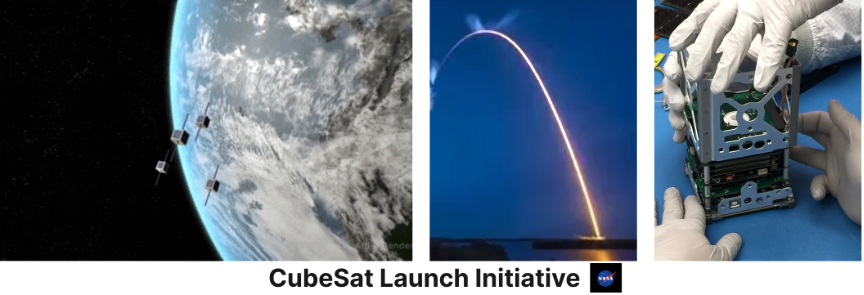
NASA has announced a new round of opportunities for CubeSat developers to build spacecrafts that will fly on upcoming launches through the agency’s CSLI (CubeSat Launch Initiative). 

This initiative provides space access to U.S. educational institutions, certain non-profit organizations, and informal educational institutions such as museums and science centers, as well as NASA centers focused on workforce development, including the agency’s Jet Propulsion Laboratory in southern California and also encourages participation by minority serving institutions.

Applicants must submit proposals by 5:00 p.m. EST, November 15. NASA expects to make selections by March 14, 2025, for flight opportunities in 2026-2029, although selection does not guarantee a launch opportunity. Applicants are responsible for funding the development of the small satellites.

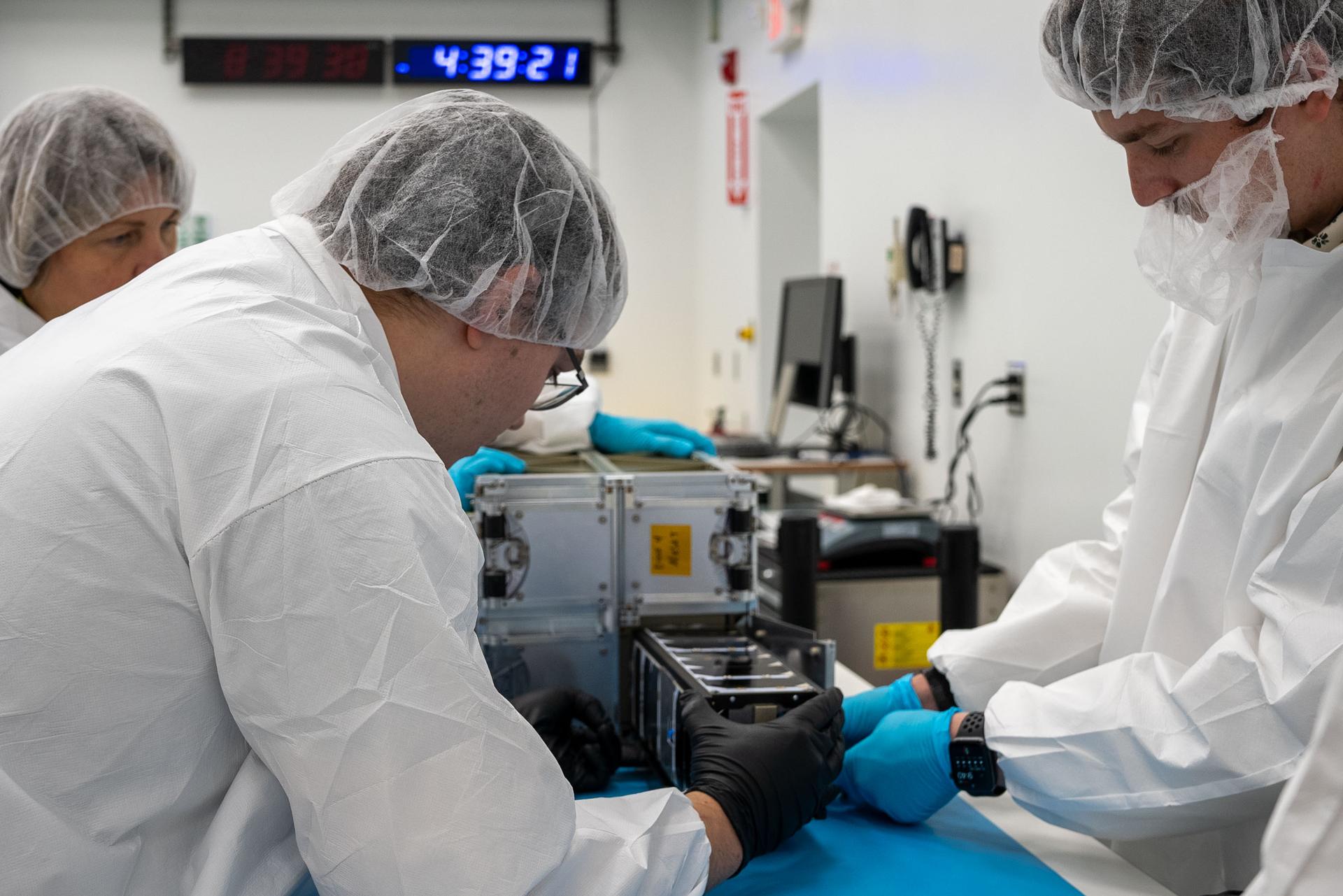
Selected CubeSats get assigned a launch and deployment directly from a rocket or to LEO from the International Space Station. Once accepted, NASA mission managers act as advisors to the CubeSat team, ensuring technical, safety, and regulatory requirements are satisfied before launch. Those selected will strengthen their skills in hardware design and development and build knowledge in operating the CubeSats.

Eight CubeSat missions recently shared a ride to space on Firefly Aerospace’s Alpha rocket that launched on July 3 from Vandenberg Space Force Base in California.

One mission is CatSat, built by students at the University of Arizona, which is testing a deployable antenna attached to a Mylar balloon.

Artistic rendition of CatSat, courtesy of the University of Arizona.

Another is KUbeSat-1, built by the University of Kansas, is testing a new method of measuring the cosmic rays that hit the Earth. This launch also was notable for two CSLI ‘first’ milestones. The KUbeSat-1 and another called MESAT-1 were the first CSLI missions from the states of Kansas and Maine respectively.
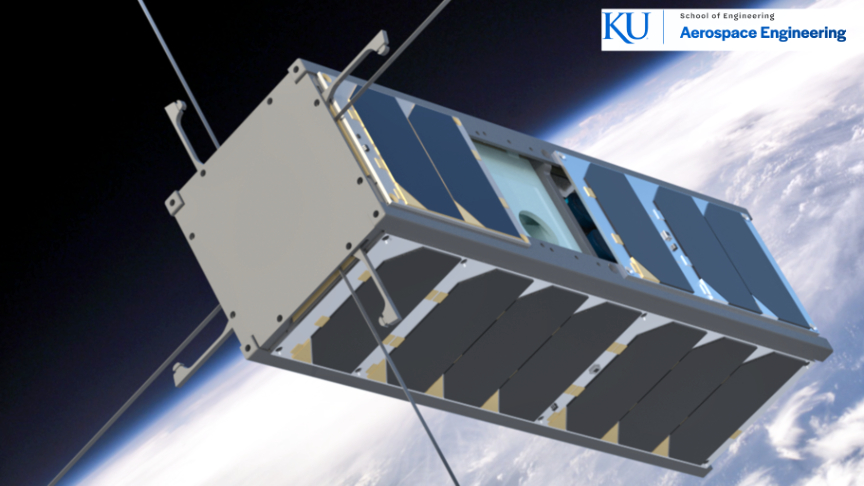
Artistic rendition of KUbeSat-1, courtesy of the University of Kansas.

Four CubeSats also went to the space station as cargo in a SpaceX Dragon capsule on March 21 aboard a Falcon 9 rocket from Space Launch Complex 40 at Cape Canaveral Space Force Station in Florida as part of the agency’s SpaceX 30th commercial resupply mission. Once aboard the space station, astronauts deployed the small missions into various orbits to demonstrate and mature technologies meant to improve solar power generation, detect gamma ray bursts, determine crop water usage, and measure root-zone soil and snowpack moisture levels.

CubeSats are a class of spacecraft sized in multiples of a standardized unit called a “U.” A 1-Unit (1U) CubeSat is about 10 x 10 x 11 cm in size (3.9 x 3.9 x 4.5 inches). They are small enough to fit in the palm of your hand and can be stacked together to form a slightly larger, more capable spacecraft. A 3U CubeSat is three times the size of a 1U, a 6U is six times the size.

NASA has selected CubeSat missions from 45 states, Washington, and Puerto Rico, and launched about 160 CubeSats since the program’s inception.

The CubeSat Launch Initiative is managed by NASA’s Launch Services Program based at NASA’s Kennedy Space Center in Florida. 

“Working with CubeSats is a way to get students interested in launching a career in the space industry,” said Jeanie Hall, CSLI program executive at NASA Headquarters in Washington. “NASA reviews applications for CubeSat missions every year and selects projects with an educational component that also can benefit the agency in better understanding education, science, exploration, and technology.”

Filed Under: News

Interstellar secures billion yen in Series E funding

August 6, 2024 by editorial

Interstellar Technologies Inc. has successfully raised 3.1 billion yen in the firm’s Series E round, via third-party share allocation to new investors such as SBI GROUP and NTT DOCOMO, INC., alongside financing from Resona Bank,Ltd. — this addition brings the cumulative funding, including subsidies, to about 17 billion yen.

Interstellar is pursuing Japan’s first vertical integration of the rocket and satellite businesses. In September of 2023, the development of the orbital class launch vehicle ZERO was selected for the Ministry of Education, Culture, Sports, Science and Technology’s “SBIR Phase 3” (Small Business Innovation Research).

Upon successful completion of two stage-gate evaluations, as much as 14 billion yen will be granted by fiscal year 2027, supporting steady progress towards the inaugural launch.

Interstellar’s proposed ‘Satellite Communication 3.0’ enables direct connections with ground terminals such as smartphones, promising high-speed, high-capacity communication comparable to terrestrial networks. With this concept, the satellite department focuses on areas where the strengths of owning a rocket company can be maximized, aiming to enter the satellite communication market led by ventures such as SpaceX’s ‘Starlink’.

Joint research with the National Institute of Information and Communications Technology (NICT) commenced in September 2023, with NICT also participating as an investor in this round.

Additionally, in June 2024, the company was entrusted with the Ministry of Internal Affairs and Communications’ “Expanding Wireless Communication Spectrum Research Project.”

As Japan’s first vertically integrated rocket and satellite startup, Interstellar will use this newly secured funding to accelerate both its rocket and satellite operations.

Filed Under: News

Space debris is not a game… or is it? Astroscale debuts debris removal sim

August 5, 2024 by editorial

Screenshot of Astroscale’s SPACE PROTECTOR game.

Astroscale Ltd. (“Astroscale UK”), a subsidiary of Astroscale Holdings Inc. (“Astroscale”), has launched the company’s new awareness-raising tool, the SPACE PROTECTOR.  

SPACE PROTECTOR is an immersive simulation that puts players in the role of a satellite operations engineer tasked with capturing inactive satellites using advanced robotics in a realistic space environment. This innovative game is designed to engage and educate players of all ages on the critical issue of space debris and why we need to address it. 

With more than 130 million pieces of space debris orbiting Earth and nearly a quarter of satellites in space no longer functioning, the need for effective and routine debris removal is more pressing than ever. Astroscale’s Active Debris Removal (ADR) service is designed to mitigate the risks associated with space debris, ensuring the long-term sustainability of space activities. 

SPACE PROTECTOR will teach users about the complexities and importance of space debris removal through engaging gameplay. The game offers a simulated mission experience, highlighting the intricacies of maneuvering in orbit close to debris objects and capturing unprepared, inactive satellites with precision robotics technology. A highly interactive learning tool, it is designed to build awareness about the scale of space debris and the vital role of sustainability in space operations, allowing players to learn about Astroscale’s proven technologies and solutions for a cleaner space environment. 

By educating the public on the challenges and solutions of ADR, Astroscale hopes to foster a deeper understanding of space sustainability and the need for a circular economy in space, ensuring that future generations can continue to benefit from all it offers. 

SPACE PROTECTOR by Astroscale is based on a real-life mission developed by Astroscale UK, COSMIC (Cleaning Outer Space Mission through Innovative Capture), as a UK national Active Debris Removal mission. It’s mission is to remove two inactive British satellites currently orbiting Earth.

Astroscale UK continues the development of safe and reliable on-orbit servicing products and services, fostering innovation and collaboration within the UK and European space industry. 

“Educating the next generation about space sustainability is crucial for the future of our planet and beyond,” said Managing Director of Astroscale UK, Nick Shave. “SPACE PROTECTOR by Astroscale is not only a game; it’s a way for people to understand the real technical challenges we face in addressing the space debris problem and provides a view of what will be possible through future routine in-orbit servicing. We’re excited to see players enjoy the experience, become passionate about protecting the space environment, and learn why it needs to remain available for future generations.”

Filed Under: News

Synspective’s 5th SAR Satellite reaches its target orbit + spreads its wings

August 5, 2024 by editorial

Synspective Inc., a SAR satellite data and solutions provider, has revealed that the firm’s fifth SAR satellite successfully reached its target orbit and spread its wings.

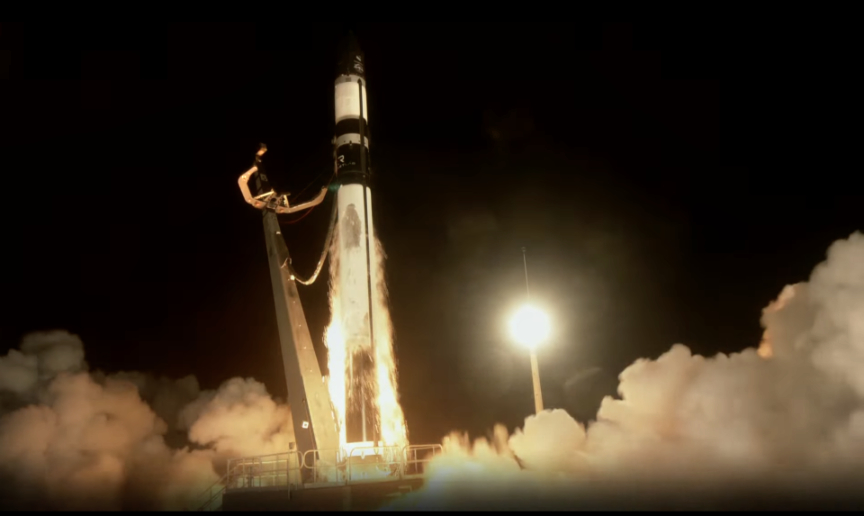
The new StriX satellite was successfully deployed into orbit by Rocket Lab’s Electron rocket from the Rocket Lab Launch Complex 1 on New Zealand’s Mahia Peninsula.

Photo of Rocket Lab’s launch of Synspective’s StriX SAR smallsat, courtesy of the company.

This fifth satellite operates in an inclined orbit. By operating from orbit, capturing images can be concentrated in densely populated areas in low- to mid-latitude regions, allowing for more frequent imaging in high-demand areas.

Until the launch of this new StriX satellite, the company’s satellite imaging direction was limited to a single direction, resulting in some areas being impossible to observe. However, combining satellites in inclined and sun-synchronous orbits will enable observation from four directions (east, west, north, and south), allowing us to reduce any blind spots.

Over the coming months, the company will verify observation and data acquisition. 

Filed Under: News

SpaceX still plans for Sunday launch of 23 Starlink smallsats; and now available in Tonga

August 3, 2024 by editorial

Starlink dish placed on a beach in Maldives (Photo: Starlink via Twitter)

SpaceX is targeting Sunday, August 4 for a Falcon 9 launch of 23 Starlink satellites to low-Earth orbit from Space Launch Complex 4 East (SLC-4E) at Vandenberg Space Force Base in California. Liftoff is targeted for 12:24 a.m. PT, with backup opportunities available until 3:52 a.m. PT. If needed, additional opportunities are also available on Monday, August 5 starting at 12:24 a.m. ET.

A live webcast of this mission will begin about five minutes prior to liftoff, which you can watch here and on X @SpaceX.

This is the sixth flight for the first stage booster supporting this mission, which previously launched USSF-6

2 and four Starlink missions. Following stage separation, the first stage will land on the Of Course I Still Love You droneship, which will be stationed in the Pacific Ocean.

Filed Under: News

SpaceX is back in the groove with Friday’s launch of 23 Starlink small satellites

August 2, 2024 by editorial

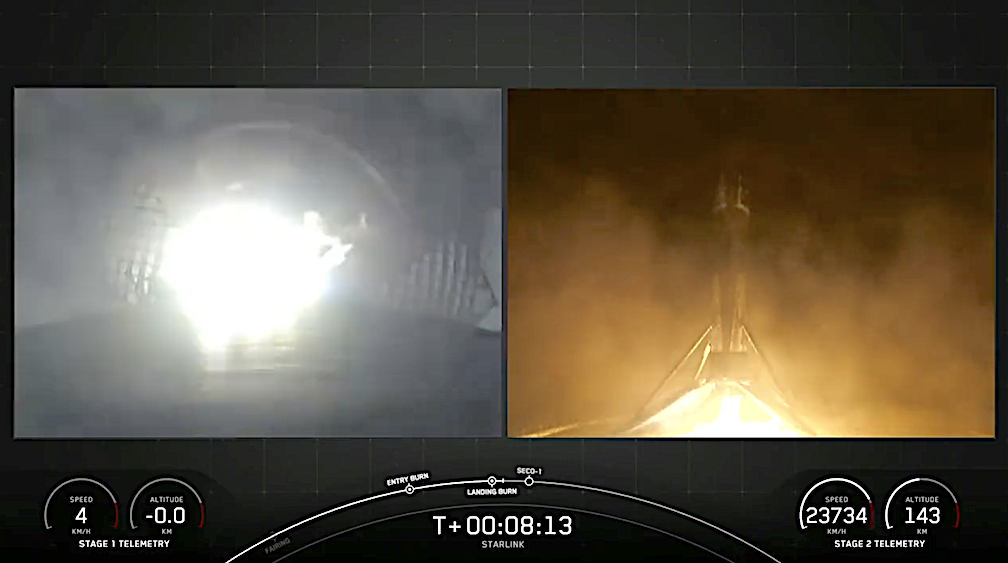
Photo from Friday, August 2, by Satnews from SpaceX’s video stream

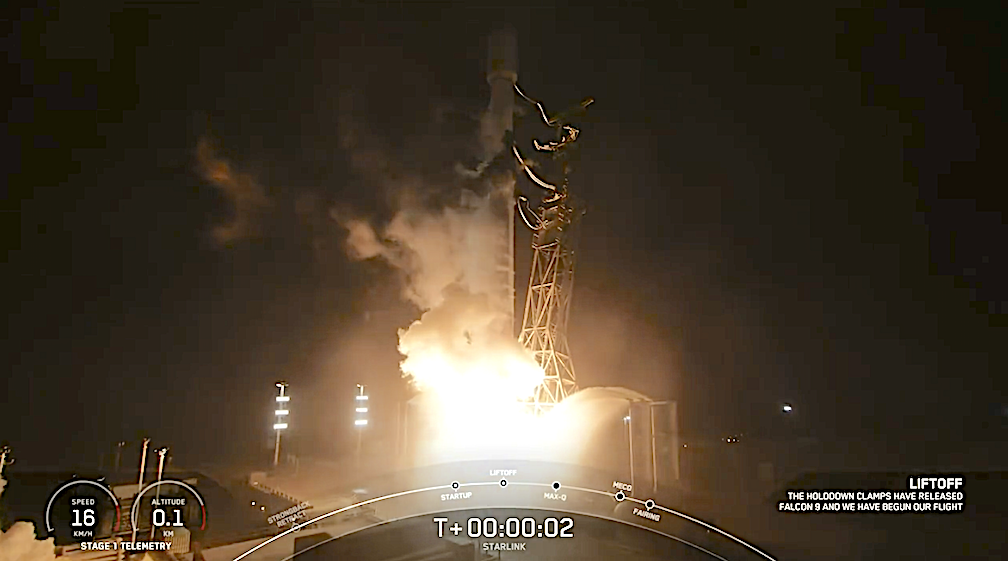
On Friday, August 2 at 1:01 a.m. ET, Falcon 9 launched 23 Starlink satellites to low-Earth orbit from Launch Complex 39A (LC-39A) at Kennedy Space Center in Florida.

Photo from Friday, August 2, by Satnews from SpaceX’s video stream

This was the 12th flight for the first stage booster supporting this mission, which previously launched Crew-6, O3b mPOWER, USSF-124, and eight Starlink missions.

SpaceX ready for Friday Starlink satellite launch

This image has an empty alt attribute; its file name is Screen-Shot-2024-07-28-at-11.07.54-AM.png

Photo was captured from California on foggy Sunday, July 28, by Satnews from SpaceX’s video stream.

SpaceX is targeting Friday, August 2 for a Falcon 9 launch of 23 Starlink satellites to low-Earth orbit from Launch Complex 39A (LC-39A) at Kennedy Space Center in Florida. Liftoff is targeted for 1:01 a.m. ET, with backup opportunities available until 4:19 a.m. ET. If needed, additional opportunities are also available on Saturday, August 3 starting at 12:19 a.m. ET.

A live webcast of this mission will begin about five minutes prior to liftoff, which you can watch here and on X @SpaceX.

This is the 12th flight for the first stage booster supporting this mission, which previously launched Crew-6, O3b mPOWER, USSF-124, and eight Starlink missions. Following stage separation, the first stage will land on the A Shortfall of Gravitas droneship, which will be stationed in the Atlantic Ocean.

The 45th Weather Squadron at Patrick Space Force Base forecast 95 percent favorable conditions at liftoff. The only potential concern is a violation of the cumulus cloud rule. If SpaceX needs to pivot to its 24-hour launch delay, the weather outlook decreases to 80 percent favorable conditions.

Filed Under: News

ATLAS Space Operations completes rapid onboarding of TROPICS Spacecraft

August 2, 2024 by editorial

In May of 2024, the National Oceanic and Atmospheric Administration (NOAA) predicted an 85% likelihood of above-normal activity for the upcoming Atlantic hurricane season. This marked the fifth consecutive year with an above-normal prediction and, if proven accurate, would make 2024 the eighth year in the last decade to record above-normal activity. With the apparent increase in the destructive power of these storms, timely and detailed tropical cyclone data may be more important than ever.

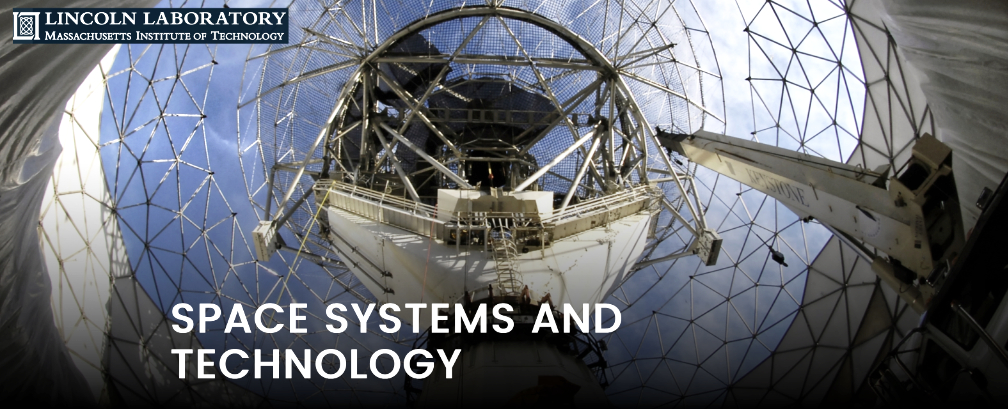
Massachusetts Institute of Technology Lincoln Laboratory (MIT LL) is leading the NASA Time-Resolved Observations of Precipitation structure and storm Intensity with a Constellation of Smallsats’ (TROPICS) mission.

This mission will provide NASA, NOAA, and other government agencies and commercial partners with rapid refresh microwave sounding observations, delivering improved resolution, configurable coverage, flexibility, reliability, and extremely low-cost launch access compared to other space-based storm-sensing technology.

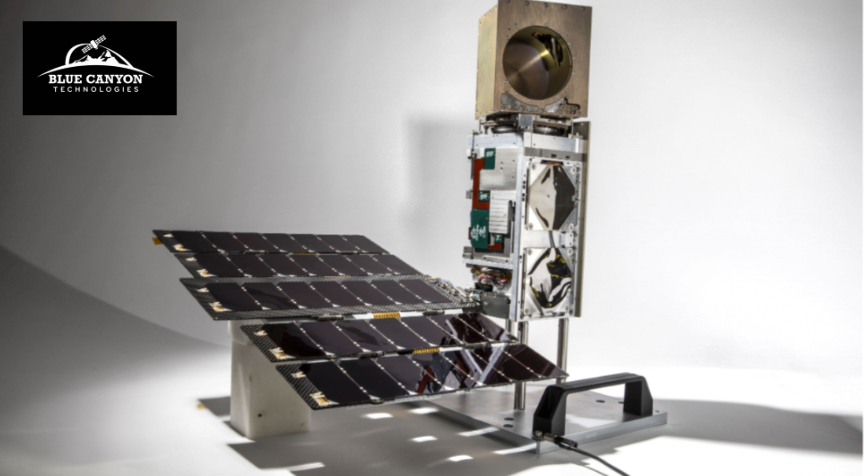
Photo of the TROPICS smallsat, courtesy of Blue Canyon Technologies.

The data TROPICS provides is vital to weather forecasters, so when Lincoln Laboratory contacted ATLAS Space Operations in June to establish support at its Dubai ground station, the ATLAS team responded with urgency.

Within four weeks of receiving MIT LL’s purchase order, ATLAS had completed spacecraft integration and TROPICS was declared operational on ATLAS’ Global Federated Network—a process that typically takes ground segment providers several months or more to perform.

A streamlined, best-in-class customer onboarding experience is among the stated benefits of ATLAS Ground Software as a Service™ model. Even so, the ATLAS team was quick to credit the TROPICS spacecraft operations team for their collaboration in making the expedited integration possible.
“There are few missions in space with such immediate and concrete benefits as severe weather monitoring,” said ATLAS CEO John Williams. “Simply put, data from Lincoln Laboratory’s TROPICS mission saves lives. ATLAS is honored to quickly, securely, and reliably deliver that data to their team.”

ATLAS Space Operations is a leading provider of Ground Software as a Service™ in the space communications industry. ATLAS’ revolutionary Freedom® software has been recognized by industry-leading publications and organizations such as Via Satellite and the World Teleport Association. Additionally, ATLAS was highlighted in the CIO Review: Telecom Edition as Company of the Year (2023) as well as one of the 10 Most Promising Technologies. Lastly, Aerospace & Defense Review acknowledged ATLAS as one of the Top Satellite Solutions Providers. ATLAS combines the Freedom™ Software Platform and its global antenna network to achieve its mission of securing space access anytime, anywhere. To learn more, visit atlasspace.com.

Filed Under: News

SpaceX ready for Friday Starlink satellite launch

August 2, 2024 by editorial

Photo captured from California on foggy Sunday, July 28, by Satnews from SpaceX’s video stream.

SpaceX is targeting Friday, August 2 for a Falcon 9 launch of 23 Starlink satellites to low-Earth orbit from Launch Complex 39A (LC-39A) at Kennedy Space Center in Florida. Liftoff is targeted for 1:01 a.m. ET, with backup opportunities available until 4:19 a.m. ET. If needed, additional opportunities are also available on Saturday, August 3 starting at 12:19 a.m. ET.

A live webcast of this mission will begin about five minutes prior to liftoff, which you can watch here and on X @SpaceX.

This is the 12th flight for the first stage booster supporting this mission, which previously launched Crew-6, O3b mPOWER, USSF-124, and eight Starlink missions. Following stage separation, the first stage will land on the A Shortfall of Gravitas droneship, which will be stationed in the Atlantic Ocean.

The 45th Weather Squadron at Patrick Space Force Base forecast 95 percent favorable conditions at liftoff. The only potential concern is a violation of the cumulus cloud rule. If SpaceX needs to pivot to its 24-hour launch delay, the weather outlook decreases to 80 percent favorable conditions.

Filed Under: News

Northrop Grumman completes PDR for SDA’s latest Proliferated Data Transport satellites

August 1, 2024 by editorial

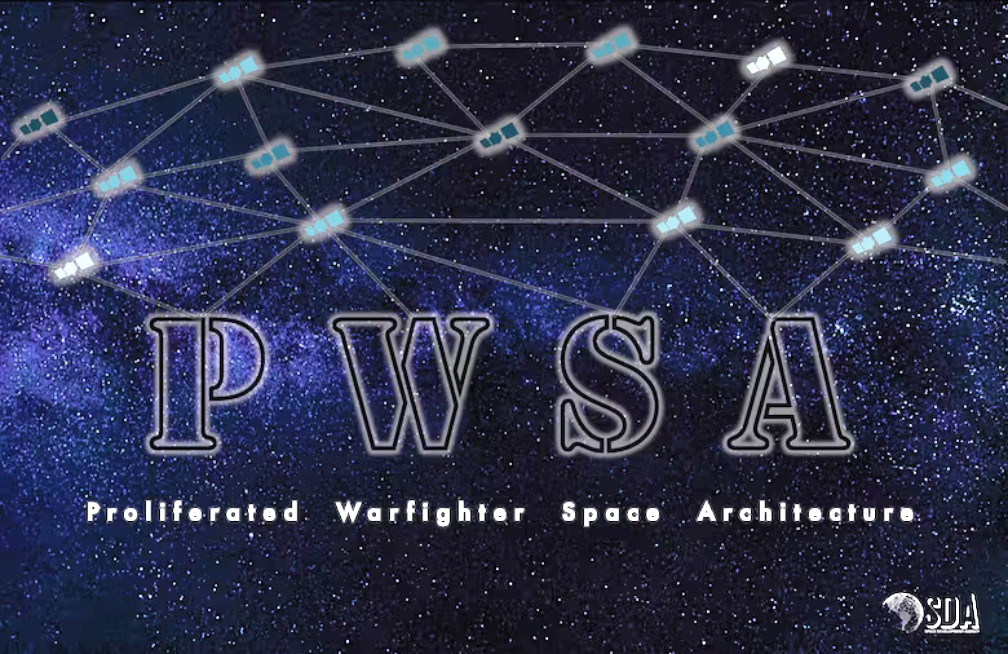
Northrop Grumman Corporation (NYSE: NOC) has completed the Preliminary Design Review (PDR) for 74 high-speed data transport satellites for the Space Development Agency (SDA), including satellites that integrate advanced technology from an earlier generation of the Proliferated Warfighter Space Architecture (PWSA), providing increased capabilities to U.S. Forces.

The 74 satellites include the Tranche 2 Beta and Tranche 2 Alpha configurations. Tranche 2 Beta satellites incorporate new communications technologies into the PWSA, including S-band, Ultra High Frequency SATCOM and Integrated Broadcast Service, while the Tranche 2 Alpha satellites are a continuation of Northrop Grumman’s Tranche 1 Transport Layer satellites awarded in 2022.

PWSA includes two major lines of effort:
The Tracking Layer: Designed to detect, track and ultimately target hypersonic and ballistic missiles
The Transport Layer: Provides global data and voice connectivity to U.S forces defending the homeland and operating around the world.

To date, SDA has awarded Northrop Grumman more than 130 satellites. Northrop Grumman successfully completed a Critical Design Review (CDR) for its first generation Transport and Tracking Layer satellites last year and is now integrating space vehicles both in California, and at the Airbus factory in Florida.

Blake Bullock, vice president, military space systems, Northrop Grumman, said, “Space Development Agency’s vision is to field critical capabilities at an extremely rapid pace, and Northrop Grumman continues to demonstrate that we are up to the challenge. As we move into detailed design for our Tranche 2 satellites, we’re executing and on-track with our Tranche 1 offerings and evaluating future opportunities with SDA programs. We are delivering on our commitments and are focused on helping SDA make the Proliferated Warfighter Space Architecture a success.”

Filed Under: News

Rocket Lab completes integration + testing of twin spacecraft for NASA Mars Mission

July 31, 2024 by editorial

Rocket Lab USA, Inc. (Nasdaq: RKLB) has completed integration and testing of two spacecraft destined for Mars orbit.

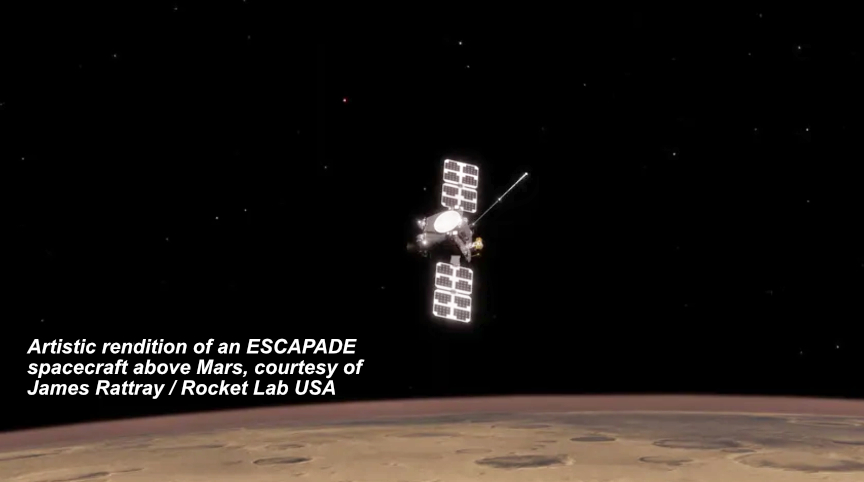
Rocket Lab built the twin spacecraft for the University of California Berkeley’s Space Science Laboratory and NASA to enable the Escape and Plasma Acceleration and Dynamics Explorers (ESCAPADE) mission, scheduled to launch from Cape Canaveral this year. This heliophysics mission will measure plasma and magnetic fields around the Red Planet, helping scientists learn more about the processes that strip away atoms from Mars’ magnetosphere and upper atmosphere, driving Martian climate evolution.

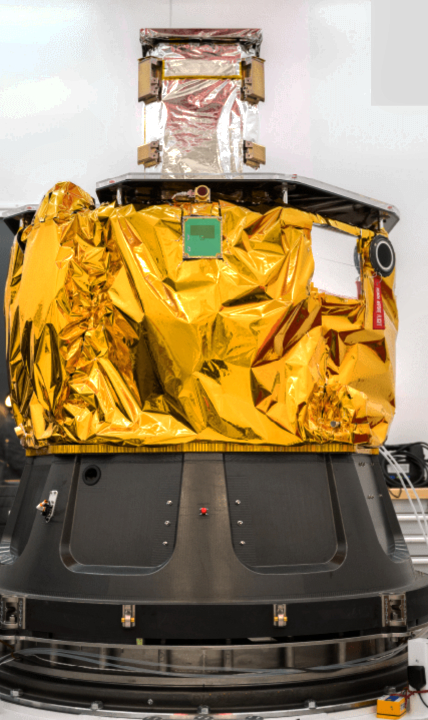
Photo of the Blue and Gold spacecraft, courtesy of Rocket Lab.
Rocket Lab’s Explorer bus.

Named Blue and Gold, the spacecraft were designed, built, integrated, and tested at Rocket Lab’s Spacecraft Production Complex and headquarters in Long Beach, California.

Based on Rocket Lab’s Explorer spacecraft, a configurable, high delta-V interplanetary platform, the duo features Rocket Lab-built components and subsystems, including solar panels, star trackers, propellant tanks, reaction wheels, reaction control systems, radios, and more.

Mars missions can take a decade or more from proposal to launch, but Rocket Lab was able to produce Blue and Gold in just three and half years due to mature, proven spacecraft development experience, as well as a vertically integrated supply chain that enables streamlined production.

Blue and Gold are scheduled to ship to Cape Canaveral in August where they will be integrated onto Blue Origin’s New Glenn rocket.

“Building one Mars spacecraft is an achievement, but building two and doing it on an accelerated timeline is testament to our team’s deep experience and our vertical integration strategy,” said Rocket Lab founder and CEO, Sir Peter Beck. “We are immensely proud to once again partner with NASA and support the UCB team to deliver new and important science from Mars.”

“Rocket Lab has been an invaluable partner to UC Berkeley over the last four years of ESCAPADE’s development,” said ESCAPADE Principal Investigator and Associate Director for Planetary Science at the UC Berkeley Space Sciences Laboratory, Rob Lillis. “Their energetic, talented engineers and managers have consistently gone above and beyond in responding rapidly and constructively to both our requests and the inevitable challenges inherent in developing new scientific spacecraft. We are proud to be flying with Rocket Lab to Mars.”

Filed Under: News

  • « Go to Previous Page
  • Page 1
  • Interim pages omitted …
  • Page 61
  • Page 62
  • Page 63
  • Page 64
  • Page 65
  • Interim pages omitted …
  • Page 338
  • Go to Next Page »

Primary Sidebar

WEEKLY NEWSLETTER

Archives

  • July 2026
  • June 2026
  • May 2026
  • April 2026
  • March 2026
  • February 2026
  • January 2026
  • December 2025
  • November 2025
  • October 2025
  • September 2025
  • August 2025
  • July 2025
  • June 2025
  • May 2025
  • April 2025
  • March 2025
  • February 2025
  • January 2025
  • December 2024
  • November 2024
  • October 2024
  • September 2024
  • August 2024
  • July 2024
  • June 2024
  • May 2024
  • April 2024
  • March 2024
  • February 2024
  • January 2024
  • December 2023
  • November 2023
  • October 2023
  • September 2023
  • August 2023
  • July 2023
  • June 2023
  • May 2023
  • April 2023
  • March 2023
  • February 2023
  • January 2023
  • December 2022
  • November 2022
  • October 2022
  • September 2022
  • August 2022
  • July 2022
  • June 2022
  • May 2022
  • April 2022
  • March 2022
  • February 2022
  • January 2022
  • December 2021
  • November 2021
  • October 2021
  • September 2021
  • August 2021
  • July 2021
  • June 2021
  • May 2021
  • April 2021
  • March 2021
  • February 2021
  • January 2021
  • December 2020
  • November 2020
  • October 2020
  • September 2020
  • August 2020
  • July 2020
  • June 2020
  • May 2020
  • April 2020
  • March 2020
  • February 2020
  • January 2020
  • December 2019
  • November 2019
  • October 2019

© 2019–2026 SatNews

Insert/edit link

Enter the destination URL

Or link to existing content

    No search term specified. Showing recent items. Search or use up and down arrow keys to select an item.
      x
      Sign Up Now!

      Enjoy a free weekly newsletter with recent headlines from the global SmallSat industry.

      Invalid email address
      We promise not to spam you. You can unsubscribe at any time.
      Thanks for subscribing! You will now receive weekly SmallSat News updates.
      We love our advertisers.
      And you will too!

      Please disable Ad Blocker to continue... We promise to keep it unobtrusive.
      We promise not to spam you. You can unsubscribe at any time.
      Invalid email address
      Thanks for subscribing!