• Skip to main content
  • Skip to primary sidebar
  • Home
  • News
  • Featured
  • More News ⌄
    • SatNews
    • SatMagazine
    • MilSatMagazine
  • Events ⌄
    • MilSat Symposium
    • SmallSat Symposium
    • Satellite Innovation
  • Contacts
  • SUBSCRIPTION

SmallSat News

You are here: Home / Archives for editorial

editorial

Aerospacelab acquires AMOS

April 15, 2024 by editorial

Aerospacelab has acquired AMOS, known for their opto-mechanical systems that are widely used in space, astronomy and other industries.
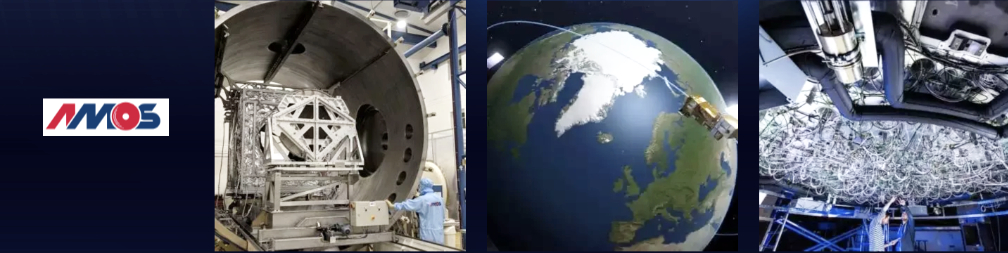
With a unique approach to vertical integration, this acquisition will reinforce Aerospacelab and AMOS’ market reach and product offerings throughout the access to a wider range of solutions to meet the diverse needs of customers across various sectors including telecommunications, Earth Observation (EO), navigation, astronomy, scientific research and industry.

“This strategic acquisition represents a pivotal moment for both organizations as we combine our expertise, resources, and talents to accelerate technological advancements in satellite manufacturing and deployment,” said Benoit Deper, CEO of Aerospacelab. “Together, we aim to foster a culture of innovation that will drive the development of cutting-edge space technologies, ensuring we remain at the forefront of the industry. By leveraging the talent and resources of the AMOS team alongside Aerospacelab’s extensive products portfolio including turnkey satellites, satellite platforms, avionics and subsystems, the ultimate objective is to establish a path towards efficient and affordable access to space.”

“This new chapter of growth and innovation reaffirms our commitment to adaptability and embracing change in order to thrive in the dynamic business landscape,” said Damien Kaivers, CEO of AMOS. “We bring 40 years of deep expertise in a wide variety of critical optical technologies for space and ground applications. Together, we will explore clear synergies to craft innovative solutions to meet our customers’ needs and continue to strengthen the legacy business of AMOS such as professional astronomy, institutional space and test facilities.”

About Aerospacelab
Founded in 2018, Aerospacelab is an emerging figure in the aerospace sector, showcasing a remarkable achievement of 8 satellites successfully deployed in orbit. We pride ourselves on our dedication to vertical integration and TRL9 implementation, solidifying our commitment to driving innovation in the space industry. With our operations strategically placed in various locations, including the US, Aerospacelab remains steadfast in its mission to deliver pioneering solutions for our diverse customer community.

About AMOS
For more than 40 years, AMOS has been designing and building solutions in the fields of professional astronomy, space-based Earth Observation and scientific exploration, test systems and opto-mechanical solutions for laboratories and industry. Its main achievements are professional telescopes, space optical instruments, test equipment for space sensors, thermal-vacuum chambers, complex optomechanical and high-precision mechanical ground support equipment. It employs today about 100 employees highly skilled in advanced technologies. The company has a worldwide reputation for its professional telescopes, its optics manufacturing capabilities, and the performance of its optical systems. Next to its large customer base in Europe, United States, India or Chile, AMOS continues to expand its activities in other geographies such as Turkey to name but a few.

Filed Under: Featured, News

SSC awards Tactically Responsive Space (TacRS) contracts

April 15, 2024 by editorial

The United States Space Force (USSF)’s Space Systems Command (SSC)’s Space Safari Program Office, in partnership with the Defense Innovation Unit (DIU) and SpaceWERX, is awarding contracts to two separate space industry vendors.

The vendors will exercise a realistic threat response scenario in an on-orbit space domain awareness (SDA) demonstration called VICTUS HAZE. DIU awarded a contract to Rocket Lab National Security at a value of $32 million.

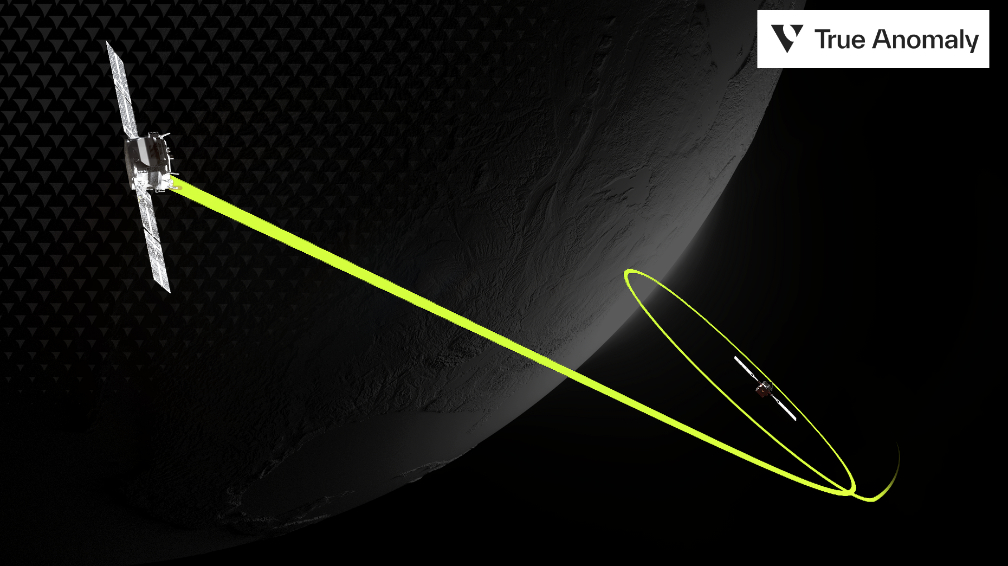
SpaceWERX will award a contract to True Anomaly. Of the total $60 million needed for the effort, the government will fund $30 million, and True Anomaly will leverage $30 million of internal private capital.

With both efforts, VICTUS HAZE is leveraging commercially developed products to provide highly capable options for future TacRS operations. The multi-vehicle demonstration enables operationally relevant systems that can be leveraged for future urgent on-orbit needs. VICTUS HAZE will also enable the development of the tactics, techniques, and procedures (TTPs) for a rapid response to on-orbit threats.

True Anomaly and Rocket Lab will both demonstrate their ability to build rendezvous and proximity operation (RPO) capable space vehicles (SVs) and command and control centers with a delivery target no later than fall 2025. Once the build phase is completed the mission will enter several successive phases to include hot standby, activation, alert and launch phases. While this is a coordinated demonstration, each vendor will be given unique launch and mission profiles.

True Anomaly’s SV will launch from either Cape Canaveral Space Force Station in Florida or Vandenberg Space Force Base in California via a rapid rideshare. Rocket Lab will launch via their Electron launch vehicle from either Mahia, New Zealand or Wallops Island, Virginia. Both SVs will quickly begin operations after reaching orbit. Once on-orbit, the operations teams will conduct a variety of scenarios to demonstrate SDA and characterization capabilities.

The planning and execution of VICTUS HAZE is a multi-organization Department of Defense effort. SSC’s Space Safari partnered with the DIU to leverage their commercial market expertise along with their Commercial Solutions Opening and Other Transaction (OT) Authority to rapidly award. DIU will lead the contract and acquisitions administration for Rocket Lab National Security while Space Safari will provide programmatic oversight and execute the mission.

Space Safari partnered with SpaceWERX for assistance in the technical and commercial evaluation of True Anomaly and the push for an emergent SBIR selection by Space Force leadership. Space Safari is leading the contract administration, providing programmatic oversight, and will execute the mission capabilities True Anomaly will bring.

As VICTUS HAZE continues toward mission success, many partners will be involved to play critical roles in this defining Space Force demonstration. VICTUS HAZE leverages state of the art, commercial products and will prove new capabilities that enhance future operational TacRS missions. This demonstration will ultimately prepare the United States Space Force to provide future forces to Combatant Commands to conduct rapid operations in response to adversary on-orbit aggression.

“The commercial space industry is advancing at an unprecedented pace that will provide the Space Force additional options to quickly respond to adversary aggression,” said Lt. Col. MacKenzie Birchenough, SSC’s materiel leader for Space Safari. “VICTUS HAZE will demonstrate and prove capabilities to be used for future TacRS operations in direct support of urgent Combatant Command on-orbit needs.”

“We recognize the significant opportunity to leverage the commercial space industry’s innovations to counter China as America’s pacing threat,” said Col. Bryon McClain, SSC’s program executive officer for Space Domain Awareness and Combat Power. “The United States has the most innovative space industry in the world. VICTUS HAZE will demonstrate, under operationally realistic conditions, our ability to respond to irresponsible behavior on orbit.”

Filed Under: News

Spire’s satellite constellation to be protected by Neuraspace’s Space Traffic Management solution

April 14, 2024 by editorial

Spire will deploy Neuraspace’s Space Traffic Management (STM) platform to its constellation of 100+ multipurpose satellites — all satellites will be monitored using Neuraspace’s software. This combined setup allows Spire to track and monitor potential conjunctions across its constellation and, at the same time, focus on its more critical assets.

Leveraging the Neuraspace platform, Spire will receive automated conjunctions alerts and in-depth analysis. In addition, the Neuraspace STM platform will provide Spire with collision avoidance maneuver suggestions, advanced conjunction analysis, maneuver management, and automated screening for its growing number of space assets equipped with onboard propulsion.

The Neuraspace platform facilitates agile, real-time decision-making which further reduces collision risks. The automatic update of the orbit positions by the Neuraspace platform enables a faster screening of maneuvers for potential collision avoidance. It also saves human conjunction screening time and effort.

Vincent Furia, Senior Director of Constellation Planning and Operations at Spire, said, “Spire is at the forefront of the Space-as-a-Service model. With the STM platform from Neuraspace, we can customize monitoring and analysis data, providing timely collision information. As our constellation expands and orbit congestion grows, Neuraspace’s AI-powered STM reduces human screening, preserving fuel and enables more efficient operations.“

Chiara Manfletti, CEO of Neuraspace, said,“Being selected by a successful NewSpace company like Spire with a large constellation is testimony to the trust they have in our STM solution. It also demonstrates the need for satellite operators to protect their assets in space. The threat stemming from increased orbital traffic and space debris is a growing concern and potentially a costly issue for satellite and constellation operators like Spire. With our automated STM solution using data from various sources, we can provide them with the most comprehensive overview and analysis. And as a result, we can reduce the threat to their assets and enable our customers to focus on their main business.”

Filed Under: News

Vyoma secures million€€ from European Investment Fund-backed space fund

April 14, 2024 by editorial

Vyoma has successfully secured additional capital from a dedicated space fund backed by the European Investment Fund (EIF).

The EIF is an International financial institution owned by the European Investment Bank and the European Union that supports disruptive technologies through funds and private banks across different industries in the European continent. The EIF joins forces with Atlantic Labs, which is an existing investor of Vyoma based in Berlin, Germany, and manages the fund.

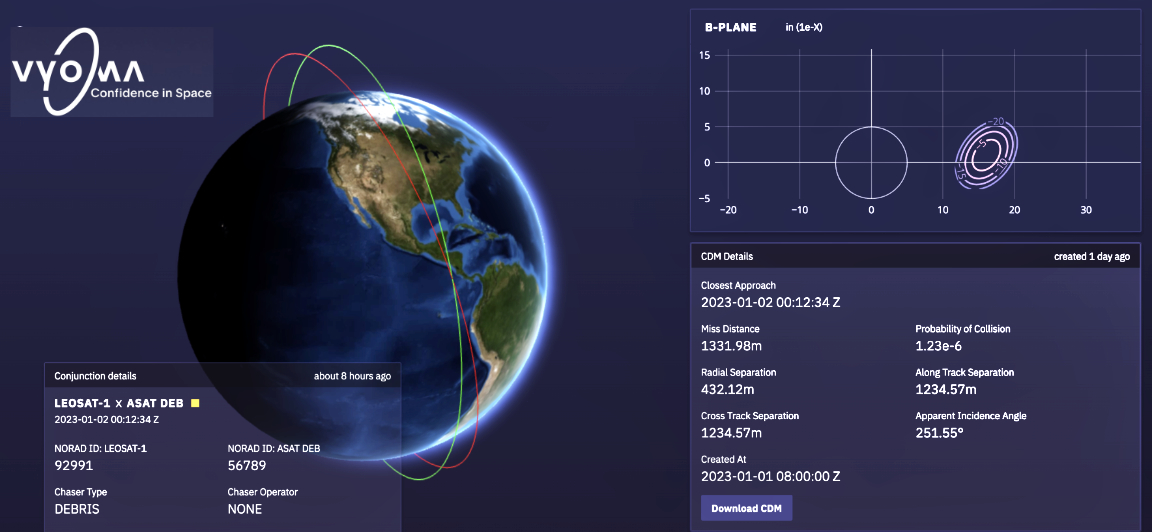
Vyoma is launching a space-based constellation for monitoring objects (space debris and satellites) from LEO to GEO. The first generation of the constellation will be composed of optical sensors. Pivotal technology for enhancing space domain awareness, these powerful sensors will provide 24/7 information about space traffic and feed predictive analytics algorithms with ground-breaking data that will map the evolution of assets in space at unprecedented accuracy. Importantly, anomalous behavior and ill-intent will also effectively be detected, and alerts issued to the respective defence authorities.

With this information, Vyoma guarantees independent surveillance of space objects assets and the safety of in-orbit assets, supporting Europe’s geostrategic autonomy and space sovereignty. The first units of this space-based monitoring system are primed for launch in early 2025. This additional capital will be used to advance its technical developments and hence the commercialization of space-based data from the first and second-generation of satellites. To support these efforts, Vyoma will also strengthen its engineering team.

Stefan Frey, co-founder and CEO of Vyoma,, said, “This investment is a recognition by the European Institutions of the pressing need to address hazards in orbit and guarantee safety of assets. With Vyoma’s space-based surveillance system, we can in effect not only monitor the majority of all space objects in low-Earth orbit larger than 1 cm, but also detect ill-intent and malignant actions. This confluence of technological solutions and geostrategic goals is what drives this investment. At the same time, we are proud to count once again on Atlantic Labs for its continuous support.”

“The NewSpace industry has the potential to unlock technologies that can have a ripple effect across a range of other sectors,” said Marjut Falkstedt, Chief Executive of the EI. “I am delighted that EIF support, with the backing of the InvestEU programme, will enable companies like Vyoma to advance their work in cutting-edge fields like orbital monitoring. This is not only important for ensuring the safety and security of space missions and satellite operations – it will also play a role in enhancing Europe’s overall security and technological sovereignty.”

About Vyoma
Vyoma is a Munich-based company that leverages ground-based and soon, space-based data to empower automated satellite operations. Officially founded in August 2020, Vyoma enables real-time space traffic management in congested orbits around Earth. While space is becoming increasingly crowded, Vyoma provides safe and automated satellite operations services, drastically reducing mission costs for its customers. The company’s operations services range from detection of close approaches between satellites and debris and optimisation of manoeuvres, all the way to full automation. Vyoma tends to operators, reinsurers, and space agencies. As a participant in the EU Commission and ESA programs for Space Domain Awareness (SDA) technology development, Vyoma relies on a specialised workforce of 25+ engineers and scientists.

Filed Under: News

Mercury Systems receives L3Harris contract for SDA’s T2TL constellation

April 14, 2024 by editorial

Mercury Systems, Inc. (NASDAQ: MRCY) has been awarded a $31 million contract from L3Harris Technologies (NYSE: LHX) to provide solid-state data recorders for the U.S. Space Development Agency (SDA)’s Tranche 2 Tracking Layer satellite constellation.

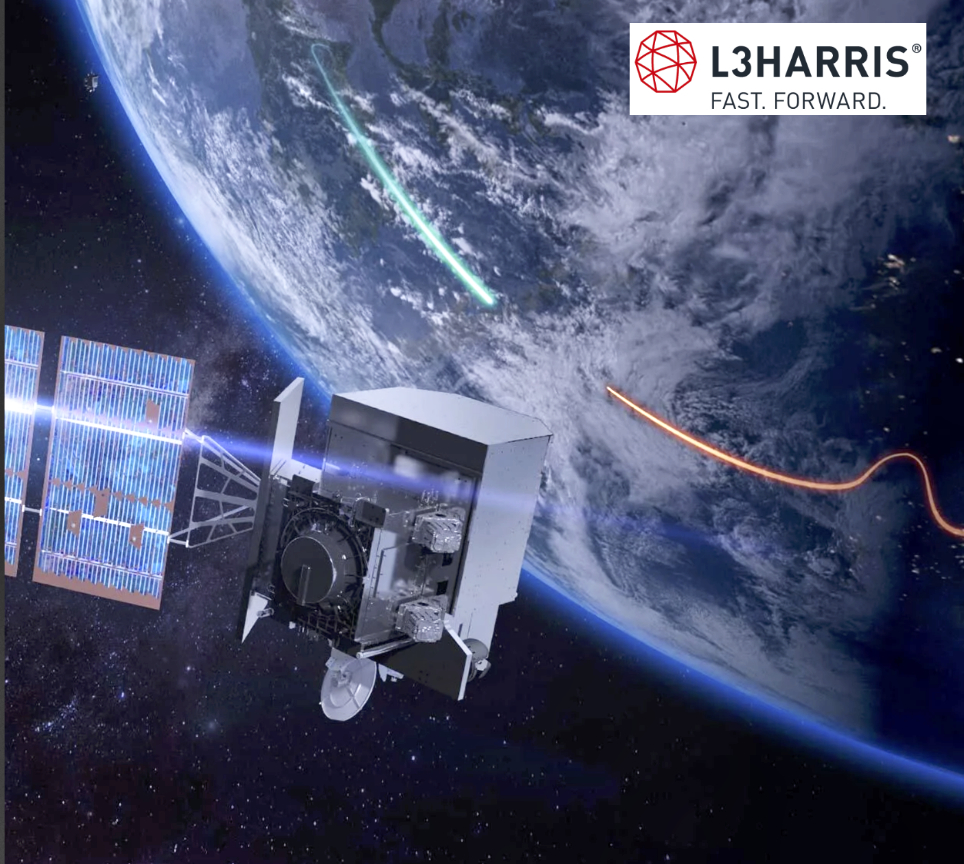
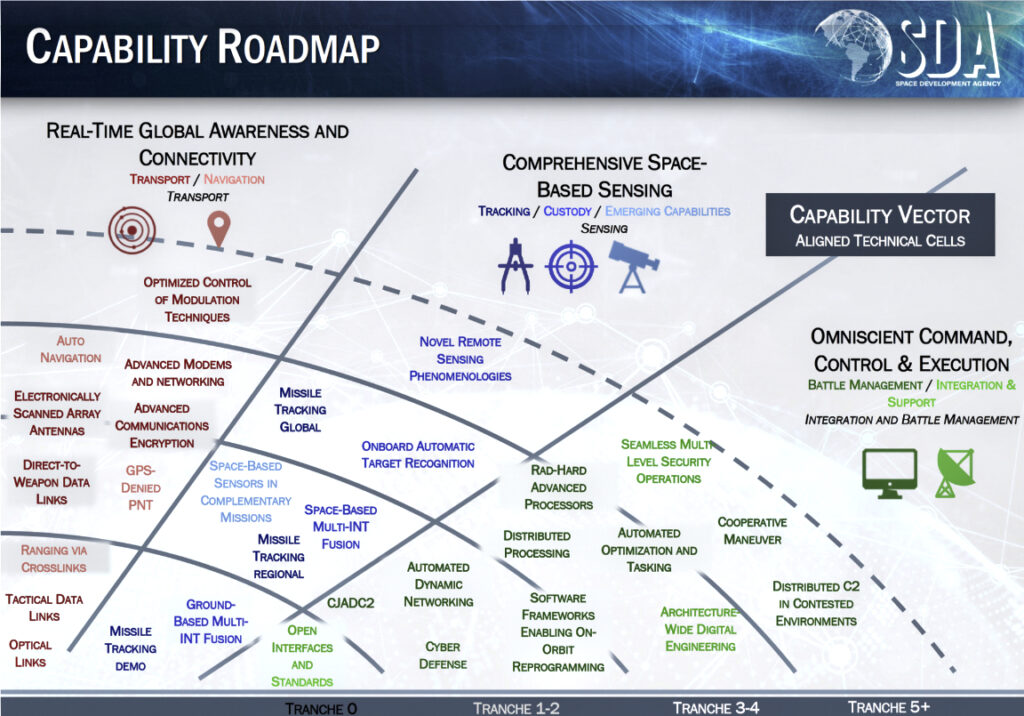
Artistic rendition of of L3Harris’ Tracking Layer Tranche 2 missile-tracking satellites for the SDA, courtesy of L3Harris.

L3Harris was selected in January to design and build 18 satellites that will provide near-global missile warning and tracking coverage, with preliminary missile defense, under SDA’s Tranche 2 Tracking Layer program.

The Tracking Layer is part of SDA’s Proliferated Warfighter Space Architecture (PWSA), a layered network of military satellites supporting multiple missions in LEO. Tranche 2 follows the 16 satellite constellation L3Harris is building for Tranche 1 plus the four recently launched satellites the company built for the Tranche 0.

Mercury’s solid-state data recorders (SSDRs) are the primary storage devices on all three L3Harris constellations. These radiation-tolerant devices enable on-orbit sensor data processing and storage in a 3U VPX form factor, with a microprocessor and software-free design that ensure precise, long-term operation in harsh environments. Mercury SSDRs have a proven spaceflight heritage, powering missions such as NASA’s Earth Surface Mineral Dust Source Investigation science mission that is currently in operation aboard the International Space Station.

“We are extremely proud to provide the on-orbit data storage capabilities for this important national security mission,” said Tom Smelker, GM of Mercury’s Microsystems business unit. “The Mercury Processing Platform brings unique advantages to the space domain, with edge-ready products that turn data into decisions.”

About Mercury Systems
Mercury Systems is a technology company that delivers mission-critical processing power to the edge, making advanced technologies profoundly more accessible for today’s most challenging aerospace and defense missions. The Mercury Processing Platform allows customers to tap into innovative capabilities from silicon to system scale, turning data into decisions on timelines that matter. Mercury’s products and solutions are deployed in more than 300 programs and across 35 countries, enabling a broad range of applications in mission computing, sensor processing, command and control, and communications. Mercury is headquartered in Andover, Massachusetts, and has 24 locations worldwide.

Filed Under: News

Sidus Space announces 2nd agreement with HEO

April 12, 2024 by editorial

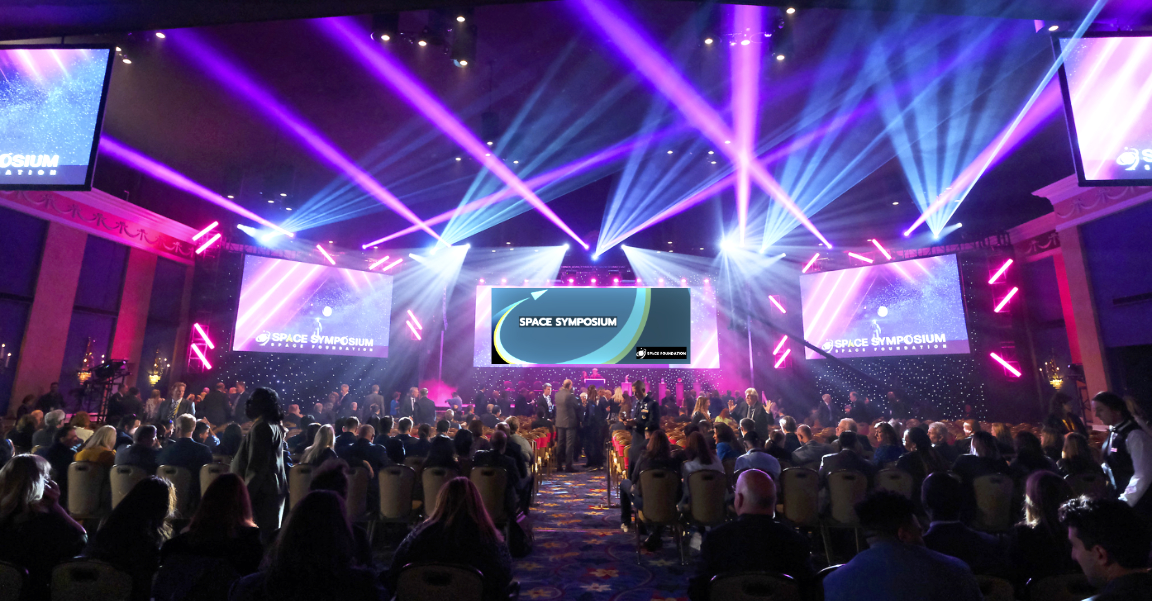
Sidus Space, Inc. (NASDAQ: SIDU) announced during the recent Space Symposium in Colorado Springs that the company finalized an additional agreement with HEO, a leading provider of non-Earth imaging (“NEI”) and data, for NEI payload and data services.

Under the agreement, Sidus Space will host HEO’s NEI imager, HOLMES-006, onboard LizzieSat-3, as part of the SpaceX Bandwagon-2 launch scheduled for November of 2024, along with a monthly data services contract. This marks the second agreement between HEO and Sidus Space, as Sidus Space’s LizzieSat-2 will be hosting HEO’s HOLMES-004 on the same launch.

HEO’s Holmes Imager is a telescopic space camera designed and developed to be hosted as a secondary payload on spacecraft. Holmes is the world’s first commercial camera dedicated to NEI, which captures images of resident space objects. The images obtained can provide valuable information about the identification, physical characteristics, movements, and interactions of satellites in orbit. Sidus’s LizzieSats will take HEO’s NEI sensors to mid-inclination LEO for the first time, increasing orbit diversity and enabling higher-quality images and data on a range of new and previously covered space objects.

“We are accelerating our work to proliferate NEI sensors in orbit, and we love partnering with companies at the cutting edge of spacecraft deployment,” said Dr. Will Crowe, CEO and Co-Founder of HEO. “We’ve loved working with Sidus and are excited about their plans.”

“We are honored to have earned HEO’s trust and confidence in our ability to provide the platform for their NEI and data collection,” said Carol Craig, CEO of Sidus. “Our companies work well together, and we look forward to a strong partnership to further enhance and expand the space ecosystem by offering a variety of valuable imagery and data.”

Filed Under: News

Rocket Lab returns previously flown Electron to production line in prep for 1st Reflight

April 12, 2024 by editorial

Rocket Lab USA, Inc. (Nasdaq: RKLB) has returned a previously flown Electron rocket first stage tank into the Electron production line for the first time in preparation for reflying the stage — this step is a significant milestone in Rocket Lab’s development program to make Electron the world’s first, reusable, small orbital launch vehicle.

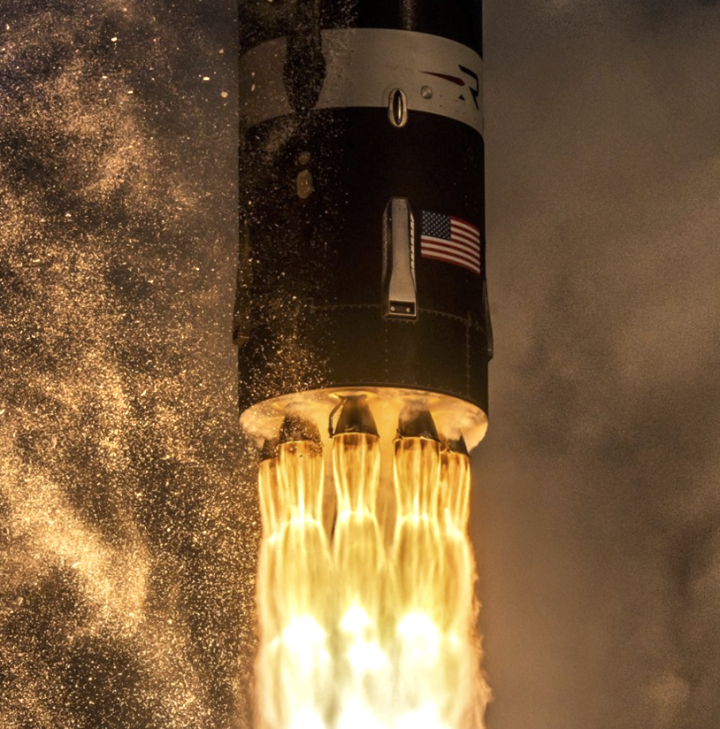
An Electron rocket during takeoff

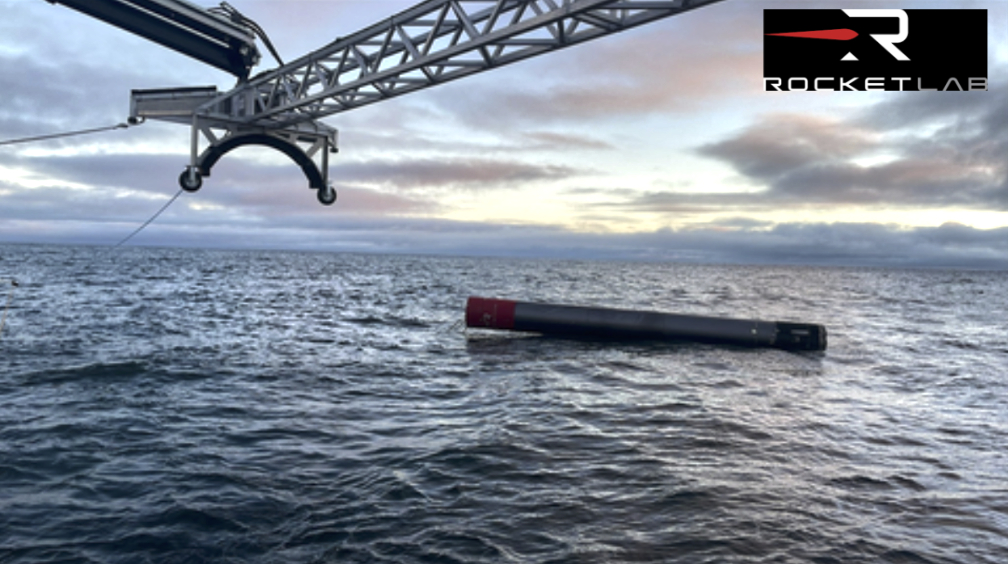
Rocket Lab has successfully recovered multiple Electron first stages from previous missions by returning them to Earth under a parachute after launch, splashing them down in the ocean, then collecting them onto a specially modified boat for transfer back to Rocket Lab’s production complex. All previously recovered boosters have undergone extensive analysis to inform an iterative development process to make Electron reusable, but this is the first time a tank has been moved back onto the standard production line in preparation for reflight.

The stage was successfully launched and recovered as part of the ‘Four of a Kind’ mission on January 31, 2024, and has already passed more acceptance tests than any other recovered Electron stage, including…

  • Tank pressurization test – a process that filled the carbon composite tank with inert gas and held it in excess of maximum operating pressure for more than 20x longer than the standard Electron flight duration;
  • Helium leak check – a stringent process that determines there are no leaks in the tank; and
  • Carbon fiber structural testing – including ultrasonic assessment and other non-destructive tests to confirm no delamination of the carbon composite tank fibers.

The stage will now undergo final fit out and rigorous qualification and acceptance testing to the same standard as a brand-new Electron tank to determine the recovered stage’s suitability for reflight. Rocket Lab has carried out iterative modifications across multiple recovery missions to hone the recovery process ahead of first reflight, including…

  • Ensuring Electron’s carbon composite structure survives the intense heat and forces of atmospheric reentry through innovative coatings, heat shields, and advanced reaction control systems to control the angle of reentry
  • Refining the parachute system to ensure reliable deployment and smooth deceleration from more than 2,300 meters per second to 10 meters per second
  • Honing the telemetry and tracking systems so the marine recovery team can locate the stage as soon as it splashes down
  • Streamlining the process of collecting the stage from the water in less than an hour, then ensuring safe transit back to the Rocket Lab production complex; ad
  • Successful launch of a previously flown Rutherford engine
Nine Rutherford engines powering the Electron rocket.

The payload scheduled to launch on the recovered stage will be announced following the completion of final acceptance and qualification testing.

“Through an iterative development process, we have methodically perfected each step of Electron recovery while simultaneously continuing to increase our Electron production capacity and launch cadence. This is the exciting final piece of the puzzle before Electron goes reusable,” said Rocket Lab founder and CEO Peter Beck. “Our key priority in pushing this stage back into the standard production flow for the first time is to ensure our systems and qualification processes are fit for accepting pre-flown boosters at scale. If this stage successfully passes and is accepted for flight, we’ll consider opportunities for reflying it in the New Year.”

Filed Under: Featured, News

Fleet Space launches Centauri-6 satellite on SpaceX’s Bandwagon-1 mission

April 11, 2024 by editorial

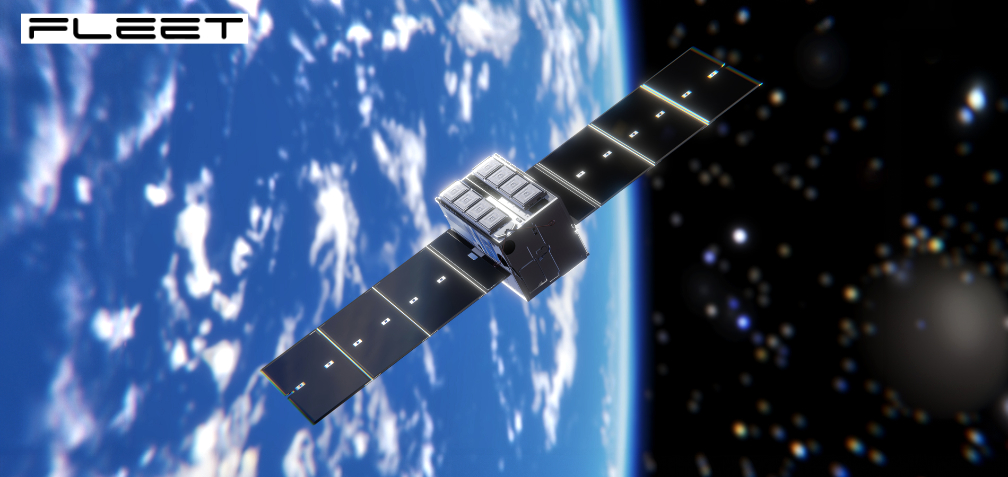
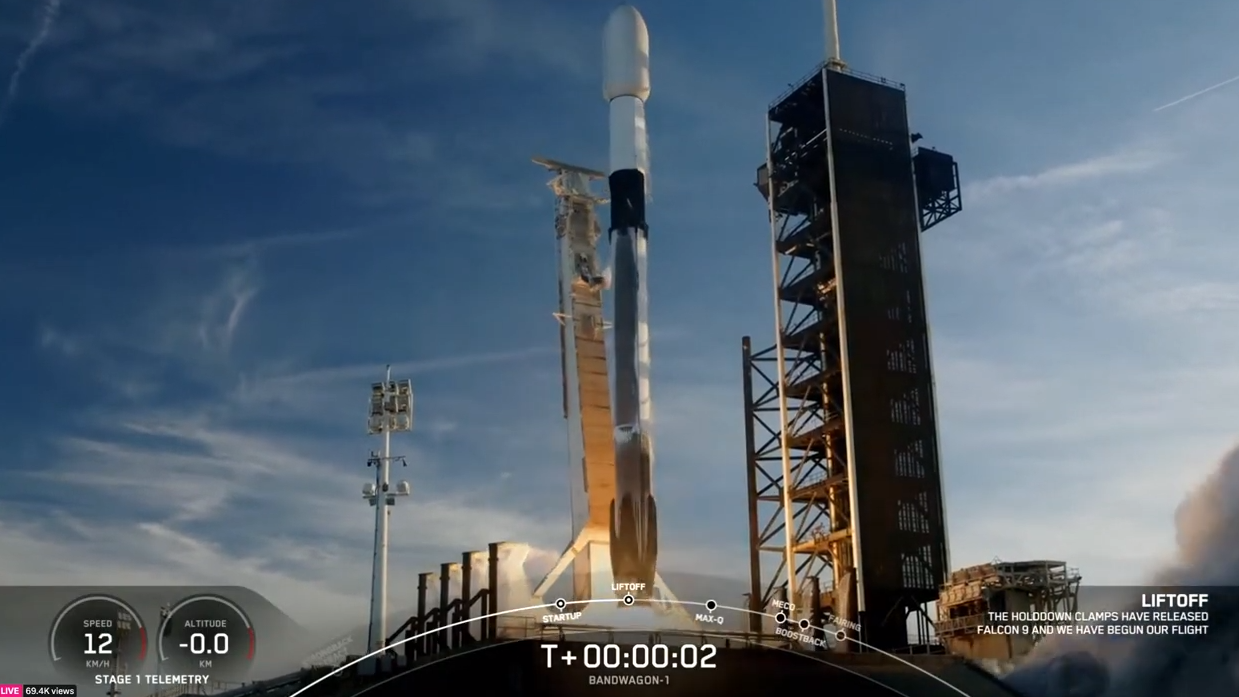
Fleet Space Technologies has successfully deployed the company’s Centauri-6 satellite on SpaceX’s Bandwagon-1 mission, launched aboard a SpaceX Falcon 9 from Launch Complex 39A at the Kennedy Space Center in Florida.

Bandwagon-1 launch photo is courtesy of SpaceX.

The addition of Centauri-6 to Fleet Space’s satellite constellation will play a vital role in servicing the global demand for its end-to-end mineral exploration solution, ExoSphere, while also building capacity to deliver advanced SATCOM capabilities with smallsat architectures.

The successful launch of Centauri-6 is the latest development from Fleet Space after a period of exponential growth and innovative breakthroughs unlocking new capabilities in the global space sector. Recently, Fleet Space’s Centauri-4 became the world’s smallest voice-enabled satellite after a demonstration of Push-To-Talk (PTT) capabilities to the Australian Defence Force Joint Capabilities Division as part of their ASCEND2LEO program.

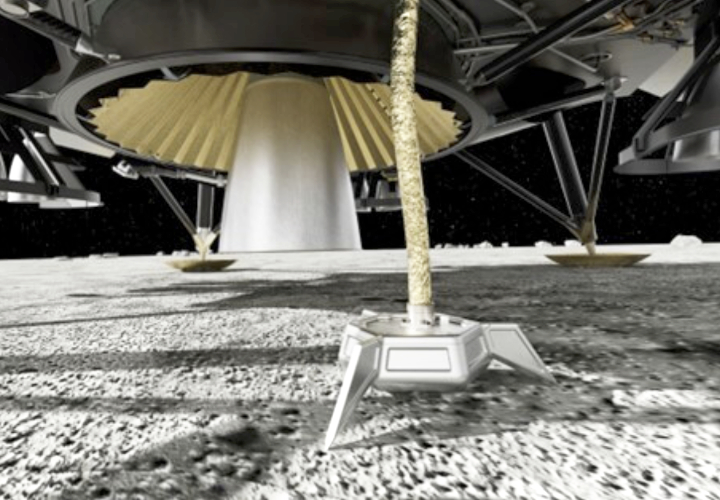
Fleet Space’s SPIDER seismic technology will also head to the Moon to search for water ice and deliver new insights about the lunar regolith on Firefly Aerospace’s second lunar mission in 2026 as part of a NASA CLPS initiative.

Fleet Space’s SPIDER tethered to Firefly’s Blue Ghost Lander

Rapid global adoption of Fleet Space’s satellite-enabled mineral exploration solution, ExoSphere, has been the catalyst behind the company’s sustained innovation in space technologies and growth over the past year. Over 40 industry leading exploration companies – including Rio Tinto, Core Lithium,and Barrick Gold – have used the technology to complete 300+ surveys for a variety of critical minerals across five continents. In 2023, Fleet Space completed a heavily oversubscribed A$50 million Series C funding round, doubled its valuation to A350$ million, and was named Australia’s fastest growing company.

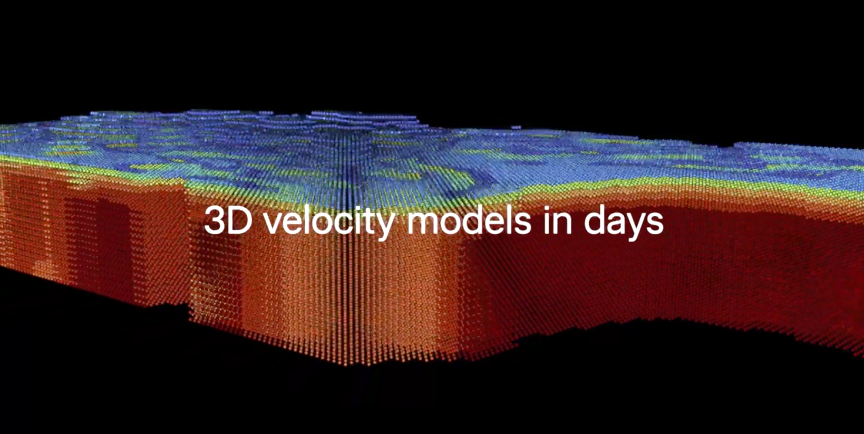
ExoSphere, Fleet Space’s flagship mineral exploration technology, combines the latest advances in satellite connectivity, edge computing, AI, and geophysics to deliver 3D subsurface models of a survey area in days with near-zero environmental impact. To generate the 3D models, Fleet Space’s patented satellite-enabled seismic sensors – called Geodes – are distributed into an array across a survey area, then the data is transmitted and processed by Fleet Space’s satellite constellation in LEO, providing near real-time access to survey results for exploration customers around the world. Traditionally, seismic data acquisition and processing has taken months or years before it can be used as part of an exploration campaign. By delivering 3D subsurface models up to a depth of 2.5km in days, Fleet Space is radically reducing the time and resources needed to accelerate mineral discovery in support of the clean energy transition.

“Humanity’s expanding satellite infrastructure is rapidly unlocking new capabilities that can help to address some of the most pressing challenges facing our planet. At current rates of mineral discoveries and production, our net-zero goals and clean energy future are unattainable in the coming decades,” said Flavia Tata Nardini, Co-Founder and CEO of Fleet Space. “Leveraging the latest advances in space technology, AI, and geophysics – Fleet Space is demonstrating a path to accelerate mineral exploration in a more data-driven, scalable, and sustainable way. Centauri-6 is a portal into a future of efficient, mass-scale satellite manufacturing that can unlock previously unimaginable satellite-enabled solutions to hard problems on Earth.”

“Innovation in microsatellite architectures is advancing at an unprecedented rate, unlocking new capabilities across sectors at scale. The reprogrammability of our Centauri satellites enables in-orbit software updates that can deliver all-new capabilities, as we recently demonstrated with Centauri-4 – making it the world’s smallest known voice-enabled satellite,” said Matt Pearson, Co-Founder and Chief Exploration Officer at Fleet Space. “This marks a significant leap forward in the history of spacecraft – making a future with more energy-efficient, high-performing, flexible, and resilient microsatellite infrastructure within reach for the global space sector.”

Filed Under: News

Planet’s Planet Insights Platform debuts to unlock EO data

April 11, 2024 by editorial

Planet Labs PBC (NYSE: PL) has announced their Planet Insights Platform, the all-in-one venue for creating Earth insights — this offering unifies Planet’s product portfolio and the power of Sentinel Hub, which Planet acquired last year.

Combining Planet’s analysis-ready Earth data products with cloud-based analytics and tools will allow users to efficiently analyze, stream, and distribute data at scale, so they can make decisions reliably and with confidence. With this launch, Planet is enabling broad area management solutions that allow governments and businesses around the world to unlock EO data and obtain answers.

The platform brings together new capabilities that dramatically improve customers’ capacity to analyze and orchestrate large volumes of Earth data, reduce upfront development and maintenance costs, and focus on differentiation. These updates include…

  • A unified account experience across Planet & Sentinel Hub: By linking the two platforms, users will now be able to access cloud hosting and imagery analysis tools from Sentinel Hub through a single login.
  • Enhanced Analysis-Ready PlanetScope data: Analysis-Ready PlanetScope uses proprietary AI to create harmonized, cloud-masked, and spatially consistent daily stacks of images, which enable time-series analysis and machine learning applications.
  • Updated global Road & Building Change Detection: Planet’s Road & Building Change Detection AI-based models point to where development is taking place across country-wide areas, on a weekly basis. This can help users clearly understand how and where the places they care most about are evolving.
  • New and improved Planetary Variables: Field Boundaries trace the boundaries of agricultural parcels, giving insights into different crop types and growth throughout the season. Additionally, Crop Biomass Planetary Variable now integrates Planet’s daily, global PlanetScope data, offering a ​​cloud-free, analysis-ready data product for monitoring agricultural fields.
  • Time series and statistical analysis: Within the Planet Insights Platform, users can efficiently translate imagery into formats best suited for advanced data science and AI / ML models.

With the Planet Insights Platform, users can build insights and solutions, make decisions, and act faster and aims to provide users with robust, multidimensional Earth data that are accessible and actionable at the moment of inquiry.

“Empowering our customers and partners to easily unlock the immense value within Planet data is our primary focus,” said Troy Toman, Senior Vice President of Product and Software Engineering at Planet. “Planet Insights Platform is an important milestone on that journey. We’ve unified our core offerings into a powerful set of APIs and tools that provide access to multiple data sets and powerful analytics. This breaks down the conventional barriers to leveraging the power of Earth observation data while laying the foundation for future cutting-edge capabilities that make it easier for our partners to build solutions and our customers to get the answers they need.”

“Making sense and taking action in the face of the global challenges that governments and businesses are facing today requires looking broader, closer, deeper, forward and backward in time,” said Will Marshall, co-founder and CEO of Planet. “And further, solving such challenges requires not just data, but solutions. I’m so excited for this strategic launch because it creates a central place to access the best of Planet data, analytics, and unique tools that will enable an ecosystem of customers and partners to build innovative solutions in this time of rapid global change.”

Valentin Louis, Senior Earth Observation Specialist at the Rural Payments Agency, said, “We needed fast and quick access to satellite data that helped reduce the time spent on downloading and pre-processing. That’s where Planet Insights Platform comes in. It helped us quickly distribute, assess, and process data and insights across our agency by integrating seamlessly in our current software ecosystem.”

About Planet
Planet is a leading provider of global, daily satellite imagery and geospatial solutions. Planet is driven by a mission to image the world every day, and make change visible, accessible and actionable. Founded in 2010 by three NASA scientists, Planet designs, builds, and operates the largest Earth observation fleet of imaging satellites. Planet provides mission-critical data, advanced insights, and software solutions to over 1,000 customers, comprising the world’s leading agriculture, forestry, intelligence, education and finance companies and government agencies, enabling users to simply and effectively derive unique value from satellite imagery. Planet is a public benefit corporation listed on the New York Stock Exchange as PL.

Filed Under: News

Astranis’ next generation product: Omega

April 11, 2024 by editorial

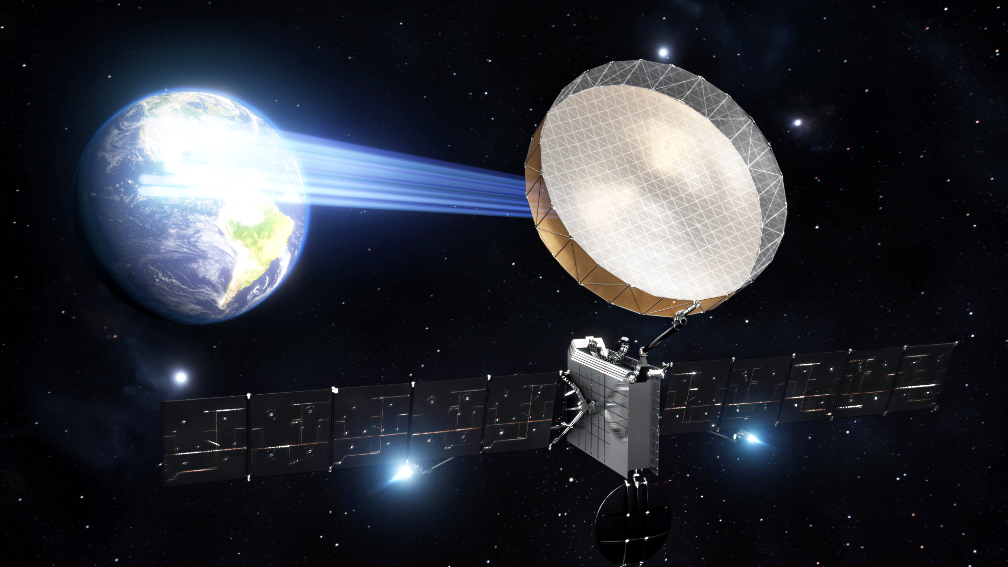
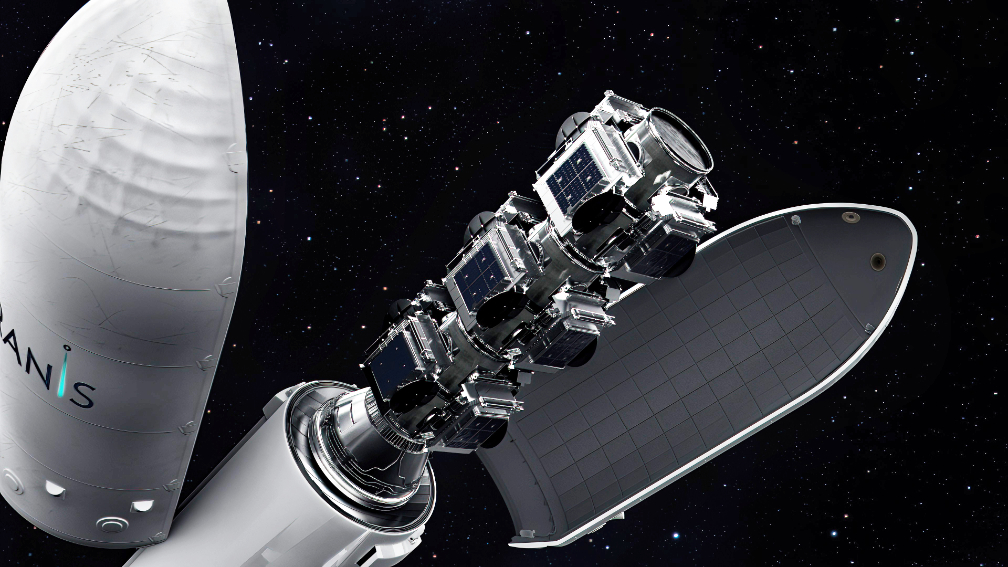
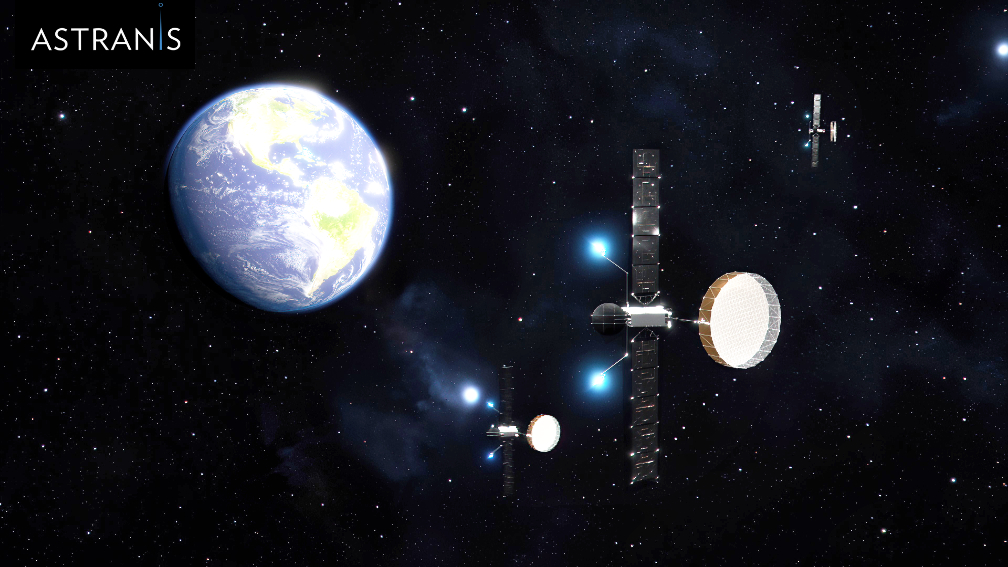
Astranis has announced Omega which, according to the company, is pound-for-pound the most powerful communications satellite for a GEO satellite to ever offer, with more than over 50 Gbps in a smallsat form factor, with expectations for launch in 2026.

Astranis made their Omega announcement at the Space Symposium, currently in session in Colorado Springs, Colorado. Omega will fly an updated version of Astranis’s proprietary software-defined radio (SDR) which, when combined with other new payload technology, means a platform with more than 50 Gbps of dedicated, uncontended capacity.

For Astranis’ commercial customers, Omega will mean advanced capabilities and lower prices for, by combining new technology and leveraging the Astranis-built hardware currently operating on orbit. For Astranis’ U.S. government customers, Omega supports the Protected Tactical Waveform and other government waveforms to operate in contested environments. The satellite platform also has a gimballed Q-/V-band antenna, greatly improving operational flexibility, and can alternatively shift gateway traffic to a Ka-band payload feed when needed.

Astranis launched its first satellite in 2023 and has announced an additional nine programs launching over the next 18 months. The first Omega flight vehicle will be complete in 2025, and the first Omega satellite will launch in 2026.

“Omega is a leap forward,” said Astranis CEO John Gedmark, “offering an industry-best throughput per kg without sacrificing the things our customers love about Astranis. With Omega, our customers simply get more throughput at lower prices, faster than ever before. How did we do it? Speed. About half of our first satellite was built in house, the most recent satellites coming off of the line are closer to 60%, and Omega will be about 70% built in house. We have hired 300+ of the most talented engineers in the country, and we all feel an immense urgency to build great things to help connect our commercial customers and support the U.S. warfighter.”

Filed Under: Featured, News

  • « Go to Previous Page
  • Page 1
  • Interim pages omitted …
  • Page 73
  • Page 74
  • Page 75
  • Page 76
  • Page 77
  • Interim pages omitted …
  • Page 338
  • Go to Next Page »

Primary Sidebar

WEEKLY NEWSLETTER

Archives

  • July 2026
  • June 2026
  • May 2026
  • April 2026
  • March 2026
  • February 2026
  • January 2026
  • December 2025
  • November 2025
  • October 2025
  • September 2025
  • August 2025
  • July 2025
  • June 2025
  • May 2025
  • April 2025
  • March 2025
  • February 2025
  • January 2025
  • December 2024
  • November 2024
  • October 2024
  • September 2024
  • August 2024
  • July 2024
  • June 2024
  • May 2024
  • April 2024
  • March 2024
  • February 2024
  • January 2024
  • December 2023
  • November 2023
  • October 2023
  • September 2023
  • August 2023
  • July 2023
  • June 2023
  • May 2023
  • April 2023
  • March 2023
  • February 2023
  • January 2023
  • December 2022
  • November 2022
  • October 2022
  • September 2022
  • August 2022
  • July 2022
  • June 2022
  • May 2022
  • April 2022
  • March 2022
  • February 2022
  • January 2022
  • December 2021
  • November 2021
  • October 2021
  • September 2021
  • August 2021
  • July 2021
  • June 2021
  • May 2021
  • April 2021
  • March 2021
  • February 2021
  • January 2021
  • December 2020
  • November 2020
  • October 2020
  • September 2020
  • August 2020
  • July 2020
  • June 2020
  • May 2020
  • April 2020
  • March 2020
  • February 2020
  • January 2020
  • December 2019
  • November 2019
  • October 2019

© 2019–2026 SatNews

Insert/edit link

Enter the destination URL

Or link to existing content

    No search term specified. Showing recent items. Search or use up and down arrow keys to select an item.
      x
      Sign Up Now!

      Enjoy a free weekly newsletter with recent headlines from the global SmallSat industry.

      Invalid email address
      We promise not to spam you. You can unsubscribe at any time.
      Thanks for subscribing! You will now receive weekly SmallSat News updates.
      We love our advertisers.
      And you will too!

      Please disable Ad Blocker to continue... We promise to keep it unobtrusive.
      We promise not to spam you. You can unsubscribe at any time.
      Invalid email address
      Thanks for subscribing!